
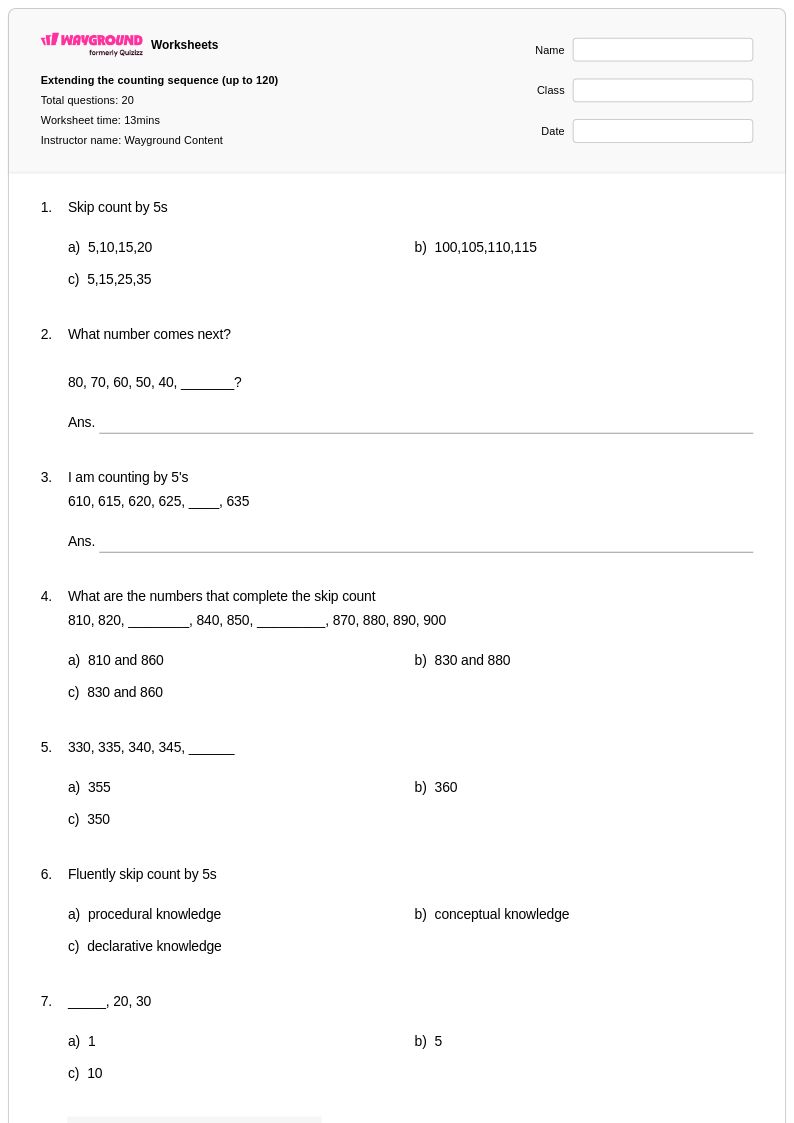
20 Q
1st
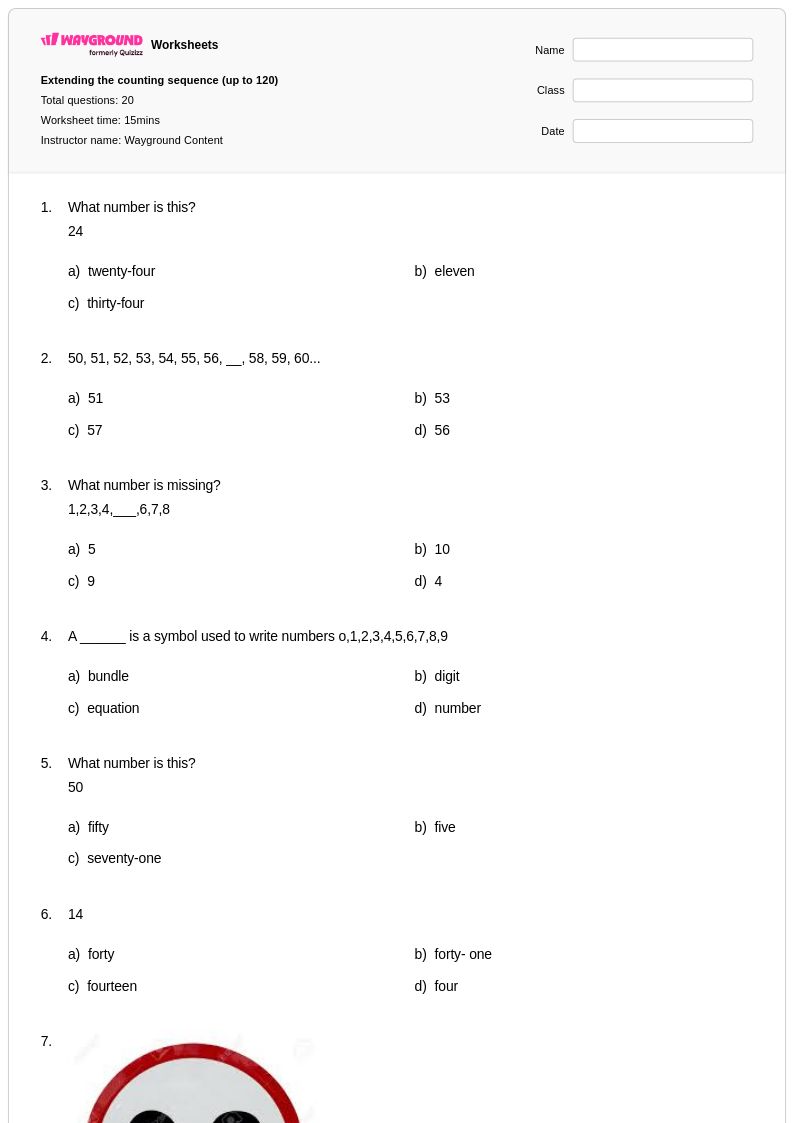
20 Q
1st
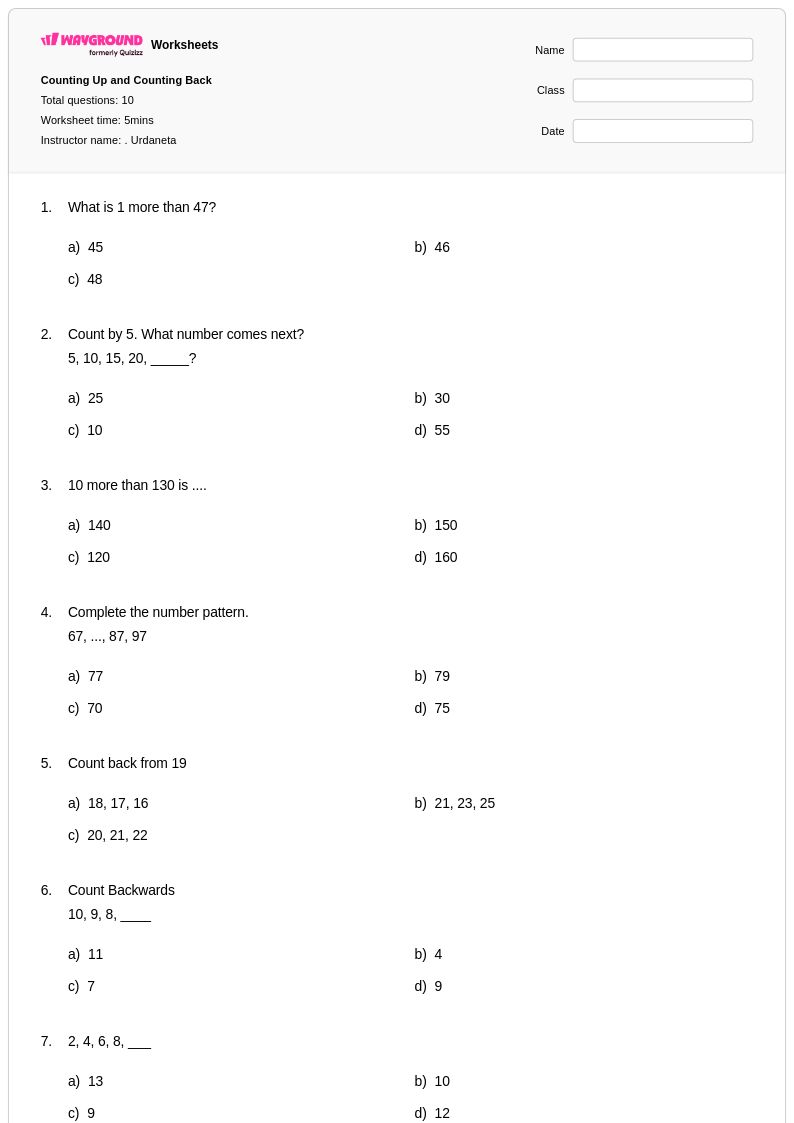
10 Q
2nd
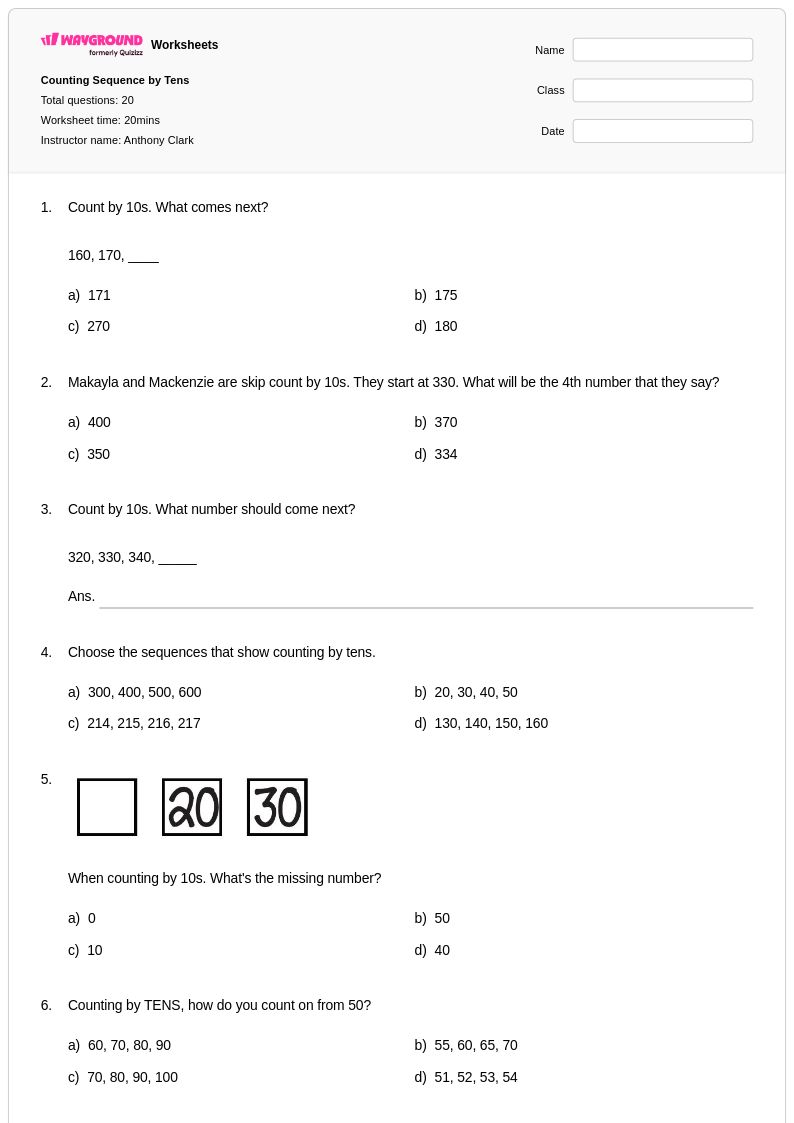
20 Q
1st - Uni
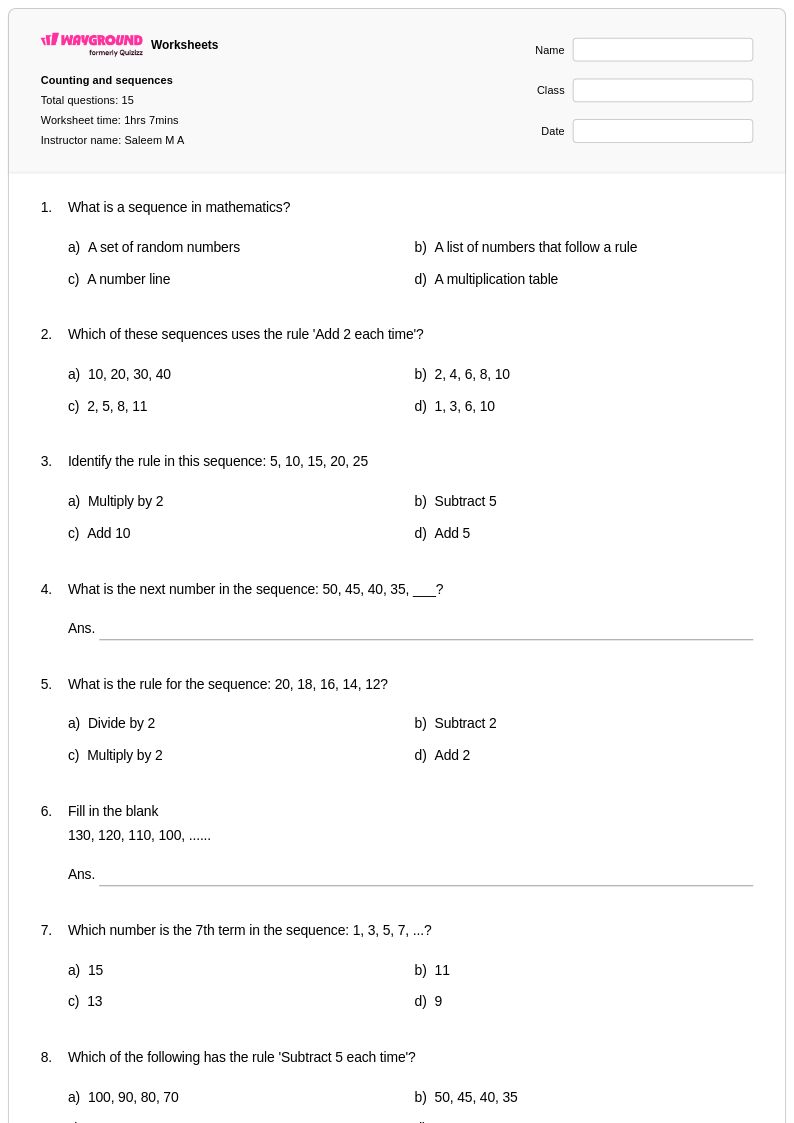
15 Q
4th
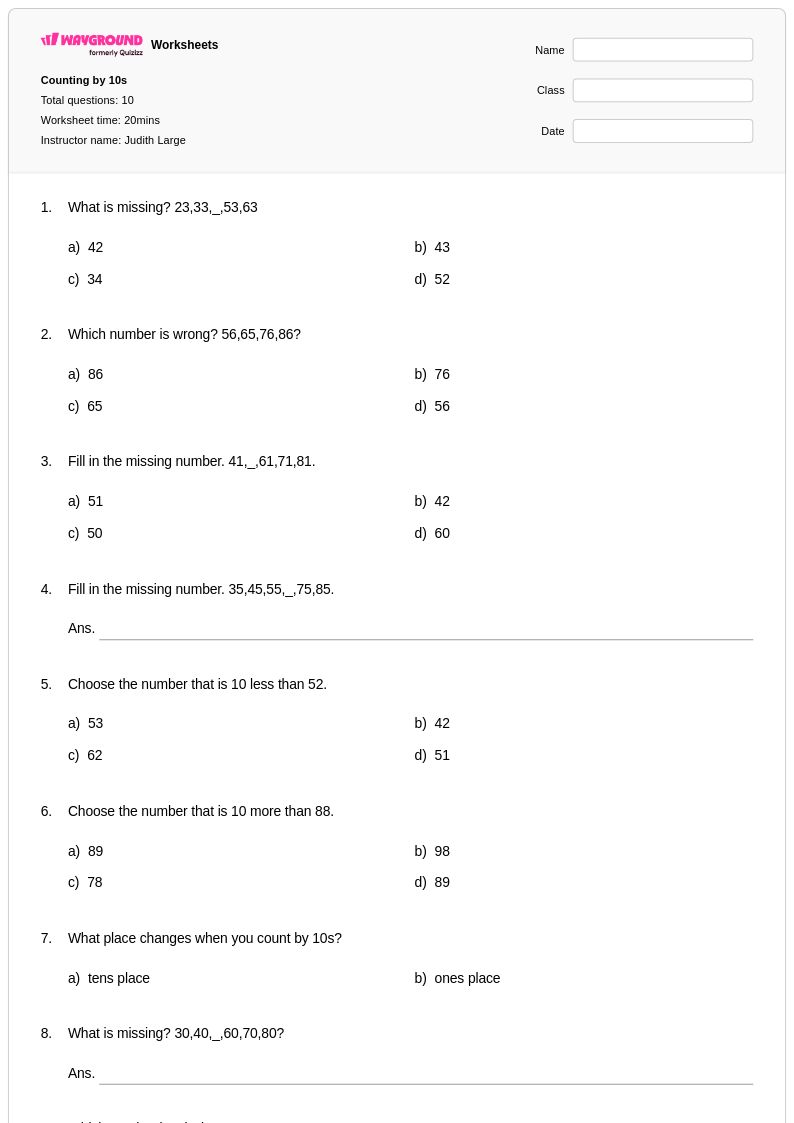
10 Q
1st
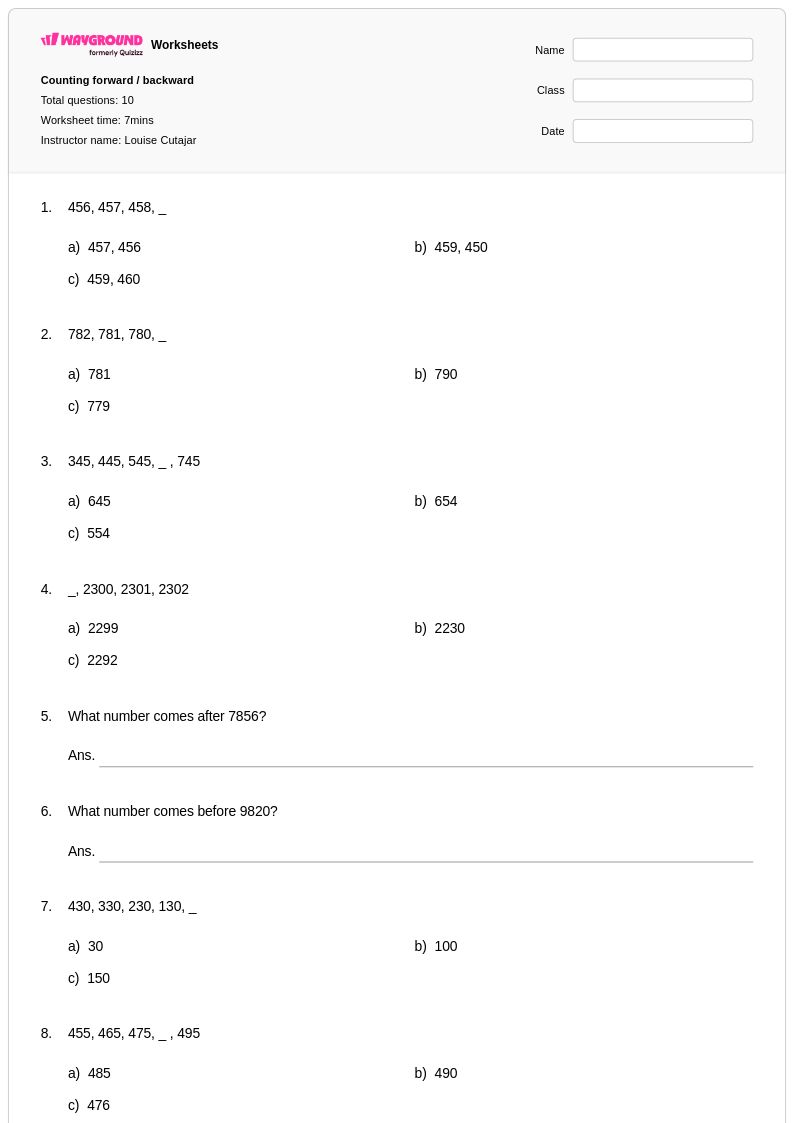
10 Q
4th
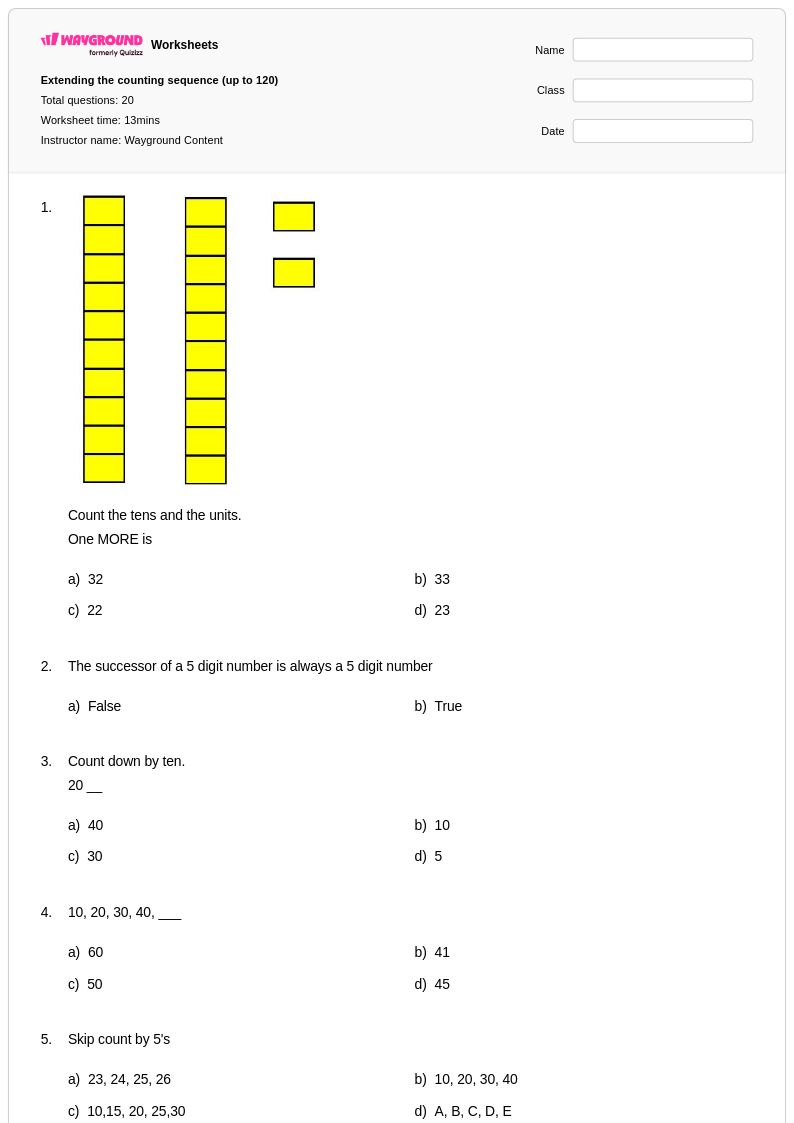
20 Q
1st
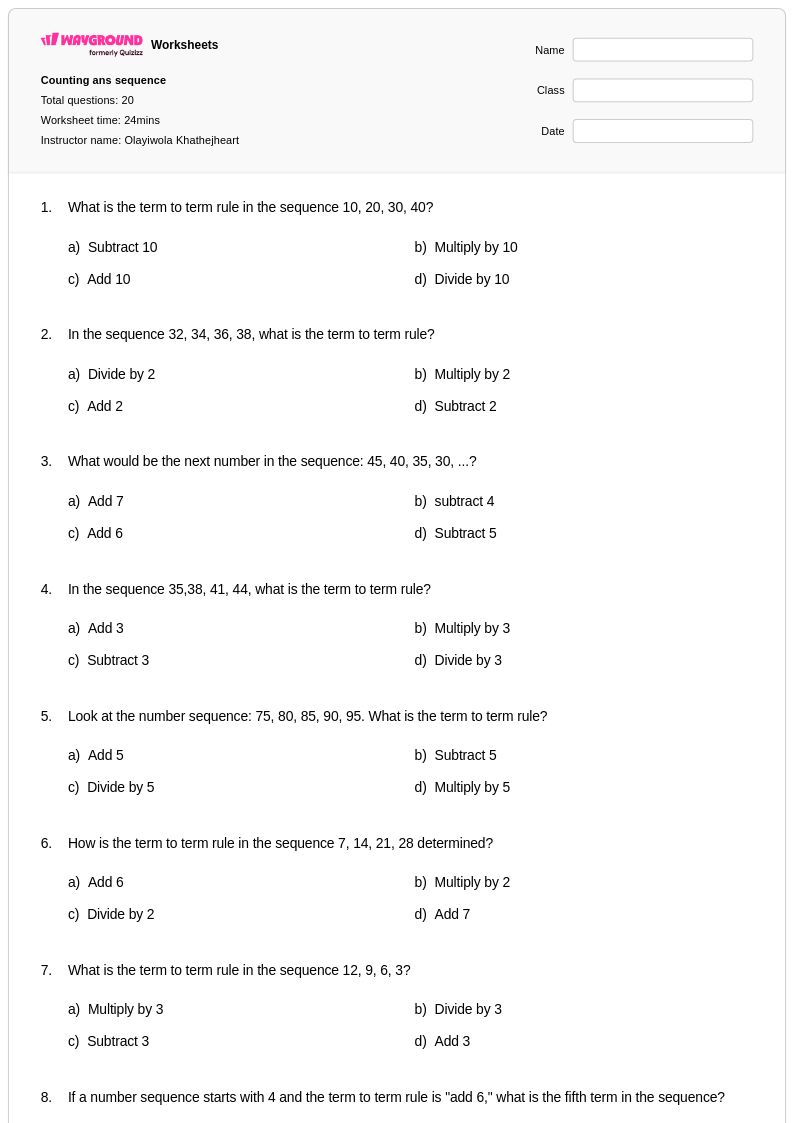
20 Q
3rd
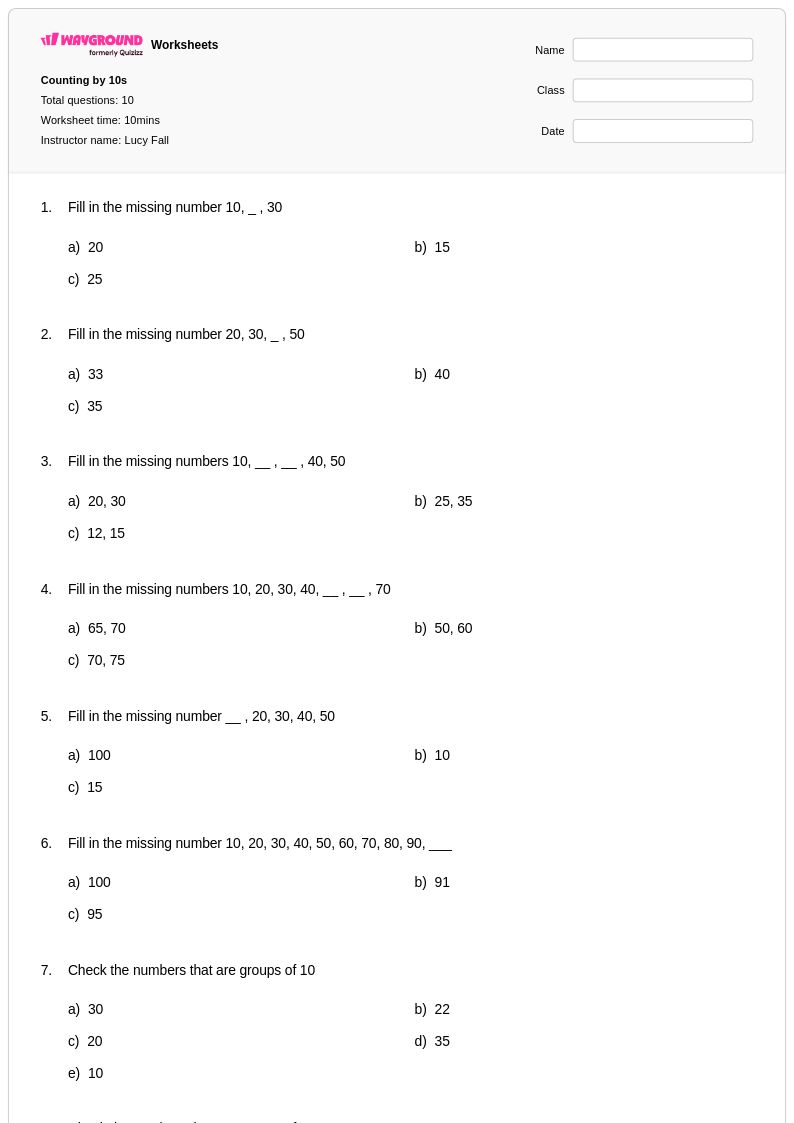
10 Q
3rd
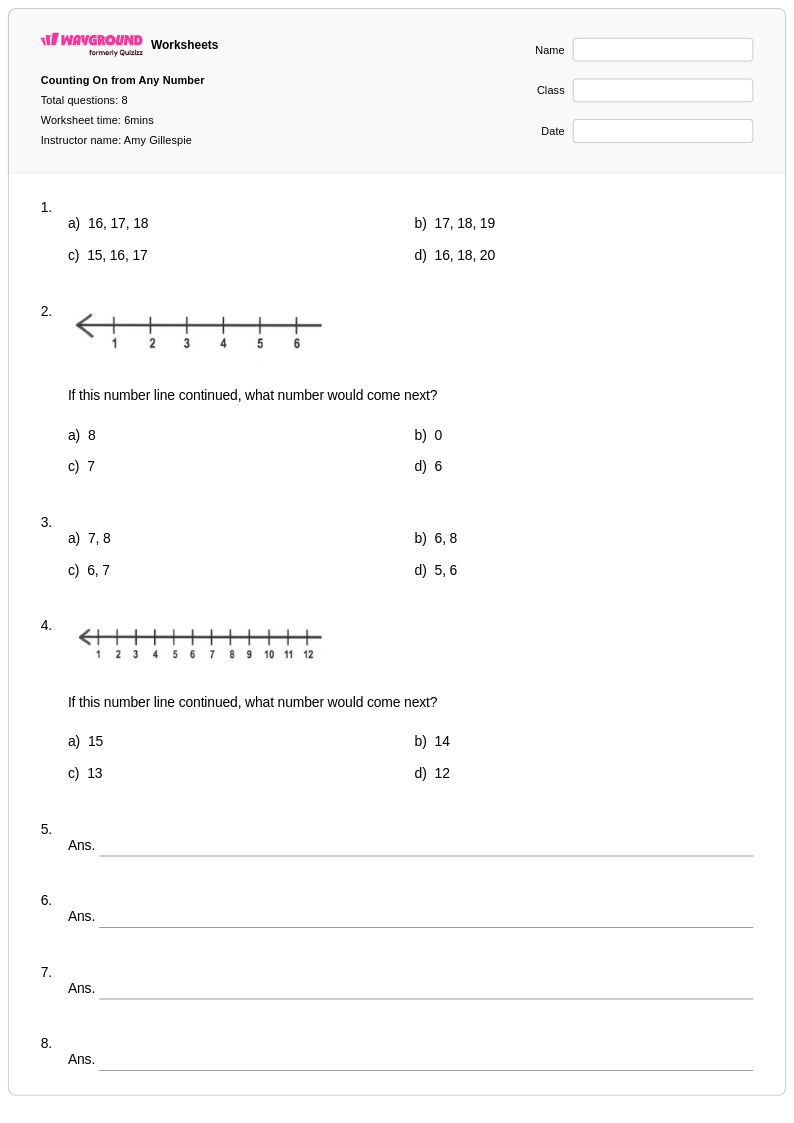
8 Q
KG
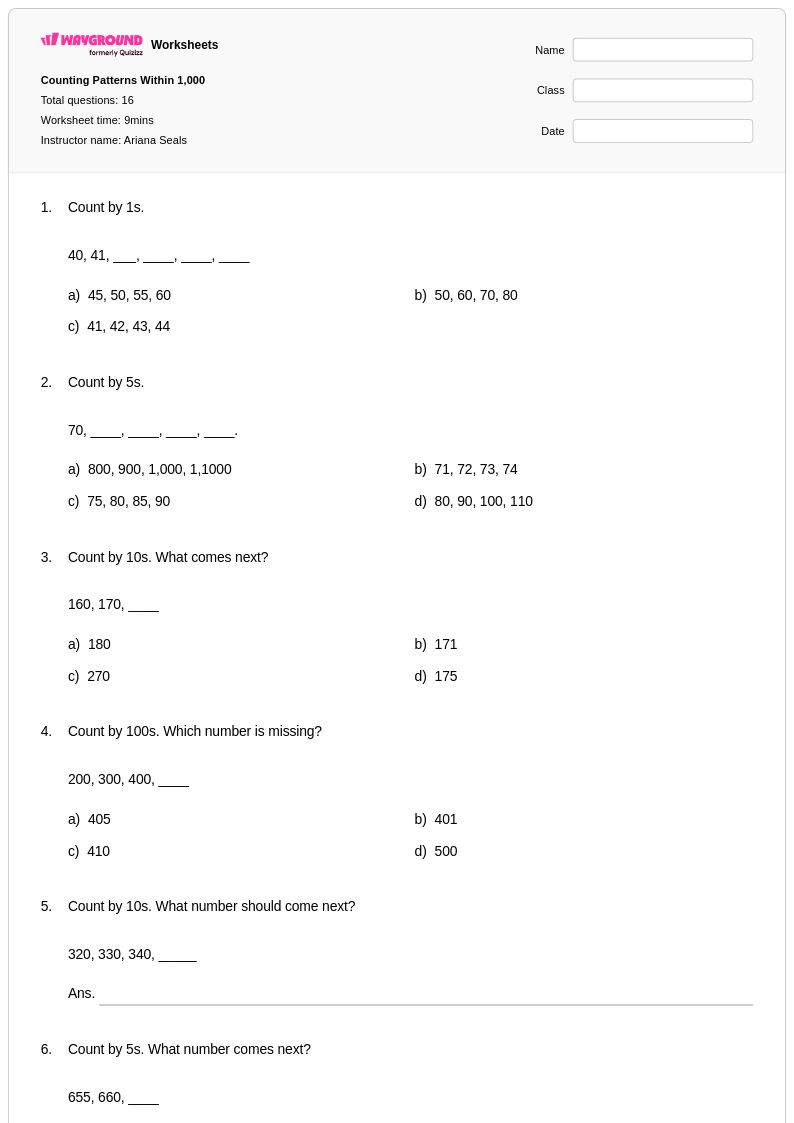
16 Q
2nd
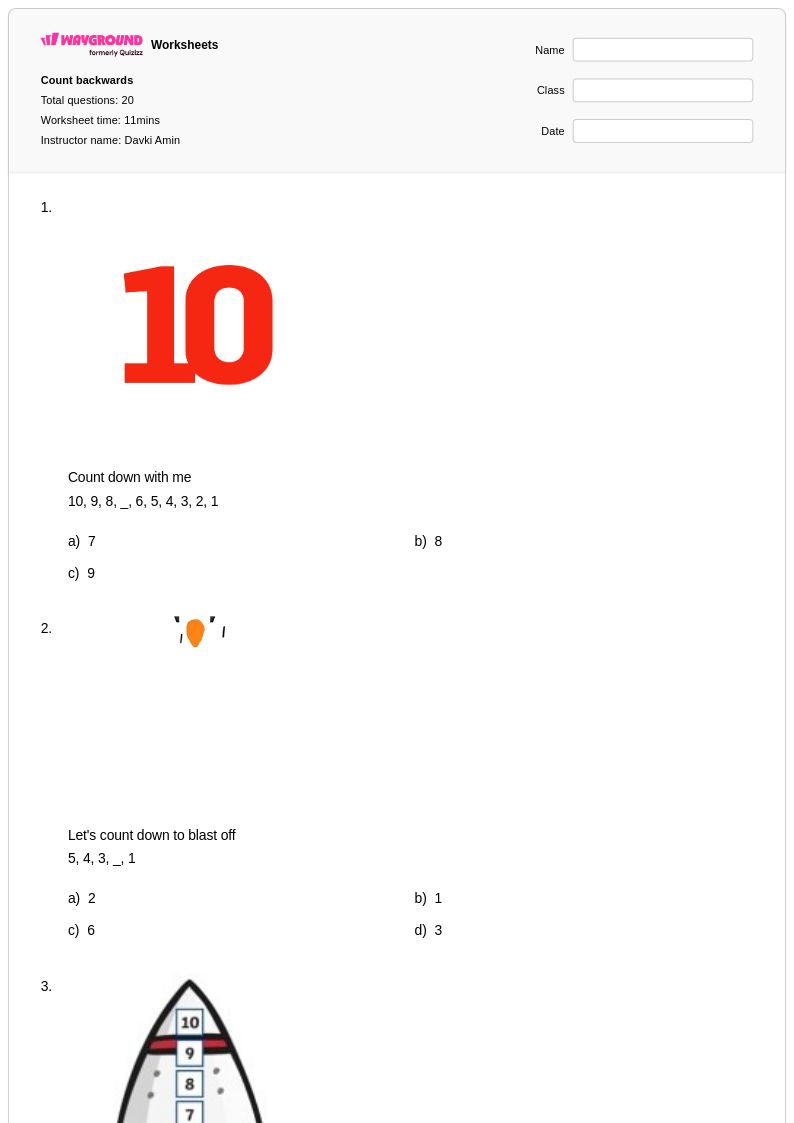
20 Q
1st
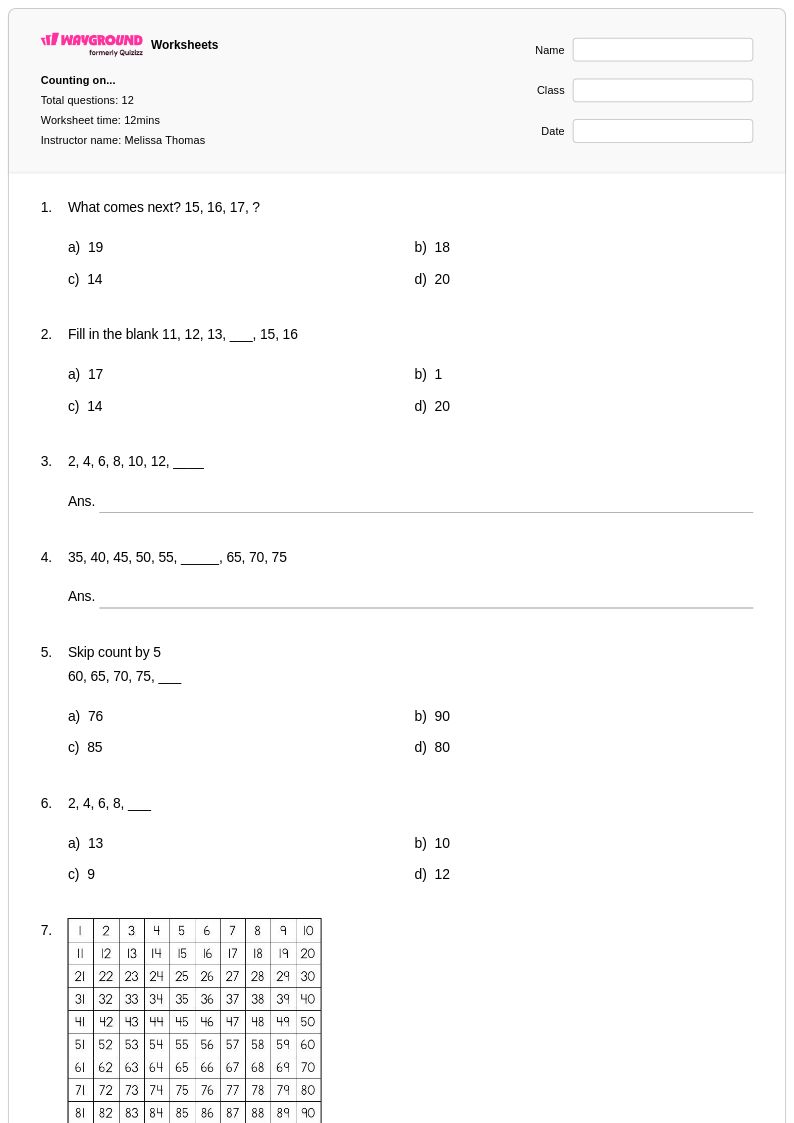
12 Q
1st - 2nd
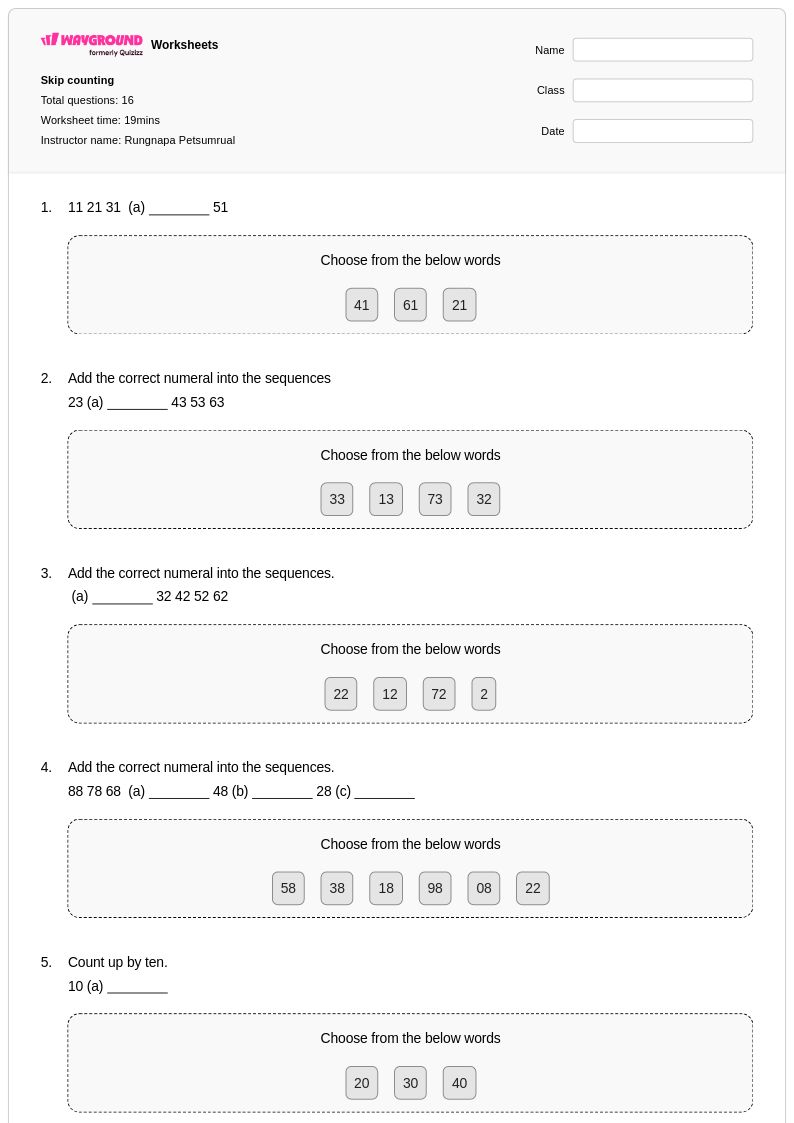
16 Q
1st
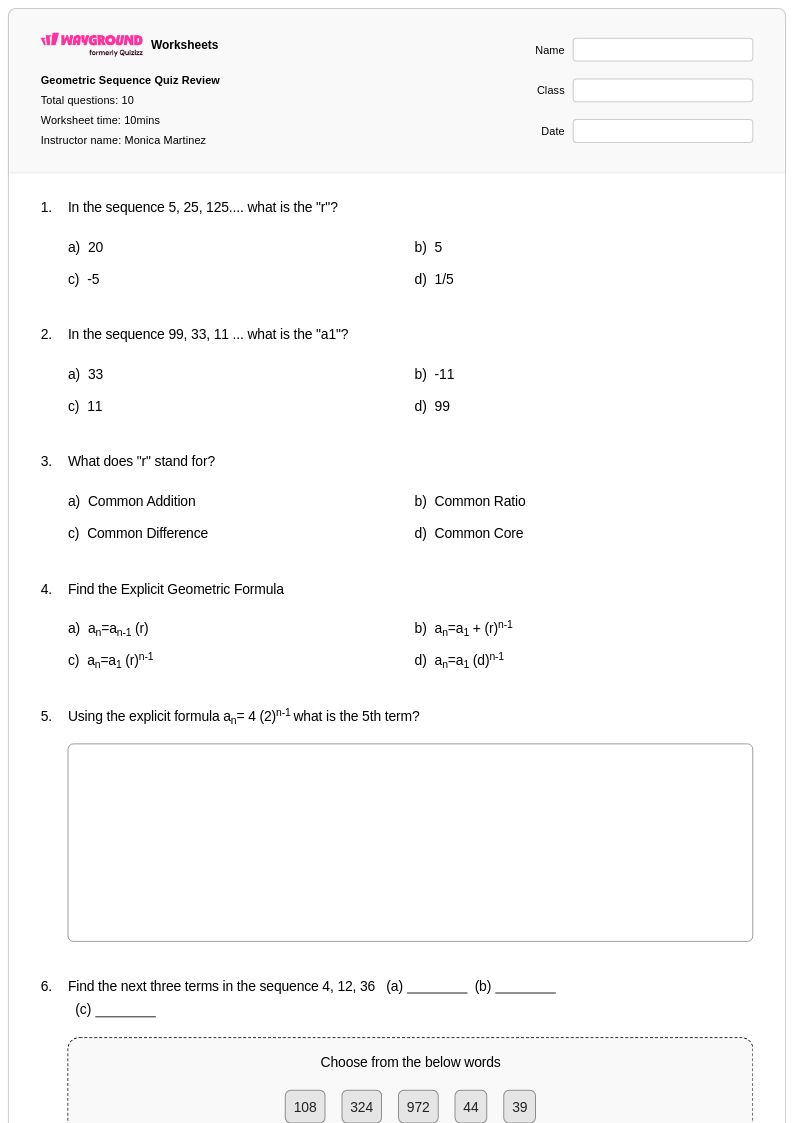
10 Q
10th
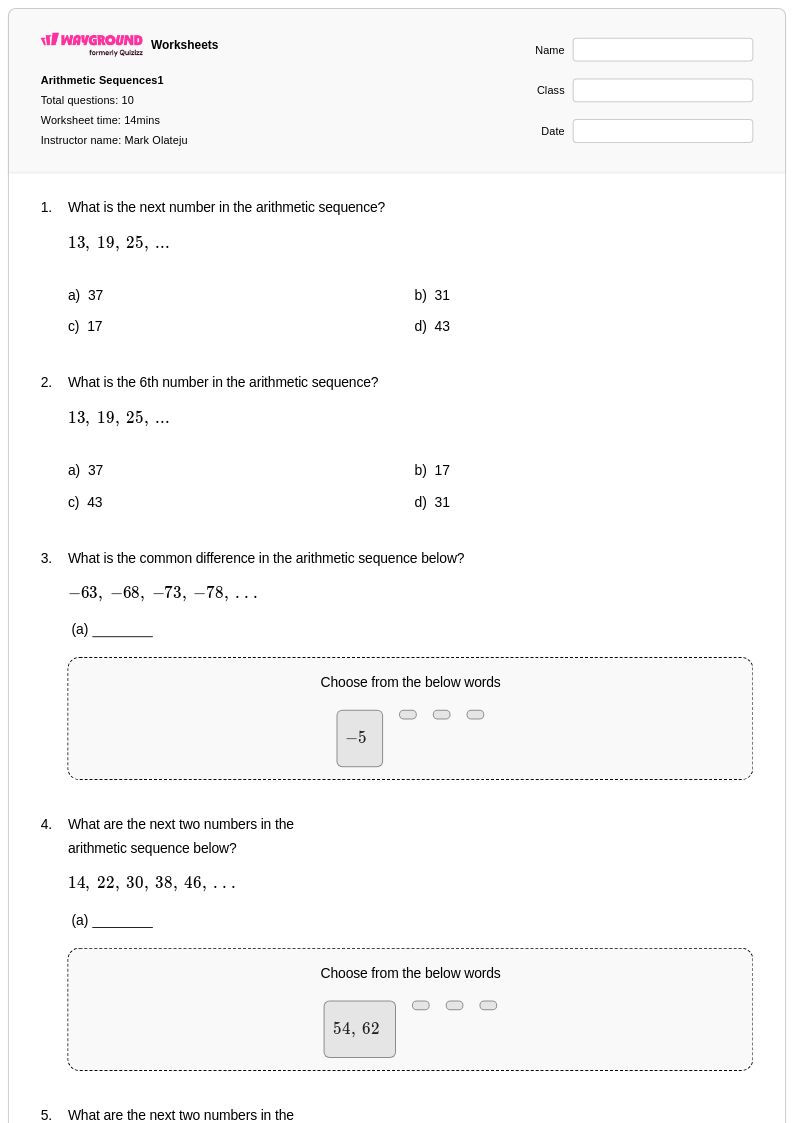
10 Q
8th
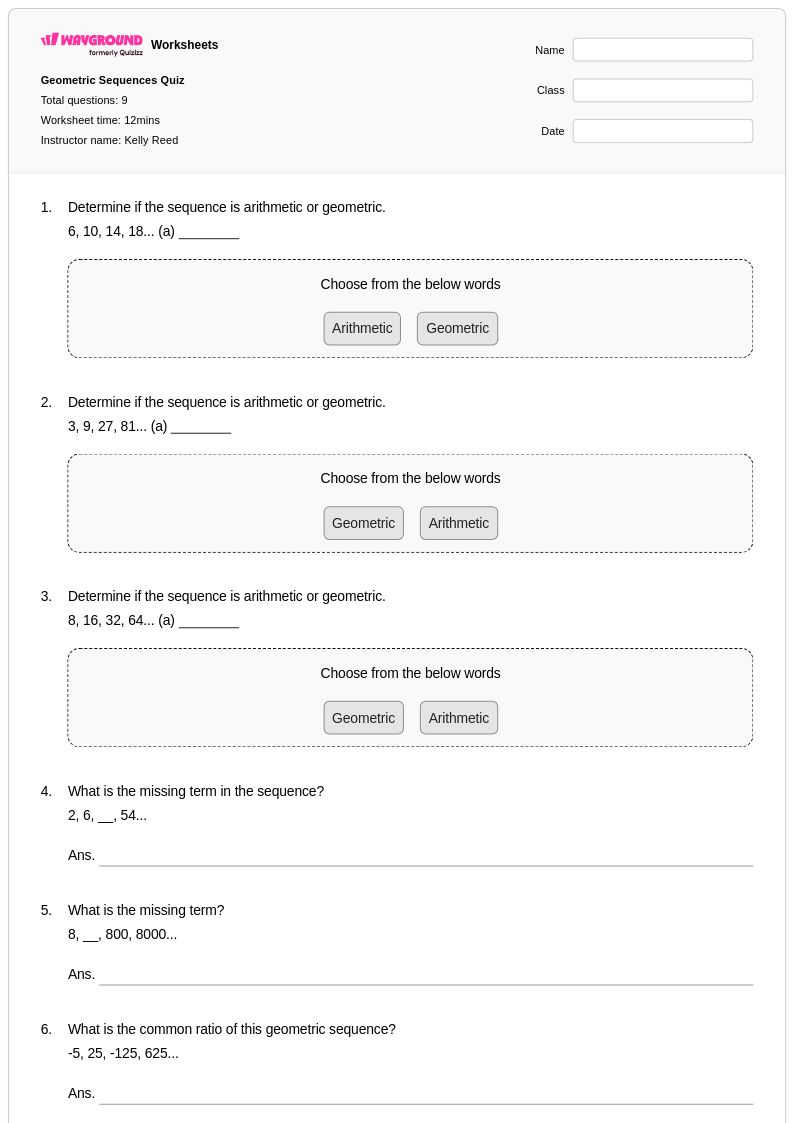
9 Q
9th
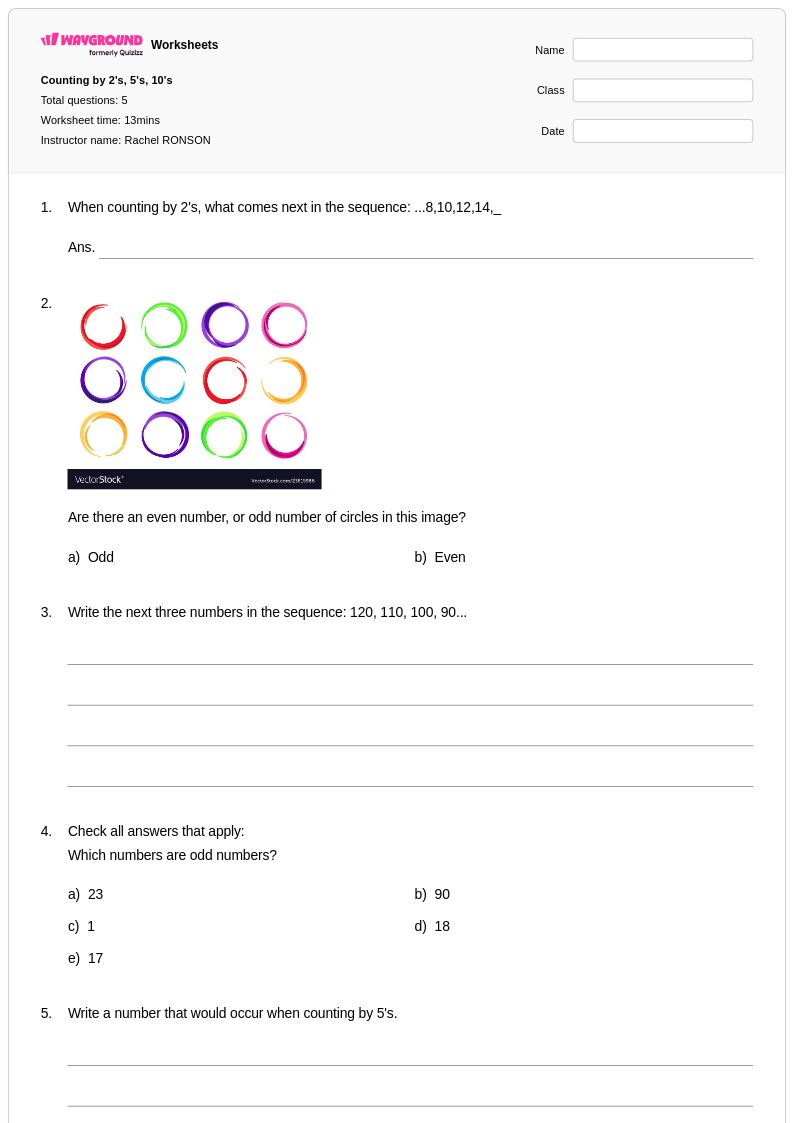
5 Q
2nd
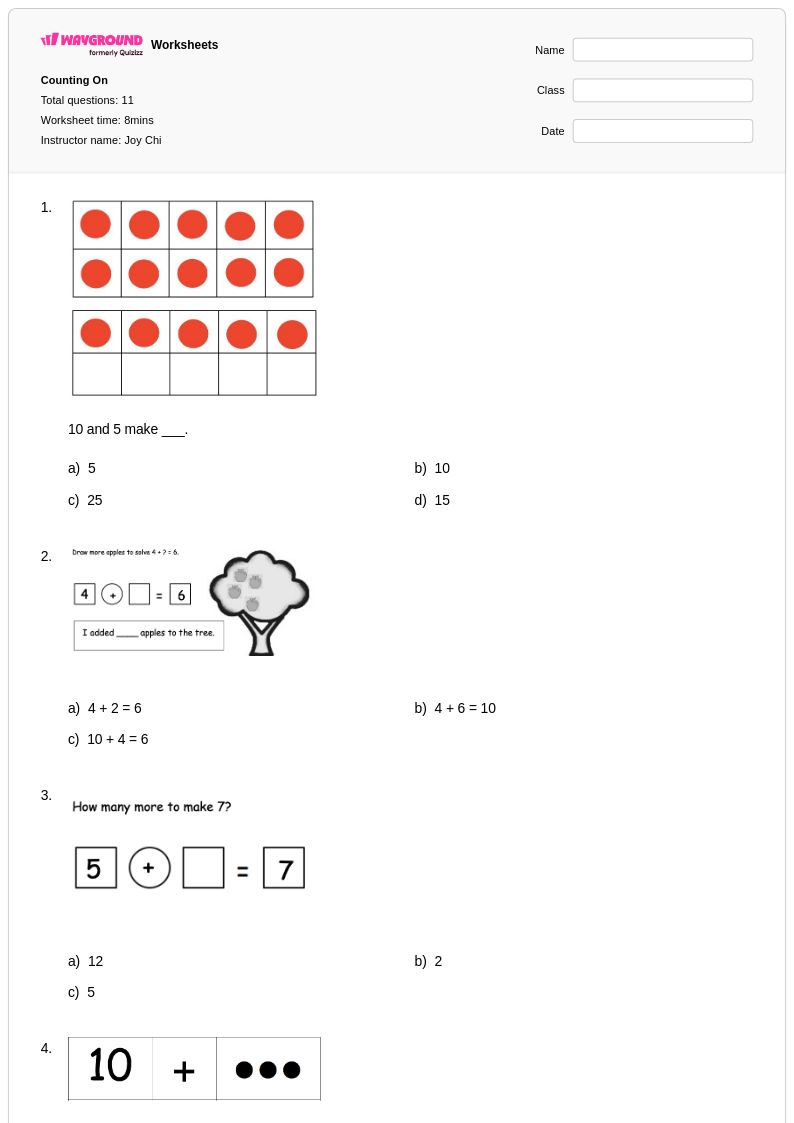
11 Q
1st
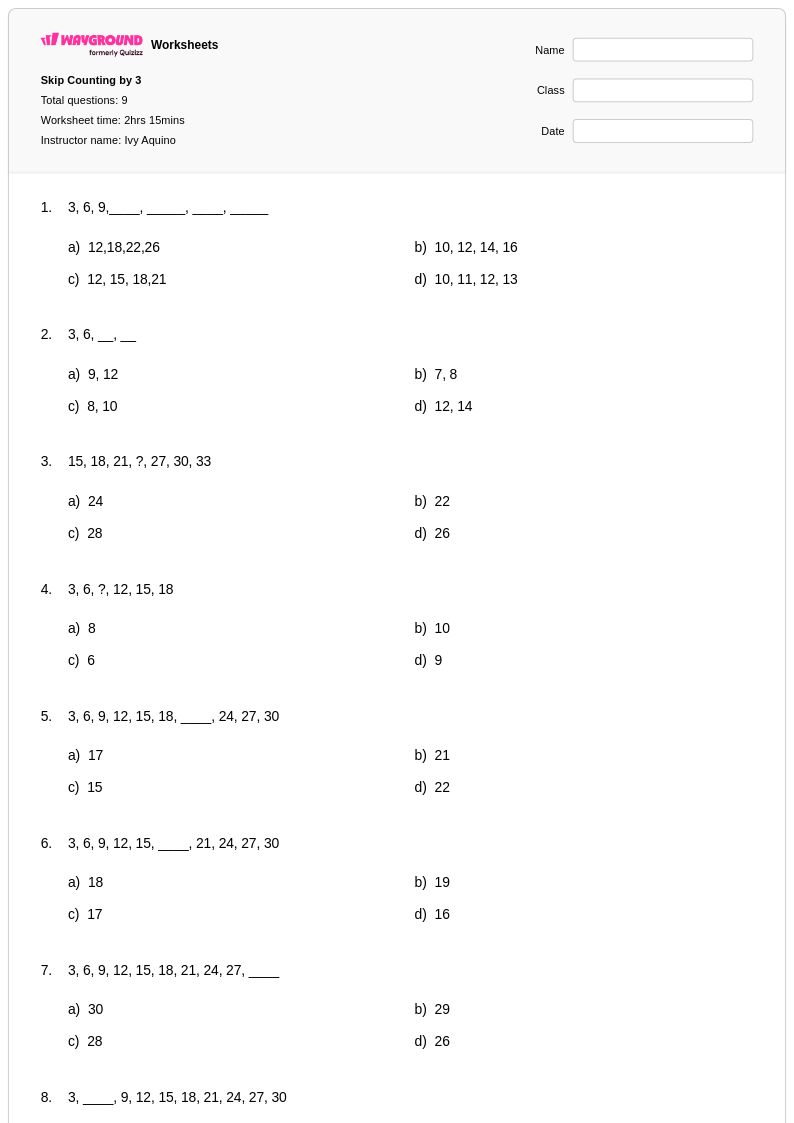
9 Q
1st - 3rd
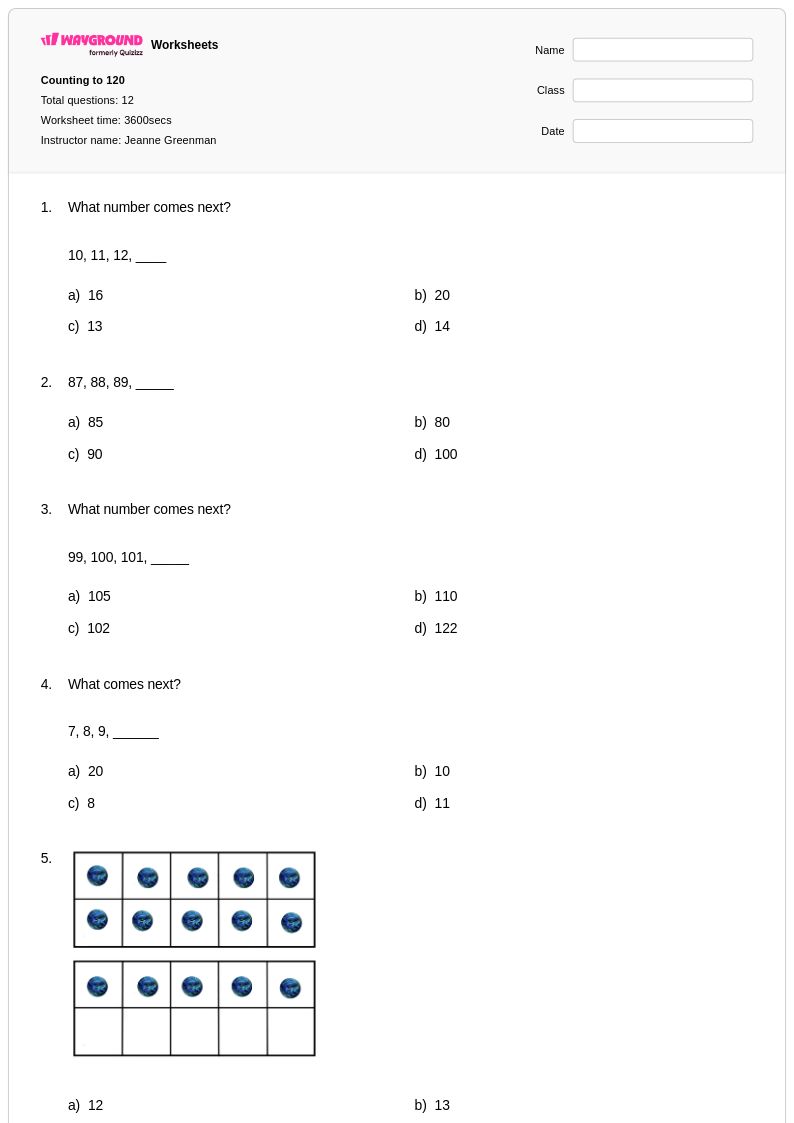
12 Q
1st
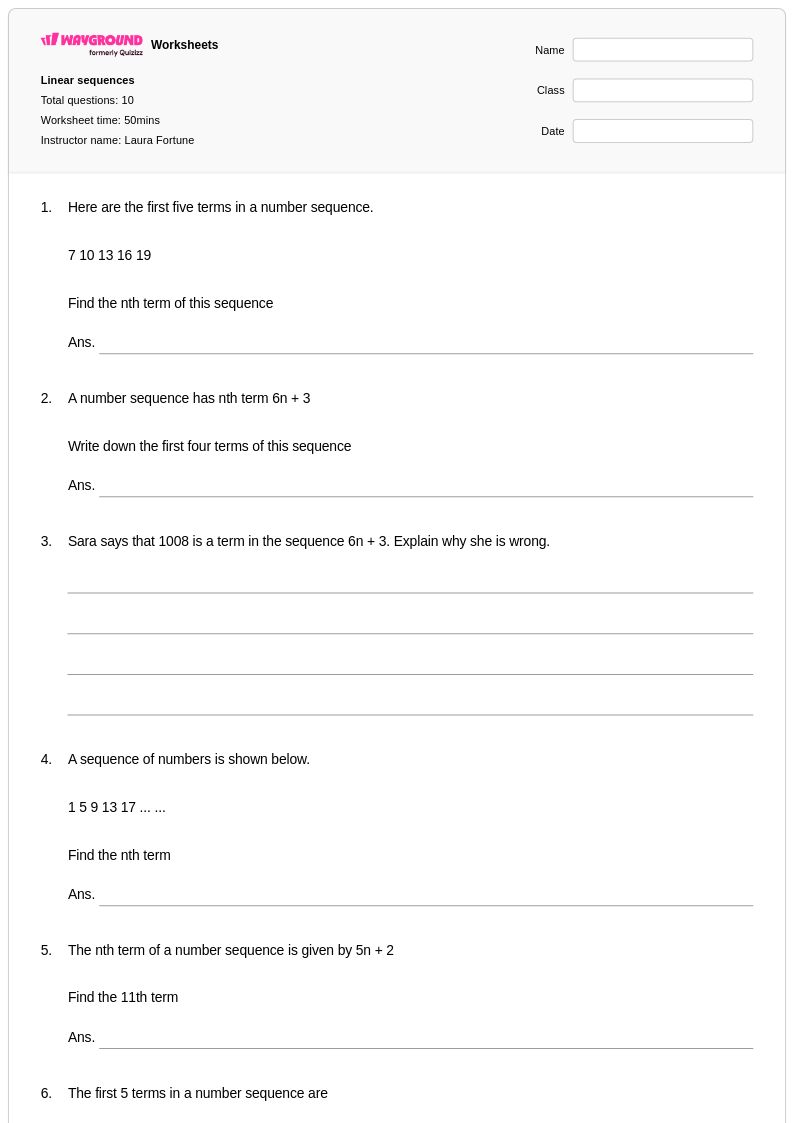
10 Q
10th
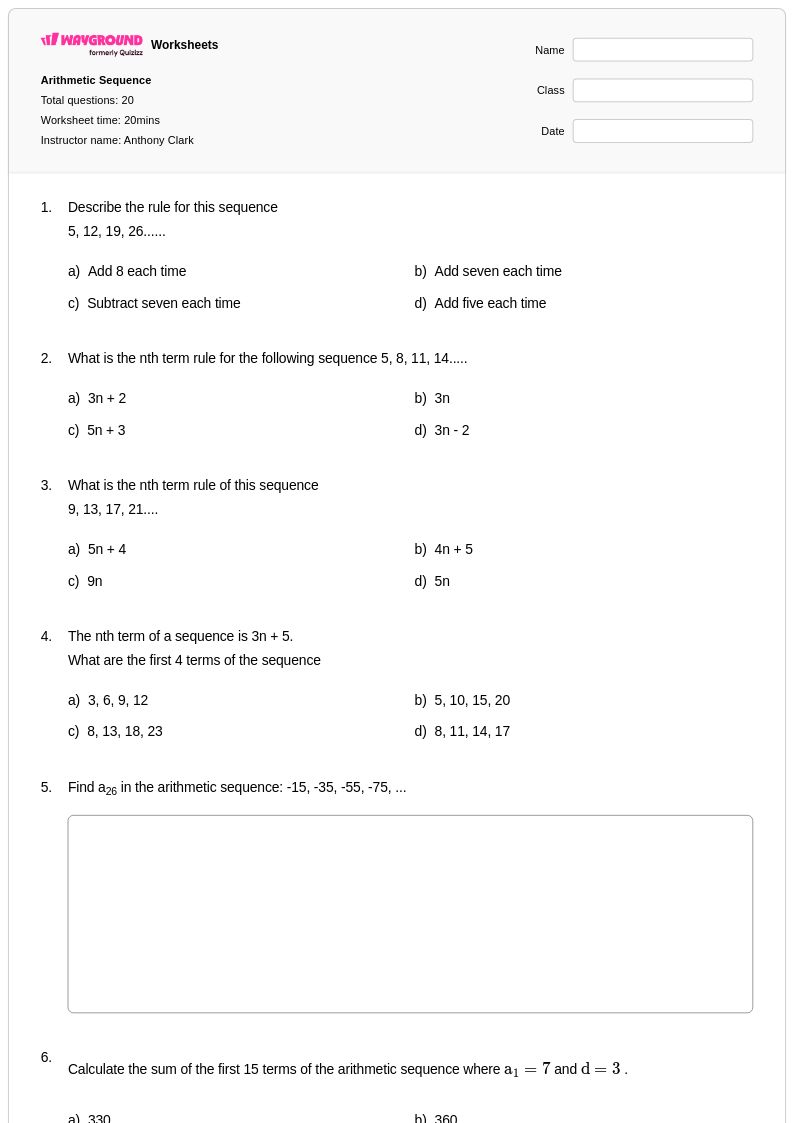
20 Q
8th - Uni
Explore Counting Sequences Worksheets by Grades
Explore Other Subject Worksheets for kindergarten
Explore printable Counting Sequences worksheets for Kindergarten
Counting sequences form the foundation of mathematical understanding for kindergarten students, and Wayground's comprehensive worksheet collection provides educators with expertly designed resources to build these essential early numeracy skills. These kindergarten counting sequences worksheets focus on helping young learners recognize, extend, and create numerical patterns through engaging practice problems that progress systematically from simple number recognition to more complex sequential thinking. Each worksheet includes a complete answer key and is available as a free printable pdf, allowing teachers to seamlessly integrate these materials into their lesson plans while providing students with hands-on practice that strengthens their ability to count forward and backward, identify missing numbers in sequences, and understand the logical progression of numbers within various ranges.
Wayground, formerly Quizizz, empowers teachers with access to millions of teacher-created counting sequences resources that can be easily discovered through robust search and filtering capabilities designed specifically for educational needs. The platform's standards-aligned materials support differentiated instruction by offering worksheets at multiple complexity levels, enabling educators to customize content for individual student needs whether for remediation or enrichment activities. Teachers can efficiently plan their kindergarten mathematics instruction using both printable and digital formats, with pdf downloads readily available for classroom distribution and flexible customization tools that allow modifications to suit specific learning objectives. This comprehensive approach to counting sequences instruction helps educators provide targeted skill practice while tracking student progress through structured, developmentally appropriate mathematical experiences.
FAQs
How do I teach counting sequences in kindergarten?
What counting-sequence exercises are appropriate for kindergarten?
What mistakes do kindergarten students make with number sequences?
How can I use a Wayground kindergarten counting-sequences worksheet?
How do kindergarten counting sequences align with Common Core math?
How can I differentiate counting-sequence work for kindergarten learners?
What grade do students begin learning counting sequences?