
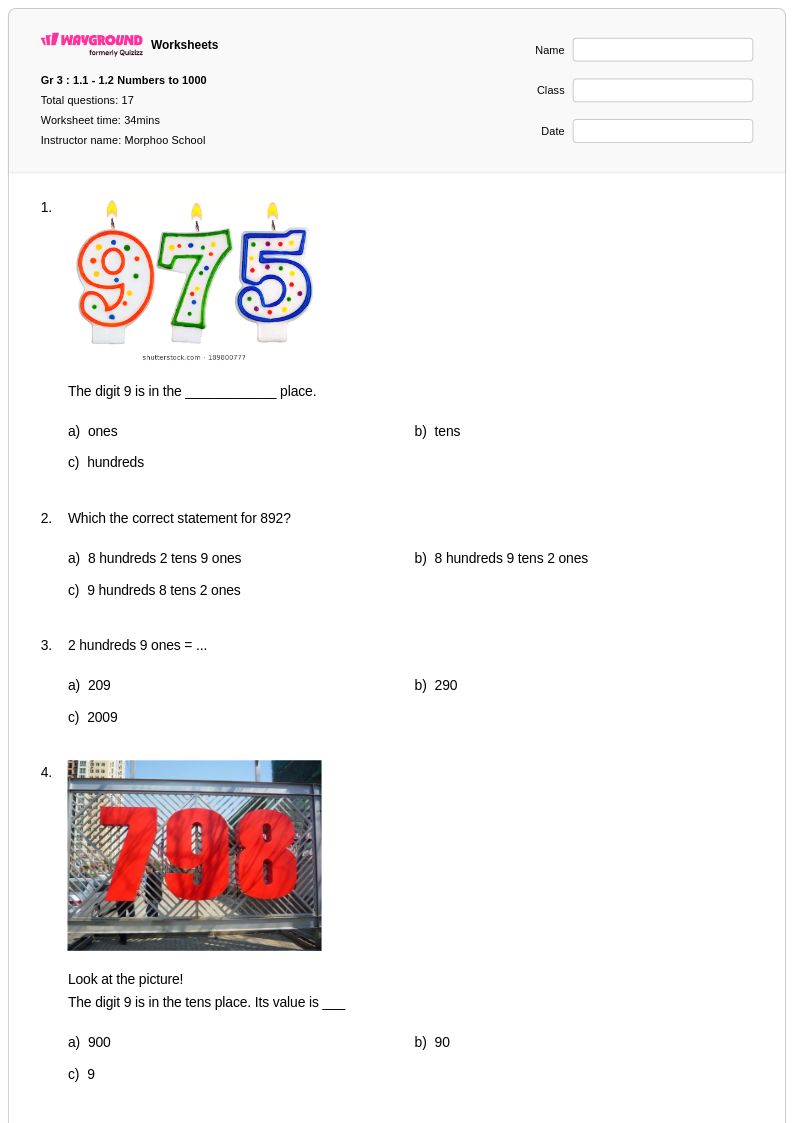
17 Q
3rd
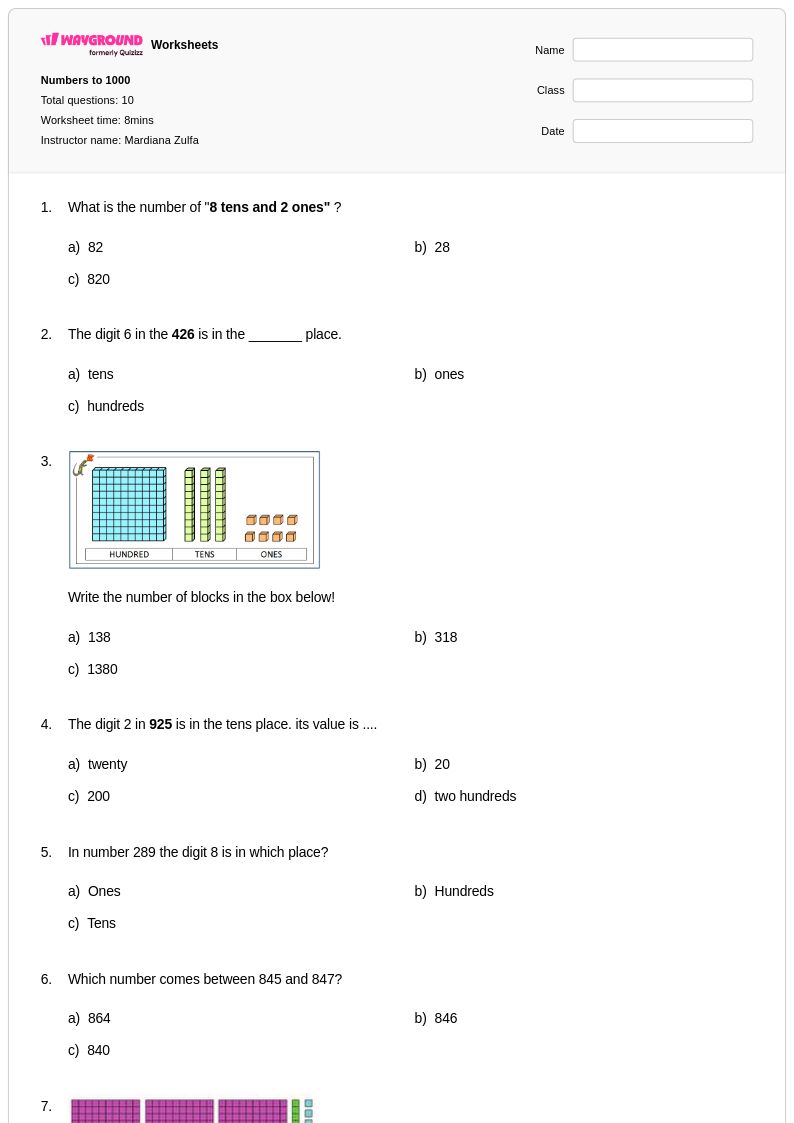
10 Q
2nd - 3rd
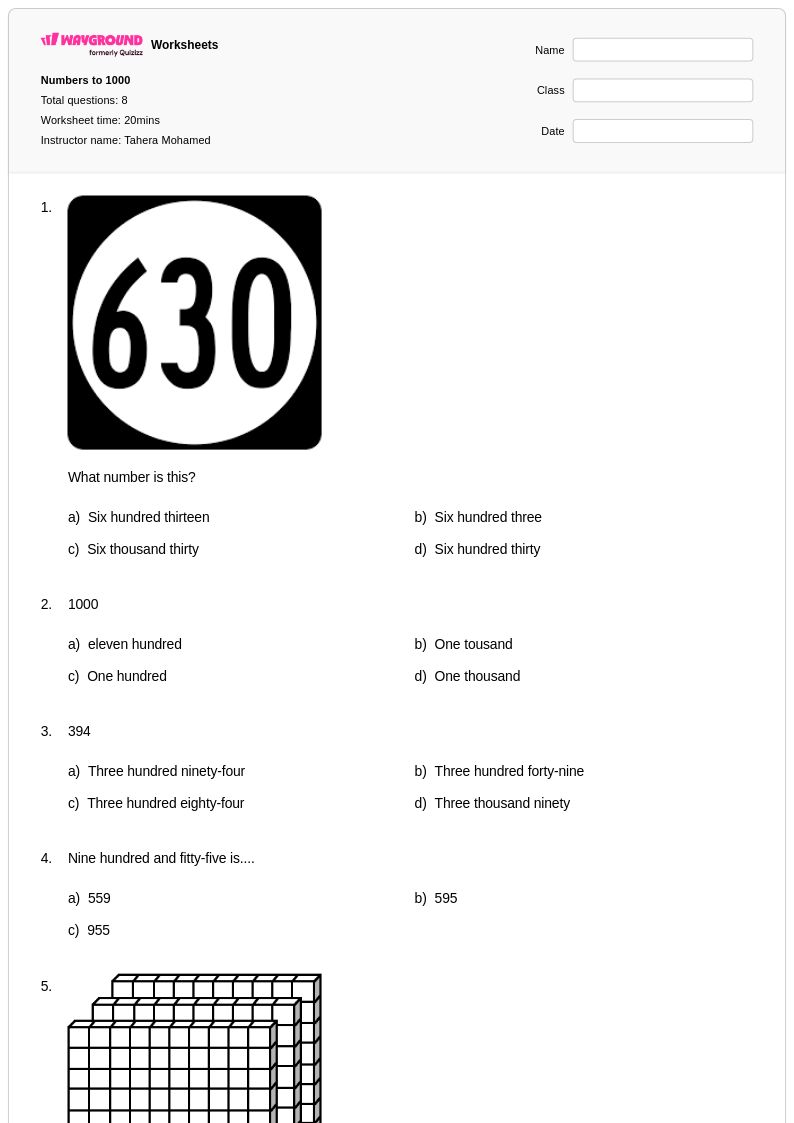
8 Q
3rd
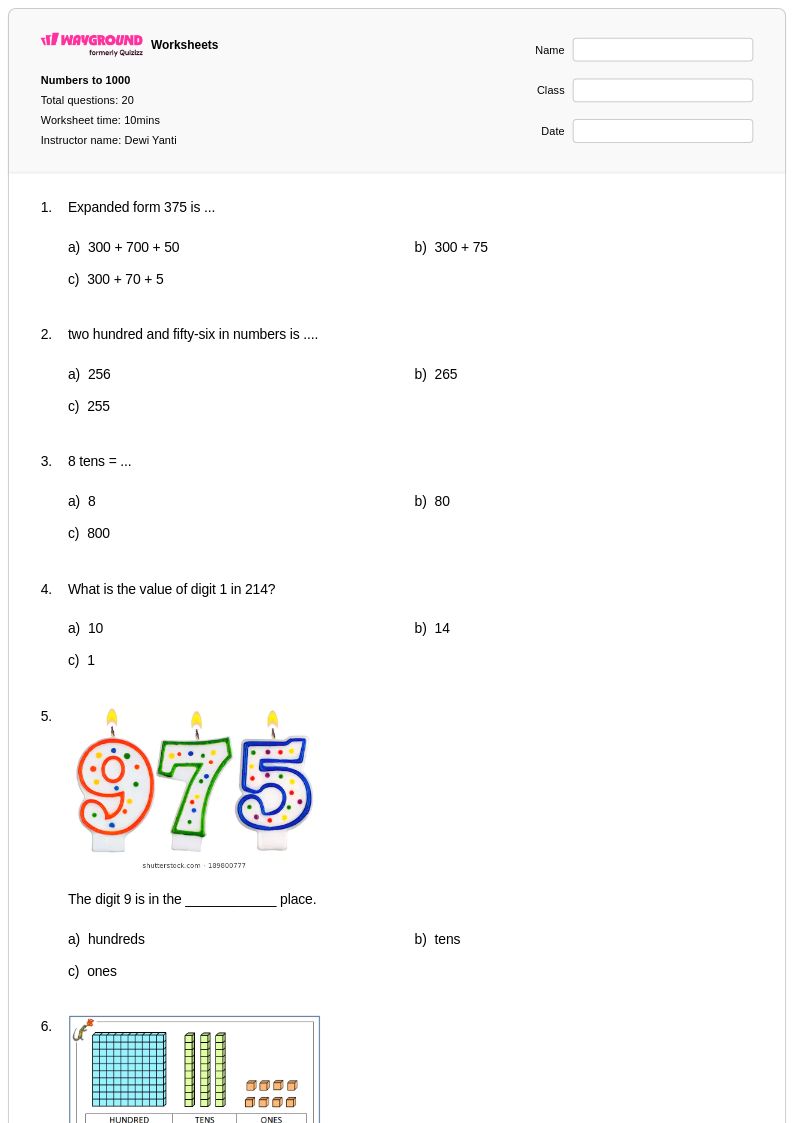
20 Q
2nd
20 Q
2nd
11 Q
2nd
20 Q
2nd - 4th
25 Q
2nd
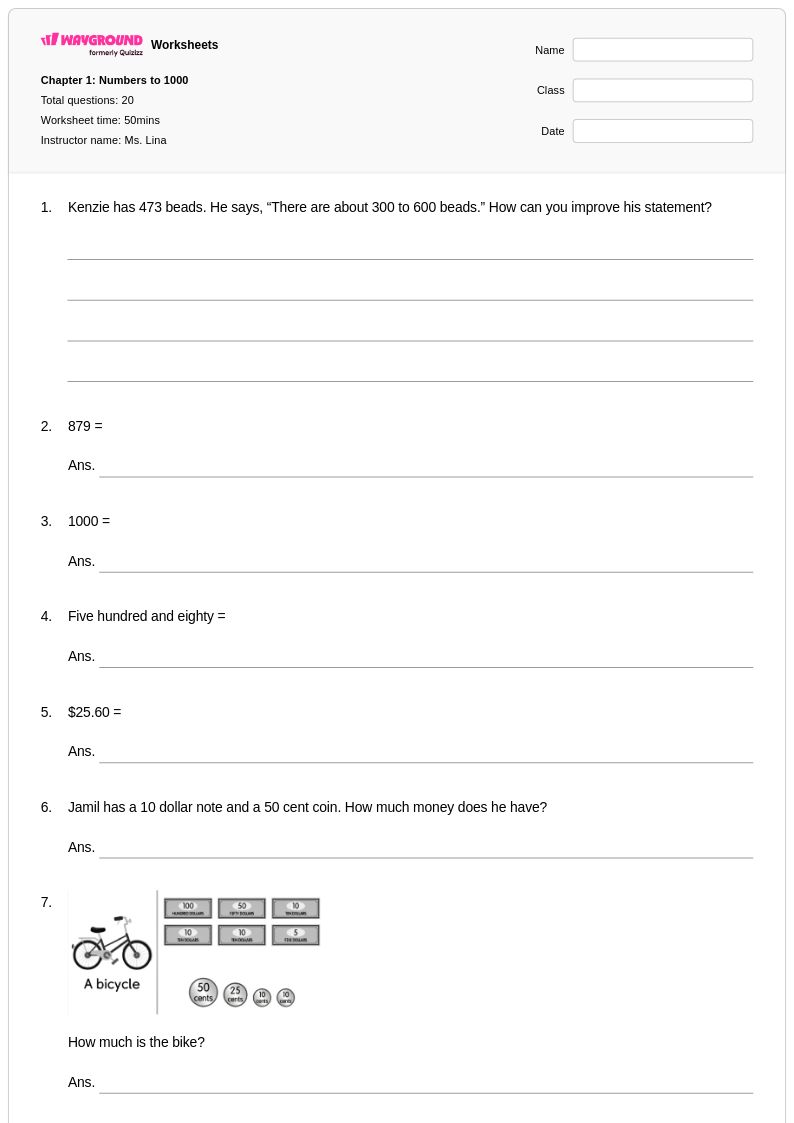
20 Q
3rd
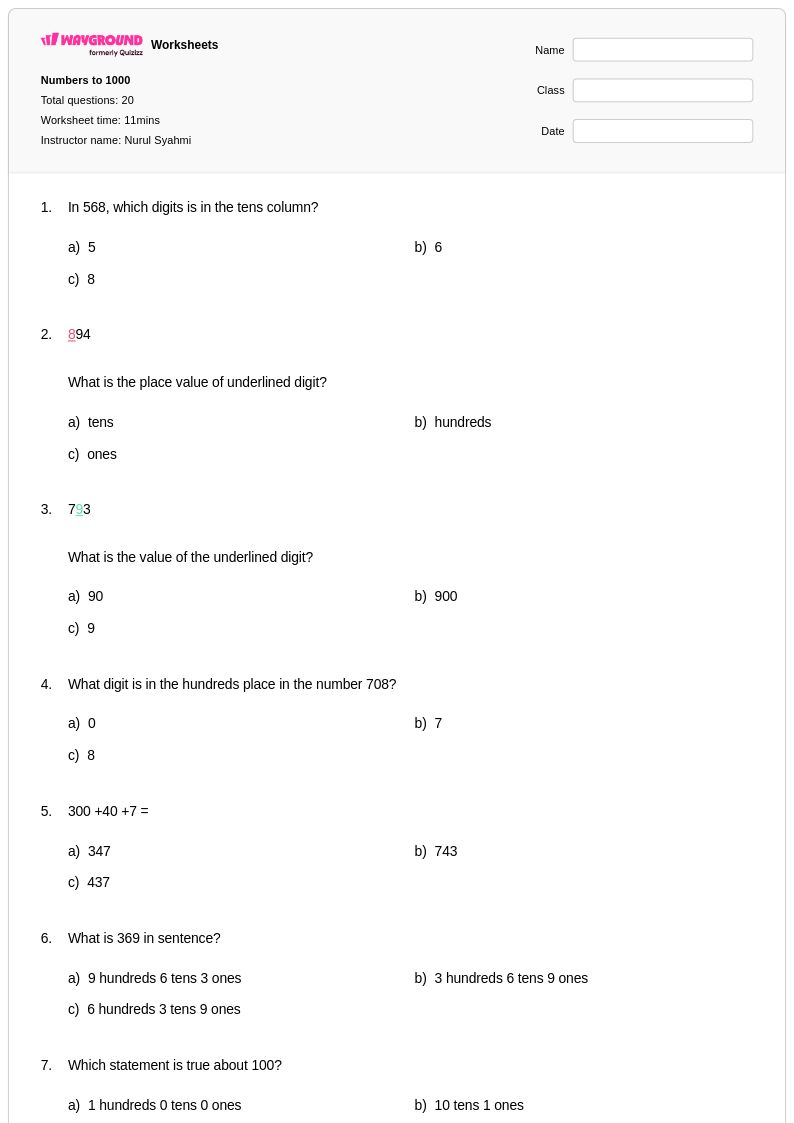
20 Q
2nd
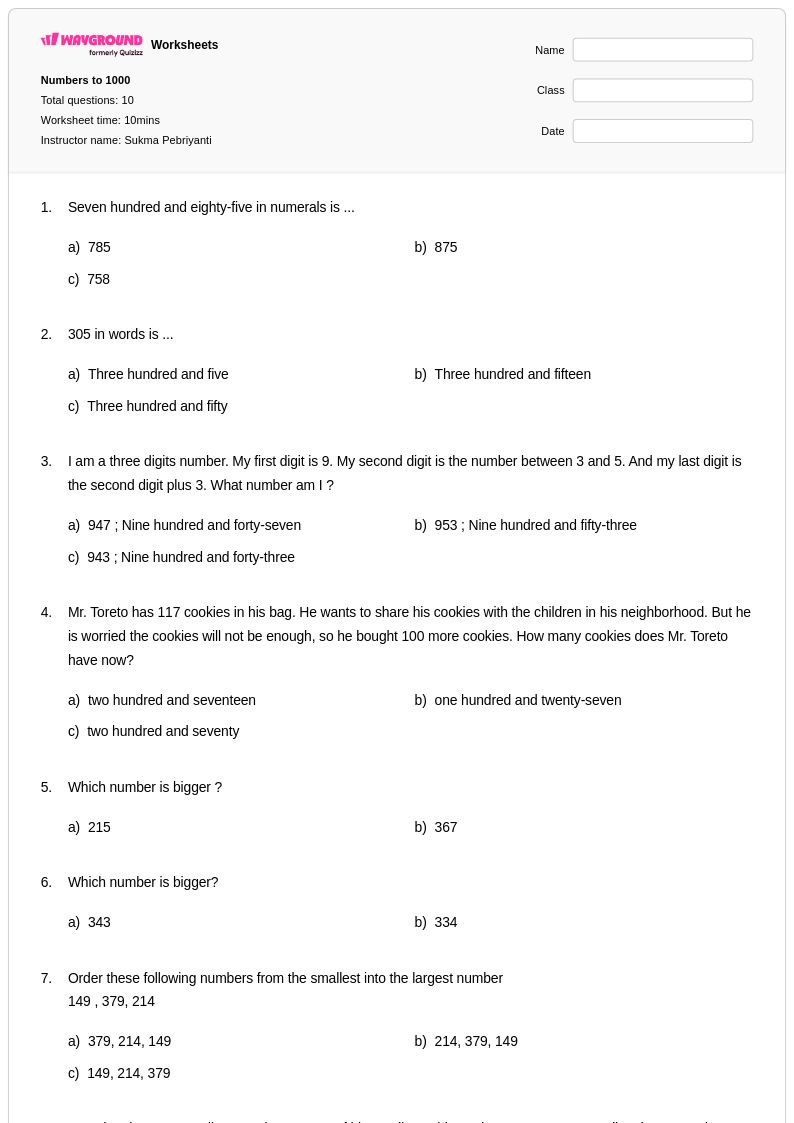
10 Q
3rd
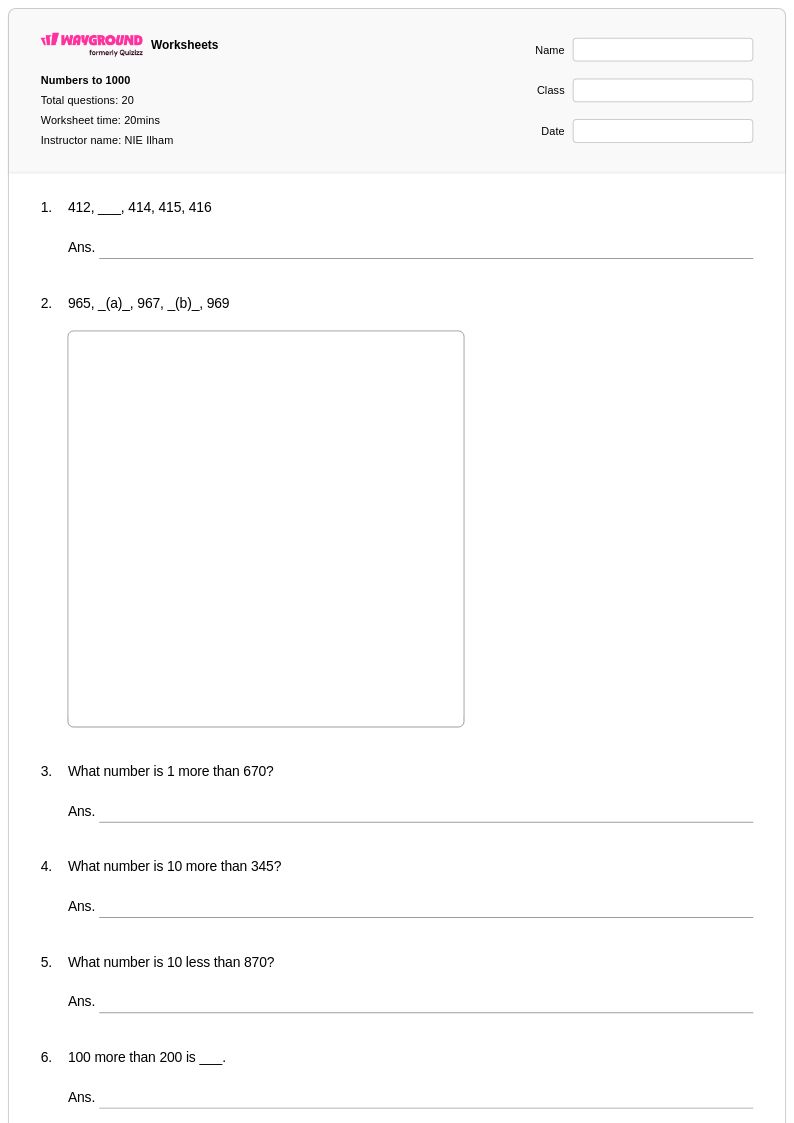
20 Q
1st - 2nd
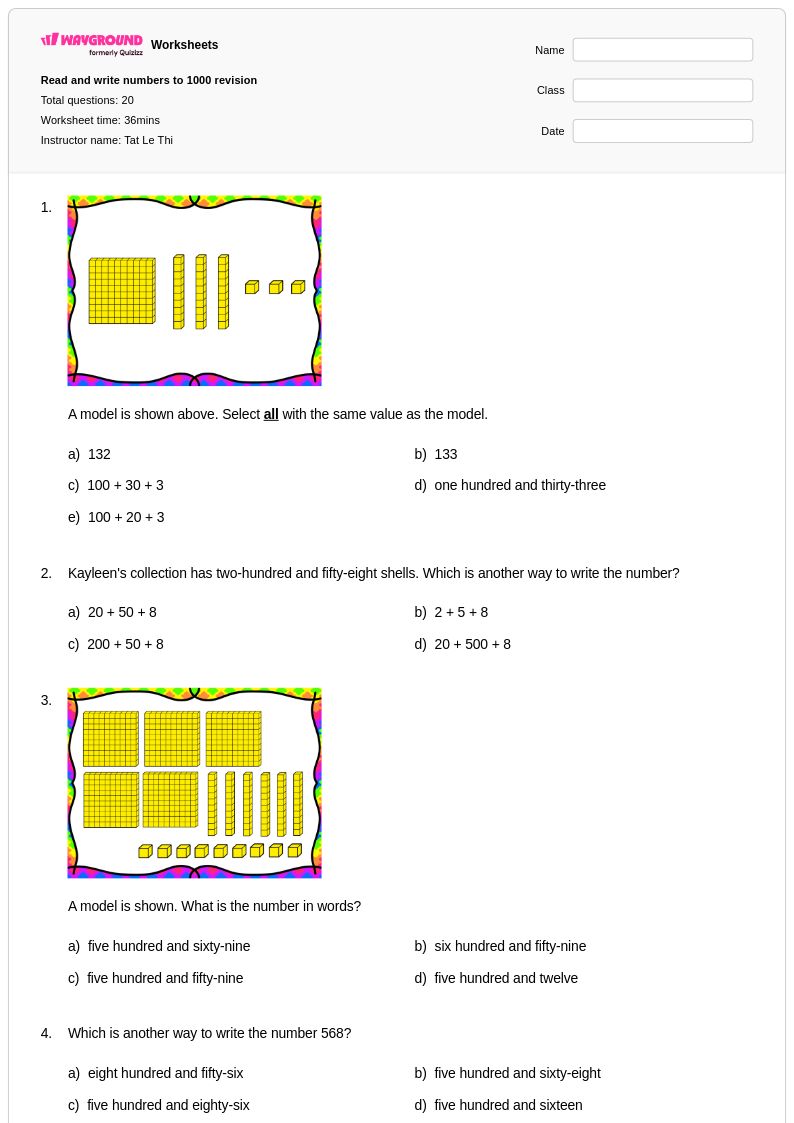
20 Q
2nd
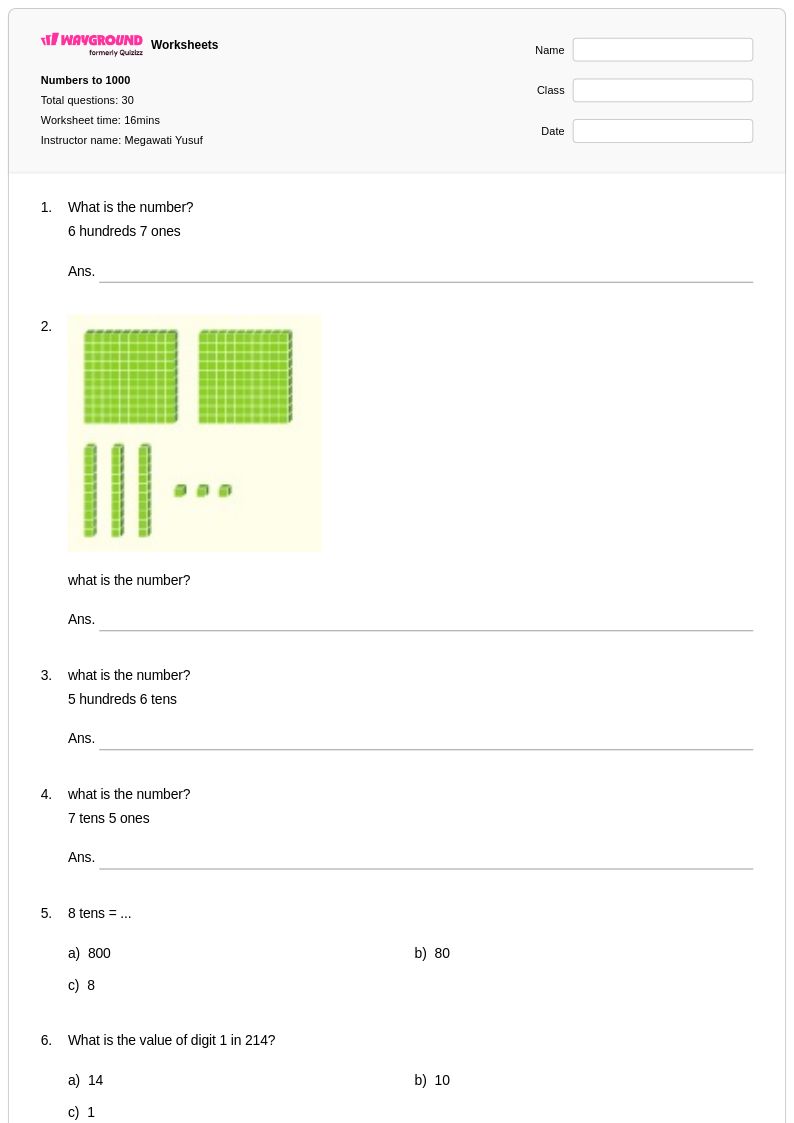
30 Q
3rd - 4th
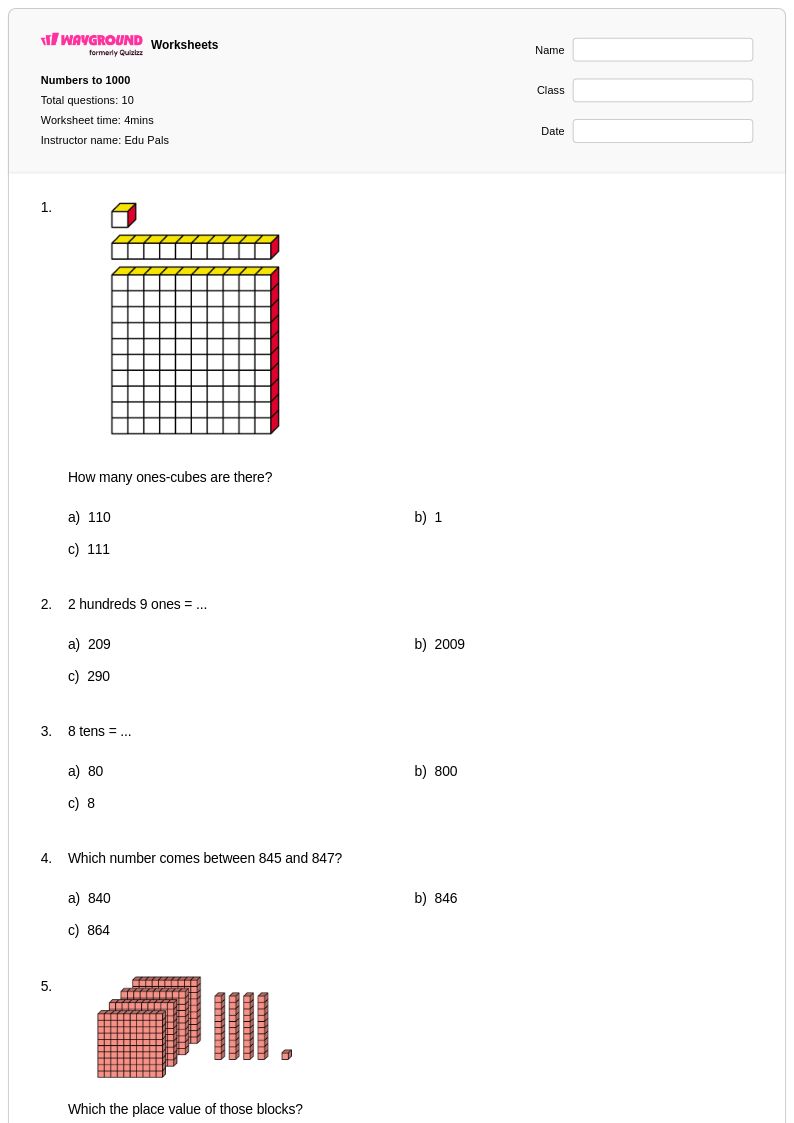
10 Q
2nd
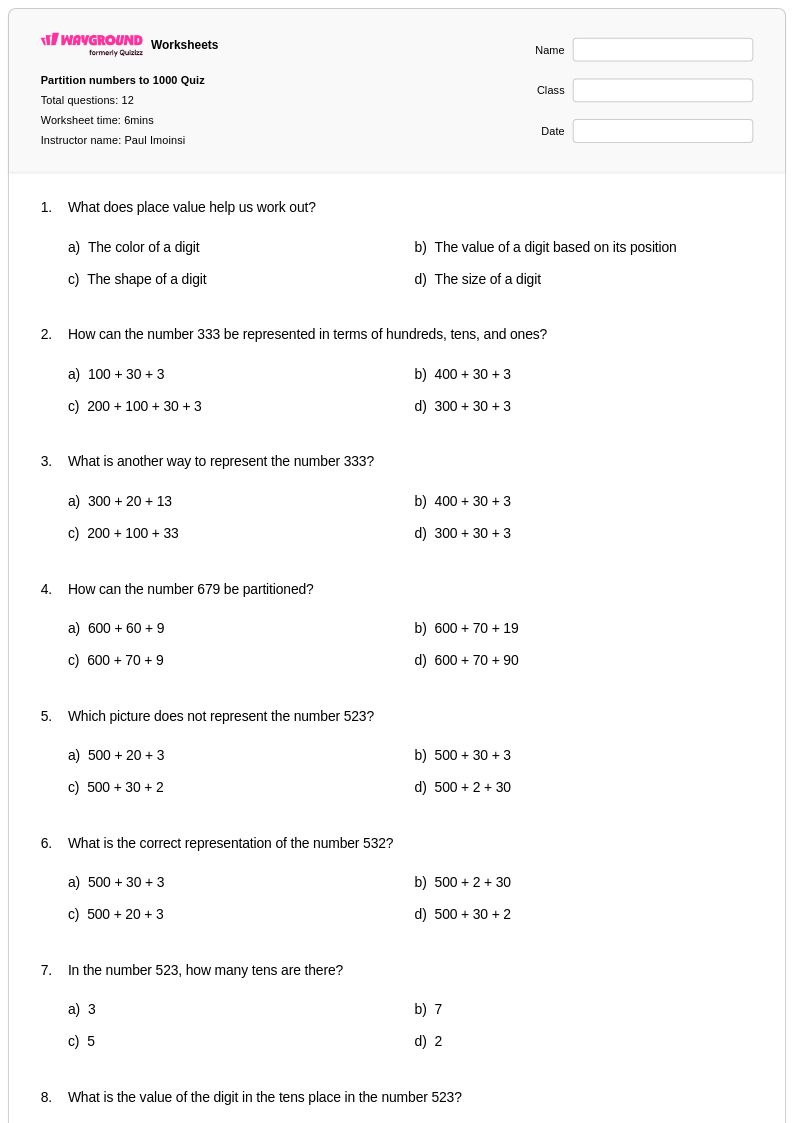
12 Q
4th
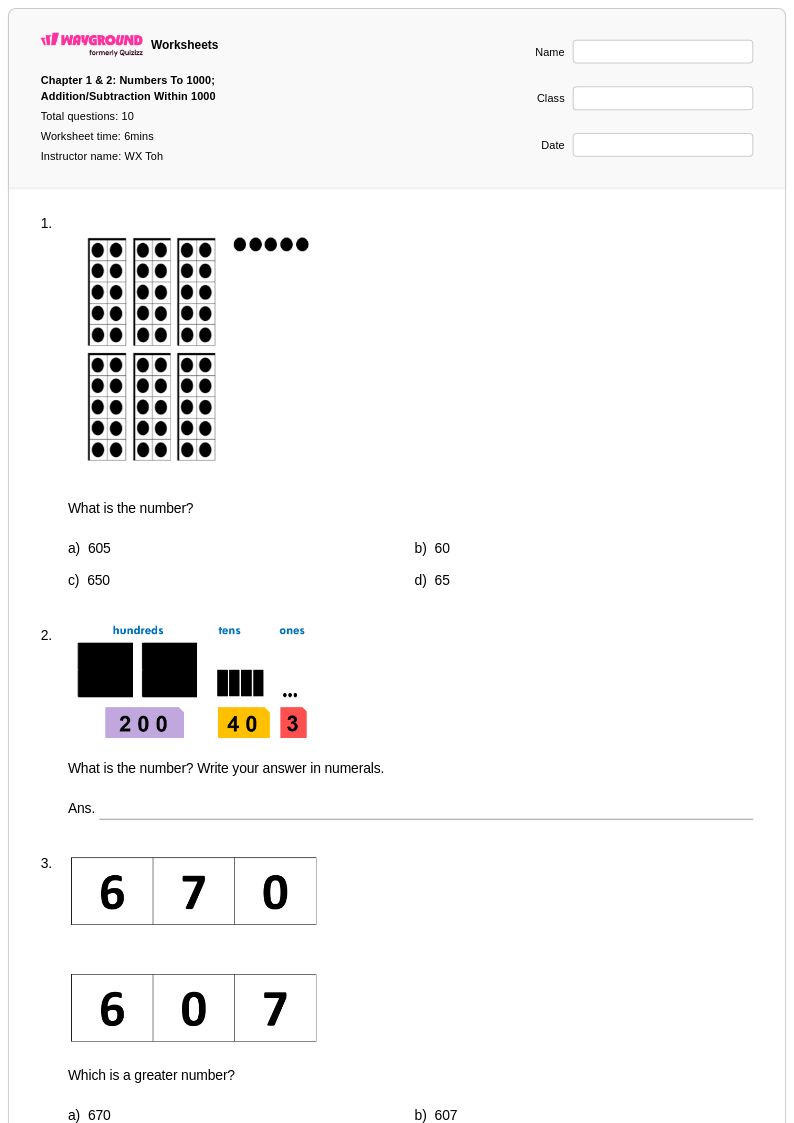
10 Q
2nd
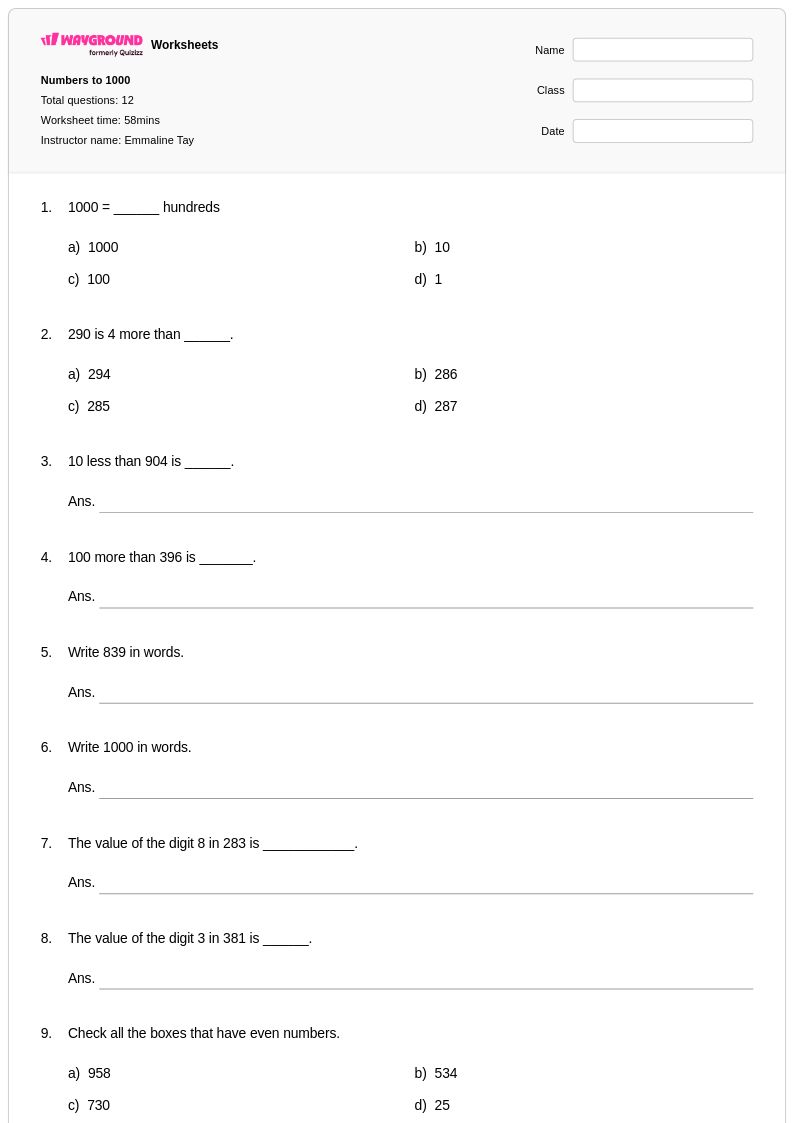
12 Q
2nd
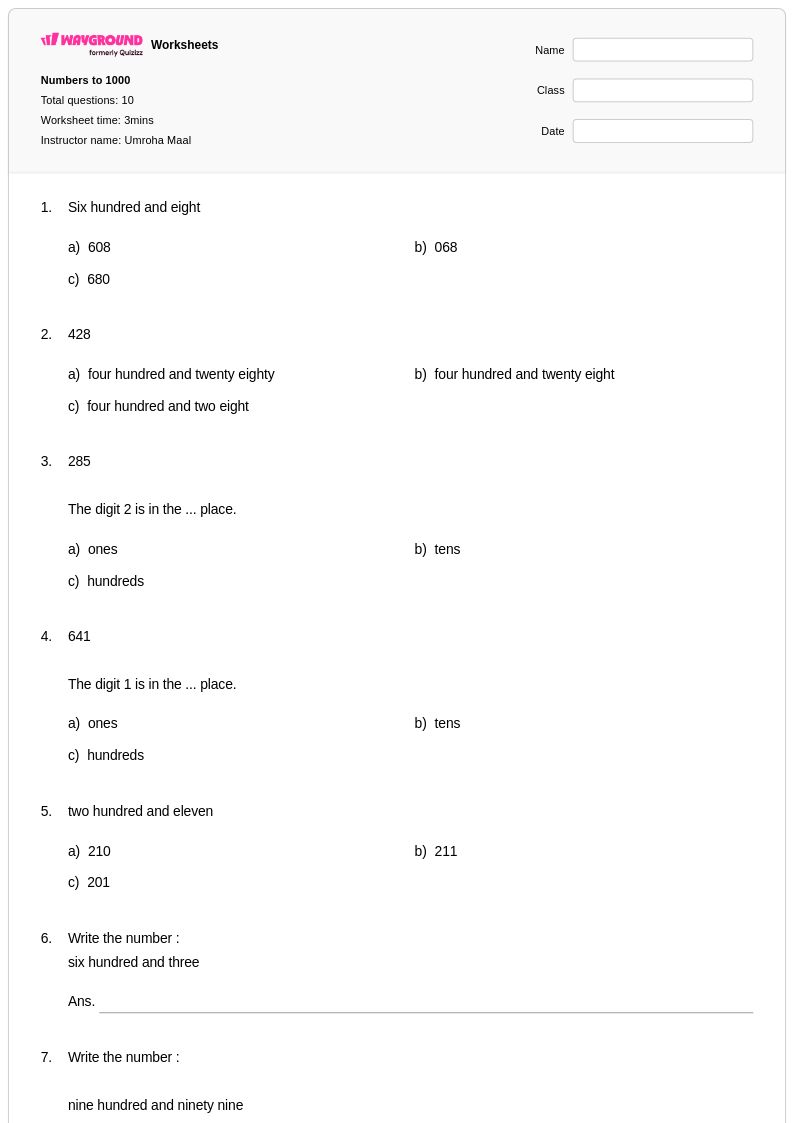
10 Q
3rd
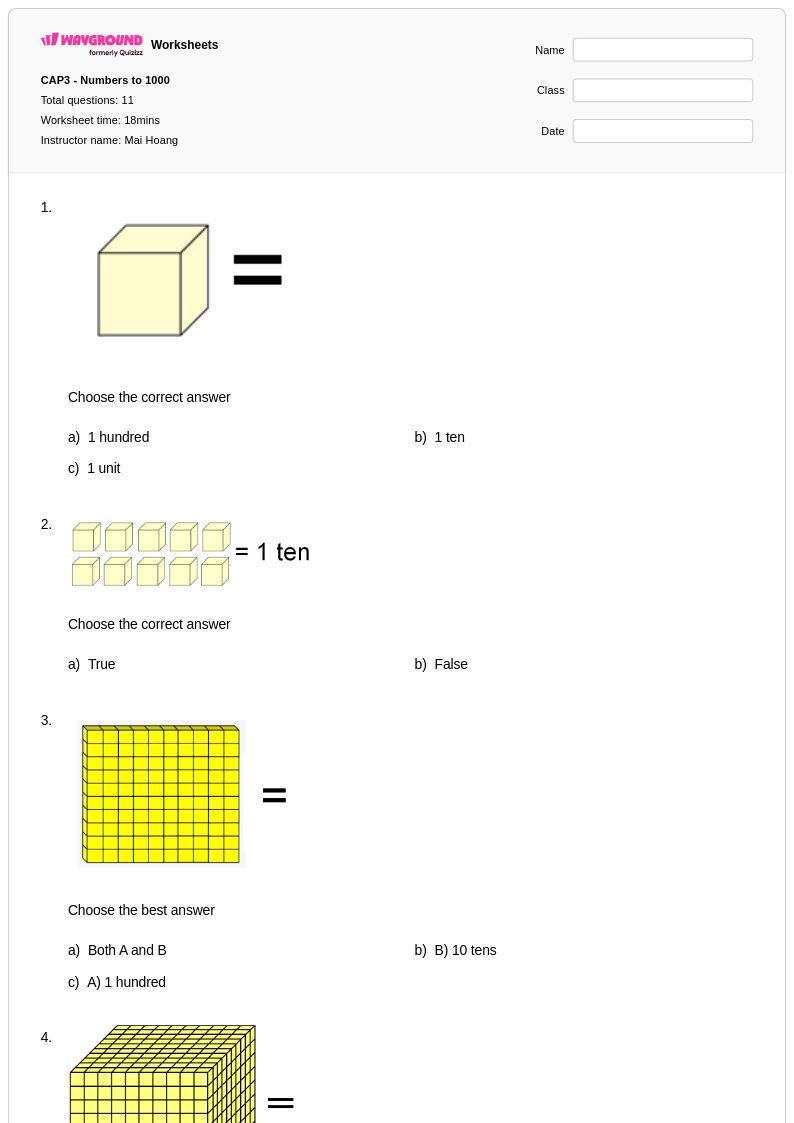
11 Q
3rd - 4th
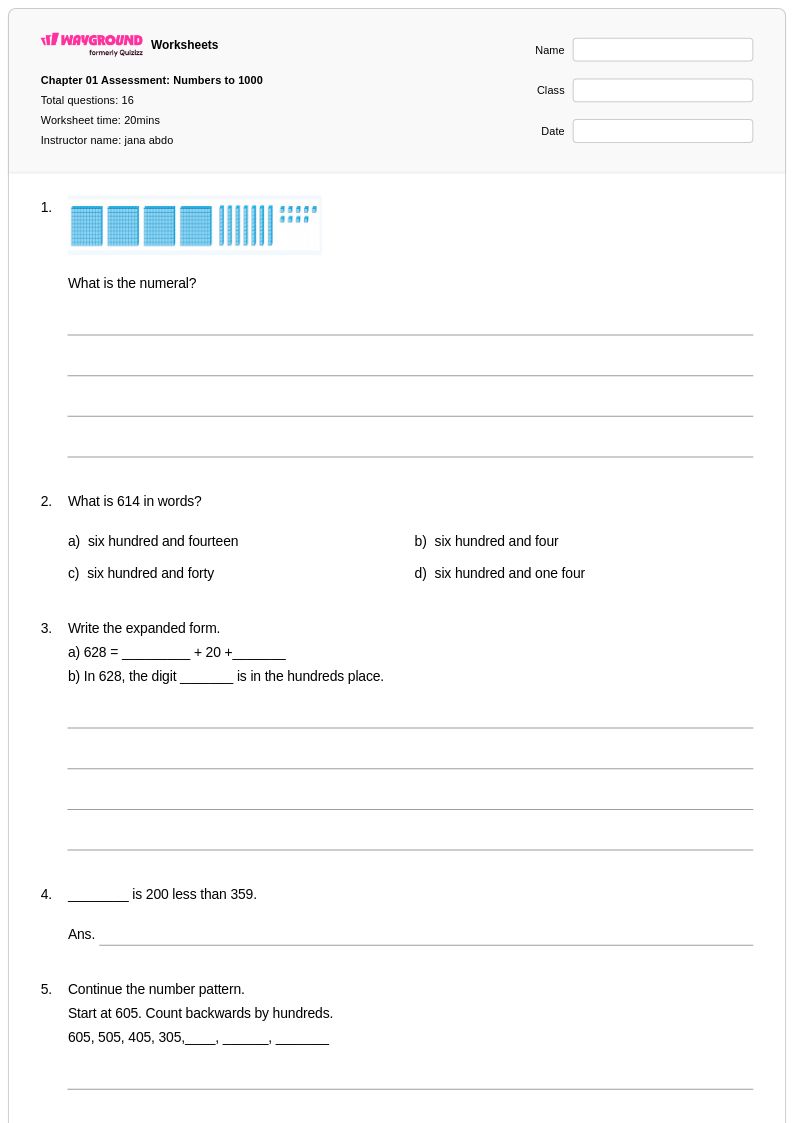
16 Q
3rd
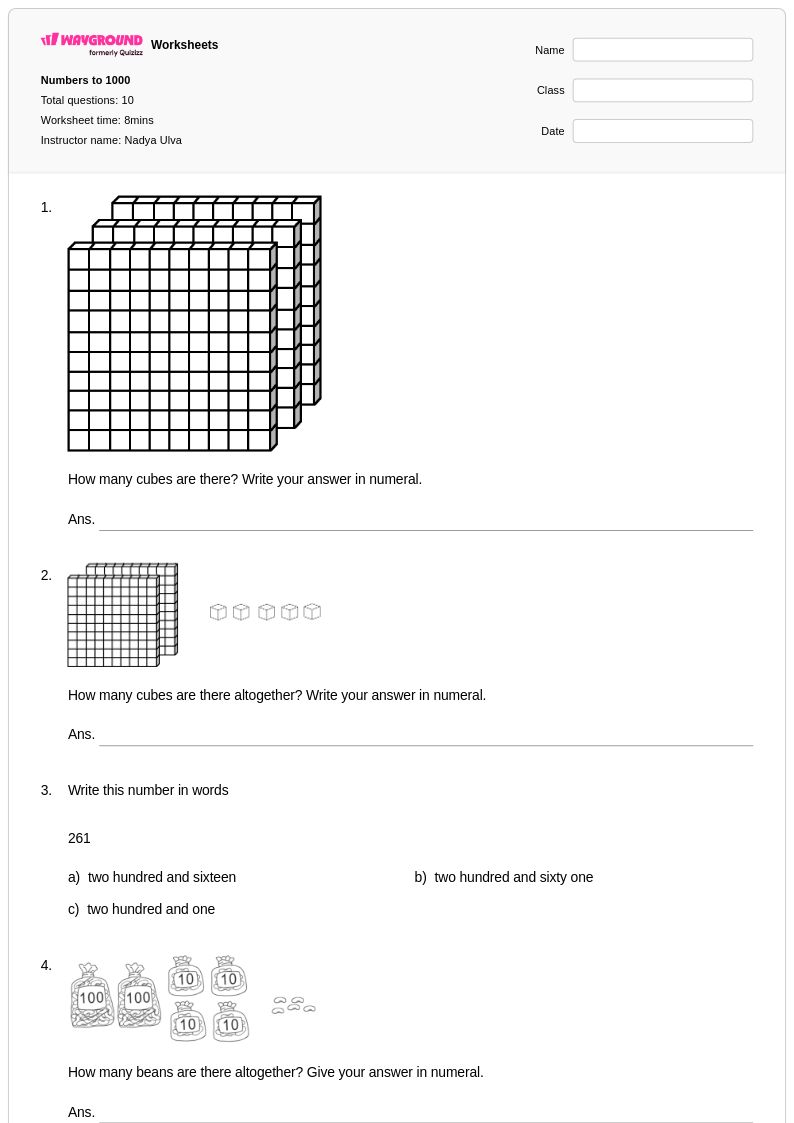
10 Q
3rd
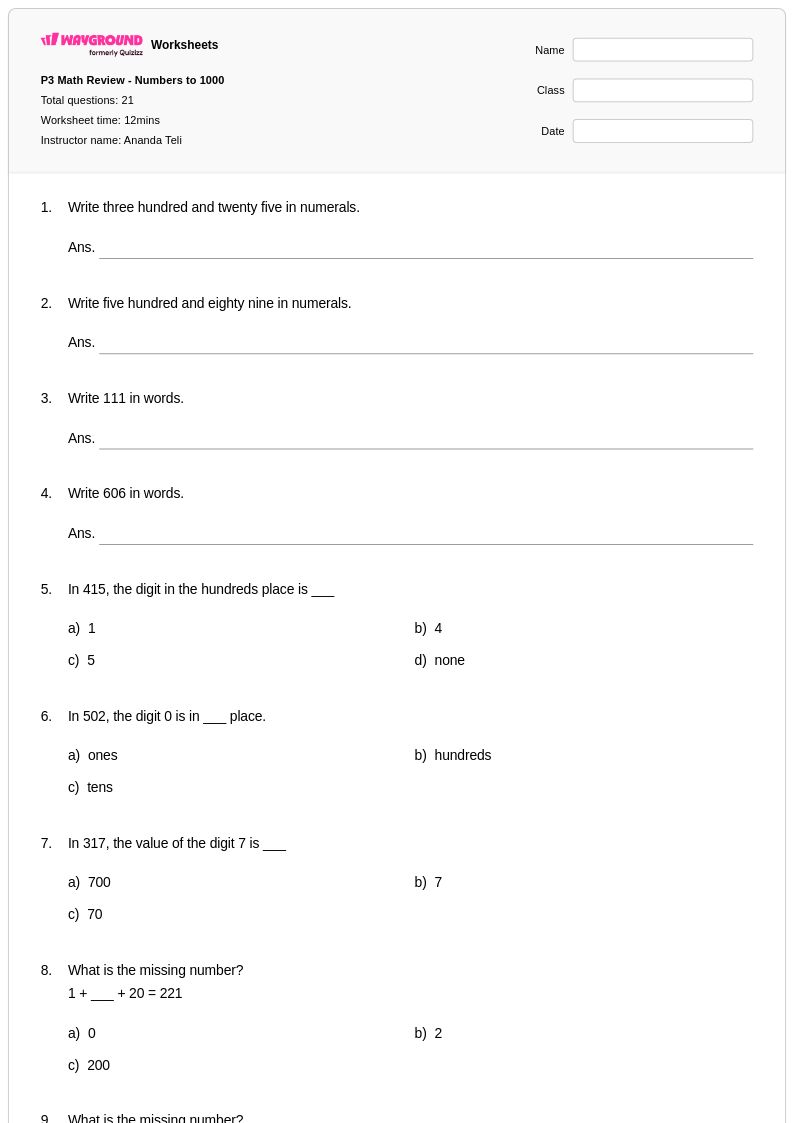
21 Q
3rd
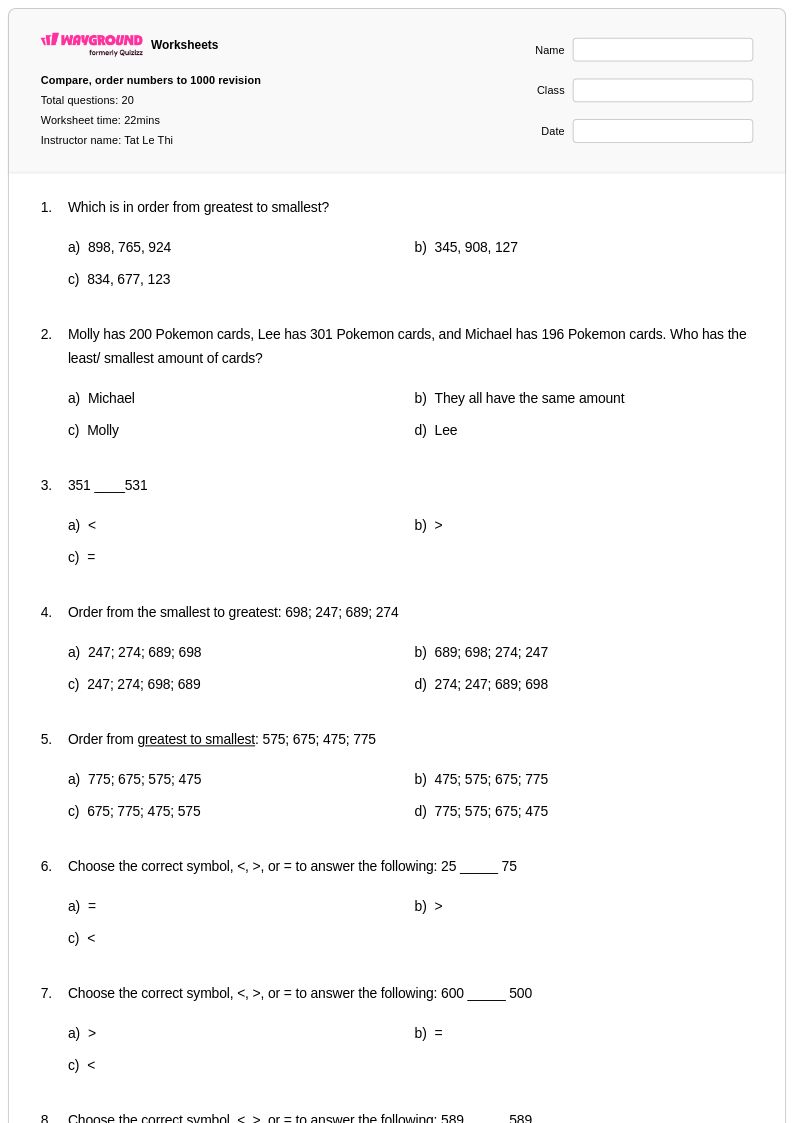
20 Q
2nd
Explore Other Subject Worksheets for kindergarten
Explore printable Numbers to 1000 worksheets for Kindergarten
Numbers to 1000 worksheets for kindergarten students available through Wayground (formerly Quizizz) provide essential foundational practice in early number recognition and counting skills that prepare young learners for advanced mathematical concepts. These comprehensive printables focus on helping kindergarteners develop crucial number sense abilities including identifying numerals, understanding quantity relationships, and building familiarity with larger numbers beyond the typical kindergarten range. Each worksheet contains carefully structured practice problems that guide students through progressive number exploration, from recognizing single digits to understanding the concept of hundreds, with accompanying answer keys that enable teachers and parents to provide immediate feedback and support during independent learning sessions.
Wayground (formerly Quizizz) empowers educators with access to millions of teacher-created resources specifically designed for kindergarten number sense instruction, featuring robust search and filtering capabilities that allow teachers to quickly locate materials aligned with specific learning objectives and standards. The platform's differentiation tools enable instructors to customize worksheets based on individual student needs, whether providing additional support for struggling learners or offering enrichment opportunities for advanced kindergarteners ready to explore larger number concepts. These versatile resources are available in both printable PDF format for traditional classroom use and digital formats for interactive learning, supporting comprehensive lesson planning while facilitating targeted remediation and skill practice that builds confidence in early mathematical thinking.
FAQs
Are numbers to 1000 typically taught in kindergarten?
How can I introduce large numbers like 1000 to kindergarteners?
What activities help kindergarteners explore numbers to 1000?
How can I use these worksheets with my kindergarten class?
How does this topic relate to kindergarten math standards?