Free Printable Fibonacci Sequence Worksheets for Year 4
Year 4 Fibonacci Sequence worksheets from Wayground offer free printables and practice problems that help students discover number patterns, explore mathematical relationships, and develop critical thinking skills through engaging PDF activities with complete answer keys.
Explore printable Fibonacci Sequence worksheets for Year 4
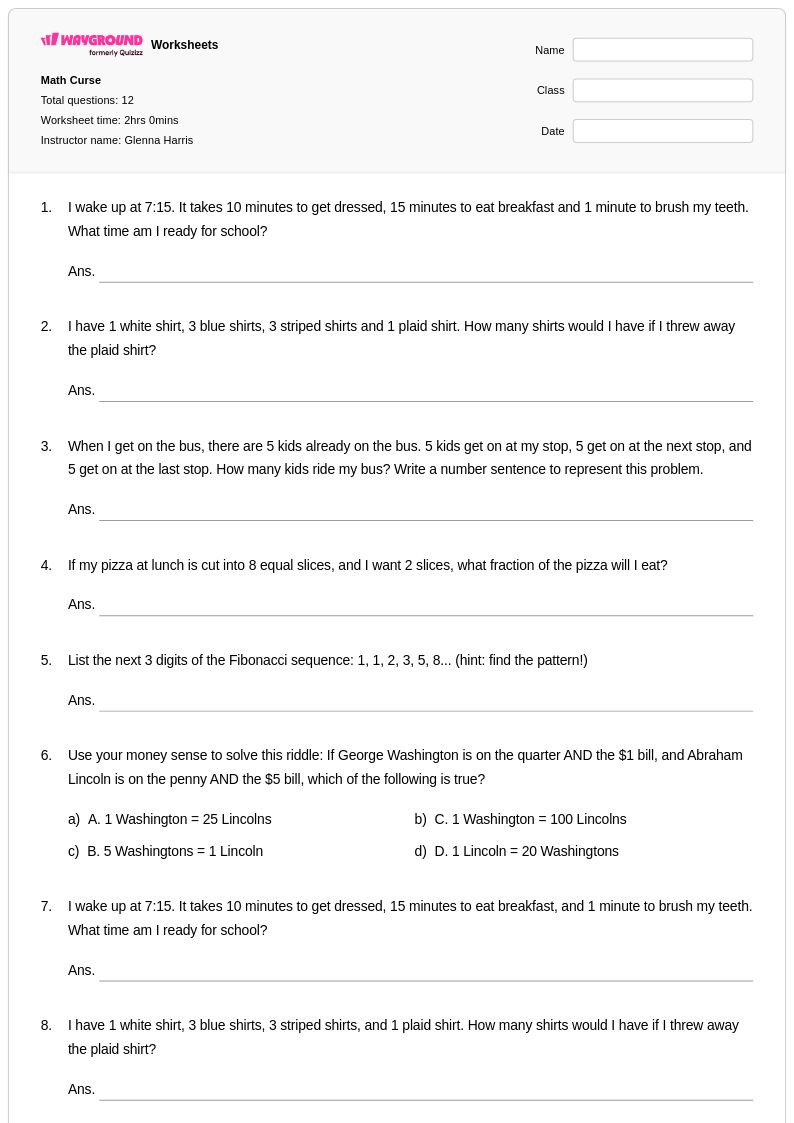
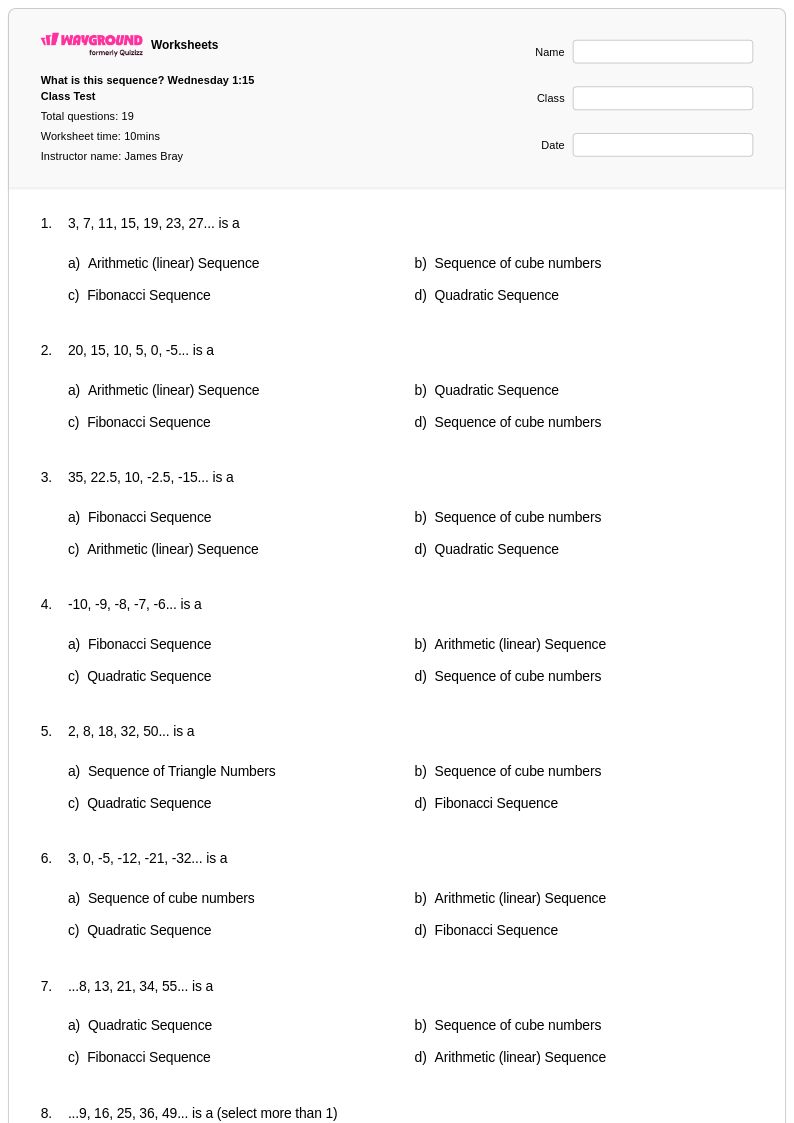
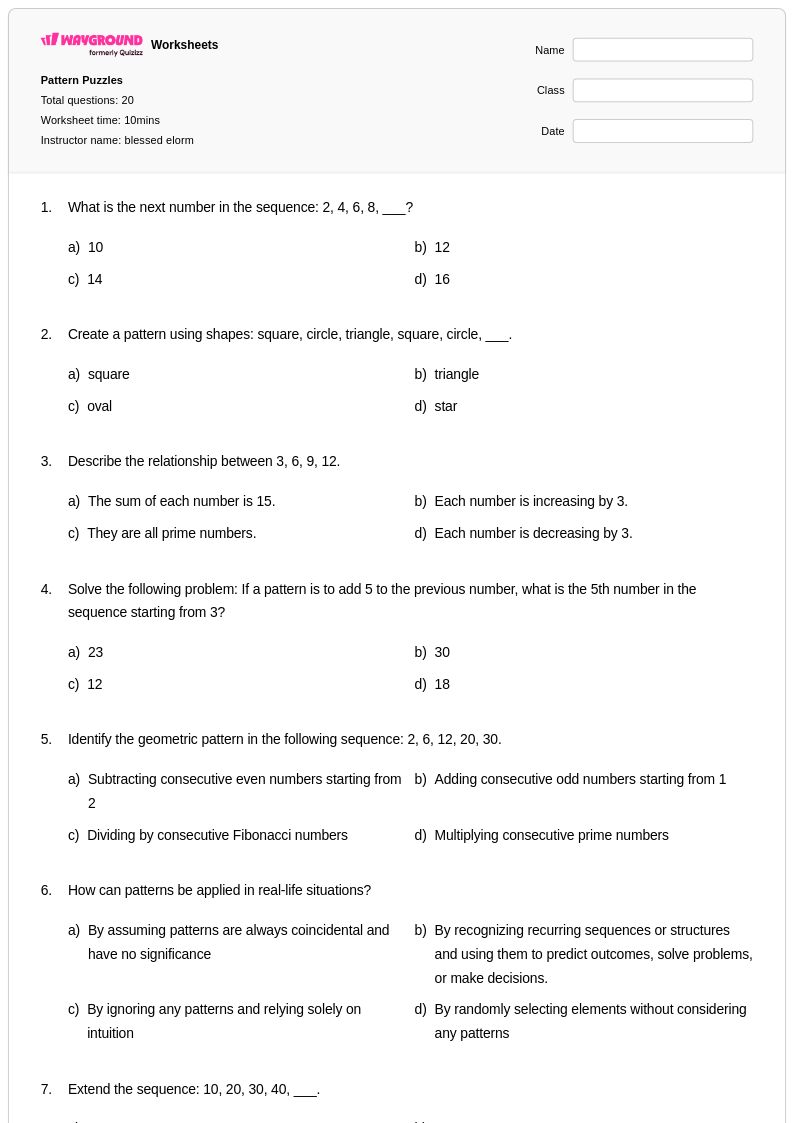
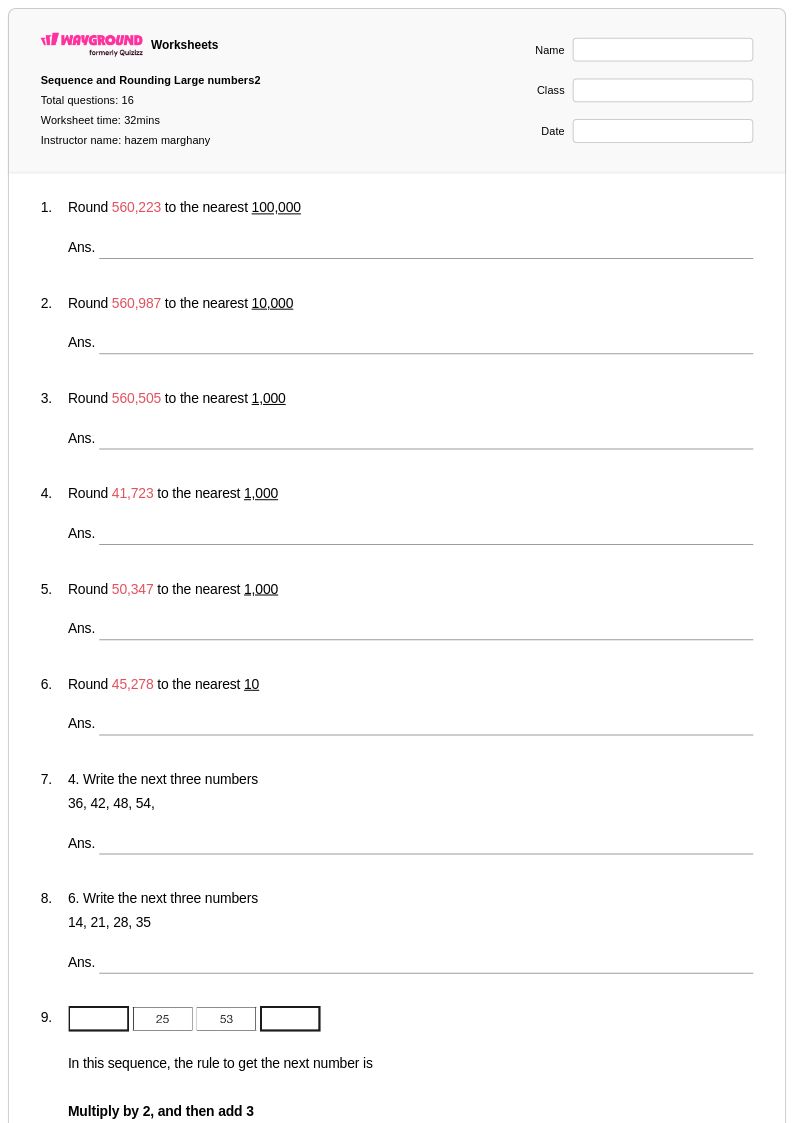
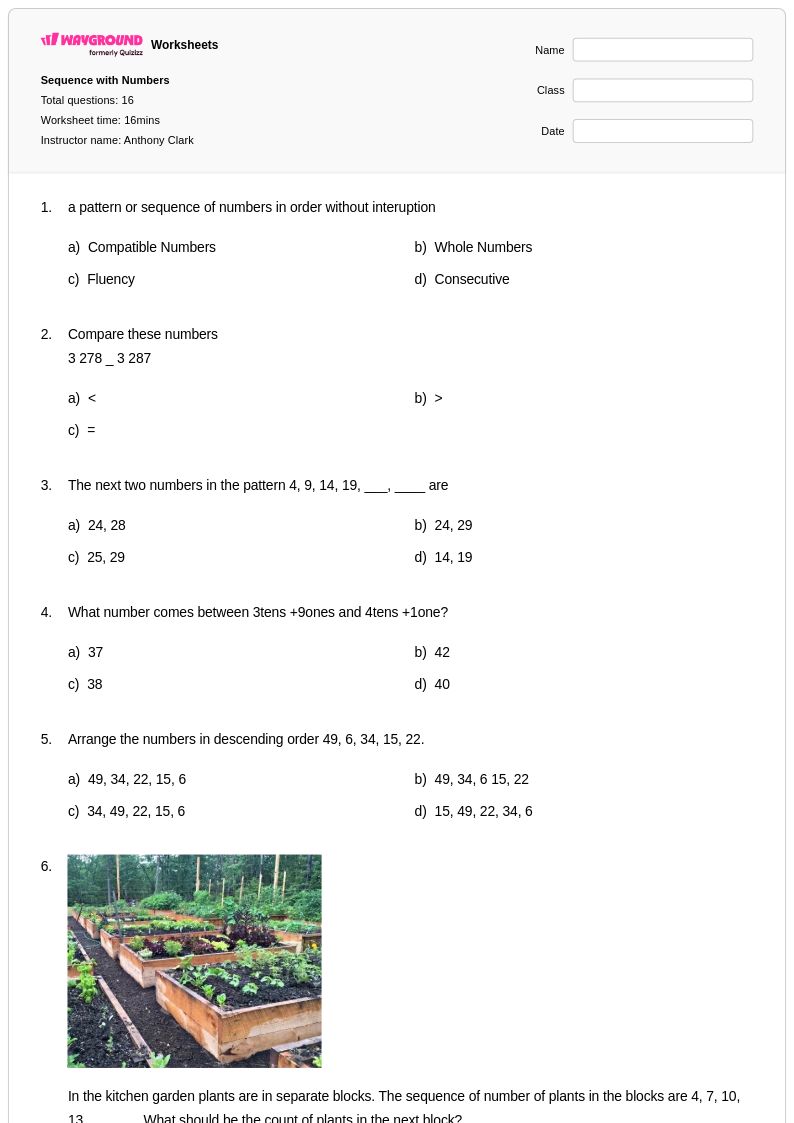
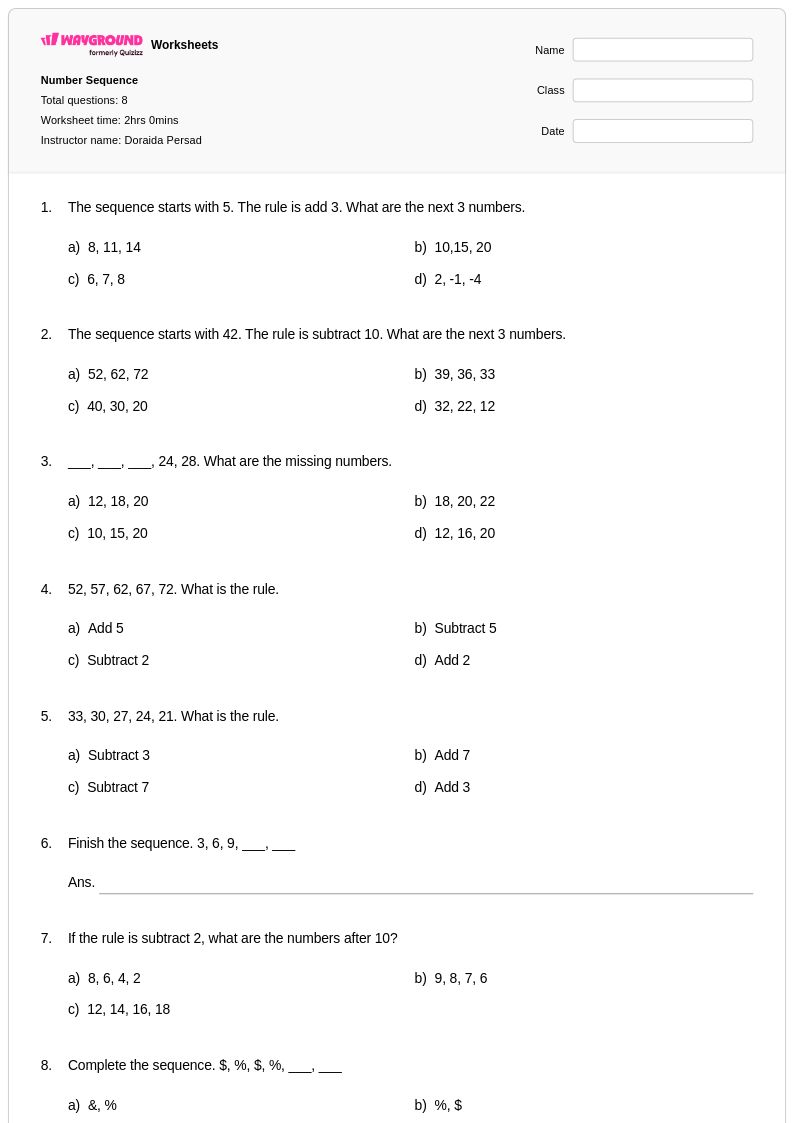
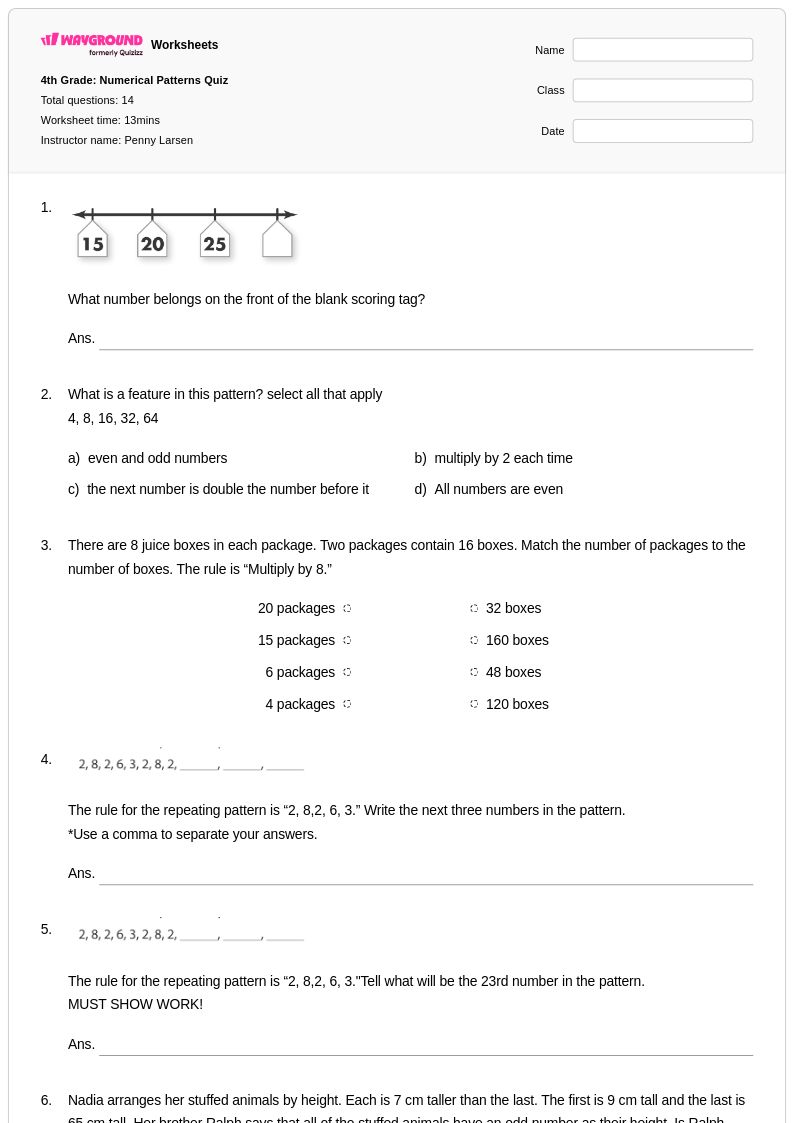
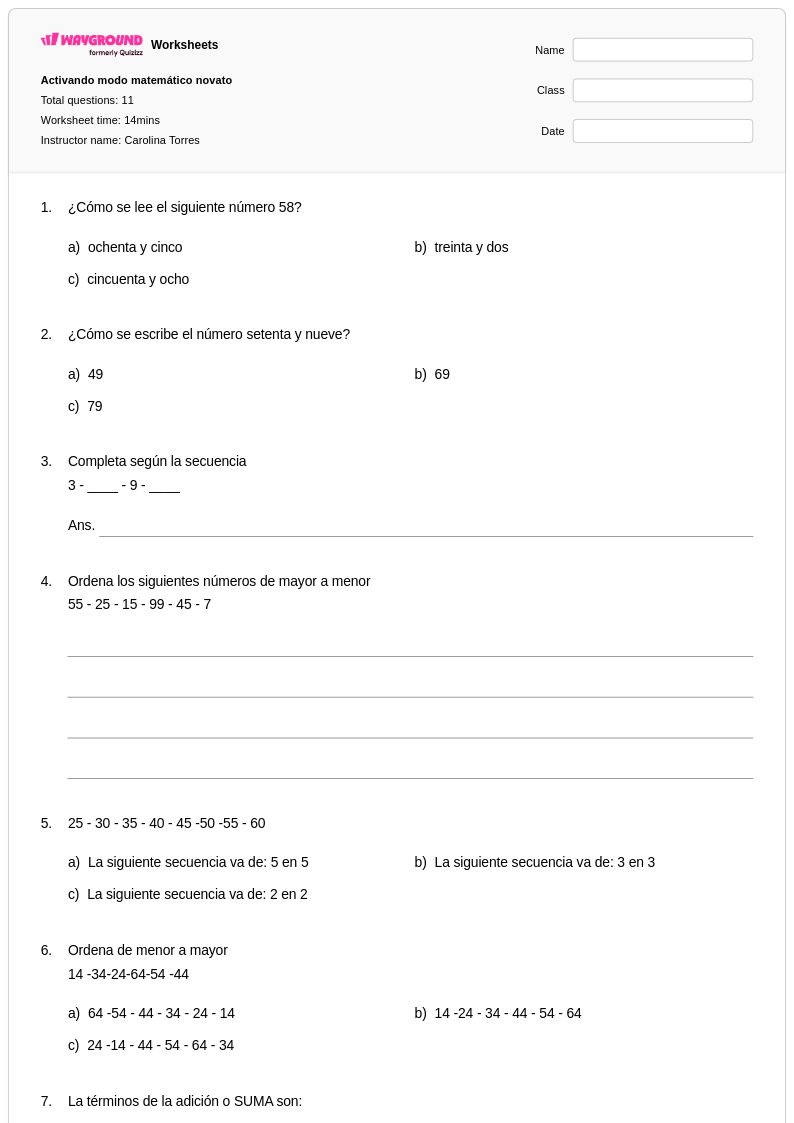
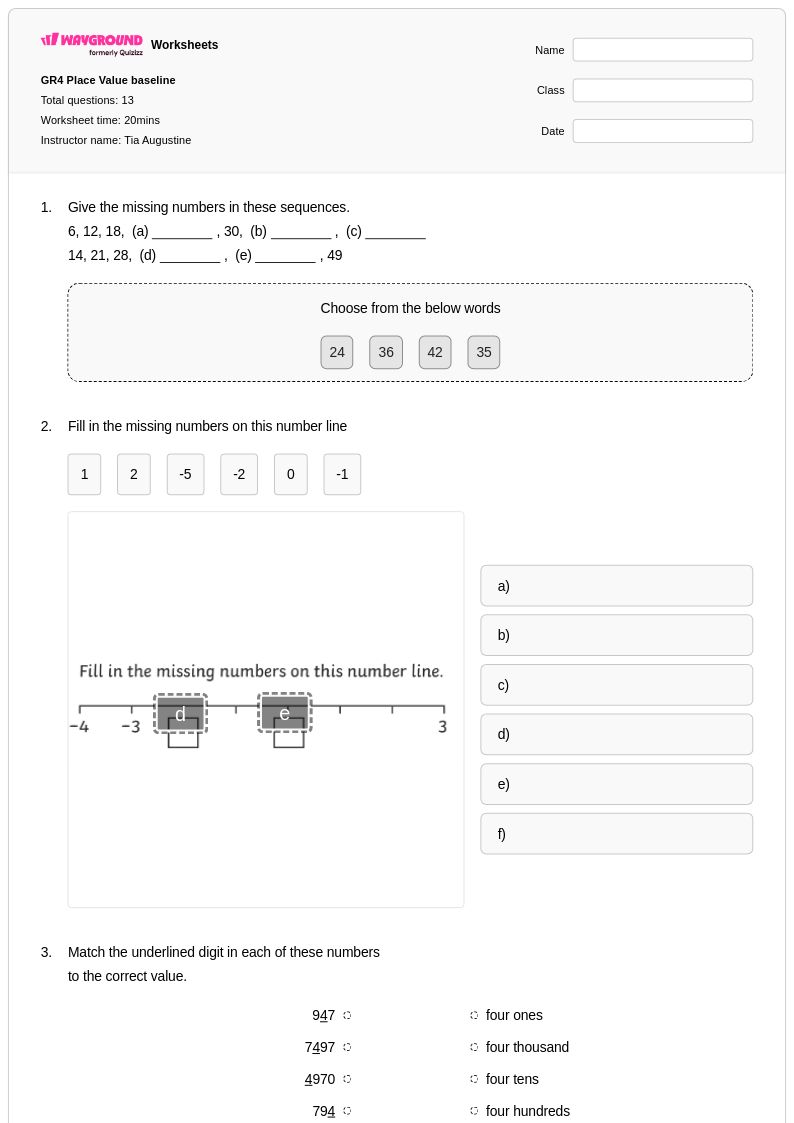
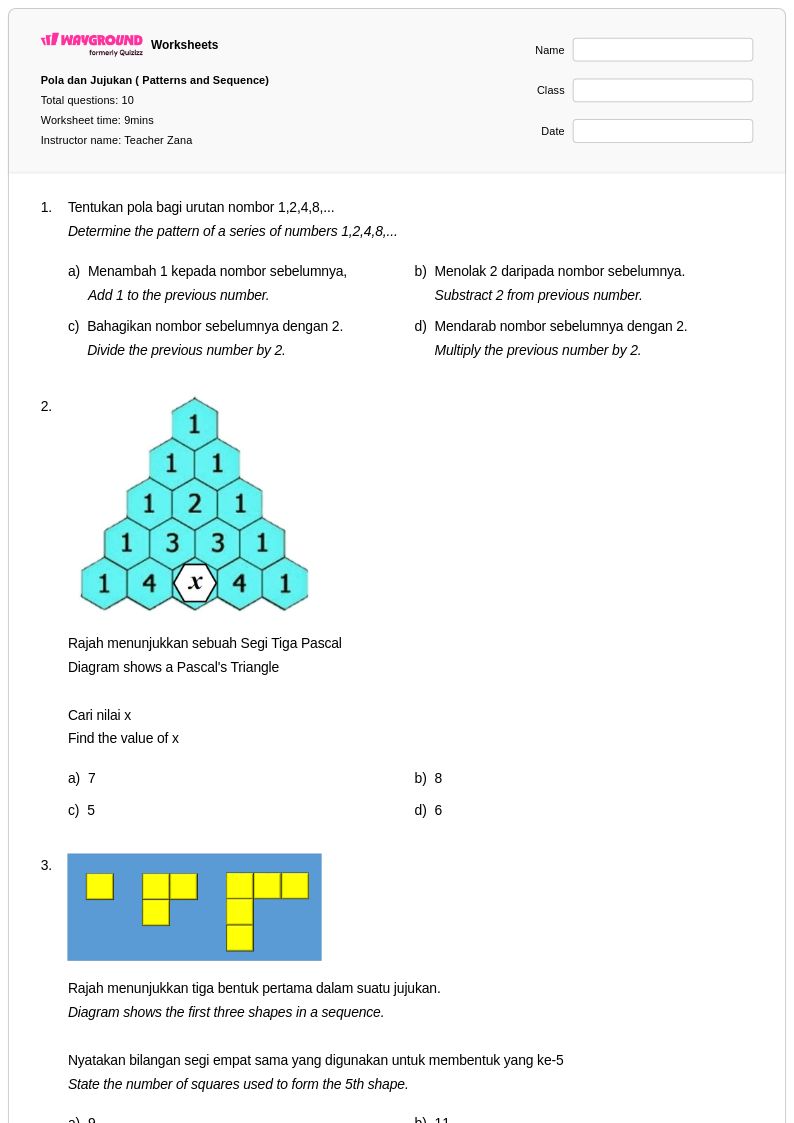
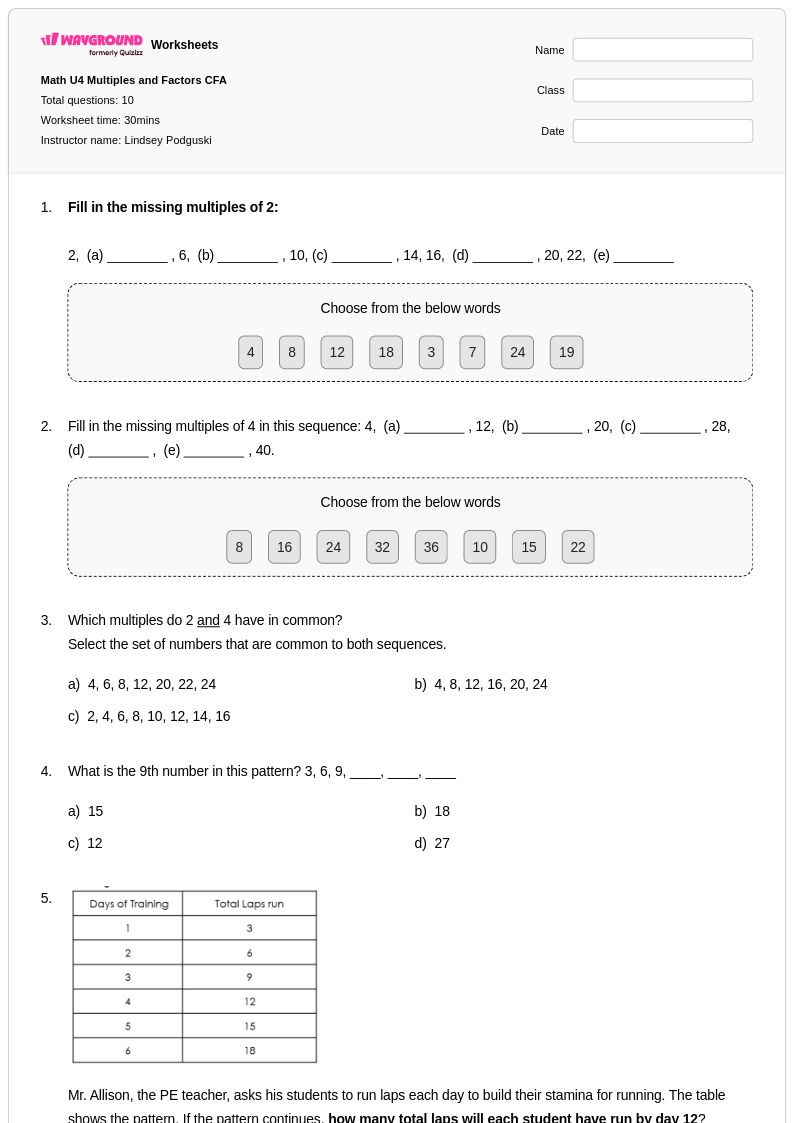
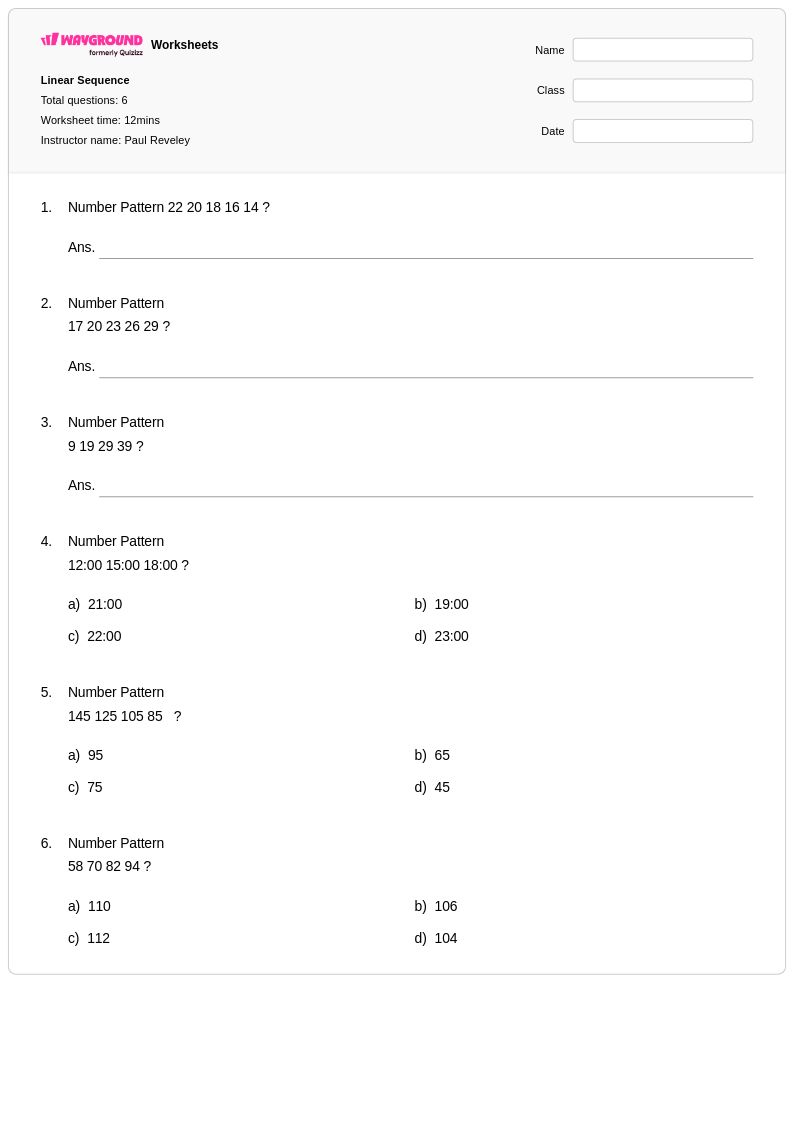
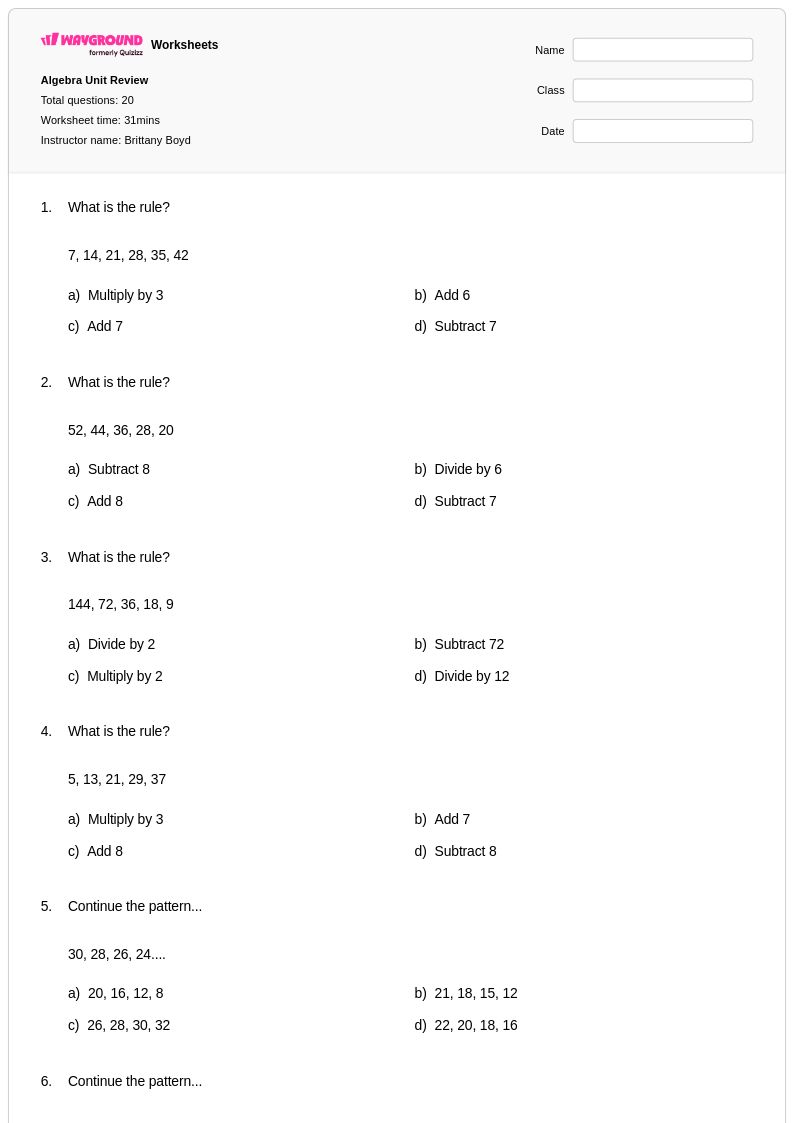
Fibonacci sequence worksheets for Year 4 students available through Wayground (formerly Quizizz) introduce young mathematicians to one of mathematics' most fascinating number patterns. These carefully designed practice problems help students recognize the sequential relationship where each number equals the sum of the two preceding numbers, beginning with 0 and 1. The worksheets strengthen critical thinking skills, pattern recognition abilities, and foundational understanding of mathematical sequences through engaging exercises that progress from identifying missing numbers in the sequence to exploring real-world applications. Each printable resource includes comprehensive answer keys and free pdf downloads, making it simple for educators to implement structured practice sessions that build confidence in mathematical reasoning and sequential thinking.
Wayground (formerly Quizizz) empowers teachers with millions of educator-created Fibonacci sequence resources that support diverse Year 4 learning needs through advanced search and filtering capabilities. The platform's standards-aligned worksheet collections offer flexible customization tools that enable differentiation for varying skill levels, from students requiring additional scaffolding to those ready for enrichment challenges. Teachers can seamlessly access both digital and printable formats, including downloadable pdfs, to accommodate different classroom environments and learning preferences. These comprehensive resources streamline lesson planning while providing targeted remediation opportunities and skill practice sessions, ensuring every fourth-grade student can master the foundational concepts of the Fibonacci sequence through structured, progressive learning experiences.
FAQs
How do I teach the Fibonacci sequence to Grade 4 students?
Fourth graders are ready to work with both starting conventions (0, 1, 1, 2... and 1, 1, 2, 3...) and to articulate the rule in their own words. A good entry point: give them a partially filled sequence with a deliberate error and ask them to find and fix it. That error-detection task forces them to apply the rule rather than just continue a pattern by feel.
What exercises help Grade 4 students practice the Fibonacci sequence?
Three exercise types work well at this level: filling in missing terms anywhere in the sequence (not just at the end), identifying whether a given number belongs in the sequence and explaining why, and connecting the sequence to simple real-world contexts like petal counts. Wayground's Grade 4 worksheets progress through this range, moving from identification to application.
What misconceptions do fourth graders have about the Fibonacci sequence?
The biggest one: students think the sequence always starts with 1, 1 and get confused or mark answers wrong when they see 0, 1, 1, 2. Address this directly by showing both versions side by side early. A second common issue is students who can extend the sequence forward but can't work backward — they haven't internalized that the rule is reversible (subtract the smaller from the larger to find the preceding term).
How do I use Wayground's Grade 4 Fibonacci worksheets?
Download the PDF and assign it as a printed worksheet, or host it as a digital quiz on Wayground for device-based completion. Every worksheet includes a complete answer key. If you're collecting paper submissions, the Wayground for Teachers app lets you scan student work and grade it from your phone — useful when you're moving through a stack of completed worksheets quickly.
Is the Fibonacci sequence aligned to Common Core Grade 4 math?
Common Core doesn't list the Fibonacci sequence by name at Grade 4, but the skills it develops map directly onto what Common Core does require: generating and analyzing patterns, identifying rules that produce a sequence, and explaining why a pattern continues. At Grade 4, Common Core specifically asks students to generate a number pattern from a given rule and identify features of that pattern — Fibonacci practice is a natural, more challenging application of exactly that work.
How can I differentiate Fibonacci sequence practice for my Grade 4 class?
For students who need scaffolding, Wayground's reduced answer choices option narrows the field on multiple-choice questions, which helps when the sequence itself is already demanding working memory. For students ready for a challenge, the same worksheet content can be extended by asking them to work backward through the sequence or predict whether a large number (like 100) could ever appear — no new worksheet needed, just a follow-up prompt.