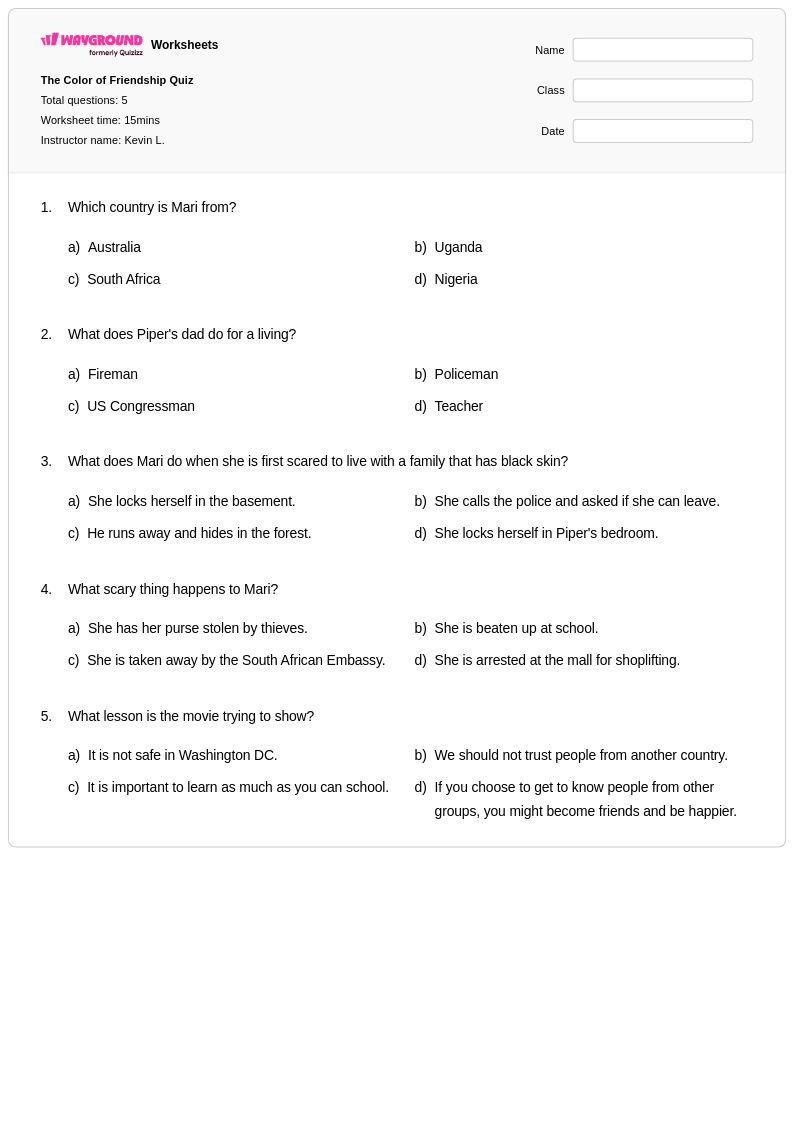
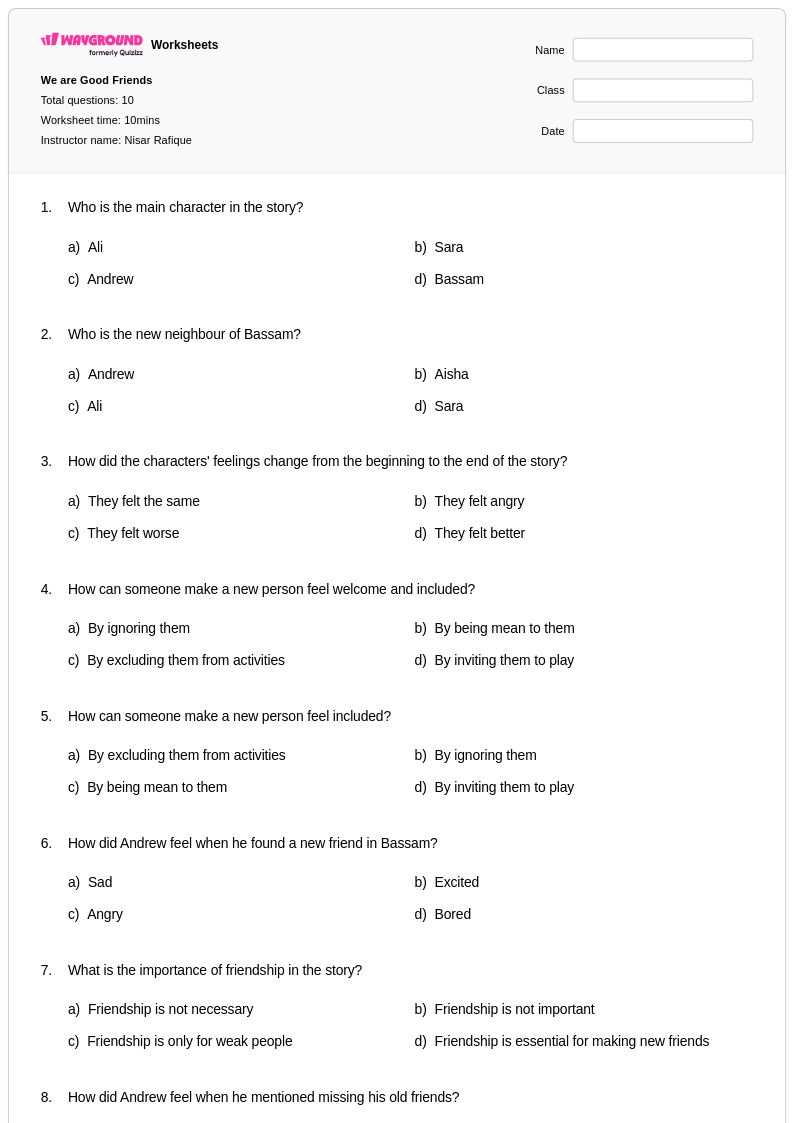
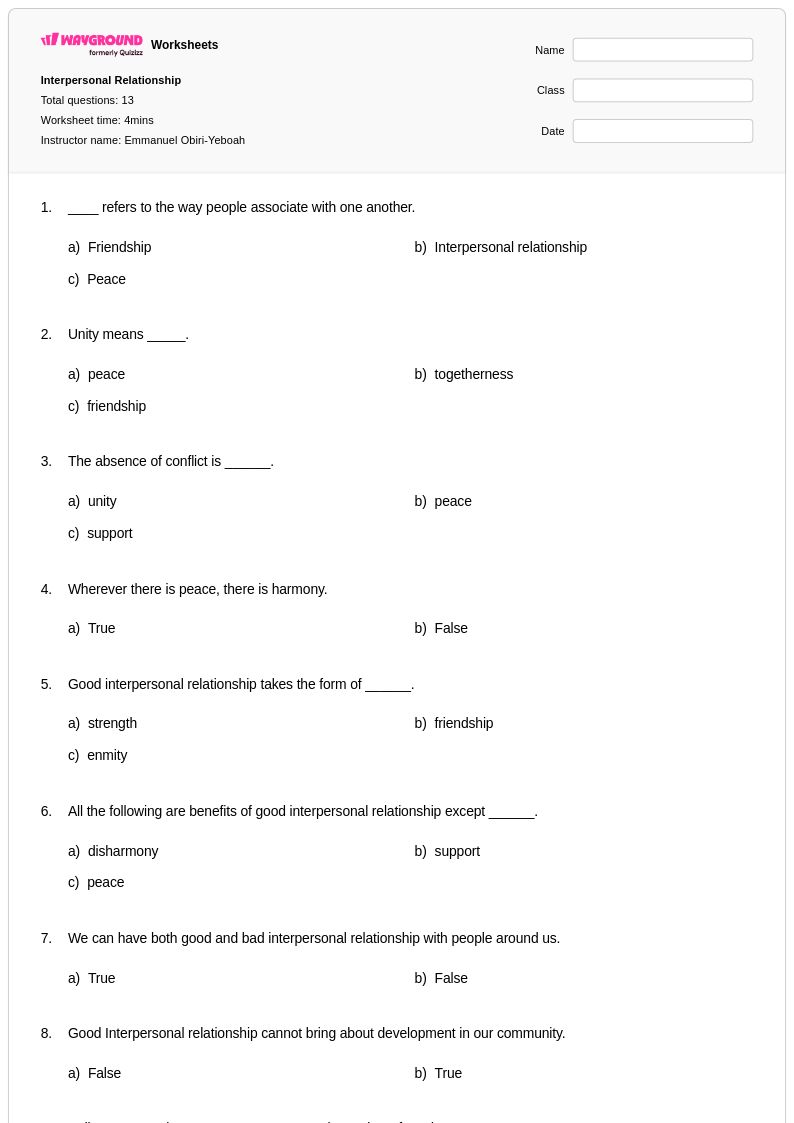
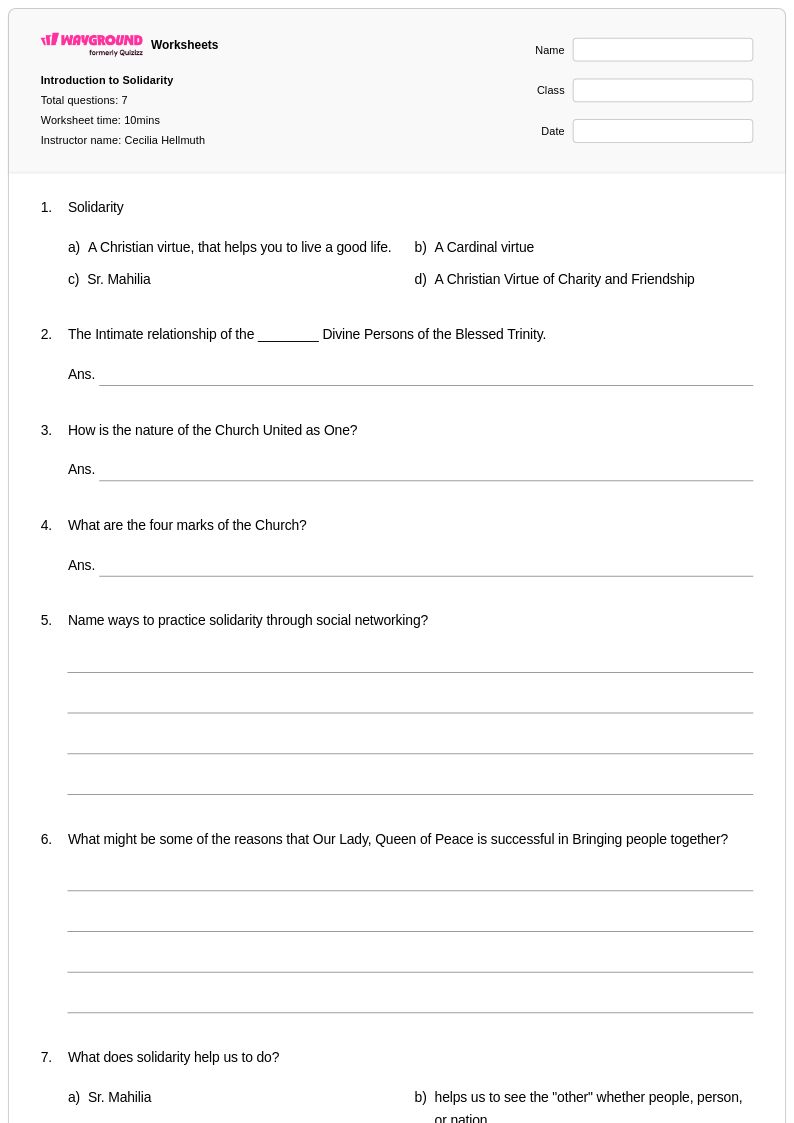
Year 3 friendship worksheets and printables help students develop essential social skills through engaging practice problems, with free PDF resources and answer keys available for comprehensive learning.
Explore printable Friendship worksheets for Year 3
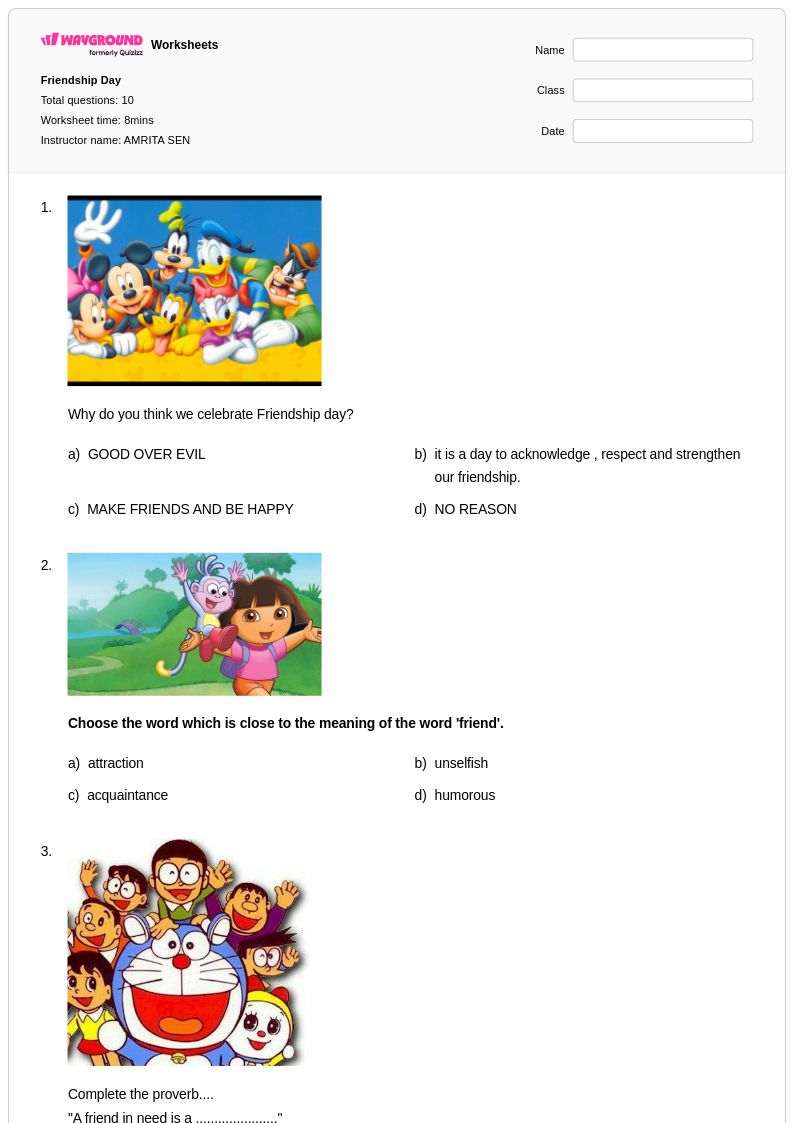
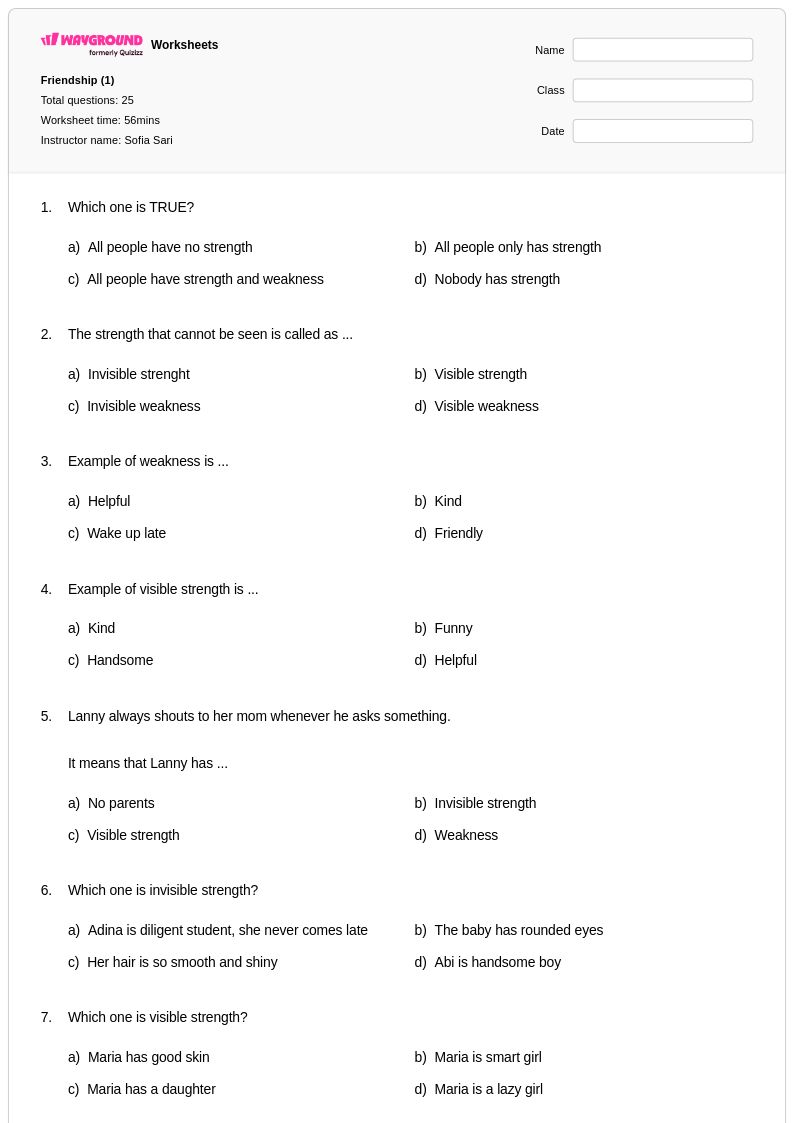
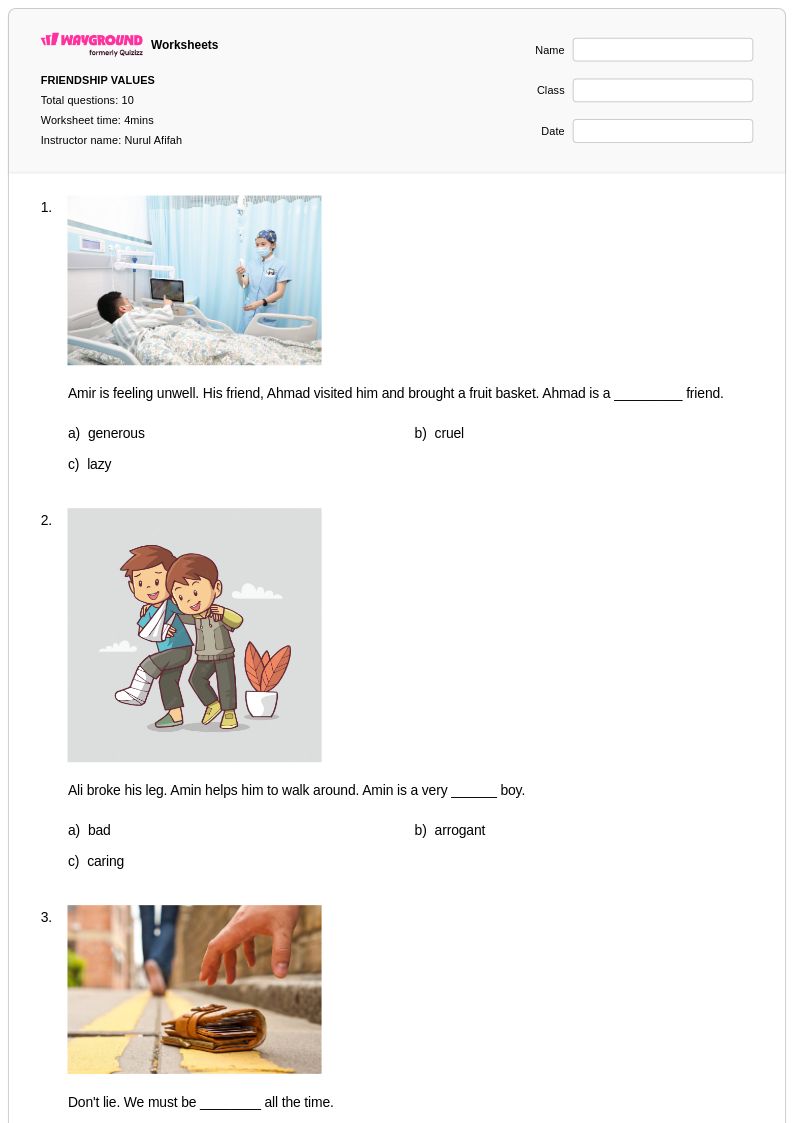
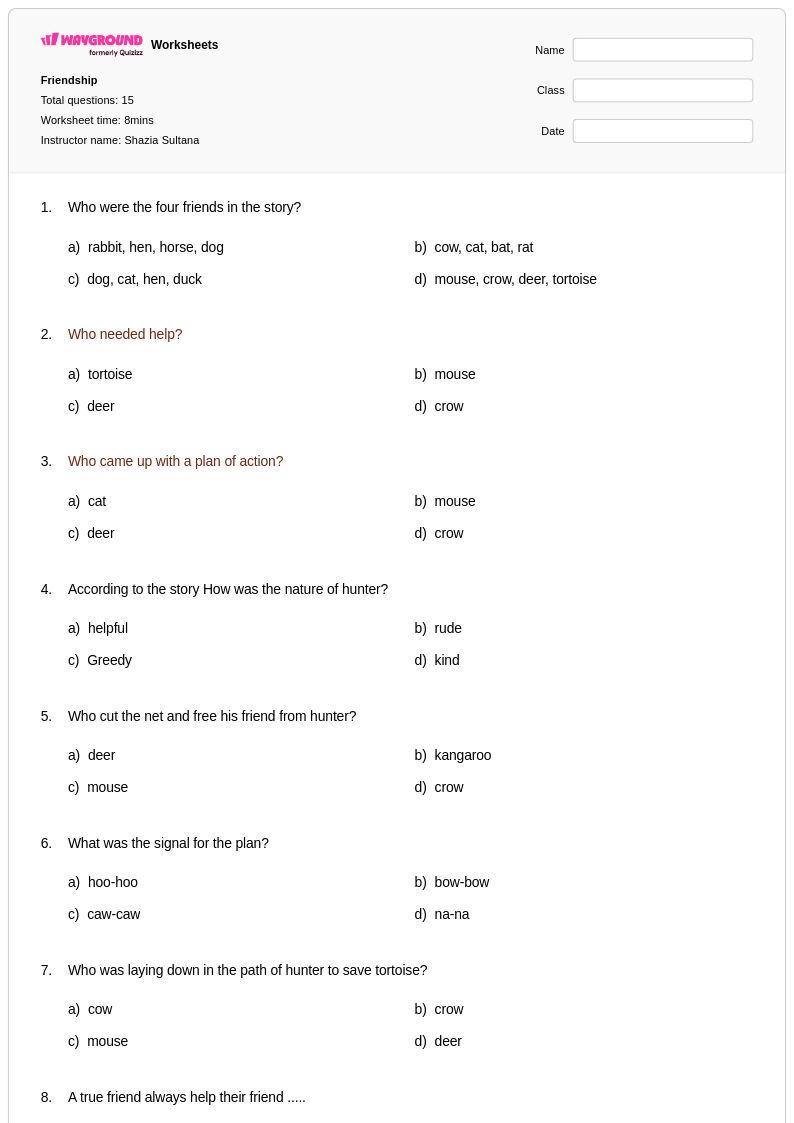
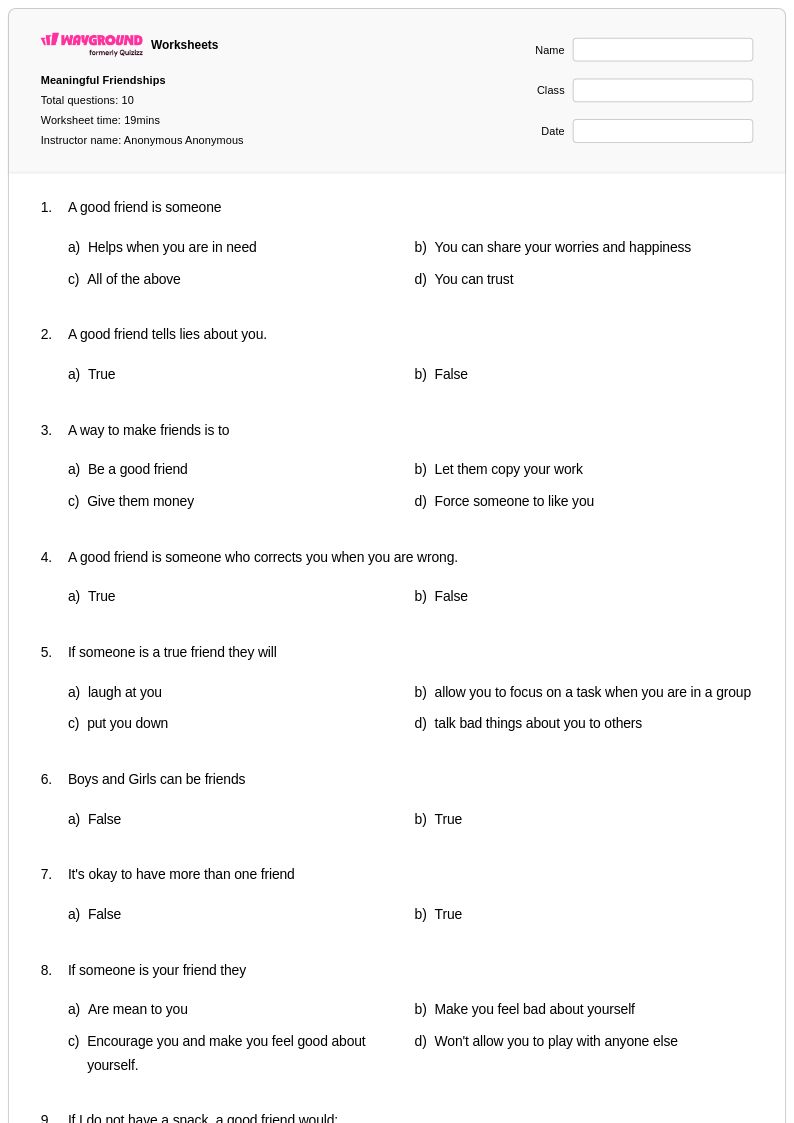
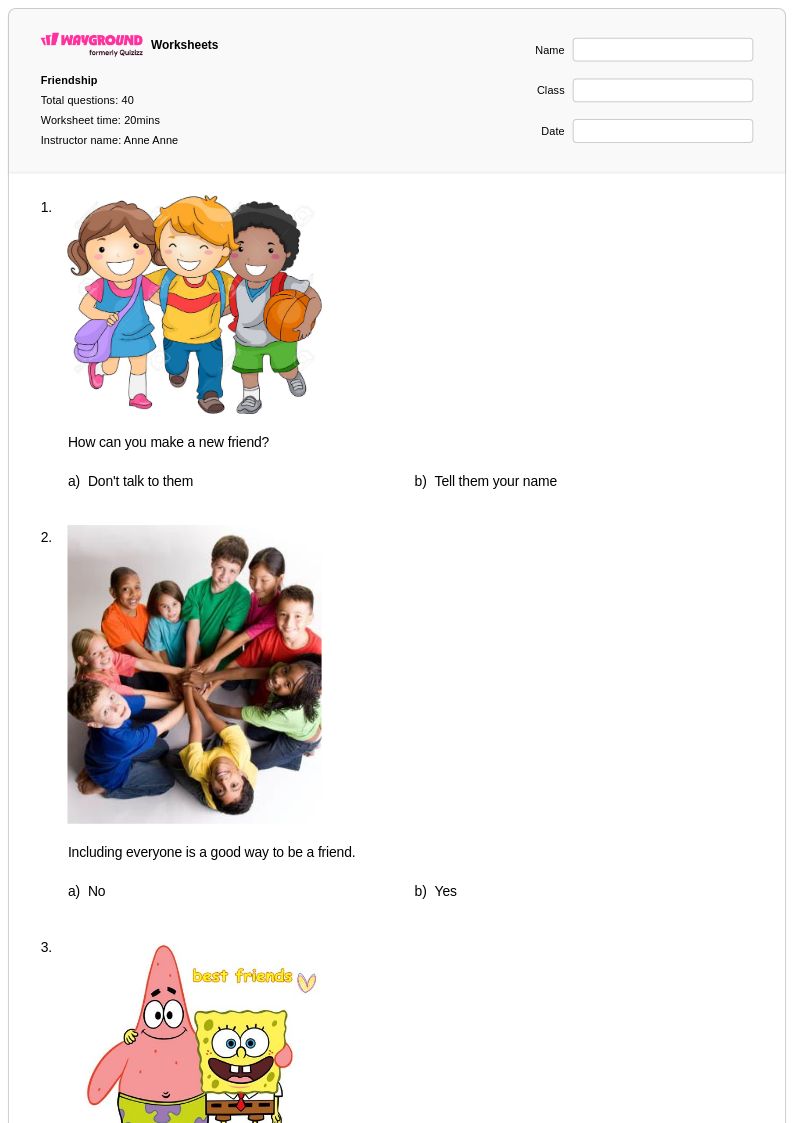
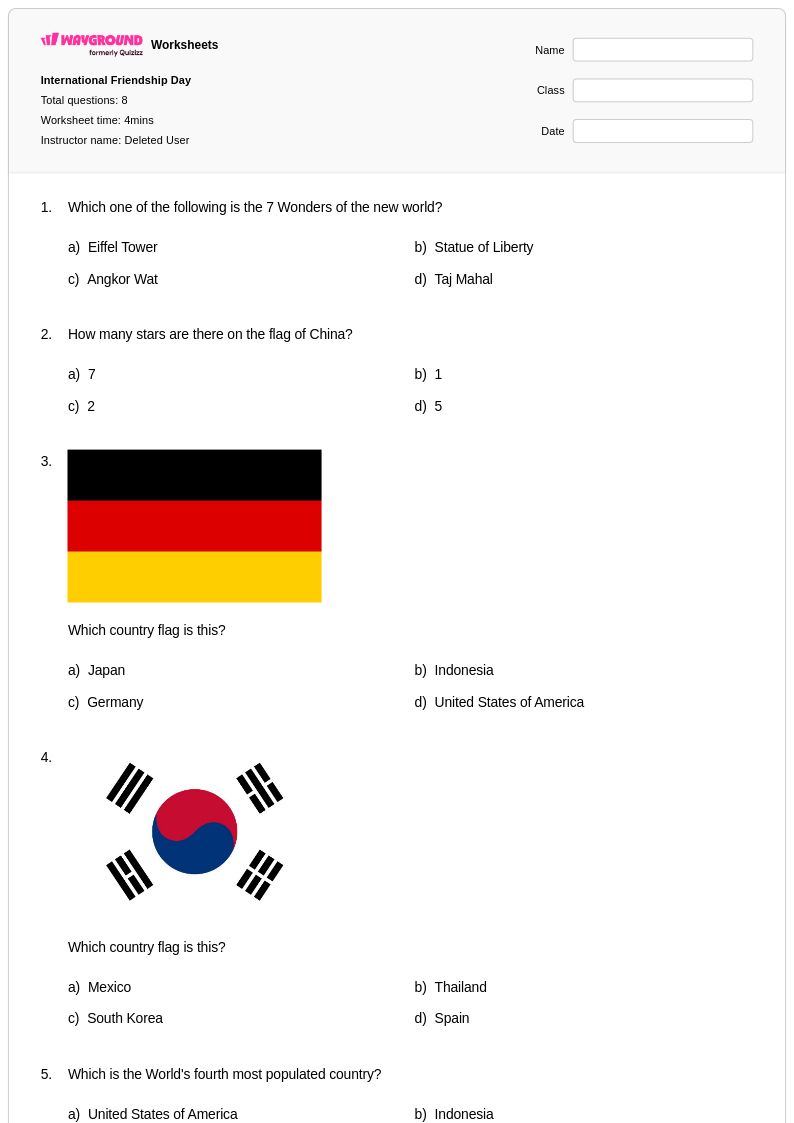
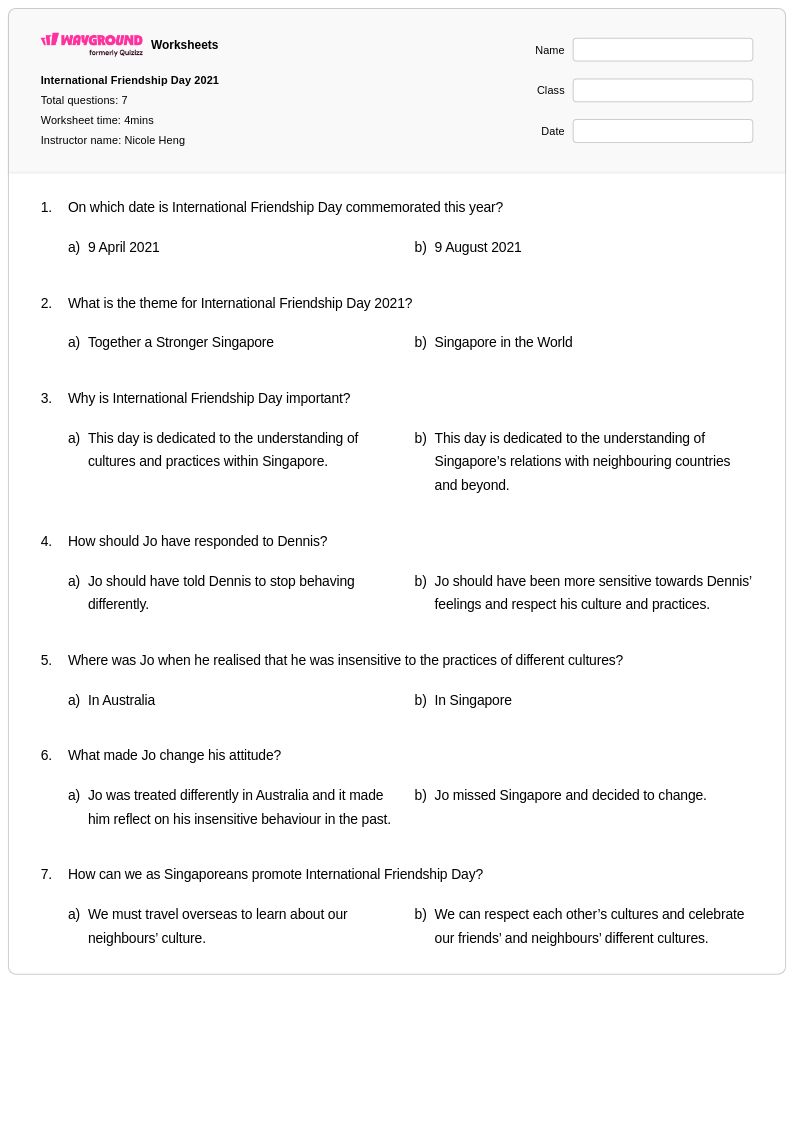
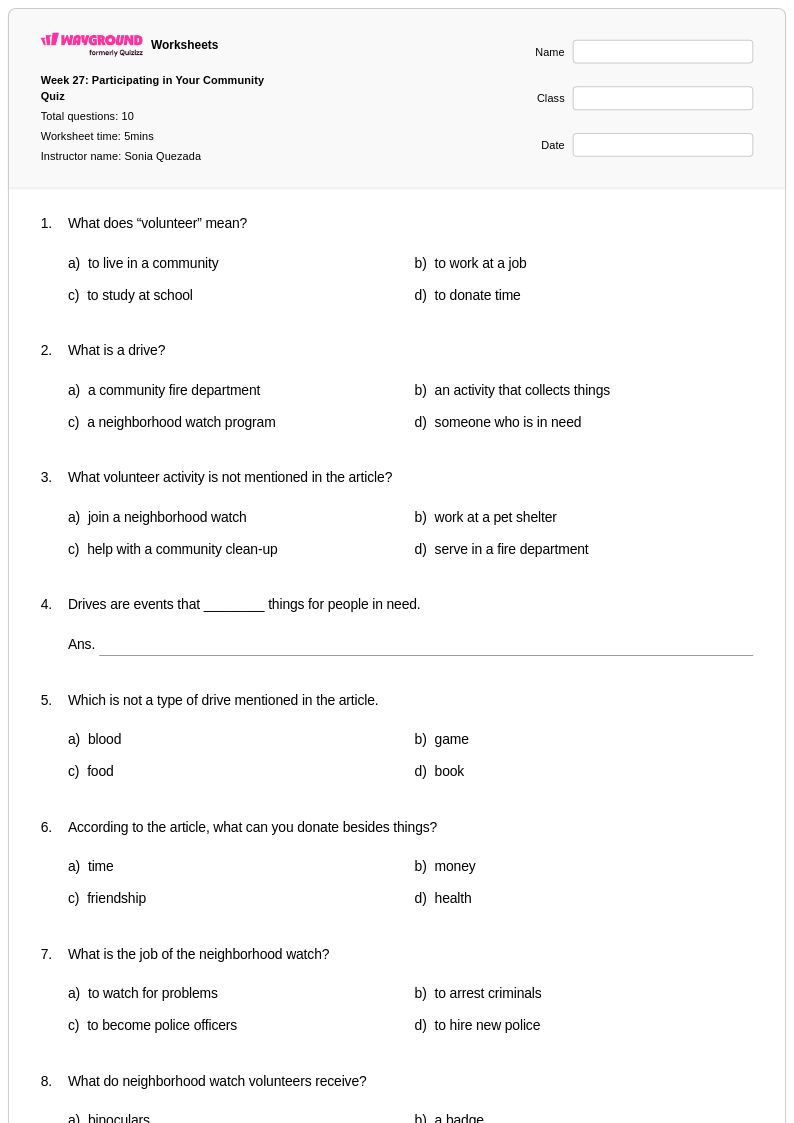
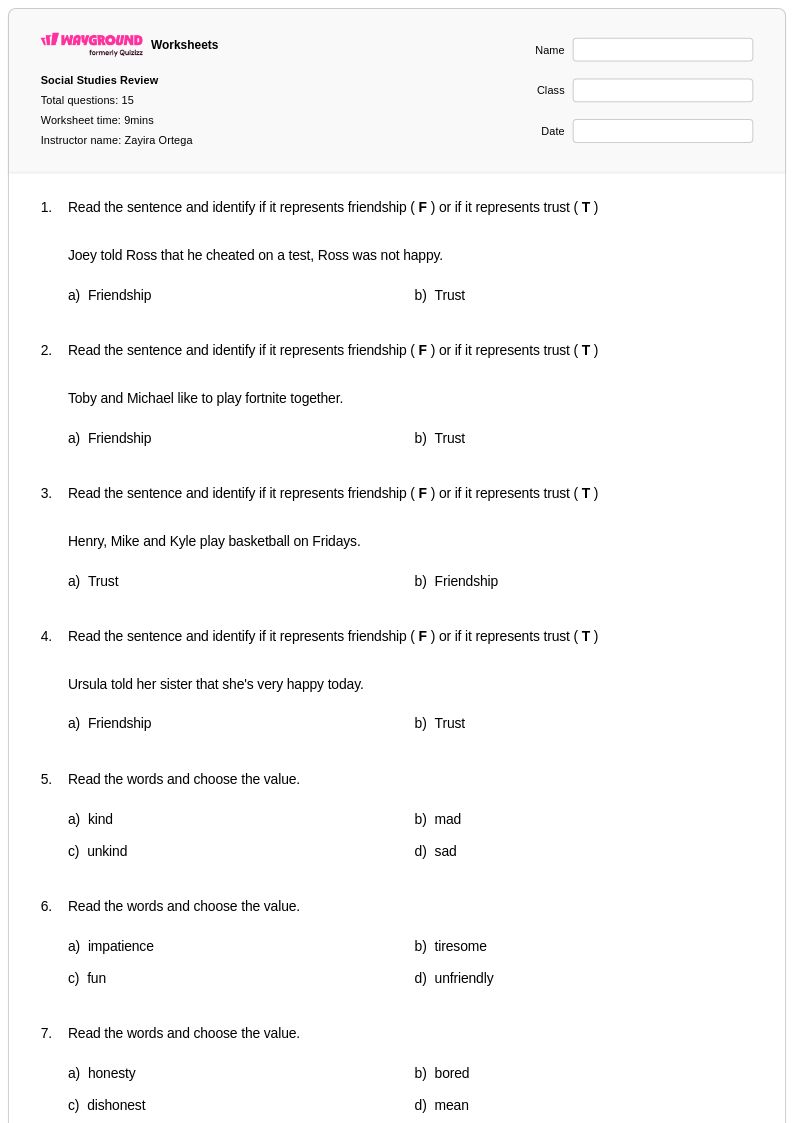
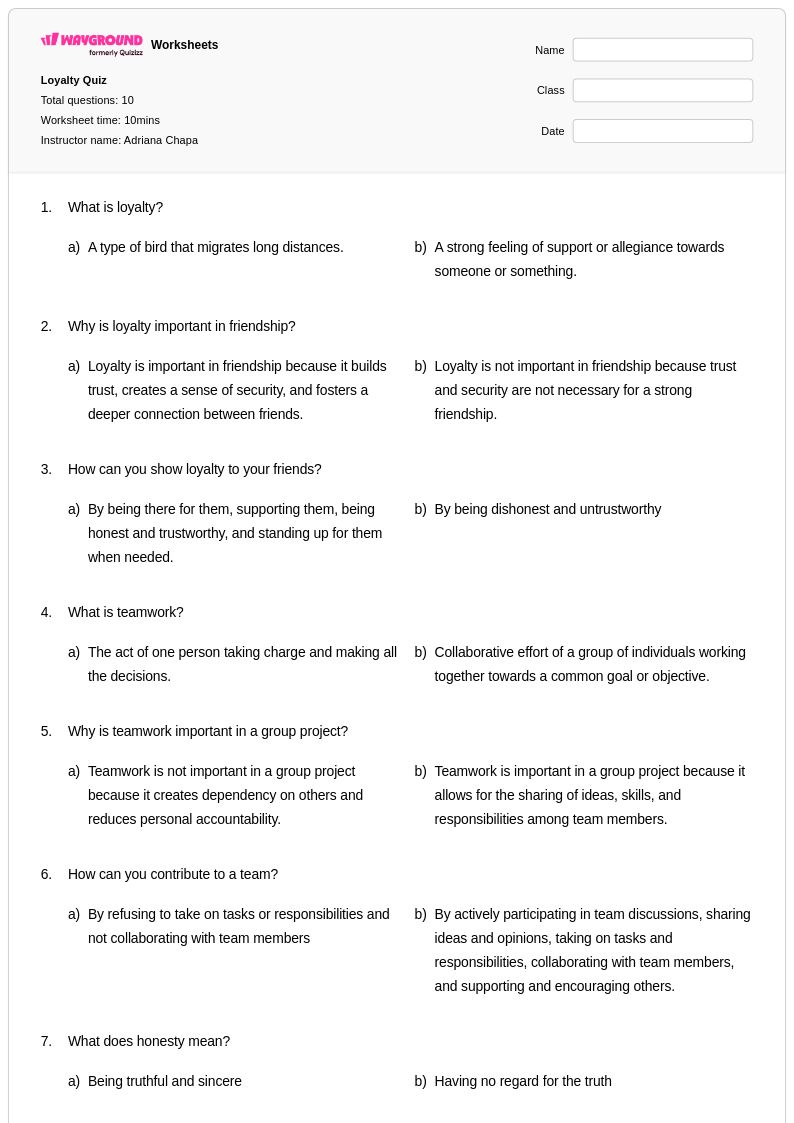
Friendship worksheets for Year 3 students through Wayground (formerly Quizizz) provide essential social skills instruction that helps young learners develop meaningful peer relationships and emotional intelligence. These comprehensive resources focus on teaching children how to identify qualities of good friends, practice conflict resolution strategies, demonstrate empathy and kindness, and understand the importance of communication in maintaining healthy friendships. The worksheets strengthen critical social-emotional learning skills through engaging practice problems that present real-world scenarios, allowing students to explore concepts like sharing, cooperation, trust, and respect. Each worksheet comes with a complete answer key and is available as a free printable pdf, making it easy for educators to integrate friendship education into their social studies curriculum while providing students with concrete strategies for building and maintaining positive relationships.
Wayground (formerly Quizizz) supports teachers with an extensive collection of friendship and social skills worksheets created by millions of educators who understand the developmental needs of Year 3 students. The platform's robust search and filtering capabilities allow teachers to quickly locate age-appropriate materials that align with social-emotional learning standards and complement existing social studies instruction. These differentiation tools enable educators to customize worksheets for various learning levels, ensuring that all students can access friendship concepts through appropriately scaffolded content. Available in both printable pdf formats and interactive digital versions, these resources facilitate flexible lesson planning while supporting targeted skill practice, remediation for students struggling with social interactions, and enrichment opportunities for those ready to explore more complex friendship dynamics and conflict resolution strategies.
FAQs
How do I teach friendship skills in the classroom?
Teaching friendship skills works best through a combination of explicit instruction and scenario-based practice. Introduce core concepts like trust, empathy, loyalty, and conflict resolution through direct discussion, then use structured activities where students analyze real-life social situations. Role-playing, collaborative tasks, and reflective writing help students internalize what healthy friendships look like in practice.
What exercises help students practice friendship and social skills?
Effective practice exercises include scenario analysis worksheets where students evaluate social situations and identify appropriate responses, empathy-building prompts that ask students to consider another person's perspective, and reflection activities focused on qualities like trust, inclusion, and communication. These structured exercises give students a consistent framework for thinking through friendship challenges before they encounter them in real interactions.
What misconceptions do students commonly have about friendship?
A common misconception is that friendship means always agreeing with or pleasing others, which can lead to students confusing compliance with loyalty. Students also frequently struggle to distinguish between conflict and the end of a friendship, making conflict resolution instruction particularly important. Teaching students that disagreement is normal and manageable within healthy relationships is a key corrective concept.
How can I use friendship worksheets to support students with different social skill levels?
Friendship worksheets can be differentiated by adjusting the complexity of scenarios presented or the depth of reflection required in responses. On Wayground, teachers can apply individual accommodations such as read aloud support for students who need questions read to them, or reduced answer choices to lower cognitive load for students who find open-ended social reasoning challenging. These settings can be applied per student without disrupting the experience of the rest of the class.
How do I use Wayground's friendship worksheets in my classroom?
Wayground's friendship worksheets are available as printable PDFs for traditional classroom use and in digital formats for tech-integrated environments, including the option to host them as a quiz directly on the platform. Teachers can use them as standalone social-emotional learning lessons, warm-up activities, or structured discussion starters. The included answer keys make it straightforward to assess student understanding and guide follow-up instruction.
At what age or grade level should I start teaching friendship skills?
Friendship and social skills instruction is relevant across all grade levels, but explicit teaching is especially impactful in early elementary when students are first navigating peer relationships. Concepts like sharing, inclusion, and basic empathy are appropriate for younger students, while older students benefit from more complex topics like trust, loyalty, conflict resolution, and recognizing unhealthy relationship dynamics.