Free Printable Geologic Time Scale Worksheets for Year 11
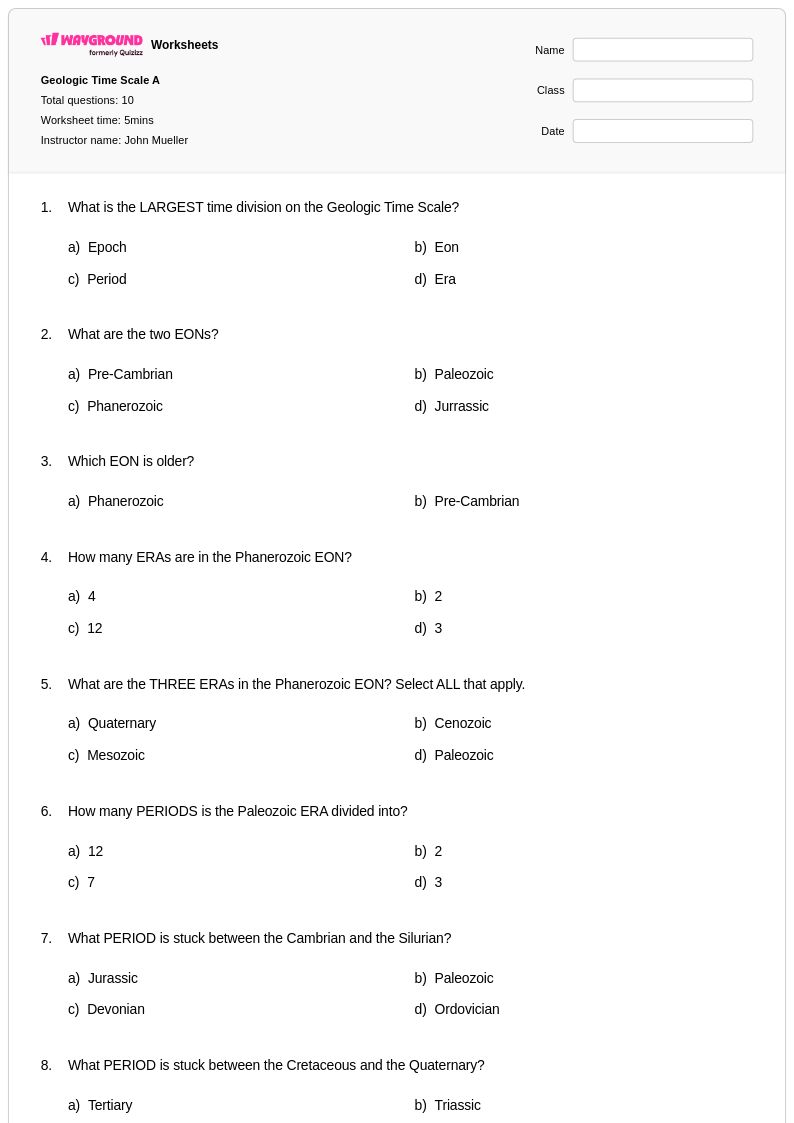
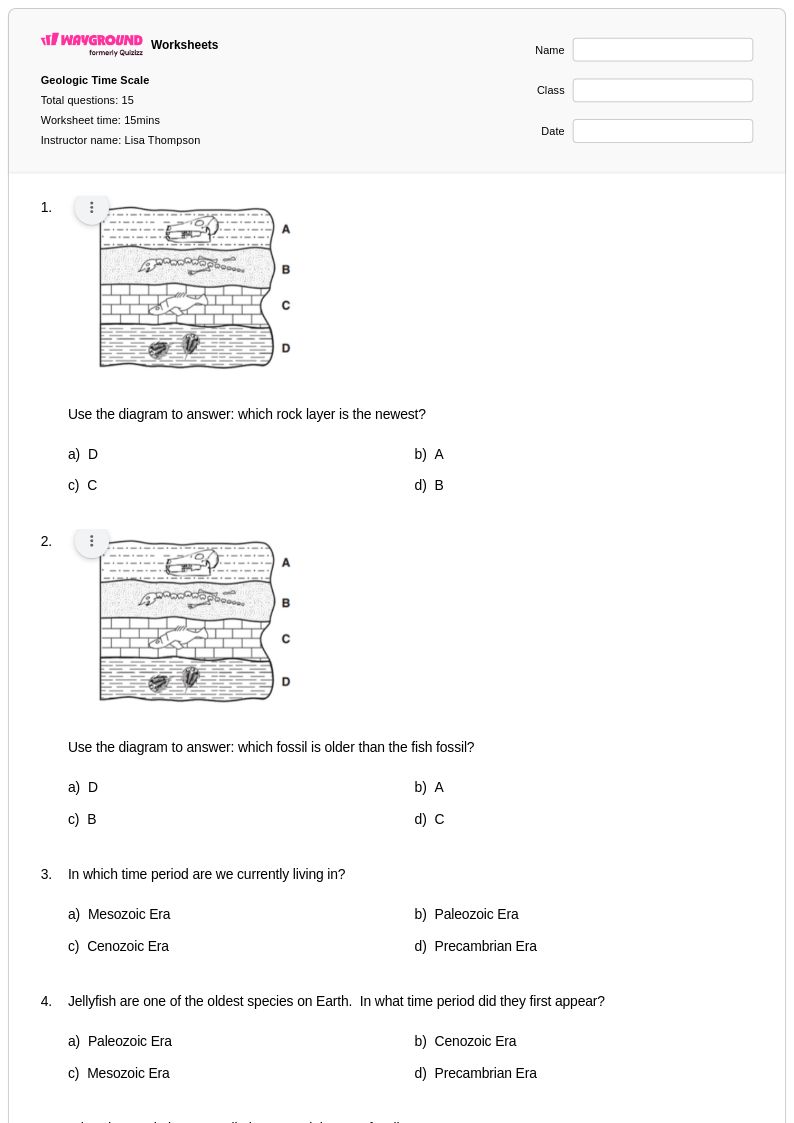
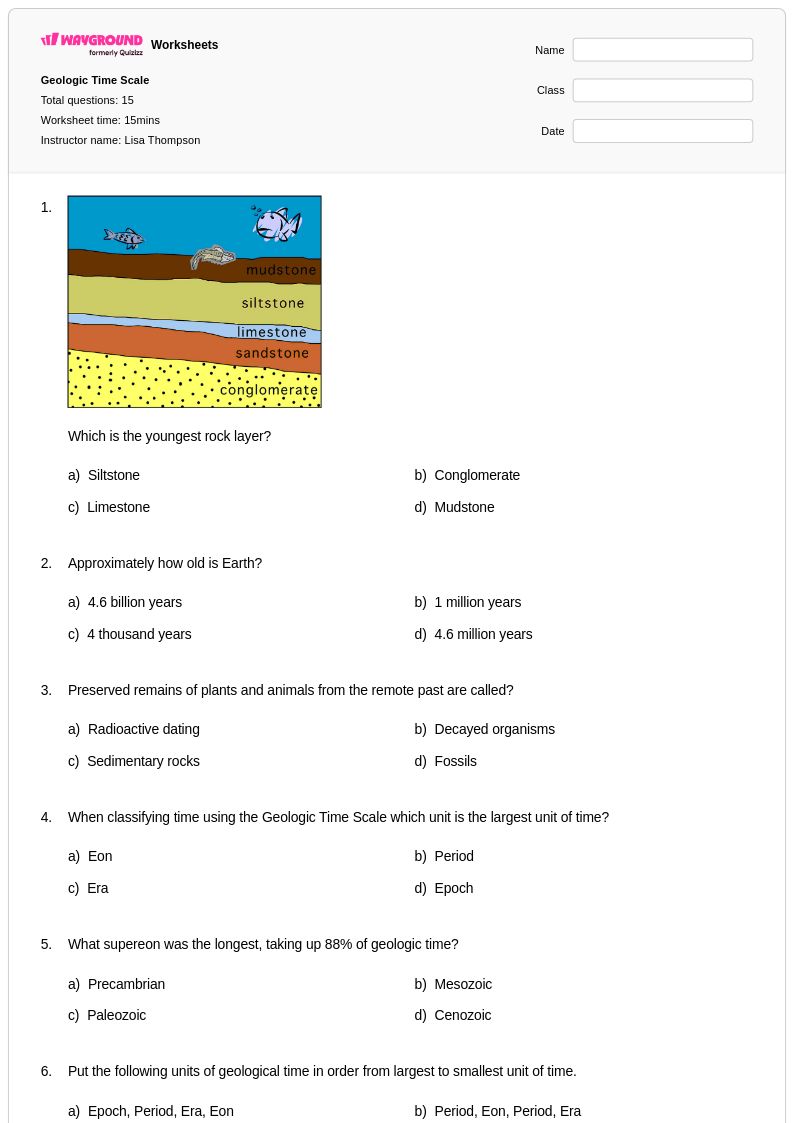
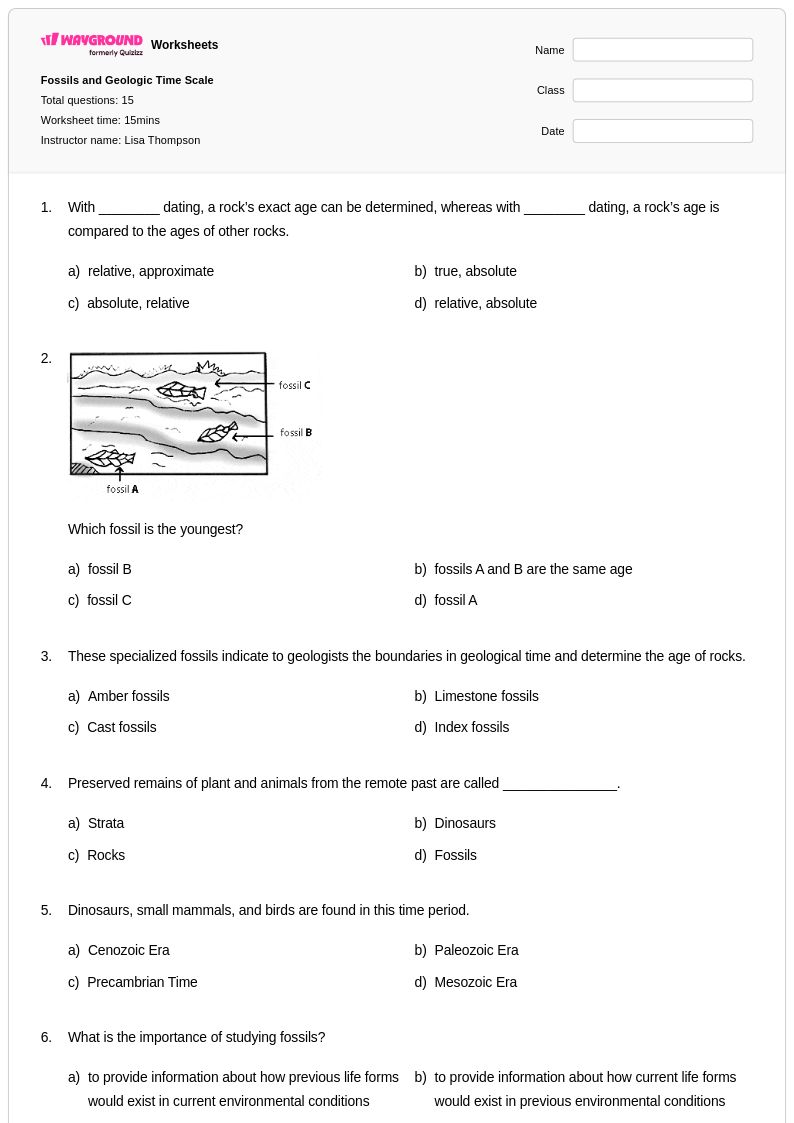
Year 11 Geologic Time Scale worksheets from Wayground help students master Earth's history through engaging printables, practice problems, and comprehensive answer keys that explore eras, periods, and major geological events.
Explore printable Geologic Time Scale worksheets for Year 11
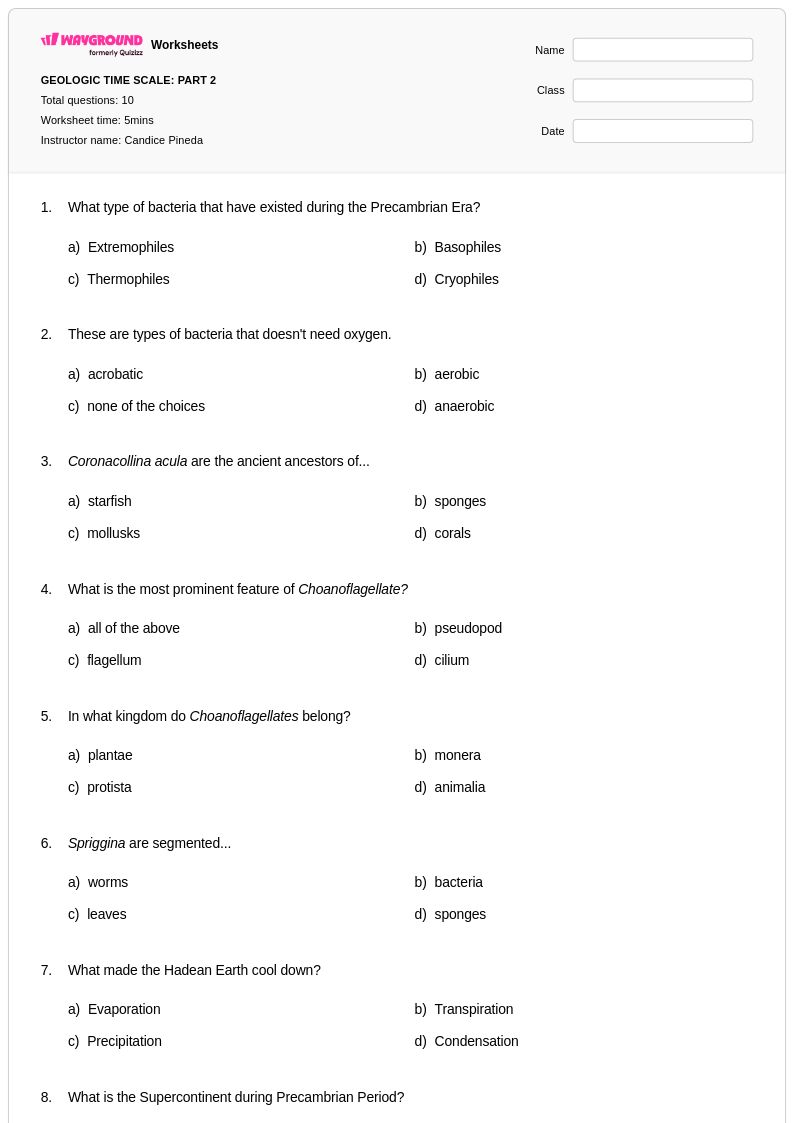
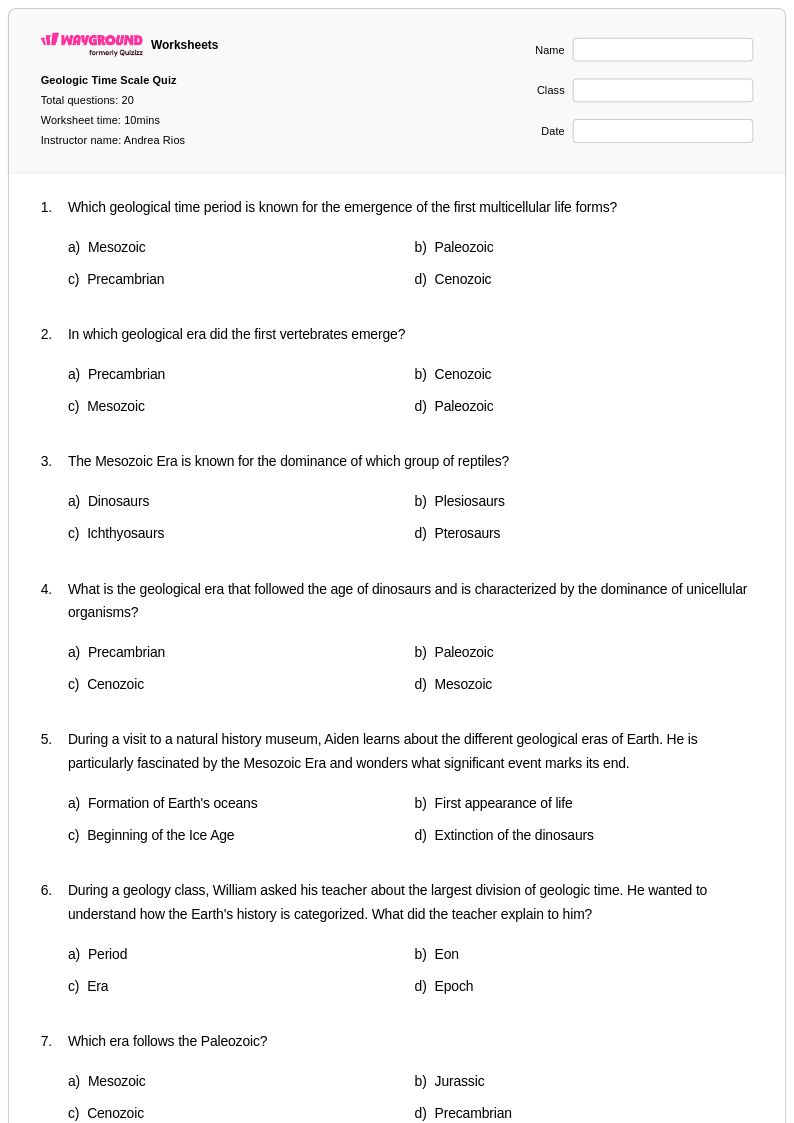
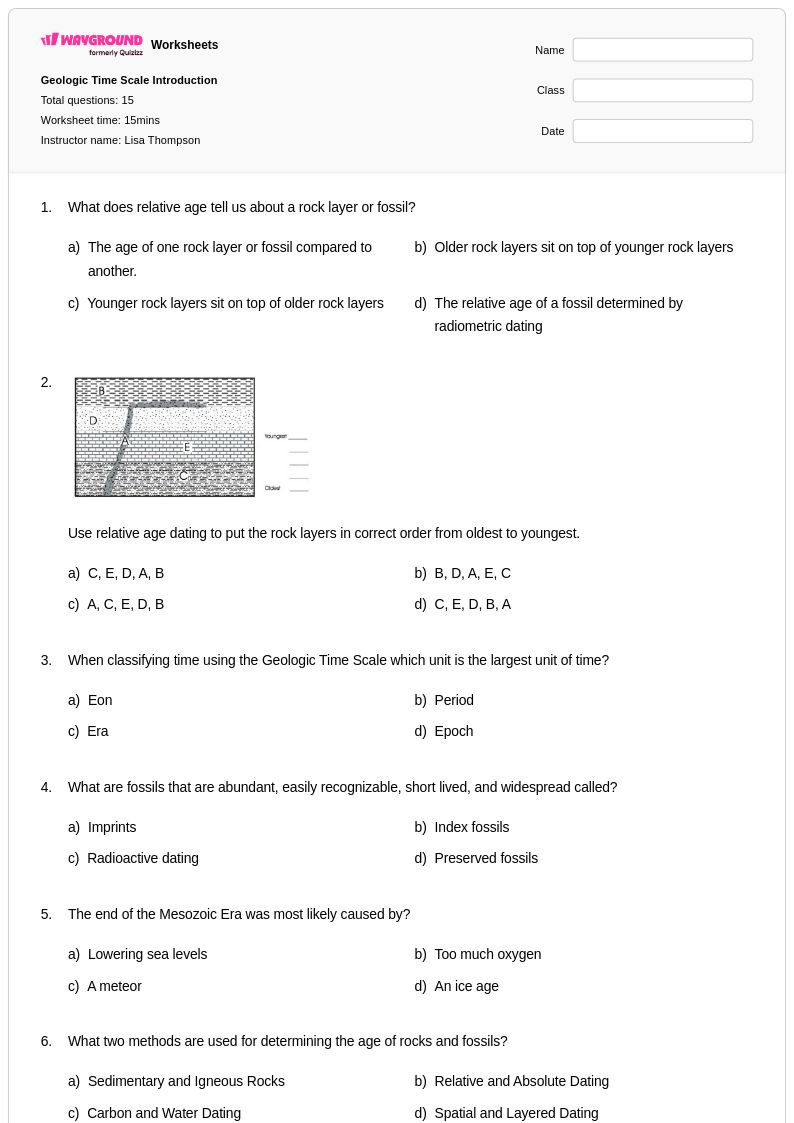
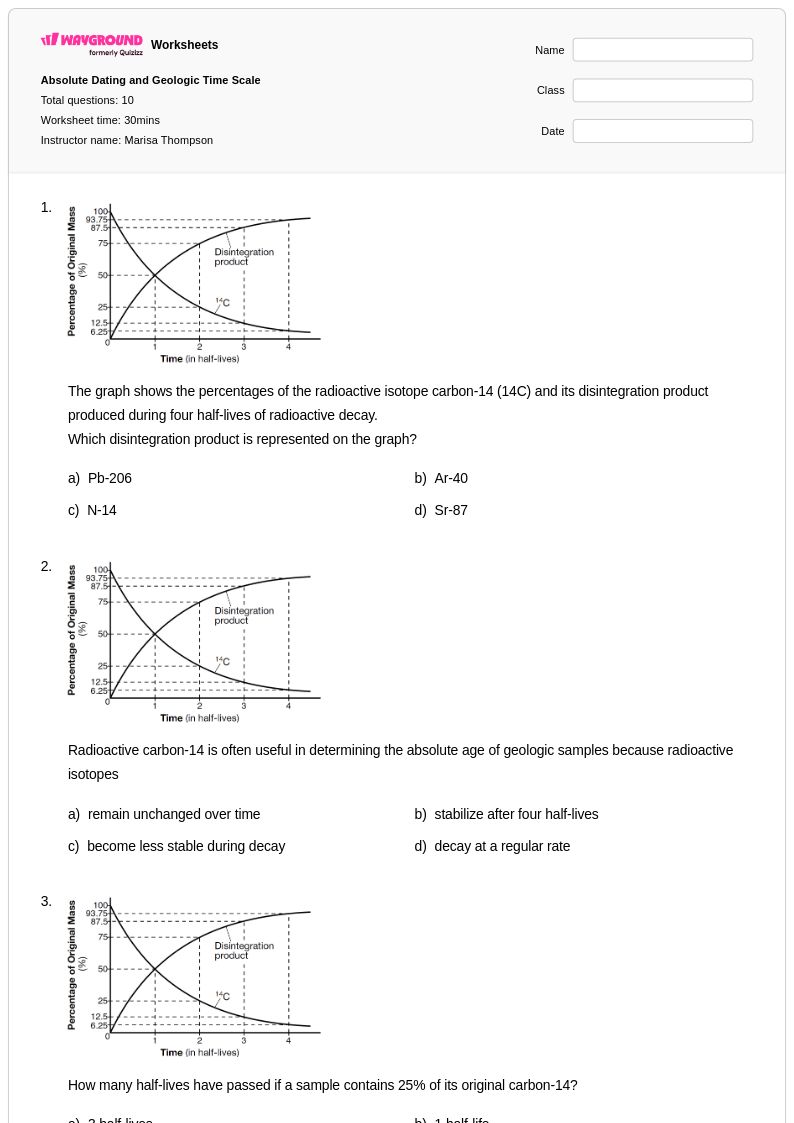
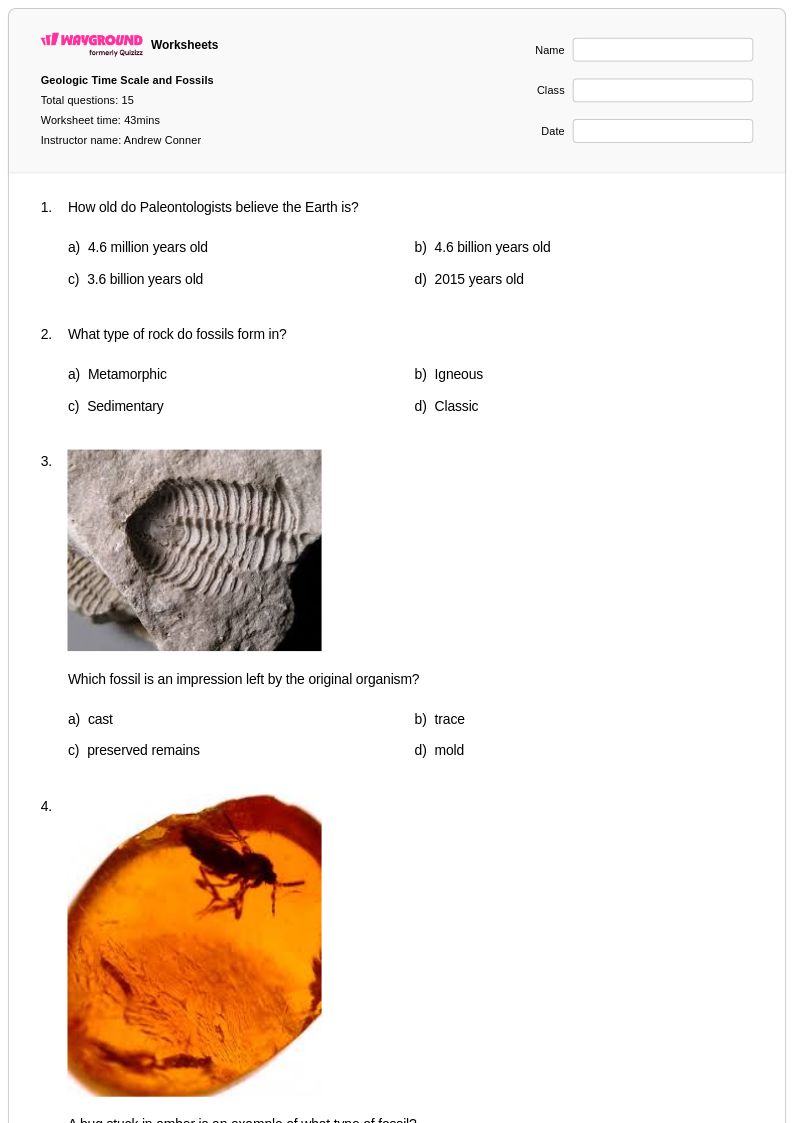
Geologic Time Scale worksheets for Year 11 students available through Wayground (formerly Quizizz) provide comprehensive practice with Earth's chronological history and the methods scientists use to interpret deep time. These expertly designed resources strengthen critical thinking skills as students learn to correlate rock layers, interpret fossil evidence, and understand the relative and absolute dating techniques that reveal Earth's 4.6-billion-year story. The worksheet collections include detailed practice problems covering major eons, eras, periods, and epochs, while helping students master concepts like unconformities, index fossils, and radiometric dating. Each printable resource comes with a complete answer key, making these free educational materials invaluable for both independent study and classroom instruction as students develop proficiency in reading geological cross-sections and constructing timeline representations.
Wayground (formerly Quizizz) supports Year 11 Earth and Space Science educators with an extensive library of millions of teacher-created Geologic Time Scale resources that can be easily located through powerful search and filtering capabilities. The platform's robust collection aligns with national and state science standards, ensuring that worksheet selections support curriculum objectives while offering multiple difficulty levels for effective differentiation. Teachers can customize existing materials or create new assessments using flexible tools that accommodate diverse learning needs, whether for remediation with struggling students or enrichment activities for advanced learners. These comprehensive resources are available in both digital and printable pdf formats, streamlining lesson planning while providing the versatility needed for various classroom environments and enabling targeted skill practice that builds student confidence in interpreting Earth's geological record.
FAQs
How do I teach the geologic time scale to middle or high school students?
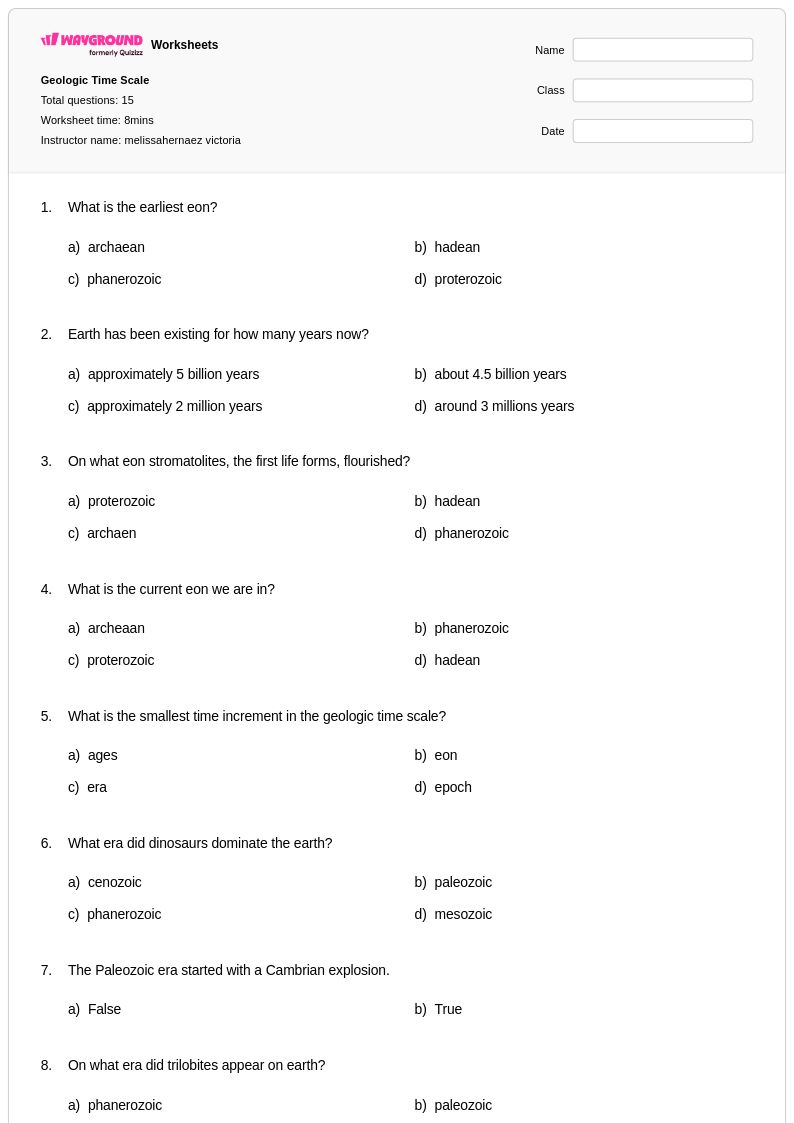
Start by helping students grasp the concept of deep time through analogies, such as compressing 4.6 billion years into a single calendar year or a football field. From there, introduce the hierarchical structure of eons, eras, periods, and epochs before connecting each division to key biological and geological events. Anchoring abstract time intervals to concrete events like the Cambrian explosion or the end-Cretaceous mass extinction gives students meaningful reference points. Visual timelines and guided note-taking activities reinforce the sequence before students attempt independent practice.
What are good practice exercises for learning the geologic time scale?
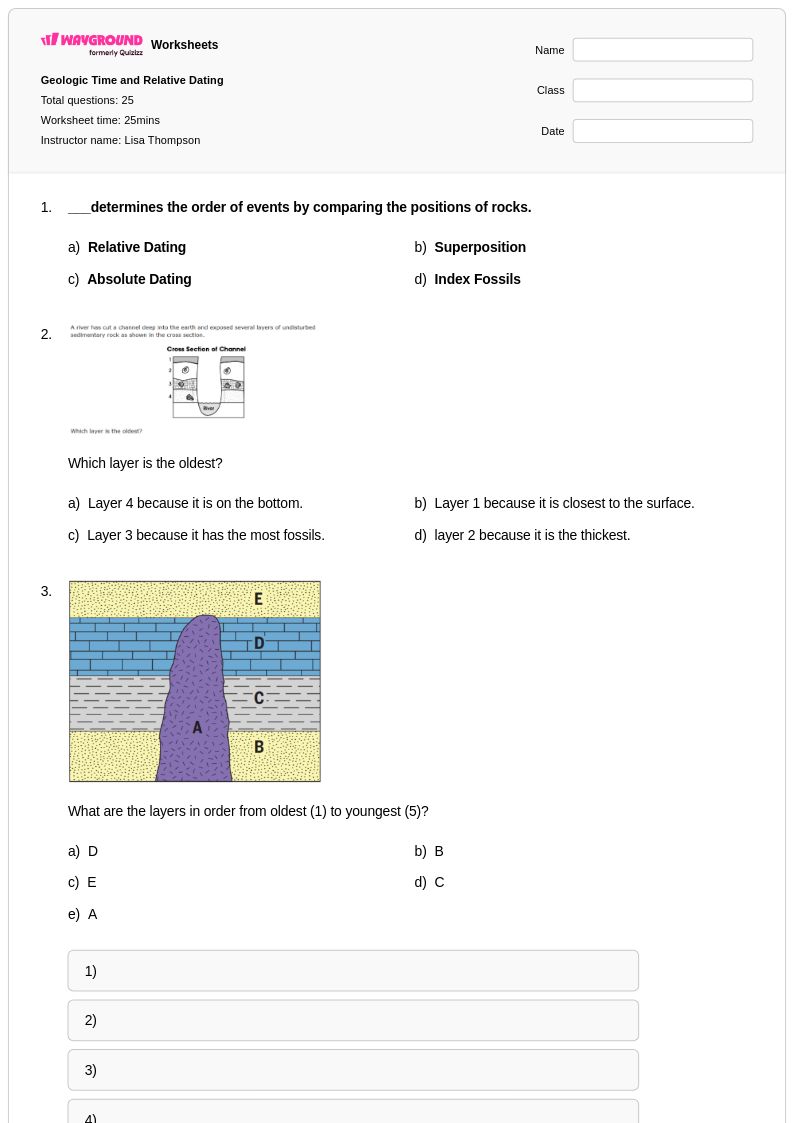
Effective practice activities include sequencing tasks where students arrange eons, eras, and periods in chronological order, as well as correlation exercises that match rock layers or fossil types to specific time divisions. Worksheets that ask students to interpret index fossils, apply relative dating principles like superposition and cross-cutting relationships, and calculate ages using radiometric decay data build both conceptual and procedural fluency. Practice problems that connect geological events to evolutionary milestones help students see the time scale as a coherent narrative rather than a list to memorize.
What mistakes do students commonly make when studying the geologic time scale?
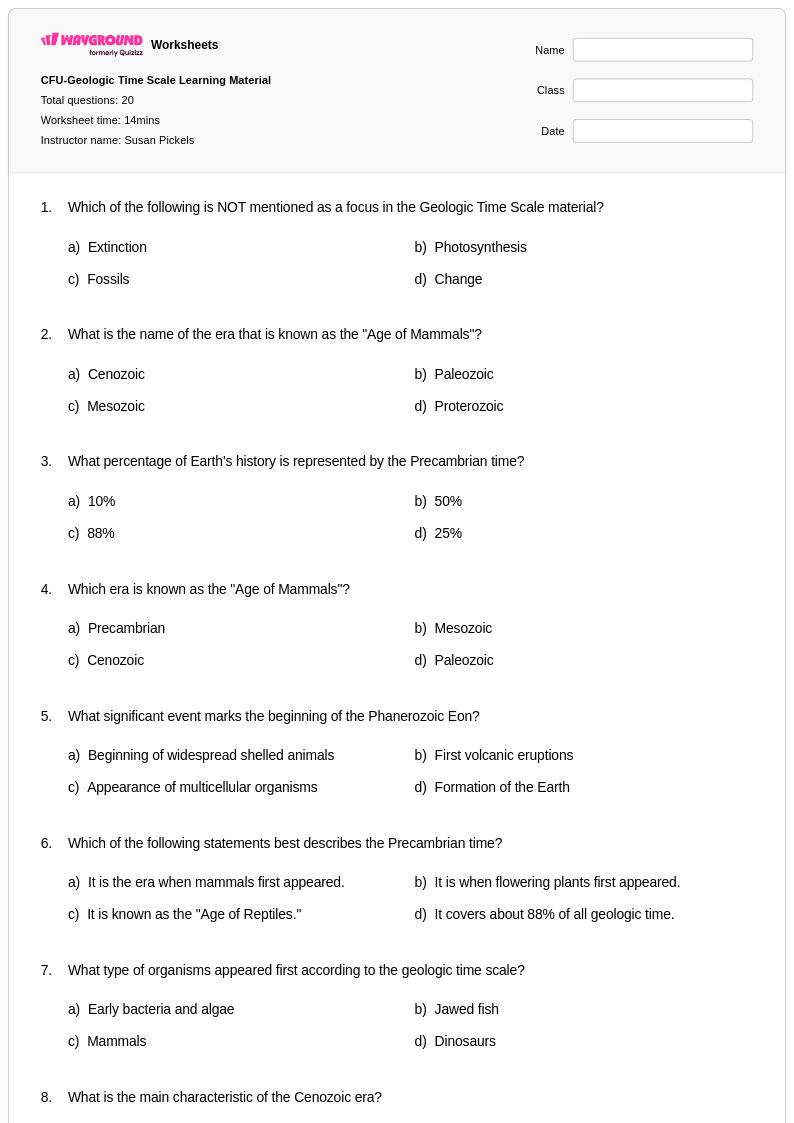
One of the most persistent errors is confusing the relative order of the major divisions, particularly mixing up eras within the Phanerozoic eon or misplacing the Precambrian relative to named periods. Students also frequently conflate relative dating with absolute dating, applying one method's logic to the other. Another common misconception is underestimating the proportion of Earth's history that predates complex animal life — the Precambrian accounts for roughly 88% of geologic time, which students consistently underestimate. Targeted practice that requires students to justify their answers using specific evidence helps surface and correct these errors.
How do I use Wayground's Geologic Time Scale worksheets in my classroom?
Wayground's Geologic Time Scale worksheets are available as printable PDFs for traditional classroom use and in digital formats for technology-integrated or remote learning environments, including the option to host them as a quiz directly on Wayground. Teachers can use the platform's search and filtering tools to locate materials matched to specific curriculum standards, whether the focus is introductory relative dating or advanced radiometric decay. For classes with mixed readiness levels, Wayground supports individual student accommodations such as read aloud, extended time, and reduced answer choices, all configurable without notifying other students.
How can I differentiate geologic time scale instruction for students at different levels?
For students who are newer to the topic, start with activities that focus on the four major eons and major era boundaries before introducing individual periods. Advanced learners benefit from worksheets that incorporate radiometric dating calculations, isotope half-life problems, and analysis of evolutionary transitions across period boundaries. Wayground allows teachers to access resources at varying complexity levels and customize existing worksheets to match specific learning objectives, making it straightforward to assign different materials to different student groups within the same lesson.
How does the geologic time scale connect to other Earth science topics?
The geologic time scale serves as the organizing framework for nearly every major Earth science concept, connecting directly to plate tectonics, fossil evidence and evolution, rock cycle processes, and climate history. Understanding when major geological events occurred, such as the formation of supercontinents or large igneous province eruptions, requires students to place those events accurately within the time scale. Mass extinction events like the end-Permian and end-Cretaceous also bridge geology and biology, making the time scale a natural integrating topic for cross-disciplinary science instruction.