Year 5 students explore the fascinating world of hens through our comprehensive collection of free life science worksheets and printables, featuring engaging practice problems and detailed answer keys to master poultry biology concepts.
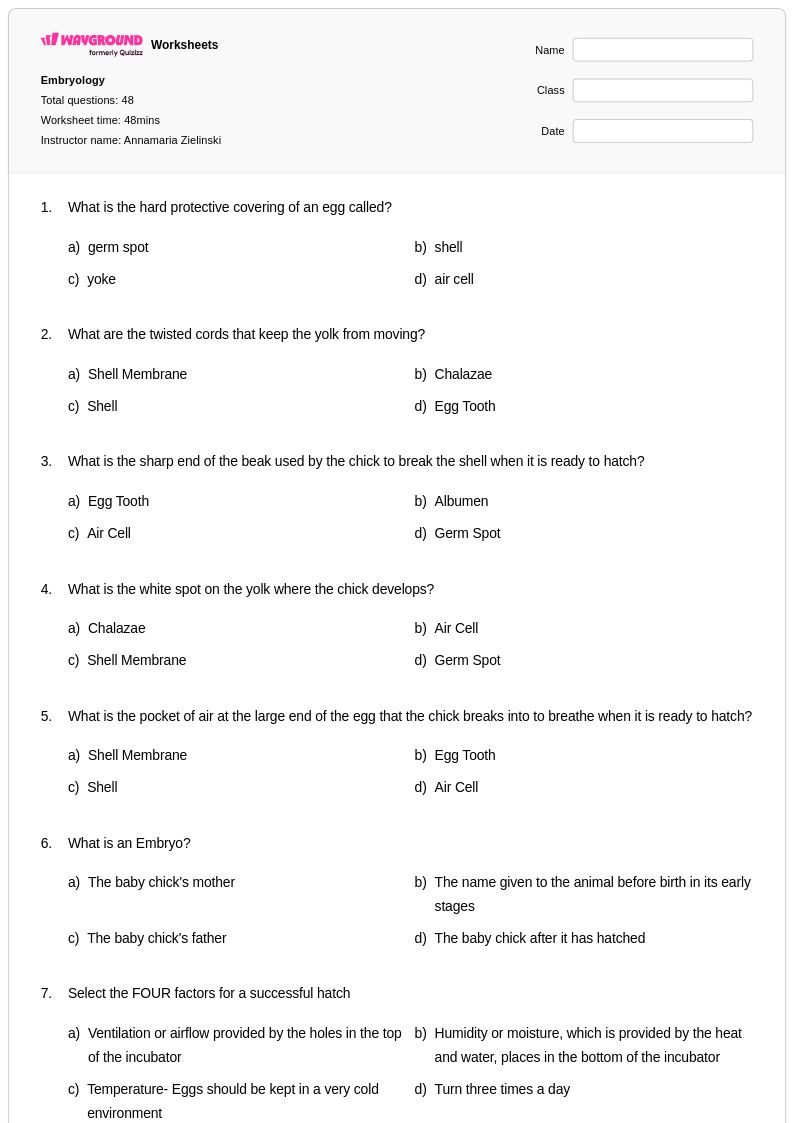
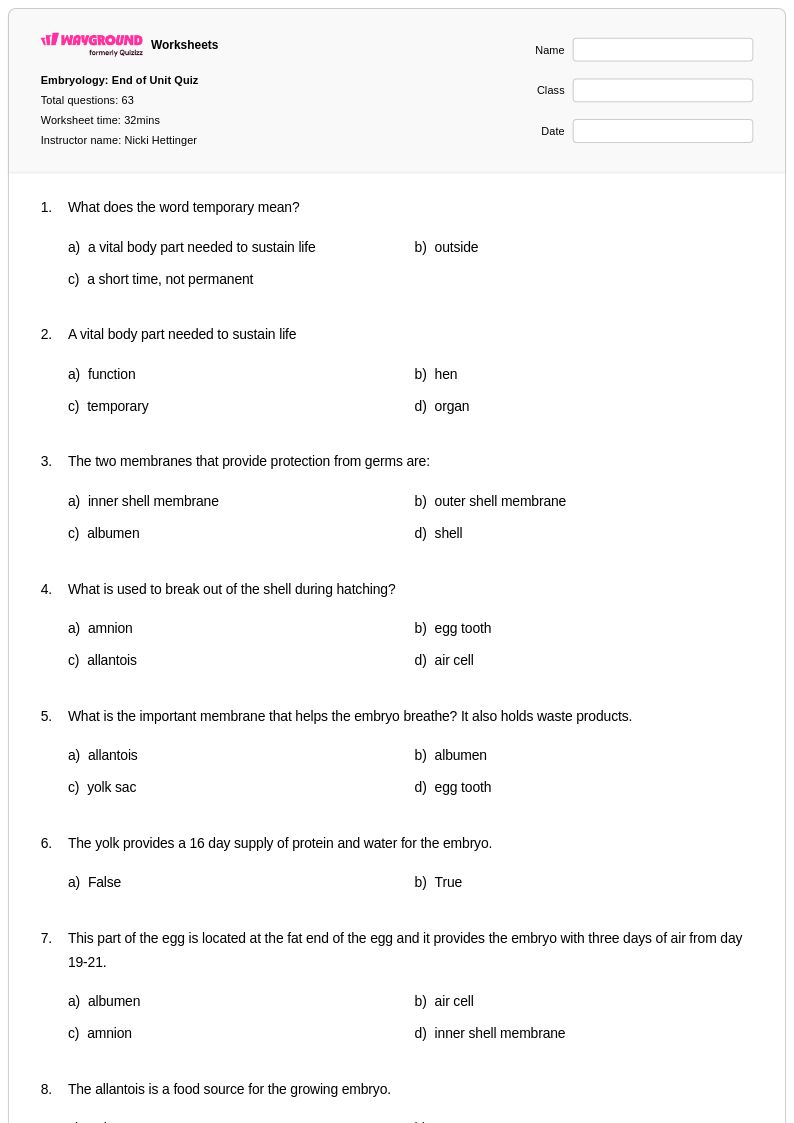
Year 5 hen worksheets available through Wayground (formerly Quizizz) provide comprehensive exploration of these remarkable domesticated birds, focusing on their anatomy, life cycle, behavior, and role in agriculture. These educational resources strengthen students' understanding of animal classification, reproductive cycles, and the relationship between humans and farm animals through engaging practice problems that cover topics such as egg formation, incubation periods, and the physical characteristics that distinguish hens from other poultry. The worksheets include detailed answer keys and are available as free printables in convenient pdf format, allowing teachers to seamlessly incorporate hands-on learning activities that help fifth-grade students develop critical observation skills while studying avian biology and agricultural science concepts.
Wayground (formerly Quizizz) empowers educators with access to millions of teacher-created resources specifically designed for hen-focused life science instruction, featuring robust search and filtering capabilities that align with grade-level standards and learning objectives. The platform's differentiation tools enable teachers to customize worksheets based on individual student needs, while flexible formatting options provide both printable and digital versions including downloadable pdf files for classroom versatility. These comprehensive collections support effective lesson planning by offering varied approaches to skill practice, targeted remediation for struggling learners, and enrichment opportunities for advanced students, ensuring that all fifth-graders can successfully master essential concepts related to hen biology, domestication, and the broader agricultural systems that connect these animals to human society.
FAQs
How do I teach students about hens and their role in farm ecosystems?
Teaching hens effectively starts with connecting students to concrete, observable biology — covering anatomy (beak, comb, wattles, feathers), egg development stages, and the hen's role in agricultural systems. Use labeled diagrams, life cycle sequencing activities, and comparisons between wild birds and domestic chickens to build conceptual understanding. Grounding lessons in real-world agricultural context helps students see hens not just as animals but as part of broader food and farming systems.
What types of practice activities help students learn about hen biology and life cycles?
Effective practice for hen biology includes egg development sequencing tasks, anatomy labeling exercises, vocabulary matching activities covering terms like incubation, brooding, and clutch, and short-answer questions about feeding habits and behavior. Worksheets that ask students to compare the hen's life cycle stages — egg, chick, pullet, hen — reinforce both sequencing skills and biological vocabulary. These activities work well as guided practice during a unit on farm animals or life science.
What misconceptions do students commonly have about hens and egg development?
A common misconception is that all eggs hens lay are fertilized and will hatch into chicks — students often do not understand that a rooster must be present for fertilization to occur. Another frequent error is conflating the egg development timeline with hatching time, or assuming that incubation is instant rather than a 21-day process. Addressing these misconceptions directly through labeled diagrams and sequencing tasks helps students build accurate biological models.
How can I use hen worksheets to support different learners in my classroom?
Hen worksheets on Wayground can be assigned digitally with accommodations applied at the individual student level, including read aloud support for emerging readers, reduced answer choices for students who need reduced cognitive load, and extended time for students who require it. These settings are reusable across sessions, so once configured for a student, they carry forward automatically. This makes it practical to support diverse learners within the same life science activity without creating separate versions of the assignment.
How do I use hen worksheets from Wayground in my classroom?
Hen worksheets on Wayground are available as printable PDFs for traditional classroom use and in digital formats for technology-integrated environments, including the ability to host them as a quiz directly on the Wayground platform. Teachers can assign them as independent practice, homework, or formative checkpoints during a farm animals or life science unit. Each worksheet includes a complete answer key, so grading and feedback can be completed efficiently.