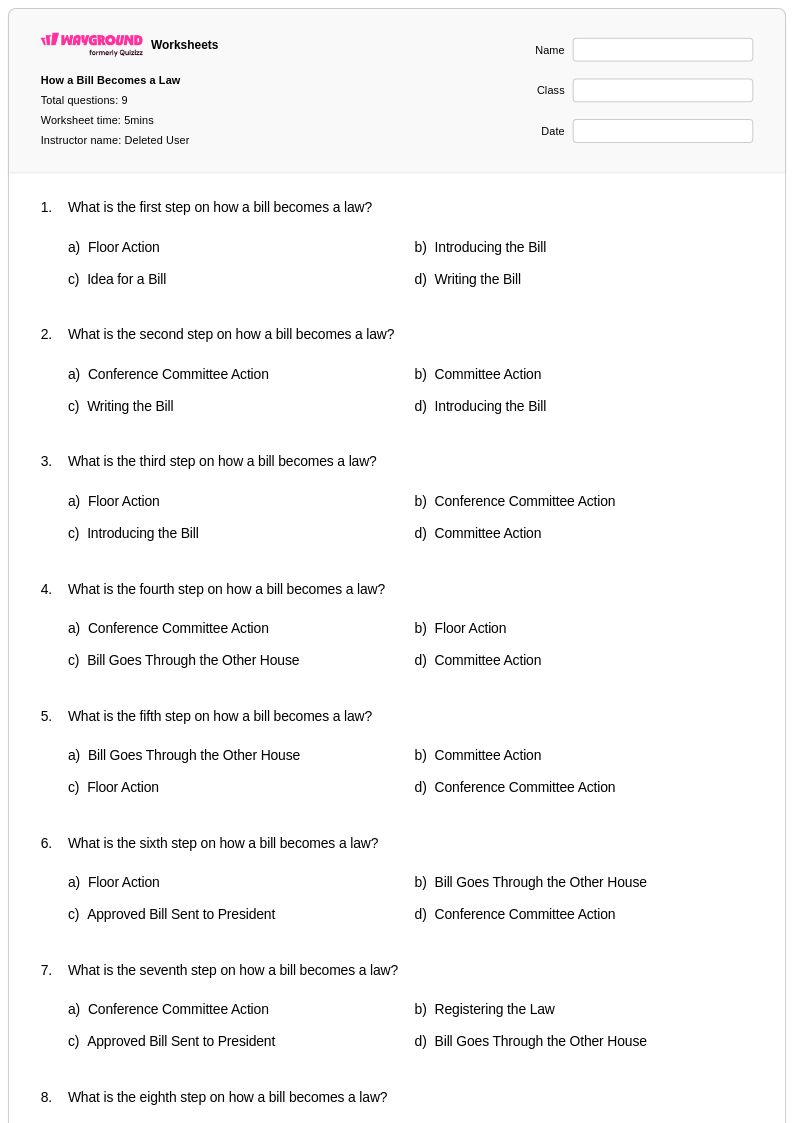
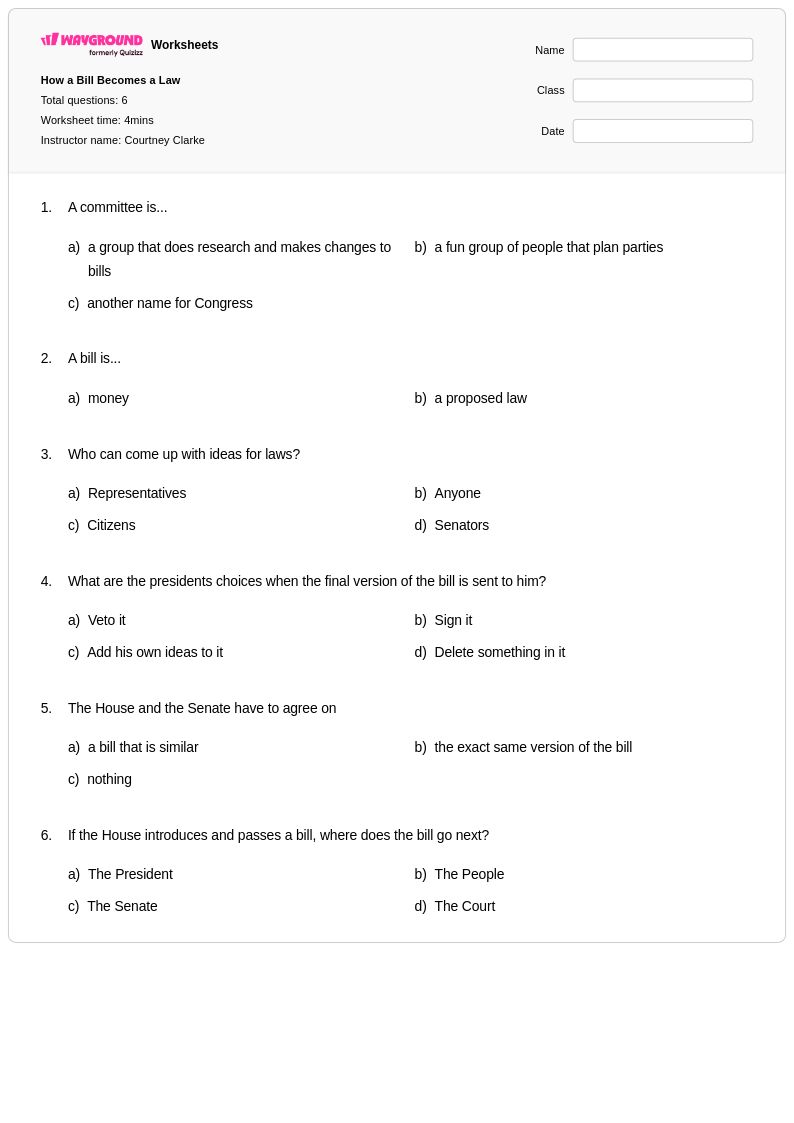
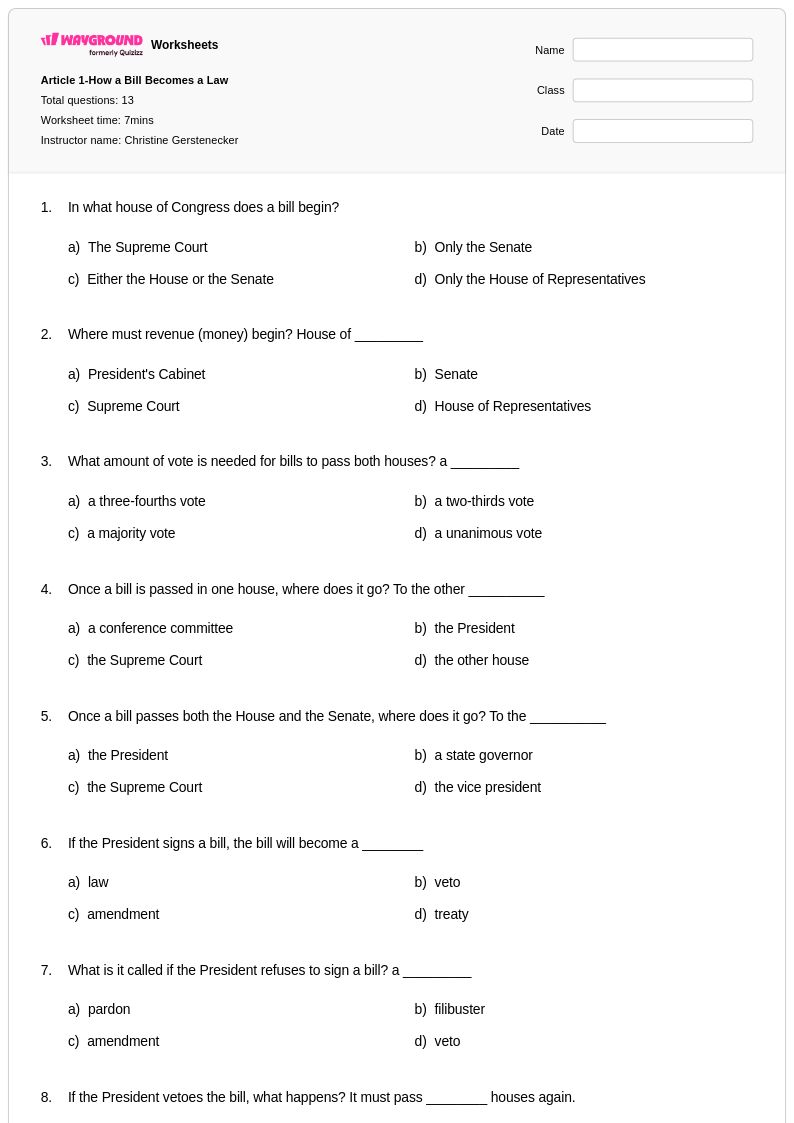
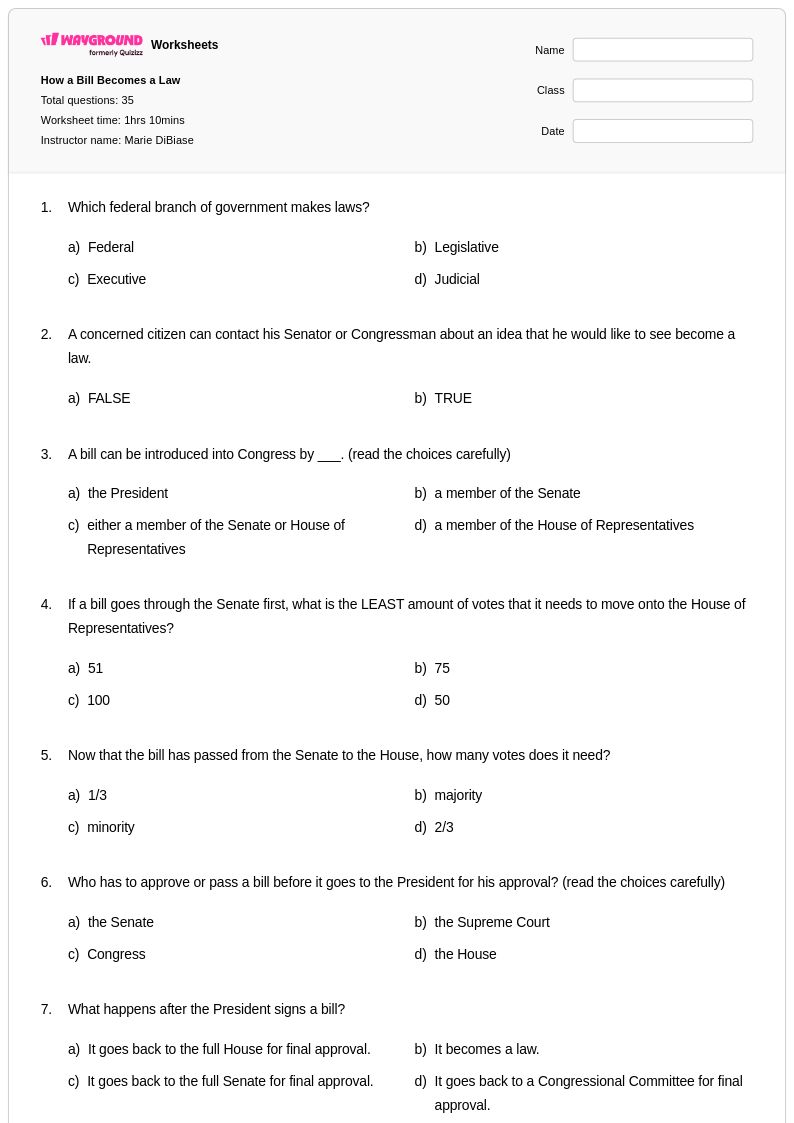
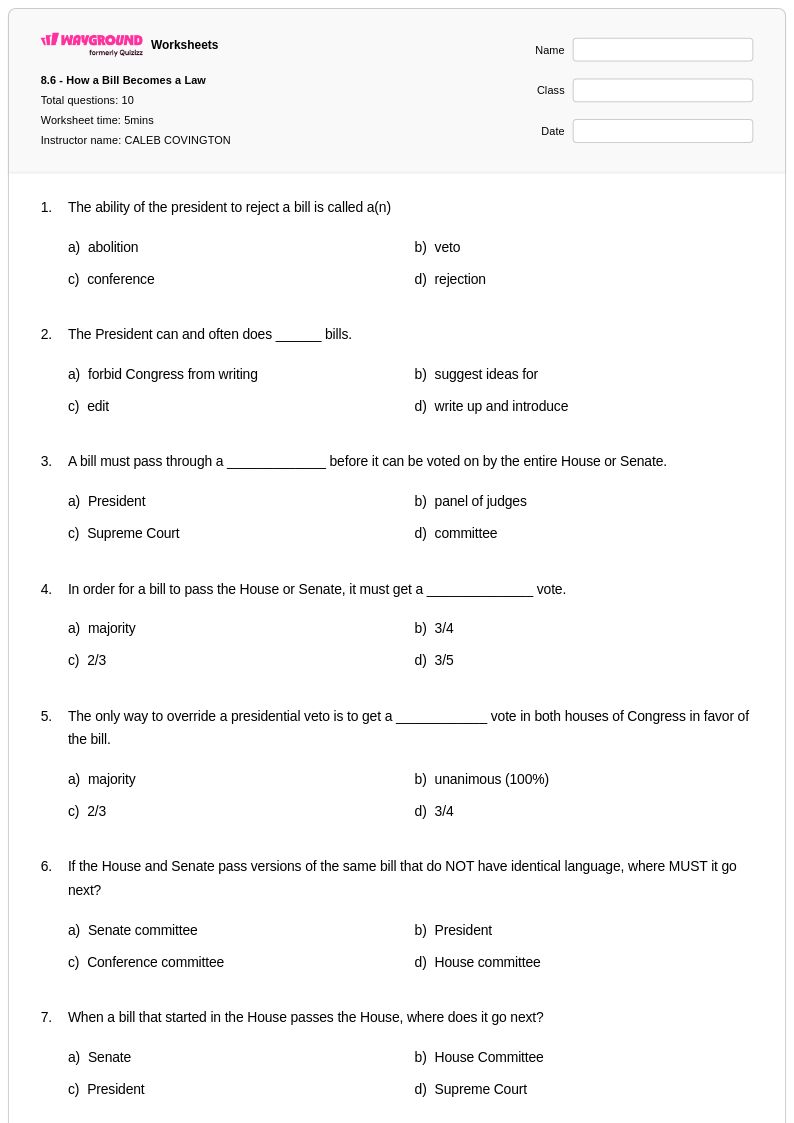
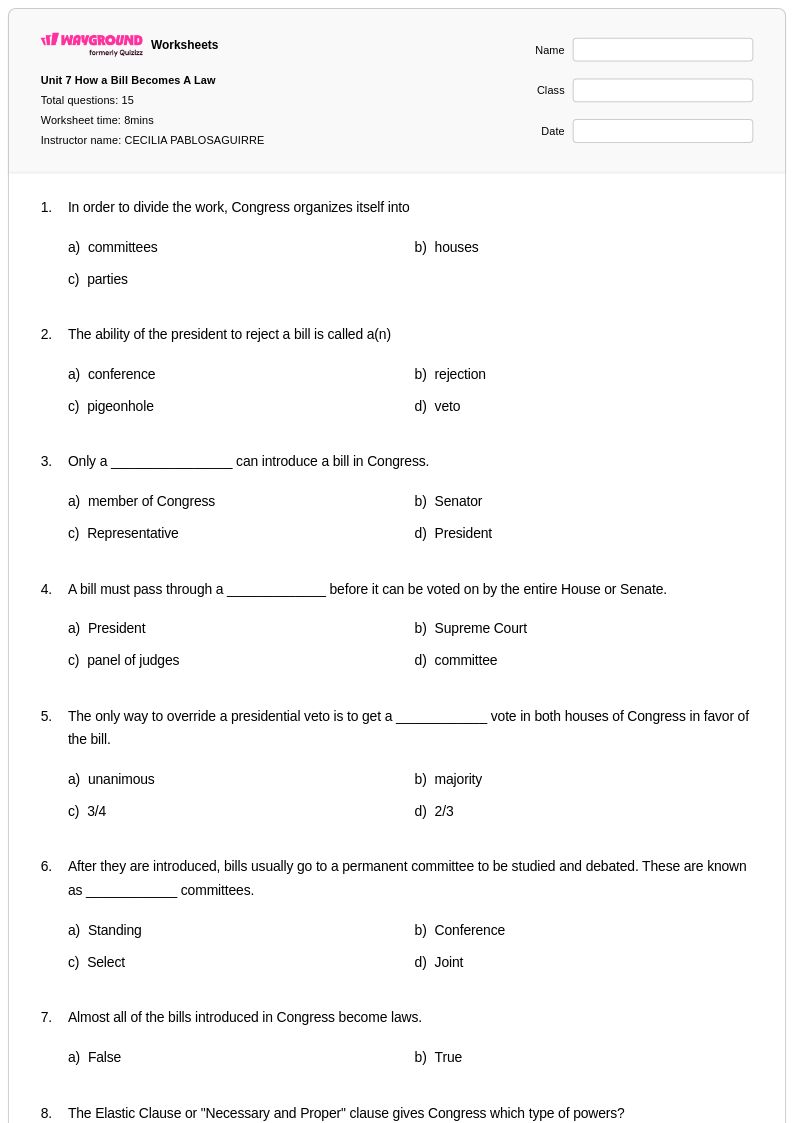
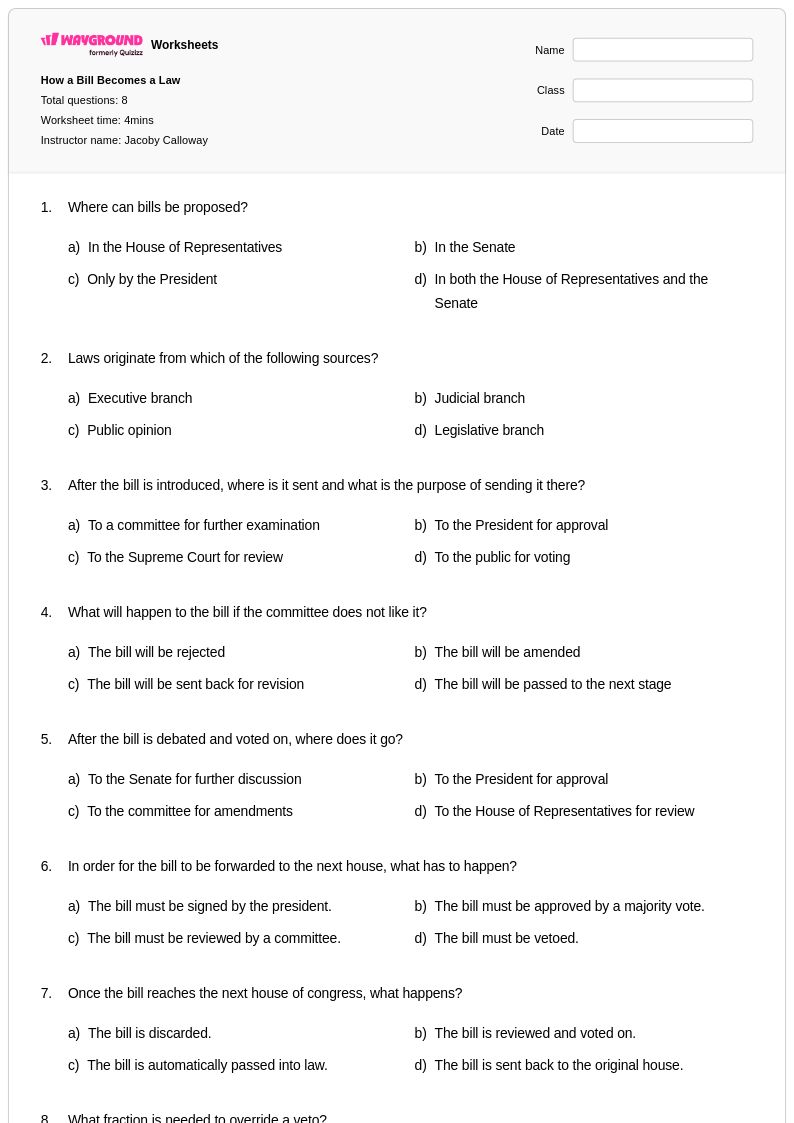
Free Printable How a bill becomes a law Worksheets for Year 7
Discover free Year 7 printable worksheets and practice problems that help students master how a bill becomes a law through engaging civics activities, complete with PDF downloads and answer keys from Wayground.
Explore printable How a bill becomes a law worksheets for Year 7
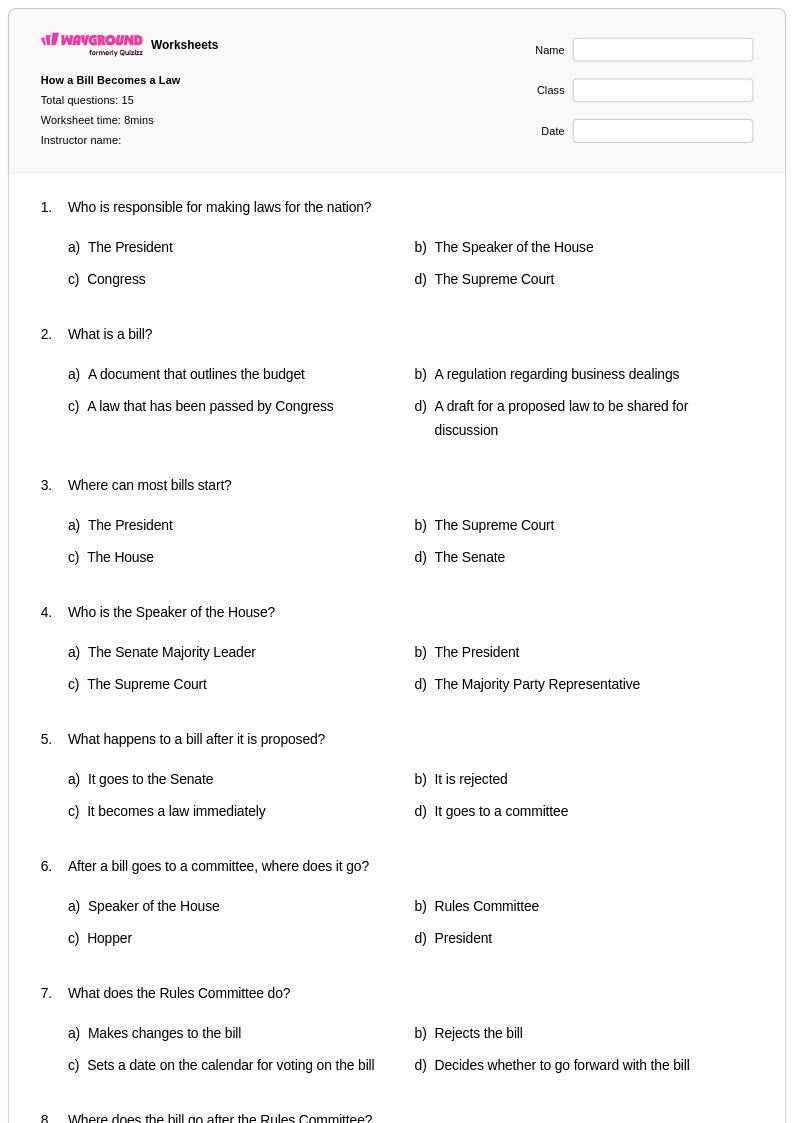
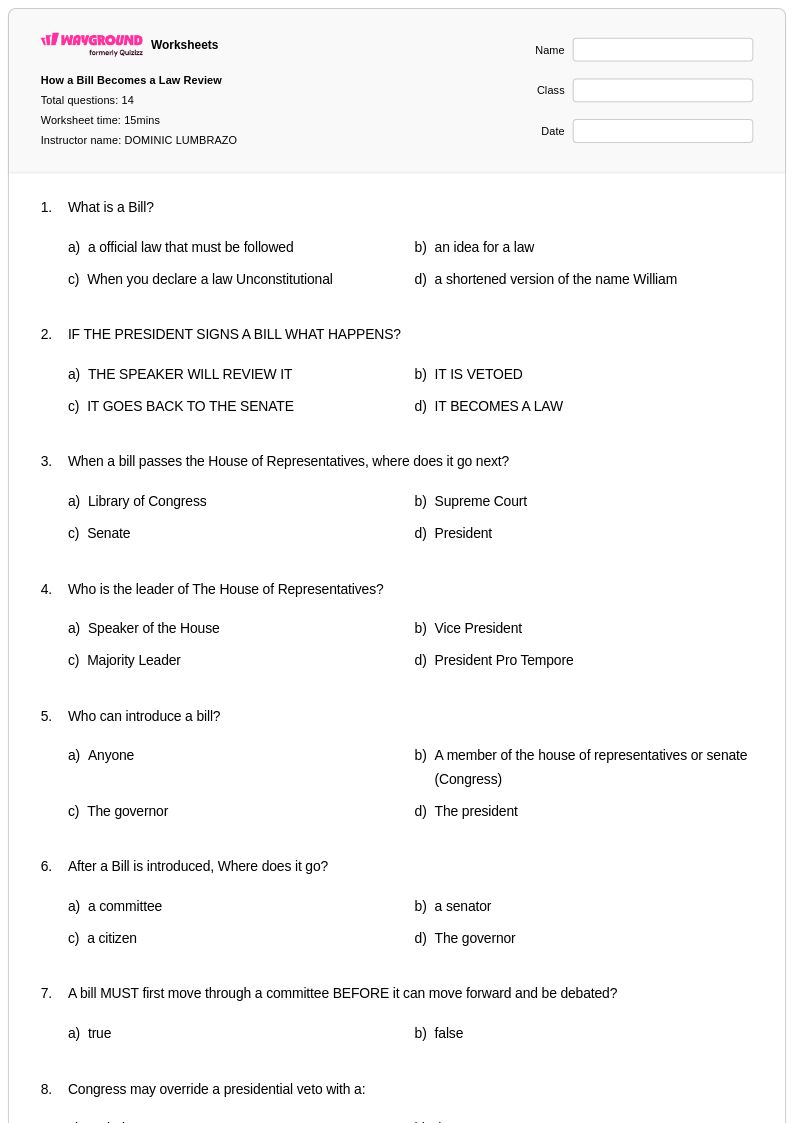
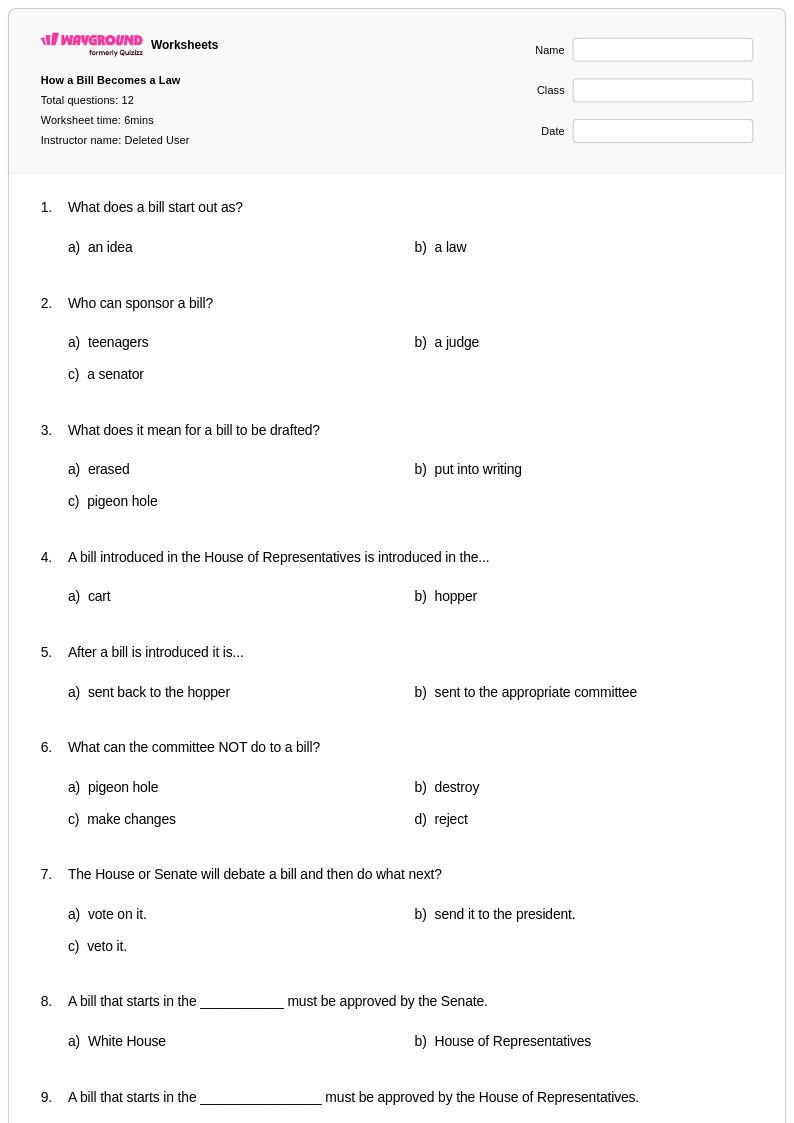
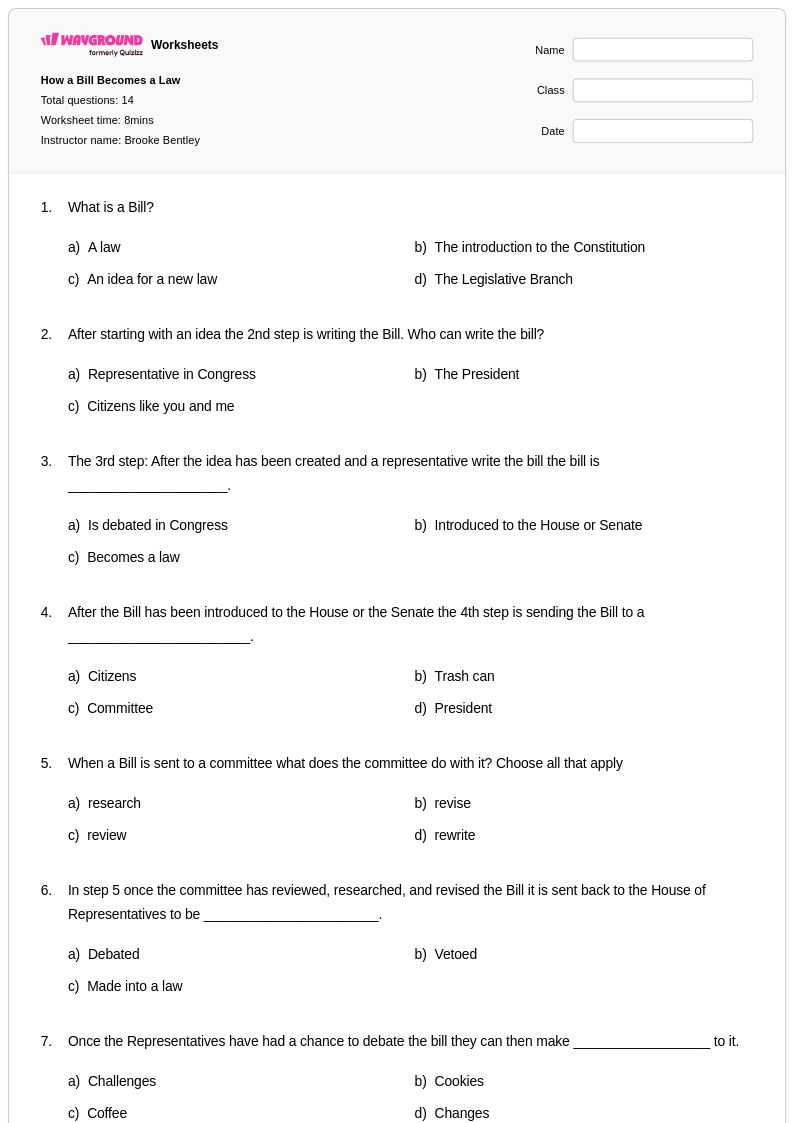
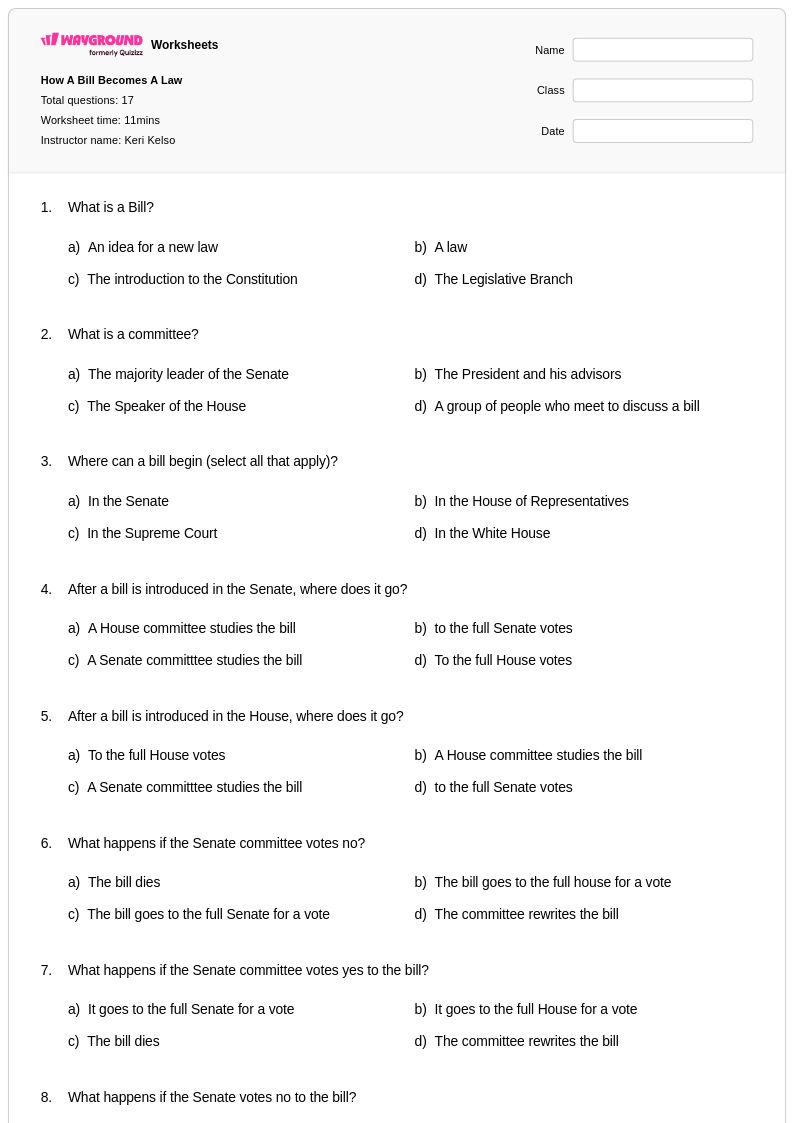
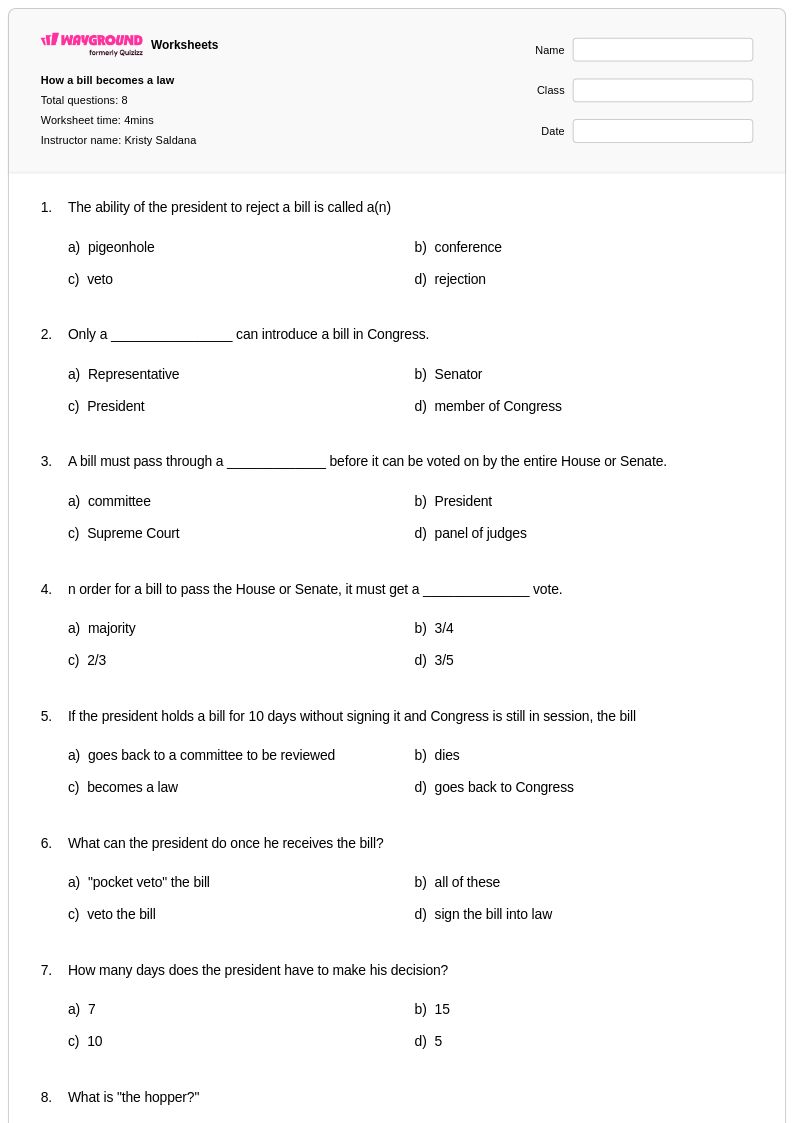
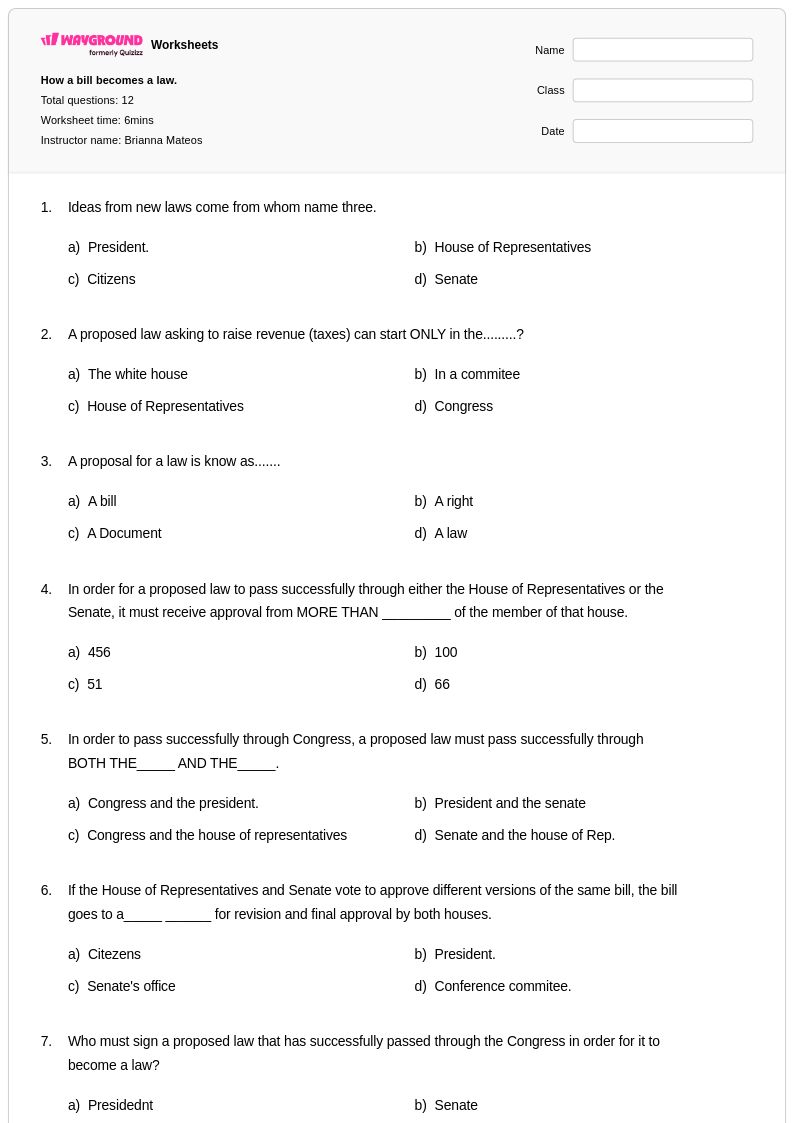
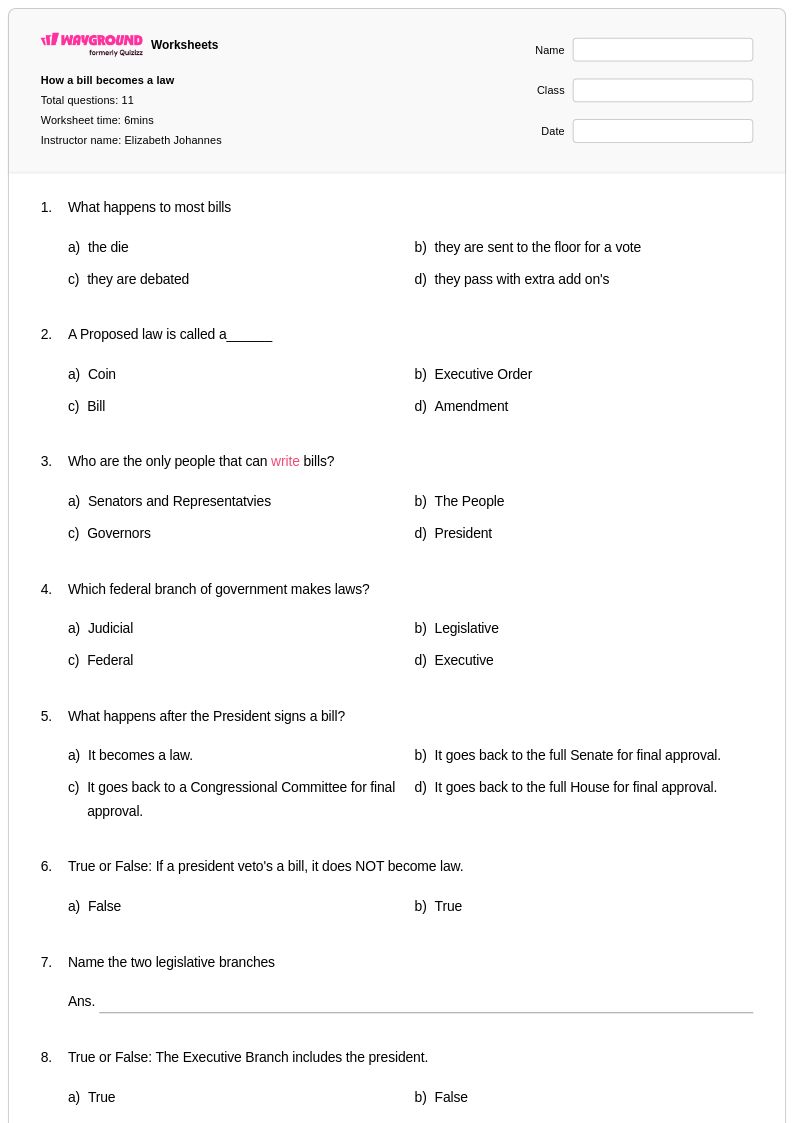
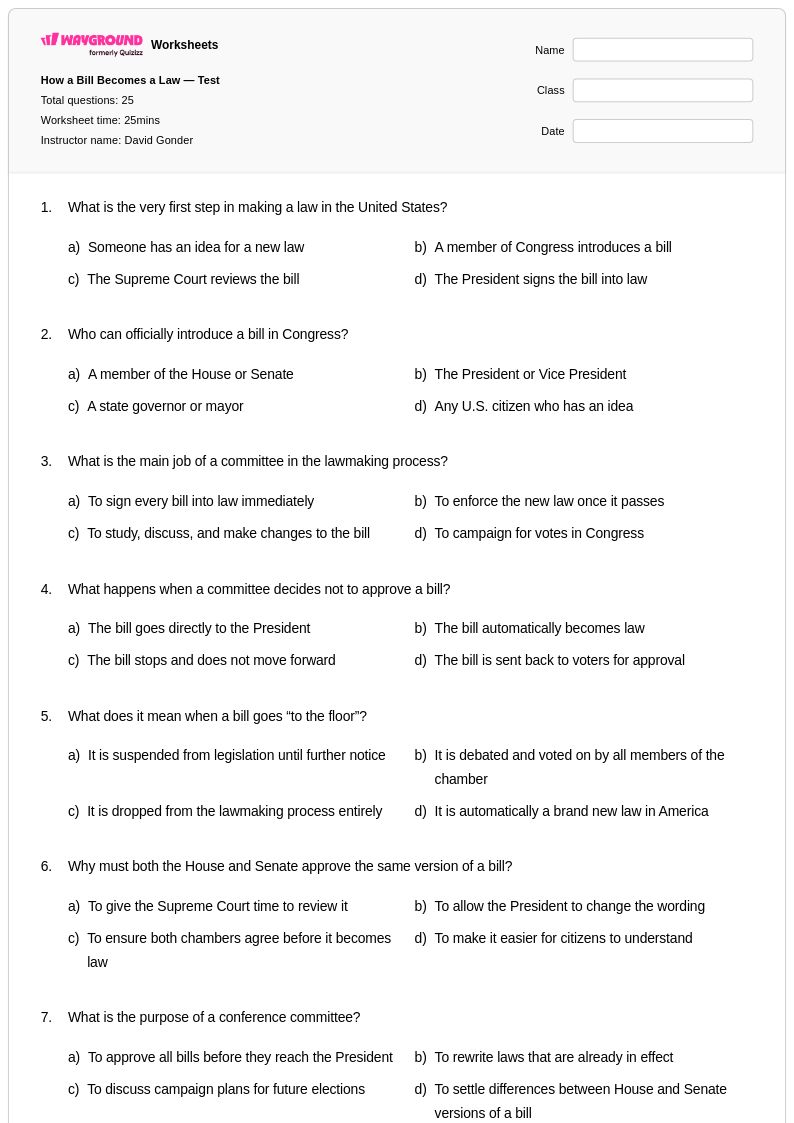
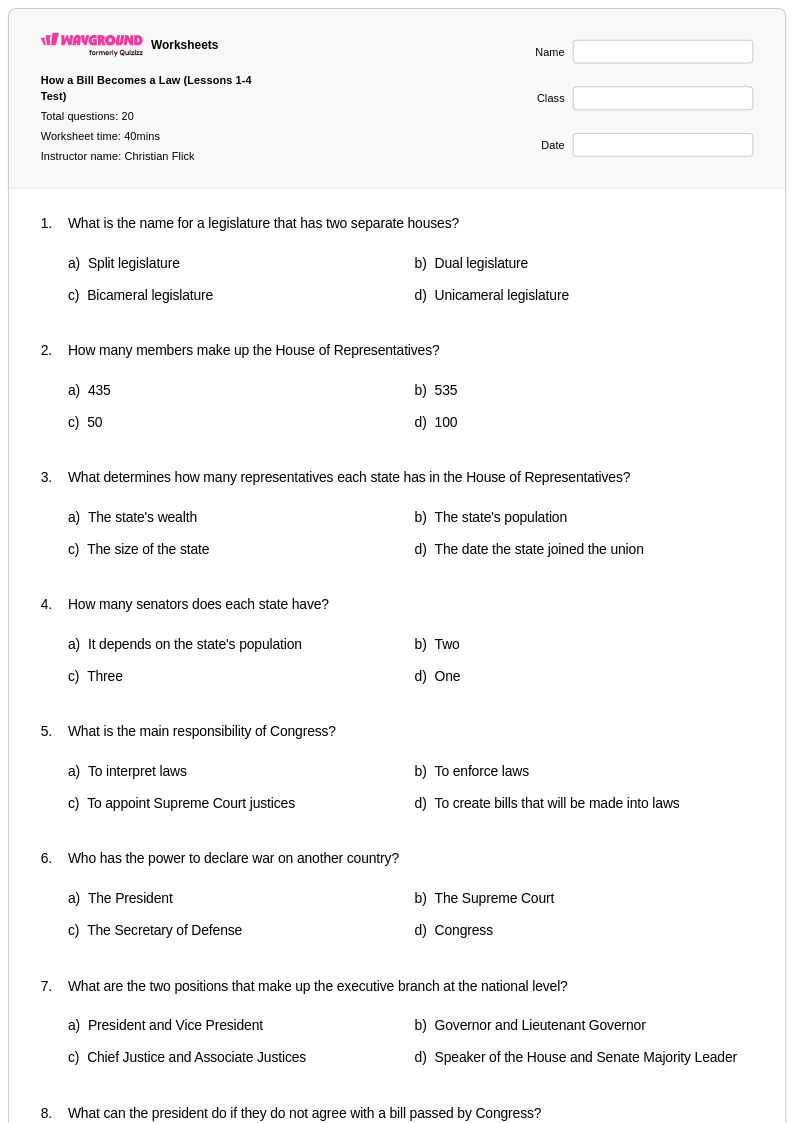
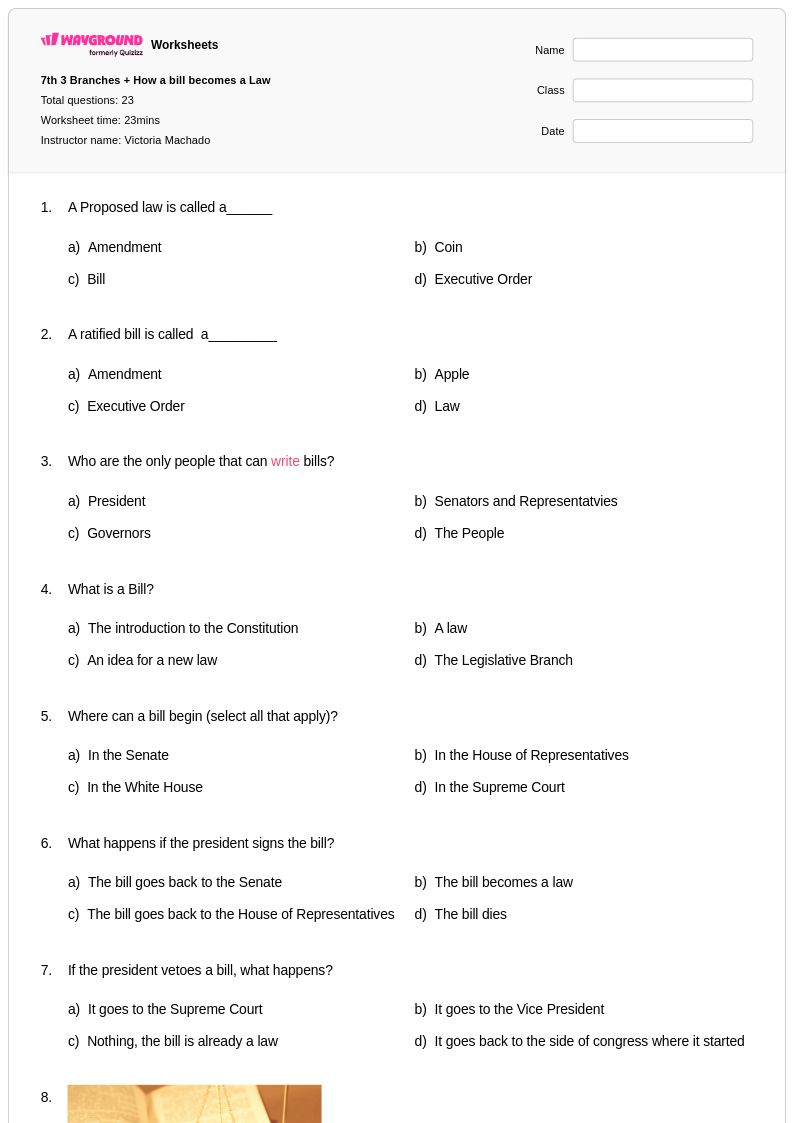
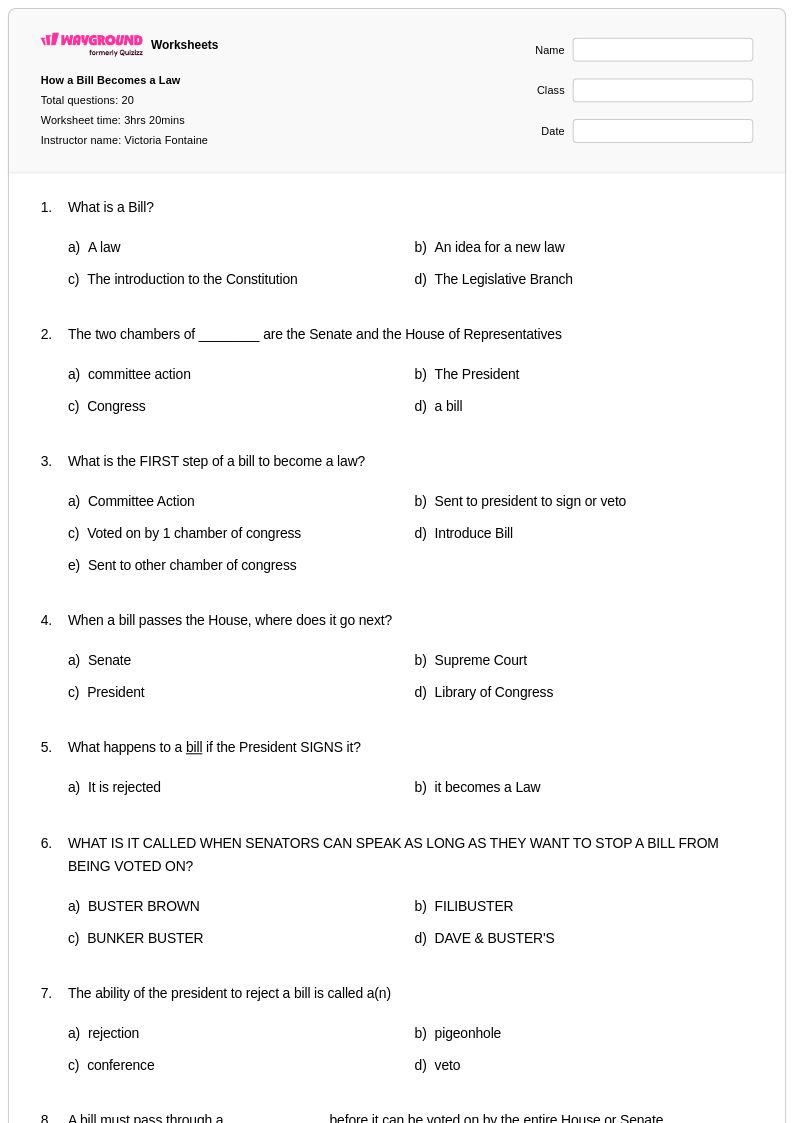
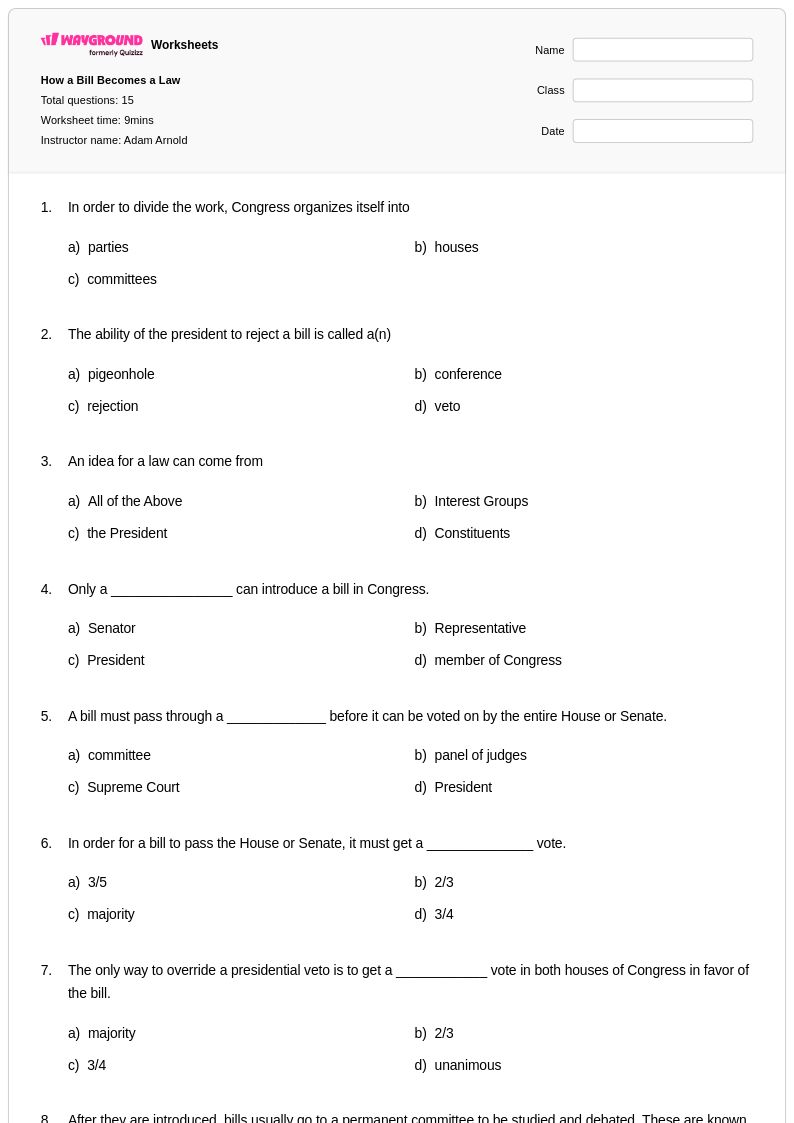
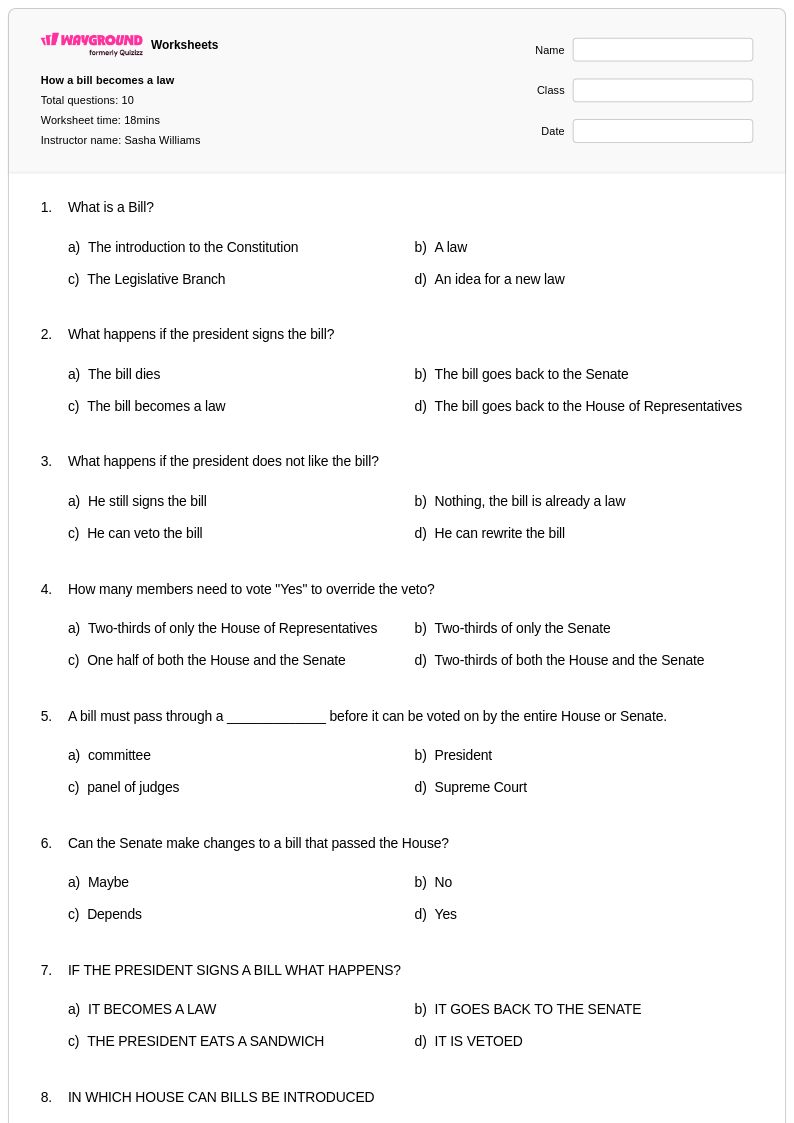
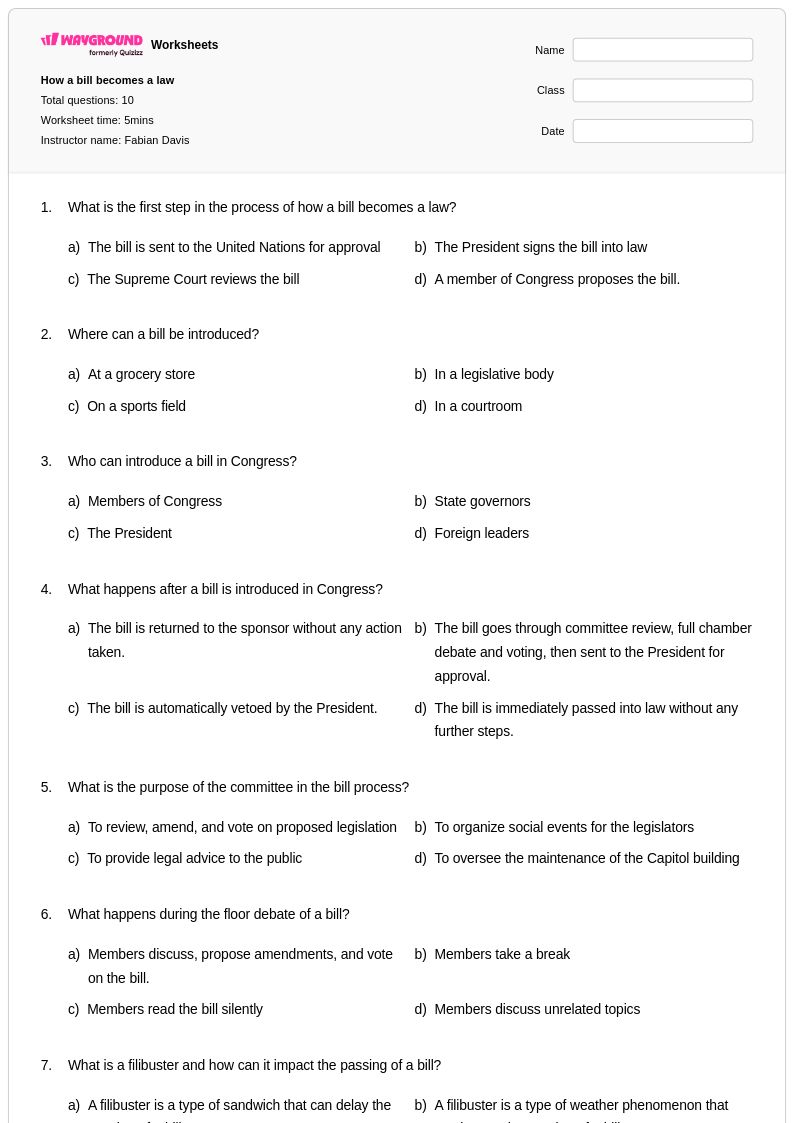
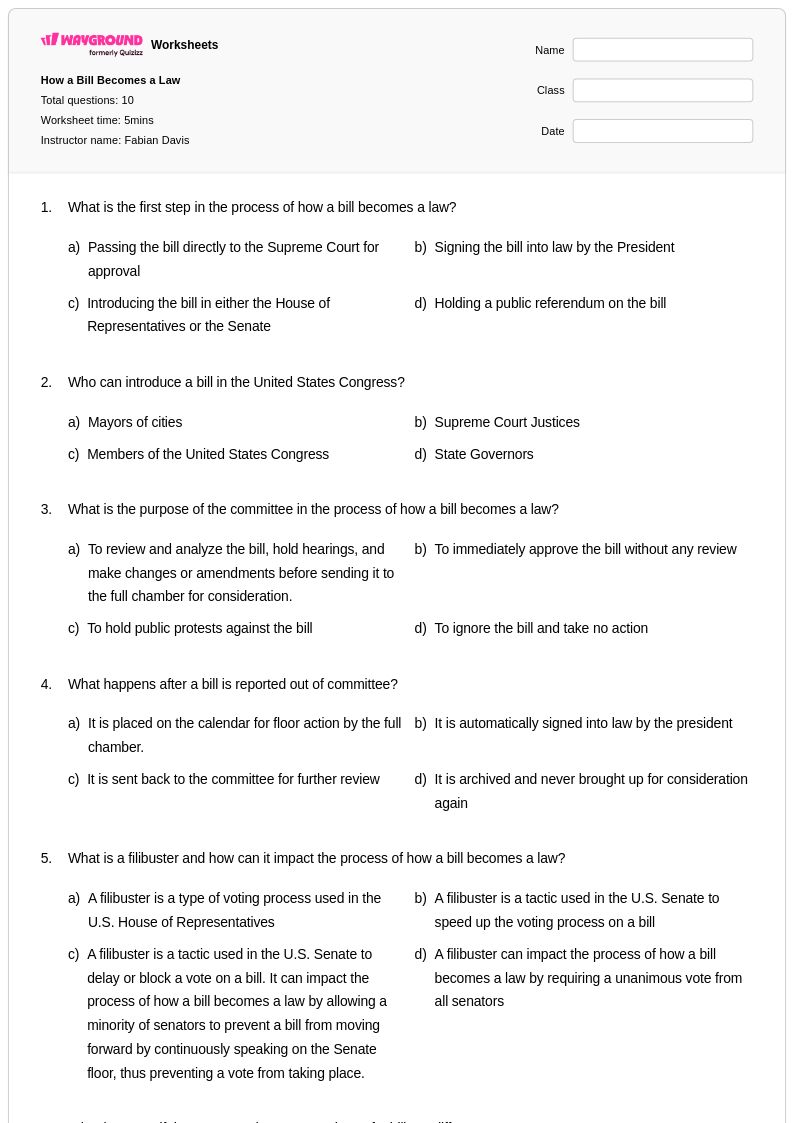
Understanding how a bill becomes a law represents one of the most fundamental concepts in Year 7 civics education, and Wayground's comprehensive worksheet collection makes this complex legislative process accessible and engaging for middle school students. These carefully crafted worksheets guide students through each critical stage of the legislative journey, from the initial introduction of a bill in Congress through committee review, floor debates, voting procedures, and ultimately to presidential action. Students develop essential civic literacy skills as they analyze the roles of different government branches, identify key checkpoints in the legislative process, and explore how citizen input influences lawmaking. The practice problems within these free printables challenge students to apply their understanding through real-world scenarios, while detailed answer keys support both independent study and classroom instruction, ensuring students can track their progress as they master this cornerstone of American democratic government.
Wayground's extensive library of teacher-created resources transforms how educators approach instruction on the legislative process, offering millions of high-quality worksheets that align with national civics standards and state curriculum requirements. The platform's robust search and filtering capabilities enable teachers to quickly locate materials that match their specific grade level needs and learning objectives, while built-in differentiation tools allow for seamless adaptation of content to support diverse learners. Whether accessed as printable pdf downloads for traditional classroom use or deployed through digital formats for technology-integrated instruction, these flexible resources streamline lesson planning and provide targeted support for remediation and enrichment activities. Teachers can easily customize worksheets to emphasize particular aspects of the legislative process, creating focused practice opportunities that reinforce key concepts while building students' analytical thinking skills essential for active citizenship.
FAQs
How do I teach how a bill becomes a law in a way students actually understand?
Break the legislative process into discrete, sequential stages rather than presenting it as one complex system. Start with the origin of a bill, then walk students through committee review, floor debate, voting in both chambers, and presidential action as separate lessons or activities. Using a real or simplified bill as a case study helps students connect each procedural step to a concrete example, which significantly improves retention and comprehension.
What activities help students practice the steps of how a bill becomes a law?
Sequencing exercises are among the most effective practice formats for this topic — students arrange the stages of the legislative process in the correct order, reinforcing procedural memory. Worksheets that ask students to trace a bill through both chambers of Congress, identify which actors are involved at each stage, and predict outcomes based on vote counts build both recall and analytical thinking. Practice problems that present real-world scenarios, such as identifying where a bill might stall in committee or face a presidential veto, push students beyond memorization into applied civics reasoning.
What misconceptions do students commonly have about how a bill becomes a law?
One of the most common misconceptions is that a bill only needs to pass one chamber of Congress to become law — students often overlook that identical or reconciled versions must pass both the House and the Senate. Another frequent error is assuming the president must sign a bill for it to become law, when in fact a bill can become law without a signature if the president takes no action within ten days while Congress is in session. Students also frequently confuse a pocket veto with a standard veto, and misunderstand the role of conference committees in reconciling differences between House and Senate versions of a bill.
How do I use a bill becomes a law worksheet effectively in class?
These worksheets are available as printable PDFs for traditional classroom use and in digital formats for technology-integrated environments, making them flexible for both in-person and remote instruction. For direct instruction, use the worksheet as a structured note-taking guide while walking through each legislative stage as a class. For independent or small-group practice, assign sequencing or scenario-based problems that require students to apply the process without step-by-step prompting. The included answer keys allow for quick self-assessment or teacher-led review, and the digital format supports hosting the worksheet as a quiz on Wayground for immediate feedback.
How do I differentiate instruction for students who struggle with the legislative process?
For students who find the multi-step legislative process cognitively overwhelming, reduce the number of variables at once by focusing on one chamber before introducing the bicameral structure. On Wayground, teachers can assign individual accommodations such as read aloud support so questions and content are read to students who need it, reduced answer choices to lower cognitive load on multiple-choice items, and extended time for students who need more processing time. These settings can be applied to individual students without notifying the rest of the class, so differentiated support happens seamlessly within the same assignment.
How does the legislative process connect to broader civics standards?
Understanding how a bill becomes a law is a foundational civics standard in most state frameworks because it directly illustrates the separation of powers, the system of checks and balances, and the role of representative democracy in practice. Teaching this process gives students the conceptual scaffolding to understand related topics such as executive orders, judicial review, and the limits of each branch of government. It also supports media literacy, since students who understand the legislative process can more accurately evaluate news coverage of proposed legislation and policy debates.