Free Printable Presidential Roles Worksheets for Year 7
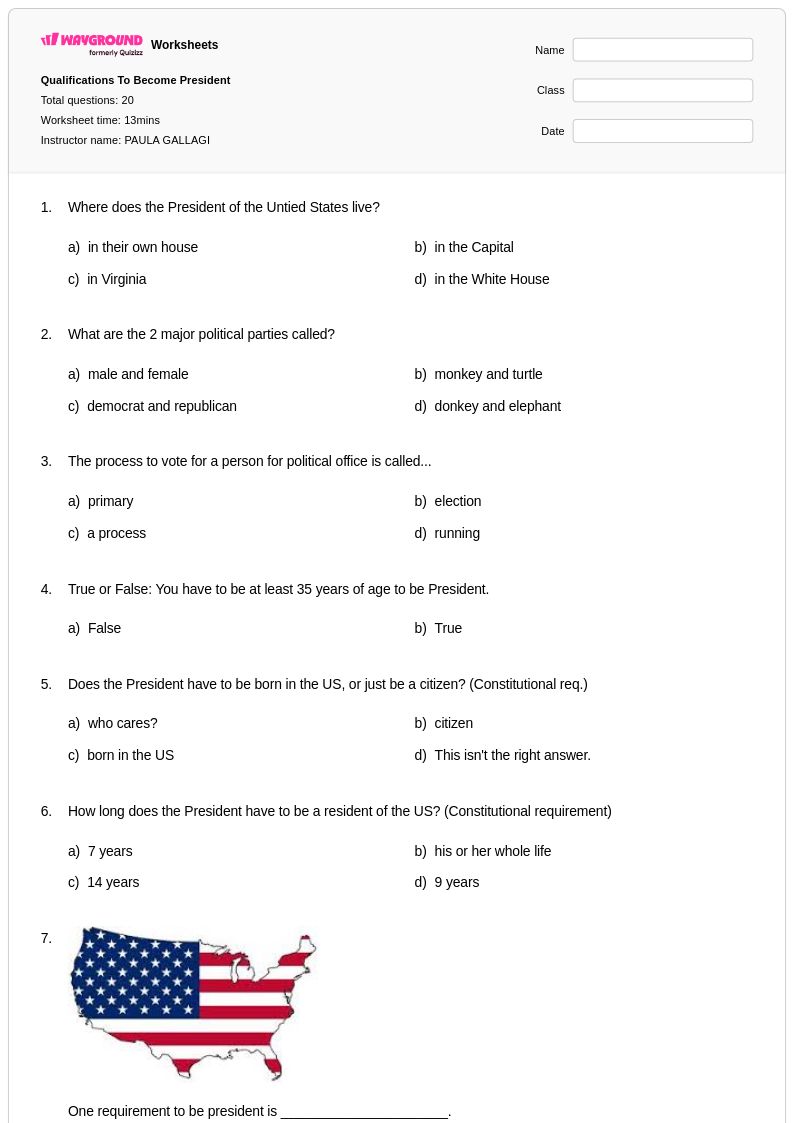
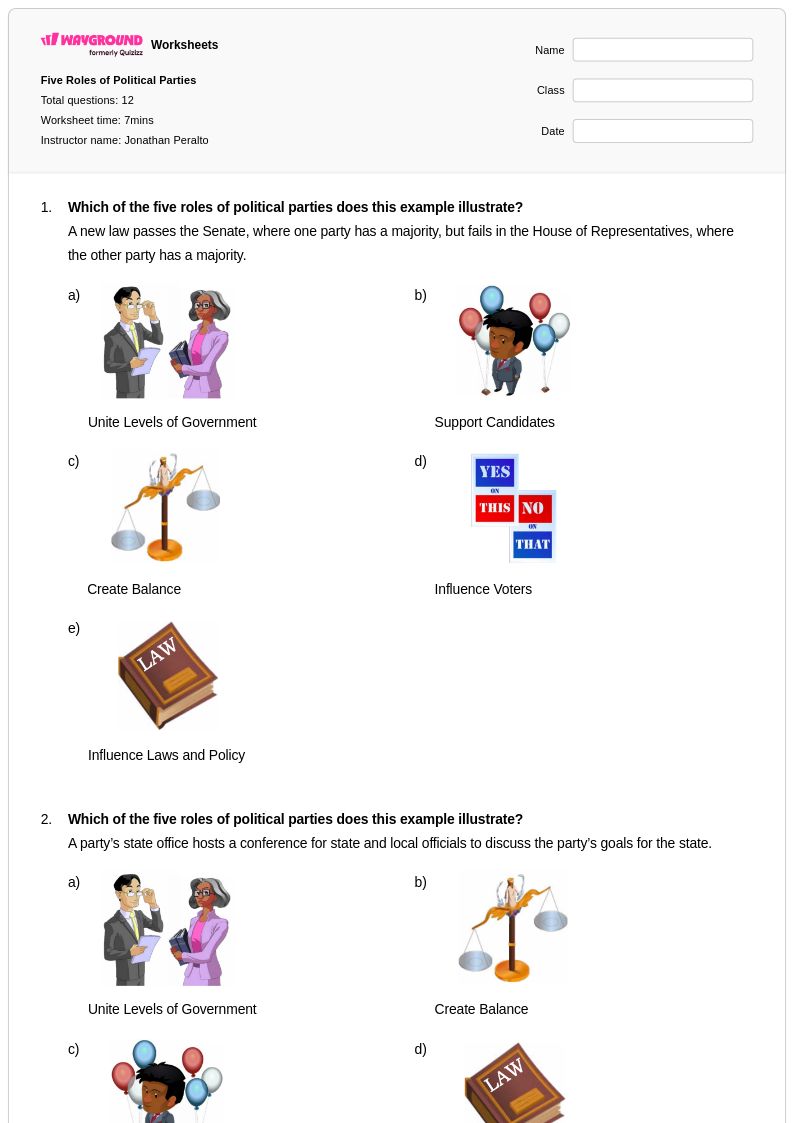
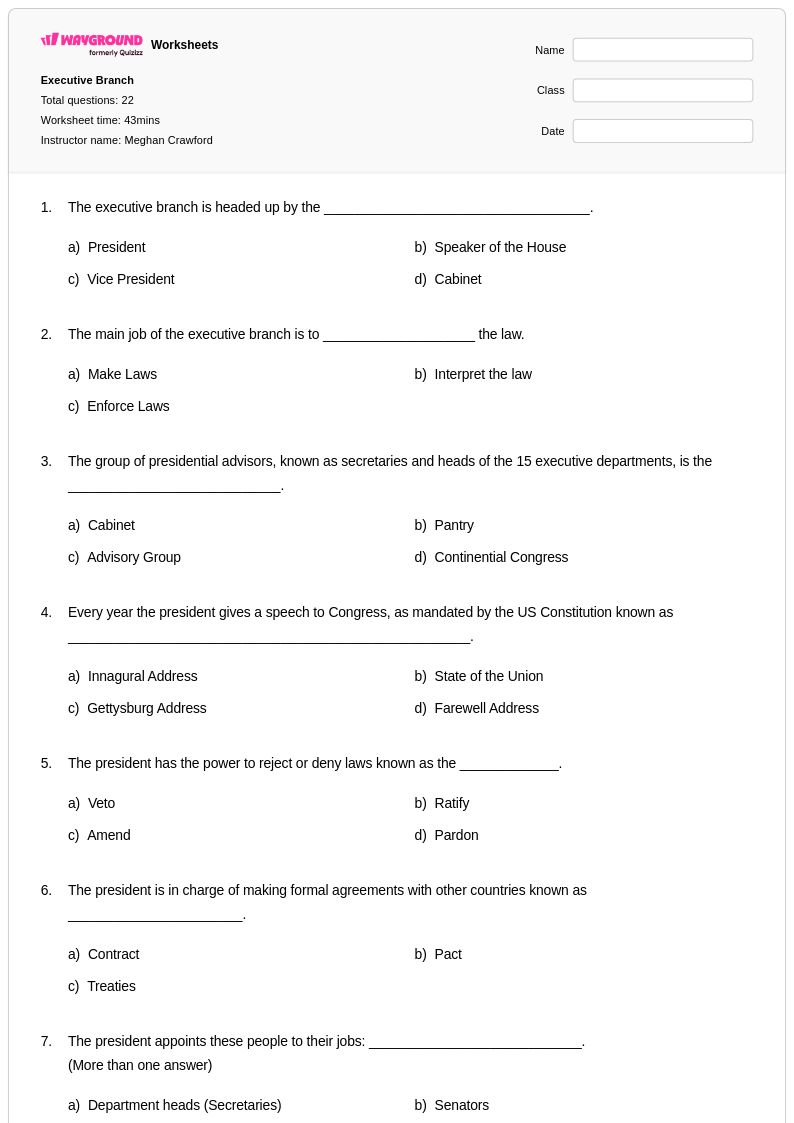
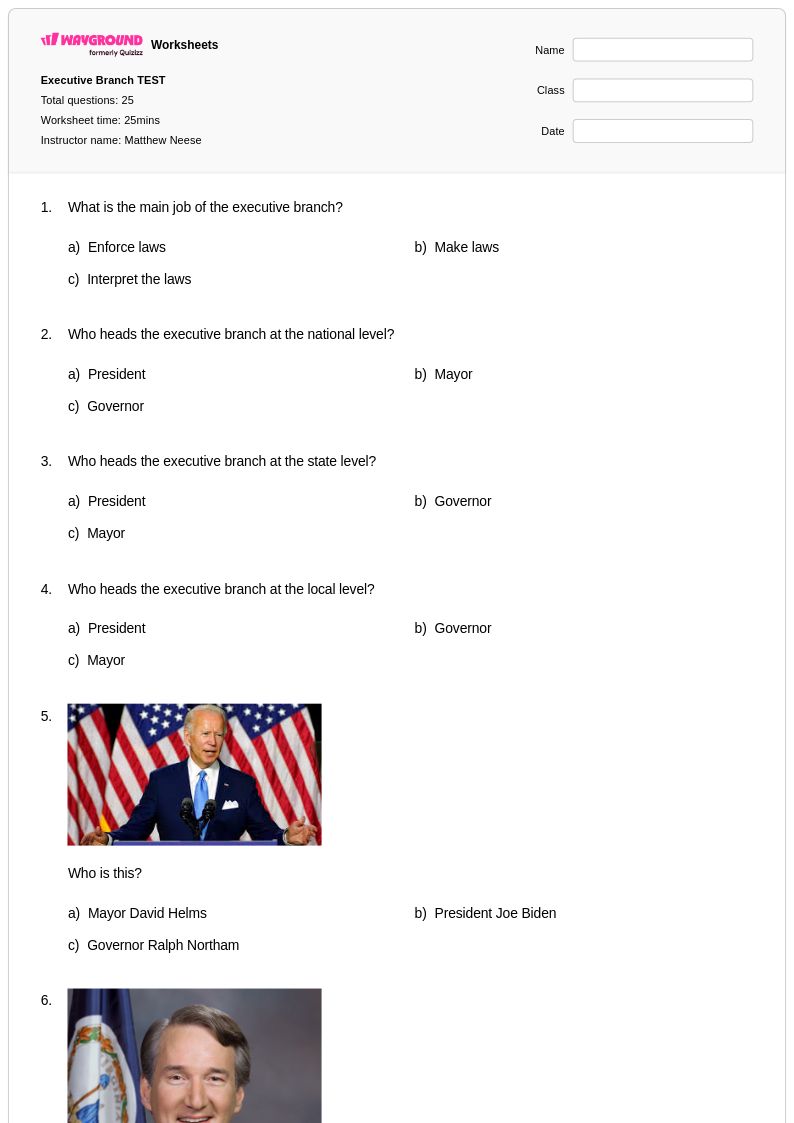
Year 7 presidential roles worksheets from Wayground help students explore the multiple responsibilities of the U.S. President through engaging printables, practice problems, and comprehensive answer keys for effective civics learning.
Explore printable Presidential Roles worksheets for Year 7
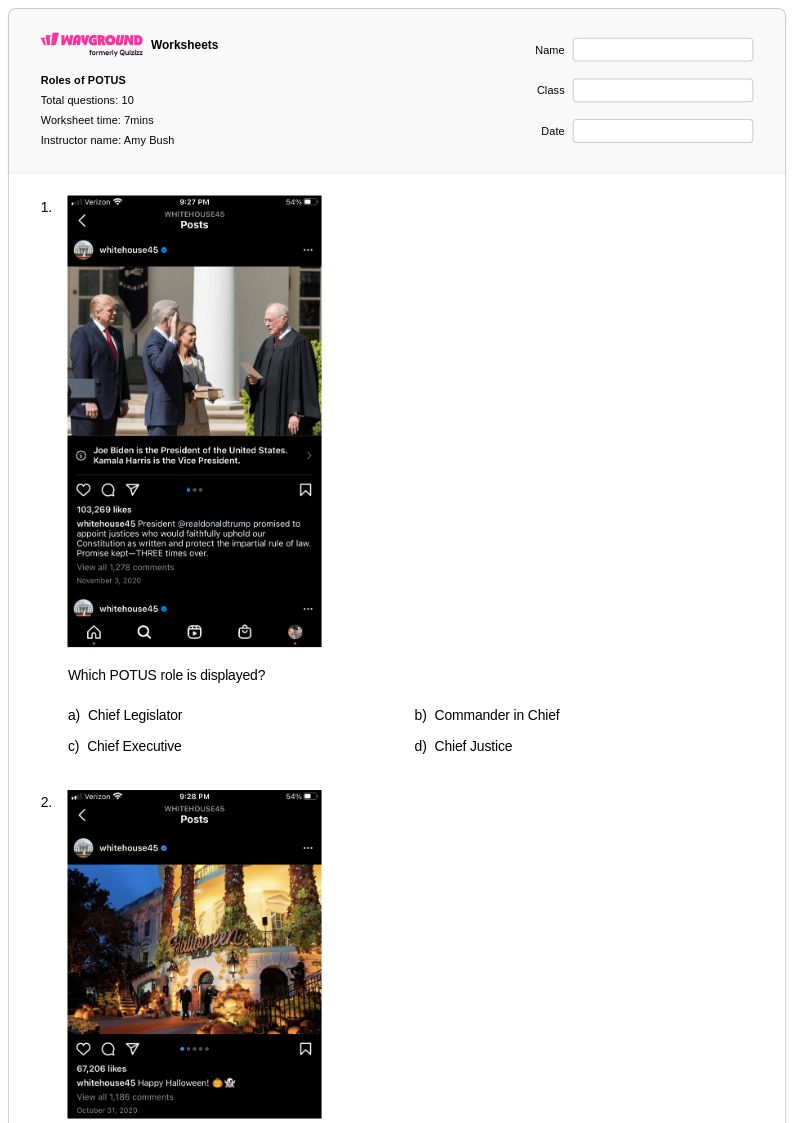
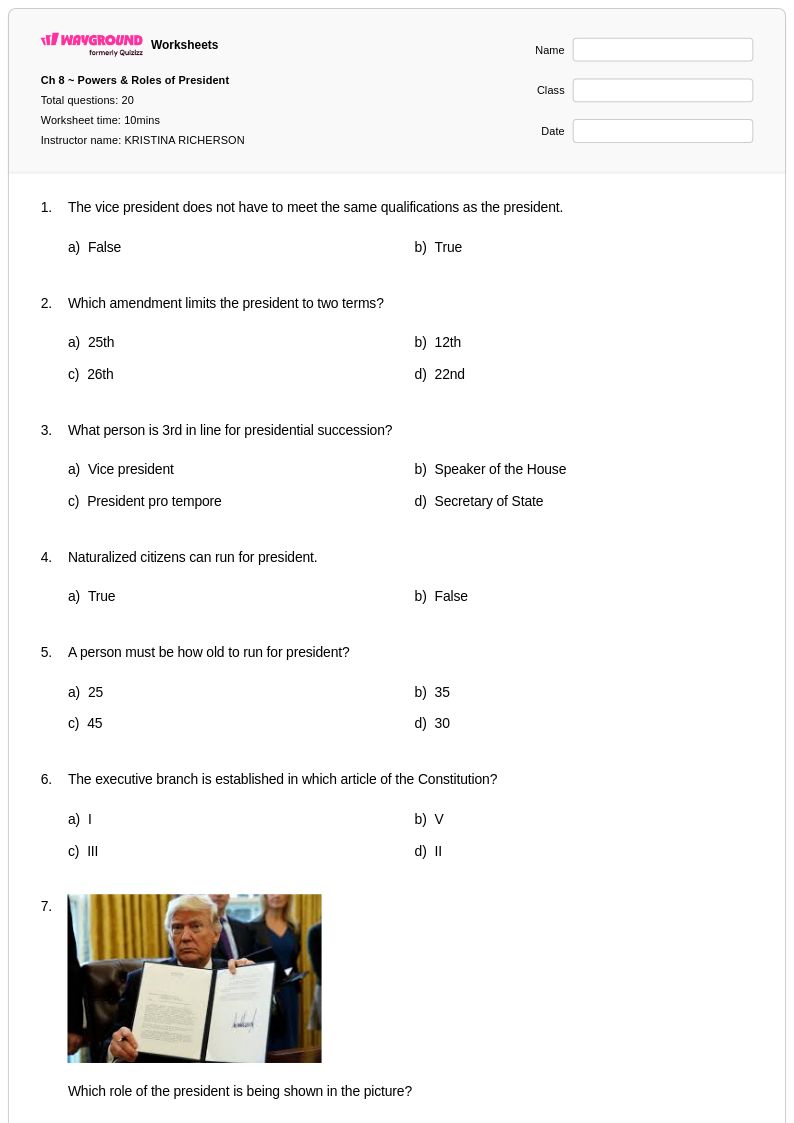
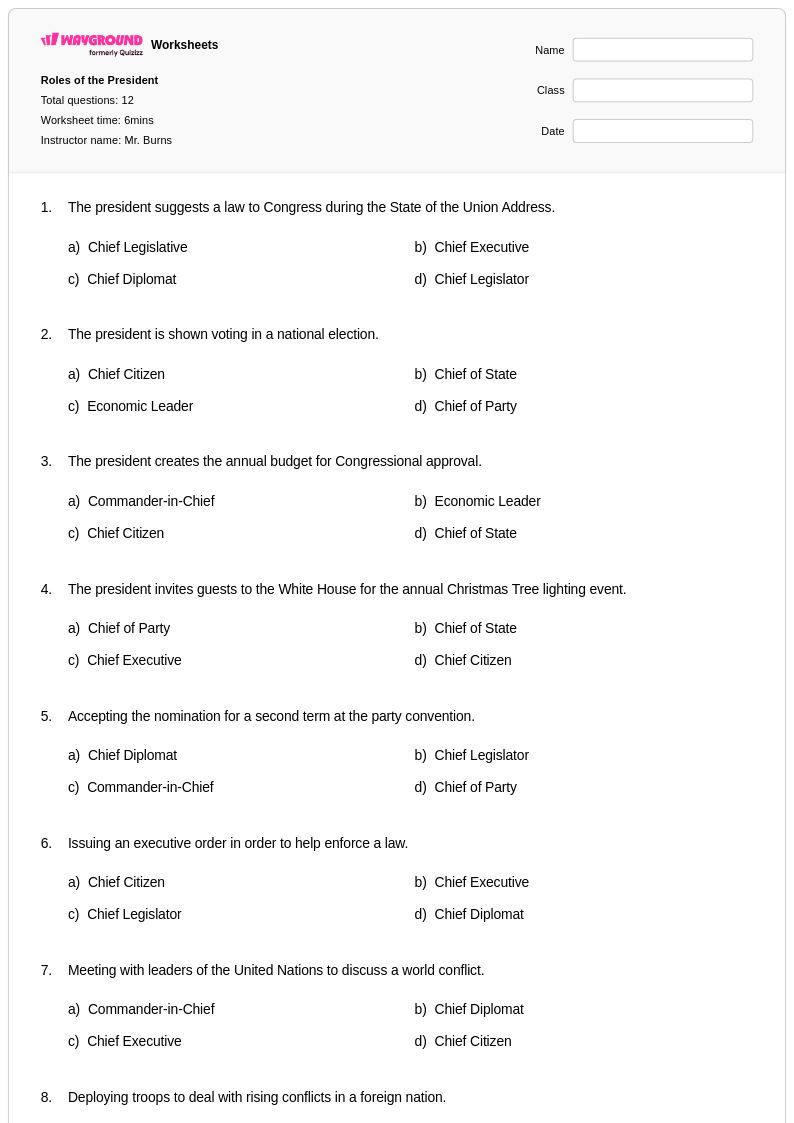
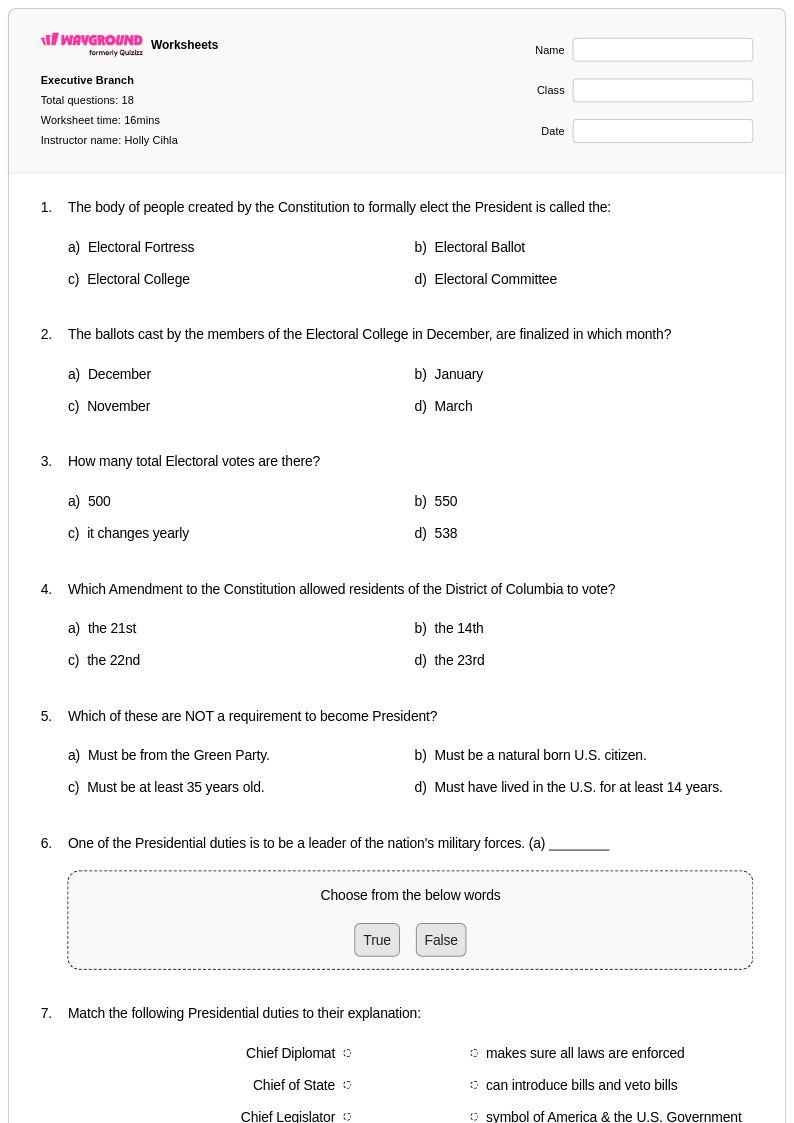
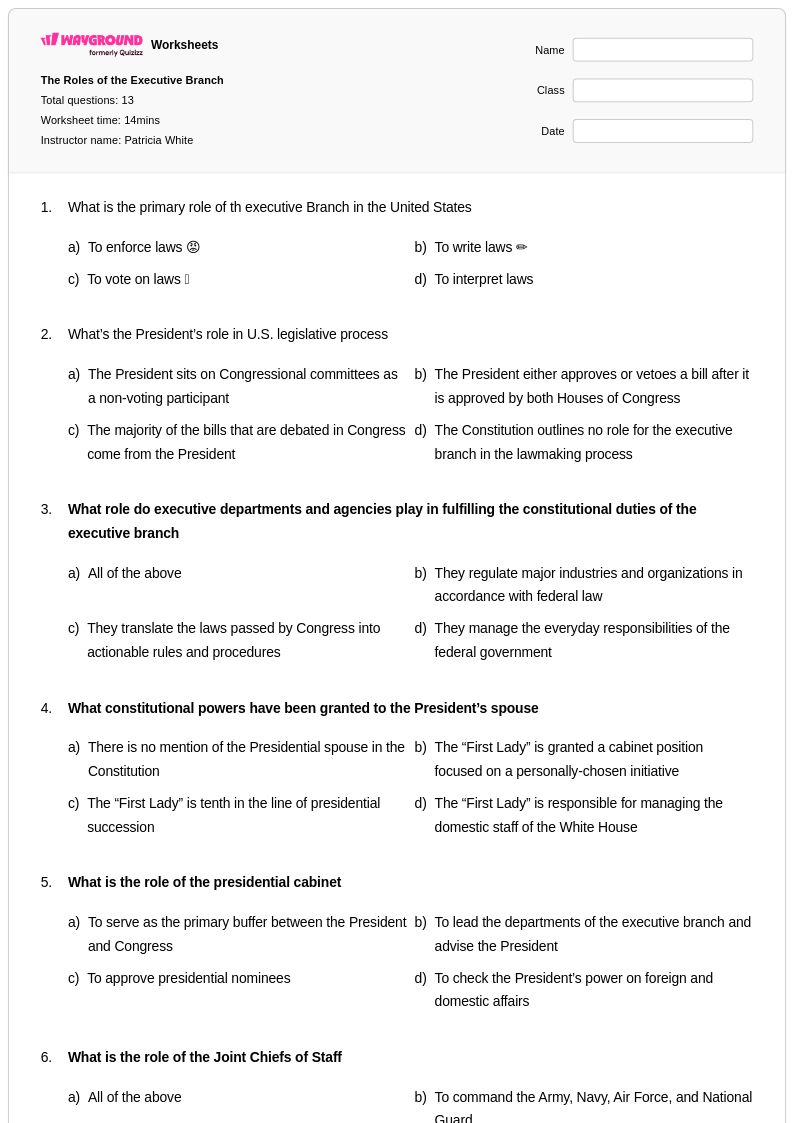
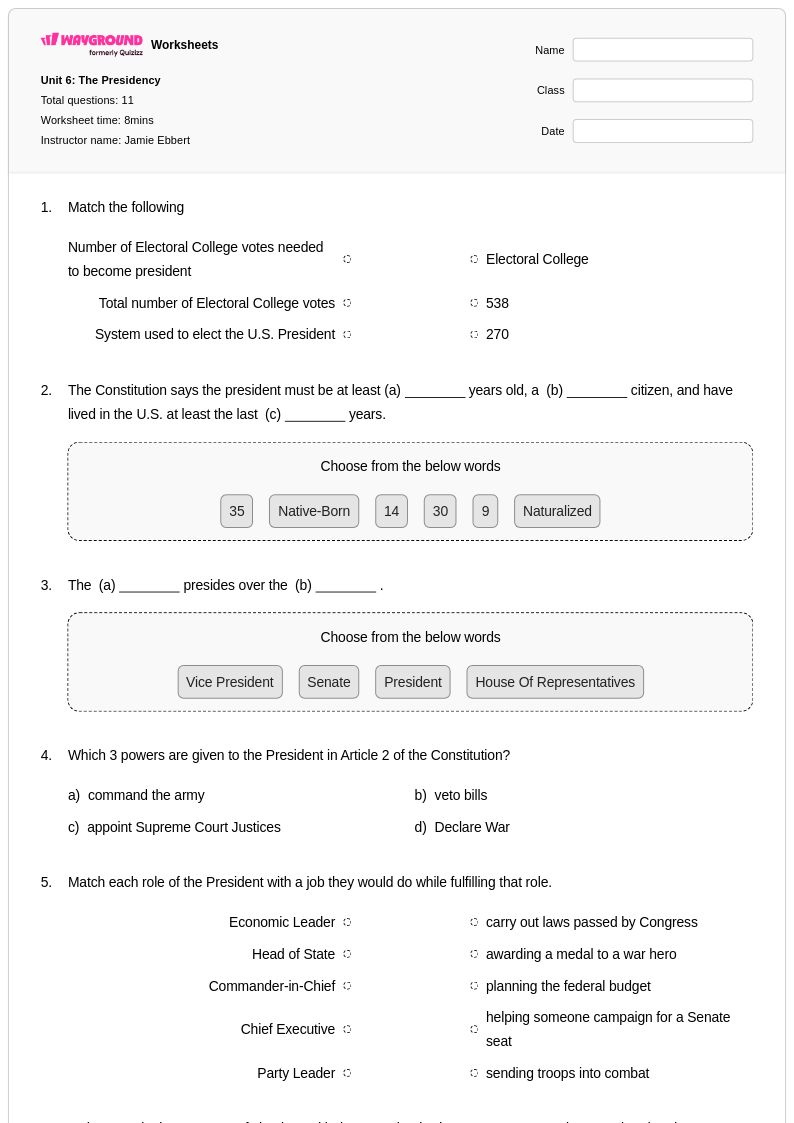
Presidential Roles worksheets for Year 7 students through Wayground (formerly Quizizz) provide comprehensive coverage of the seven key roles that define the American presidency: Chief Executive, Commander in Chief, Chief Diplomat, Chief Legislator, Head of State, Chief of Party, and Guardian of the Economy. These carefully crafted worksheets strengthen students' understanding of how these roles interconnect in real-world governance scenarios, developing critical thinking skills as learners analyze presidential decisions and their constitutional foundations. The collection includes practice problems that challenge students to identify which presidential role applies in various situations, from signing legislation to meeting with foreign leaders, while printable answer keys support both independent study and classroom instruction. Free pdf resources complement traditional worksheets with engaging activities that help seventh graders connect historical examples to contemporary presidential actions.
Wayground's extensive library supports social studies educators with millions of teacher-created resources specifically designed for middle school civics instruction, featuring robust search and filtering capabilities that allow teachers to quickly locate materials aligned with state and national standards for constitutional government. The platform's differentiation tools enable instructors to customize presidential roles content for diverse learning needs, offering both remediation support for struggling students and enrichment opportunities for advanced learners. Teachers benefit from flexible formatting options that include both digital interactive elements and traditional printable worksheets in pdf format, facilitating seamless integration into existing lesson plans whether for in-person instruction, remote learning, or hybrid environments. These comprehensive resources streamline planning while providing targeted skill practice that reinforces essential civic knowledge about executive branch functions and constitutional principles.
FAQs
How do I teach the seven presidential roles to my students?
Start by introducing each of the seven roles — Chief Executive, Commander in Chief, Chief Diplomat, Legislative Leader, Head of State, Economic Leader, and Party Leader — with a concrete historical example for each. From there, use scenario-based activities that ask students to identify which role a president is performing in a given situation, since many presidential actions involve more than one role simultaneously. Primary source documents and case studies are especially effective for showing how different presidents have interpreted and expanded these roles over time.
What are the seven presidential roles students need to know?
The seven presidential roles covered in civics and government curricula are: Chief Executive, Commander in Chief, Chief Diplomat, Legislative Leader, Head of State, Economic Leader, and Party Leader. Each role reflects a distinct constitutional or traditional responsibility of the presidency. Students should be able to define each role, identify real-world examples, and explain how these roles sometimes create competing demands on the president.
What exercises help students practice identifying presidential roles?
Scenario-matching exercises are highly effective — present students with a real or hypothetical presidential action and ask them to identify the role being performed and justify their reasoning. Analytical exercises using case studies of specific presidents help students see how the same action can reflect multiple roles at once. Worksheets that incorporate primary source documents push students beyond memorization toward genuine analysis of executive power.
What mistakes do students commonly make when learning about presidential roles?
The most common error is treating the seven roles as mutually exclusive — students often struggle to recognize that a single presidential action can reflect multiple roles simultaneously (for example, negotiating a treaty involves both Chief Diplomat and Legislative Leader roles). Students also frequently confuse the constitutional basis of a role with its practical scope, underestimating how much presidential interpretation has shaped the roles over history. Another misconception is assuming the president operates without constraint, so it is important to explicitly address constitutional limits and the balance of power.
How do I use presidential roles worksheets in my classroom?
Presidential roles worksheets on Wayground are available as printable PDFs for traditional classroom use and in digital formats for technology-integrated instruction, making them flexible for a variety of teaching environments. Teachers can use them for direct instruction support, independent practice, remediation, or enrichment depending on student needs. When hosting worksheets digitally on Wayground, you can also run them as a quiz, which allows for real-time tracking of student responses and faster formative feedback.
How do I differentiate presidential roles instruction for students at different levels?
For struggling learners, focus first on defining each role with clear, concrete examples before moving to scenario analysis. Advanced students benefit from exercises that require them to evaluate how presidents have expanded or constrained specific roles over time, and to assess the constitutional legitimacy of those choices. Wayground's differentiation tools allow teachers to adjust content complexity and format for individual students, and accommodation settings such as read aloud and reduced answer choices can be applied to specific students without disrupting the rest of the class.