
20 Q
1st - Uni
20 Q
3rd - Uni
20 Q
5th - 8th
12 Q
3rd - Uni
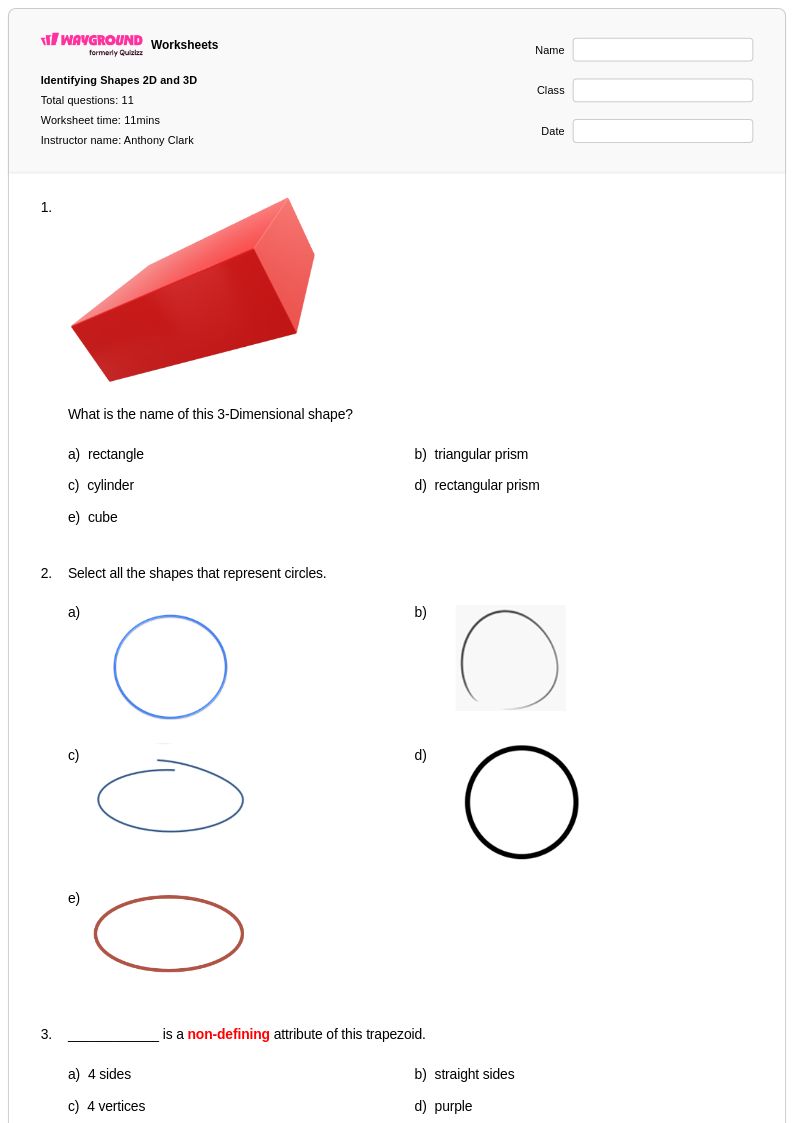
11 Q
1st - Uni
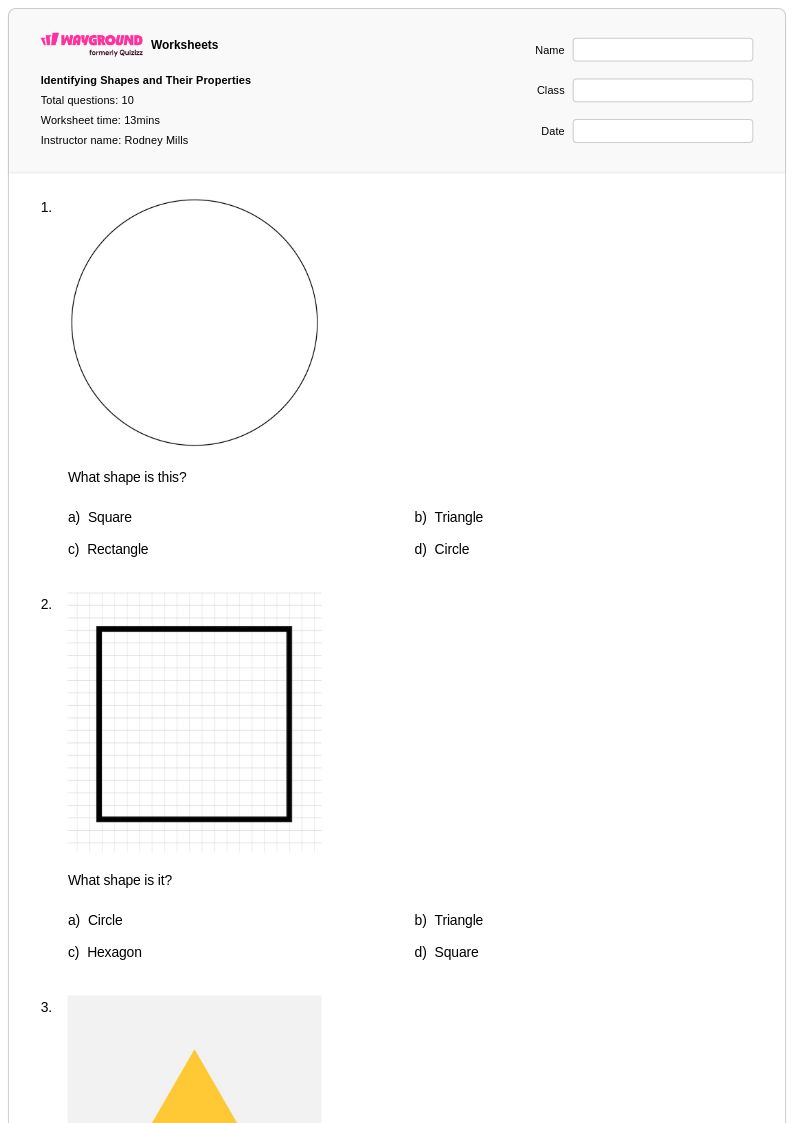
10 Q
1st - 5th
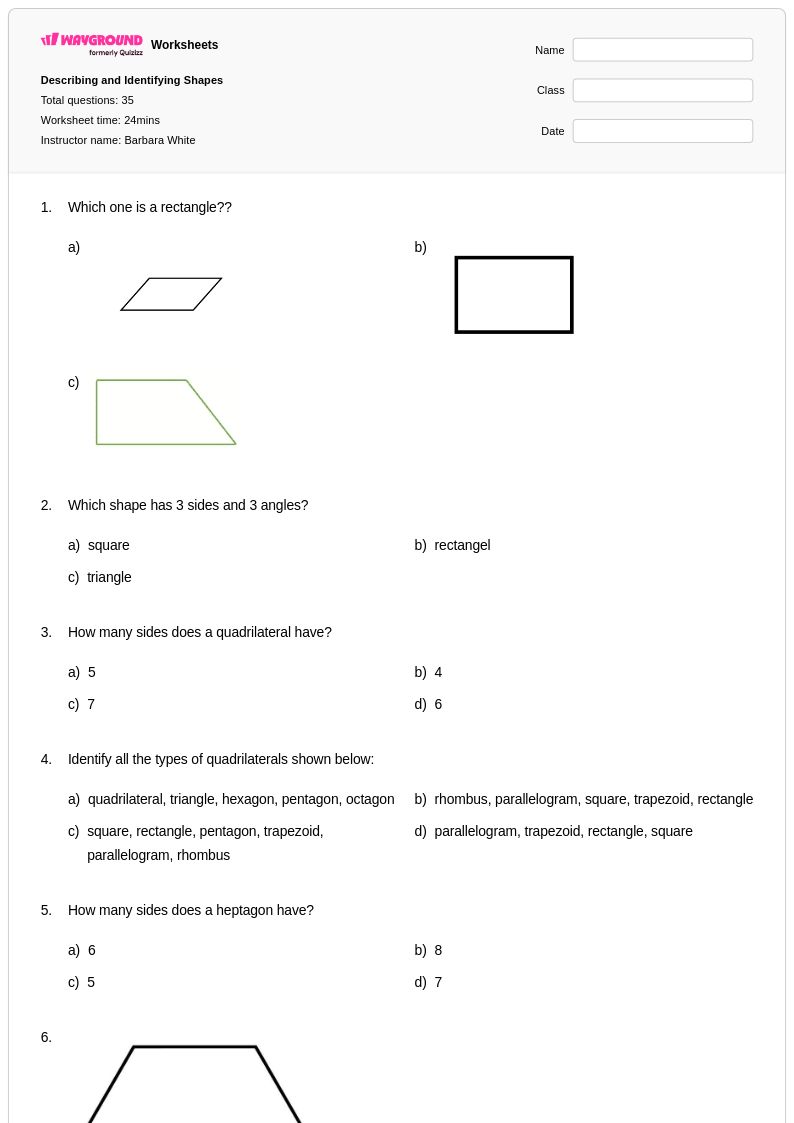
35 Q
5th - 6th
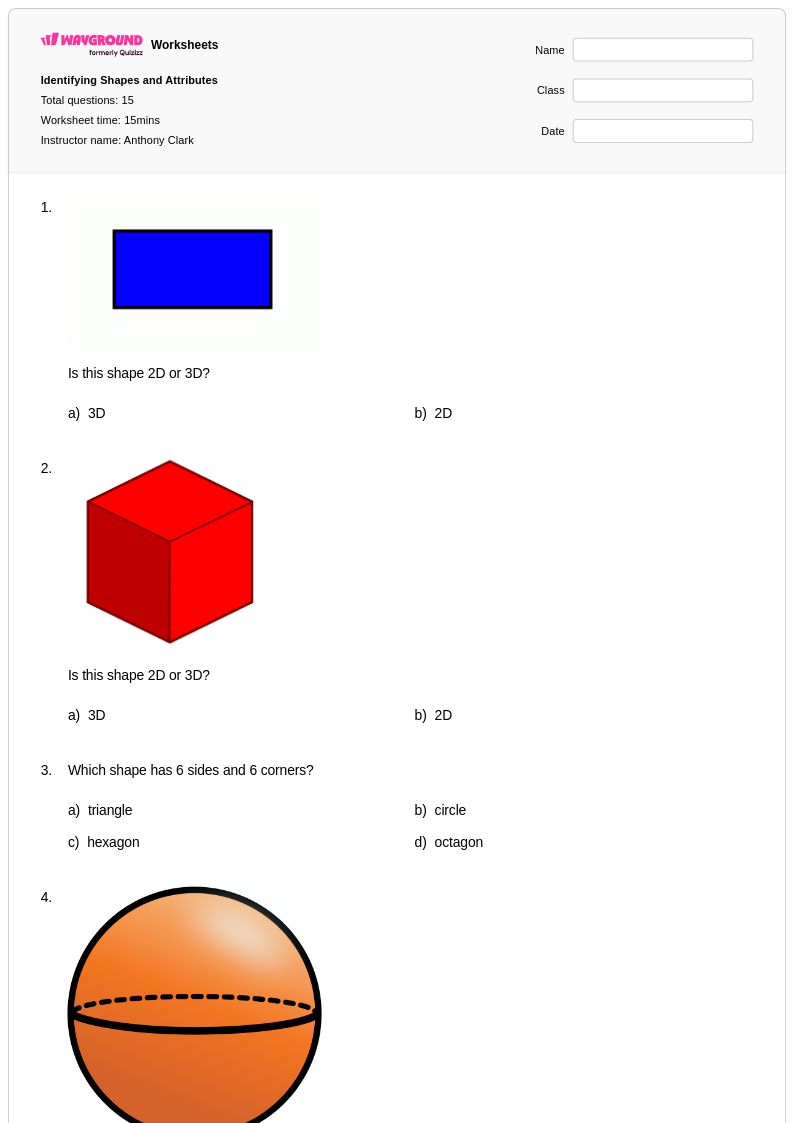
15 Q
3rd - Uni
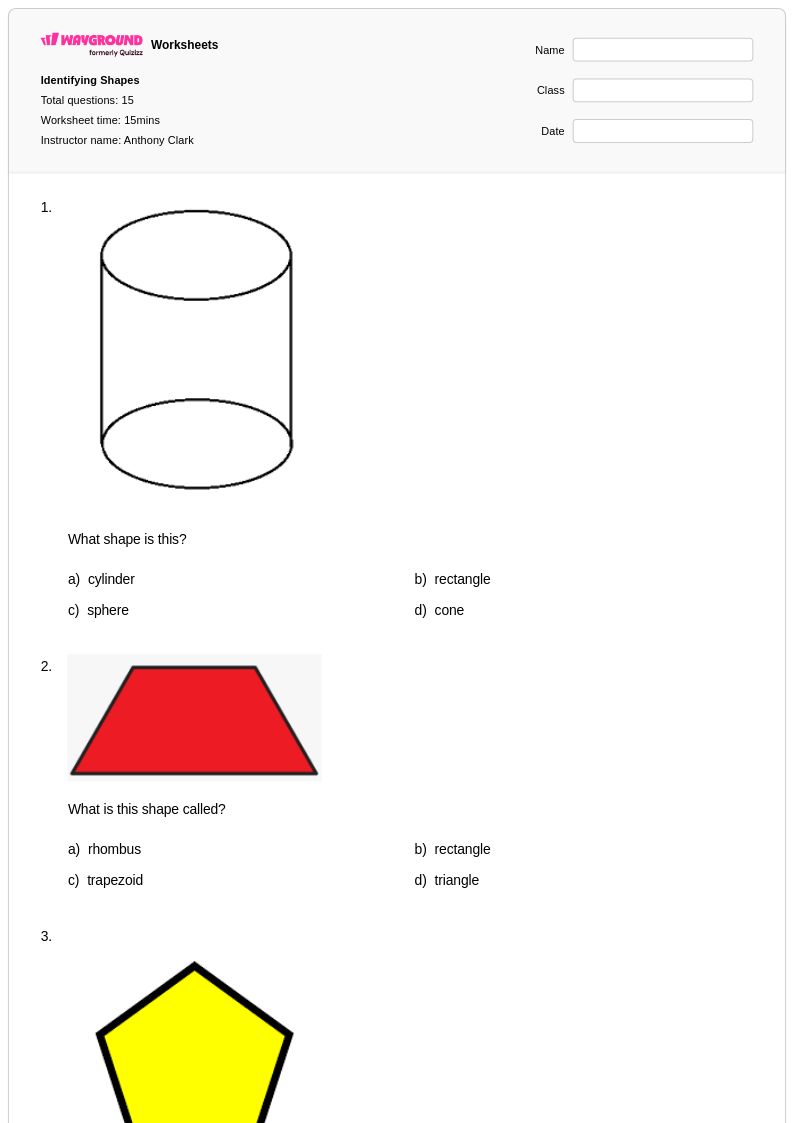
15 Q
1st - Uni
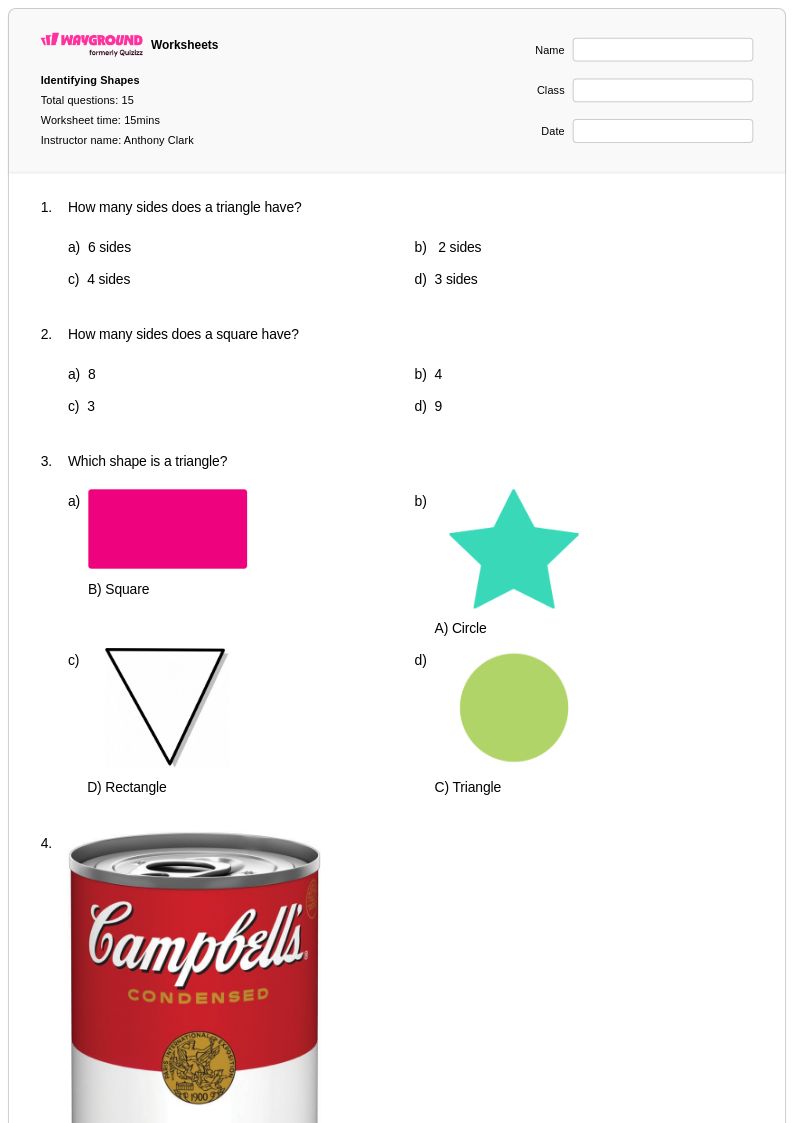
15 Q
1st - Uni
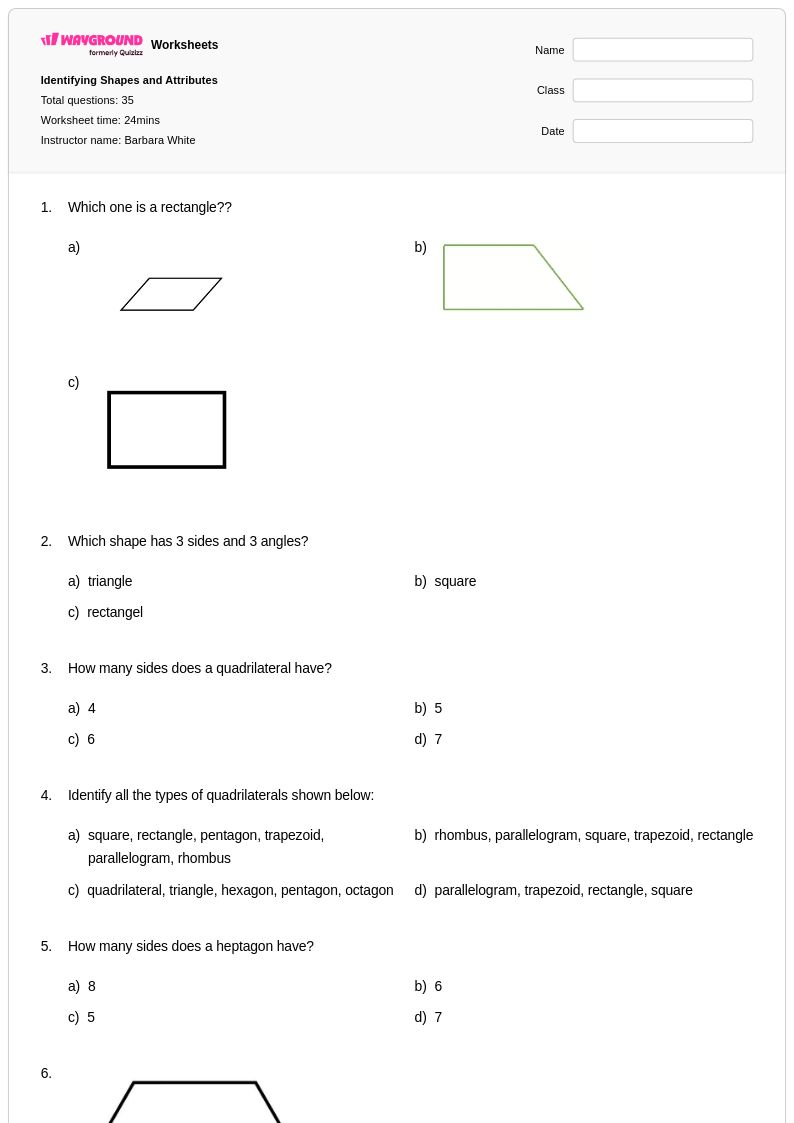
35 Q
5th - 6th
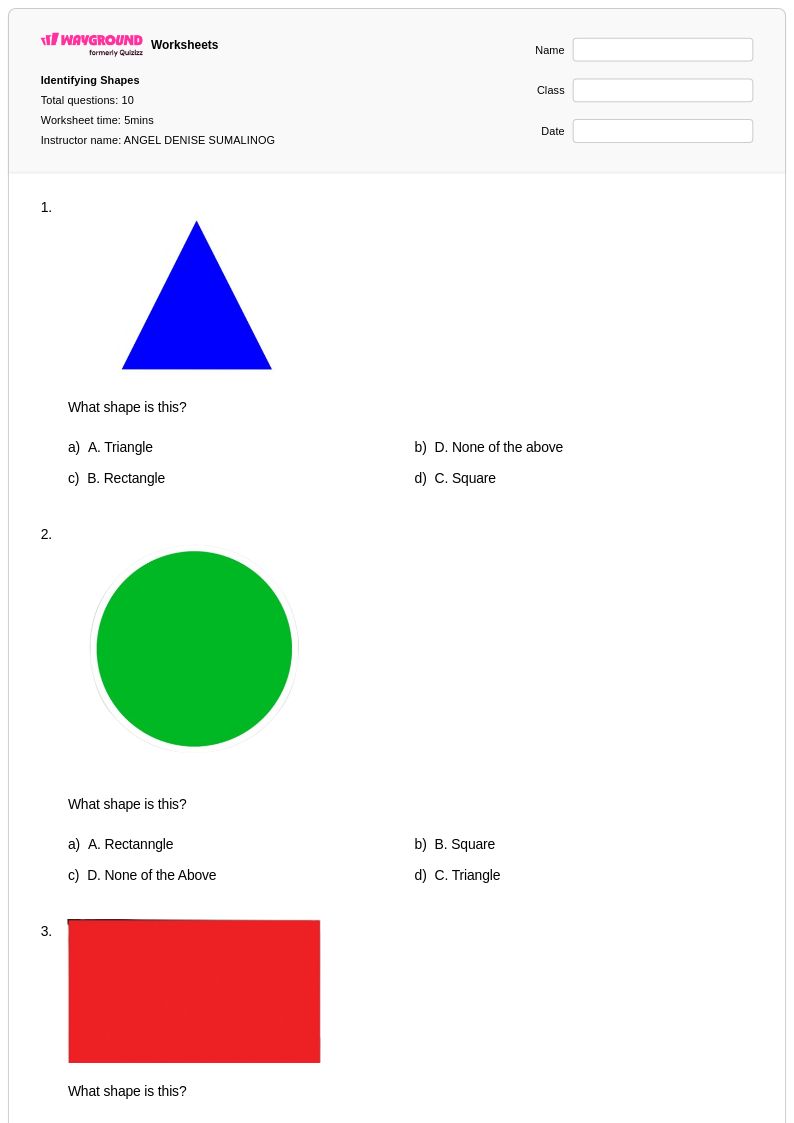
10 Q
1st - Uni
15 Q
4th - 5th
20 Q
1st - 12th
20 Q
2nd - Uni
20 Q
1st - Uni
19 Q
5th - 7th
15 Q
3rd - Uni
14 Q
5th
8 Q
5th - 7th
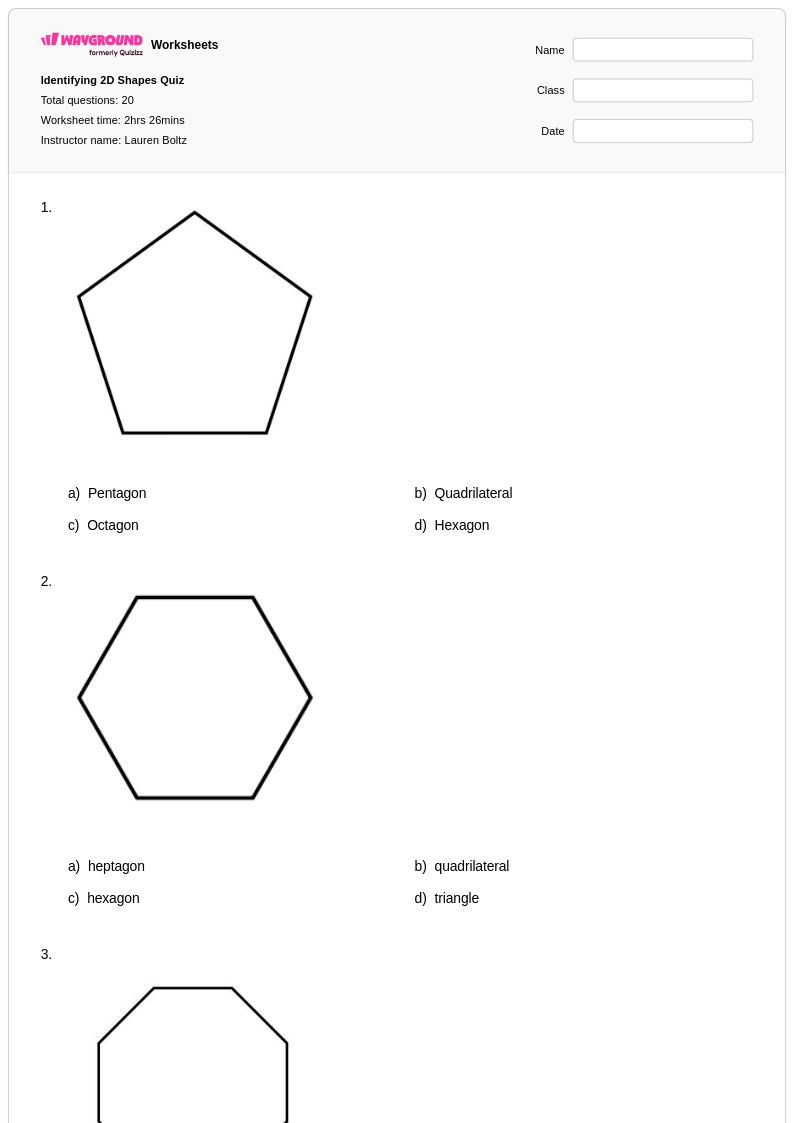
20 Q
5th
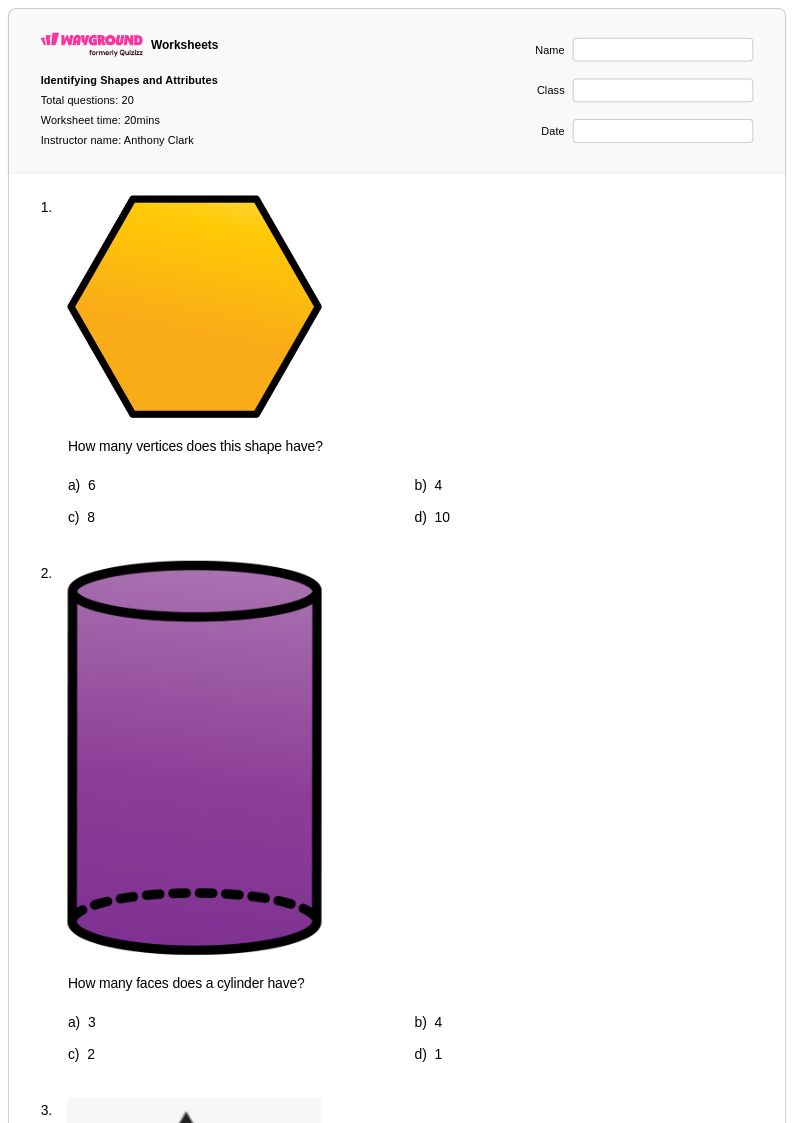
20 Q
3rd - Uni
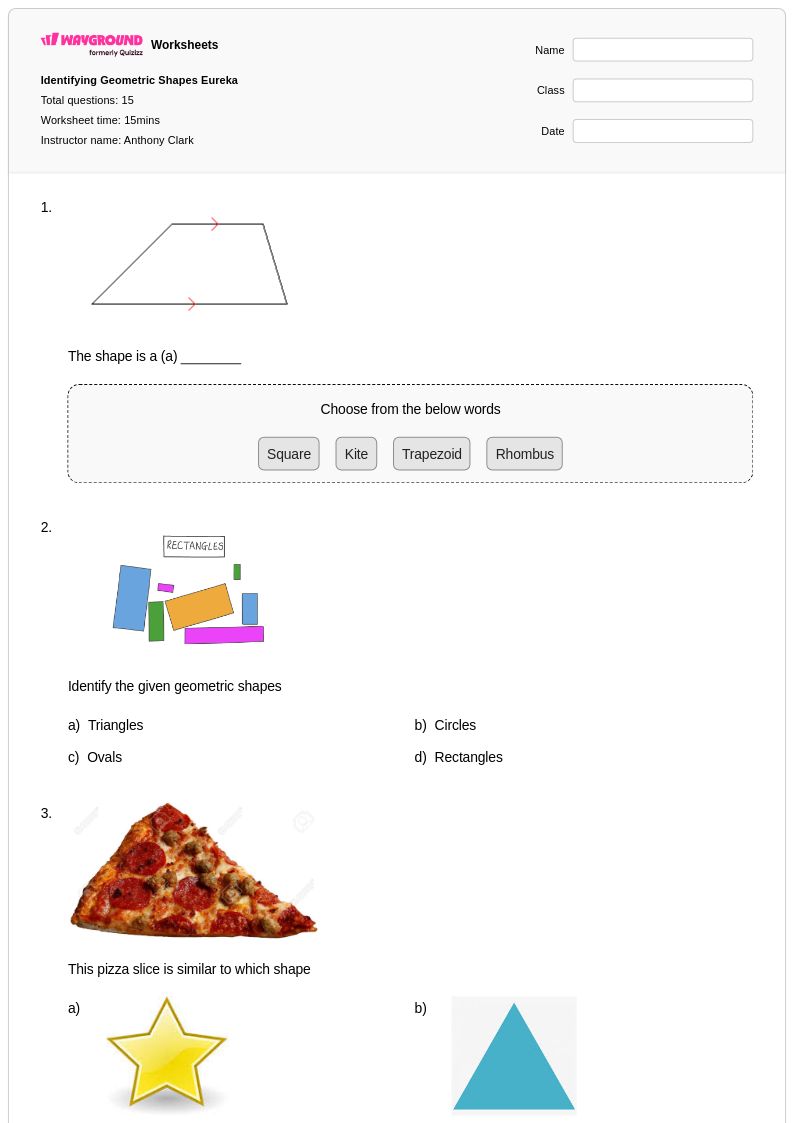
15 Q
2nd - Uni
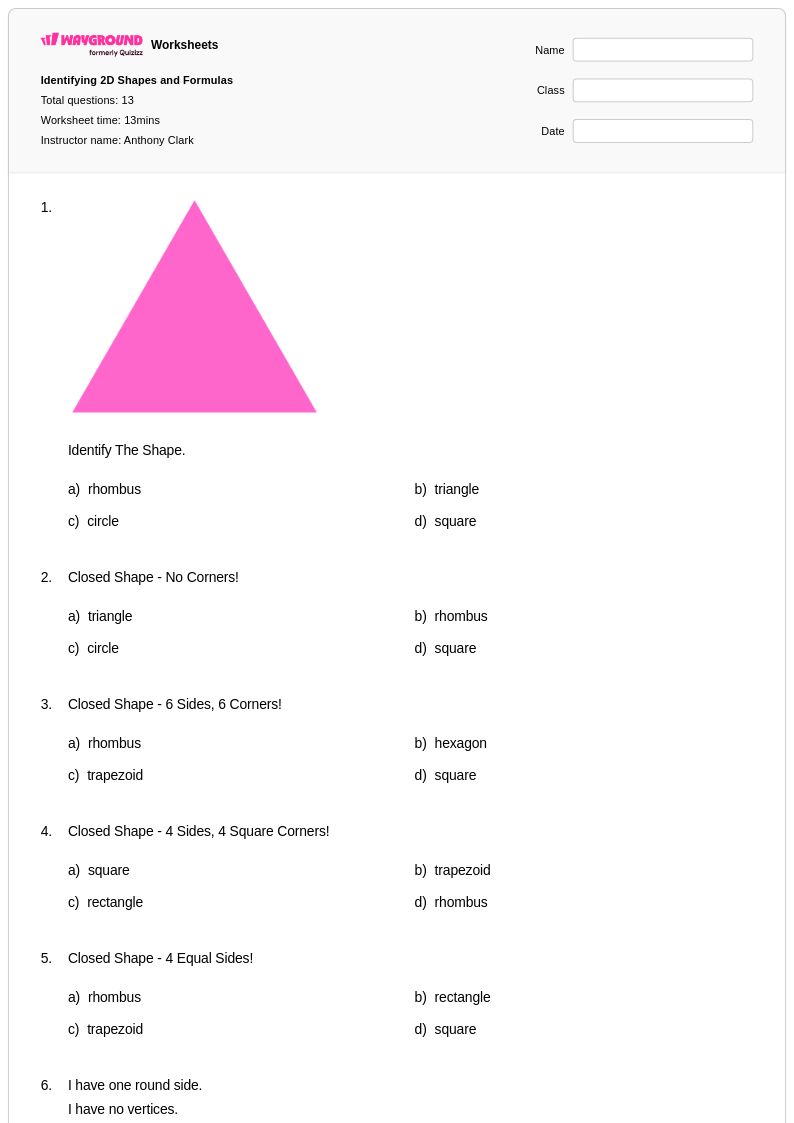
13 Q
1st - Uni
Explore Other Subject Worksheets for year 5
Explore printable Identifying Shapes worksheets for Year 5
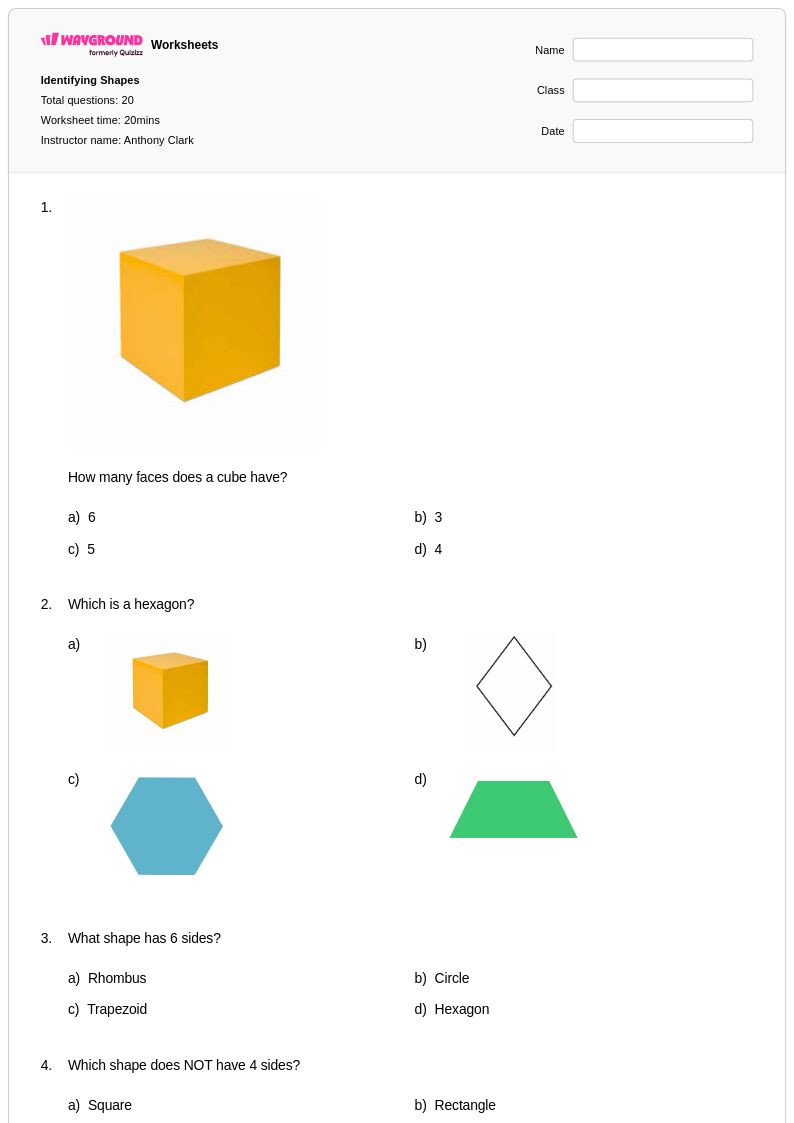
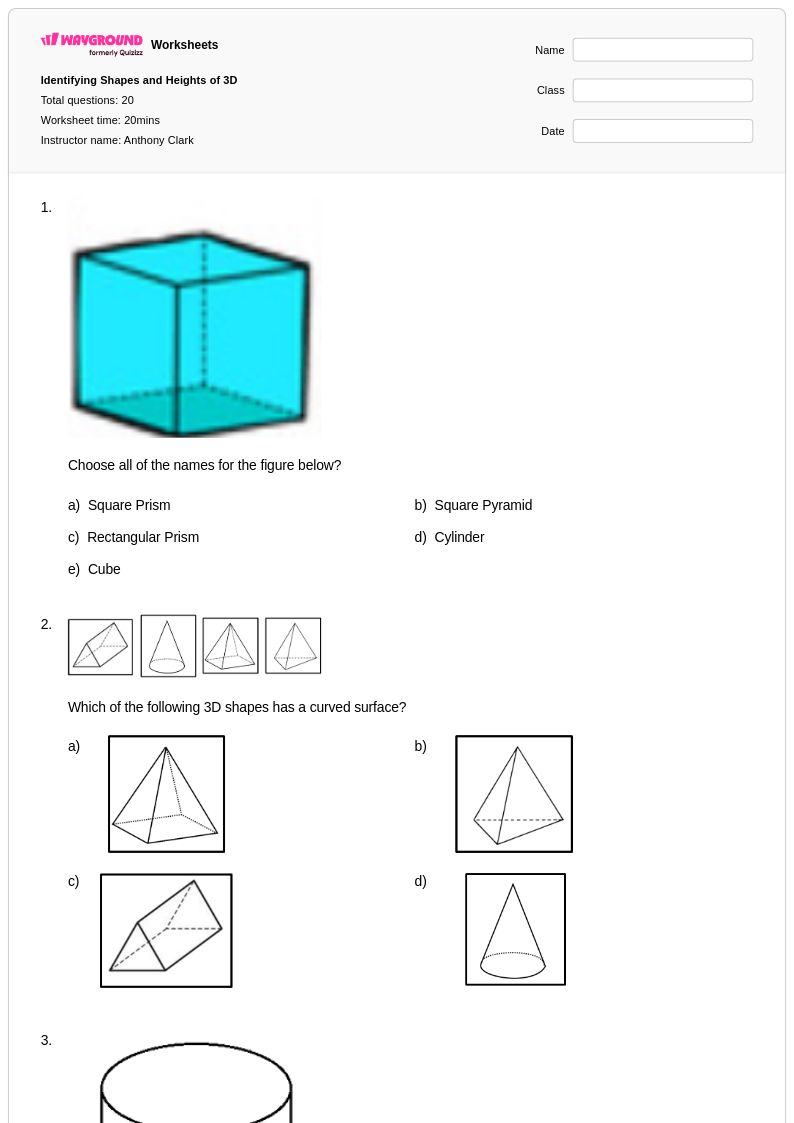
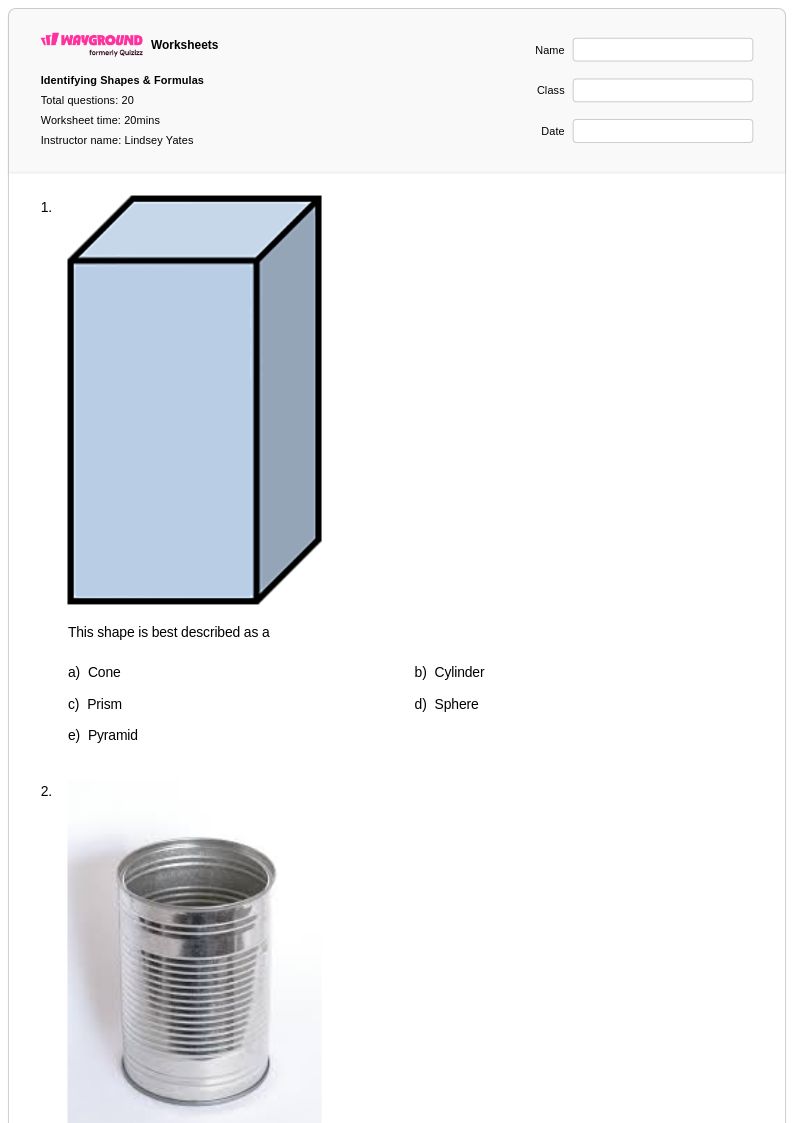
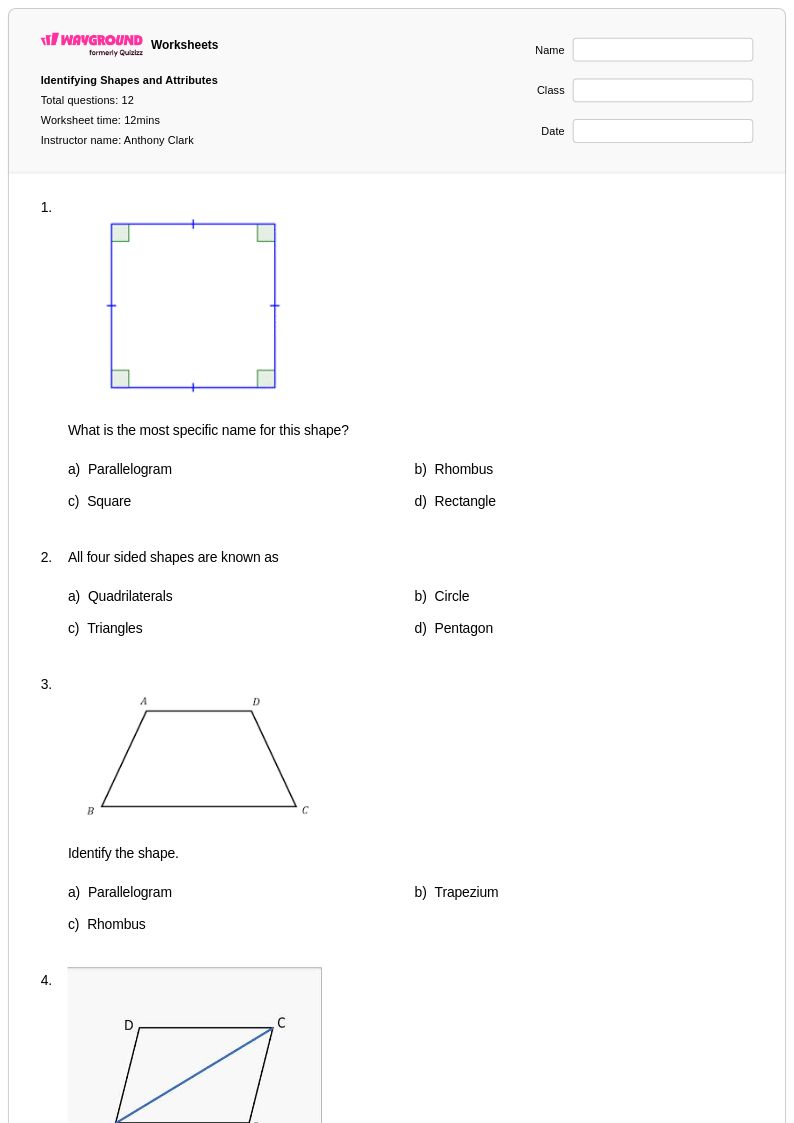
Identifying shapes worksheets for Year 5 students through Wayground (formerly Quizizz) provide comprehensive practice opportunities for recognizing and categorizing two-dimensional geometric figures. These carefully crafted resources strengthen students' visual discrimination skills as they learn to distinguish between polygons, circles, and irregular shapes based on their defining characteristics such as number of sides, angles, and vertices. The worksheets feature progressively challenging practice problems that guide fifth-graders through systematic shape identification exercises, from basic recognition tasks to more complex sorting and classification activities. Each printable resource includes a detailed answer key, making it simple for educators to assess student understanding and provide immediate feedback on geometric concepts that form the foundation for advanced mathematical reasoning.
Wayground (formerly Quizizz) empowers teachers with access to millions of educator-created resources specifically designed for Year 5 geometry instruction, featuring robust search and filtering capabilities that allow quick location of materials aligned to specific curriculum standards and learning objectives. The platform's differentiation tools enable instructors to customize worksheets based on individual student needs, whether for remediation of struggling learners or enrichment activities for advanced students ready for additional challenges. Teachers can seamlessly integrate these resources into their lesson planning workflow, utilizing both digital formats for interactive classroom instruction and PDF printables for traditional paper-based practice, homework assignments, or assessment preparation. This flexibility supports diverse teaching approaches while ensuring consistent skill development in shape identification across varying classroom environments and student learning preferences.
FAQs
How should I teach shape identification in Grade 5?
What activities help fifth graders practice classifying 2D shapes?
Why do Grade 5 students confuse different types of polygons?
How can teachers assign these identifying shapes worksheets?
How does identifying shapes connect to the Grade 5 Common Core curriculum?
How can I support diverse learners with a Grade 5 shape worksheet?