Free Printable Identifying the Main Idea in Nonfiction Worksheets for Year 3
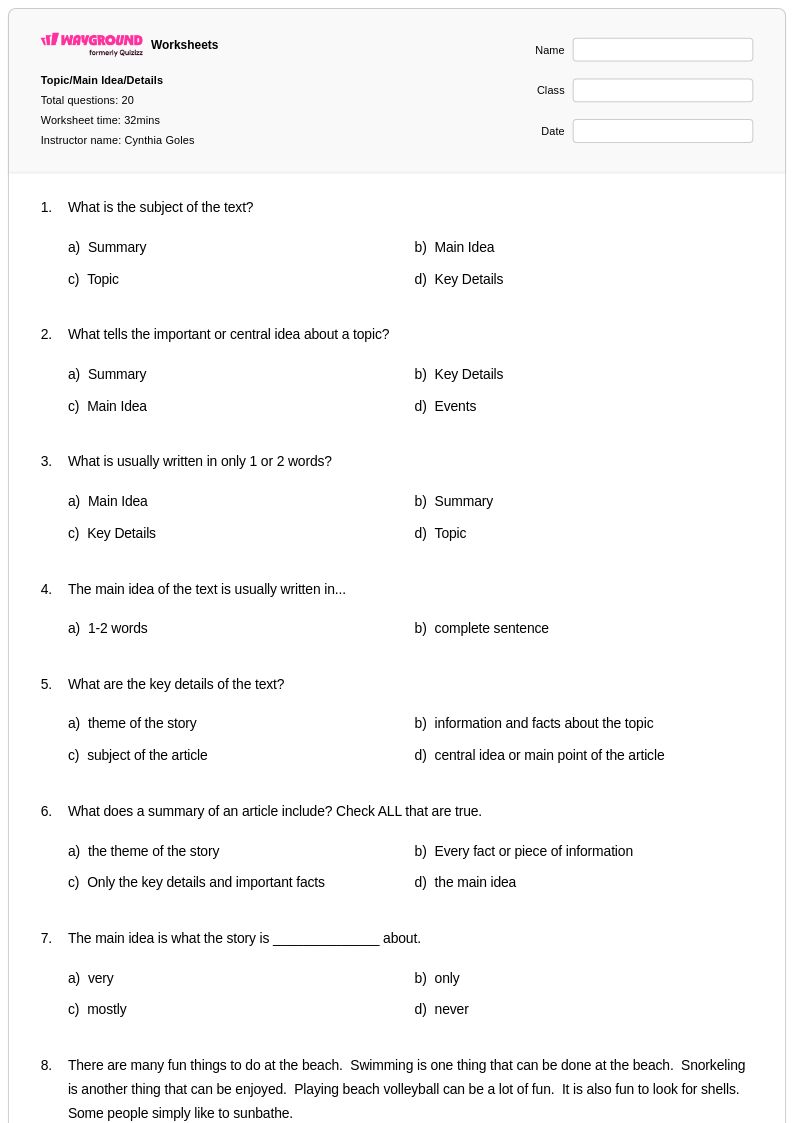
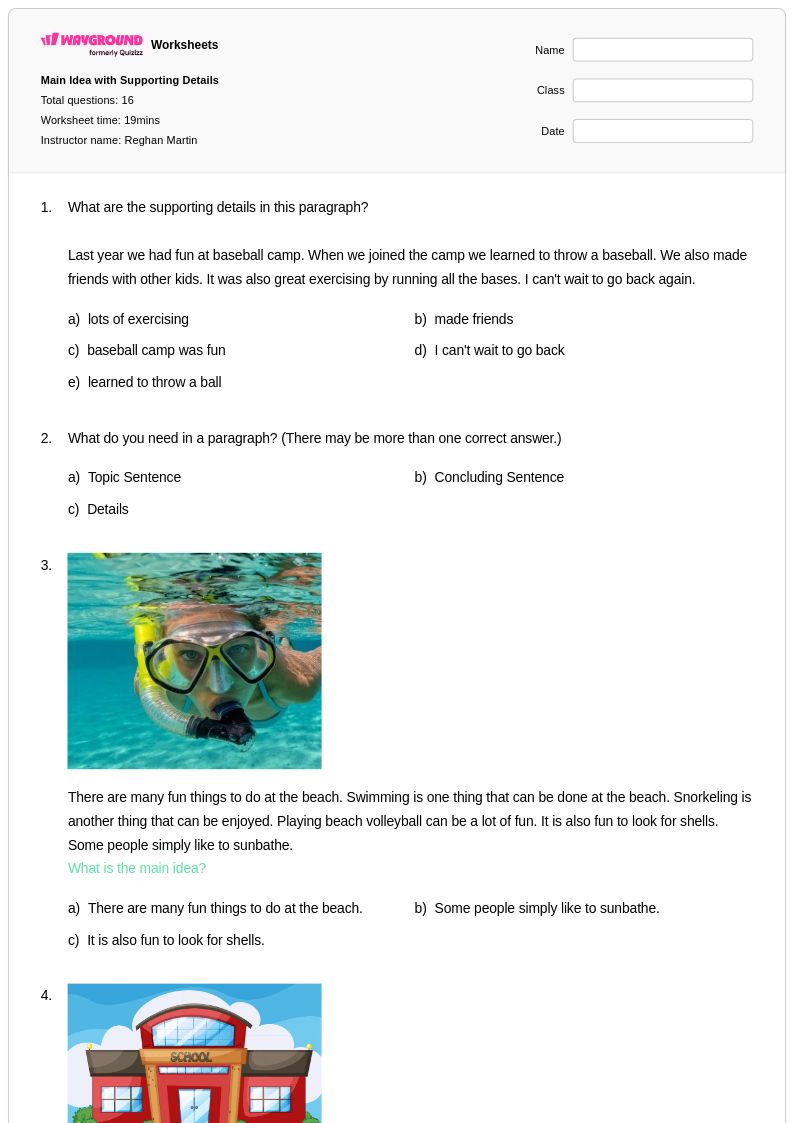
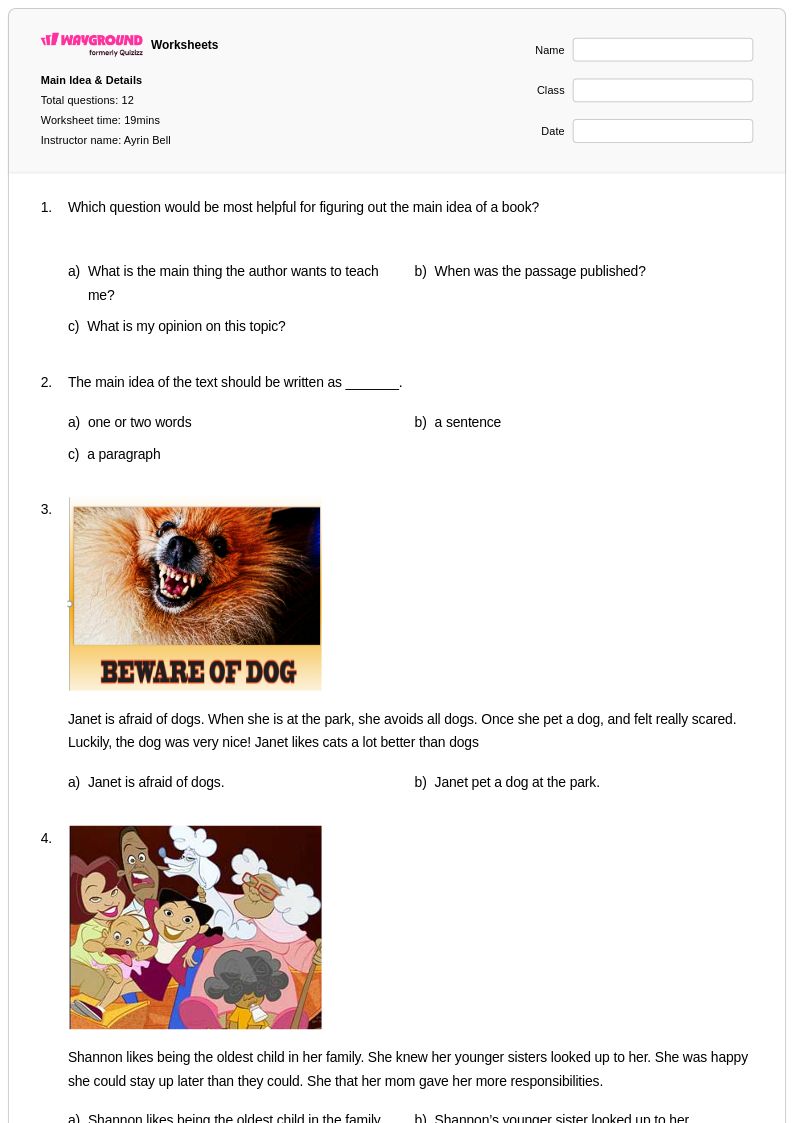
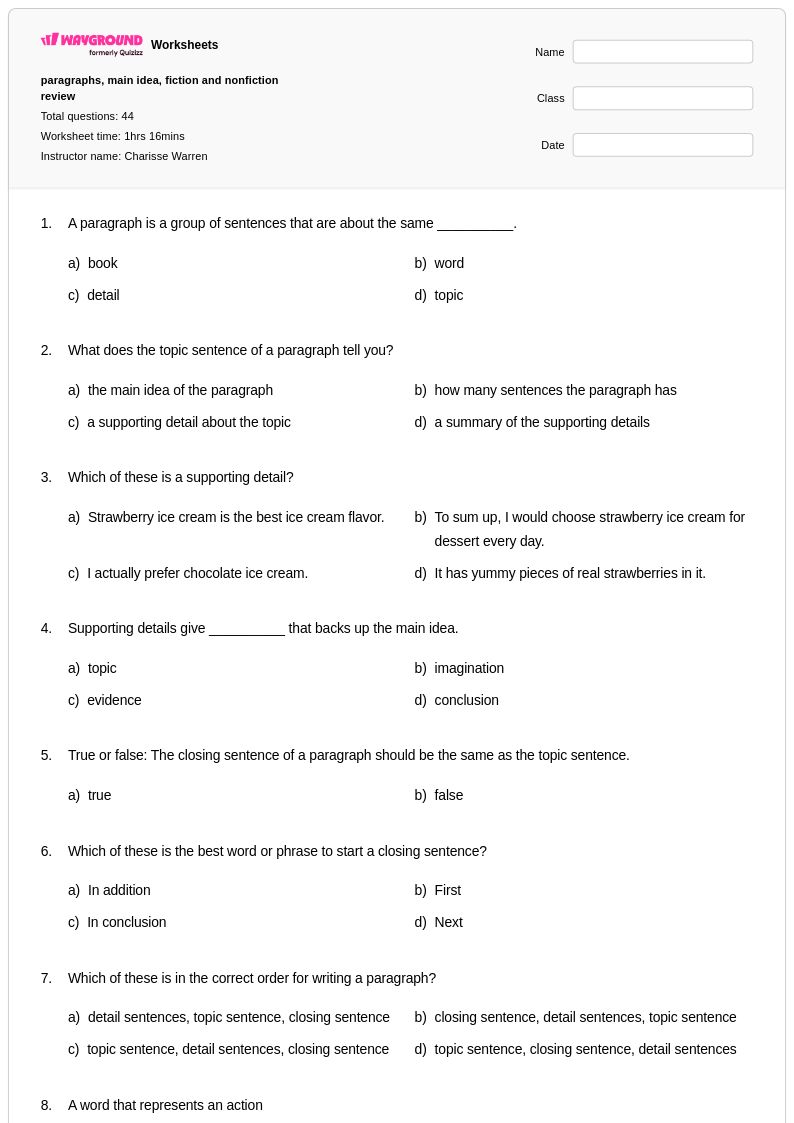
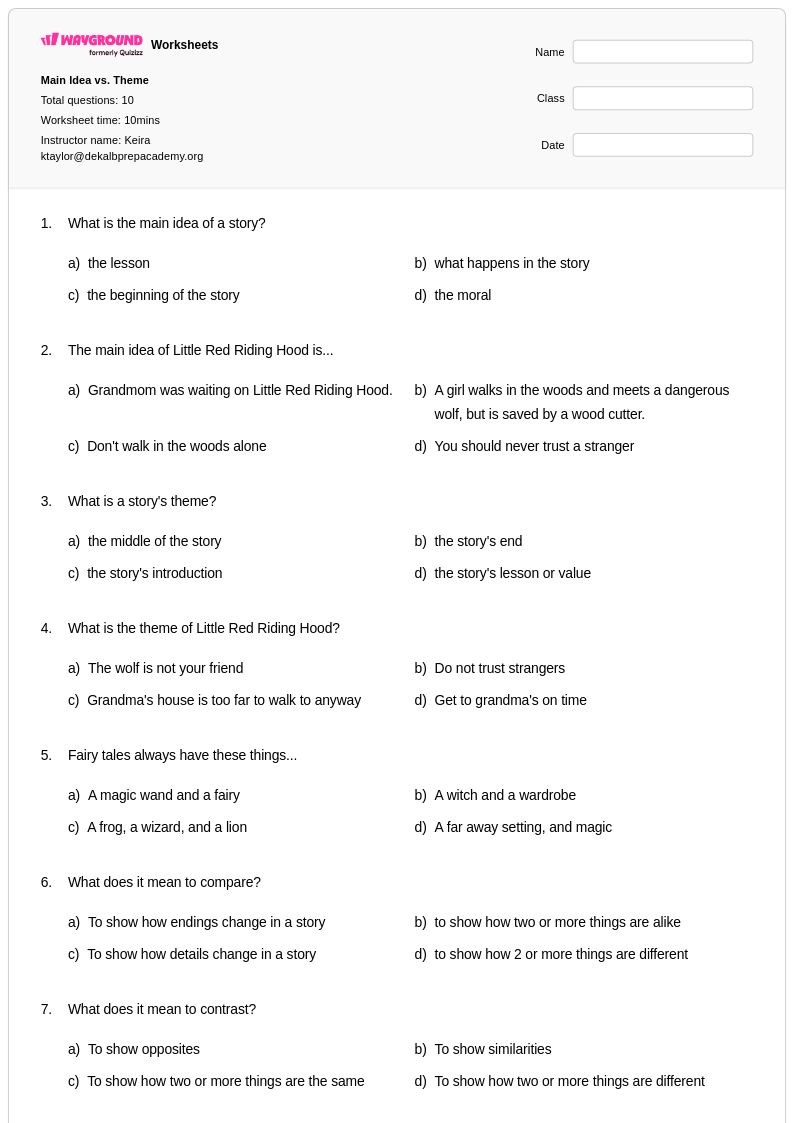
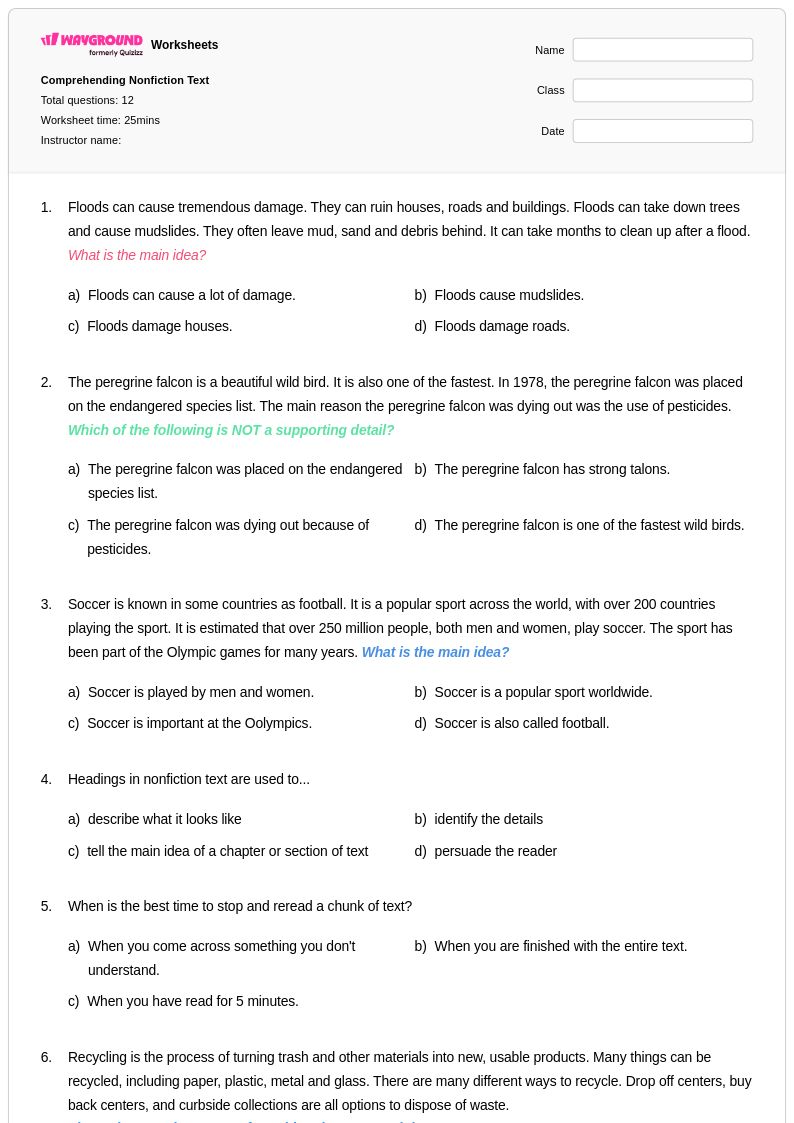
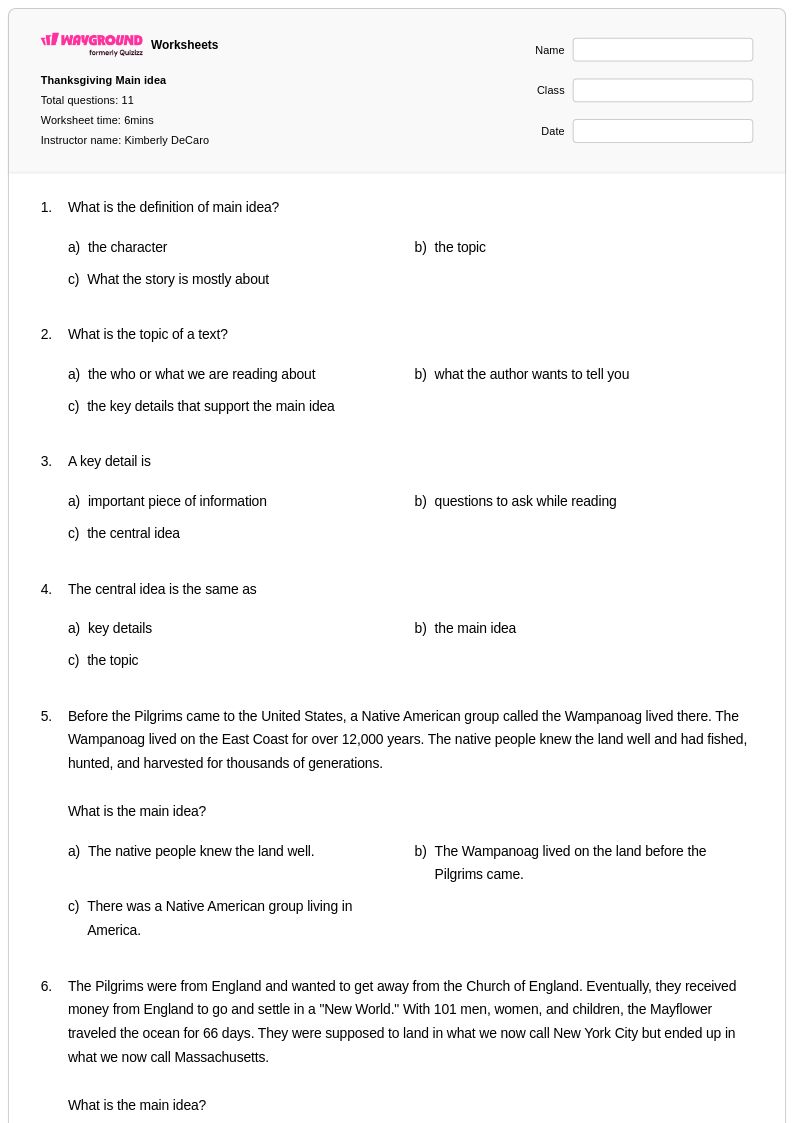
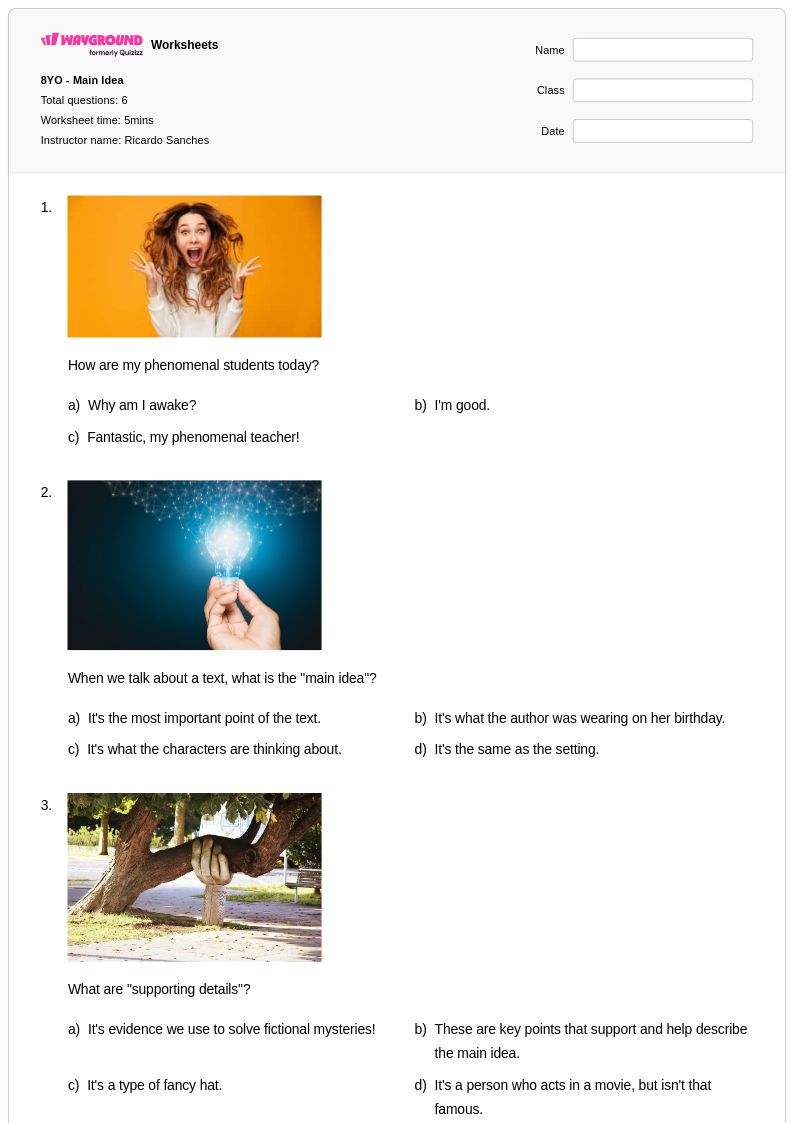
Wayground offers free Year 3 worksheets and printables that help students master identifying the main idea in nonfiction texts through engaging practice problems and comprehensive answer keys.
Explore printable Identifying the Main Idea in Nonfiction worksheets for Year 3
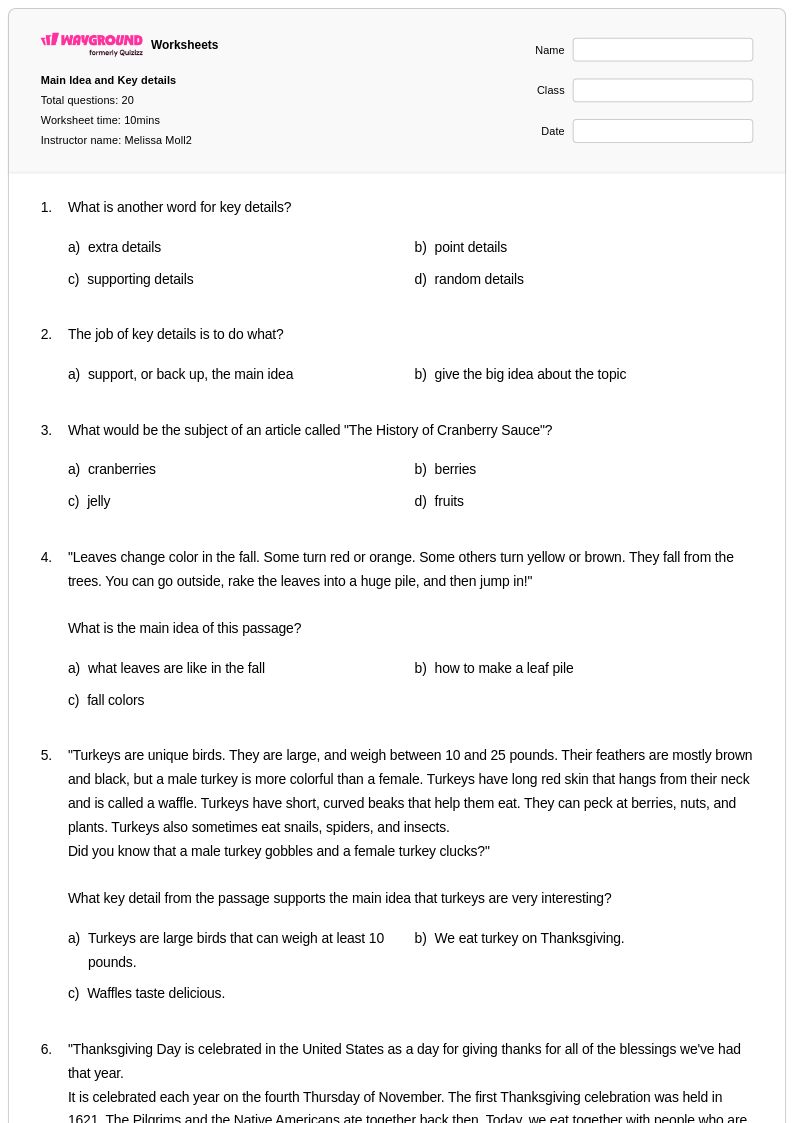
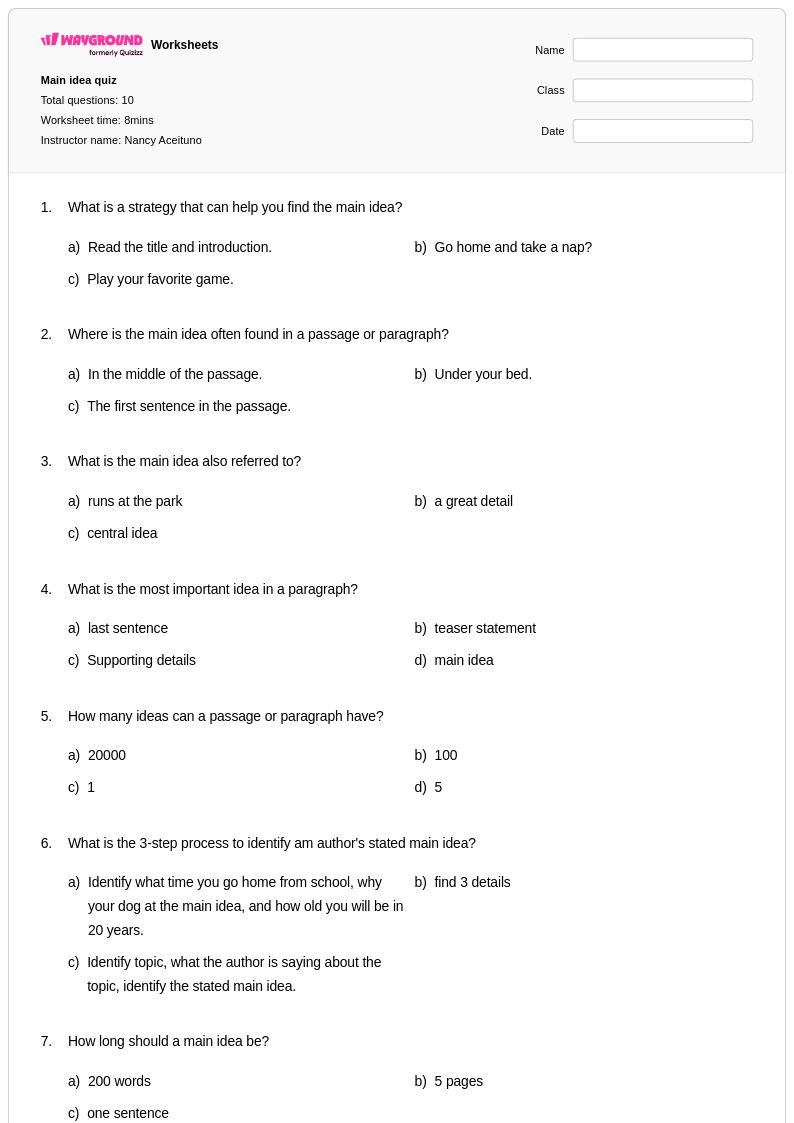
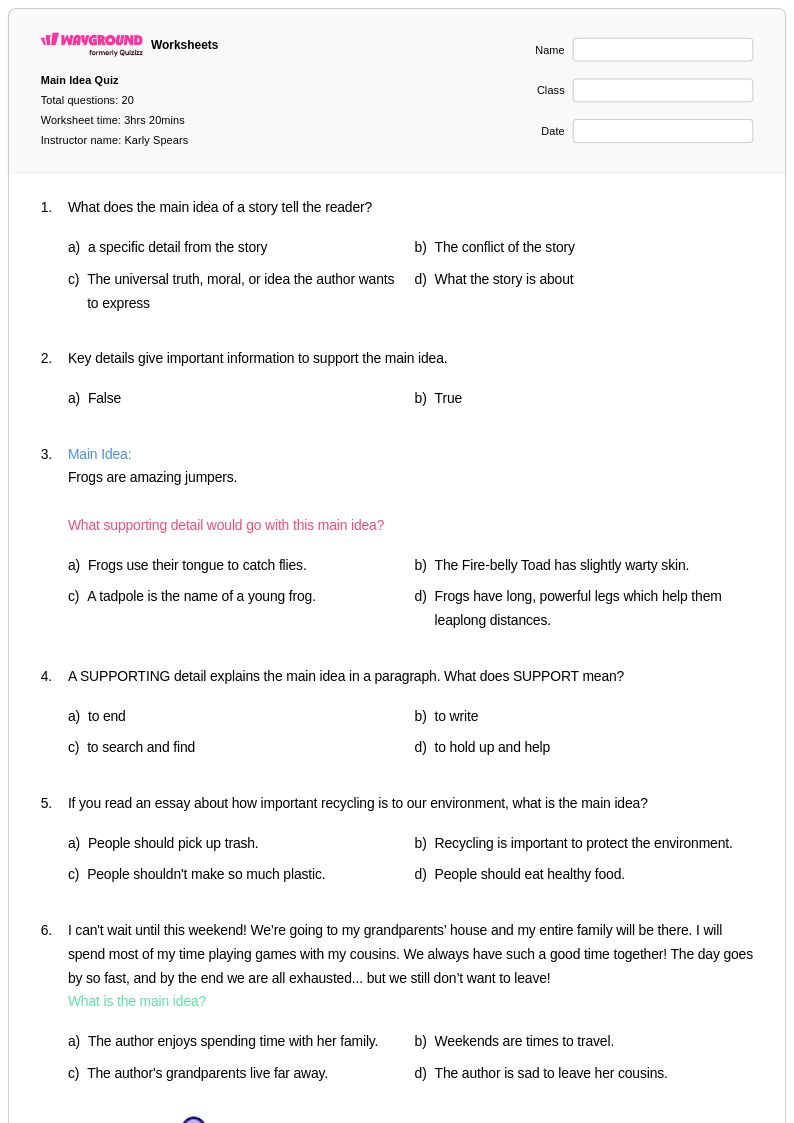
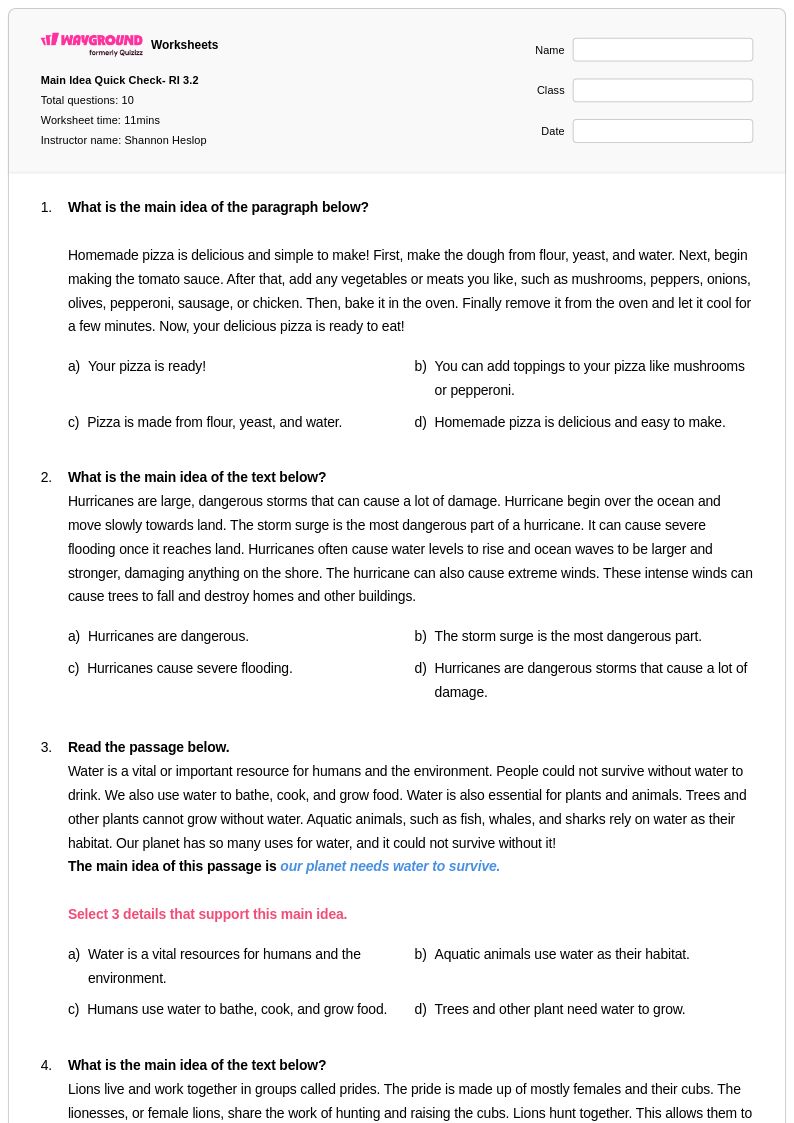
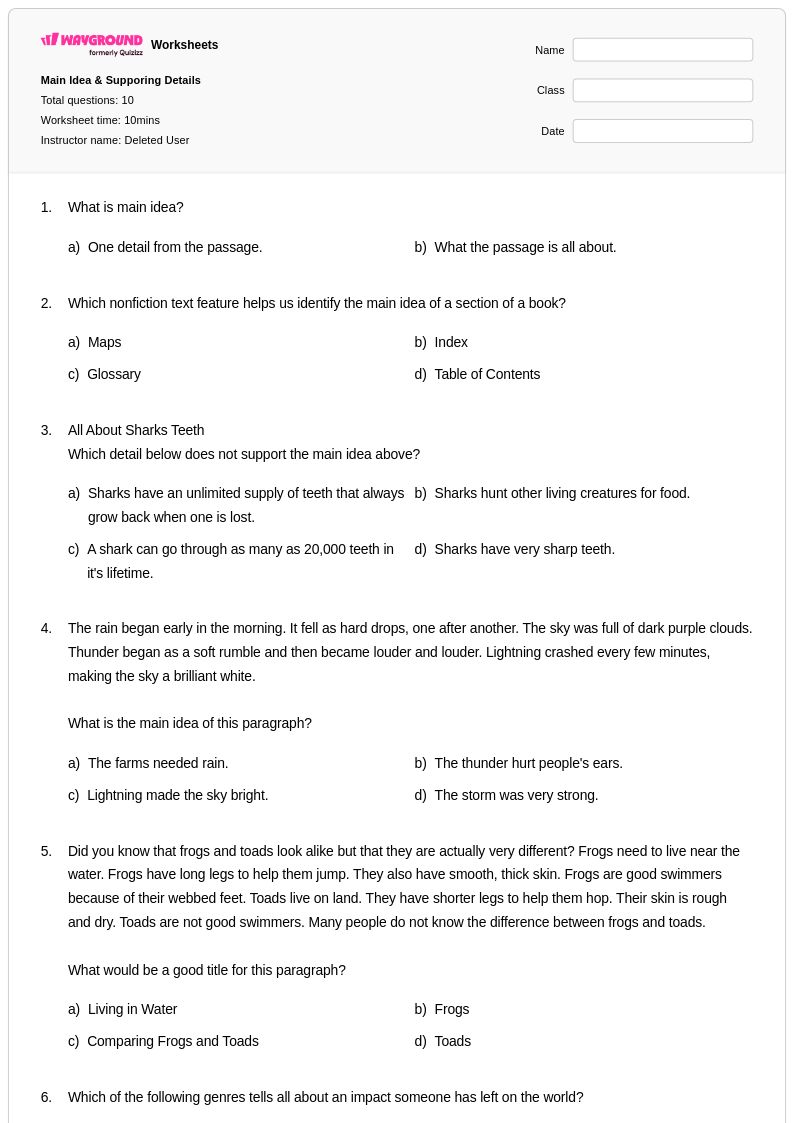
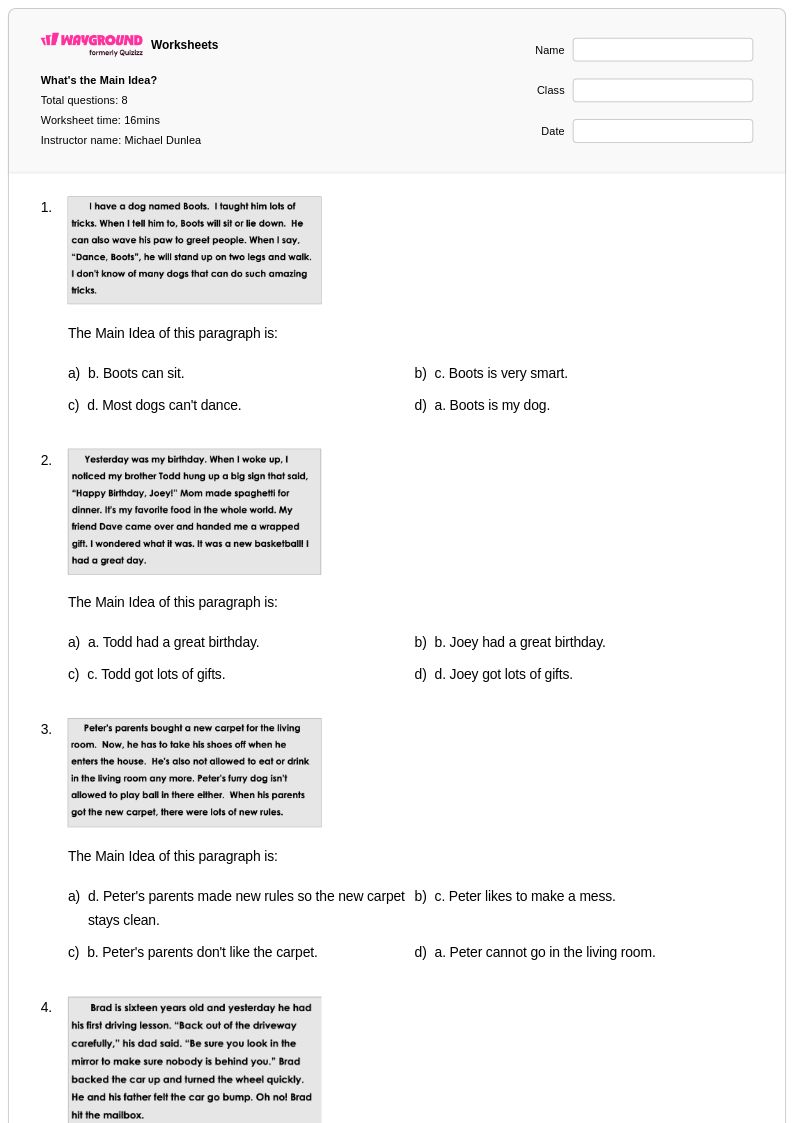
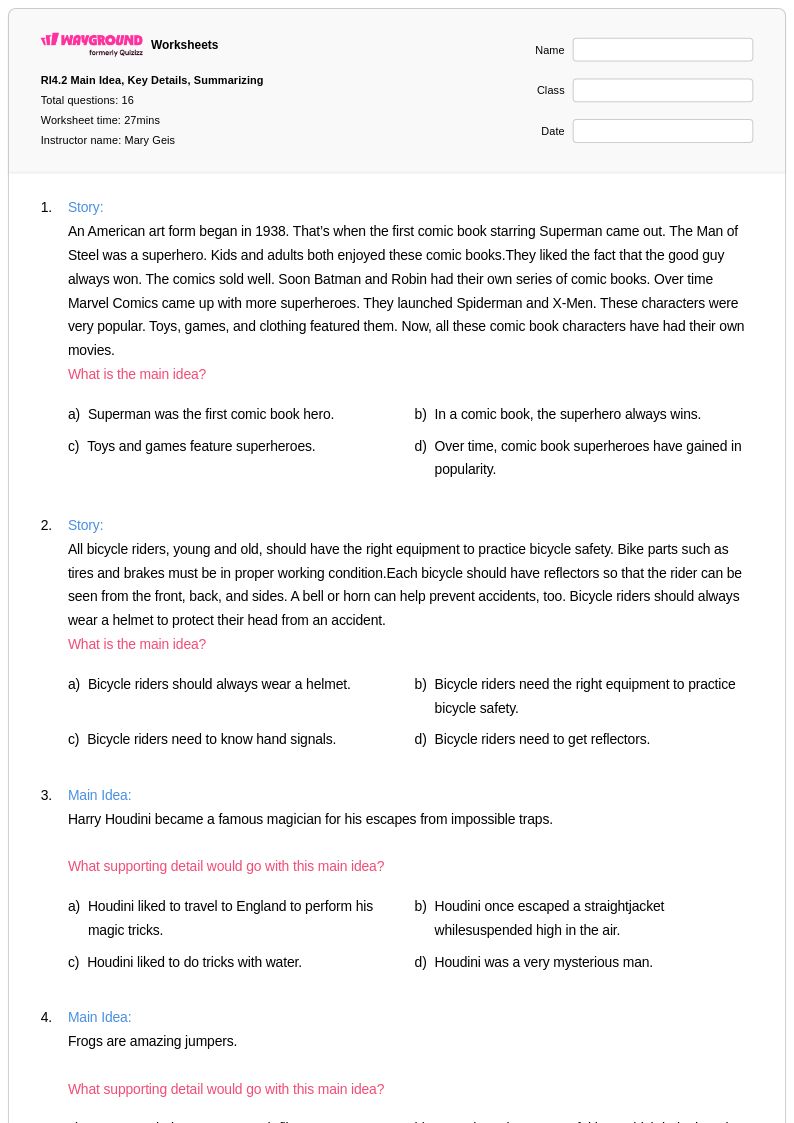
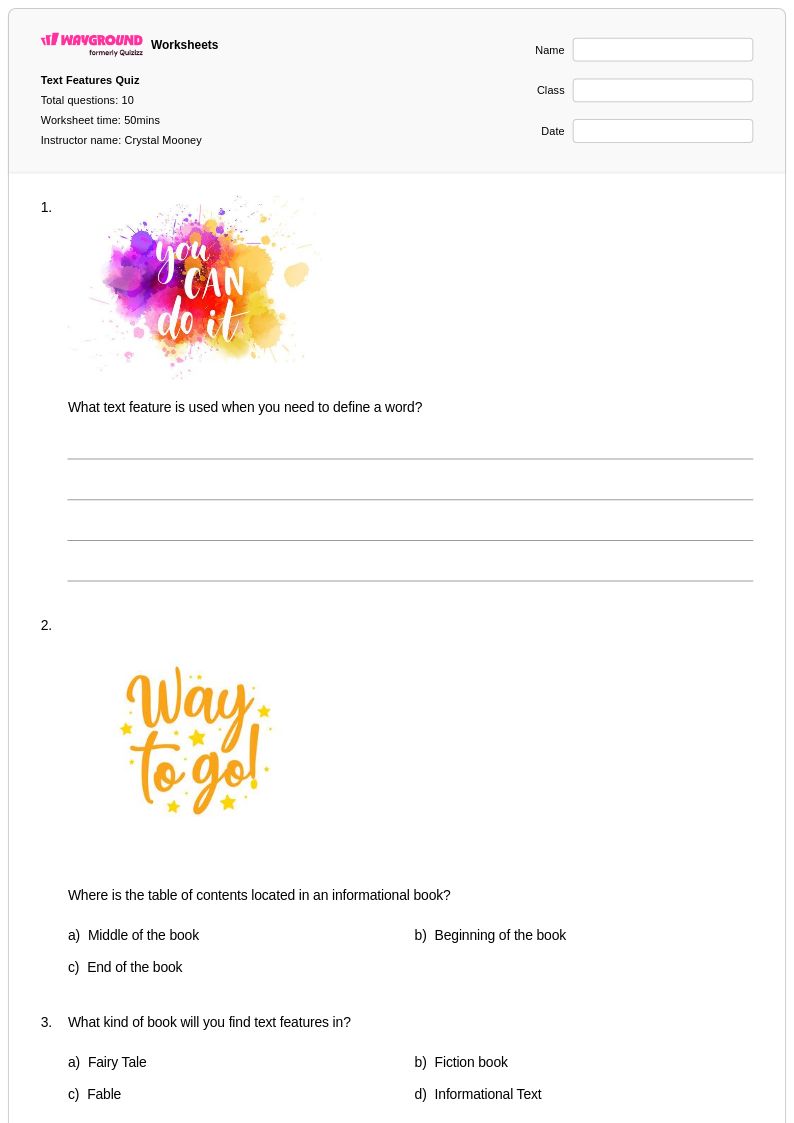
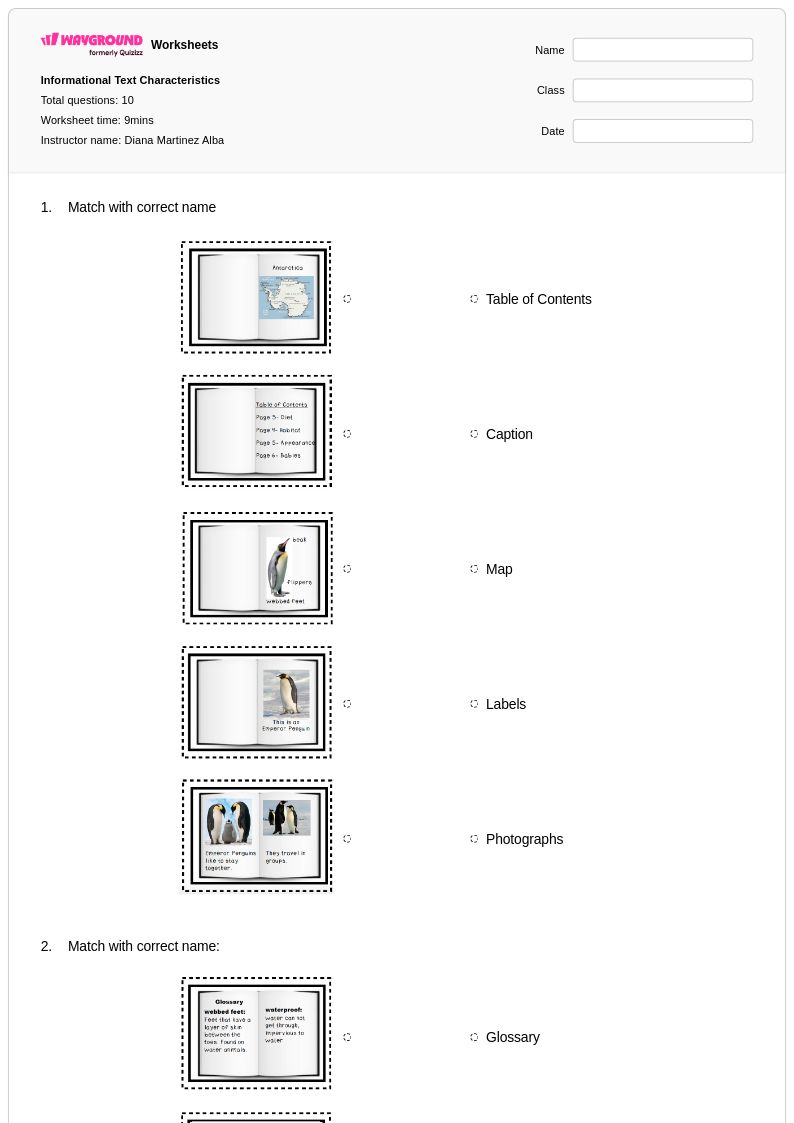
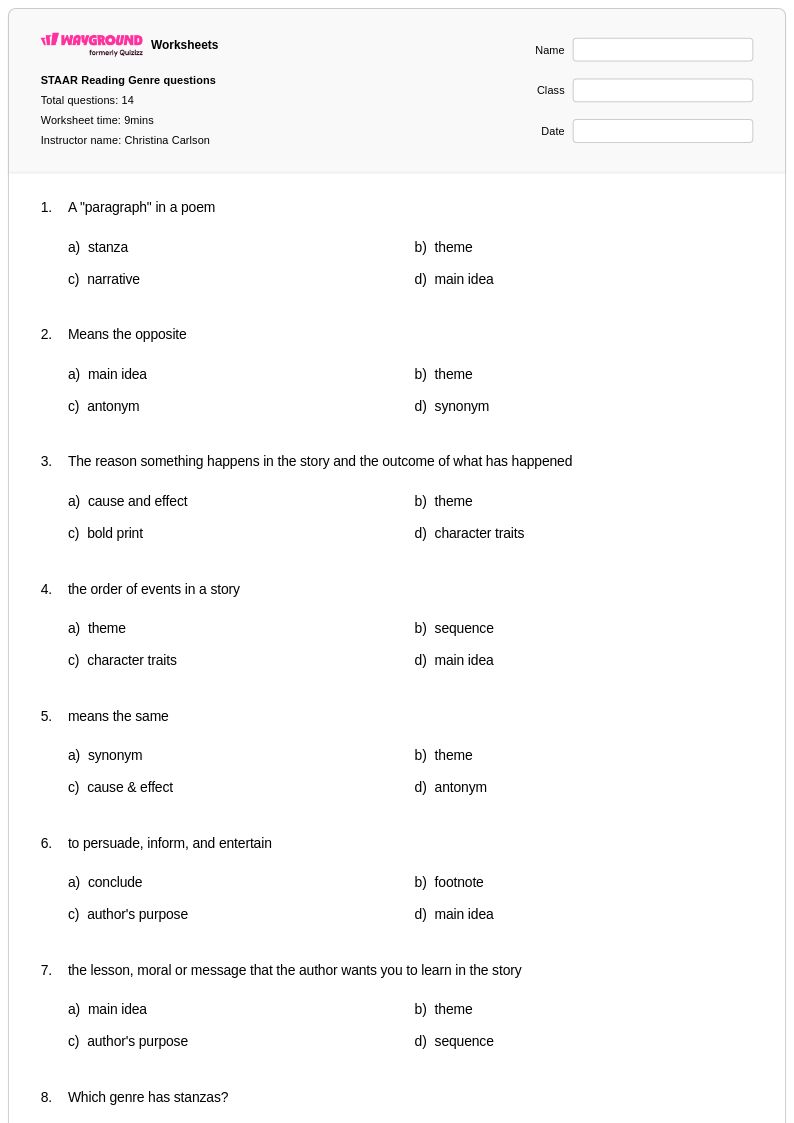
Identifying the main idea in nonfiction texts represents a fundamental reading comprehension skill that Year 3 students must master to become successful readers and critical thinkers. Wayground's extensive collection of worksheets focuses specifically on helping young learners extract central themes and key messages from informational texts, ranging from simple science articles to biographical passages. These carefully crafted practice problems guide students through systematic approaches to distinguish between main ideas and supporting details, while developing their ability to summarize complex information accurately. Each worksheet includes a comprehensive answer key that enables both independent study and guided instruction, with free printables available in convenient PDF format to support classroom and home learning environments.
Wayground's platform, formerly known as Quizizz, empowers educators with millions of teacher-created resources specifically designed for identifying main ideas in nonfiction texts. The robust search and filtering system allows teachers to quickly locate worksheets that align with specific reading standards and accommodate diverse learning needs within their Year 3 classrooms. Advanced differentiation tools enable seamless customization of content difficulty levels, ensuring that both struggling readers and advanced students receive appropriate challenges. These versatile materials are available in both printable and digital formats, including downloadable PDFs, making them ideal for traditional classroom instruction, remote learning scenarios, targeted remediation sessions, and enrichment activities that extend beyond basic curriculum requirements.
FAQs
How do I teach students to identify the main idea in nonfiction texts?
Start by teaching students to ask 'What is this mostly about?' after reading each paragraph, then model how to distinguish between the central argument and the supporting details that back it up. Use think-alouds with short informational passages so students can see the decision-making process in action. Gradually release responsibility by moving from teacher-led modeling to guided practice with partner texts, and finally to independent reading tasks where students annotate and summarize on their own.
What exercises help students practice identifying the main idea in nonfiction?
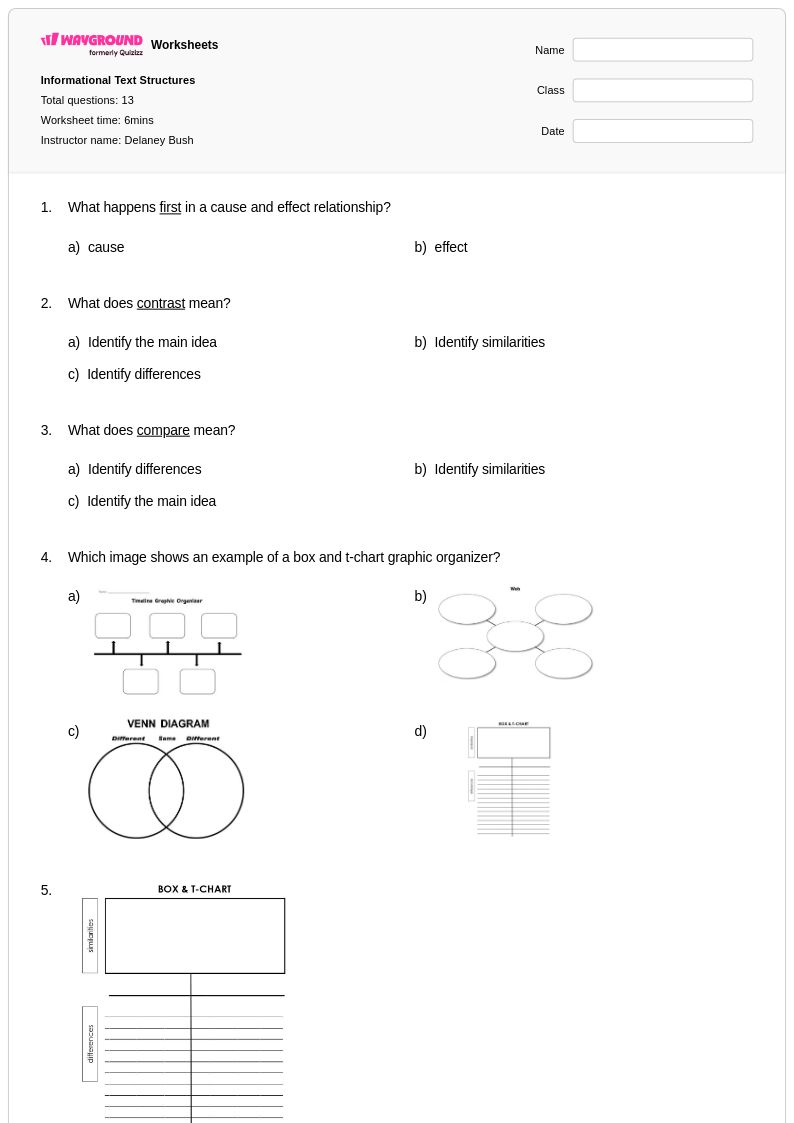
Effective practice exercises include reading short nonfiction passages and selecting or writing the main idea, then identifying which sentences are supporting details versus central claims. Graphic organizers that prompt students to record the main idea at the top and supporting details below help reinforce the hierarchical relationship between these elements. Repeated exposure across a variety of nonfiction text types, such as articles, textbook excerpts, and informational essays, builds the transferable skill students need for academic reading across subject areas.
What mistakes do students commonly make when identifying the main idea in nonfiction?
The most common error is confusing a supporting detail with the main idea, particularly when a vivid or specific sentence appears early in the passage. Students also frequently identify the topic (a word or phrase) rather than the main idea (a complete, arguable statement about that topic). Another common misconception is assuming the main idea must always appear in the first sentence, when nonfiction writers often place it mid-paragraph or at the end as a concluding claim.
How can I use identifying the main idea worksheets to support different reading levels in my class?
Wayground's platform supports student-level accommodations that allow teachers to differentiate without singling out individual students. The Read Aloud feature can provide audio support for struggling readers so they can focus on comprehension rather than decoding, while reduced answer choices can lower the cognitive load for students who need scaffolding. These settings can be applied to individual students simultaneously, meaning the rest of the class receives the standard version without any notification, preserving a consistent classroom experience.
How do I use Wayground's identifying the main idea in nonfiction worksheets in my classroom?
Wayground's identifying the main idea in nonfiction worksheets are available as printable PDFs for traditional classroom use and in digital formats for technology-integrated environments, giving teachers flexibility across different instructional settings. Teachers can also host worksheets as a live quiz on Wayground, making them suitable for whole-class instruction, small group work, homework, or assessment preparation. Each worksheet includes a complete answer key, which supports both teacher-led review and independent or self-directed student practice.
How is identifying the main idea different from identifying the topic of a nonfiction passage?
The topic is the general subject a text is about and can usually be expressed in a word or short phrase, such as 'climate change' or 'the water cycle.' The main idea is the specific, complete claim or point the author is making about that topic, expressed as a full sentence. Teaching students this distinction is essential because many reading assessments require them to articulate the main idea precisely, not simply name the subject matter.