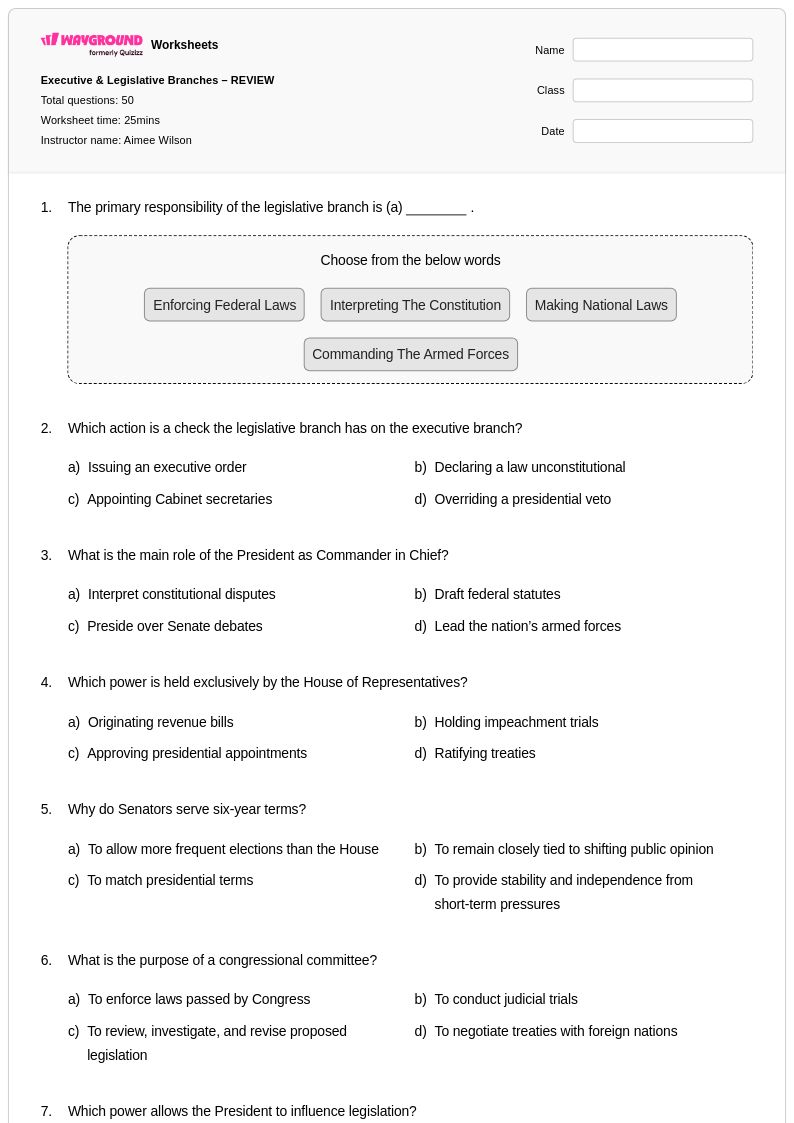
Free Year 11 impeachment worksheets and printables help students explore the constitutional process of removing government officials, featuring practice problems, PDF downloads, and comprehensive answer keys for effective U.S. History learning.
Explore printable Impeachment worksheets for Year 11
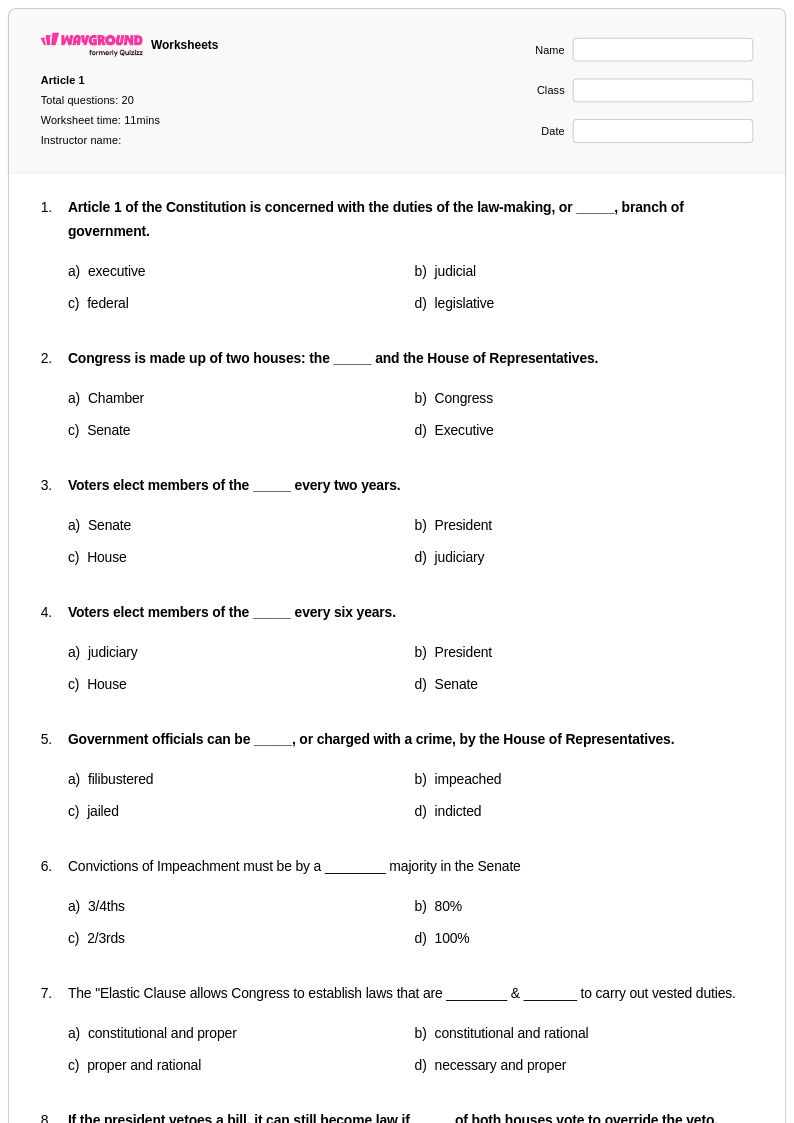
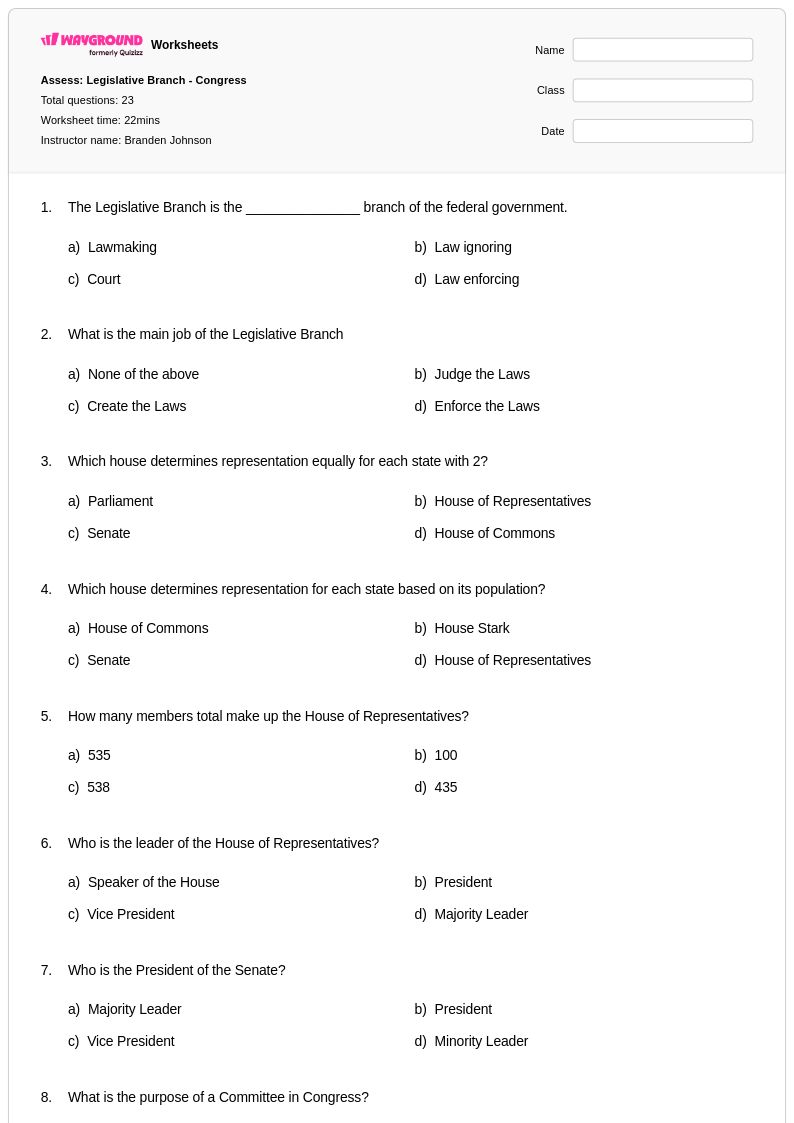
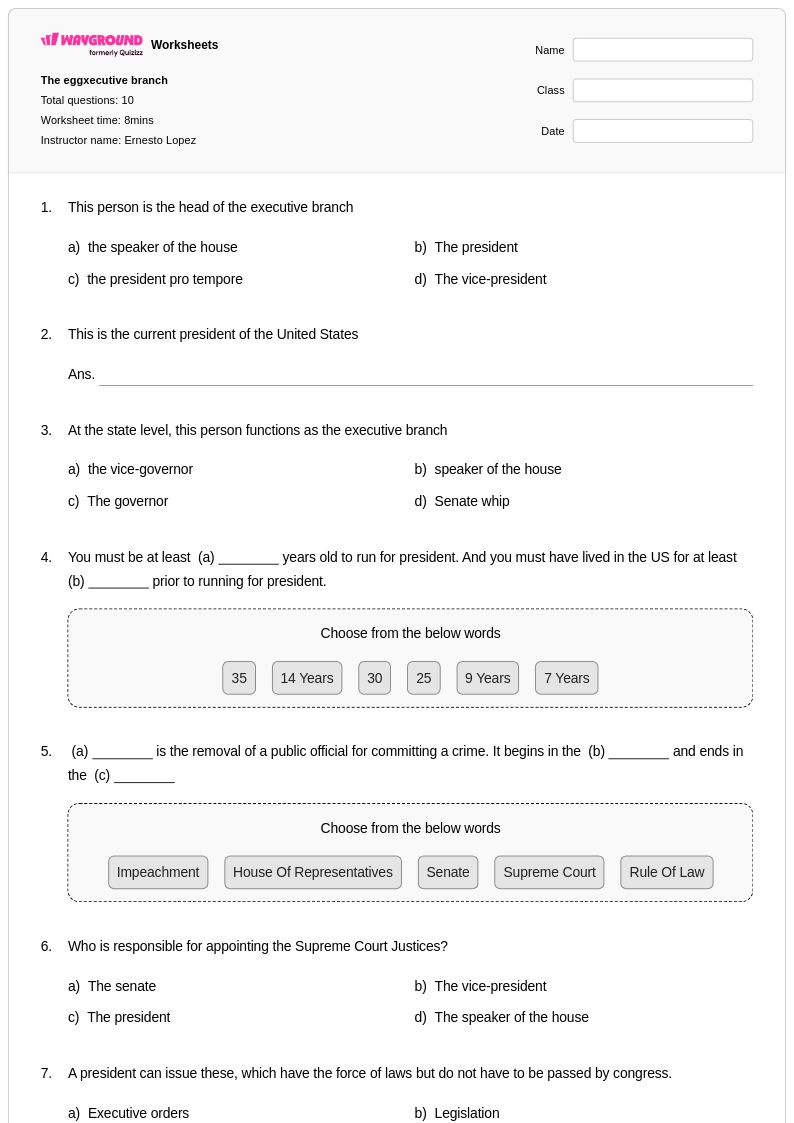
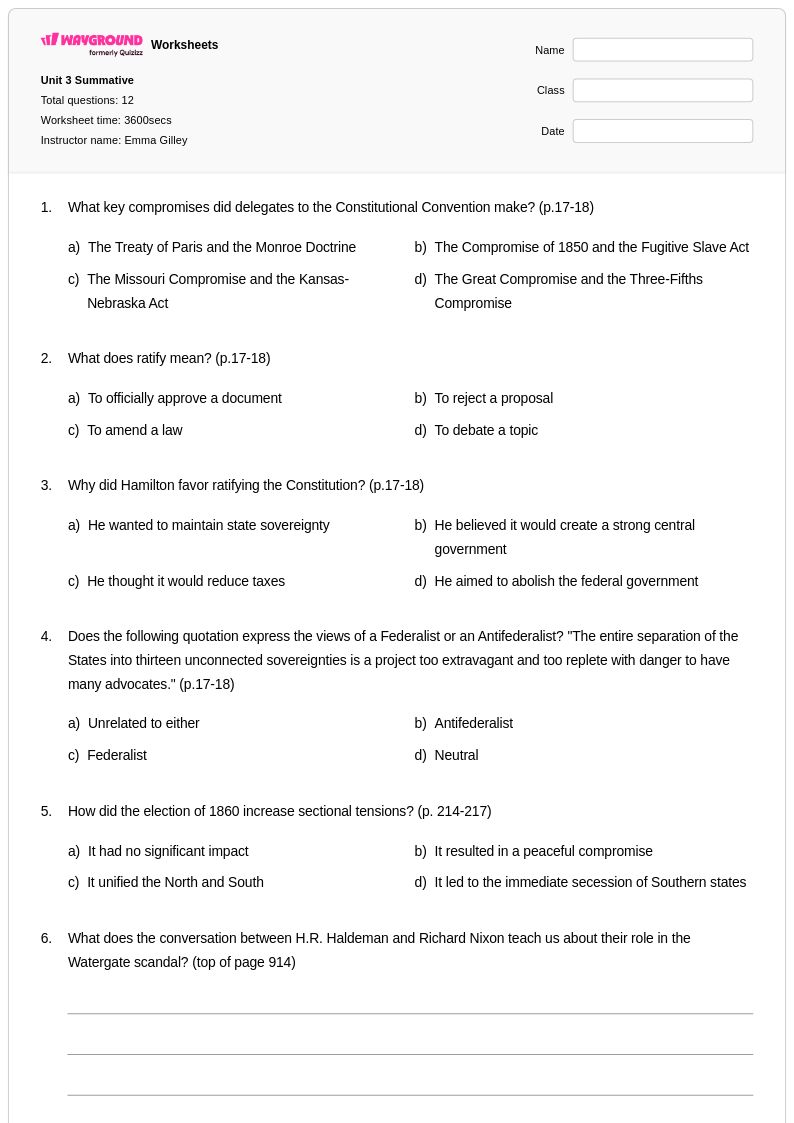
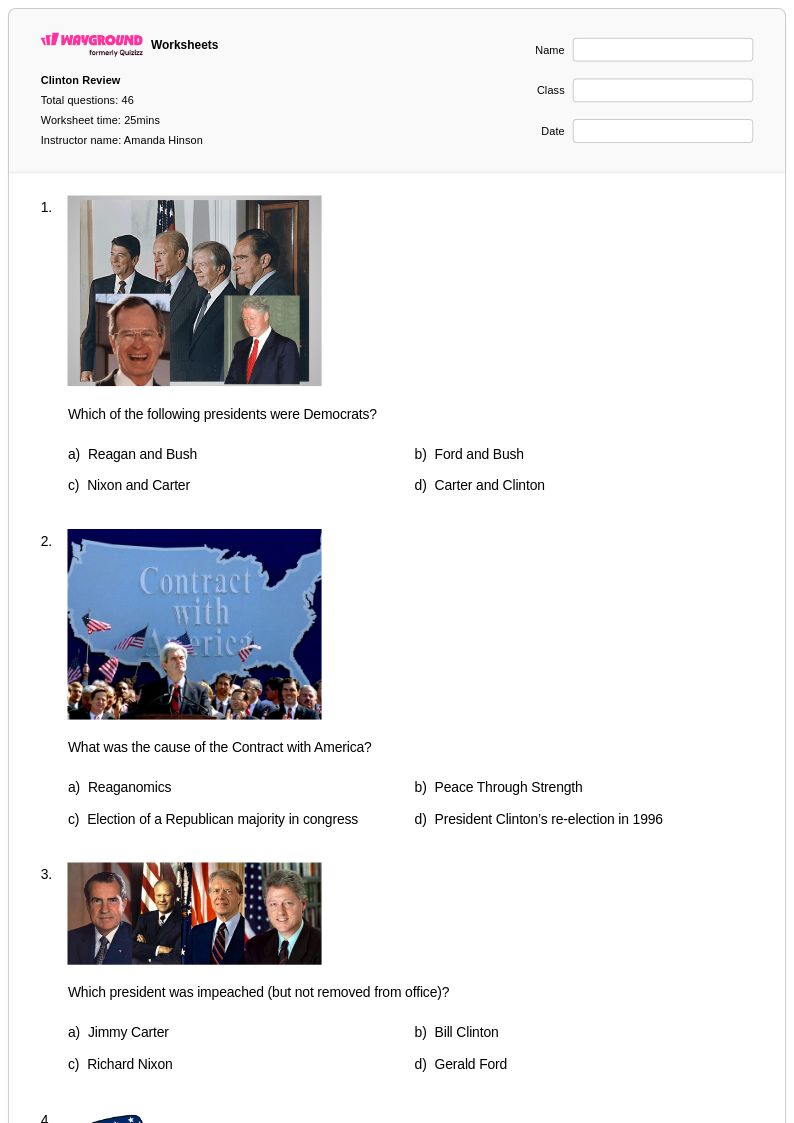
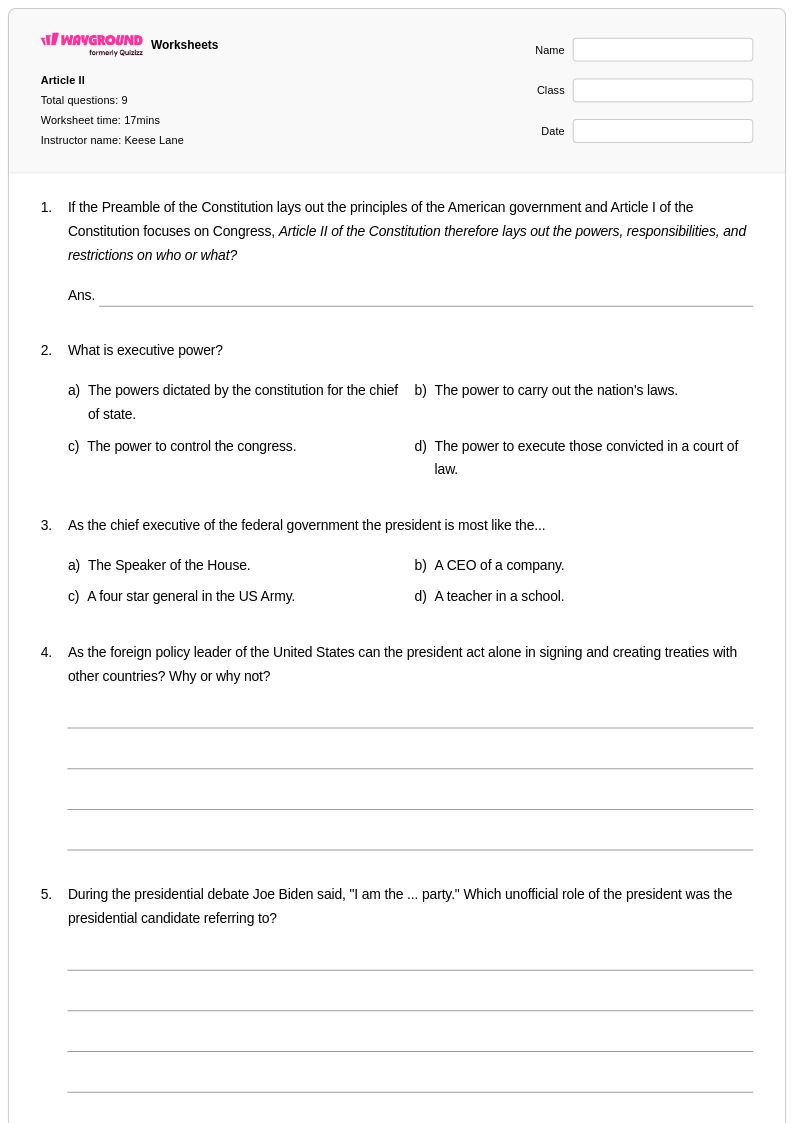
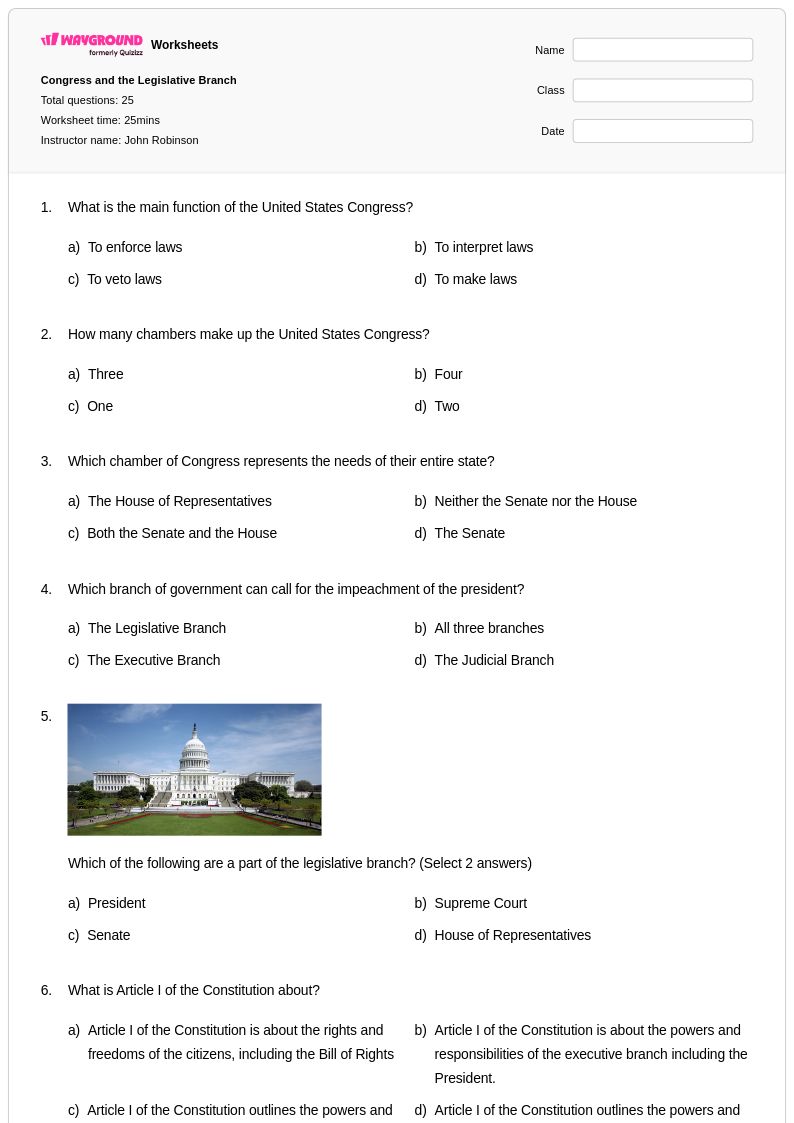
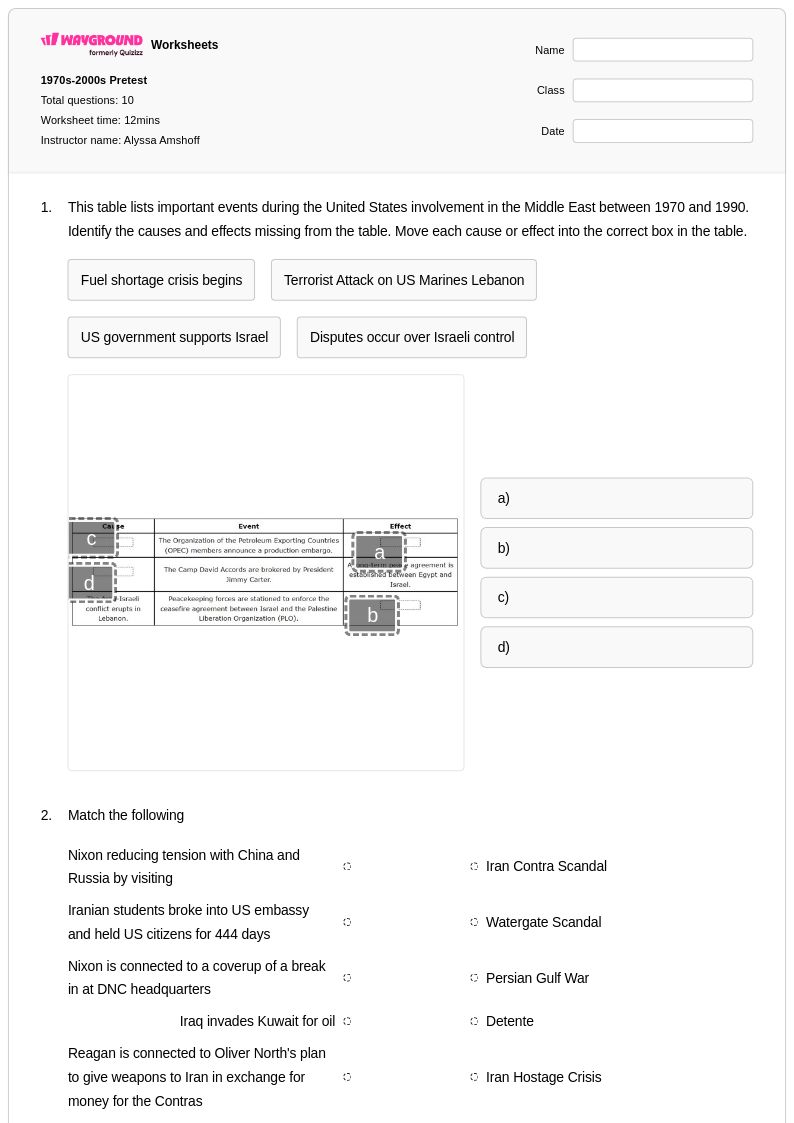
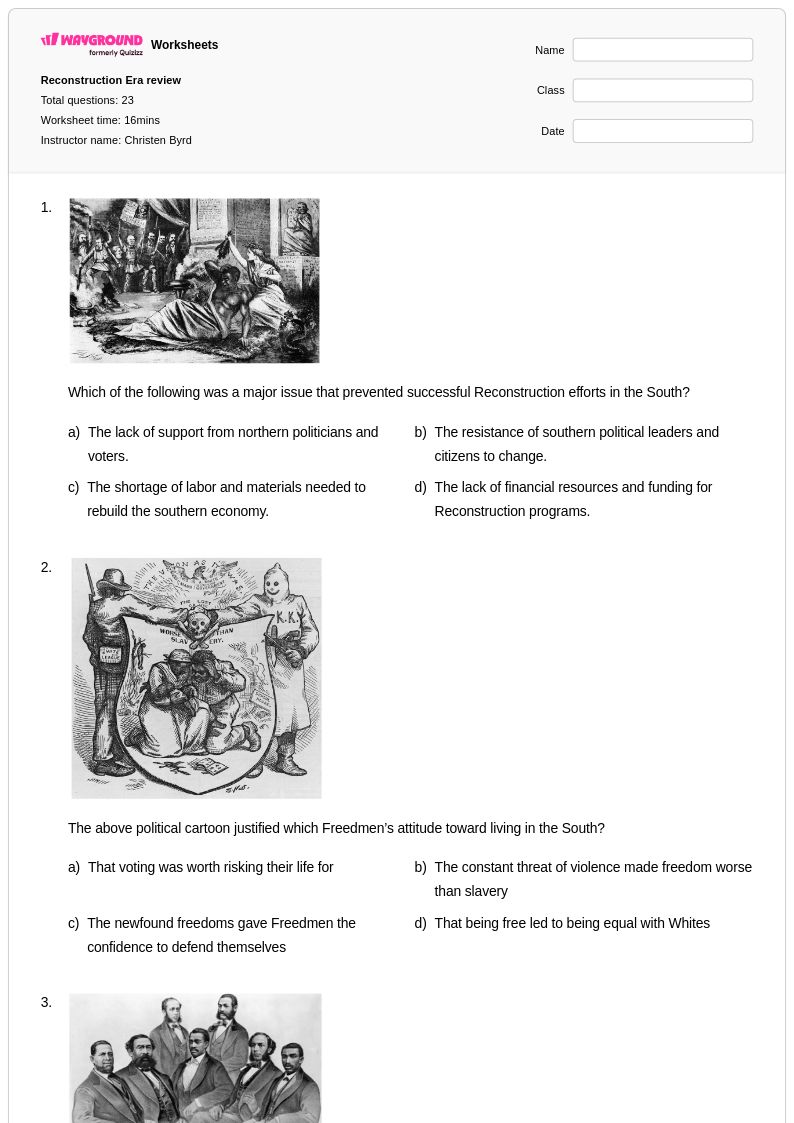
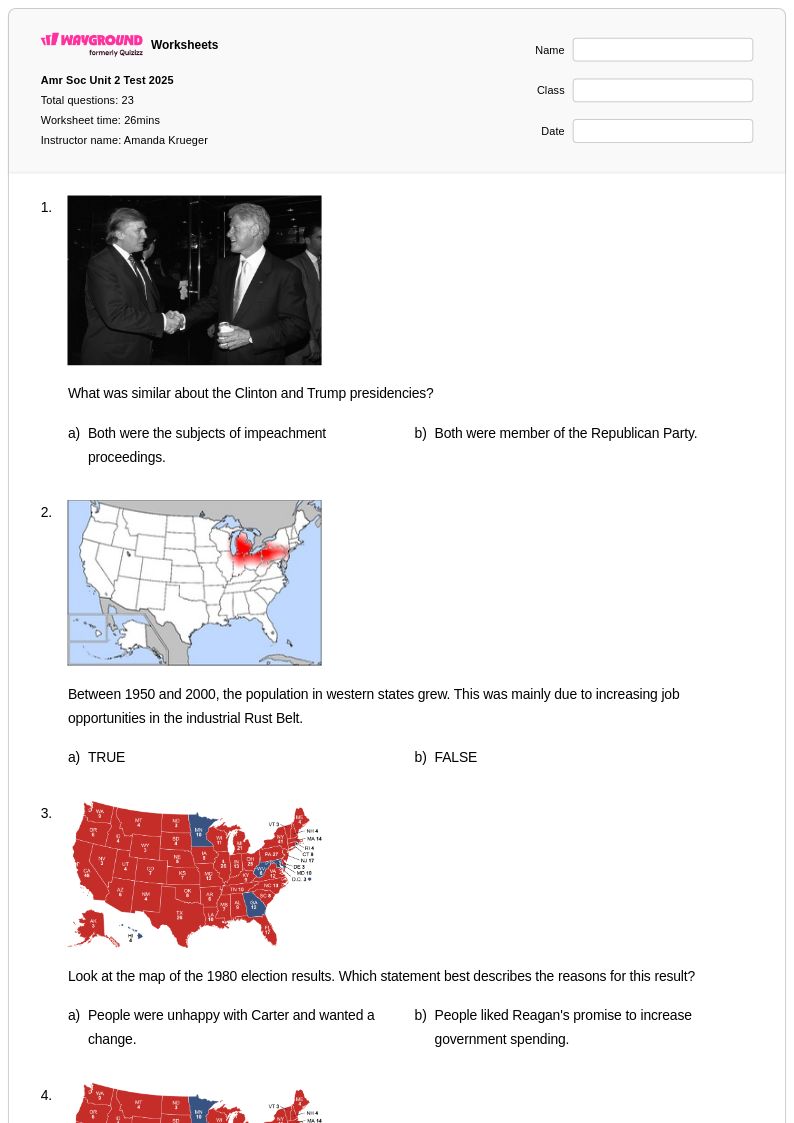
Impeachment worksheets for Year 11 students through Wayground (formerly Quizizz) provide comprehensive resources that explore this critical constitutional process and its historical applications in American government. These carefully designed materials help students understand the complex legal and political mechanisms involved in impeachment proceedings, from the House of Representatives' role in bringing charges to the Senate's responsibility for conducting trials. The worksheets strengthen essential analytical skills by guiding students through historical case studies, constitutional interpretations, and the intricate balance of powers that defines this process. Students engage with practice problems that examine specific impeachment cases throughout U.S. history, while comprehensive answer keys support both independent study and classroom instruction. These free printable resources in pdf format ensure accessibility for diverse learning environments and study preferences.
Wayground (formerly Quizizz) empowers educators with millions of teacher-created impeachment resources that streamline lesson planning and enhance student comprehension of this complex constitutional topic. The platform's robust search and filtering capabilities enable teachers to quickly locate materials aligned with specific learning standards and grade-appropriate content expectations. Advanced differentiation tools allow instructors to customize worksheets for varying skill levels, supporting both remediation for students who need additional constitutional law foundation and enrichment opportunities for advanced learners ready to explore deeper political implications. Available in both printable and digital formats including downloadable pdf versions, these resources offer the flexibility teachers need for traditional classroom instruction, hybrid learning models, or independent student practice, ensuring that every Year 11 student can master the constitutional principles and historical significance of impeachment in American democracy.
FAQs
How do I teach impeachment to middle or high school students?
Teaching impeachment effectively starts with grounding students in the constitutional framework — specifically Article II, Section 4 — before introducing historical cases. Use primary sources such as articles of impeachment and congressional debate transcripts to make the process concrete. Comparing the cases of Andrew Johnson, Bill Clinton, and Donald Trump helps students identify patterns and distinctions across different political contexts, building both content knowledge and analytical skills.
What are the best exercises to help students practice understanding the impeachment process?
Effective practice exercises include constitutional interpretation tasks where students analyze the specific charges in historical impeachment cases, as well as primary source analysis using actual articles of impeachment. Sequencing activities that ask students to place impeachment proceedings in chronological and procedural order reinforce understanding of how the House and Senate roles differ. Case comparison charts across the Johnson, Clinton, and Trump impeachments are especially useful for reinforcing the legal and political distinctions between each proceeding.
What misconceptions do students commonly have about the impeachment process?
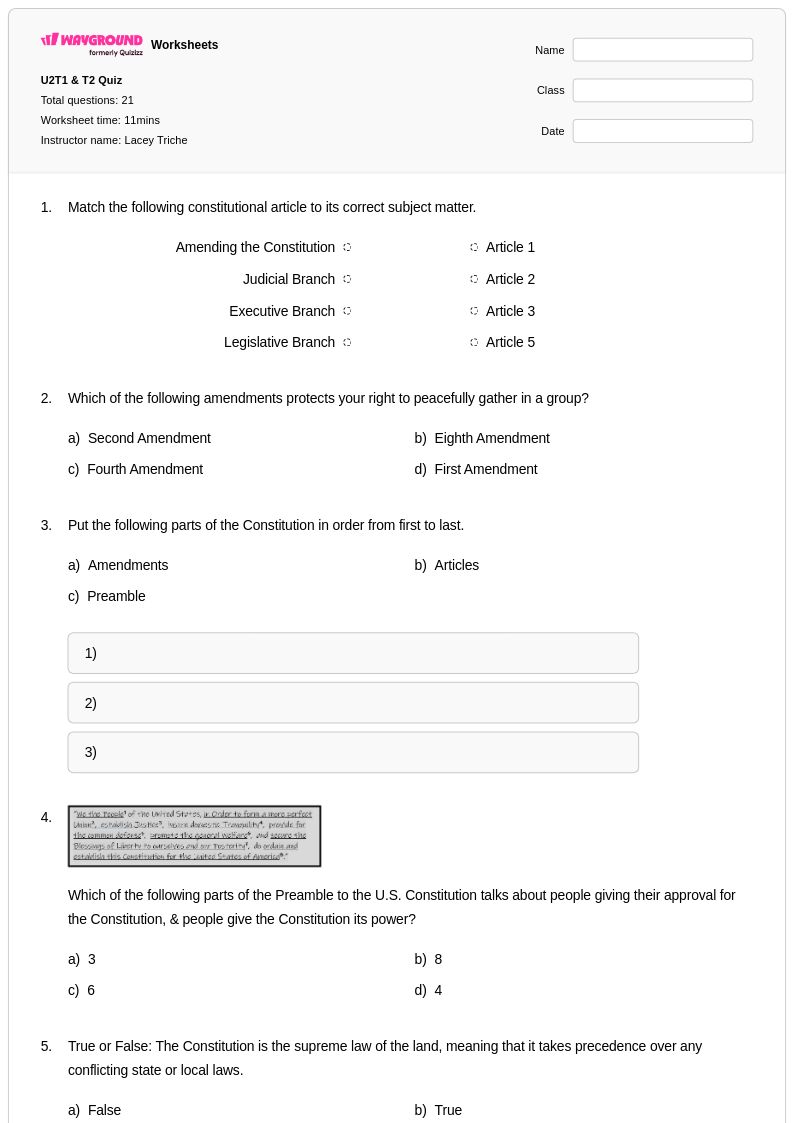
The most common misconception is that impeachment means removal from office — students frequently conflate the House's role in impeaching (formally charging) with the Senate's separate role in convicting and removing. Many students also misunderstand 'high crimes and misdemeanors' as referring strictly to criminal offenses, when in practice the phrase encompasses a broader range of abuses of power. Addressing these distinctions early, using the actual constitutional text alongside historical examples, prevents these errors from compounding as students engage with more complex material.
How can I use Wayground's impeachment worksheets in my classroom?
Wayground's impeachment worksheets are available as printable PDFs for traditional classroom distribution and in digital formats for technology-integrated or remote learning environments, giving teachers flexibility in how they assign and collect work. Teachers can also host worksheets as a quiz directly on Wayground, making it easy to track student responses and assess comprehension in real time. Each worksheet includes a detailed answer key, supporting both self-paced independent study and structured classroom instruction.
How do I differentiate impeachment instruction for students at different reading levels?
Differentiation for impeachment instruction often involves scaffolding the complexity of primary source documents — pairing excerpts from articles of impeachment with guided annotation frameworks for struggling readers, while giving advanced students full documents to analyze independently. On Wayground, teachers can apply student-level accommodations such as Read Aloud, which enables audio playback of questions and content, and reduced answer choices to lower cognitive load for students who need additional support. These settings can be assigned individually so that other students receive standard materials without any disruption to the classroom experience.
What grade level is impeachment typically taught at, and where does it fit in the curriculum?
Impeachment is most commonly taught in middle school civics and high school U.S. History or Government courses, typically when students are studying the Constitution, the three branches of government, or specific historical eras such as Reconstruction, the 1990s, or recent political history. It also appears in AP Government coursework as part of the broader study of congressional powers and executive accountability. The topic lends itself to cross-curricular connections between history, law, and political science.