Free Printable Irregular Verbs Worksheets for Year 5
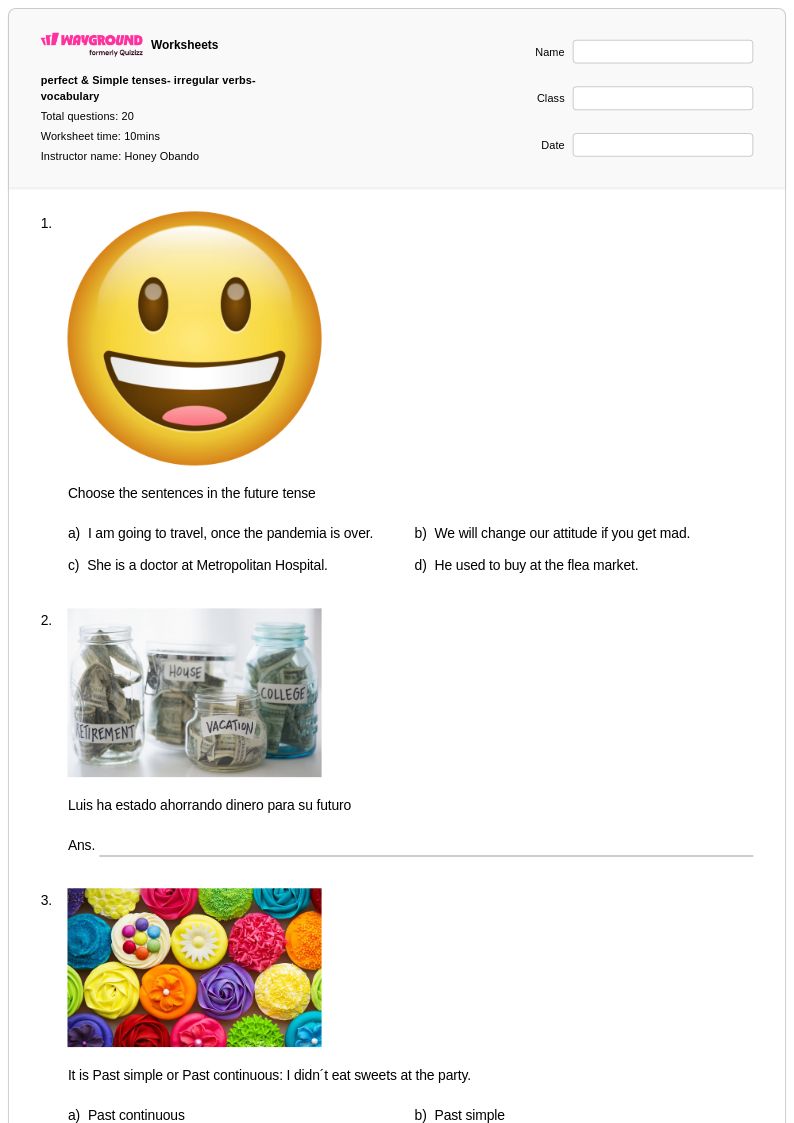
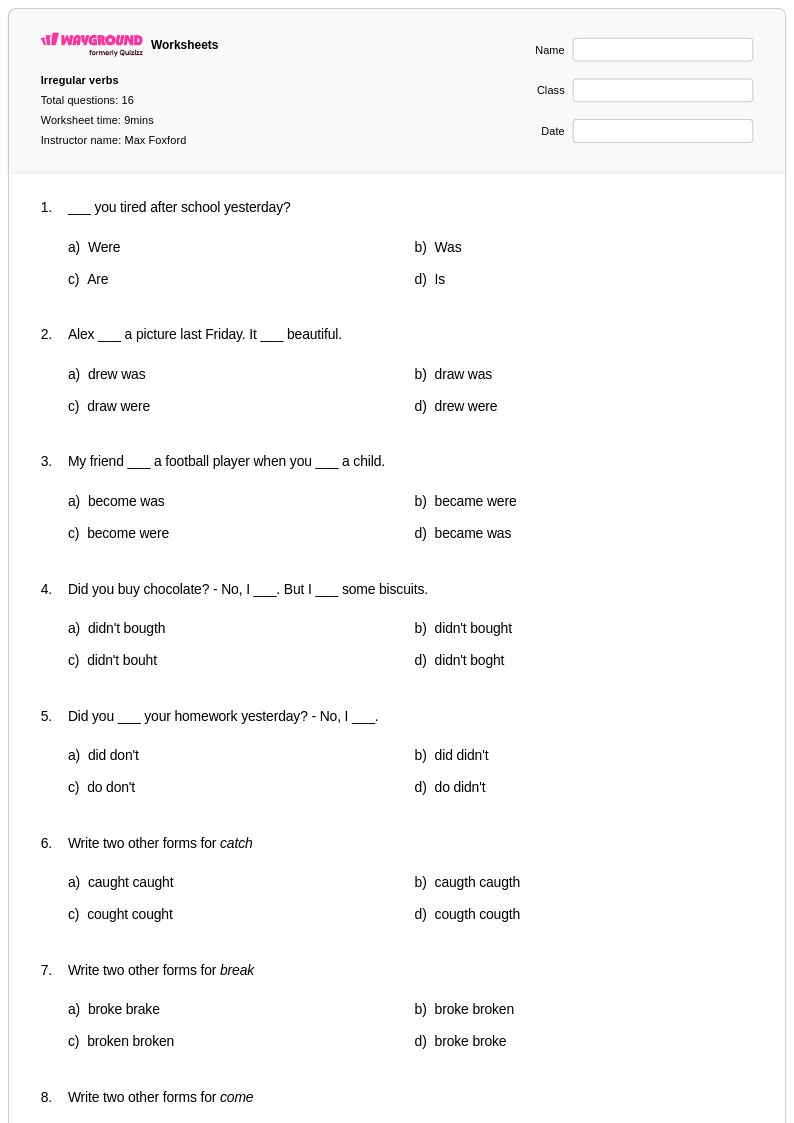
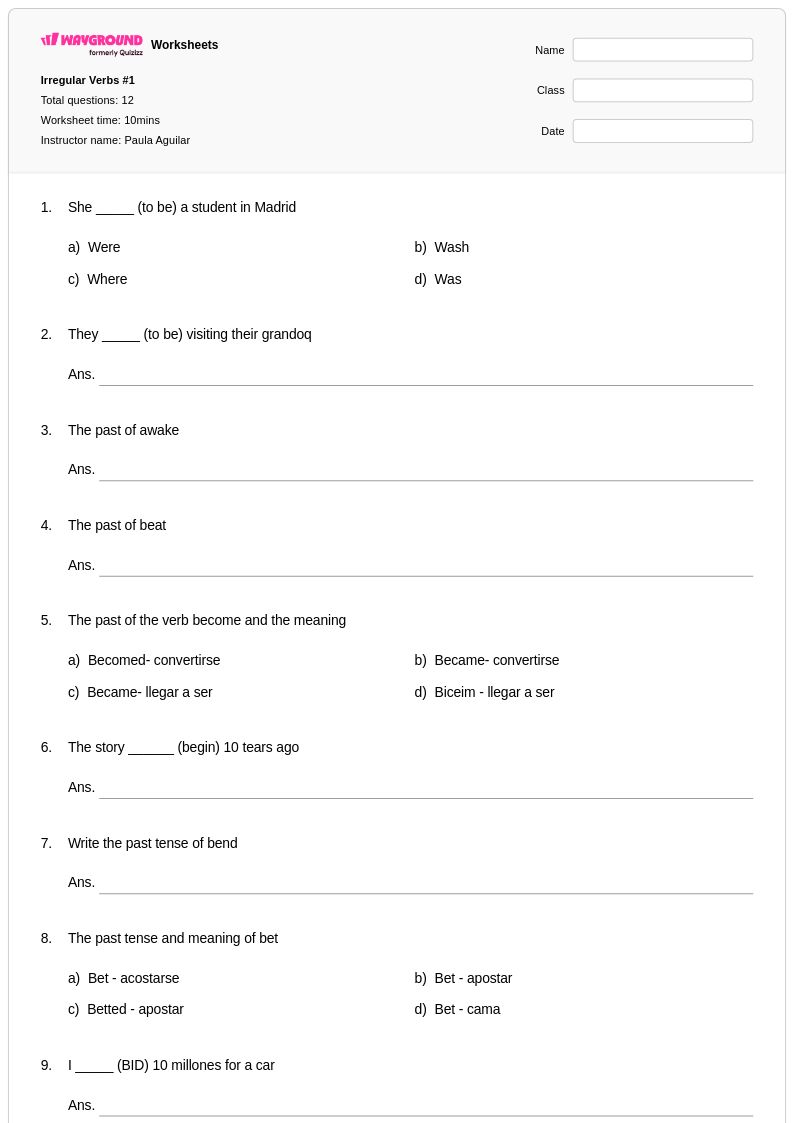
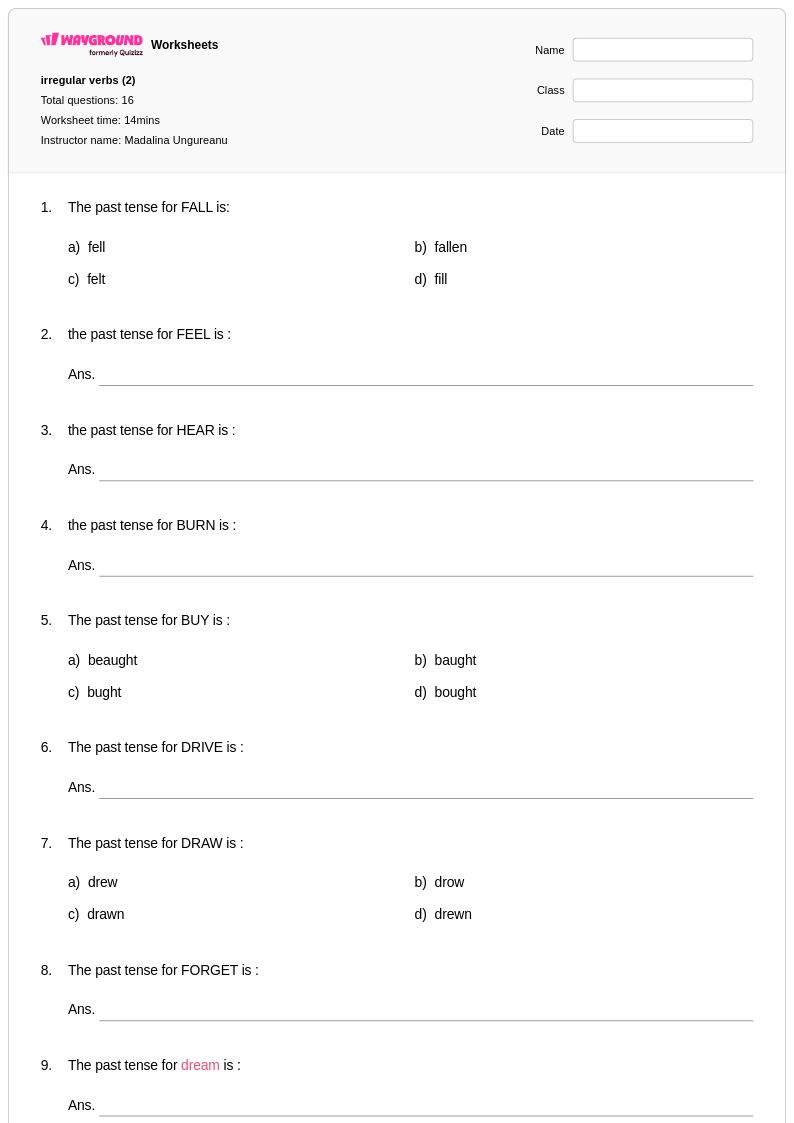
Explore Wayground's free Year 5 irregular verbs worksheets and printables that help students master challenging verb forms through engaging practice problems, complete with answer keys and downloadable PDFs.
Explore printable Irregular Verbs worksheets for Year 5
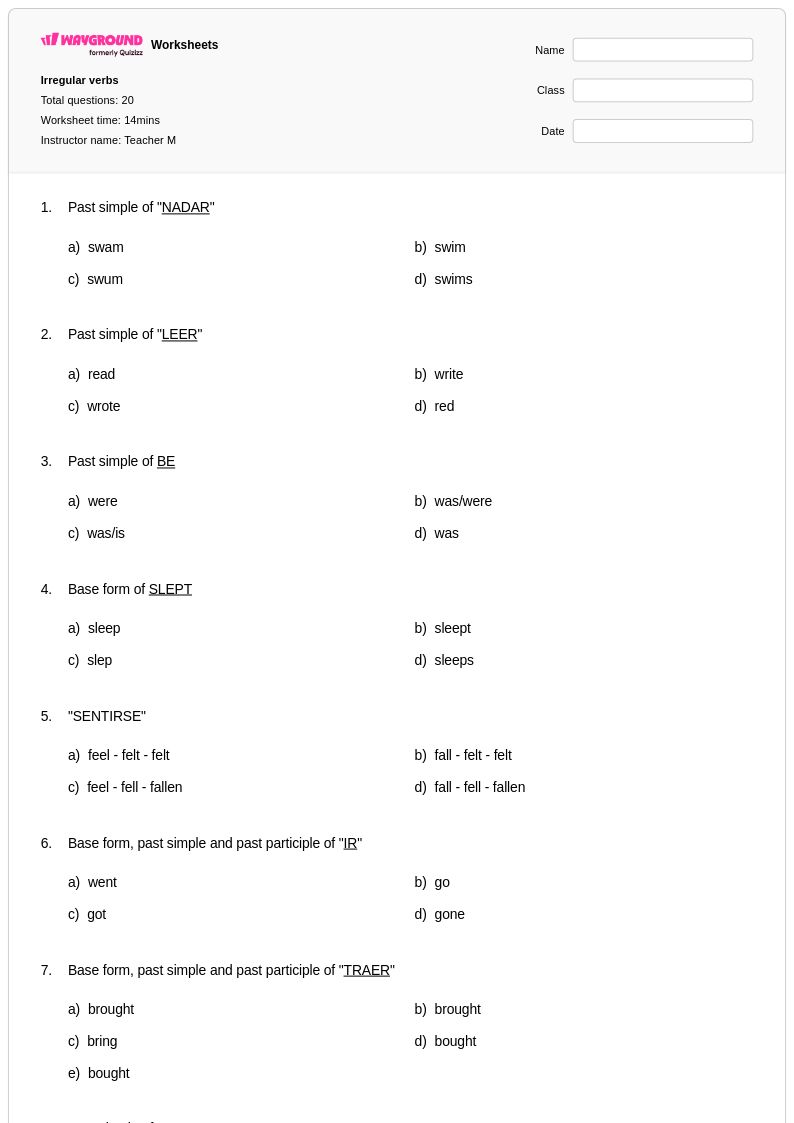
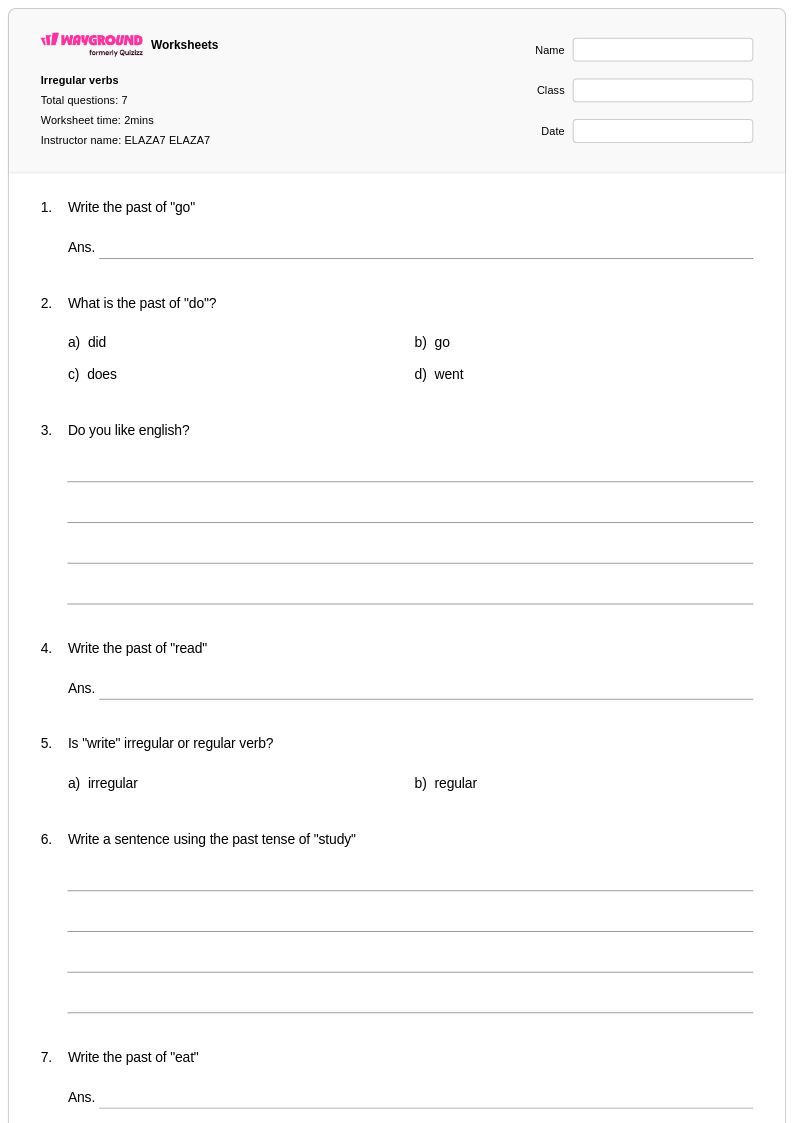
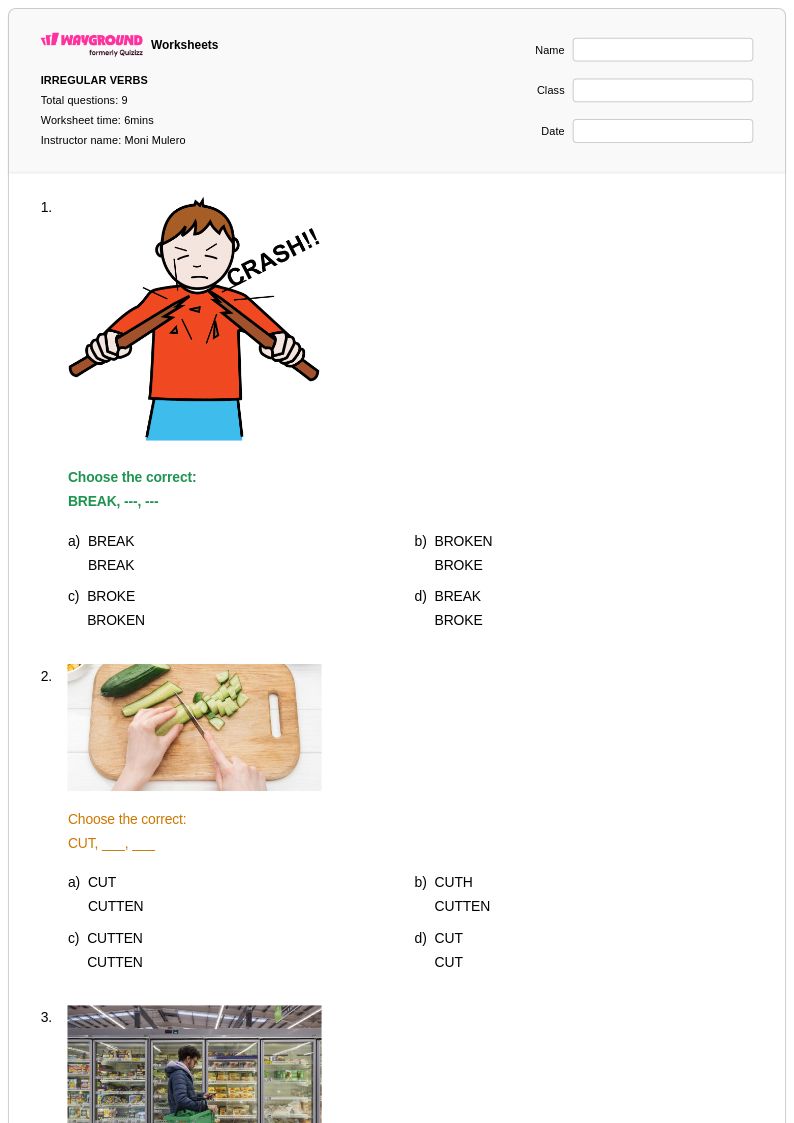
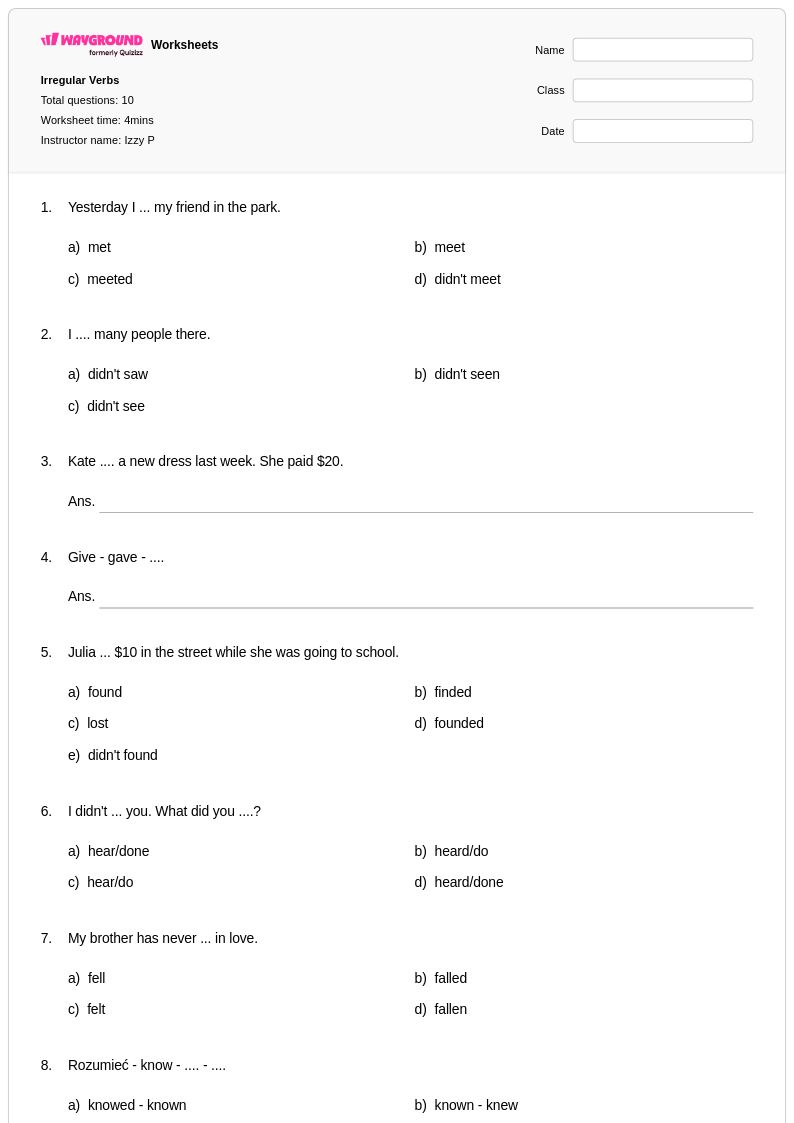
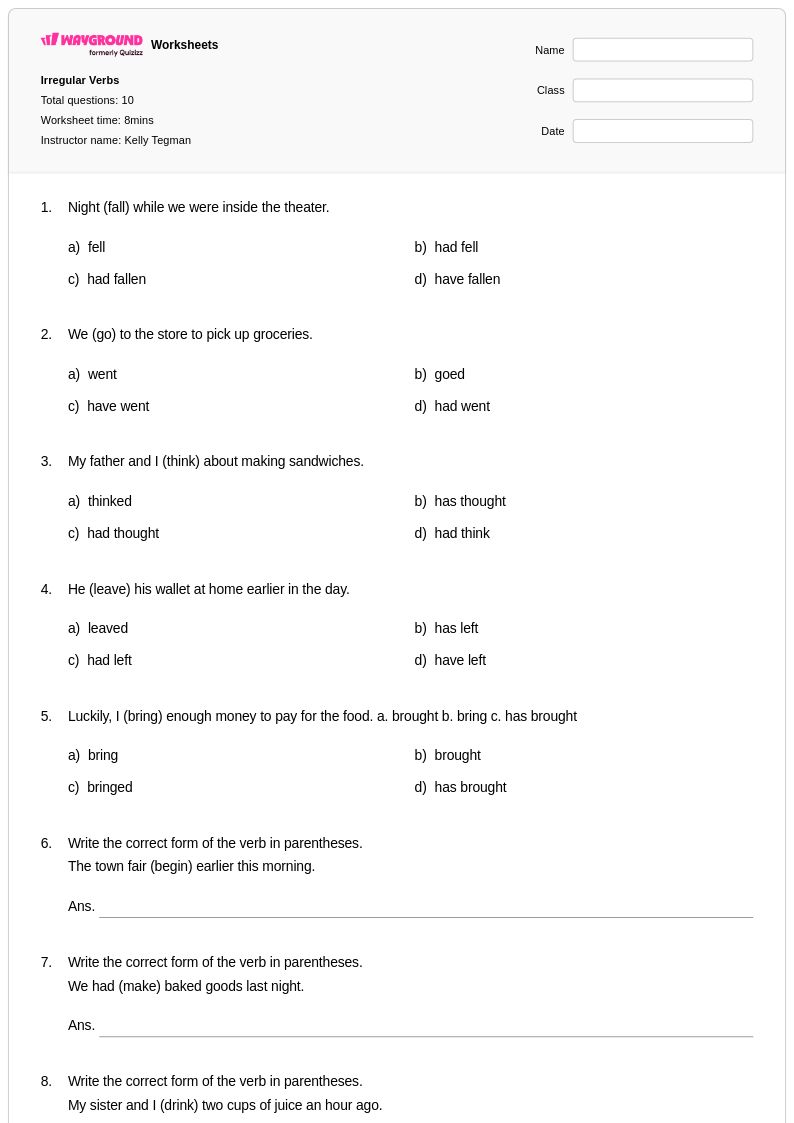
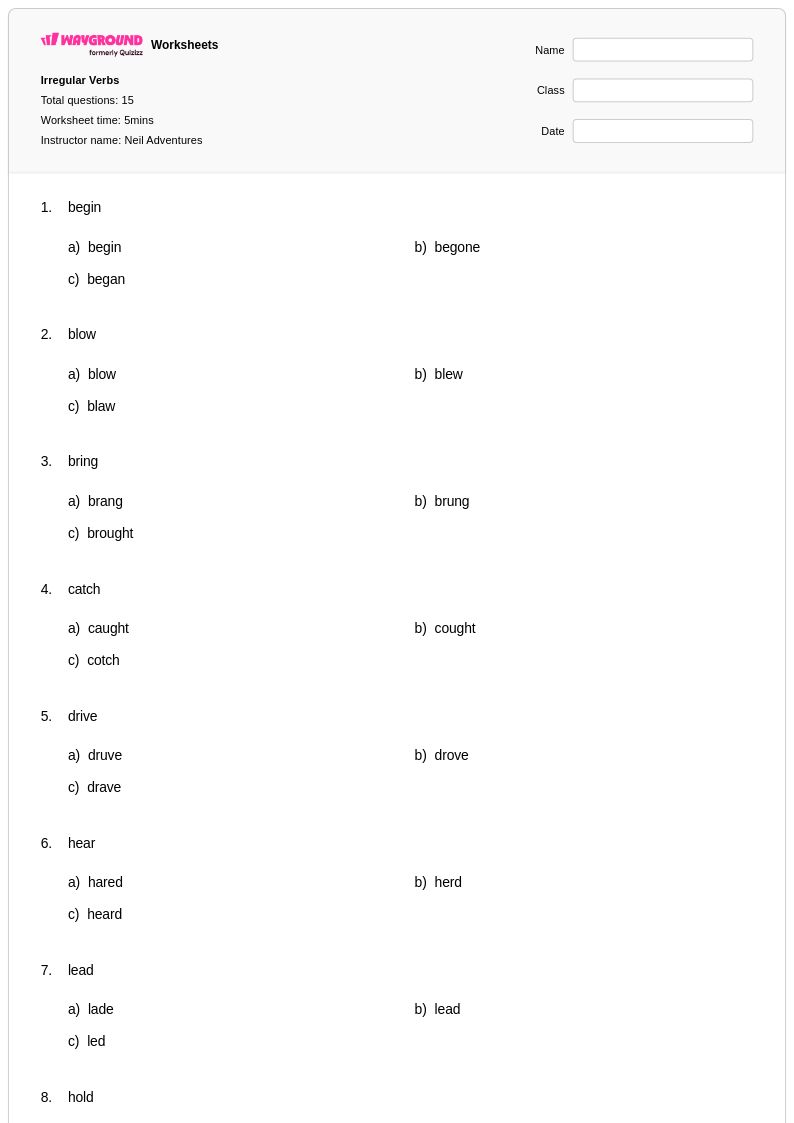
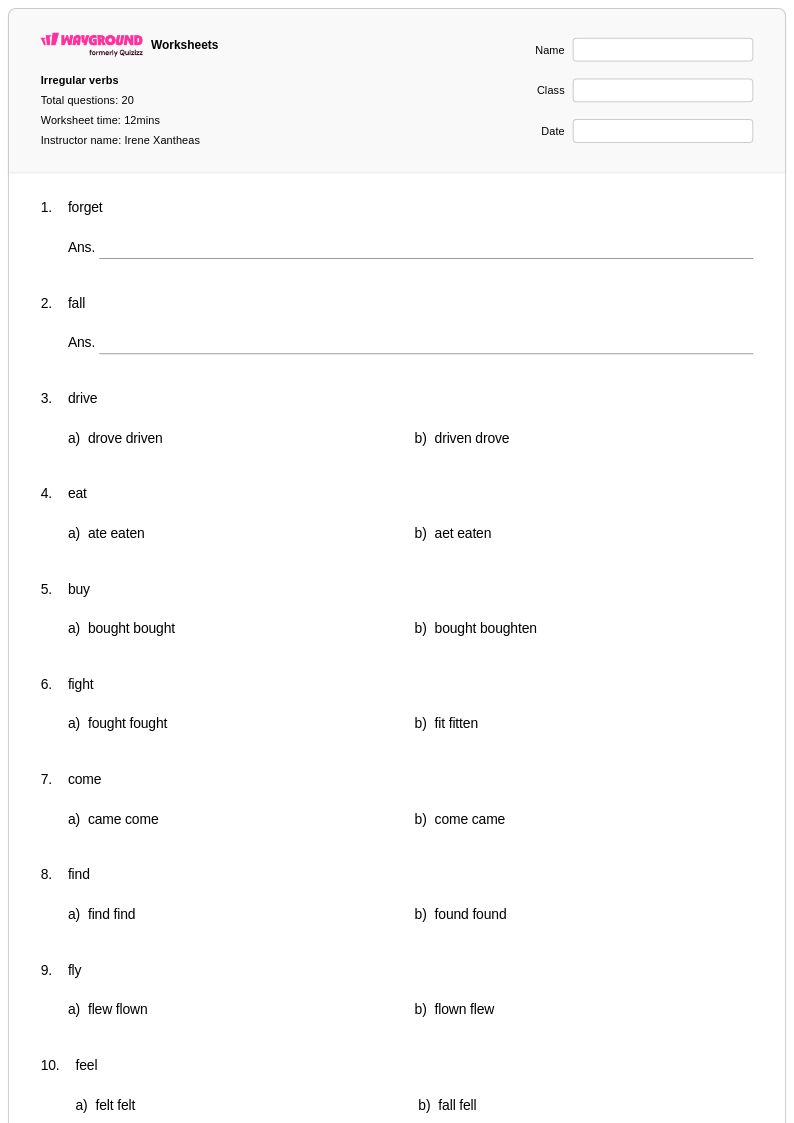
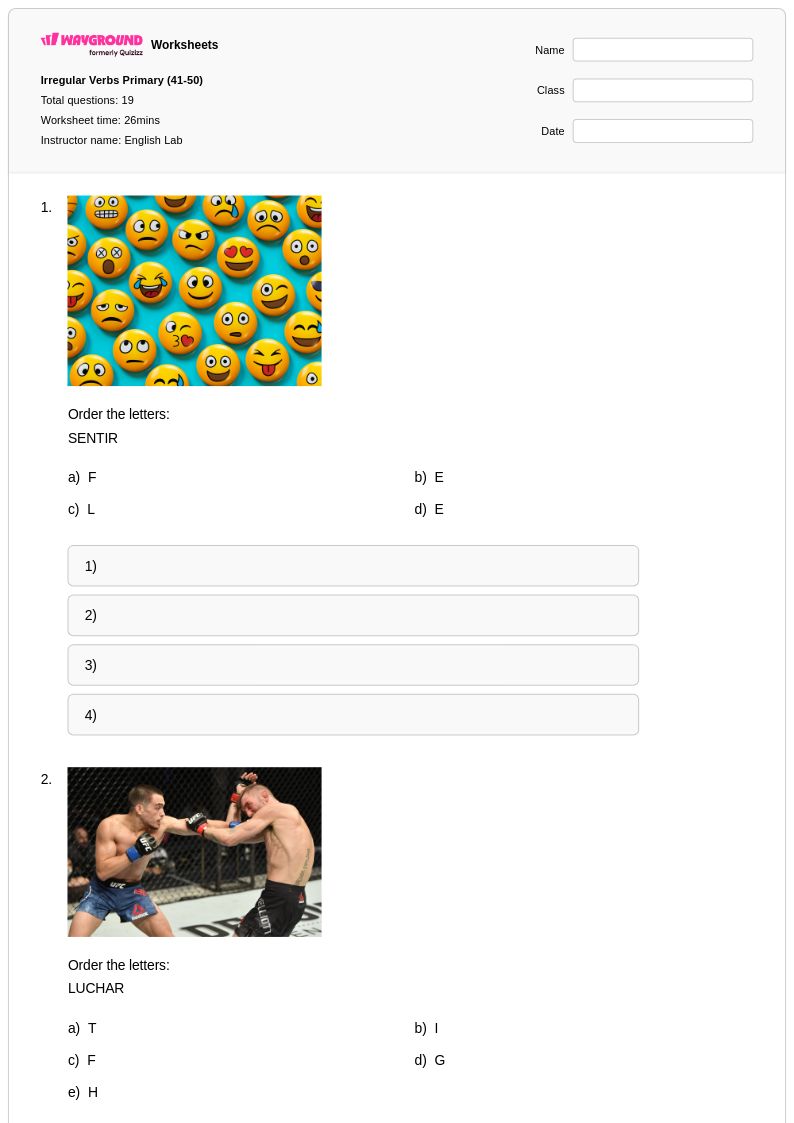
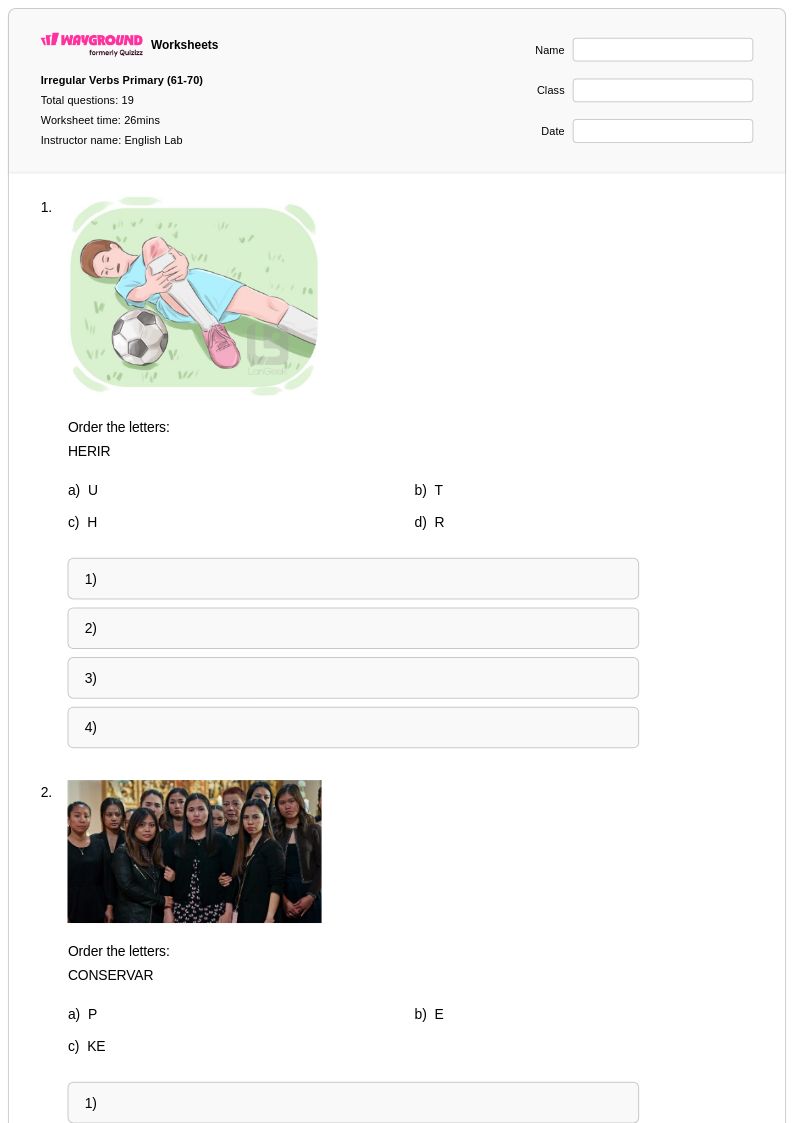
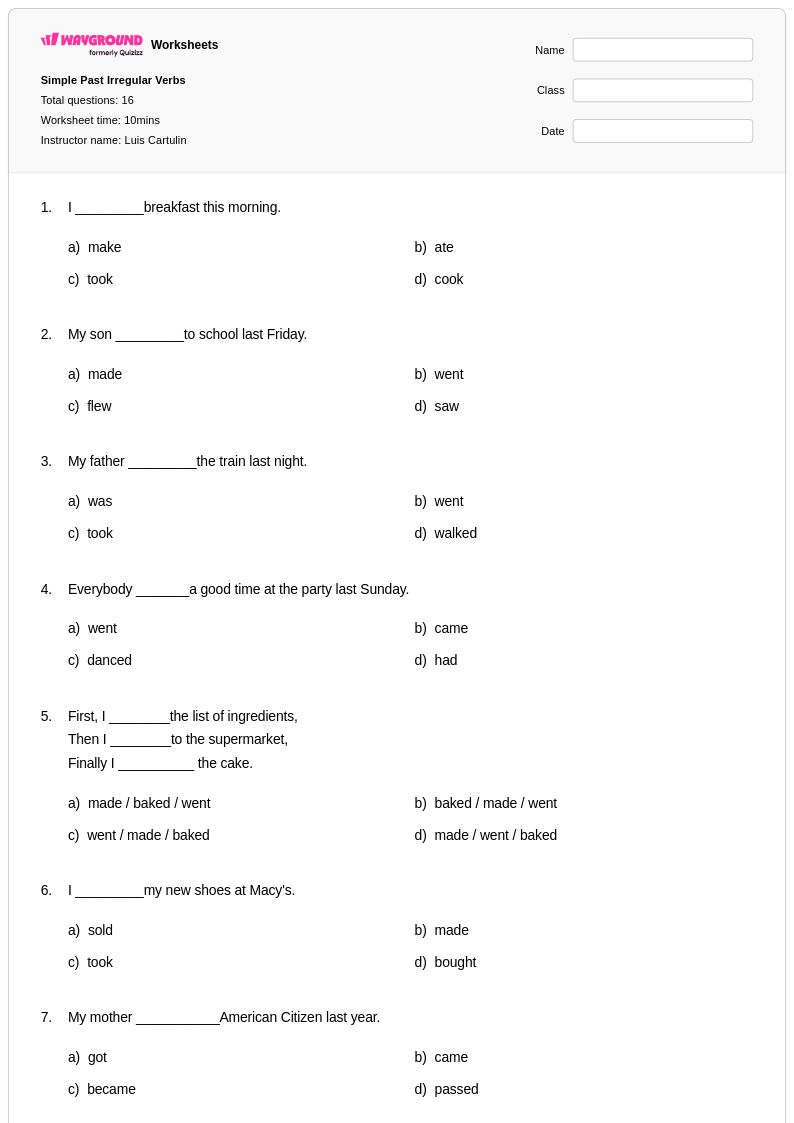
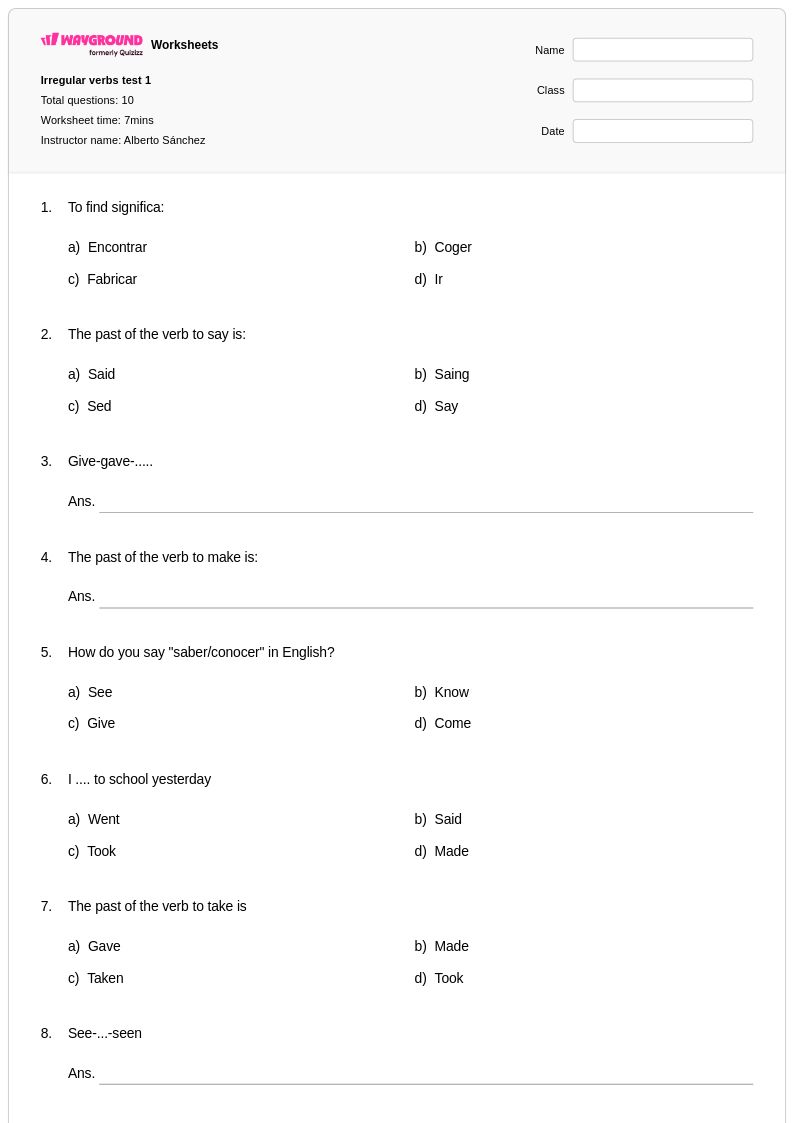
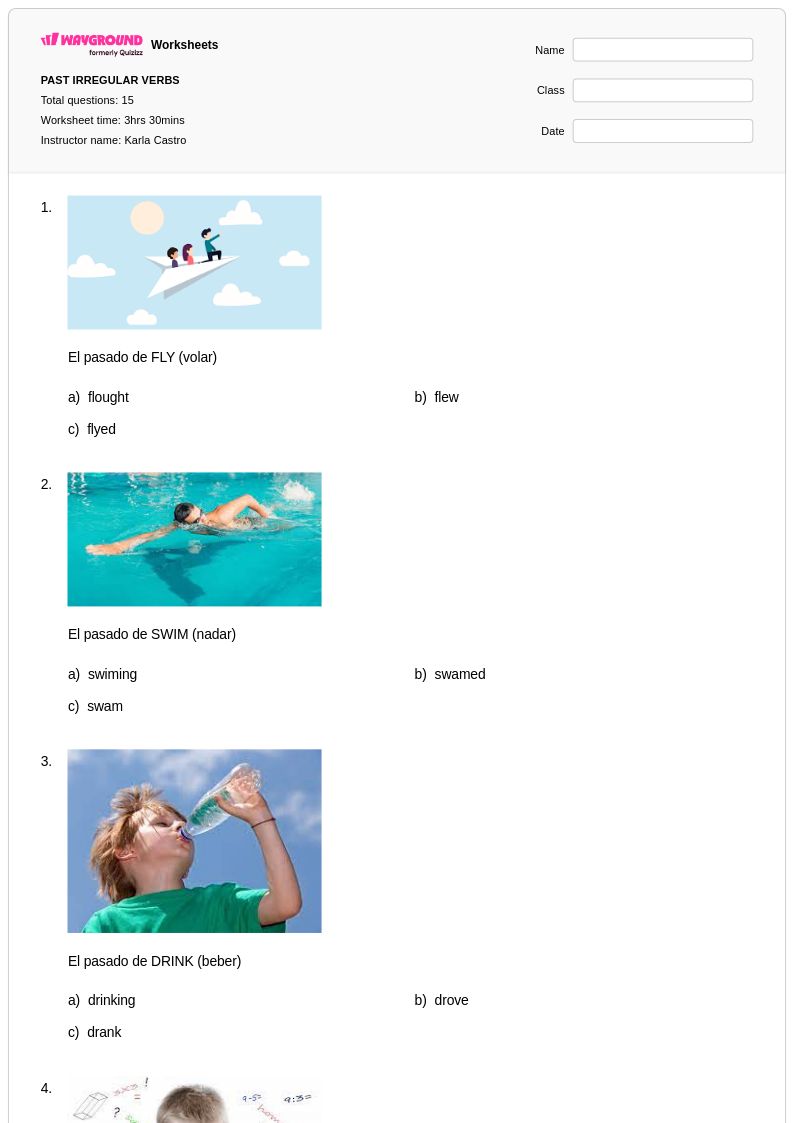
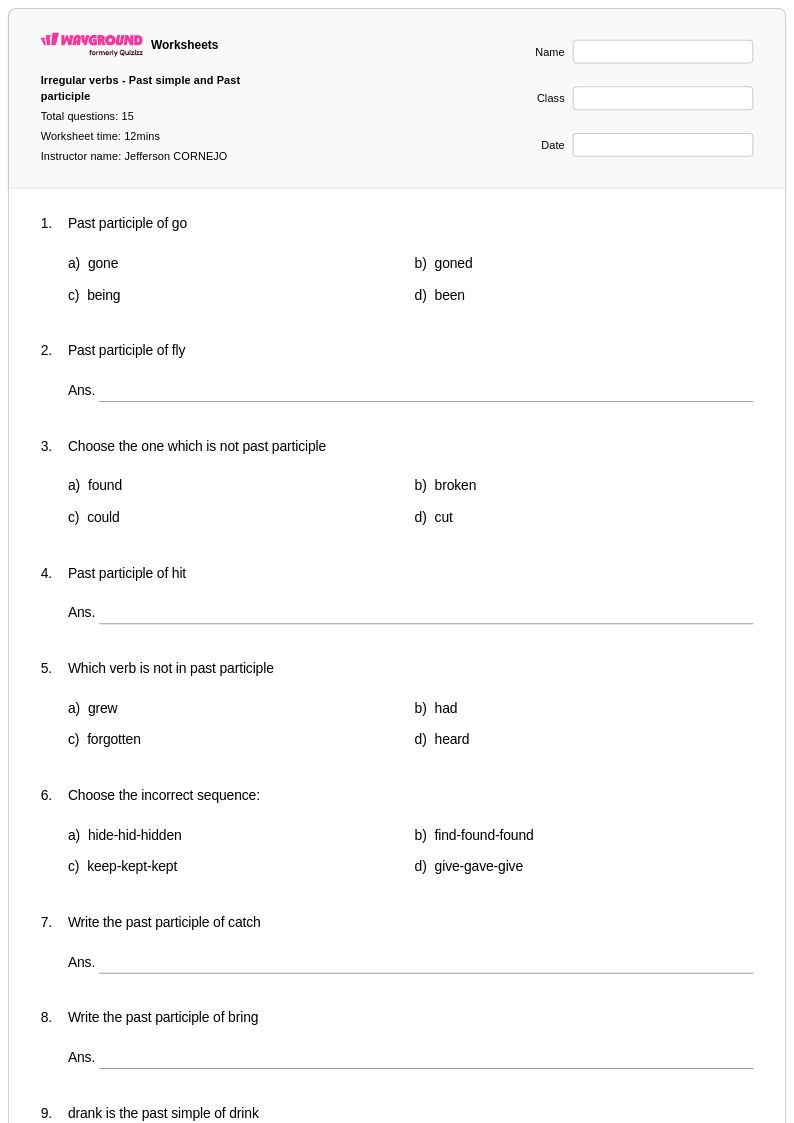
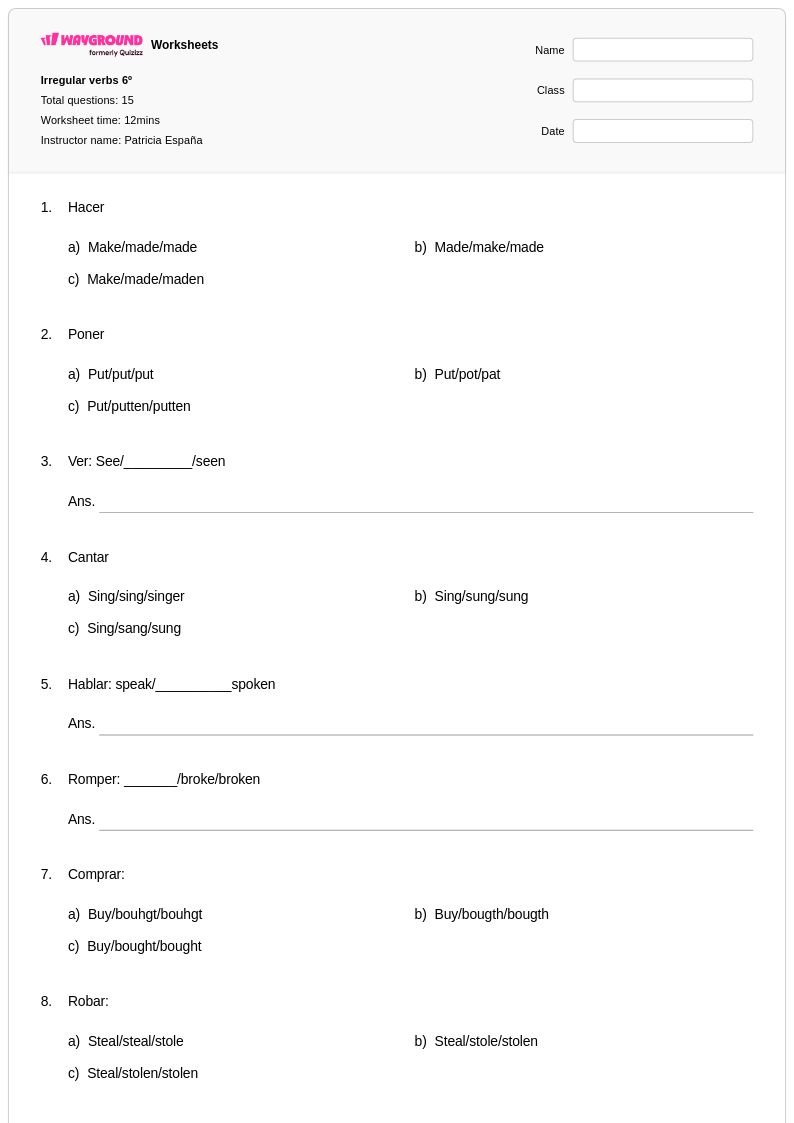
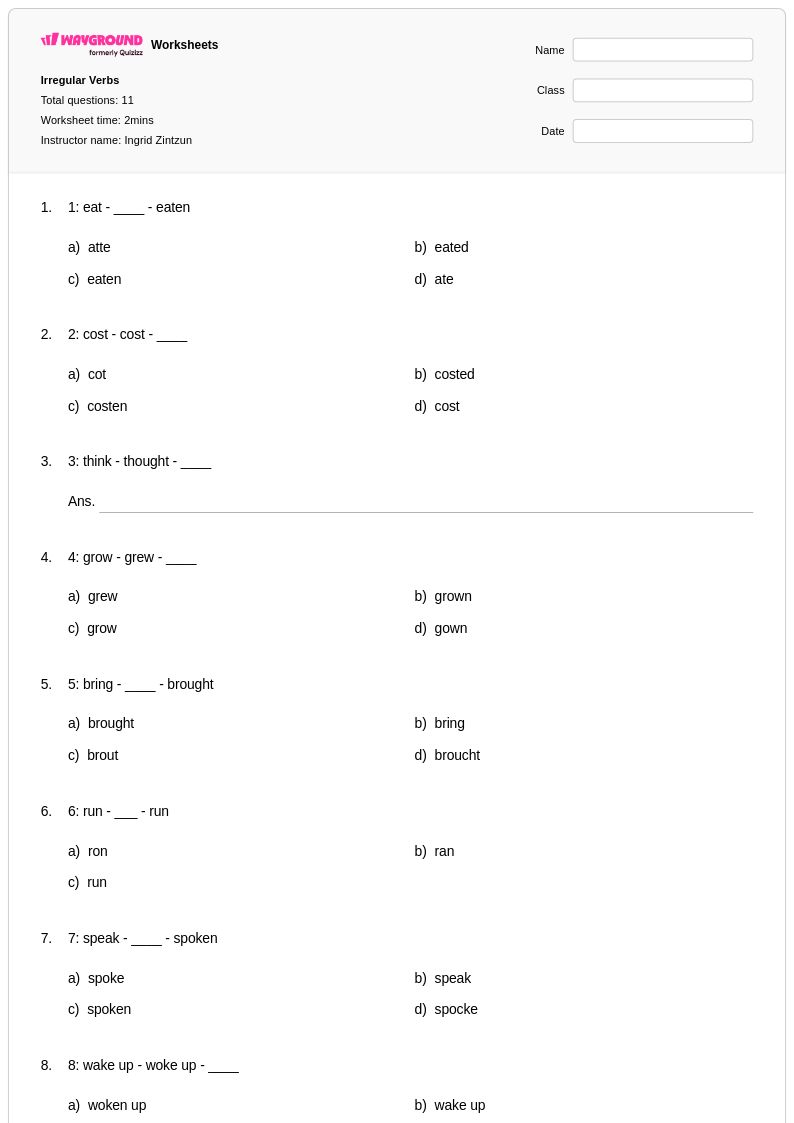
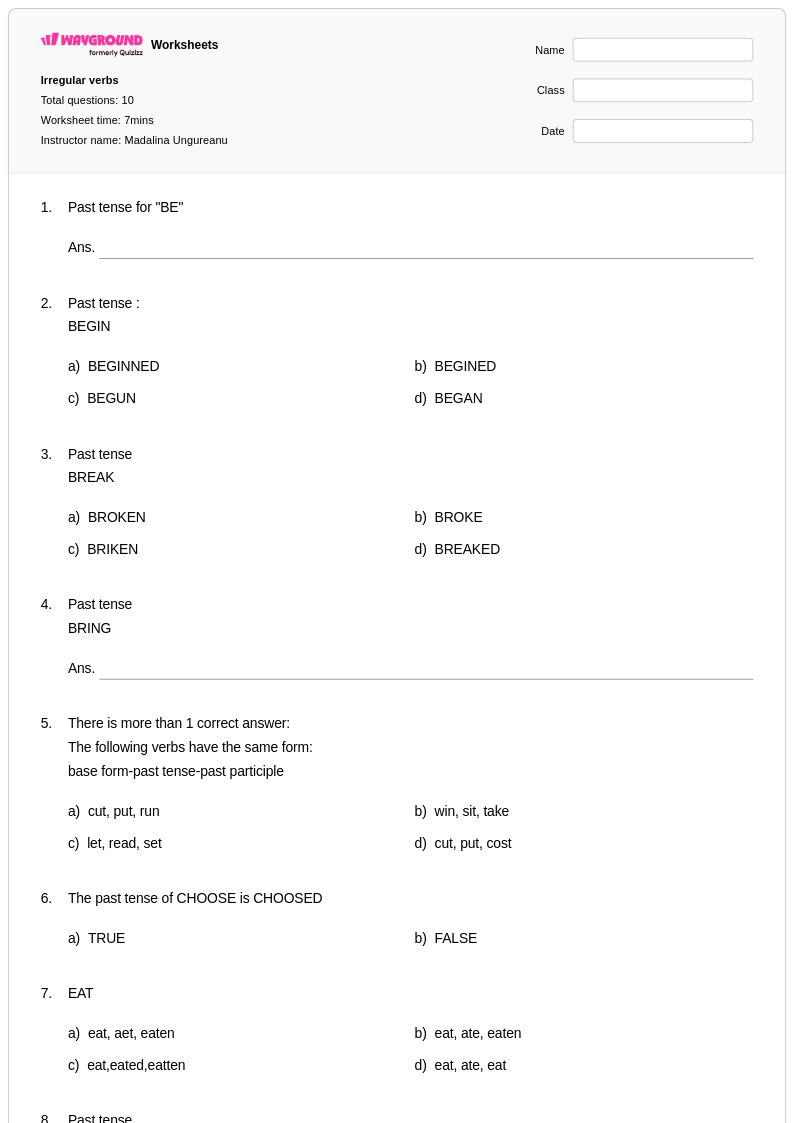
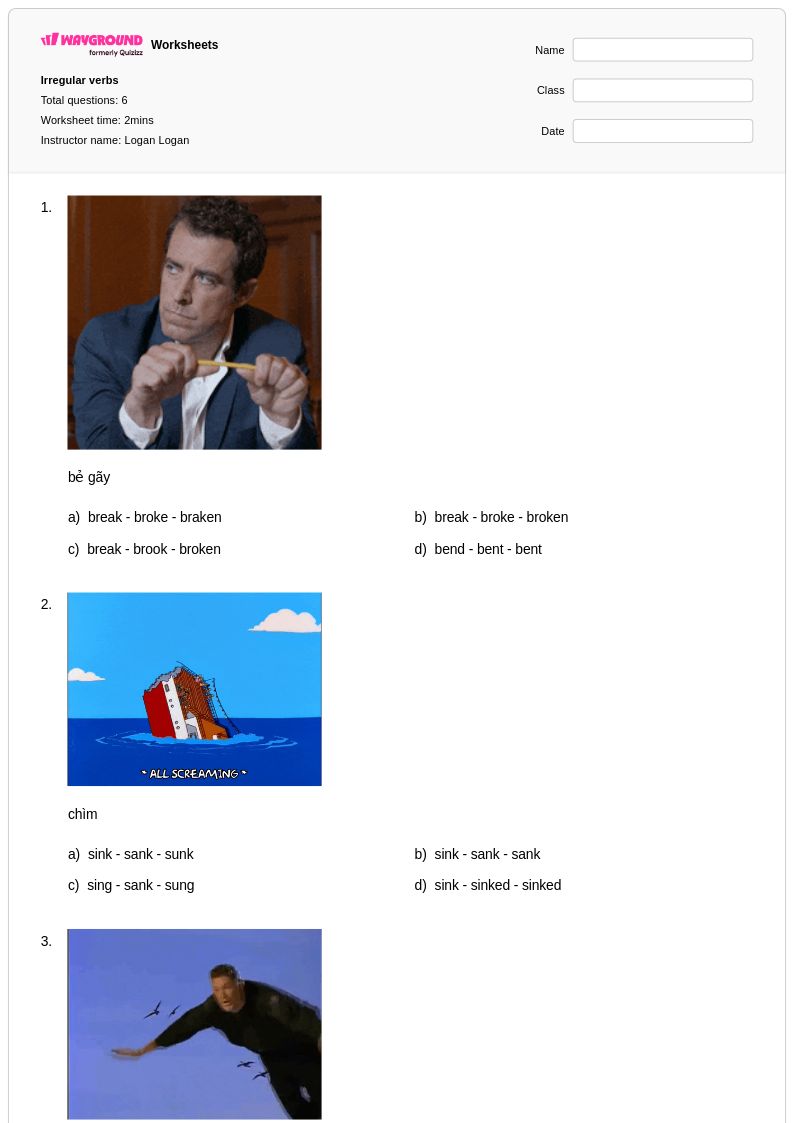
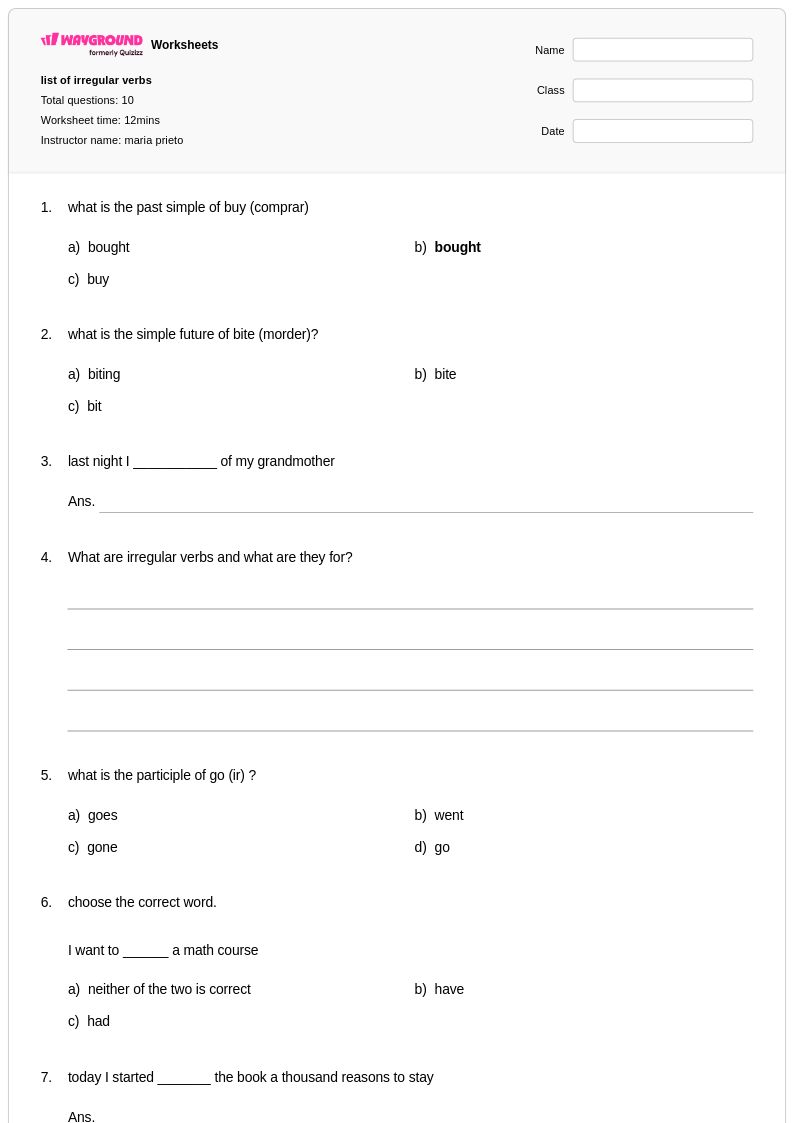
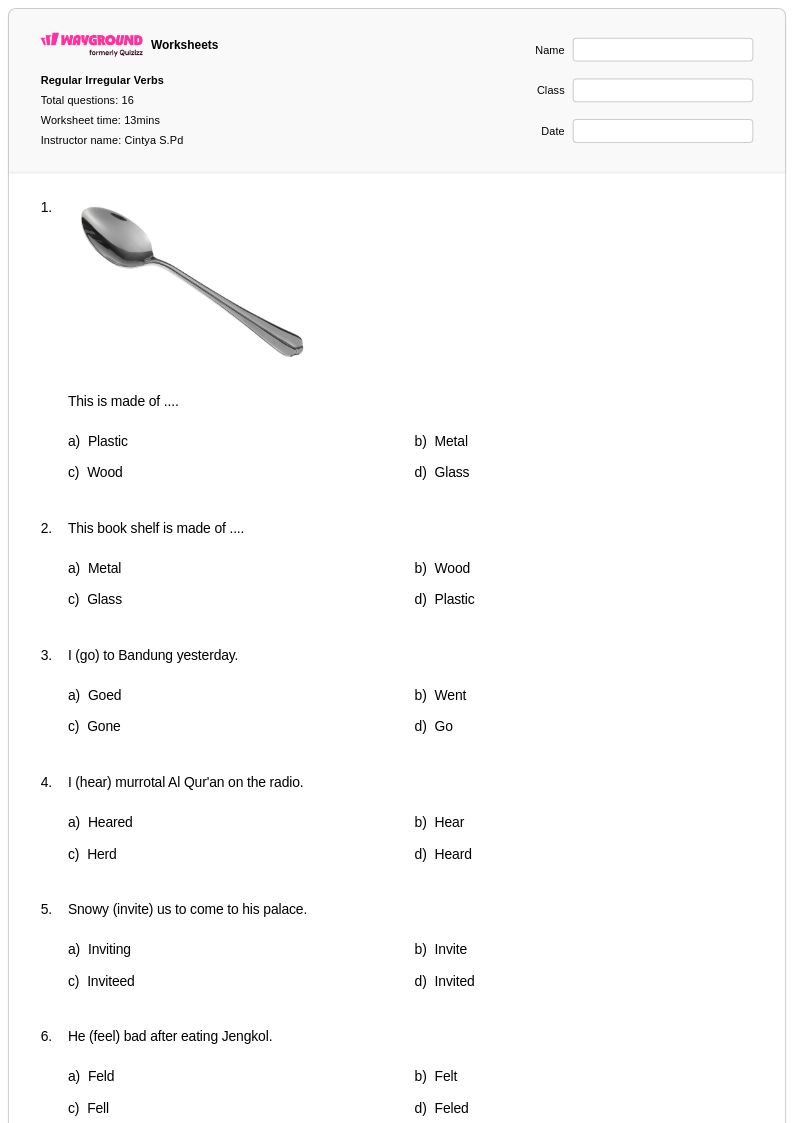
Irregular verbs for Year 5 students present a critical foundation for developing strong language skills, and Wayground's comprehensive worksheet collection addresses this challenging aspect of English grammar with precision and depth. These expertly designed worksheets guide fifth-grade learners through the complexities of irregular verb forms, helping students master essential patterns like go-went-gone, take-took-taken, and break-broke-broken that don't follow standard conjugation rules. Each worksheet strengthens students' ability to recognize, conjugate, and correctly use irregular verbs in various contexts through engaging practice problems that range from basic identification exercises to more complex sentence construction activities. Teachers benefit from complete answer keys that accompany each worksheet, making assessment and feedback straightforward, while the free printable format ensures easy classroom distribution and home practice opportunities.
Wayground's extensive library of teacher-created resources transforms irregular verb instruction through millions of carefully curated worksheets that support diverse learning needs and teaching approaches. The platform's sophisticated search and filtering capabilities allow educators to quickly locate materials aligned with specific standards and learning objectives, while differentiation tools enable seamless adaptation for students requiring additional support or advanced challenges. Teachers can customize these irregular verb worksheets to match their classroom requirements, whether implementing targeted remediation for struggling learners or providing enrichment activities for advanced students. Available in both printable PDF format and interactive digital versions, these resources streamline lesson planning while offering flexible options for in-class instruction, homework assignments, and independent practice sessions that reinforce proper irregular verb usage across multiple learning environments.
FAQs
How do I teach irregular verbs to students who keep forgetting the forms?
The most effective approach is distributed practice rather than massed memorization. Group irregular verbs by pattern (e.g., sing/sang/sung, ring/rang/rung) so students can leverage analogical reasoning instead of rote recall. Regular low-stakes retrieval practice, such as fill-in-the-blank exercises and sentence completion tasks, builds the automaticity students need to use these forms fluently in writing and speech.
What exercises help students practice irregular past tense and past participle forms?
Exercises that require students to produce the correct form in context, rather than simply recognize it, are most effective. Fill-in-the-blank sentences, verb conjugation tables, and short writing prompts that require use of specific irregular verbs all build production fluency. Pairing these with immediate feedback, such as self-checking against an answer key, reinforces correct forms before errors become habits.
What mistakes do students commonly make with irregular verbs?
The most common error is over-regularization, where students apply the standard -ed ending to irregular verbs, producing forms like 'goed' instead of 'went' or 'buyed' instead of 'bought.' Students also frequently confuse the simple past and past participle forms, such as using 'seen' where 'saw' is required or 'went' where 'gone' is needed. High-frequency verbs like 'go,' 'see,' 'buy,' 'write,' and 'come' are the most common error sites and deserve focused attention.
How can I differentiate irregular verb practice for students at different proficiency levels?
Start lower-proficiency students on high-frequency, high-utility irregular verbs such as go, have, and make before introducing less common forms. For advanced students, focus on correct use of past participles in perfect tenses and passive constructions, which require more nuanced grammatical knowledge. On Wayground, teachers can apply accommodations such as reduced answer choices for students who need lower cognitive load, and read aloud support for students who benefit from hearing the question read to them, all without other students being notified.
How do I use Wayground's irregular verbs worksheets in my classroom?
Wayground's irregular verbs worksheets are available as printable PDFs for traditional classroom use and in digital formats for technology-integrated environments, giving teachers flexibility for in-class practice, homework, or assessment prep. Teachers can also host any worksheet as an interactive quiz directly on Wayground, making it easy to track student responses. All worksheets include complete answer keys, so teachers can use them for independent practice, peer review, or self-correction activities without additional preparation.
Which irregular verbs should I prioritize teaching first?
Prioritize the irregular verbs that appear most frequently in academic writing and everyday communication, including go/went/gone, see/saw/seen, have/had/had, do/did/done, come/came/come, buy/bought/bought, and write/wrote/written. These high-frequency forms give students the greatest immediate return on their learning effort and appear consistently across reading and writing tasks at all grade levels. Once students have automaticity with these core verbs, instruction can expand to less frequent irregular forms.