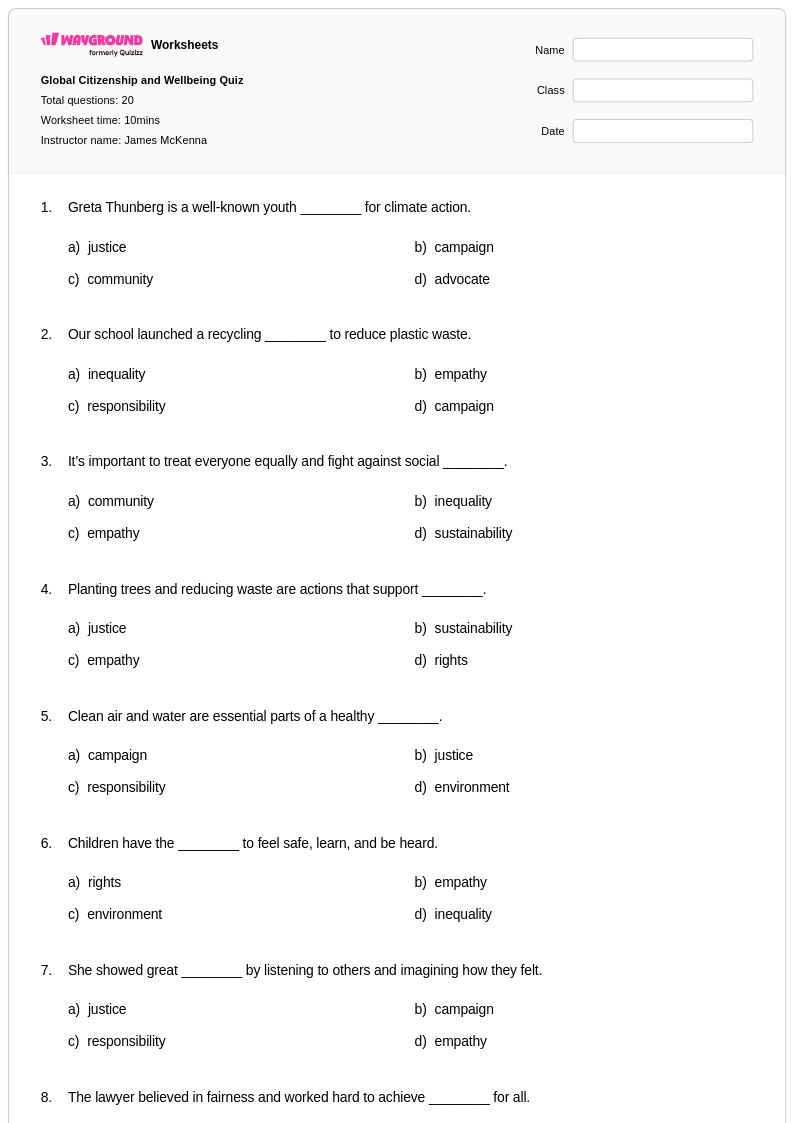
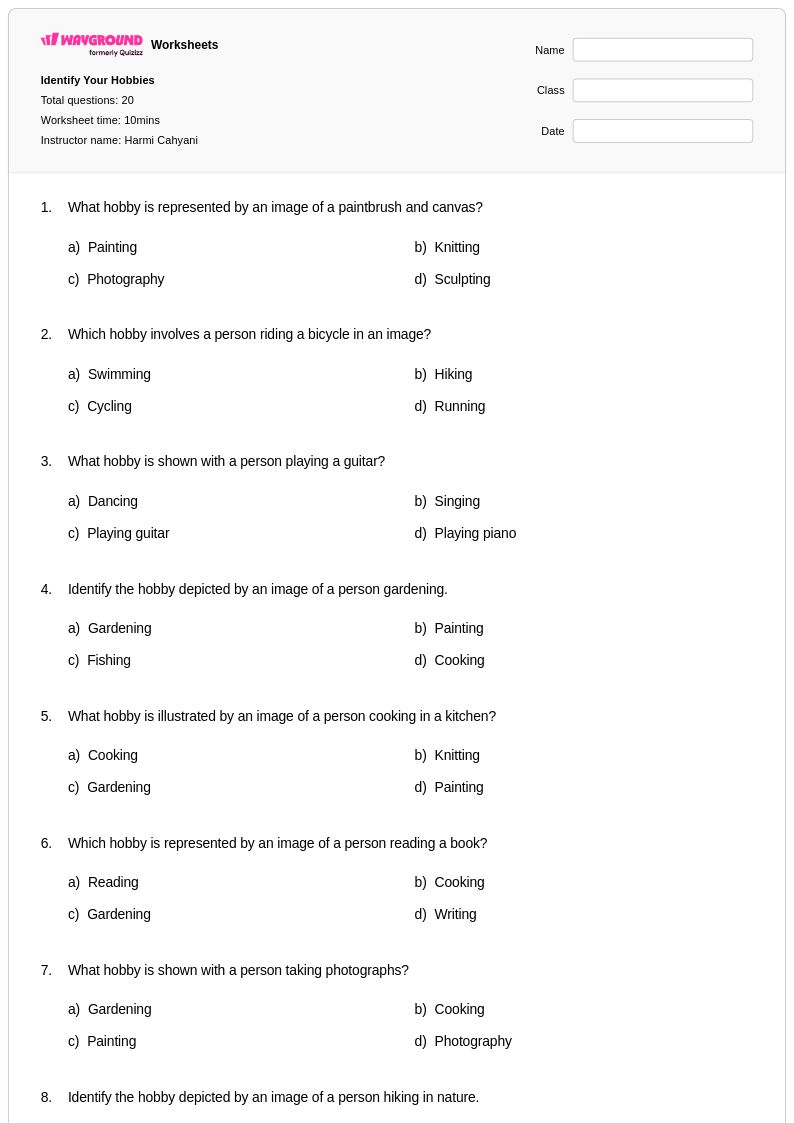
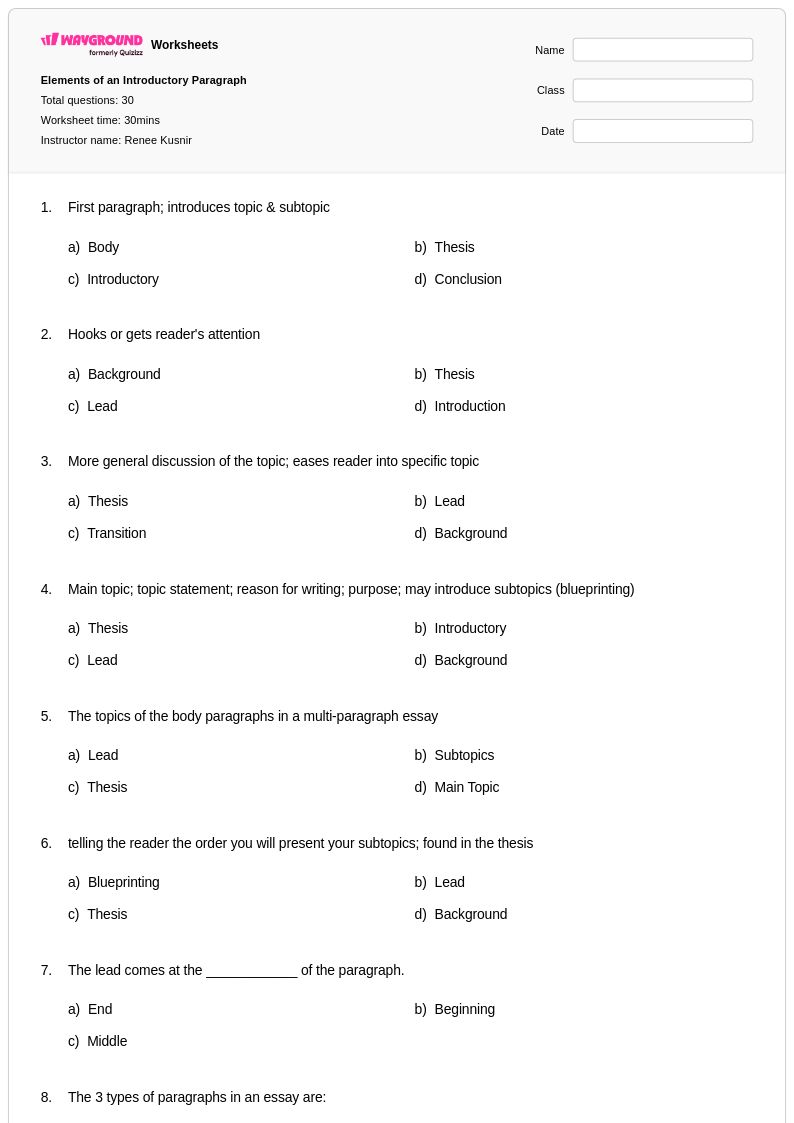
Year 7 journaling worksheets and printables help students develop personal writing skills through guided practice problems, creative prompts, and structured reflection activities with comprehensive answer keys.
Explore printable Journaling worksheets for Year 7
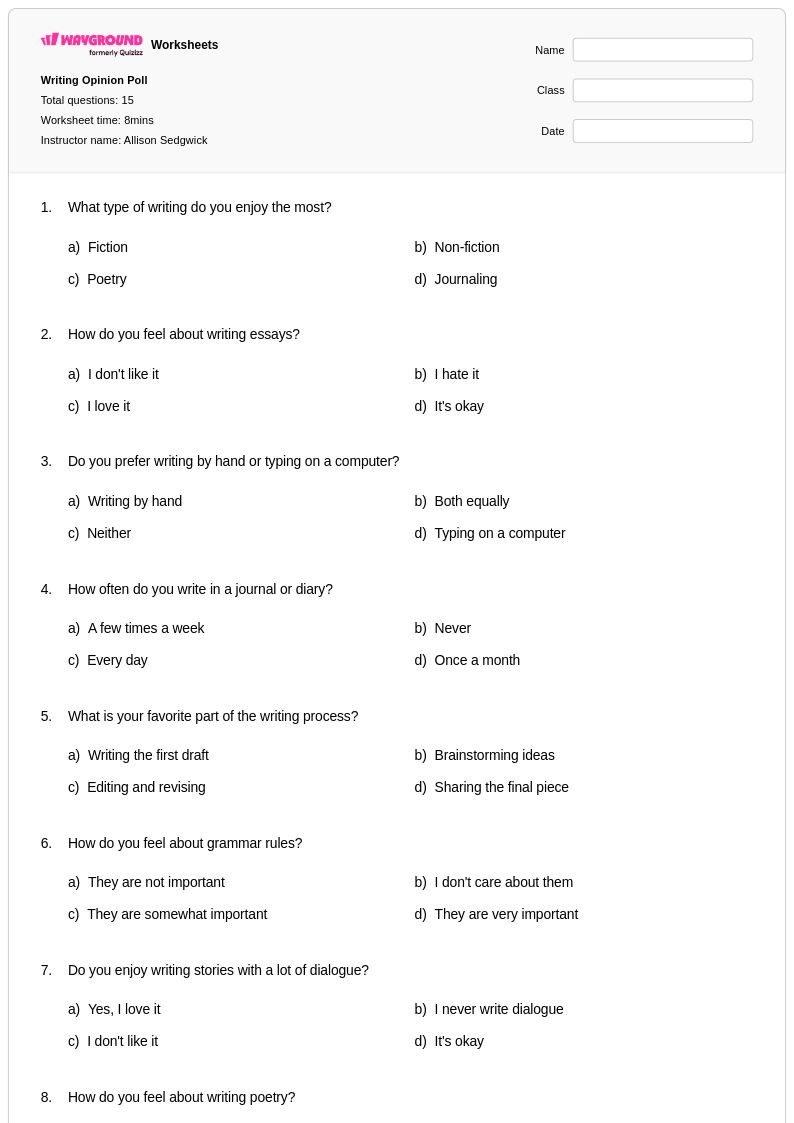
Year 7 journaling worksheets available through Wayground (formerly Quizizz) provide structured opportunities for students to develop essential writing process skills through guided reflection and expression. These comprehensive worksheets focus on building foundational journaling techniques, including daily reflection prompts, creative writing starters, personal narrative development, and structured response formats that help seventh graders articulate their thoughts and experiences effectively. Students practice organizing their ideas, developing voice and tone, exploring different journaling styles, and building consistency in their writing habits through carefully designed practice problems that scaffold their learning progression. Each worksheet includes detailed answer keys and instructional guidance, with free printables available in convenient pdf format to support both classroom instruction and independent practice.
Wayground (formerly Quizizz) empowers educators with millions of teacher-created journaling resources specifically designed for Year 7 students, featuring robust search and filtering capabilities that align with writing standards and developmental expectations. Teachers can easily differentiate instruction by selecting from various complexity levels, customize prompts to match student interests and needs, and access materials in both printable and digital formats including downloadable pdf versions for seamless integration into any learning environment. These versatile worksheet collections support comprehensive lesson planning by providing options for daily warm-ups, extended writing practice, remediation for struggling writers, and enrichment opportunities for advanced students, while the structured format helps teachers track student progress in developing critical journaling skills throughout the academic year.
FAQs
How do I teach journaling to students who don't know where to start?
Start by removing the blank-page barrier with structured prompts that give students a clear entry point, such as sentence starters, image-based prompts, or guided reflection questions tied to recent classroom experiences. Model the process yourself by writing alongside students and sharing your thinking aloud so they see journaling as a thinking tool rather than a performance task. Building a consistent daily or weekly routine helps students internalize journaling as a habit rather than an assignment.
What types of journaling exercises are most effective for building writing fluency?
Free-writing exercises, where students write continuously for a set time without stopping to edit, are highly effective for building writing fluency because they train students to sustain thought without self-censoring. Themed reflection activities and personal narrative prompts add variety while still developing voice and coherence. Rotating between guided and open-ended formats keeps practice purposeful and prevents students from going through the motions.
What common mistakes do students make when journaling, and how can I address them?
A frequent mistake is treating journal entries as summaries rather than reflections, producing surface-level responses like 'I learned about X today' without deeper analysis or personal connection. Students also tend to write for an imagined evaluator rather than for themselves, which stiffens voice and limits honesty. Explicitly teaching the difference between describing and reflecting, and reinforcing that journals are low-stakes spaces for exploratory thinking, helps shift this pattern.
How can journaling worksheets support students with different skill levels?
Differentiated journaling worksheets can scaffold writing for struggling students through sentence frames, word banks, and step-by-step reflection structures, while open-ended prompts allow advanced students to develop more complex voice and argumentation. On Wayground, teachers can apply student-level accommodations such as Read Aloud for students who need audio support, reduced answer choices to lower cognitive load, and extended time to ensure all learners can engage meaningfully with the prompts.
How do I use Wayground's journaling worksheets in my classroom?
Wayground's journaling worksheets are available as free printable PDFs for traditional classroom use and in digital formats for technology-integrated or hybrid environments, including the option to host them as a quiz directly on Wayground. Each worksheet includes answer keys, making them practical for self-assessment activities and independent practice. Teachers can integrate them into daily warm-ups, writing centers, or dedicated reflection periods within an English curriculum.
How do I help students develop a consistent journaling habit?
Consistency comes from lowering the entry barrier and making journaling a predictable part of the classroom routine, such as a five-minute opener or a designated end-of-class reflection. Using a variety of formats, including guided prompts one day and free-writing the next, prevents the routine from feeling repetitive. Allowing students occasional choice over their prompt or format increases ownership and sustains engagement over time.