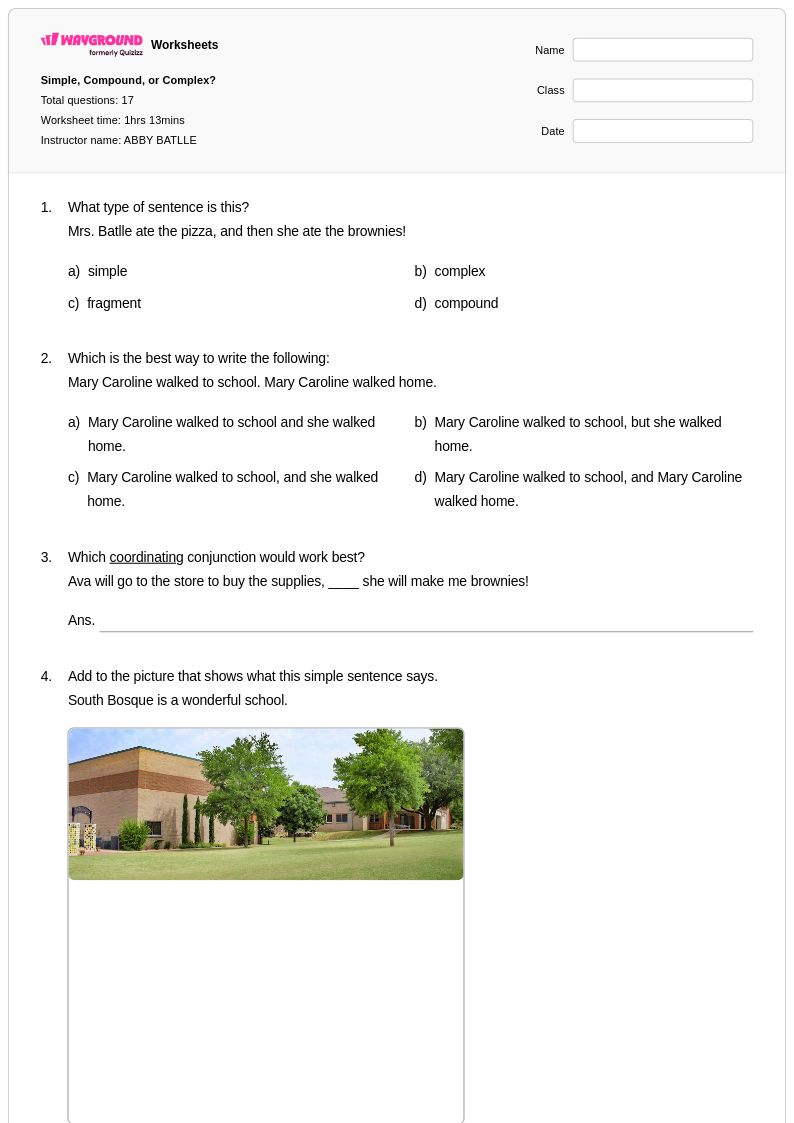
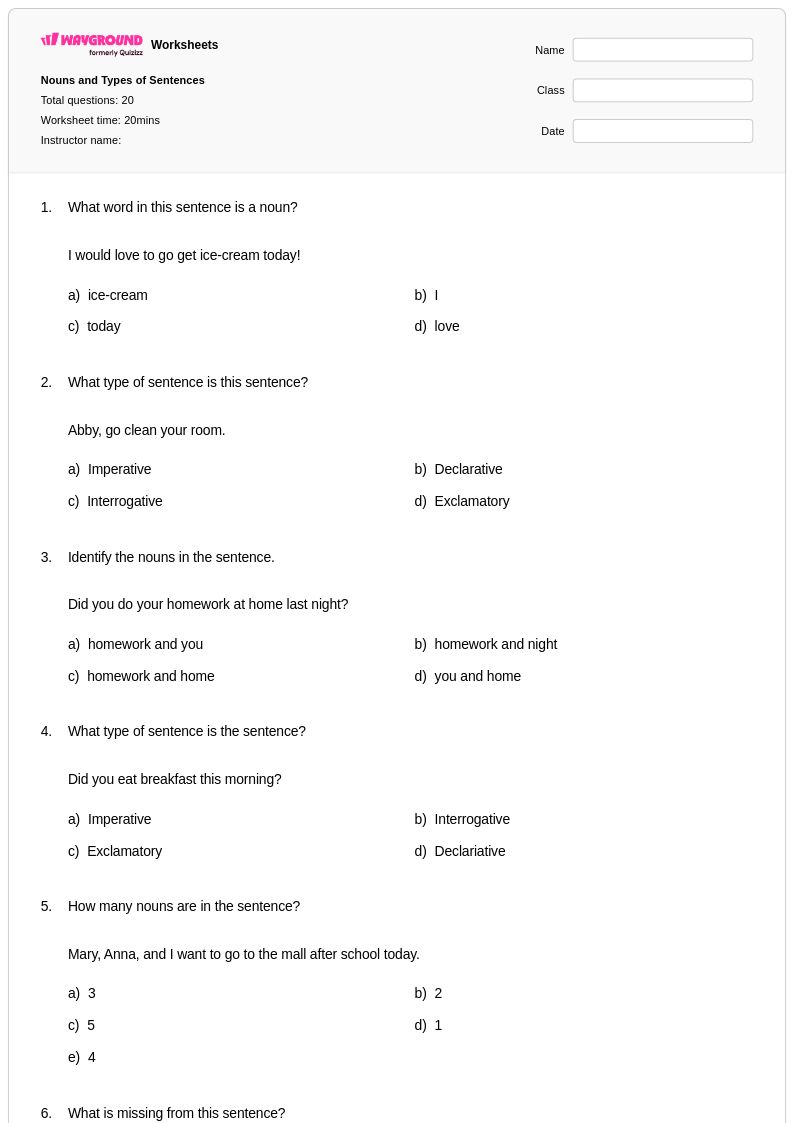
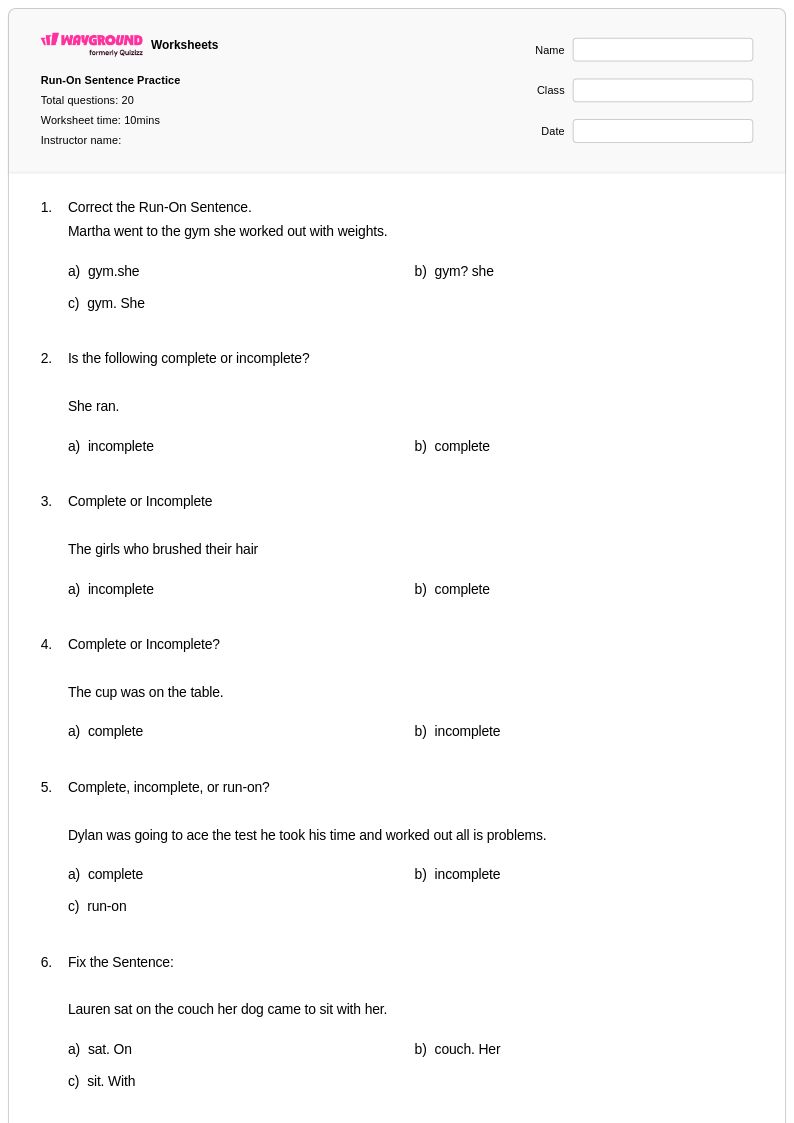
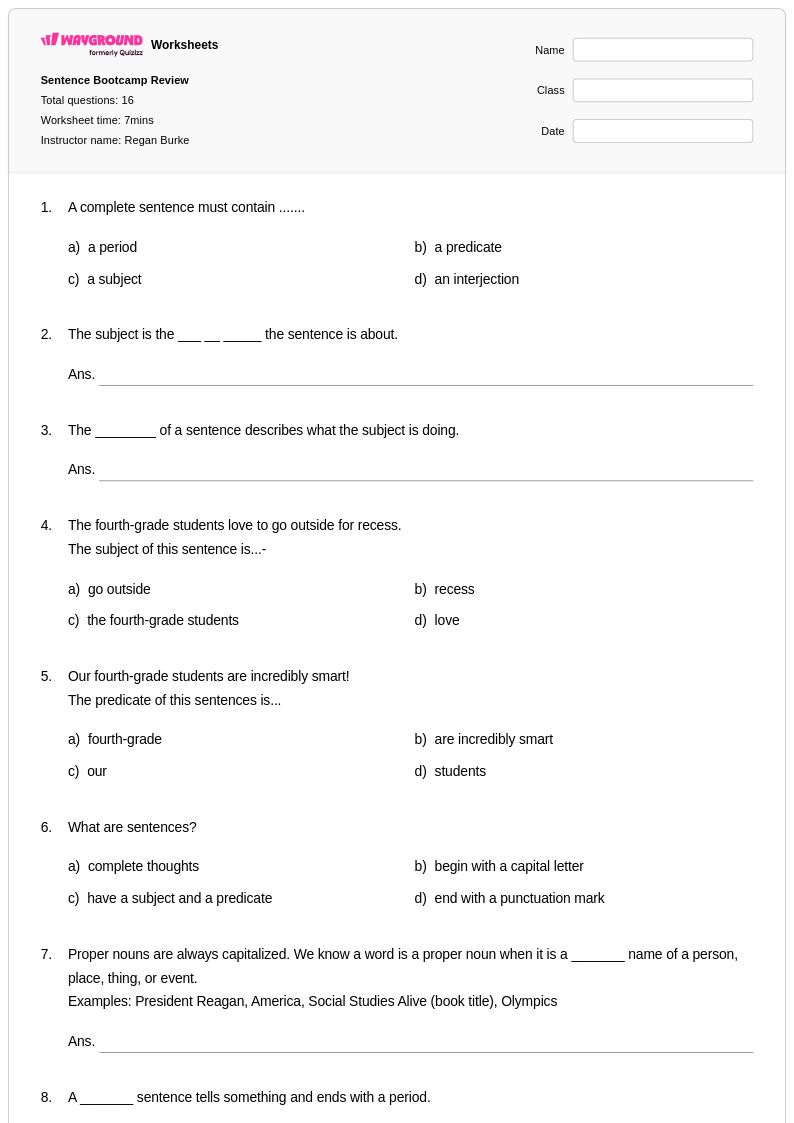
Free Printable Key Sentences Worksheets for Year 4
Wayground's free Year 4 key sentences worksheets offer printable PDFs with practice problems and answer keys to help students master identifying and constructing the most important sentences in paragraphs.
Explore printable Key Sentences worksheets for Year 4
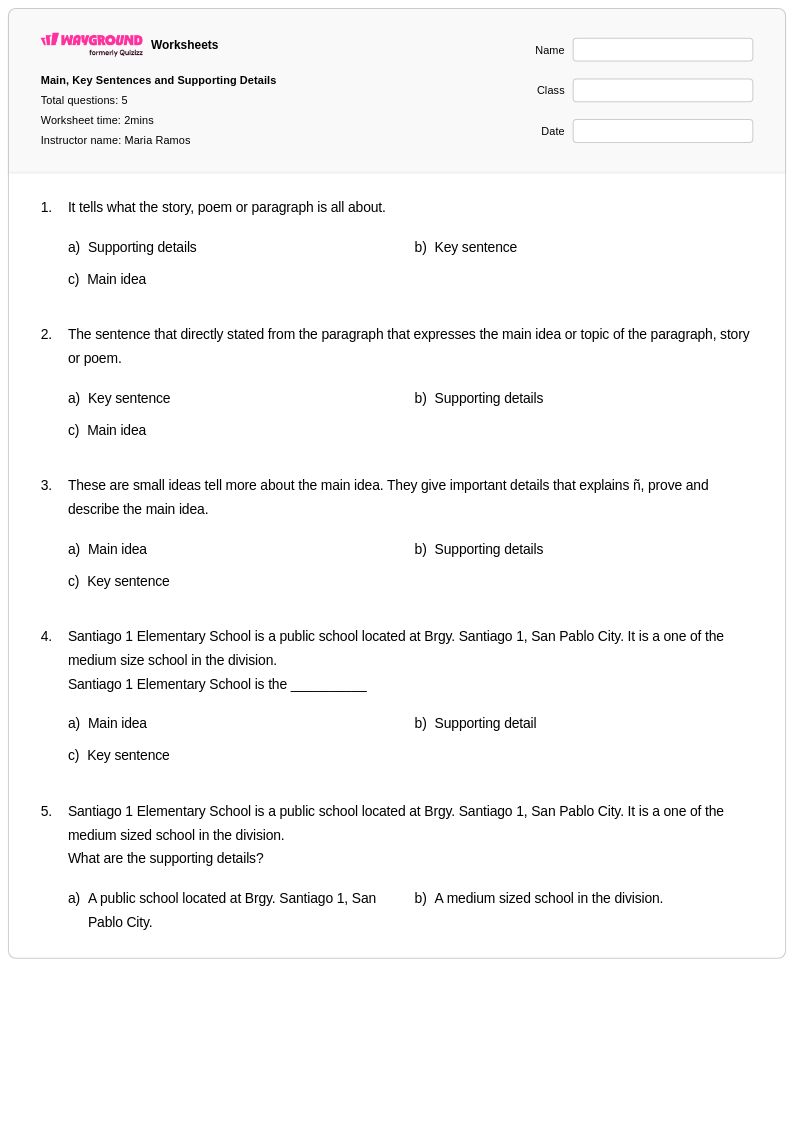
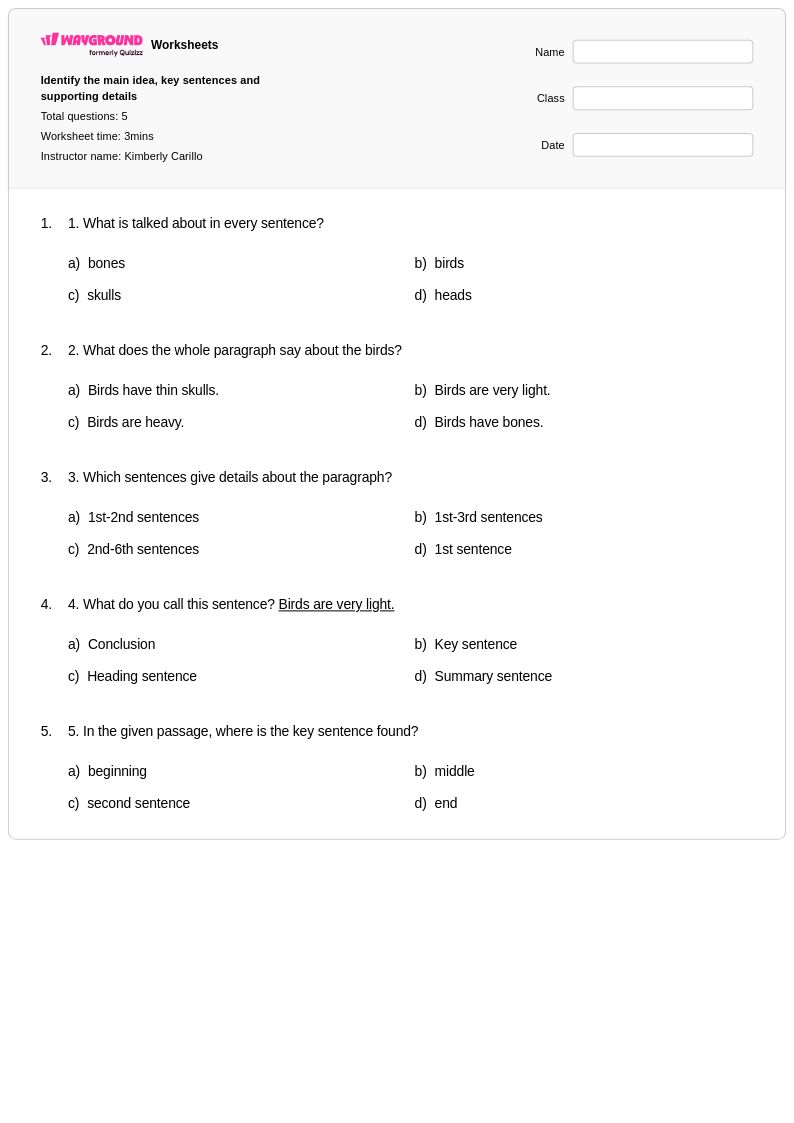
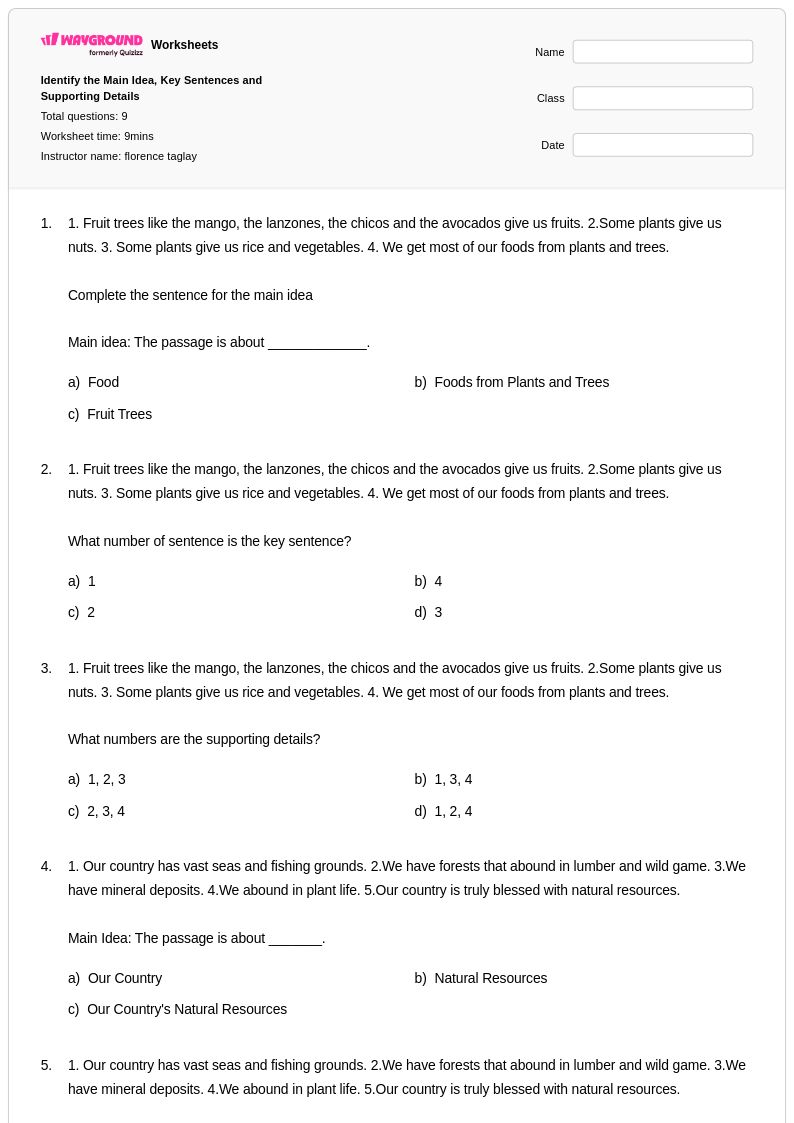
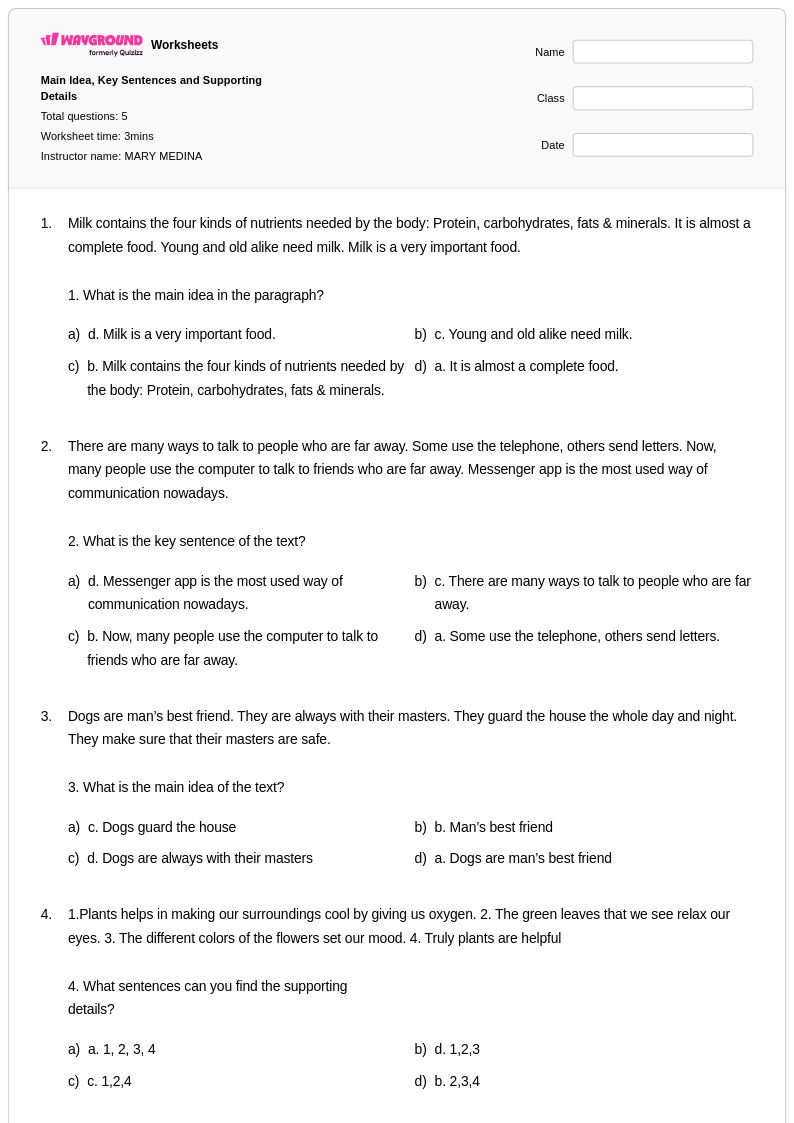
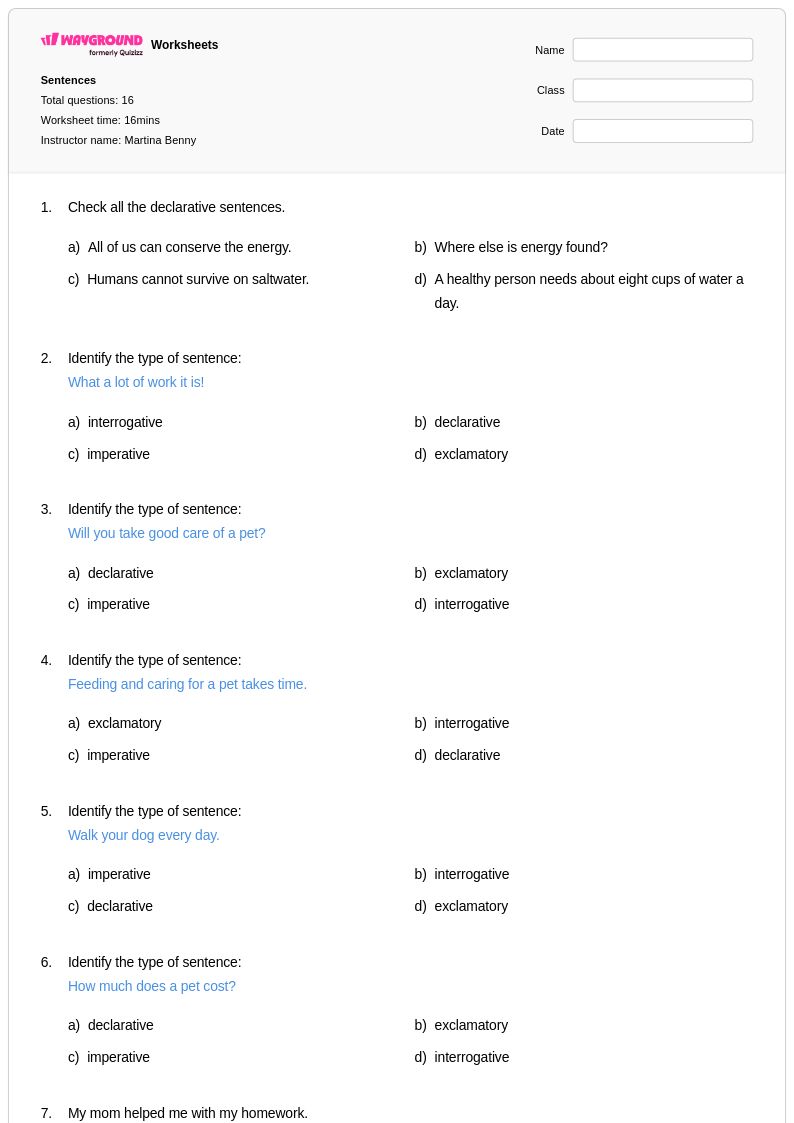
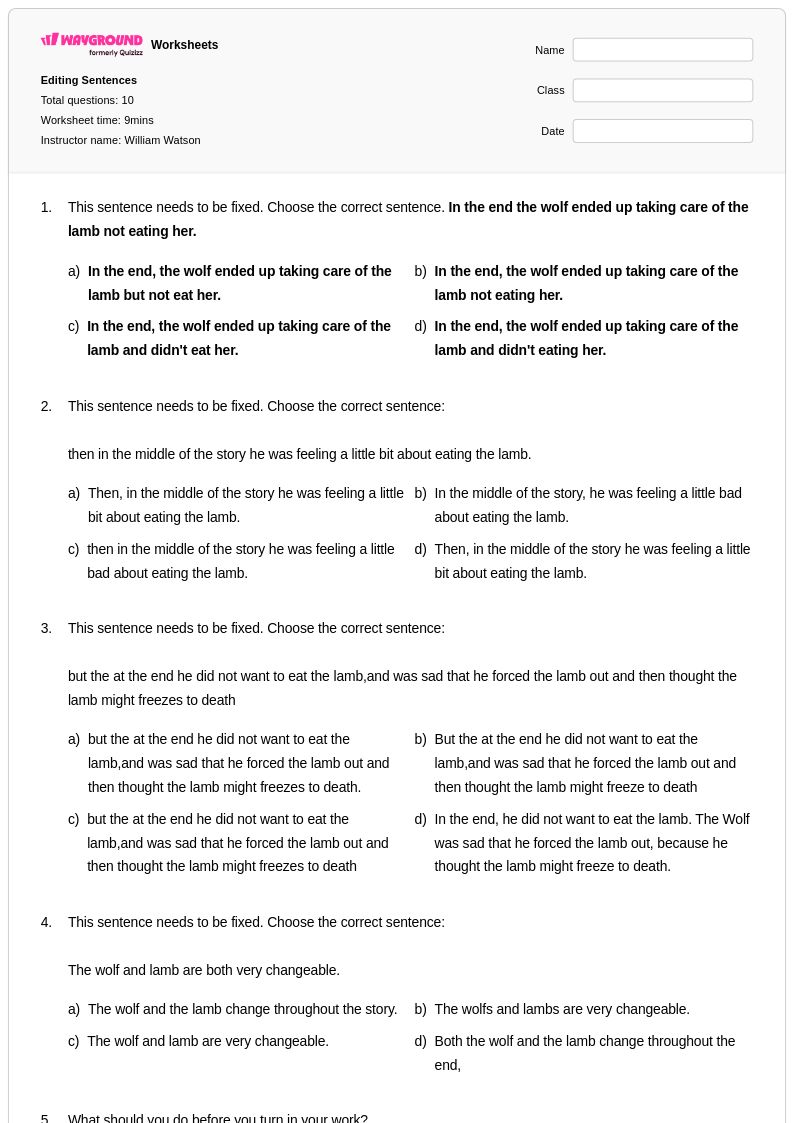
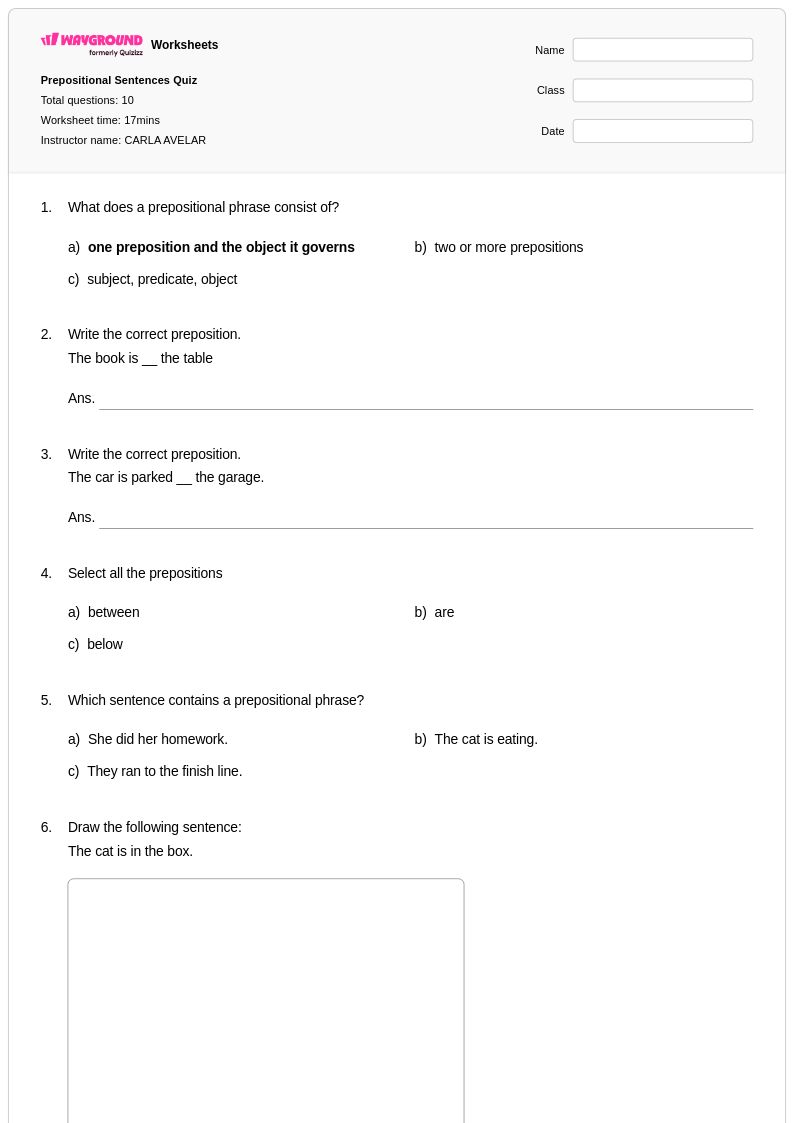
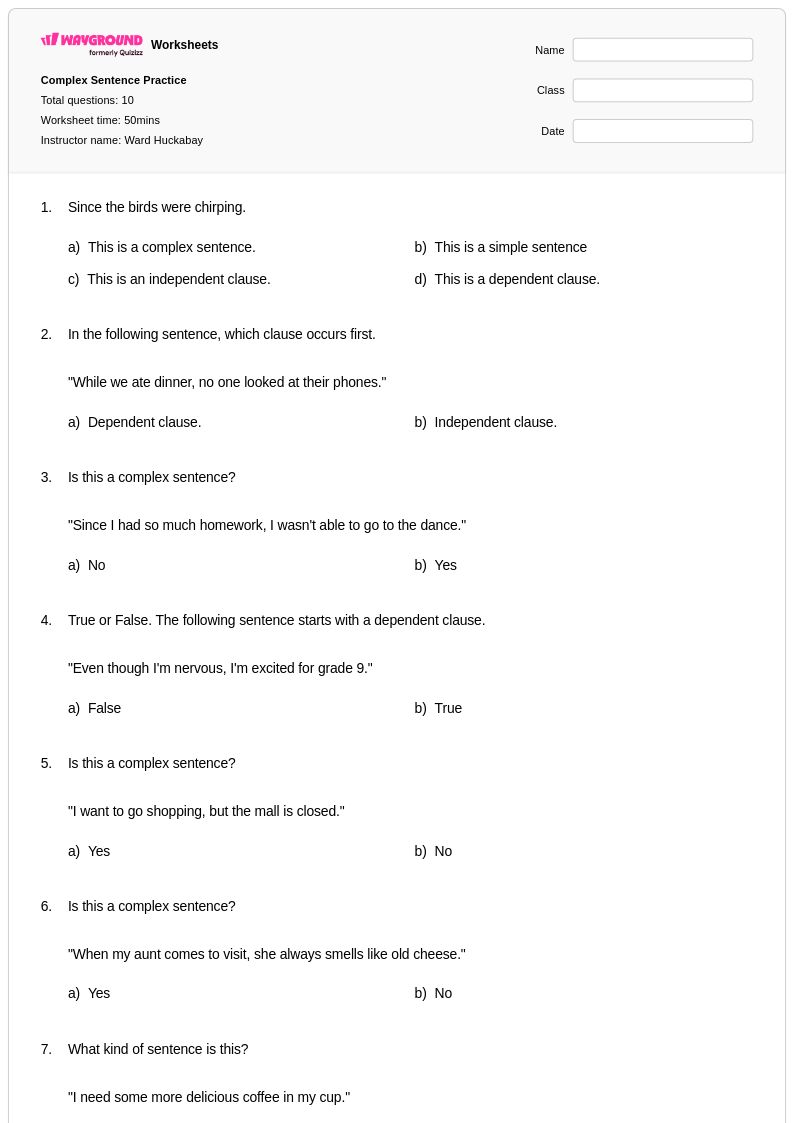
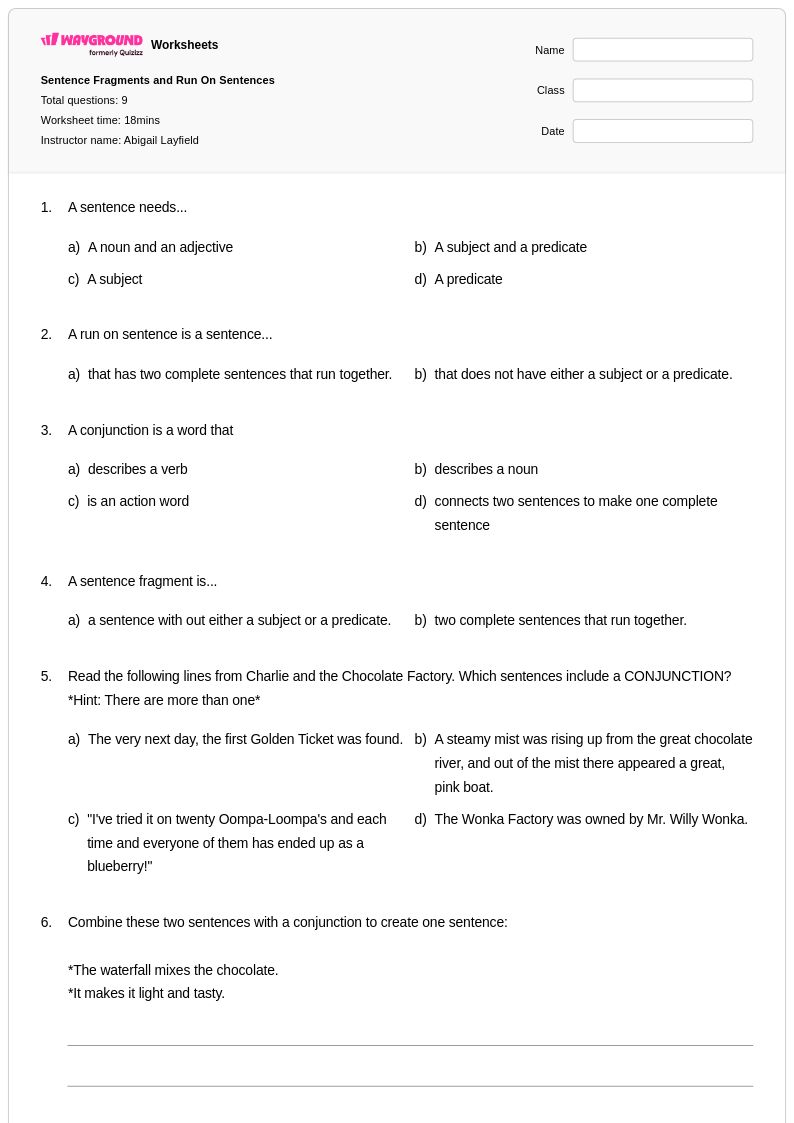
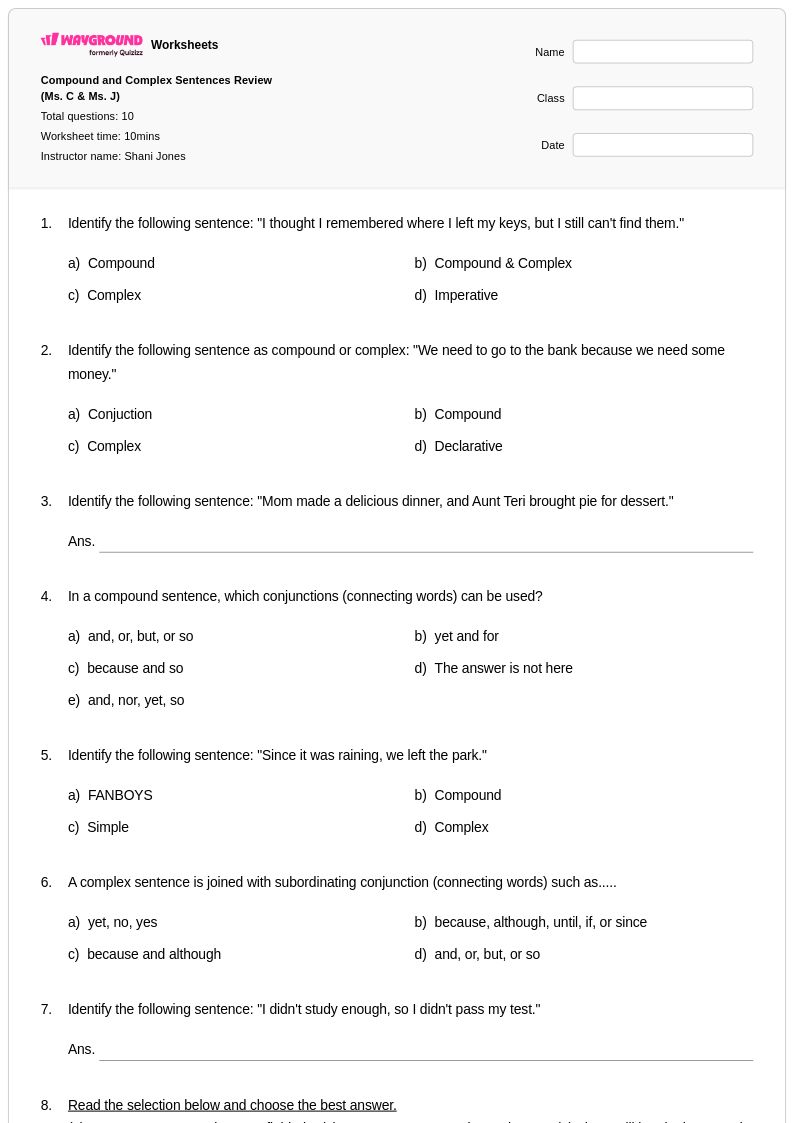
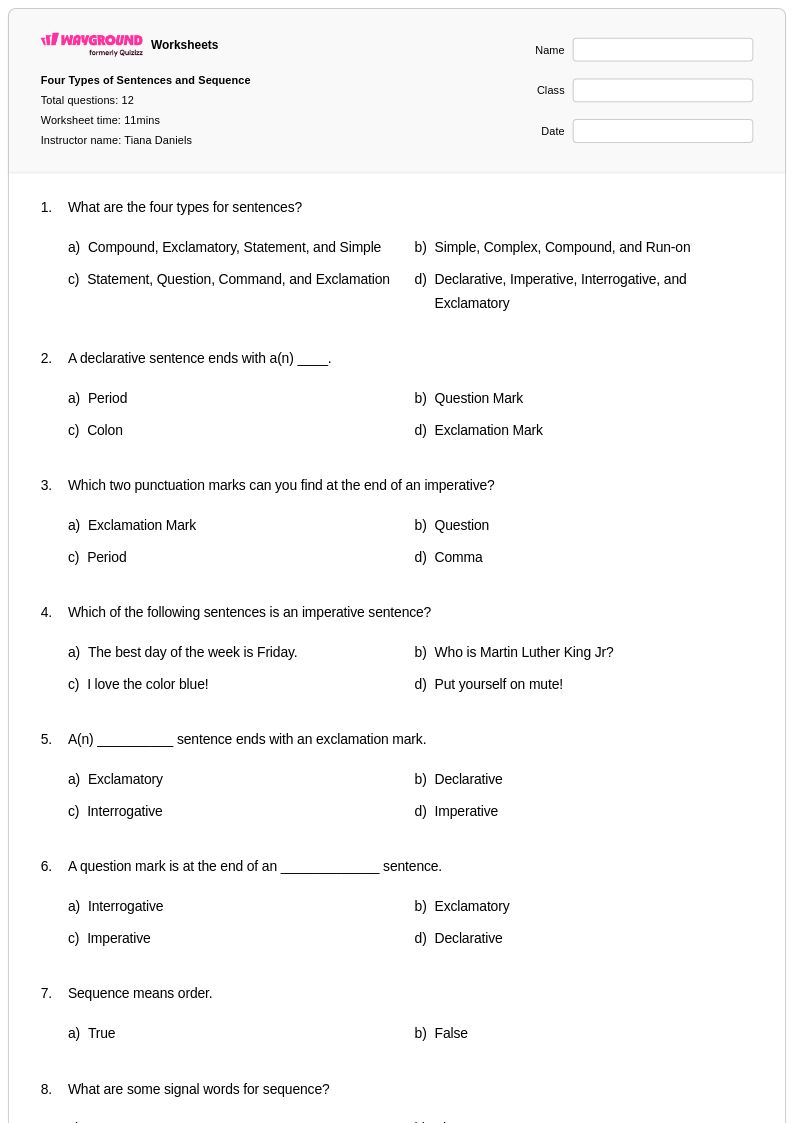
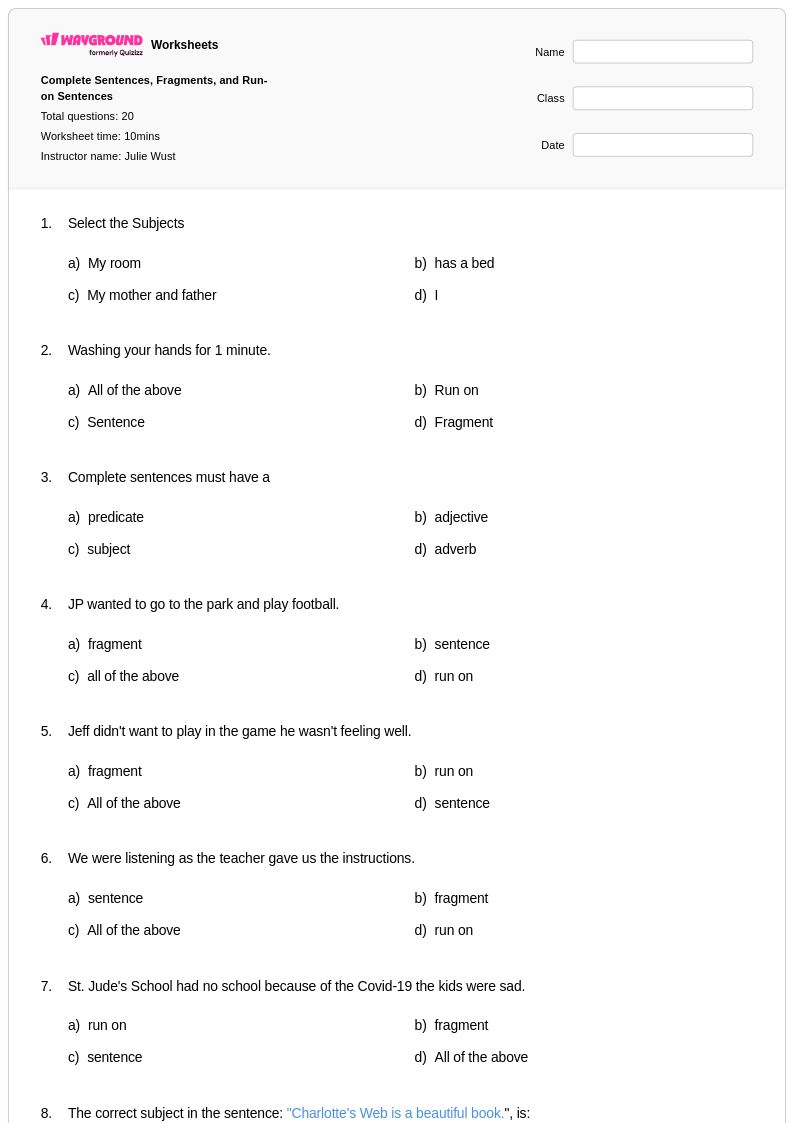
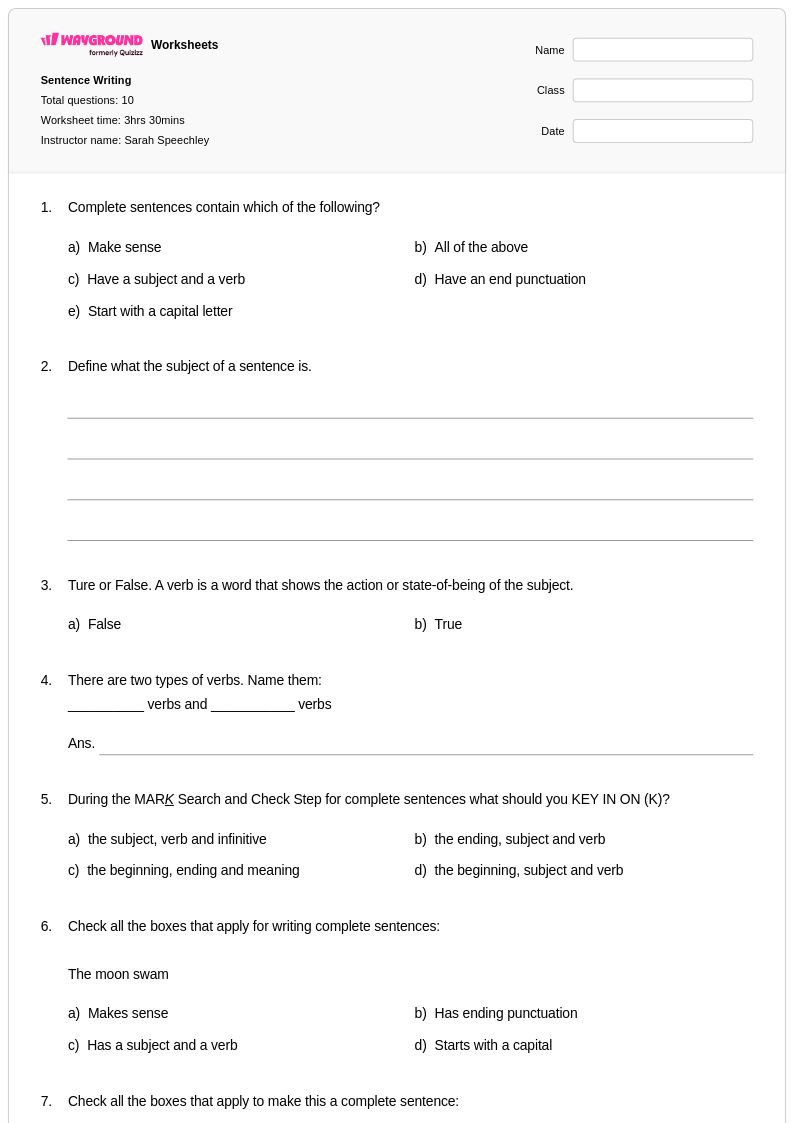
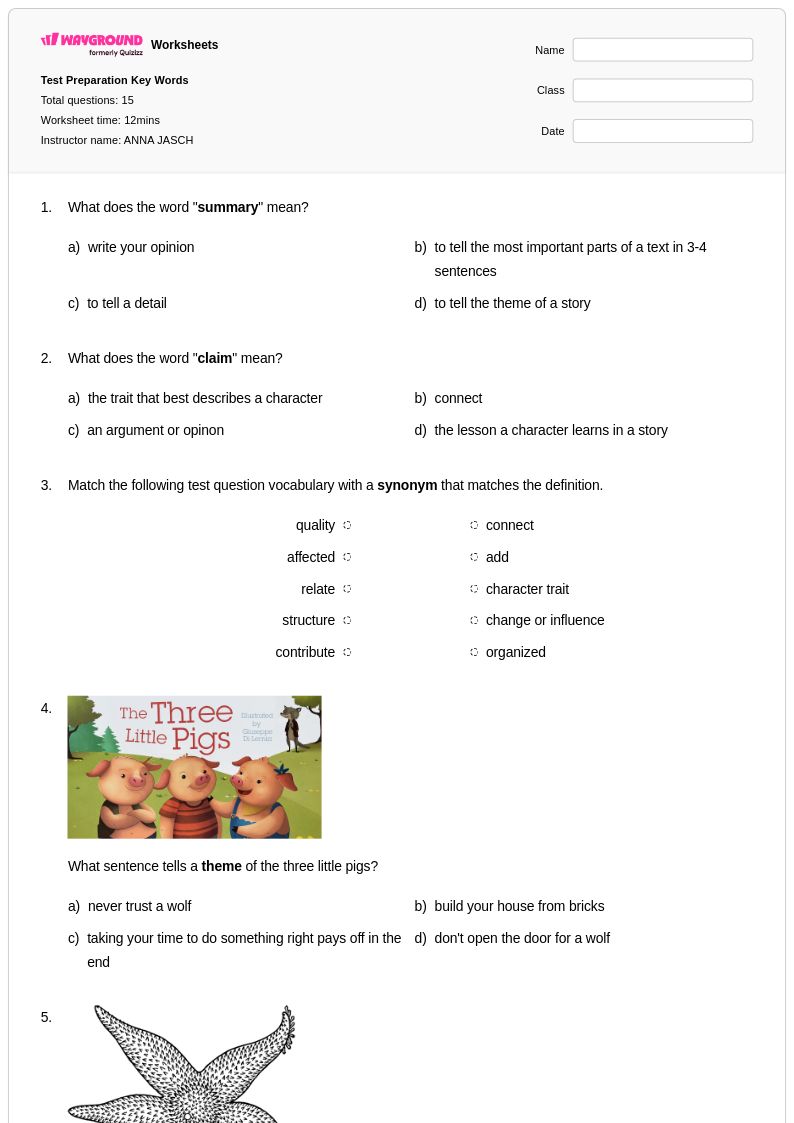
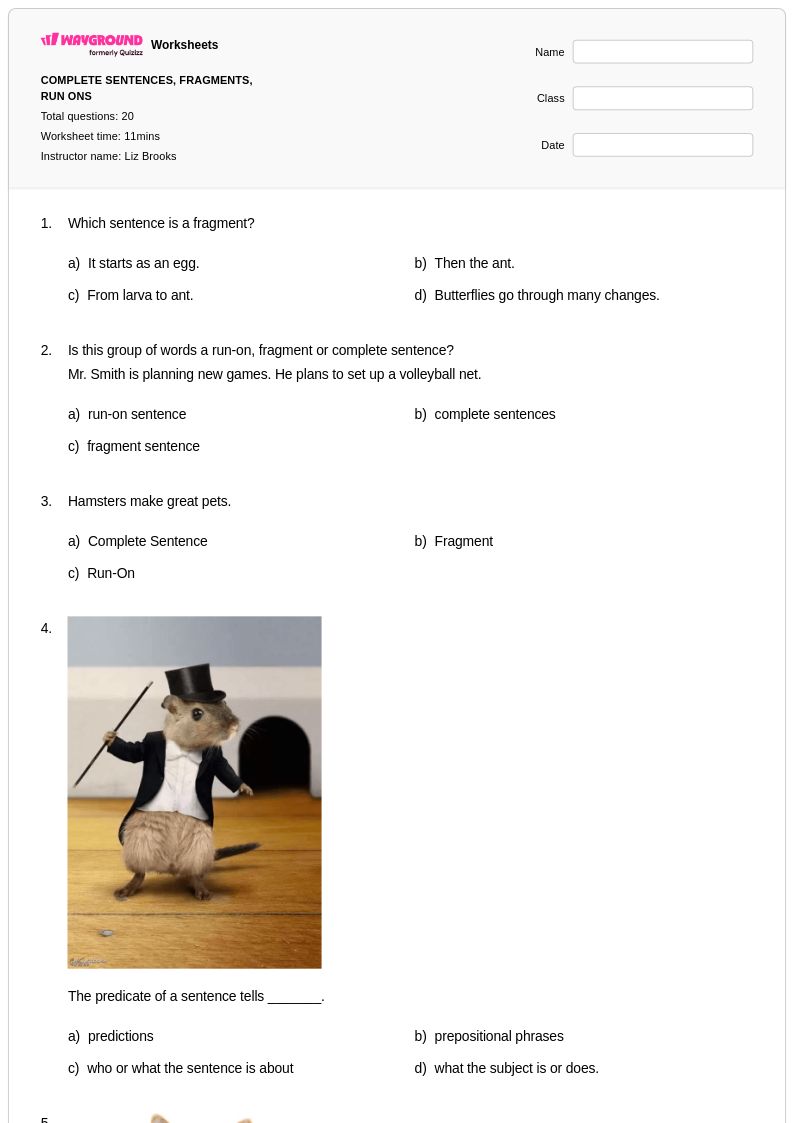
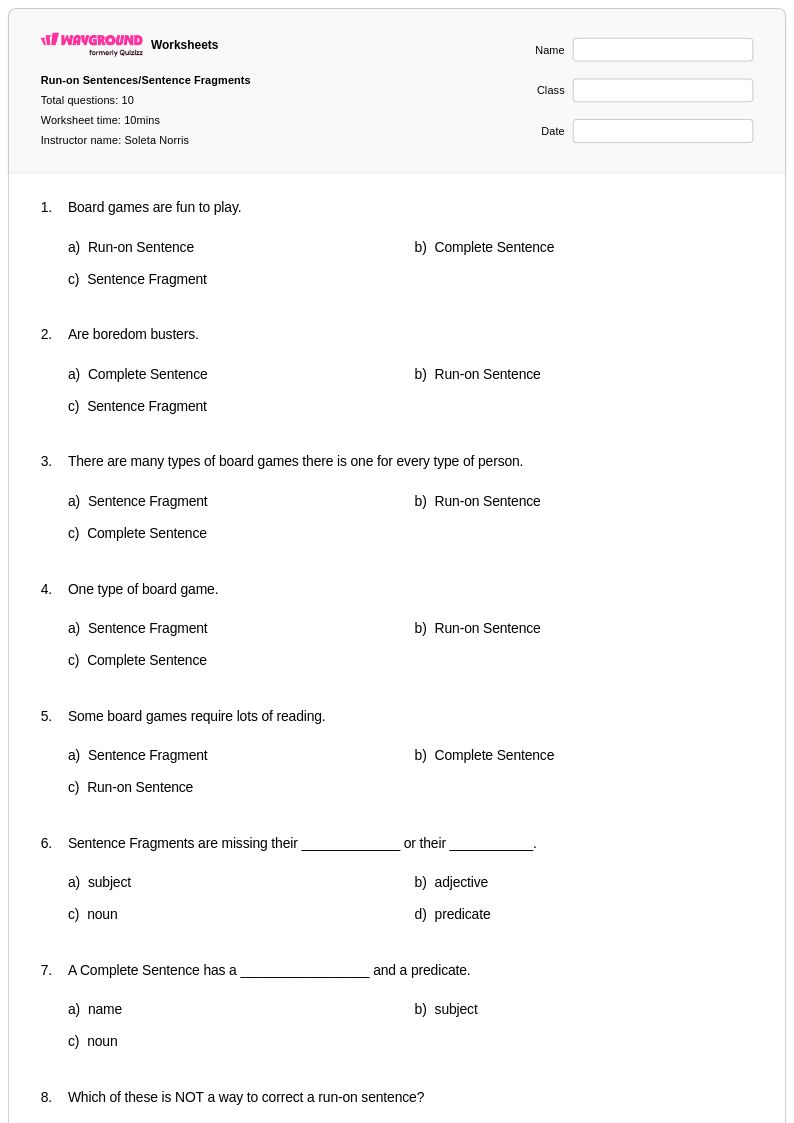
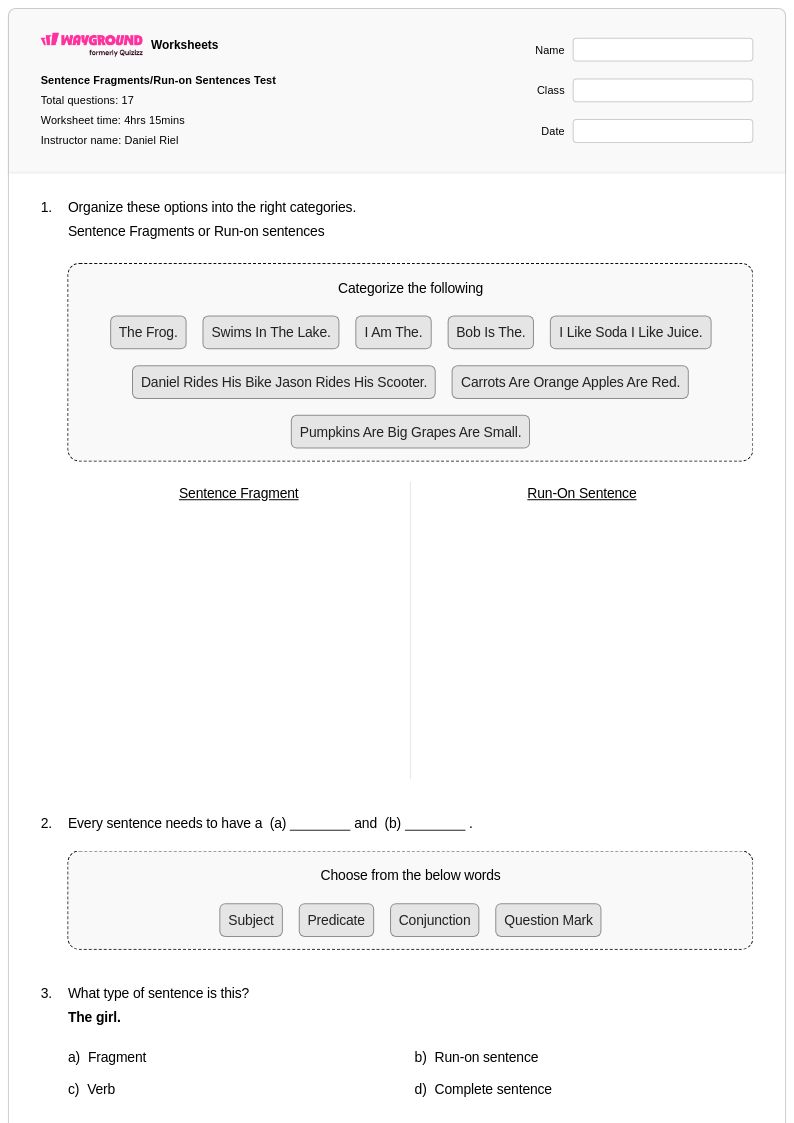
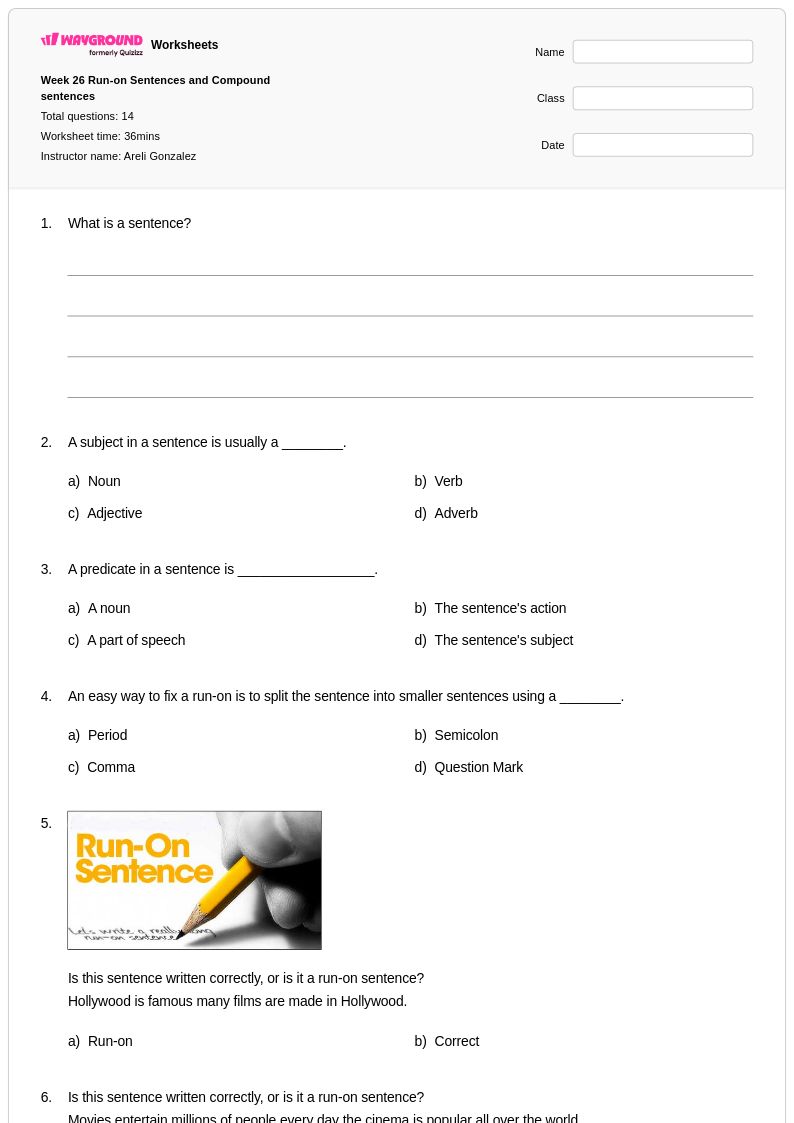
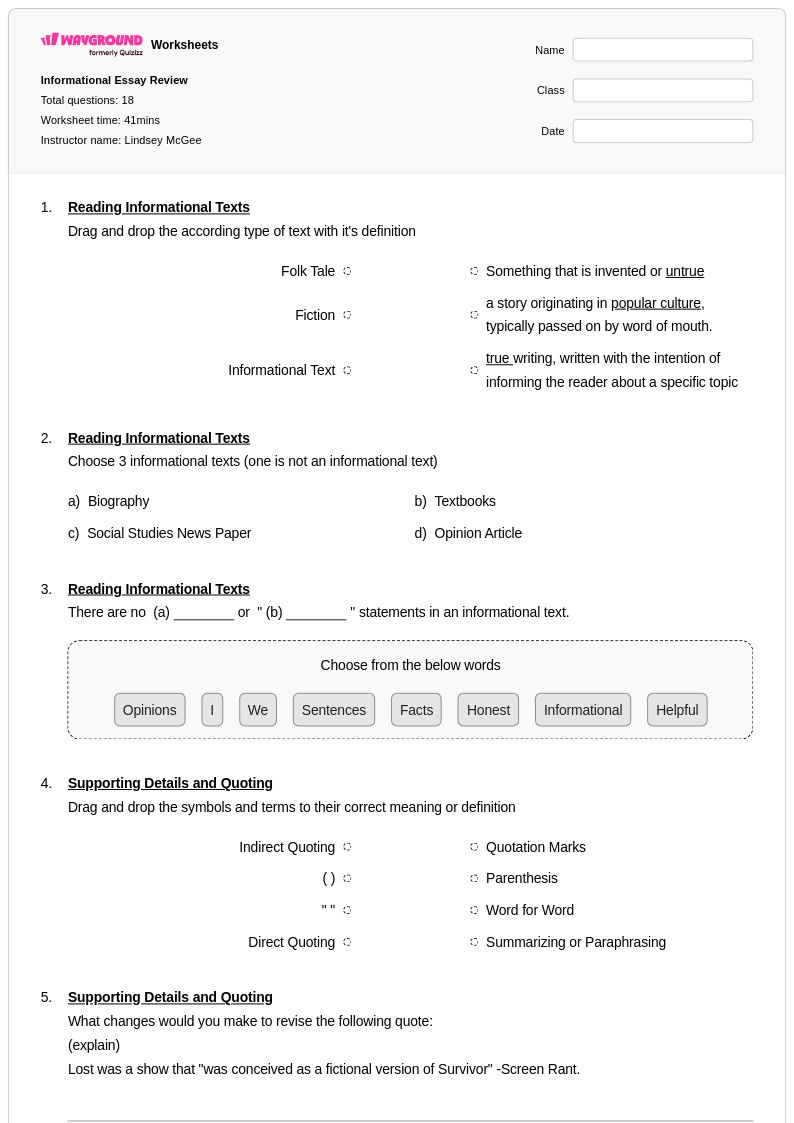
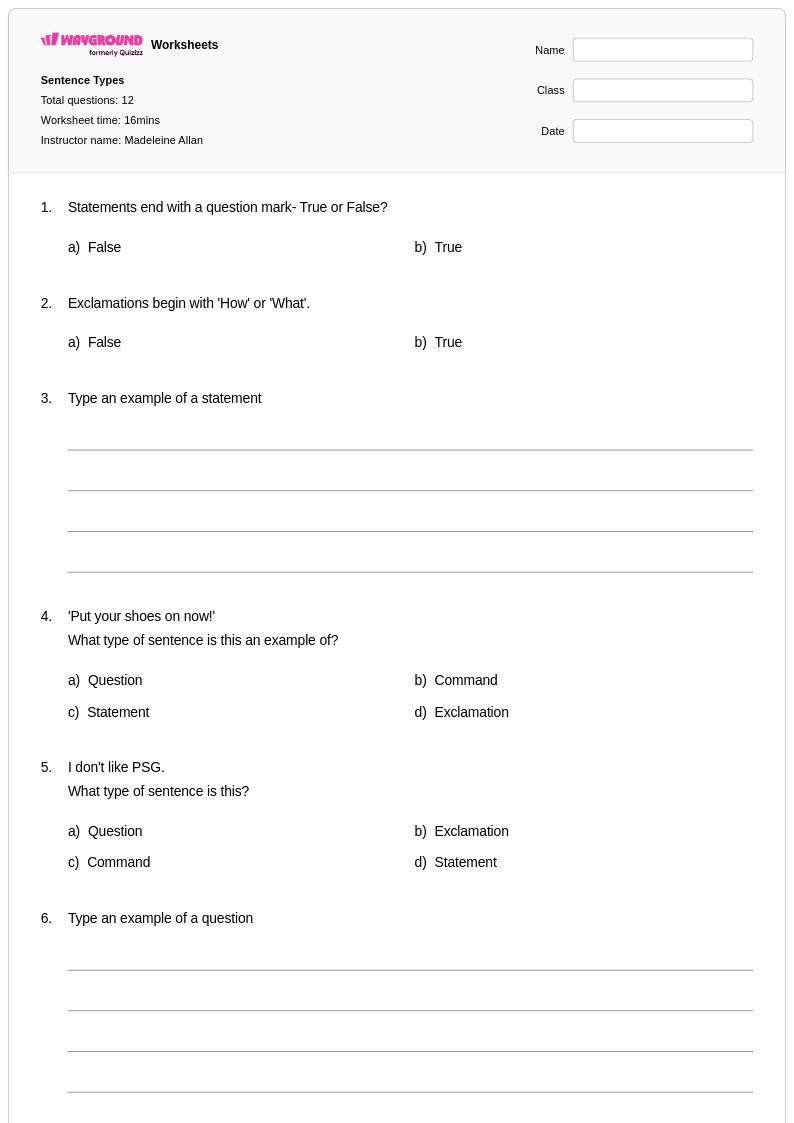
Key sentences worksheets for Year 4 students available through Wayground (formerly Quizizz) provide essential practice in identifying and understanding the most important sentences within paragraphs and passages. These comprehensive educational resources strengthen students' reading comprehension skills by teaching them to distinguish between main ideas and supporting details, recognize topic sentences, and identify concluding statements that summarize key points. The worksheets feature carefully crafted practice problems that guide fourth-grade learners through systematic analysis of sentence function and importance within various text structures. Each printable resource includes detailed answer keys that support both independent learning and teacher-guided instruction, while the free pdf format ensures easy access for classroom use and home practice.
Wayground's extensive collection of key sentences worksheets draws from millions of teacher-created resources, offering educators powerful search and filtering capabilities to locate materials perfectly aligned with Year 4 standards and specific learning objectives. The platform's differentiation tools enable teachers to customize worksheets for diverse learning needs, whether providing remediation for struggling readers or enrichment activities for advanced students. Available in both printable pdf format and interactive digital versions, these resources seamlessly integrate into lesson planning while supporting flexible instructional approaches. Teachers can efficiently organize skill practice sessions, create targeted intervention materials, and develop comprehensive assessment tools that accurately measure student progress in identifying and analyzing key sentences across various text types and complexity levels.
FAQs
How do I teach students to identify key sentences in a text?
Teach students to identify key sentences by focusing on sentence function: topic sentences introduce the main idea of a paragraph, thesis statements anchor an entire argument, and concluding sentences synthesize what came before. A reliable classroom strategy is to have students read a paragraph twice — once for general meaning and once to locate the single sentence they could not remove without losing the paragraph's core point. Modeling this process with mentor texts across multiple genres builds transferable recognition skills.
What exercises help students practice identifying and writing key sentences?
Effective practice exercises include sentence ranking tasks (where students order sentences by importance and justify their choices), paragraph reconstruction activities (where the topic sentence is removed and students must identify or write a replacement), and analysis prompts that ask students to evaluate why a specific sentence is central to a text's meaning. Worksheets that expose students to diverse text types — narrative, expository, and argumentative — build broader skill application rather than pattern recognition in a single genre.
What mistakes do students commonly make when identifying key sentences?
The most common error is confusing supporting detail sentences with key sentences — students often gravitate toward sentences with vivid language or specific facts rather than those that establish the main idea. Another frequent misconception is assuming the key sentence is always the first sentence of a paragraph, which leads students to miss topic sentences positioned mid-paragraph or at the end. Teaching students to test a sentence by asking 'Does removing this sentence collapse the paragraph's meaning?' helps correct both errors.
How can I differentiate key sentences instruction for students at different skill levels?
For struggling readers, simplify the task by providing shorter, single-paragraph texts with clear topic sentences and reducing the number of answer choices they evaluate. For advanced students, use multi-paragraph texts where the key sentence is implied rather than stated, requiring inference. On Wayground, teachers can apply individual accommodations such as reduced answer choices and Read Aloud support for students who need it, while other students receive standard settings without any notification — making differentiation seamless within a single assignment.
How do I use Wayground's key sentences worksheets in my classroom?
Wayground's key sentences worksheets are available as printable PDFs for traditional classroom use and in digital formats for technology-integrated or remote learning environments. Teachers can also host worksheets as an interactive quiz directly on Wayground, providing immediate feedback for students. Each worksheet includes a complete answer key, reducing preparation time and supporting consistent grading across a class.
How do key sentence skills connect to broader reading and writing instruction?
Key sentence identification is foundational to reading comprehension because it trains students to distinguish essential meaning from supporting detail — a skill that transfers directly to summarizing, note-taking, and close reading. In writing, the ability to construct effective topic sentences and thesis statements is the single most reliable predictor of paragraph and essay coherence. Teaching these skills in tandem, through both analysis and original composition, accelerates student growth across both reading and writing standards.