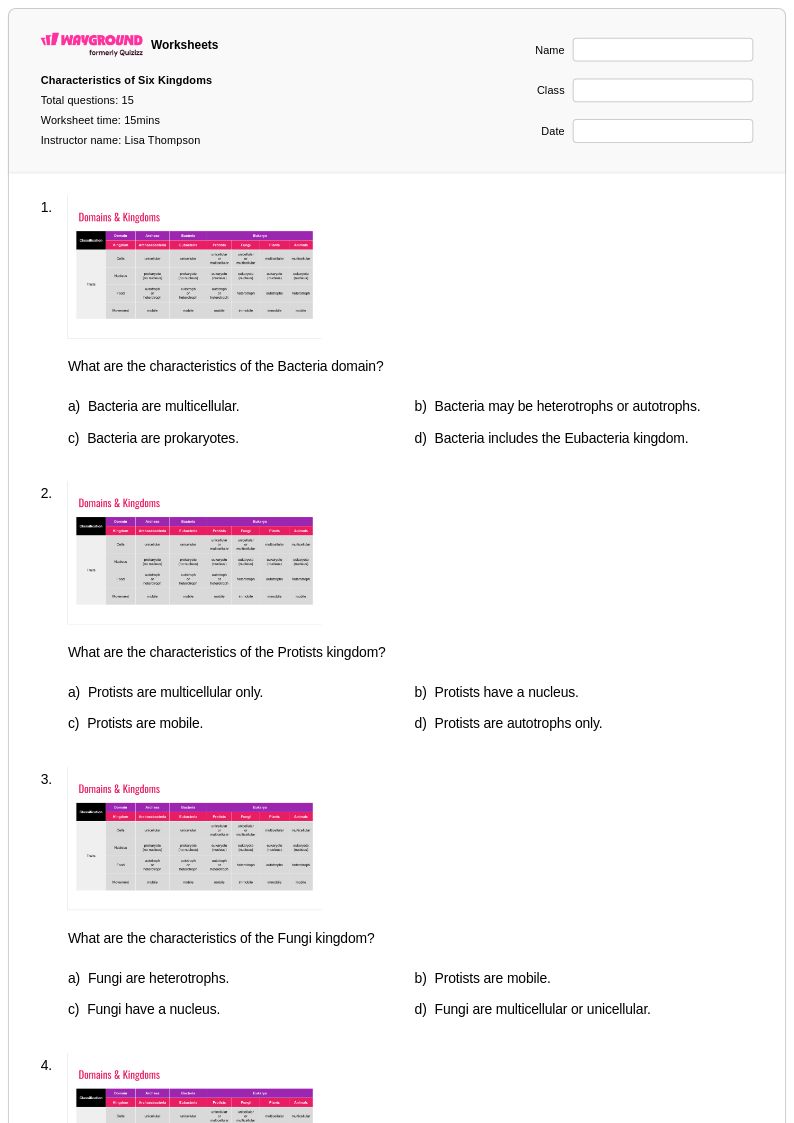
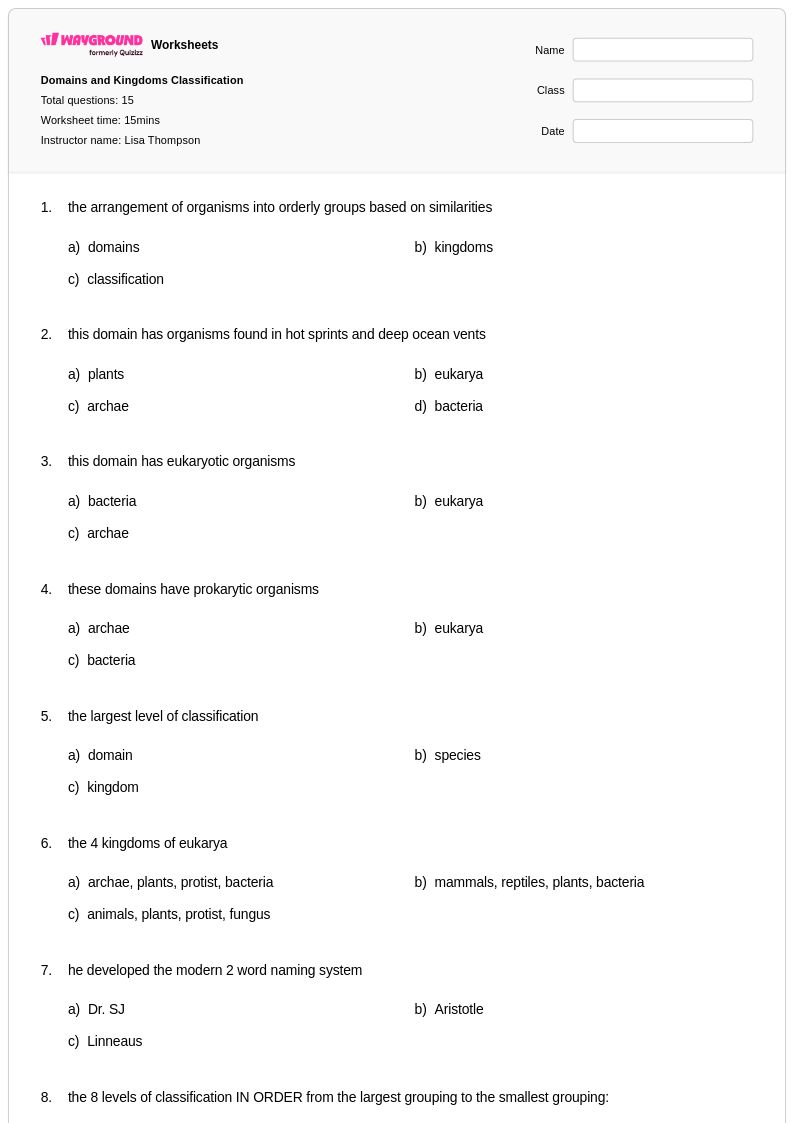
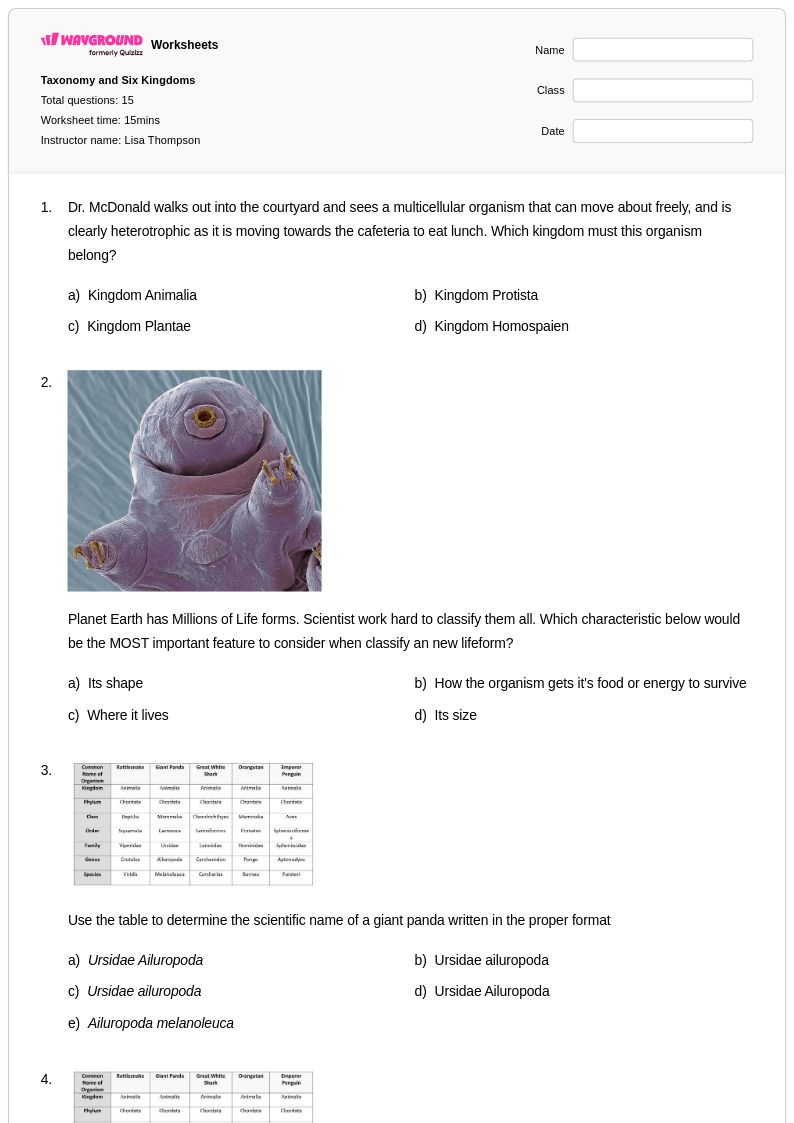
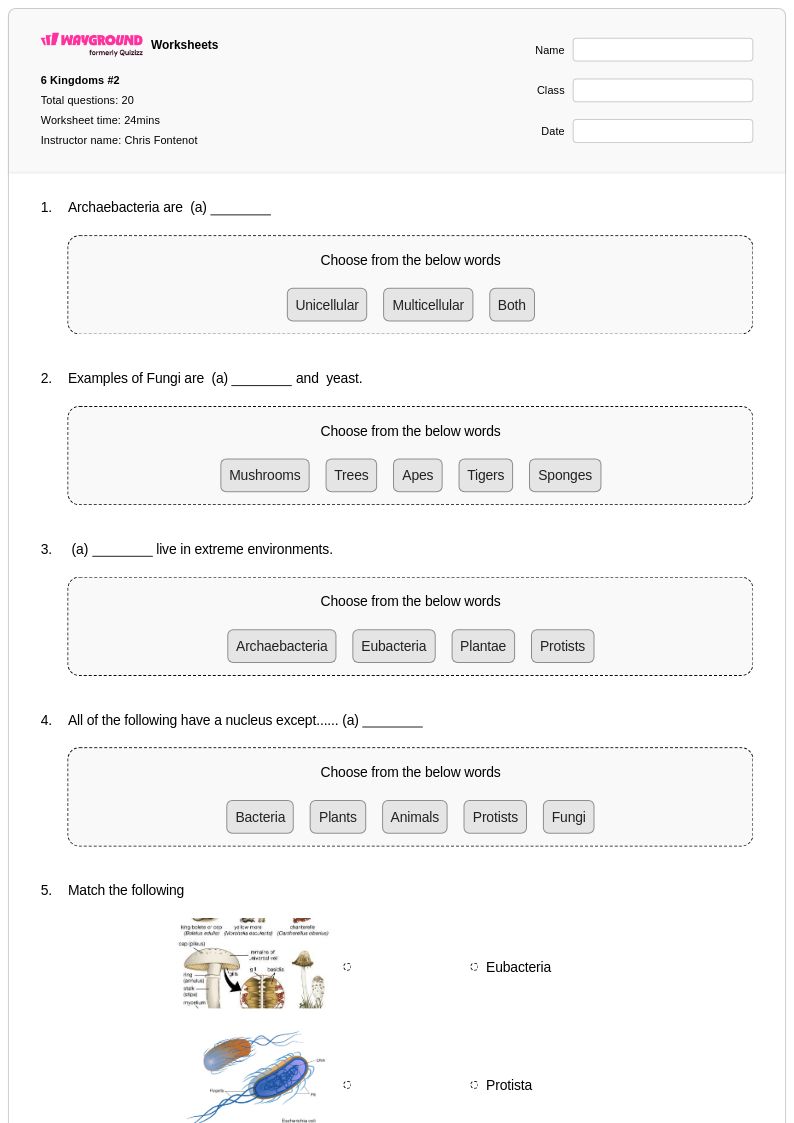
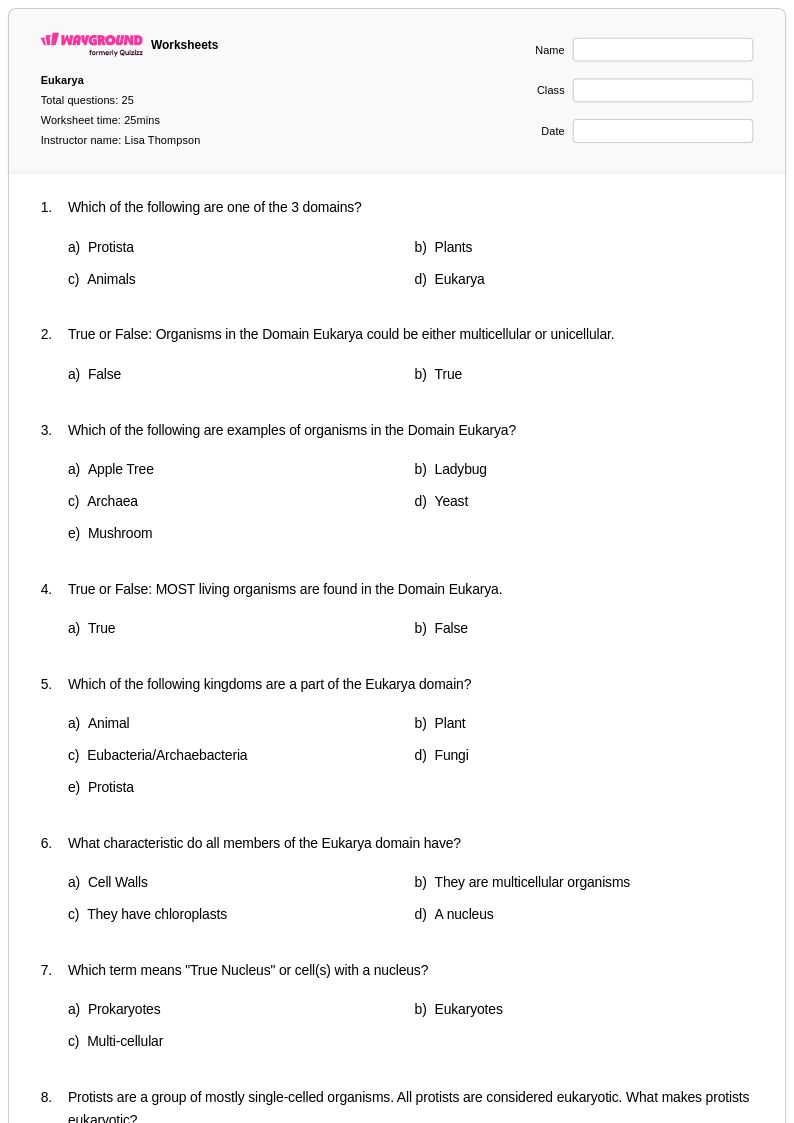
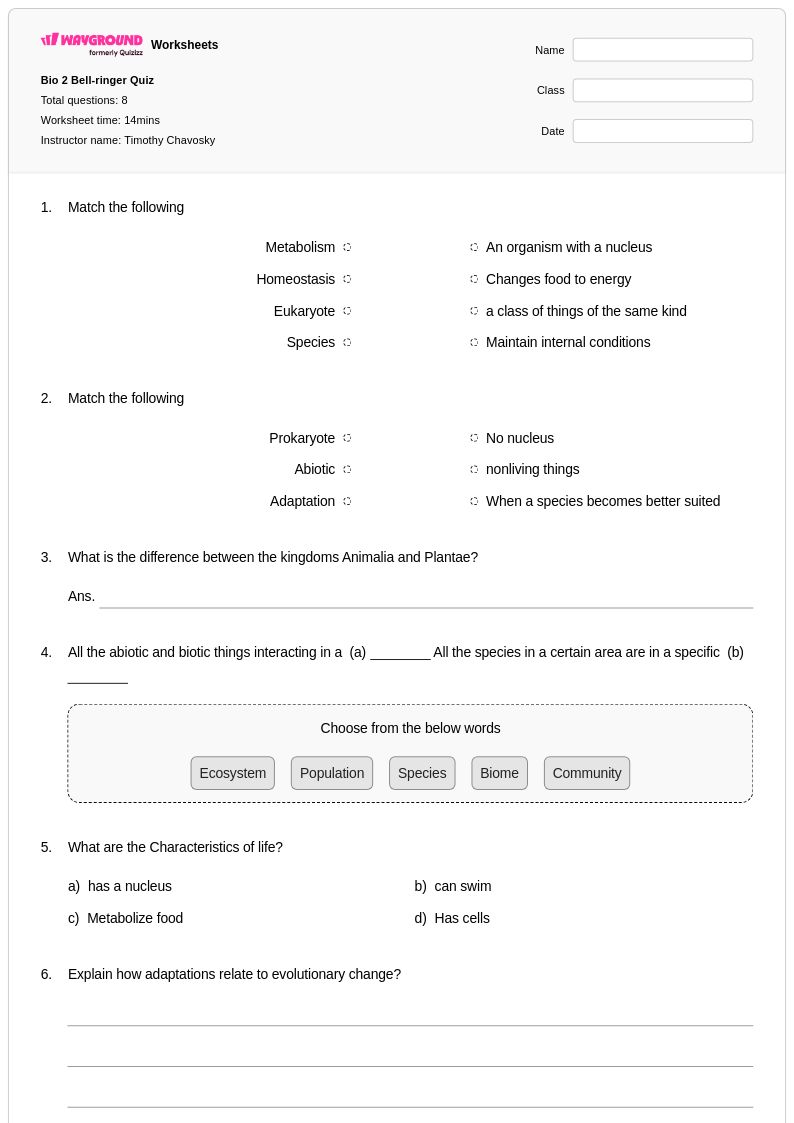
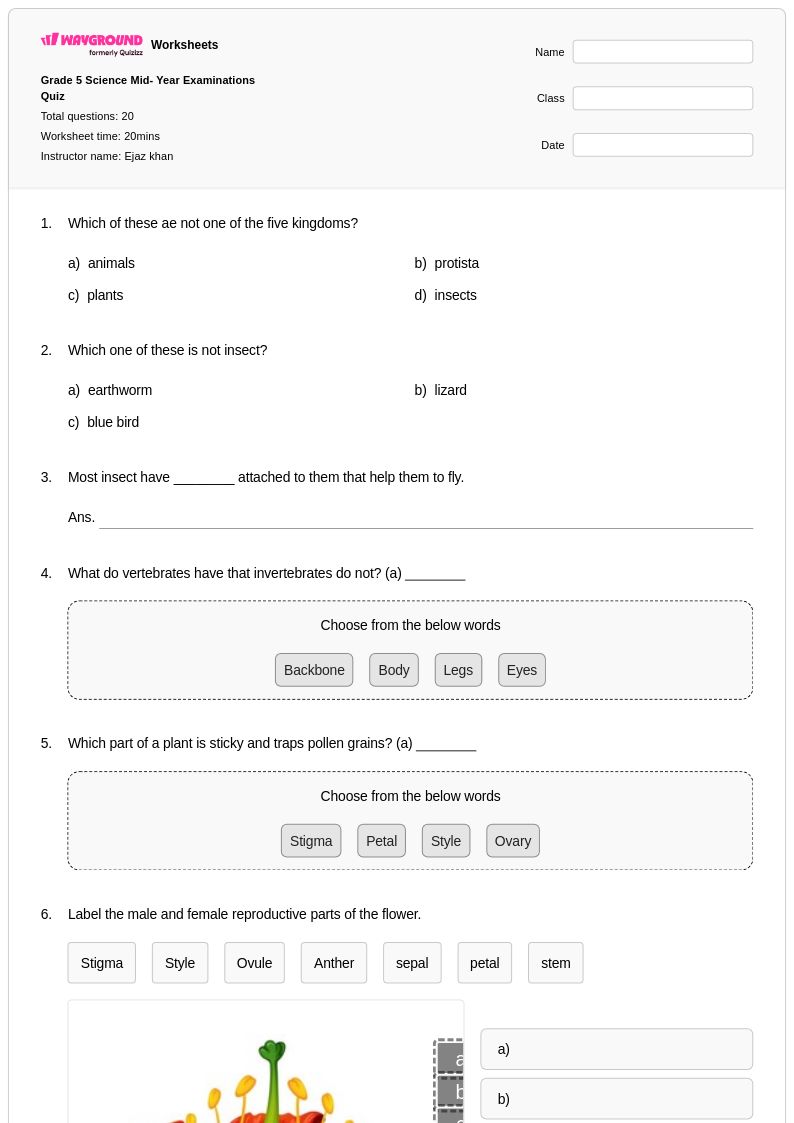
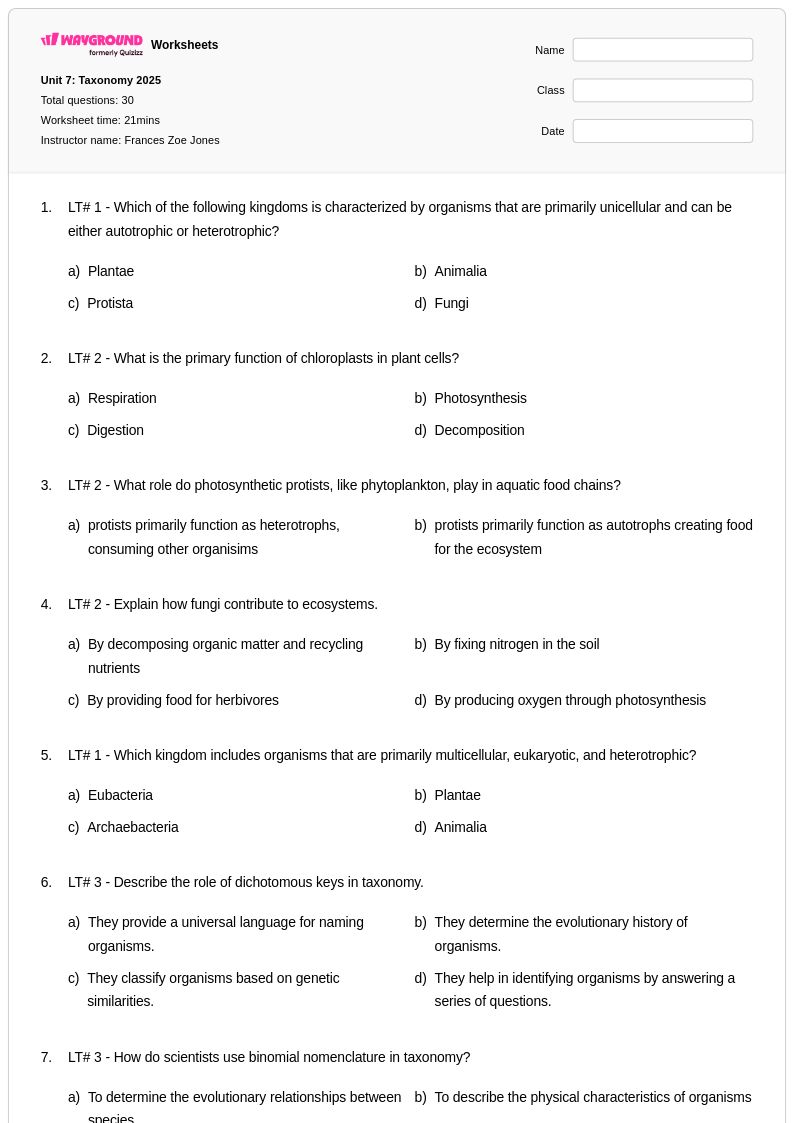
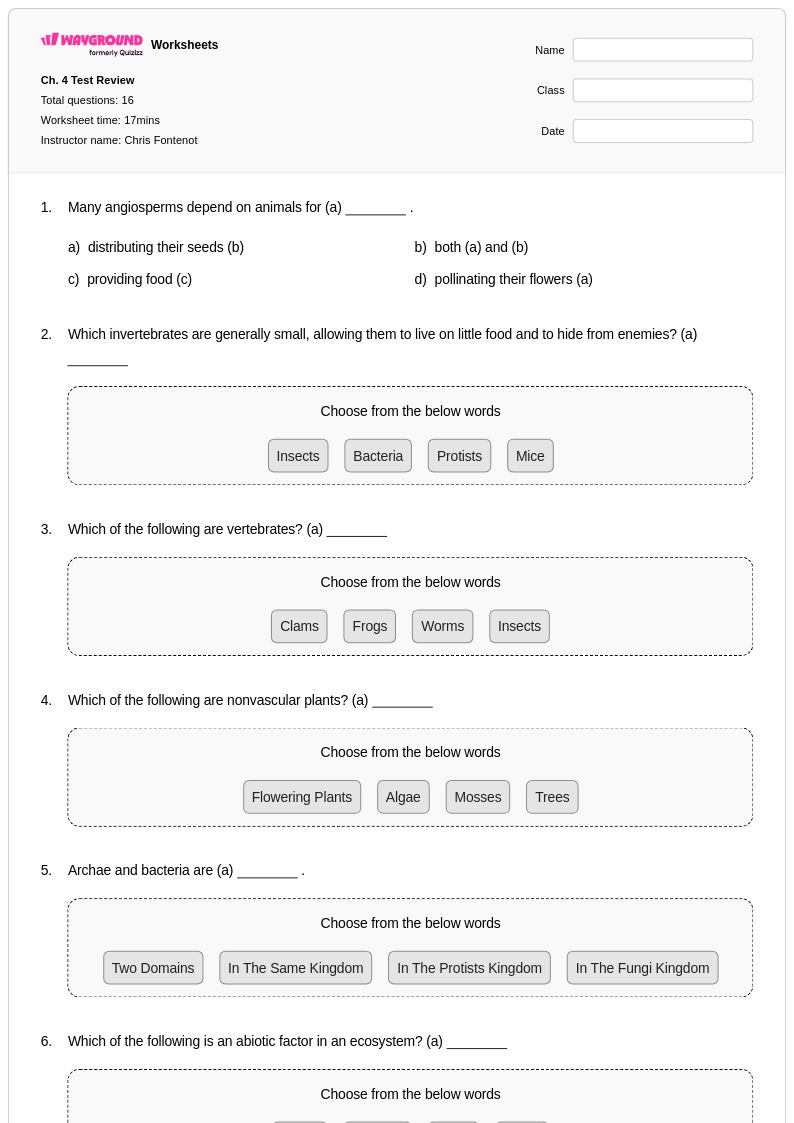
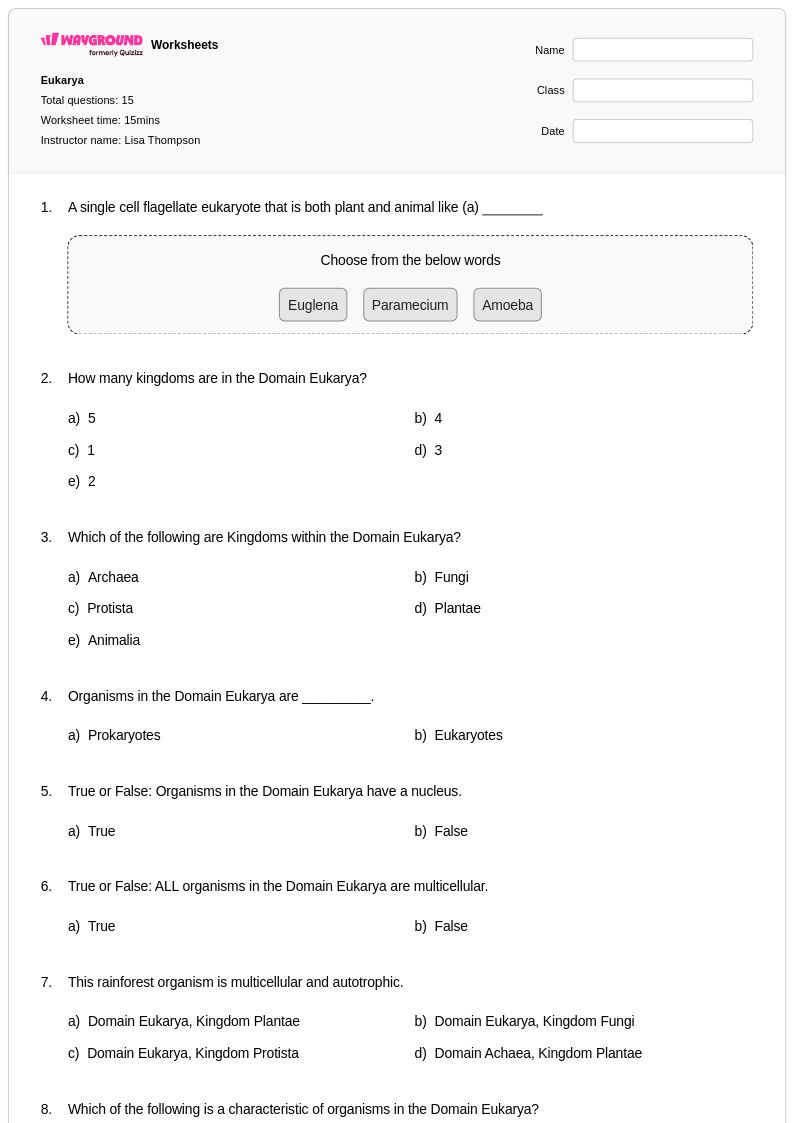
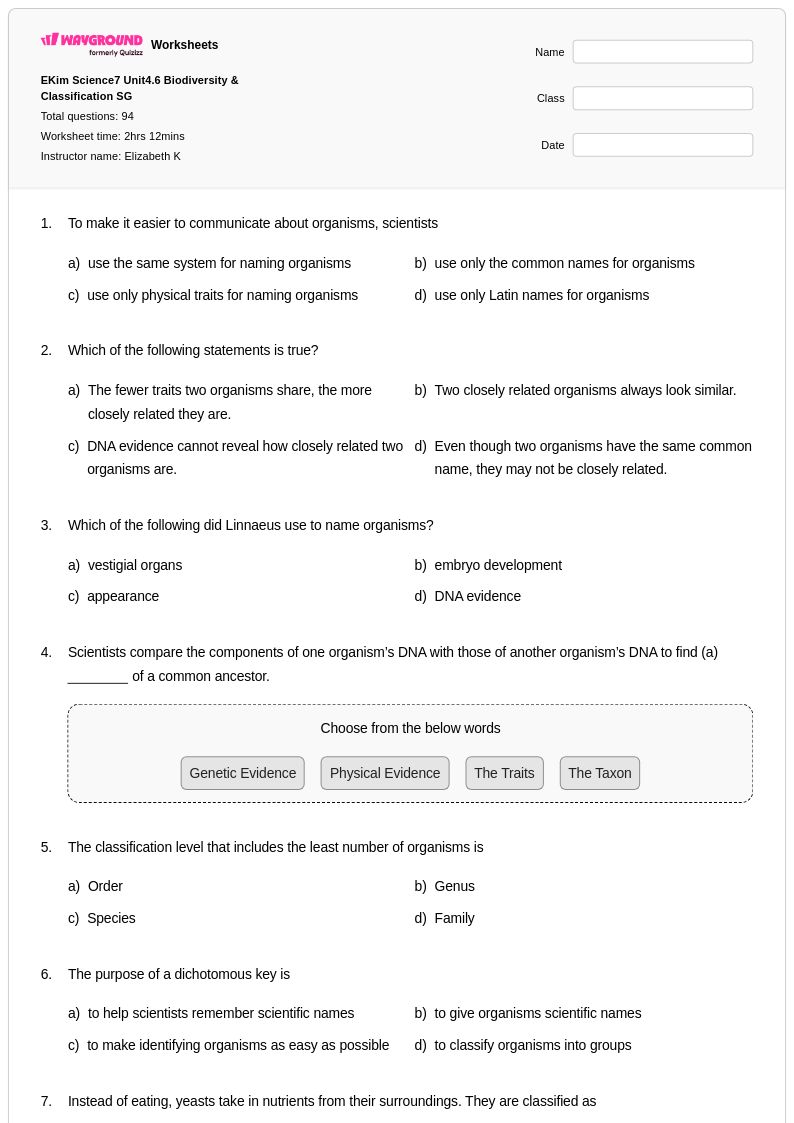
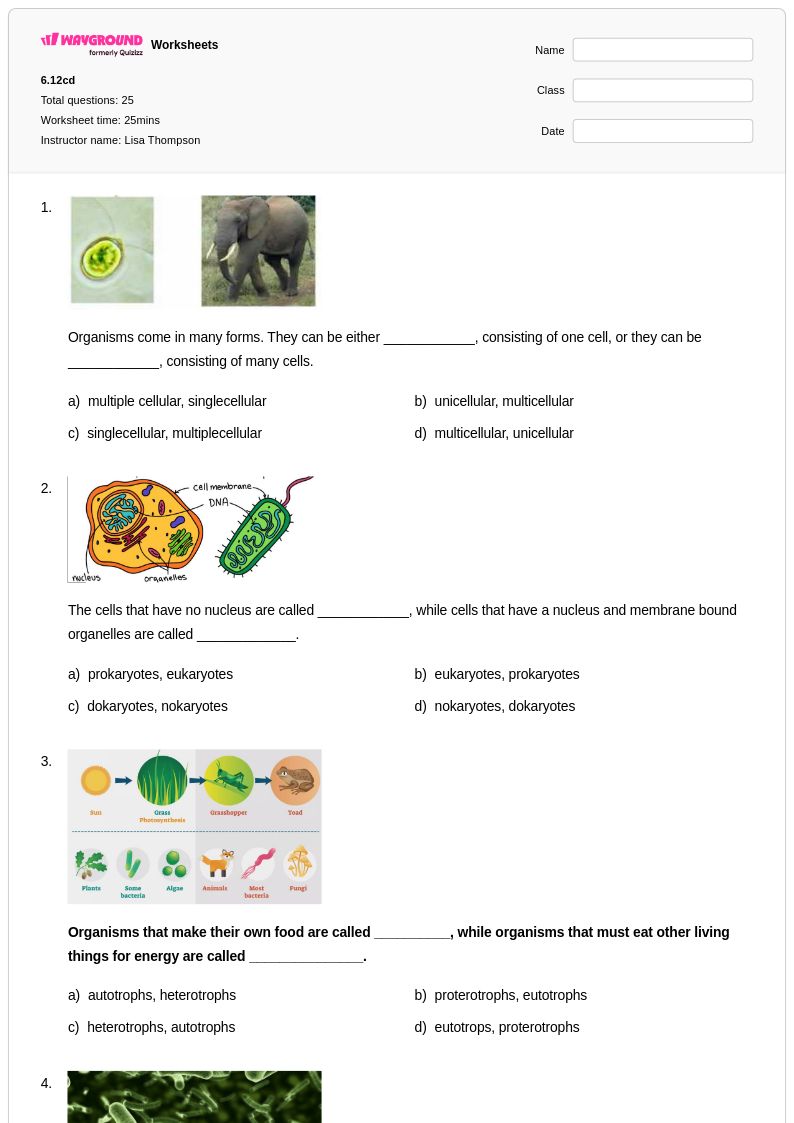
Explore Wayground's comprehensive Year 11 Biology kingdoms worksheets featuring free printables and practice problems with answer keys to help students master the classification and characteristics of life's major kingdoms.
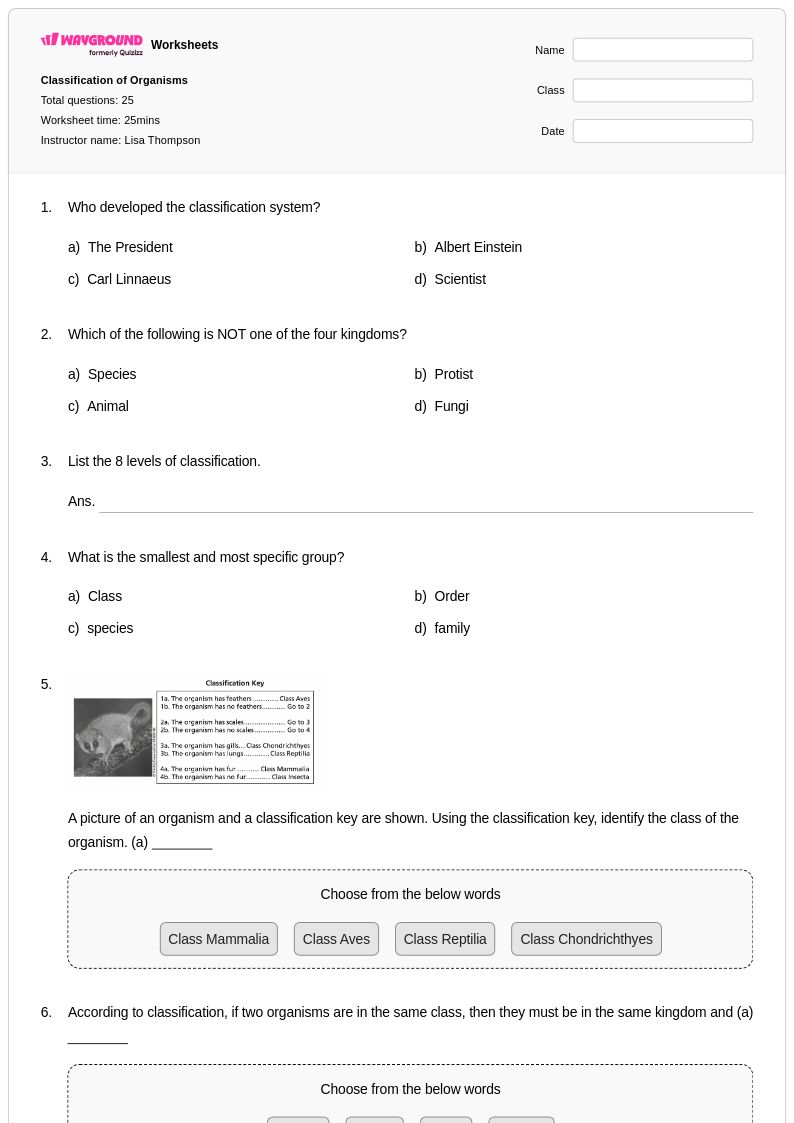
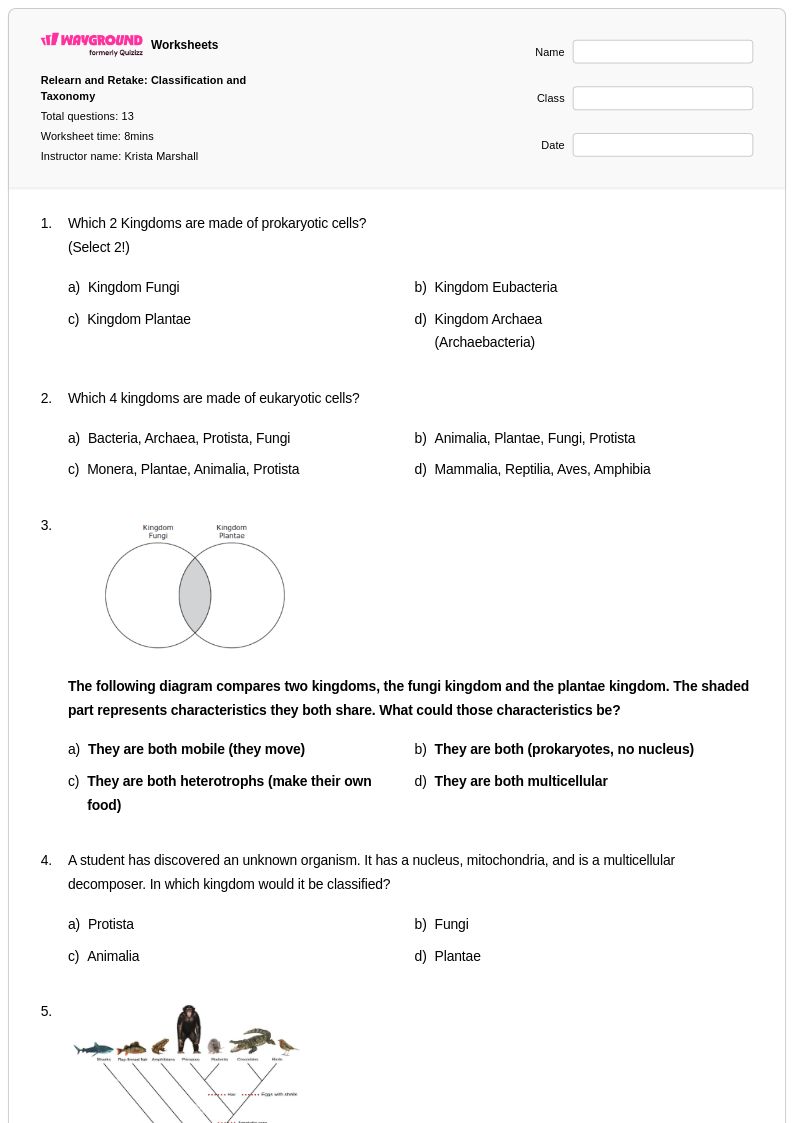
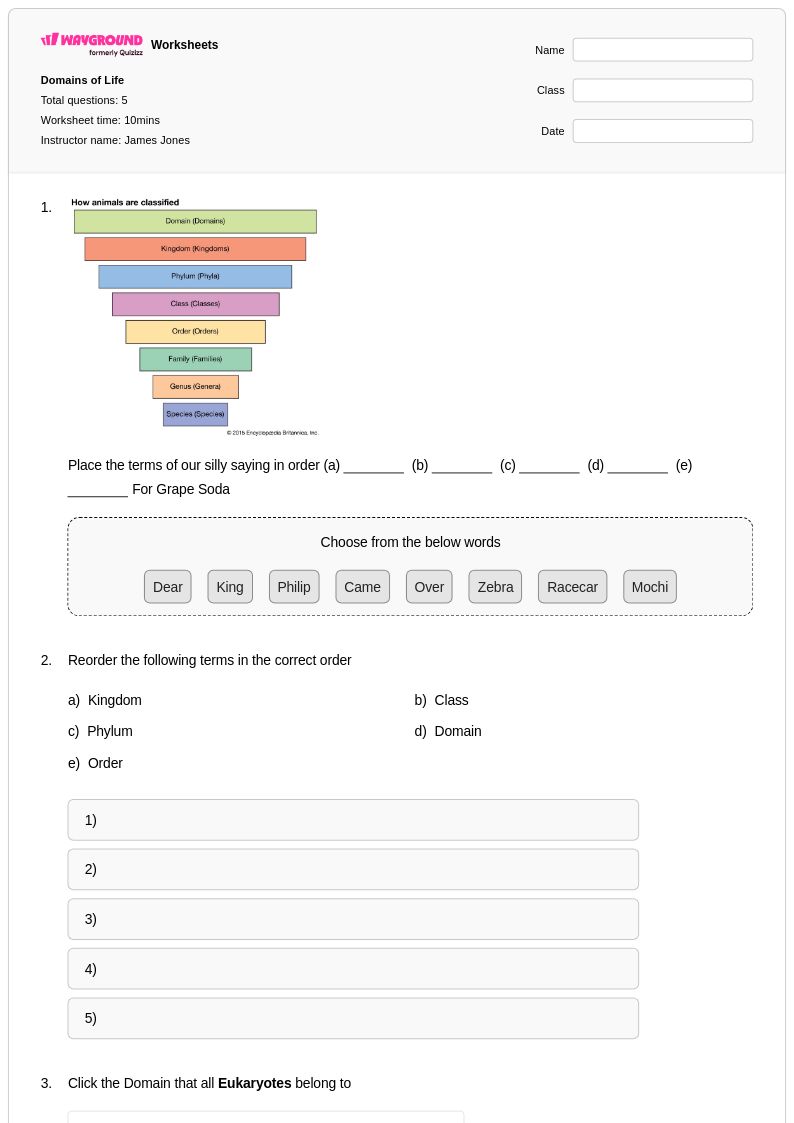
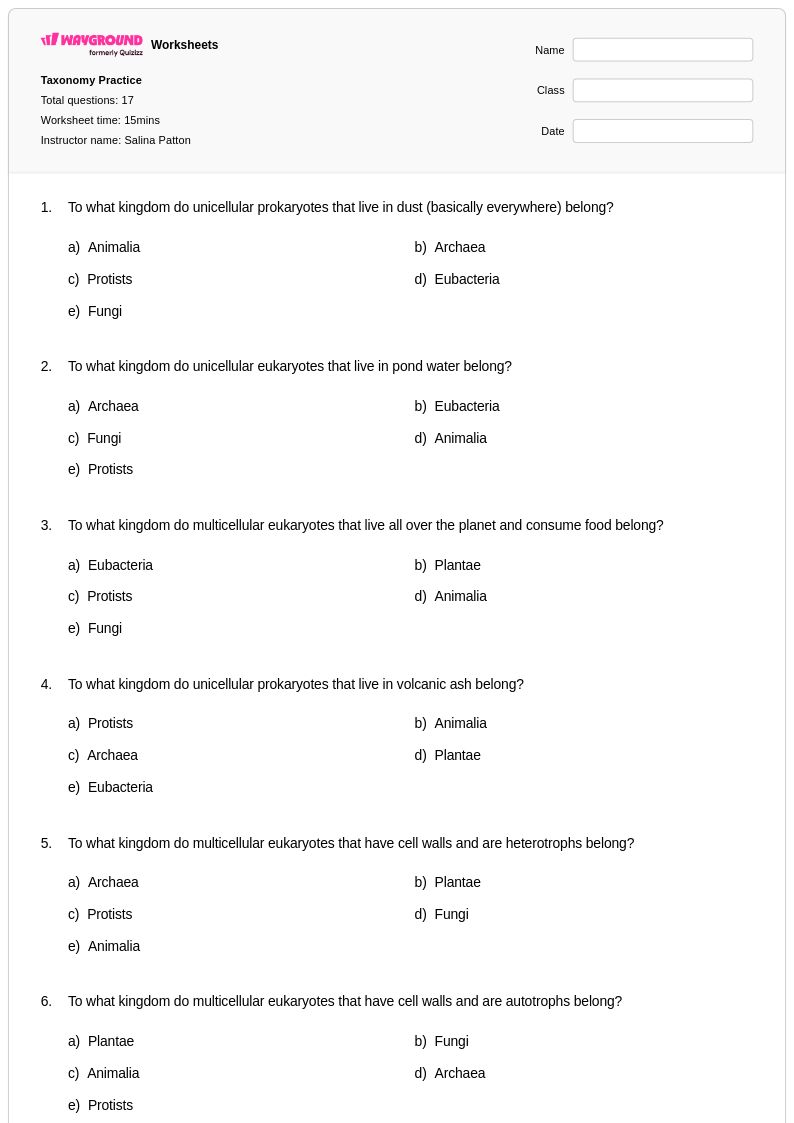
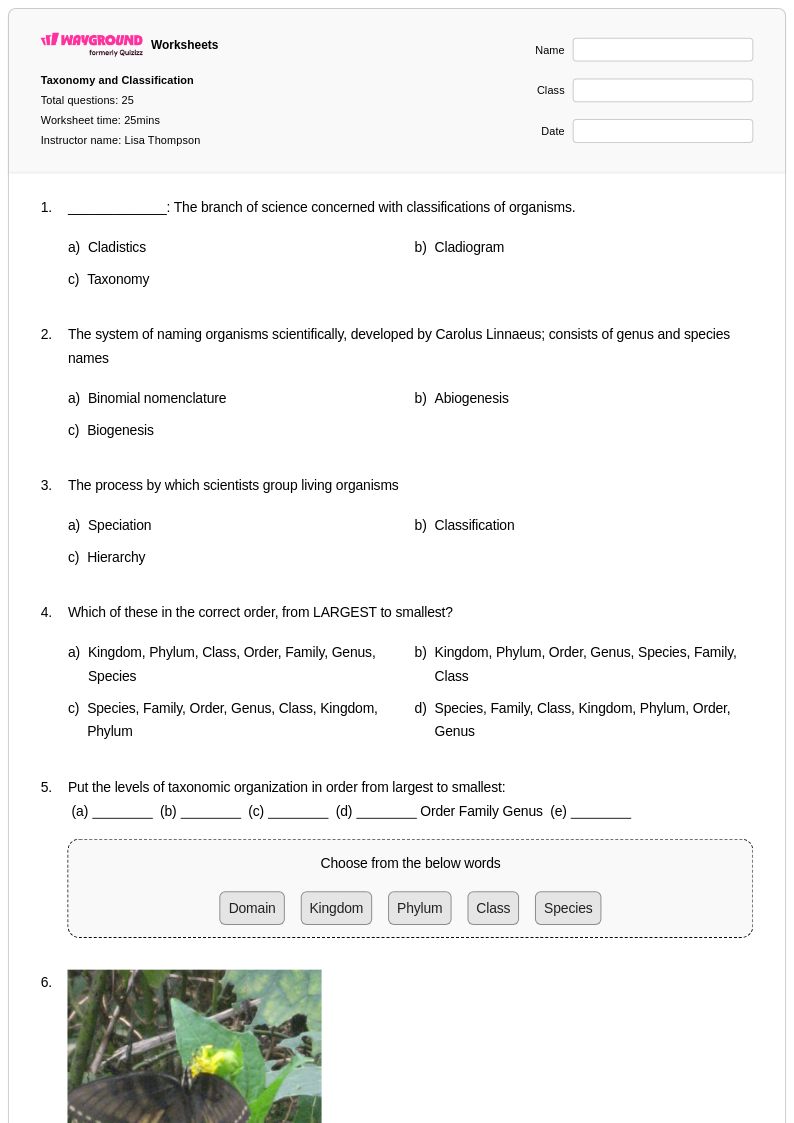
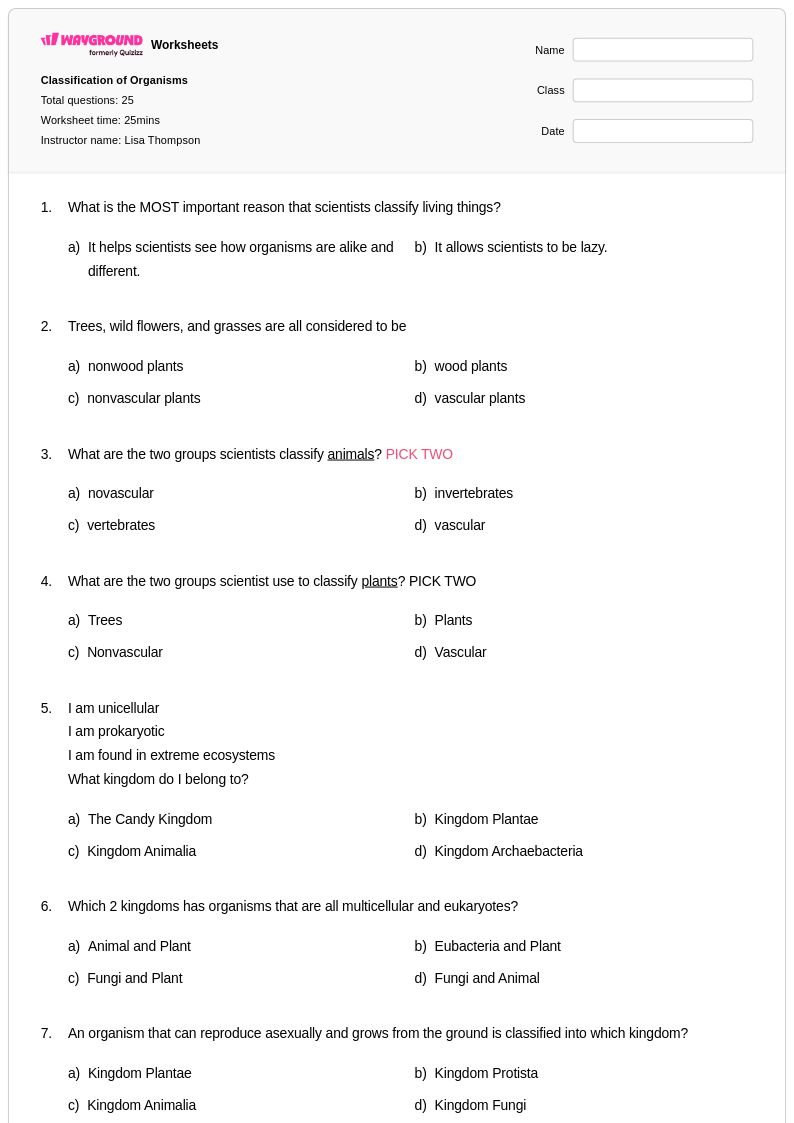
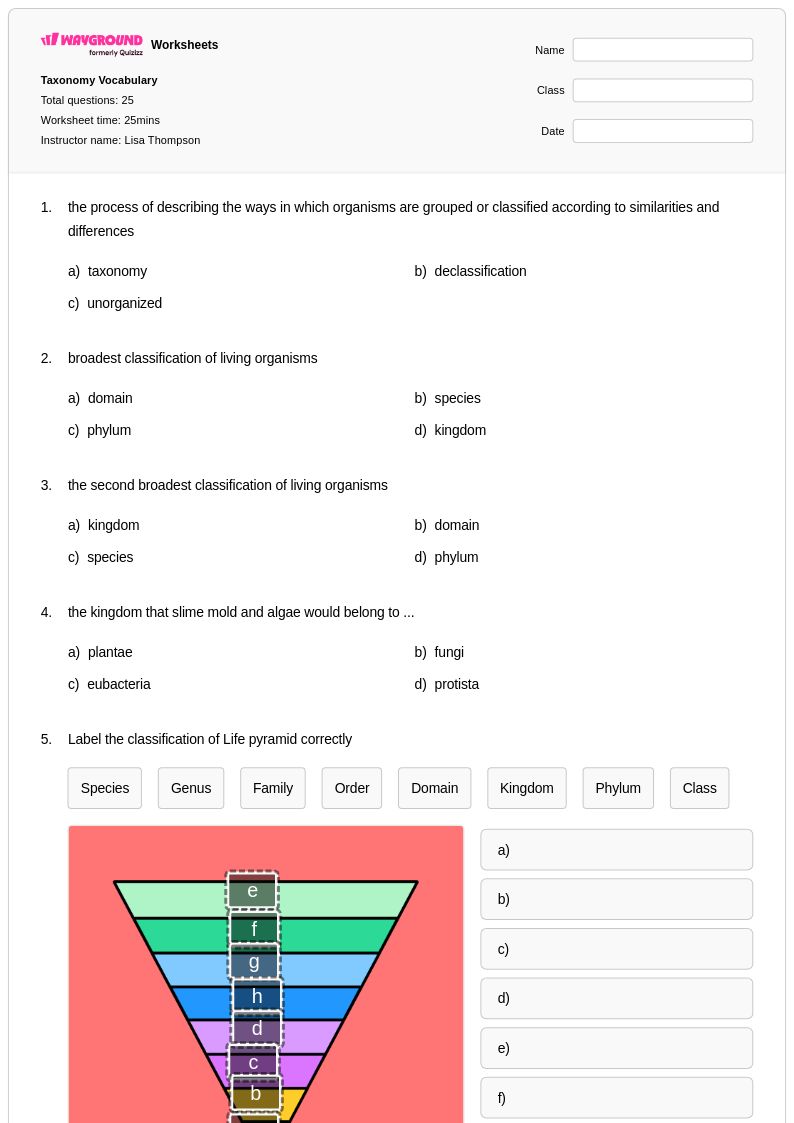
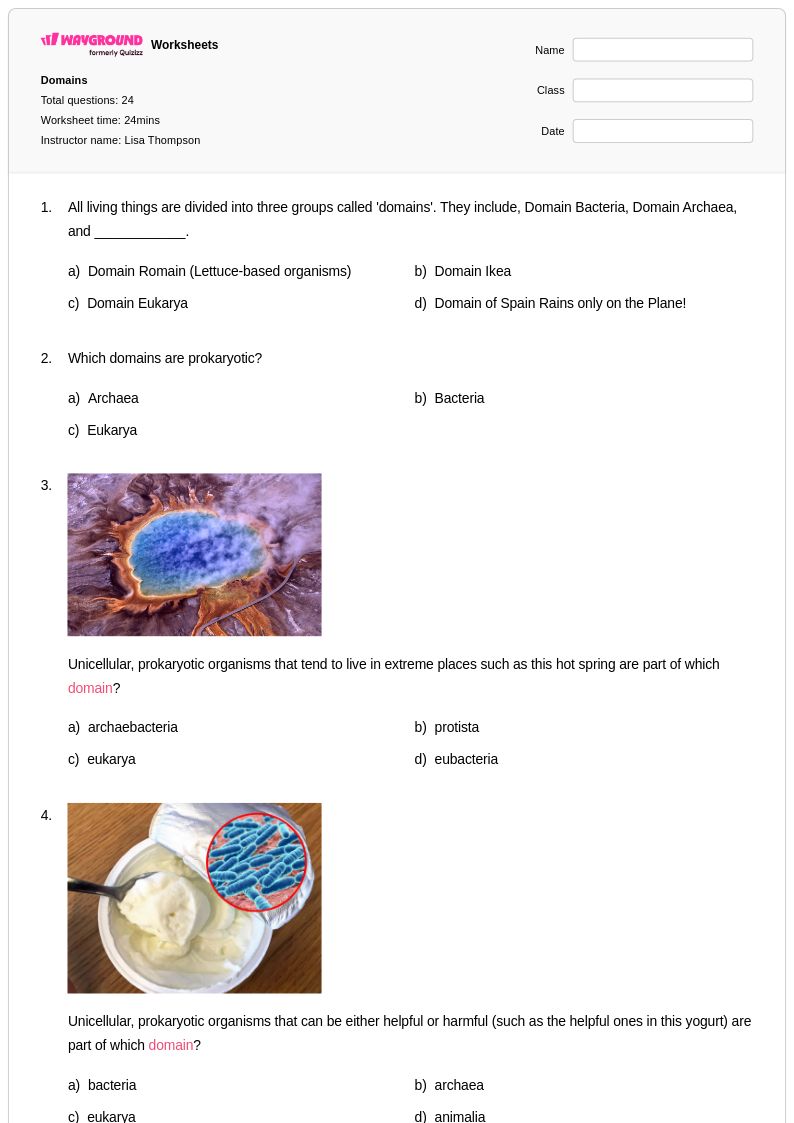
Kingdoms worksheets for Year 11 biology students available through Wayground (formerly Quizizz) provide comprehensive coverage of the taxonomic classification system that organizes all living organisms into distinct groups based on their fundamental characteristics. These educational resources strengthen students' understanding of the six-kingdom system, including Bacteria, Archaea, Protista, Fungi, Plantae, and Animalia, while developing critical thinking skills needed to analyze cellular structure, metabolic processes, and evolutionary relationships. The practice problems guide students through identifying kingdom-specific traits such as cell wall composition, reproductive methods, and nutritional strategies, with each printable worksheet featuring detailed answer keys that support independent learning and self-assessment. These free pdf resources cover essential concepts from prokaryotic versus eukaryotic organization to the ecological roles different kingdoms play in maintaining biological diversity and ecosystem stability.
Wayground (formerly Quizizz) supports biology educators with an extensive collection of teacher-created kingdoms worksheets drawn from millions of educational resources that undergo continuous refinement and standards alignment verification. The platform's advanced search and filtering capabilities enable teachers to locate grade-appropriate materials that match specific curriculum requirements, whether focusing on kingdom characteristics, classification exercises, or comparative analysis activities. Differentiation tools allow educators to customize worksheet difficulty levels and question types to accommodate diverse learning needs, while the availability of both printable and digital pdf formats provides flexibility for classroom instruction, homework assignments, and remote learning environments. These features streamline lesson planning by offering ready-to-use materials for skill practice, targeted remediation for students struggling with taxonomic concepts, and enrichment opportunities for advanced learners ready to explore kingdom relationships and evolutionary connections in greater depth.
FAQs
How do I teach the six kingdoms of life to biology students?
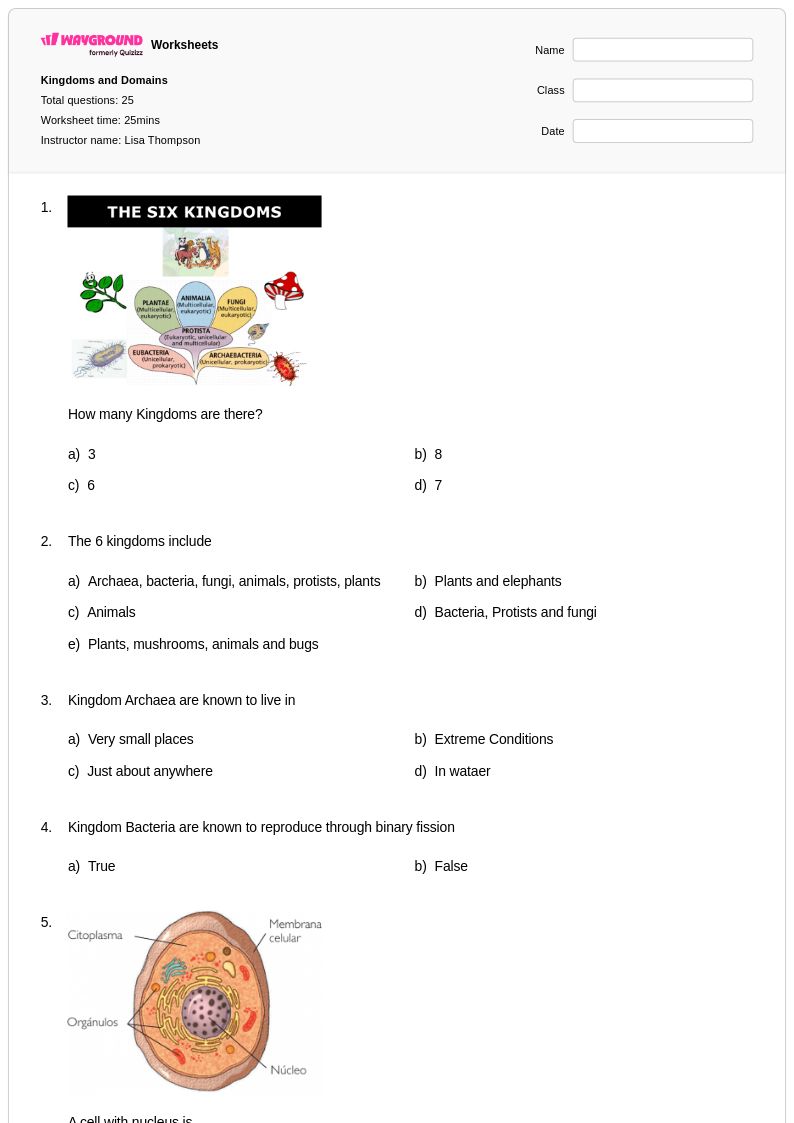
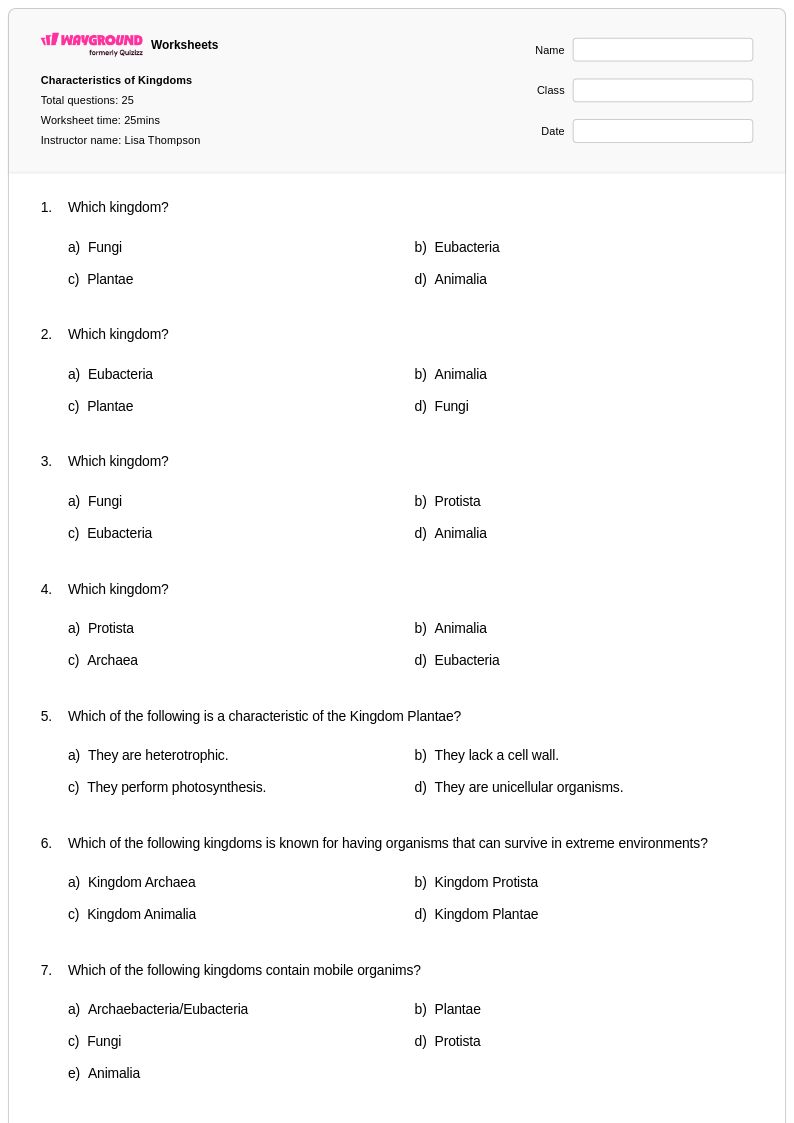
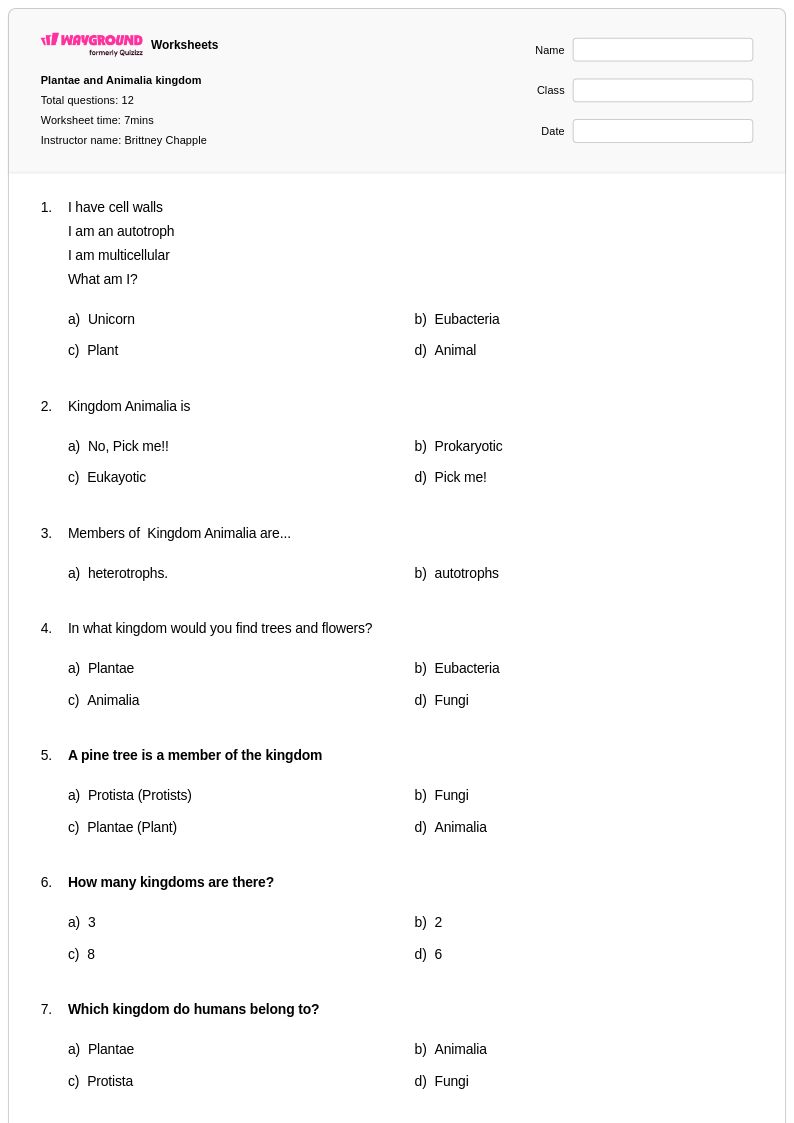
Start by grounding students in the purpose of classification before introducing the six kingdoms: Archaebacteria, Eubacteria, Protista, Fungi, Plantae, and Animalia. Use comparative charts that highlight defining traits such as cell type, cell wall composition, and mode of nutrition so students can distinguish each kingdom systematically. Tying each kingdom to familiar organisms helps students anchor abstract taxonomic categories to concrete examples they already know.
What exercises help students practice biological kingdom classification?
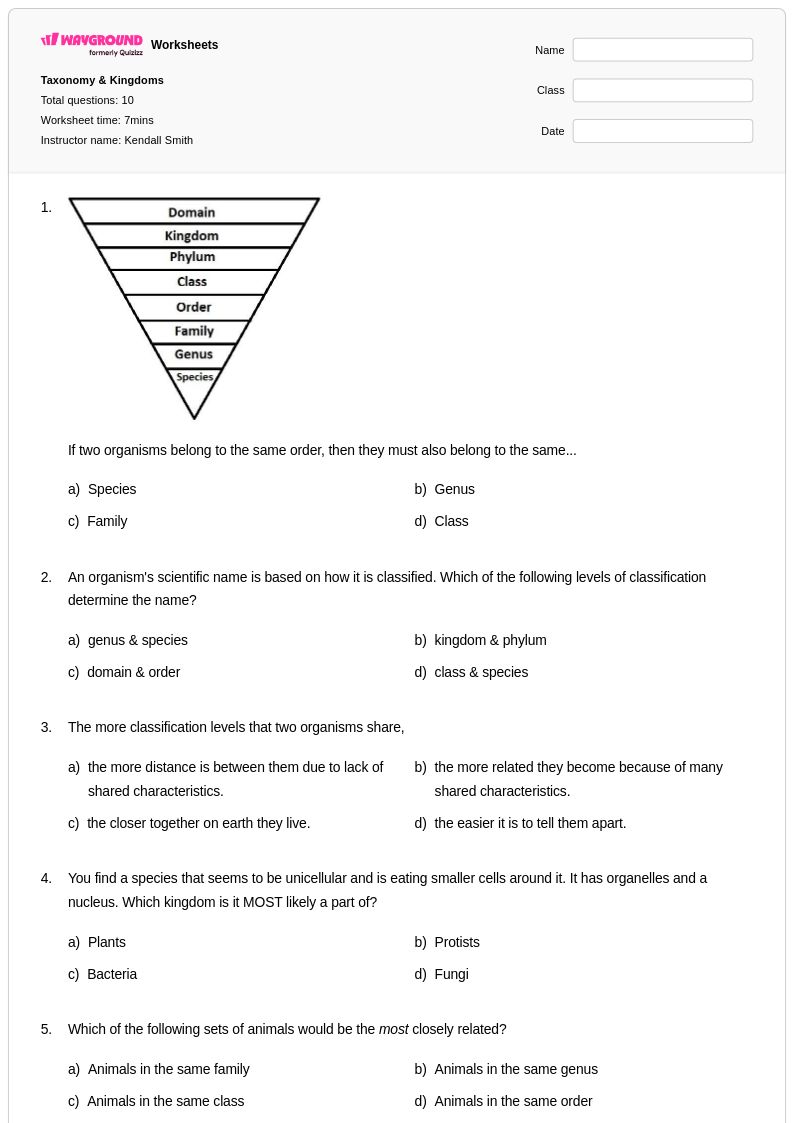
Effective practice involves tasks that require students to apply kingdom characteristics rather than simply recall them — such as sorting organism cards, analyzing cellular diagrams, or completing comparison tables across the six kingdoms. Worksheets that ask students to identify kingdom membership based on a set of given traits are especially useful because they reinforce the logic of classification rather than rote memorization. Practice problems that compare evolutionary relationships between kingdoms add an additional layer of critical thinking.
What mistakes do students commonly make when classifying organisms into kingdoms?
A frequent error is conflating Archaebacteria and Eubacteria — students often treat all prokaryotes as a single group and miss the significant biochemical and environmental differences between these two kingdoms. Students also commonly misclassify fungi as plants because both are stationary and visible to the naked eye, overlooking the key distinctions in cell wall composition and nutrition mode. Worksheets that directly compare easily confused kingdoms help students confront and correct these misconceptions.
How do I differentiate kingdoms instruction for students at different ability levels?
For students who need additional support, reduce the number of kingdoms covered in a single session and provide visual reference guides alongside practice problems. Advanced learners benefit from tasks that explore the evolutionary basis for kingdom distinctions, such as analyzing phylogenetic reasoning or debating the merits of five-kingdom versus six-kingdom systems. On Wayground, teachers can apply individual accommodations such as read aloud, reduced answer choices, and extended time to specific students without disrupting the experience of the rest of the class.
How can I use Wayground's kingdoms worksheets in my classroom?
Wayground's kingdoms worksheets are available as printable PDFs for traditional classroom use and in digital formats for technology-integrated or remote learning environments, including the option to host them as a live quiz on Wayground. Answer keys are included with each worksheet, supporting both teacher-led review and independent student self-assessment. The platform's search and filtering tools allow teachers to quickly find resources aligned to specific curriculum standards, making it straightforward to slot these materials into an existing unit on biological classification.
How do I assess whether students truly understand kingdom classification versus just memorizing it?
True understanding is visible when students can correctly classify an unfamiliar organism using kingdom characteristics, not just recite the names of the six kingdoms. Assessment tasks that present a novel organism's traits — such as cell structure, reproduction method, and nutrient acquisition — and ask students to justify kingdom placement are more diagnostic than recall-based quizzes. Common answer key comparisons across student responses can quickly reveal whether errors are random or pattern-based misconceptions.