Free Printable Landforms and Water Bodies Worksheets for Year 5
Year 5 landforms and water bodies worksheets from Wayground offer free printables and practice problems with answer keys to help students explore Earth's surface features, including mountains, valleys, rivers, and oceans.
Explore printable Landforms and Water Bodies worksheets for Year 5
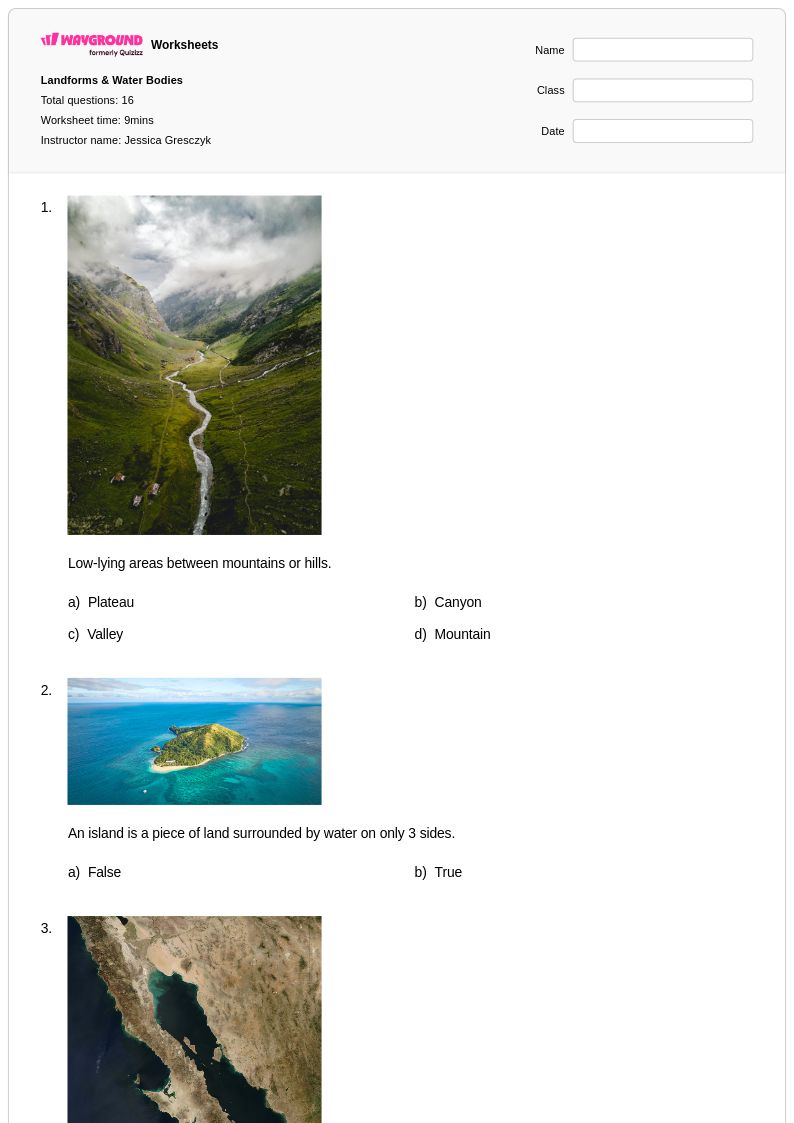
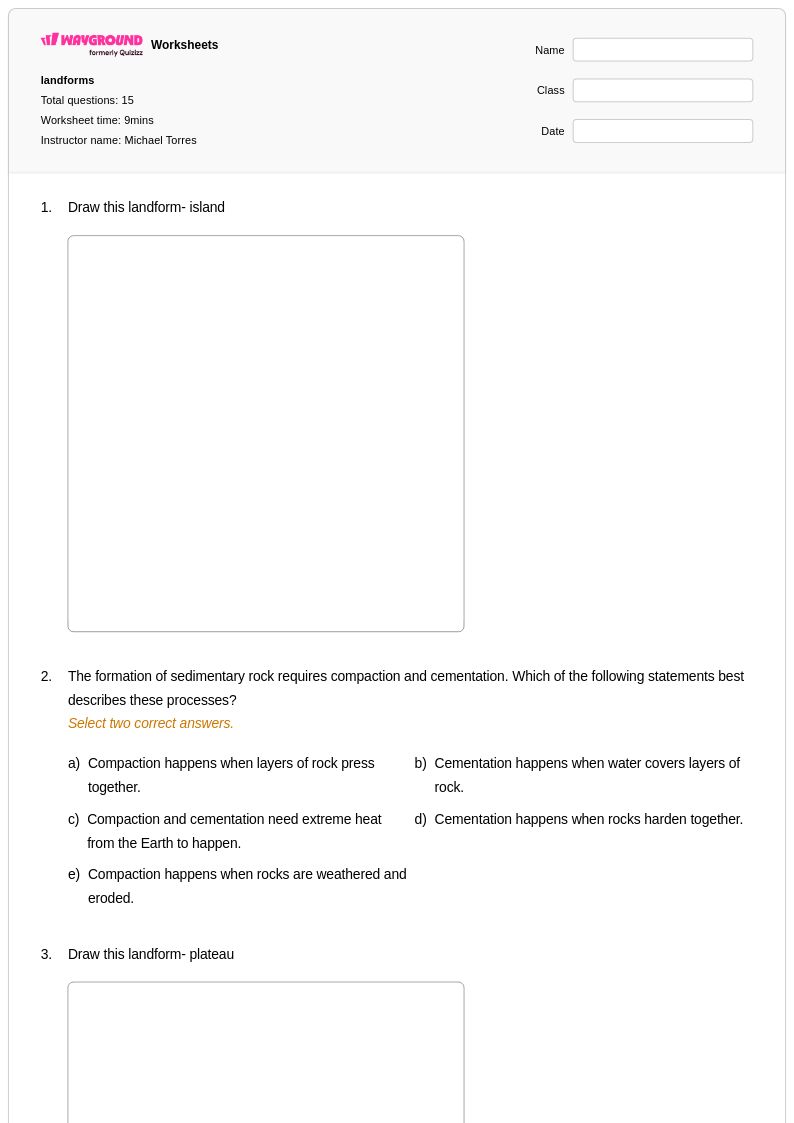
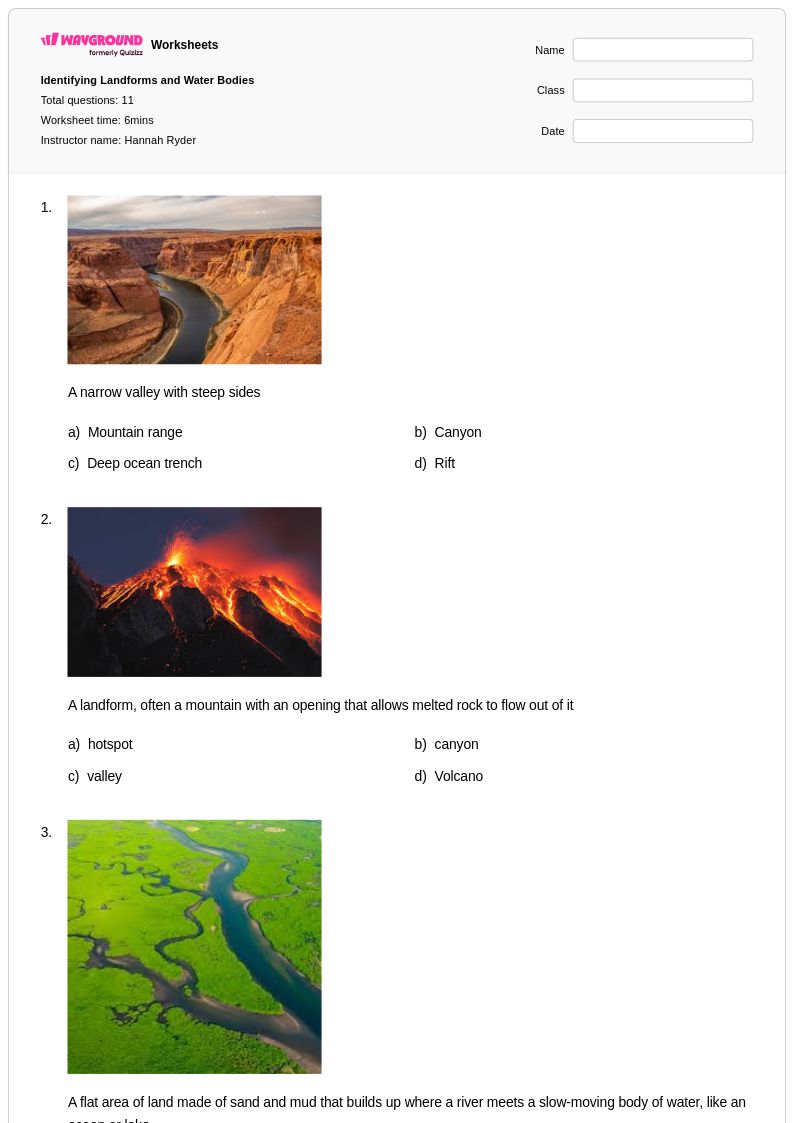
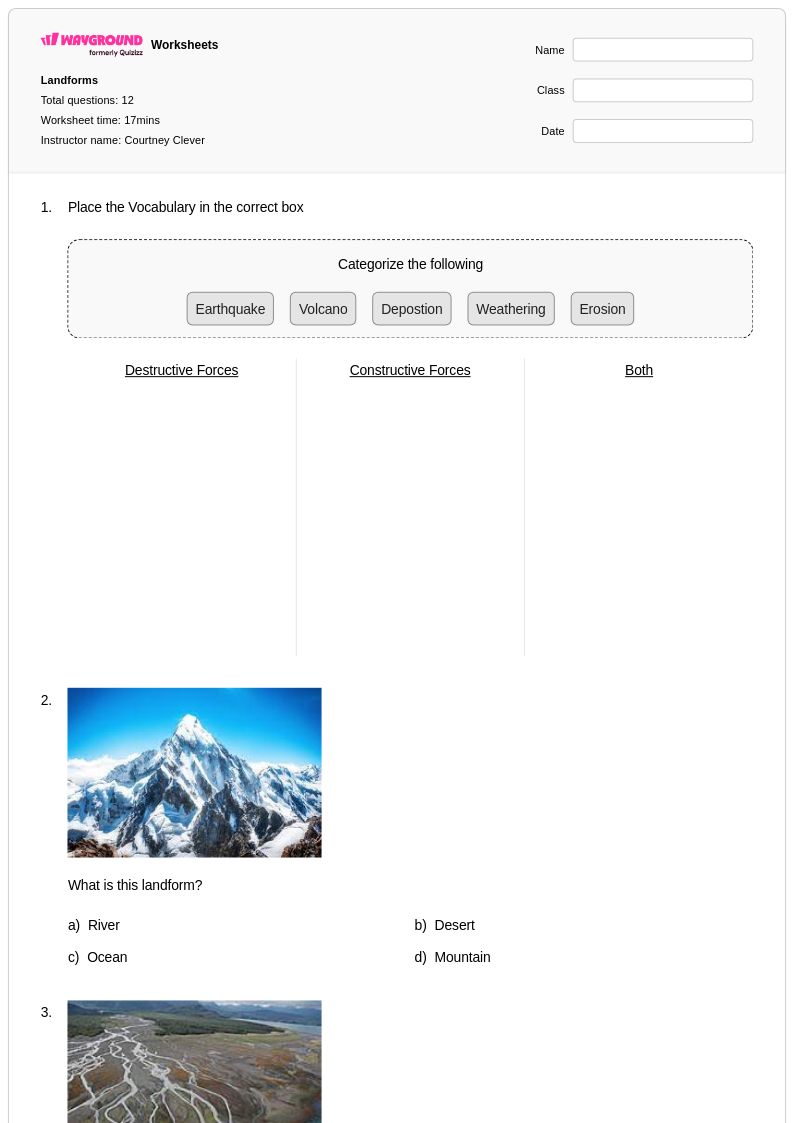
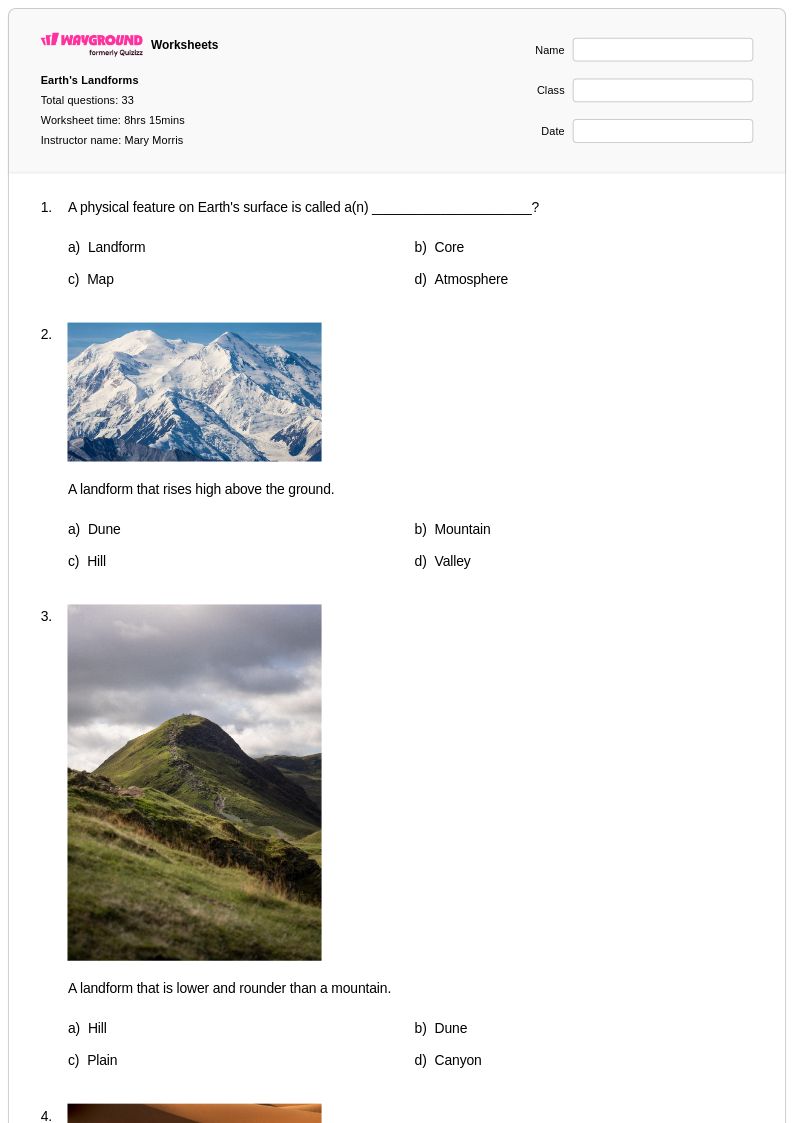
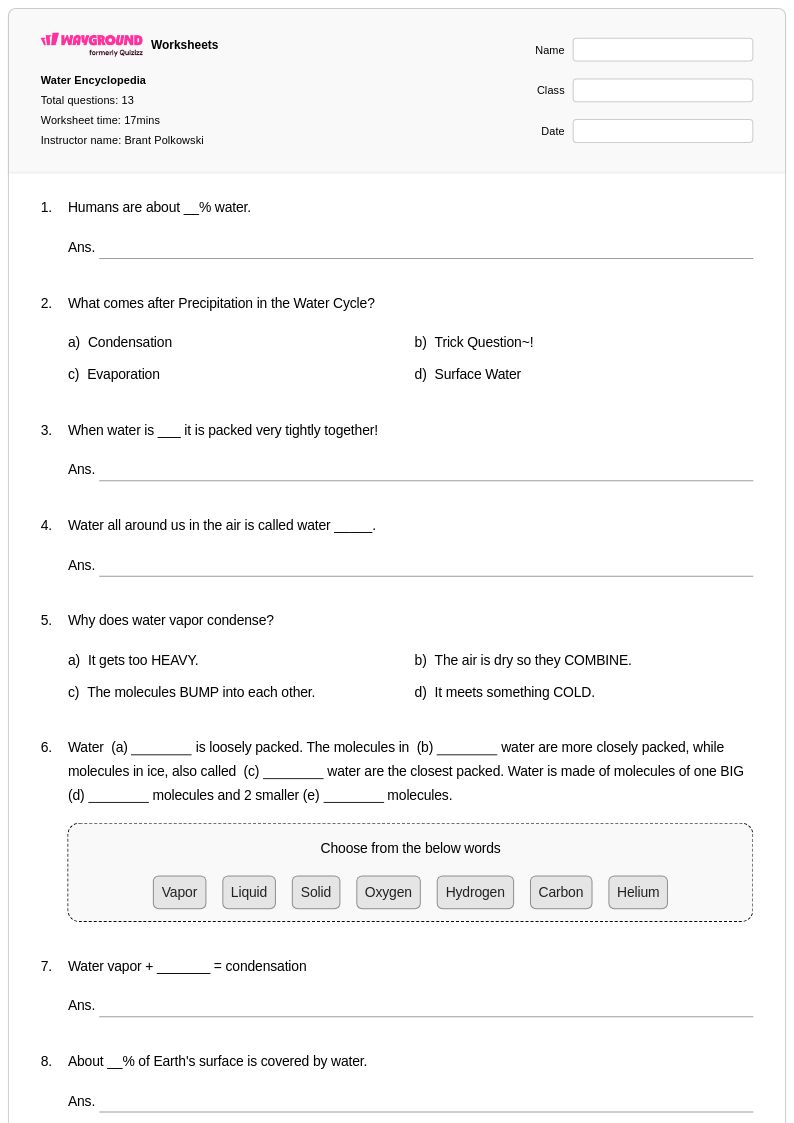
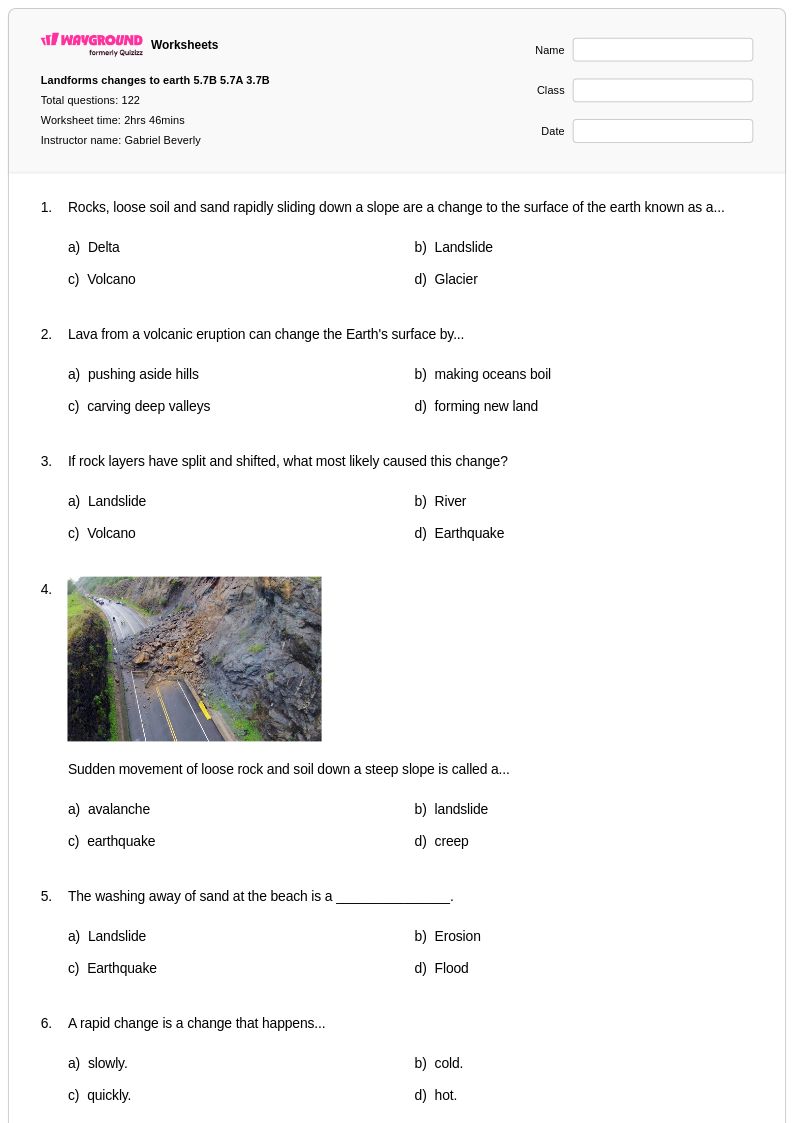
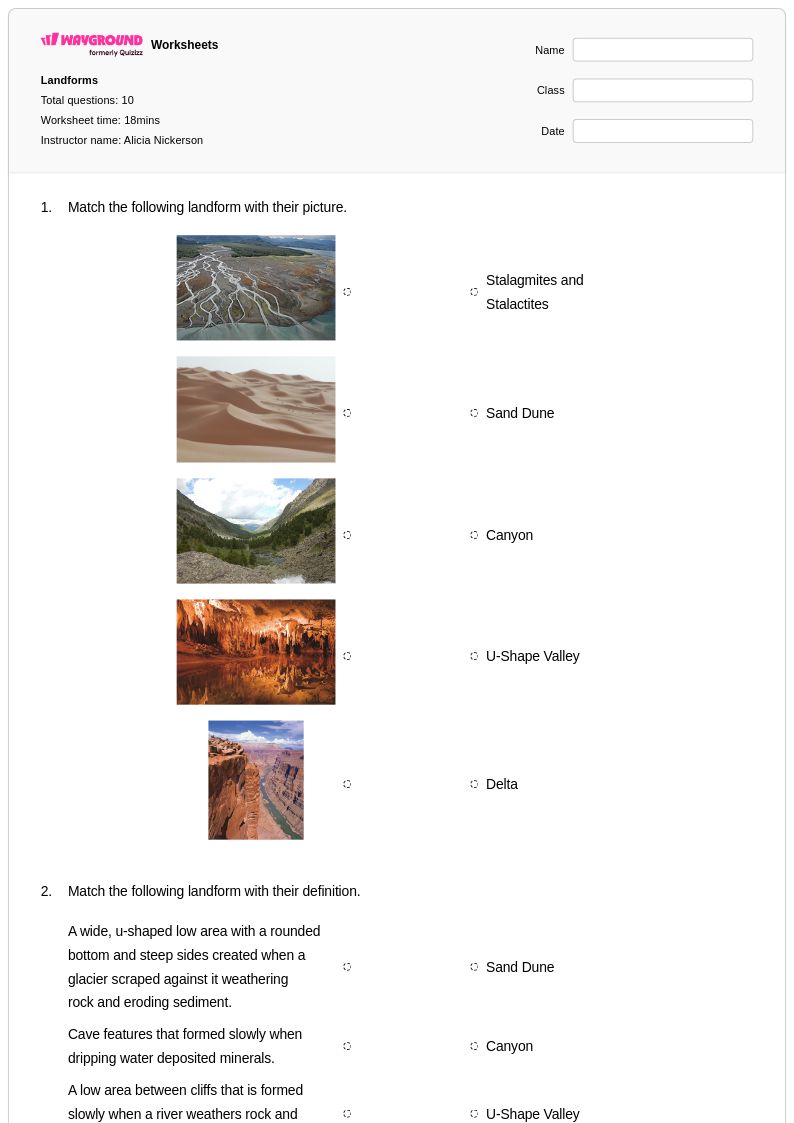
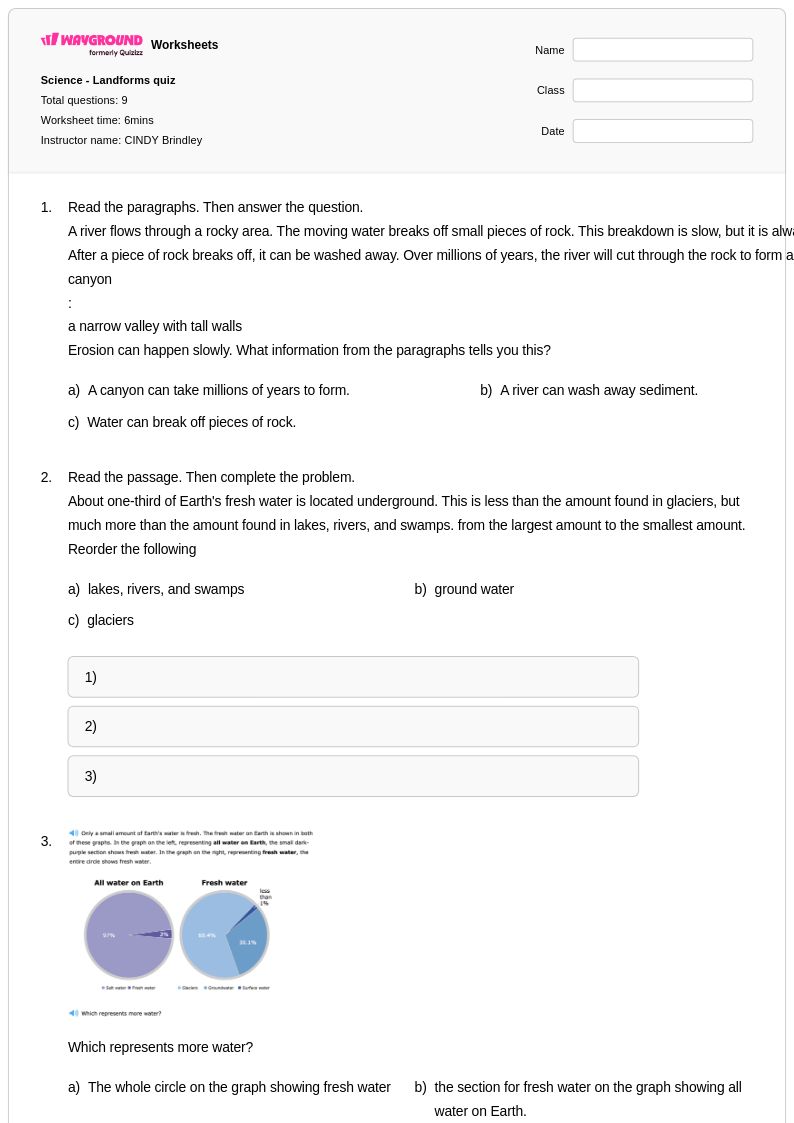
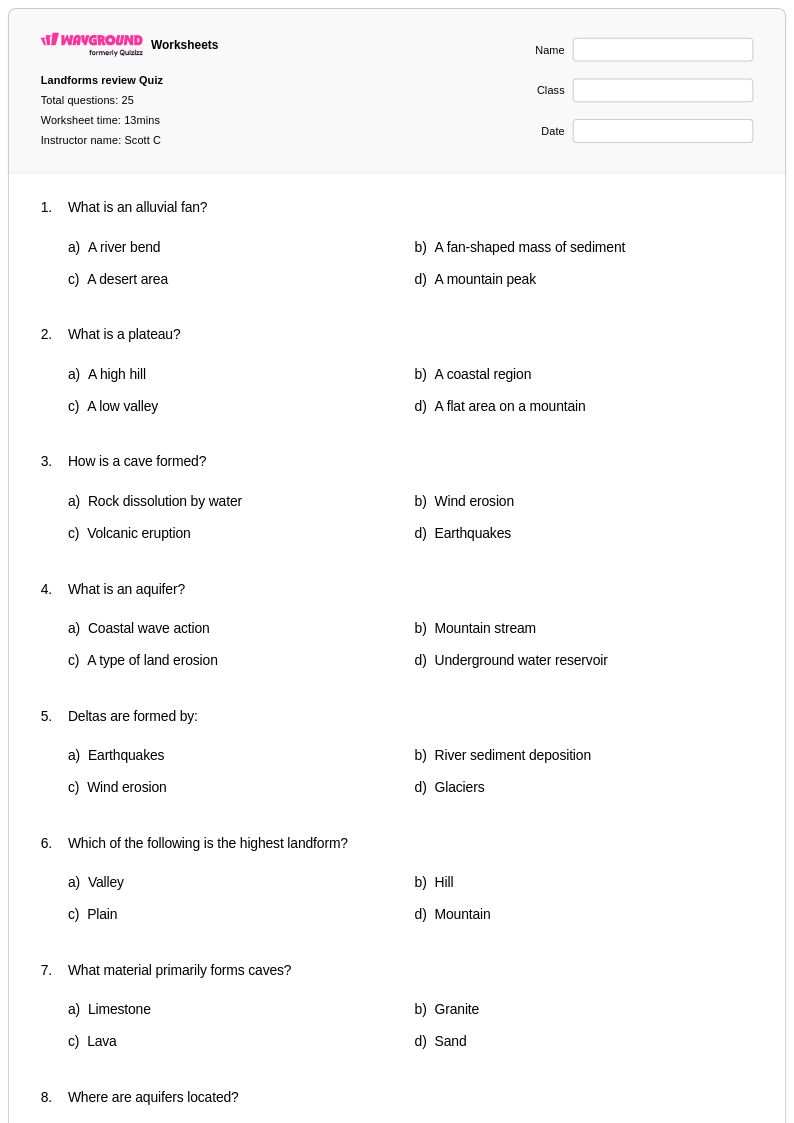
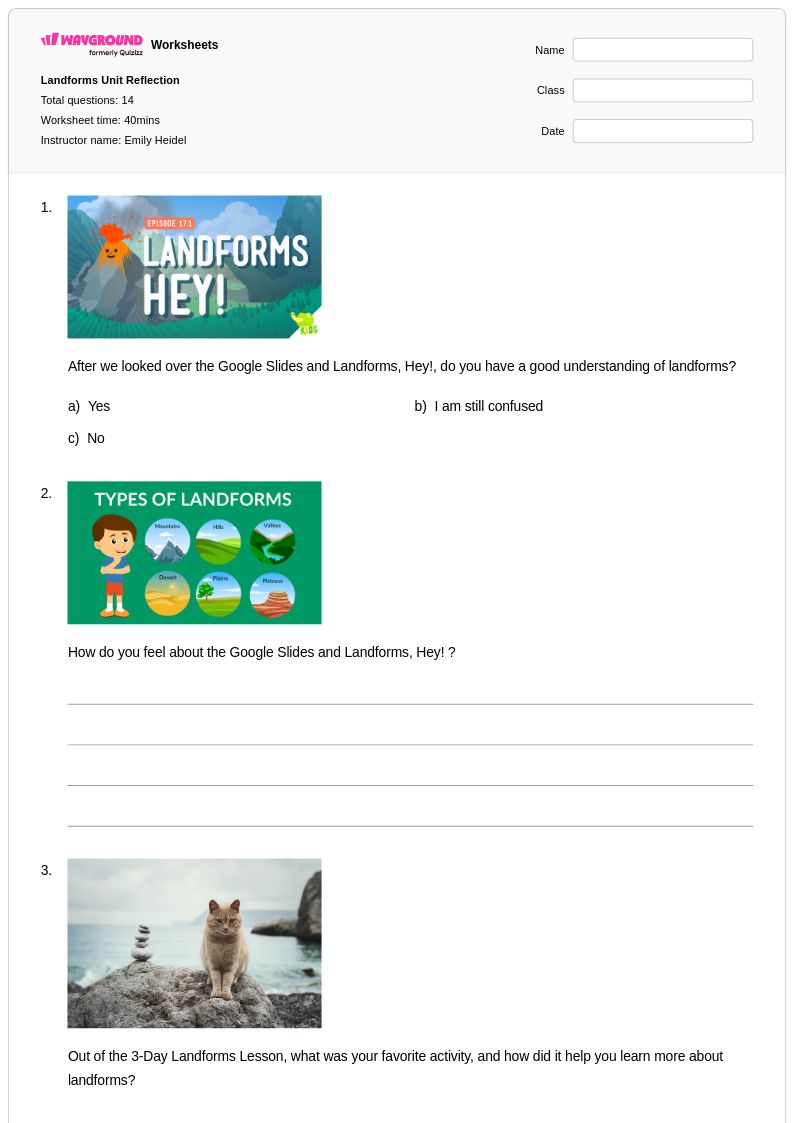
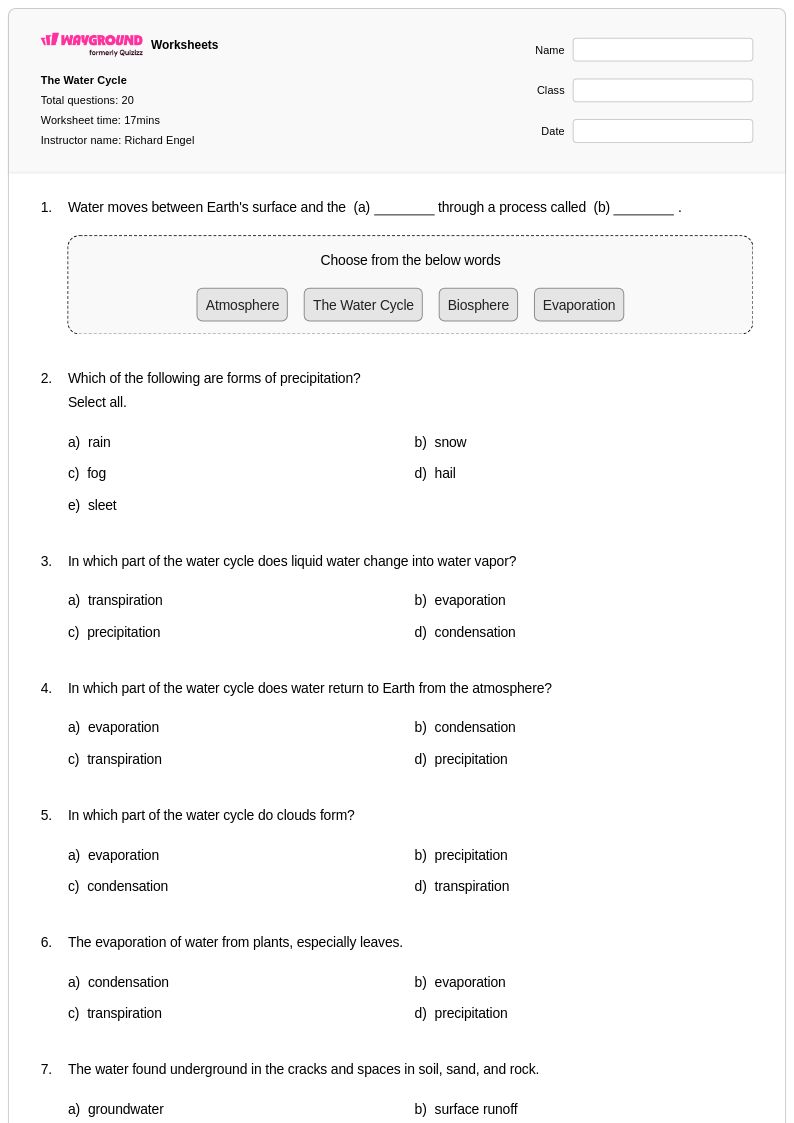
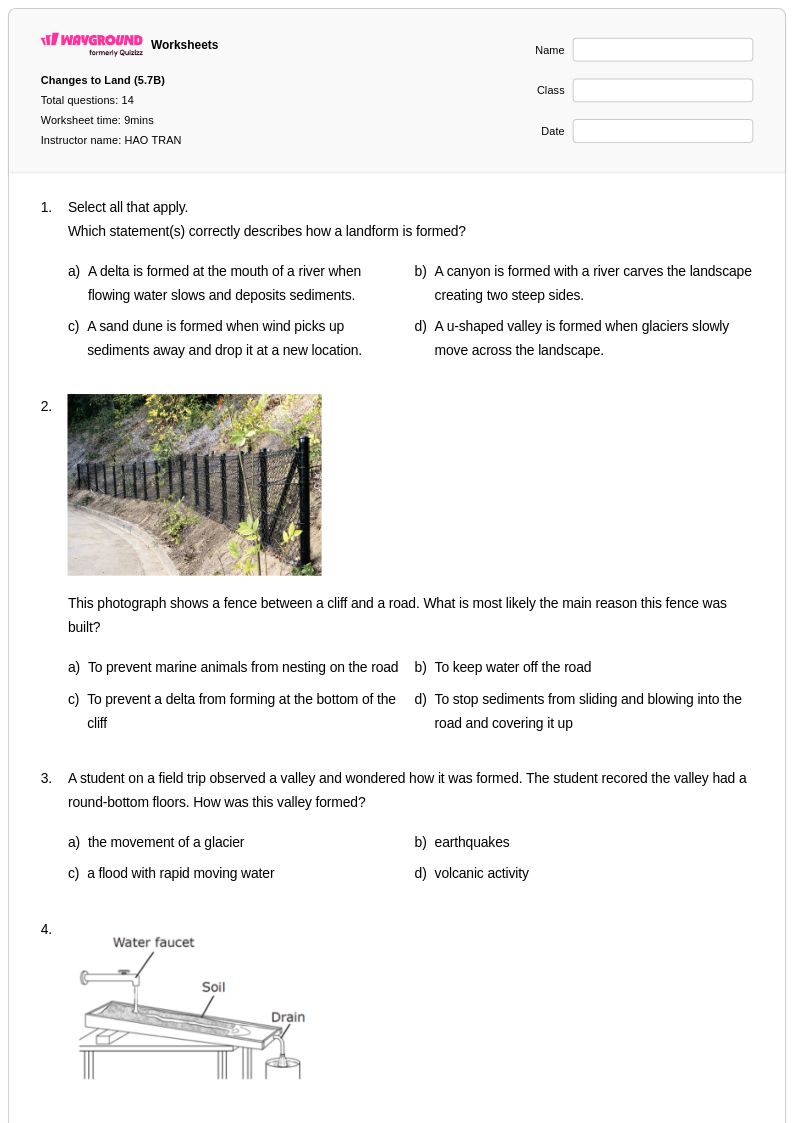
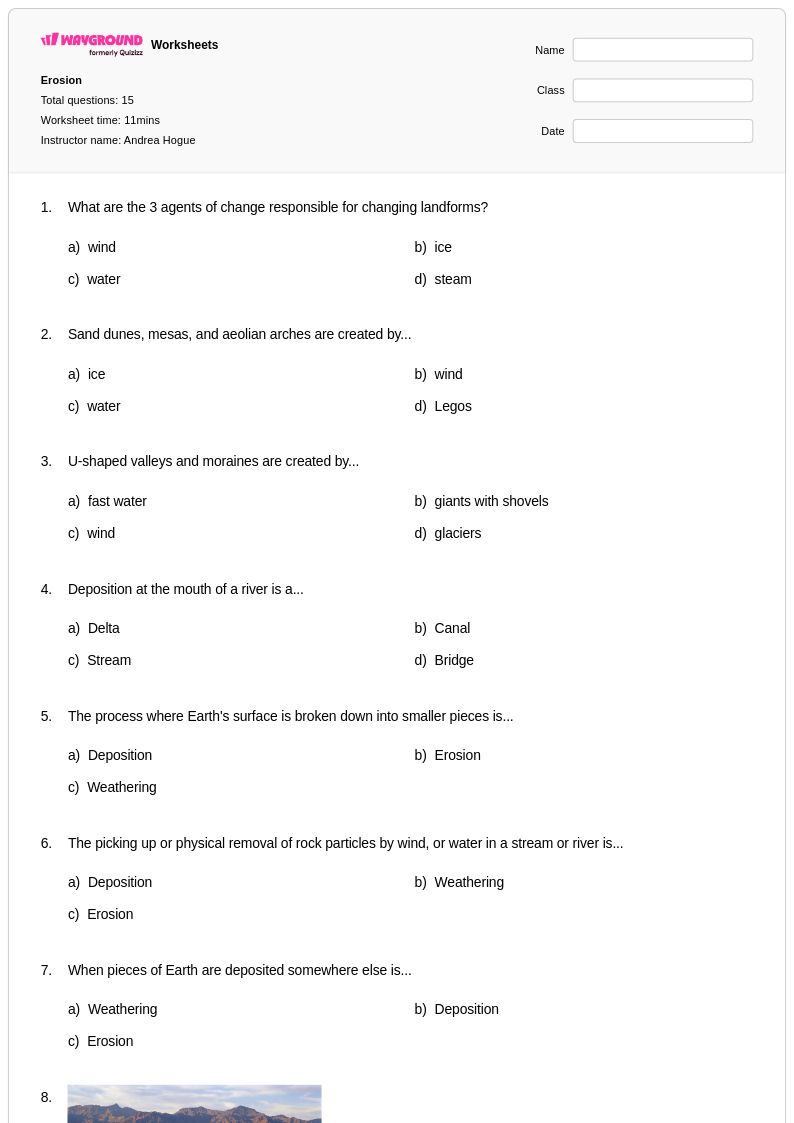
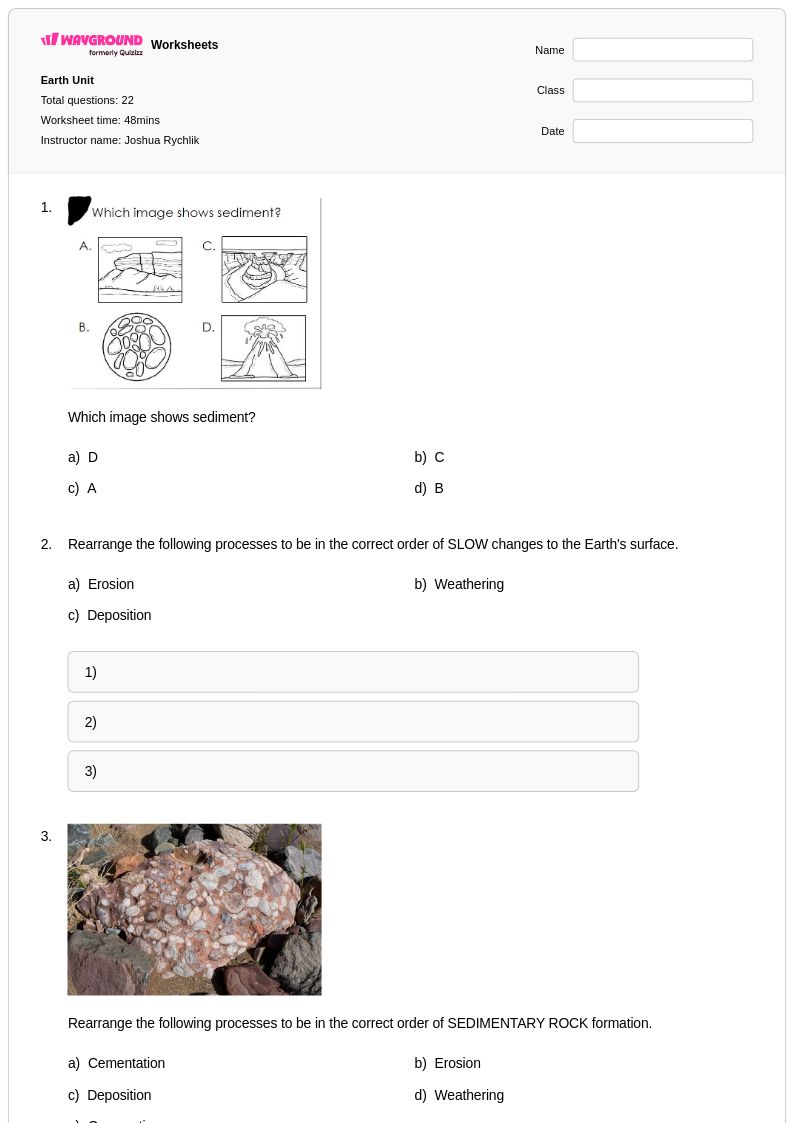
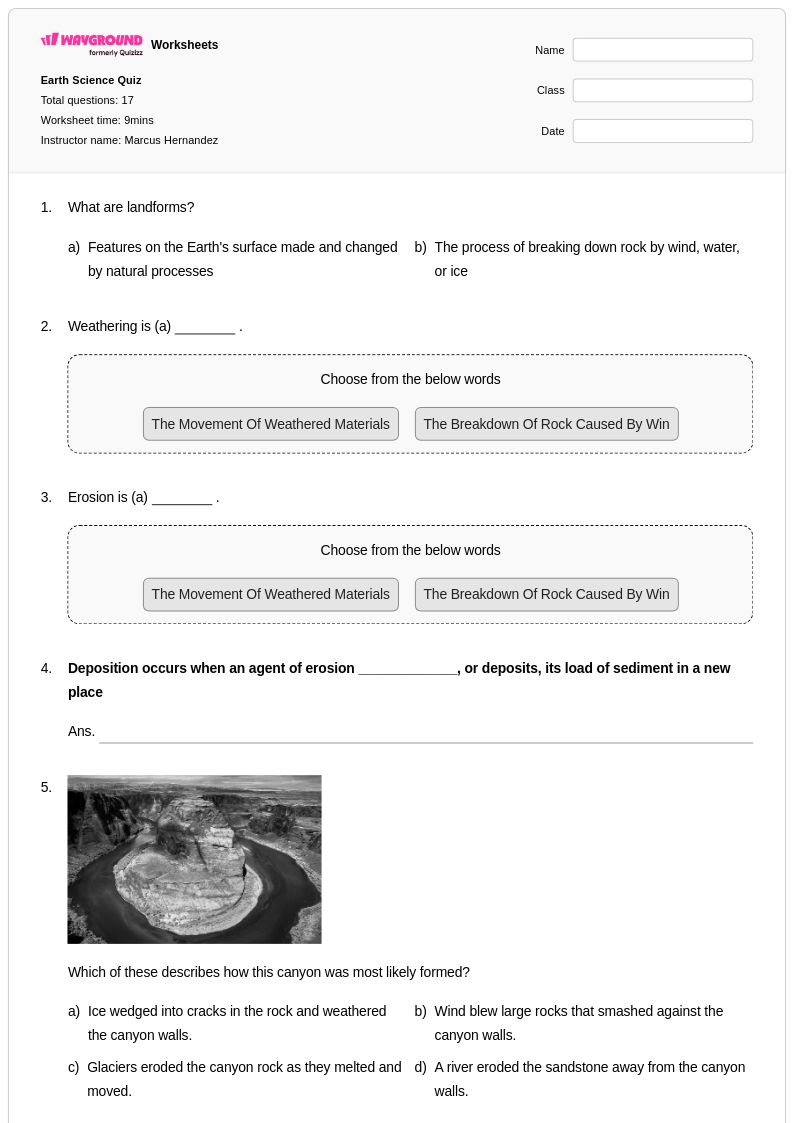
Landforms and Water Bodies worksheets available through Wayground (formerly Quizizz) provide Year 5 students with comprehensive practice opportunities to explore Earth's diverse surface features and hydrological systems. These carefully designed educational resources strengthen students' ability to identify, classify, and analyze various landforms including mountains, valleys, plateaus, plains, and coastal formations, while simultaneously developing their understanding of water bodies such as oceans, rivers, lakes, streams, and wetlands. The worksheets incorporate visual elements, mapping activities, and hands-on exercises that help students recognize the interconnected relationships between landforms and water systems, building essential foundational knowledge for more advanced earth science concepts. Each worksheet comes with a complete answer key and is available as a free printable PDF, making it easy for educators to implement targeted practice problems that reinforce vocabulary, spatial reasoning, and scientific observation skills.
Wayground (formerly Quizizz) empowers teachers with access to millions of teacher-created resources specifically focused on landforms and water bodies instruction, featuring robust search and filtering capabilities that allow educators to quickly locate materials aligned with state and national science standards. The platform's differentiation tools enable teachers to customize worksheets based on individual student needs, whether for remediation support or enrichment challenges, while maintaining the flexibility to use materials in both printable and digital formats including downloadable PDFs. These comprehensive worksheet collections support strategic lesson planning by providing varied question types, assessment rubrics, and progressive skill-building sequences that help teachers address diverse learning styles and academic readiness levels. The extensive resource library facilitates seamless integration of landforms and water bodies content into existing curricula, supporting both formative assessment practices and targeted skill practice sessions that deepen students' geographic literacy and scientific understanding.
FAQs
How do I teach landforms and water bodies to elementary and middle school students?
Start by grounding students in concrete examples they can observe or recognize — local rivers, hills, or coastlines — before introducing technical vocabulary like erosion, deposition, or tributaries. Use visual comparison activities that ask students to identify and classify landforms and water bodies from maps, photographs, or diagrams. Building from familiar to abstract helps students retain geographic terminology and understand how formation processes connect different features.
What exercises help students practice identifying landforms and water bodies?
Effective practice activities include labeling diagrams of cross-sections showing mountains, valleys, and river systems, matching geographic terms to definitions, and classifying features as terrestrial or aquatic. Worksheets that ask students to explain formation processes — such as how glaciers carve valleys or how rivers deposit sediment — push beyond memorization into applied understanding. Combining identification tasks with short written explanations strengthens both vocabulary and conceptual retention.
What are the most common mistakes students make when learning about landforms and water bodies?
Students frequently confuse similar landforms, such as hills versus mountains or gulfs versus bays, because they rely on visual appearance rather than precise definitions. Another common error is treating landforms and water bodies as isolated features rather than understanding their interconnected relationships — for example, failing to connect watershed drainage to the rivers and lakes it feeds. Students also struggle to distinguish between erosion and weathering, often using the terms interchangeably when they describe distinct processes.
How do I use Wayground's landforms and water bodies worksheets in my classroom?
Wayground's landforms and water bodies worksheets are available as printable PDFs for traditional classroom use and in digital formats for technology-integrated environments, making them adaptable for in-class instruction, homework, or independent practice. Teachers can also host the worksheets as a quiz directly on Wayground, enabling real-time student responses and automatic grading. For students who need additional support, Wayground's accommodation tools — including read aloud, extended time, and reduced answer choices — can be applied individually without notifying other students.
How can I differentiate landforms and water bodies instruction for students at different skill levels?
For students who need scaffolding, start with word banks, labeled reference diagrams, and simplified classification tasks before moving to open-ended identification. More advanced students can analyze formation processes, compare landforms across regions, or examine how human activity alters natural water systems. On Wayground, teachers can apply differentiation settings — such as reduced answer choices or read aloud — to individual students, so each learner works at the appropriate level of challenge without disrupting the rest of the class.
How do landforms and water bodies fit into the earth science and geography curriculum?
Landforms and water bodies are foundational to both earth science and geography because they connect geological processes — such as plate tectonics, erosion, and weathering — to the physical features students observe on maps and in the environment. Understanding these features supports broader learning about climate patterns, ecosystems, and human settlement. Most K-8 earth science standards include explicit expectations for students to identify, classify, and explain the formation of major landforms and water bodies.