Free Printable Weather & Seasons Worksheets for Year 5
Explore Wayground's free Year 5 weather and seasons worksheets with printable PDFs, practice problems, and answer keys to help students master climate patterns, seasonal changes, and meteorological concepts.
Explore printable Weather & Seasons worksheets for Year 5
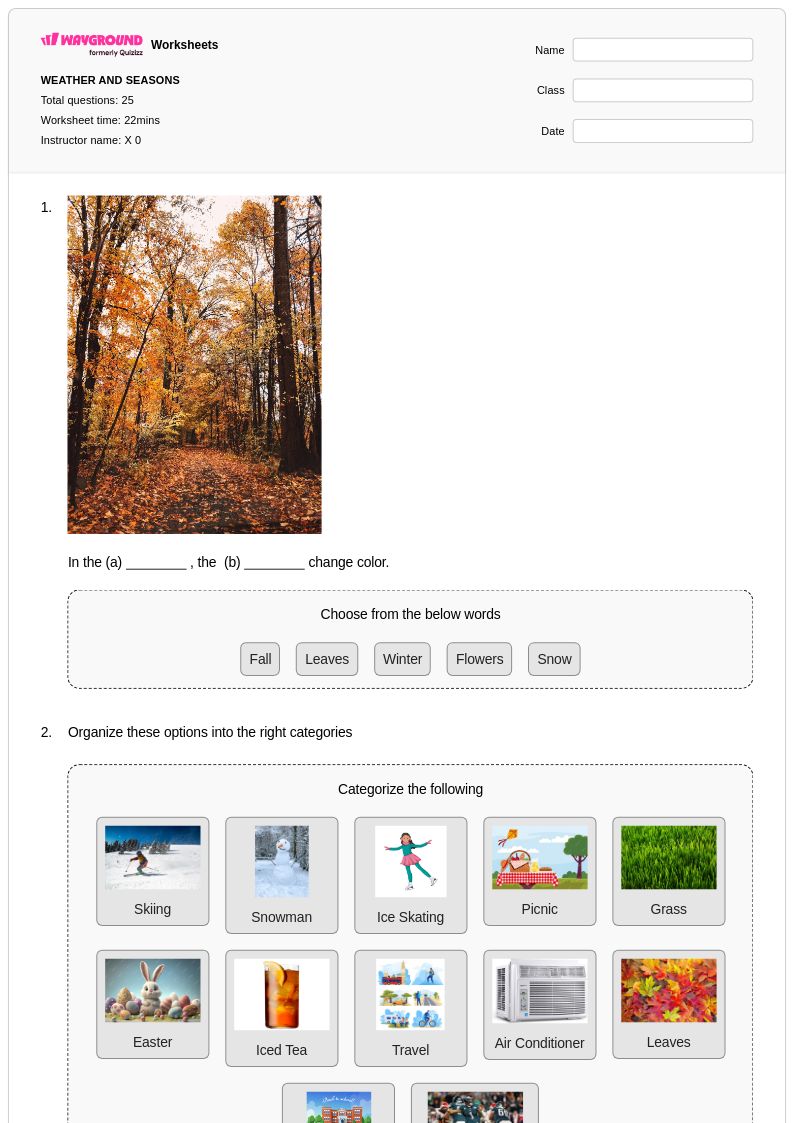
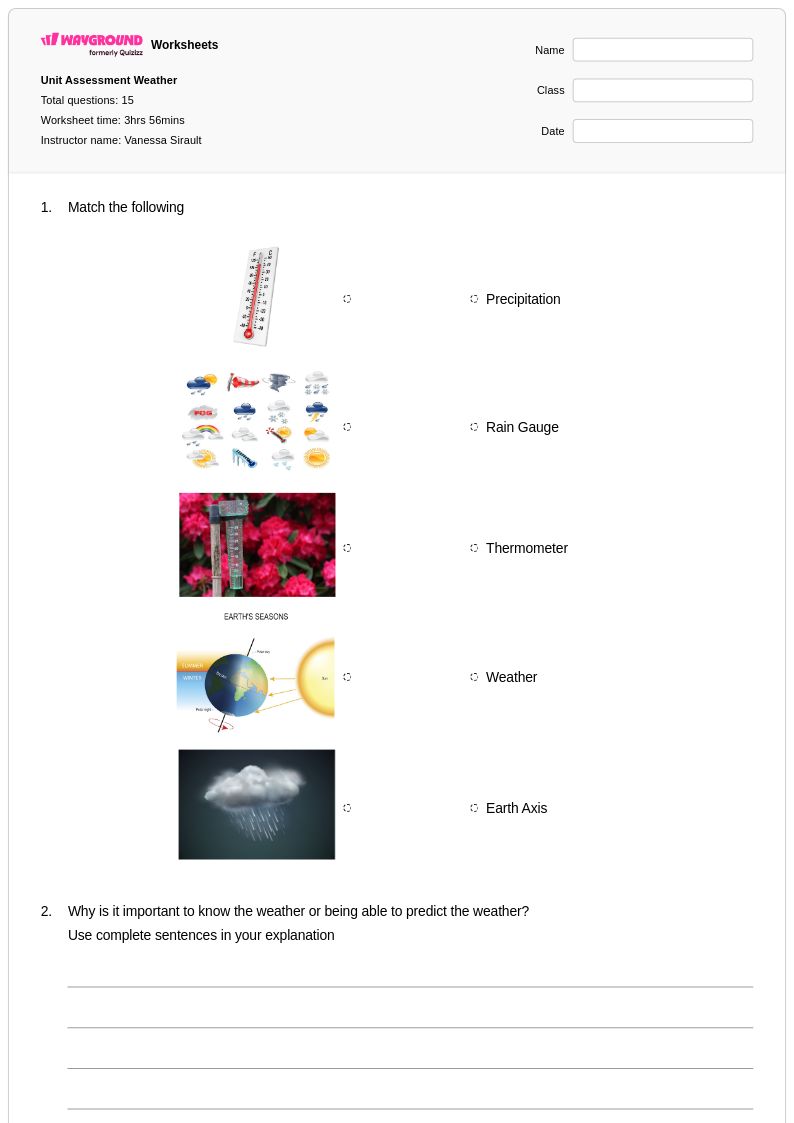
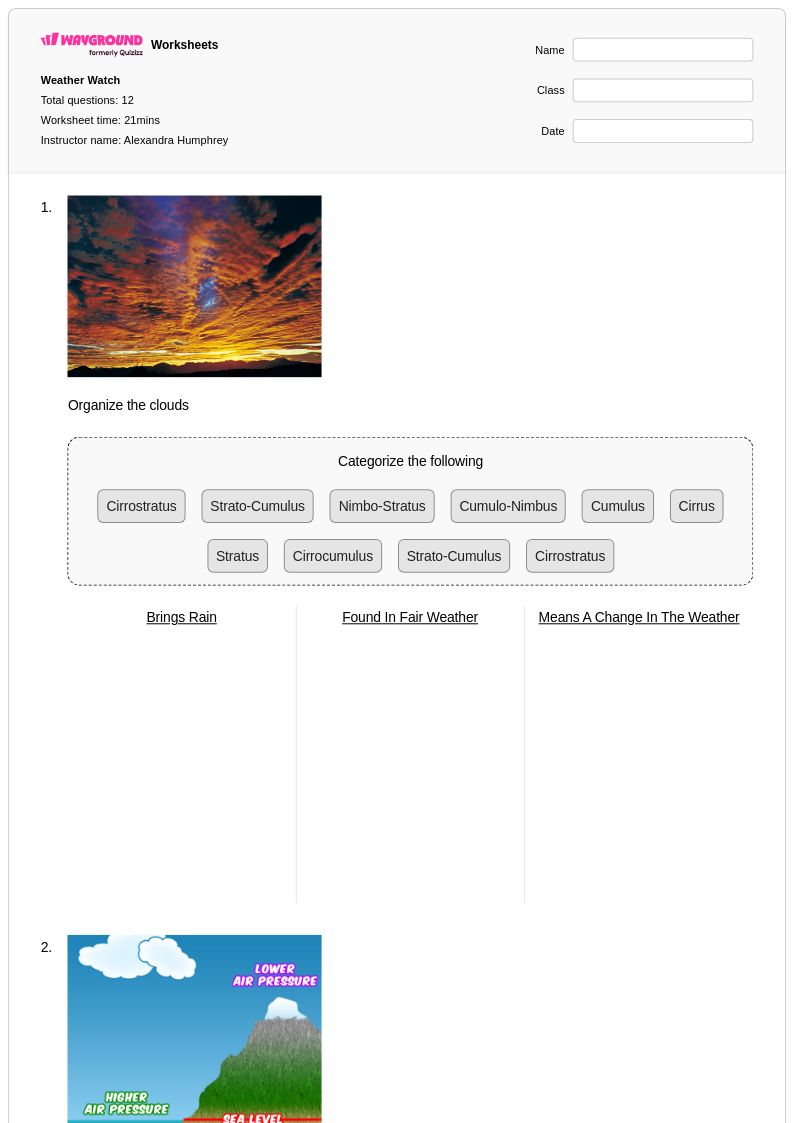
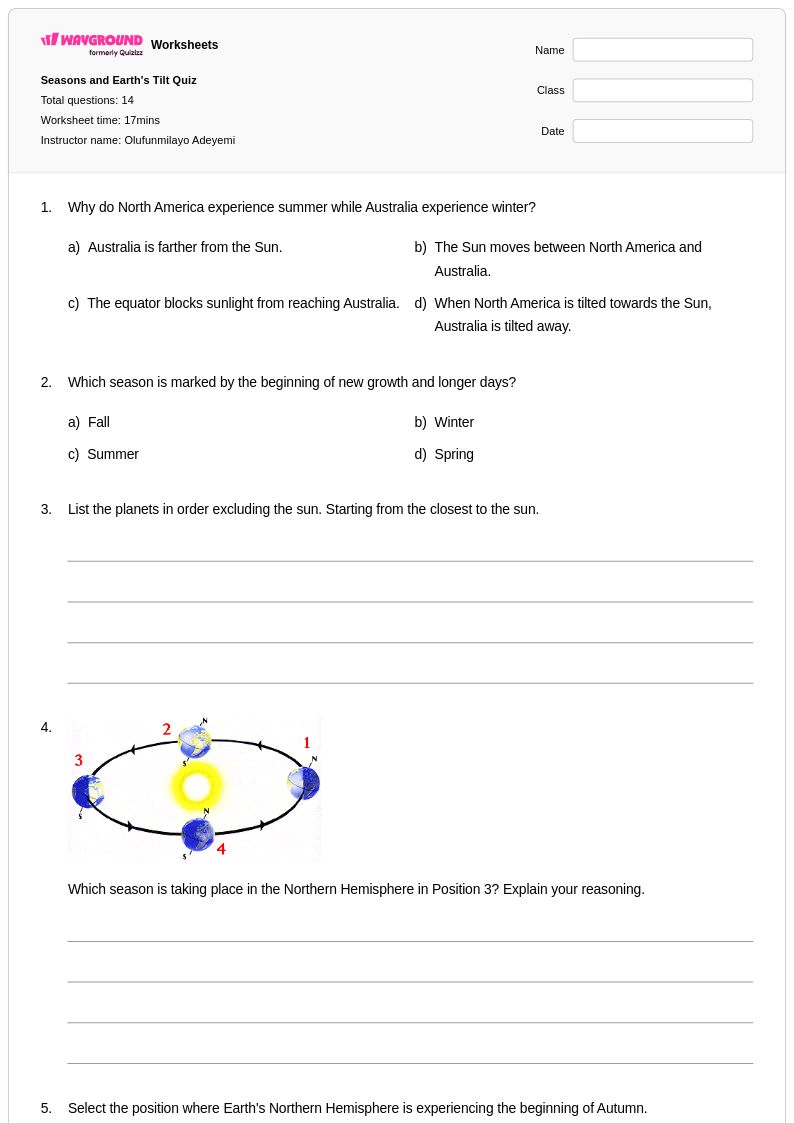
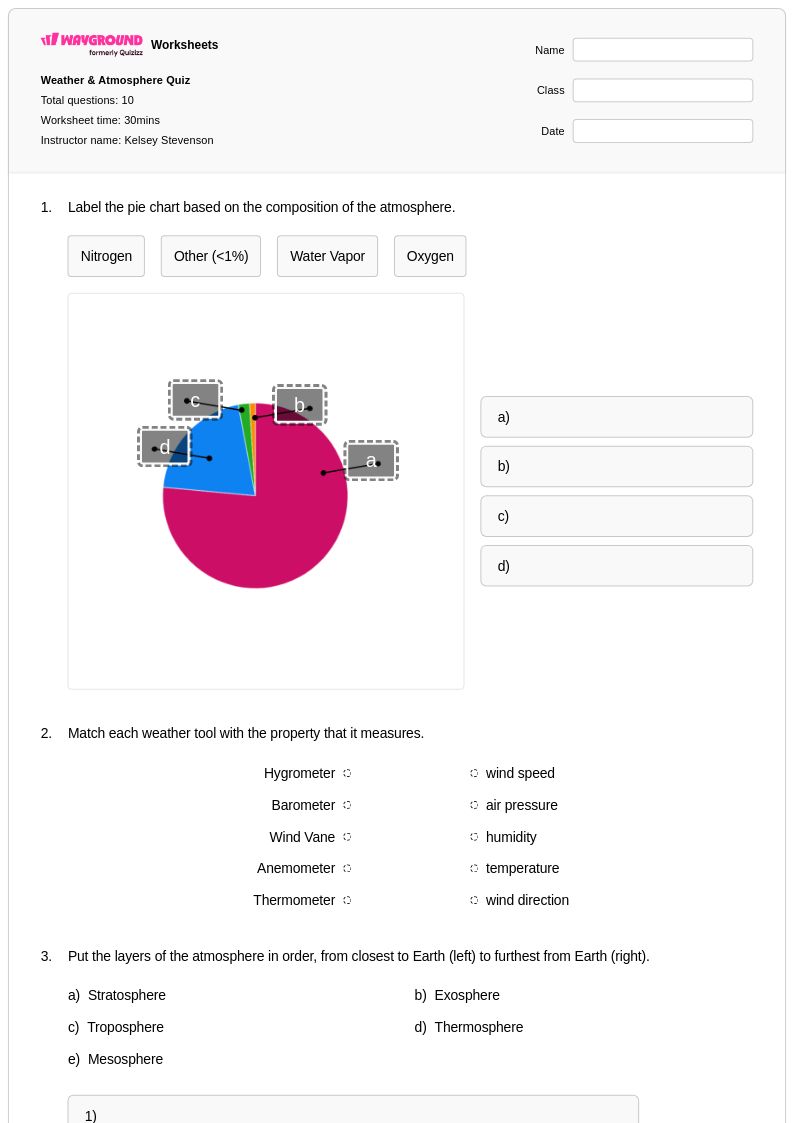
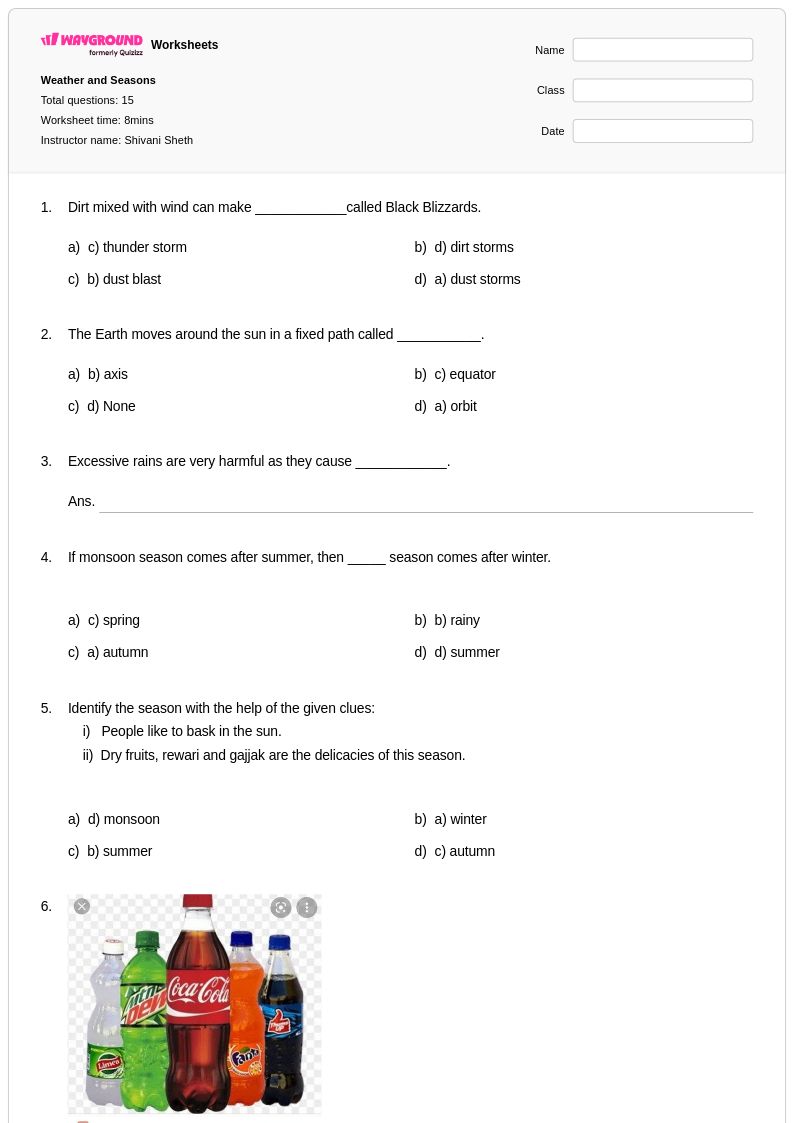
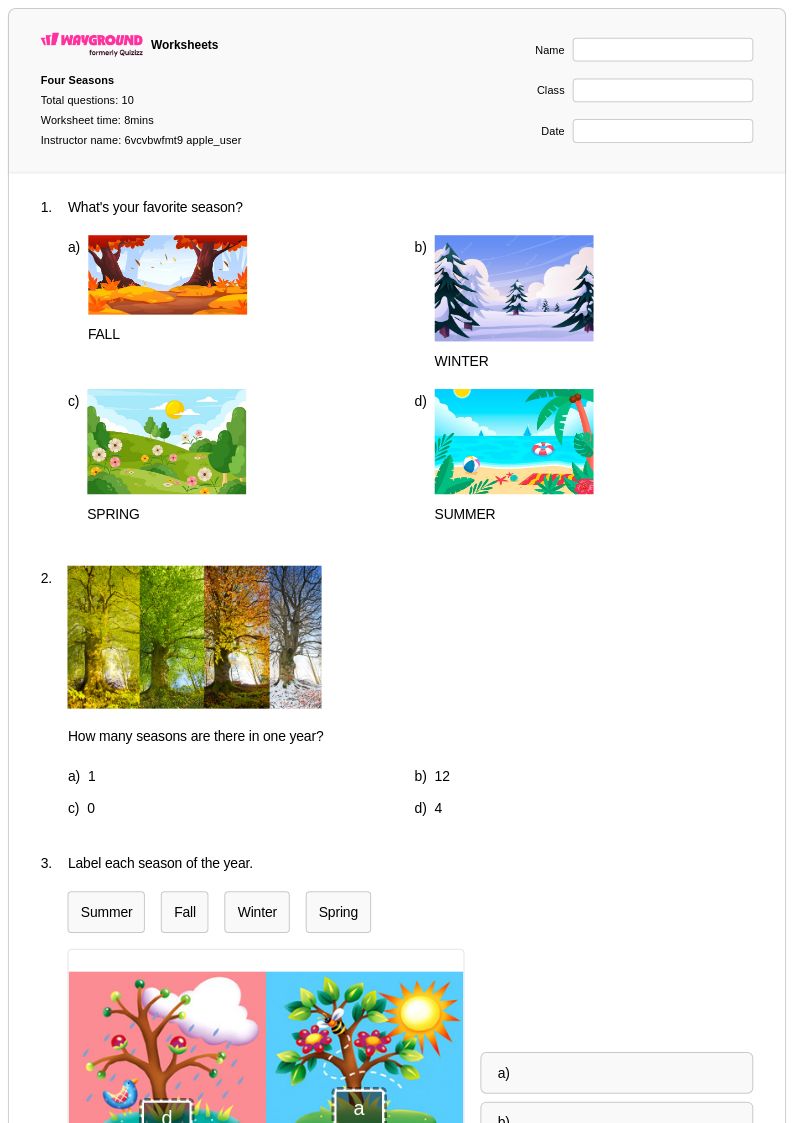
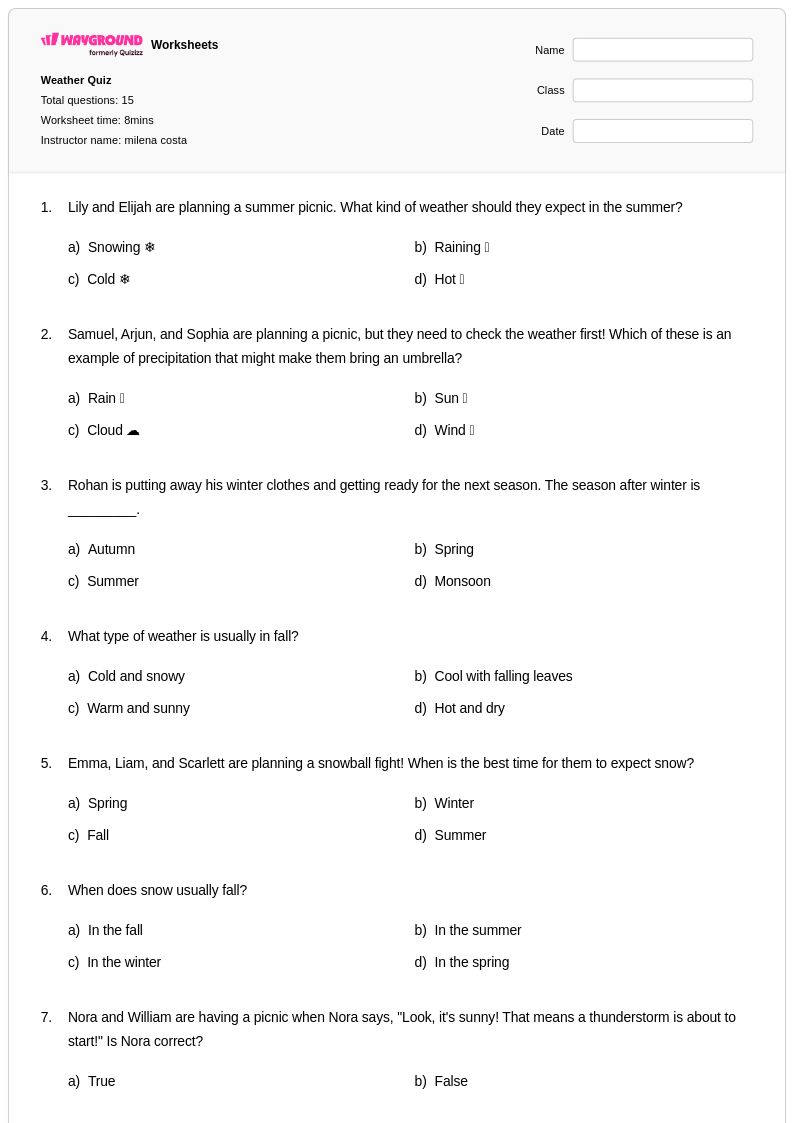
Weather and seasons worksheets for Year 5 students available through Wayground (formerly Quizizz) provide comprehensive coverage of atmospheric phenomena and seasonal patterns that fifth graders need to master in their Earth and space science studies. These educational resources focus on developing students' understanding of weather formation, measurement techniques, climate patterns, and the cyclical nature of seasons caused by Earth's tilt and orbit around the sun. The worksheets strengthen critical scientific skills including data interpretation from weather instruments, pattern recognition in seasonal changes, and analysis of how weather systems affect daily life and ecosystems. Each worksheet collection includes detailed answer keys and is available as free printable pdf resources, featuring practice problems that range from identifying cloud types and weather symbols to explaining the relationship between Earth's position and seasonal variations.
Wayground (formerly Quizizz) supports educators with an extensive library of millions of teacher-created weather and seasons worksheets specifically designed for fifth-grade learners. The platform's robust search and filtering capabilities allow teachers to quickly locate materials aligned with specific learning standards and curriculum requirements, while differentiation tools enable customization for diverse learning needs within the classroom. These resources are available in both printable pdf format and digital interactive versions, providing flexibility for various instructional approaches and technology integration levels. Teachers can efficiently plan comprehensive weather and seasons units, create targeted remediation activities for students struggling with meteorological concepts, develop enrichment materials for advanced learners, and provide consistent skill practice opportunities that reinforce understanding of atmospheric science principles and seasonal phenomena throughout the academic year.
FAQs
How do I teach weather and seasons to elementary students?
Start by grounding instruction in students' direct experience — have them observe and record daily weather before introducing vocabulary like precipitation, temperature, and atmospheric pressure. From there, connect seasonal changes to Earth's position relative to the sun, using visual models to show why different parts of the year bring different conditions. Building from observation to explanation helps students develop genuine scientific thinking rather than memorizing isolated facts.
What activities help students practice identifying seasonal patterns?
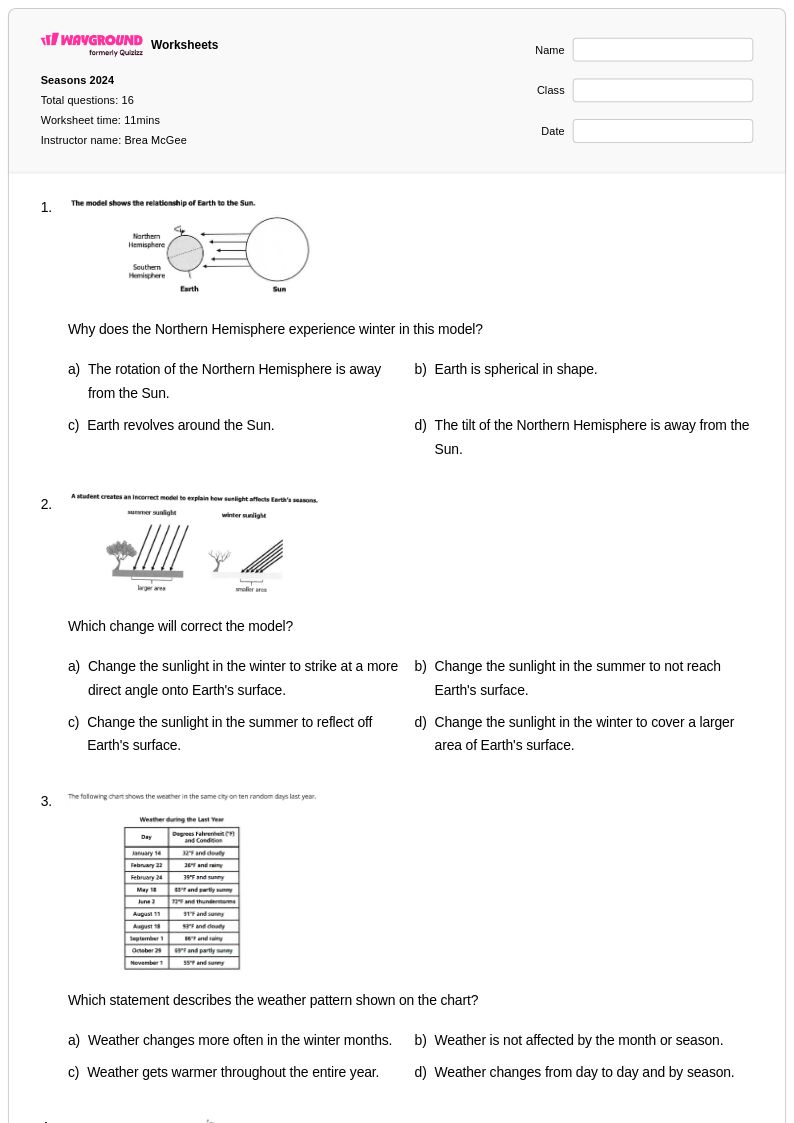
Worksheets that ask students to analyze weather data across months, interpret seasonal charts, and predict trends based on temperature and precipitation patterns are particularly effective. Practice problems that connect Earth's axial tilt to observable changes — like daylight hours and temperature shifts — help students move beyond surface-level identification toward causal understanding. Repeated exposure to reading and interpreting weather maps also reinforces data literacy alongside seasonal content.
What mistakes do students commonly make when learning about weather and seasons?
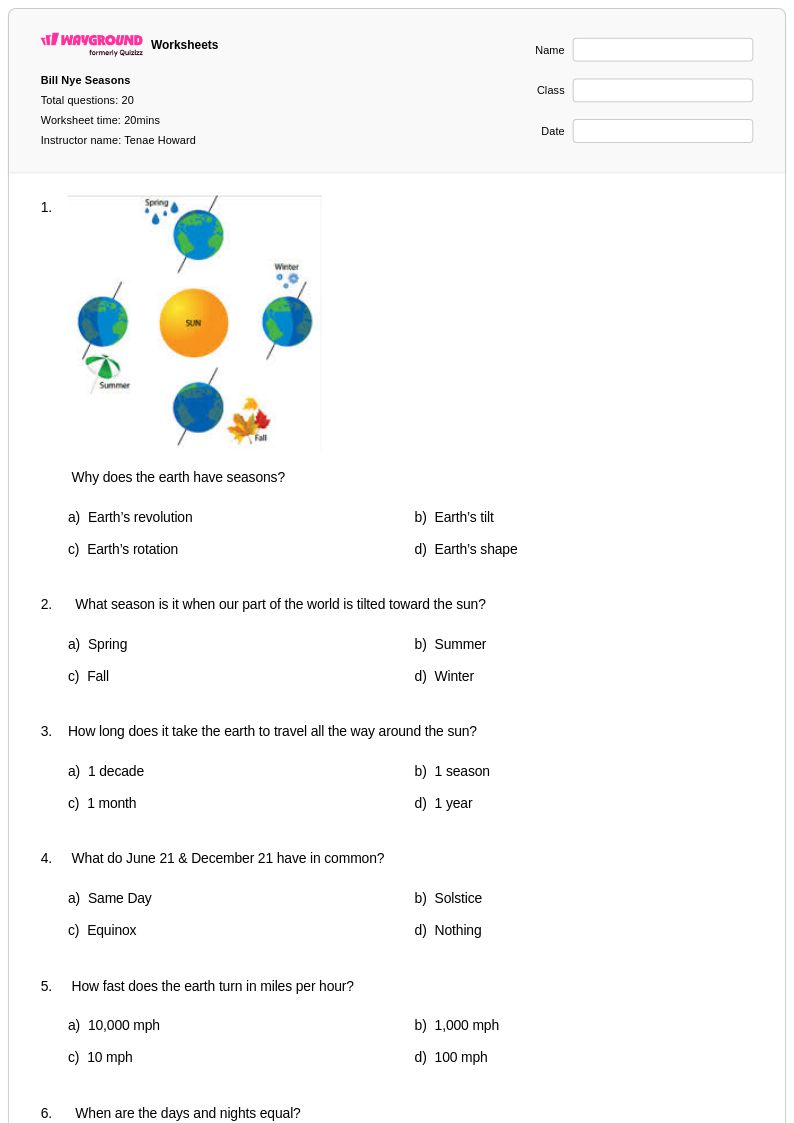
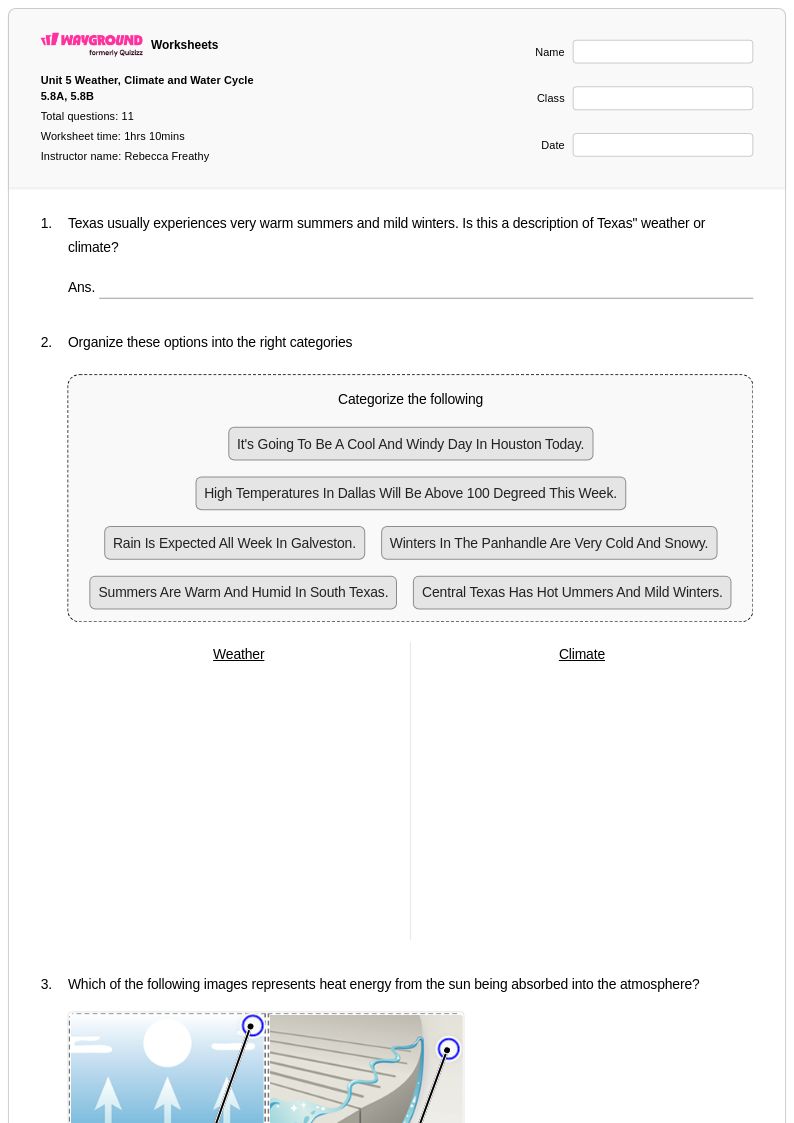
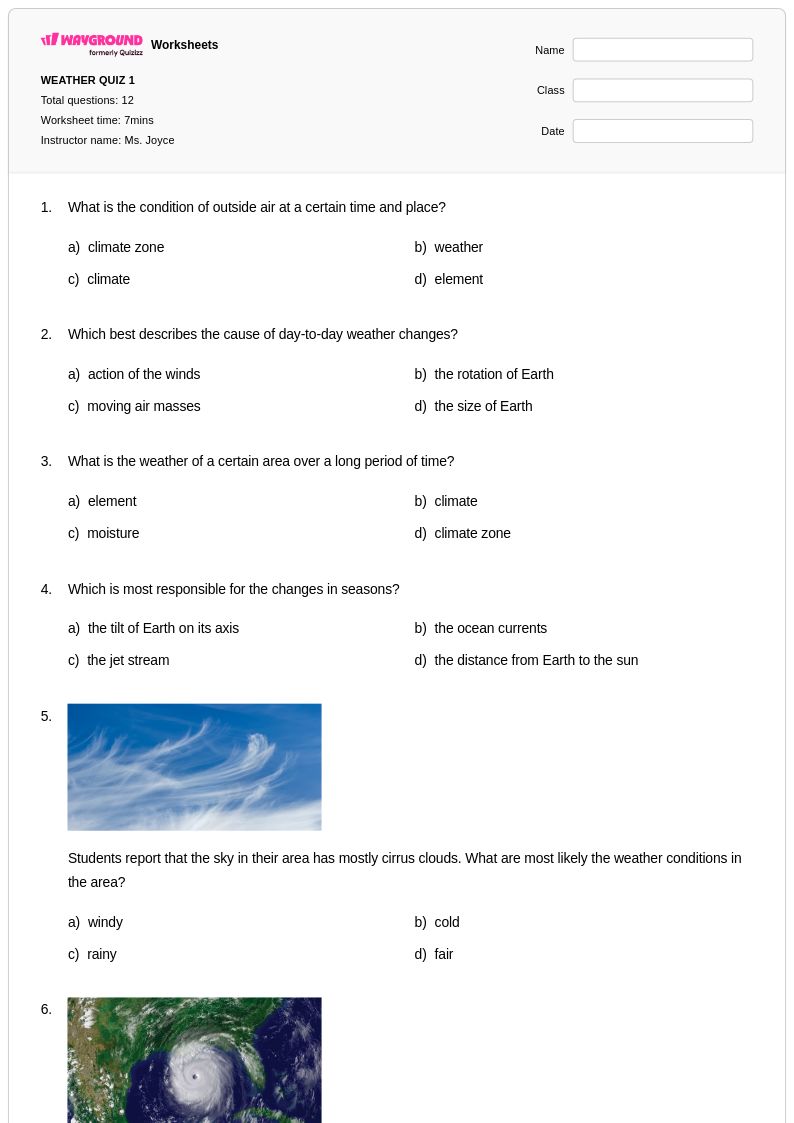
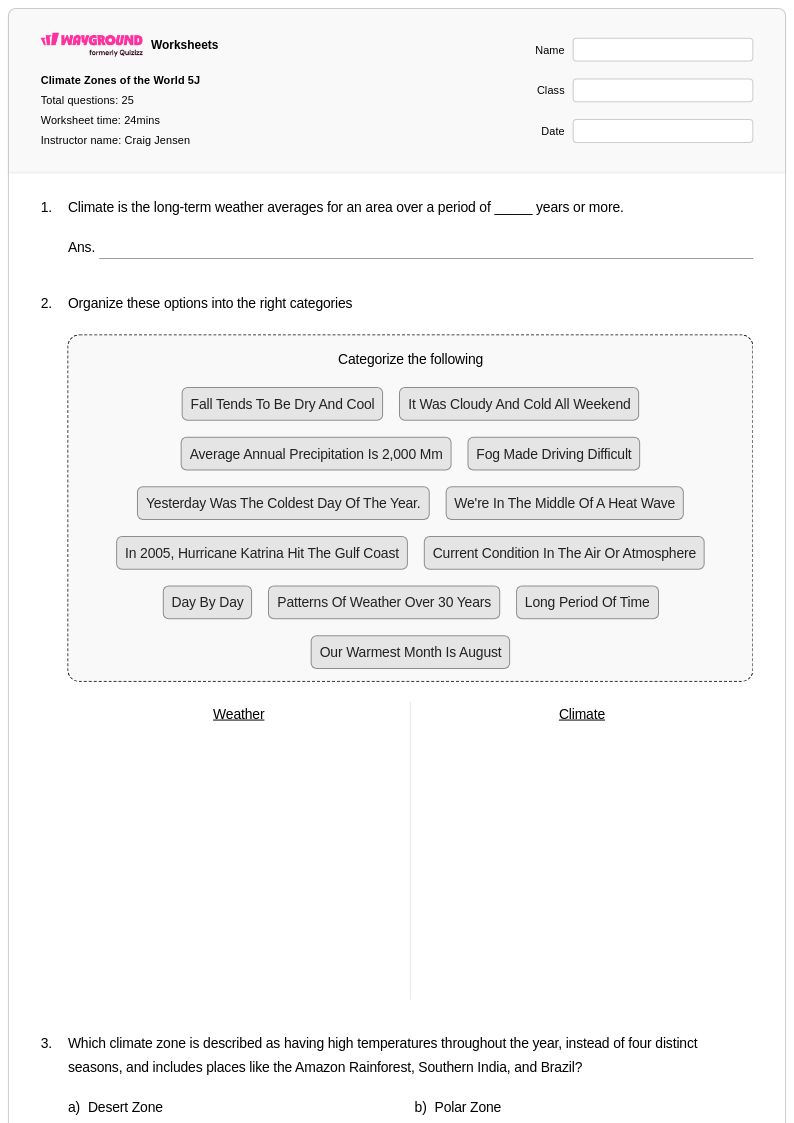
A common misconception is that Earth is closer to the sun during summer, when in fact seasons are caused by Earth's axial tilt, not its distance from the sun. Students also frequently confuse weather with climate, treating short-term atmospheric conditions as representative of long-term patterns. Targeted practice problems that explicitly address these errors — requiring students to explain the cause of seasons or distinguish weather from climate — can help surface and correct these misunderstandings.
How can I differentiate weather and seasons worksheets for students at different levels?
For struggling learners, reduce cognitive load by focusing on one concept at a time — basic weather observation before moving to seasonal analysis. For advanced students, introduce complex tasks like interpreting multi-variable weather data or analyzing how geographic location affects climate patterns. On Wayground, teachers can apply accommodations such as read aloud, extended time, and reduced answer choices to individual students, allowing the same core worksheet to serve a range of learners without requiring entirely separate materials.
How do I use Wayground's weather and seasons worksheets in my classroom?
Wayground's weather and seasons worksheets are available as printable PDFs for traditional classroom use and in digital formats for technology-integrated learning environments. Teachers can also host them as an interactive quiz directly on Wayground, making them suitable for in-class practice, homework, or formative assessment. Each worksheet includes a complete answer key, so grading and reviewing student understanding is straightforward regardless of the format you choose.
How do I assess whether students understand the causes of seasonal change?
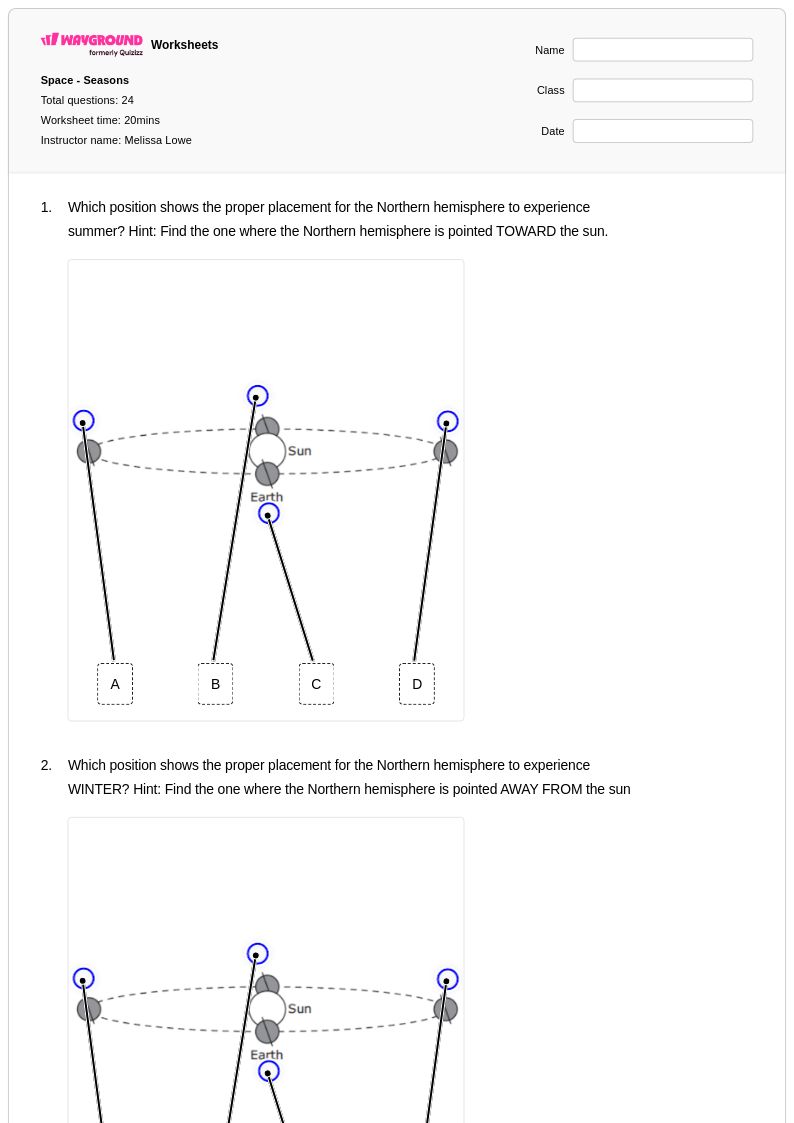
Look for whether students can explain the mechanism behind seasons — Earth's axial tilt and its effect on sunlight intensity and duration — rather than simply naming the four seasons. Effective assessment tasks include having students analyze diagrams of Earth's position during different seasons, predict temperature and daylight changes, and distinguish between weather events and seasonal climate patterns. Answer-key-supported worksheets that include data interpretation and short explanation prompts give teachers clear evidence of conceptual understanding versus surface recall.