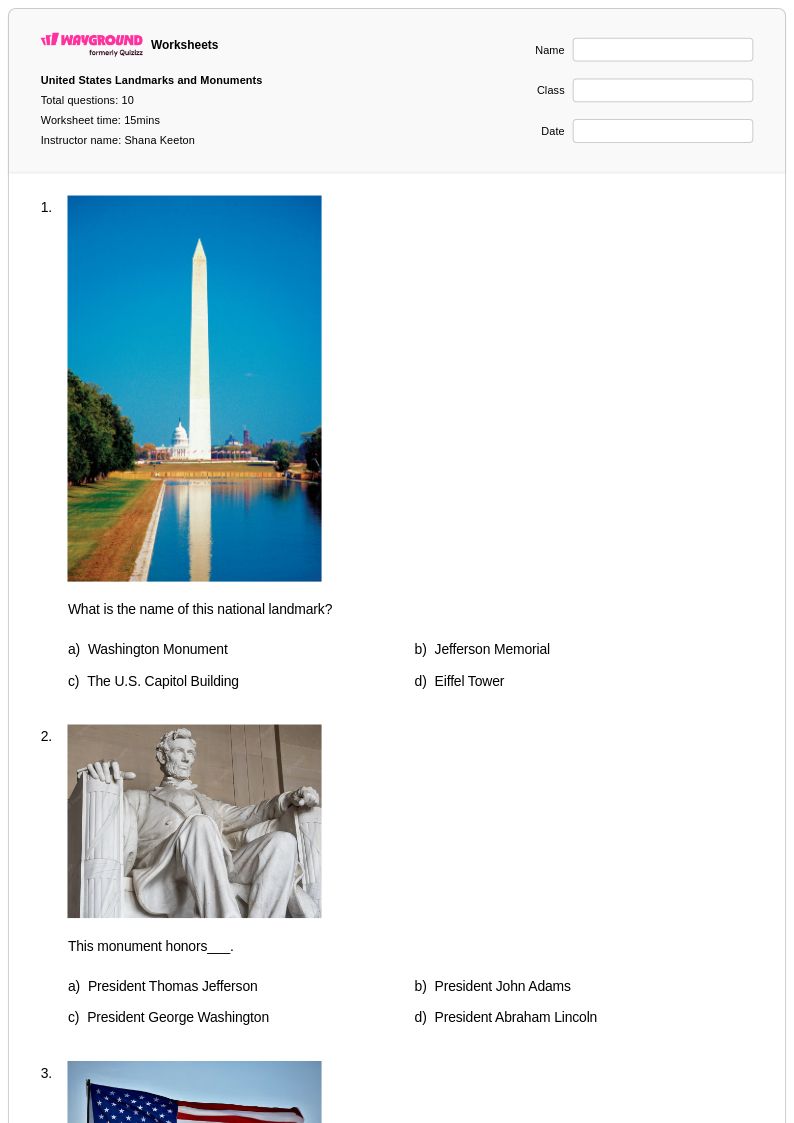
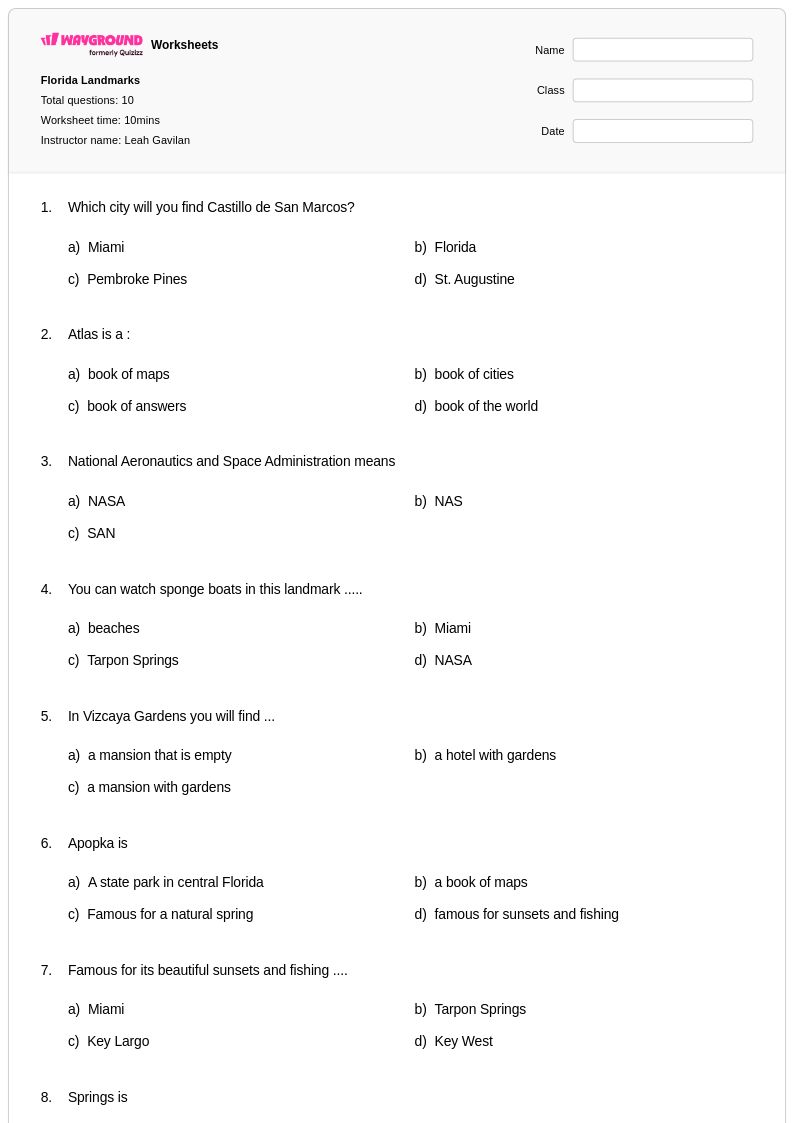
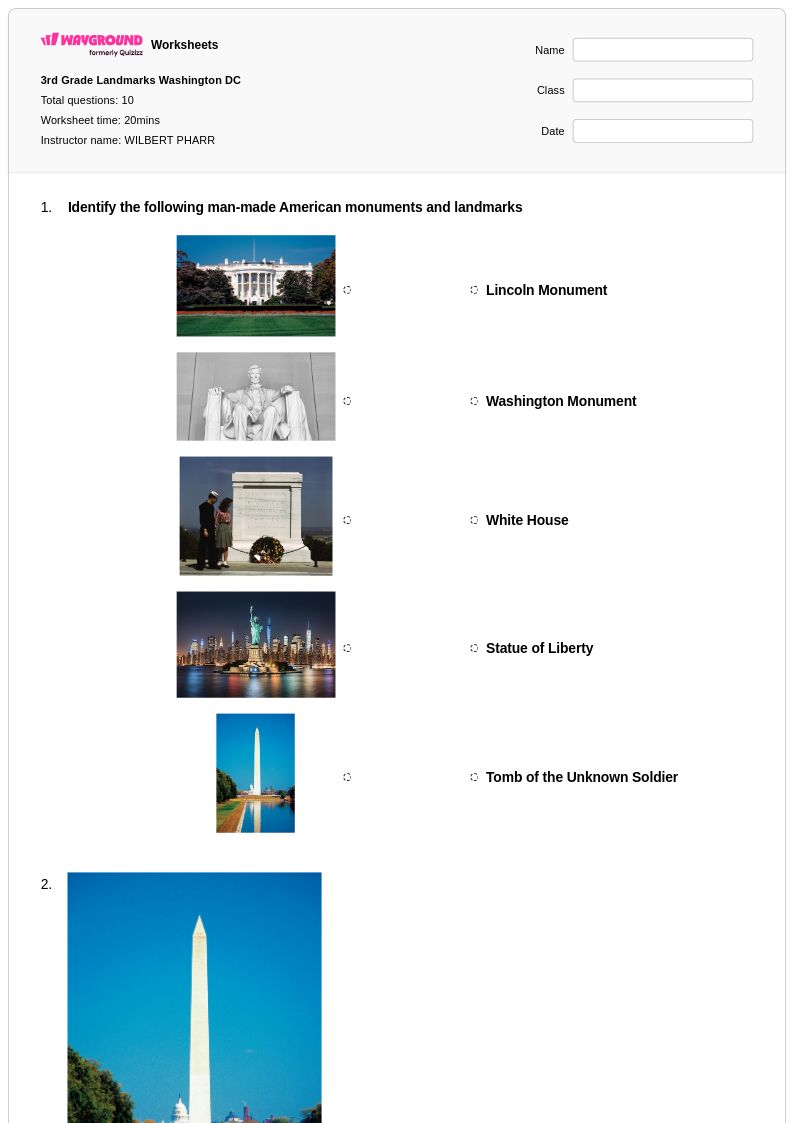
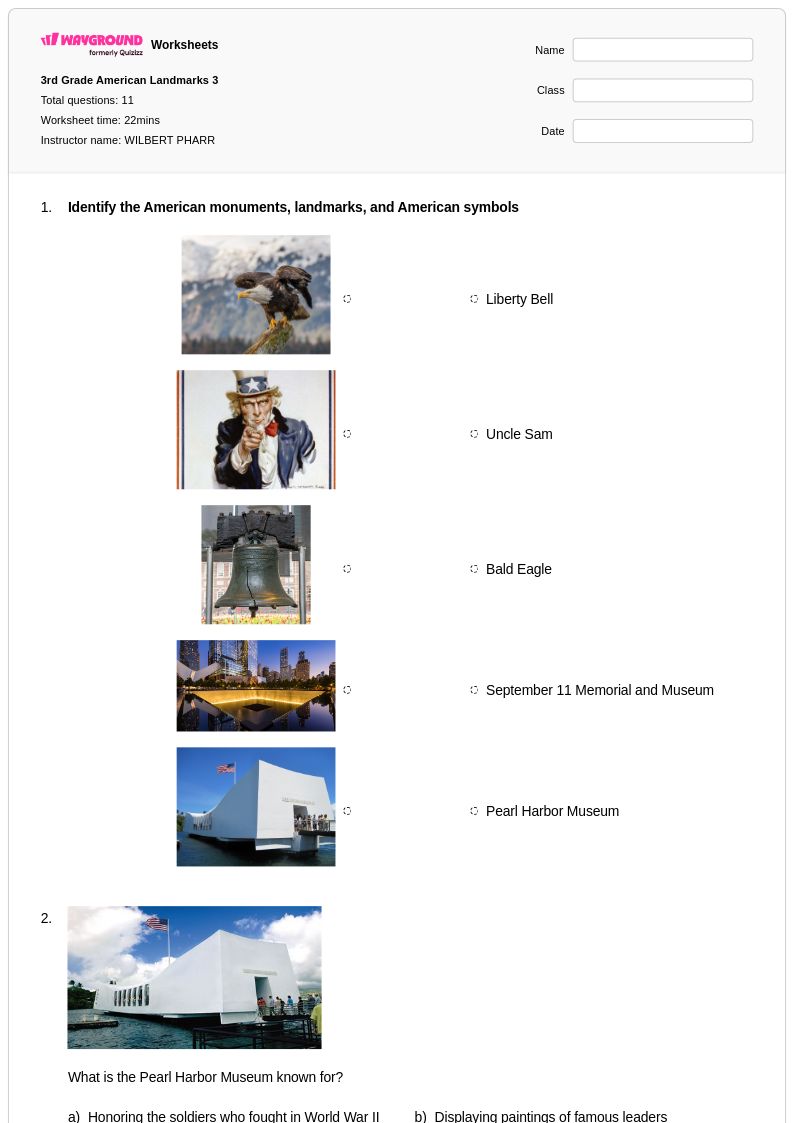
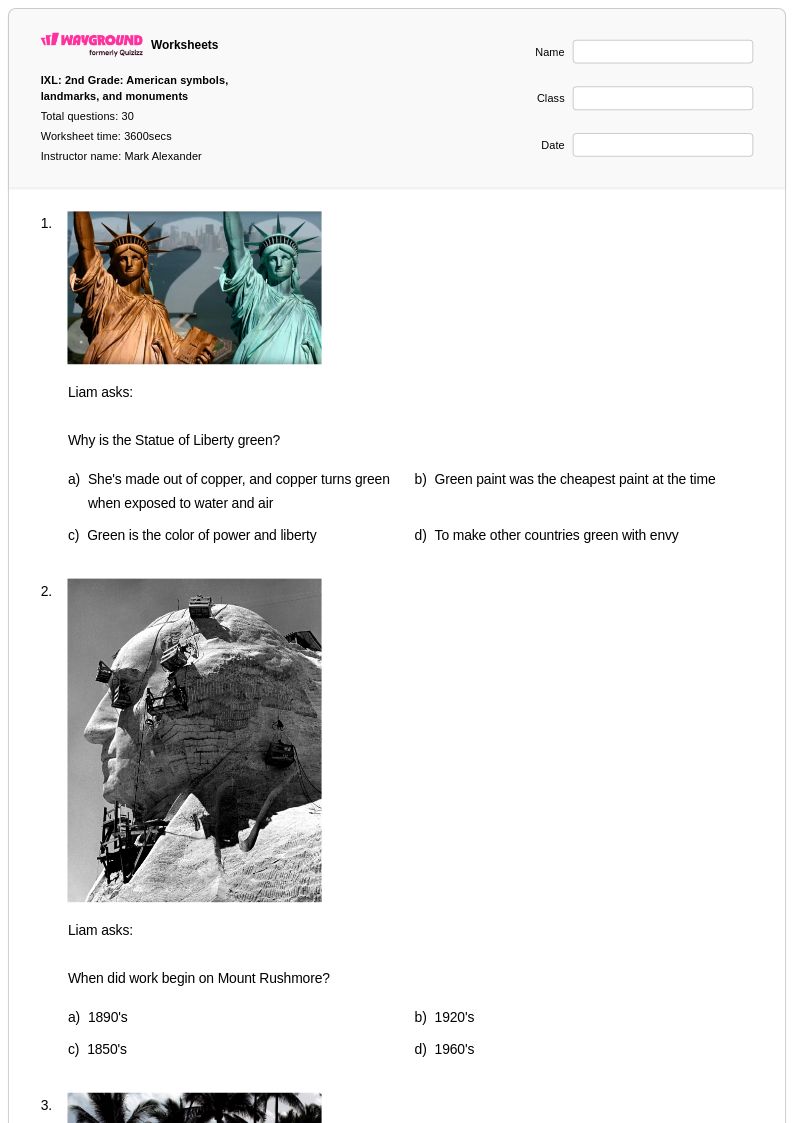
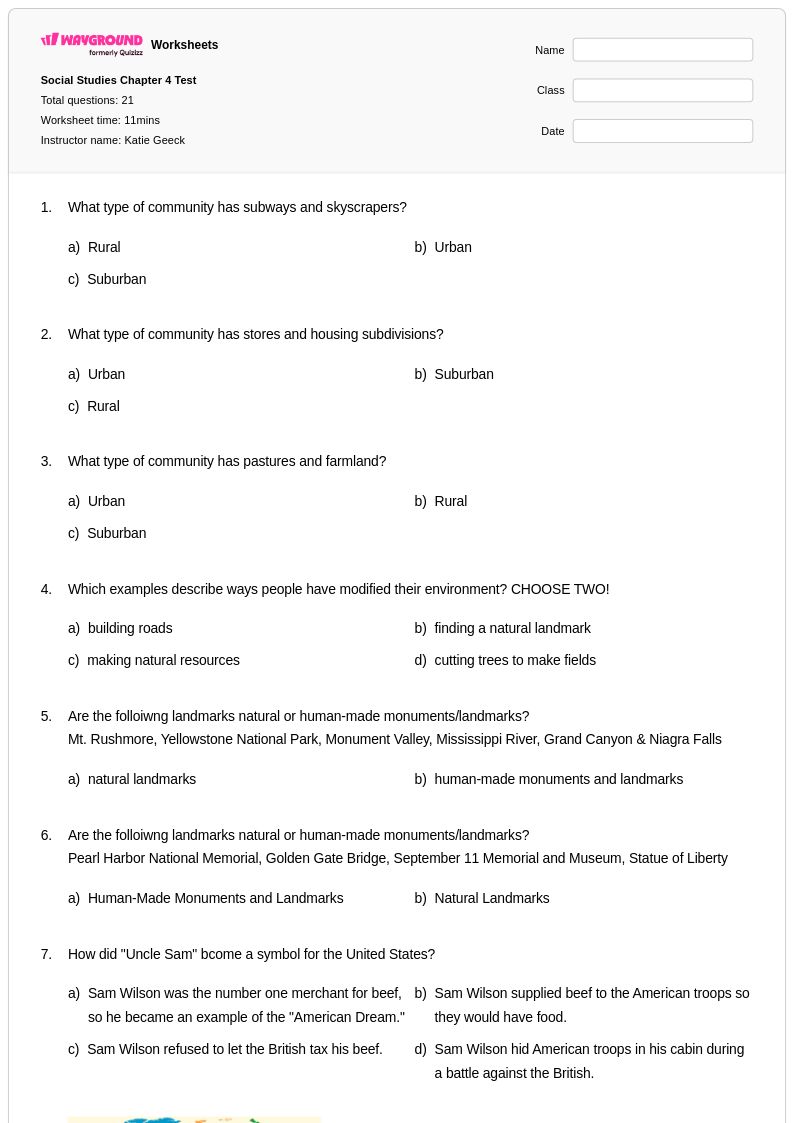
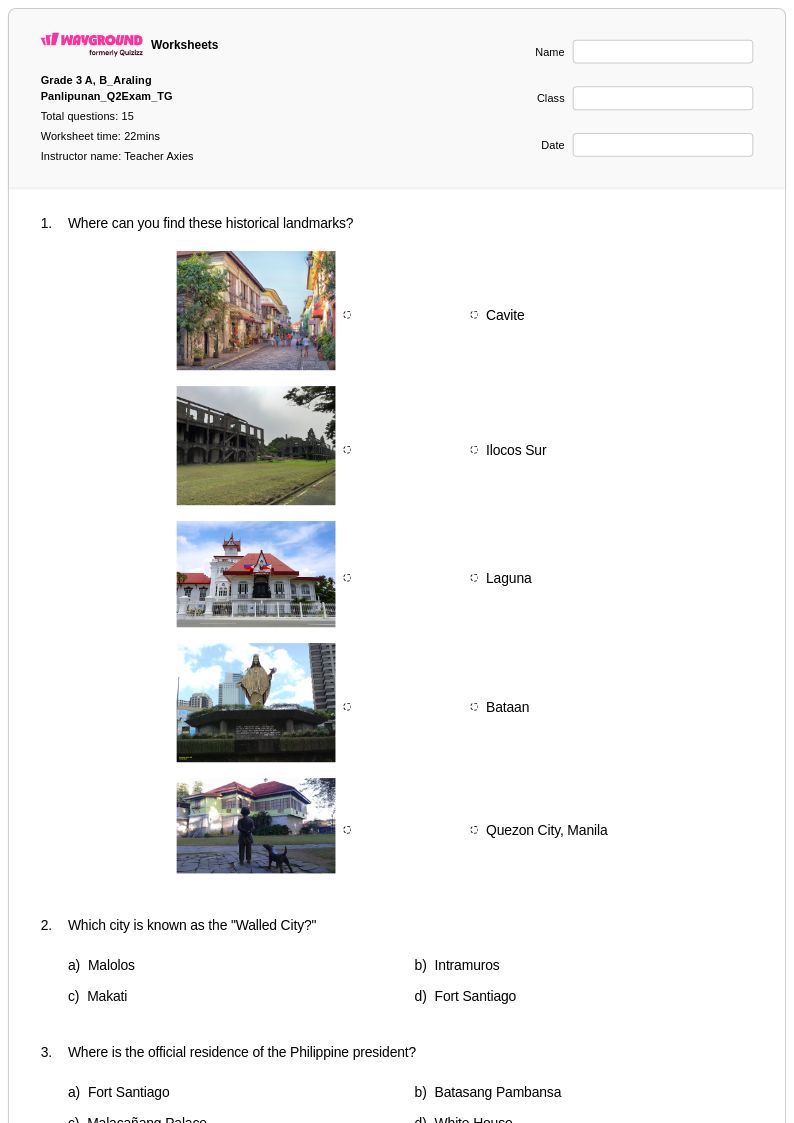
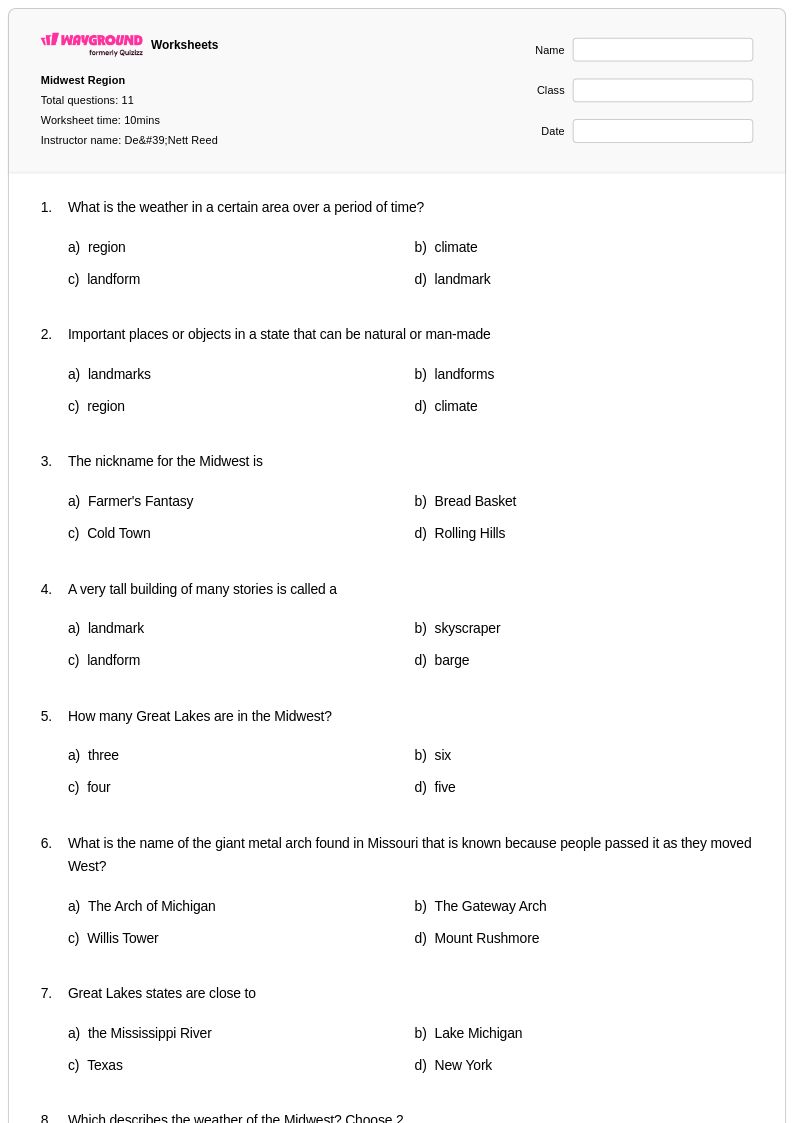
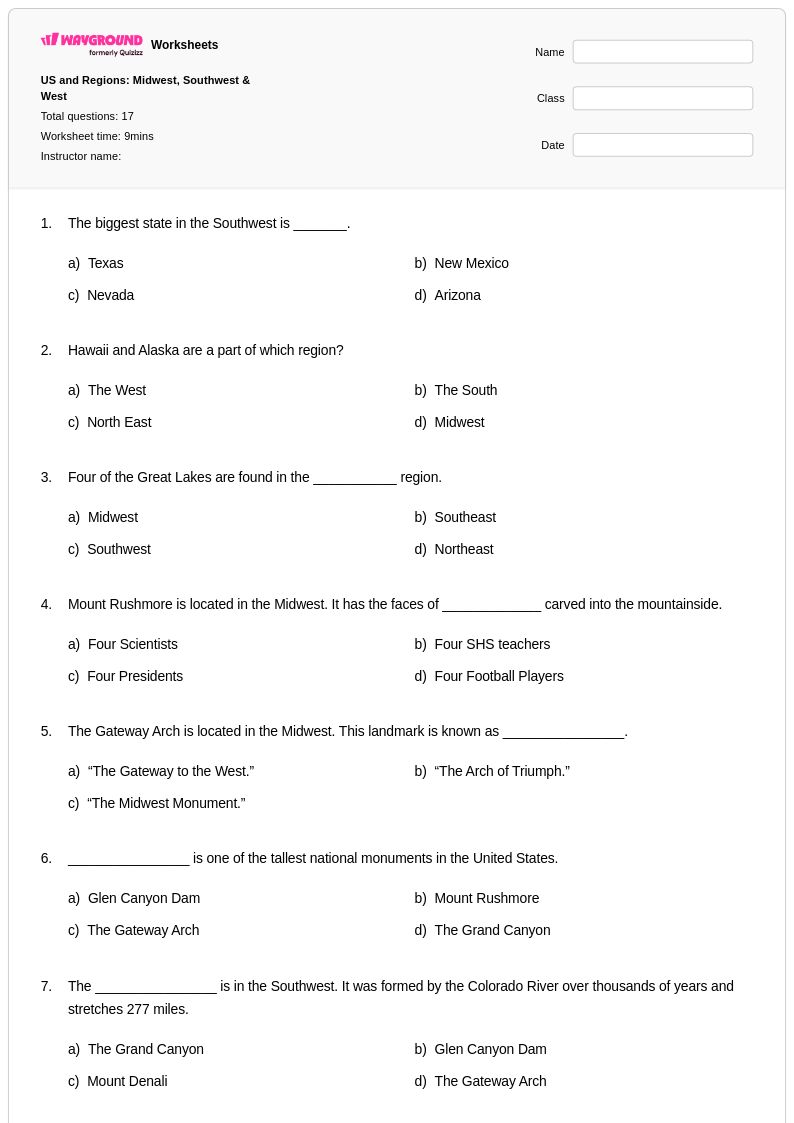
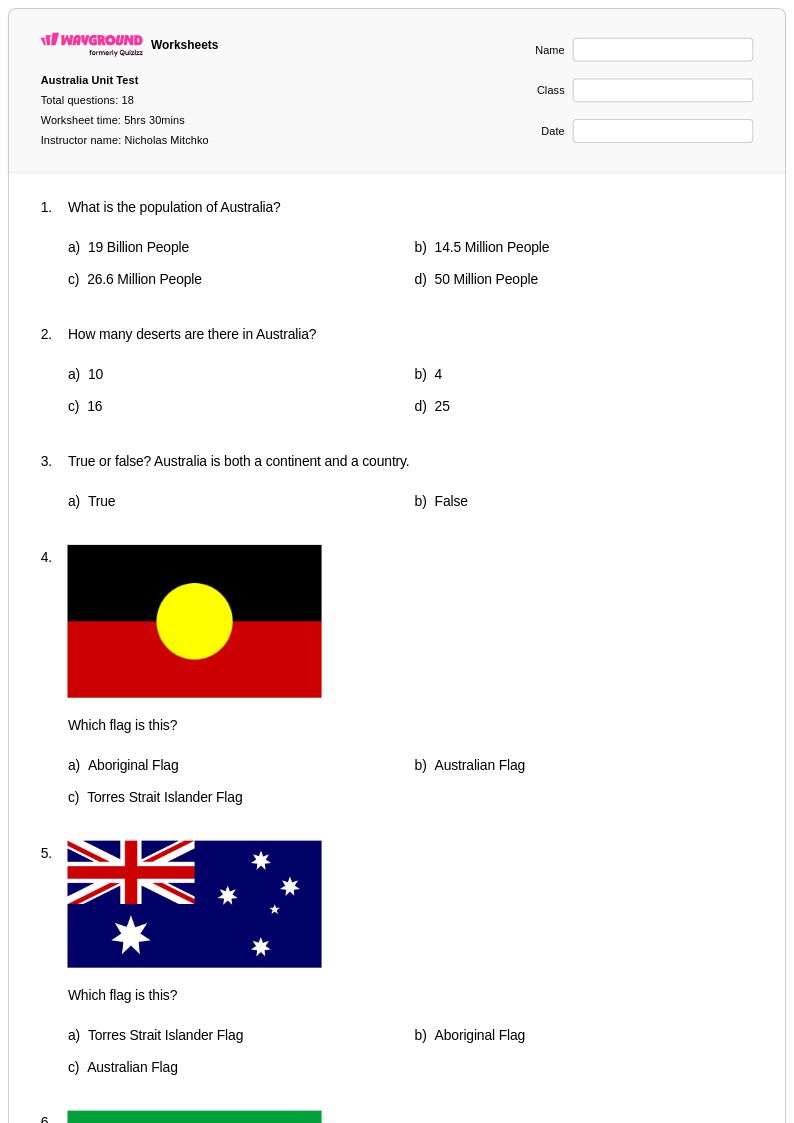
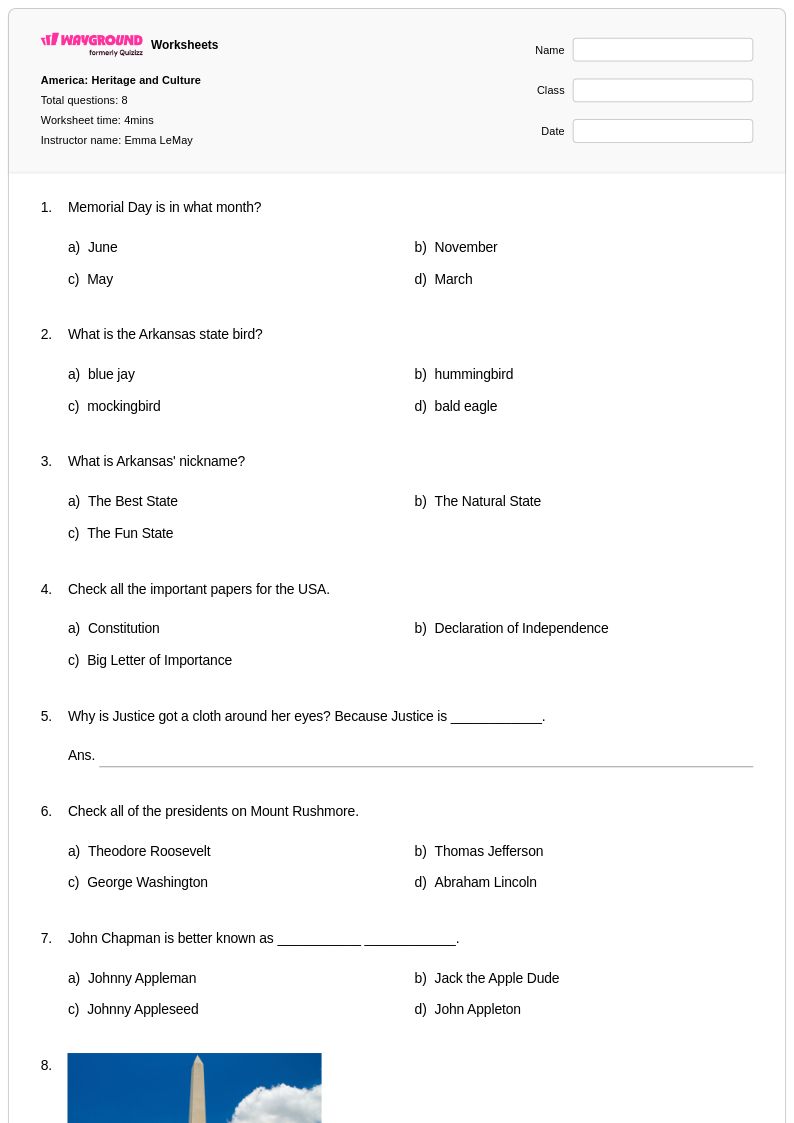
Explore Year 3 landmarks worksheets and free printables that help students discover famous monuments, buildings, and natural wonders while developing geography skills through engaging practice problems and answer keys.
Year 3 landmarks worksheets through Wayground (formerly Quizizz) provide young learners with engaging opportunities to explore famous monuments, natural wonders, and significant structures from around the world. These carefully designed educational resources strengthen students' geographical knowledge while developing critical thinking skills about cultural heritage, historical significance, and the relationship between human achievements and natural formations. Each worksheet collection includes comprehensive answer keys and is available as free printables in convenient pdf format, featuring practice problems that challenge third graders to identify, locate, and understand the importance of landmarks such as the Statue of Liberty, Mount Rushmore, the Golden Gate Bridge, and the Grand Canyon. Students build essential map skills, directional awareness, and cultural literacy through activities that connect local and global landmarks to their historical and geographical contexts.
Wayground (formerly Quizizz) supports educators with an extensive collection of teacher-created landmarks resources, drawing from millions of high-quality materials that undergo rigorous review and alignment with educational standards. The platform's advanced search and filtering capabilities enable teachers to quickly locate grade-appropriate content that matches their specific curriculum needs, while differentiation tools allow for seamless customization to support diverse learning styles and abilities. These landmarks worksheets are available in both printable and digital formats, including downloadable pdf versions that facilitate flexible classroom implementation and home learning extensions. Teachers can effectively utilize these resources for lesson planning, targeted remediation of geographical concepts, enrichment activities for advanced learners, and structured skill practice that reinforces understanding of how landmarks serve as important geographical and cultural reference points in our world.
FAQs
How do I teach landmarks to students in geography class?
Teaching landmarks effectively starts with connecting physical location to cultural and historical context — students retain landmark names far better when they understand why a site matters, not just where it sits on a map. Begin with well-known examples like the Statue of Liberty or the Great Wall of China before expanding to lesser-known natural and human-made sites. Pairing map-reading activities with visual identification exercises helps students build both geographical literacy and spatial reasoning simultaneously.
What kinds of exercises help students practice identifying world landmarks?
Effective practice exercises for landmarks include map-placement tasks, image-to-name matching, and short-answer prompts that ask students to explain a landmark's cultural or historical significance. Worksheets that cover a range of sites — from natural wonders like Mount Everest to human-made structures like Machu Picchu — ensure students develop a globally diverse knowledge base. Repeated low-stakes practice with answer key feedback is especially useful for building automatic recall of landmark locations and names.
What mistakes do students commonly make when learning about landmarks?
A common error is confusing a landmark's country of origin with its continent — for example, placing the Colosseum in Greece rather than Italy, or misattributing Machu Picchu to Mexico rather than Peru. Students also frequently separate a landmark from its cultural meaning, treating it as a name-location pair rather than understanding its significance within human history. Worksheets that require students to connect a landmark to its historical context directly address this surface-level memorization pattern.
How can I differentiate landmarks instruction for students at different skill levels?
For students who need additional support, reduce the number of answer choices on identification tasks or provide a word bank to lower cognitive load during map and matching exercises. More advanced students benefit from open-ended prompts that ask them to compare landmarks across regions or analyze how geography influenced a site's construction and significance. On Wayground, teachers can apply individual accommodations such as reduced answer choices or read-aloud support to specific students while the rest of the class works with standard settings.
How do I use Wayground's landmarks worksheets in my classroom?
Wayground's landmarks worksheets are available as printable PDF downloads for traditional classroom use and in digital formats for technology-integrated or remote learning environments. Teachers can also host them as a quiz directly on Wayground, allowing for real-time student responses and built-in scoring. Each worksheet includes a complete answer key, making them practical for independent practice, small group review, or whole-class instruction without additional prep work.
How do landmarks worksheets help build map reading skills?
Landmarks worksheets reinforce map reading by requiring students to locate specific sites within a geographic coordinate system, identify regional boundaries, and recognize how physical geography shapes where significant sites exist. Activities that ask students to place landmarks on a blank world or regional map build spatial reasoning skills that transfer directly to broader geography curriculum. This approach ensures students are developing navigational literacy alongside content knowledge about specific sites.