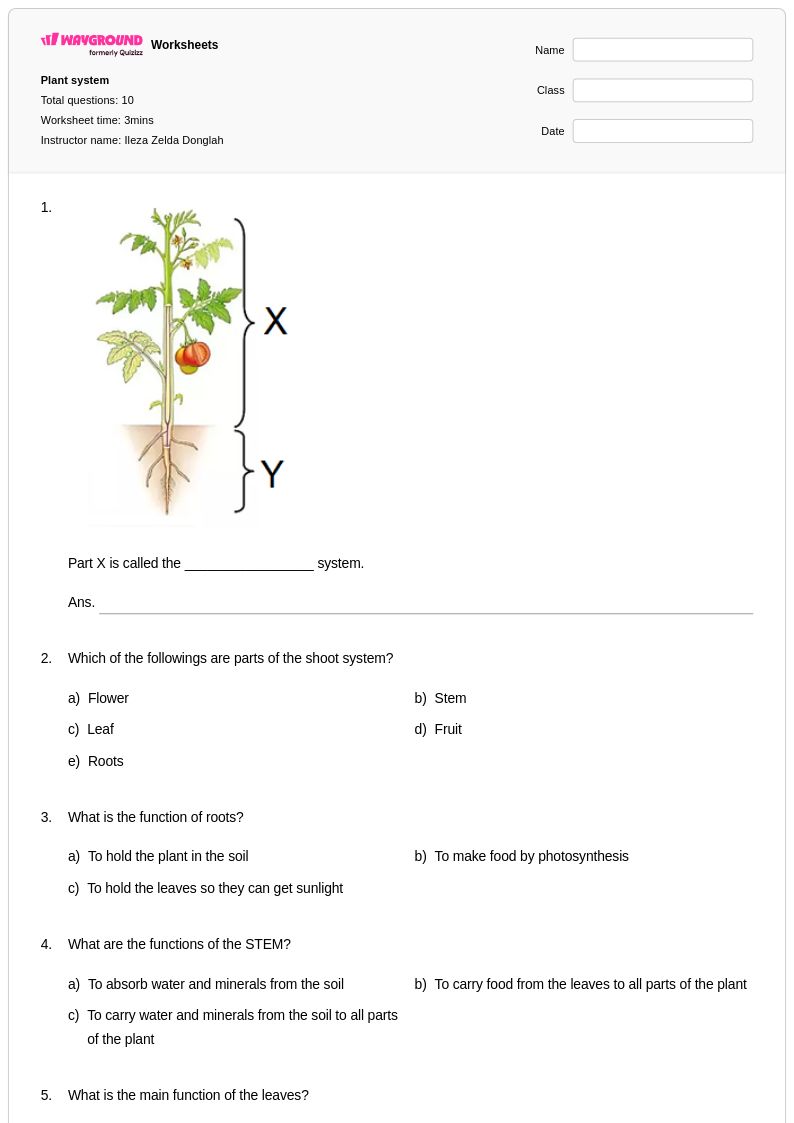
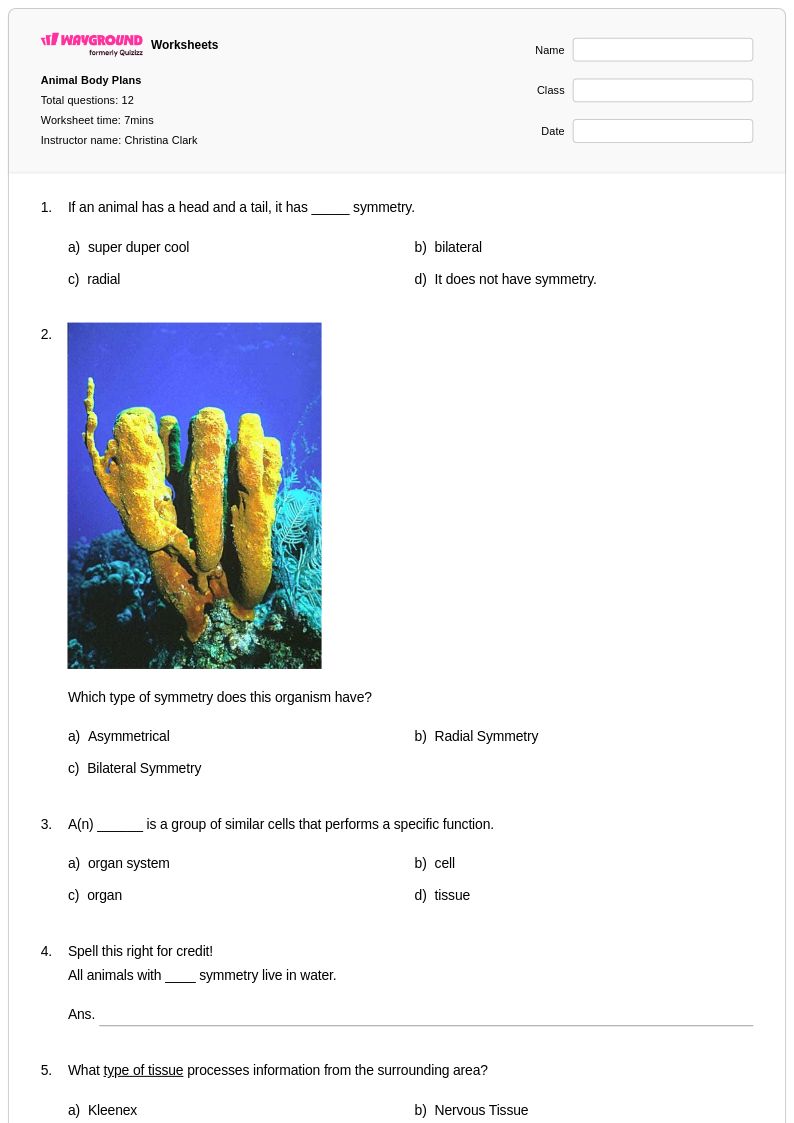
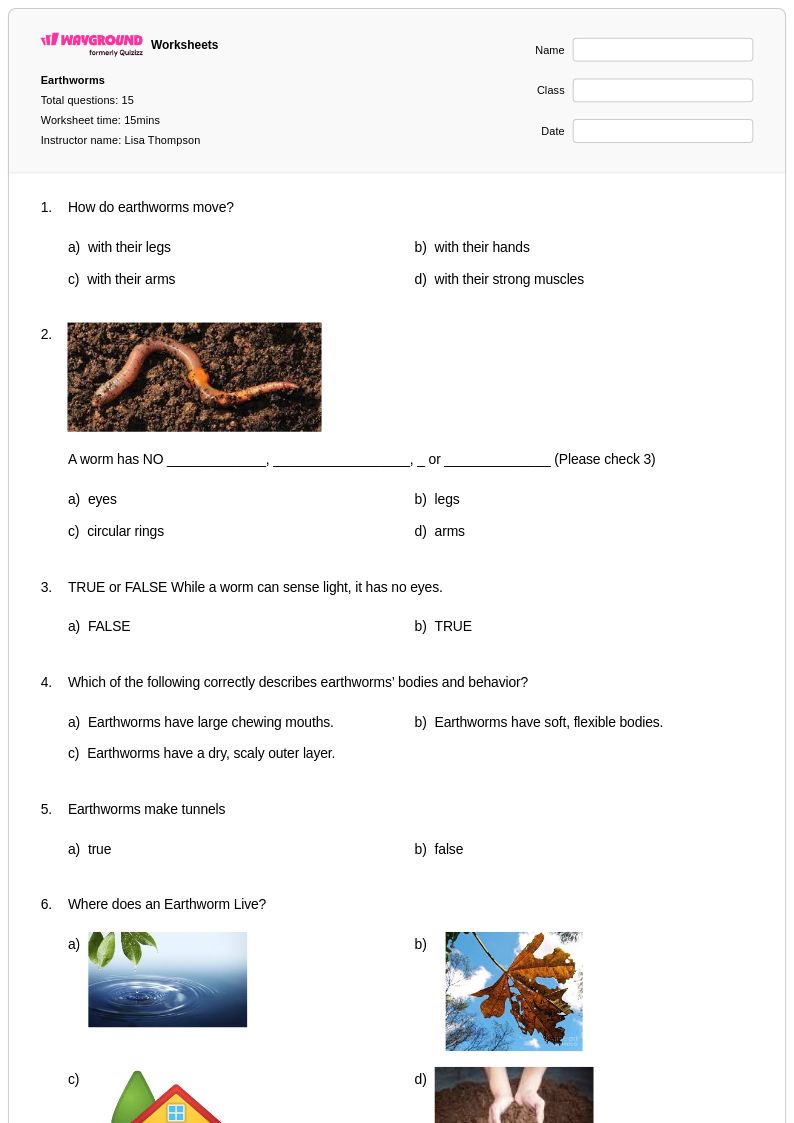
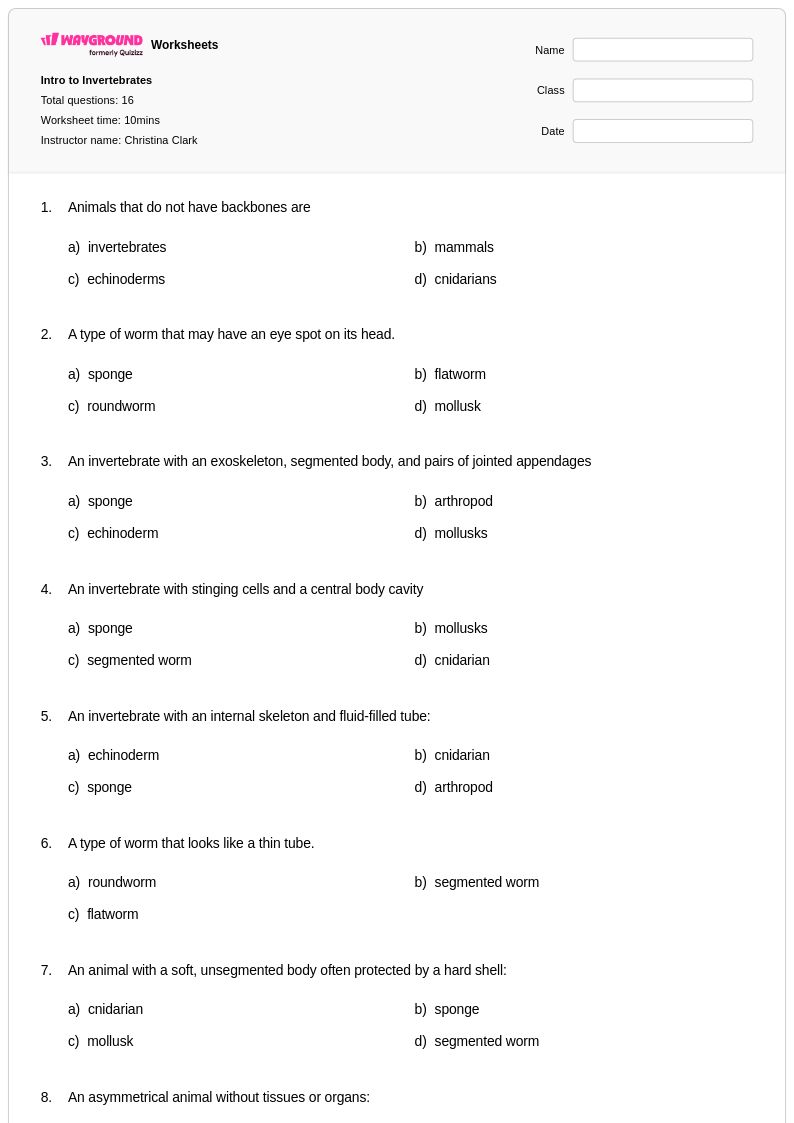
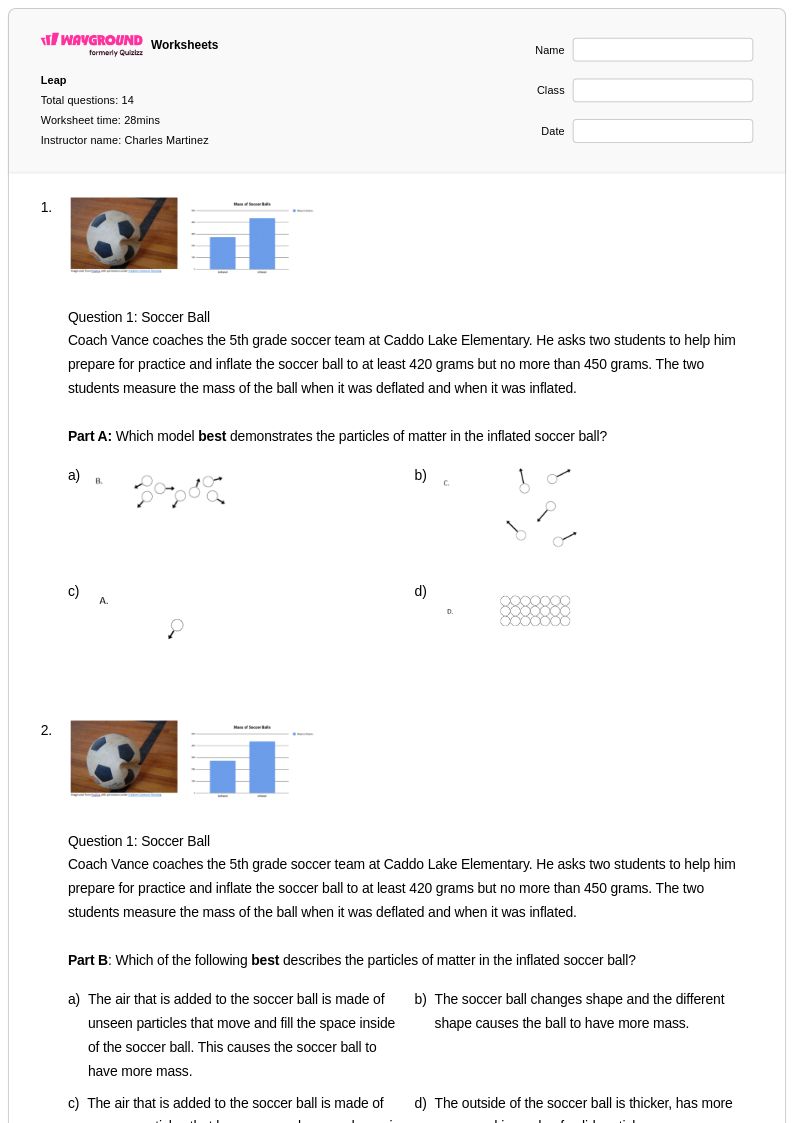
Explore Year 5 leaf anatomy worksheets and printables that help students learn about plant structures, cell types, and photosynthesis through engaging practice problems with answer keys available as free PDF downloads.
Explore printable Leaf Anatomy worksheets for Year 5
Leaf anatomy worksheets for Year 5 students available through Wayground (formerly Quizizz) provide comprehensive exploration of plant leaf structures and their essential functions. These educational resources guide fifth-grade learners through the intricate world of leaf components, including the epidermis, mesophyll layers, vascular bundles, and stomata, helping students understand how each part contributes to photosynthesis and transpiration. The worksheets strengthen critical scientific observation skills, vocabulary development, and conceptual understanding through carefully designed practice problems that encourage students to identify, label, and explain leaf structures. Each resource includes detailed answer keys and is available as free printables in pdf format, making it easy for educators to implement hands-on learning experiences that connect microscopic leaf anatomy to larger biological processes.
Wayground (formerly Quizizz) empowers teachers with an extensive collection of millions of teacher-created leaf anatomy resources specifically designed to meet diverse Year 5 science curriculum needs. The platform's robust search and filtering capabilities allow educators to quickly locate worksheets that align with specific learning standards and match their students' varying ability levels through built-in differentiation tools. Teachers can customize these materials to target specific leaf anatomy concepts, whether focusing on basic structure identification for remediation or advanced function analysis for enrichment activities. The flexible availability of resources in both printable and digital pdf formats streamlines lesson planning and provides seamless integration into classroom instruction, independent practice sessions, or homework assignments, ensuring that students develop a solid foundation in plant biology concepts essential for their continued scientific education.
FAQs
How do I teach leaf anatomy to students?
Start by grounding students in the leaf's primary functions — photosynthesis, gas exchange, and transpiration — before introducing the structures that support each function. A cross-sectional diagram is the most effective anchor: walk students through the epidermis, palisade and spongy mesophyll, vascular bundles, stomata, and guard cells in sequence, connecting each layer to its role. Pairing labeled diagrams with real leaf specimens or microscope slides deepens retention and builds observational skills.
What exercises help students practice identifying leaf structures?
The most effective practice tasks include labeling cross-sectional diagrams of leaf tissue, matching structures to functions, and comparing leaf adaptations across plant species such as xerophytes versus mesophytes. Students also benefit from analyzing how structural features like thick cuticles or sunken stomata relate to specific environmental conditions. These exercises reinforce botanical vocabulary while building the analytical skills needed to understand plant biology at the tissue level.
What mistakes do students commonly make when learning leaf anatomy?
Students frequently confuse the palisade mesophyll with the spongy mesophyll, mistaking their positions and functions — the palisade layer is densely packed near the upper epidermis for maximum light absorption, while the spongy layer contains air spaces that facilitate gas exchange. Another common error is treating stomata and guard cells as separate, unrelated structures rather than understanding that guard cells regulate the opening and closing of stomata. Students also tend to overlook the vascular bundle's dual role in transporting both water and dissolved sugars.
How do I use Wayground's leaf anatomy worksheets in my classroom?
Wayground's leaf anatomy worksheets are available as printable PDFs for traditional classroom use and in digital formats for technology-integrated learning environments, which means you can assign them as in-class work, homework, or host them directly as a quiz on Wayground. Each worksheet includes a complete answer key, reducing prep time and making them suitable for independent practice, guided instruction, or assessment. Digital formats also allow you to apply student-level accommodations such as read aloud, extended time, or reduced answer choices for students who need additional support.
How do I differentiate leaf anatomy instruction for students at different ability levels?
For students who need more scaffolding, begin with simplified diagrams that label only three or four major structures before introducing the full cross-section. Advanced students can be challenged to analyze adaptive differences between leaf types or explain how a change in one structure, such as fewer stomata, affects overall plant function. On Wayground, teachers can apply individual accommodations including reduced answer choices or read aloud settings to specific students without disrupting the experience for the rest of the class.
How does leaf anatomy connect to broader plant biology concepts?
Leaf anatomy sits at the intersection of several core plant biology topics: understanding stomata and guard cells is prerequisite knowledge for transpiration and water potential, while the mesophyll layers are directly tied to chloroplast function and the light-dependent reactions of photosynthesis. Vascular bundles connect to the broader study of xylem and phloem transport throughout the entire plant. Teaching leaf structure with these connections explicit helps students build an integrated understanding of plant physiology rather than isolated vocabulary.