Free Printable Linking Verbs Worksheets for Year 5
Explore Wayground's free Year 5 linking verbs worksheets and printables that help students master identifying and using linking verbs through engaging practice problems with complete answer keys.
Explore printable Linking Verbs worksheets for Year 5
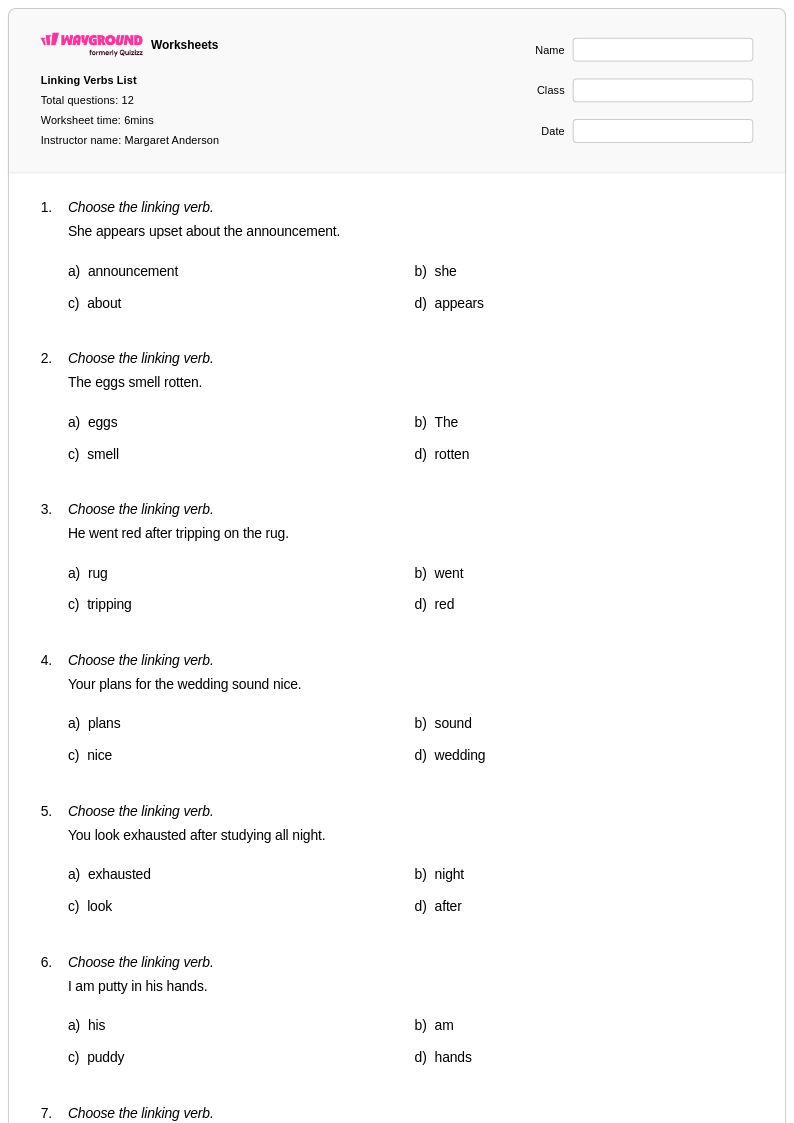
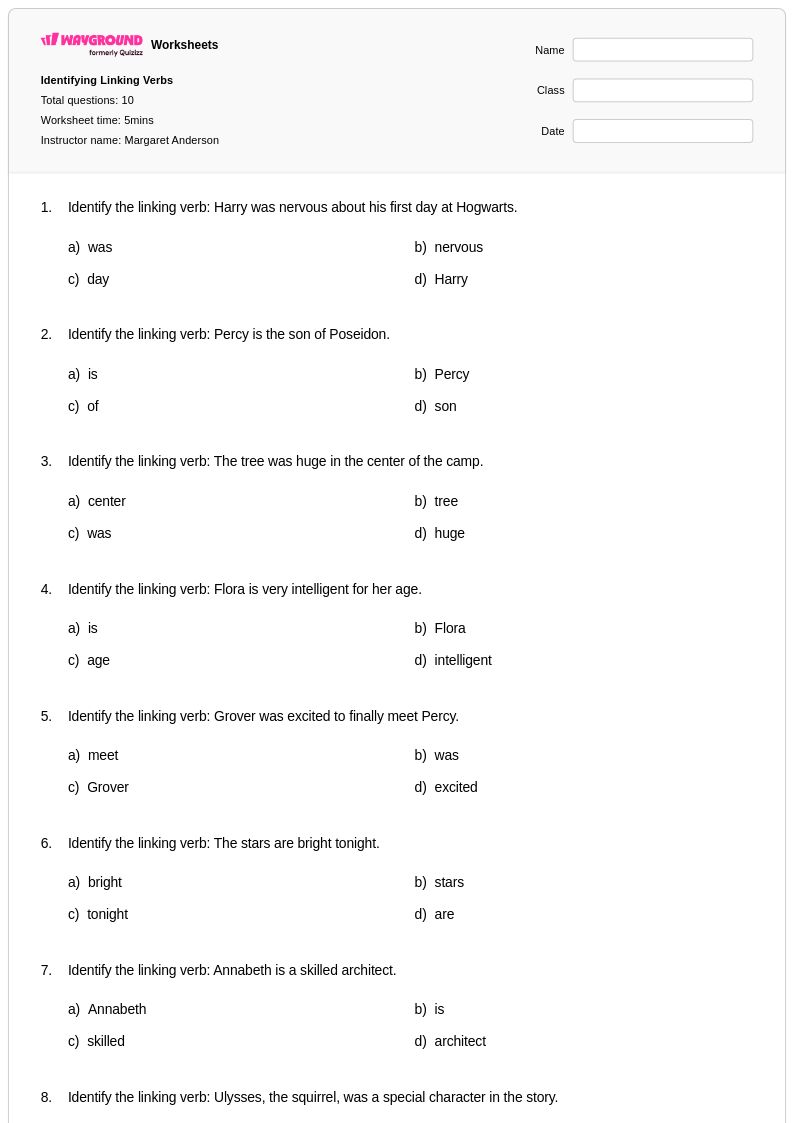
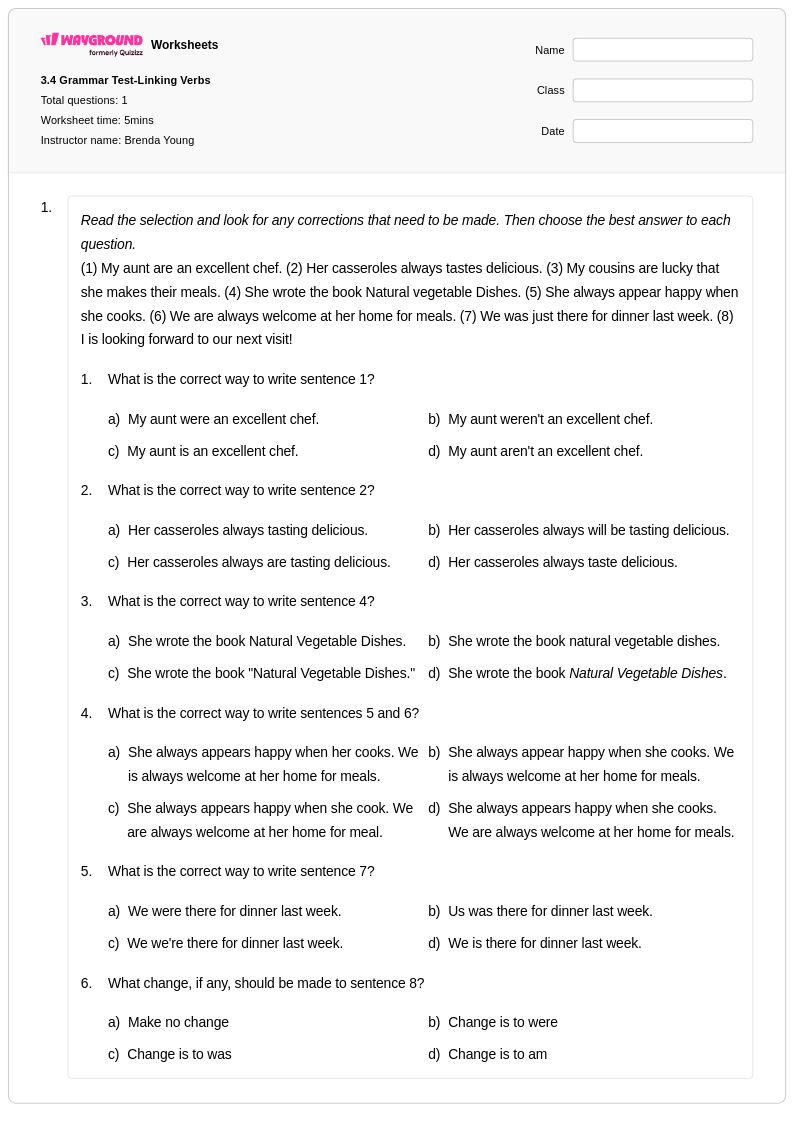
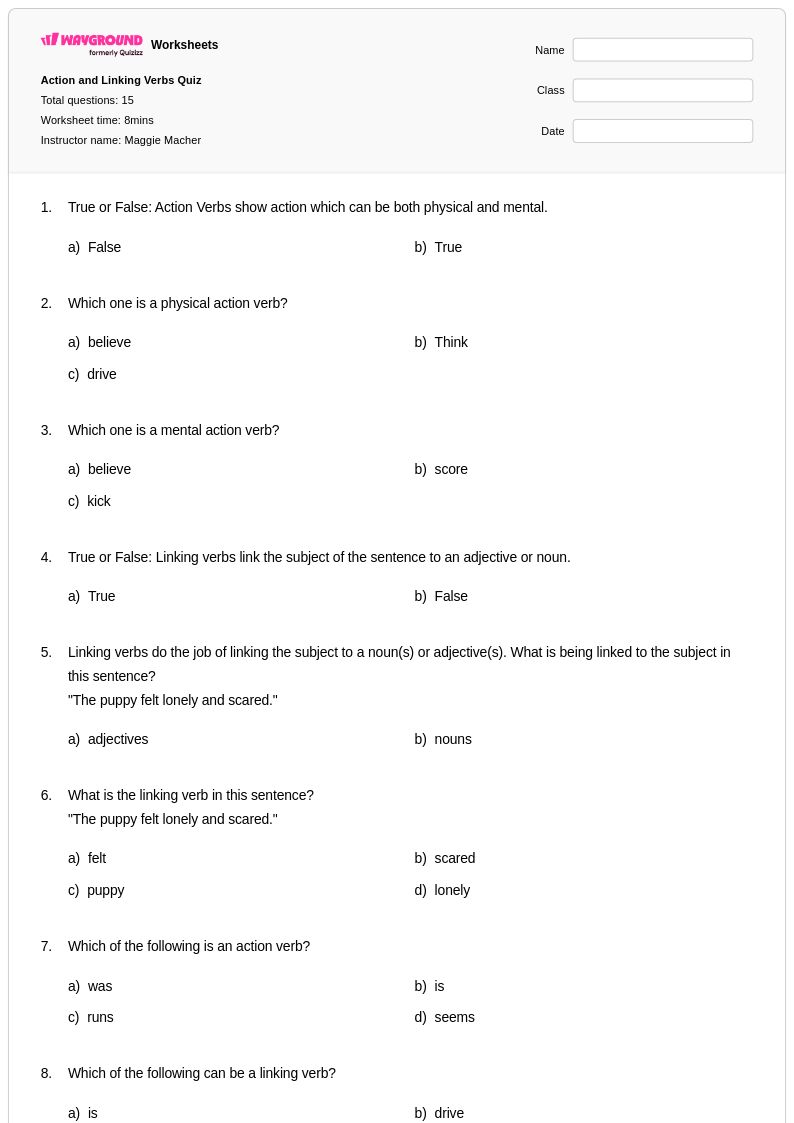
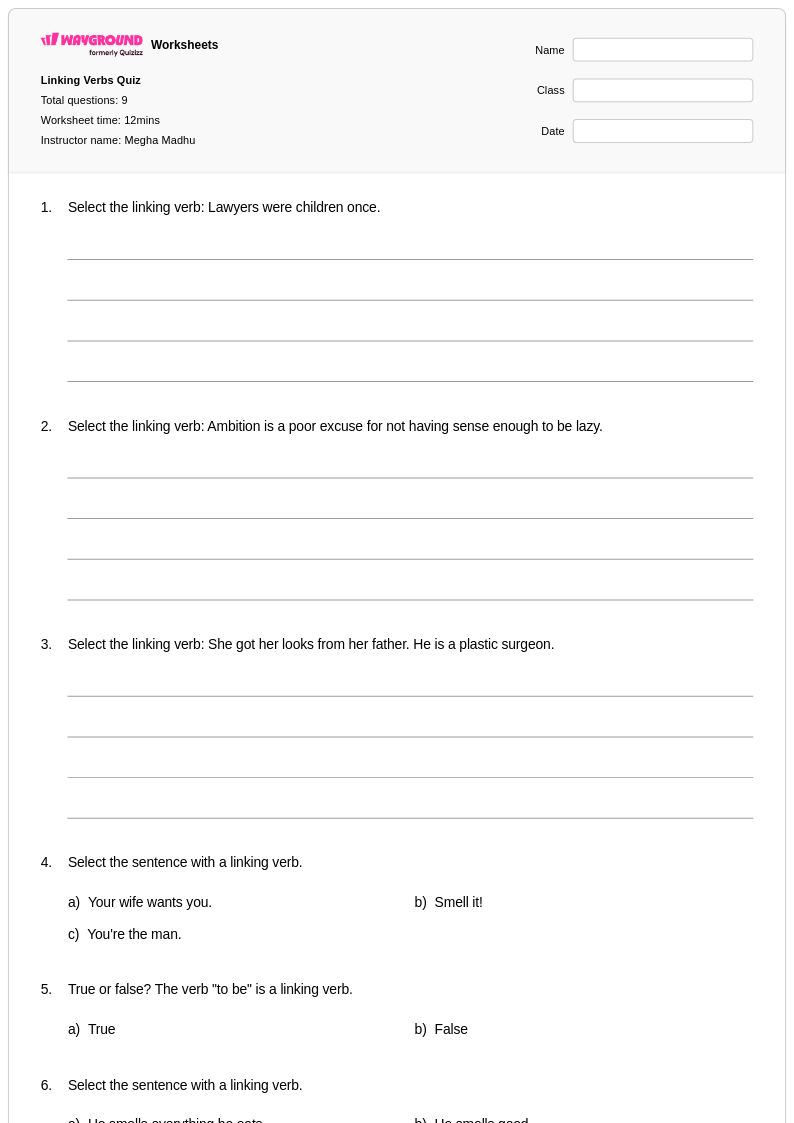
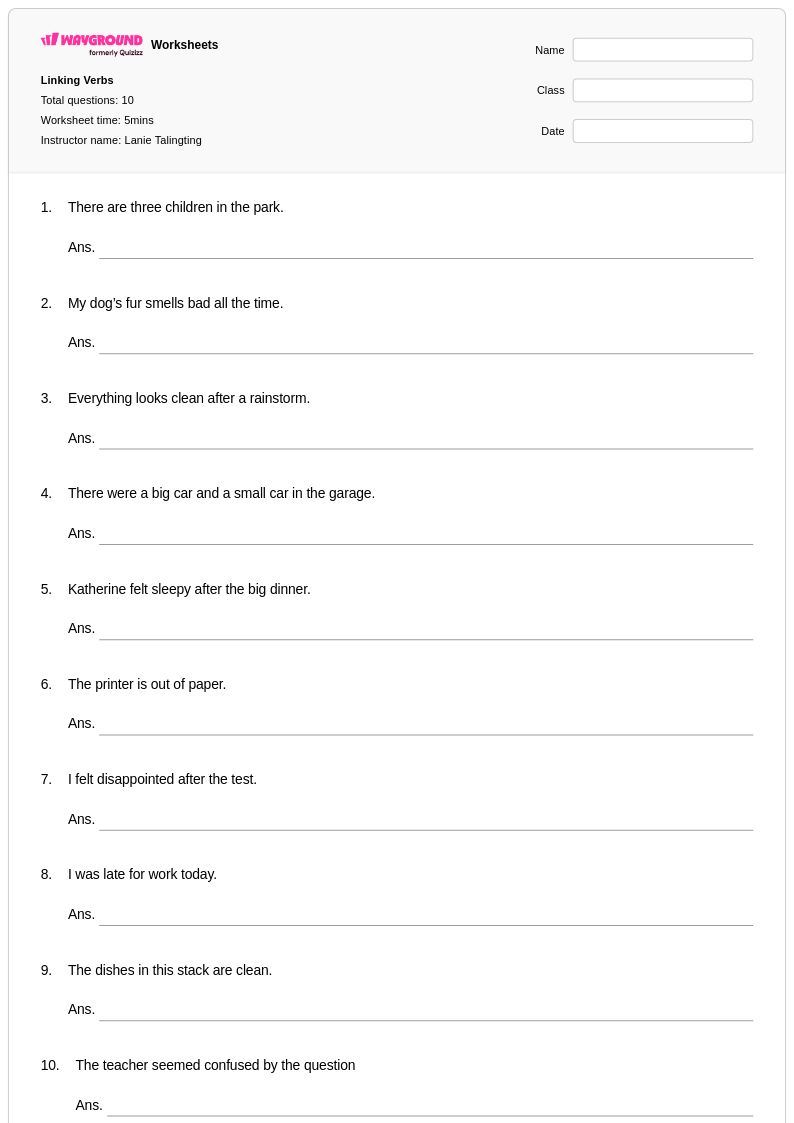
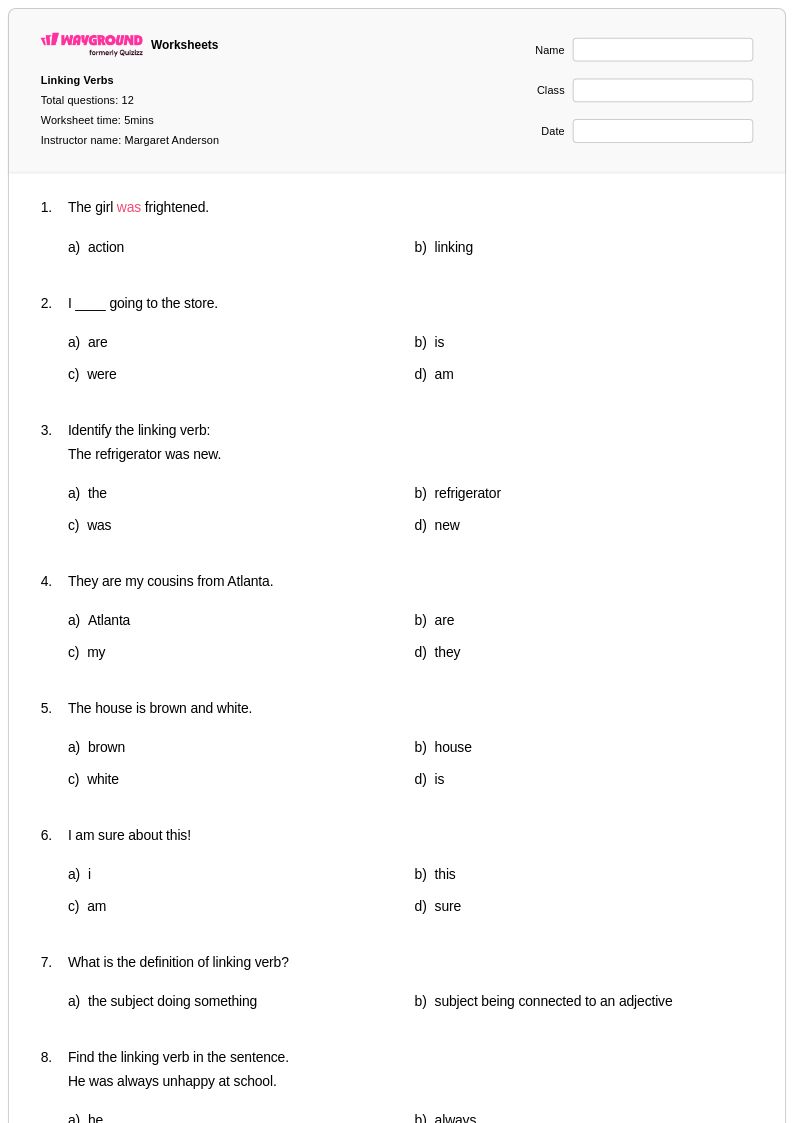
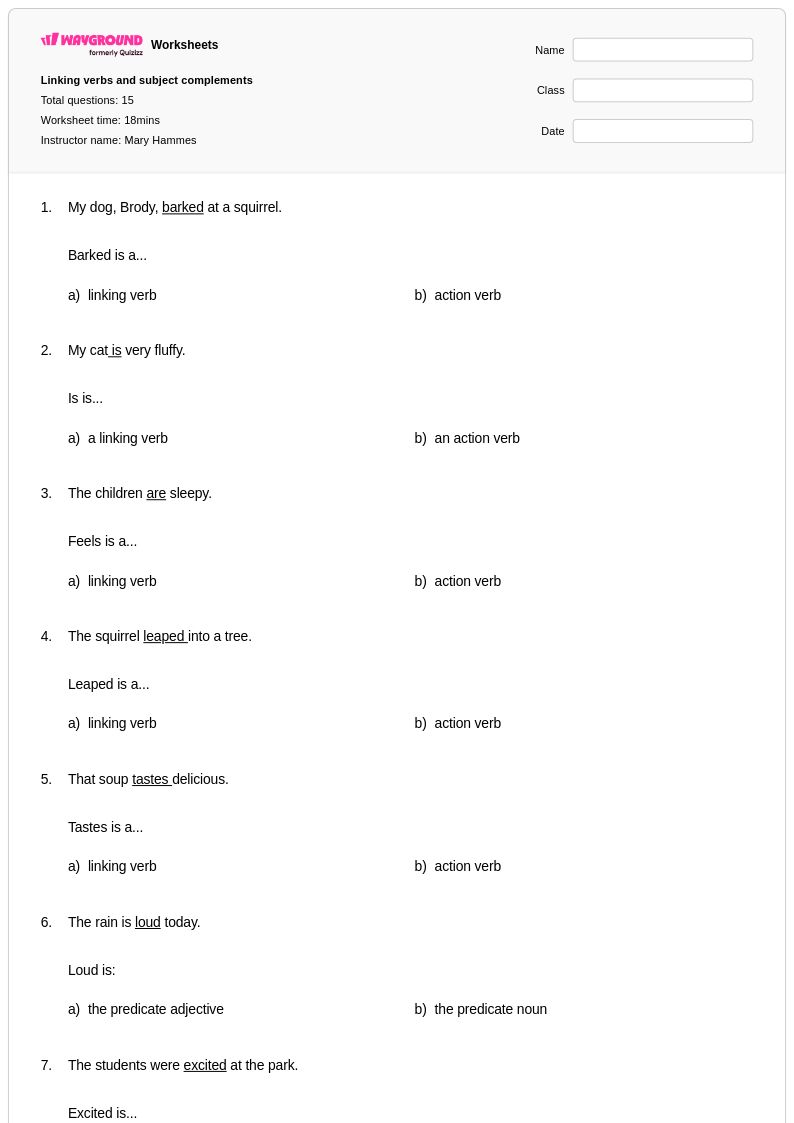
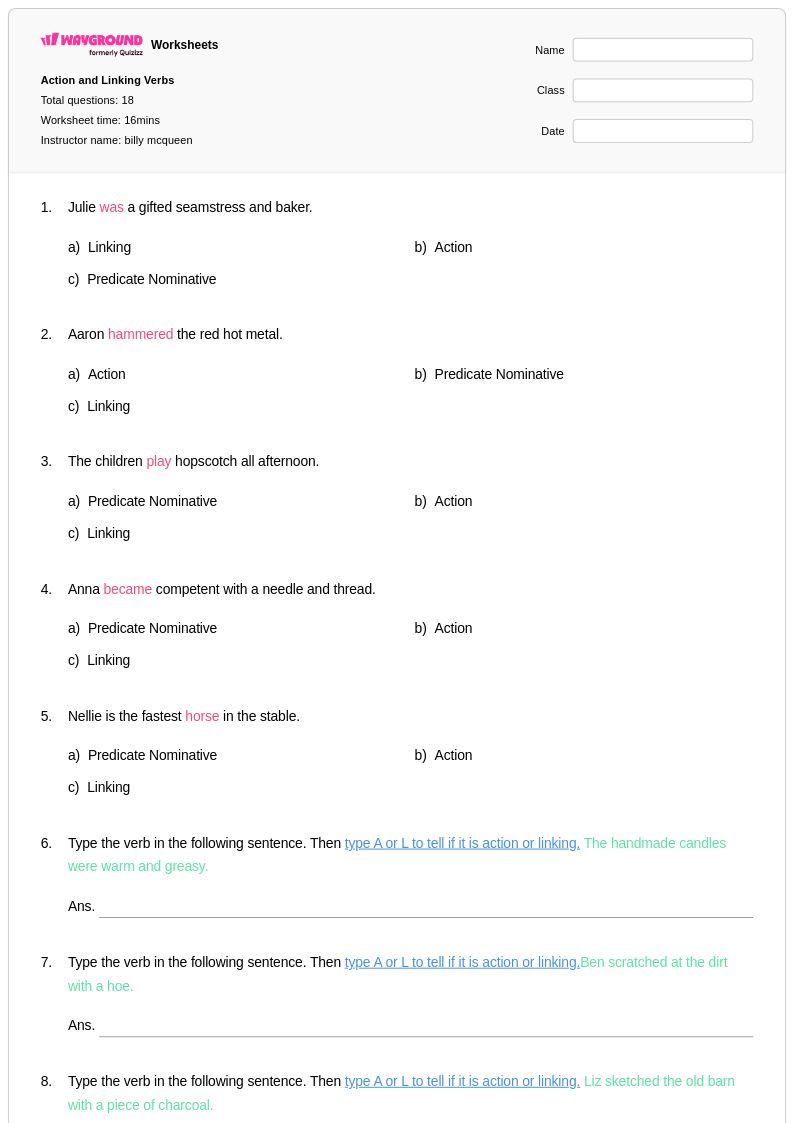
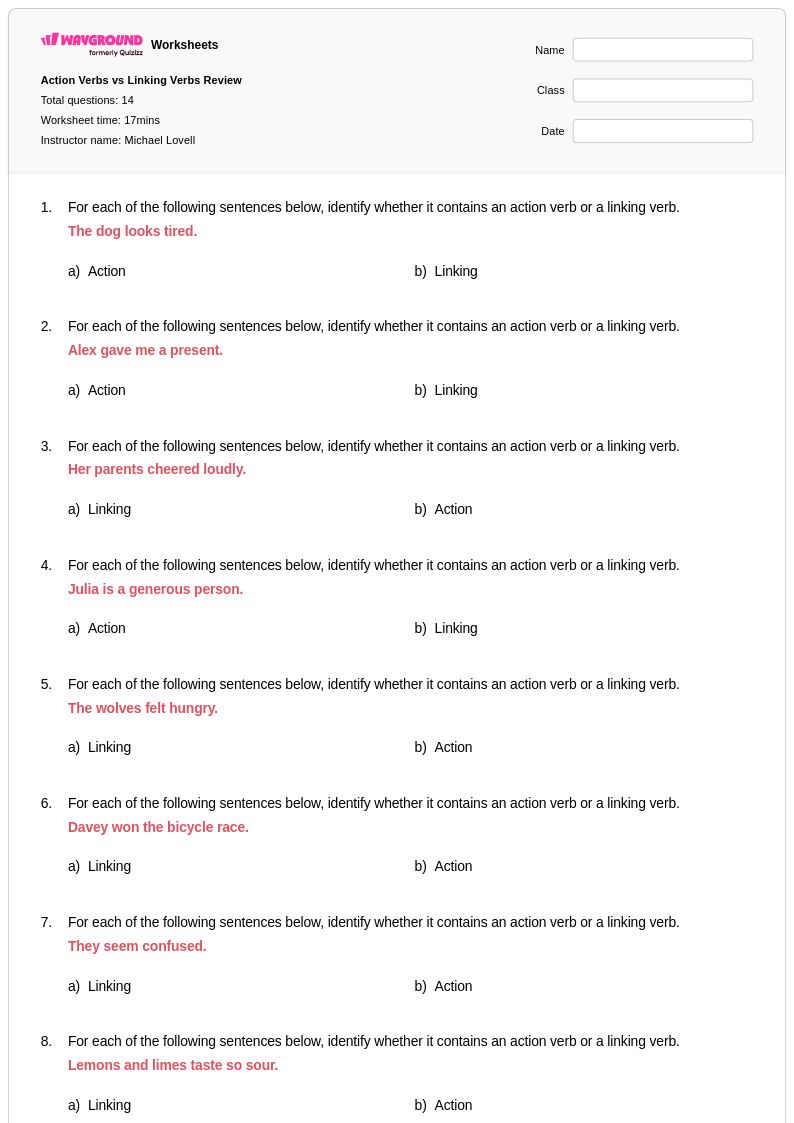
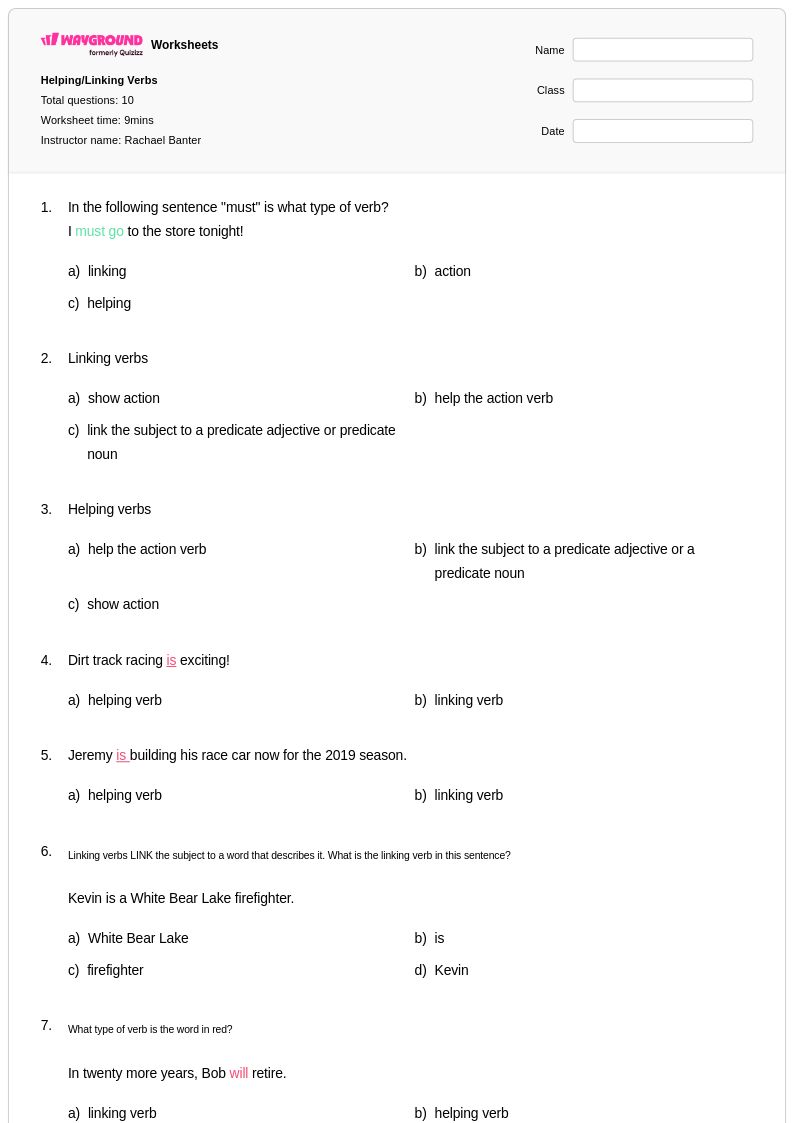
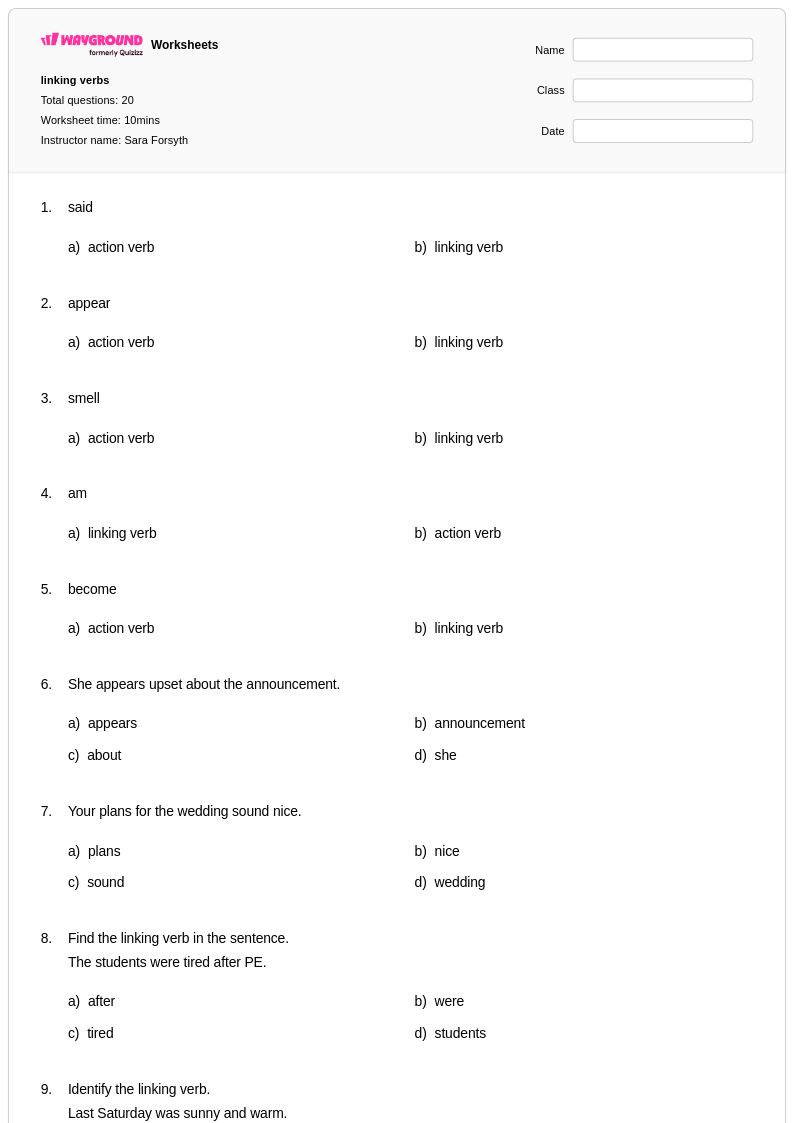
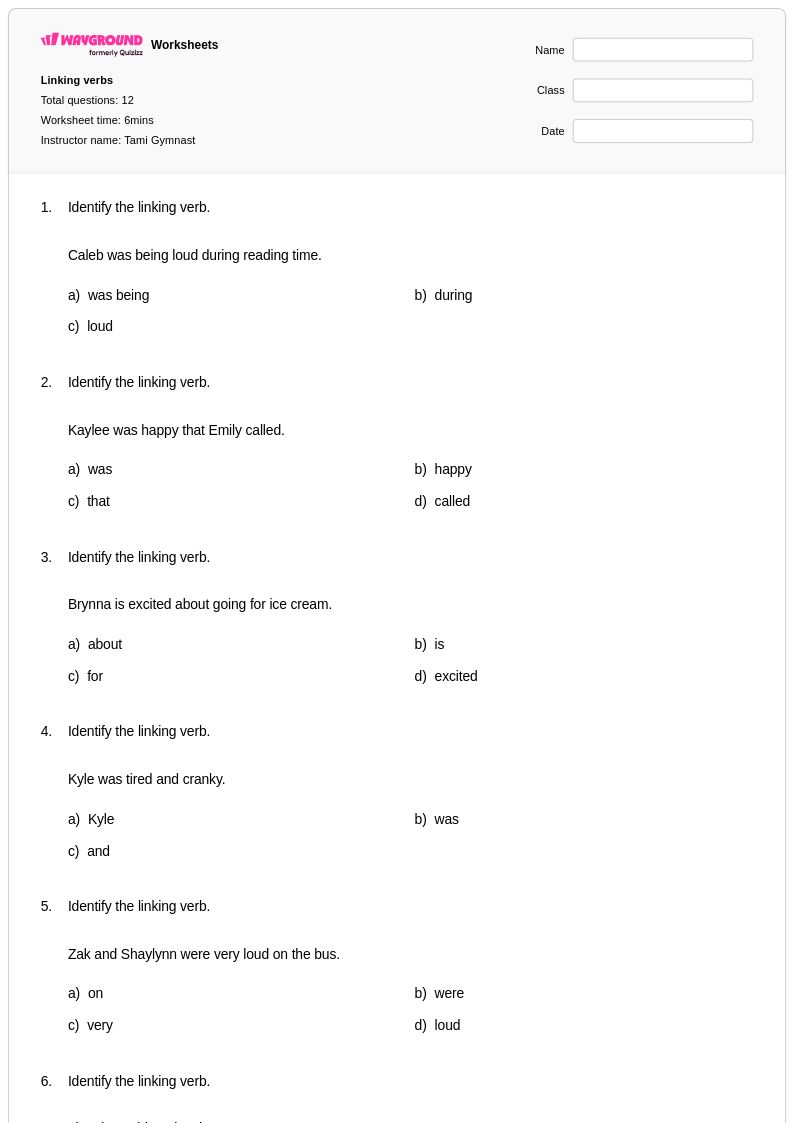
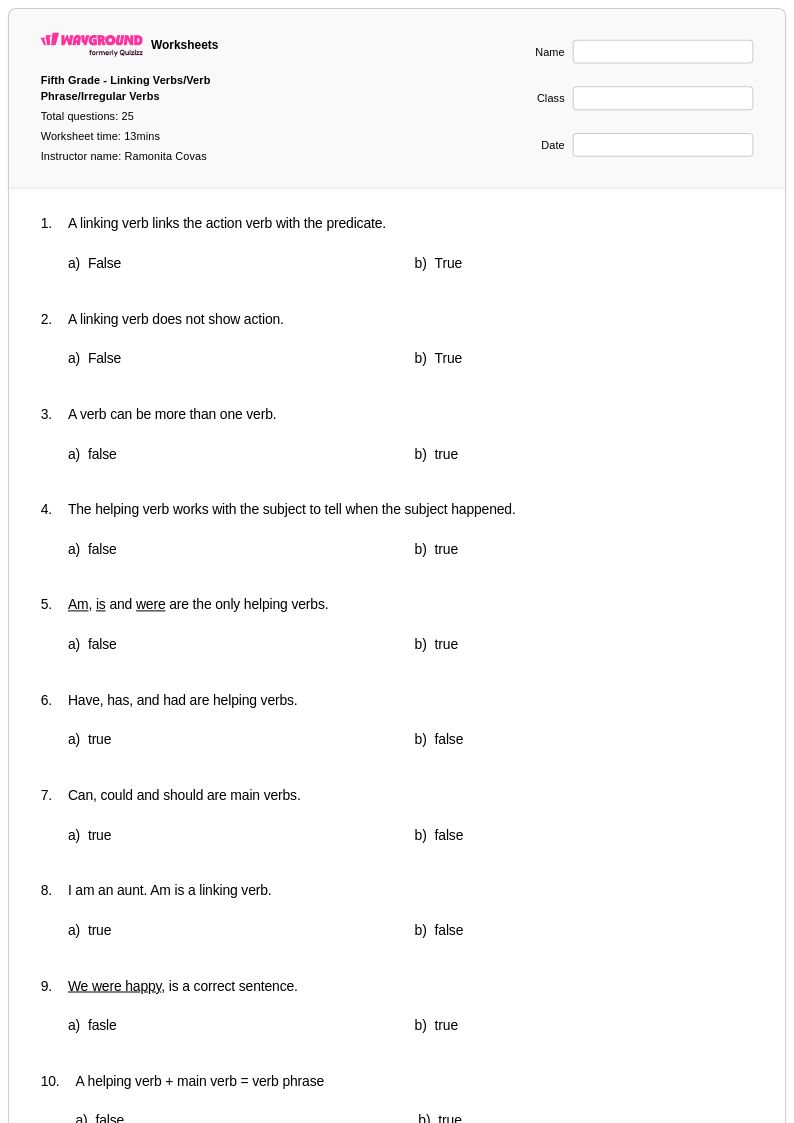
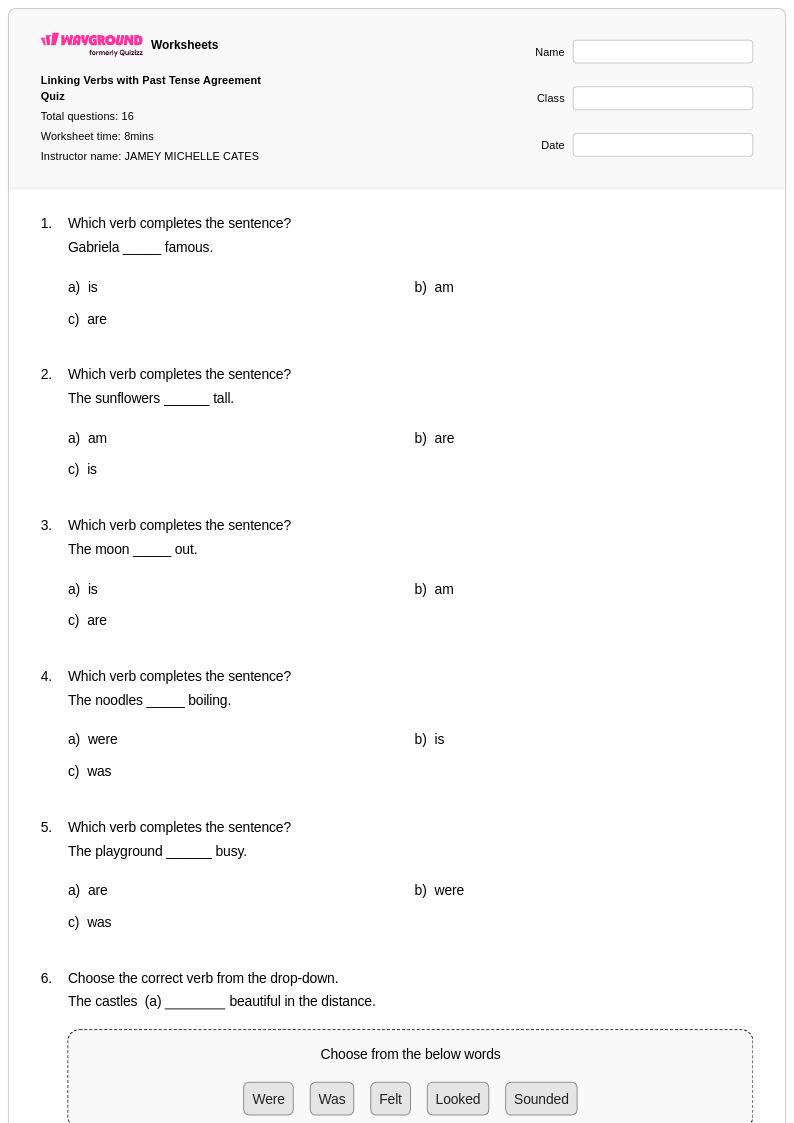
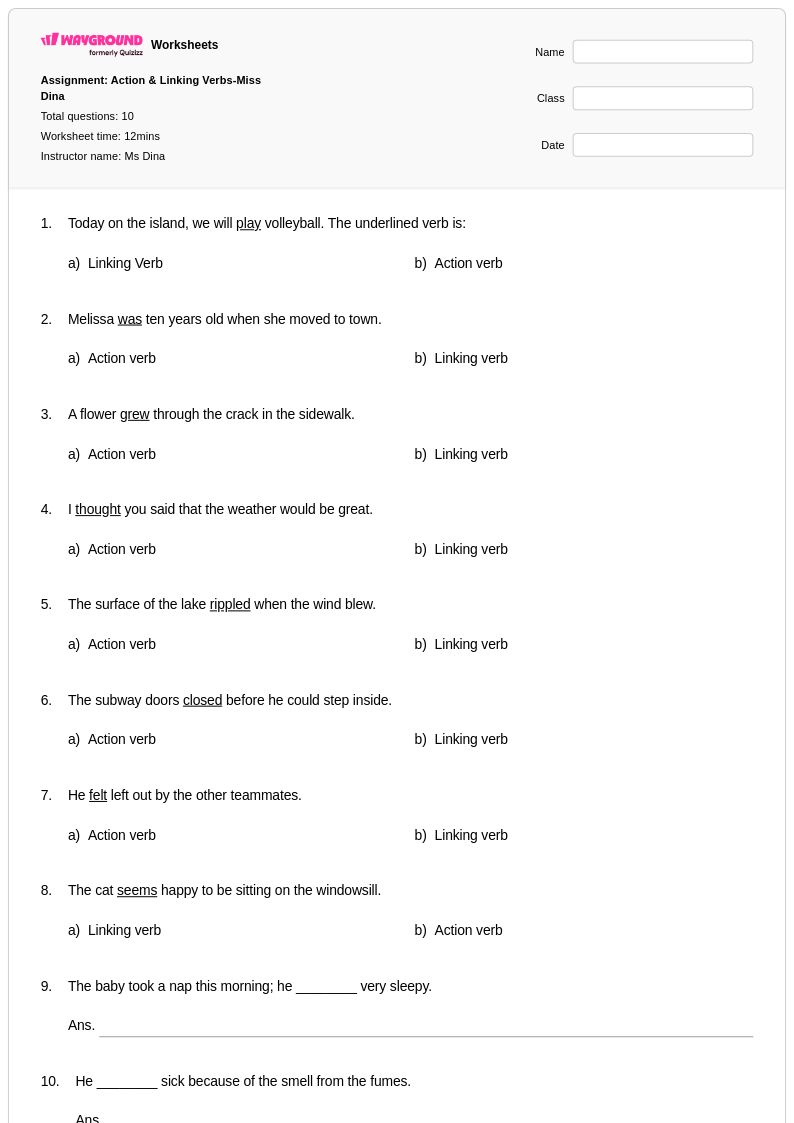
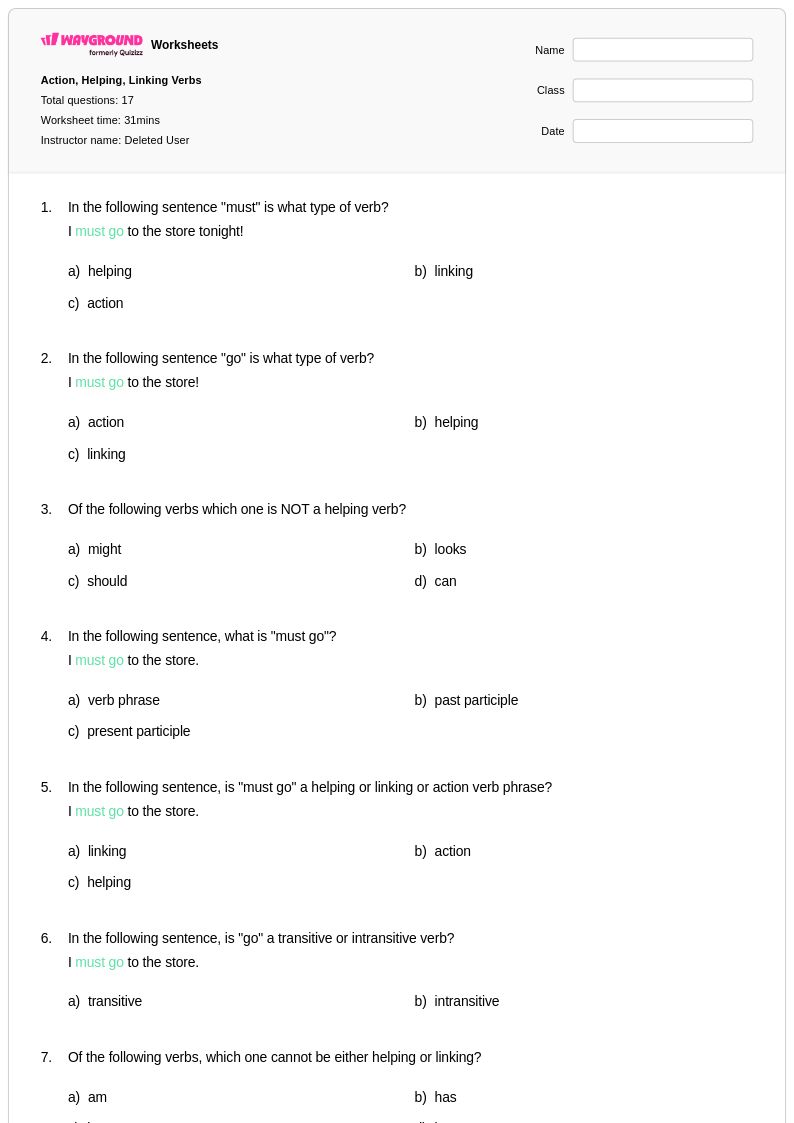
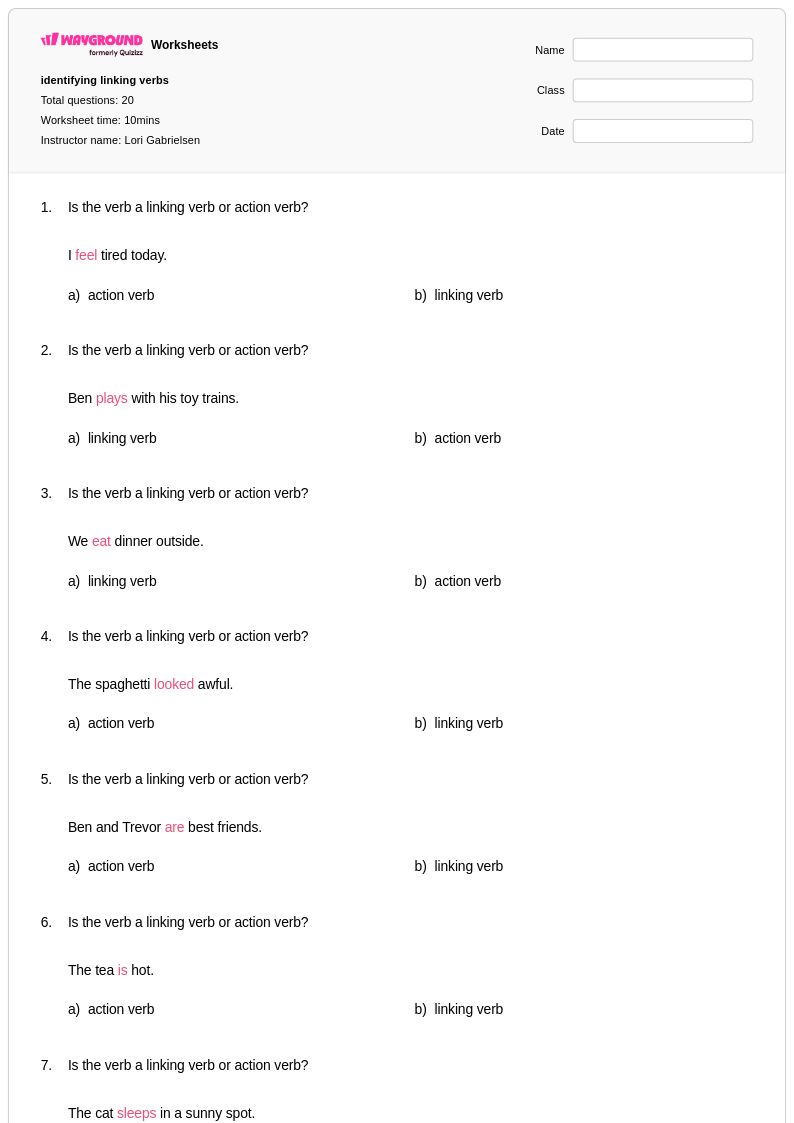
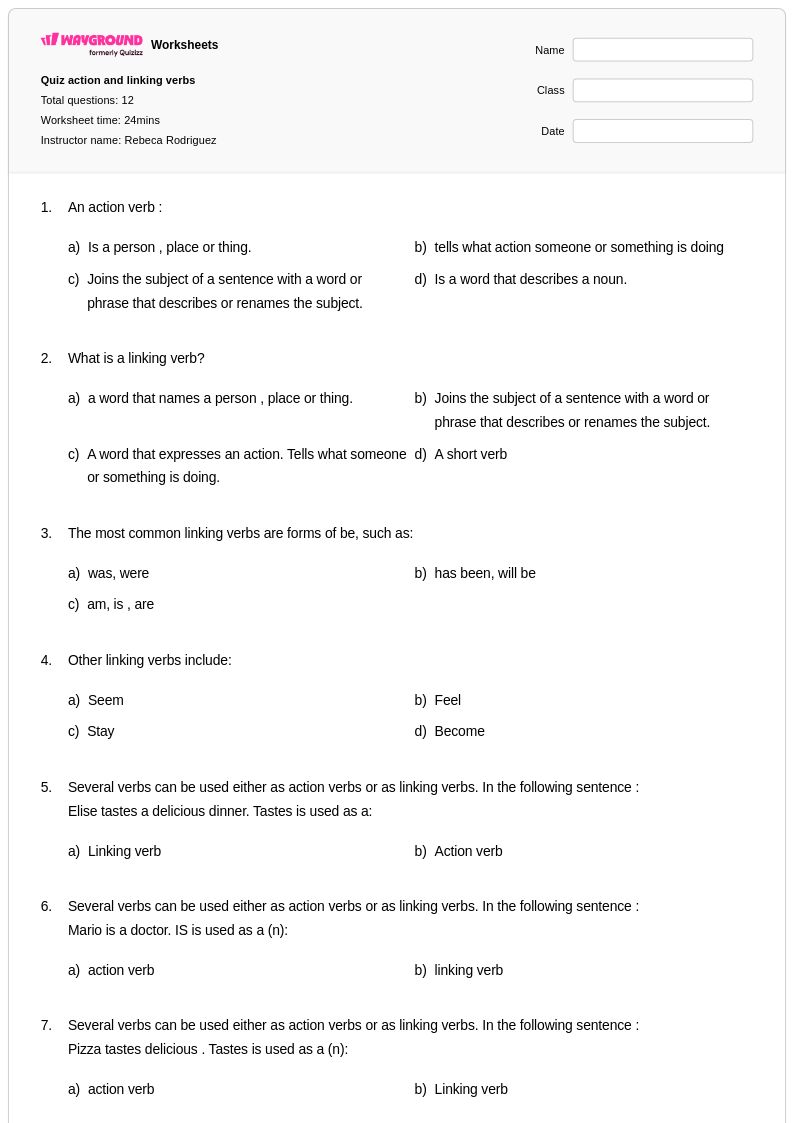
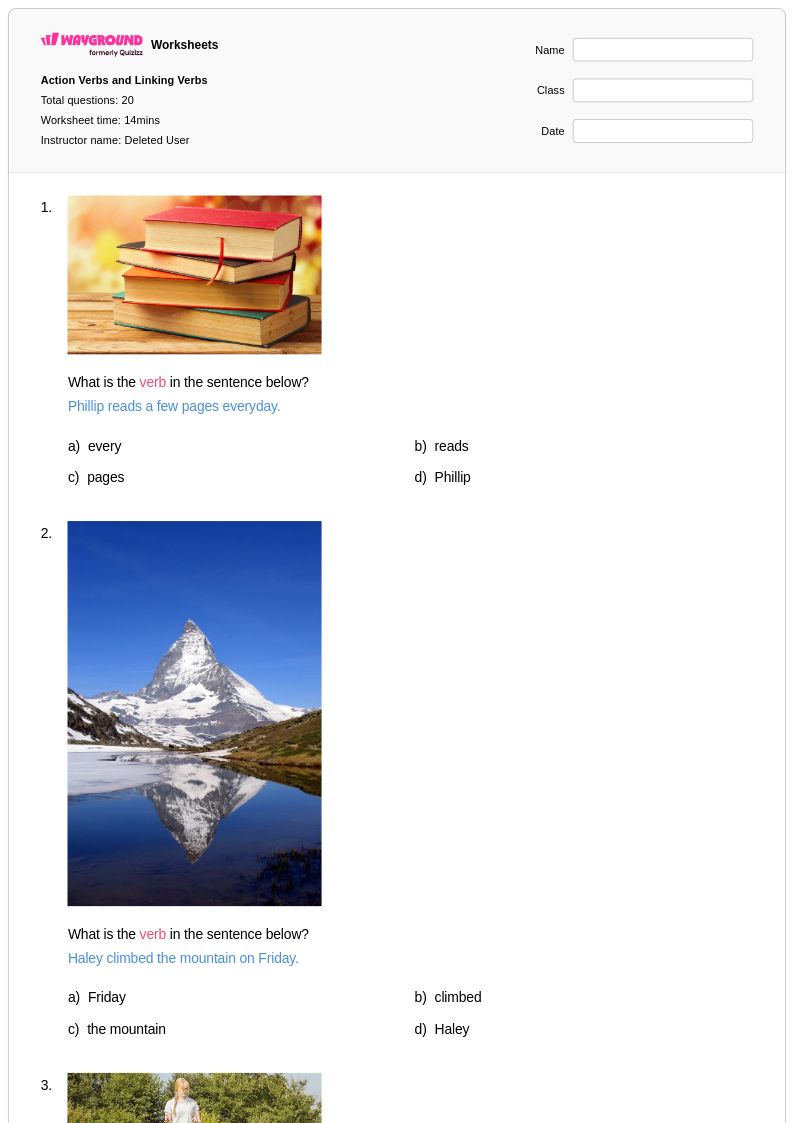
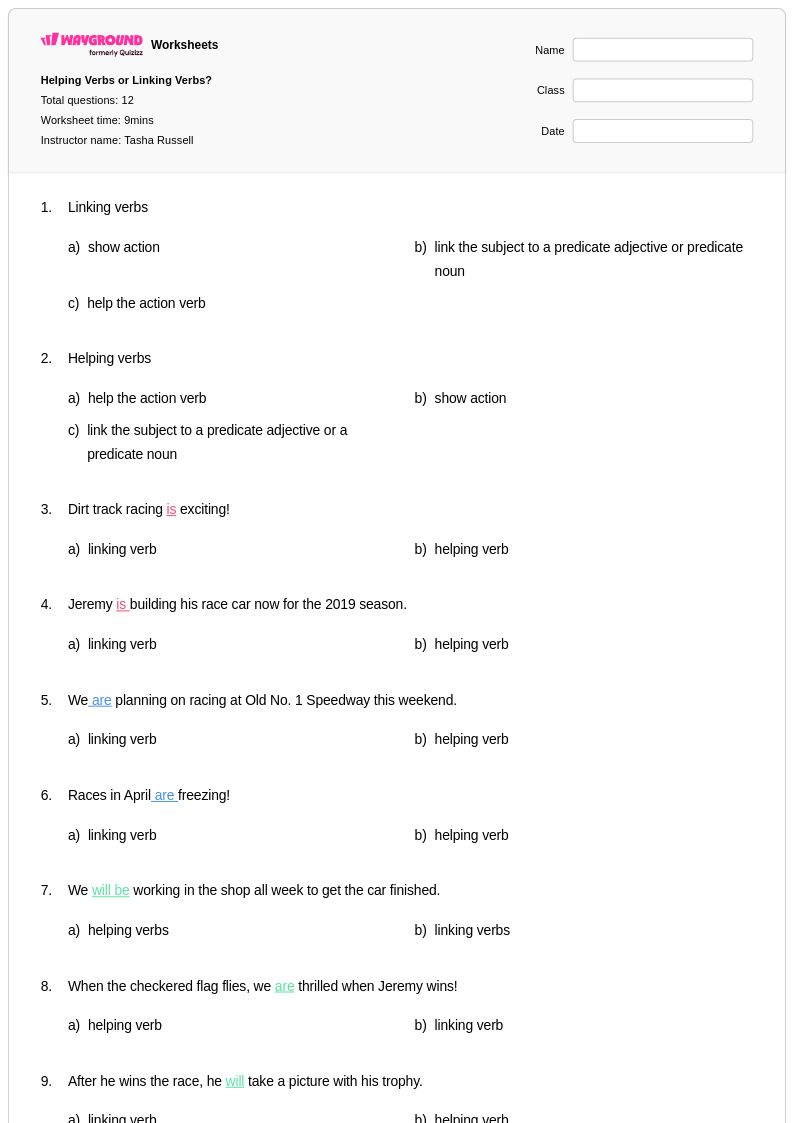
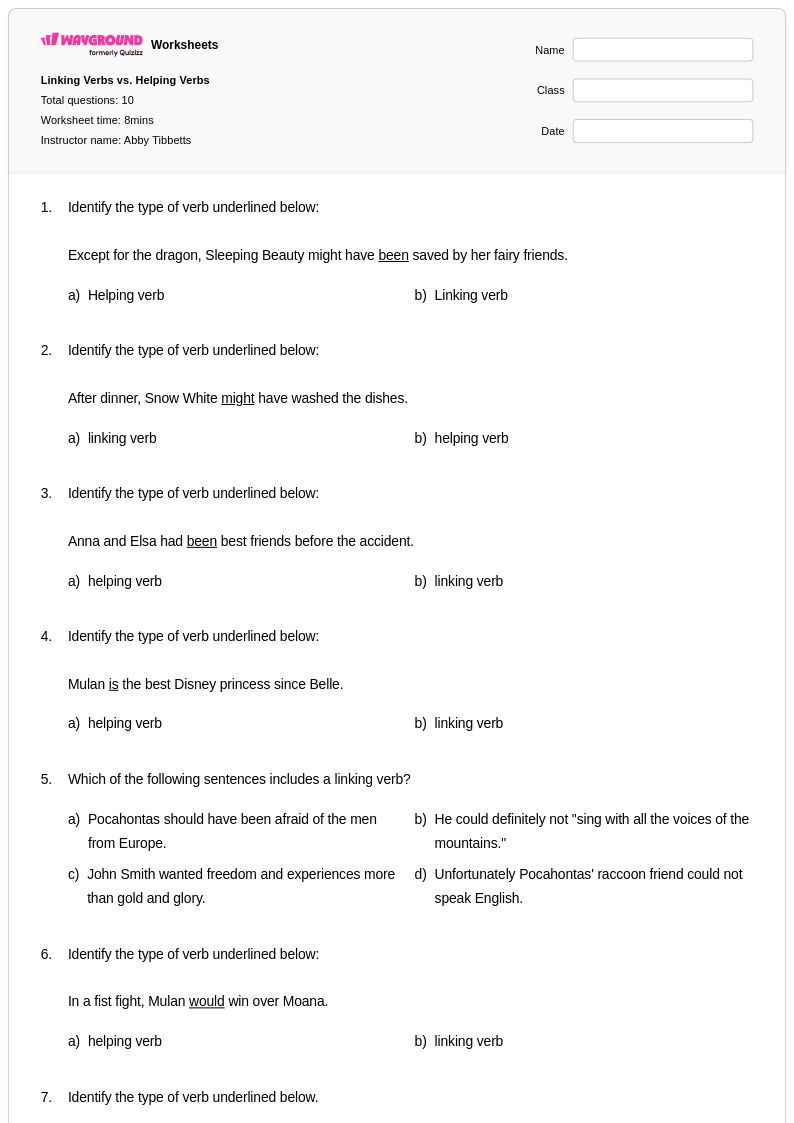
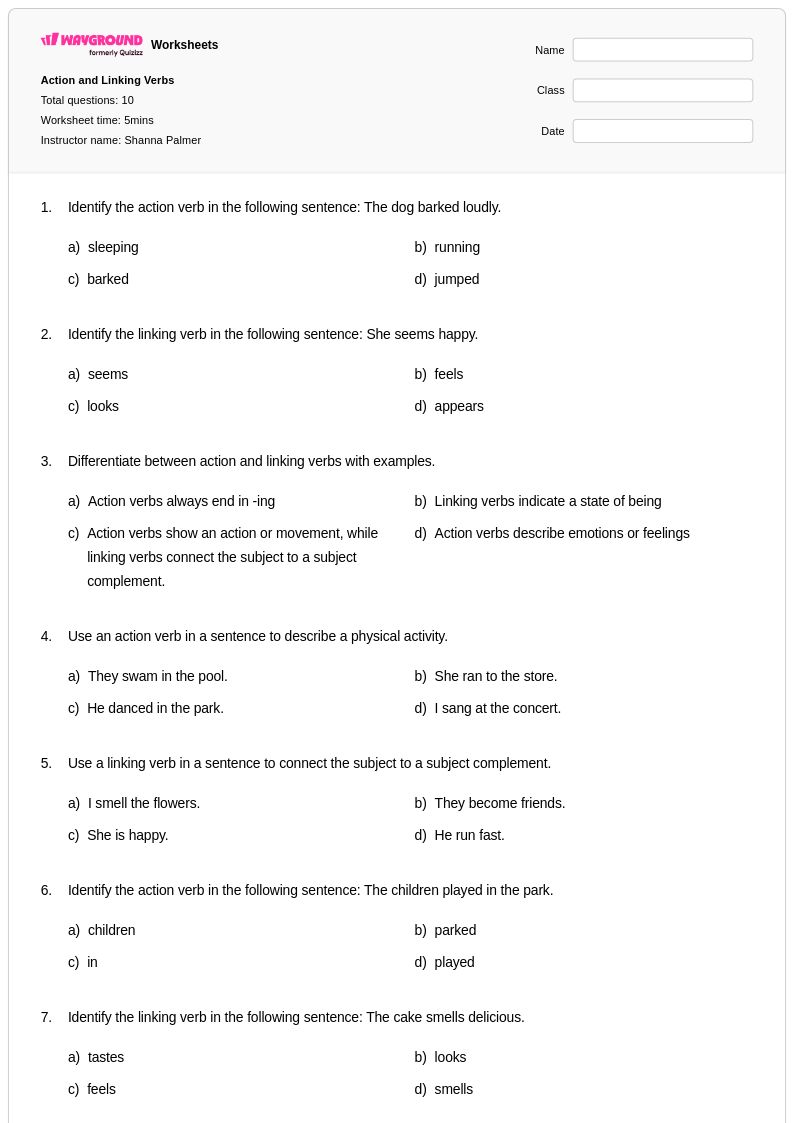
Linking verbs worksheets for Year 5 students available through Wayground (formerly Quizizz) provide comprehensive practice in identifying and understanding one of the most essential verb categories in English grammar. These educational resources help fifth-grade learners distinguish linking verbs from action verbs by focusing on verbs that connect subjects to their descriptions or states of being, including forms of "be," "seem," "appear," "become," and sensory verbs like "look," "sound," and "feel." The worksheets strengthen students' ability to recognize how linking verbs function as bridges between subjects and predicate nominatives or predicate adjectives, building foundational grammar skills essential for advanced sentence analysis. Each collection includes answer keys and is available as free printables in pdf format, offering varied practice problems that challenge students to identify linking verbs in context, complete sentences with appropriate linking verbs, and analyze how these verbs contribute to sentence meaning.
Wayground (formerly Quizizz) empowers educators with an extensive library of millions of teacher-created linking verb worksheets specifically designed for Year 5 instruction, featuring robust search and filtering capabilities that allow teachers to locate resources aligned with specific curriculum standards and learning objectives. The platform's differentiation tools enable instructors to customize worksheet difficulty levels, modify content for diverse learning needs, and select from both printable pdf formats and interactive digital versions to accommodate various classroom environments and teaching preferences. These comprehensive collections support effective lesson planning by providing teachers with ready-to-use materials for initial instruction, targeted remediation for struggling students, and enrichment activities for advanced learners, while the flexible customization options allow educators to adapt content for individual student needs, small group instruction, or whole-class grammar skill practice sessions.
FAQs
How do I teach linking verbs to elementary or middle school students?
Start by contrasting linking verbs with action verbs using familiar examples: 'She runs' (action) versus 'She seems tired' (linking). Anchor instruction around high-frequency linking verbs like 'is,' 'are,' 'was,' 'were,' 'seem,' 'become,' and 'appear,' and teach students the substitution test — if a form of 'be' can replace the verb without changing the sentence's meaning, it's likely a linking verb. Once students can identify the verb, have them locate the subject complement (predicate noun or predicate adjective) to confirm the link. Building this two-step identification habit early prevents confusion in more complex sentences.
What exercises help students practice identifying linking verbs?
Effective exercises include underlining the verb in a sentence and labeling it as linking or action, completing sentences by selecting the correct linking verb from a word bank, and rewriting sentences using a different linking verb while preserving meaning. Sentence-sort activities — where students categorize sentences by whether they contain a linking or action verb — are especially useful for building automaticity. Practice should expose students to both predictable linking verbs like 'be' forms and context-dependent ones like 'look,' 'taste,' 'feel,' and 'sound,' which can function as either action or linking verbs depending on usage.
What mistakes do students commonly make with linking verbs?
The most common error is misidentifying sensory verbs like 'look,' 'smell,' 'taste,' 'sound,' and 'feel' as action verbs regardless of context — students often don't recognize that these words can link a subject to a descriptive adjective rather than express physical action. A second frequent mistake is confusing predicate adjectives with adverbs; students may write 'She feels badly' instead of 'She feels bad' because they incorrectly apply an adverb after what they perceive as a verb of action. Teaching the substitution test and consistently asking 'What does this verb connect?' helps students self-correct both errors.
How can I use linking verbs worksheets to differentiate instruction in my classroom?
Linking verbs worksheets can be tiered by task complexity: struggling learners benefit from exercises that provide a word bank and focus on core 'be' verb forms, while on-level students can work with mixed sentences requiring them to identify and label verb types without support. Advanced students can tackle open-ended sentence transformation tasks using a range of linking verbs across varied sentence structures. On Wayground, teachers can apply individual accommodations such as read aloud, reduced answer choices, and extended time to specific students, so the same digital worksheet can serve the whole class while meeting each learner's needs without drawing attention to differentiation.
How do I use Wayground's linking verbs worksheets in my classroom?
Wayground's linking verbs worksheets are available as printable PDFs for traditional classroom use and in digital formats for technology-integrated or remote learning environments. Teachers can assign a digital version directly to students and even host it as a quiz on Wayground, enabling real-time progress tracking and immediate feedback. Each worksheet includes a complete answer key, reducing prep time and making it straightforward to review results with the class or use data to inform follow-up instruction.
What is the difference between a linking verb and a predicate adjective?
A linking verb is the verb that connects the subject to information about it, while a predicate adjective is the adjective that appears after the linking verb and describes the subject. In the sentence 'The soup tastes salty,' 'tastes' is the linking verb and 'salty' is the predicate adjective modifying 'soup.' Students often conflate the two terms, so it helps to frame them as having distinct roles: the linking verb is the connector, and the predicate adjective is the descriptor it points back to.