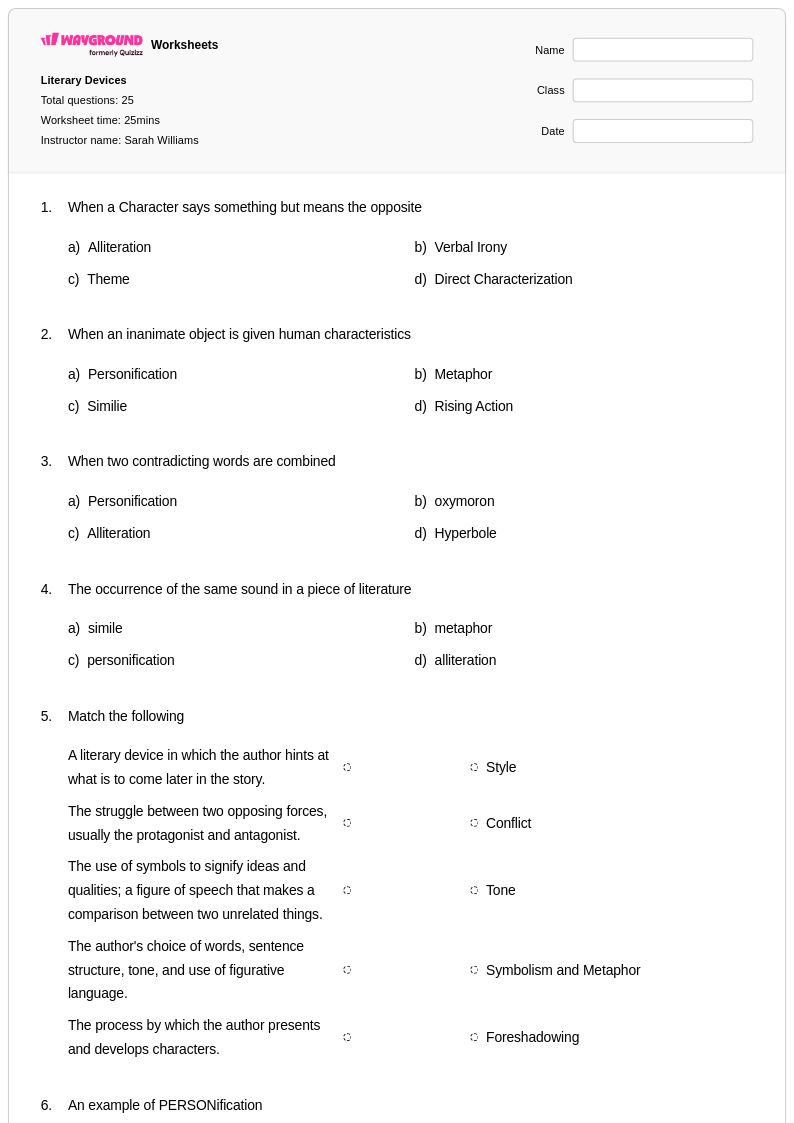
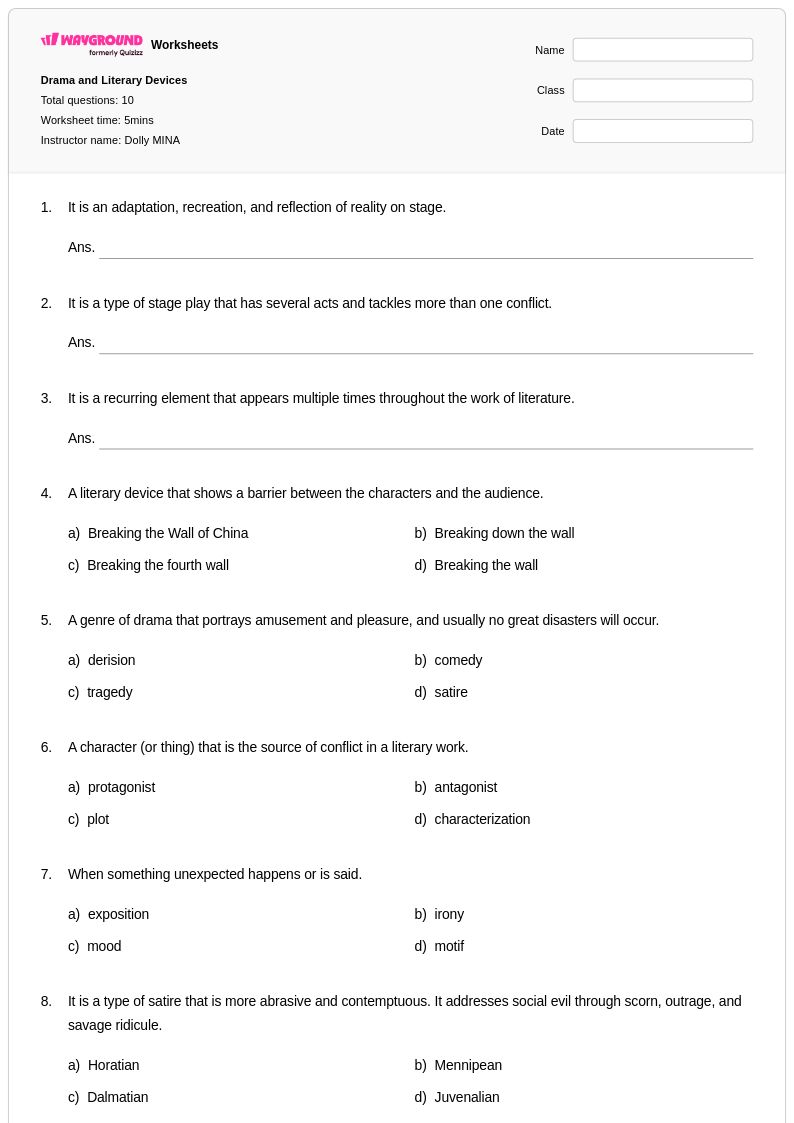
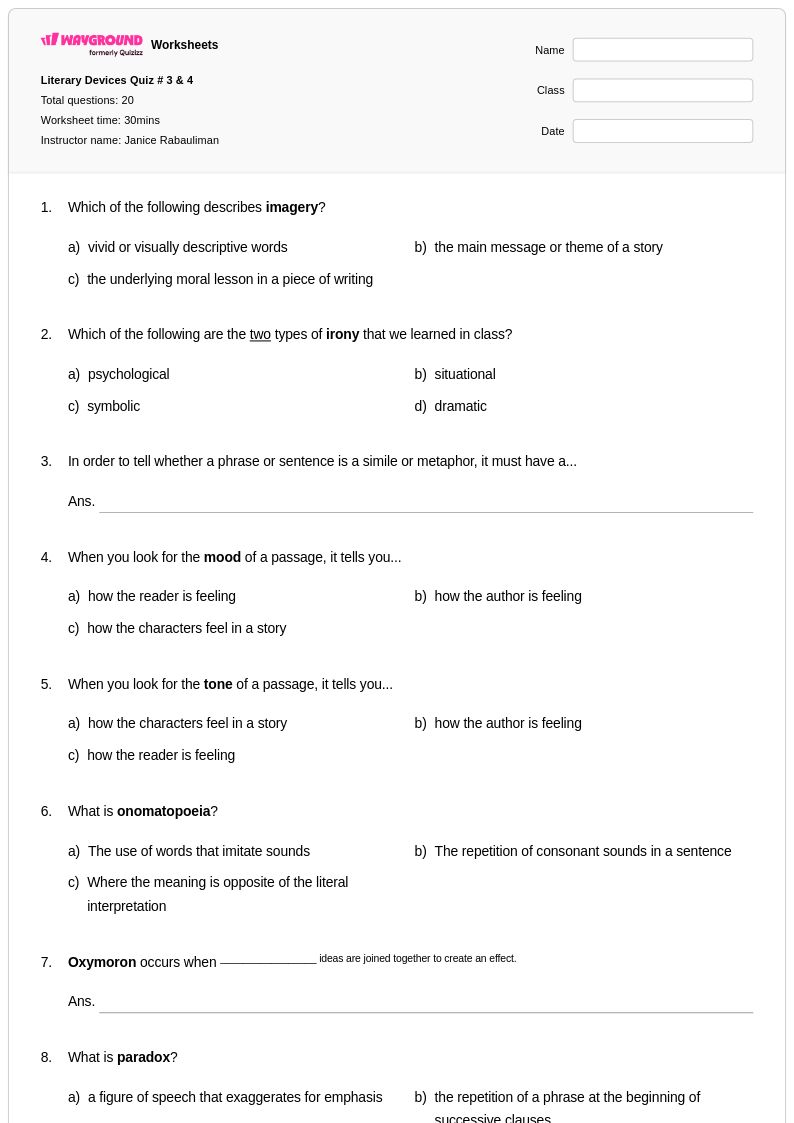
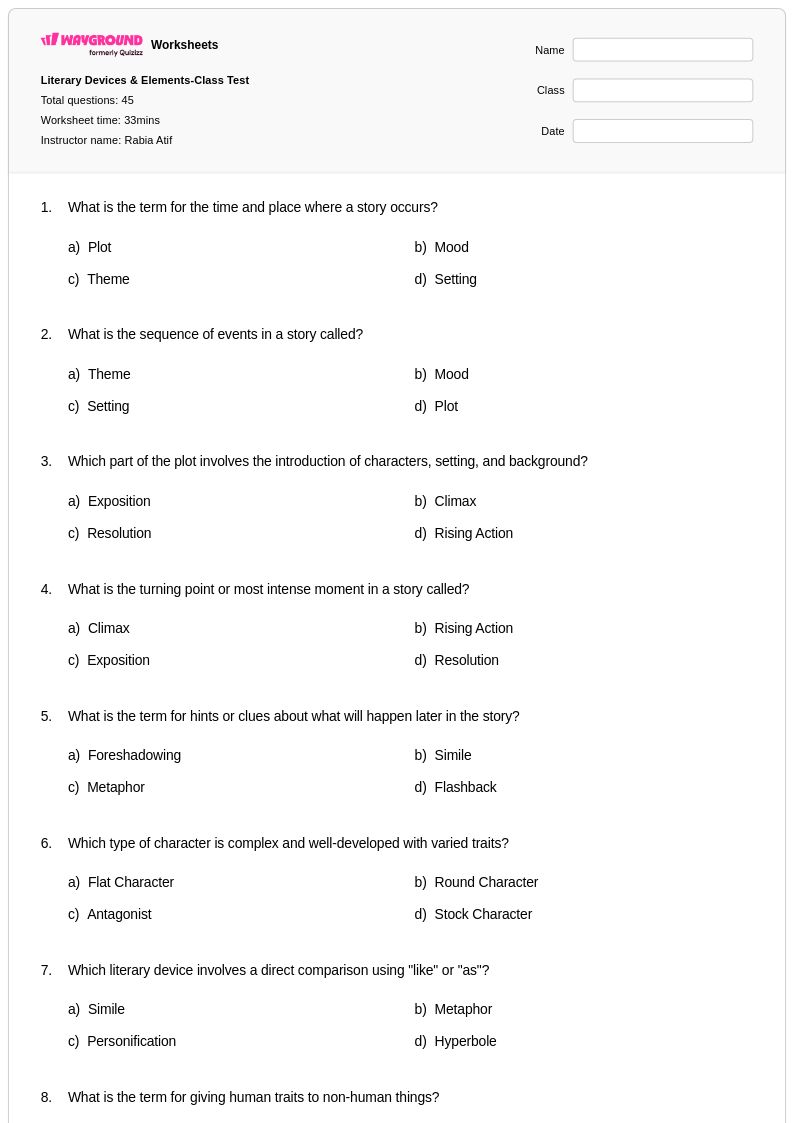
Free Printable Literary Devices Worksheets for Year 9
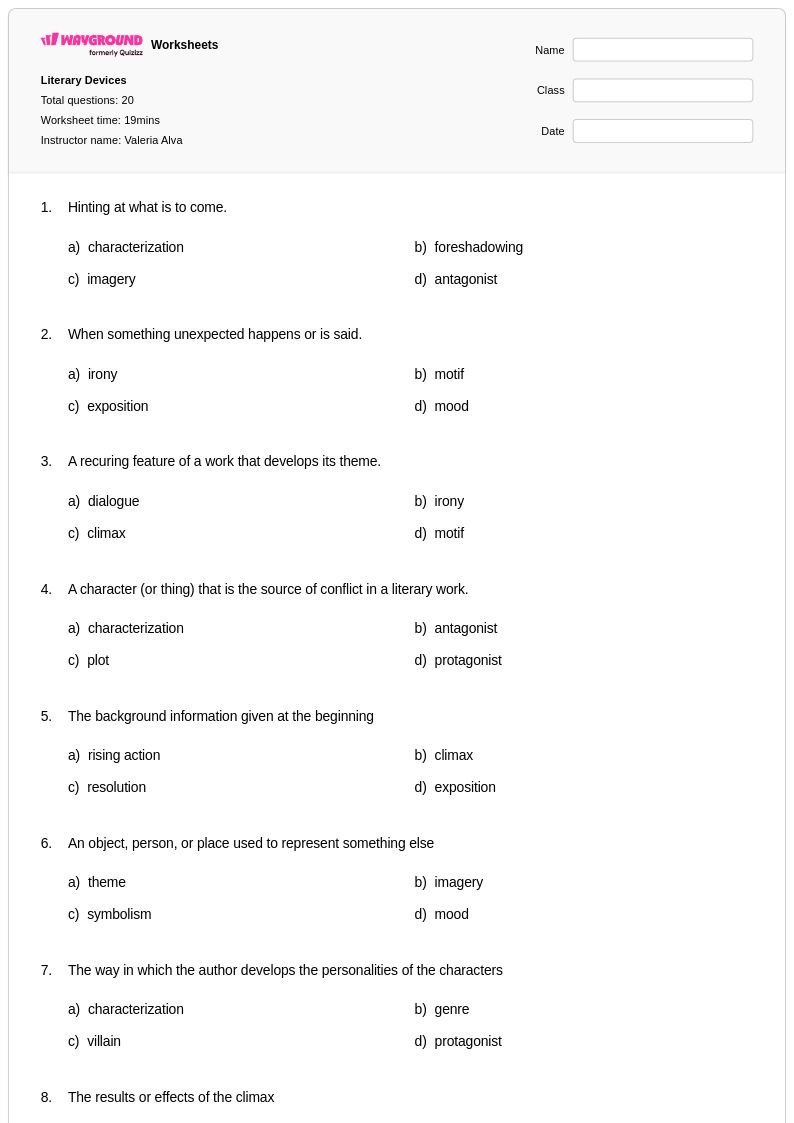
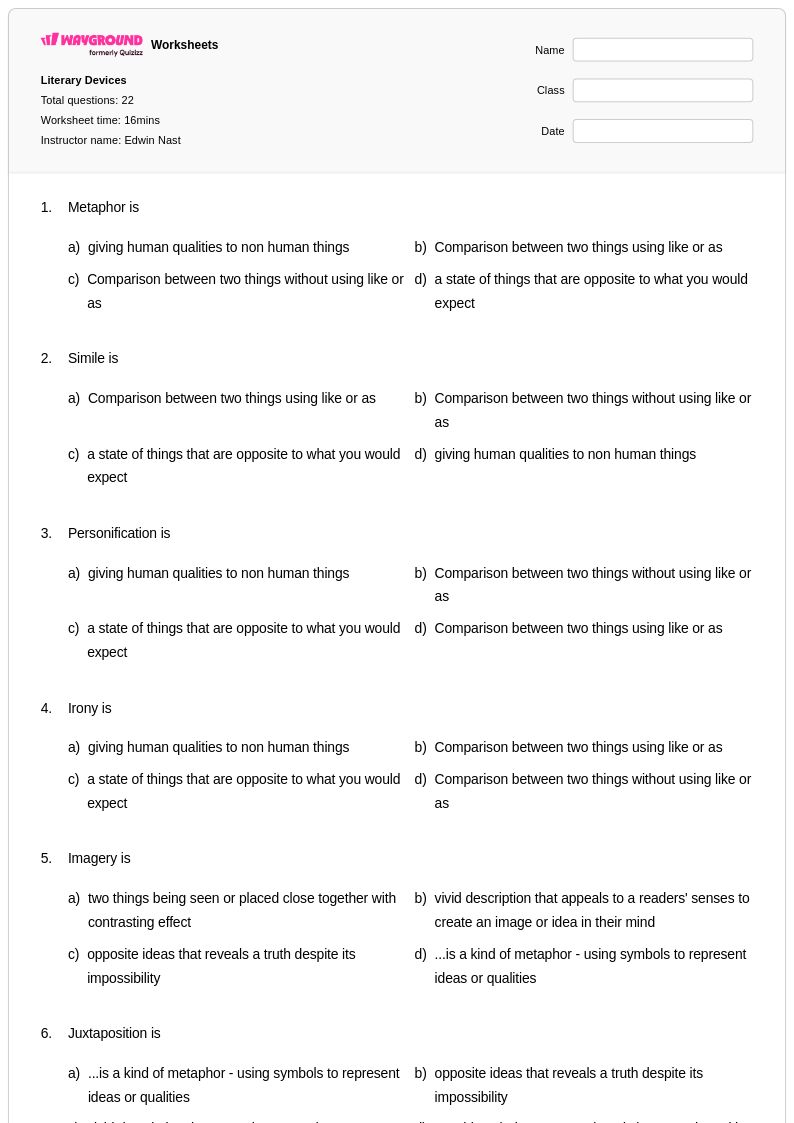
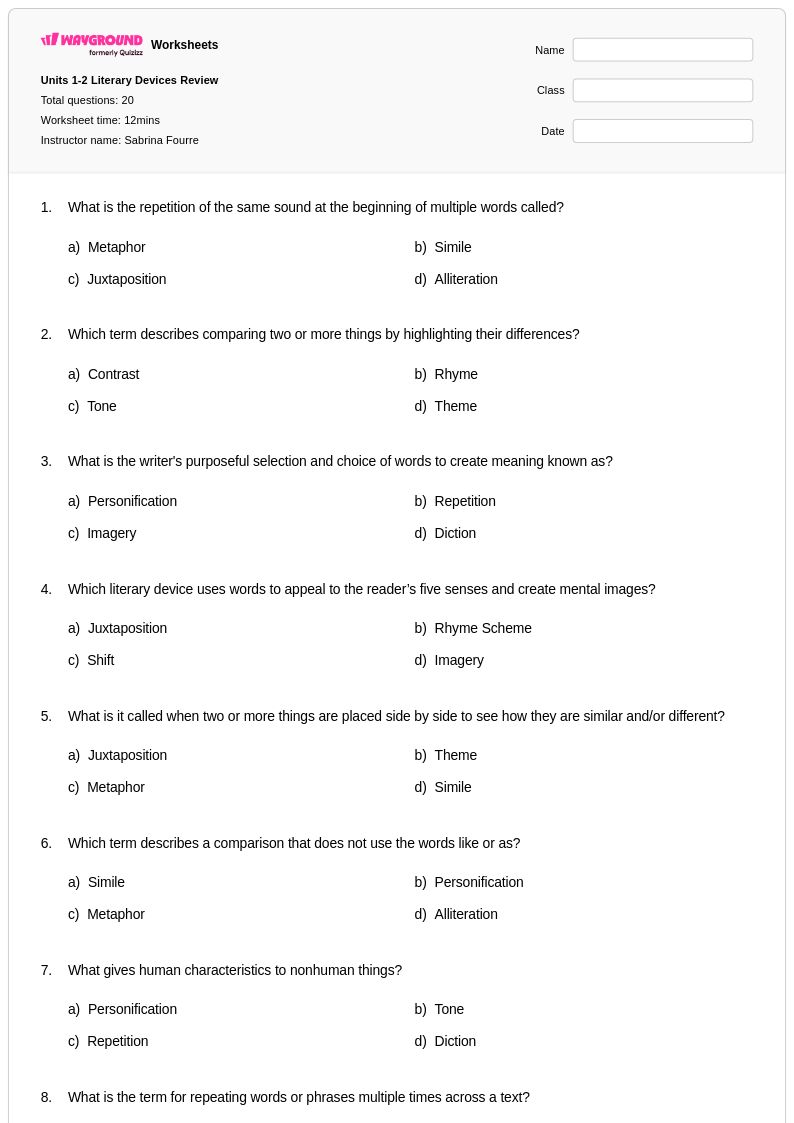
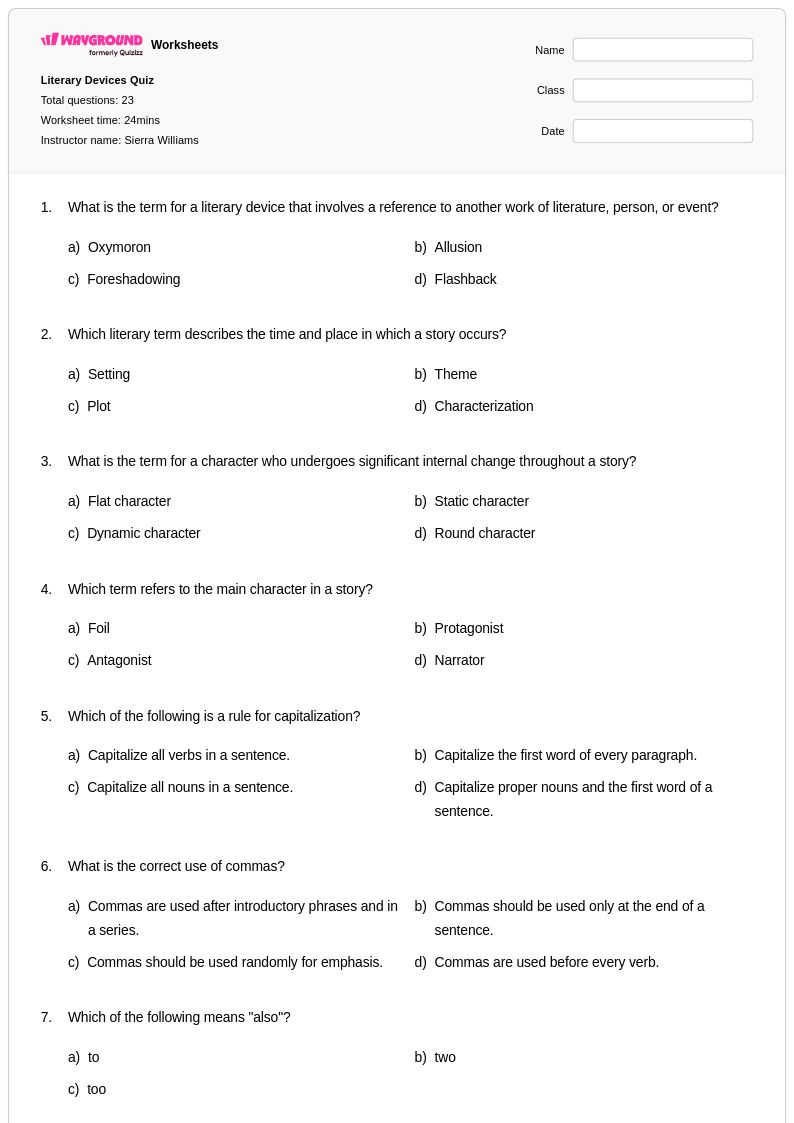
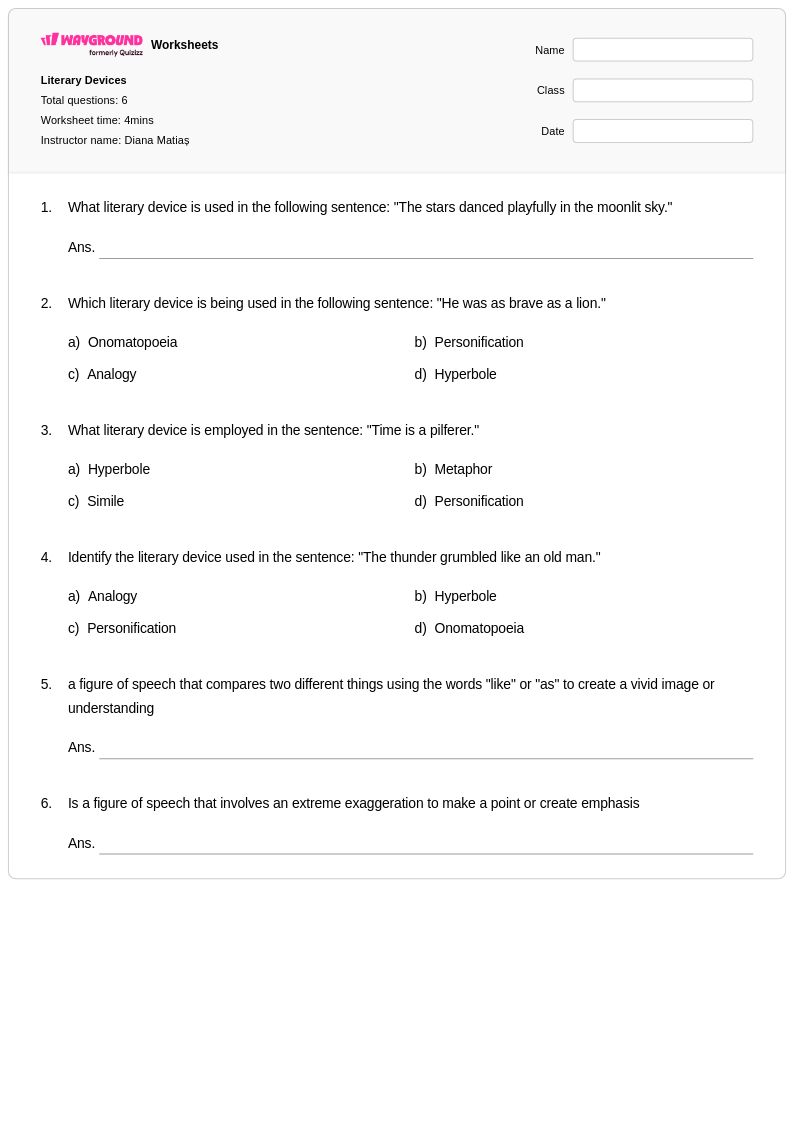
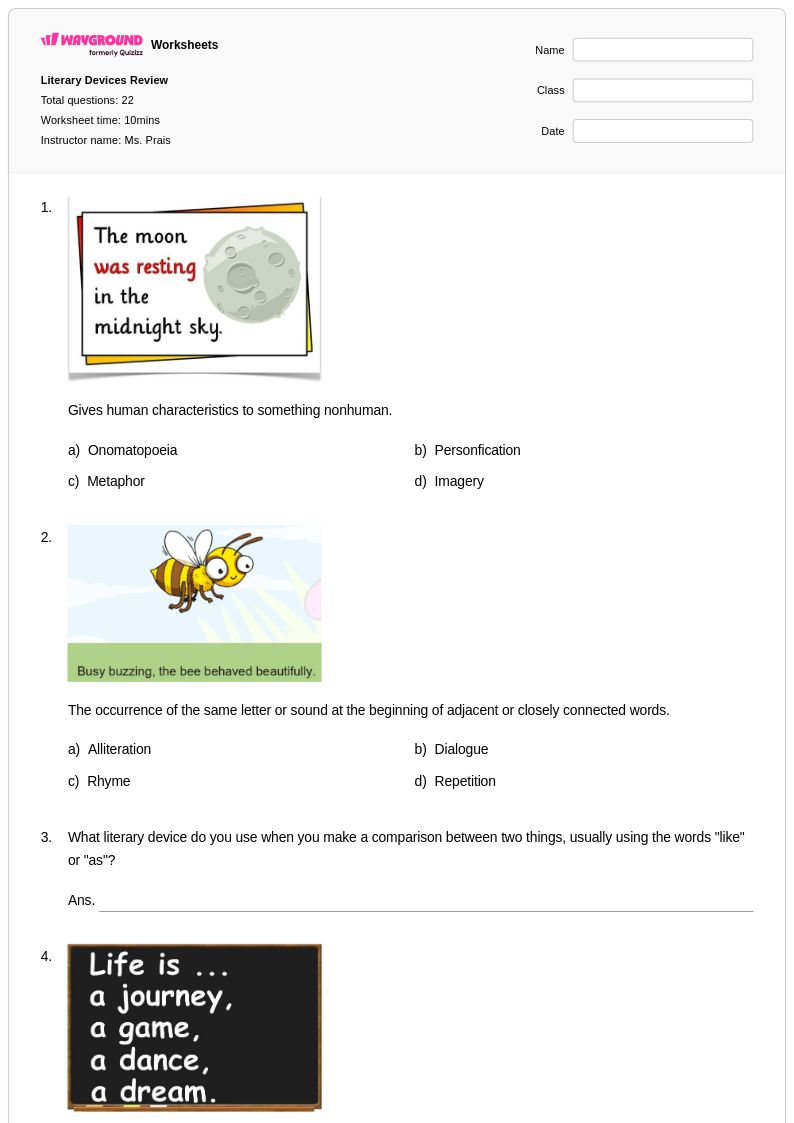
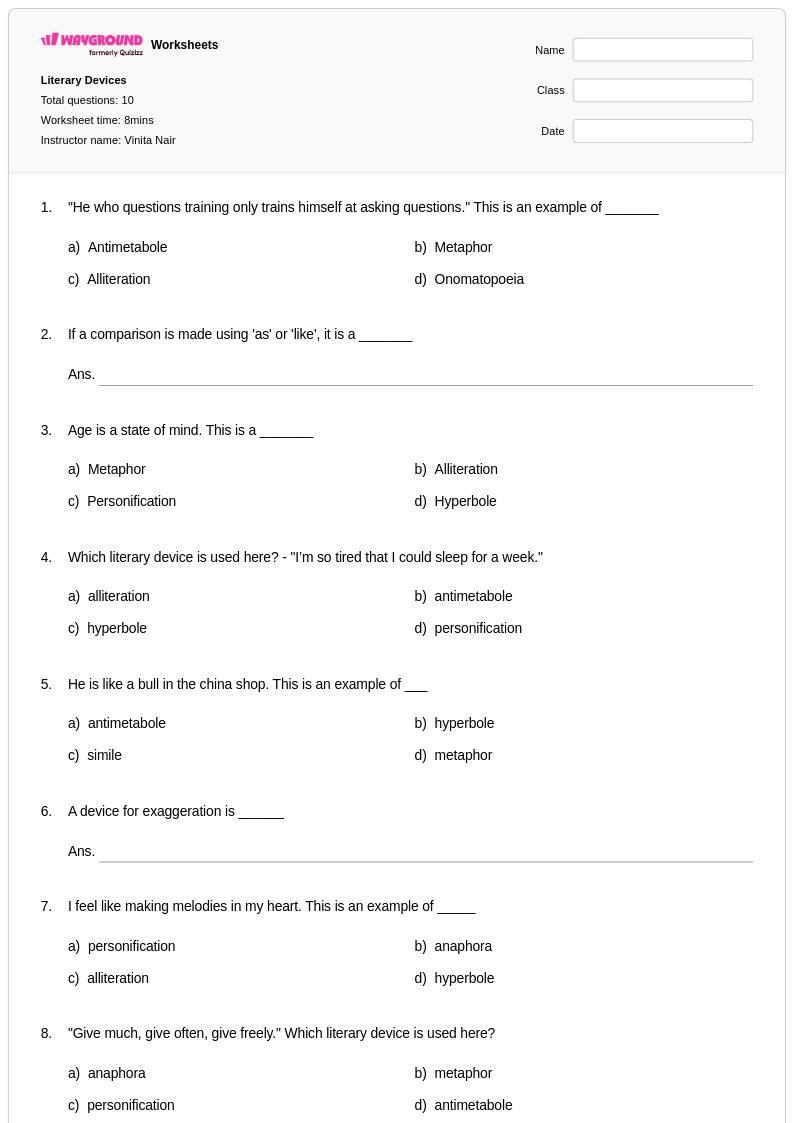
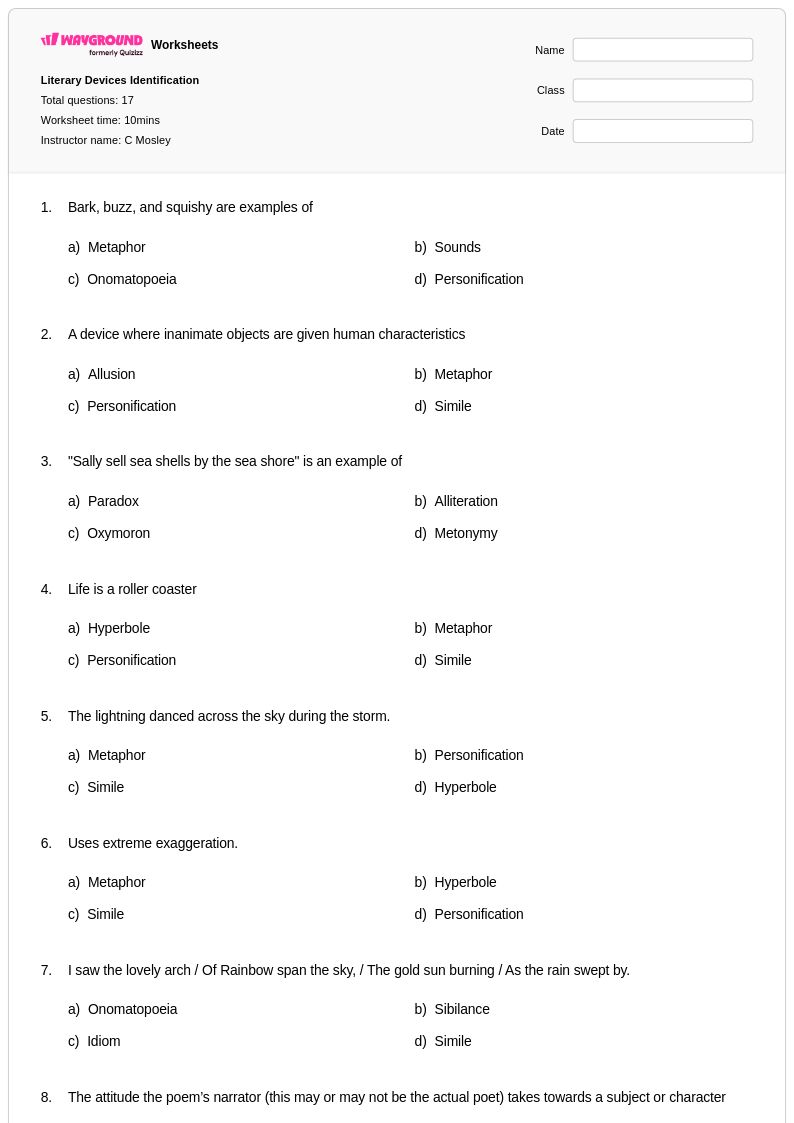
Year 9 literary devices worksheets from Wayground help students master metaphors, symbolism, and figurative language through engaging printables, practice problems, and comprehensive answer keys for effective English language arts learning.
Explore printable Literary Devices worksheets for Year 9
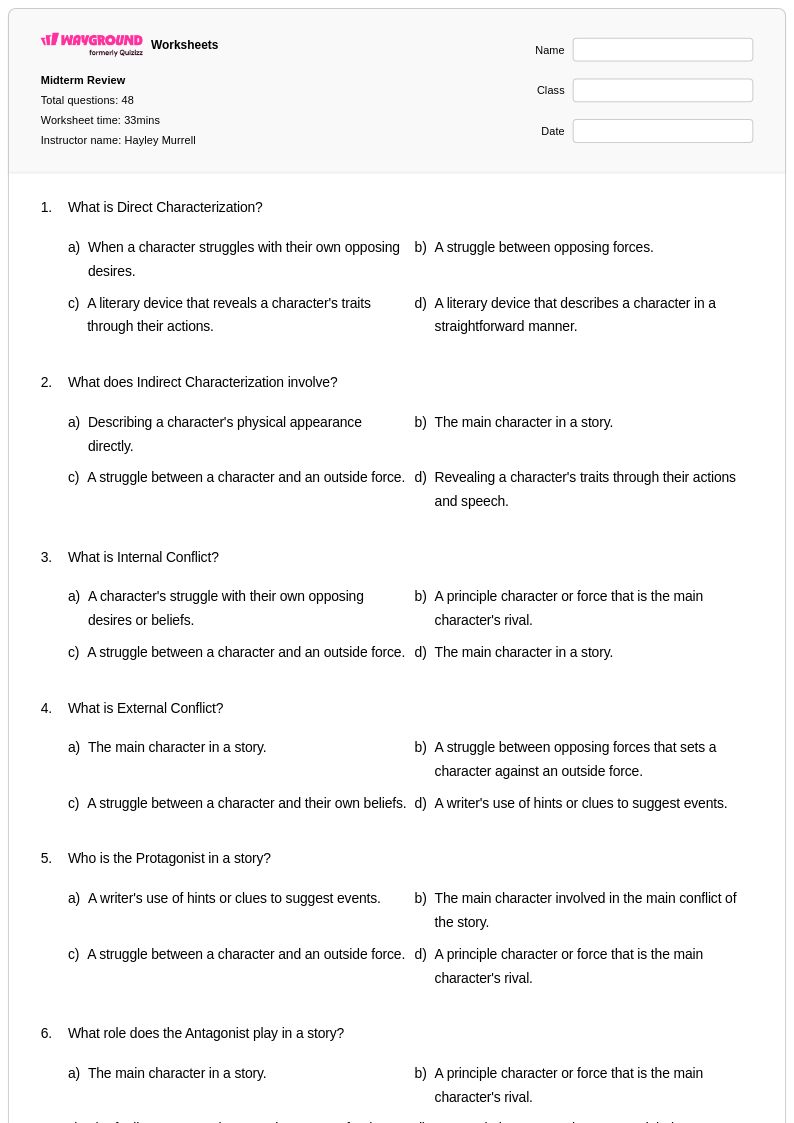
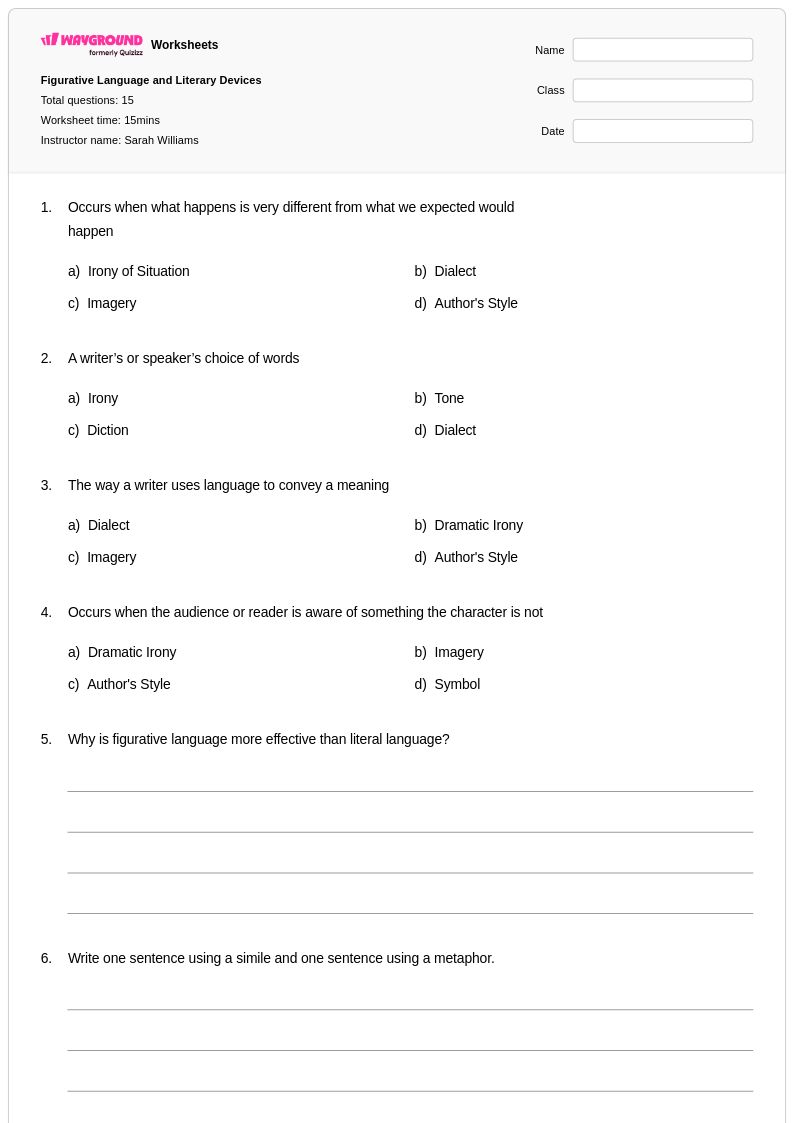
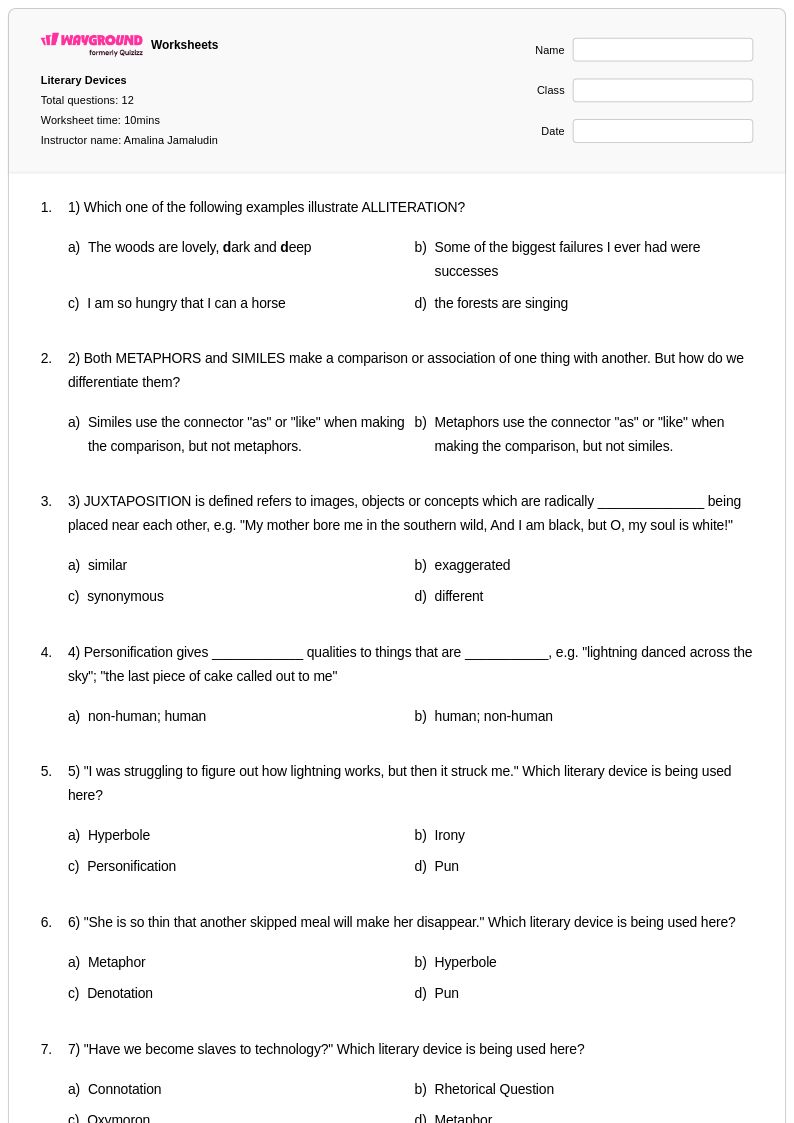
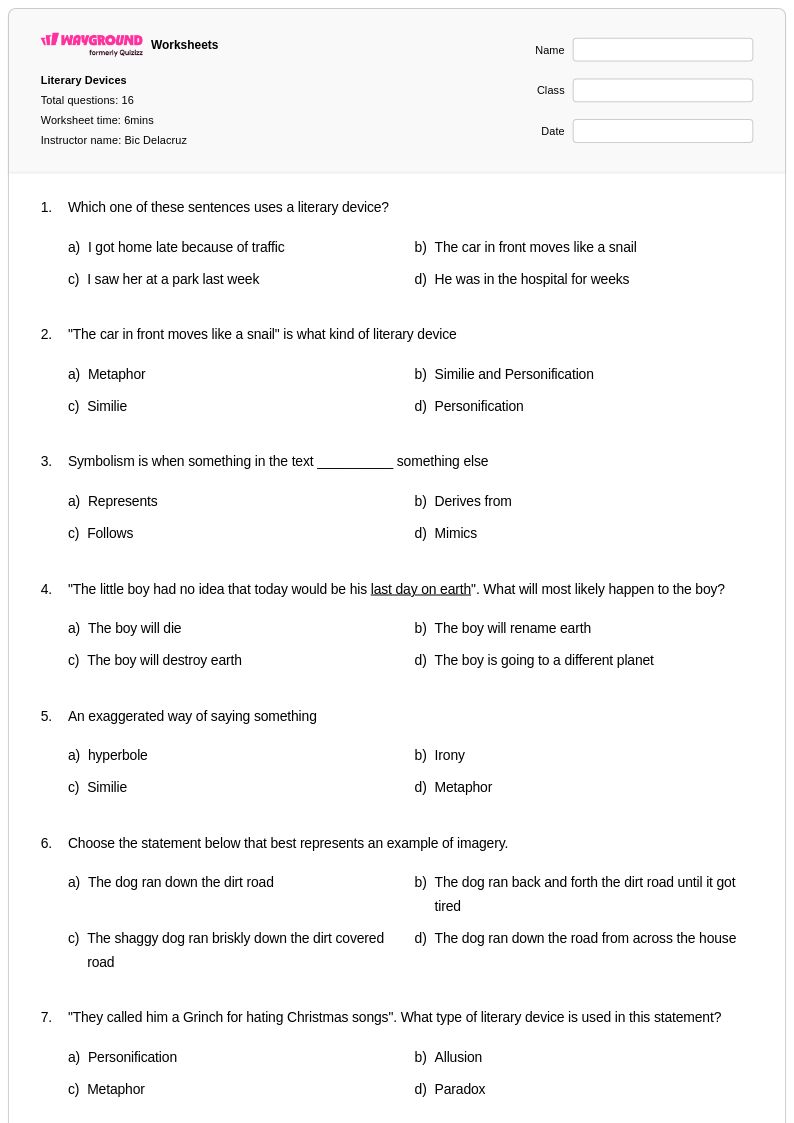
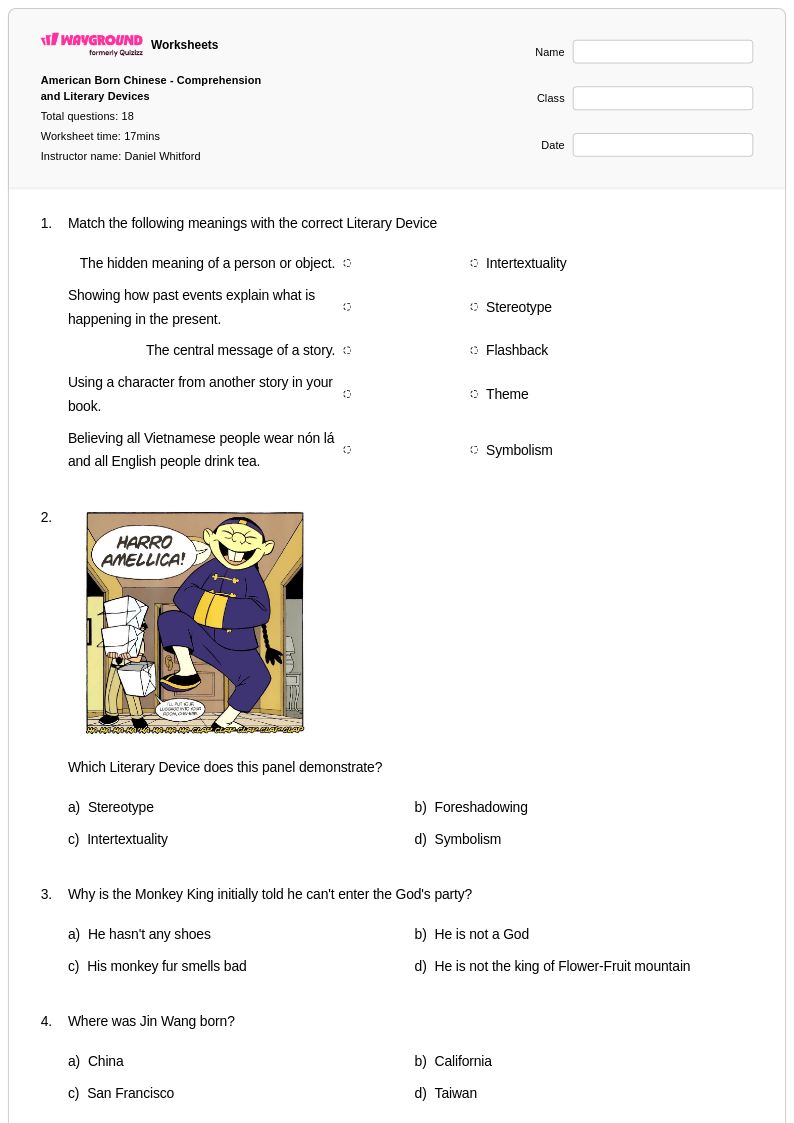
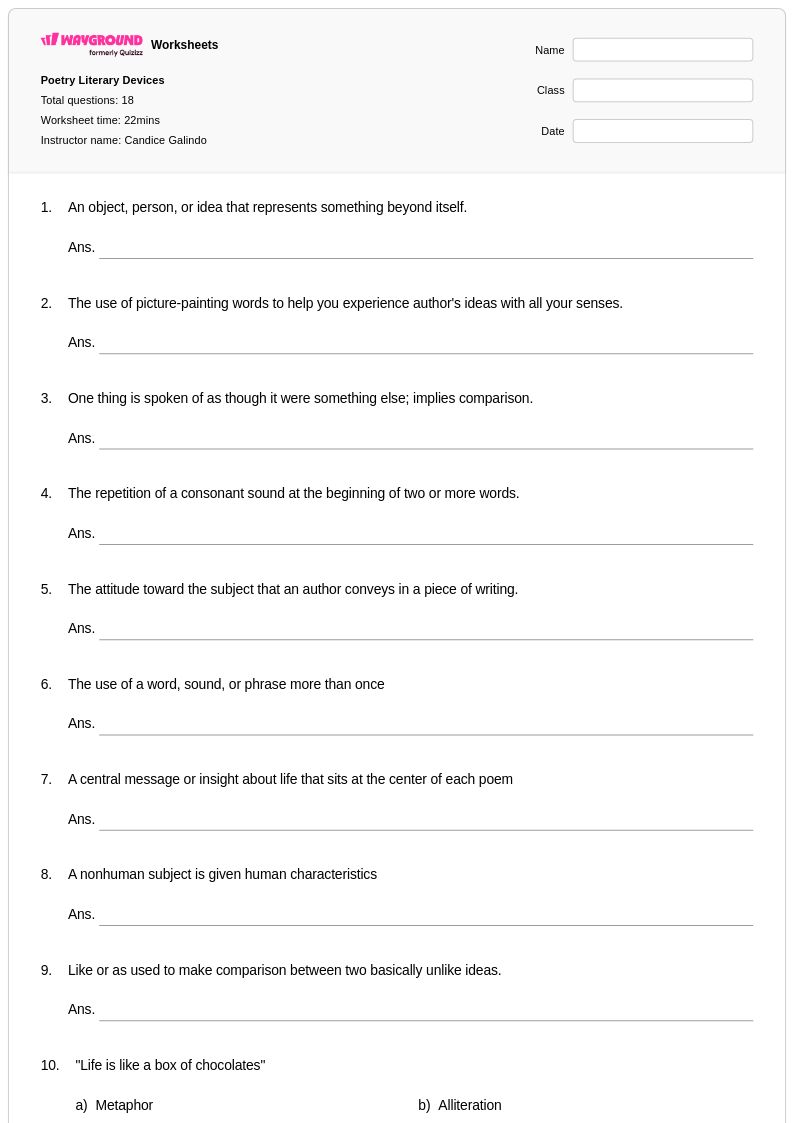
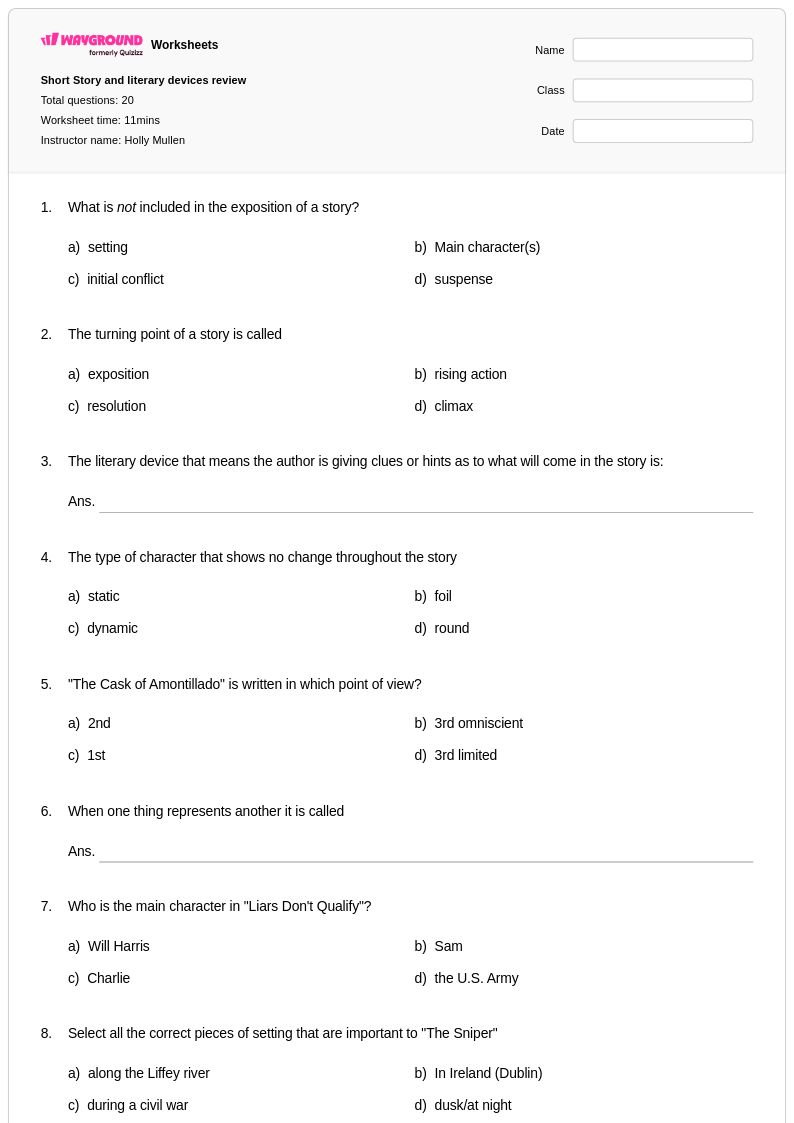
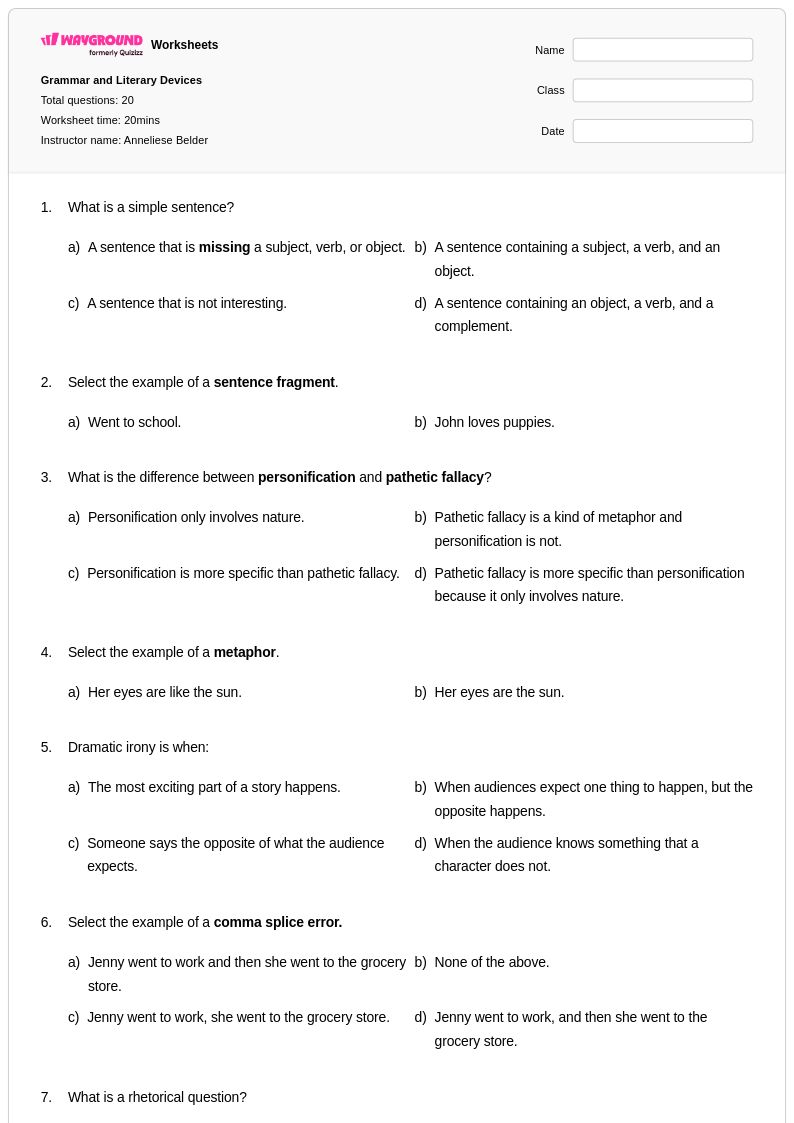
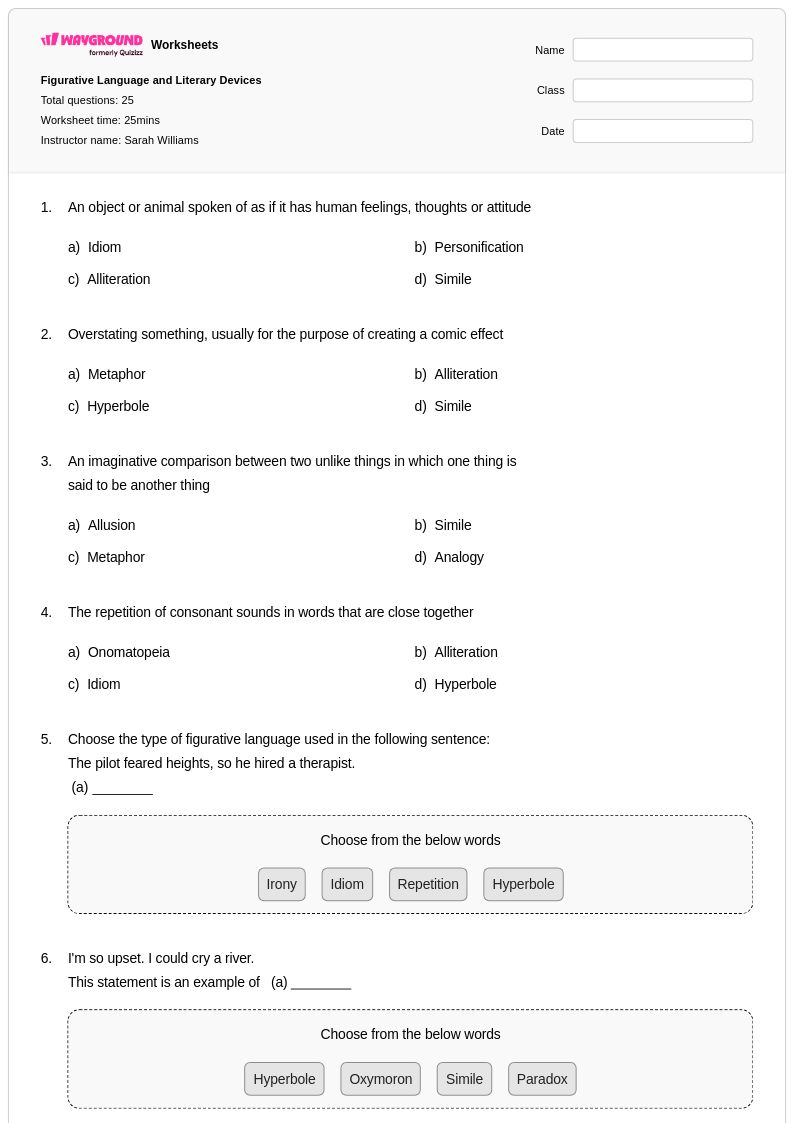
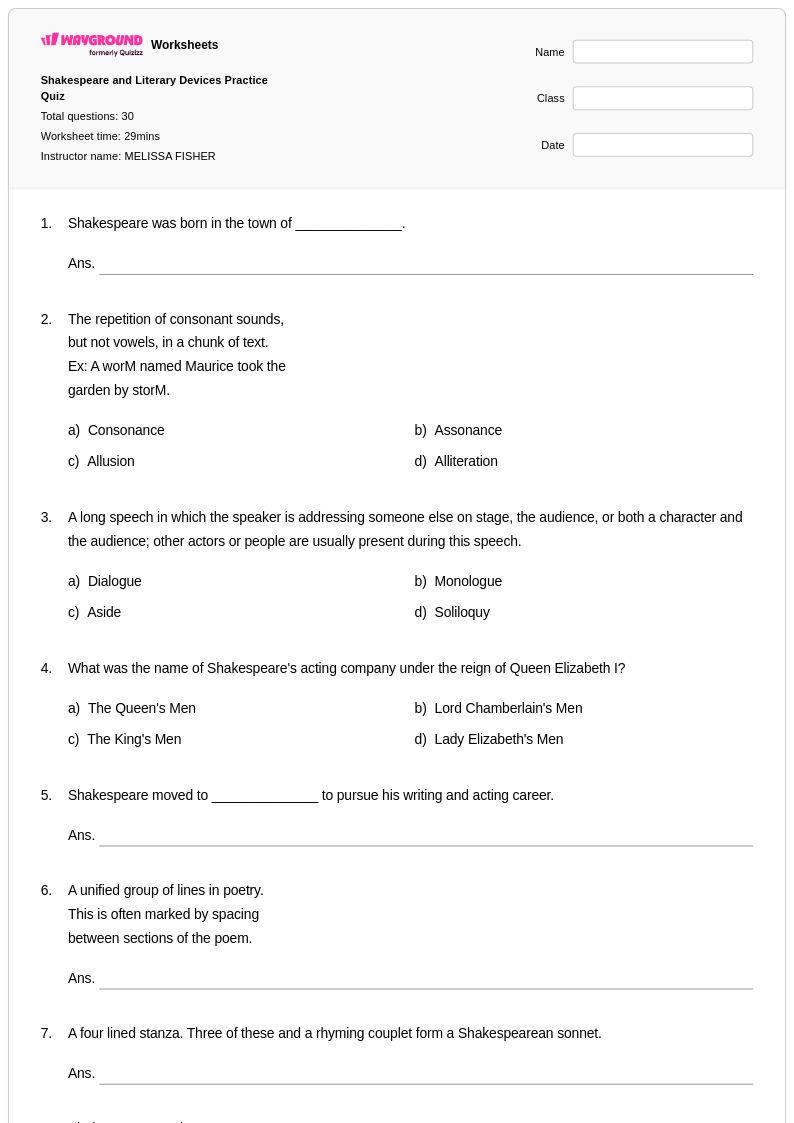
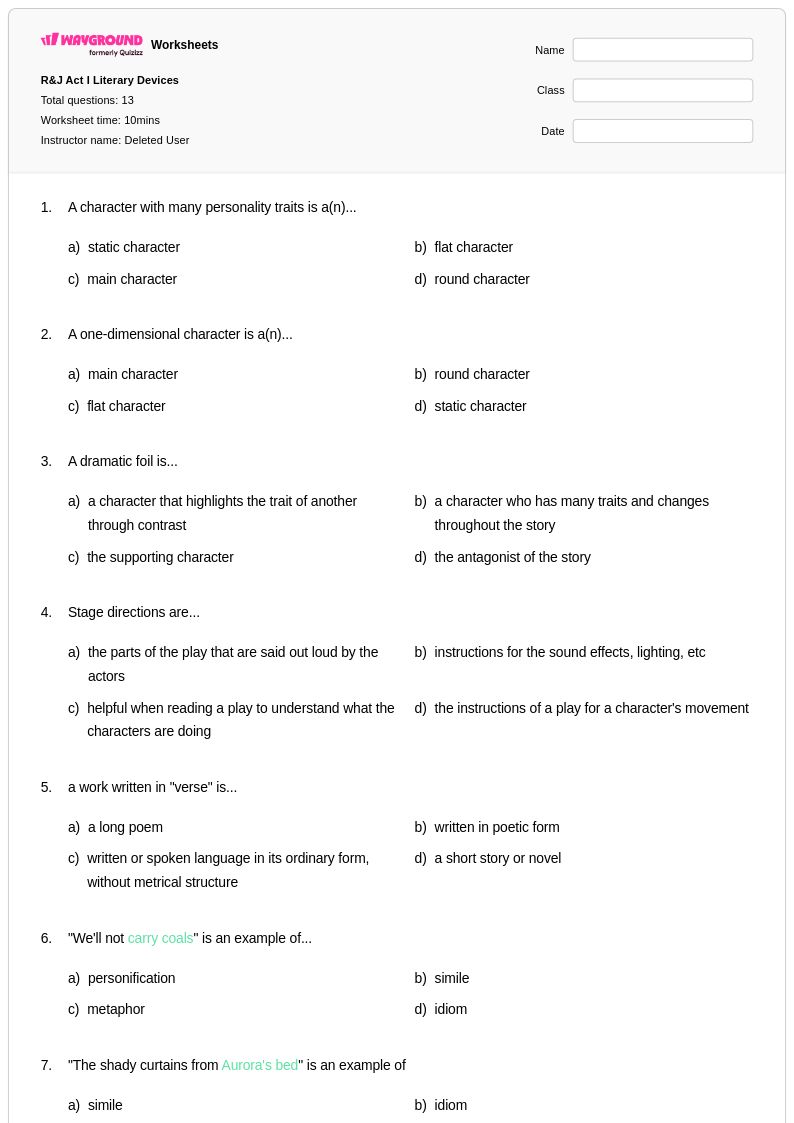
Literary devices worksheets for Year 9 students available through Wayground provide comprehensive practice with the fundamental tools authors use to create meaning, emotion, and artistic effect in their writing. These expertly crafted worksheets strengthen students' ability to identify, analyze, and interpret techniques such as metaphor, symbolism, irony, foreshadowing, and imagery across various literary genres. Each worksheet includes carefully selected passages and practice problems that challenge ninth-grade learners to move beyond simple recognition toward deeper literary analysis, helping them understand how authors deliberately employ these devices to enhance their storytelling. The collection features complete answer keys and free printable pdf formats that make it easy for educators to implement meaningful literary analysis activities in their classrooms.
Wayground's extensive library of literary devices worksheets draws from millions of teacher-created resources, offering educators powerful search and filtering capabilities to locate materials perfectly aligned with Year 9 curriculum standards and learning objectives. Teachers can differentiate instruction effortlessly by accessing worksheets that range from foundational identification exercises to advanced analytical tasks, ensuring every student receives appropriate challenge and support. The platform's flexible customization tools allow educators to modify existing worksheets or combine elements from multiple resources, while both printable and digital pdf formats provide versatility for various classroom settings. These features streamline lesson planning while supporting targeted remediation for struggling readers, enrichment opportunities for advanced learners, and consistent skill practice that builds students' confidence in literary analysis throughout the academic year.
FAQs
How do I teach literary devices effectively in middle or high school?
Start by introducing one device at a time with a clear definition and a mentor text example students already know, then ask them to find the same device in a new passage before moving on. Anchoring each device in familiar context, such as a song lyric for alliteration or a news headline for irony, reduces cognitive overload and builds schema. Once students can identify a device in isolation, push them toward analysis by asking what effect the device creates rather than just naming it. Gradually layer multiple devices together so students practice distinguishing between, for example, metaphor and personification in the same passage.
What exercises help students practice identifying literary devices in a text?
Close reading exercises where students annotate short passages and label each device by type are among the most effective practice formats, because they require recognition in authentic context rather than fill-in-the-blank recall. Ranking exercises, where students decide which device is most central to a passage's meaning, push analytical thinking beyond simple identification. Moving from basic identification to analysis tasks, such as explaining why an author chose a specific device, builds the layered skill set that literary analysis assessments require.
What common mistakes do students make when identifying literary devices?
The most frequent error is conflating devices that share surface features, such as confusing metaphor with simile or mistaking dramatic irony for situational irony, because students memorize definitions without internalizing the distinctions. Students also tend to label a device without connecting it to meaning, writing 'this is a metaphor' without explaining what the comparison reveals. Another common misconception is treating literary devices as decorative rather than functional, which limits students to surface-level reading instead of genuine literary analysis.
How do I help students who struggle to tell the difference between simile and metaphor?
The clearest corrective strategy is to present both devices side by side using the same comparison, showing students how the presence or absence of 'like' or 'as' changes the form but not the meaning. Follow this with a sorting activity where students categorize a mixed list of examples, then explain their reasoning aloud or in writing. The explanation step is critical because it forces students to articulate the rule rather than pattern-match, which is what produces lasting retention.
How can I use Wayground's literary devices worksheets in my classroom?
Wayground's literary devices worksheets are available as printable PDFs for traditional classroom distribution and homework assignments, as well as in digital formats that suit technology-integrated learning environments. Teachers can also host worksheets as an interactive quiz directly on Wayground, giving students immediate feedback while generating performance data for the teacher. Each worksheet includes detailed answer keys and step-by-step explanations, so these resources work equally well for guided instruction, independent practice, or self-paced review.
How do I differentiate literary devices instruction for students at different skill levels?
For students still building foundational knowledge, limit practice to one or two high-frequency devices like simile and metaphor before introducing less familiar ones such as allusion or foreshadowing. Advanced students benefit from multi-device analysis tasks where they must compare the effect of different techniques within the same text. On Wayground, teachers can apply accommodations such as reduced answer choices for students who need lower cognitive load, or enable Read Aloud so passages are read to students who struggle with decoding, allowing them to focus on the analytical task itself.