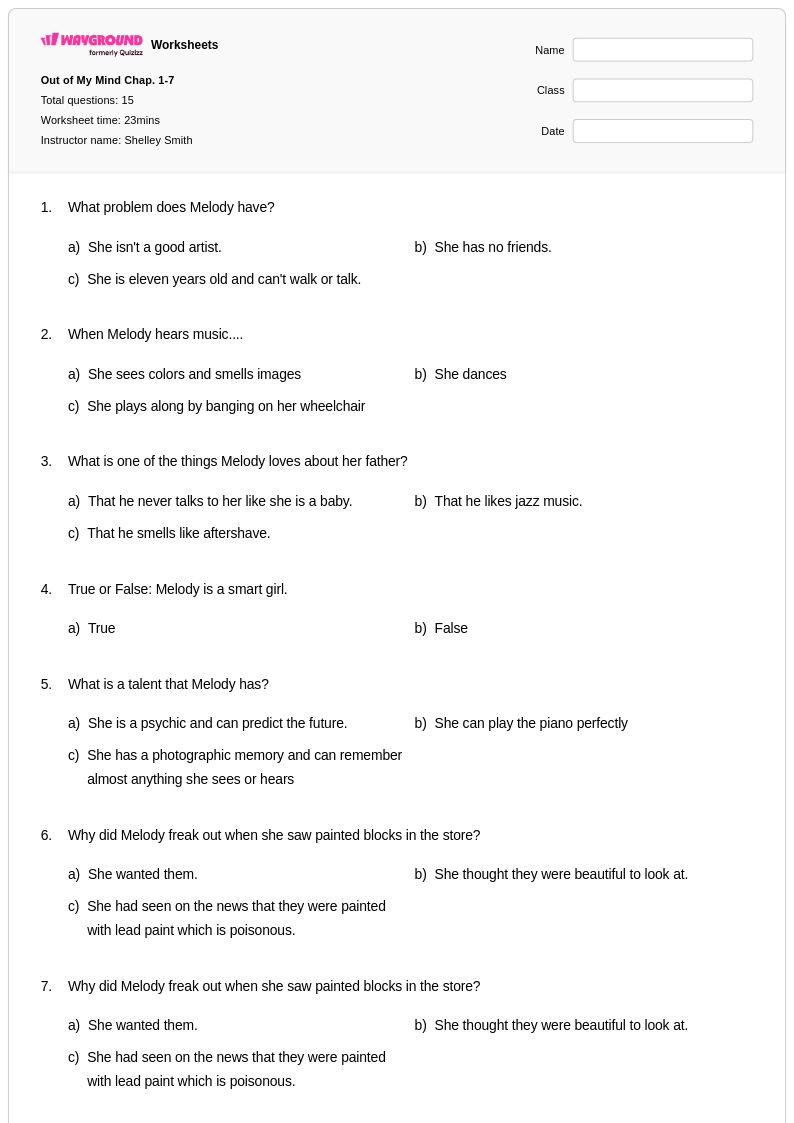
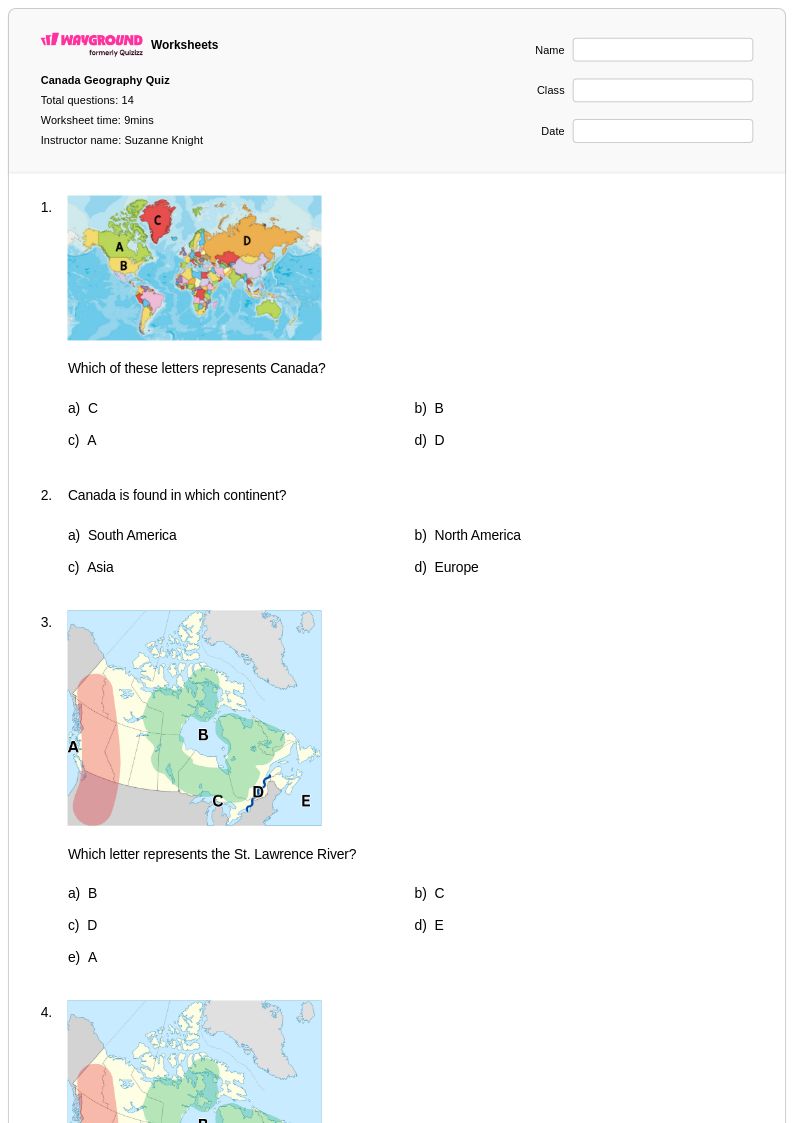
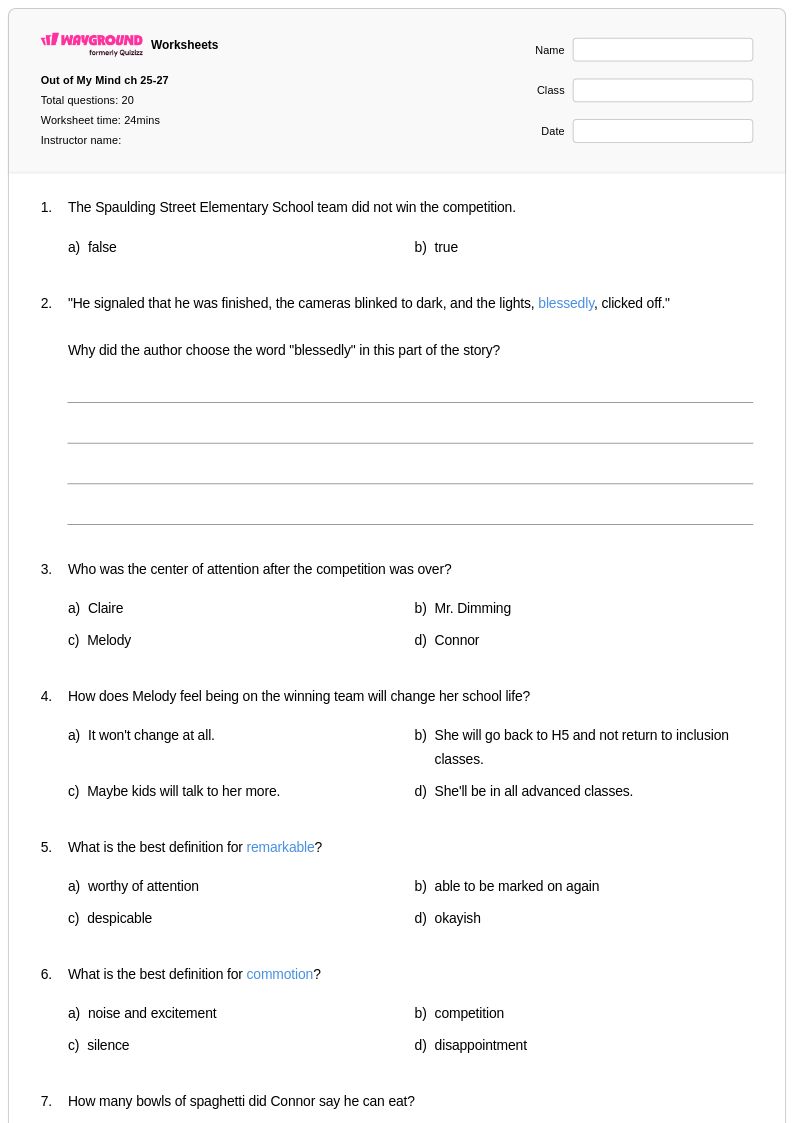
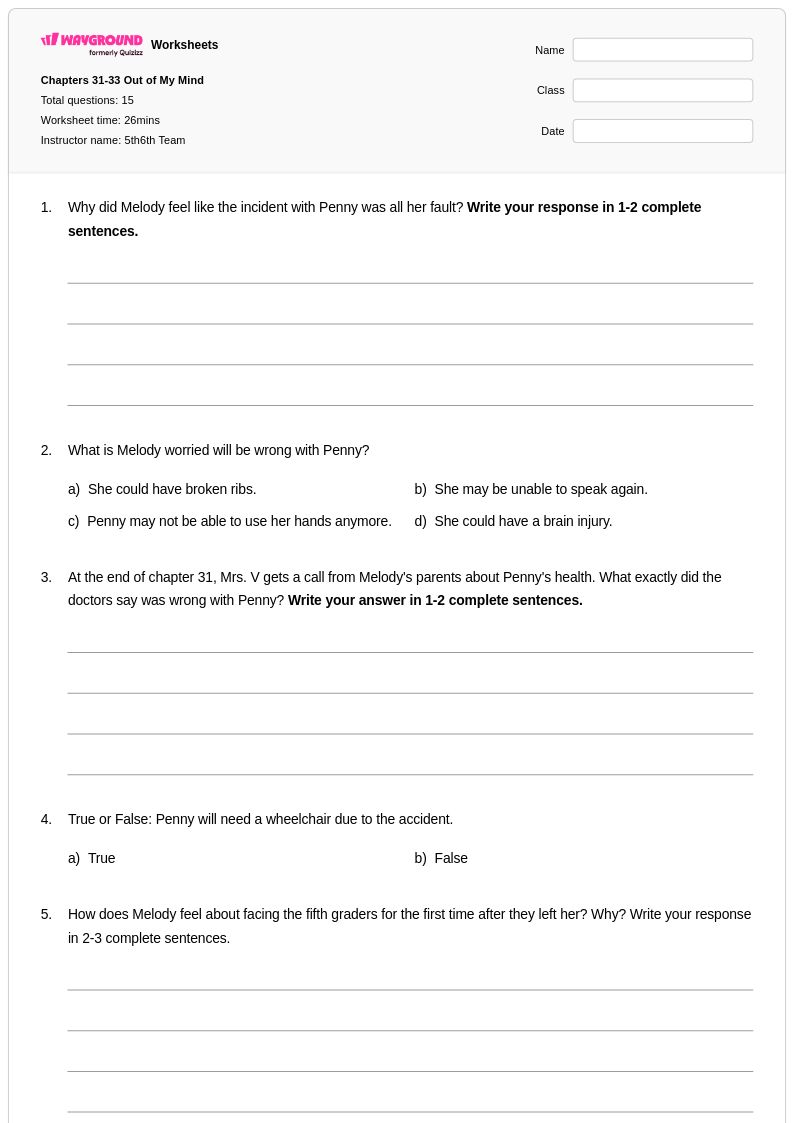
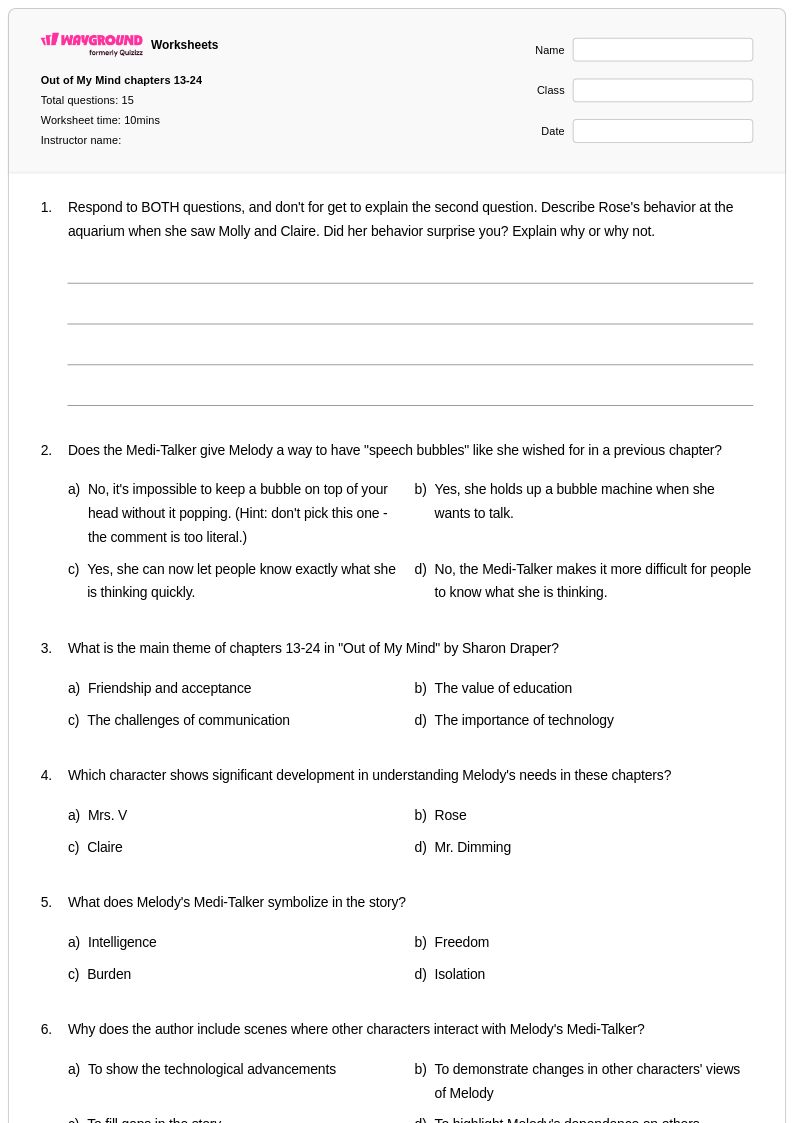
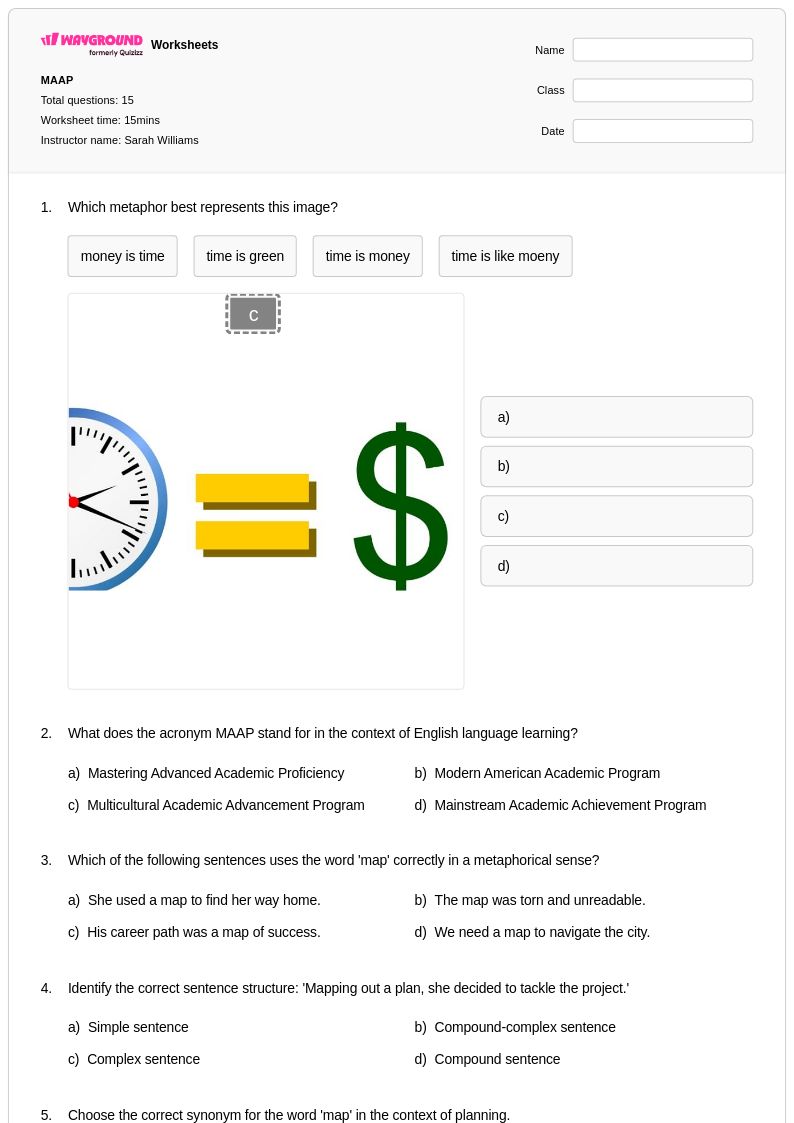
Enhance Year 6 students' writing skills with free mind mapping worksheets and printables that teach visual brainstorming techniques, complete with practice problems and answer keys for effective writing process development.
Explore printable Mind Mapping worksheets for Year 6
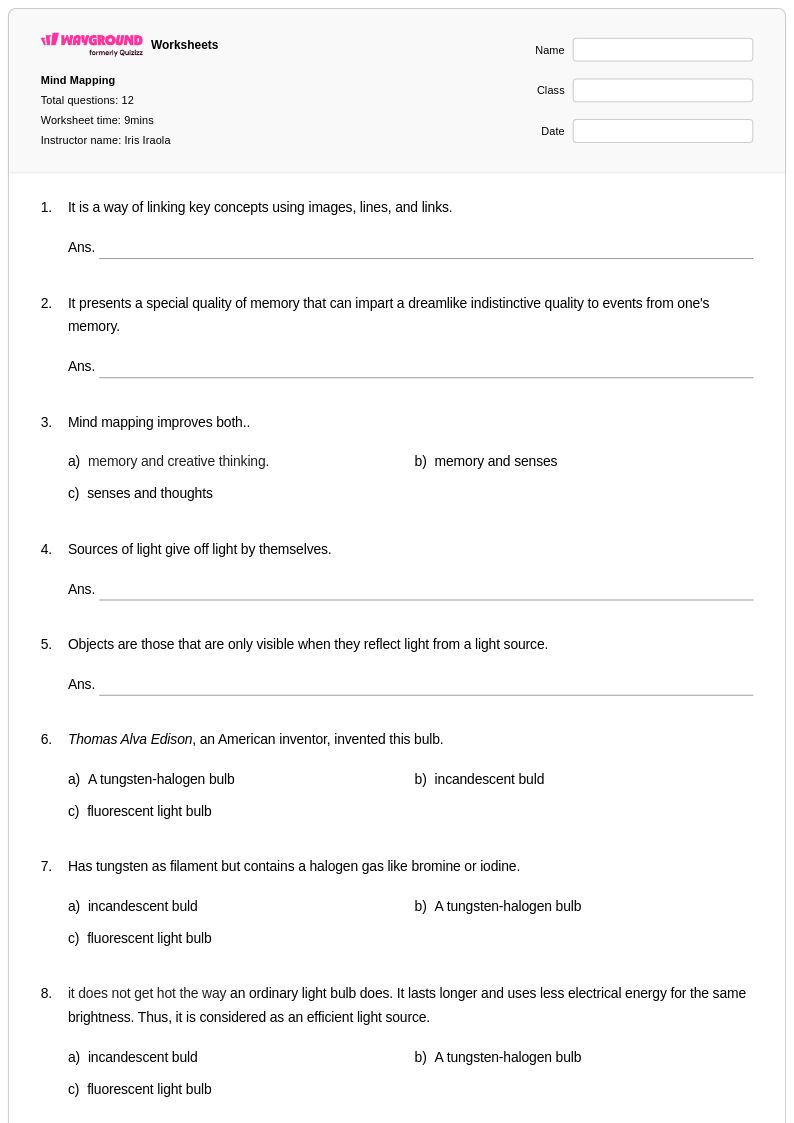
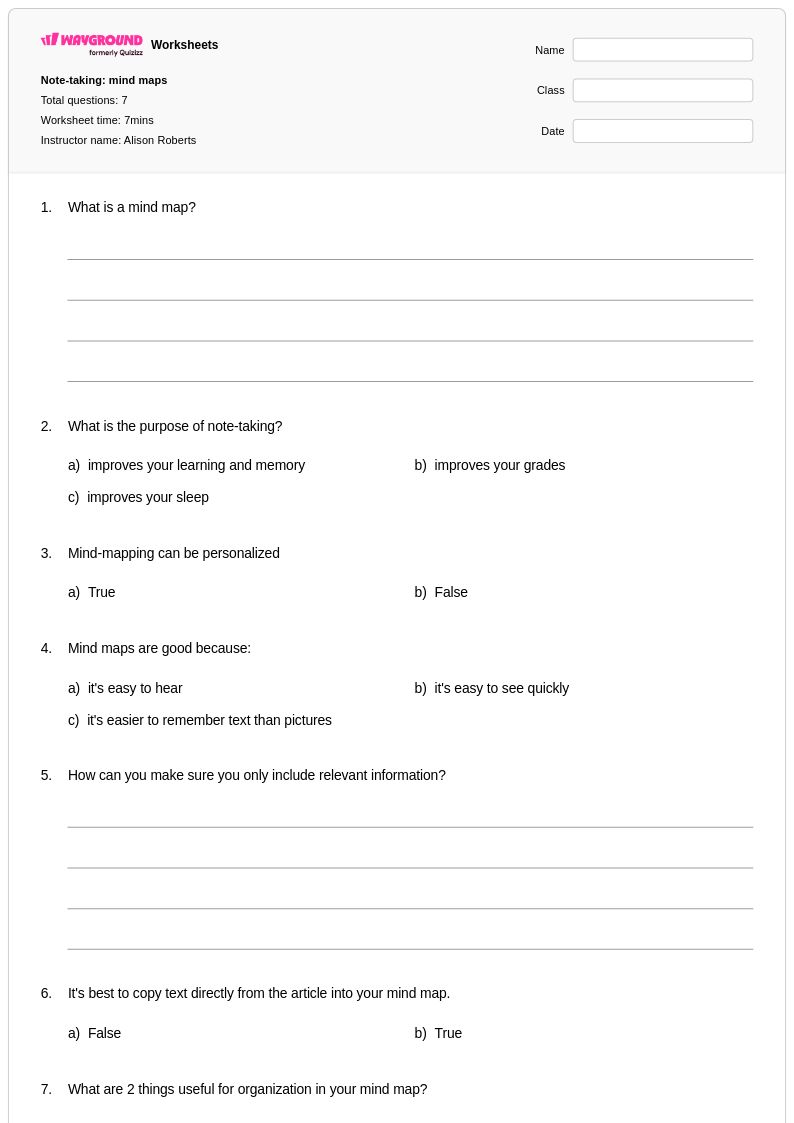
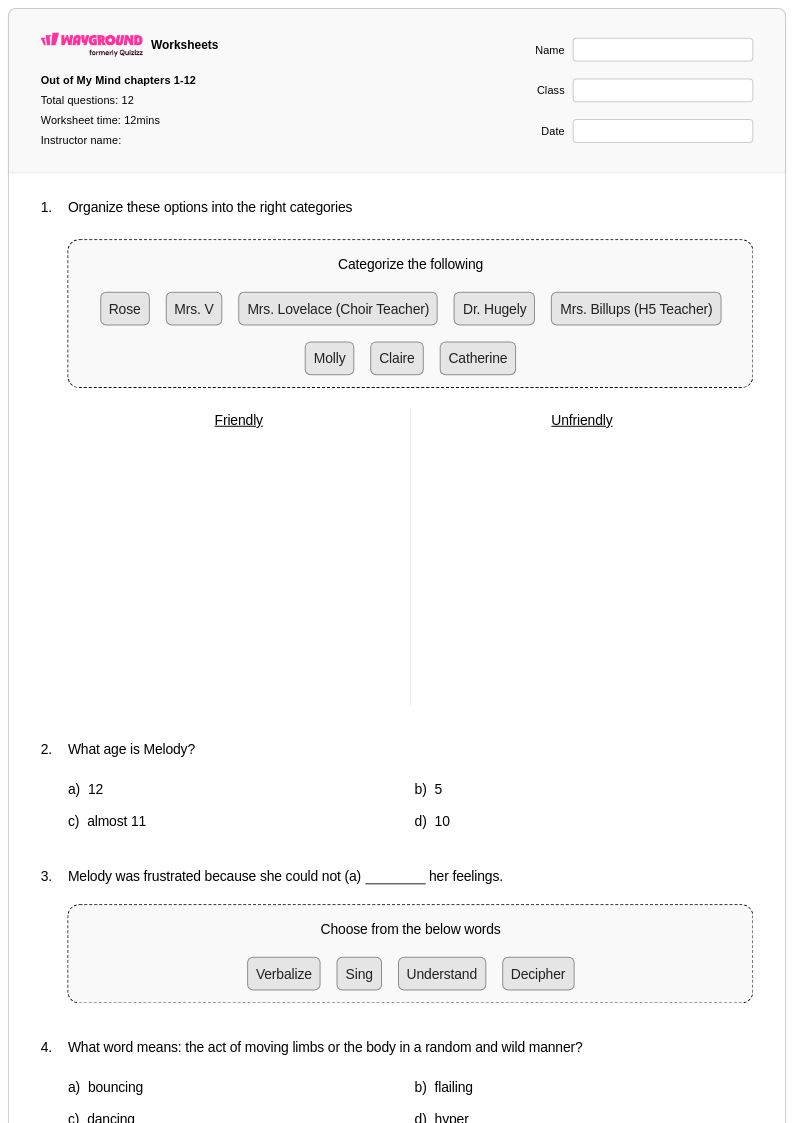
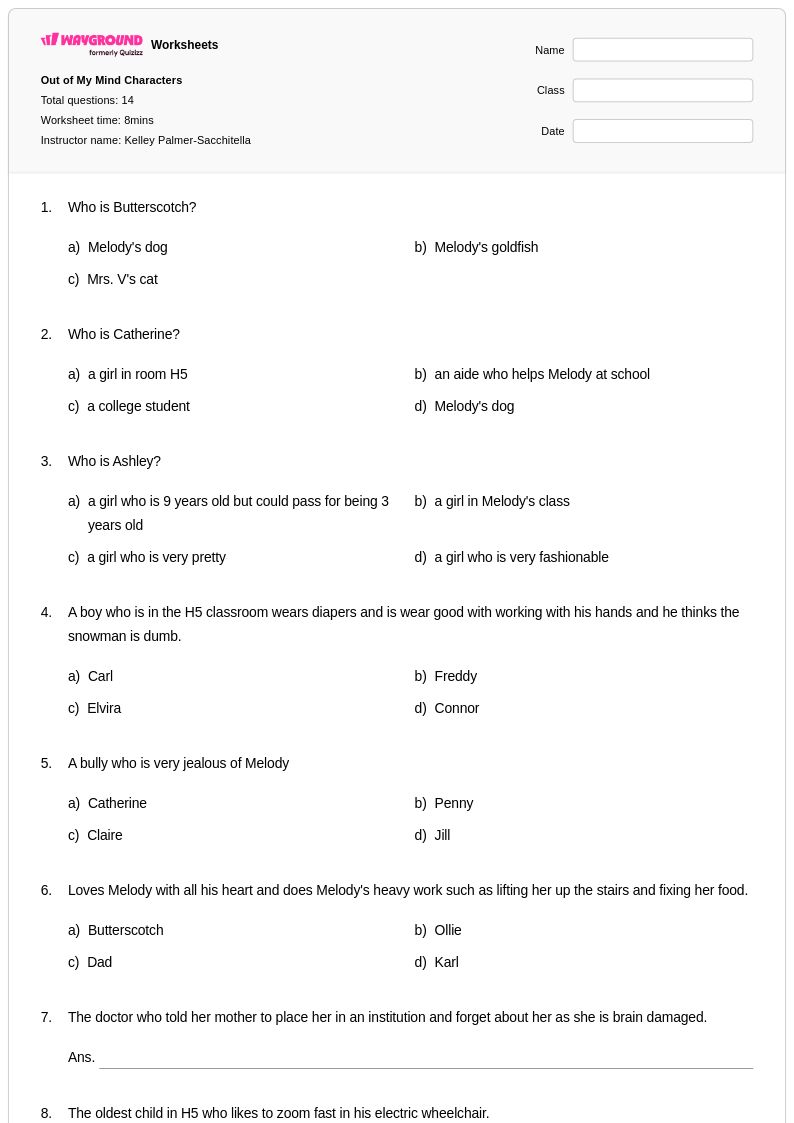
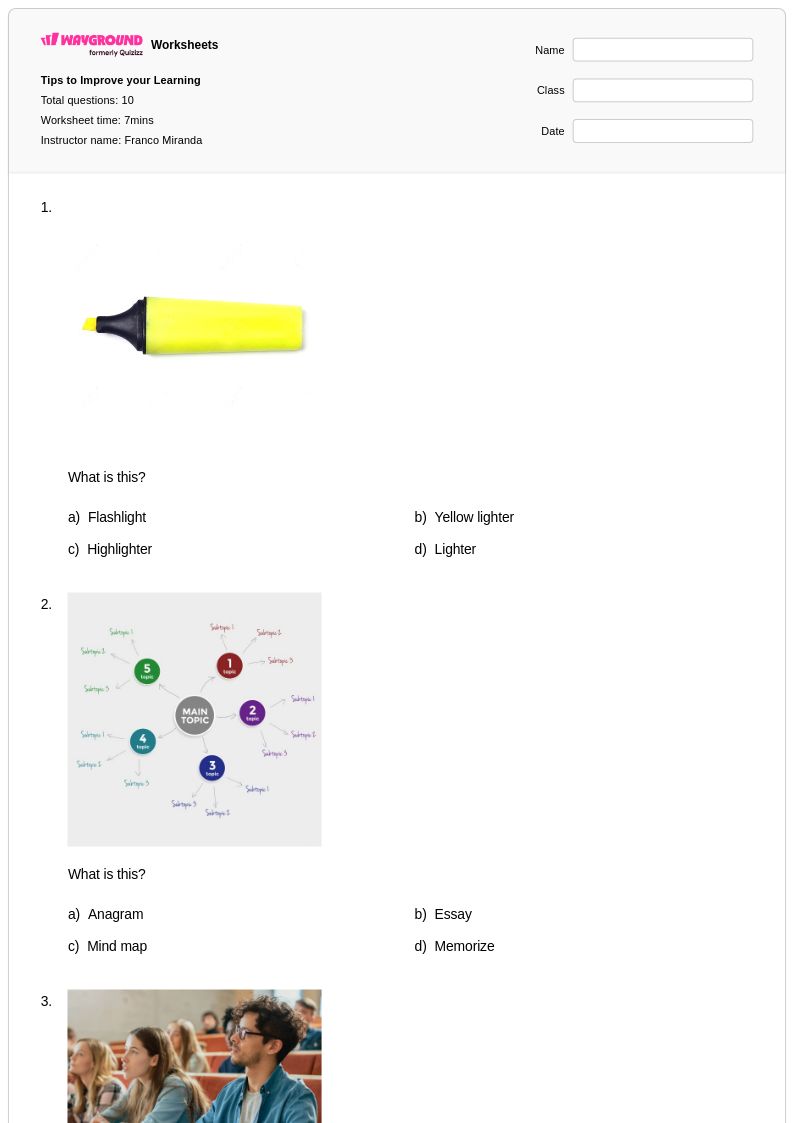
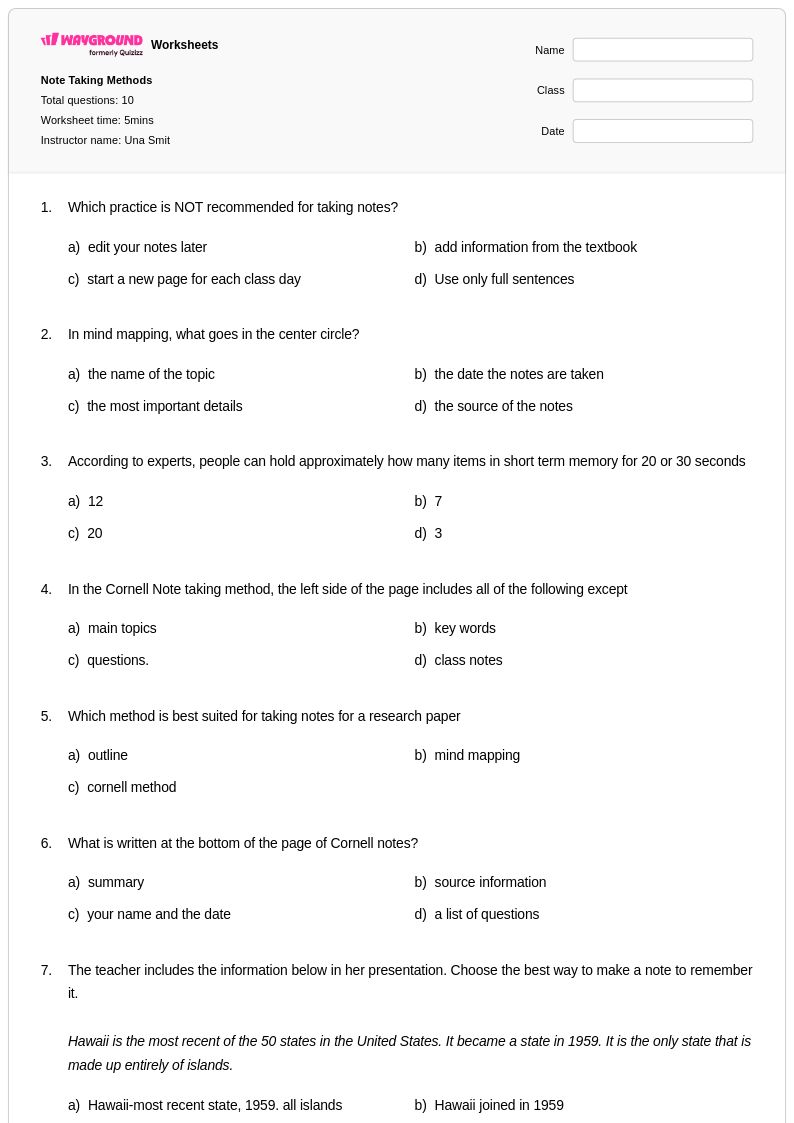
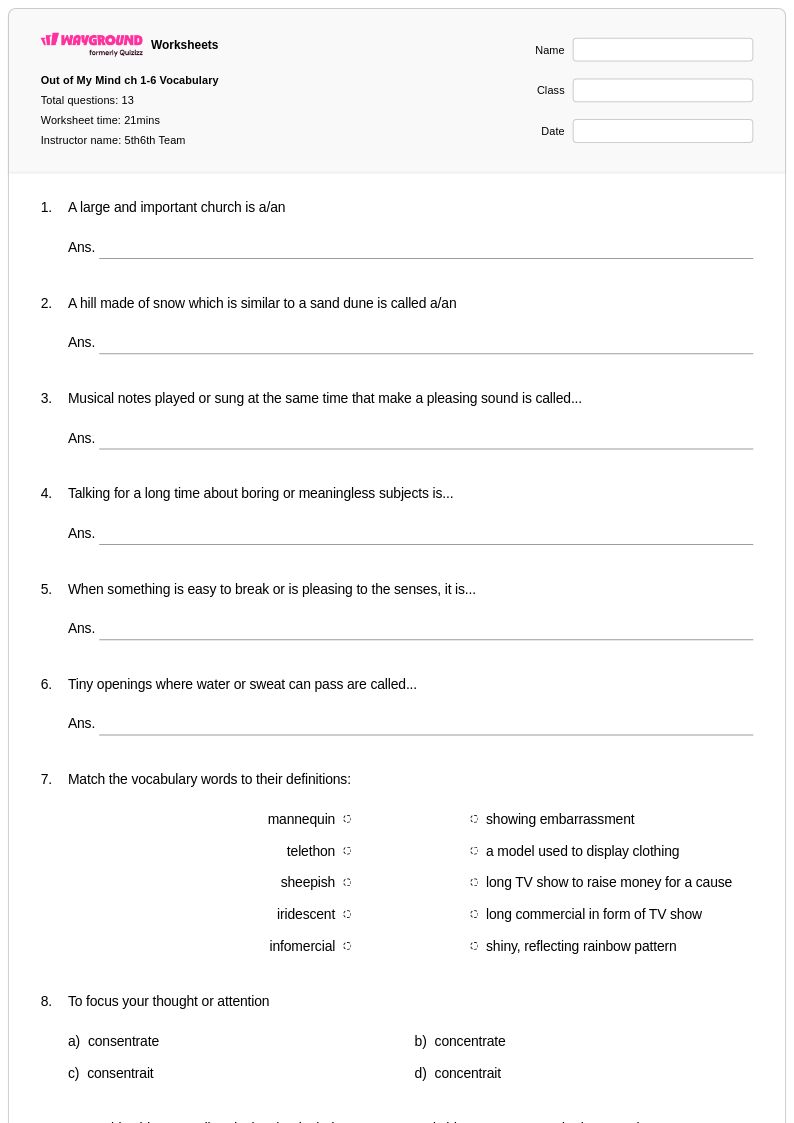
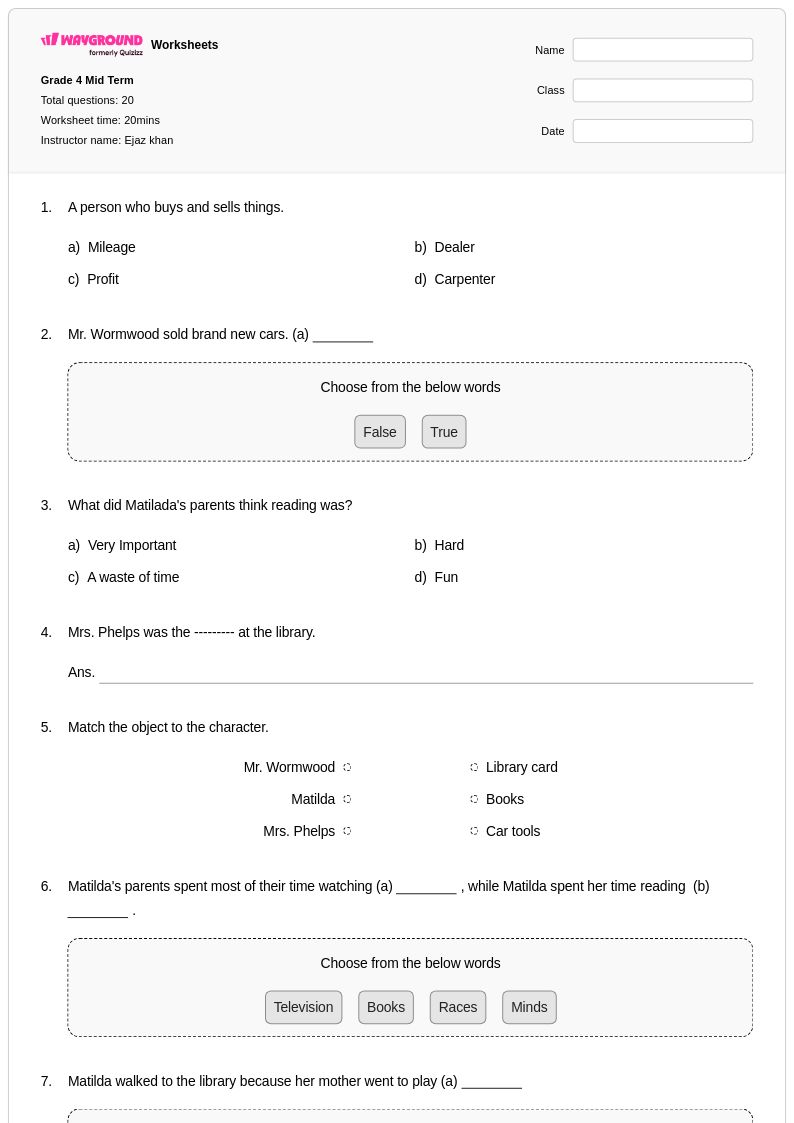
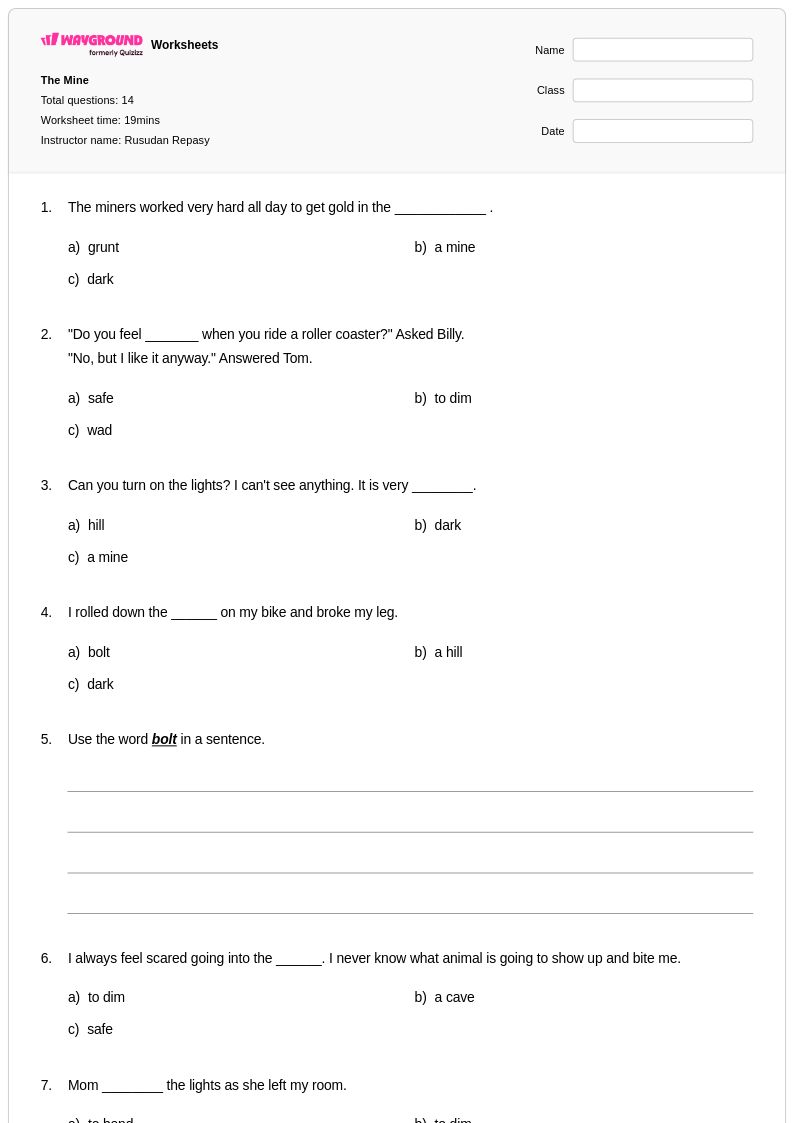
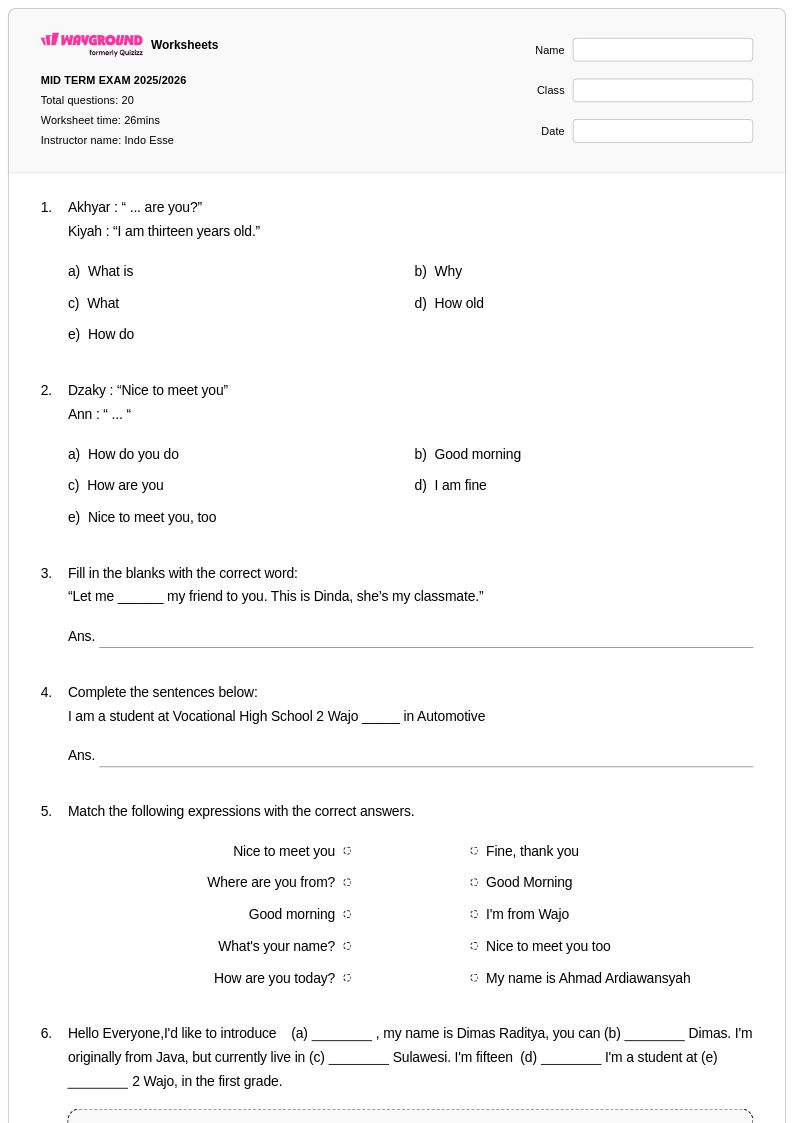
Mind mapping worksheets for Year 6 students available through Wayground (formerly Quizizz) provide comprehensive practice in this essential prewriting strategy that helps young writers organize their thoughts visually before drafting. These carefully designed worksheets guide sixth-grade students through the process of creating effective mind maps by starting with a central topic and branching out into related ideas, supporting details, and connections between concepts. Students develop critical thinking skills as they learn to categorize information, identify relationships between ideas, and structure their thoughts in a logical flow that will enhance their writing process. The practice problems included in these free printables range from basic mind mapping templates to more complex exercises that challenge students to create original maps for various writing assignments, with answer keys provided to support independent learning and self-assessment.
Wayground (formerly Quizizz) empowers educators with access to millions of teacher-created mind mapping resources that support differentiated instruction across diverse Year 6 classrooms. The platform's robust search and filtering capabilities allow teachers to quickly locate worksheets that align with specific writing standards and learning objectives, whether they need basic graphic organizers for struggling writers or advanced mapping exercises for enrichment activities. Teachers can easily customize these digital and printable pdf resources to match their curriculum requirements, modify difficulty levels, and adapt content for individual student needs. These versatile tools prove invaluable for lesson planning, targeted remediation sessions, and skill-building practice, enabling educators to provide consistent support as students master this fundamental prewriting technique that will serve them throughout their academic careers.
FAQs
How do I teach mind mapping to students who have never used it before?
Start by modeling a mind map on the board using a familiar topic, such as a recent read-aloud or a subject students know well. Place the central idea in the middle, then think aloud as you add branches for related ideas and sub-branches for supporting details. Having students practice first with low-stakes, personally relevant topics builds familiarity with the format before they apply it to academic writing tasks.
What are the best exercises to help students practice mind mapping?
Structured worksheets that provide a central topic and blank branching organizers give students a scaffold while still requiring original thinking. Practice works best when students progress from completing partially filled maps to building their own from scratch, reinforcing the branching technique at each stage. Repeated practice across different subjects — narrative, expository, and persuasive — helps students internalize mind mapping as a transferable pre-writing strategy.
What mistakes do students commonly make when creating mind maps?
The most common error is writing full sentences on branches instead of concise keywords or phrases, which defeats the purpose of visual organization. Students also tend to add too few branches, sticking close to the obvious, rather than pushing deeper into sub-ideas and supporting details. Teaching students to revisit and expand each branch before writing helps correct both habits and leads to more developed written pieces.
How can mind mapping worksheets support struggling writers?
Mind mapping reduces the cognitive load of writing by separating the idea-generation phase from the drafting phase, which is especially helpful for students who feel overwhelmed by a blank page. Worksheets with pre-labeled central topics or partial branches give struggling writers a concrete entry point without eliminating the thinking work. On Wayground, teachers can also enable Read Aloud so that worksheet instructions and prompts are read to students who have difficulty processing written directions independently.
How do I use Wayground's mind mapping worksheets in my classroom?
Wayground's mind mapping worksheets are available as printable PDFs for traditional pen-and-paper use and in digital formats for technology-integrated classrooms, so teachers can deploy them however their setting requires. They can also be hosted as a quiz directly on Wayground, allowing teachers to assign them digitally and track student responses. Answer keys are included with each worksheet, making them practical for independent practice, homework, or small-group instruction without requiring significant teacher prep time.
How does mind mapping connect to the writing process?
Mind mapping functions as a structured pre-writing tool that helps students externalize their thinking before committing to a draft. By visually mapping relationships between a central idea and its supporting details, students arrive at the drafting stage with a clearer organizational framework, which typically results in more coherent and developed writing. Teaching mind mapping as part of an explicit writing process sequence helps students build a replicable habit they can apply across subjects and genres.