
10 Q
6th - 8th
6 Q
3rd - 7th
15 Q
6th - Uni
15 Q
6th - Uni
9 Q
6th
21 Q
6th
25 Q
6th - Uni
36 Q
6th
20 Q
6th
12 Q
5th - 8th
25 Q
6th - 8th
15 Q
6th - Uni
22 Q
6th - 8th
26 Q
6th
14 Q
2nd - Uni
10 Q
6th - 8th
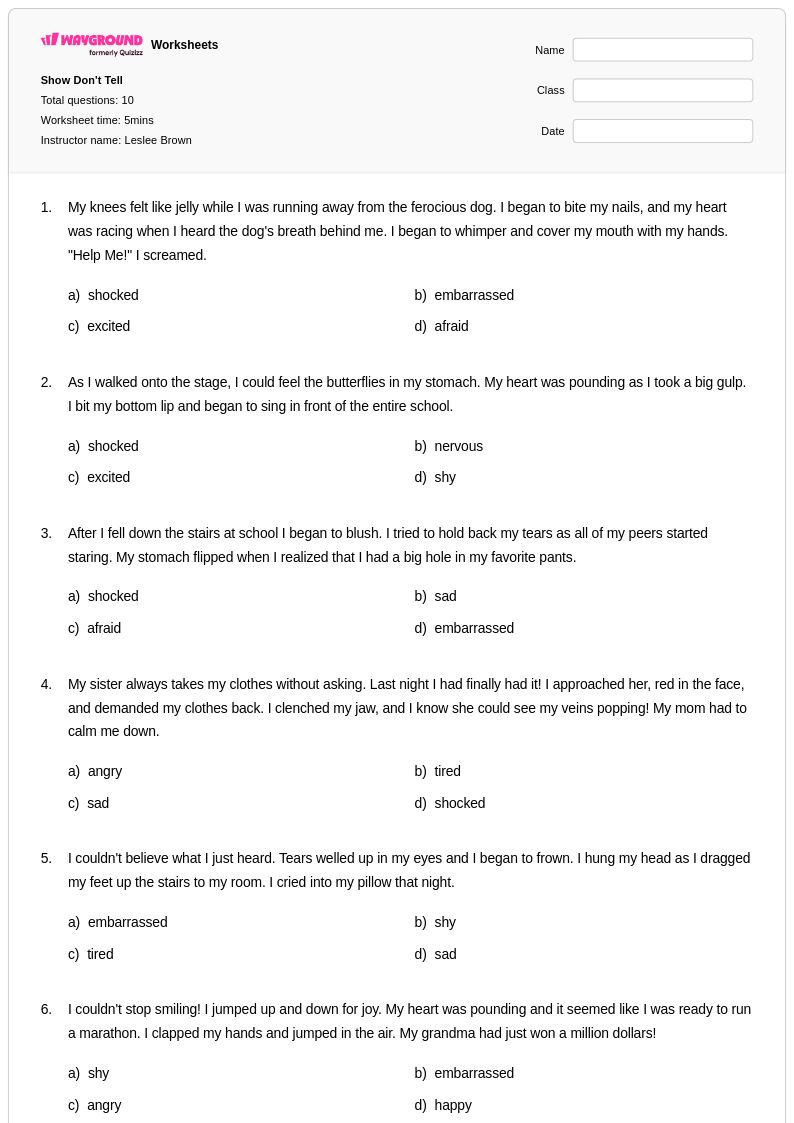
10 Q
5th - 6th
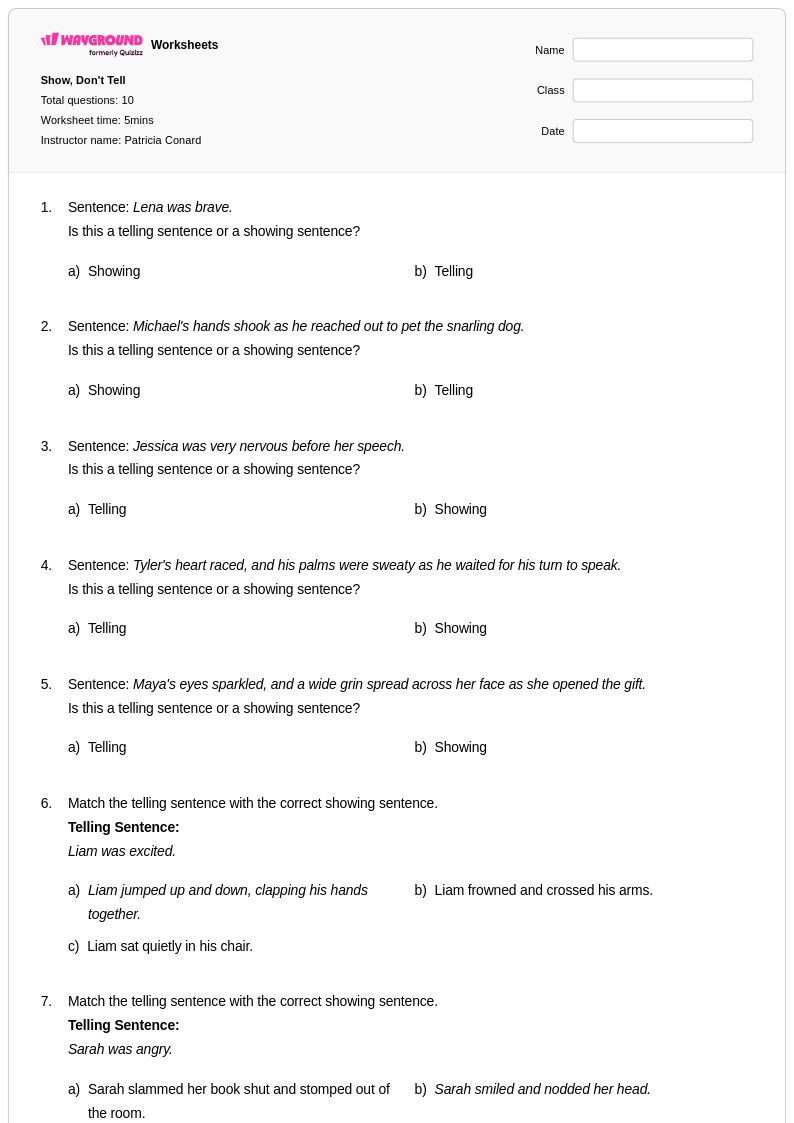
10 Q
6th
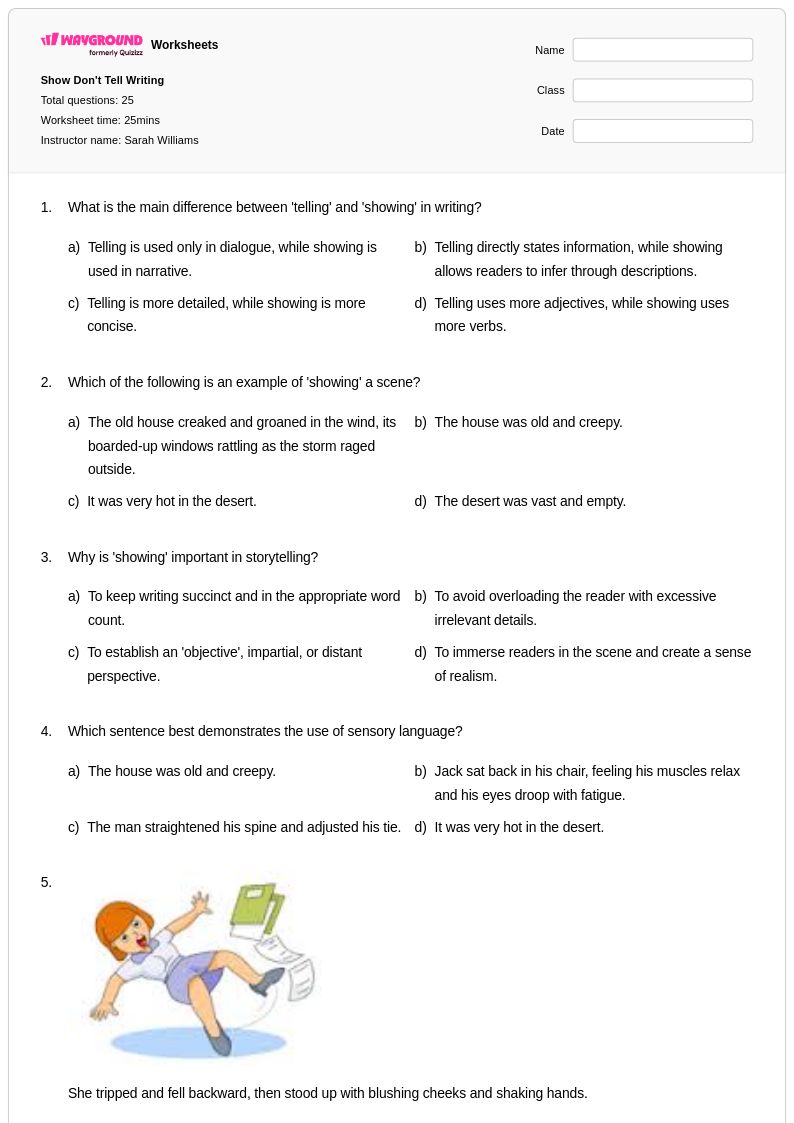
25 Q
6th - Uni
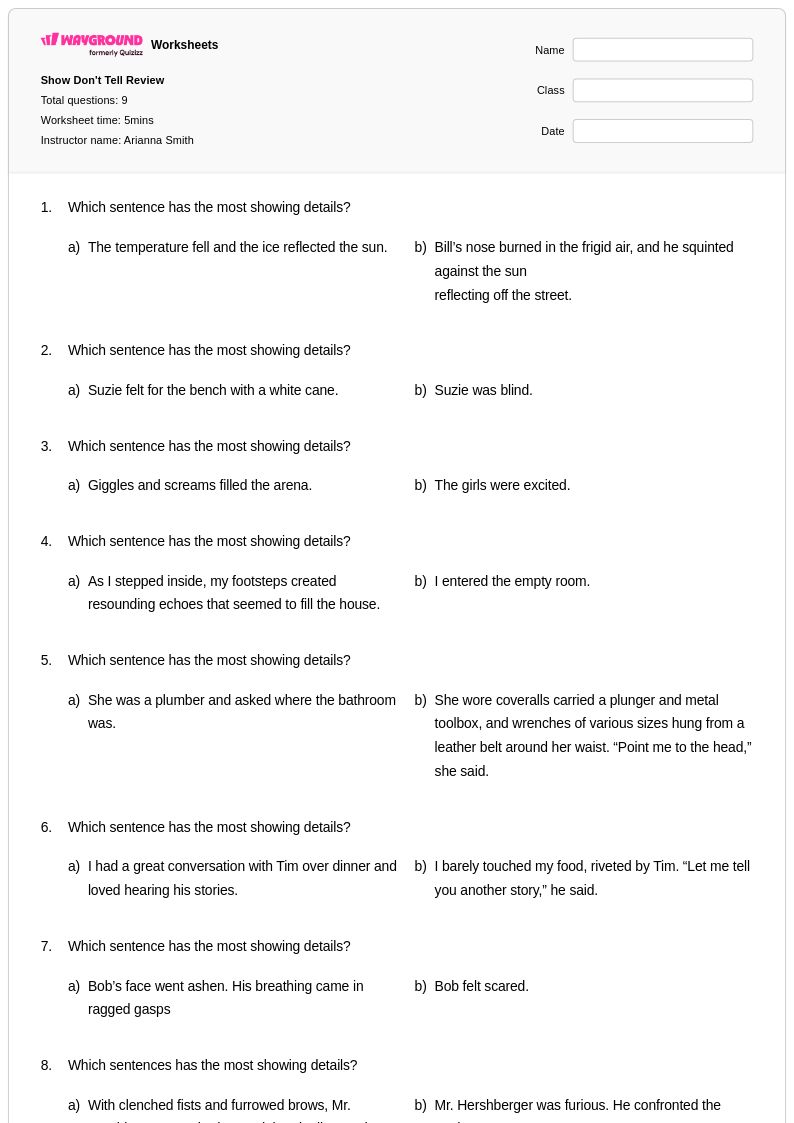
9 Q
6th - 12th
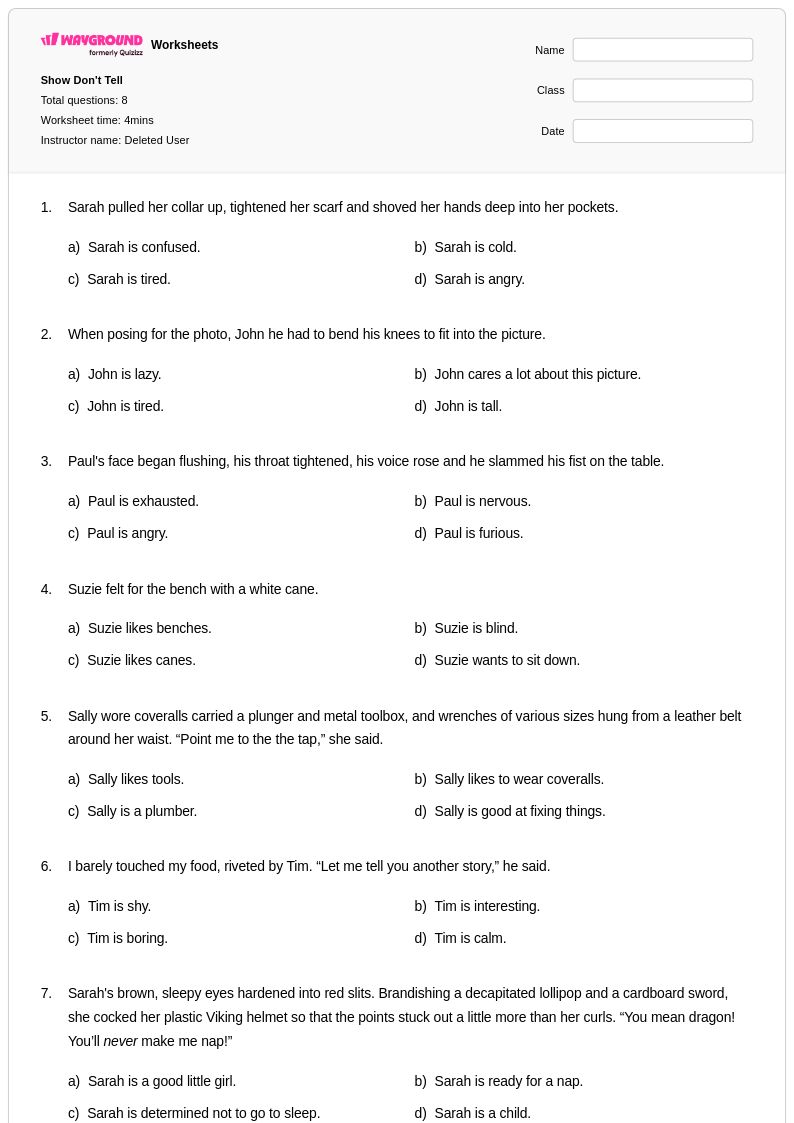
8 Q
5th - 6th
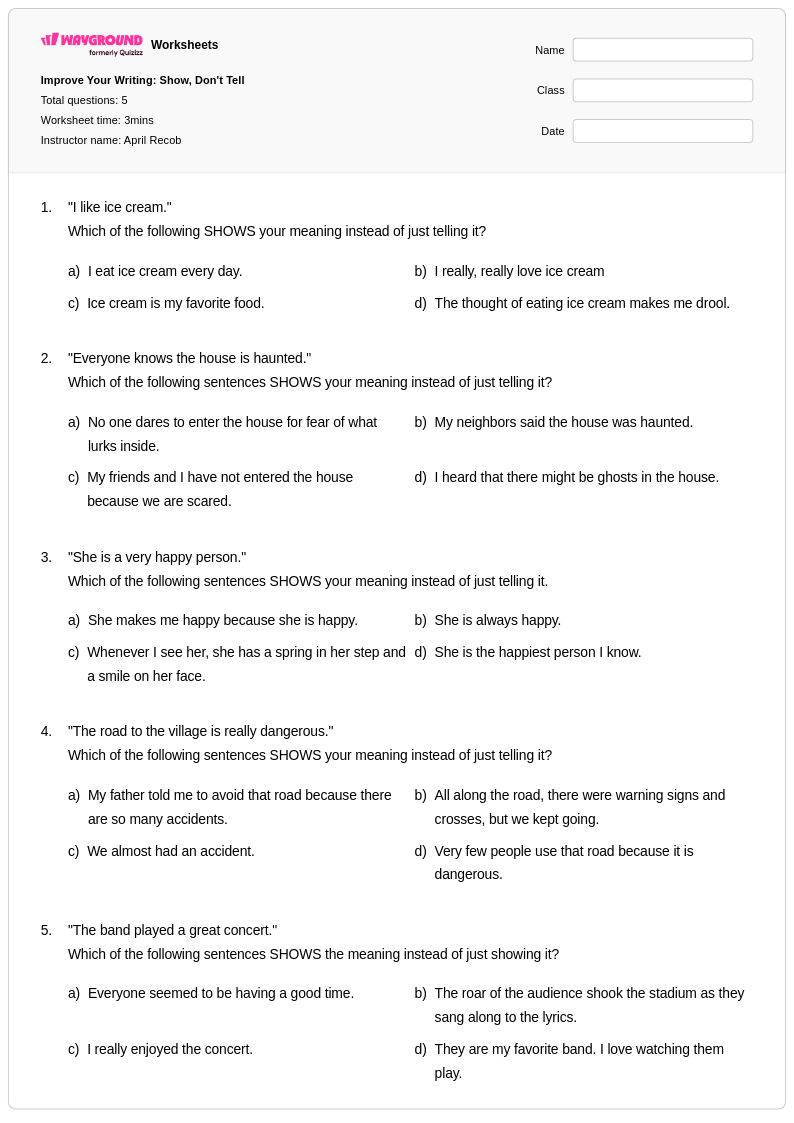
5 Q
6th
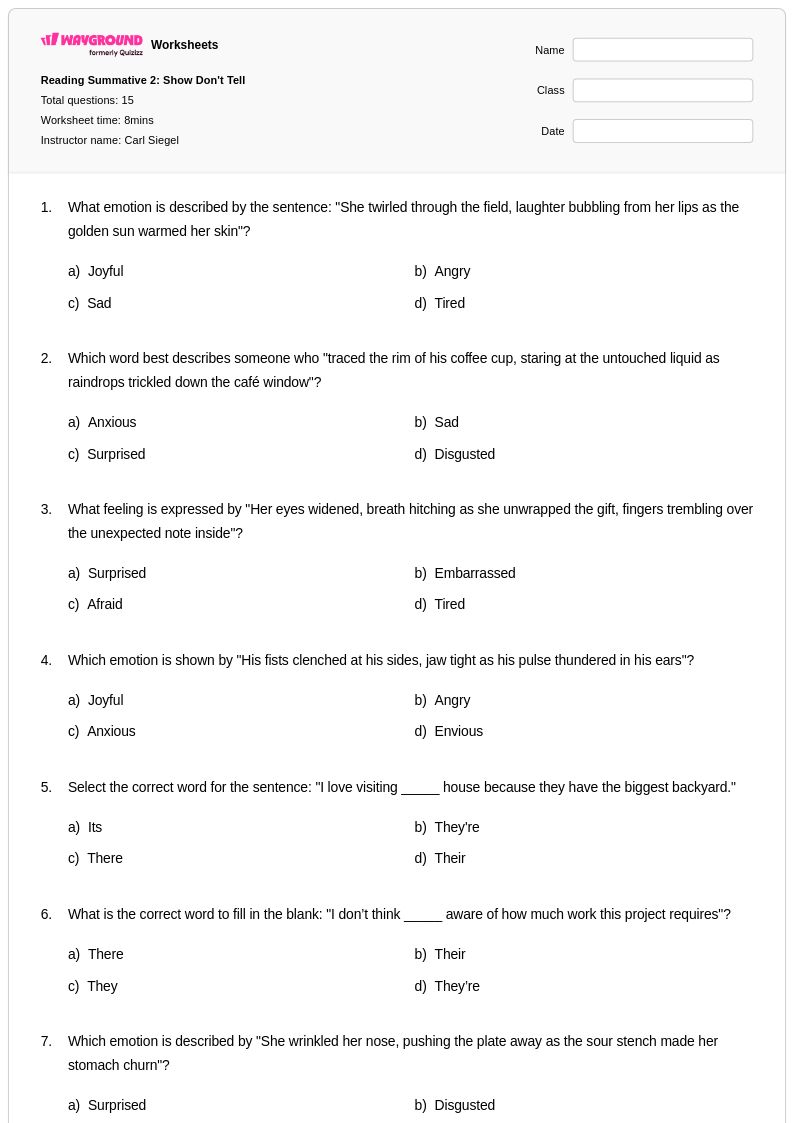
15 Q
6th
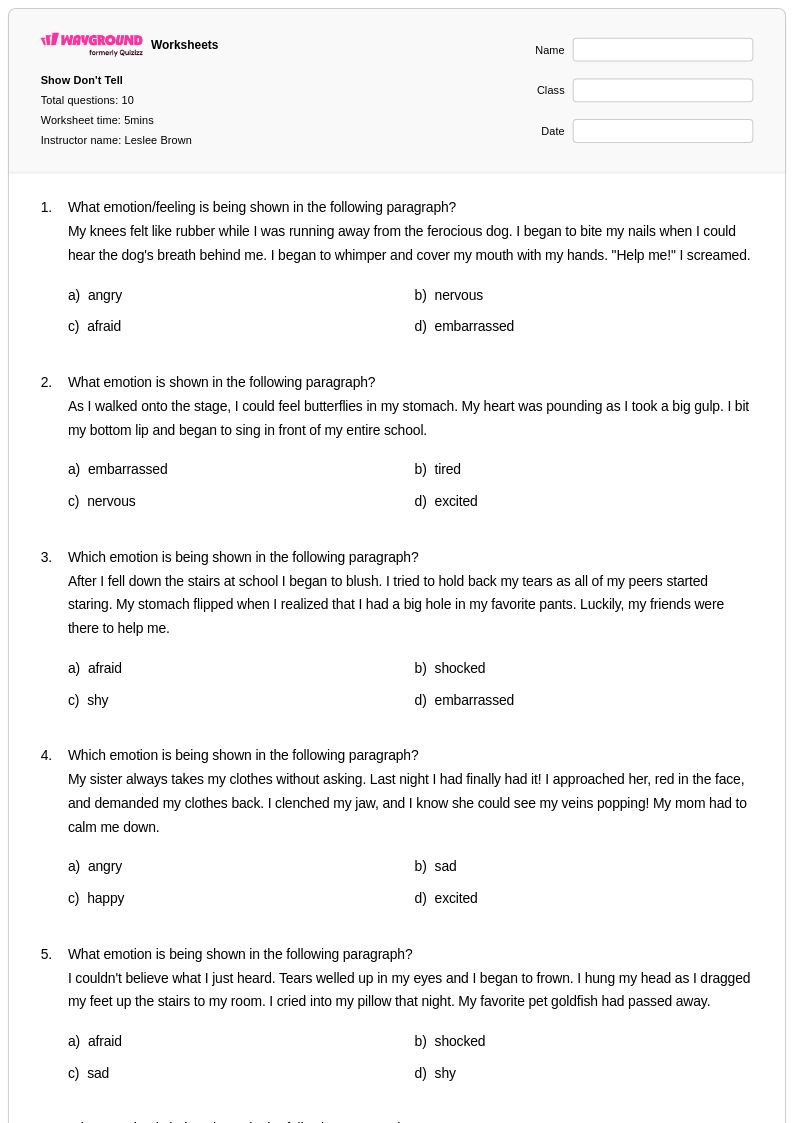
10 Q
5th - 6th
Explore Show Don't Tell Worksheets by Grades
Explore Other Subject Worksheets for year 6
Explore printable Show Don't Tell worksheets for Year 6
Show Don't Tell worksheets for Year 6 students through Wayground (formerly Quizizz) provide comprehensive practice in one of the most essential narrative writing techniques. These carefully designed printables help sixth-grade writers transform bland, telling statements into vivid, engaging scenes that capture readers' attention through sensory details, character actions, and dialogue. The worksheets feature targeted practice problems that guide students through identifying weak "telling" sentences and rewriting them using descriptive language that allows readers to experience the story rather than simply being informed about it. Each worksheet includes detailed answer keys that demonstrate multiple approaches to transforming telling into showing, giving students concrete examples of how professional authors create immersive narratives. These free resources strengthen critical writing skills including descriptive language use, character development through action, and the strategic incorporation of sensory details that bring stories to life.
Wayground (formerly Quizizz) supports educators with an extensive collection of Show Don't Tell worksheet resources drawn from millions of teacher-created materials that address diverse learning needs and skill levels. Teachers can easily search and filter through comprehensive collections to find worksheets that align with specific writing standards and learning objectives, whether focusing on basic concept introduction or advanced narrative technique refinement. The platform's differentiation tools enable educators to customize worksheets for struggling writers who need scaffolded practice identifying telling versus showing, while also providing enrichment activities for advanced students ready to tackle complex character emotions and sophisticated scene-setting techniques. Available in both printable pdf format for traditional classroom use and digital formats for interactive learning, these flexible resources support lesson planning, targeted skill remediation, and ongoing practice that helps sixth-grade students master this fundamental aspect of effective storytelling.
FAQs
How do I teach show don't tell in a writing class?
What exercises help students practice show don't tell?
What mistakes do students commonly make when learning show don't tell?
How can I differentiate show don't tell practice for students at different skill levels?
How do I use show don't tell worksheets in my classroom?