Free Printable Show Don't Tell Worksheets for Year 8
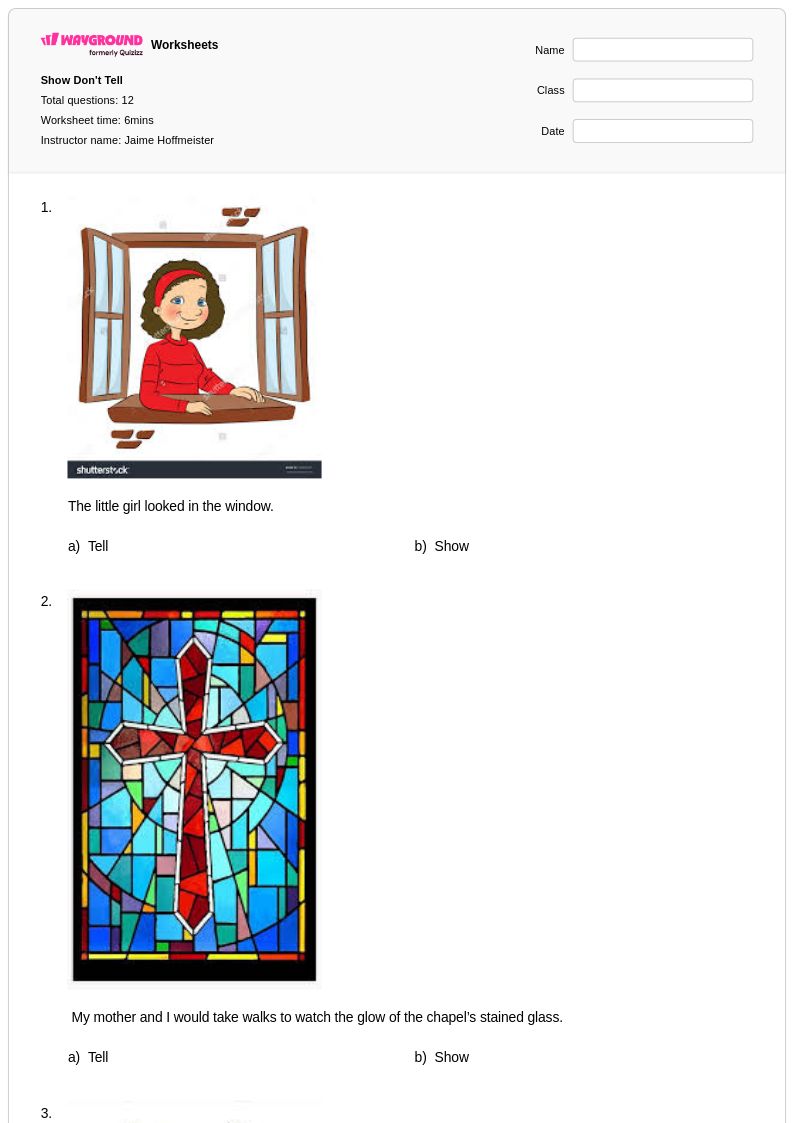
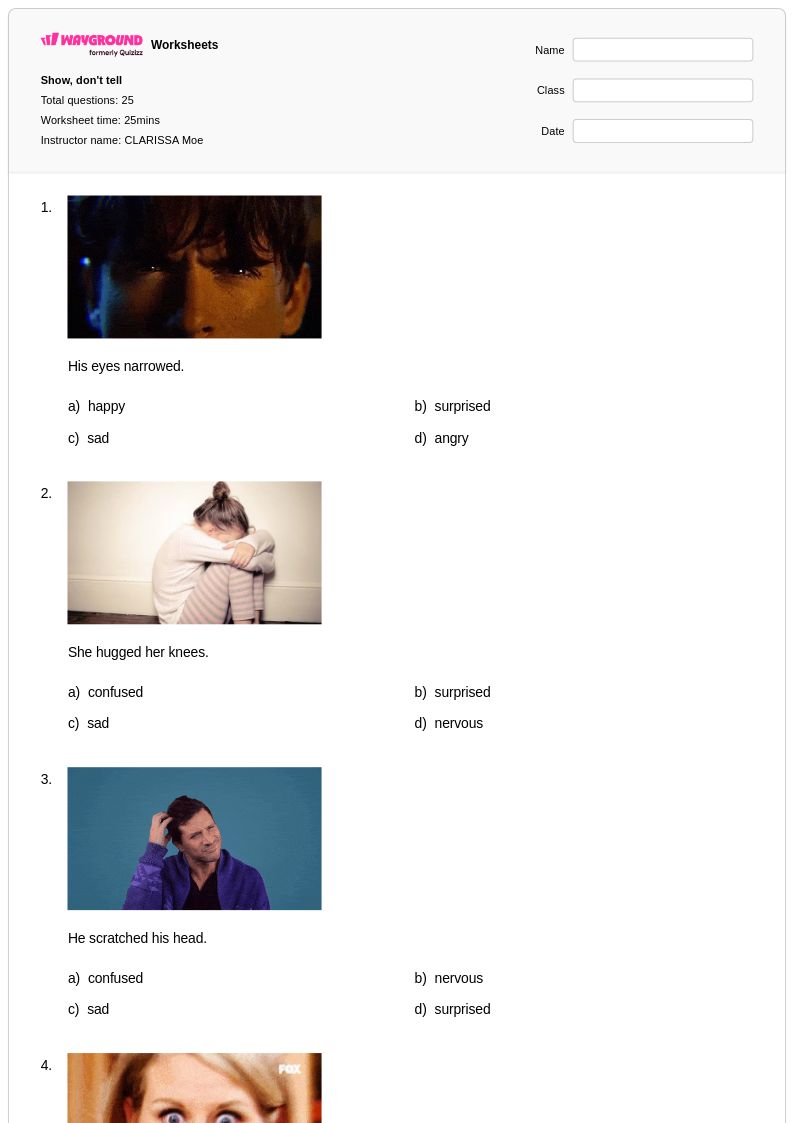
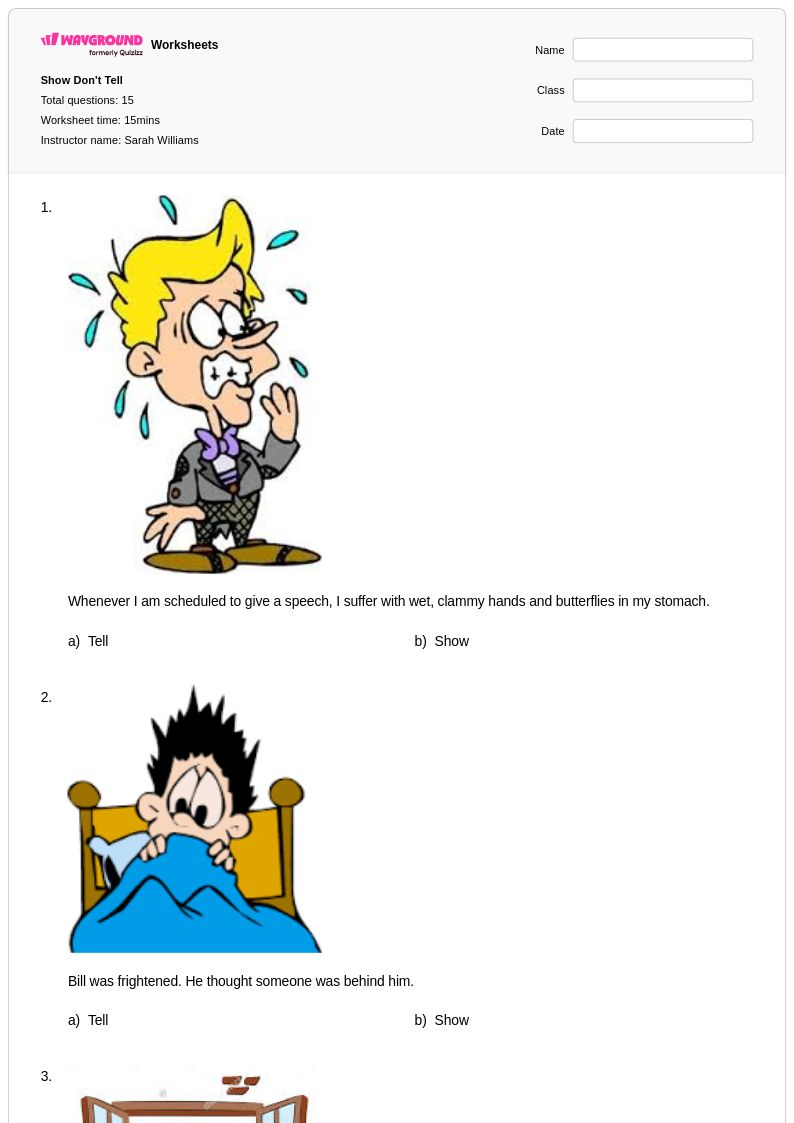
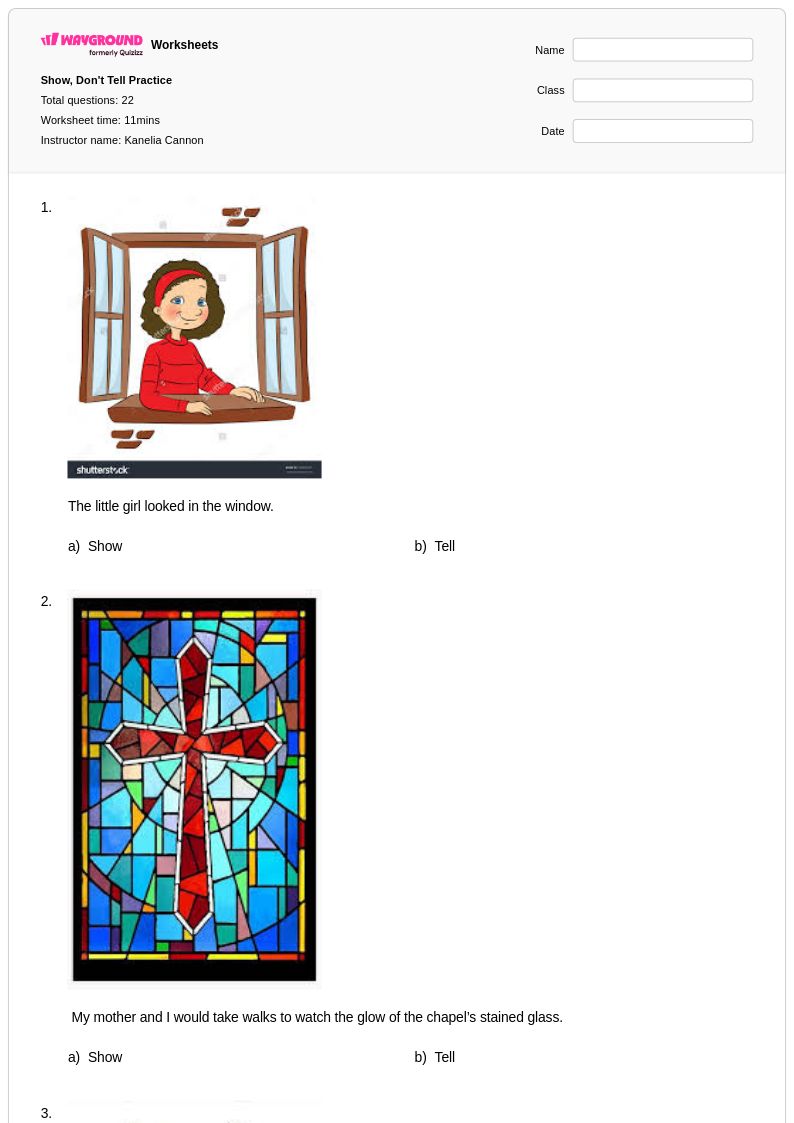
Enhance Year 8 students' descriptive writing skills with free "Show Don't Tell" worksheets and printables that include practice problems and answer keys to master vivid storytelling techniques.
Explore printable Show Don't Tell worksheets for Year 8
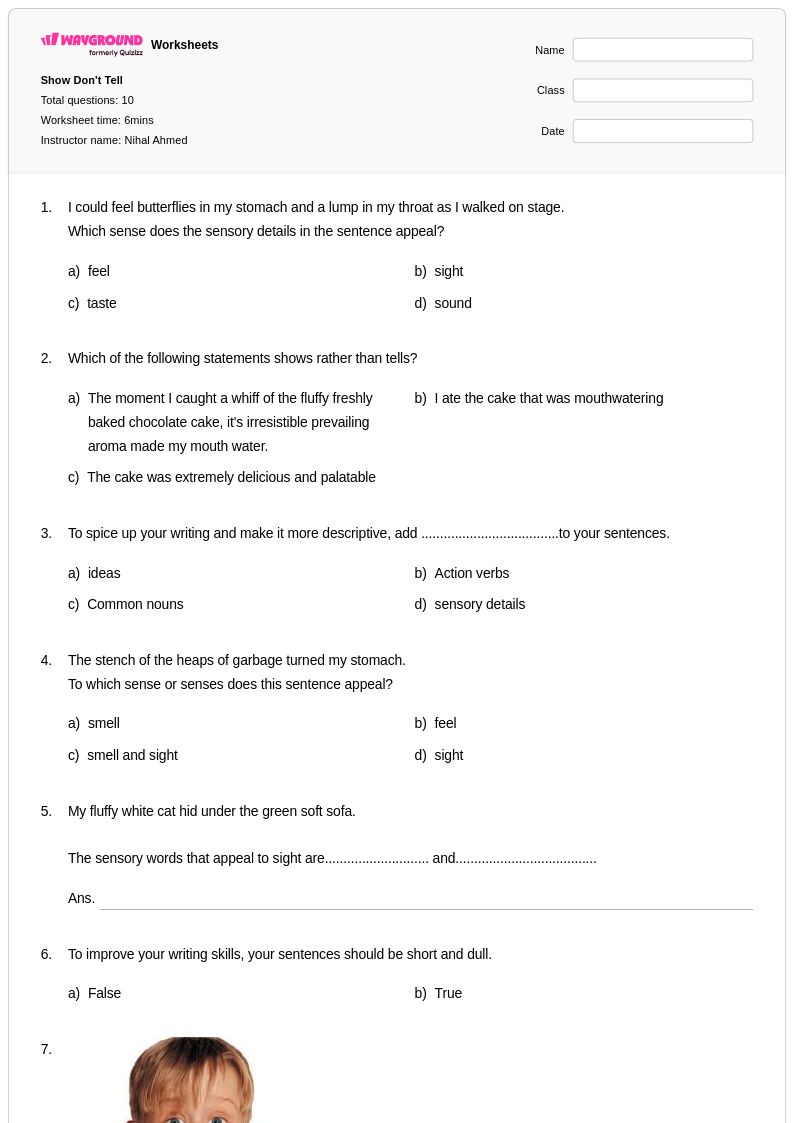
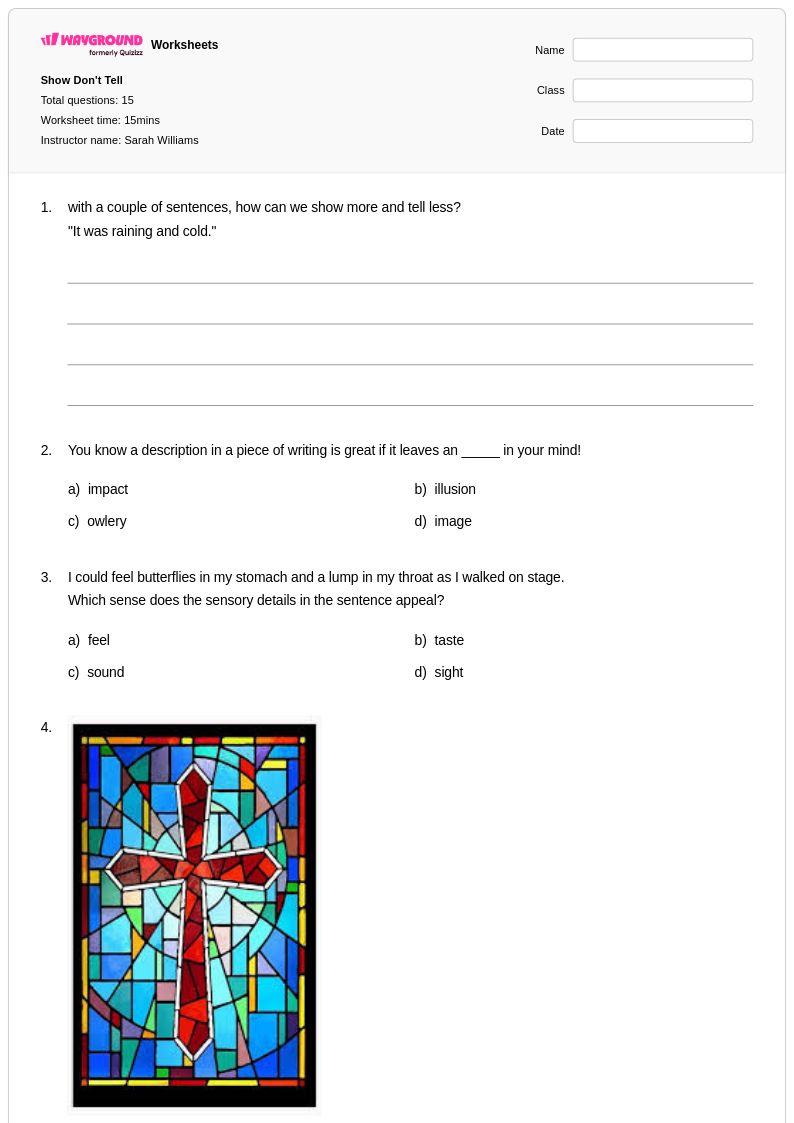
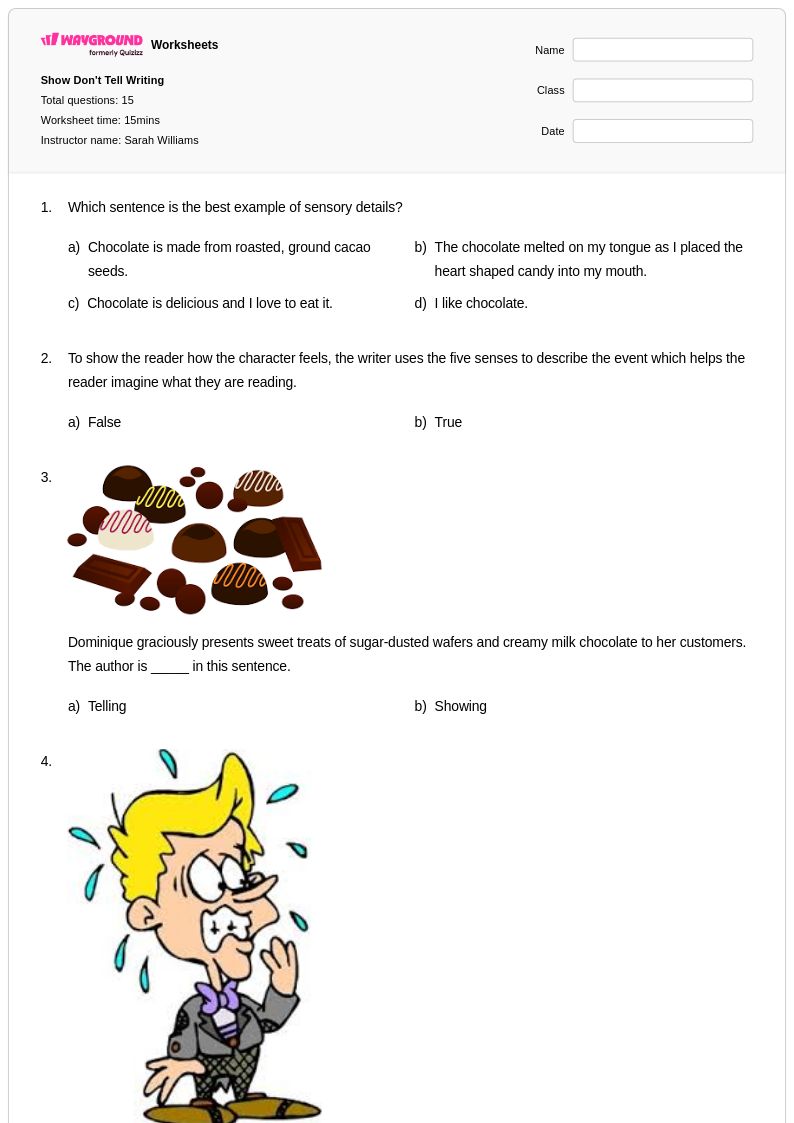
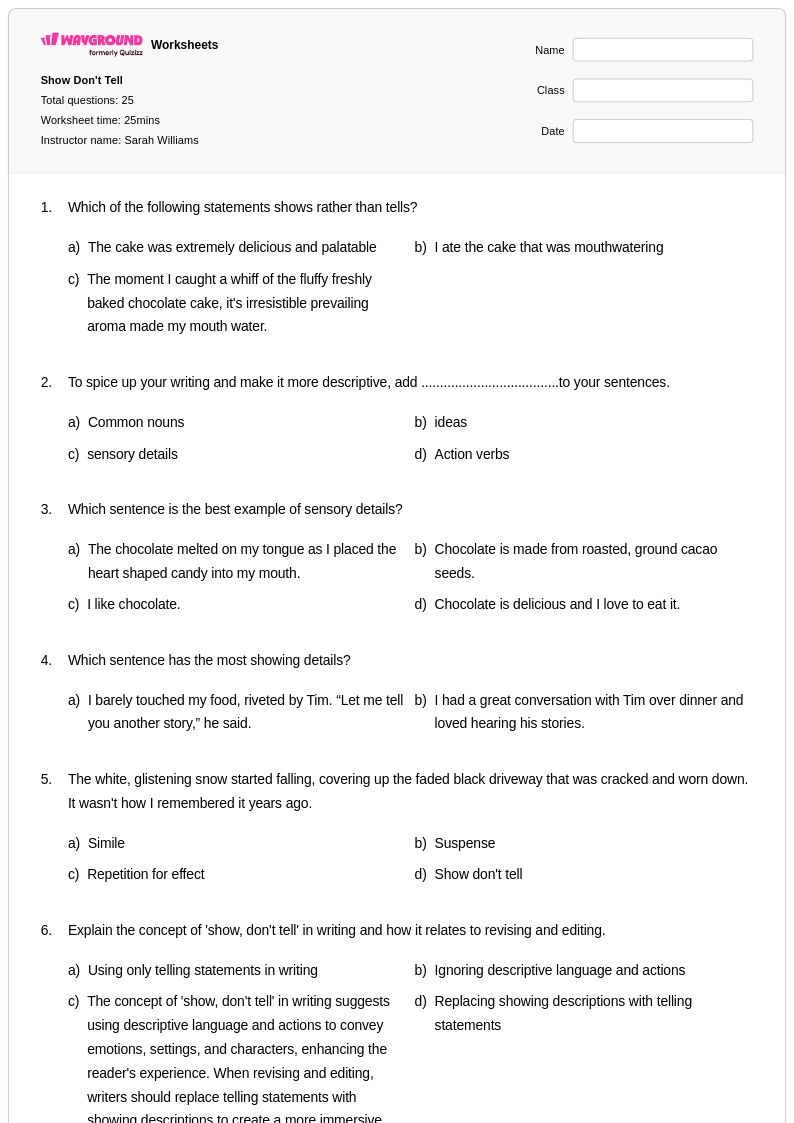
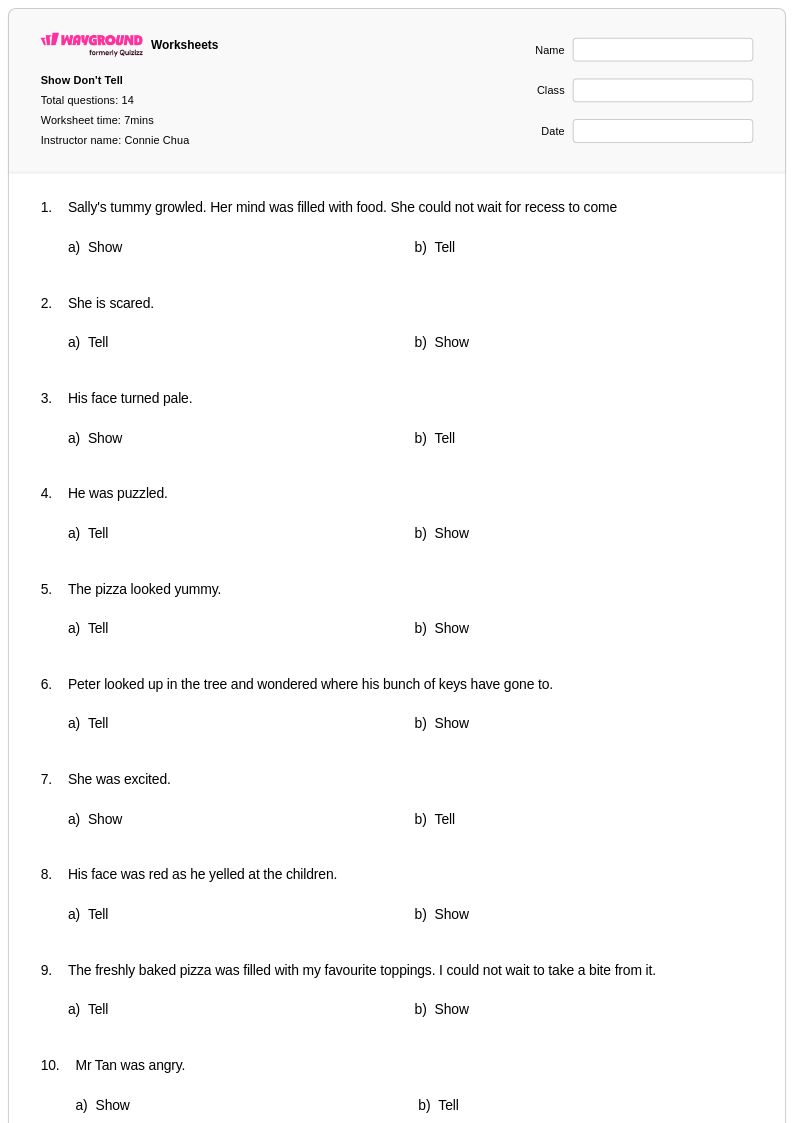
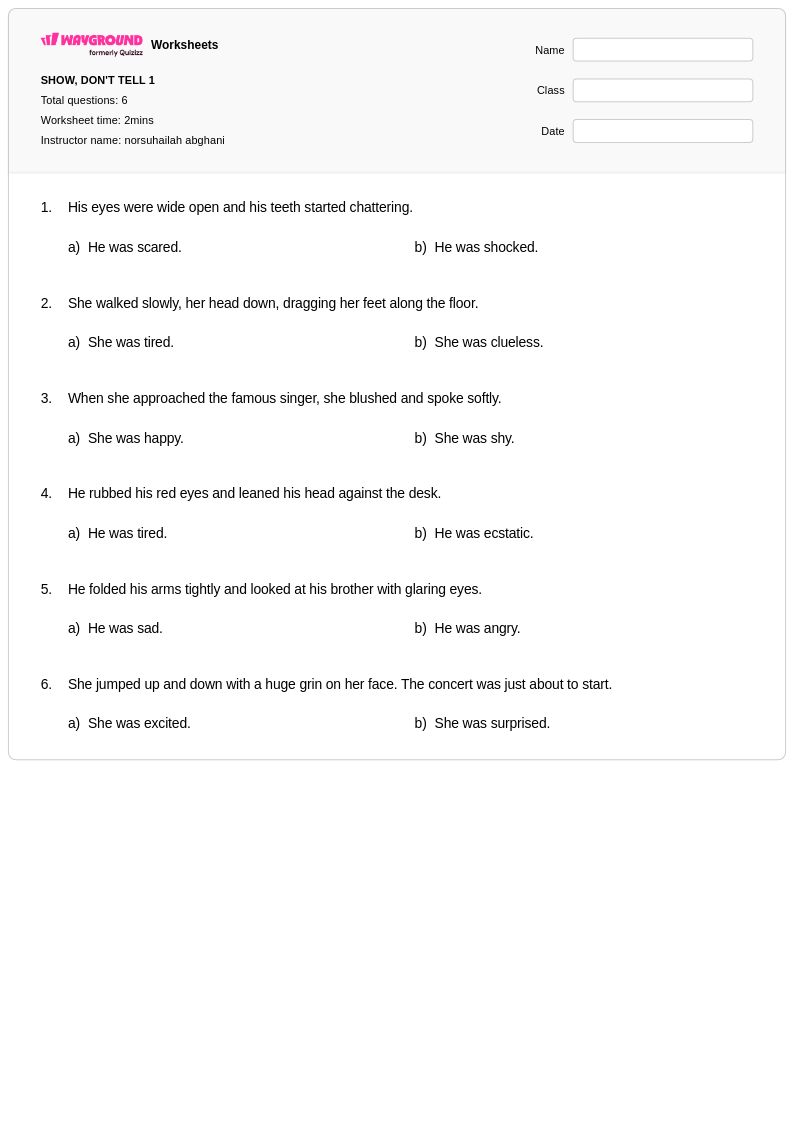
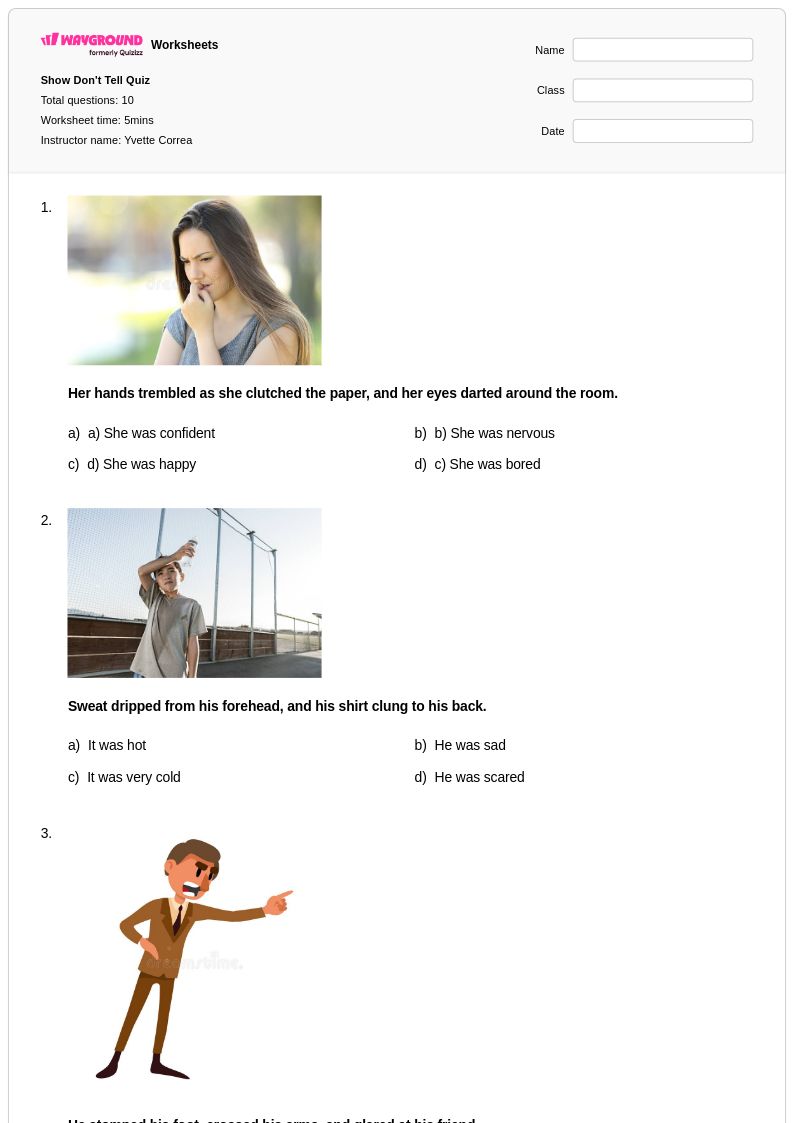
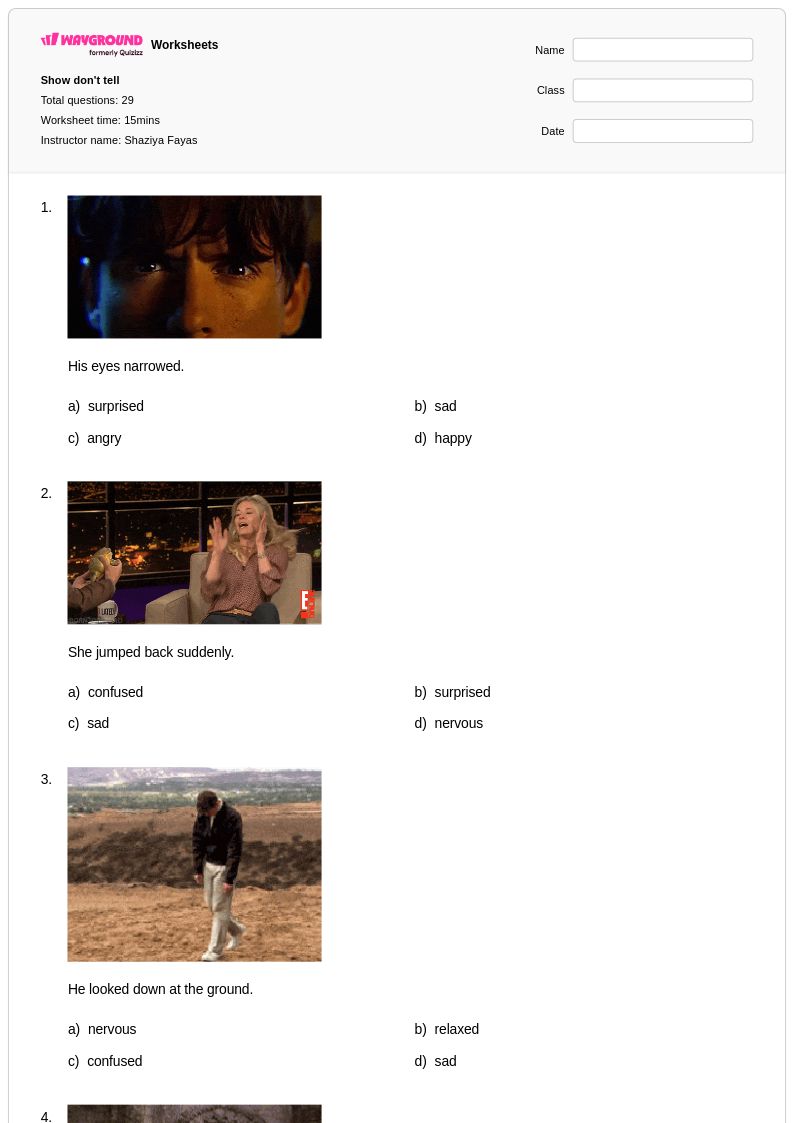
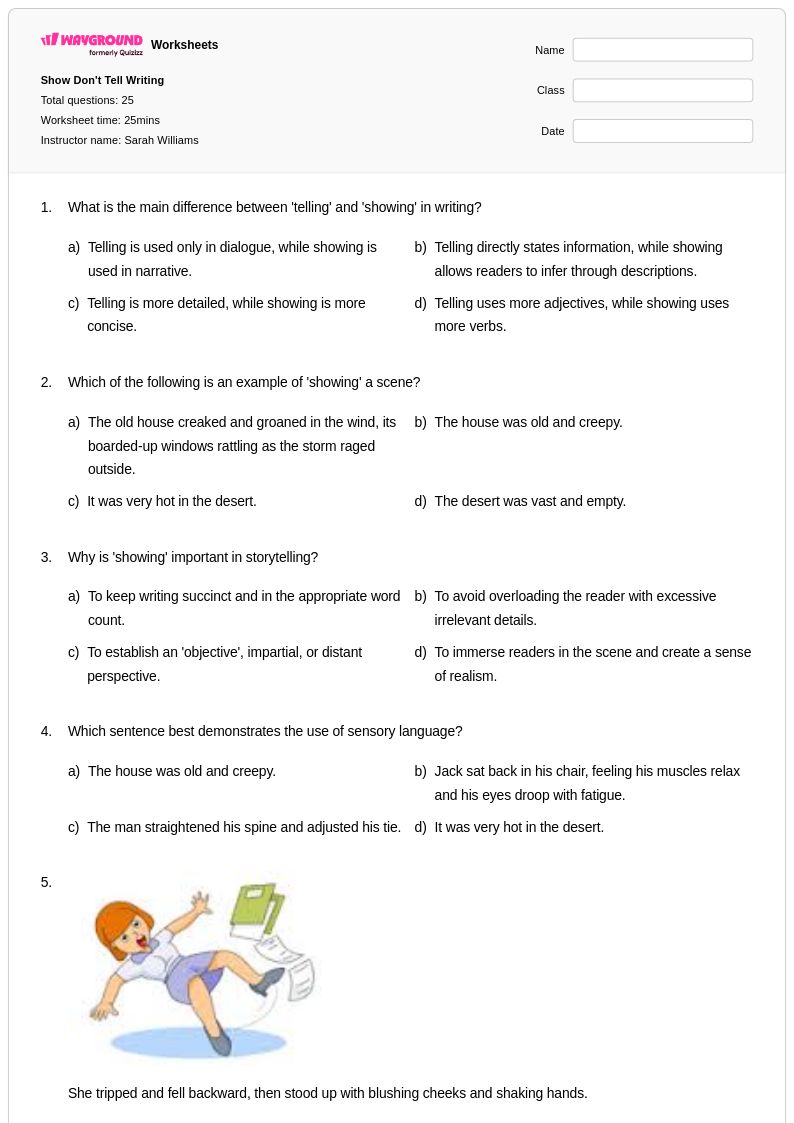
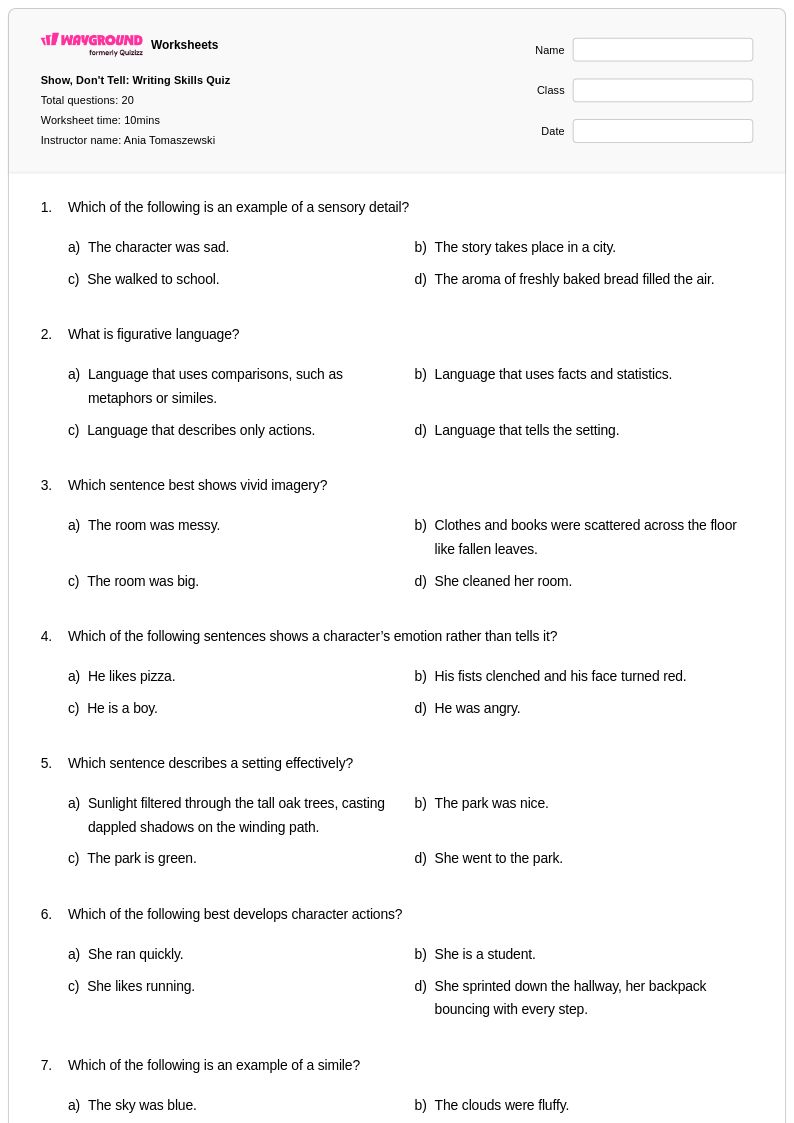
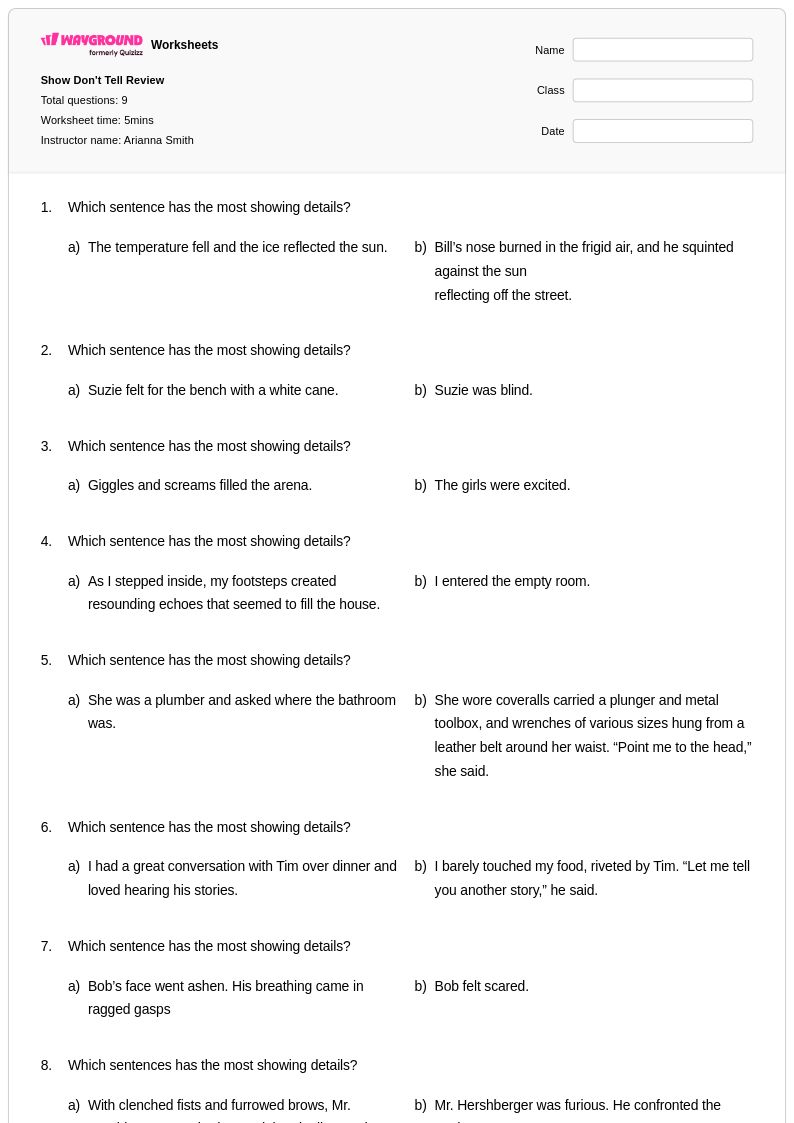
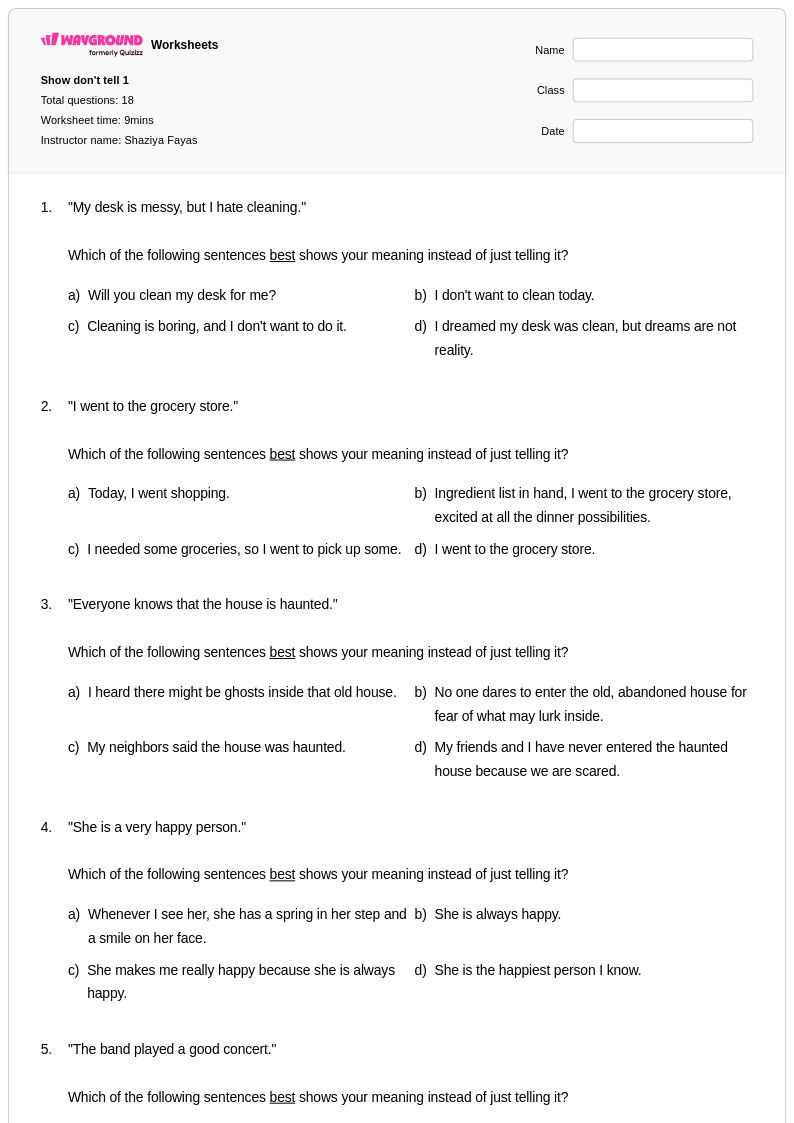
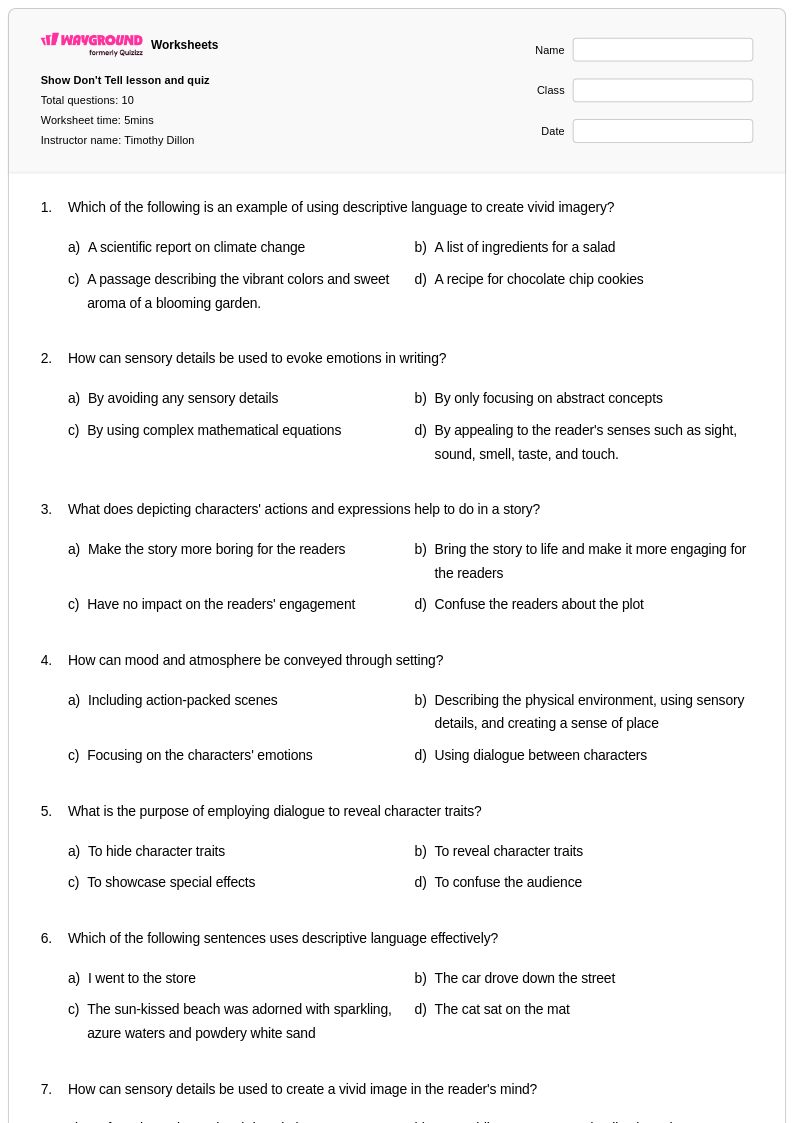
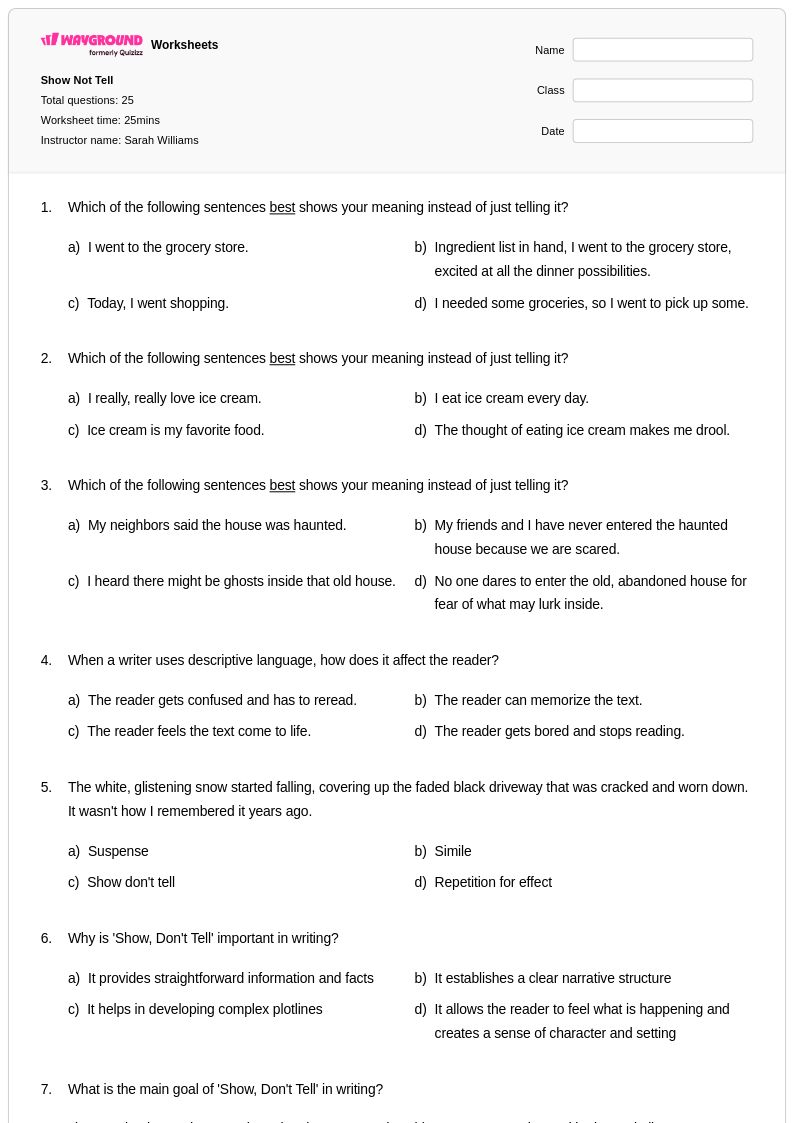
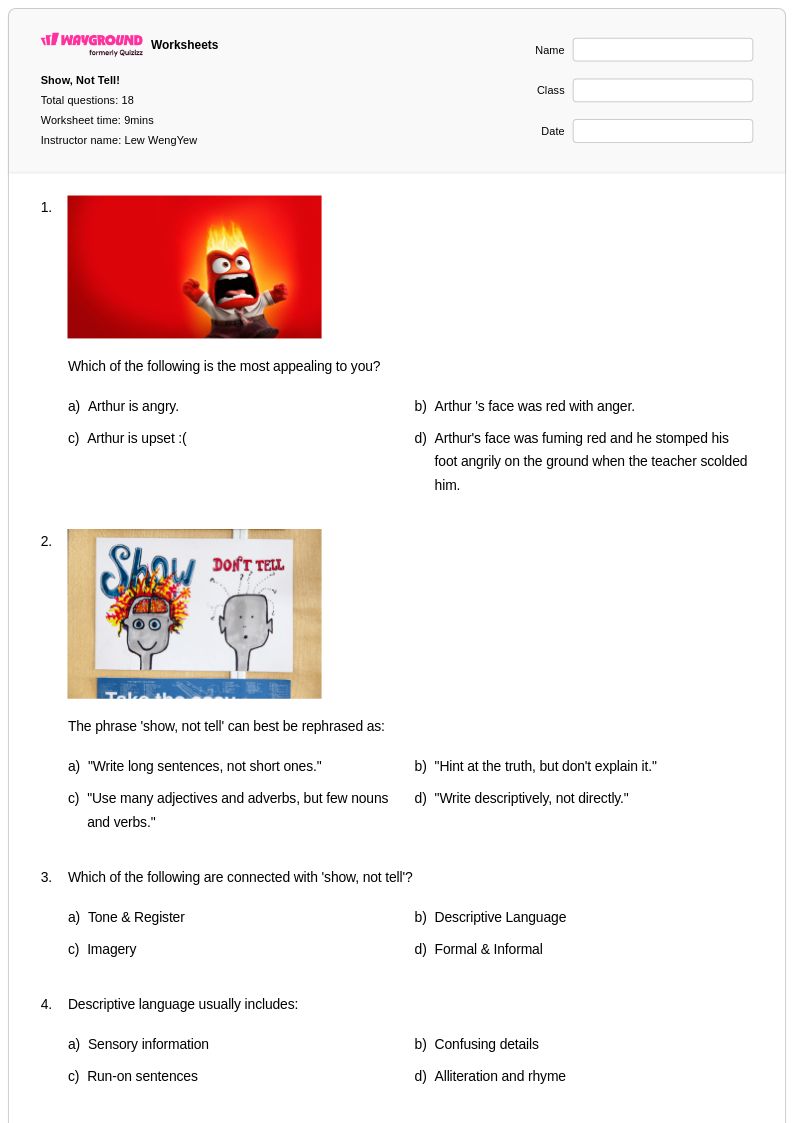
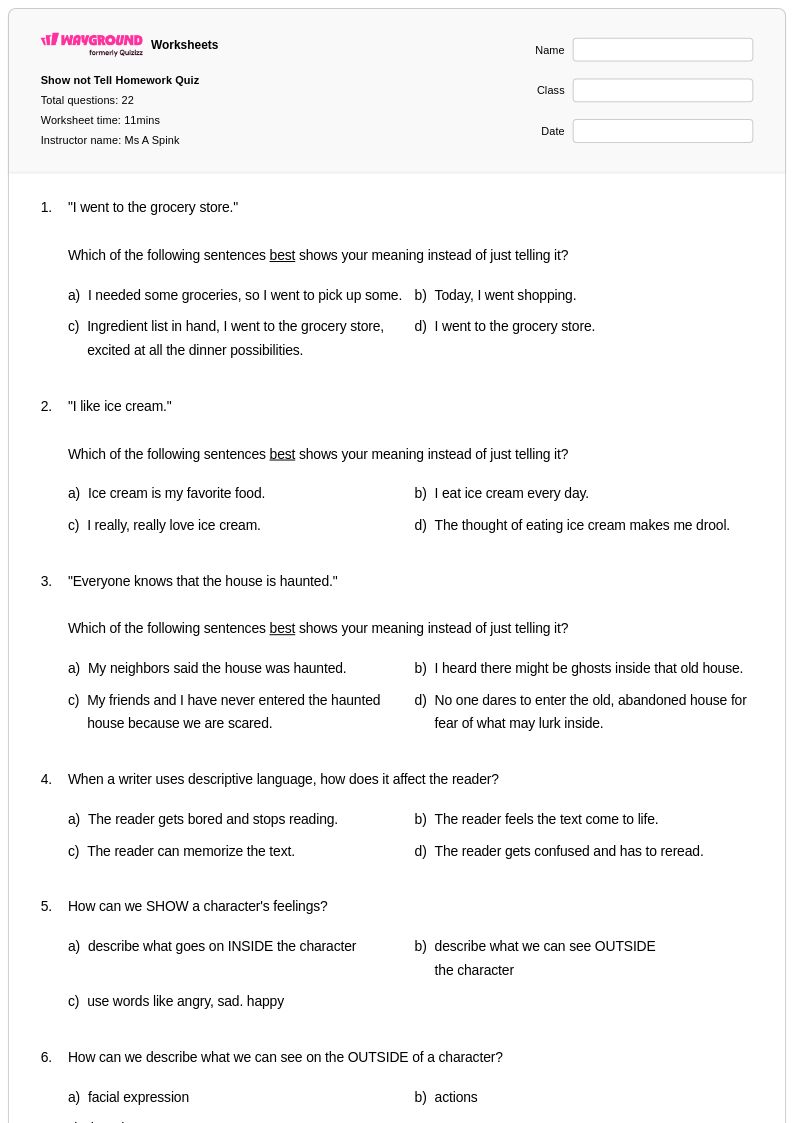
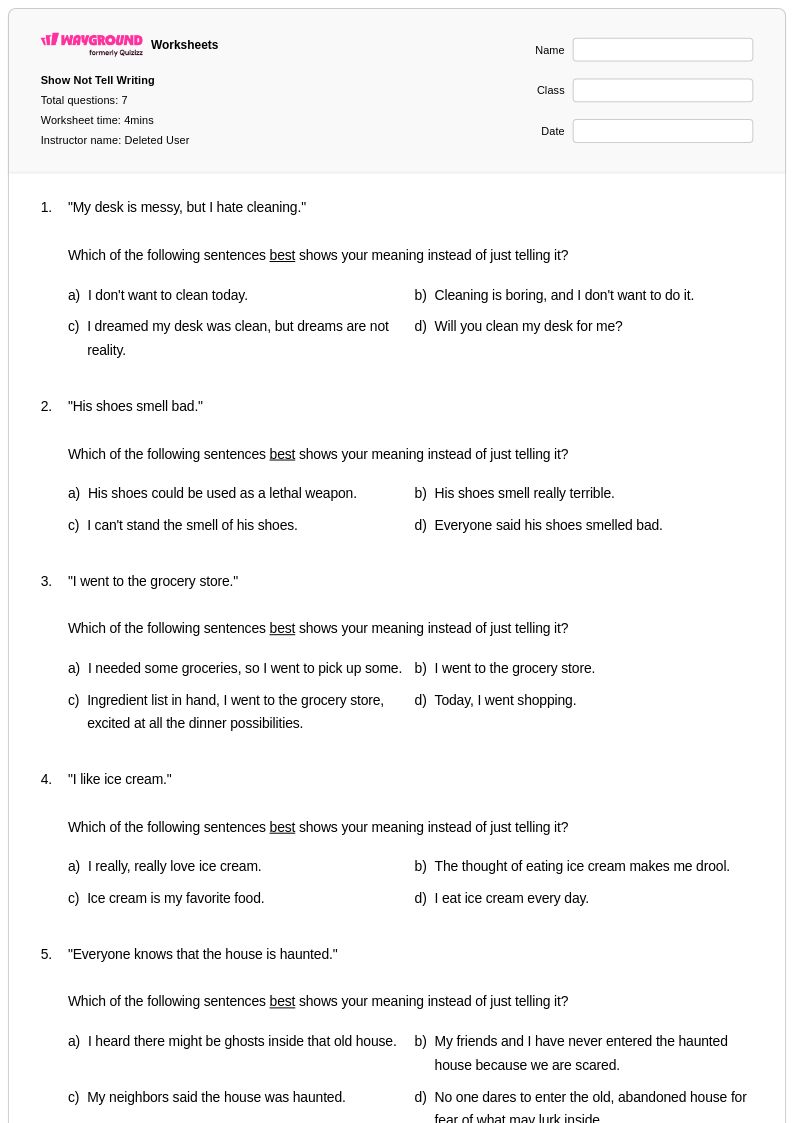
Show Don't Tell worksheets for Year 8 students available through Wayground (formerly Quizizz) provide comprehensive practice in transforming bland, telling statements into vivid, descriptive writing that engages readers through sensory details and specific actions. These expertly crafted worksheets strengthen students' ability to recognize the difference between showing and telling in their own writing while developing crucial revision skills that elevate their narrative and descriptive compositions. Each worksheet includes carefully designed practice problems that guide eighth graders through identifying weak telling sentences and rewriting them with stronger showing techniques, complete with detailed answer keys that help students understand the underlying principles of effective descriptive writing. The free printable resources cover essential elements such as using dialogue to reveal character traits, incorporating sensory imagery to create atmosphere, and employing specific action verbs to demonstrate rather than state emotions and motivations.
Wayground (formerly Quizizz) supports English teachers with an extensive collection of Show Don't Tell worksheets drawn from millions of teacher-created resources that can be easily located through advanced search and filtering capabilities designed specifically for Year 8 writing instruction. The platform's robust differentiation tools allow educators to customize worksheet difficulty levels and provide targeted practice for students at various skill levels, while the flexible format options include both printable PDF versions for traditional classroom use and digital formats for interactive learning experiences. Teachers can efficiently plan writing lessons, provide remediation for students struggling with descriptive writing techniques, and offer enrichment opportunities for advanced learners through the platform's comprehensive collection of skill practice materials that align with state writing standards and support the sequential development of sophisticated composition abilities throughout the eighth grade curriculum.
FAQs
How do I teach show don't tell in a writing class?
Start by presenting students with a flat telling statement, such as 'She was nervous,' and then model how to rewrite it using sensory details, physical reactions, and action, for example, 'Her hands trembled as she smoothed the same crease in her skirt for the third time.' Have students practice identifying telling phrases in published texts before attempting their own revisions. Building in structured transformation exercises, where students convert a telling sentence into a showing passage, reinforces the technique more effectively than open-ended prompts alone.
What exercises help students practice show don't tell?
Sentence transformation exercises are the most direct practice method: give students a telling statement and ask them to rewrite it as a showing passage using sensory details, character actions, or dialogue. Paragraph revision activities push the skill further by asking students to rewrite entire scenes that rely on telling language. Identifying weak telling phrases in sample texts also builds metacognitive awareness, helping students recognize the pattern in their own writing before they can consistently fix it.
What mistakes do students commonly make when learning show don't tell?
The most common error is over-describing, where students add physical details without connecting them to an emotion or character motivation, resulting in passages that are wordy but still not meaningfully showing anything. Another frequent mistake is interpreting 'show don't tell' as a rule against ever stating emotions, which can make writing feel evasive rather than vivid. Students also tend to rely on visual details alone and neglect sound, smell, texture, and internal thought, which limits the depth of their scenes.
How can I differentiate show don't tell practice for students at different skill levels?
For developing writers, start with sentence-level transformations where a single telling phrase is converted into two or three showing sentences, keeping the cognitive load manageable. More advanced students can tackle full paragraph or scene revisions and be challenged to use dialogue strategically alongside sensory detail. On Wayground, teachers can apply reduced answer choices for students who need additional support during digital practice, and extended time settings can be assigned individually so that students who process more slowly are not disadvantaged without disrupting the rest of the class.
How do I use show don't tell worksheets in my classroom?
Show don't tell worksheets on Wayground are available as printable PDFs for traditional classroom use and in digital formats for technology-integrated instruction, making them flexible for both in-class and independent practice. Teachers can also host the worksheets as a quiz directly on Wayground, enabling real-time tracking of student responses. The structured format, moving from sentence transformations to paragraph revisions, makes these worksheets well-suited for use as guided practice during a mini-lesson, as independent practice following direct instruction, or as a targeted remediation activity.