Free Printable Narrative Planning Worksheets for Year 8
Year 8 narrative planning worksheets and printables help students master story structure, character development, and plot organization through free PDF practice problems with comprehensive answer keys.
Explore printable Narrative Planning worksheets for Year 8
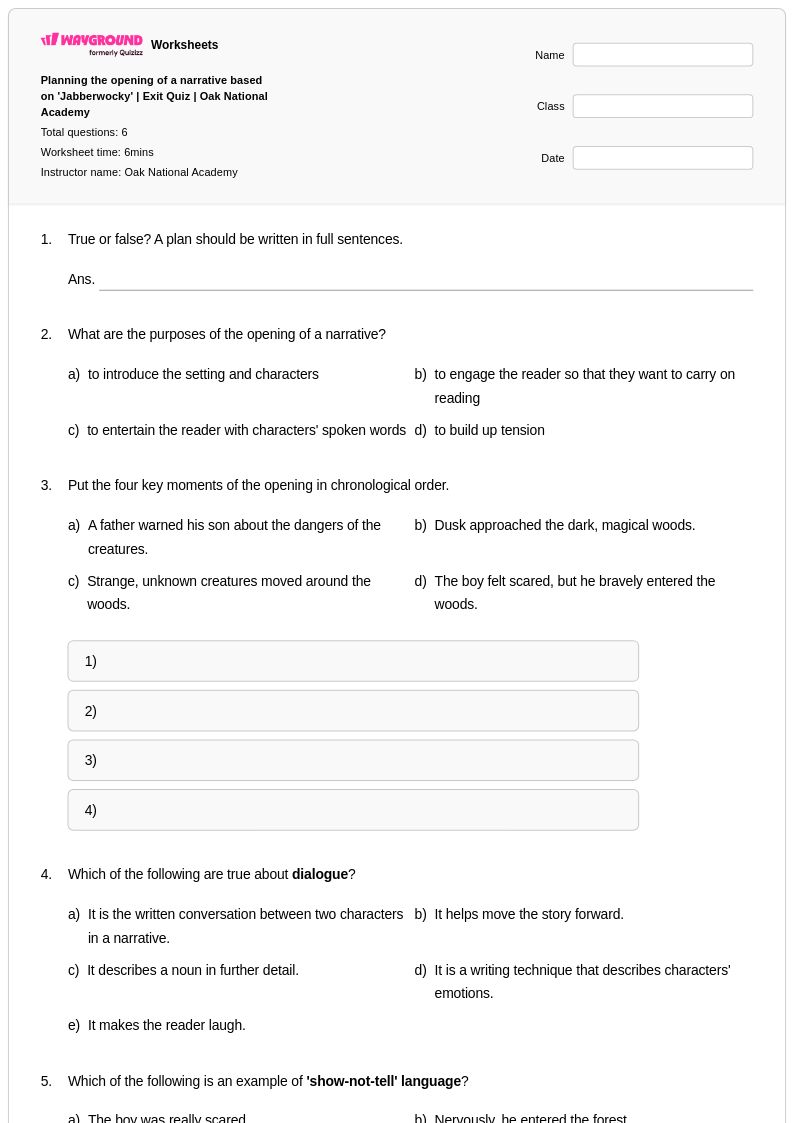
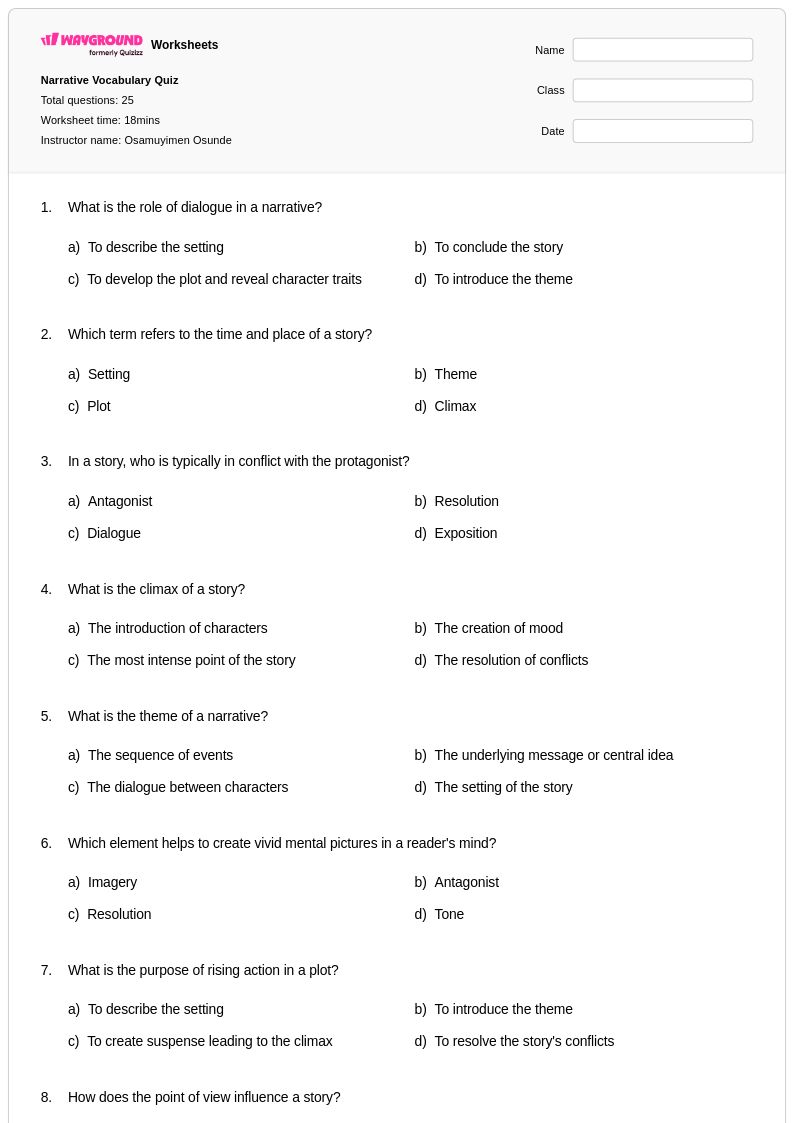
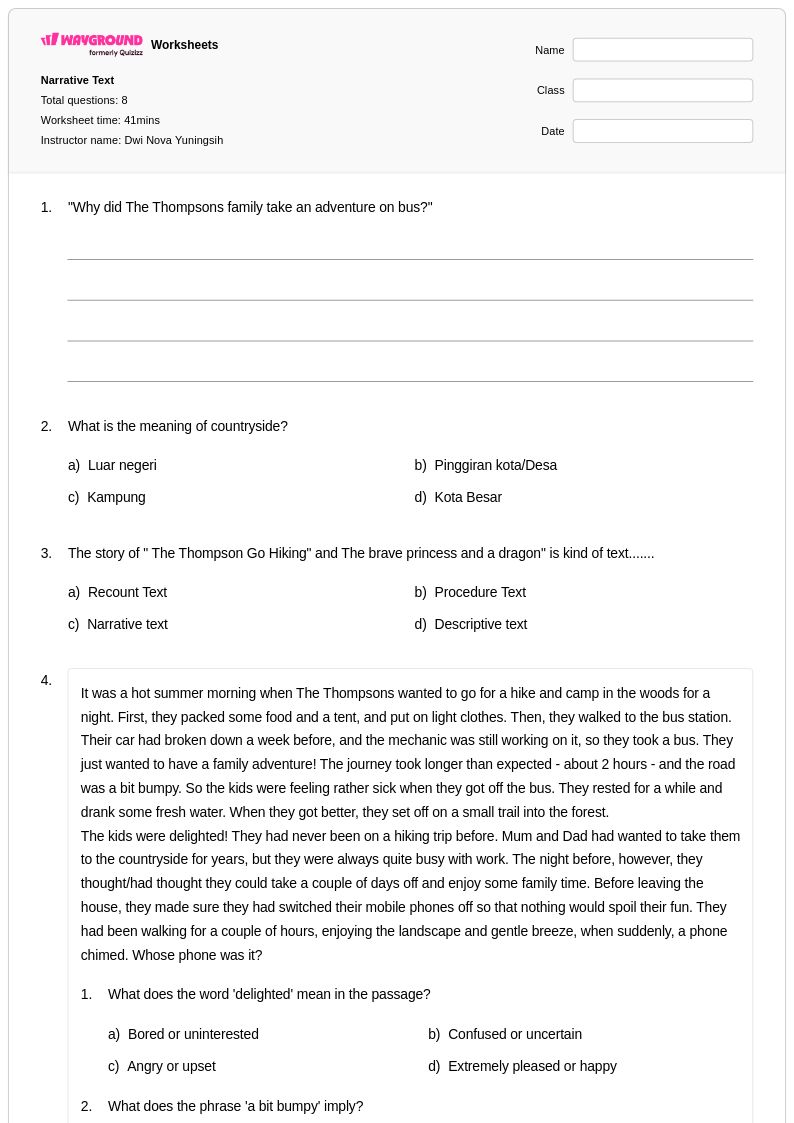
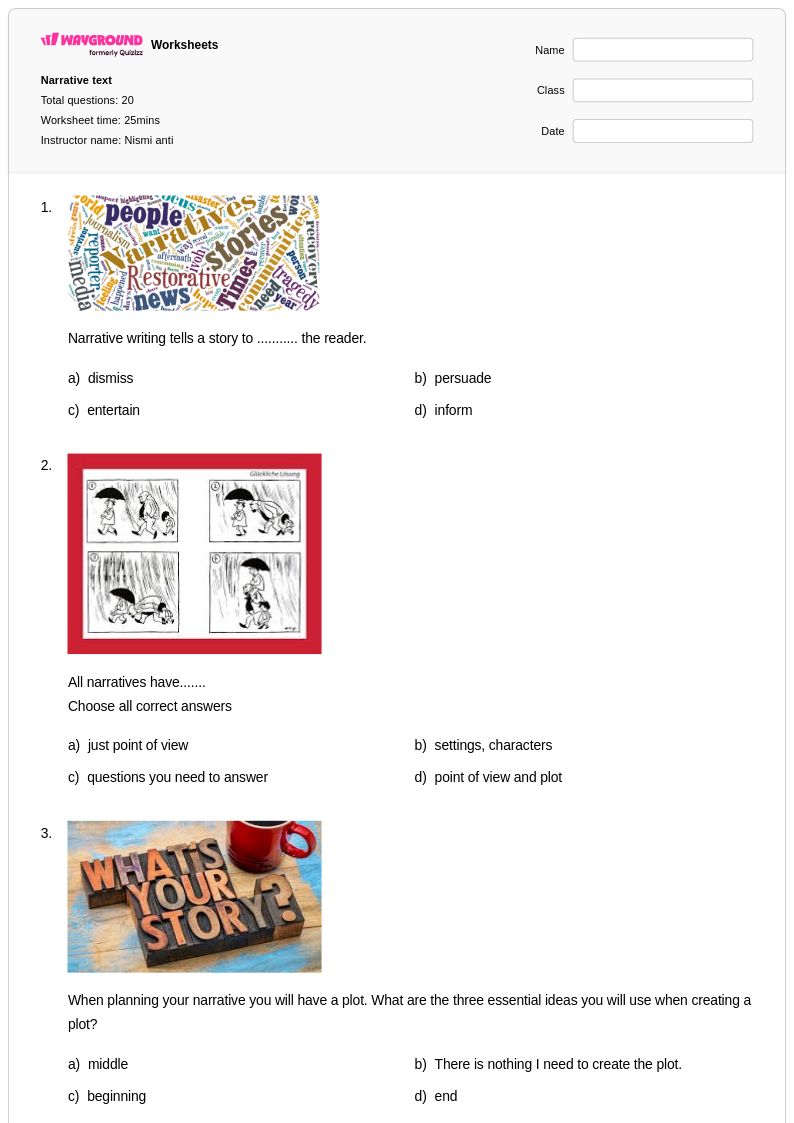
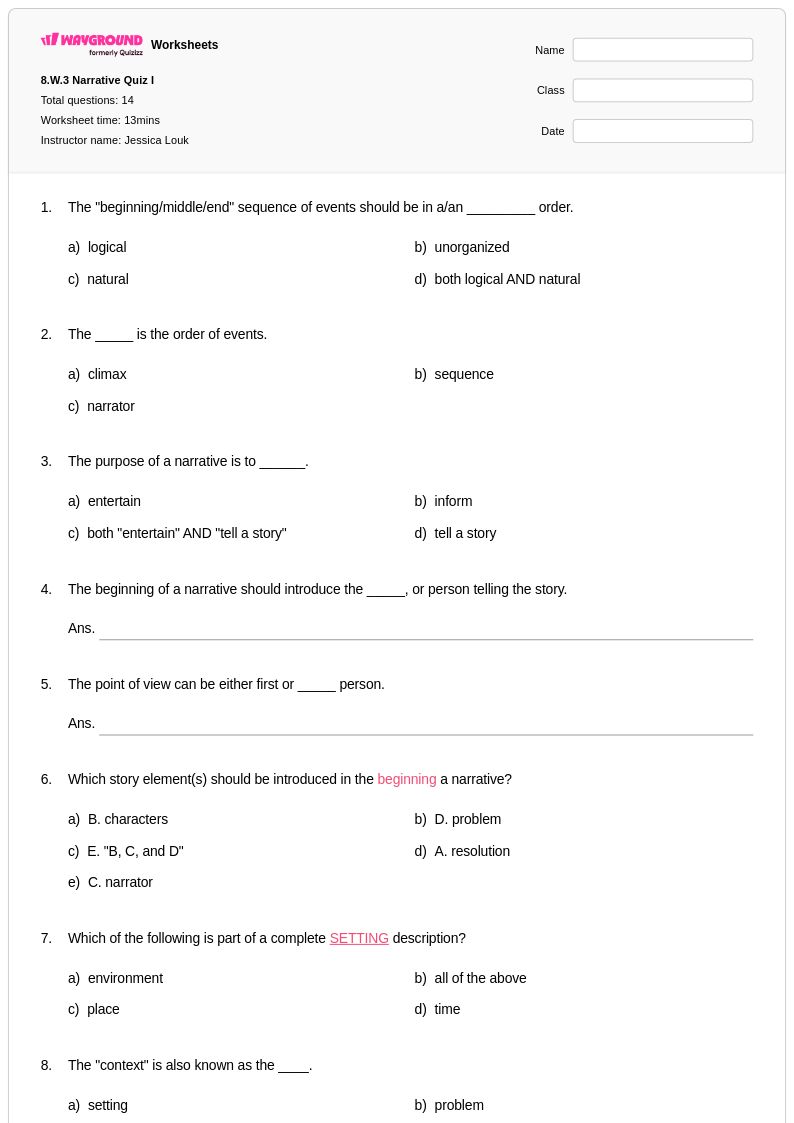
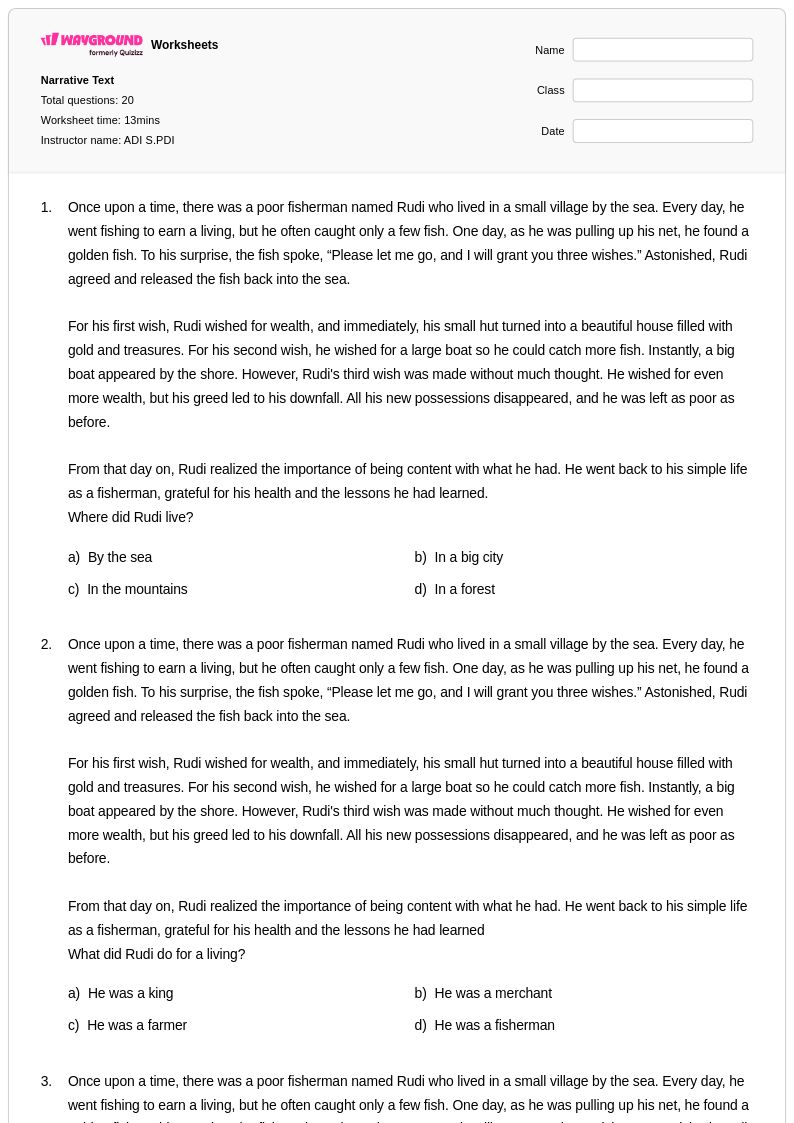
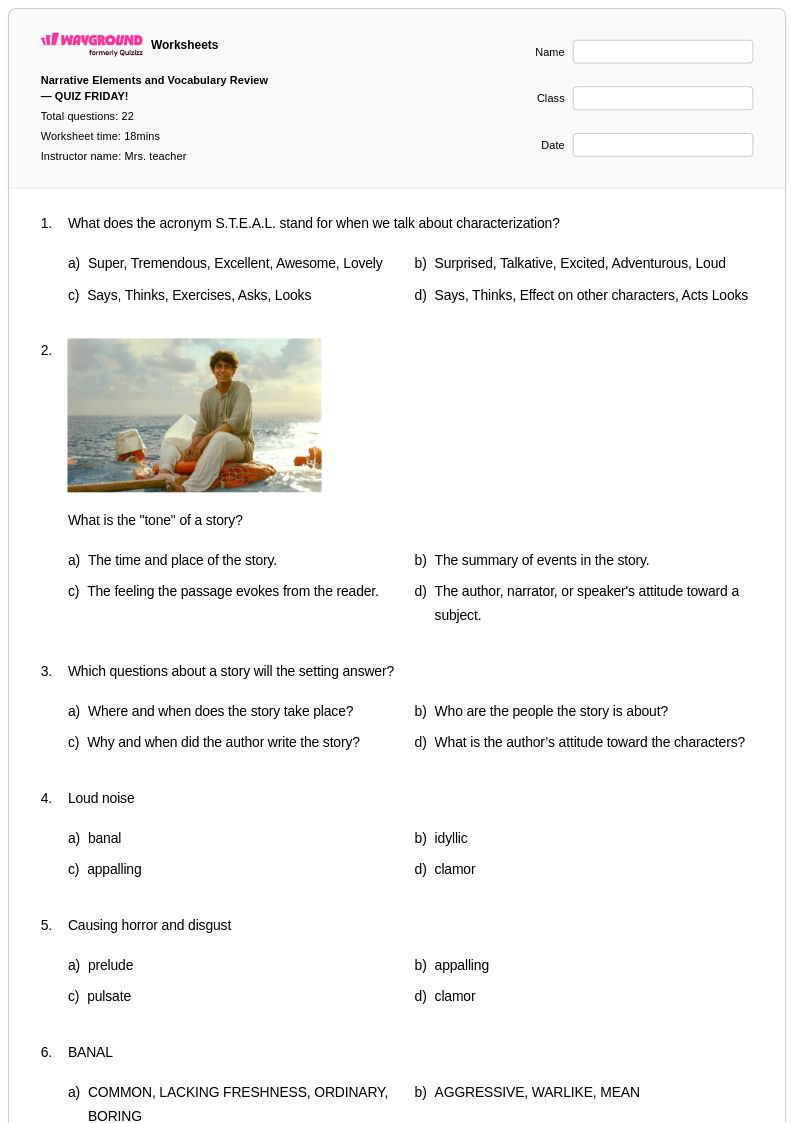
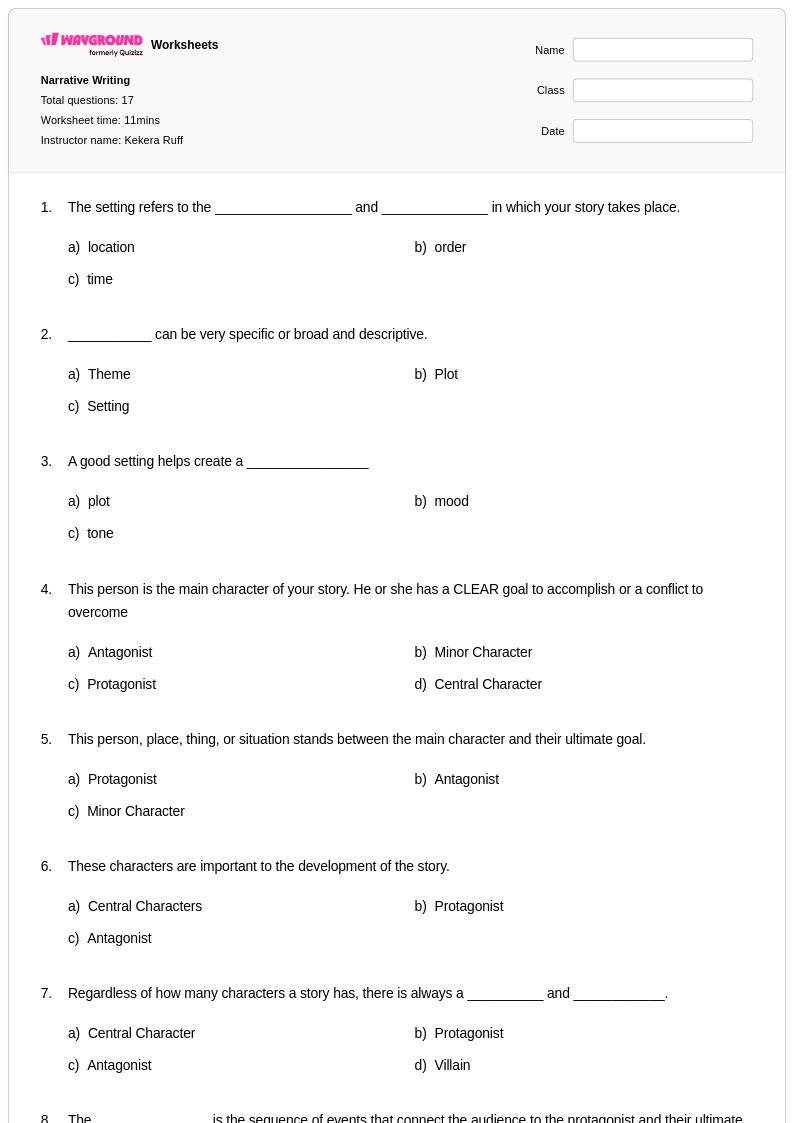
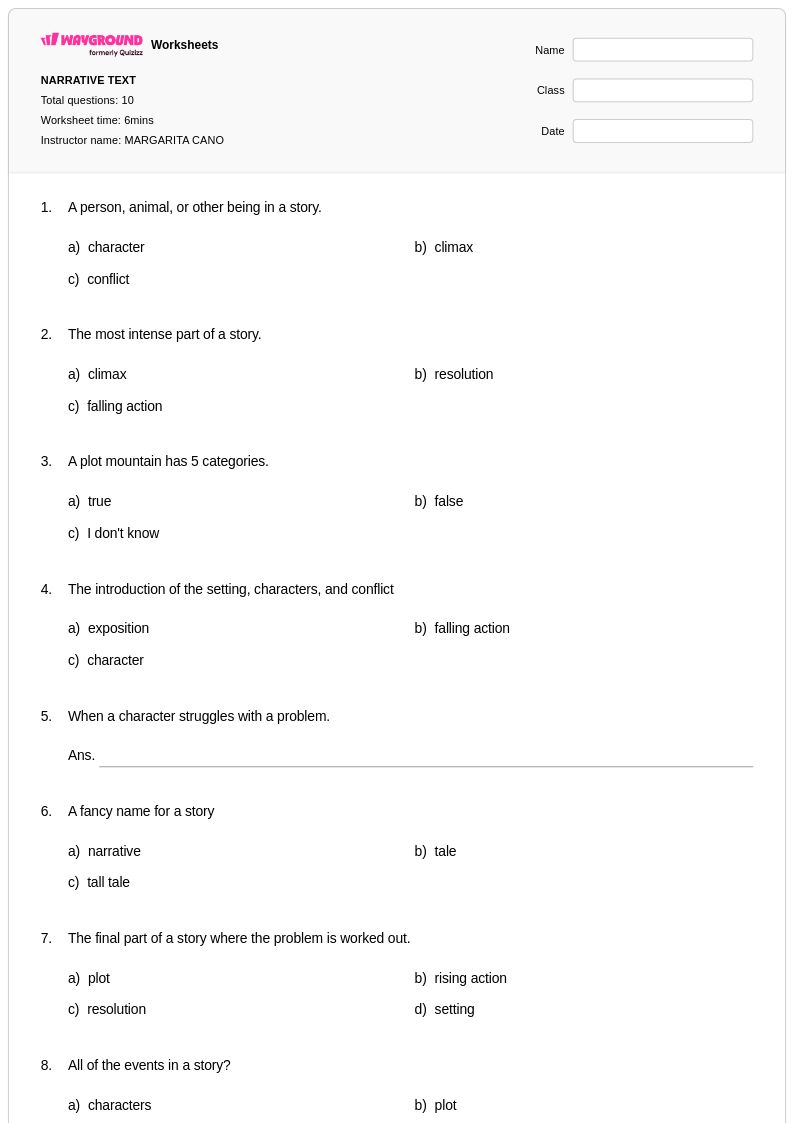
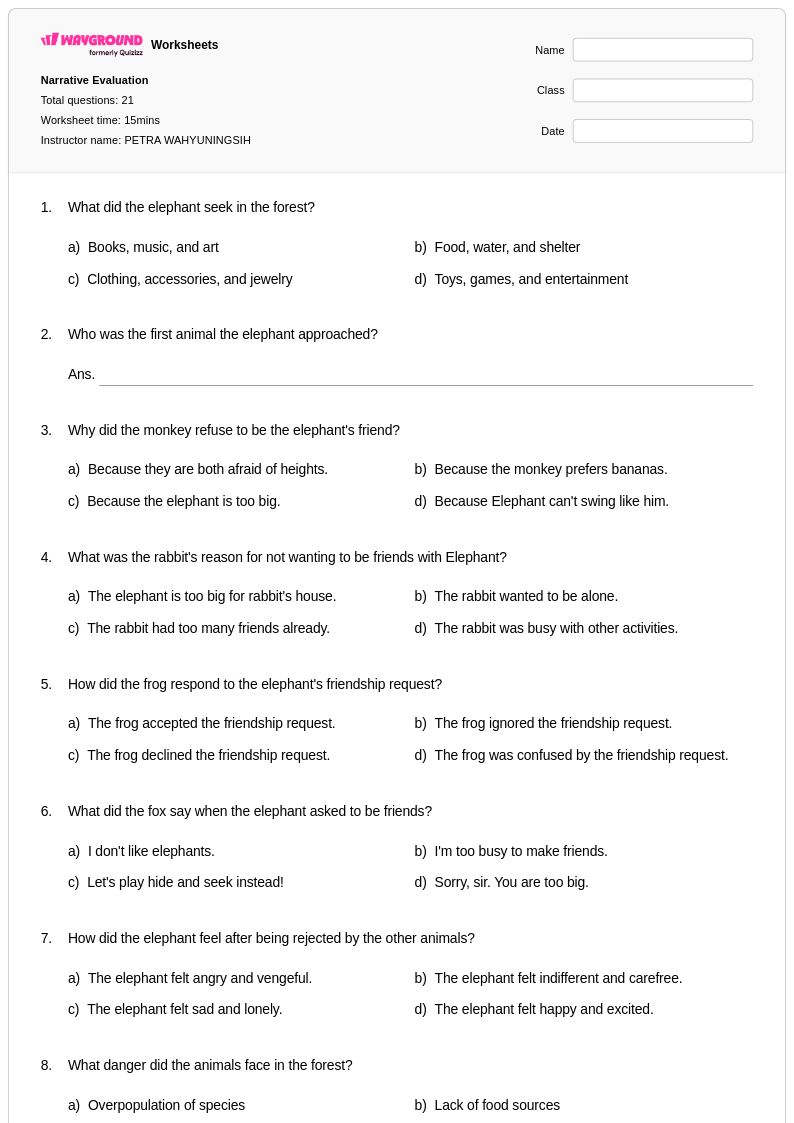
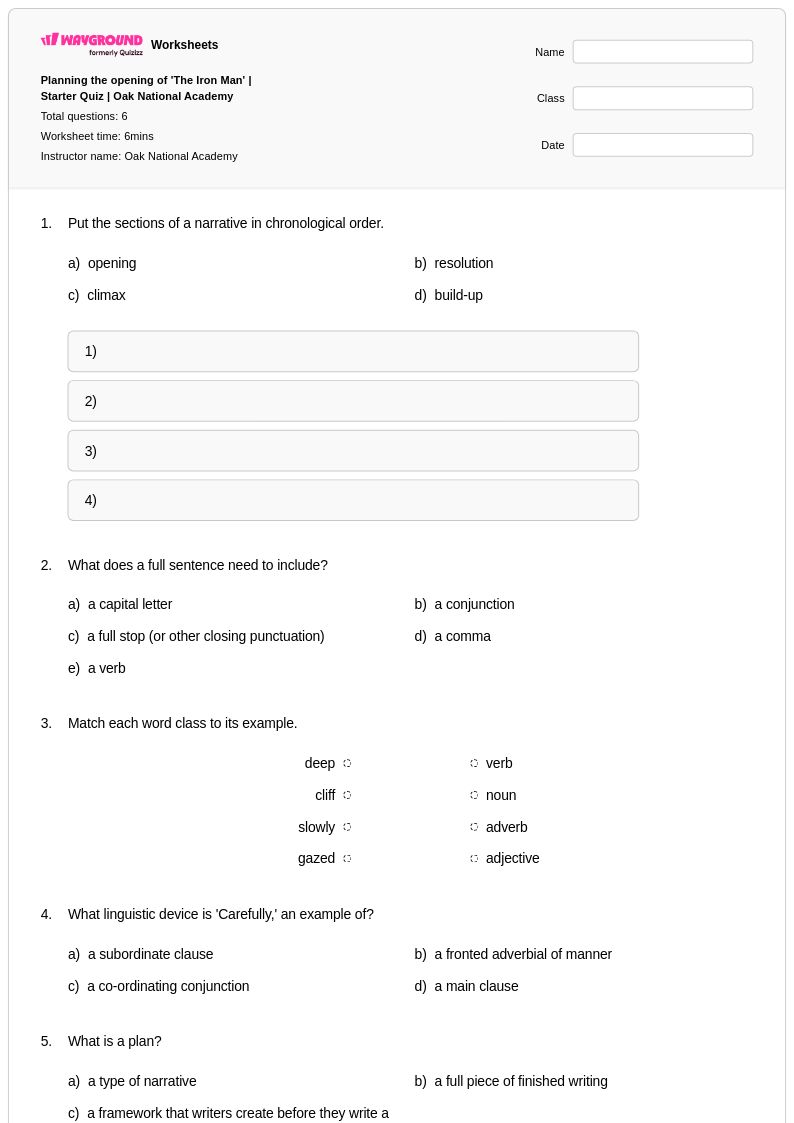
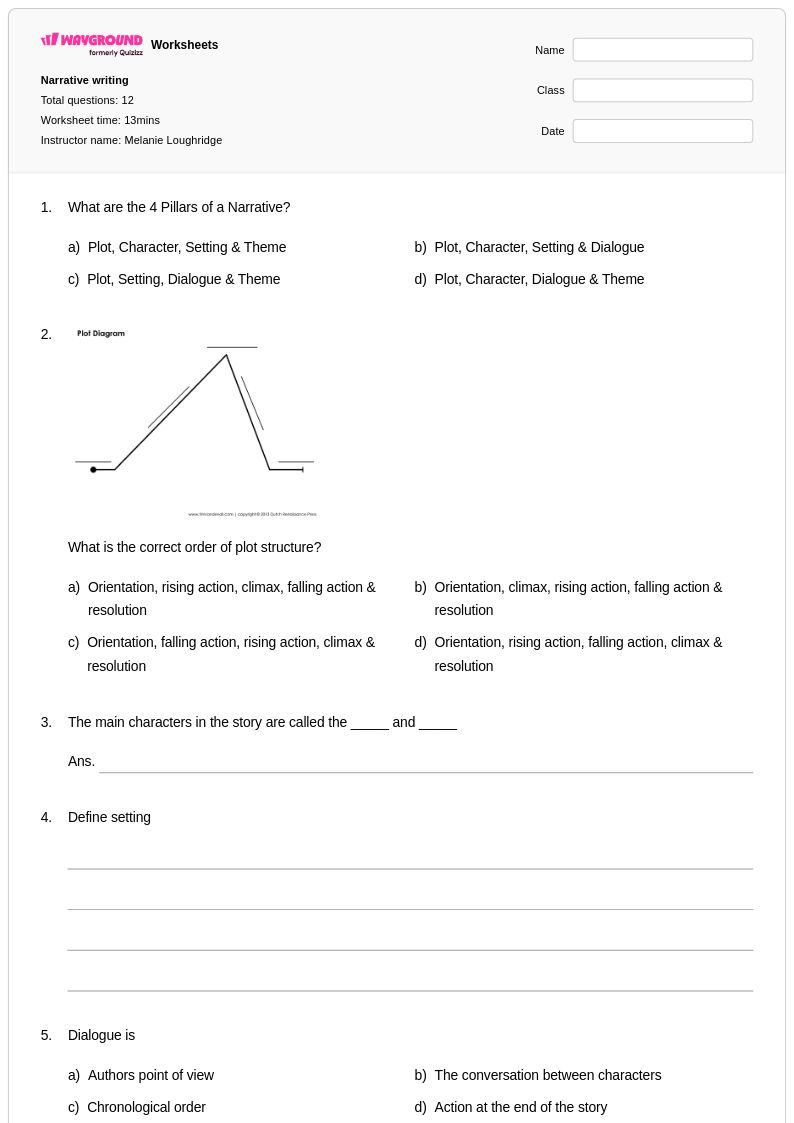
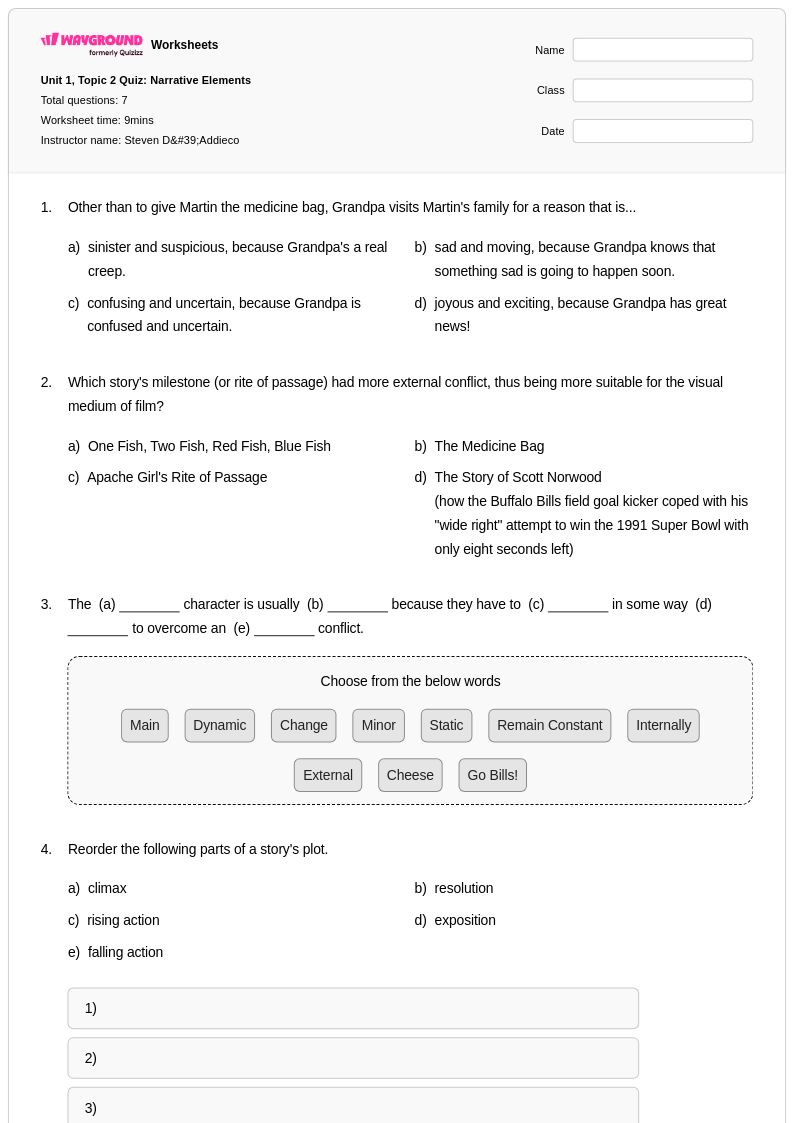
Narrative planning worksheets for Year 8 students available through Wayground (formerly Quizizz) provide comprehensive resources to help developing writers master the essential prewriting phase of storytelling. These expertly crafted worksheets guide eighth-grade students through systematic approaches to organizing plot elements, developing compelling characters, establishing narrative voice, and structuring story arcs before they begin drafting. The practice problems within these free printables strengthen critical thinking skills as students learn to map out conflict progression, create detailed character profiles, and establish effective story settings. Each worksheet comes with a complete answer key and is available in convenient pdf format, allowing educators to seamlessly integrate narrative planning exercises into their writing instruction while helping students build confidence in the foundational stages of creative writing.
Wayground (formerly Quizizz) empowers teachers with access to millions of educator-created narrative planning resources specifically designed for Year 8 writing instruction. The platform's robust search and filtering capabilities enable teachers to quickly locate worksheets that align with specific standards and learning objectives, while differentiation tools allow for seamless customization based on individual student needs and skill levels. These comprehensive worksheet collections support flexible classroom planning by offering both printable and digital formats, making it easy for educators to implement targeted remediation for struggling writers, provide enrichment opportunities for advanced students, and deliver consistent skill practice across diverse learning environments. The platform's extensive library ensures that teachers have immediate access to high-quality narrative planning materials that can be adapted for whole-class instruction, small group work, or independent practice sessions.
FAQs
How do I teach narrative planning to students who struggle with story organization?
Start by breaking narrative structure into discrete, teachable components: character, setting, conflict, and resolution. Graphic organizers and story maps work especially well because they give students a visual container for their ideas before they write a single sentence. When students can see how the parts of a story connect spatially, the transition from planning to drafting becomes significantly more manageable.
What exercises help students practice narrative planning before they start writing?
Effective practice exercises include character profile templates, story arc mapping, and sequential plot-planning grids that walk students through beginning, middle, and end. Having students complete a story map before drafting helps them identify gaps in their plot logic early, reducing the frustration of stalling mid-story. Repeated exposure to these planning routines builds the habit of pre-writing as a natural step in the writing process.
What are the most common mistakes students make when planning a narrative?
The most frequent error is skipping the planning phase entirely and writing without a defined conflict or resolution, which leads to unfocused or abruptly ended stories. Students also tend to underdevelop their characters, treating them as placeholders rather than drivers of plot. Another common gap is neglecting setting, which weakens the reader's ability to anchor in the story world. Structured planning templates directly address each of these by prompting students to commit details before drafting begins.
How can I use narrative planning worksheets to support students at different writing levels?
For developing writers, simplified story maps with sentence starters and fewer planning sections reduce cognitive load without sacrificing structure. Advanced writers benefit from more complex templates that prompt them to explore subplots, character motivation, and narrative perspective. On Wayground, teachers can apply accommodations such as read aloud support and reduced answer choices to individual students, ensuring each learner engages with the same planning framework at an appropriate level of challenge.
How do I use Wayground's narrative planning worksheets in my classroom?
Wayground's narrative planning worksheets are available as printable PDFs for traditional classroom use and in digital formats for technology-integrated environments. Teachers can assign them as pre-writing practice, use them during a writing unit to scaffold the drafting process, or host them as a quiz on Wayground for a structured, interactive experience. Answer keys are included with each worksheet, supporting both independent student practice and whole-class guided instruction.
At what point in a writing unit should I introduce narrative planning worksheets?
Narrative planning worksheets are most effective when introduced before students begin any drafting, ideally at the start of a writing unit after the genre has been introduced. Using them as a pre-writing checkpoint ensures students have a clear story structure in place, which reduces revision time later. They can also be reintroduced mid-unit when a student's draft has stalled, using the planning template to diagnose and resolve structural gaps.