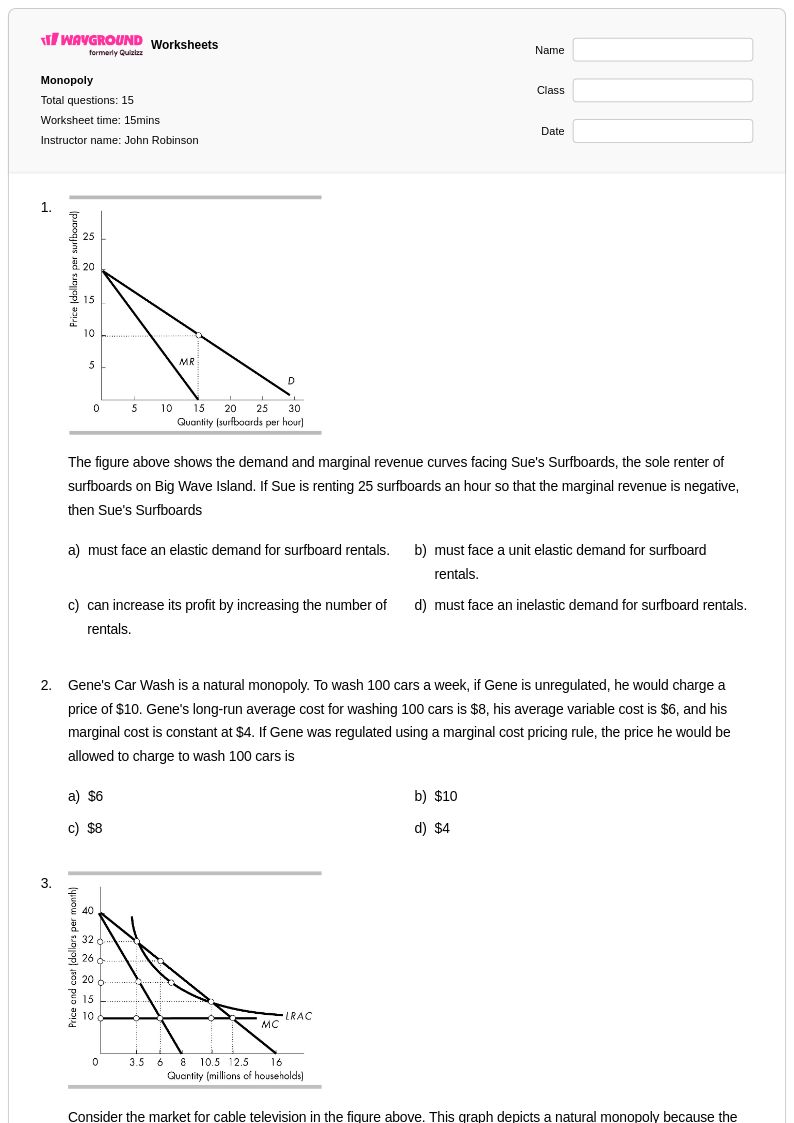
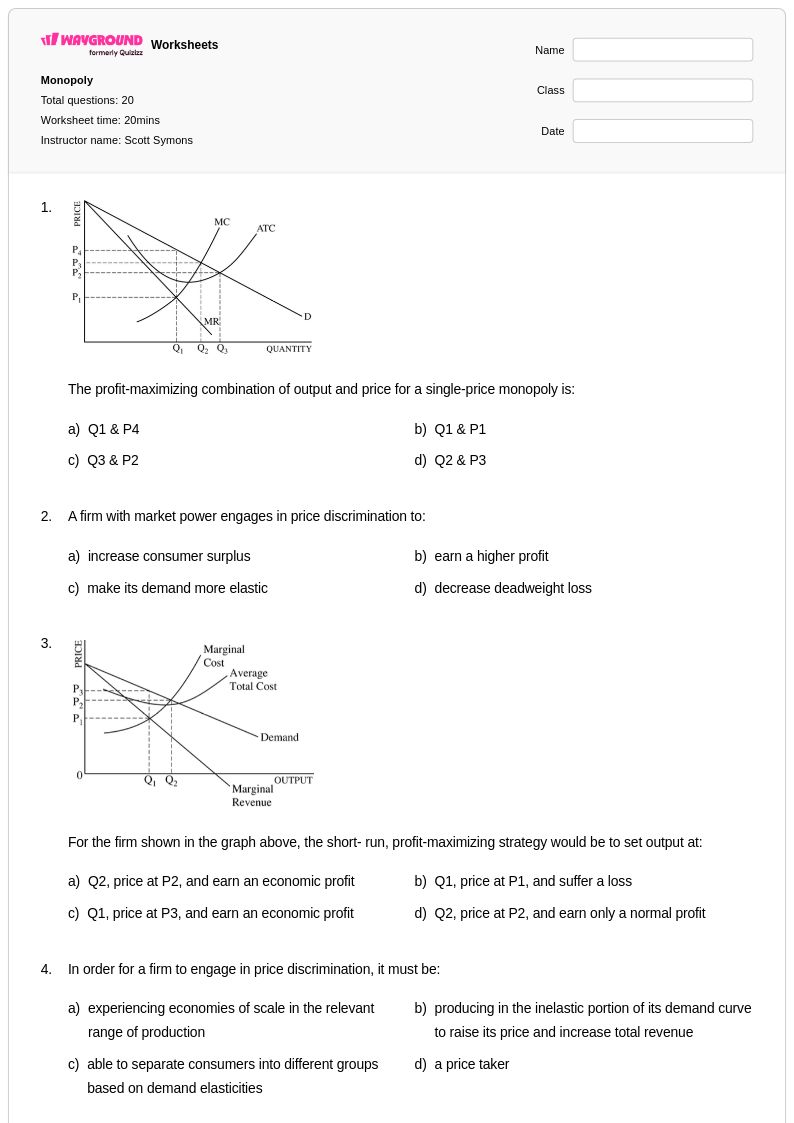
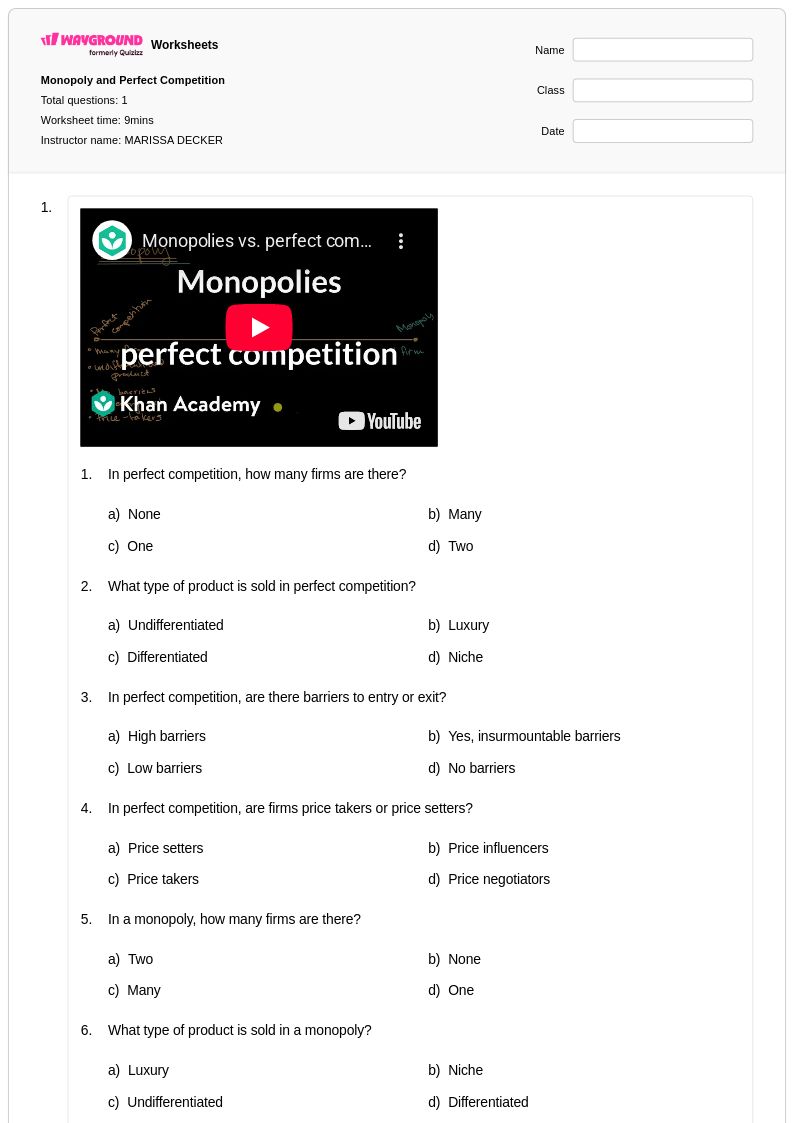
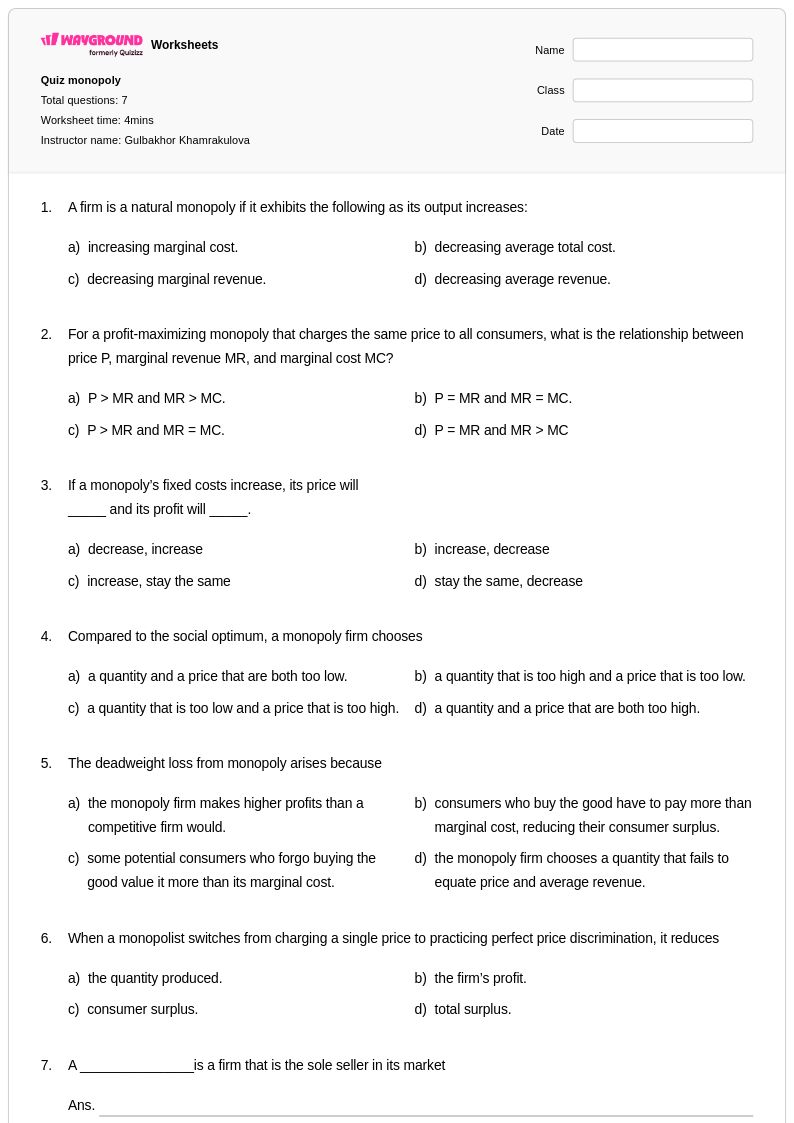
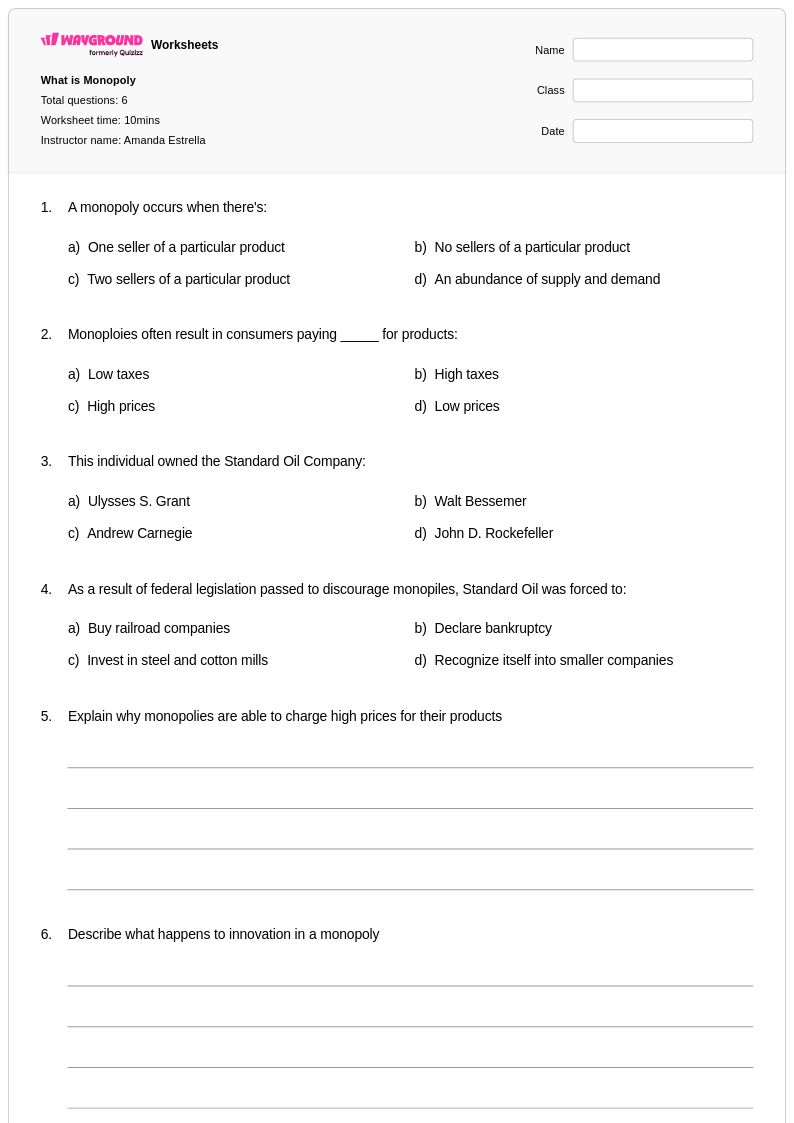
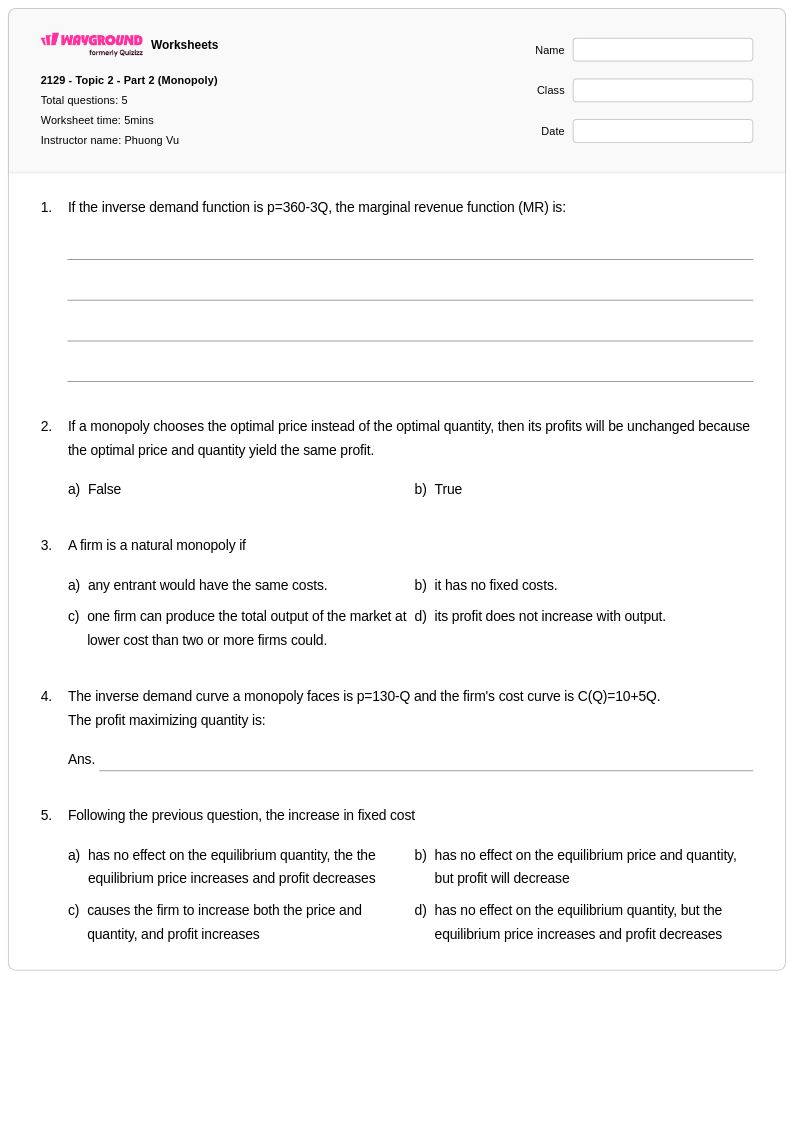
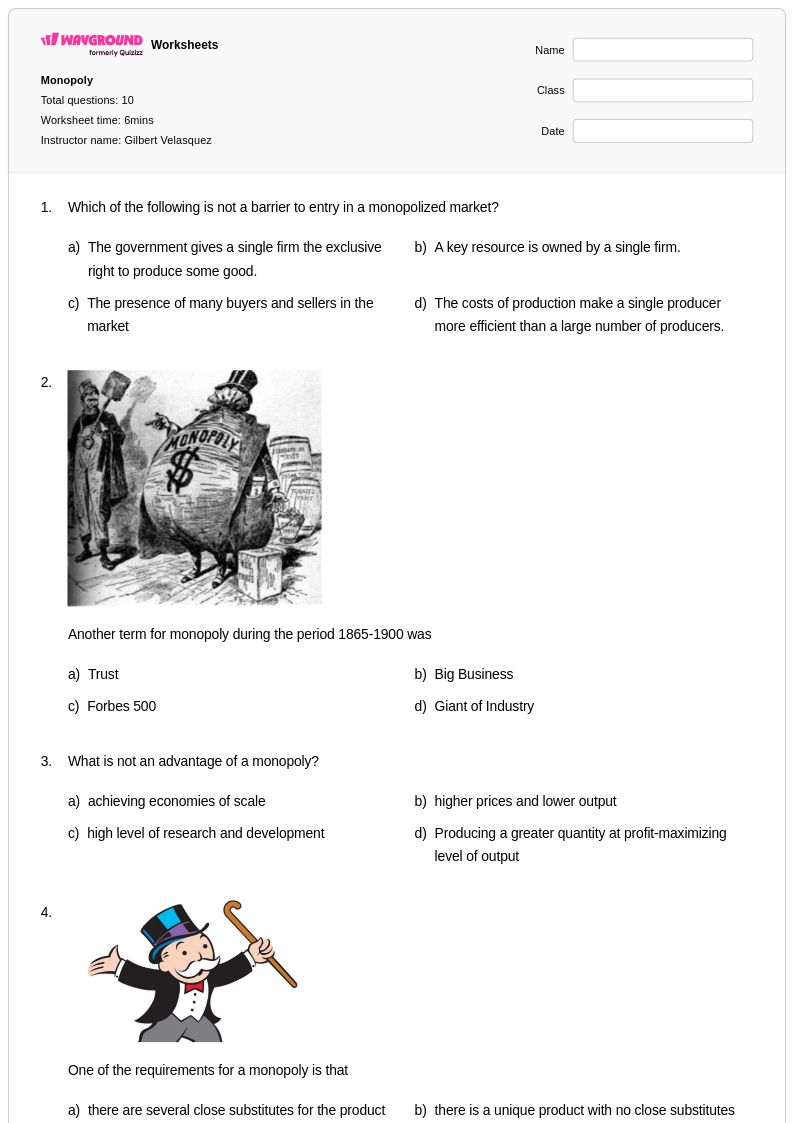
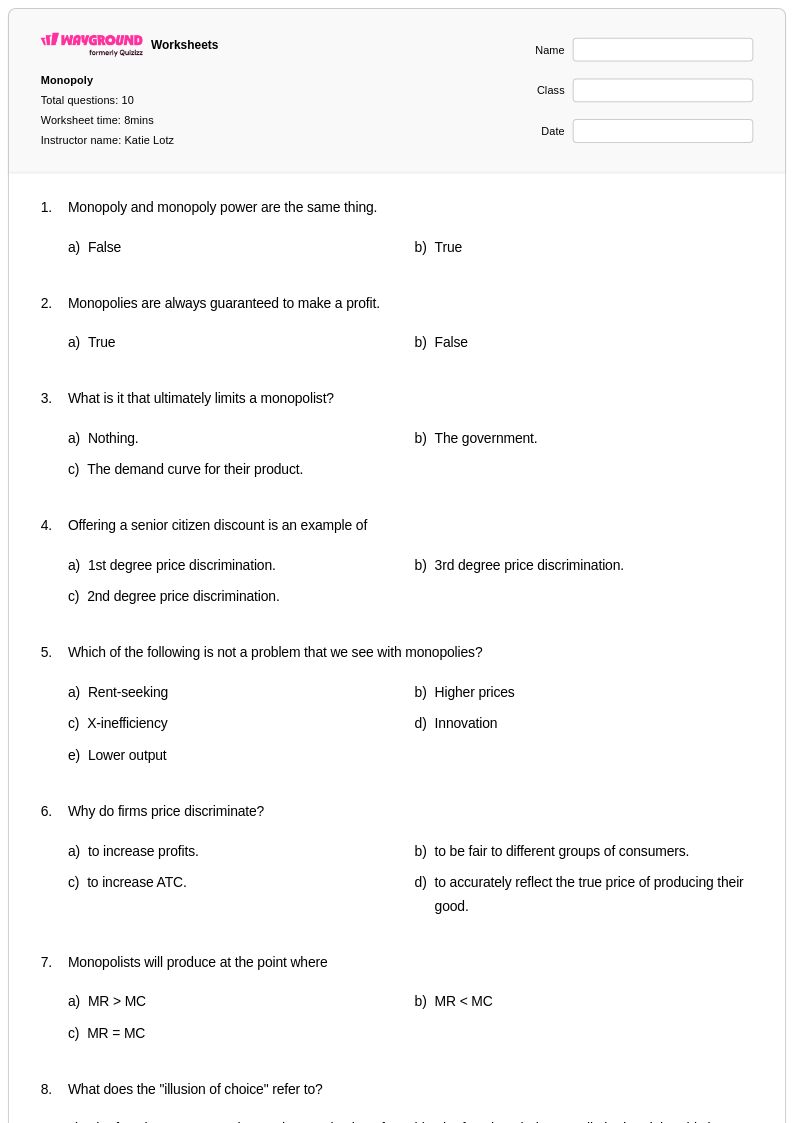
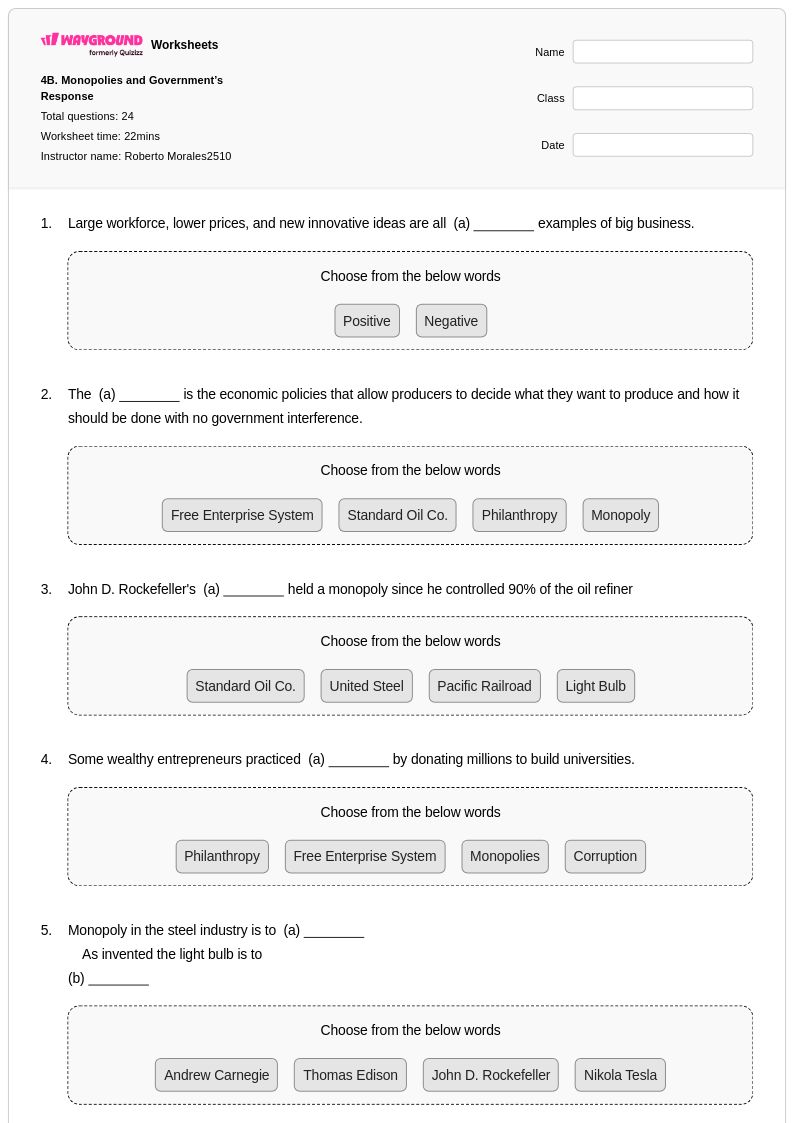
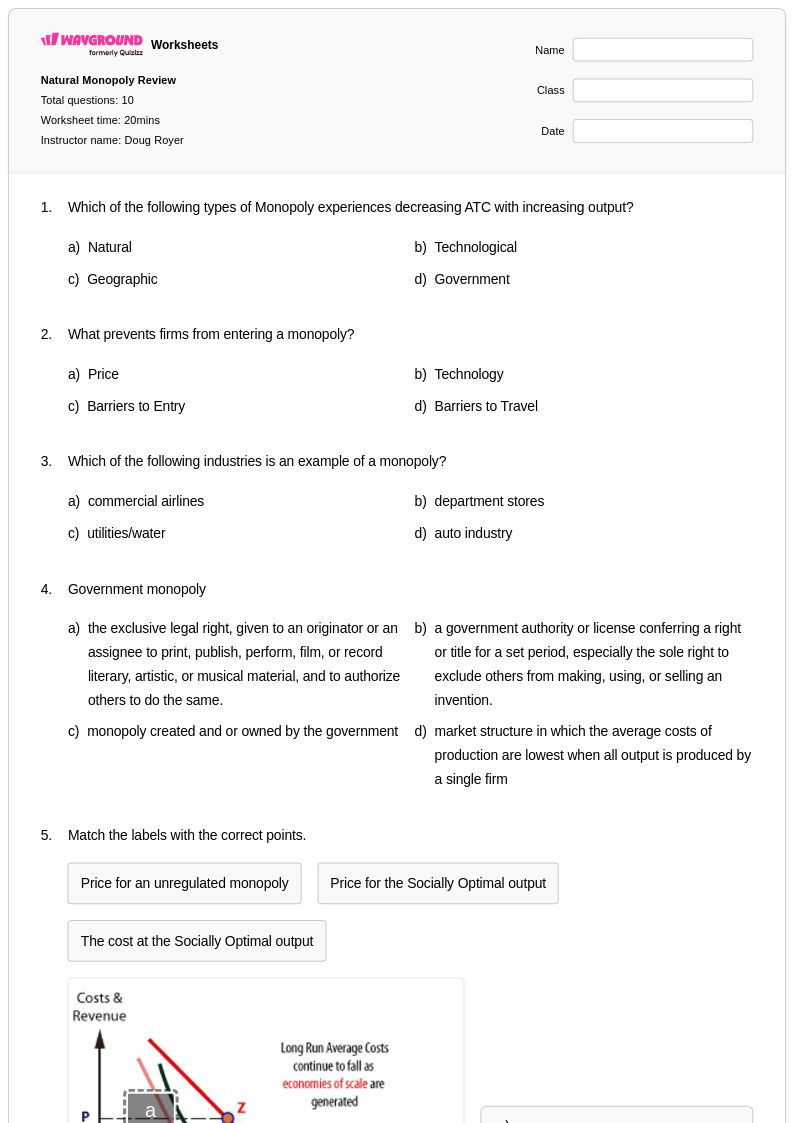
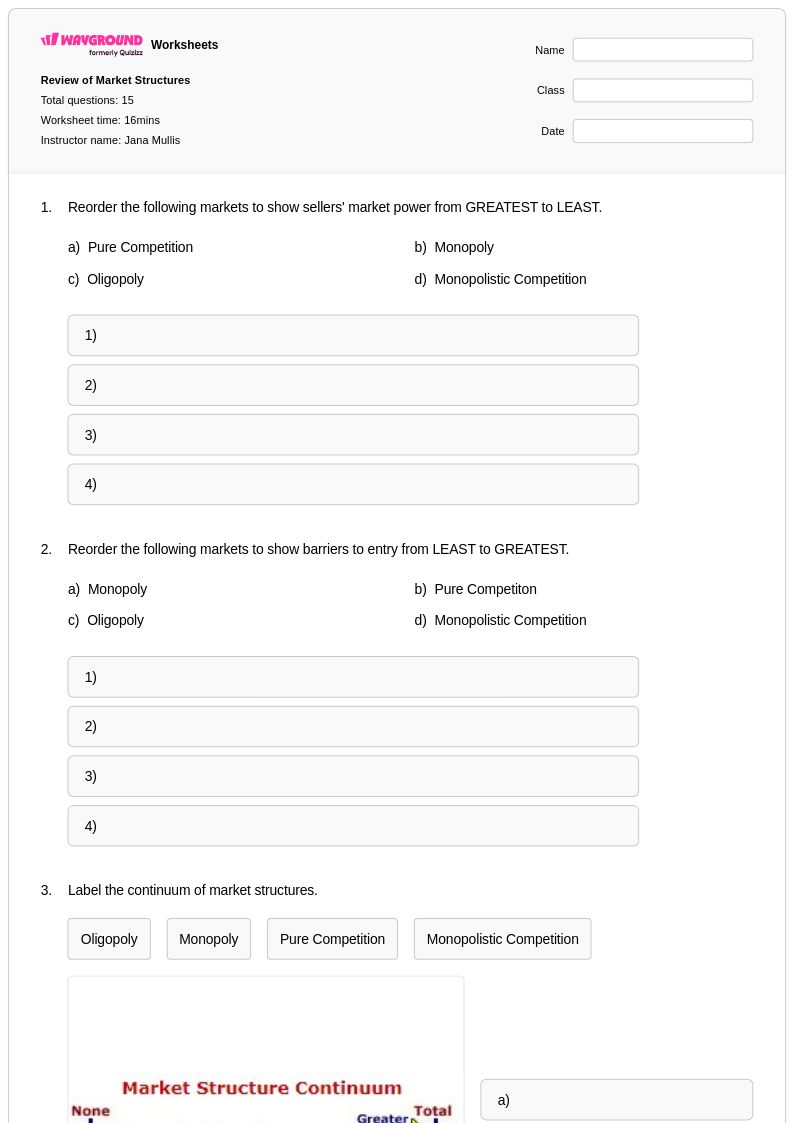
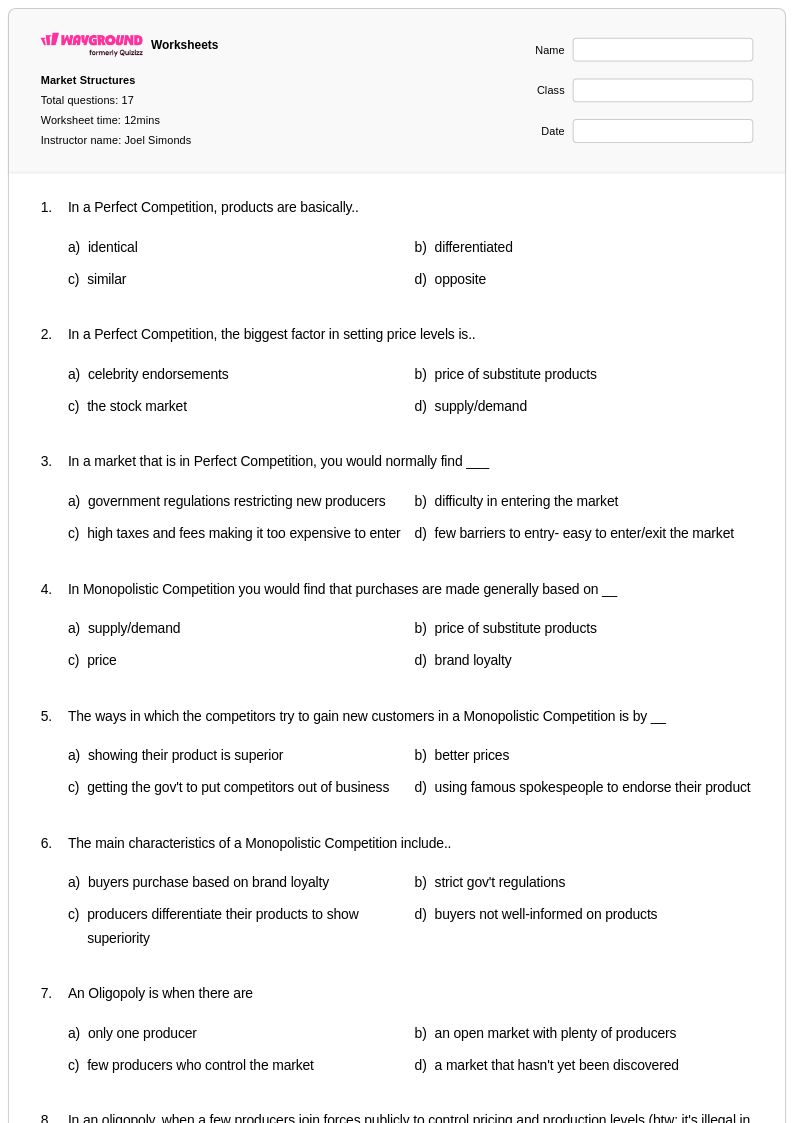
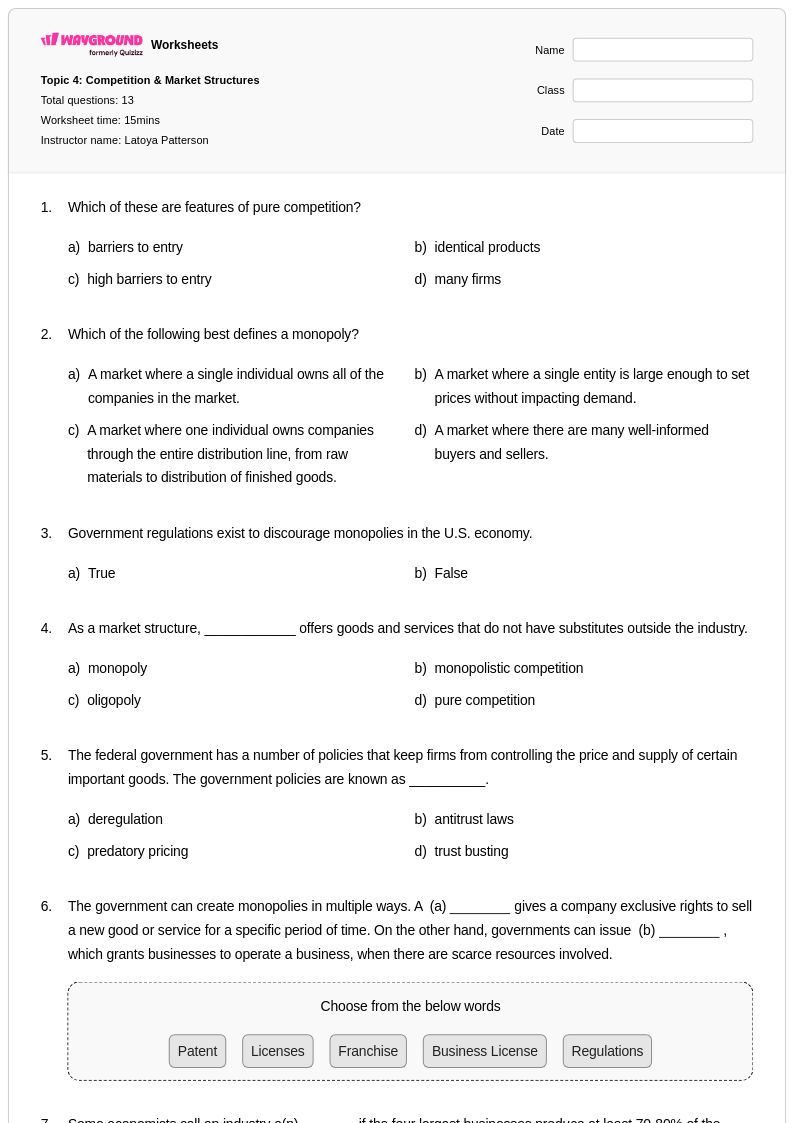
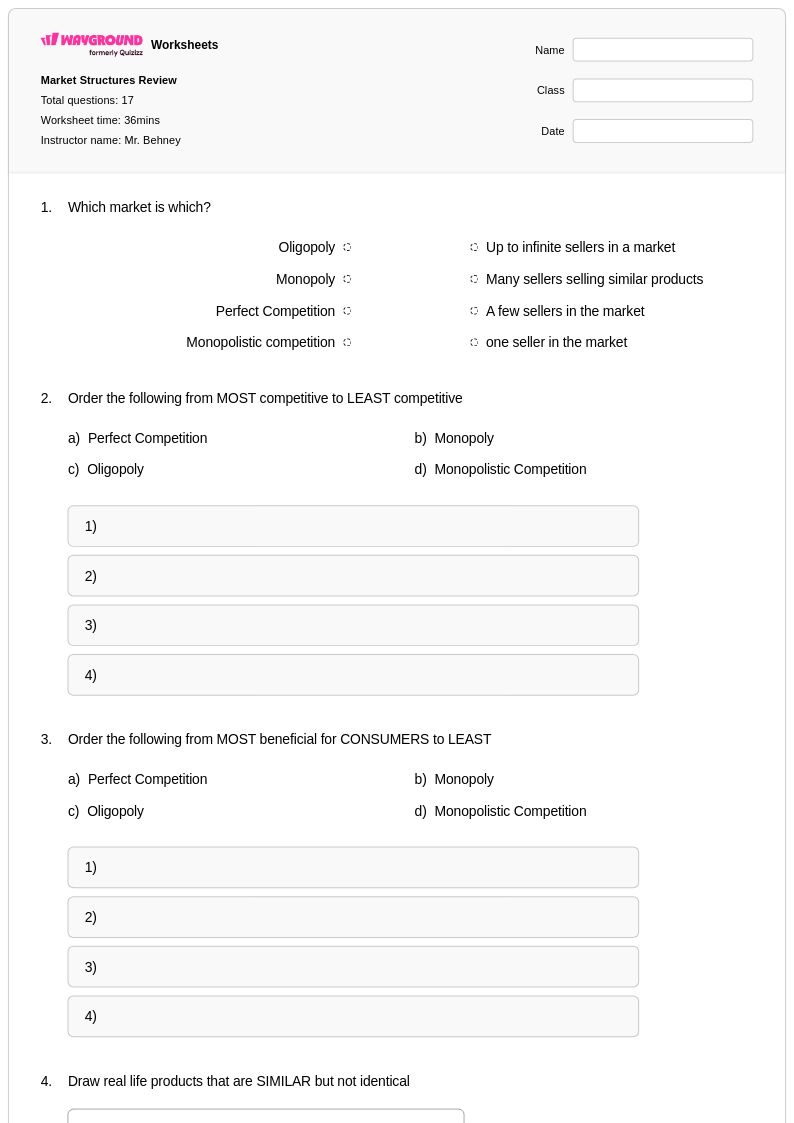
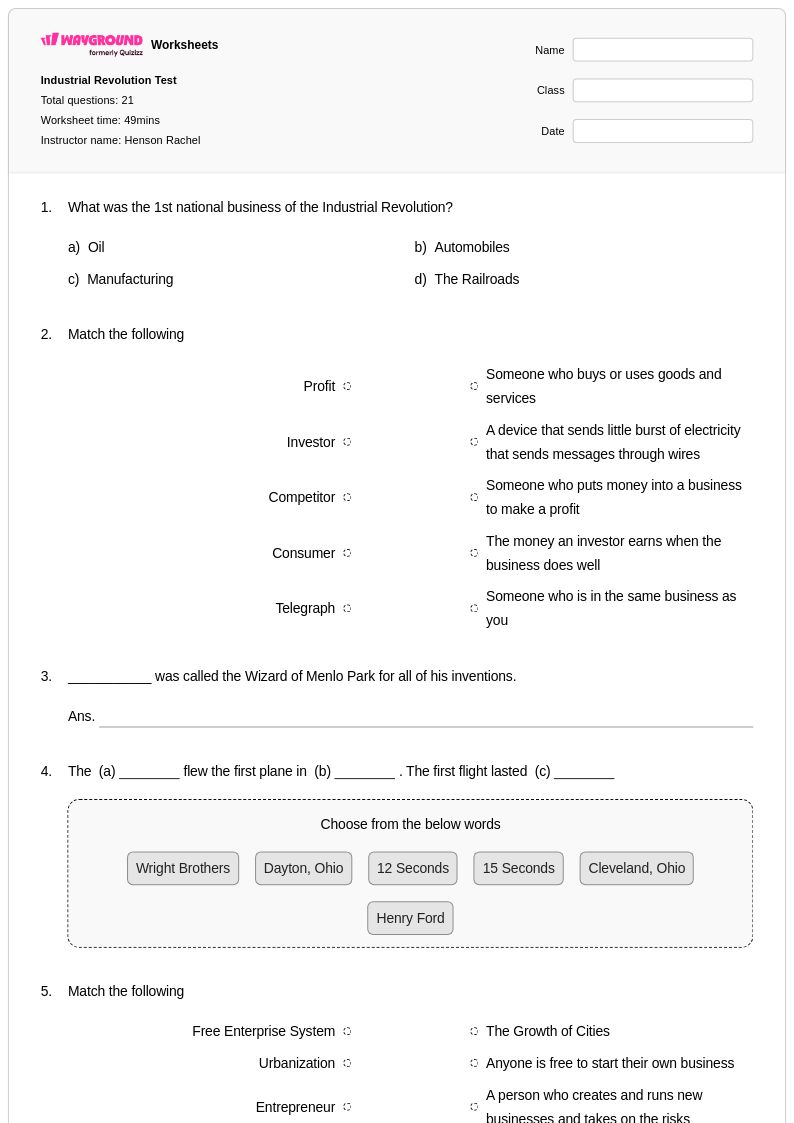
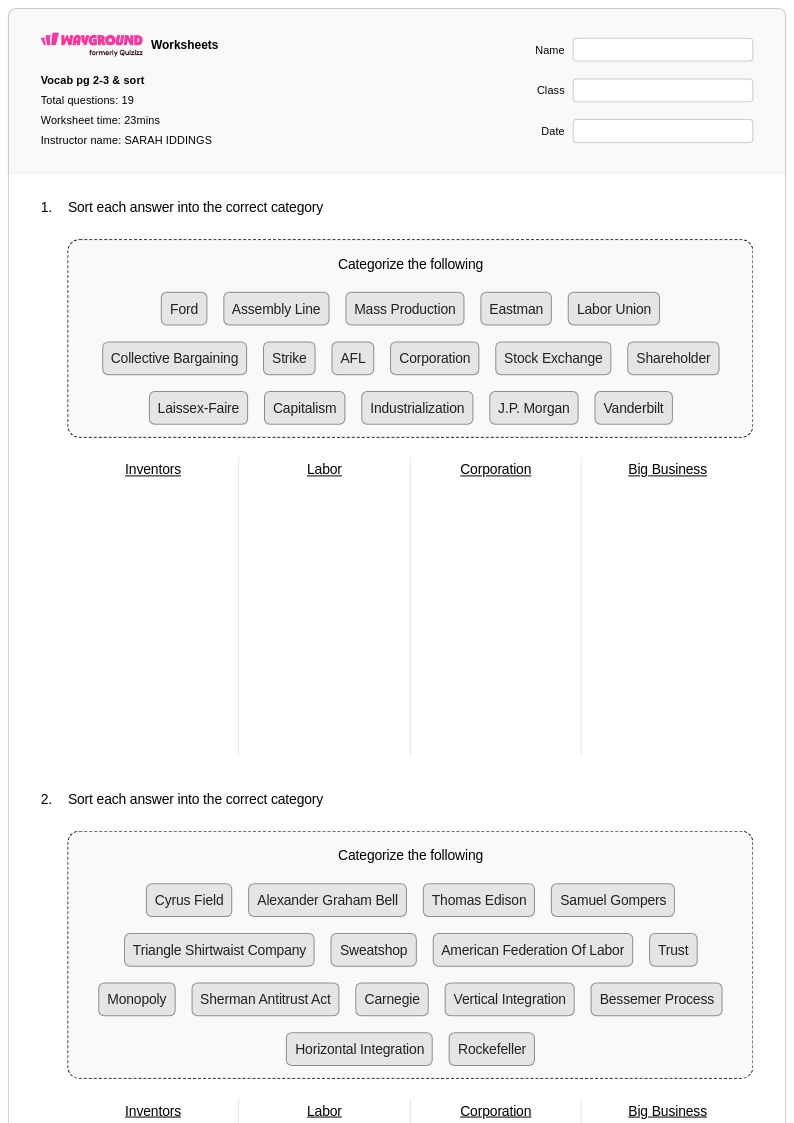
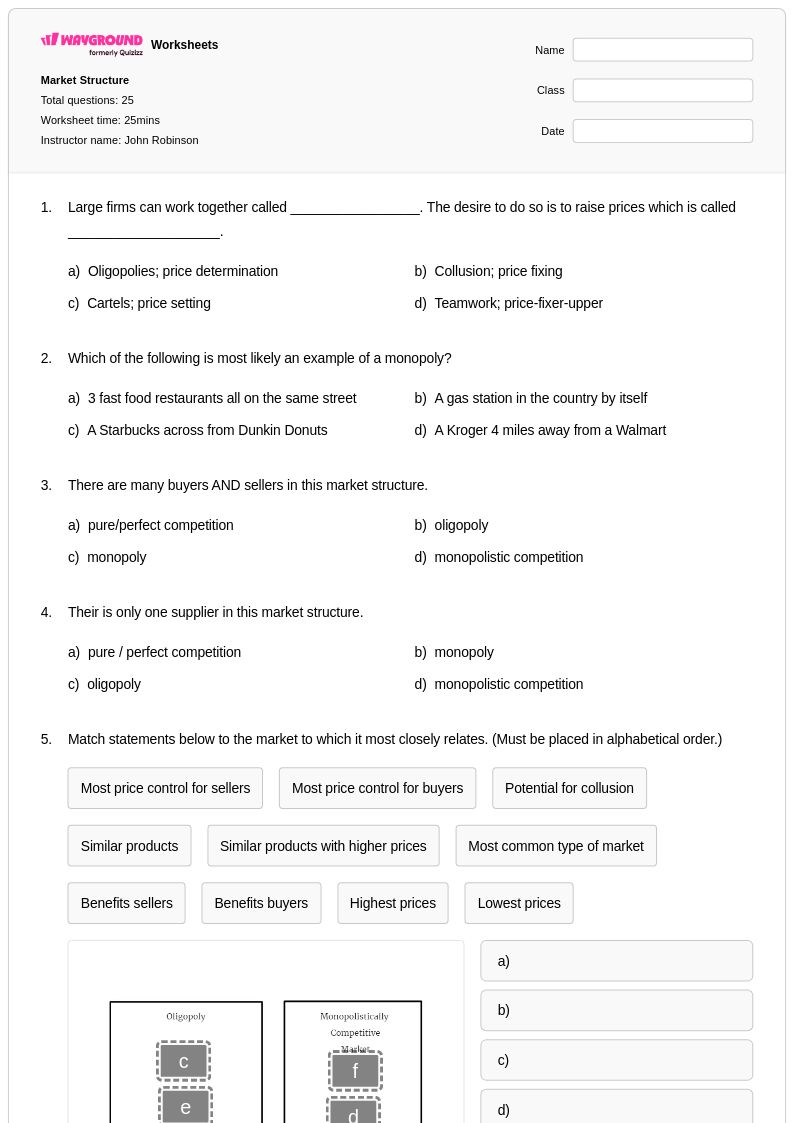
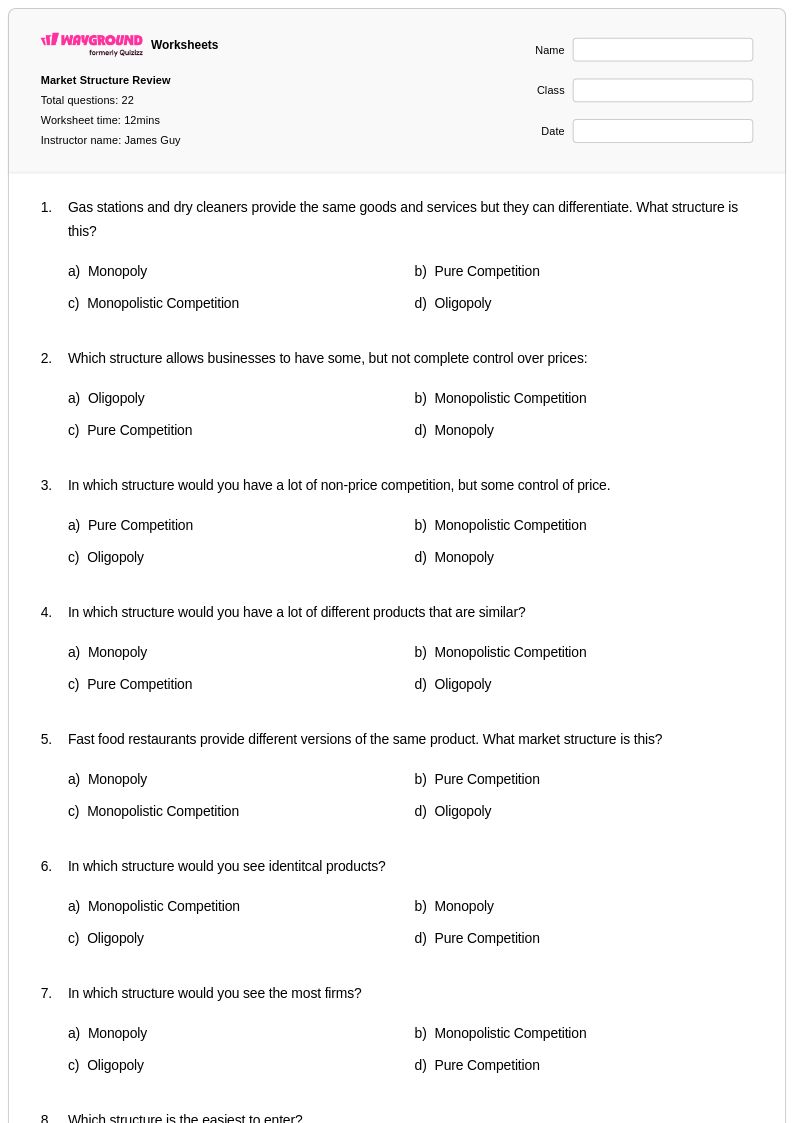
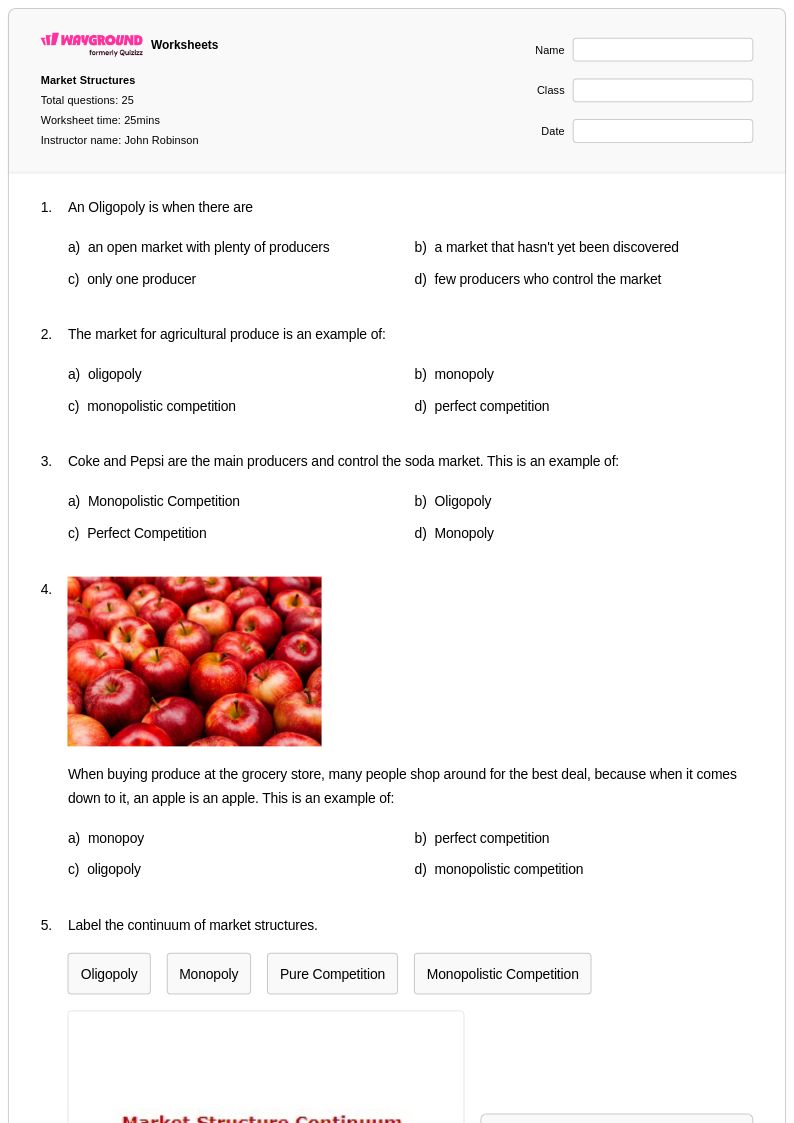
Explore Wayground's free monopoly worksheets and printables that help students understand market structures, competition, and economic principles through engaging practice problems with comprehensive answer keys.
Monopoly worksheets available through Wayground (formerly Quizizz) provide students with comprehensive practice materials to master this fundamental economic concept. These educational resources strengthen critical thinking skills by examining market structures where single companies control entire industries, analyzing the characteristics that define monopolistic behavior, and evaluating the economic impacts on consumers and competitors. Students engage with practice problems that explore real-world monopoly examples, antitrust legislation, and the relationship between market power and pricing strategies. The worksheets include detailed answer keys that support independent learning and feature free printable formats that make classroom implementation seamless for educators seeking to reinforce economic literacy.
Wayground (formerly Quizizz) empowers teachers with access to millions of educator-created monopoly worksheet collections that support diverse instructional needs across all grade levels. The platform's robust search and filtering capabilities enable teachers to quickly locate materials aligned with specific curriculum standards, while built-in differentiation tools allow for customized content that meets individual student learning requirements. These flexible resources are available in both printable pdf formats and interactive digital versions, facilitating seamless integration into traditional classroom settings or remote learning environments. Teachers utilize these comprehensive worksheet libraries for targeted skill practice, remediation support for struggling learners, enrichment opportunities for advanced students, and efficient lesson planning that addresses the complexities of monopolistic market structures and their broader economic implications.
FAQs
How do I teach monopoly as a market structure to high school economics students?
Teaching monopoly works best when students can contrast it directly with competitive markets. Start by having students identify the core characteristics of a monopoly: a single seller, no close substitutes, and significant barriers to entry. From there, introduce real-world examples like utility companies or historical cases like Standard Oil to ground the concept before moving into pricing power and consumer impact.
What exercises help students practice identifying monopolistic behavior and market power?
Practice problems that ask students to analyze market scenarios and classify them as monopolistic or competitive are highly effective. Exercises that connect antitrust legislation to specific historical cases, or that ask students to evaluate pricing strategies under monopoly conditions, reinforce both conceptual understanding and application. Worksheets that include real-world monopoly examples push students beyond memorization into genuine economic reasoning.
What misconceptions do students commonly have about monopolies?
A frequent misconception is that any large or dominant company is a monopoly. Students often conflate market dominance with monopoly, not recognizing that a true monopoly requires the complete absence of close substitutes and significant barriers that prevent competitors from entering. Another common error is assuming monopolies always result from illegal behavior, when regulated monopolies such as public utilities are lawful and sometimes intentional policy outcomes.
How do I connect monopoly concepts to antitrust law in my economics class?
Antitrust legislation such as the Sherman Act and Clayton Act provides a concrete legislative framework for discussing why monopolies are regulated. Have students analyze landmark cases like the breakup of AT&T or the Microsoft antitrust suit to examine how governments intervene when monopolistic behavior harms consumers or stifles competition. This approach ties economic theory directly to civic and policy outcomes, strengthening students' broader economic literacy.
How can I use Wayground's monopoly worksheets in my classroom?
Wayground's monopoly worksheets are available as printable PDFs for traditional classroom use and in digital formats for technology-integrated or remote learning environments, accommodating a range of teaching preferences and student needs. Teachers can also host worksheets as a quiz directly on Wayground, enabling interactive assessment. Each worksheet includes a comprehensive answer key, supporting both teacher-led instruction and independent student practice.
How do I differentiate monopoly instruction for students at different levels?
For struggling learners, focus on concrete examples and vocabulary-building before introducing abstract concepts like pricing power or barriers to entry. Advanced students can be challenged with analysis of market data, evaluation of antitrust policy effectiveness, or comparison of monopoly and oligopoly structures. On Wayground, teachers can apply individual accommodations such as reduced answer choices or read-aloud support to meet specific student needs without disrupting the rest of the class.