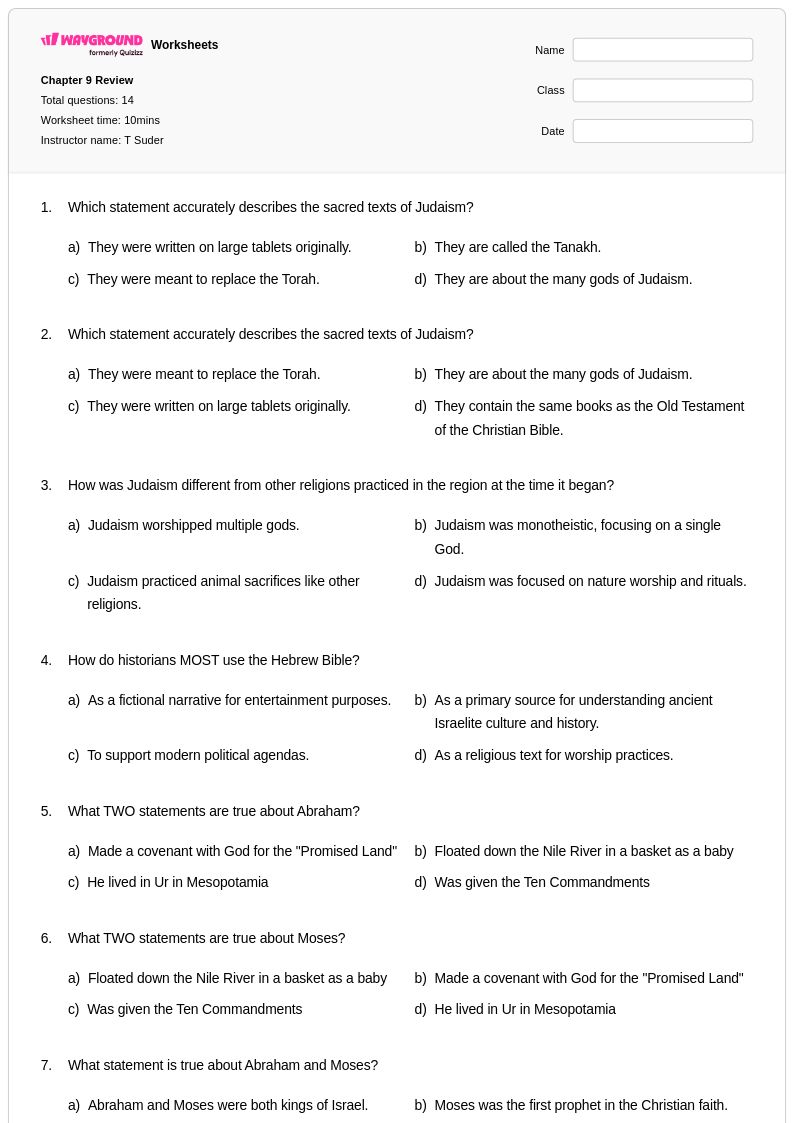
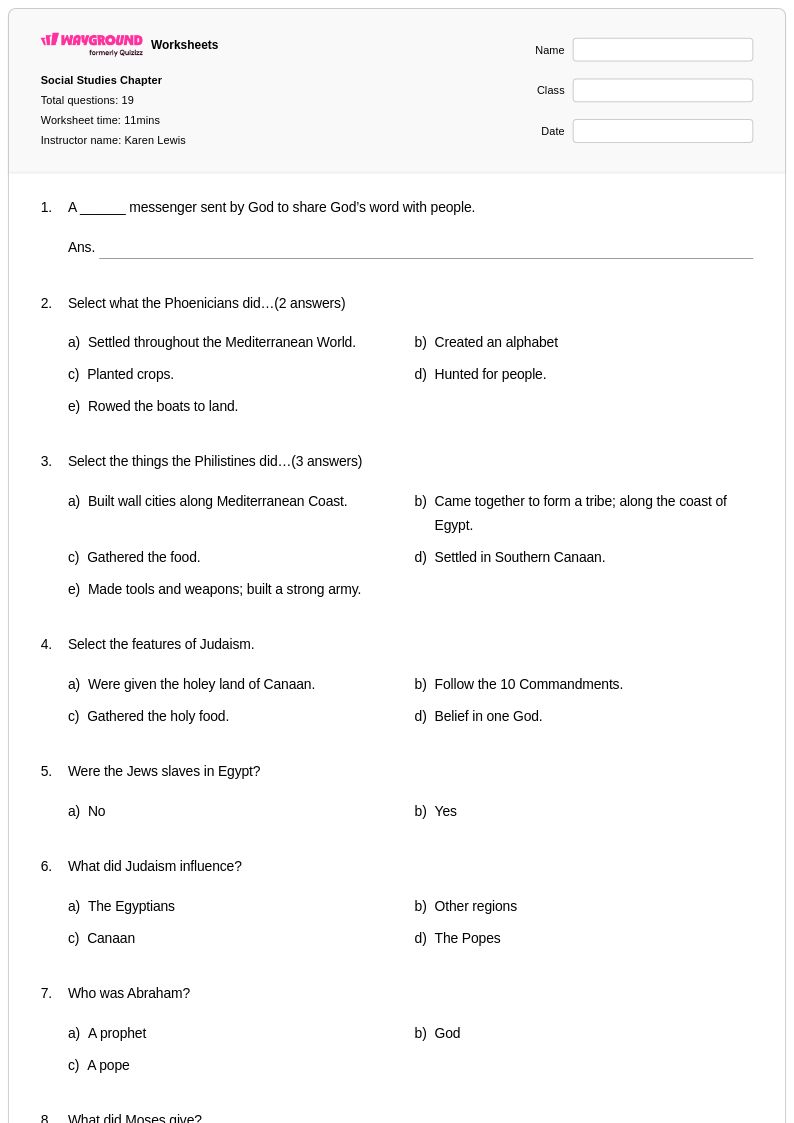
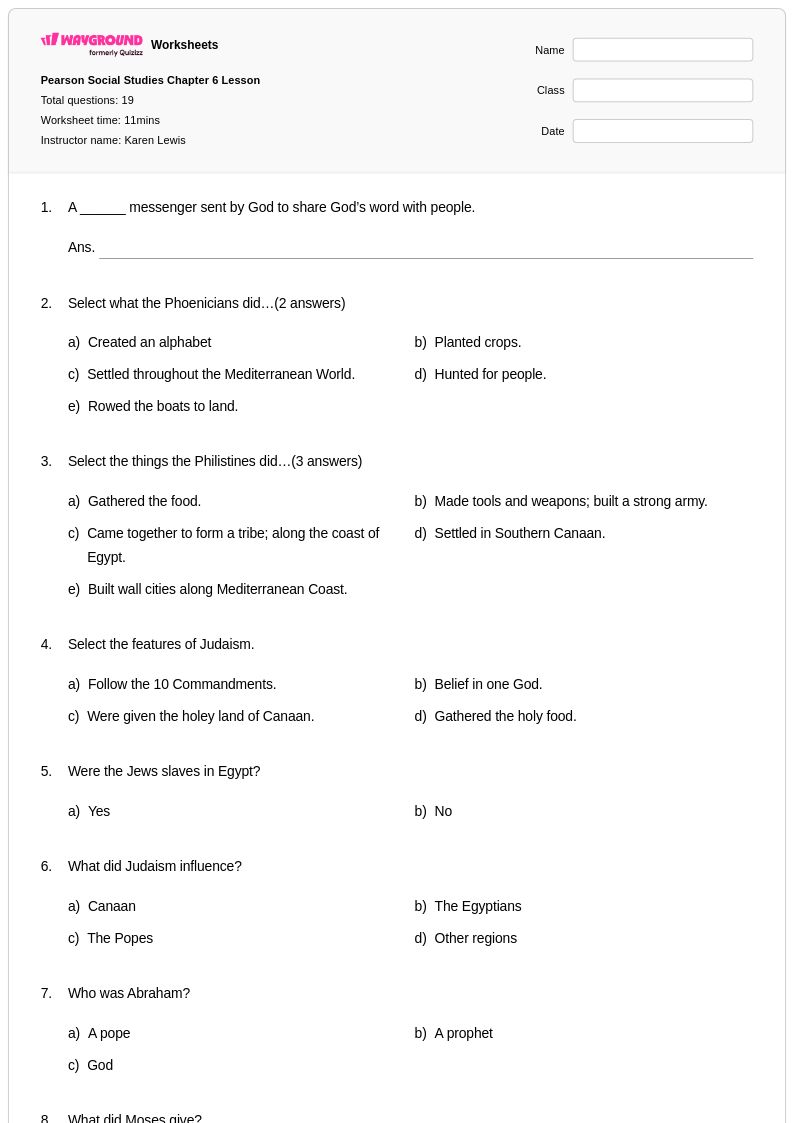
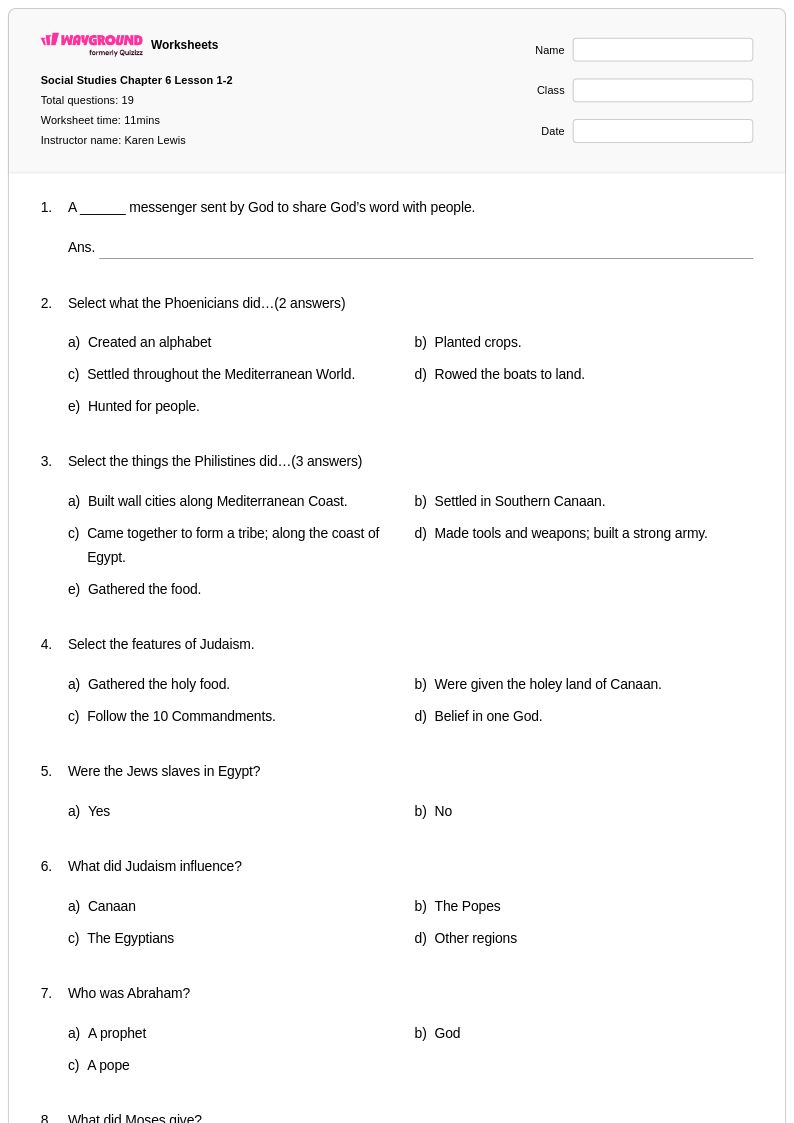
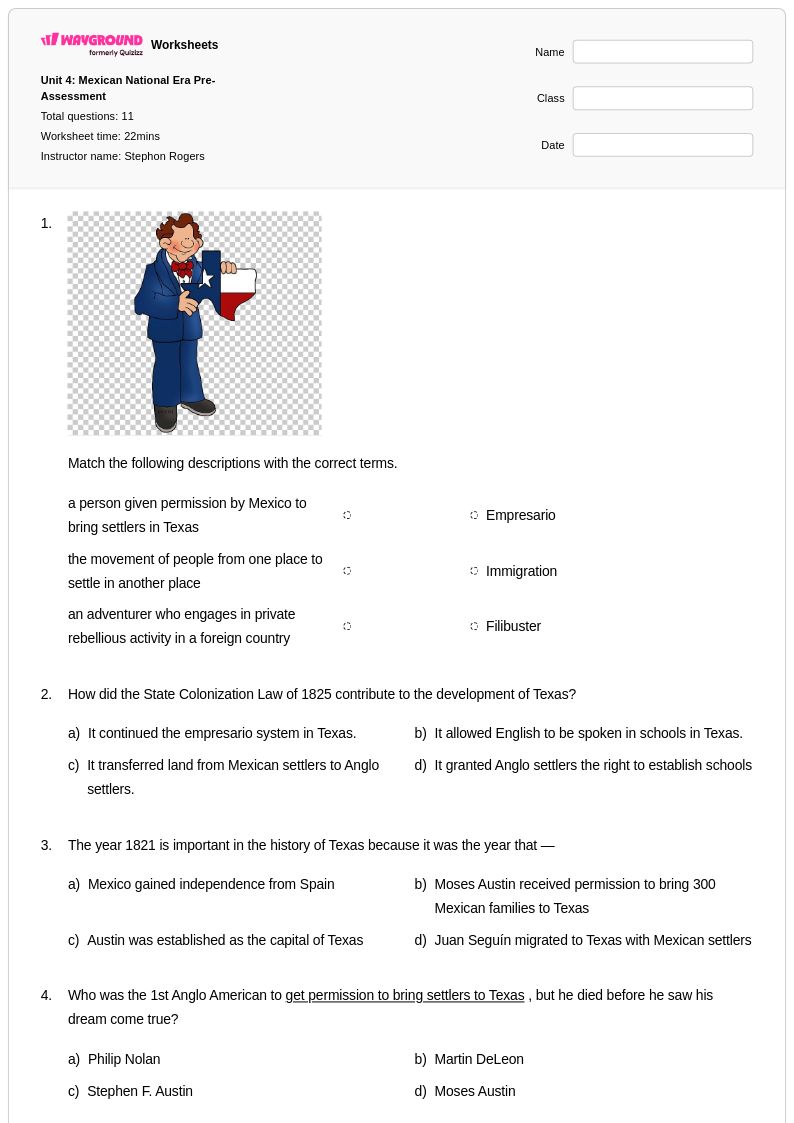
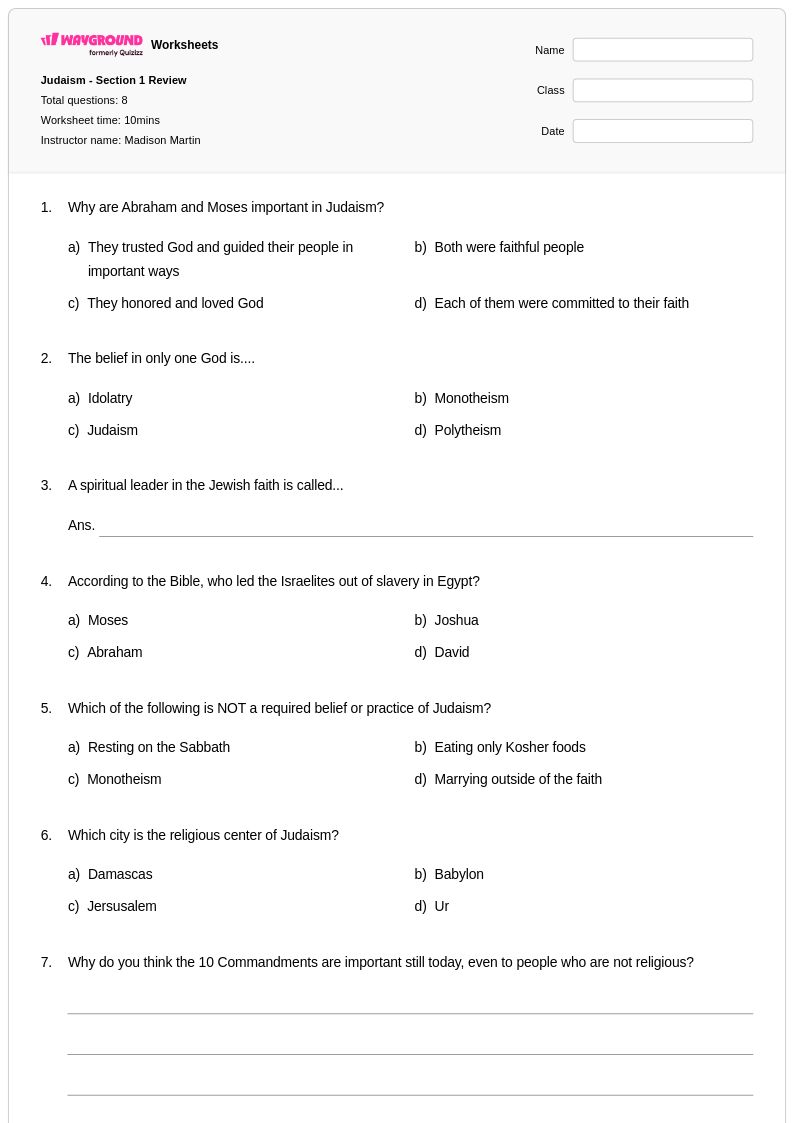
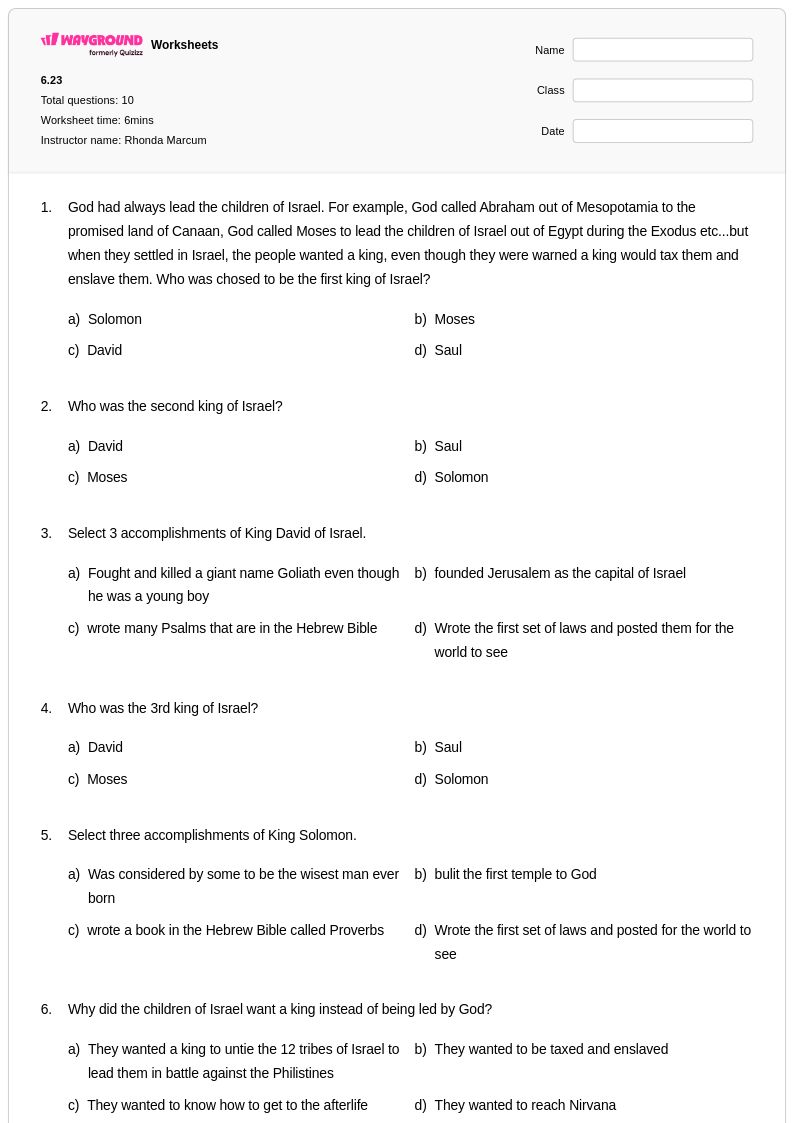
Explore Year 6 Moses worksheets and printables that help students learn about this pivotal biblical leader's role in ancient history through engaging practice problems, free PDF resources, and comprehensive answer keys.
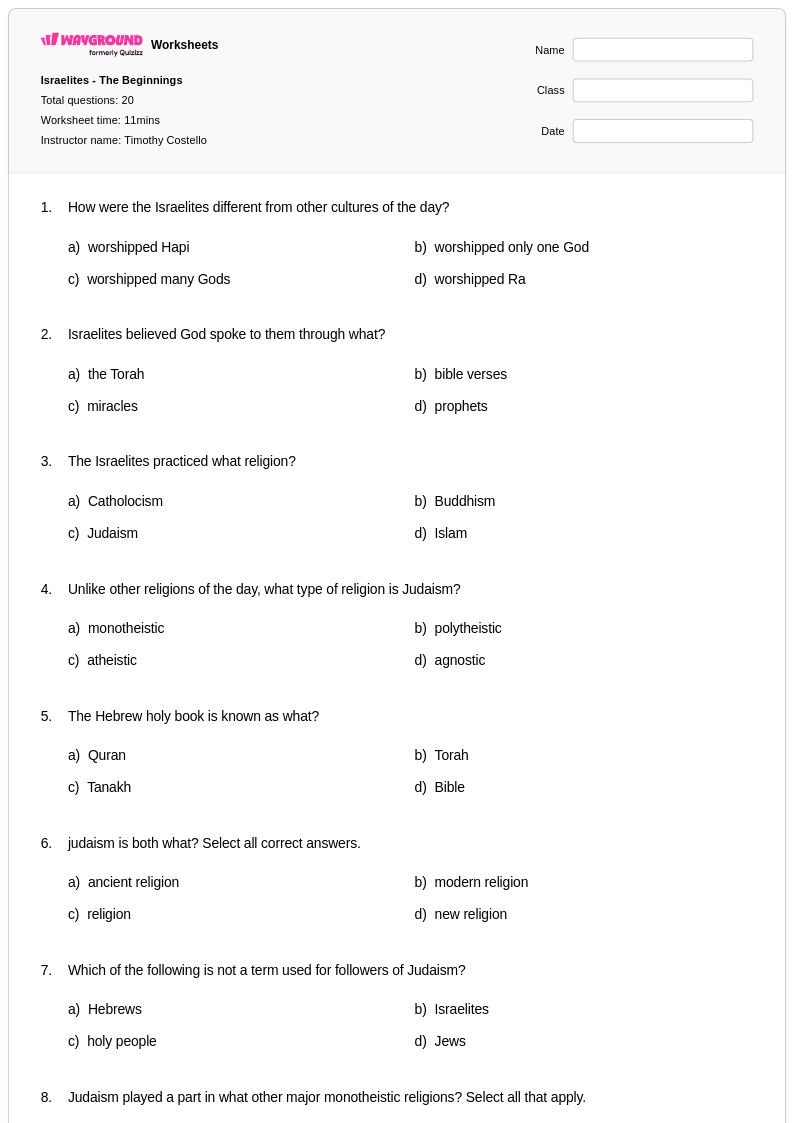
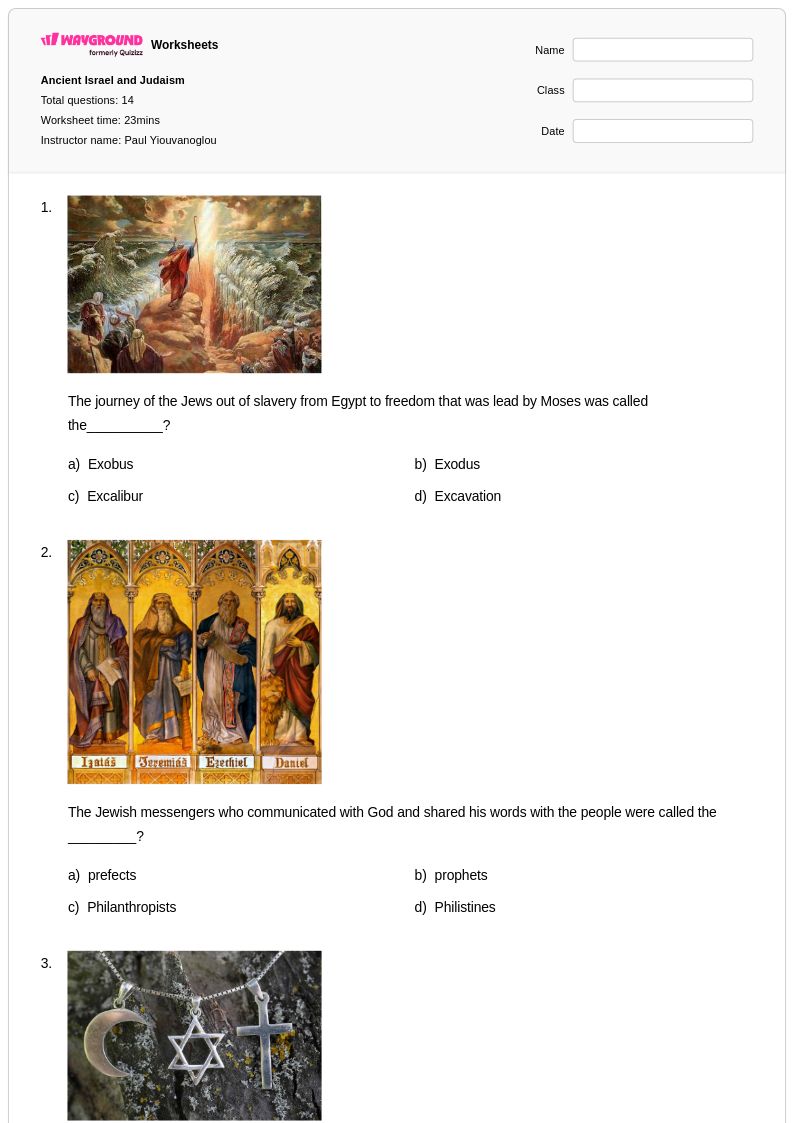
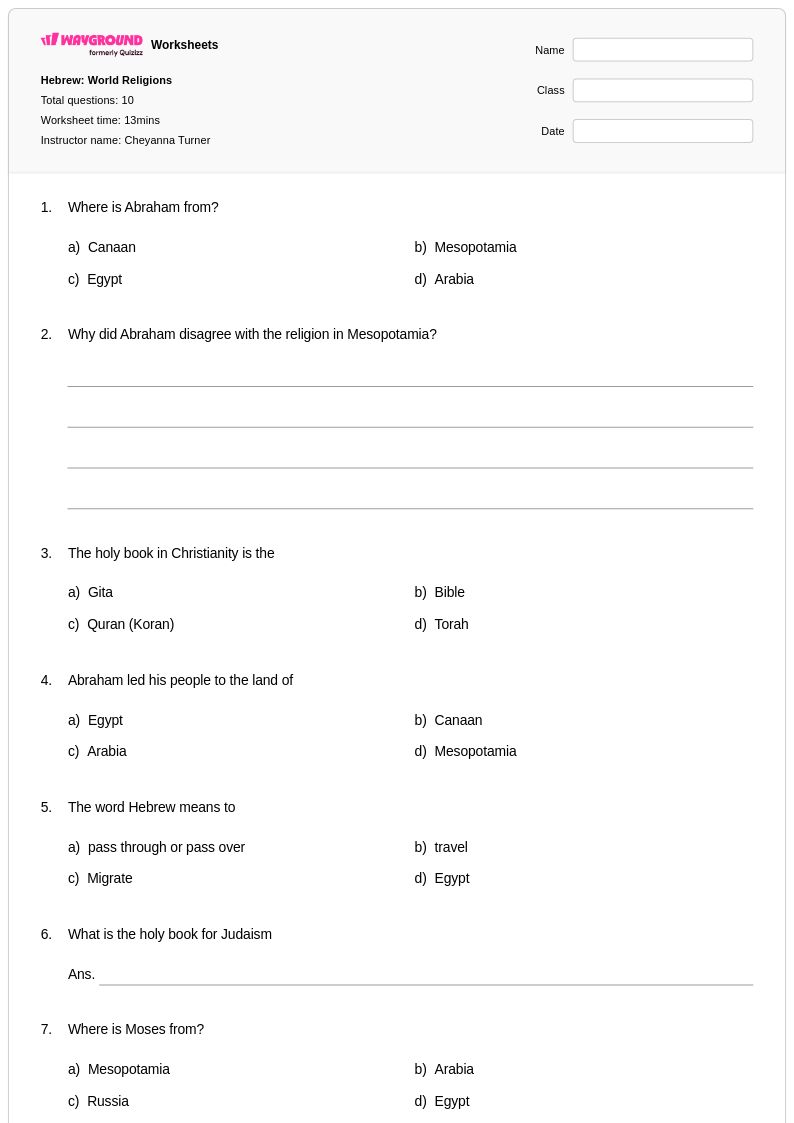
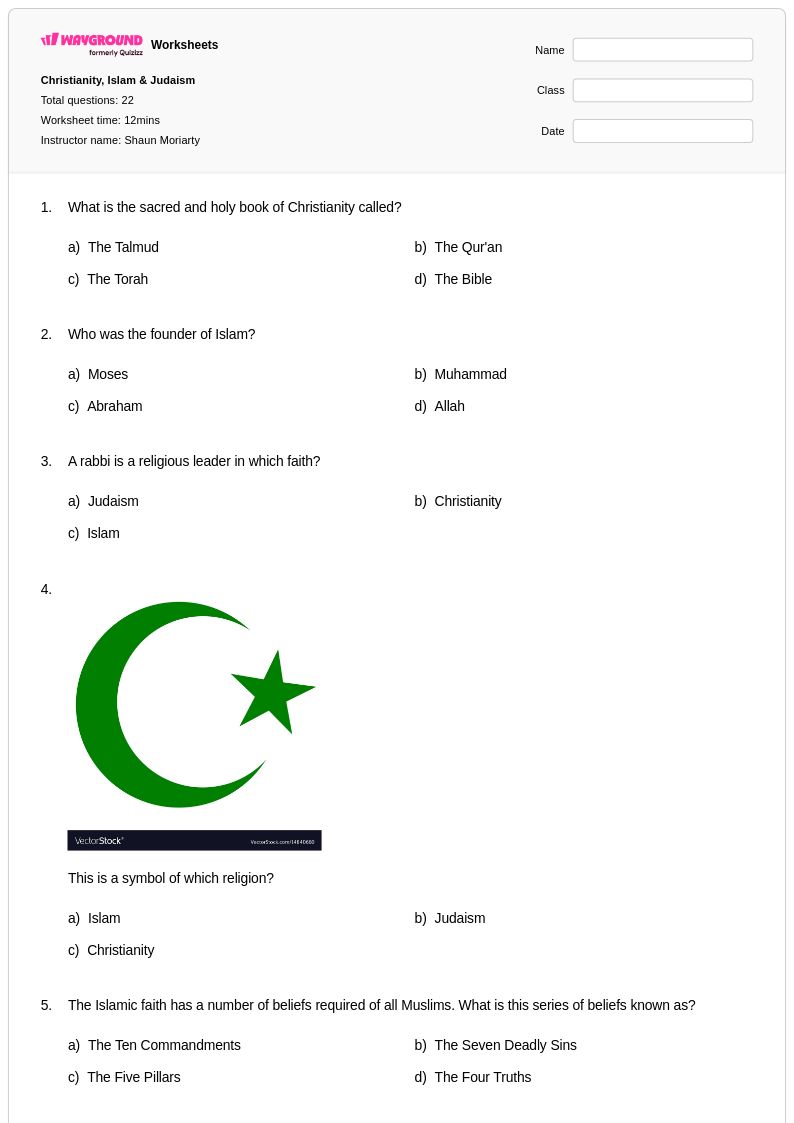
Moses worksheets available through Wayground (formerly Quizizz) provide Year 6 students with comprehensive resources to explore one of history's most influential religious and political leaders. These educational materials guide students through Moses' journey from his birth in ancient Egypt through his role in leading the Israelites out of bondage, receiving the Ten Commandments, and establishing foundational laws that would shape civilizations for millennia. The worksheets strengthen critical thinking skills as students analyze primary source excerpts, examine archaeological evidence, and compare Moses' leadership methods with other ancient rulers. Each worksheet comes with a detailed answer key, and teachers can access free printables in pdf format that include practice problems covering chronology, cause-and-effect relationships, and the historical significance of Moses' contributions to law, religion, and governance in the ancient world.
Wayground (formerly Quizizz) supports educators with an extensive collection of teacher-created Moses worksheets drawn from millions of resources that have been carefully curated and organized for easy discovery. The platform's robust search and filtering capabilities allow teachers to quickly locate materials that align with specific learning standards and accommodate diverse classroom needs through built-in differentiation tools. Teachers can customize worksheets to match their students' reading levels and learning objectives, then distribute them in both printable and digital formats including downloadable pdf versions for flexible classroom implementation. These features streamline lesson planning while providing targeted resources for remediation, enrichment, and skill practice, enabling educators to effectively teach this pivotal figure in world history while meeting the varied academic needs of their Year 6 students.
FAQs
How do I teach Moses and the Exodus to students in a history or social studies class?
When teaching Moses in a history or social studies context, anchor instruction in the political and religious landscape of ancient Egypt — covering Pharaonic rule, Hebrew enslavement, and the emergence of monotheistic law. Use timeline construction to help students sequence key events from Moses' early life through the Exodus and the giving of the Ten Commandments. Pairing narrative reading with primary source-style analysis helps students understand Moses not just as a religious figure but as a political and legal architect whose influence shaped Western civilization.
What types of exercises help students practice and understand the historical significance of Moses?
Effective practice exercises for this topic include timeline construction, cause-and-effect mapping of the Exodus narrative, and short-answer questions that ask students to connect Moses' role in Hebrew history to broader ancient civilizations. Critical thinking prompts that examine the intersection of faith and governance — such as analyzing the establishment of Mosaic law — push students beyond recall toward deeper historical analysis. These exercise types build both content knowledge and the analytical skills students need for comparative history work.
What misconceptions do students commonly have about Moses and the Exodus?
A common misconception is that Moses was solely a religious figure with little historical or political significance — students often underestimate his role as a lawgiver and leader whose legal codes influenced Western governance. Some students also conflate biblical narrative with verified archaeological history, so it's important to distinguish between religious tradition and historical scholarship when studying the Exodus. Another frequent error is treating the story of Moses in isolation rather than situating it within the broader context of ancient Near Eastern civilizations and Egyptian political history.
How can I use Moses worksheets to support students with different learning needs?
Moses worksheets on Wayground are available as both printable PDFs and in digital formats, making them adaptable for a range of classroom environments and student needs. In digital format, teachers can apply Wayground's built-in accommodation tools — including Read Aloud for students who benefit from audio support, reduced answer choices to lower cognitive load, and extended time settings configurable per student. These accommodations can be assigned individually while the rest of the class continues with default settings, allowing for seamless differentiation without singling students out.
How do Moses worksheets connect to broader social studies and ancient history curriculum standards?
Moses worksheets naturally align with ancient civilizations units that cover Egypt, the ancient Near East, and the development of early legal and religious systems. Because Moses' story spans political leadership, religious foundation, and cross-cultural interaction, these materials support standards related to historical causation, primary source analysis, and the role of religion in shaping society. Teachers can use them within world history, Western civilization, or comparative religion units at the middle and high school levels.