
20 Q
KG
9 Q
KG
18 Q
KG
12 Q
KG
6 Q
KG
10 Q
KG
9 Q
KG
9 Q
KG
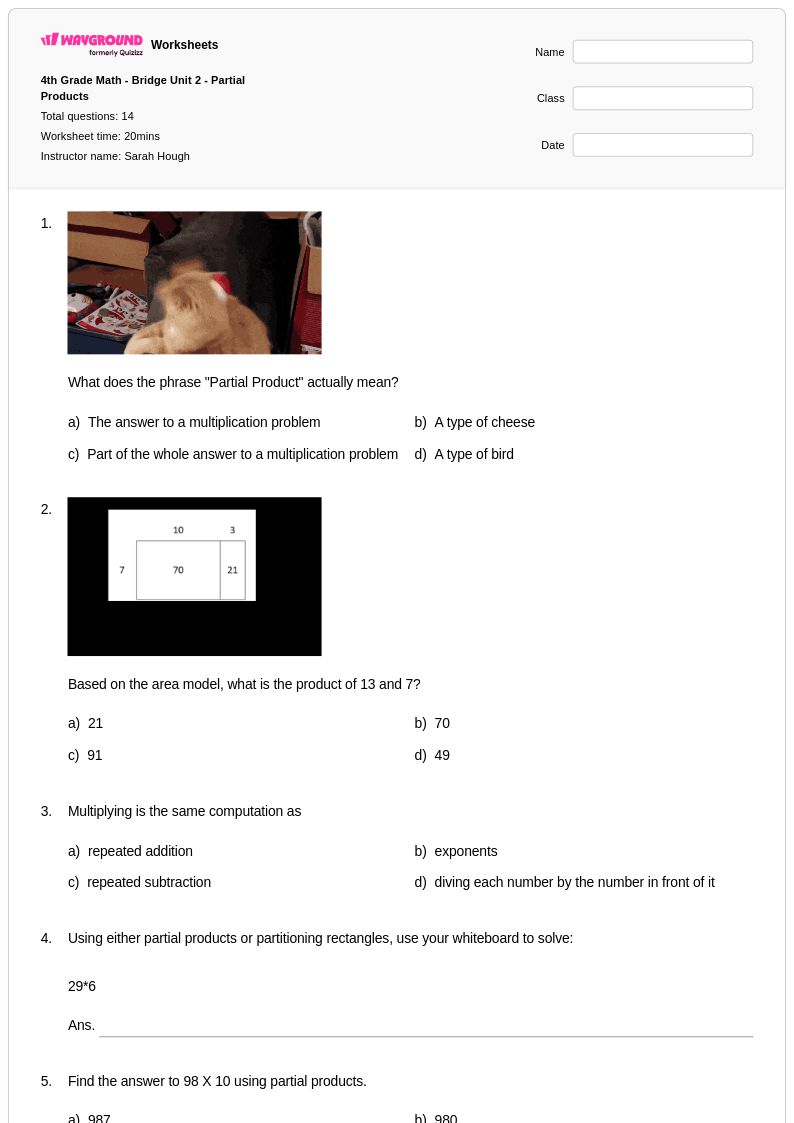
14 Q
4th
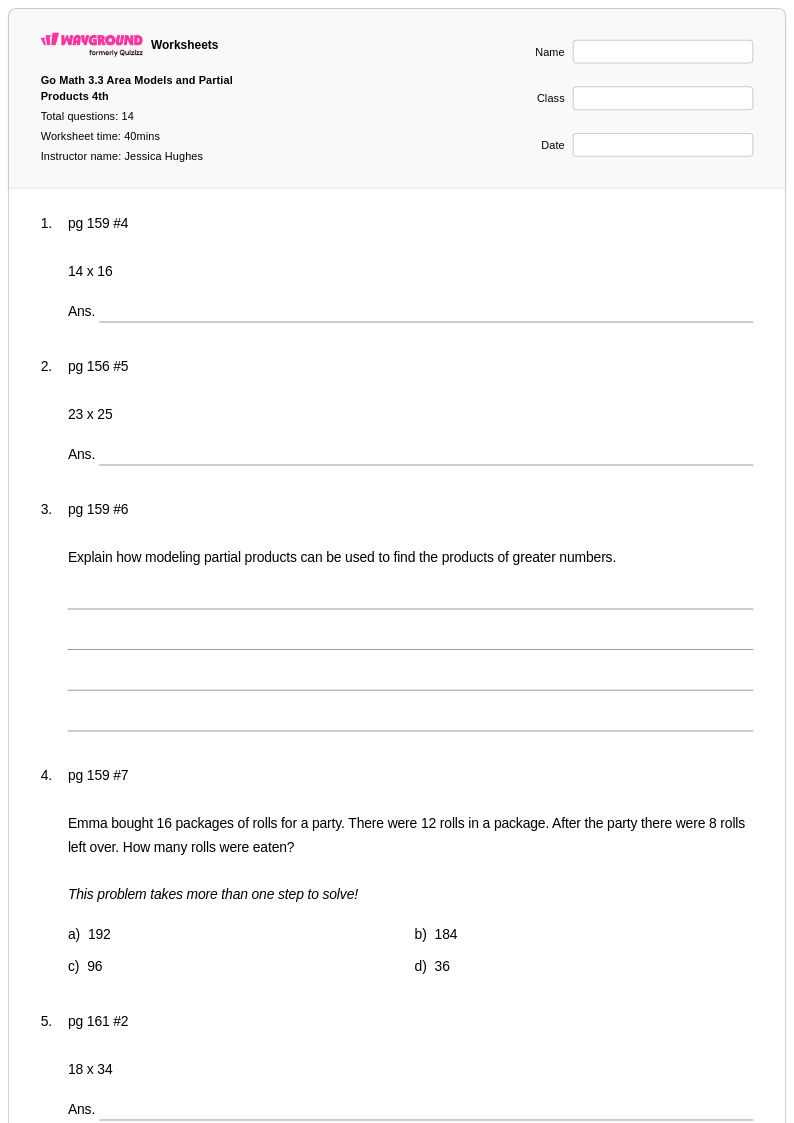
14 Q
4th
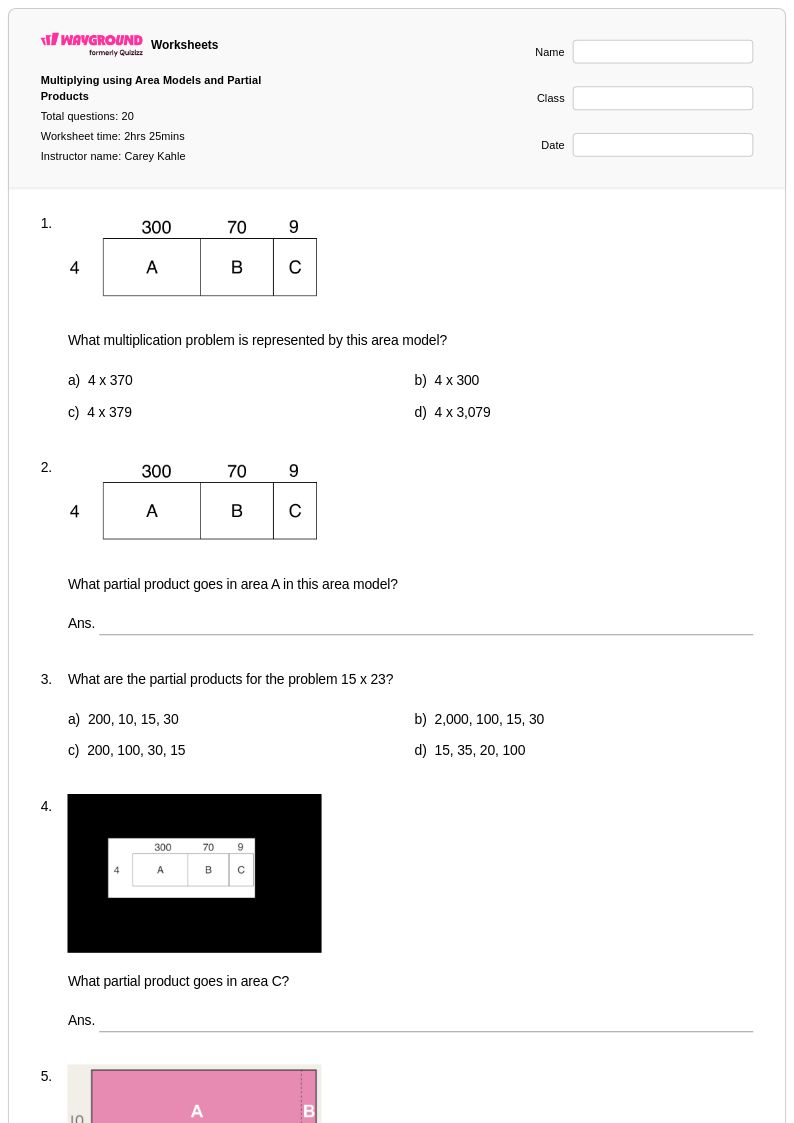
20 Q
4th
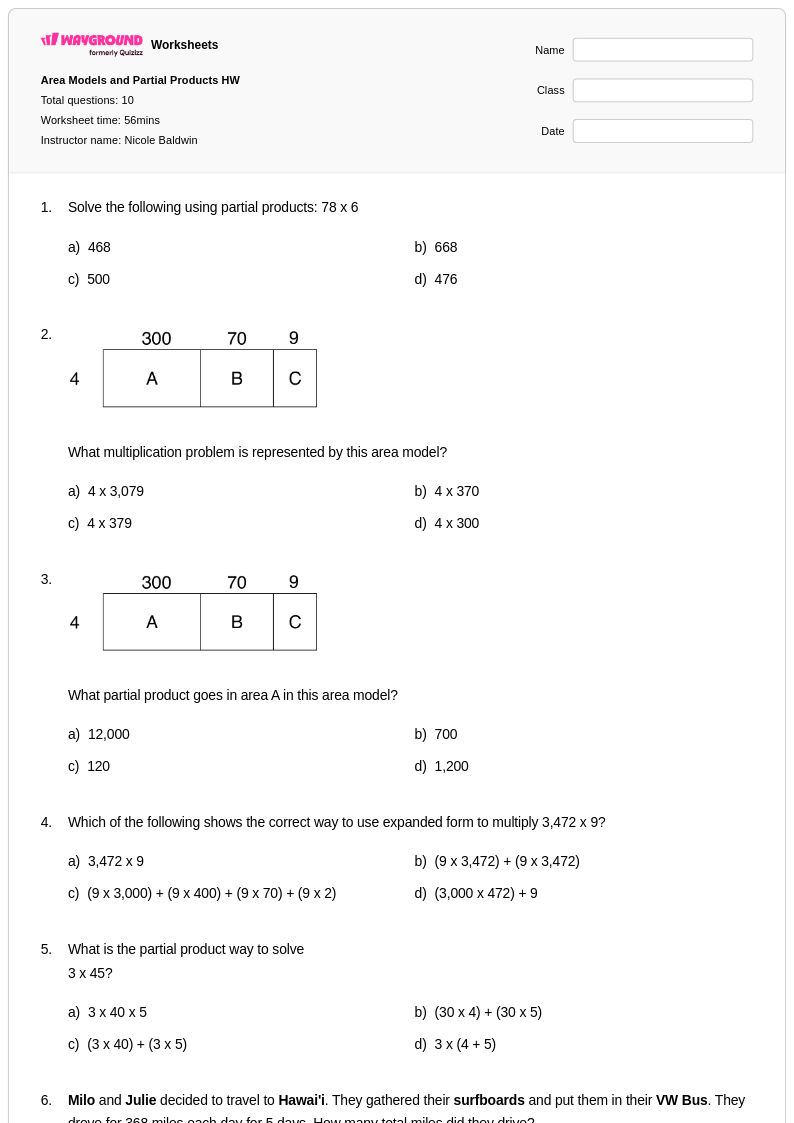
10 Q
4th
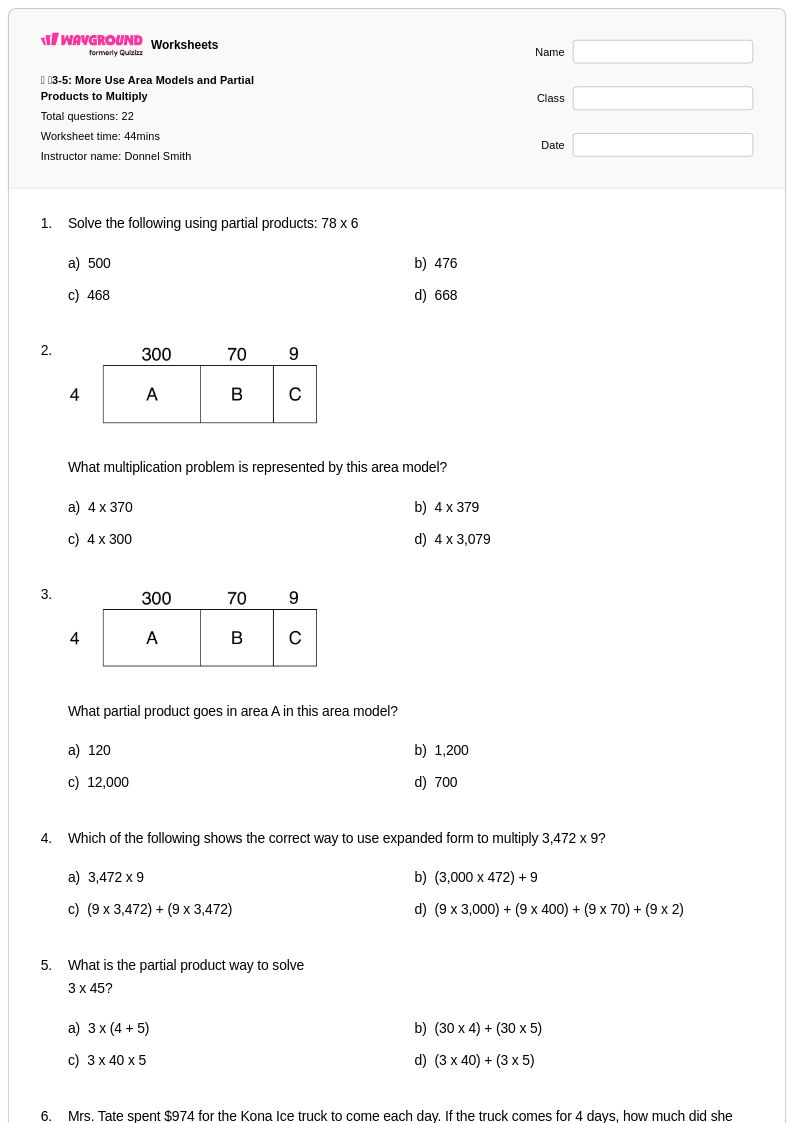
22 Q
4th
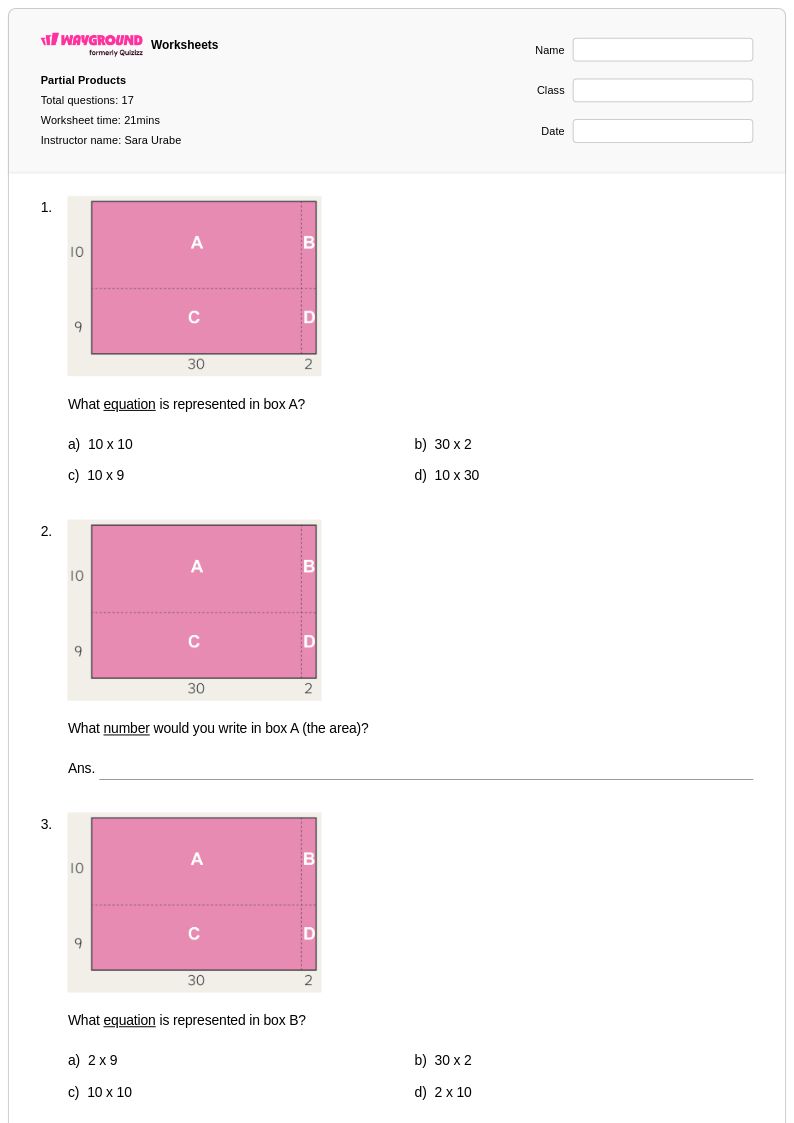
17 Q
4th
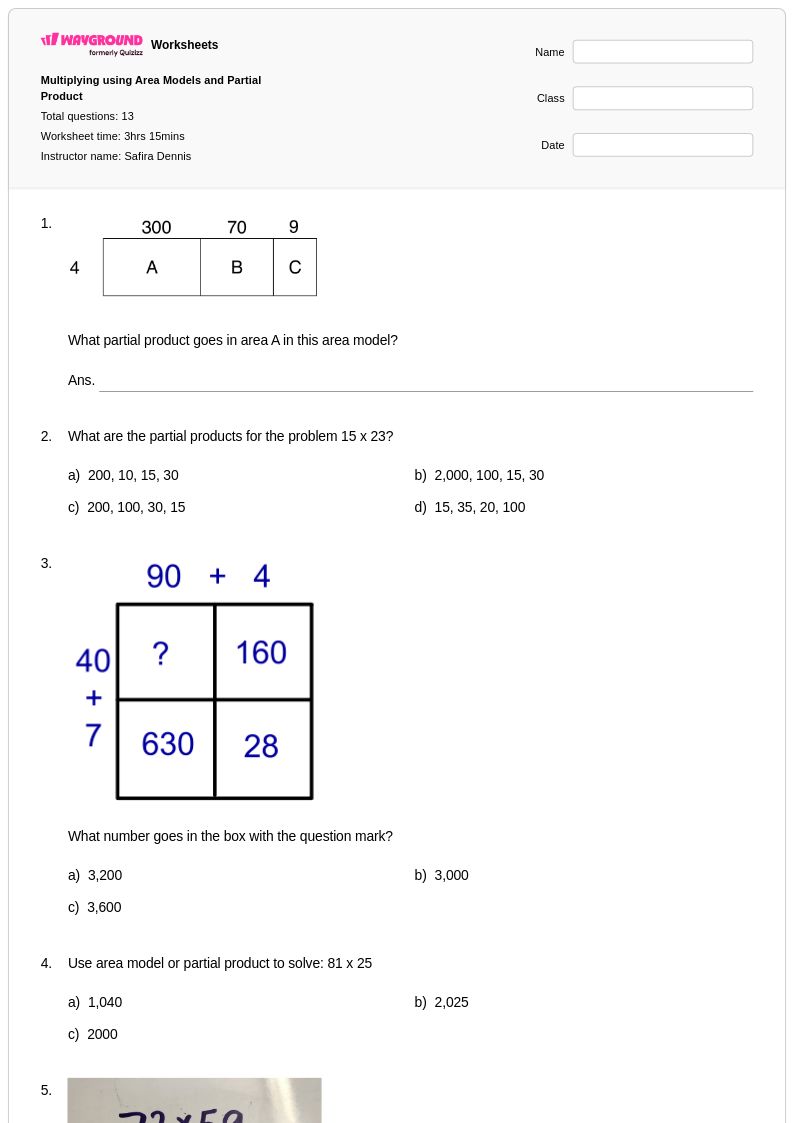
13 Q
4th
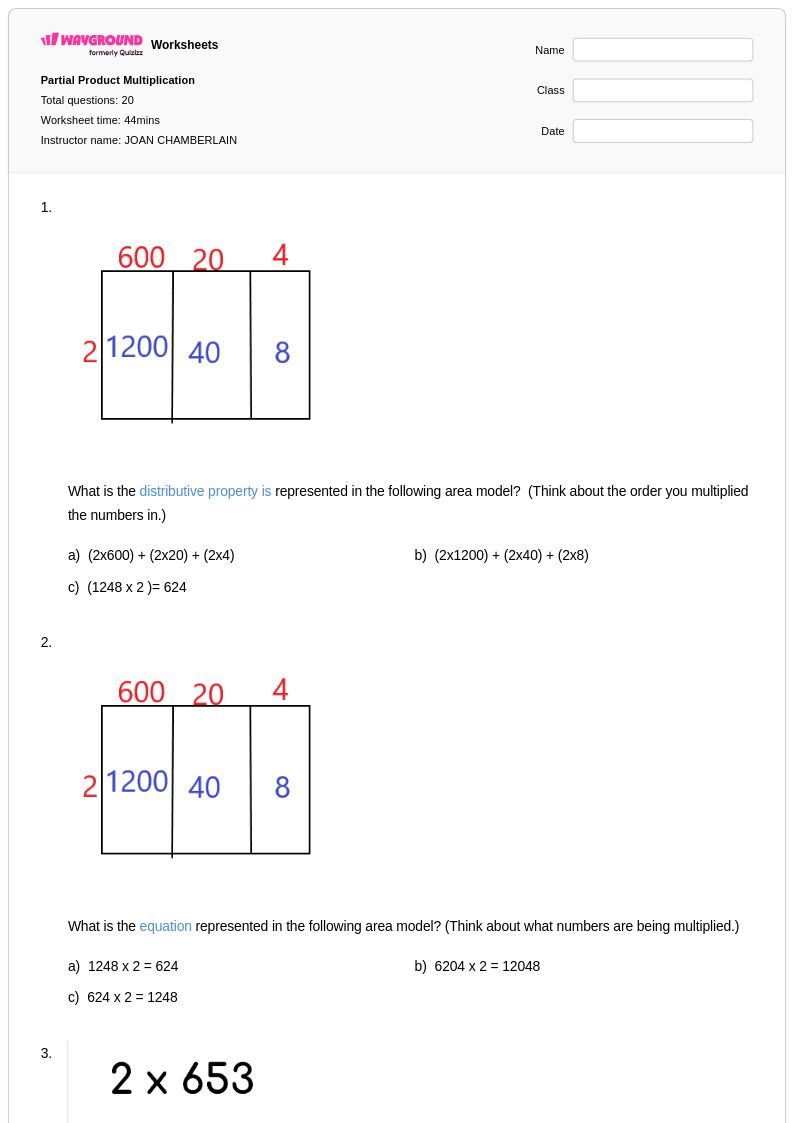
20 Q
4th
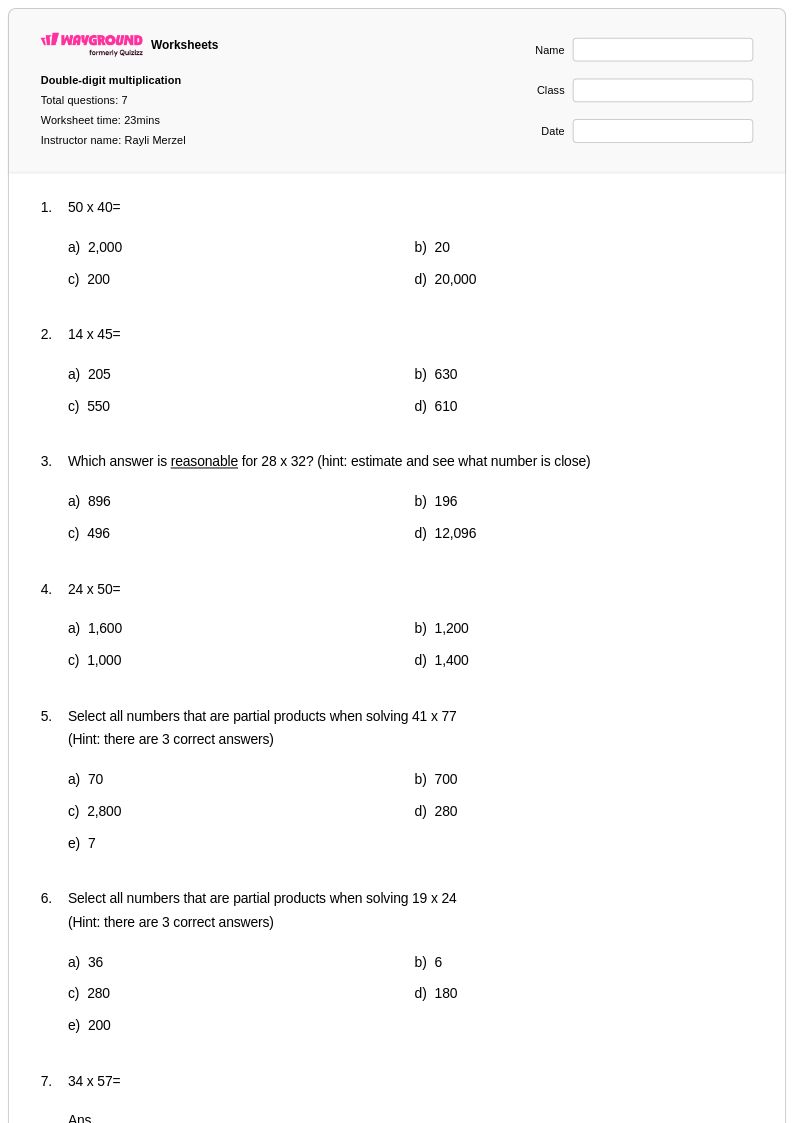
7 Q
4th - 5th
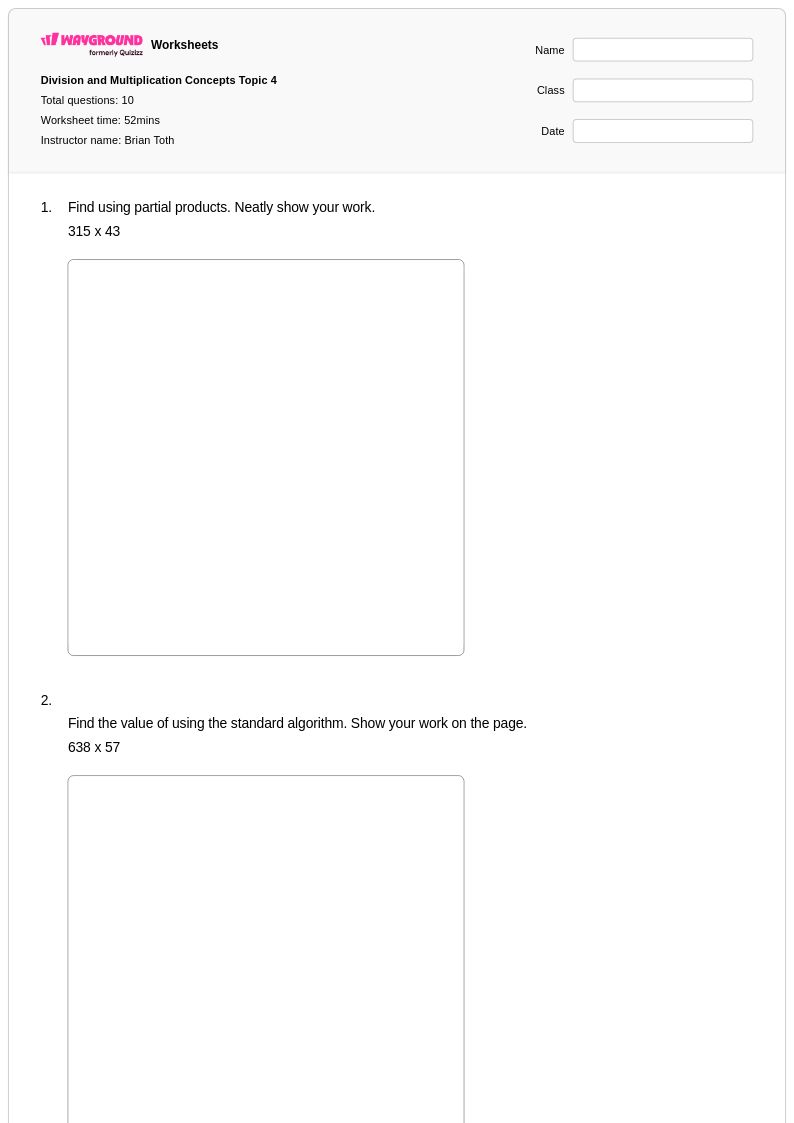
13 Q
5th
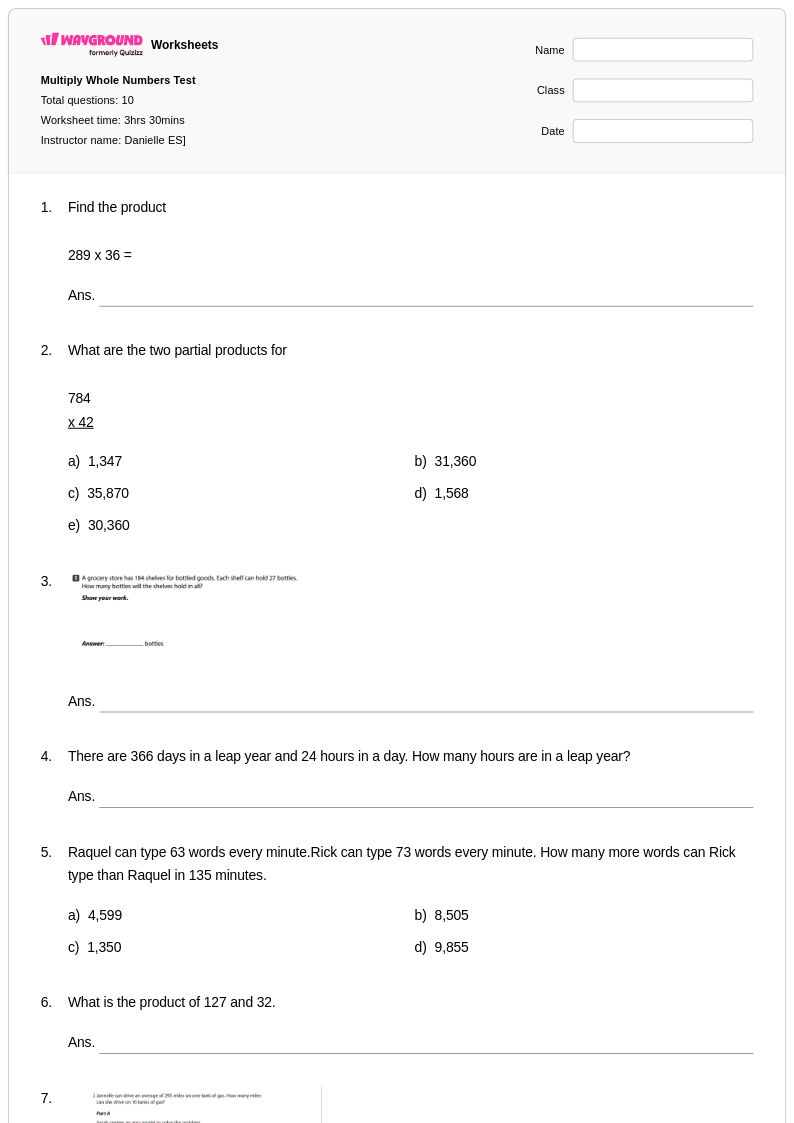
10 Q
5th
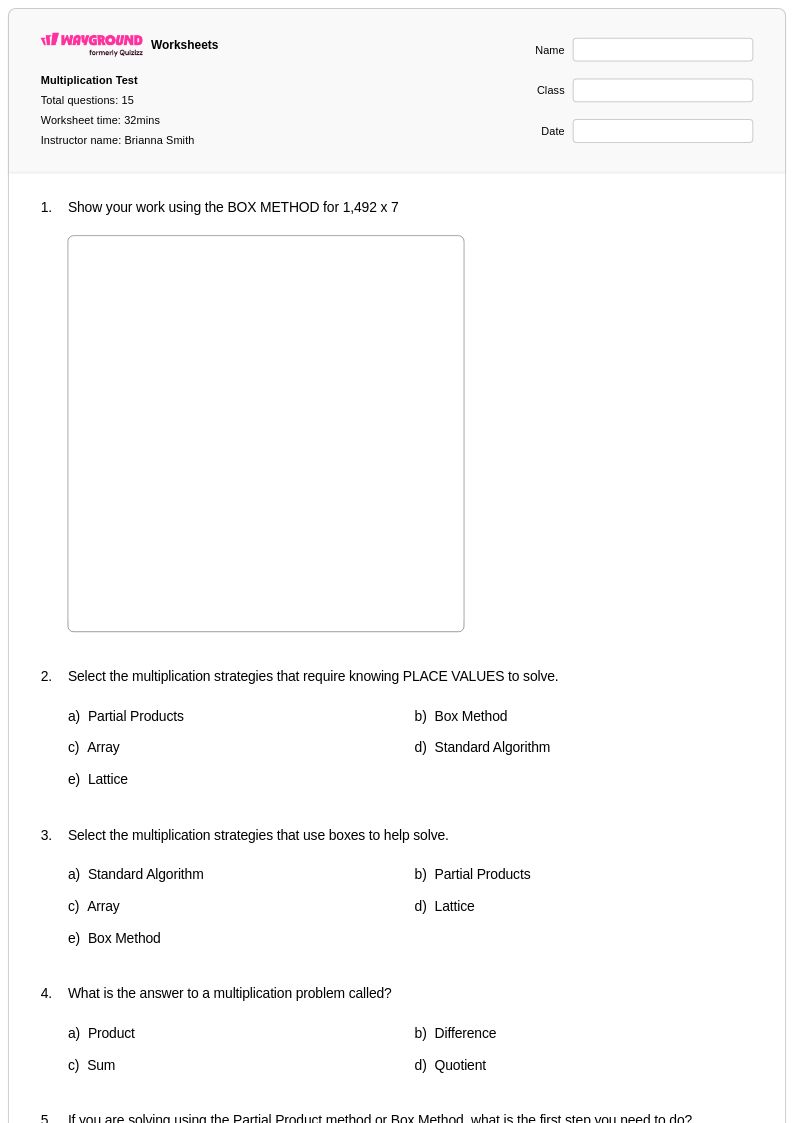
15 Q
3rd - 8th
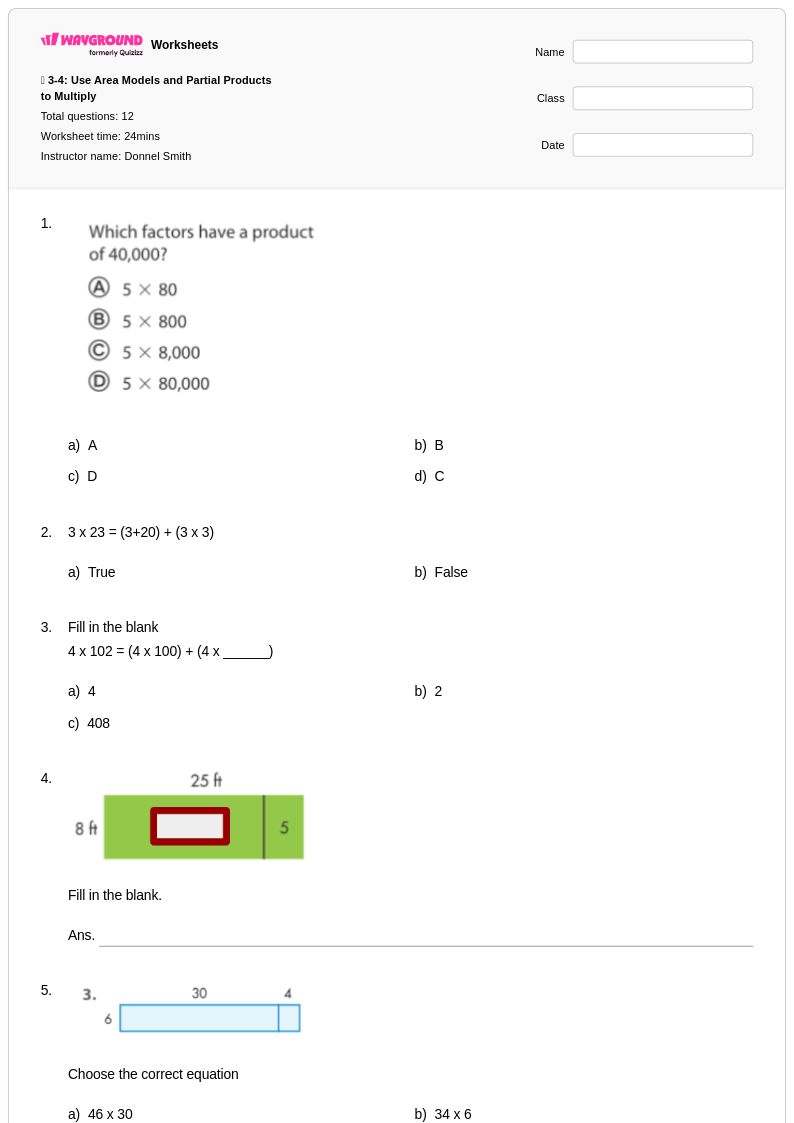
12 Q
4th
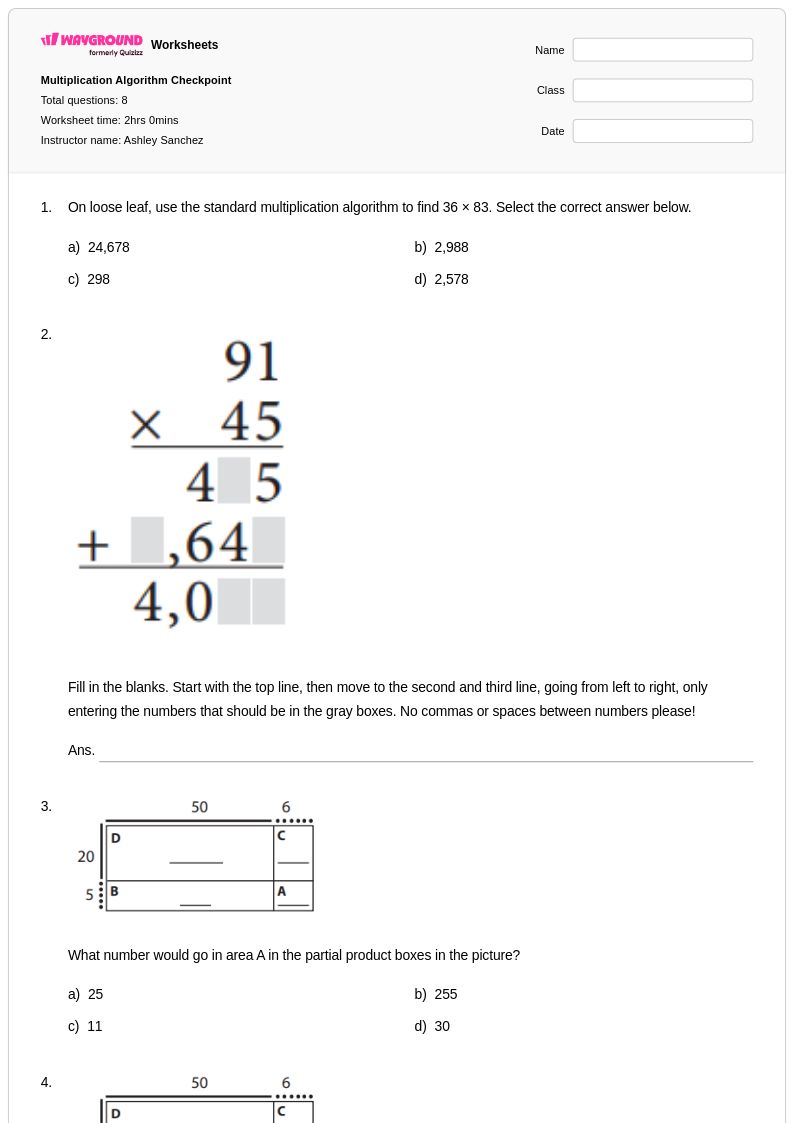
8 Q
5th
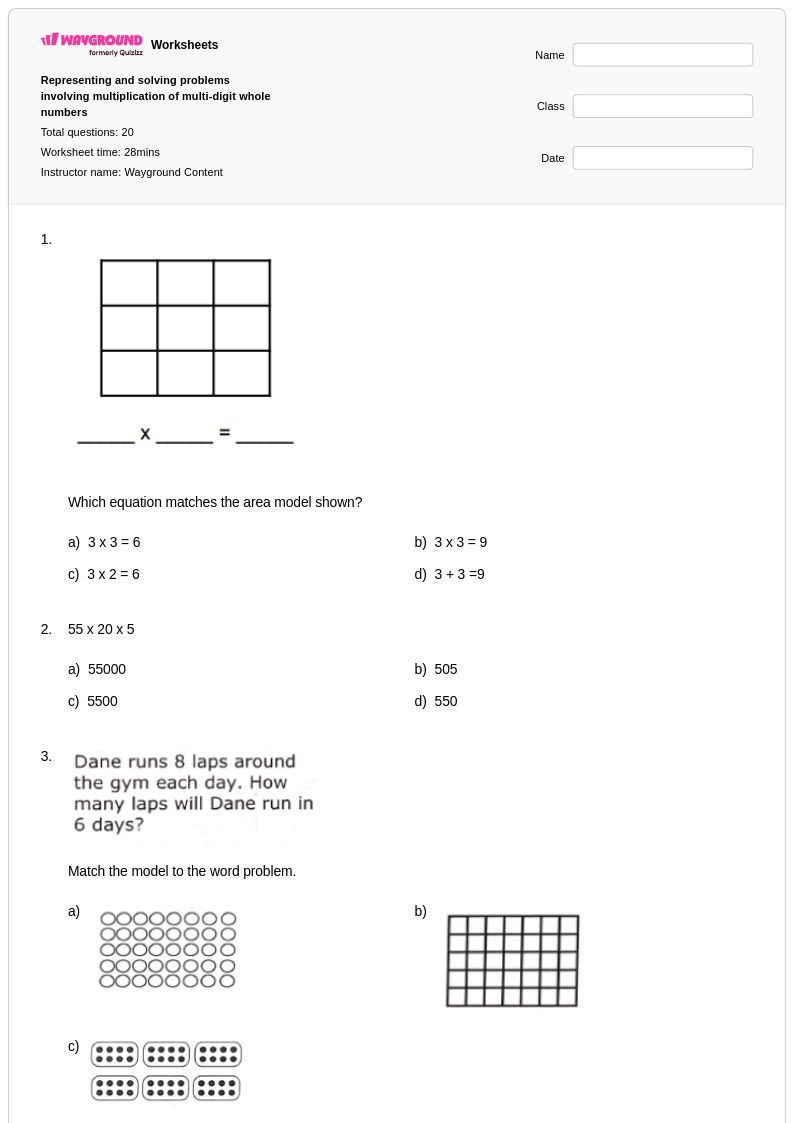
20 Q
4th
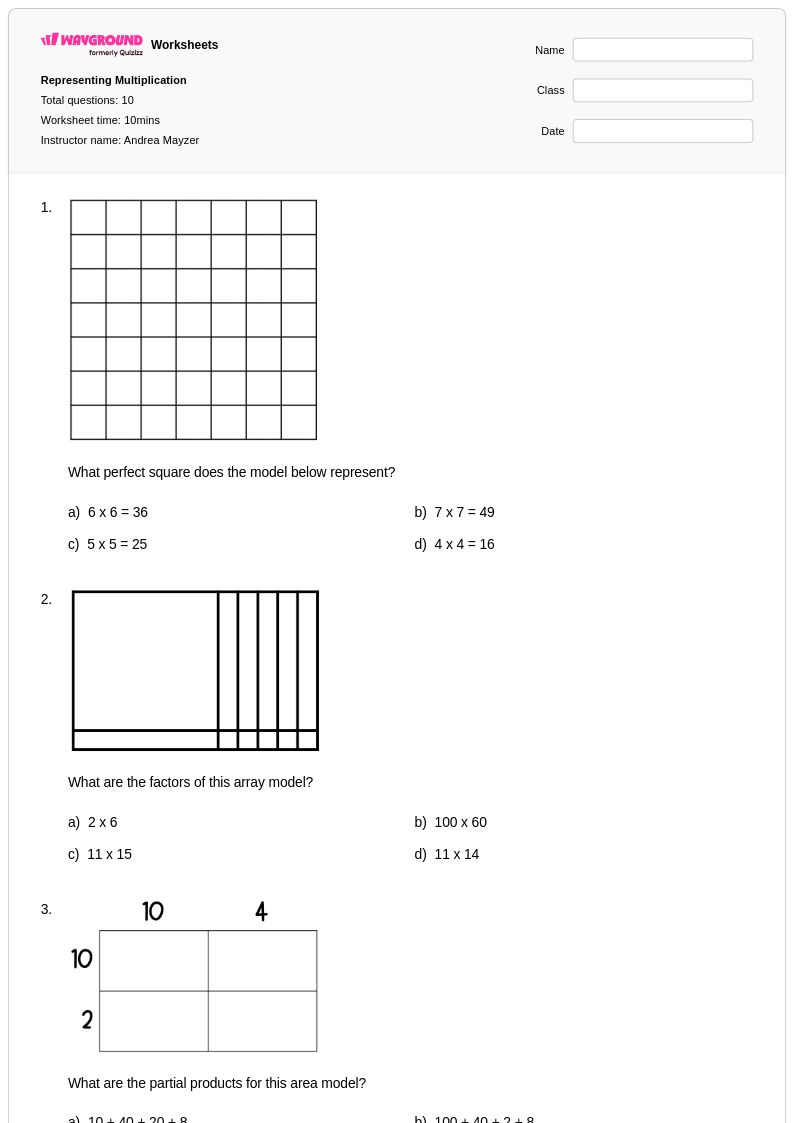
10 Q
4th
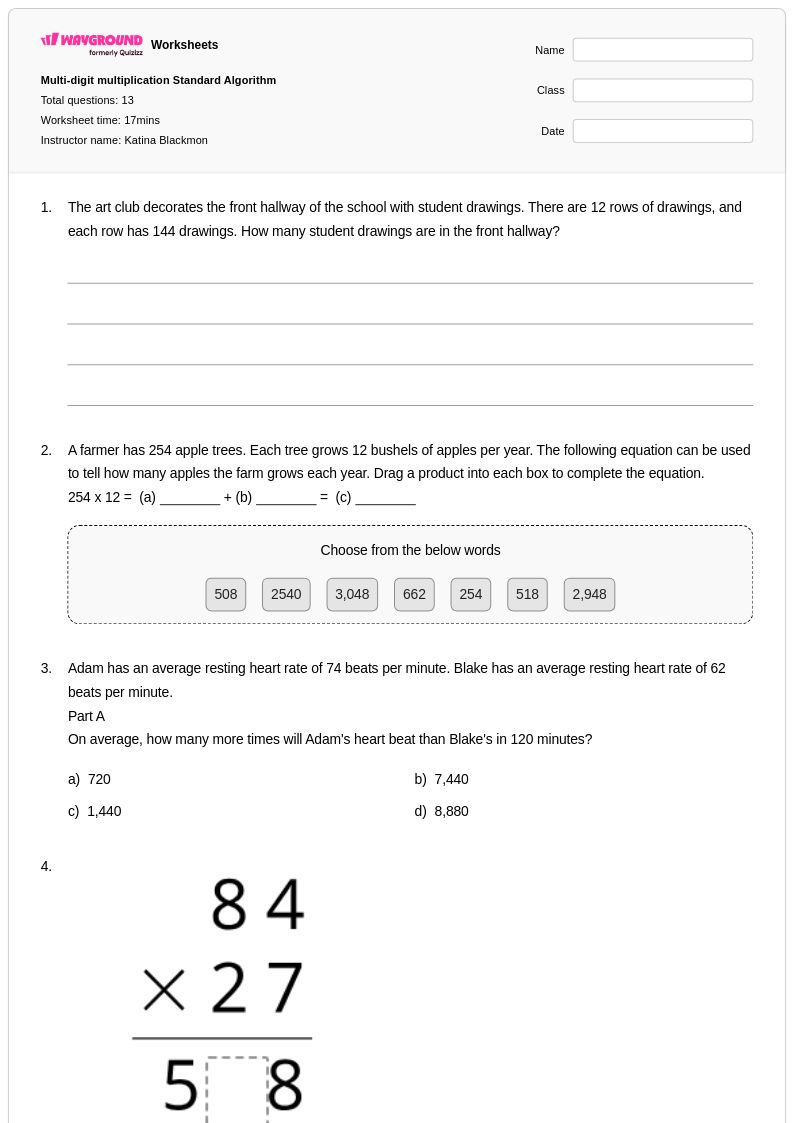
13 Q
1st - 5th
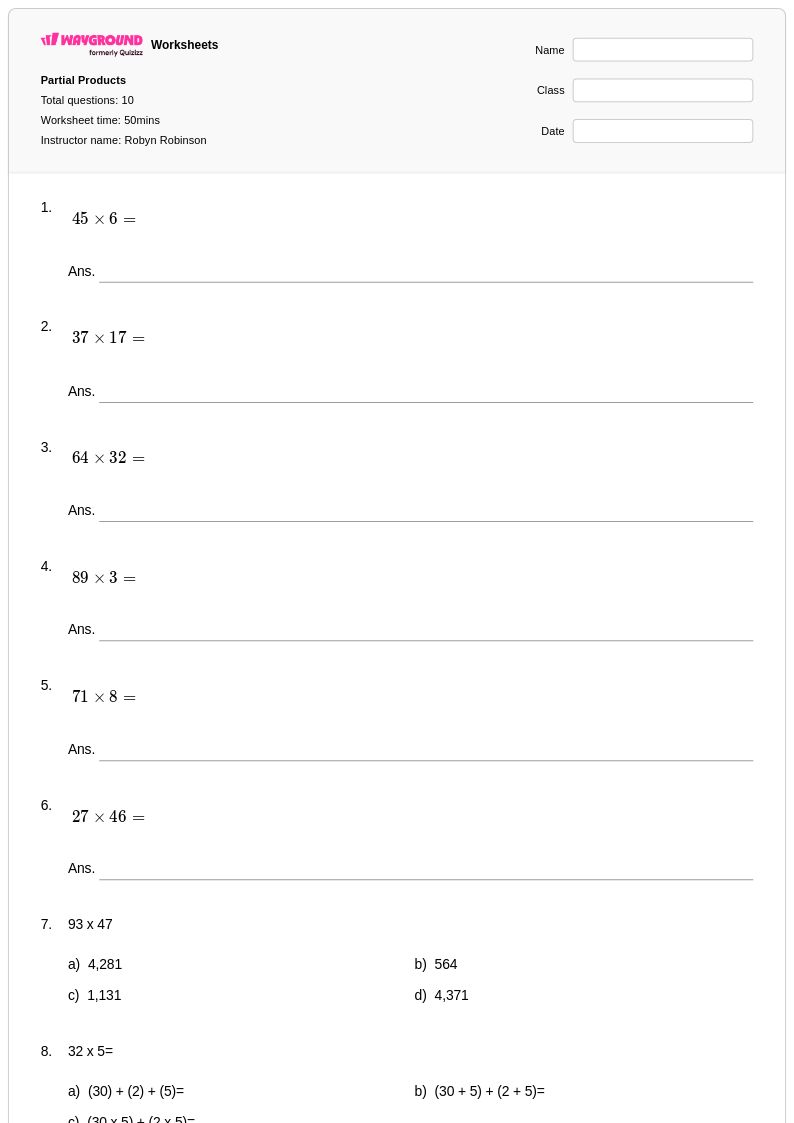
10 Q
4th - 6th
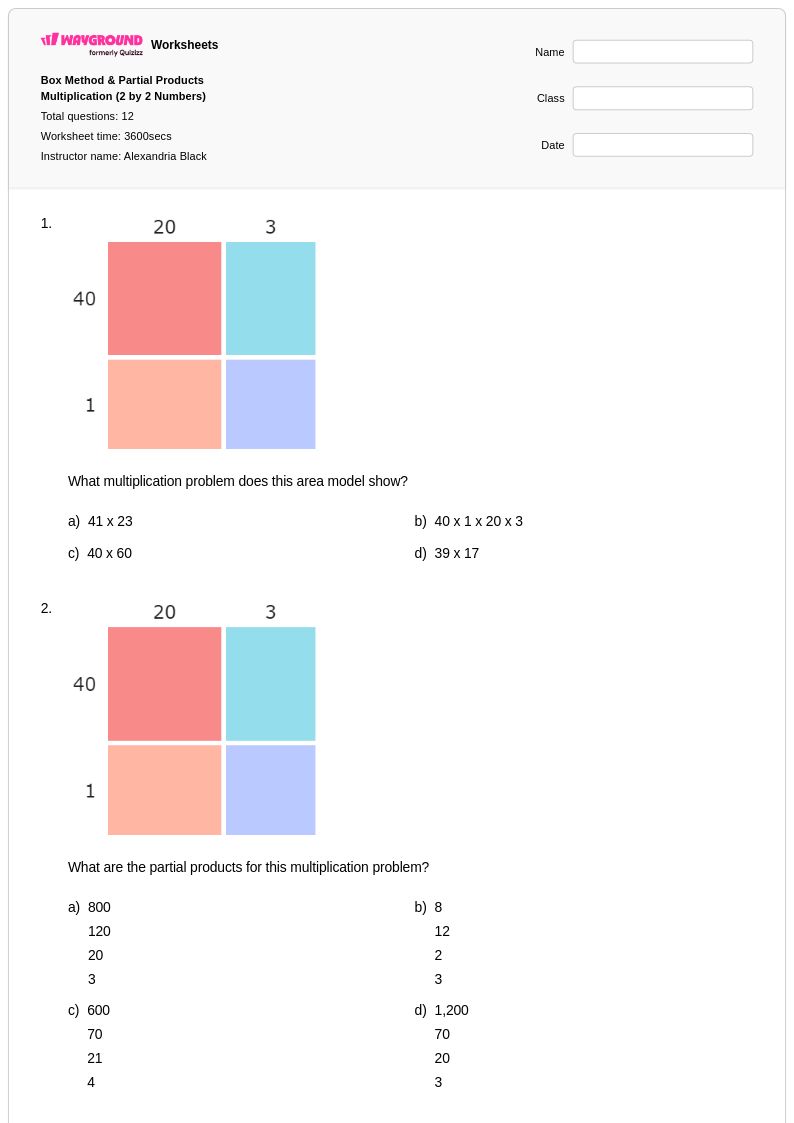
12 Q
4th
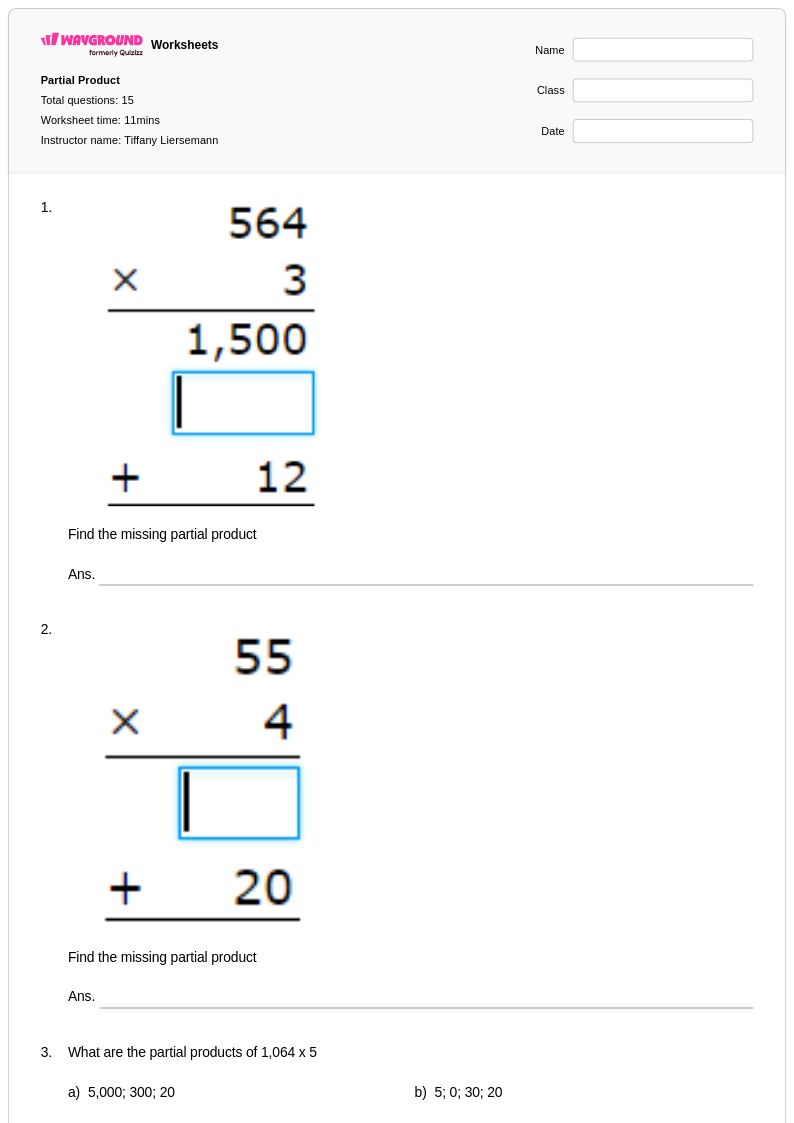
15 Q
5th
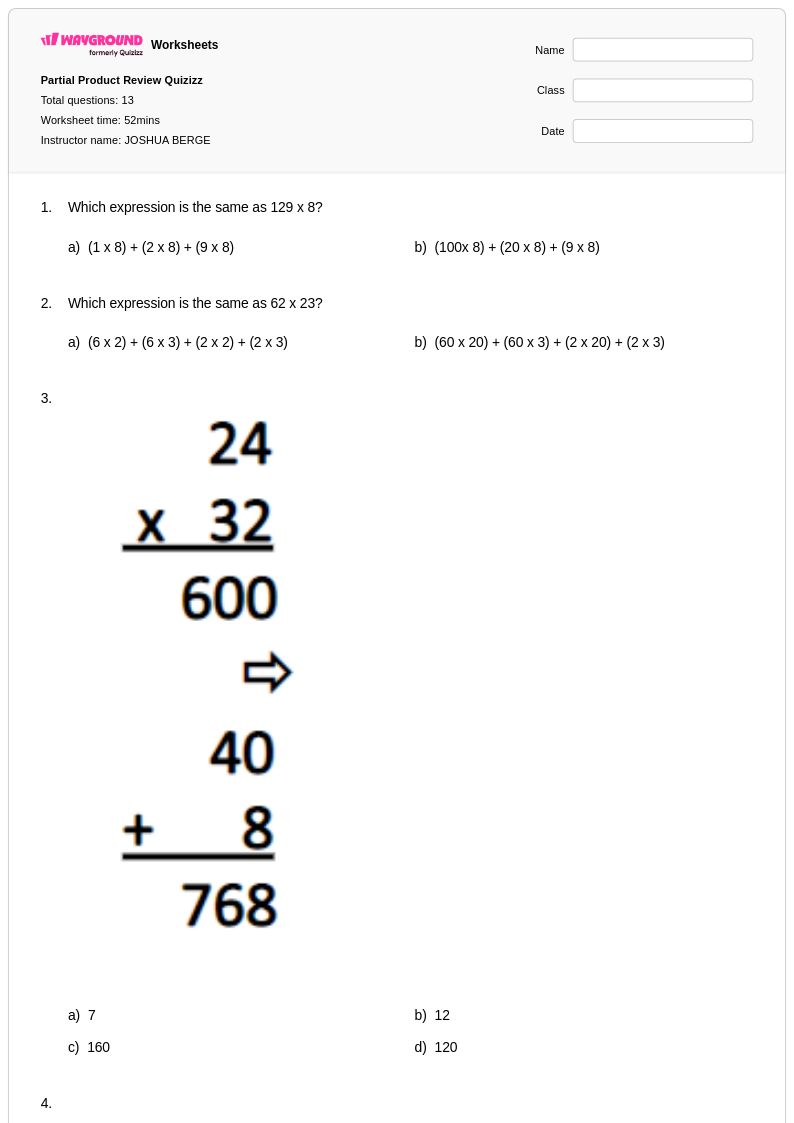
13 Q
4th
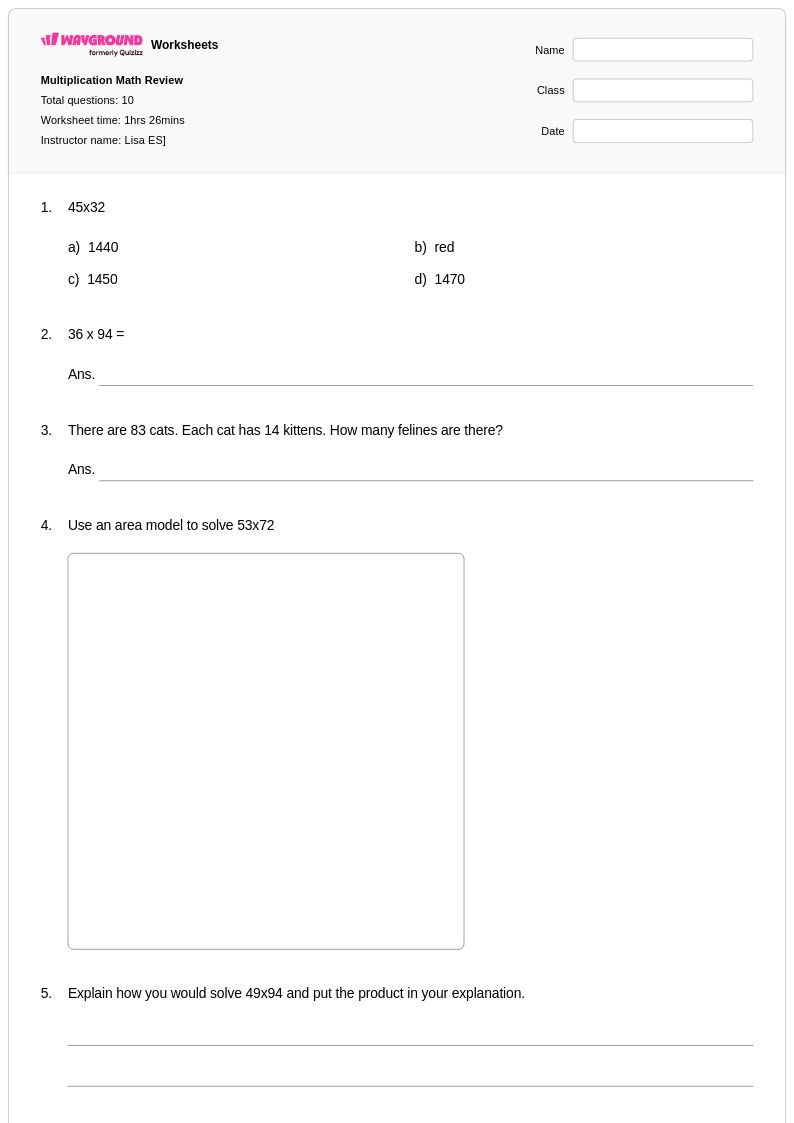
10 Q
4th
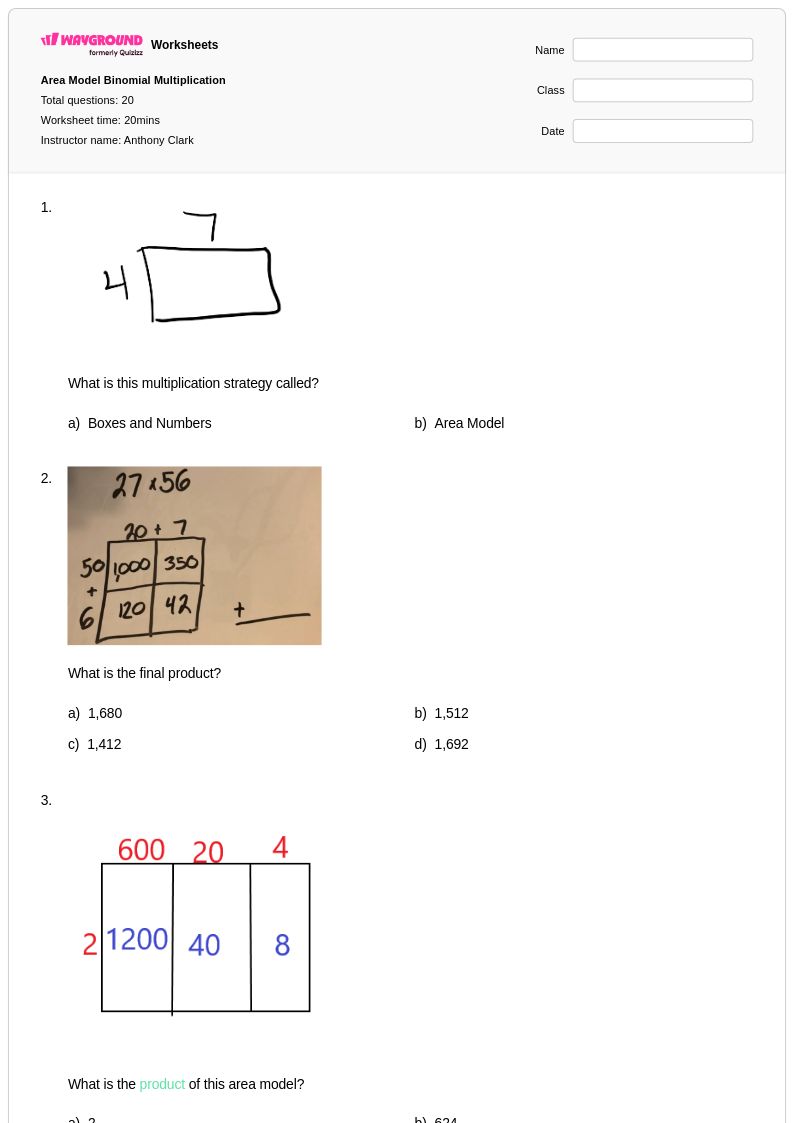
20 Q
4th - Uni
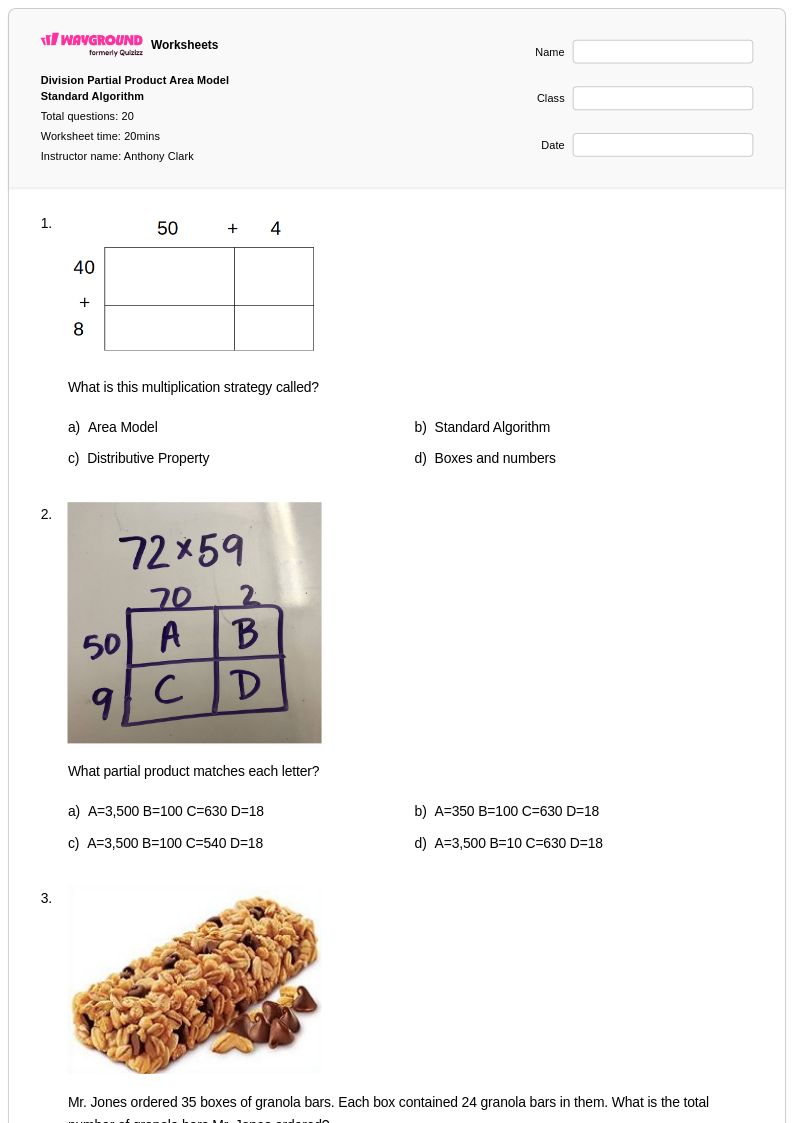
20 Q
4th - Uni
Explore Worksheets by Subjects
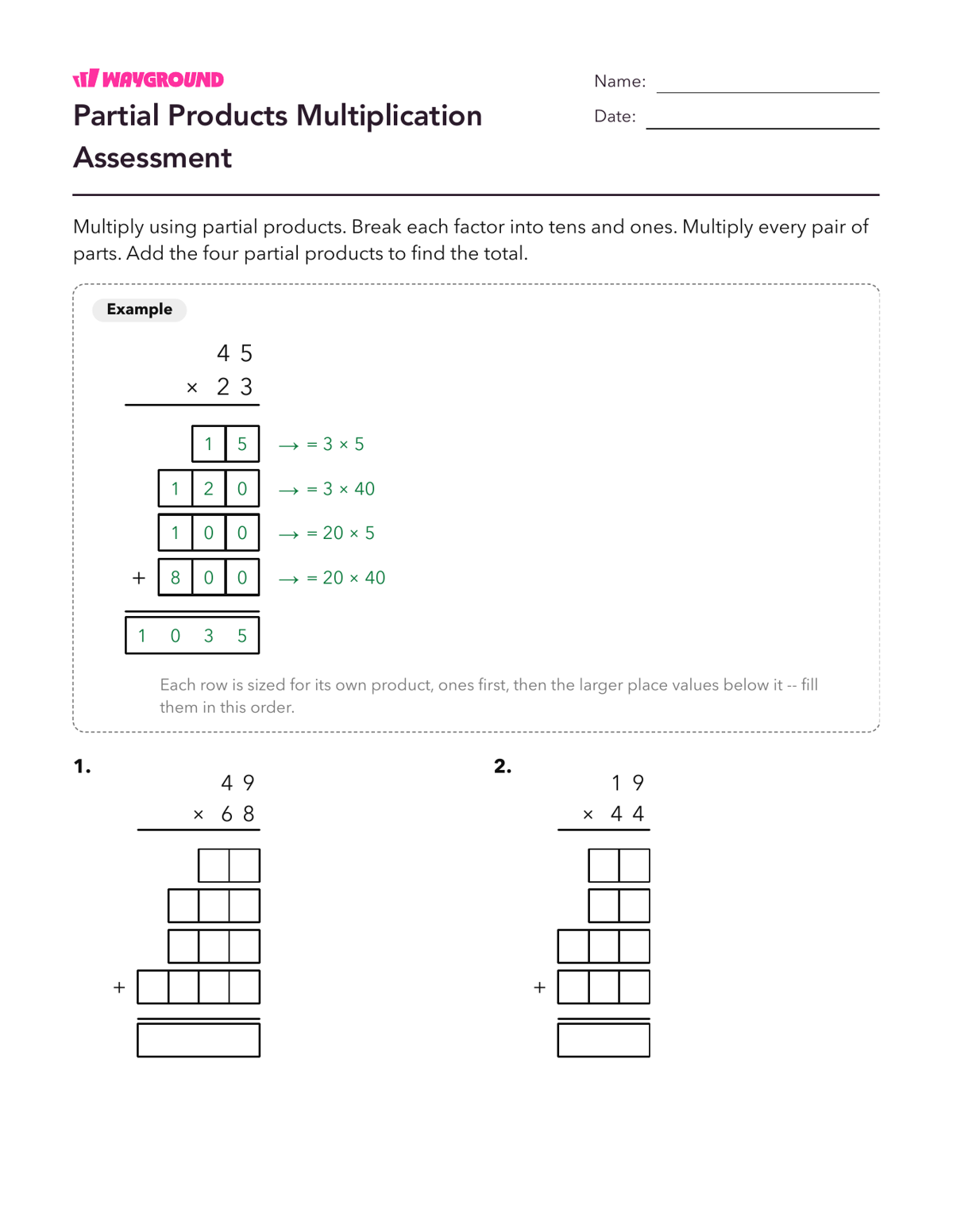
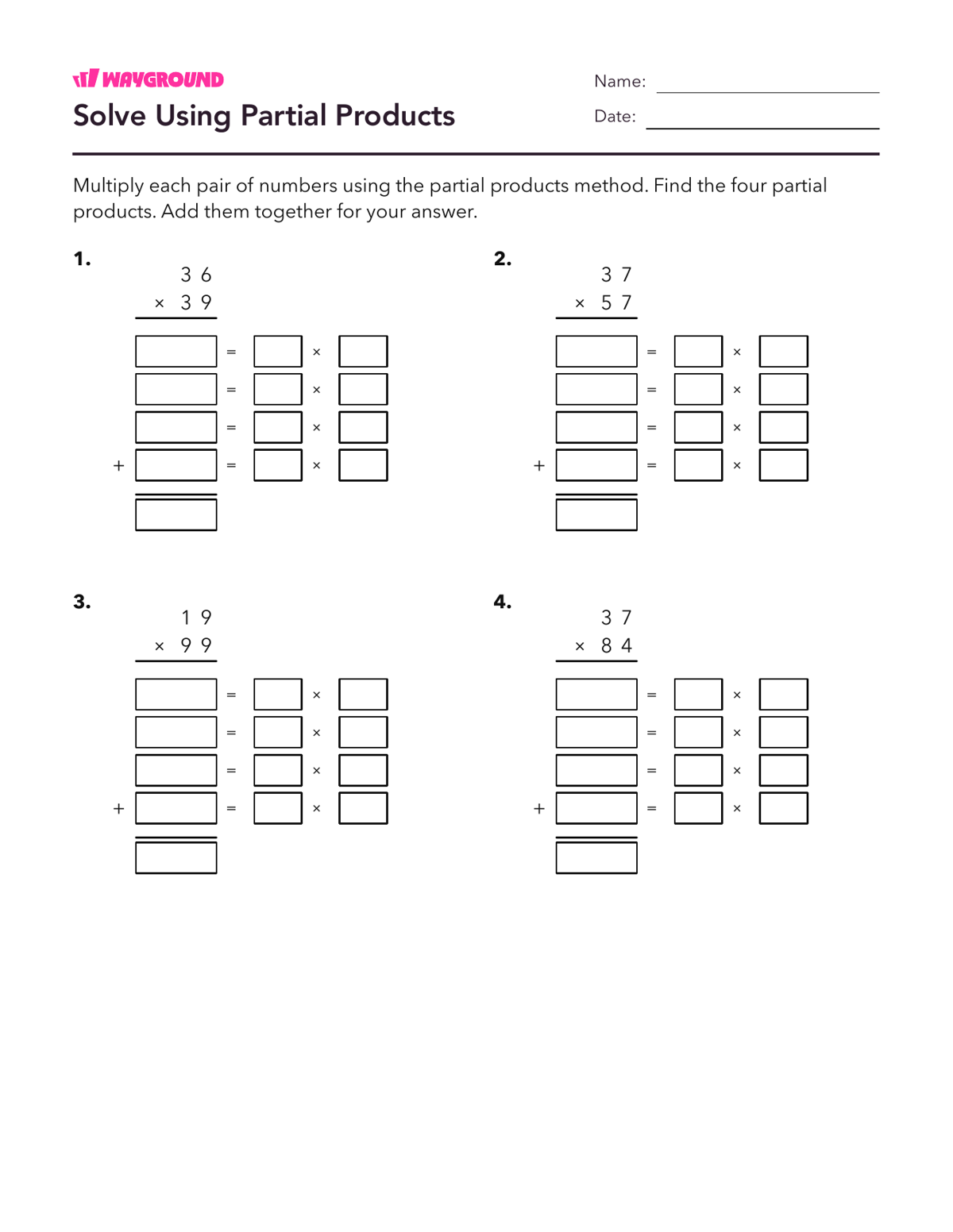
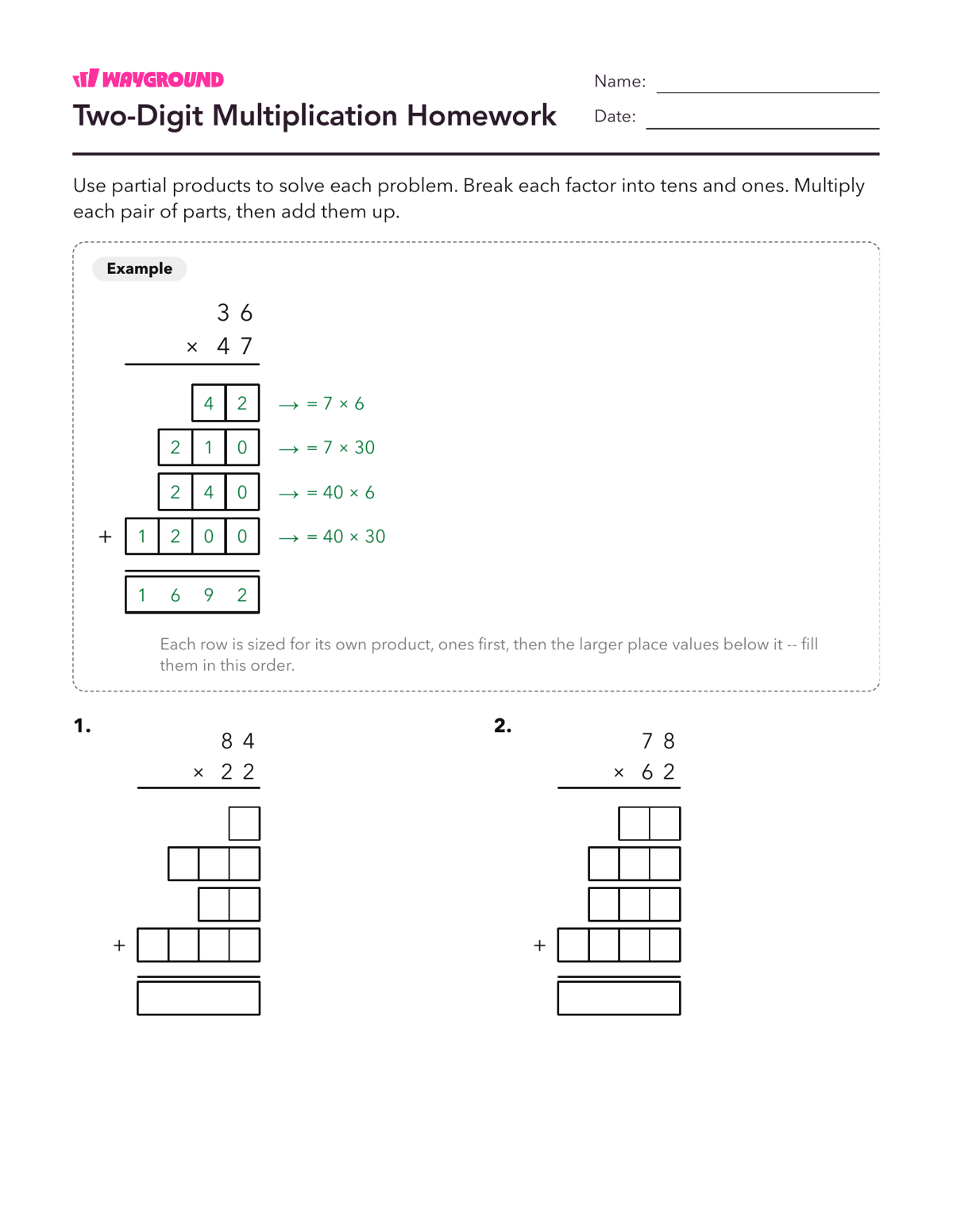
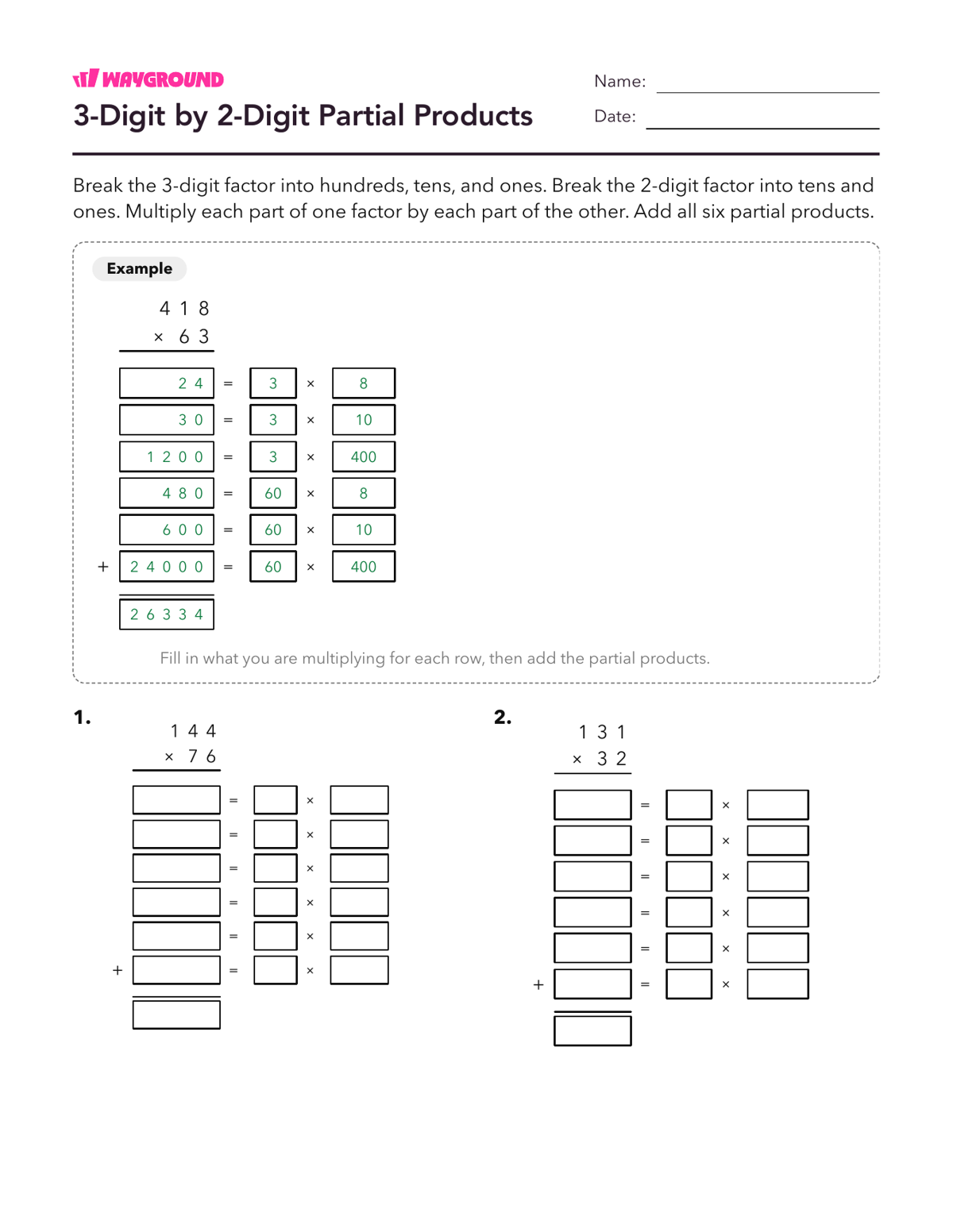
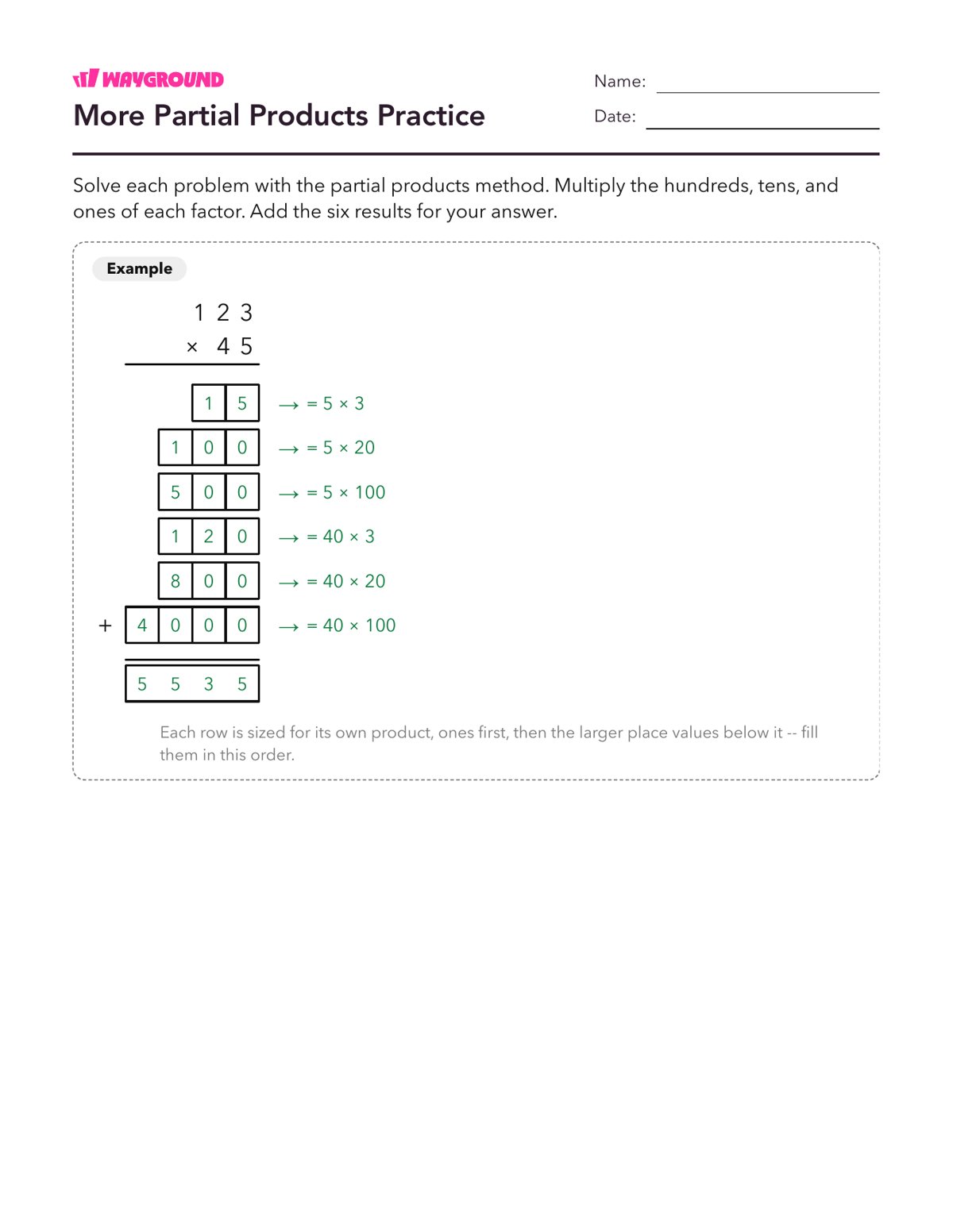
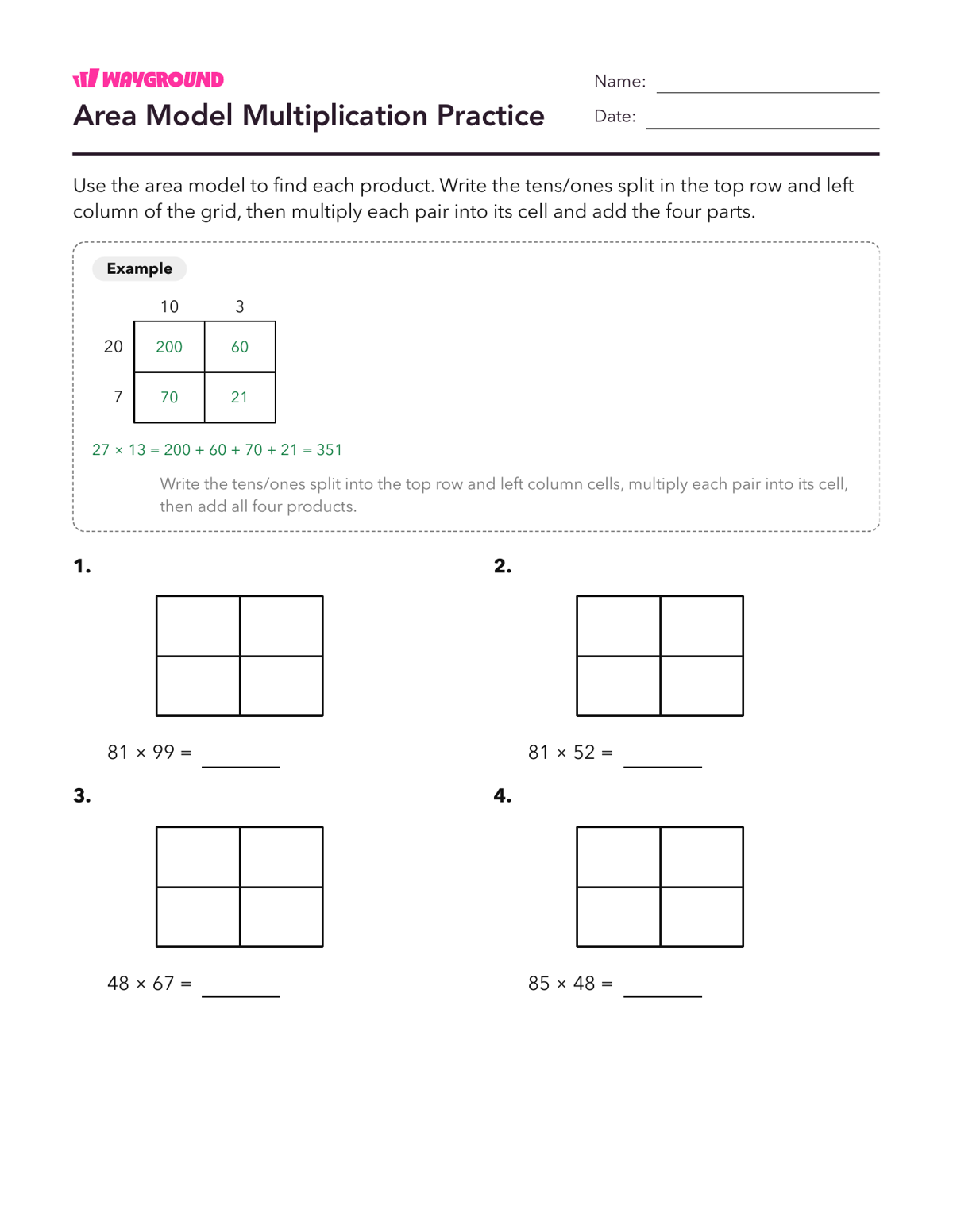
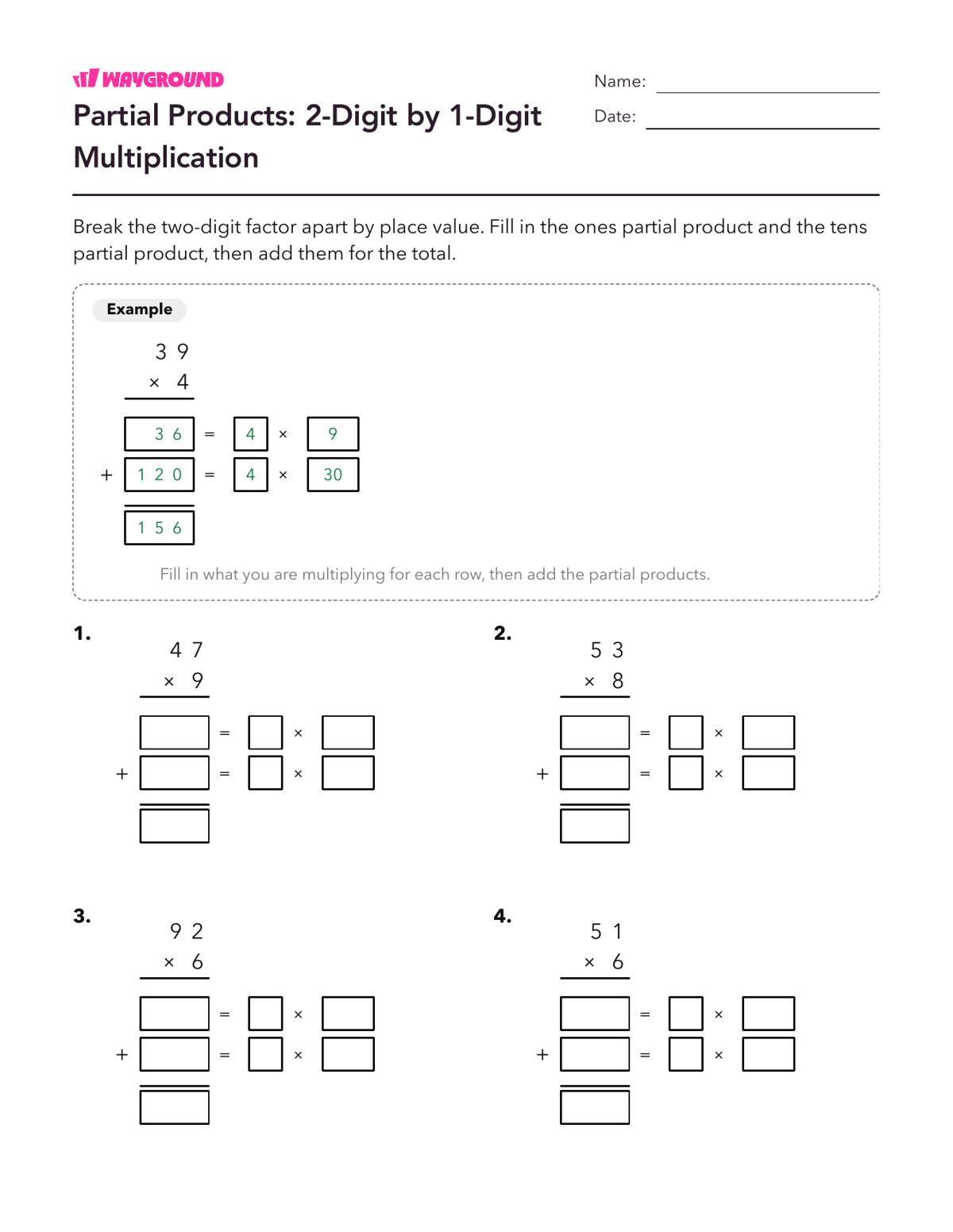
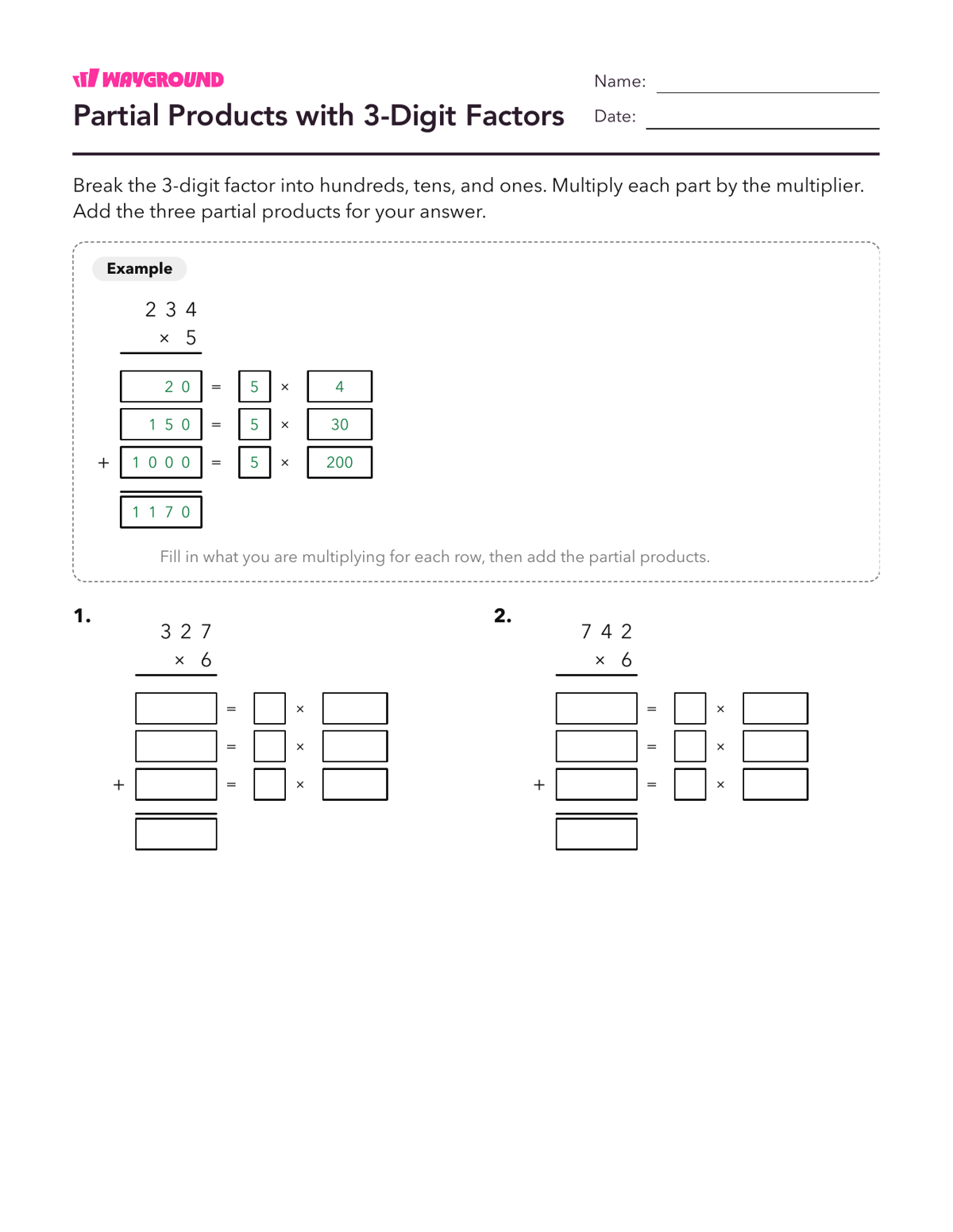
Explore printable Multiplication and Partial Products worksheets
Multiplication and partial products worksheets available through Wayground (formerly Quizizz) provide students with systematic practice in breaking down complex multiplication problems into manageable components. These educational resources focus on teaching the partial products method, where students decompose factors by place value and multiply each part separately before combining the results. The worksheets strengthen foundational number sense, place value understanding, and computational fluency by requiring students to show their thinking through each step of the multiplication process. Teachers can access comprehensive practice problems that include visual models, step-by-step examples, and answer keys, with materials available as free printables in convenient PDF format for classroom or homework use.
Wayground (formerly Quizizz) supports mathematics educators with an extensive collection of teacher-created multiplication and partial products resources drawn from millions of high-quality materials developed by classroom professionals. The platform's advanced search and filtering capabilities enable teachers to quickly locate worksheets aligned with specific mathematical standards and differentiated for various skill levels within their classrooms. These customizable resources are available in both printable PDF and interactive digital formats, allowing educators to seamlessly integrate them into lesson planning, targeted remediation sessions, enrichment activities, and regular skill practice routines. The flexible design of these worksheet collections empowers teachers to address individual student needs while maintaining consistent focus on the essential mathematical reasoning skills that make multiplication and partial products strategies so valuable for computational development.
FAQs
How should I introduce the partial products method for multiplication?
What exercises help students practice the partial products strategy?
What are the most common mistakes students make with partial products?
How can I use these partial products worksheets with my class?
How does the partial products method align with Common Core math standards?