Free Printable Nature Activities Worksheets for Year 2
Explore Year 2 nature activities worksheets and free printables that help young scientists discover plants, animals, and outdoor environments through engaging practice problems with complete answer keys.
Explore printable Nature Activities worksheets for Year 2
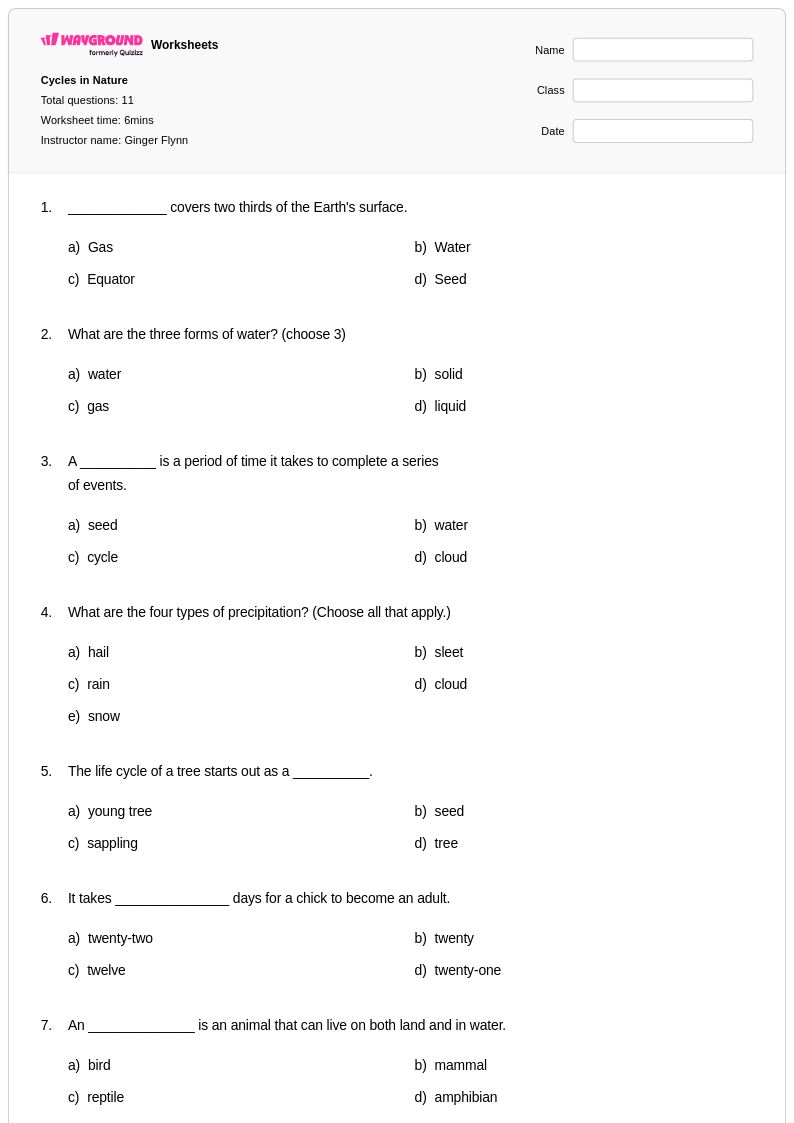
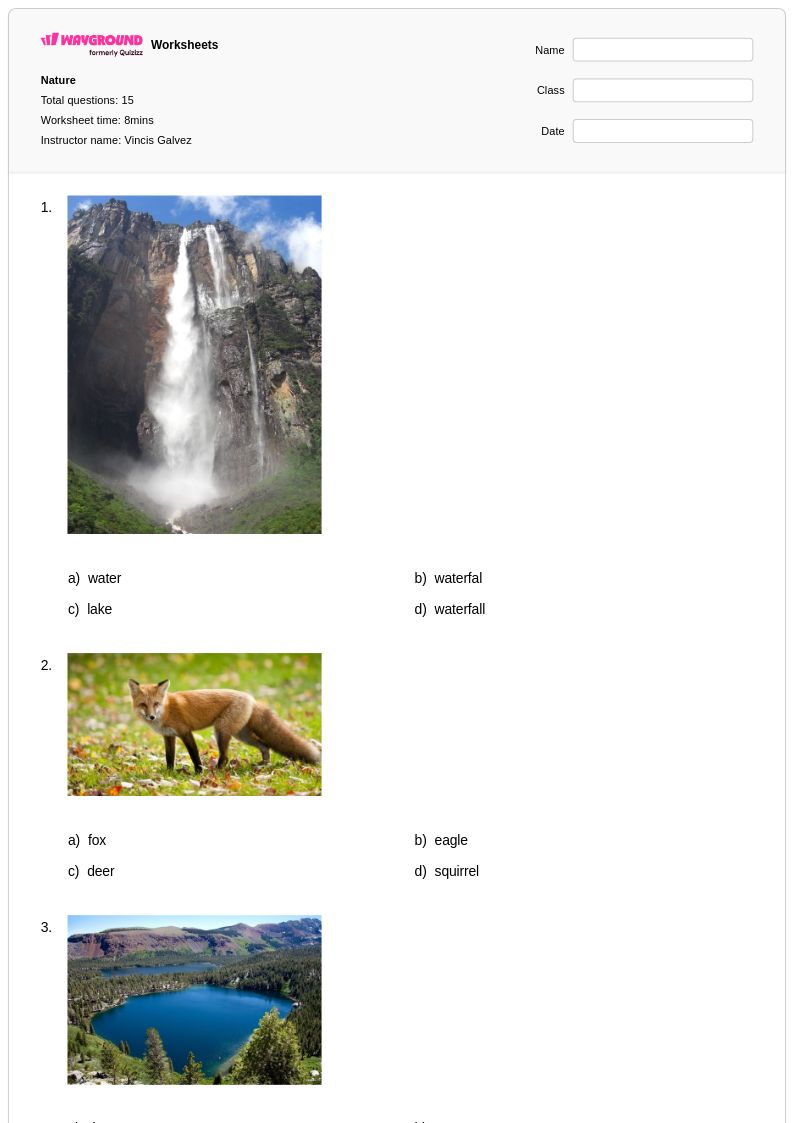
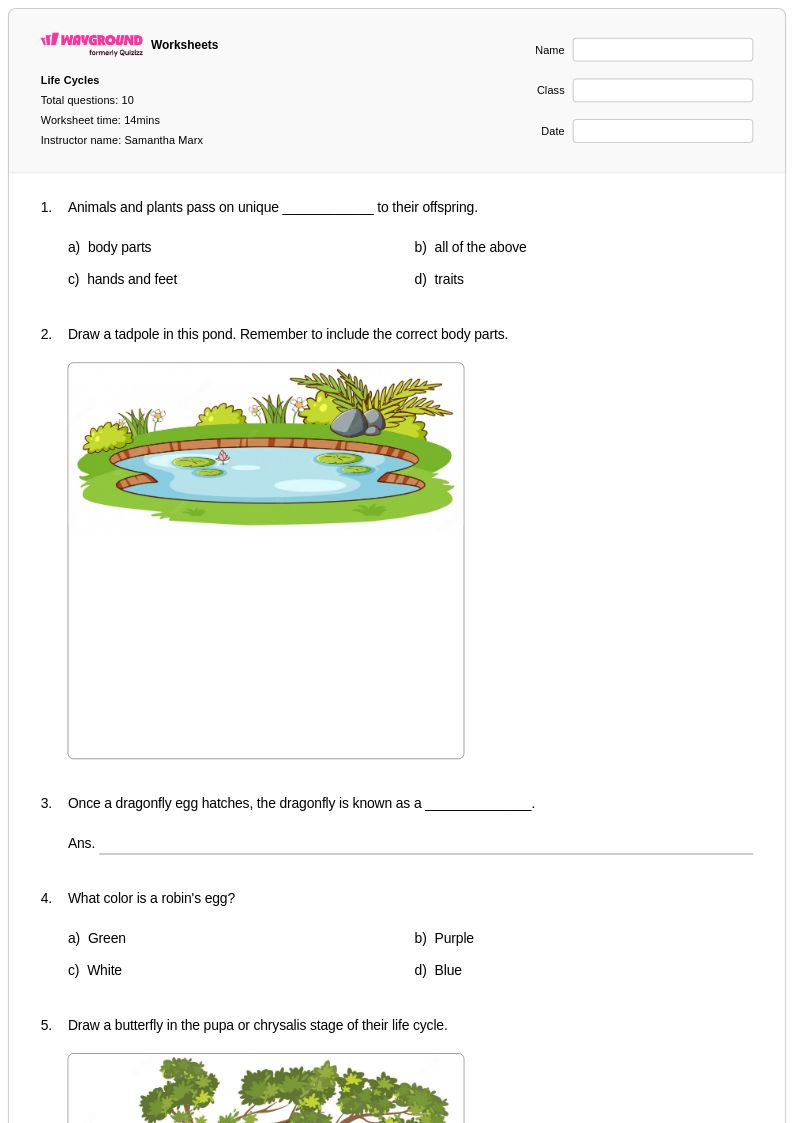
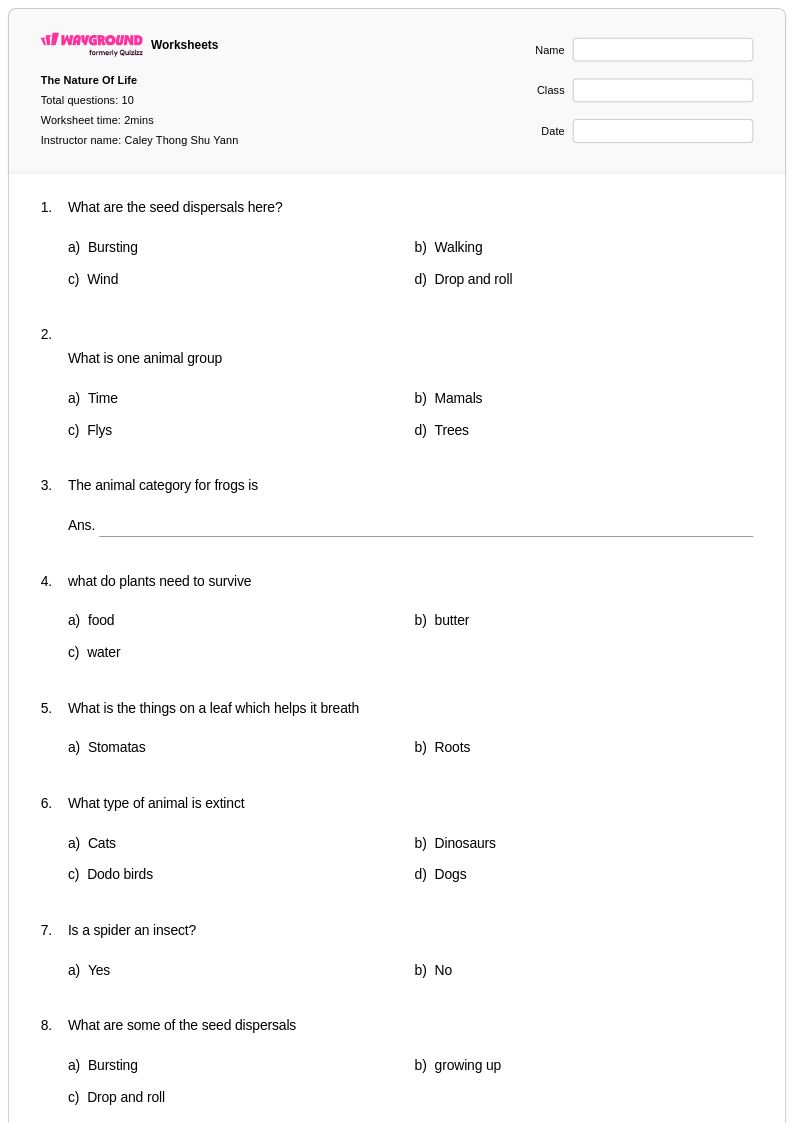
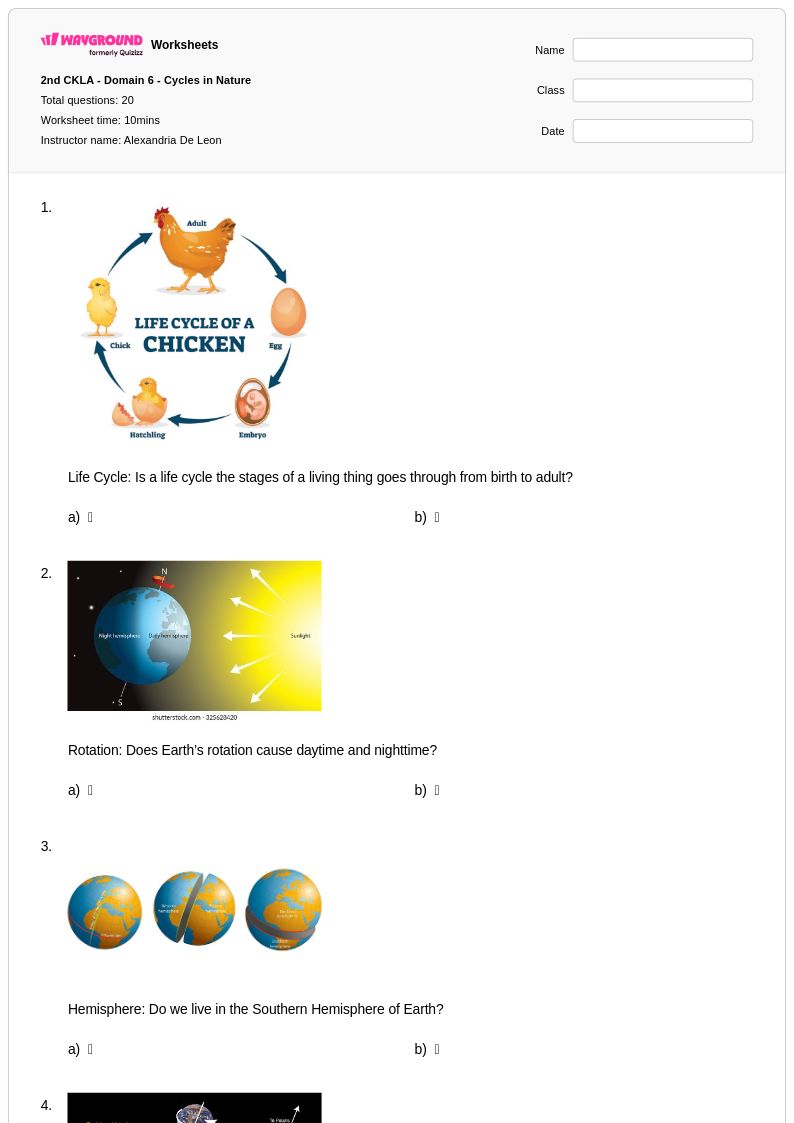
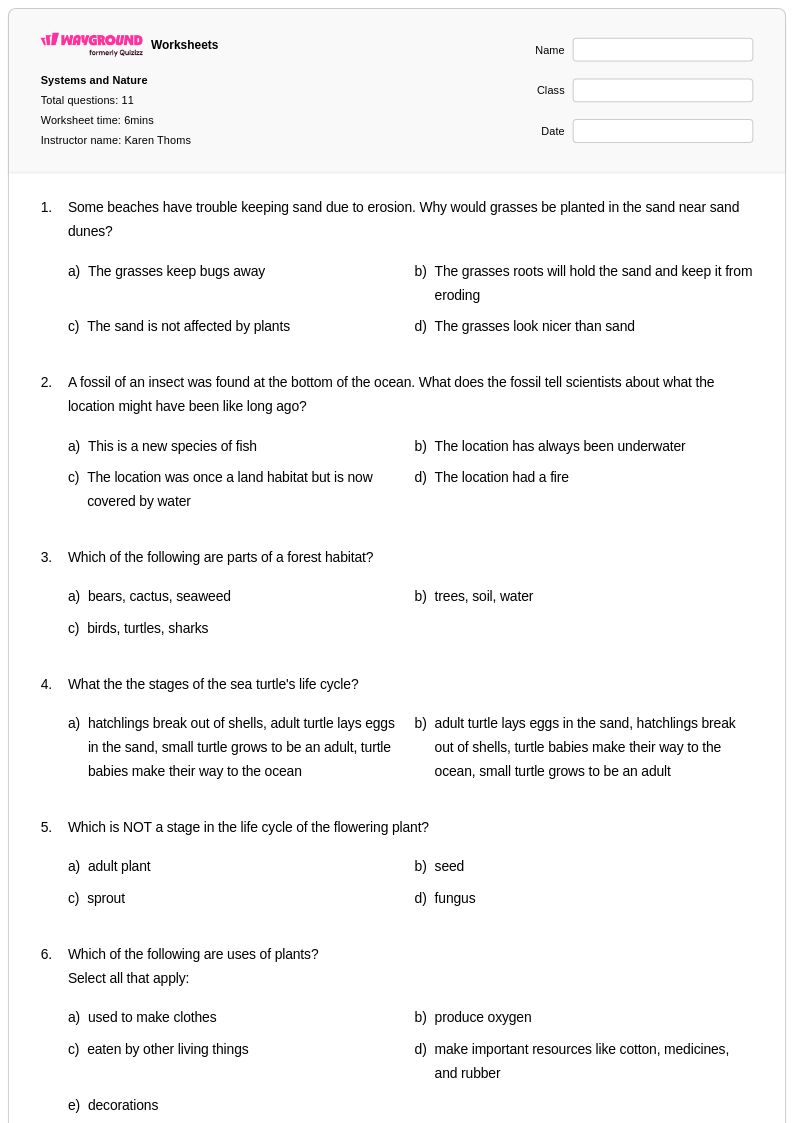
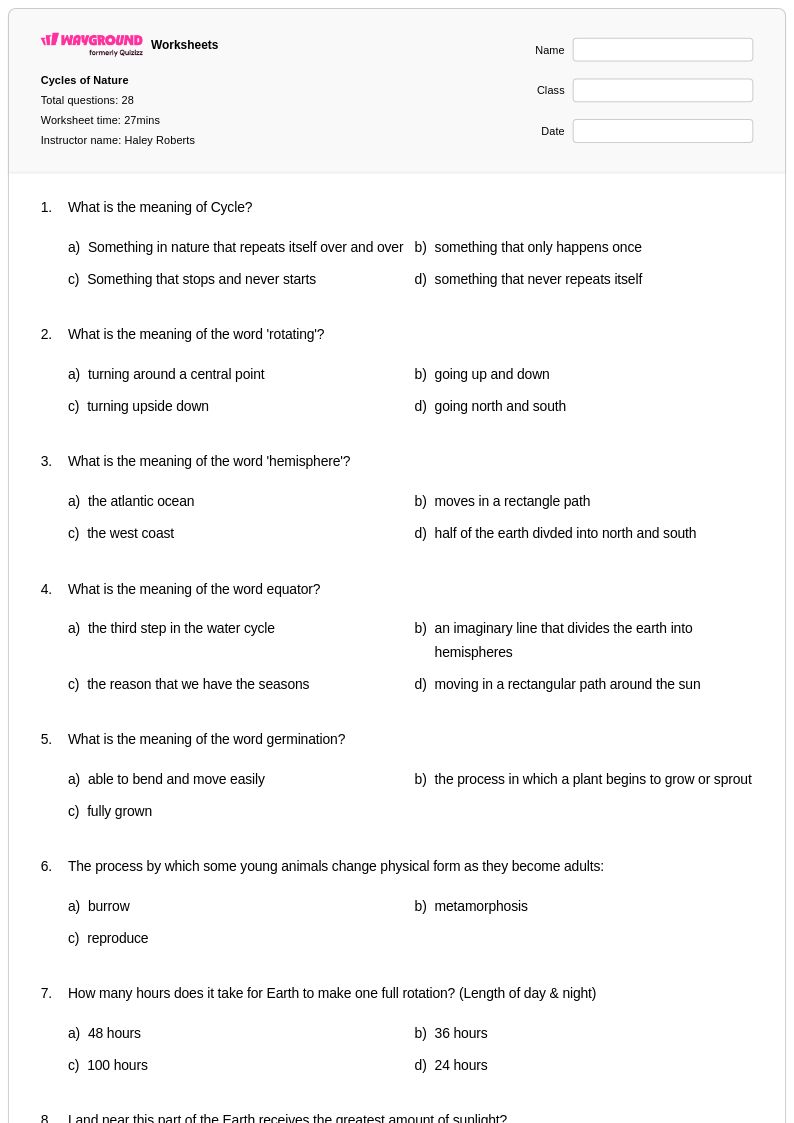
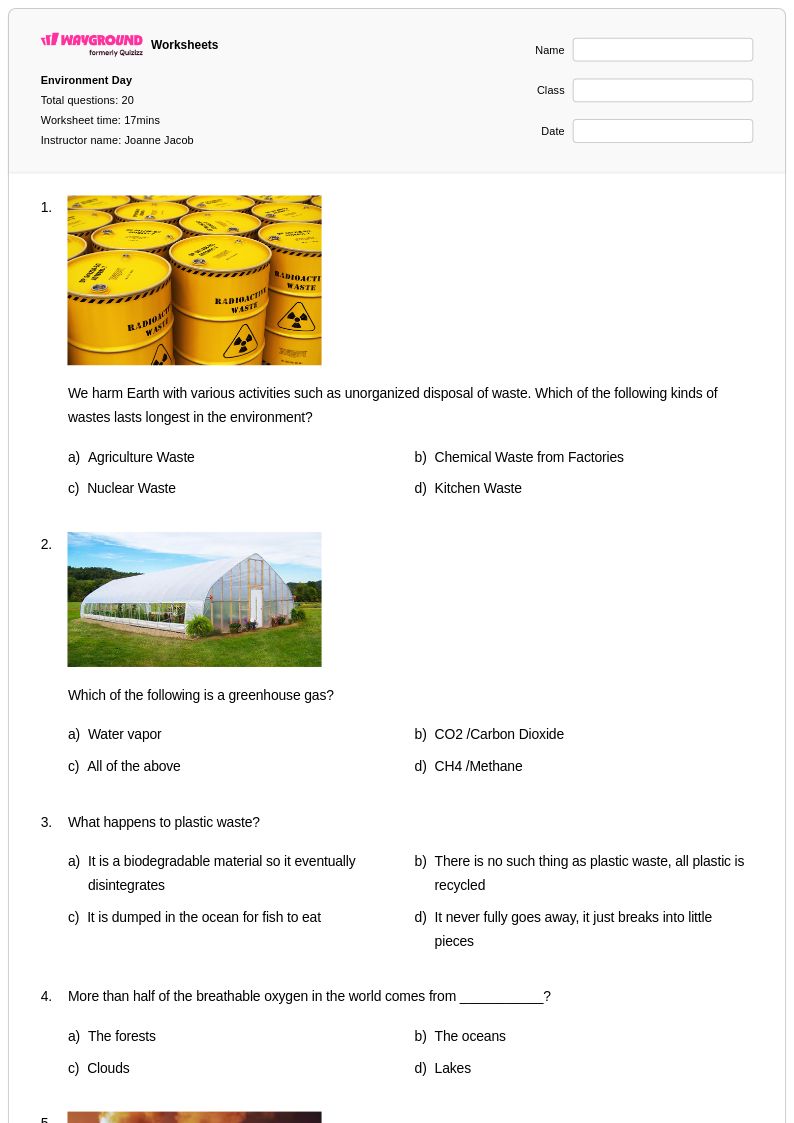
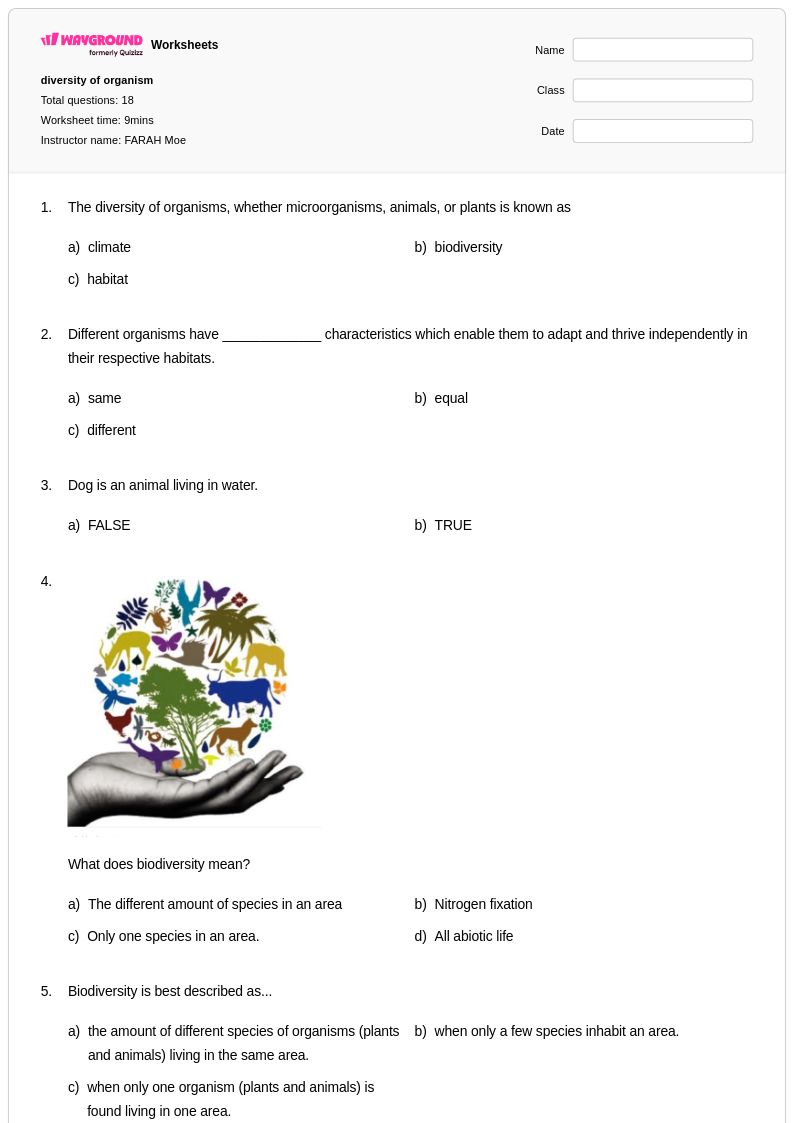
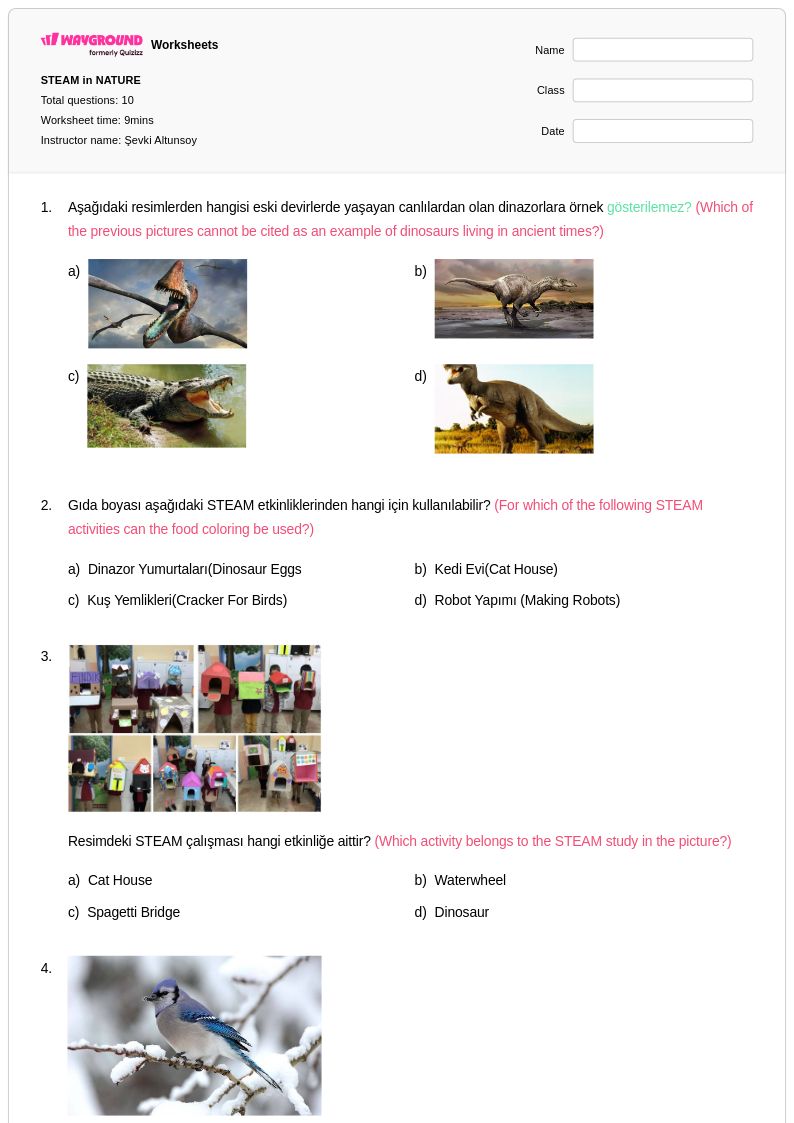
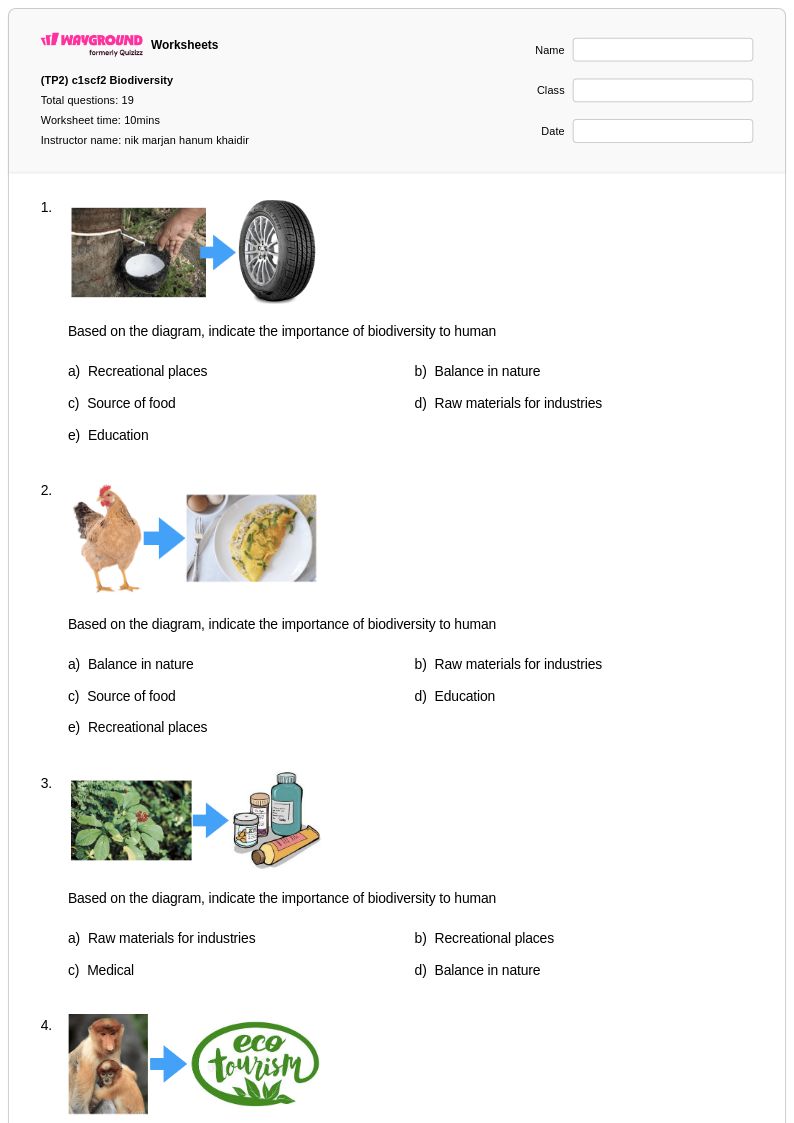
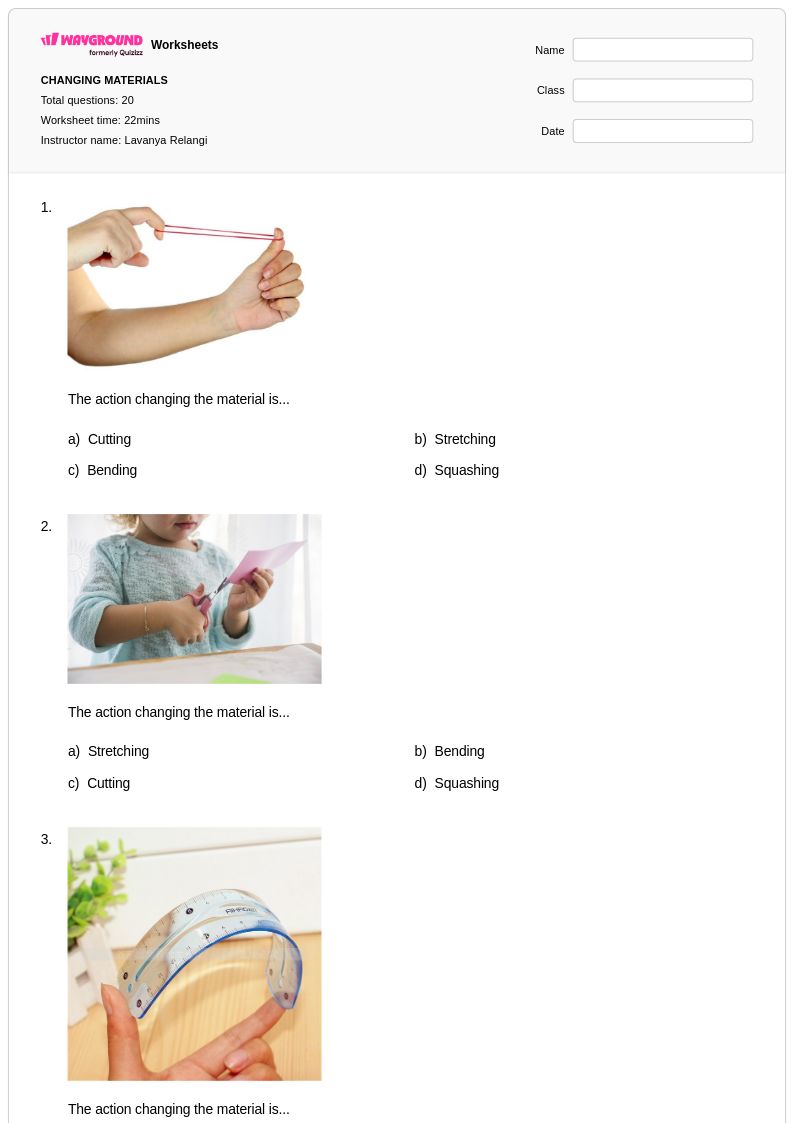
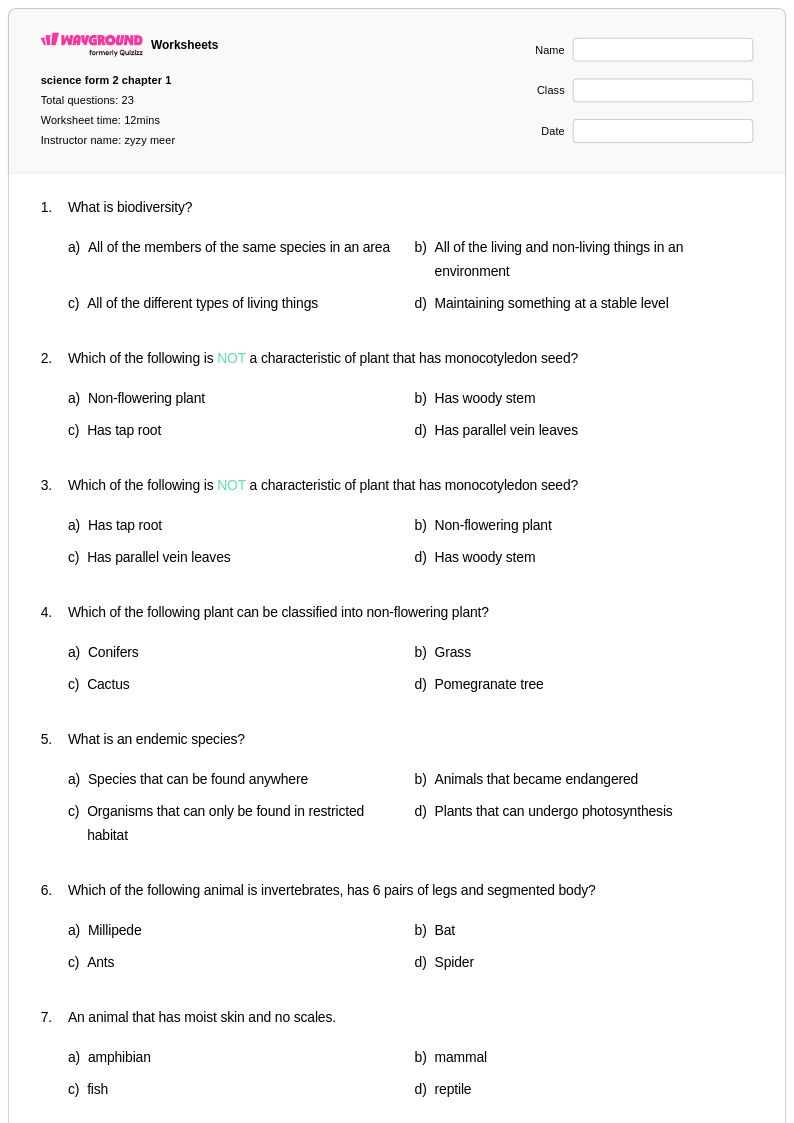
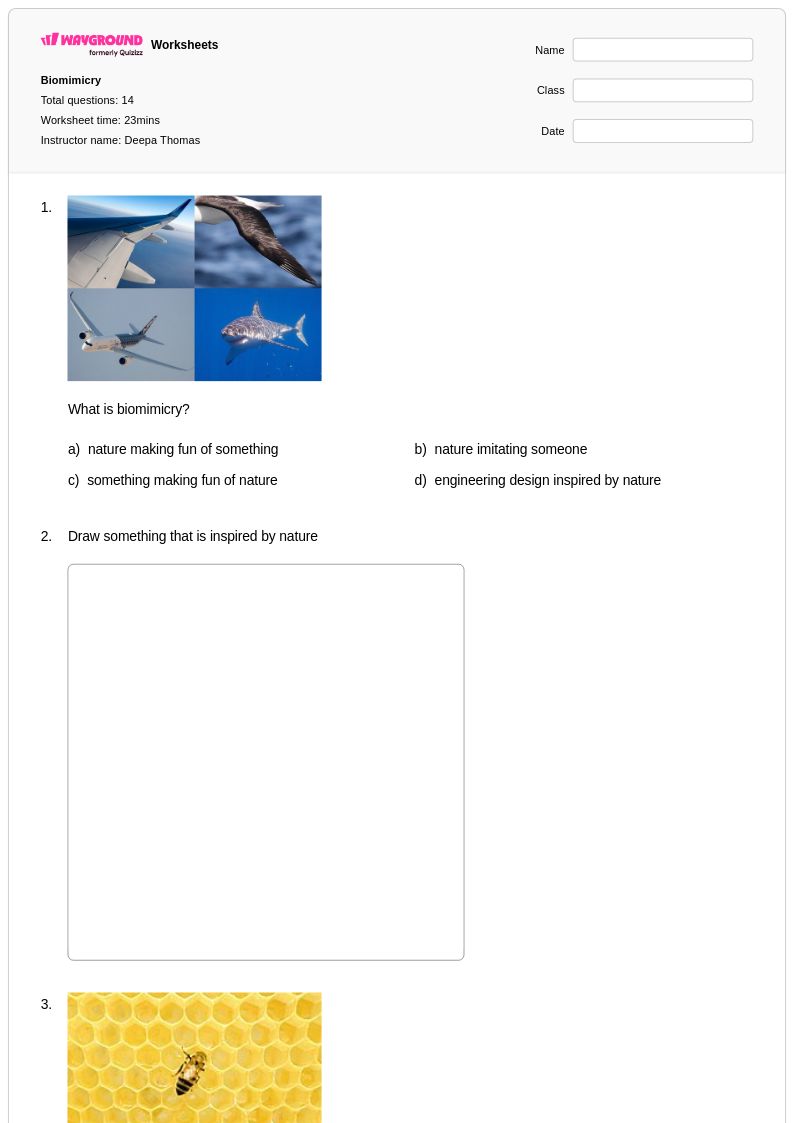
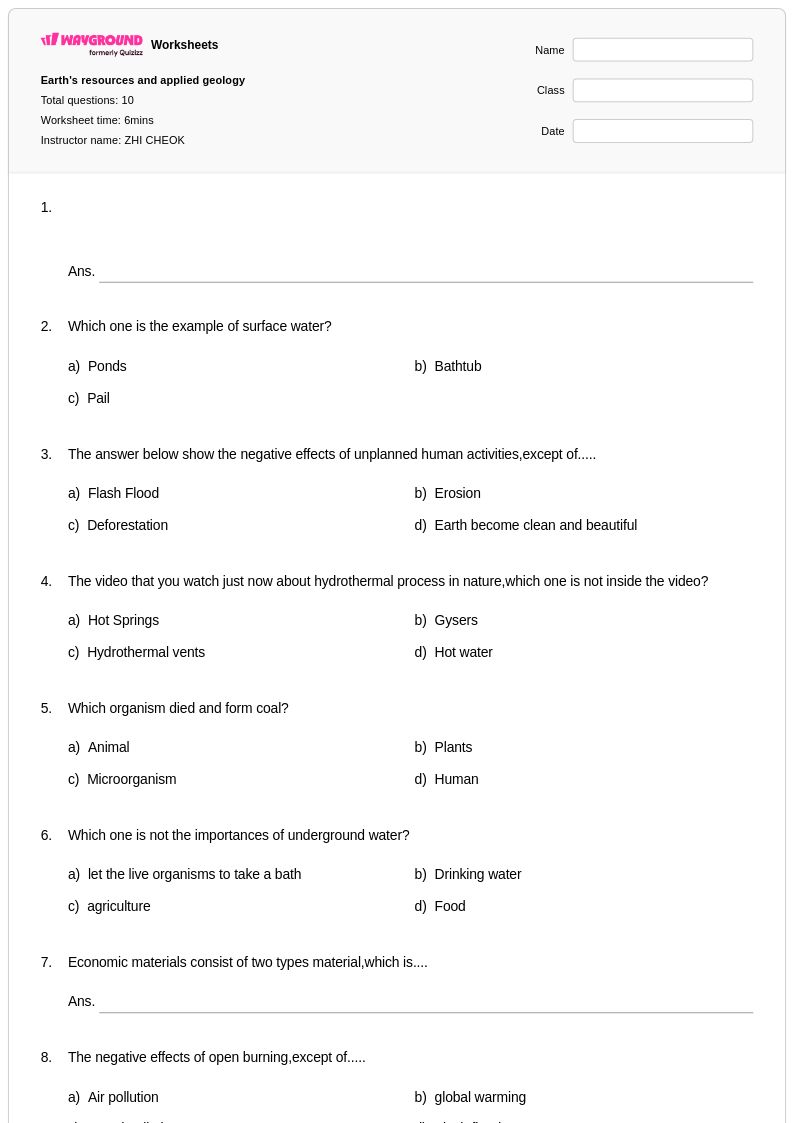
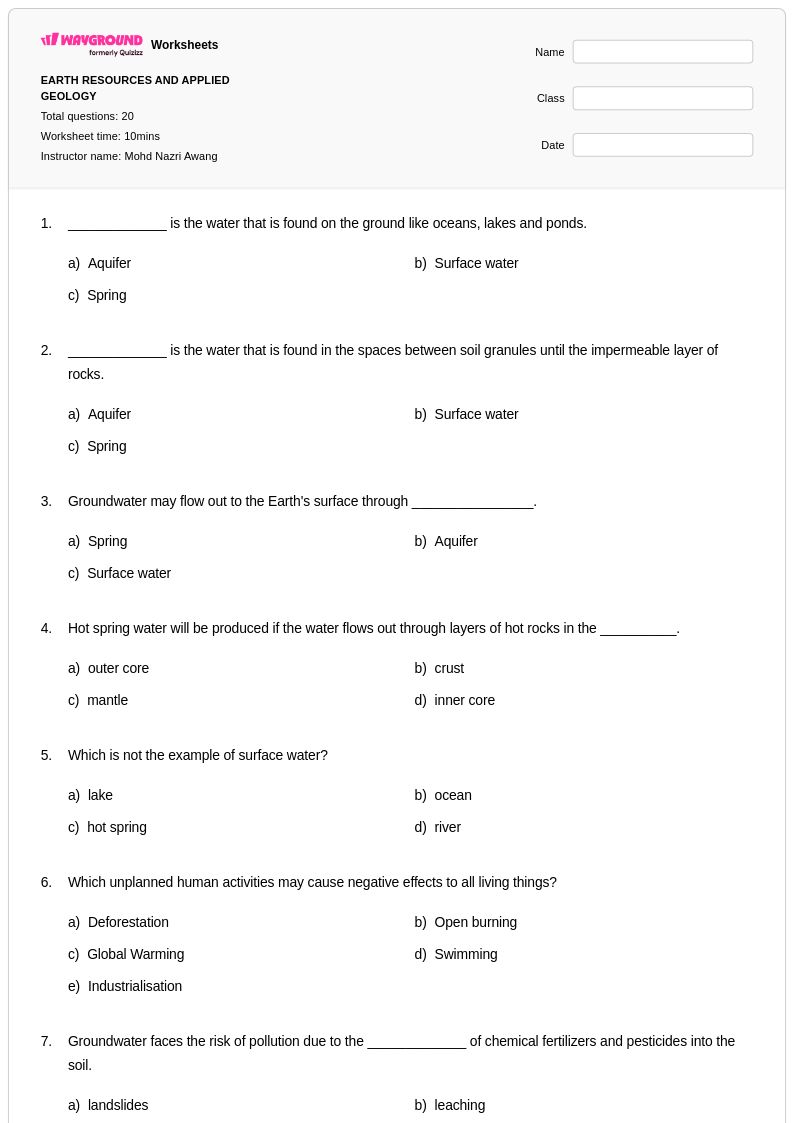
Nature Activities worksheets for Year 2 Earth & Space Science provide young learners with engaging, hands-on explorations that connect classroom concepts to the natural world around them. These carefully designed printables guide second-grade students through essential scientific observations and investigations, helping them develop foundational skills in data collection, pattern recognition, and scientific thinking. Each worksheet collection includes comprehensive practice problems that encourage students to observe weather patterns, identify seasonal changes, explore plant and animal habitats, and investigate basic earth materials like rocks and soil. Teachers can access complete answer keys and free pdf downloads that support both independent learning and guided instruction, making these resources invaluable for reinforcing key earth and space science concepts through direct nature-based experiences.
Wayground (formerly Quizizz) empowers educators with millions of teacher-created Nature Activities worksheets specifically aligned to Year 2 Earth & Space Science standards and learning objectives. The platform's robust search and filtering capabilities allow teachers to quickly locate age-appropriate resources that match their specific curriculum needs, whether focusing on life cycles, weather observation, or exploring natural materials. These versatile materials are available in both printable and digital formats, including downloadable pdfs, enabling seamless integration into any learning environment. Teachers can easily customize worksheets to support differentiated instruction, using the extensive collection for initial skill building, targeted remediation, or enrichment activities that challenge advanced learners to deepen their understanding of natural phenomena and scientific inquiry processes.
FAQs
How do I teach nature activities and outdoor science to my students?
Effective outdoor science instruction starts by anchoring each activity to a specific observable phenomenon — weather patterns, local plant life, rock formations, or the night sky — before asking students to collect data and form hypotheses. Structured observation protocols help students move beyond casual looking toward genuine scientific inquiry. Pairing outdoor sessions with classroom debrief worksheets reinforces vocabulary, methodology, and concept connections so that field experience translates into lasting understanding.
What exercises help students practice scientific observation skills in nature?
Practice activities that build scientific observation skills include weather tracking logs, plant identification charts, rock and mineral classification exercises, and ecosystem mapping tasks. These exercises require students to record qualitative and quantitative data, compare findings across time or location, and draw evidence-based conclusions. Repeated structured practice with real-world phenomena develops the science process skills students need across all Earth and space science topics.
What common mistakes do students make during nature-based science activities?
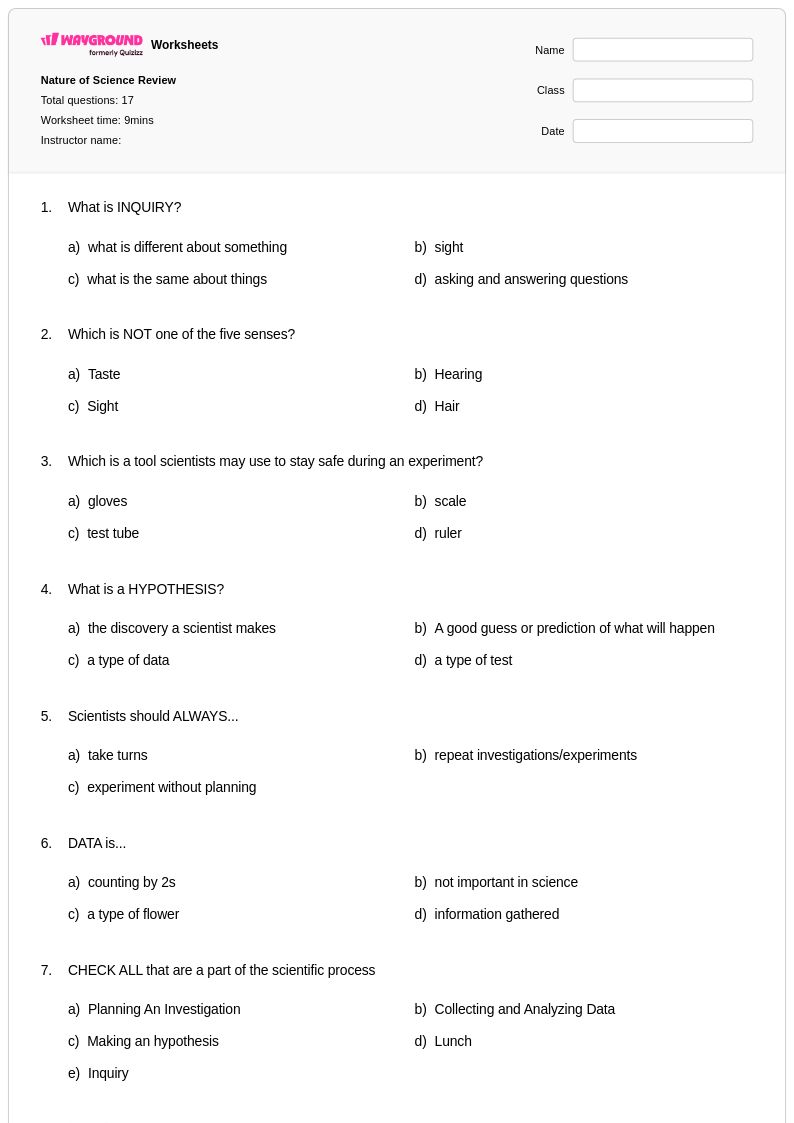
A frequent error is confusing observation with inference — students often write what they think is happening rather than what they can directly detect with their senses. Another common mistake is recording incomplete or inconsistent data, particularly when tracking changes over time such as weather patterns or plant growth. Prompting students to distinguish between 'I see' and 'I think' statements, and providing structured data tables, helps address both issues before they become ingrained habits.
How can I differentiate nature activities worksheets for students at different readiness levels?
Differentiation in outdoor science can include scaffolded data collection sheets with sentence starters for emerging learners, open-ended observation journals for advanced students, and visual identification guides for students who need additional support. On Wayground, teachers can apply individual accommodations such as read aloud, reduced answer choices, and extended time to specific students while the rest of the class works with default settings — no separate version needed. These settings are reusable across future sessions, reducing prep time significantly.
How do I use Wayground's nature activities worksheets in my classroom or outdoors?
Wayground's nature activities worksheets are available as printable PDFs for outdoor fieldwork and traditional classroom use, as well as in digital formats for technology-integrated or hybrid learning environments. Teachers can also host the activities as a quiz on Wayground, enabling real-time progress monitoring and instant feedback. The worksheets include complete answer keys, making them practical for independent student work, station rotations, or guided small-group instruction in both indoor and outdoor settings.
How do I connect nature activities to Earth and space science standards?
Nature activities align naturally with Earth and space science standards when they are built around observable phenomena tied to specific concepts — for example, using local weather data to explore atmospheric systems, or examining soil and rock samples to address Earth materials standards. Choosing activities that require hypothesis formation, data collection, and evidence-based conclusions ensures that outdoor learning maps to science process standards as well as content standards. Wayground's filtering tools allow teachers to search for resources aligned to specific learning standards, making it easier to plan instruction that is both engaging and standards-aligned.