Free Printable Weather and Climate Worksheets for Year 2
Explore Year 2 weather and climate printables and free worksheets that help young learners understand seasonal patterns, temperature changes, and weather phenomena through engaging practice problems with complete answer keys.
Explore printable Weather and Climate worksheets for Year 2
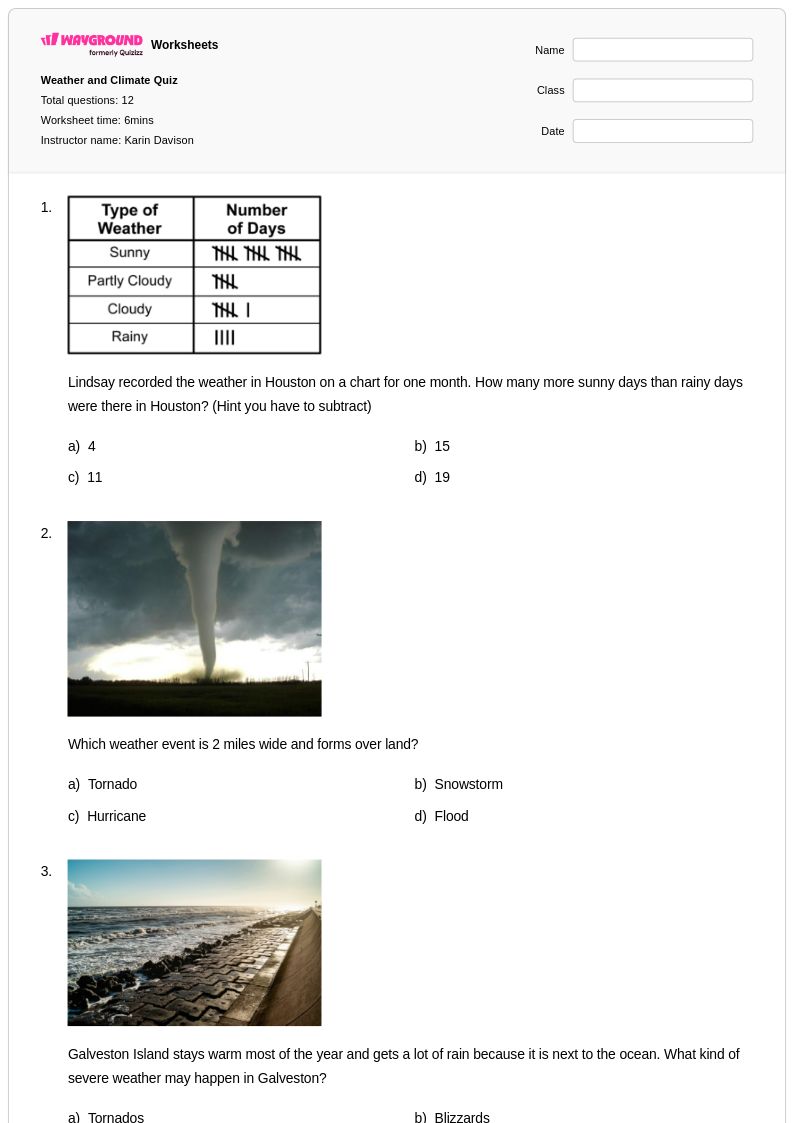
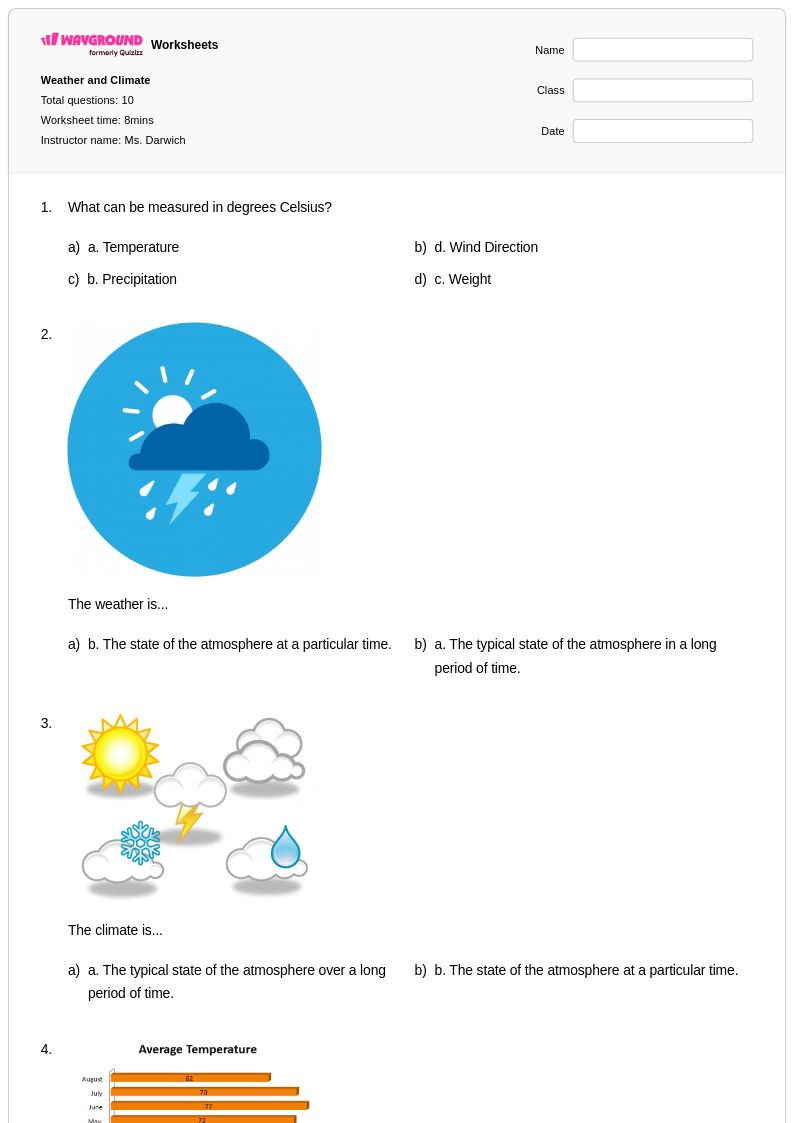
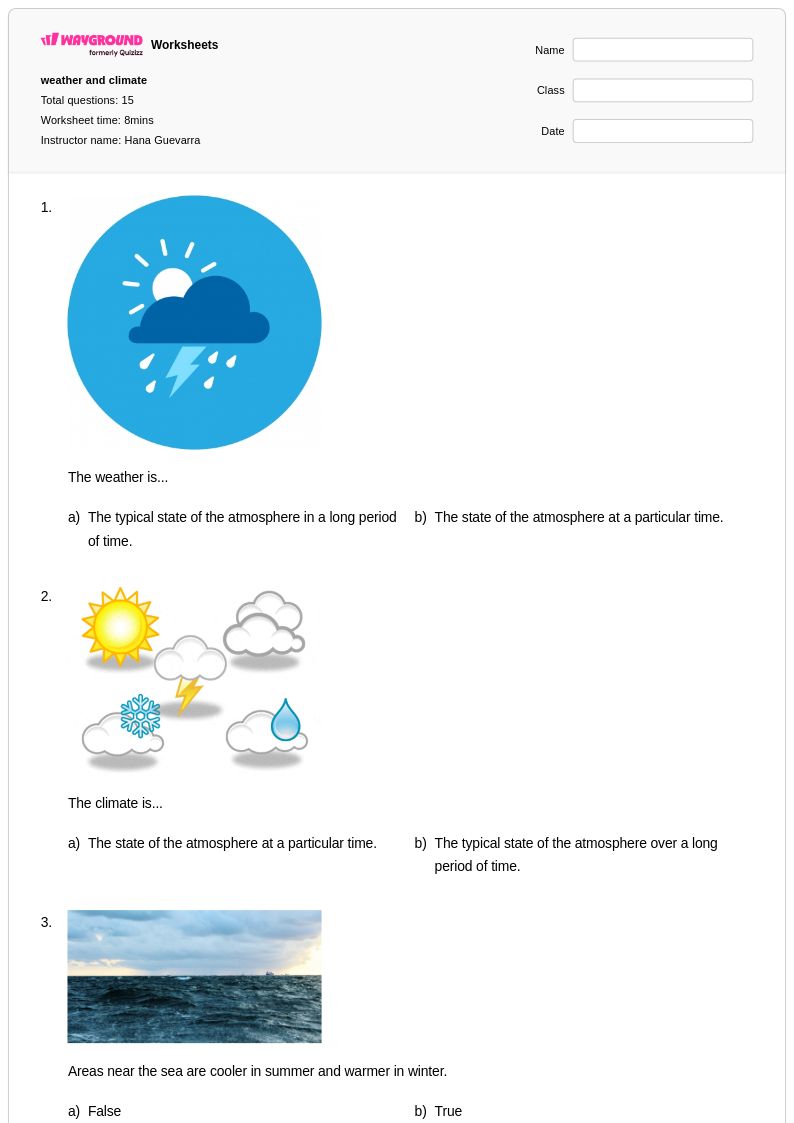
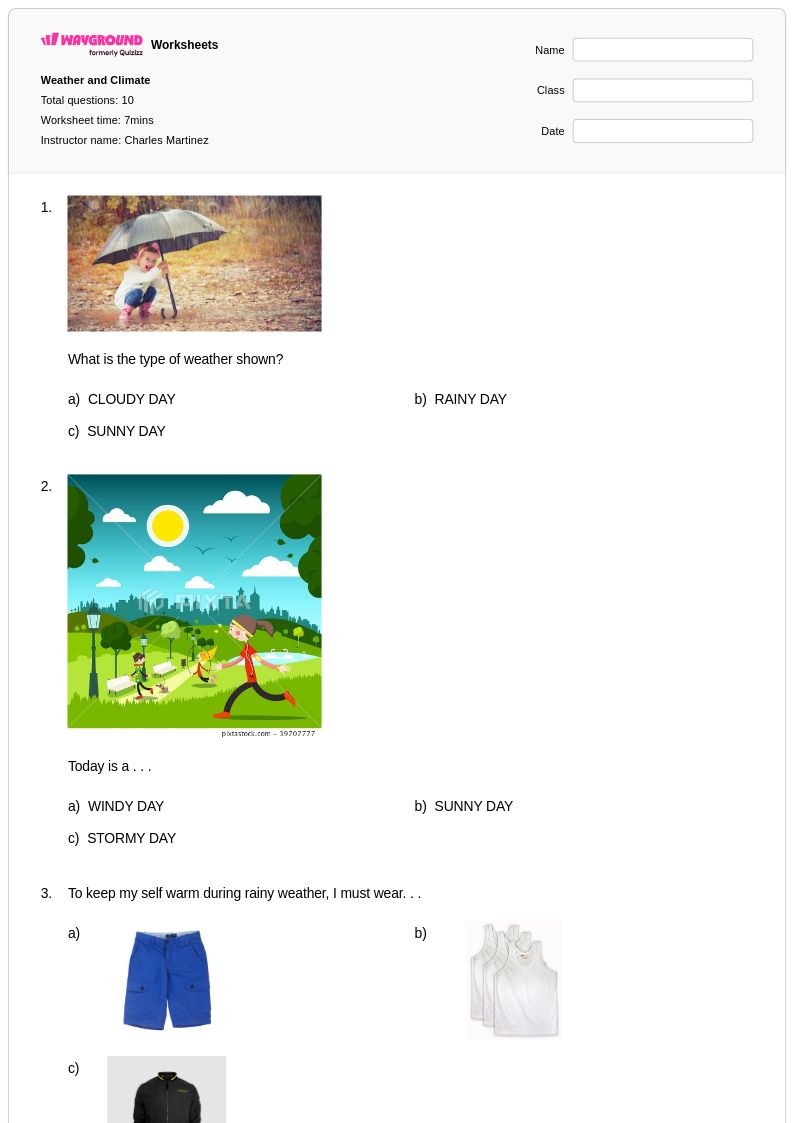
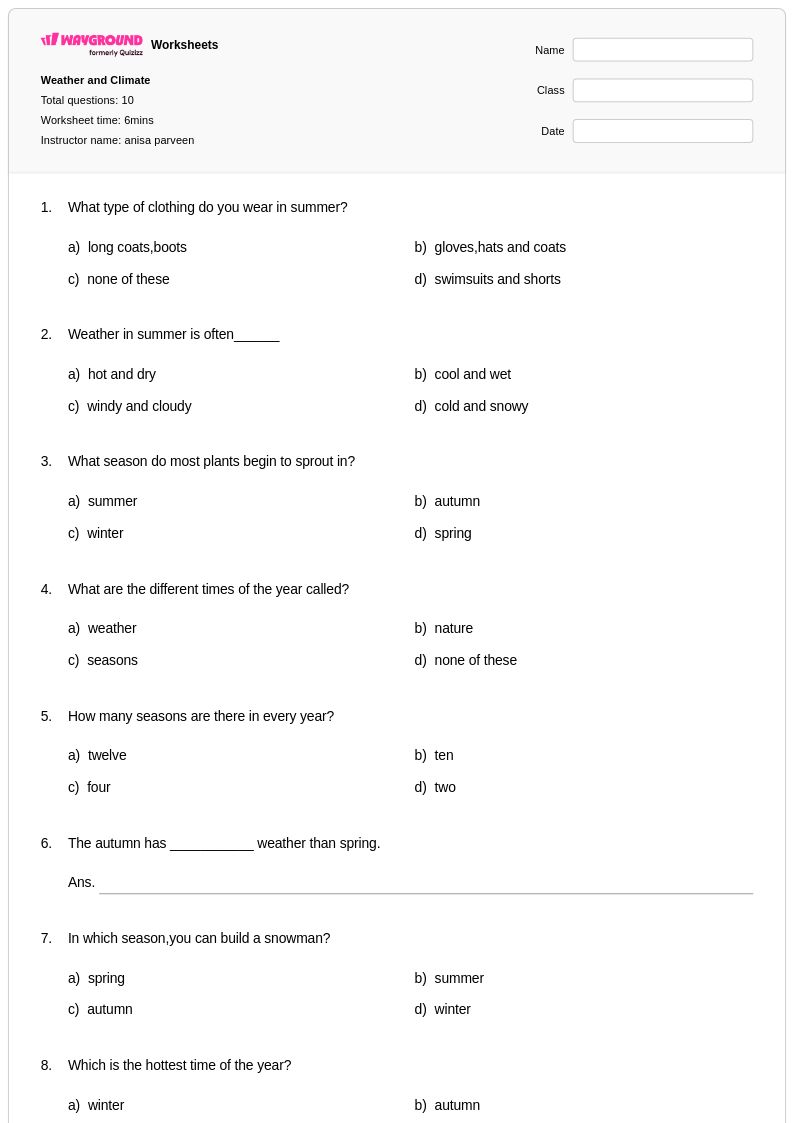
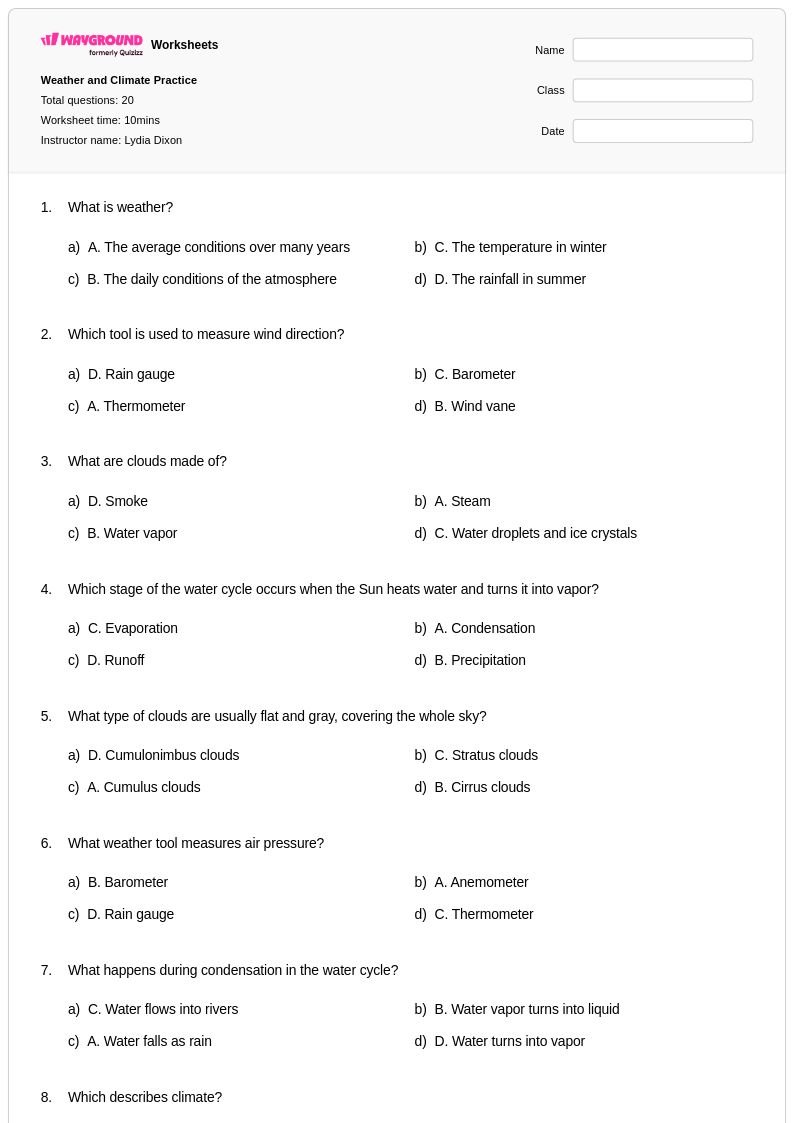
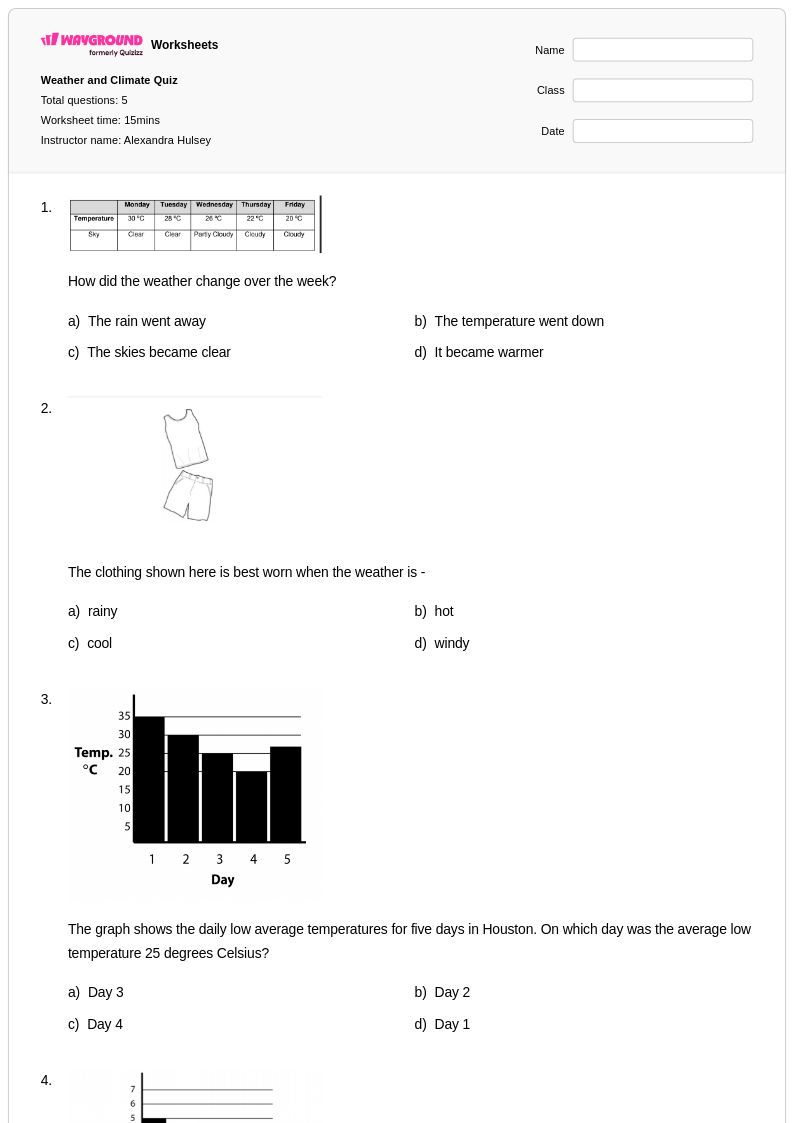
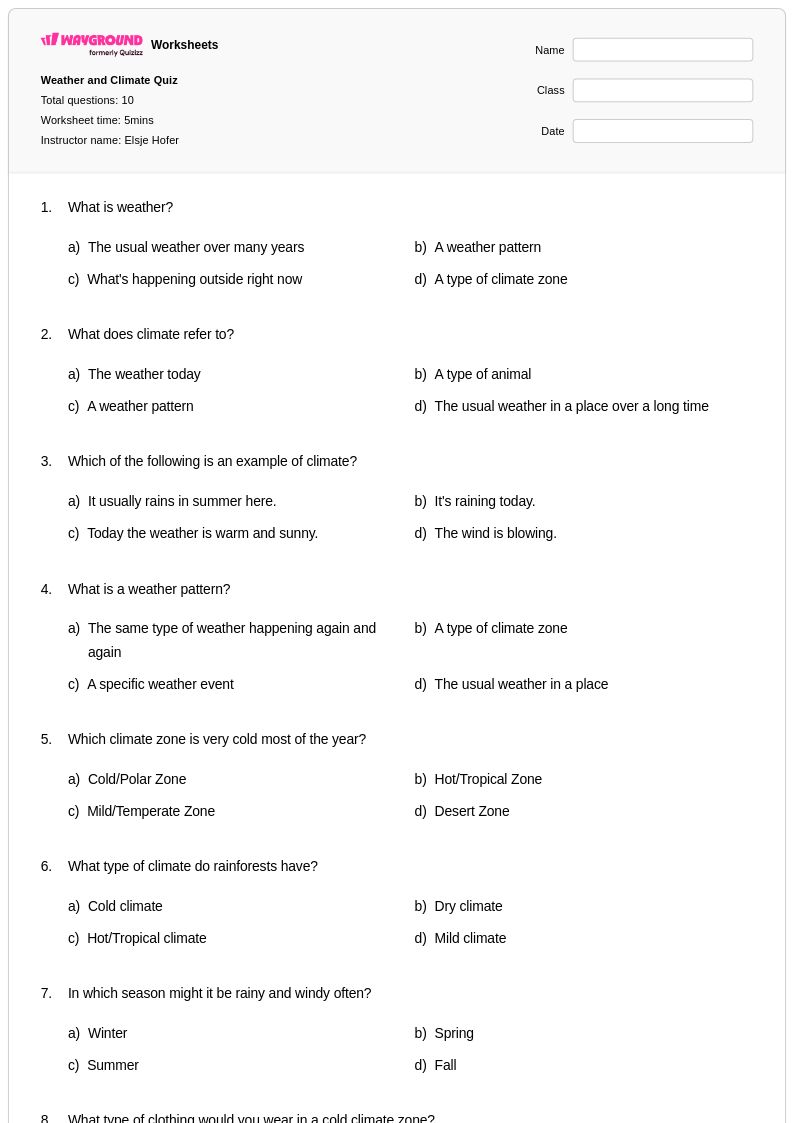
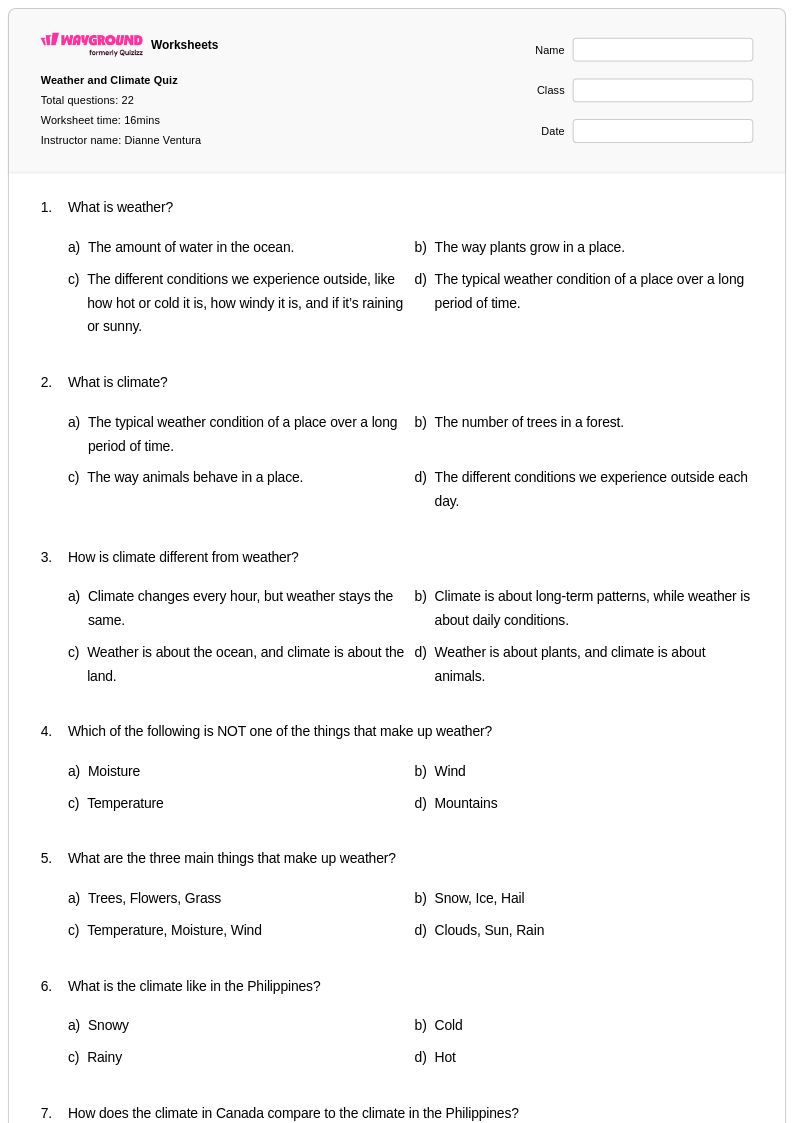
Weather and climate worksheets for Year 2 students available through Wayground (formerly Quizizz) provide young learners with engaging opportunities to explore fundamental meteorological concepts through hands-on practice. These carefully designed educational resources help second-grade students develop essential observational skills as they learn to identify different types of weather patterns, understand seasonal changes, and distinguish between daily weather conditions and long-term climate patterns. The comprehensive collection includes practice problems that encourage students to record weather observations, interpret simple weather symbols, and make basic predictions about weather changes. Teachers can access complete answer keys alongside these free printables, ensuring efficient grading and immediate feedback opportunities that reinforce student understanding of atmospheric phenomena appropriate for their developmental level.
Wayground (formerly Quizizz) empowers educators with millions of teacher-created weather and climate resources specifically tailored for Year 2 instruction, featuring robust search and filtering capabilities that enable quick identification of materials aligned with specific learning objectives and educational standards. The platform's differentiation tools allow teachers to customize worksheets based on individual student needs, providing both remediation support for struggling learners and enrichment opportunities for advanced students ready to explore more complex weather concepts. Available in both printable pdf formats and interactive digital versions, these versatile resources streamline lesson planning while offering flexible implementation options that accommodate diverse classroom environments. Teachers can seamlessly integrate these materials into daily instruction, homework assignments, or assessment activities, creating consistent opportunities for skill practice that builds meteorological literacy and scientific observation capabilities essential for elementary earth science education.
FAQs
How do I teach students the difference between weather and climate?
The most effective approach is to anchor the distinction in time scale: weather describes atmospheric conditions over hours or days, while climate describes patterns over decades or centuries. Start with local examples students can observe directly, such as today's temperature versus the average temperature for that month over 30 years. Once students internalize this time-scale framework, they can apply it to more complex comparisons like regional climate zones and seasonal weather variability.
What are the most common misconceptions students have about weather and climate?
The most persistent misconception is that a single cold day or unusual storm disproves climate trends, which reflects a confusion between short-term weather events and long-term climate patterns. Students also frequently conflate 'climate change' with 'weather change,' not understanding that climate is a statistical average rather than a daily experience. Targeted practice with climate graphs and data interpretation helps students distinguish between natural variability and long-term shifts.
What exercises help students practice reading and interpreting climate graphs?
Effective practice exercises ask students to extract specific data points from climate graphs, calculate average temperatures or precipitation totals, and compare two or more climate zones side by side. Asking students to identify seasonal patterns, describe trends over time, and draw conclusions about a region's climate type builds the analytical skills needed for earth science assessments. Pairing graph interpretation with scientific vocabulary reinforcement ensures students can both read data and communicate findings accurately.
How can I differentiate weather and climate instruction for students at different ability levels?
For students who need additional support, simplifying answer choices and using read-aloud features can reduce barriers to accessing the content without altering the core learning objective. On Wayground, teachers can apply individual accommodations such as extended time, reduced answer choices, and read-aloud settings to specific students, while the rest of the class receives standard settings without any notification. Advanced learners can be pushed toward more complex climate pattern analysis tasks, including interpreting anomaly data and connecting climate systems to geographic and atmospheric variables.
How do I use Wayground's weather and climate worksheets in my classroom?
Wayground's weather and climate worksheets are available as printable PDFs for traditional classroom use and in digital formats for technology-integrated environments, giving teachers flexibility based on their setup. Teachers can also host the worksheets as a live quiz directly on Wayground, which enables real-time response tracking and immediate feedback. Complete answer keys are included with every worksheet, making it straightforward to assign independent practice, use materials as formative assessments, or structure guided review sessions.
How do I build scientific vocabulary around weather and climate for middle school students?
Vocabulary development is most effective when terms like 'precipitation,' 'humidity,' 'air mass,' and 'climate zone' are introduced in context rather than as isolated definitions. Practice problems that require students to use these terms to explain data or describe phenomena reinforce both comprehension and retention. Incorporating earth science vocabulary into worksheet activities that involve real data analysis ensures students connect terminology to observable concepts rather than memorizing definitions in the abstract.