
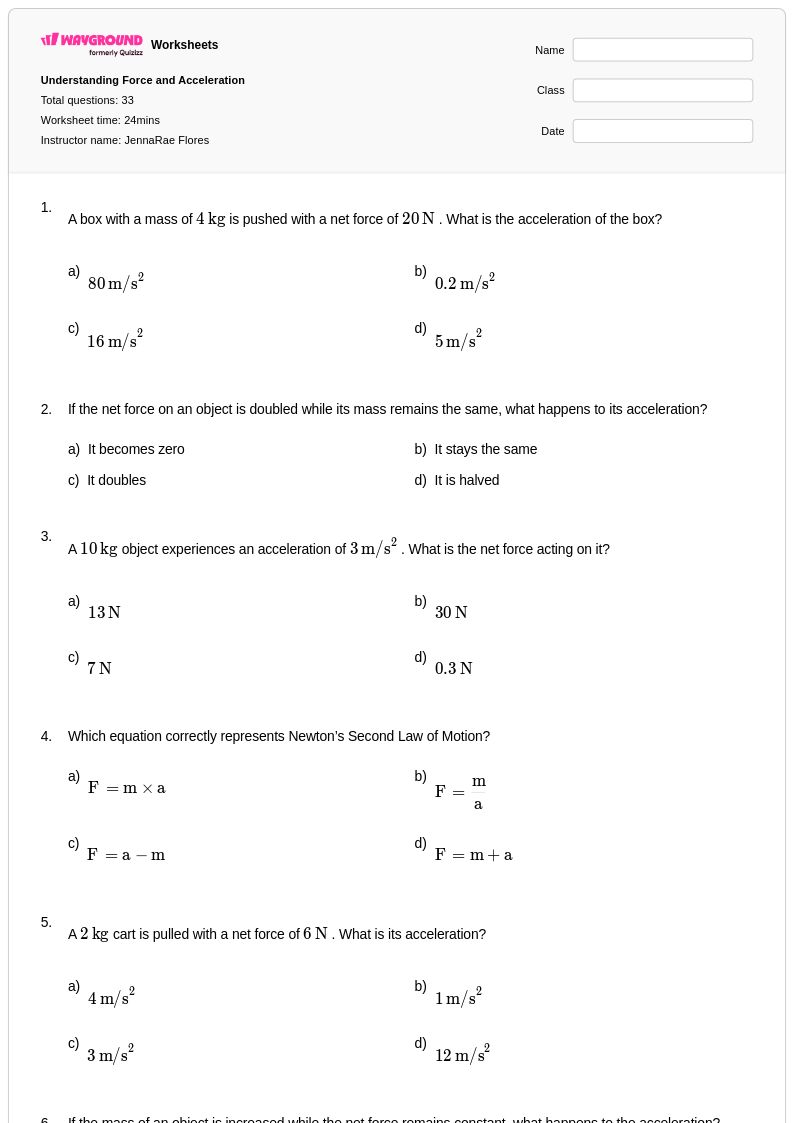
33 Q
8th - Uni
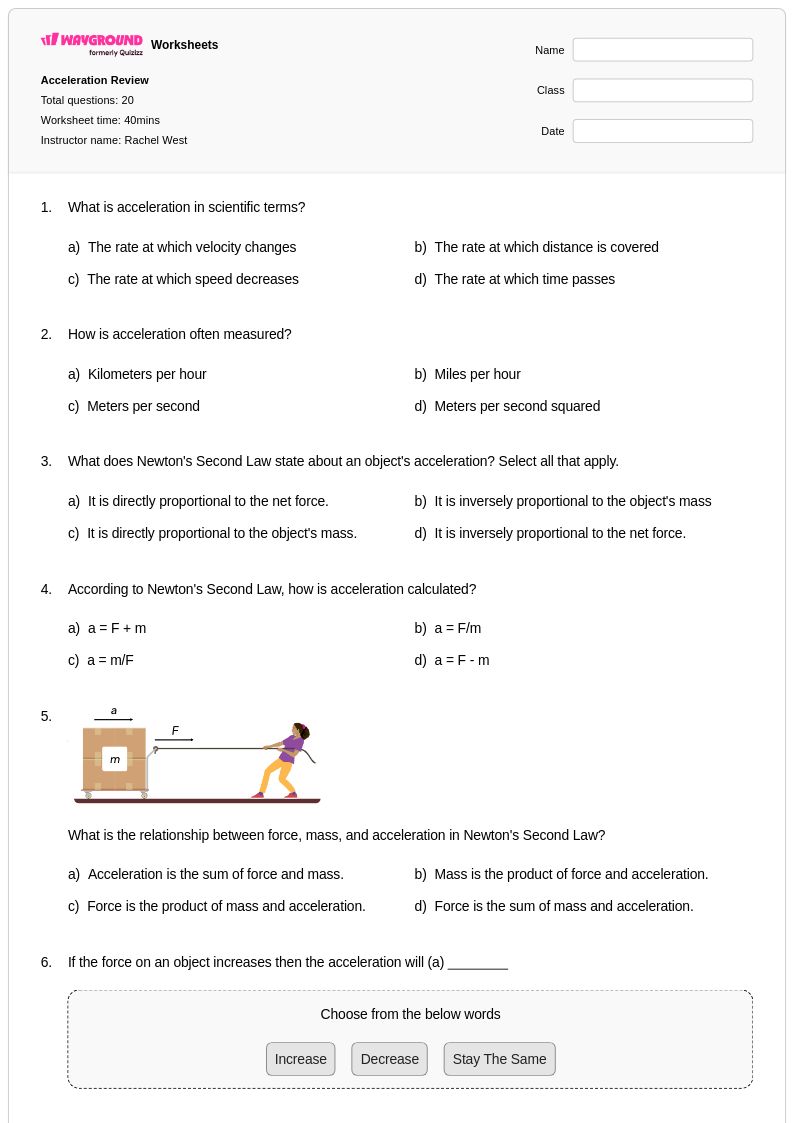
20 Q
8th - Uni
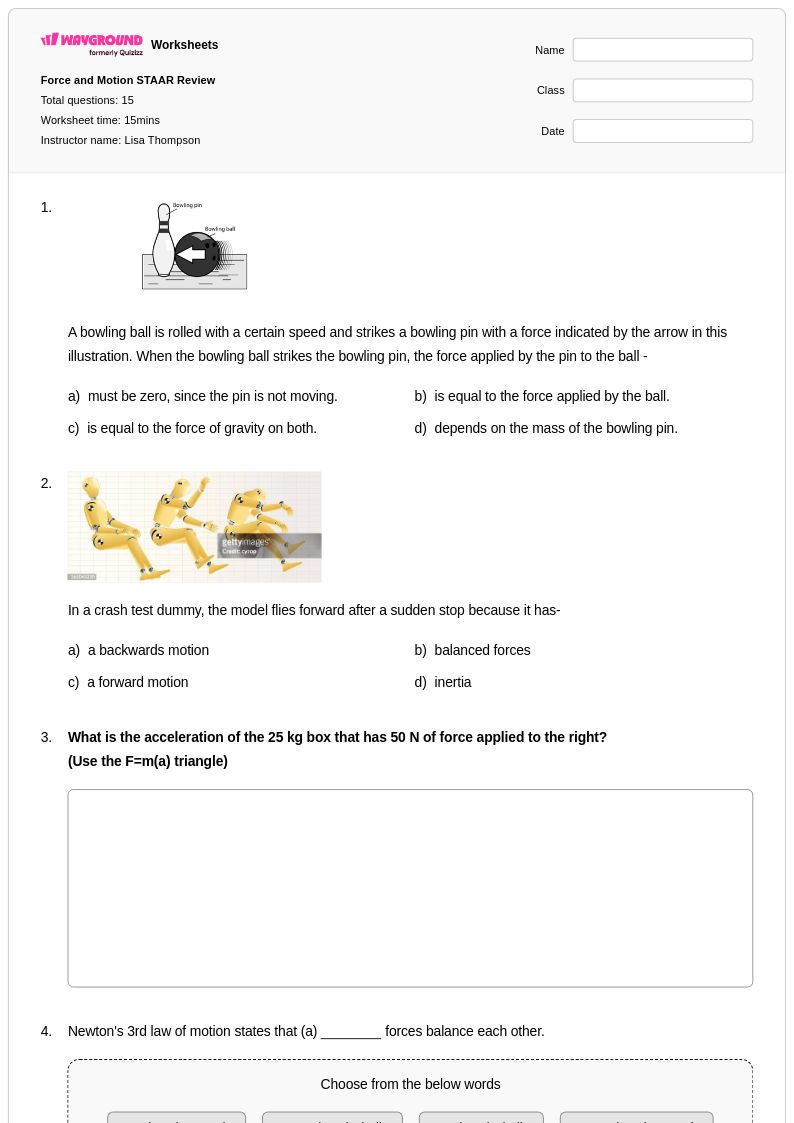
15 Q
8th - Uni
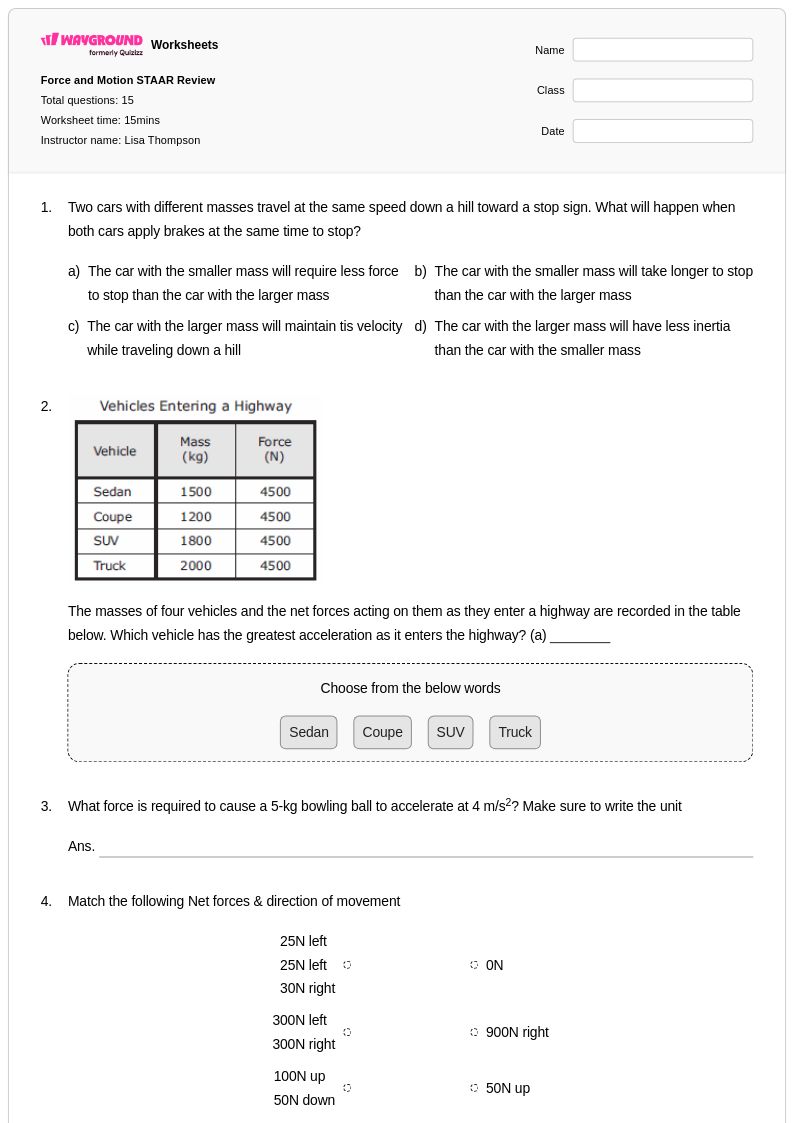
15 Q
8th - Uni
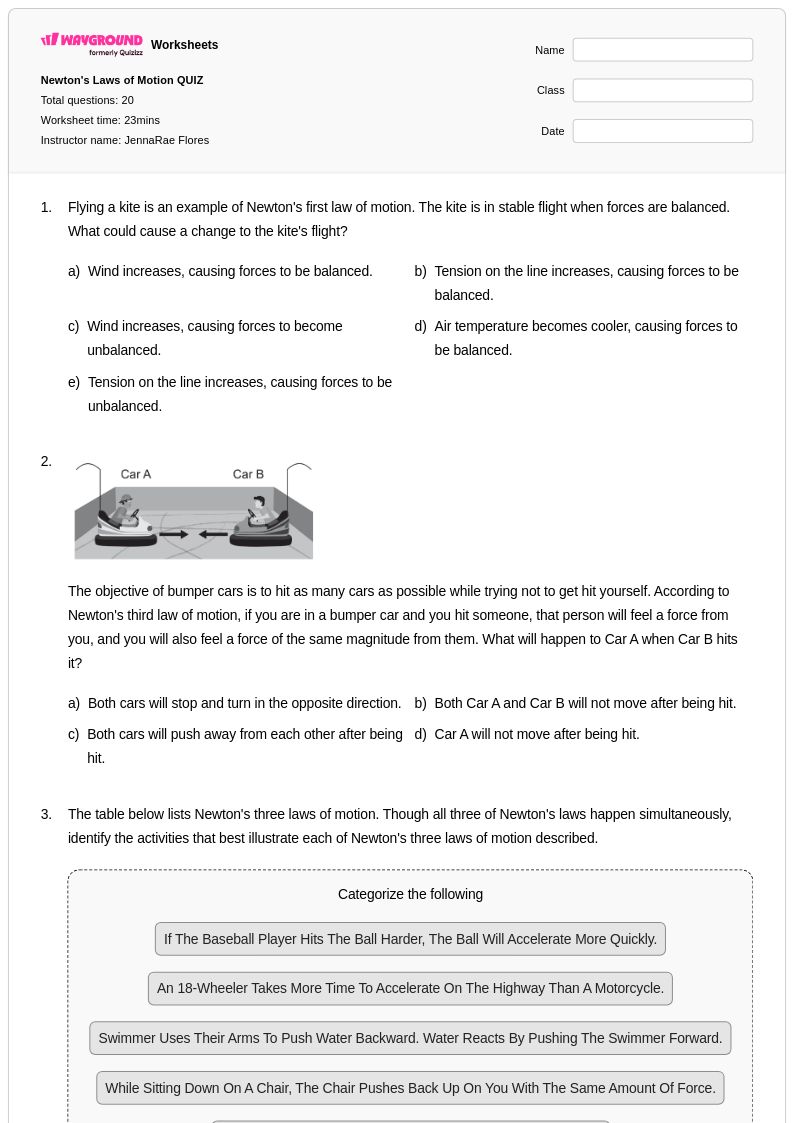
22 Q
8th - Uni
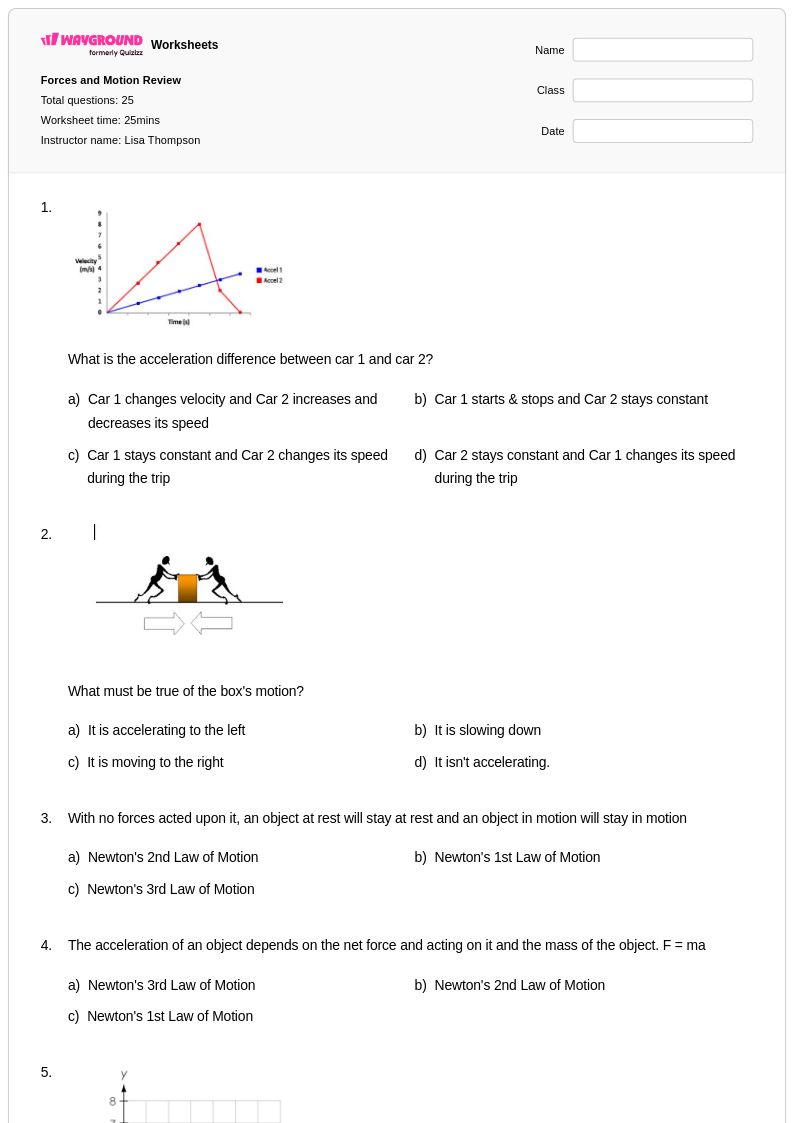
25 Q
8th - Uni
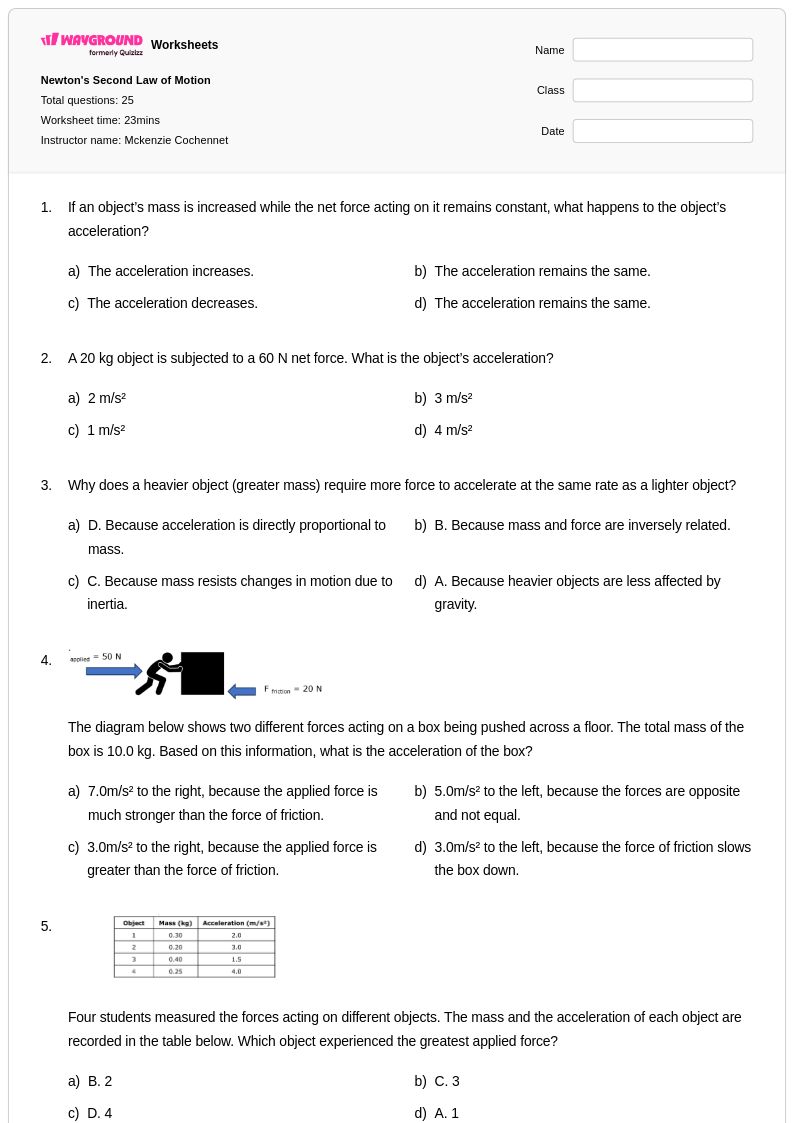
25 Q
8th - Uni

25 Q
8th - Uni
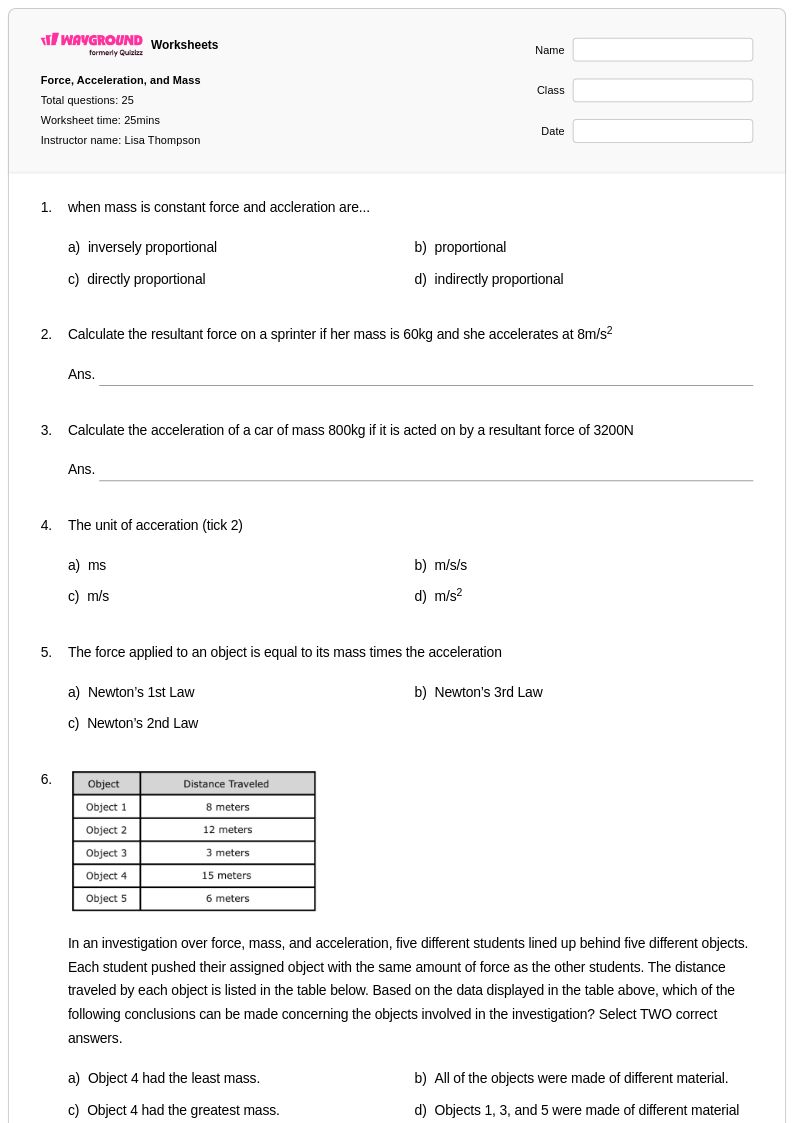
25 Q
8th - Uni
25 Q
8th - Uni
28 Q
8th - Uni
25 Q
6th - Uni
25 Q
7th - Uni
25 Q
5th - Uni
25 Q
8th - Uni
21 Q
9th - 12th
25 Q
8th - Uni
25 Q
8th - Uni
20 Q
7th - 12th
25 Q
5th - Uni
20 Q
11th
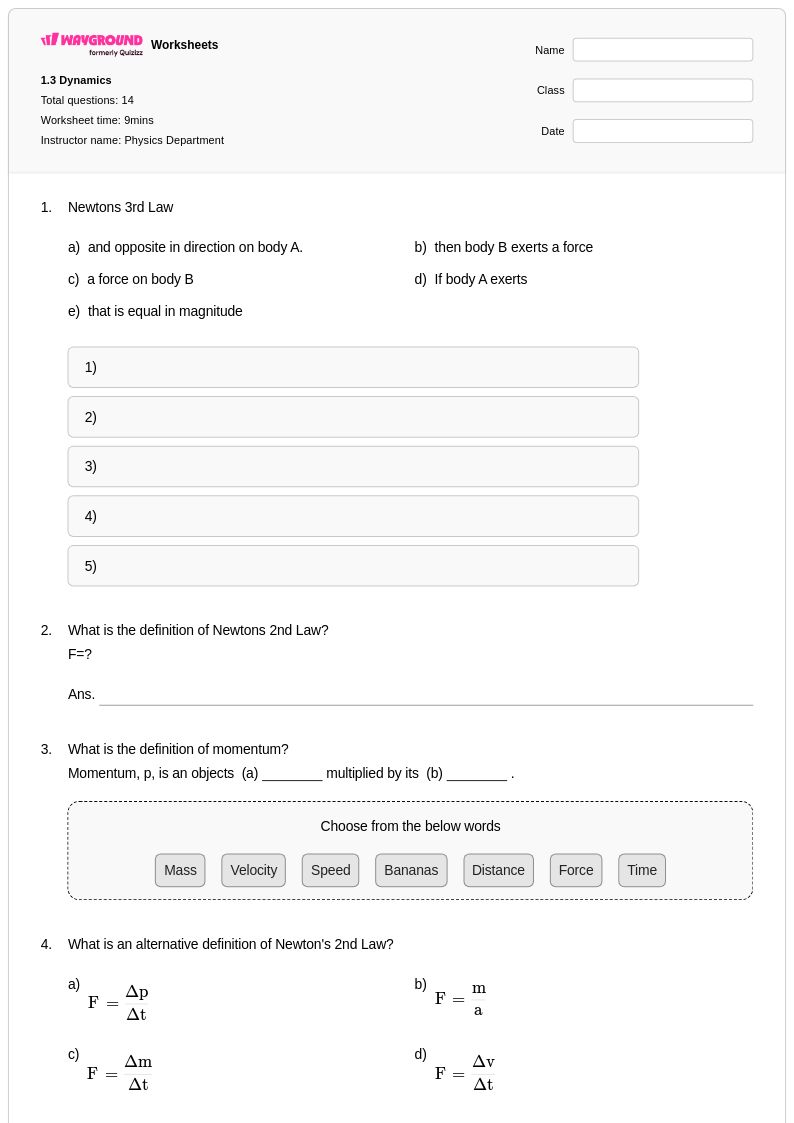
14 Q
11th
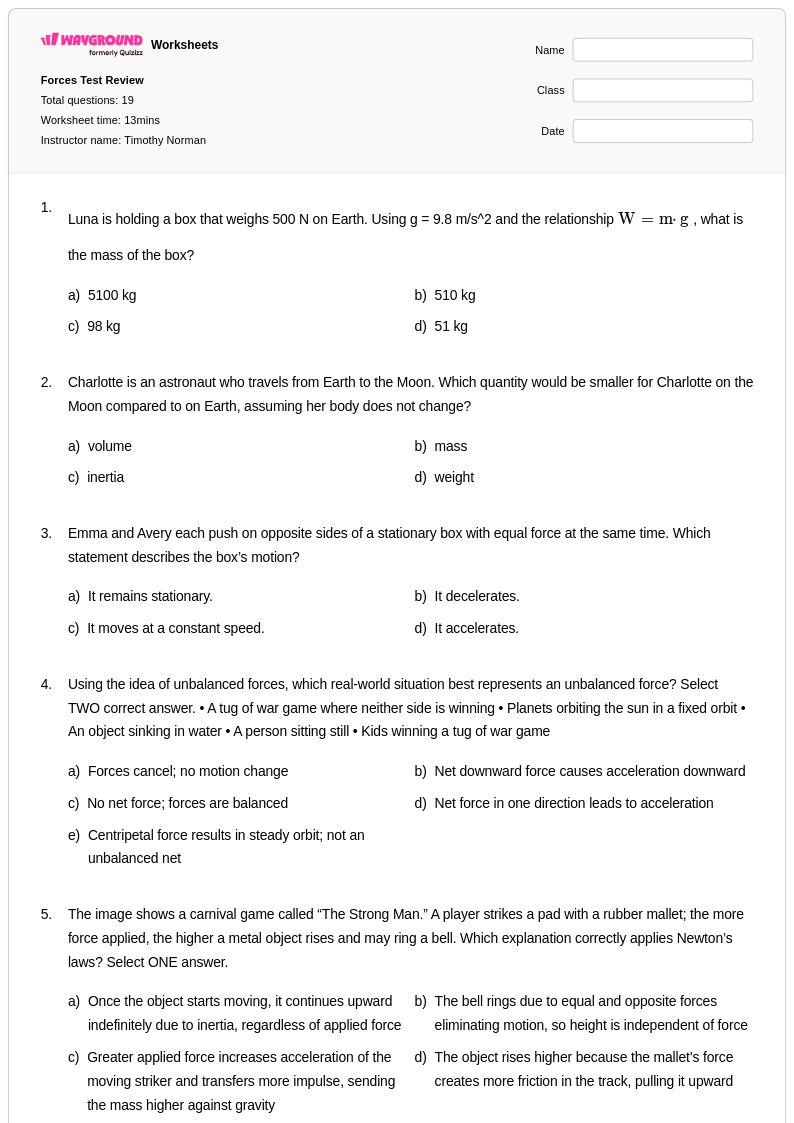
19 Q
11th
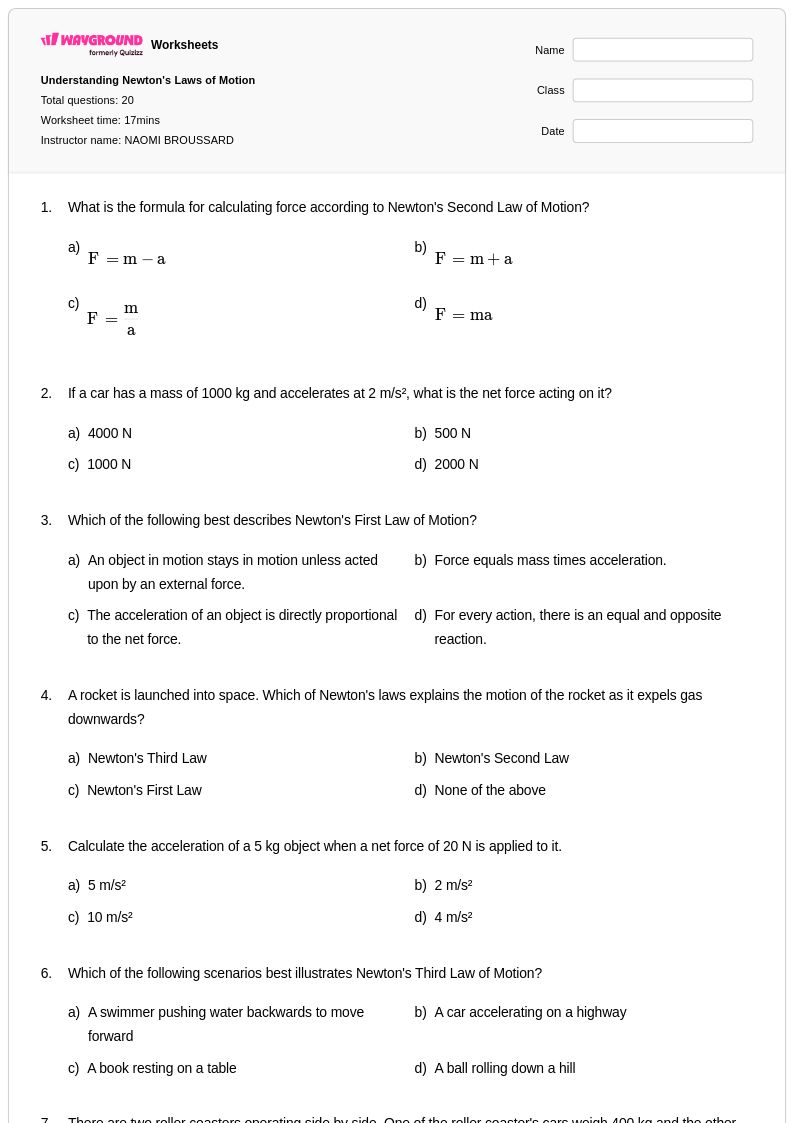
20 Q
8th - Uni
Explore Net Force and Acceleration Worksheets by Grades
Explore Other Subject Worksheets for year 11
Explore printable Net Force and Acceleration worksheets for Year 11
Net force and acceleration worksheets for Year 11 students available through Wayground (formerly Quizizz) provide comprehensive practice with Newton's second law of motion and its practical applications. These expertly designed resources strengthen students' ability to calculate net forces acting on objects, determine acceleration values using F=ma equations, and analyze the relationship between force vectors and resulting motion. The worksheets include practice problems ranging from basic force calculations to complex scenarios involving multiple forces, friction, and inclined planes, with complete answer keys provided to support independent learning. Students work through free printable exercises that challenge them to draw force diagrams, resolve forces into components, and solve real-world physics problems involving cars, projectiles, and mechanical systems.
Wayground's extensive collection of net force and acceleration materials supports Year 11 physics teachers with millions of educator-created resources that align with physics curriculum standards and learning objectives. The platform's advanced search and filtering capabilities allow teachers to quickly locate worksheets targeting specific skills, from introductory force concepts to advanced acceleration calculations involving variable forces. These differentiation tools enable instructors to customize problem sets for diverse learning needs, offering both remediation support for struggling students and enrichment challenges for advanced learners. The flexible format options include downloadable PDF versions for traditional classroom use and digital formats for online instruction, making lesson planning efficient while providing multiple opportunities for skill practice, formative assessment, and exam preparation in this fundamental area of mechanics.
FAQs
How do I teach students the relationship between net force and acceleration?
What practice problems help students get better at calculating net force and acceleration?
What mistakes do students commonly make when working with net force and acceleration?
How can I differentiate net force and acceleration instruction for students at different levels?
How do I use Wayground's net force and acceleration worksheets in my classroom?