Free Printable Nitrogen Cycle Worksheets for Year 10
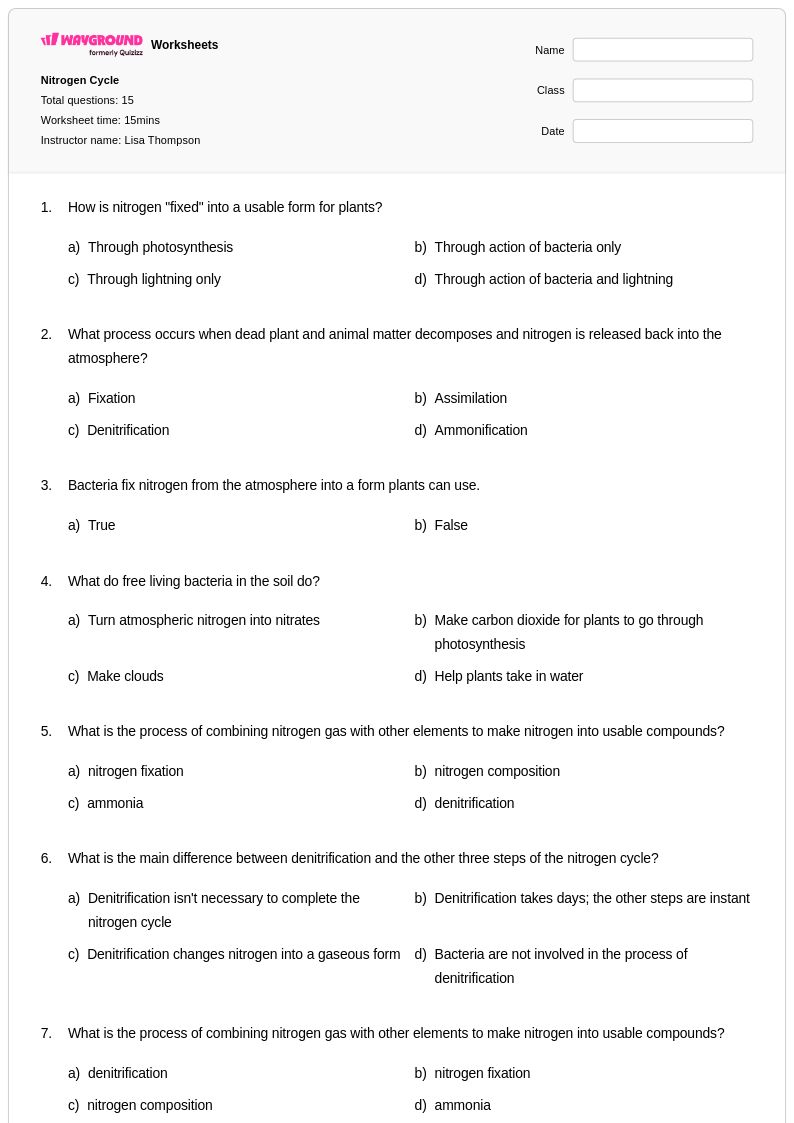
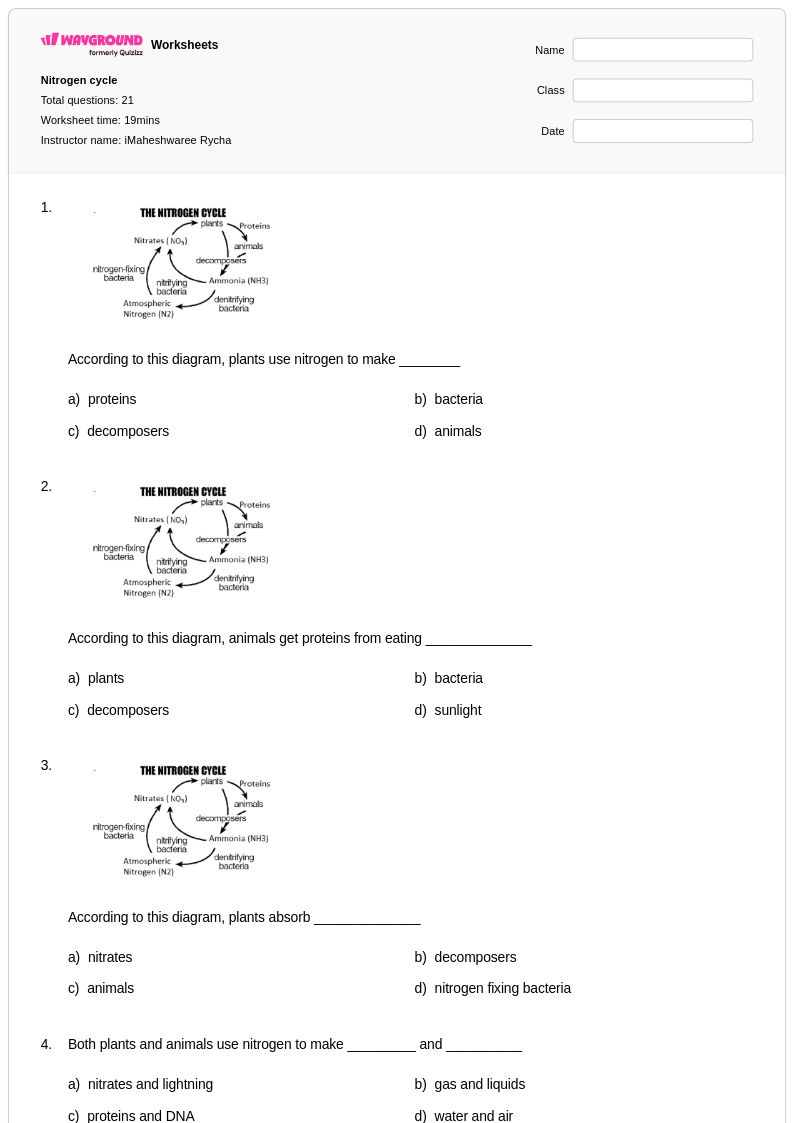
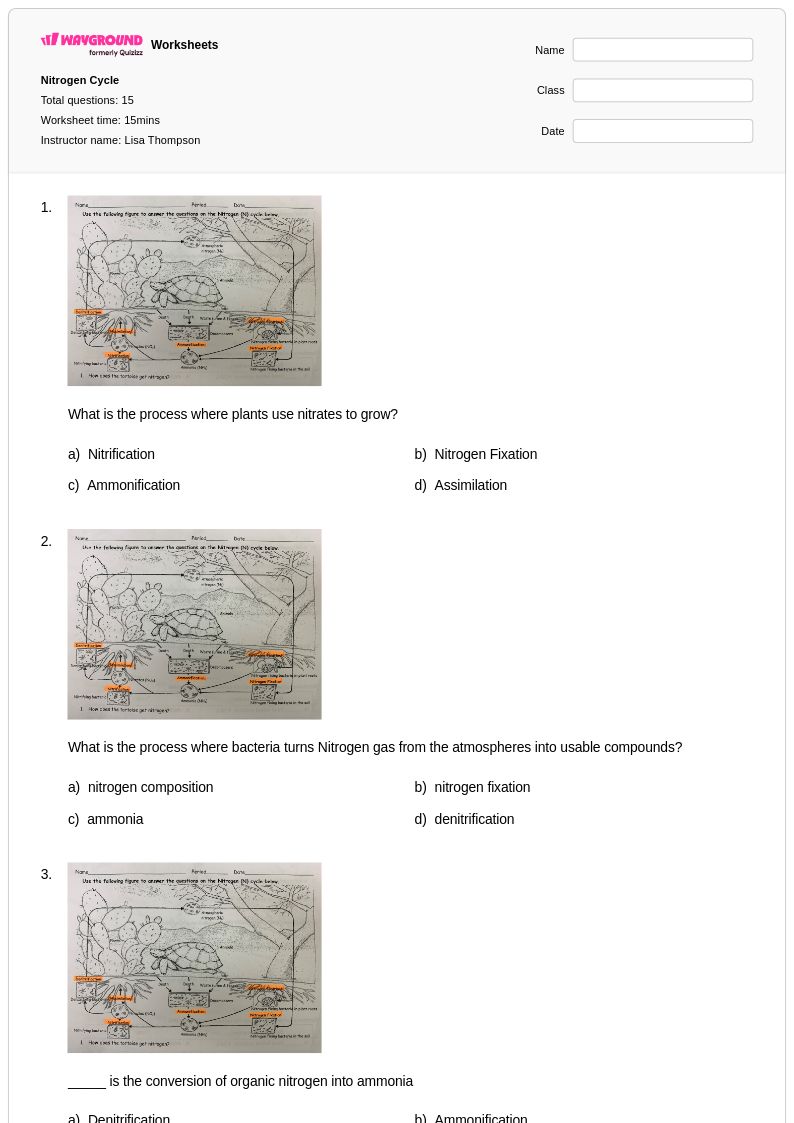
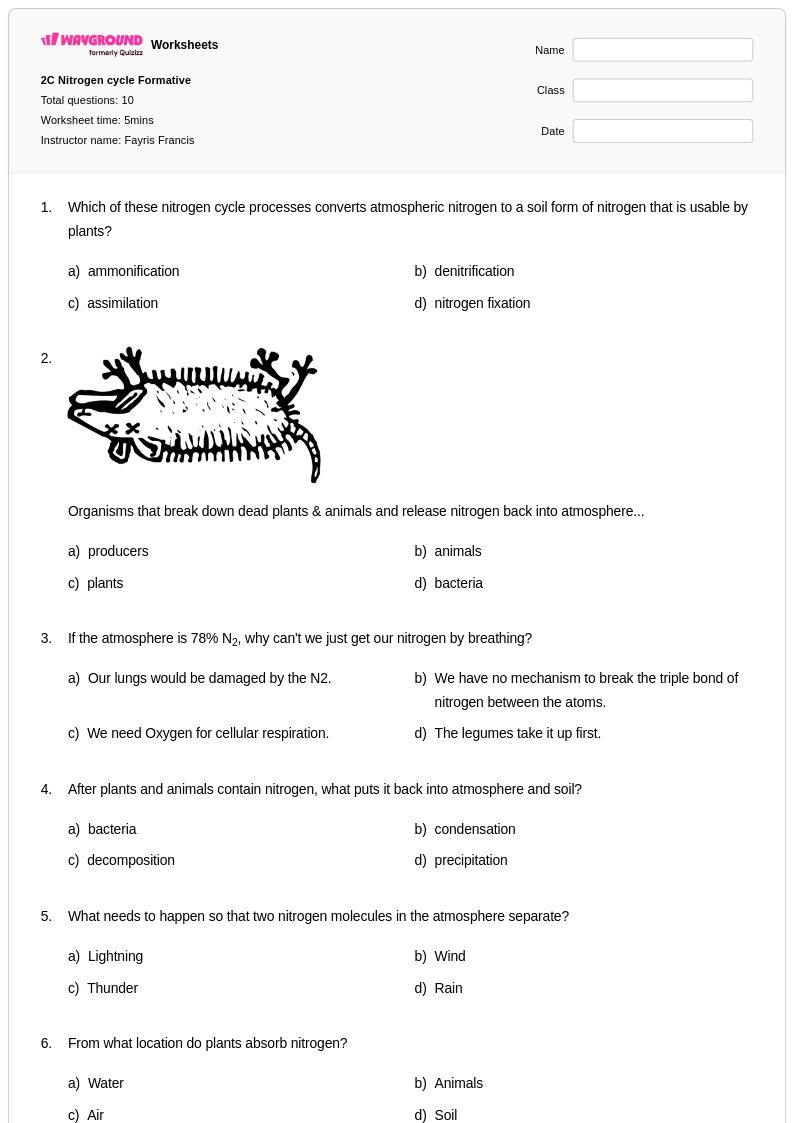
Explore Wayground's comprehensive Year 10 nitrogen cycle worksheets featuring free printables and PDFs with answer keys that help students master the essential processes of nitrogen fixation, nitrification, and denitrification through engaging practice problems.
Explore printable Nitrogen Cycle worksheets for Year 10
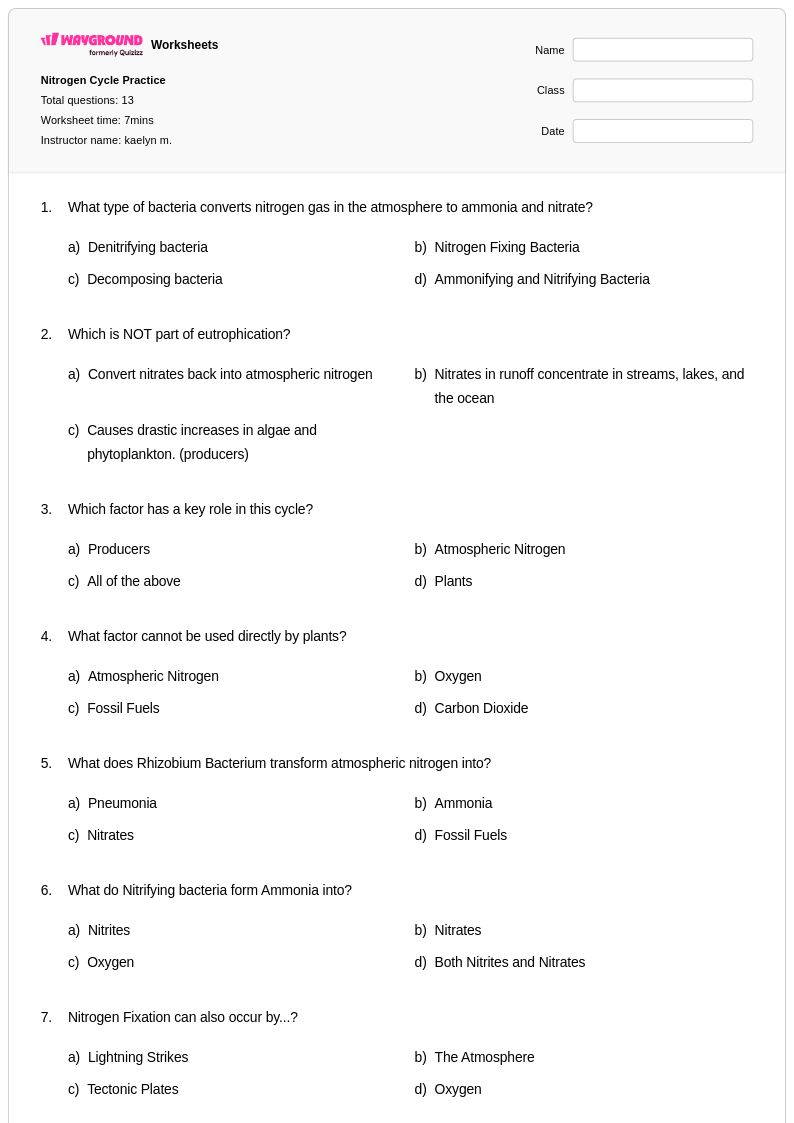
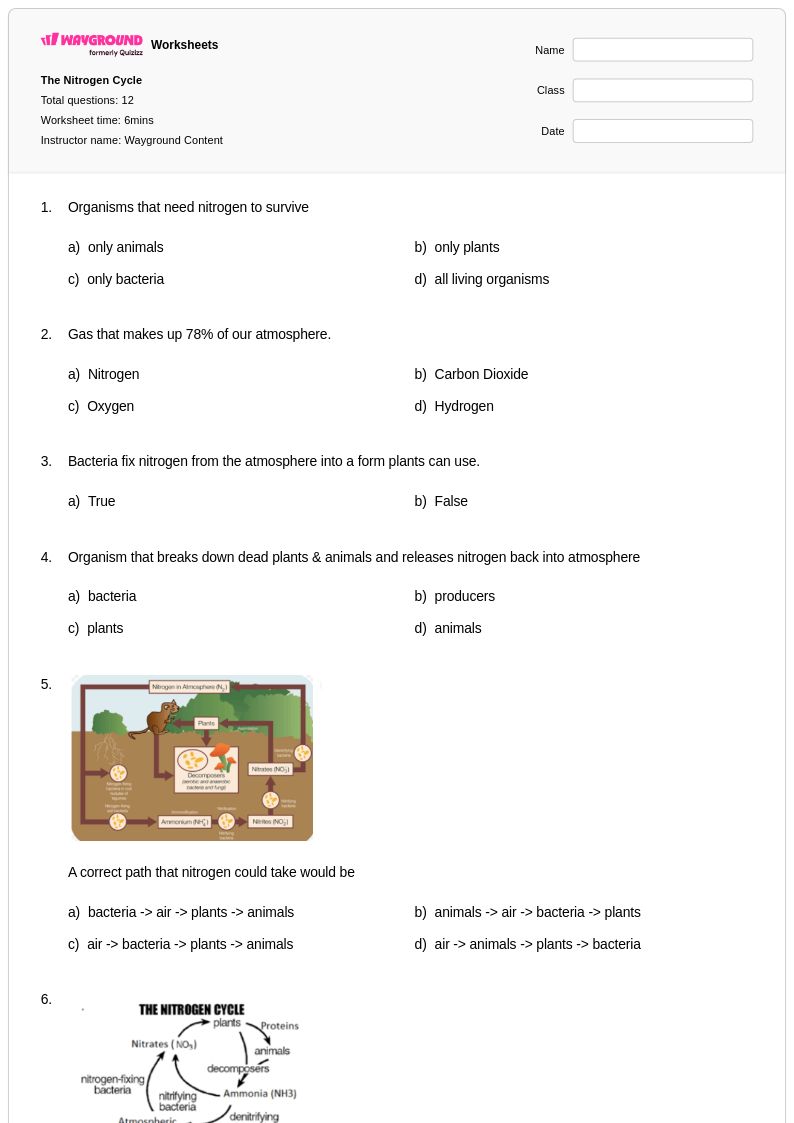
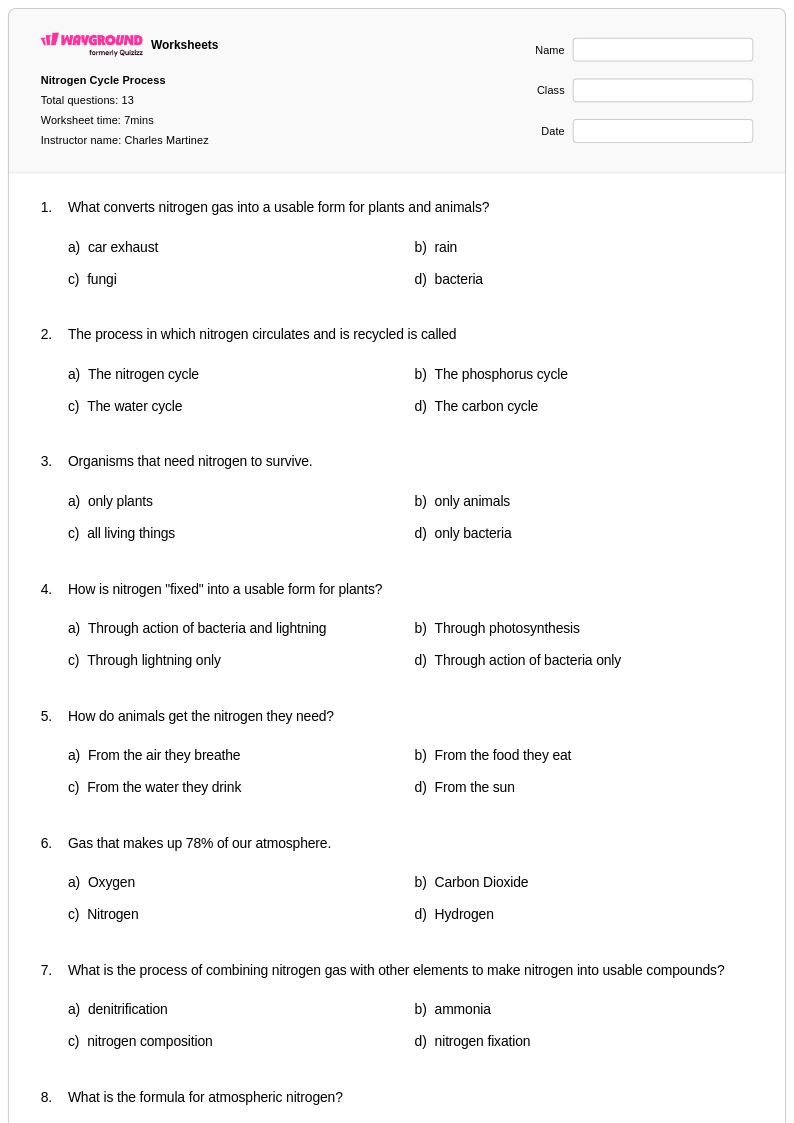
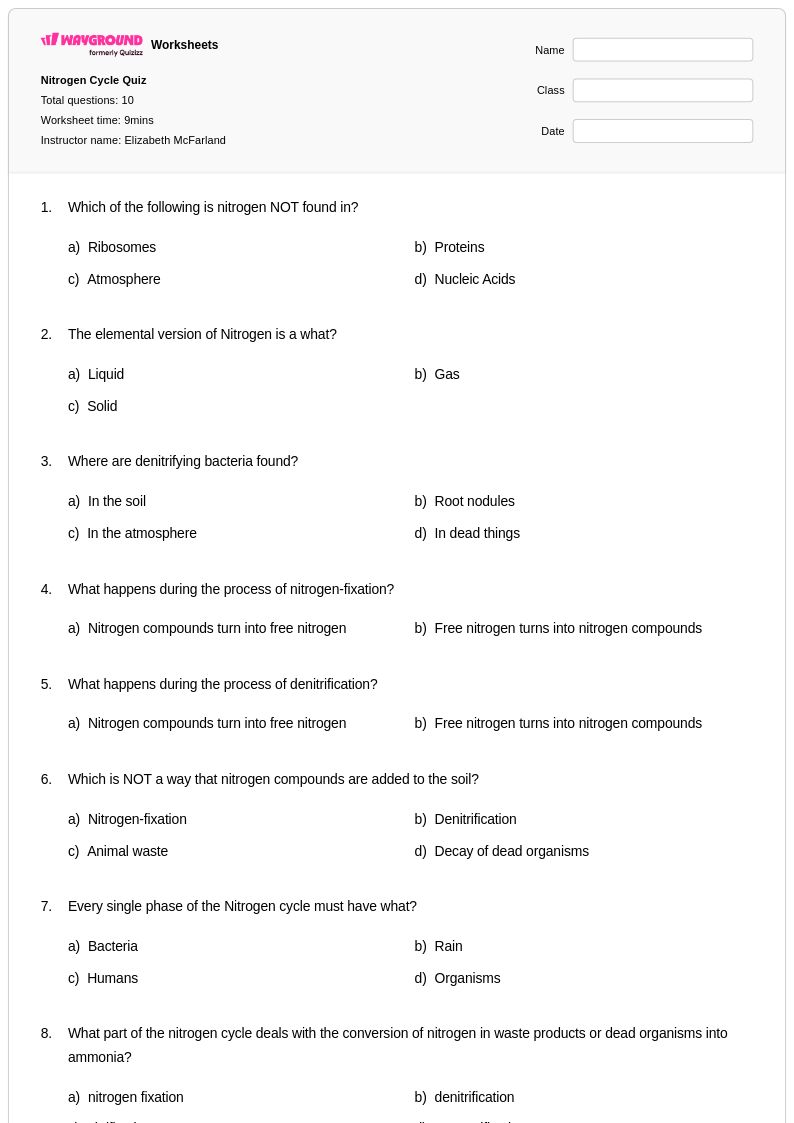
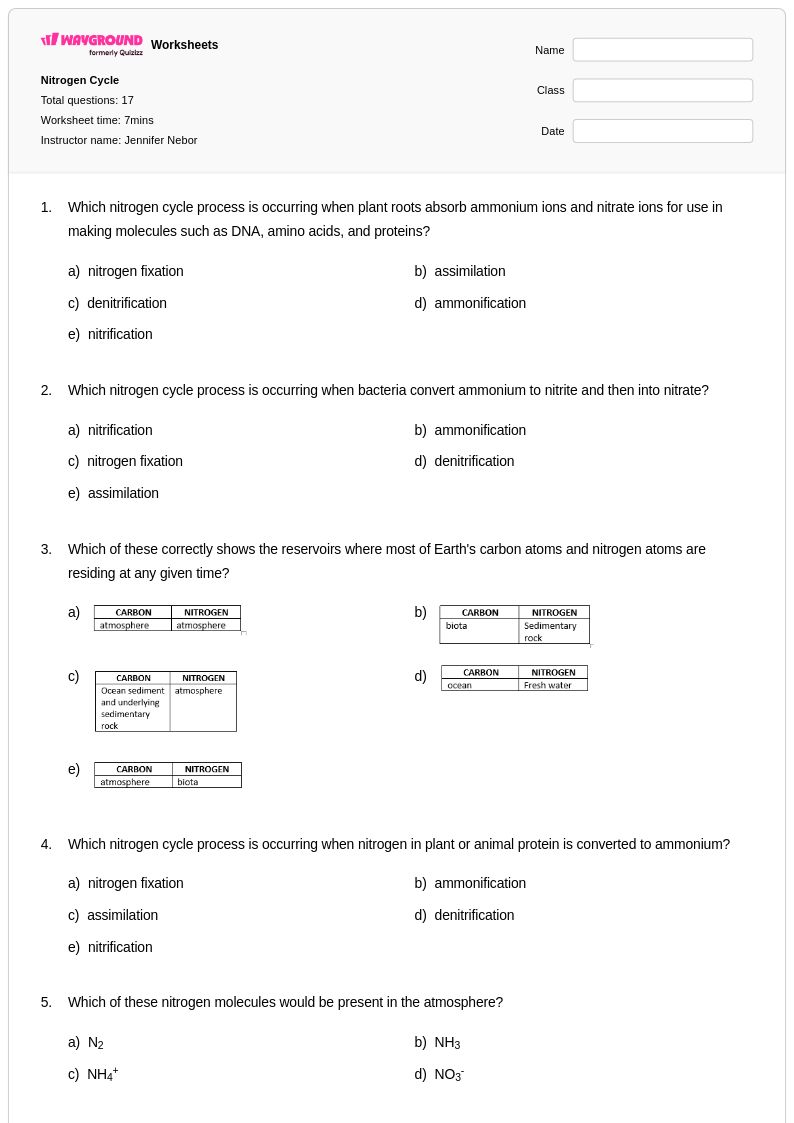
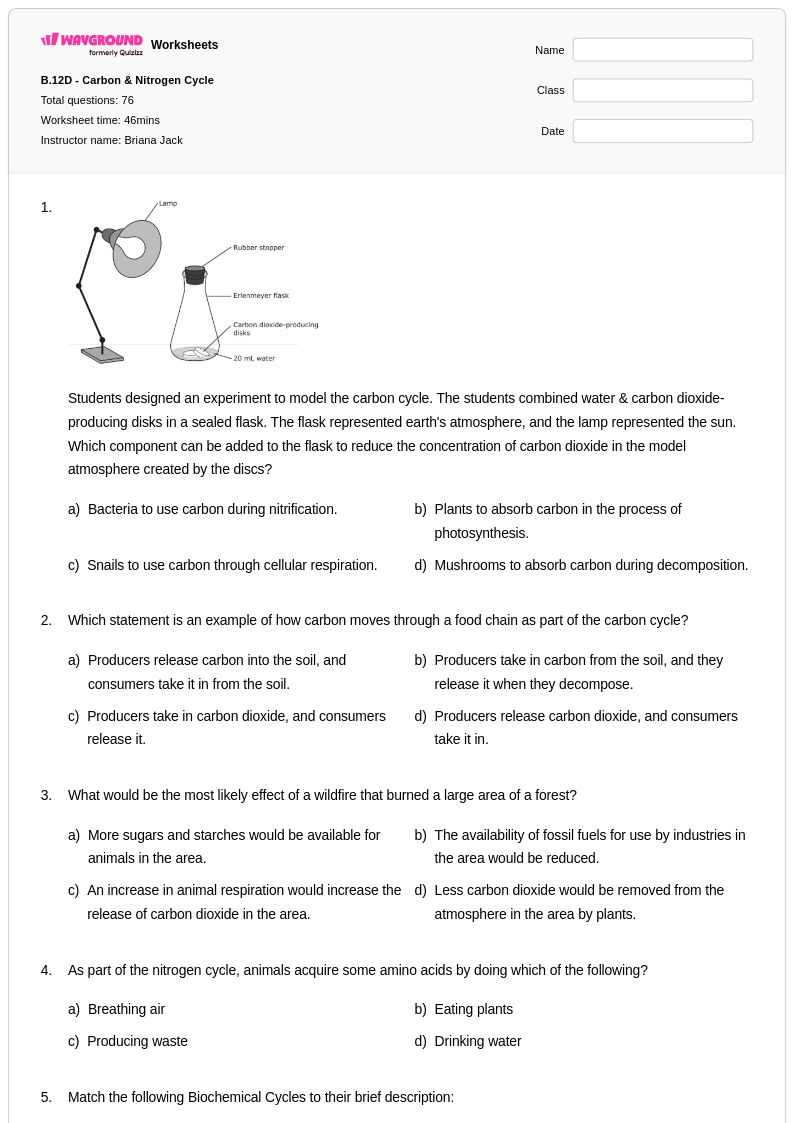
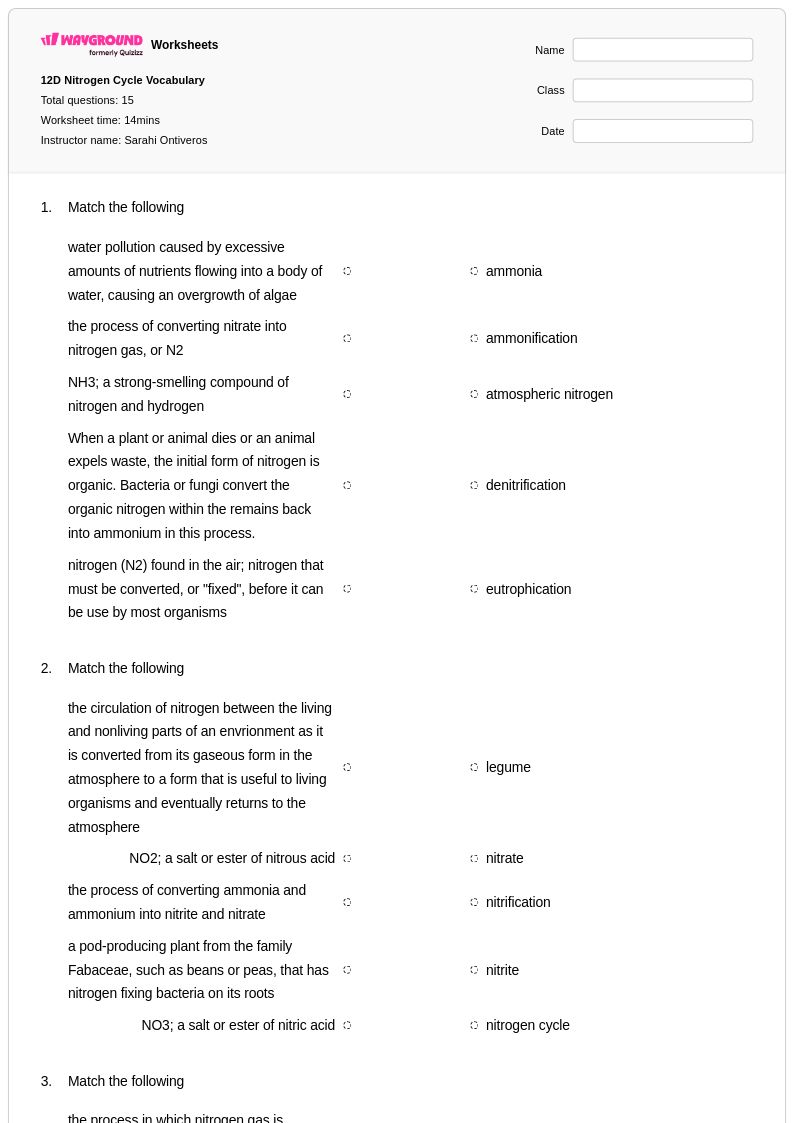
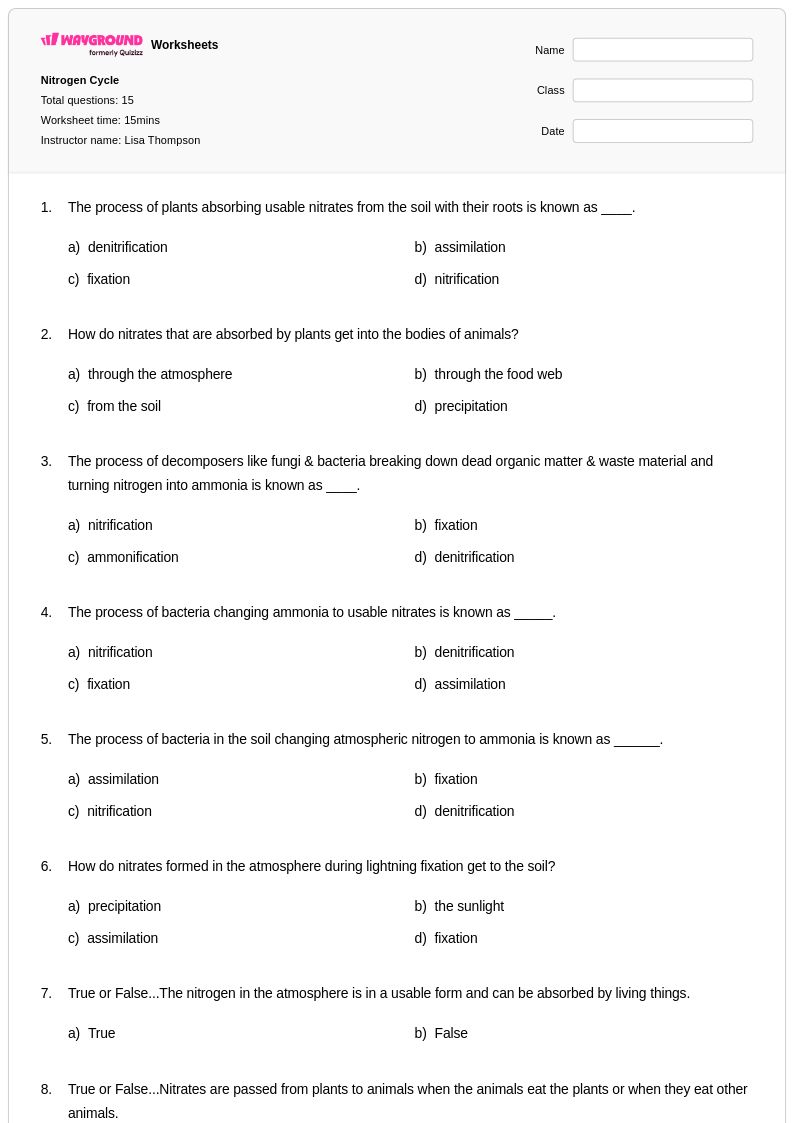
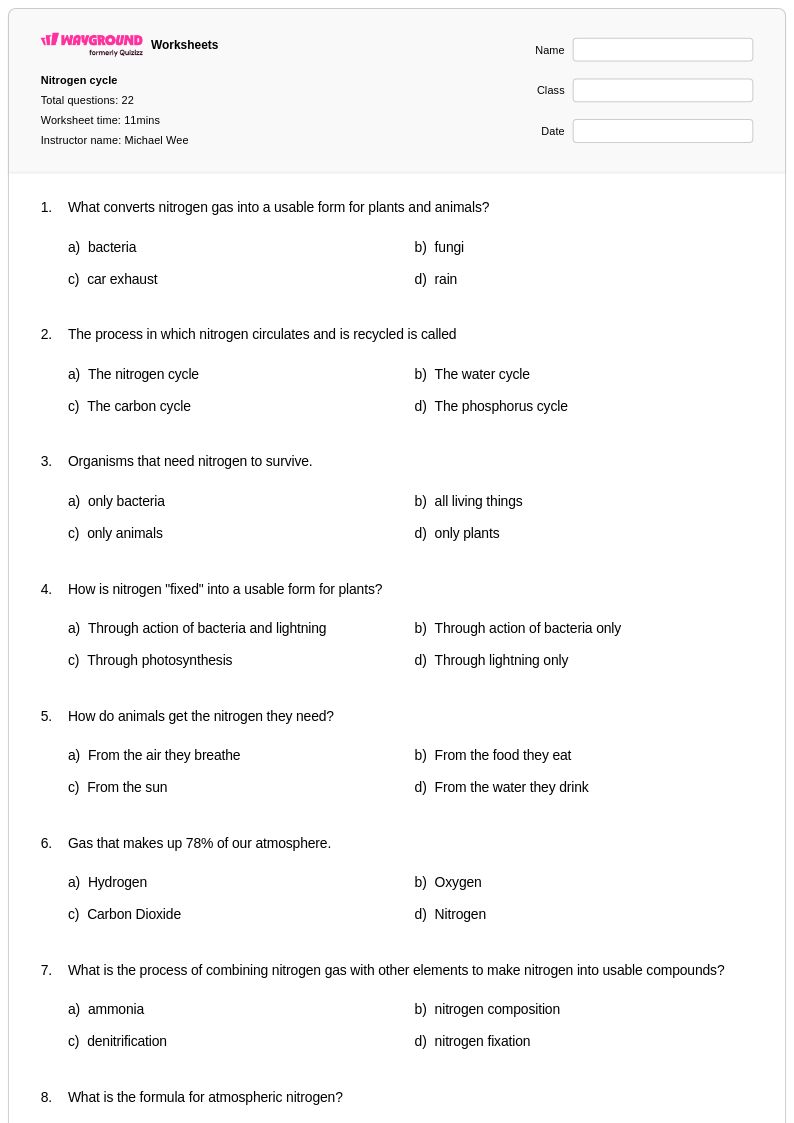
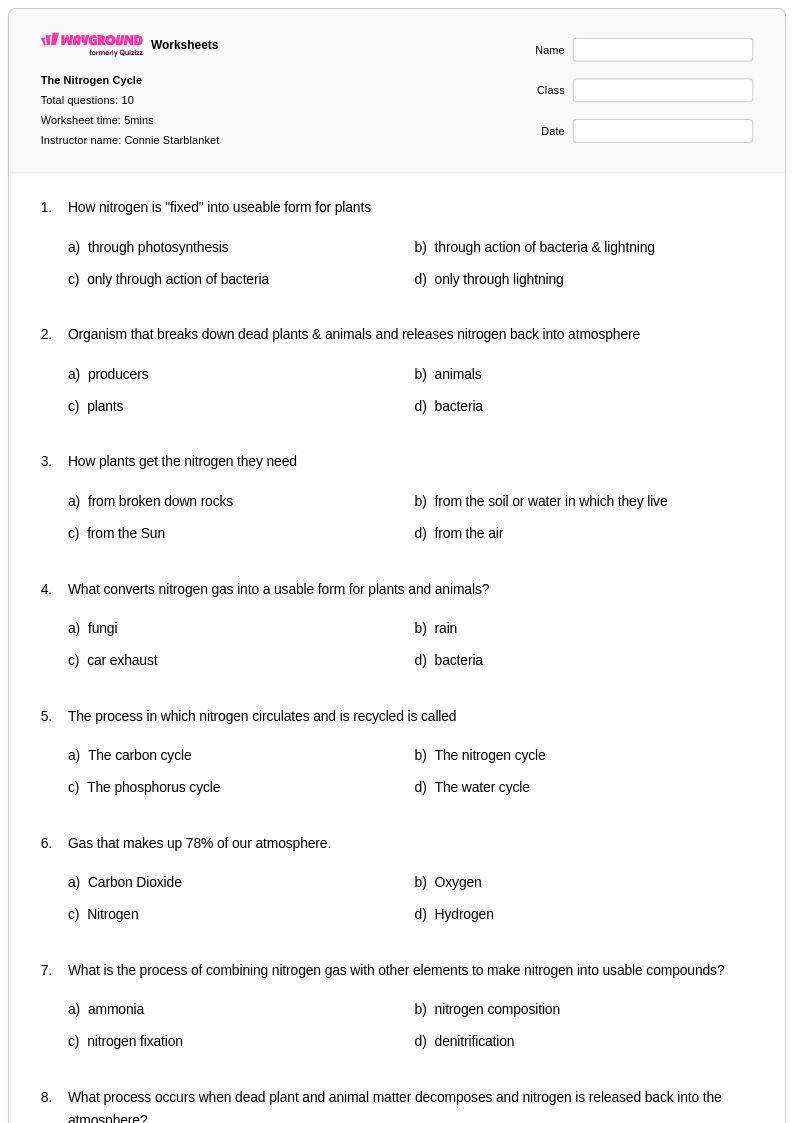
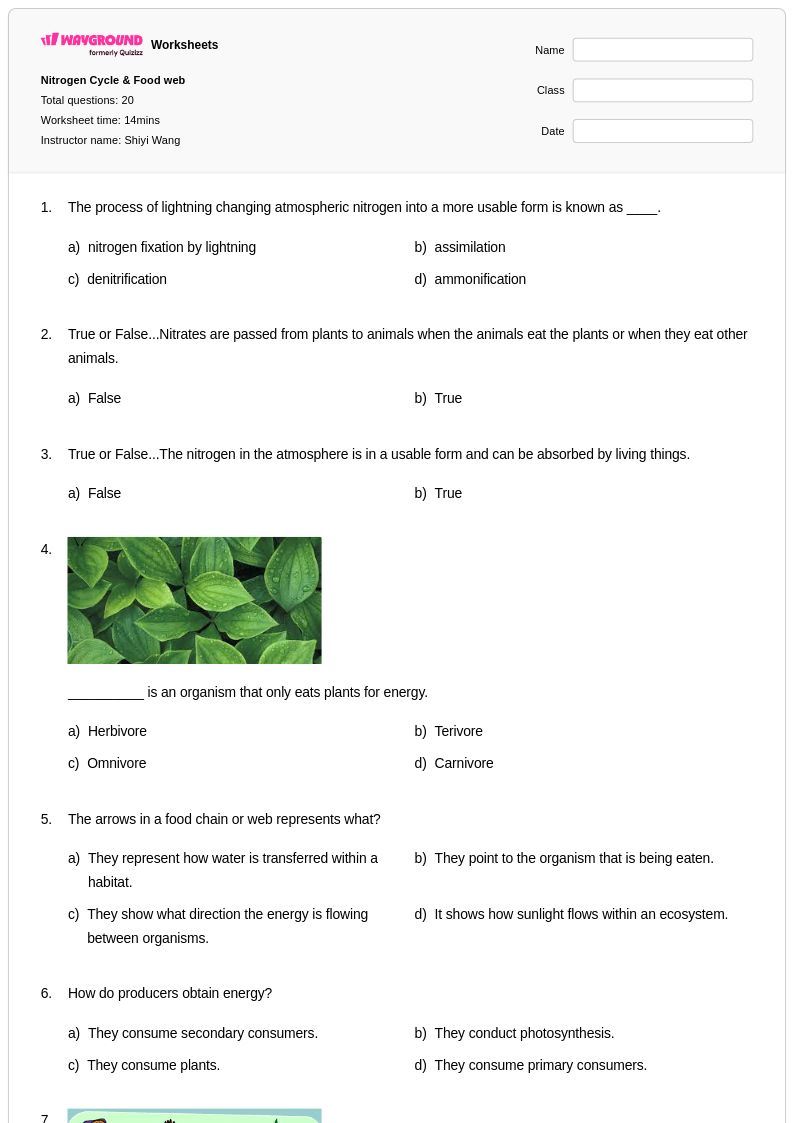
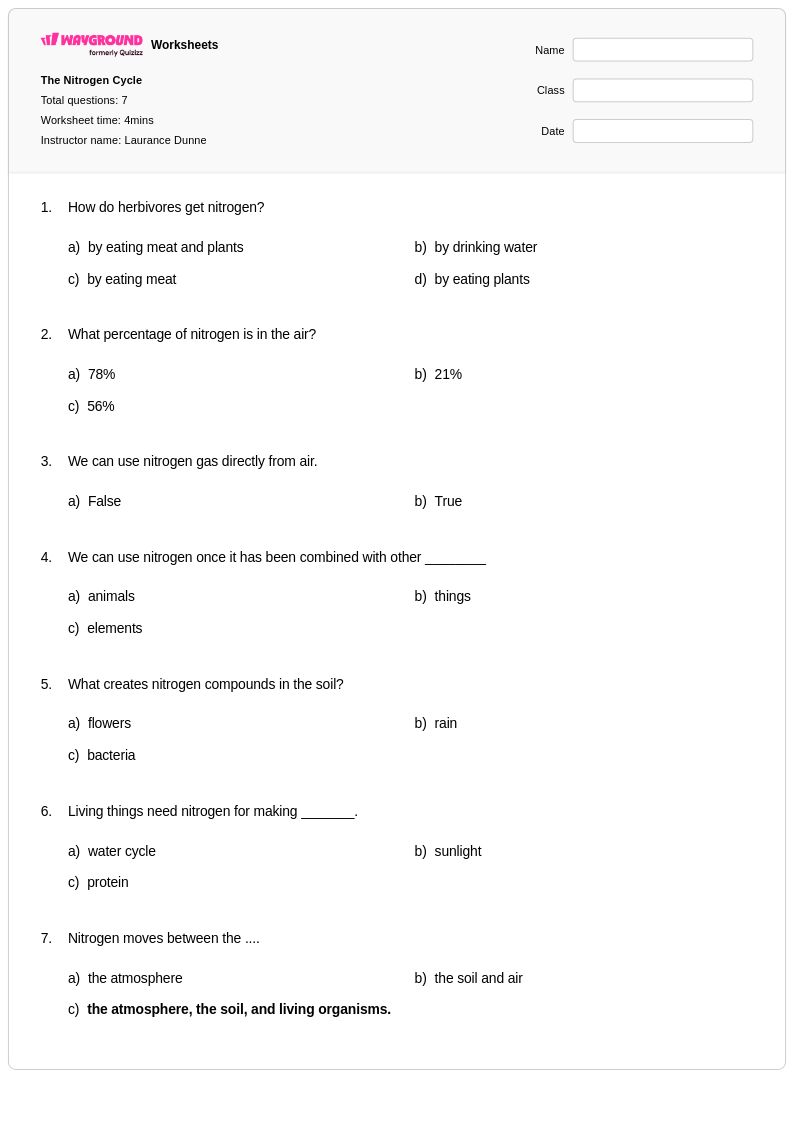
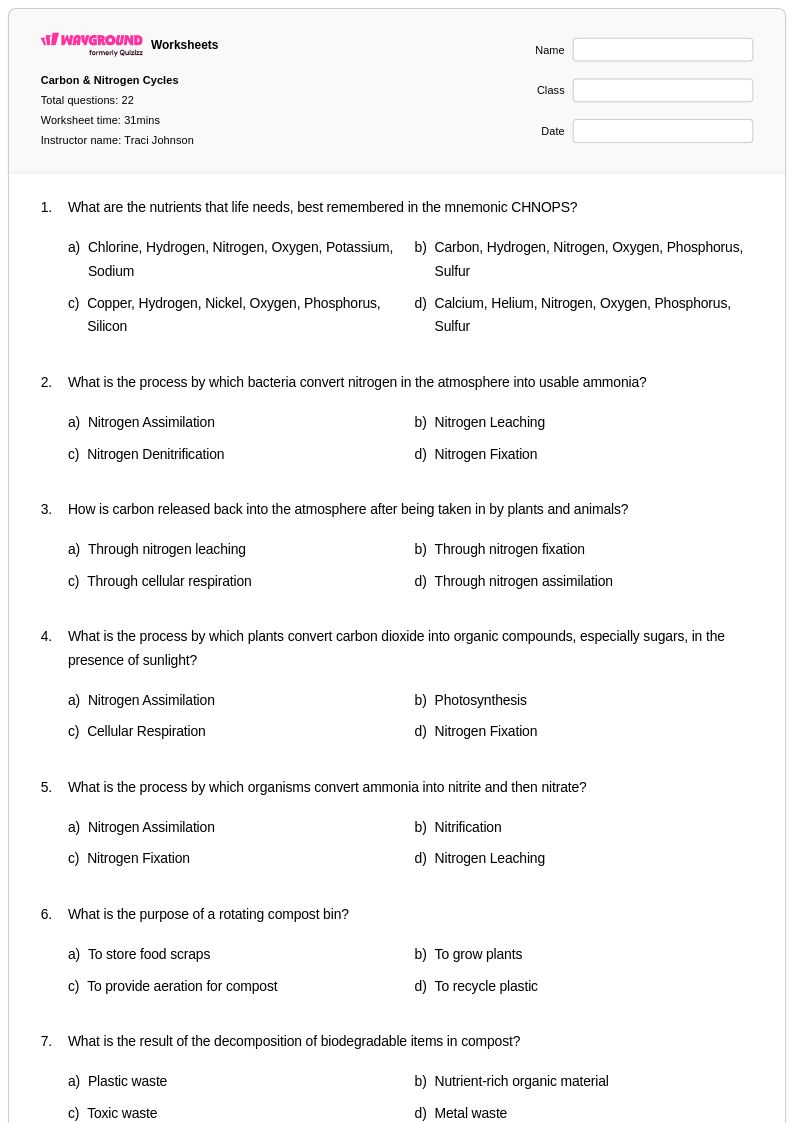
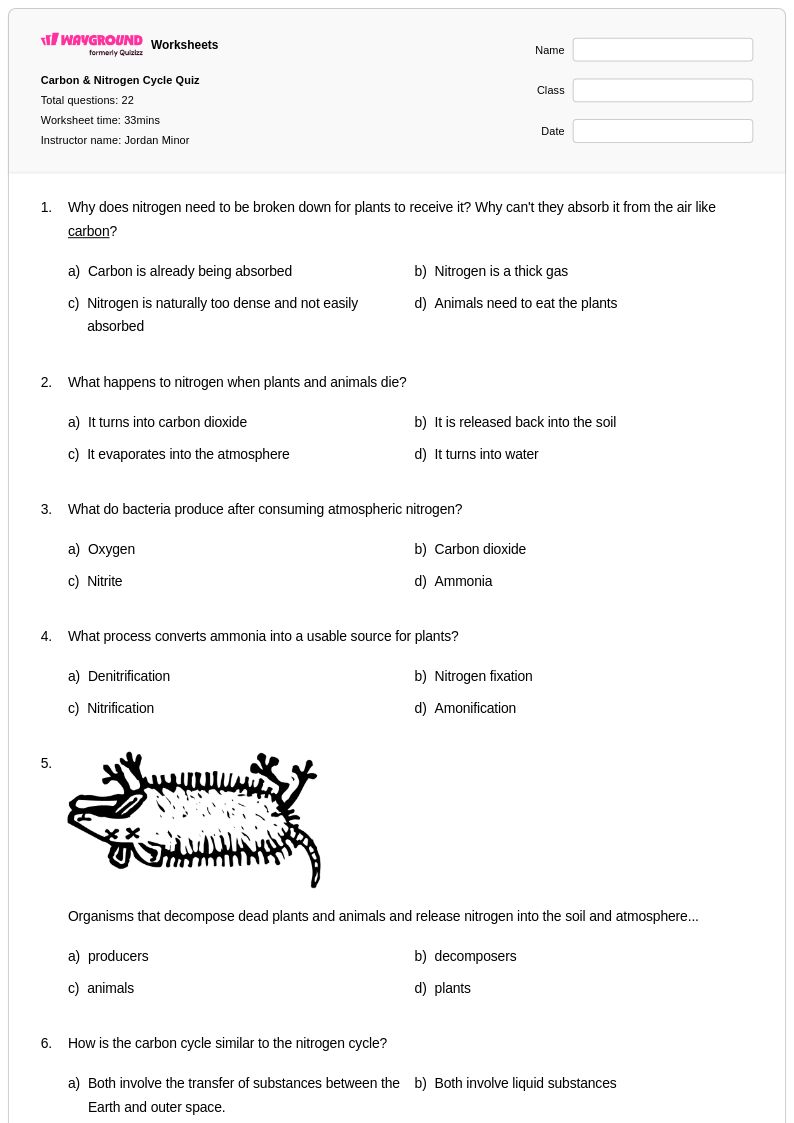
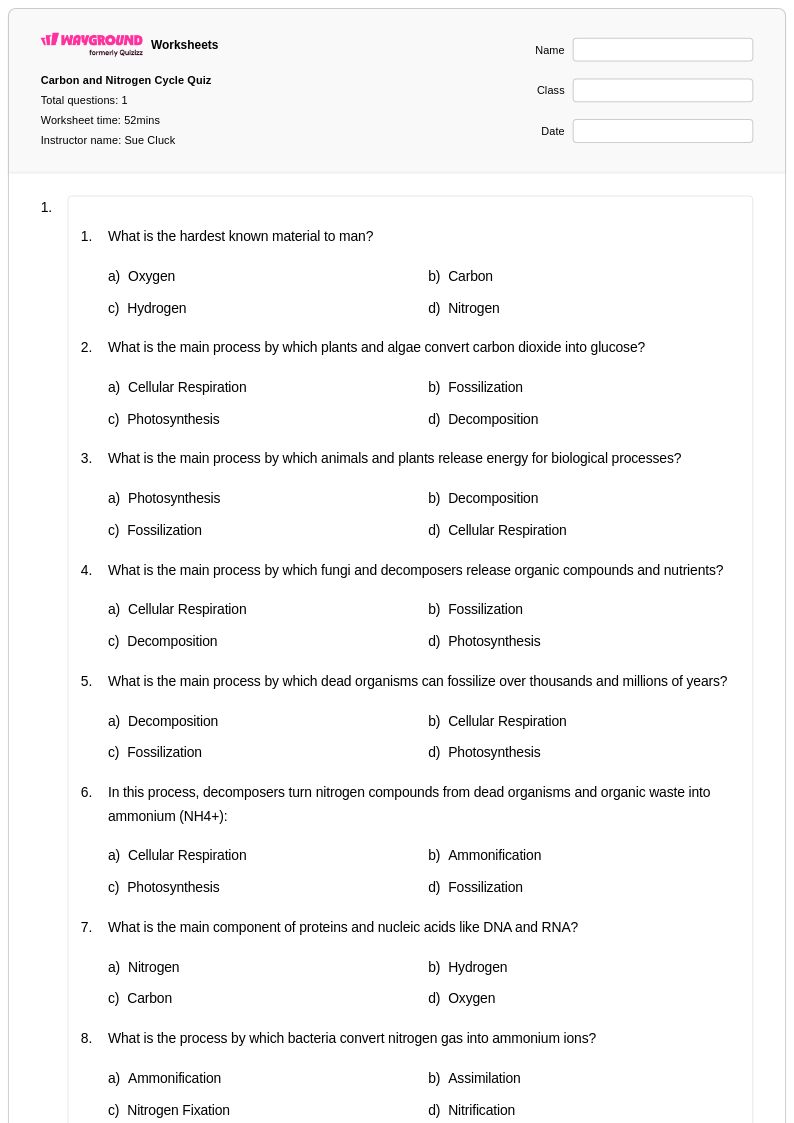
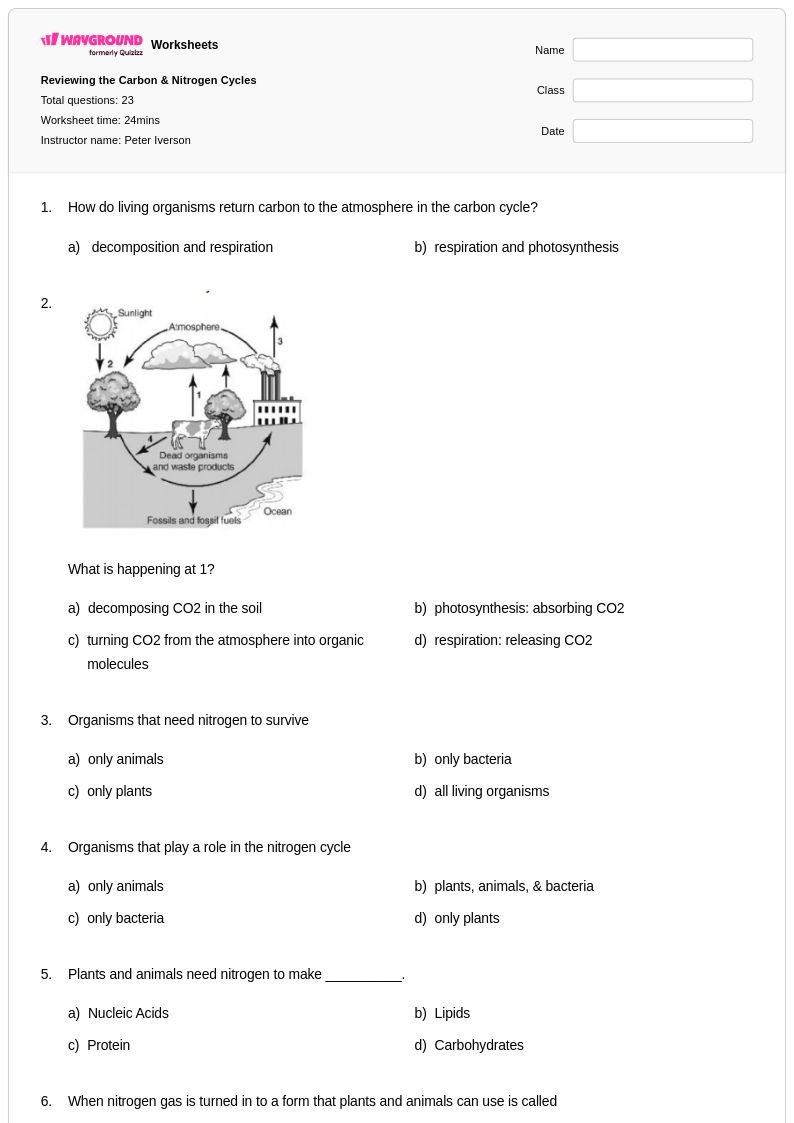
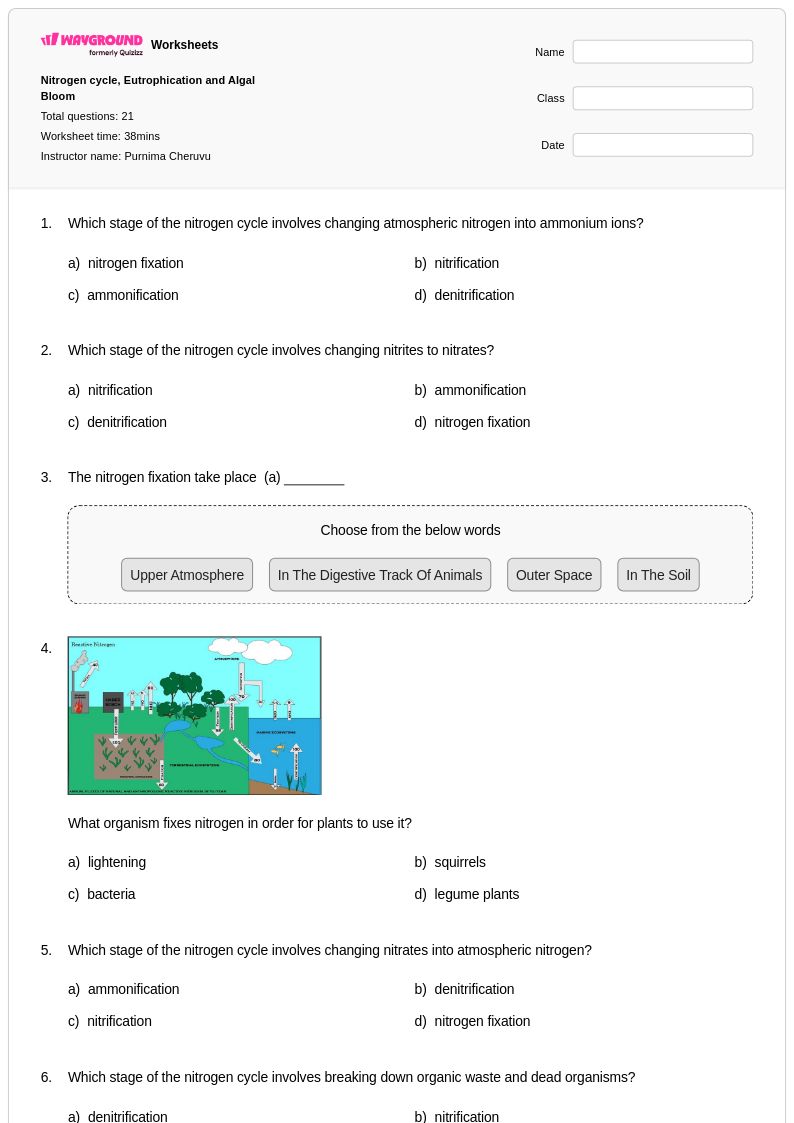
Year 10 nitrogen cycle worksheets available through Wayground (formerly Quizizz) provide comprehensive coverage of this essential biogeochemical process that maintains Earth's atmospheric balance and supports all living organisms. These expertly crafted educational resources strengthen students' understanding of nitrogen fixation, nitrification, assimilation, ammonification, and denitrification while developing critical thinking skills about ecosystem interconnections and chemical transformations. The worksheets include detailed practice problems that guide students through tracing nitrogen's journey from atmospheric gas to biological molecules and back, complete with answer keys that facilitate self-assessment and teacher evaluation. Free printable materials cover both terrestrial and aquatic nitrogen cycles, helping students analyze the roles of bacteria, plants, and decomposers in maintaining this crucial nutrient cycle through engaging diagrams, data analysis exercises, and real-world application scenarios available in convenient pdf format.
Wayground (formerly Quizizz) empowers educators with millions of teacher-created nitrogen cycle resources that support diverse classroom needs through robust search and filtering capabilities aligned with state and national science standards. The platform's differentiation tools enable teachers to customize worksheets for varying skill levels, ensuring that all Year 10 students can access age-appropriate content whether they need foundational support or advanced enrichment activities. Flexible formatting options include both printable and digital versions, allowing seamless integration into hybrid learning environments while supporting individual student pacing and remediation needs. These comprehensive worksheet collections streamline lesson planning by providing ready-to-use materials for introducing new concepts, reinforcing classroom instruction, and assessing student mastery of nitrogen cycle processes, enabling teachers to focus on facilitating deeper scientific understanding rather than resource development.
FAQs
How do I teach the nitrogen cycle to students?
Start by grounding students in why nitrogen matters — it is essential for building proteins and DNA, yet most organisms cannot use atmospheric nitrogen directly. Teach the cycle in stages: fixation, nitrification, assimilation, ammonification, and denitrification, using diagrams to show how nitrogen moves between the atmosphere, soil, and living organisms. Connecting each stage to a specific group of microorganisms (like Rhizobium for fixation or Nitrosomonas for nitrification) gives students concrete anchors for abstract processes. Introduce human impacts like fertilizer runoff and fossil fuel combustion after students have a firm grasp of the natural cycle.
What exercises help students practice the nitrogen cycle?
Labeling diagrams of the nitrogen cycle is one of the most effective practice formats because it forces students to recall each transformation and its location in the system. Fill-in-the-blank and sequencing exercises reinforce the order of processes, while short-answer questions asking students to explain what would happen if denitrifying bacteria were removed push deeper conceptual thinking. Worksheet problems that connect human activities like over-fertilization to specific disruptions in the cycle are particularly useful for building applied understanding.
What mistakes do students commonly make when learning the nitrogen cycle?
The most common error is confusing nitrification and nitrogen fixation — students frequently conflate the two terms or misattribute which microorganisms perform each process. Many students also treat the cycle as linear rather than cyclical, failing to connect denitrification back to atmospheric nitrogen. A persistent misconception is that plants can absorb nitrogen gas directly from the air, when in reality they depend on bacteria to convert it into usable forms like ammonium or nitrate. Explicitly addressing these points during instruction and including targeted questions on worksheets helps students self-correct before assessments.
How does the nitrogen cycle connect to human environmental impact?
Agricultural practices — particularly the use of synthetic nitrogen fertilizers — add excess reactive nitrogen to soil and water, leading to eutrophication in aquatic systems and dead zones in coastal areas. Fossil fuel combustion releases nitrogen oxides into the atmosphere, contributing to acid rain and smog. Teaching these connections helps students understand why nitrogen cycling is not just a biology topic but a critical lens for understanding environmental policy and sustainability.
How can I use Wayground's nitrogen cycle worksheets in my classroom?
Wayground's nitrogen cycle worksheets are available as printable PDFs for traditional classroom use and in digital formats for technology-integrated or remote learning environments, making them flexible for a range of instructional setups. Each worksheet includes detailed answer keys, so teachers can use them for guided practice, independent work, or homework without additional preparation. Teachers can also host worksheets as a quiz on Wayground, enabling real-time student responses and instant feedback within a digital session.
How do I differentiate nitrogen cycle instruction for students at different levels?
For students who struggle, focus first on the key vocabulary — fixation, nitrification, assimilation, ammonification, and denitrification — before introducing the full cycle. Simplified diagrams with fewer labels reduce cognitive load and build confidence. For advanced learners, introduce quantitative aspects like the nitrogen budget or case studies on hypoxic zones caused by agricultural runoff. On Wayground, teachers can apply accommodations such as reduced answer choices or read-aloud support to individual students, allowing the same worksheet to serve a diverse classroom without singling anyone out.