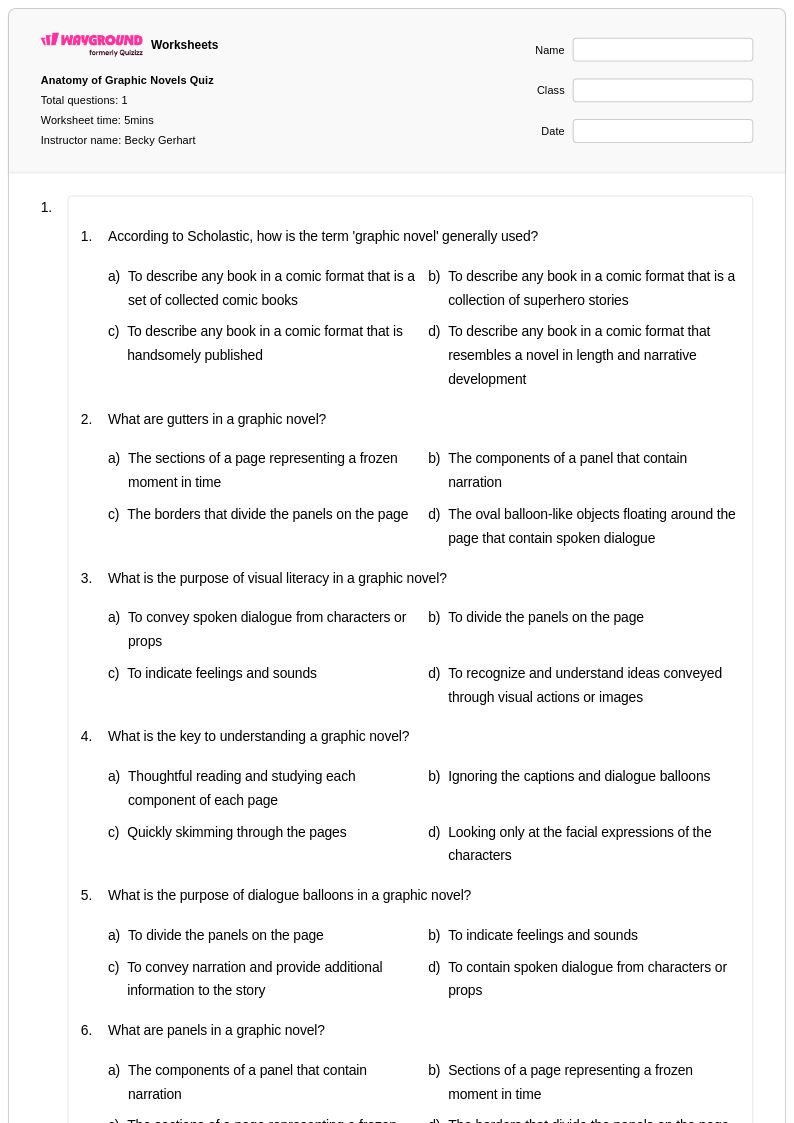
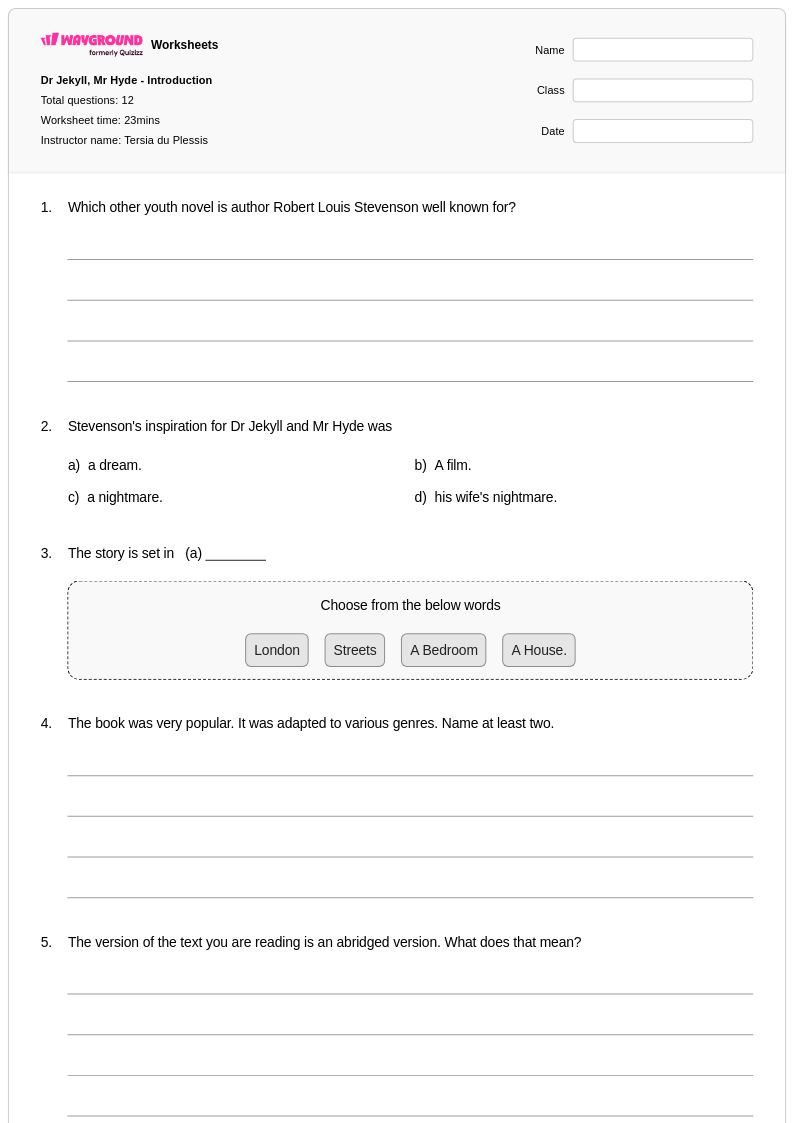
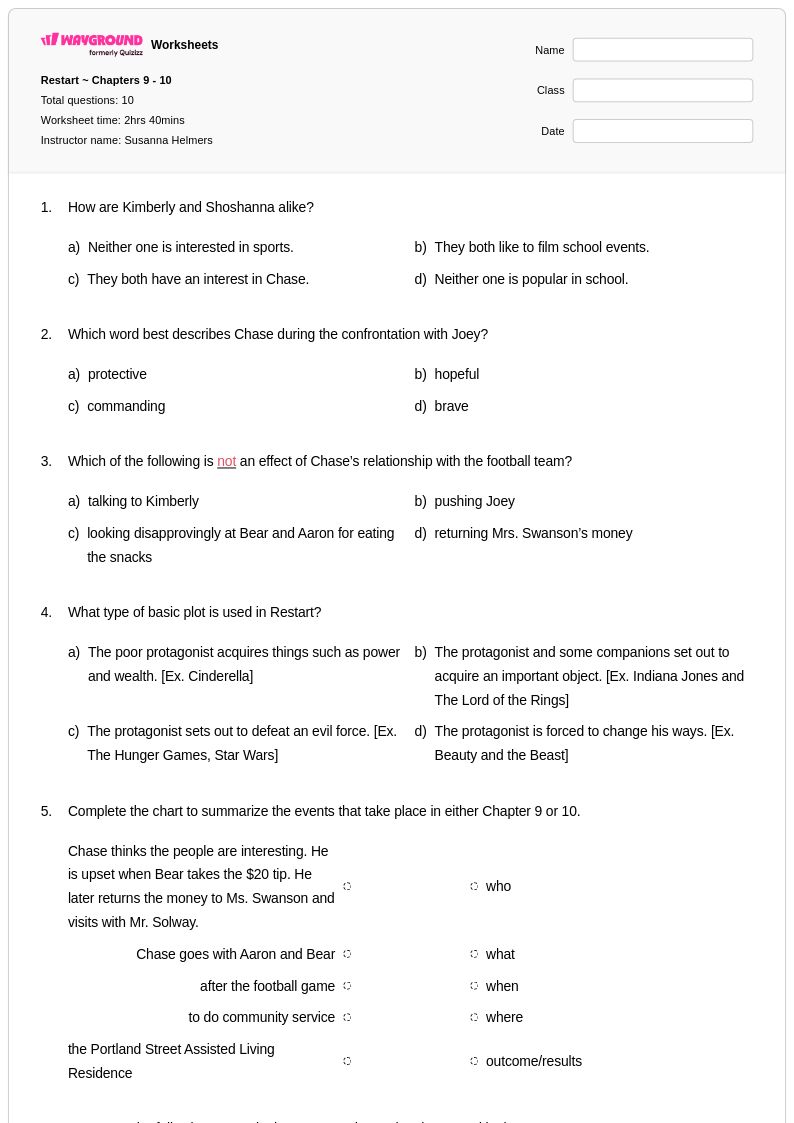
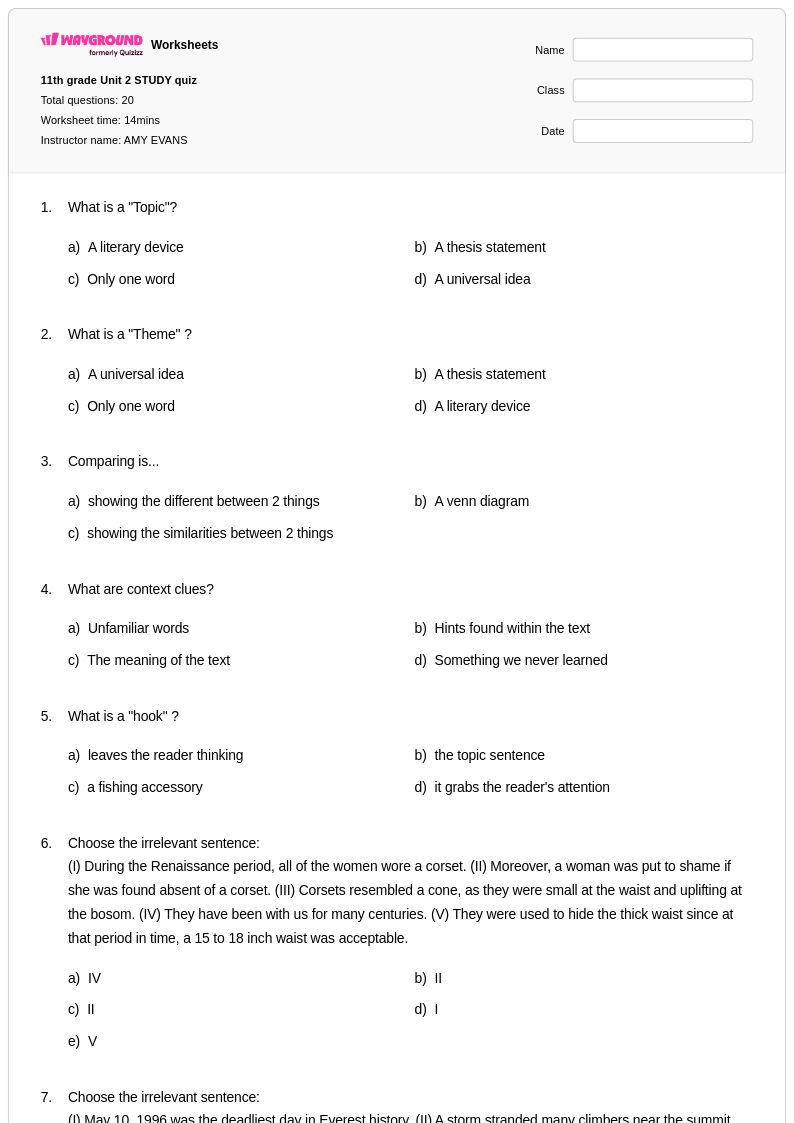
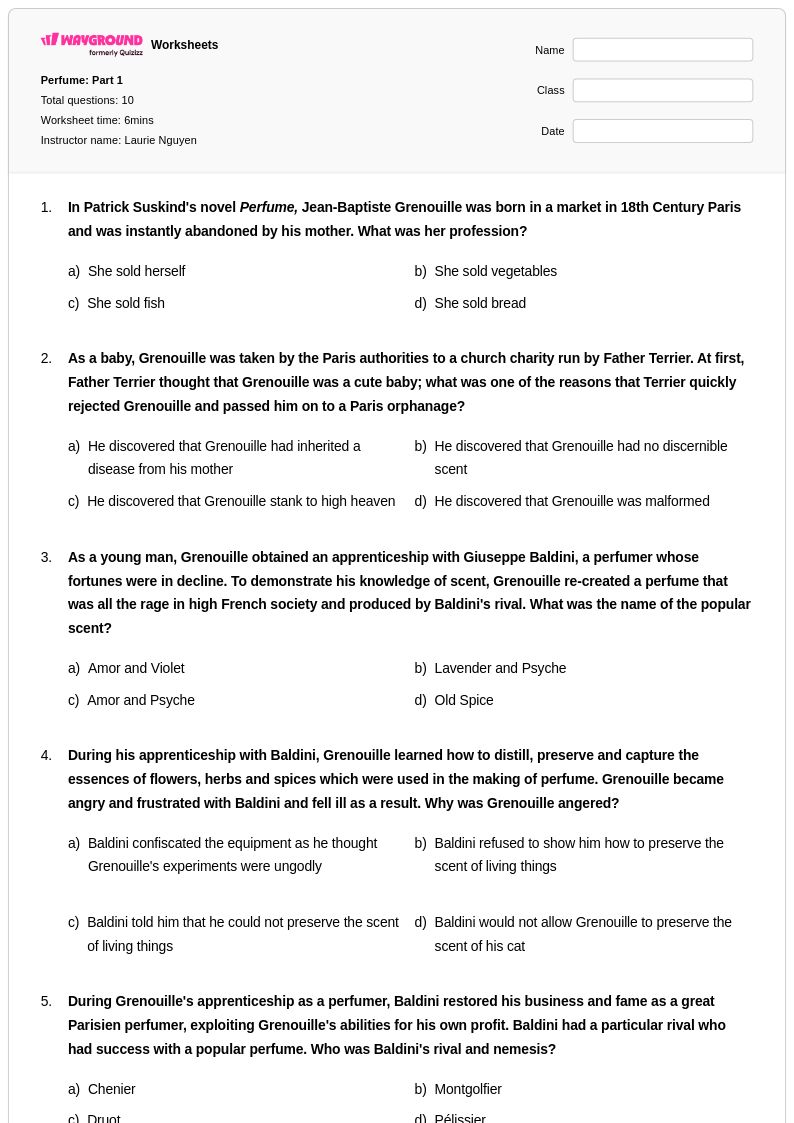
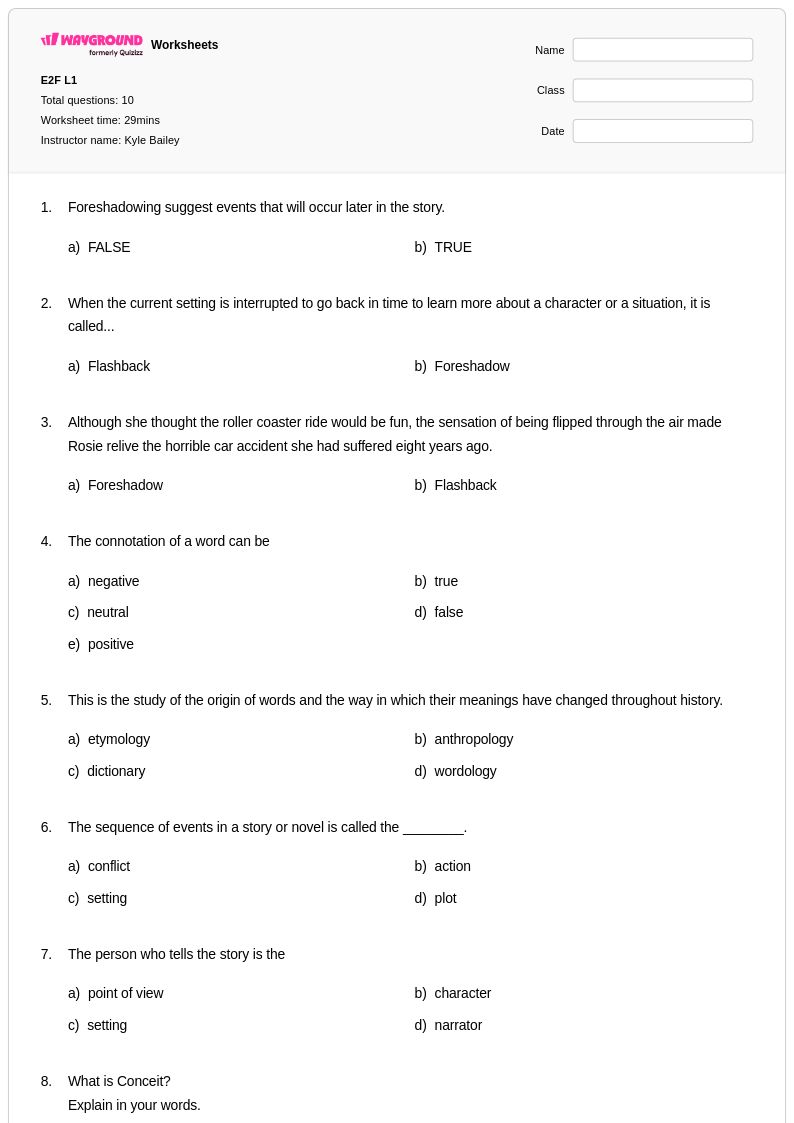
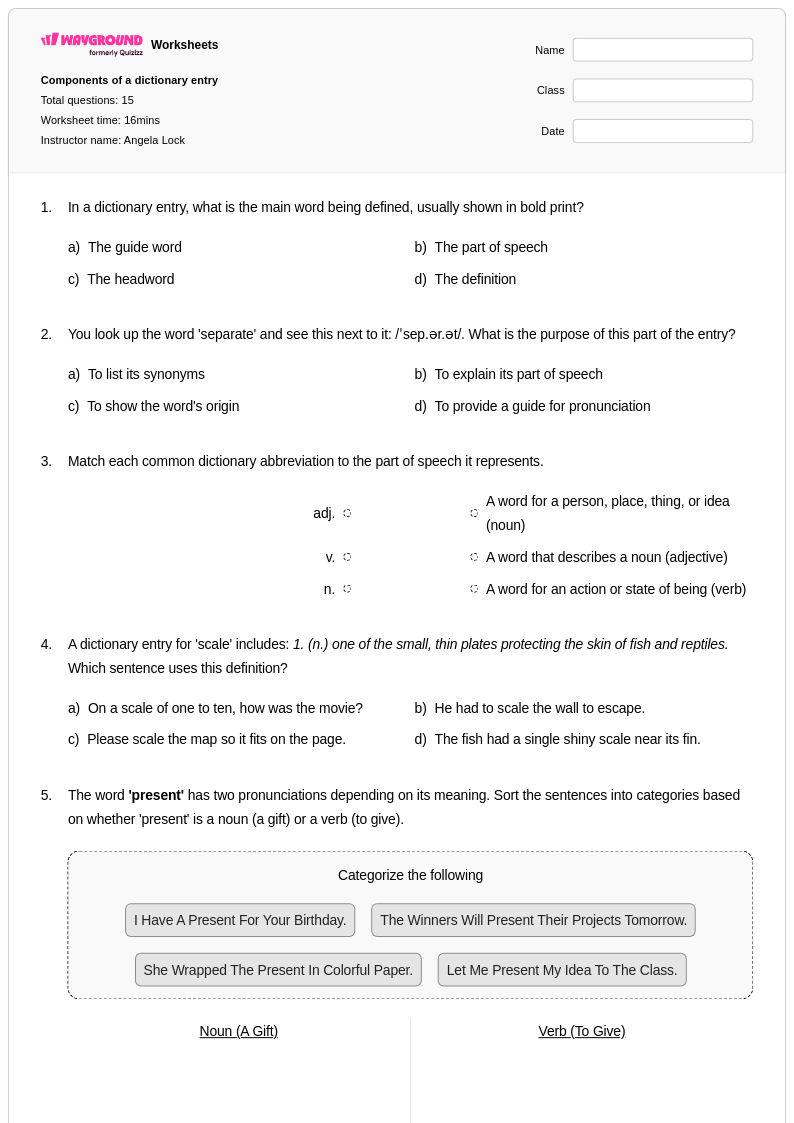
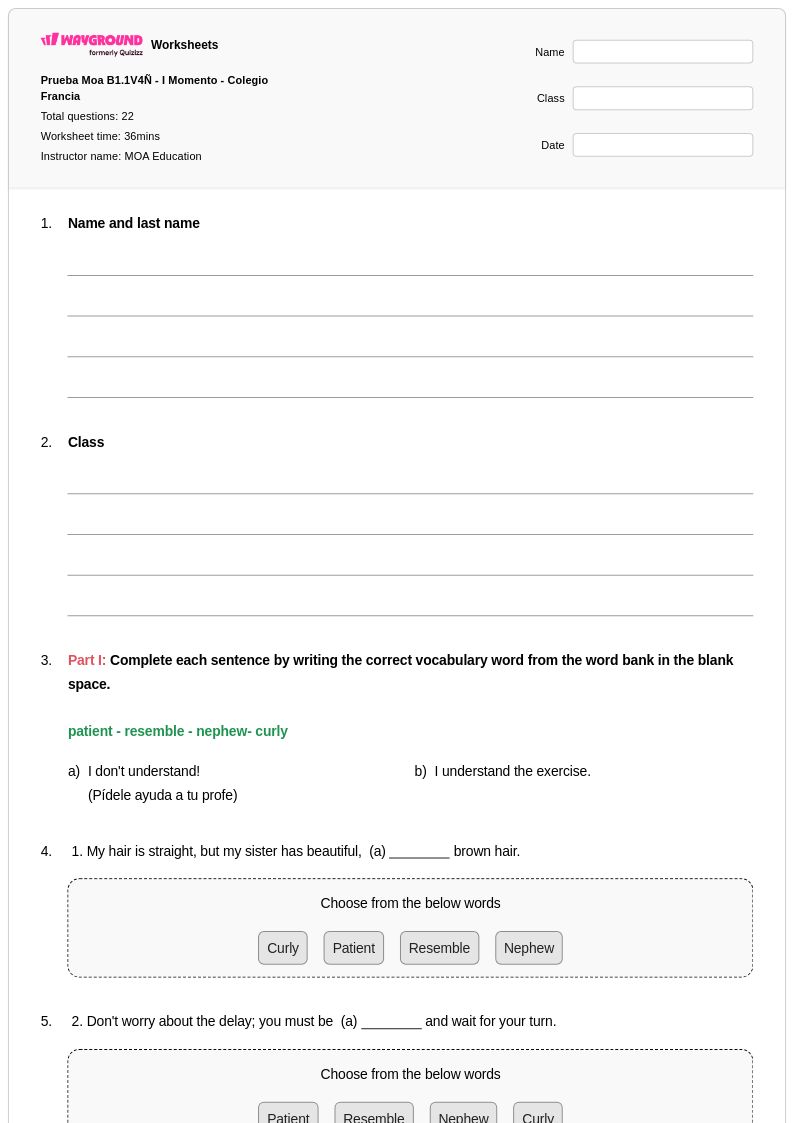
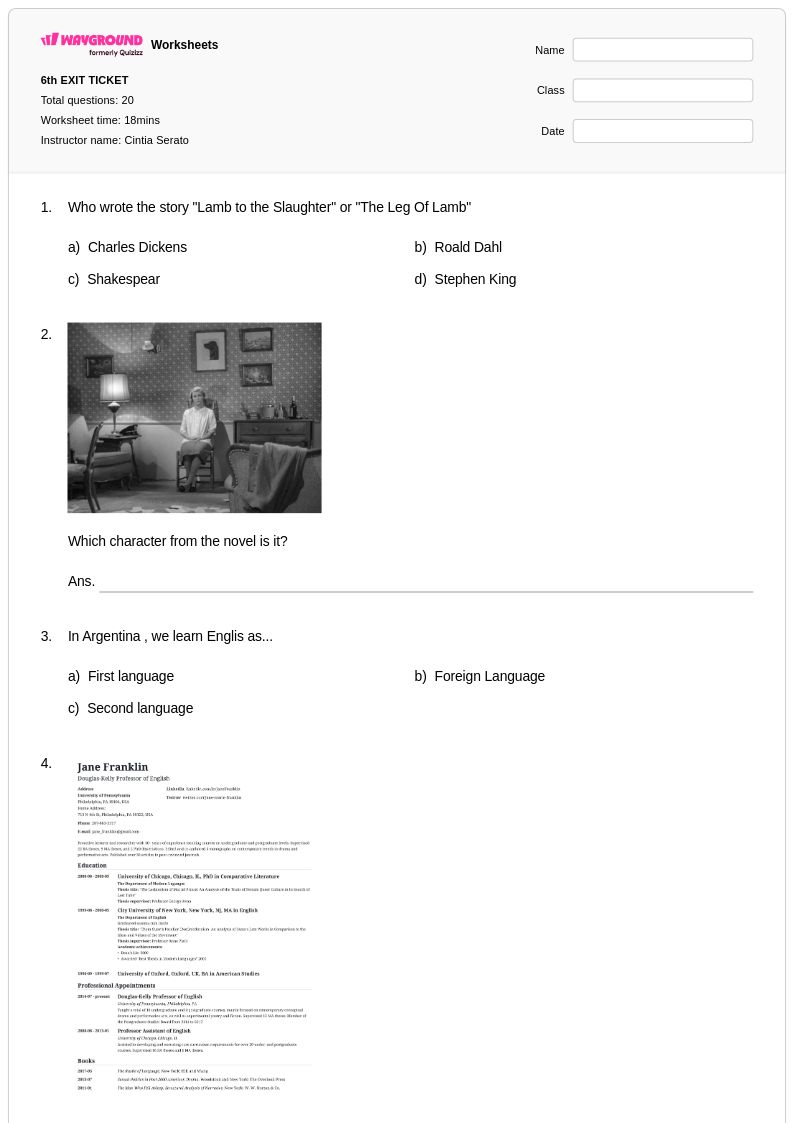
Year 12 novel study worksheets and printables help students analyze literary elements, themes, and character development through comprehensive practice problems and activities with detailed answer keys available as free PDF downloads.
Explore printable Novel Study worksheets for Year 12
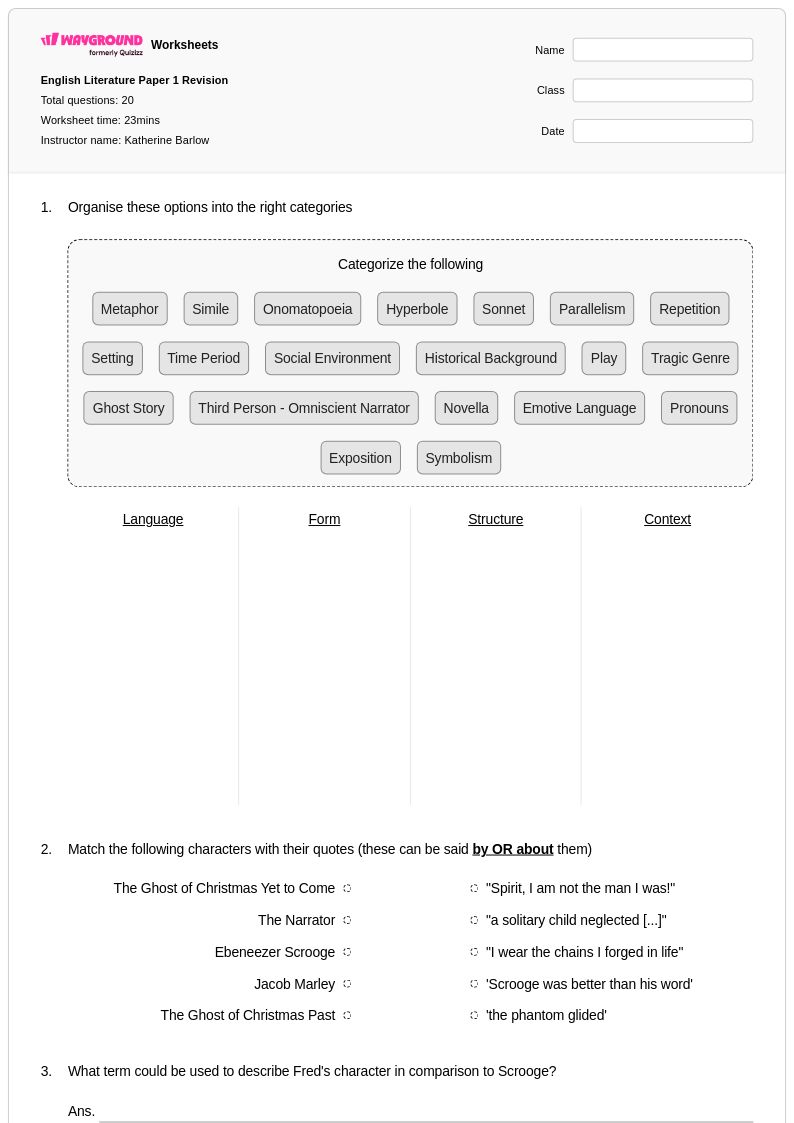
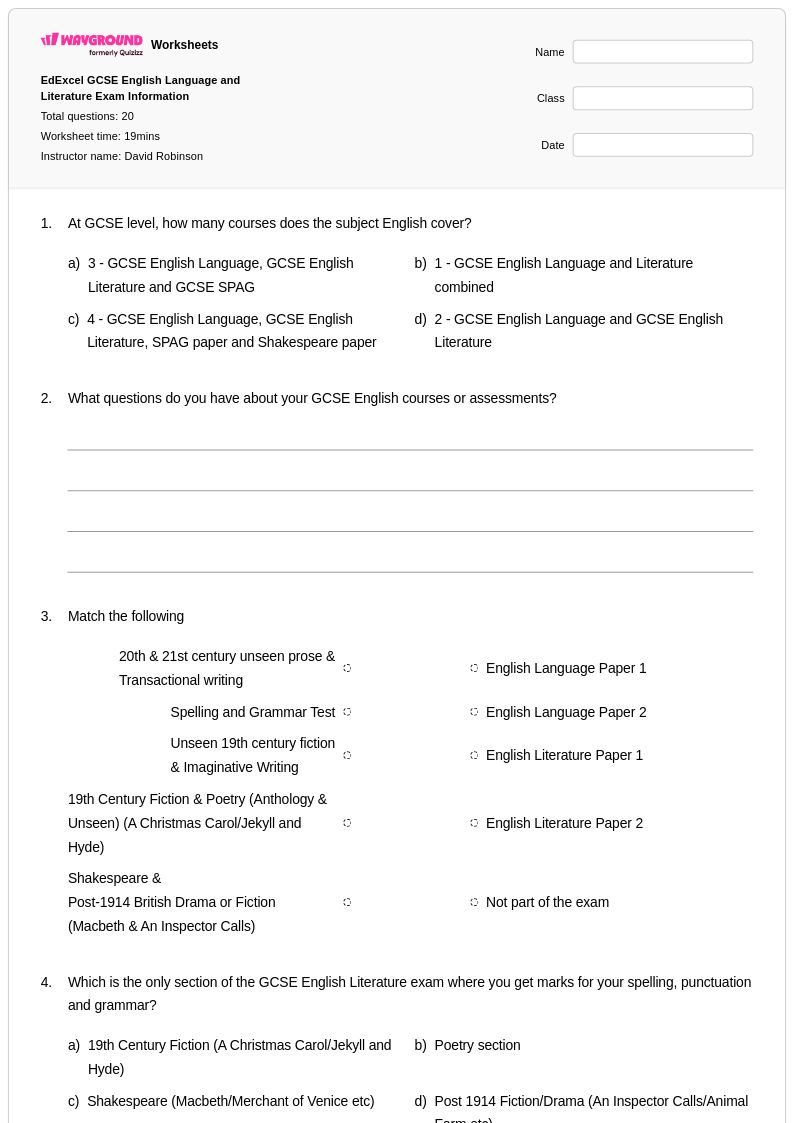
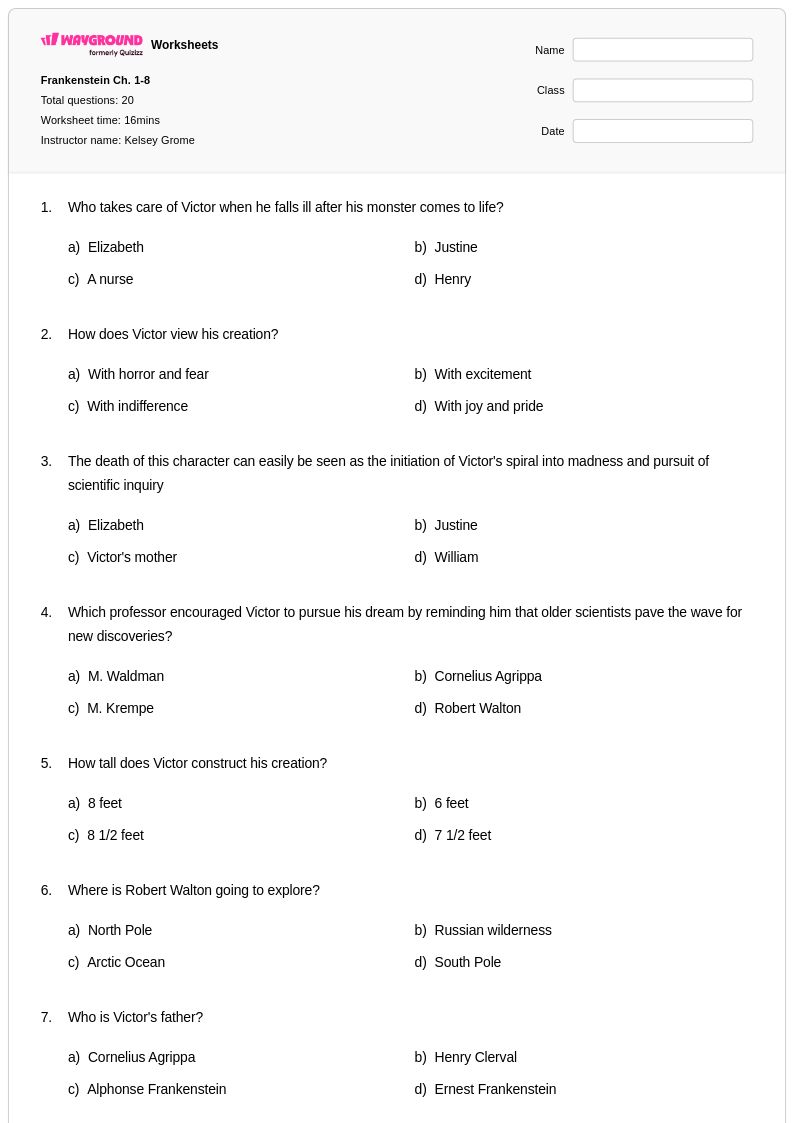
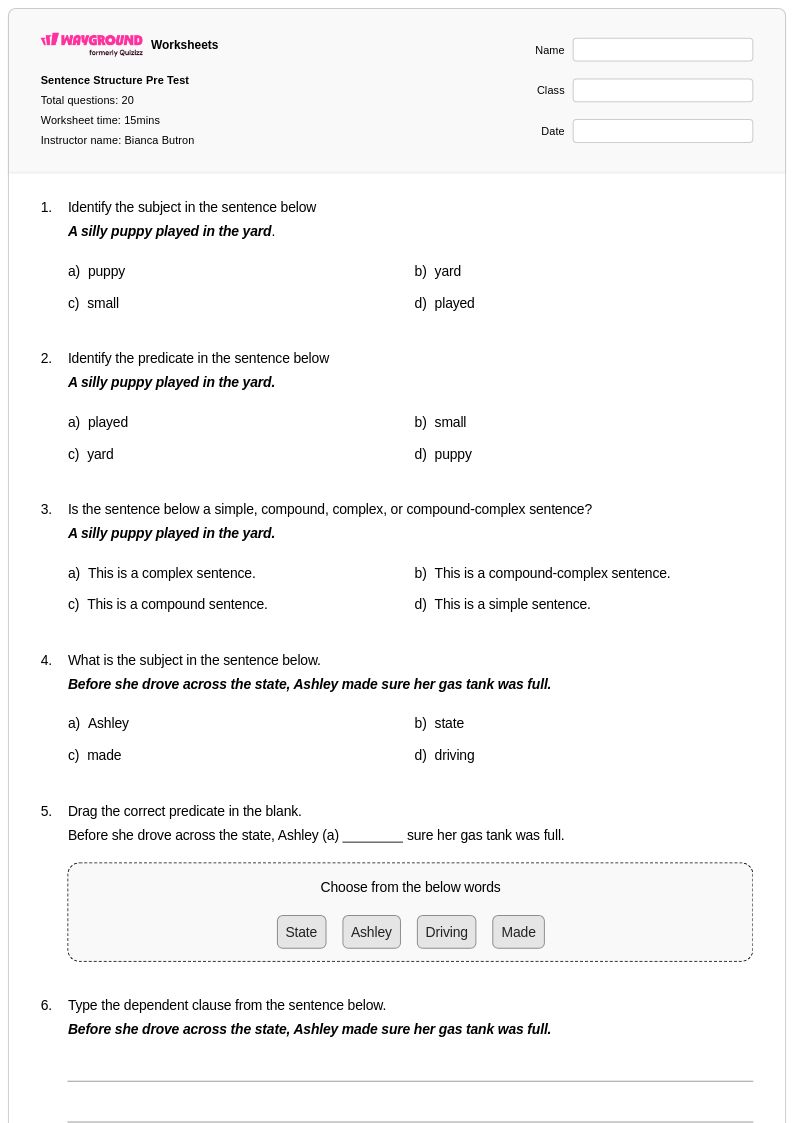
Year 12 novel study worksheets available through Wayground (formerly Quizizz) provide comprehensive resources for advanced literary analysis and critical thinking development. These expertly crafted materials guide students through sophisticated examination of narrative elements, thematic exploration, character development, and literary devices within full-length works of fiction. Students engage with practice problems that challenge them to analyze complex plot structures, evaluate authorial choices, and synthesize textual evidence to support interpretations. Each worksheet collection includes detailed answer keys that facilitate self-assessment and peer review, while printable pdf formats ensure accessibility for both classroom and independent study. These free resources strengthen essential skills including close reading, textual analysis, comparative literature techniques, and academic writing, preparing students for college-level literary discourse and advanced placement examinations.
Wayground (formerly Quizizz) empowers educators with millions of teacher-created novel study resources that streamline curriculum planning and enhance differentiated instruction. The platform's robust search and filtering capabilities allow teachers to locate materials aligned with specific novels, literary movements, or curriculum standards, while customization tools enable modification of existing worksheets to meet diverse learning needs. Teachers can seamlessly transition between printable pdf formats for traditional classroom activities and digital formats for interactive online learning environments. These comprehensive collections support targeted remediation for struggling readers, enrichment opportunities for advanced students, and systematic skill practice across various novel genres and time periods. The platform's extensive database ensures educators have access to high-quality materials for both canonical works and contemporary young adult literature, facilitating engaging novel study units that develop critical thinking and literary appreciation in Year 12 students.
FAQs
How do I teach a novel study unit in middle school?
A structured novel study unit typically moves students through pre-reading context, chapter-by-chapter comprehension checks, and cumulative analysis of character development, plot structure, theme, and literary devices. Teachers often anchor each stage with guided questions that shift from literal recall to interpretive and evaluative thinking. Pairing reading with focused worksheets at each stage helps students track their thinking across a longer text rather than relying on memory alone.
What exercises help students analyze characters and themes in a novel?
Effective practice exercises include character-mapping activities that trace how a character changes across key plot points, evidence-based response prompts that ask students to support thematic claims with textual citations, and comparative tasks that connect a novel's themes to real-world contexts or other texts. For novels like The Giver or Flowers for Algernon, prompts that ask students to track a single character's internal conflict across chapters are particularly effective at building analytical depth.
What mistakes do students commonly make when analyzing a novel?
The most frequent errors include summarizing plot instead of analyzing meaning, identifying a theme as a single word like 'friendship' rather than as a complete arguable statement, and confusing character traits with character motivations. Students also commonly misattribute the narrator's perspective to the author. Targeted worksheet prompts that explicitly require evidence and reasoning can interrupt these patterns before they solidify.
How do I differentiate novel study for struggling readers or students with accommodations?
Differentiation in novel study can include tiered questioning that scaffolds from literal to inferential, reduced answer choices on assessment items to lower cognitive load, and read-aloud support for students who process text more effectively through audio. On Wayground, teachers can enable individual accommodations such as read aloud, extended time, and reduced answer choices for specific students without flagging those settings to the rest of the class, making discreet support straightforward to implement.
How do I use Wayground's novel study worksheets in my classroom?
Wayground's novel study worksheets are available as printable PDFs for traditional classroom use and in digital formats for technology-integrated environments, giving teachers flexibility depending on their setup. Teachers can also host the materials as a live or assigned quiz directly on Wayground, which allows for real-time progress monitoring. The worksheets cover novels including A Wrinkle in Time, Charlotte's Web, Hatchet, The Giver, and others, so teachers can select resources aligned to the specific text their class is reading.
How do I assess whether students truly understood a novel versus just following along?
Shallow reading typically surfaces in responses that retell events without connecting them to larger meaning. Assessment tasks that require students to explain why a plot event matters, predict how a theme is developed across multiple chapters, or compare two characters' responses to the same conflict reveal genuine comprehension. Including open-ended analytical writing prompts alongside multiple-choice comprehension checks gives a fuller picture of each student's actual engagement with the text.