Explore Year 5 oceans worksheets and printables from Wayground that help students discover marine ecosystems, ocean layers, and water cycles through engaging practice problems with complete answer keys.
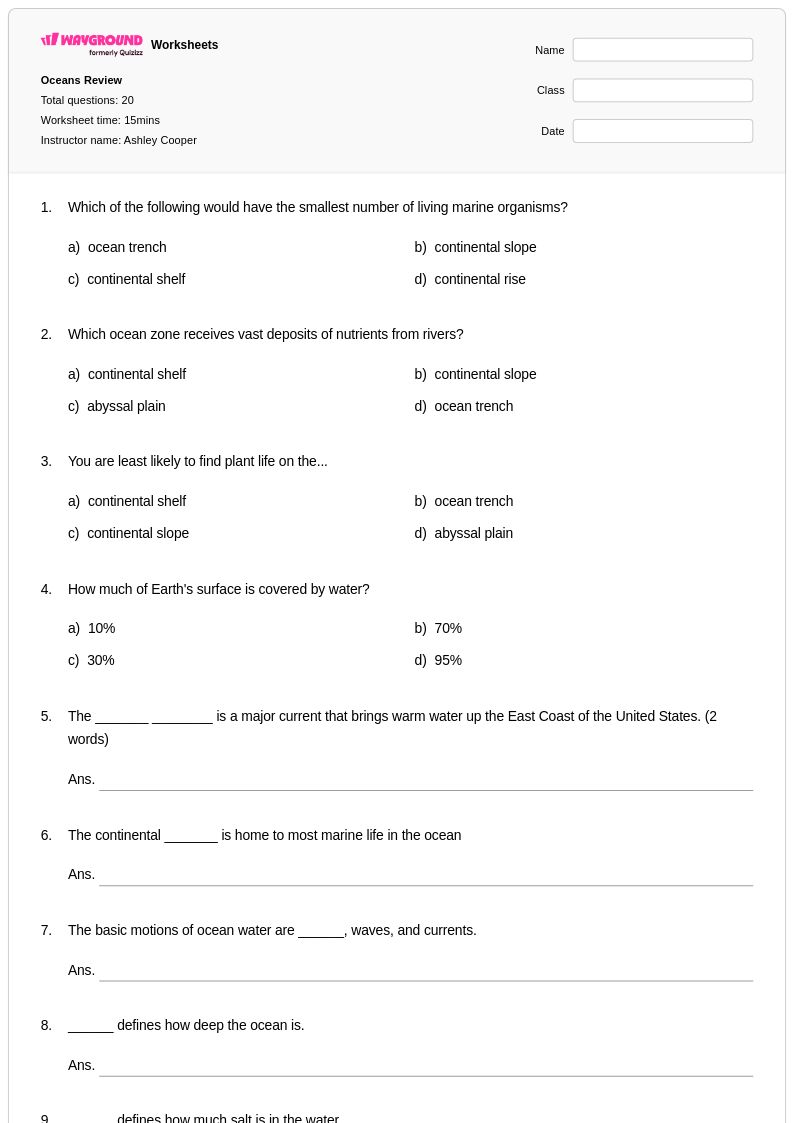
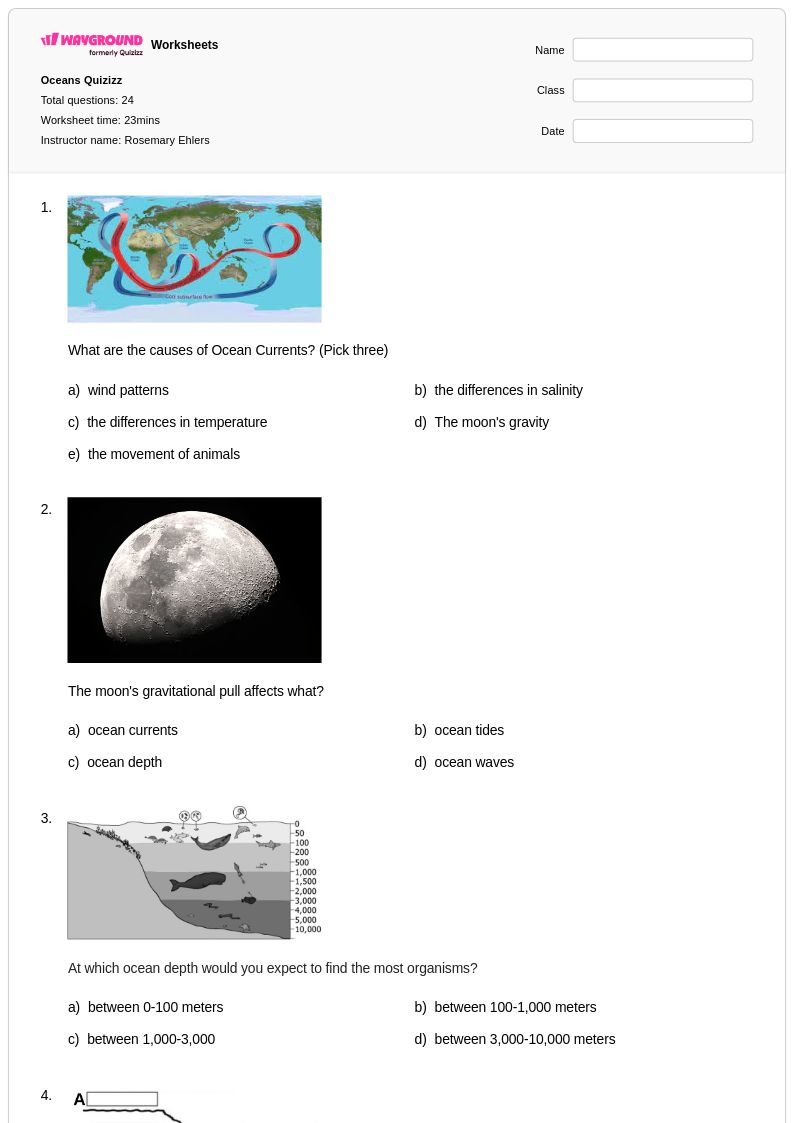
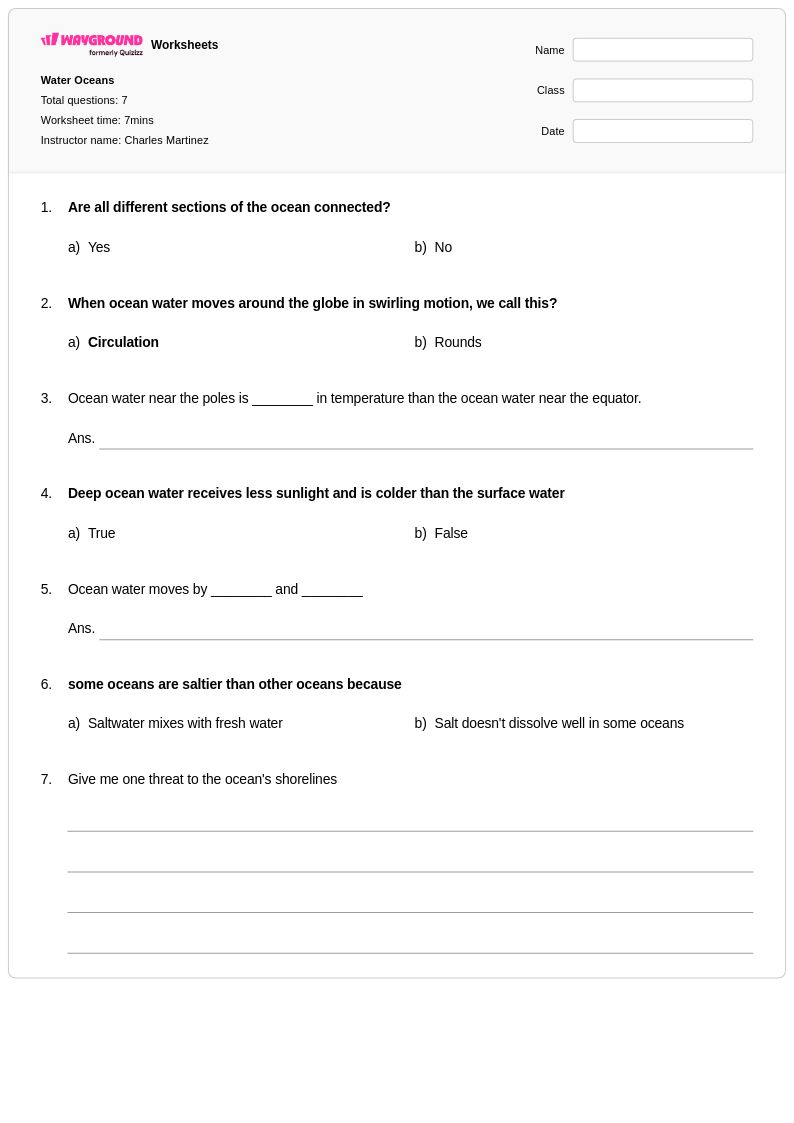
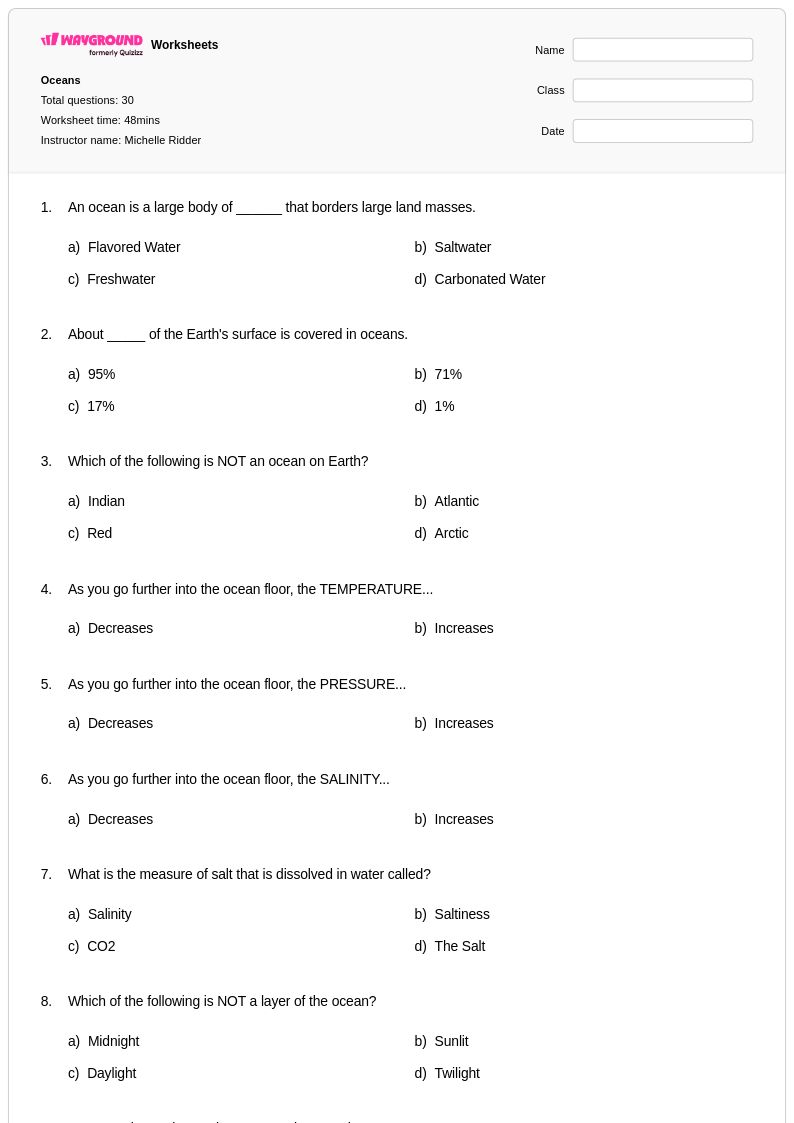
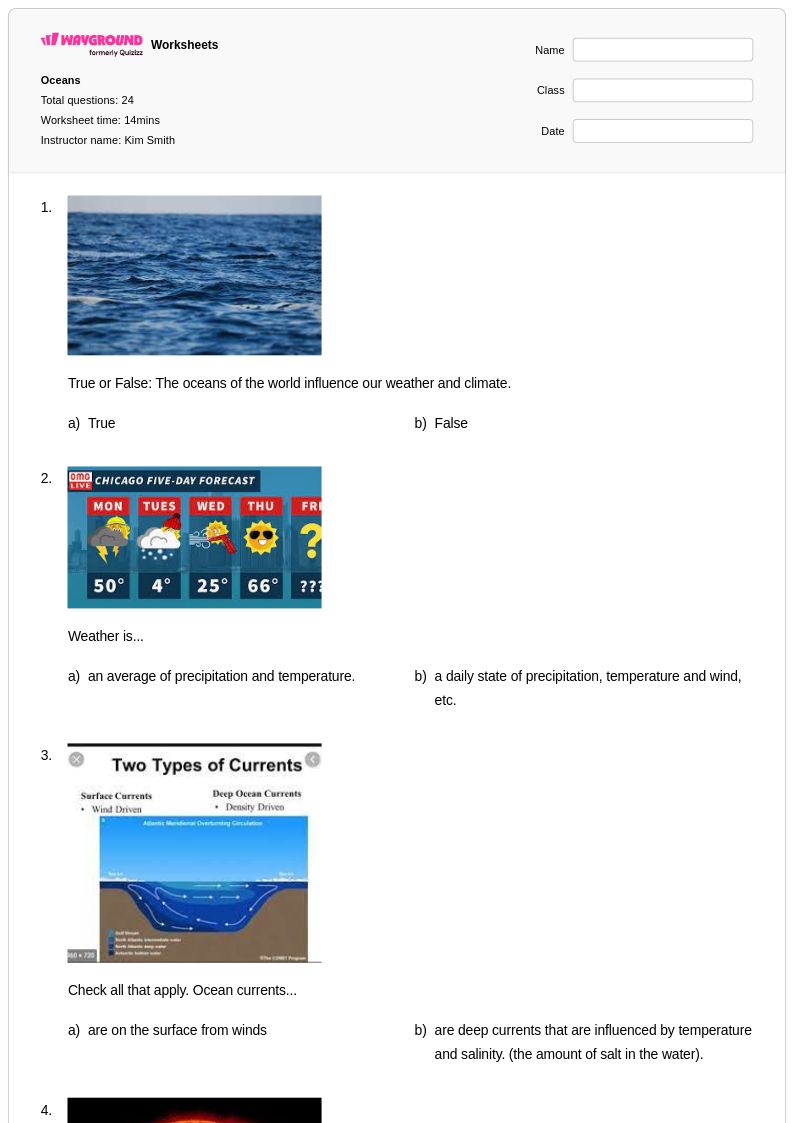
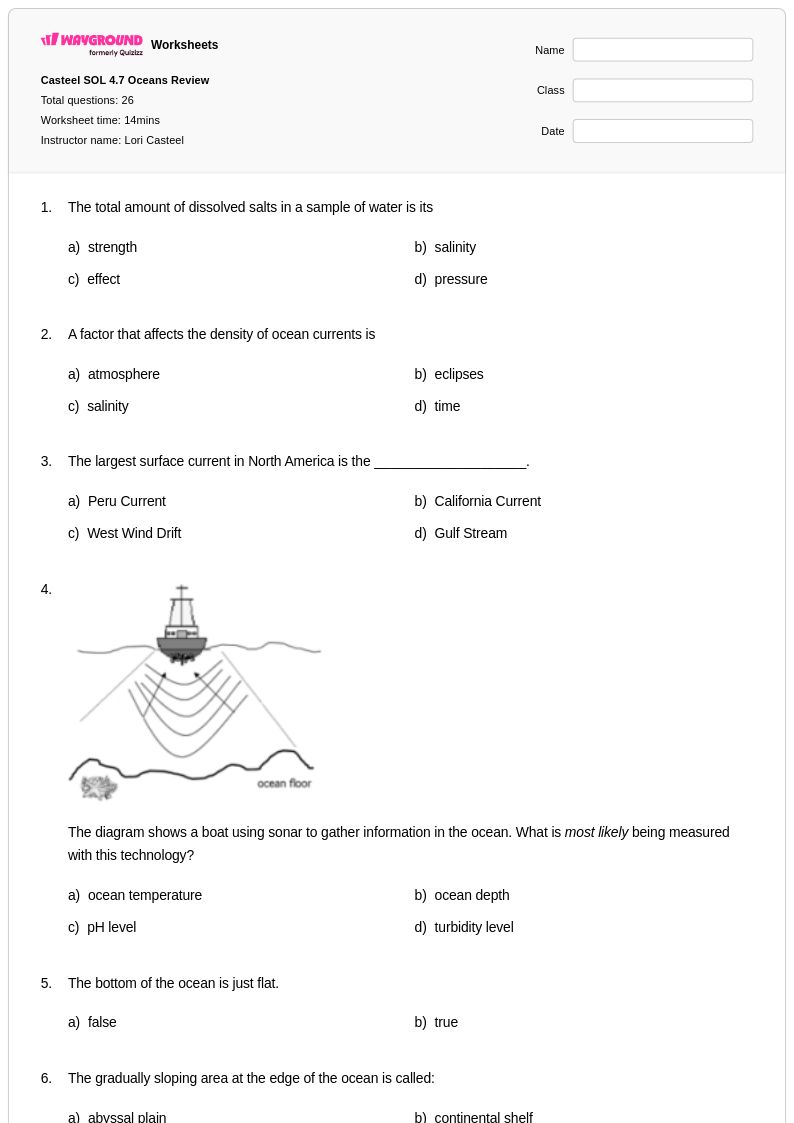
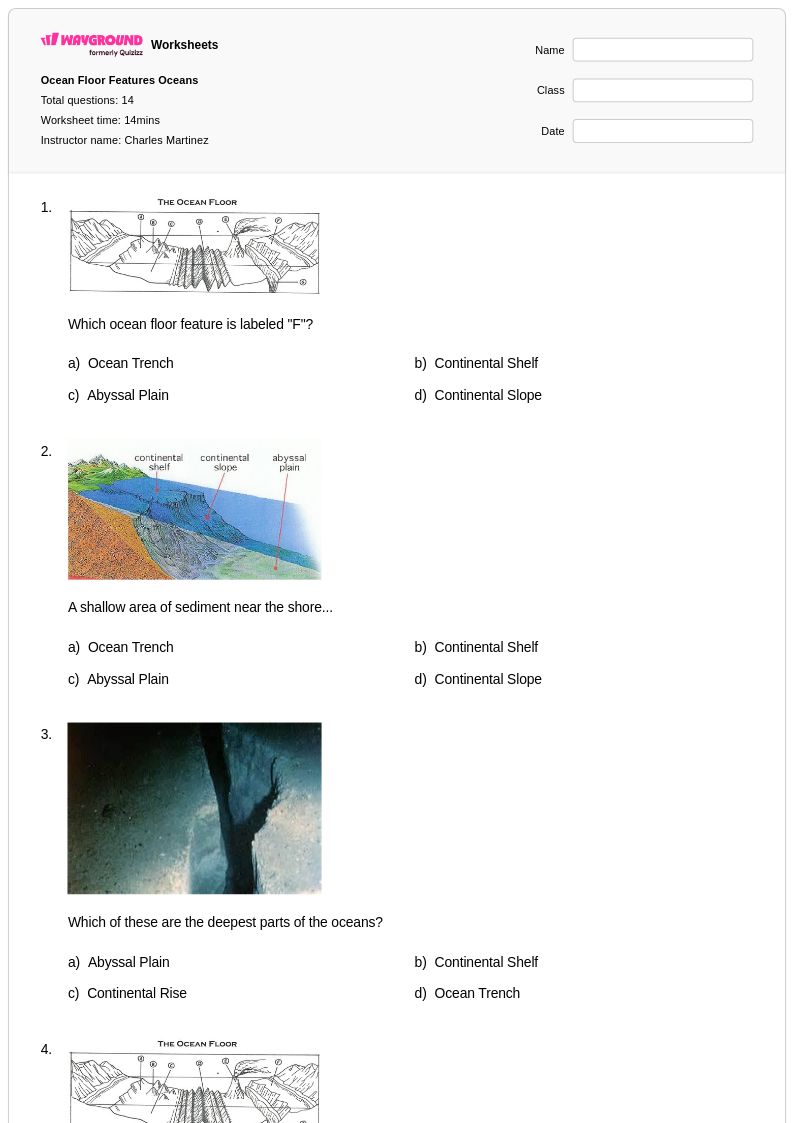
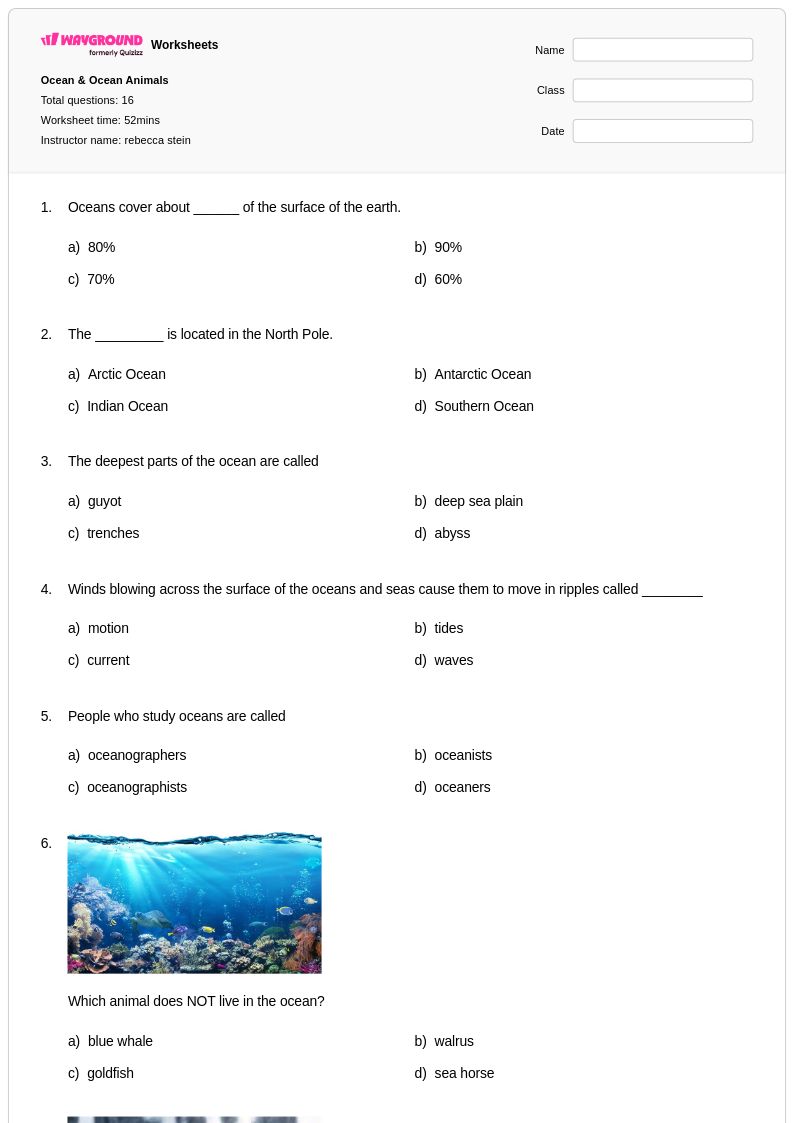
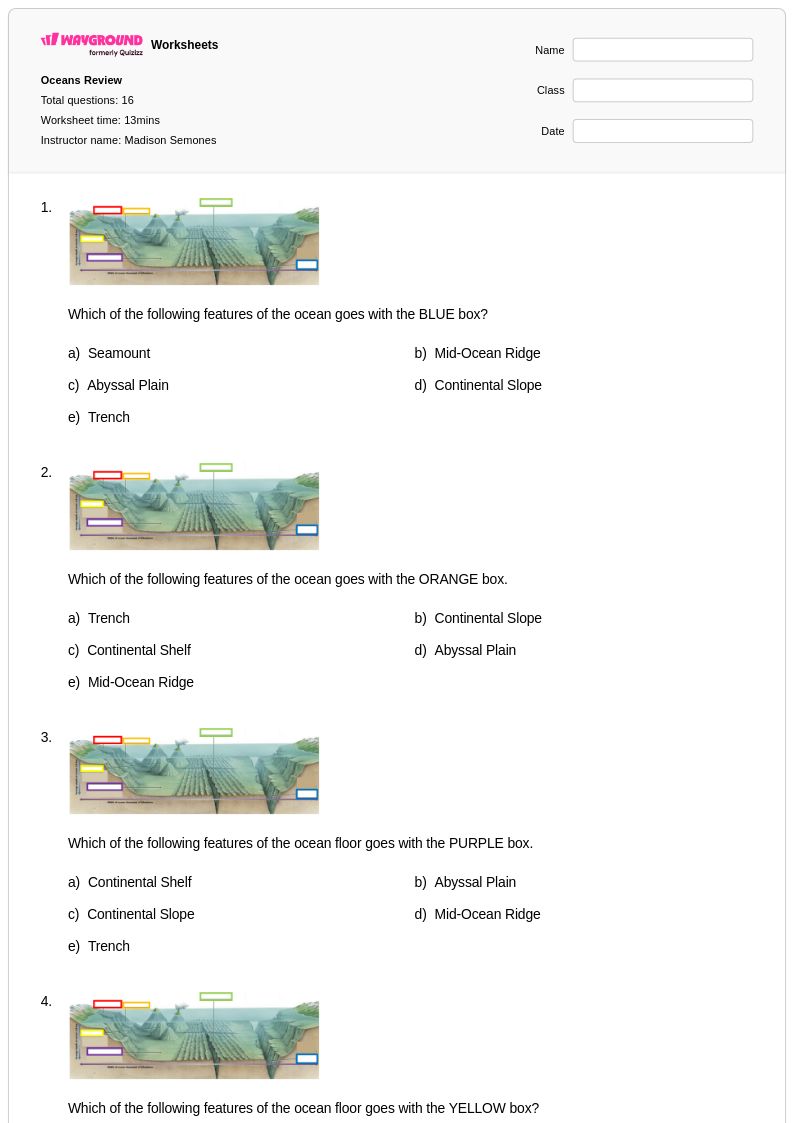
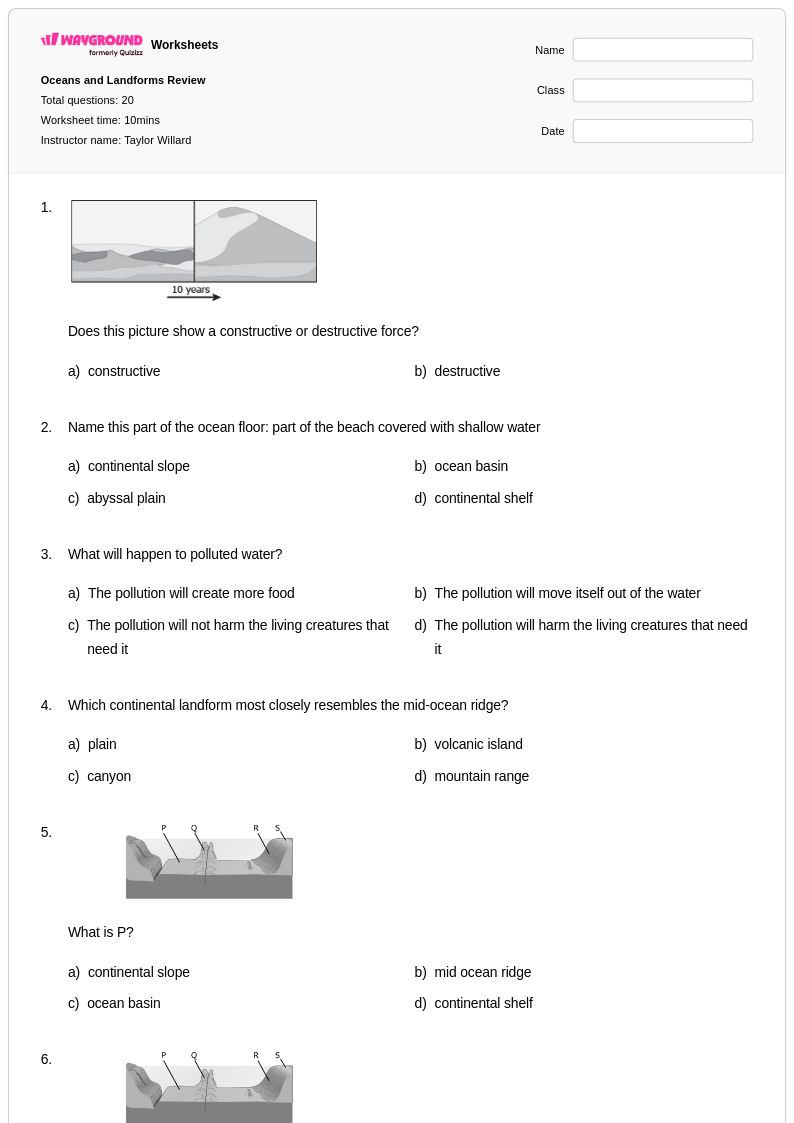
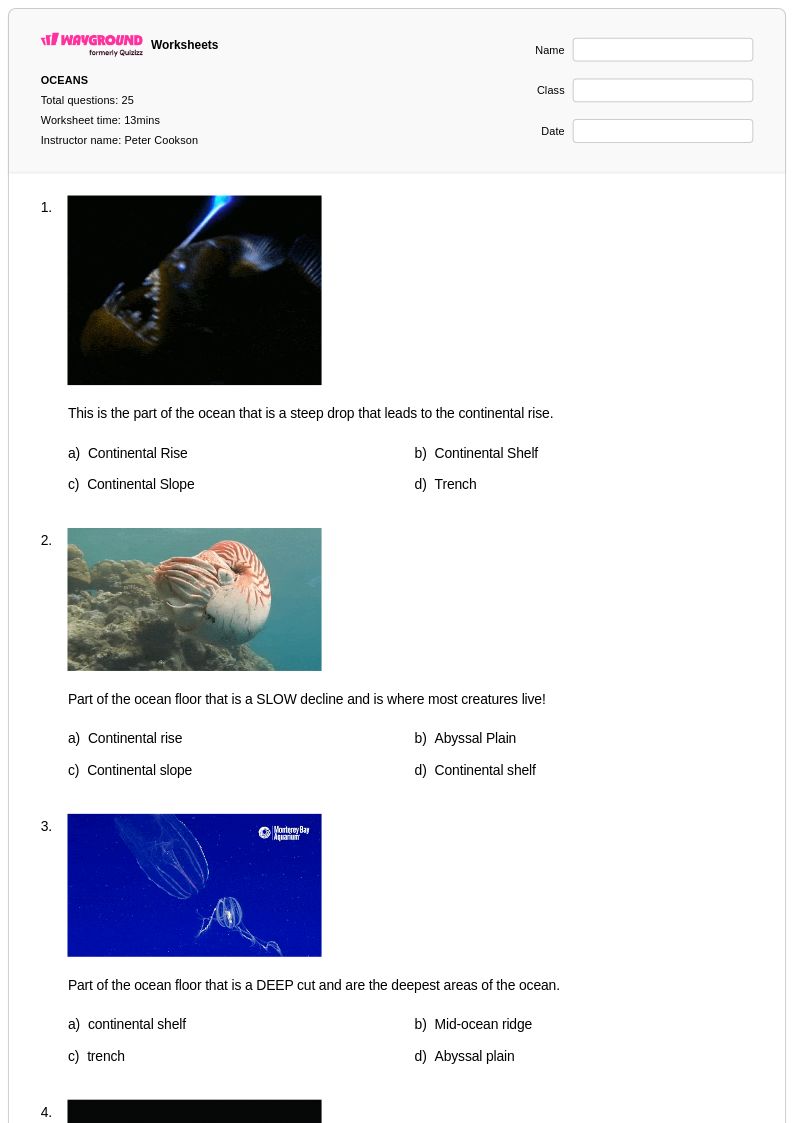
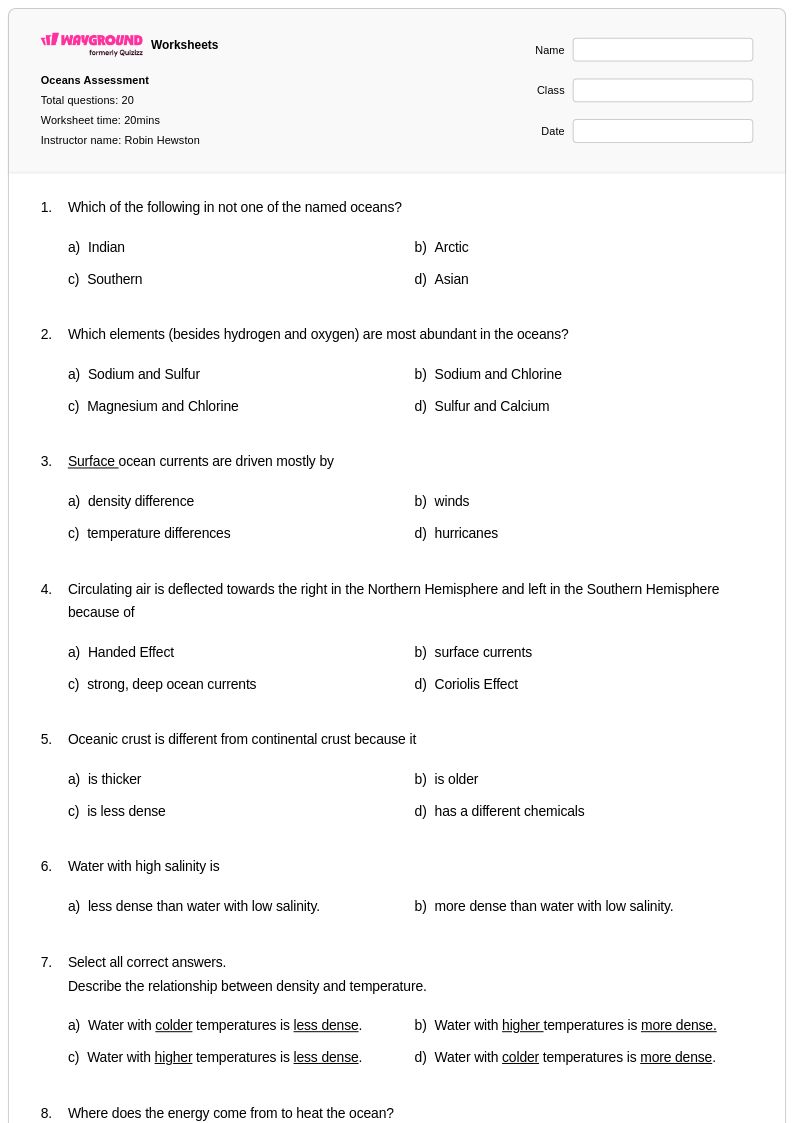
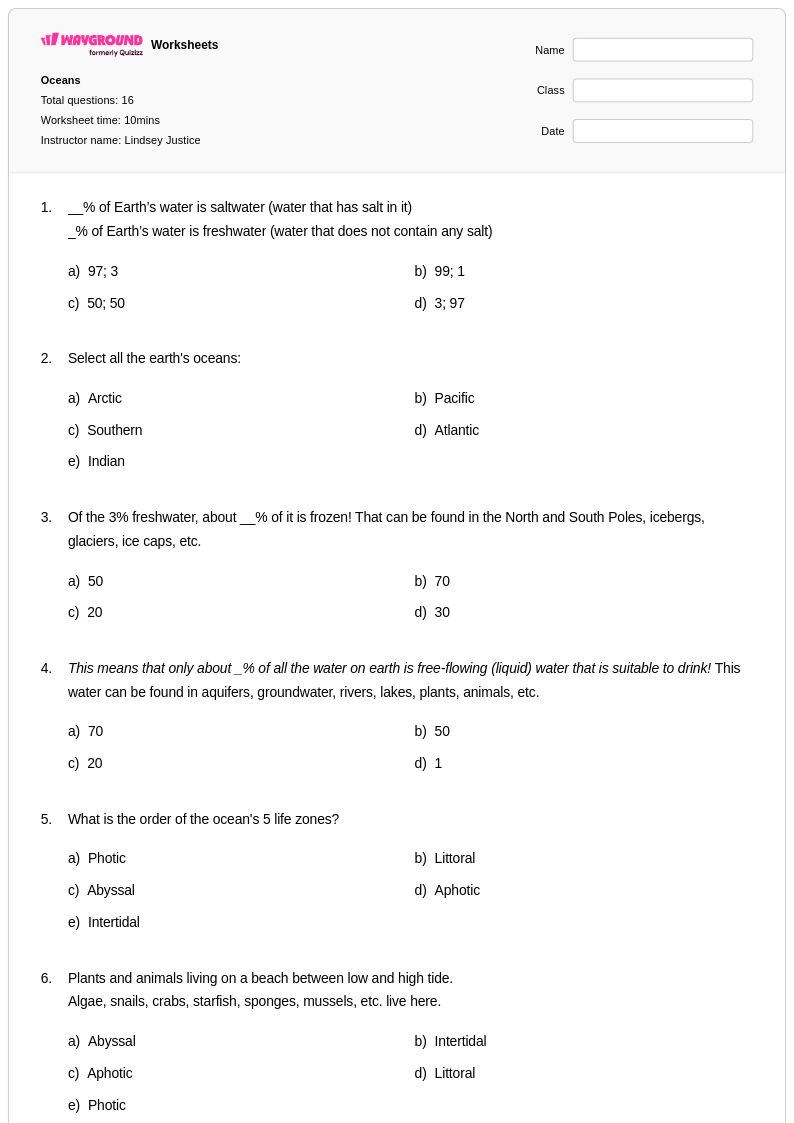
Year 5 ocean worksheets available through Wayground (formerly Quizizz) provide comprehensive coverage of marine science concepts essential for elementary earth and space science education. These carefully designed resources help students explore ocean zones, marine ecosystems, water cycle connections, and the vital role oceans play in Earth's climate systems. Students strengthen critical thinking skills through practice problems that examine ocean currents, tidal patterns, marine food webs, and the impact of human activities on ocean health. Each worksheet collection includes detailed answer keys and is available as free printables in convenient pdf format, allowing educators to seamlessly integrate ocean science concepts into their curriculum while supporting diverse learning needs through structured practice activities.
Wayground (formerly Quizizz) empowers teachers with millions of educator-created ocean science resources that streamline lesson planning and enhance student engagement with marine science topics. The platform's robust search and filtering capabilities enable teachers to quickly locate grade-appropriate materials aligned with educational standards, while built-in differentiation tools support personalized learning experiences for students at varying skill levels. Teachers can customize worksheets to match specific classroom objectives and access materials in both printable and digital formats, including downloadable pdf versions for flexible implementation. These comprehensive features facilitate targeted remediation for struggling learners, provide enrichment opportunities for advanced students, and offer consistent skill practice that reinforces fundamental ocean science concepts throughout the academic year.
FAQs
How do I teach ocean science concepts to students?
Effective ocean science instruction typically begins with foundational concepts like ocean layers and water properties before progressing to more complex systems such as ocean currents, tidal patterns, and marine ecosystems. Using visual diagrams of the ocean zones alongside data analysis activities helps students connect abstract concepts to real-world phenomena. Pairing direct instruction with structured practice problems on topics like seafloor spreading and the water cycle reinforces understanding and builds scientific reasoning skills.
What are the best worksheets for practicing ocean science topics?
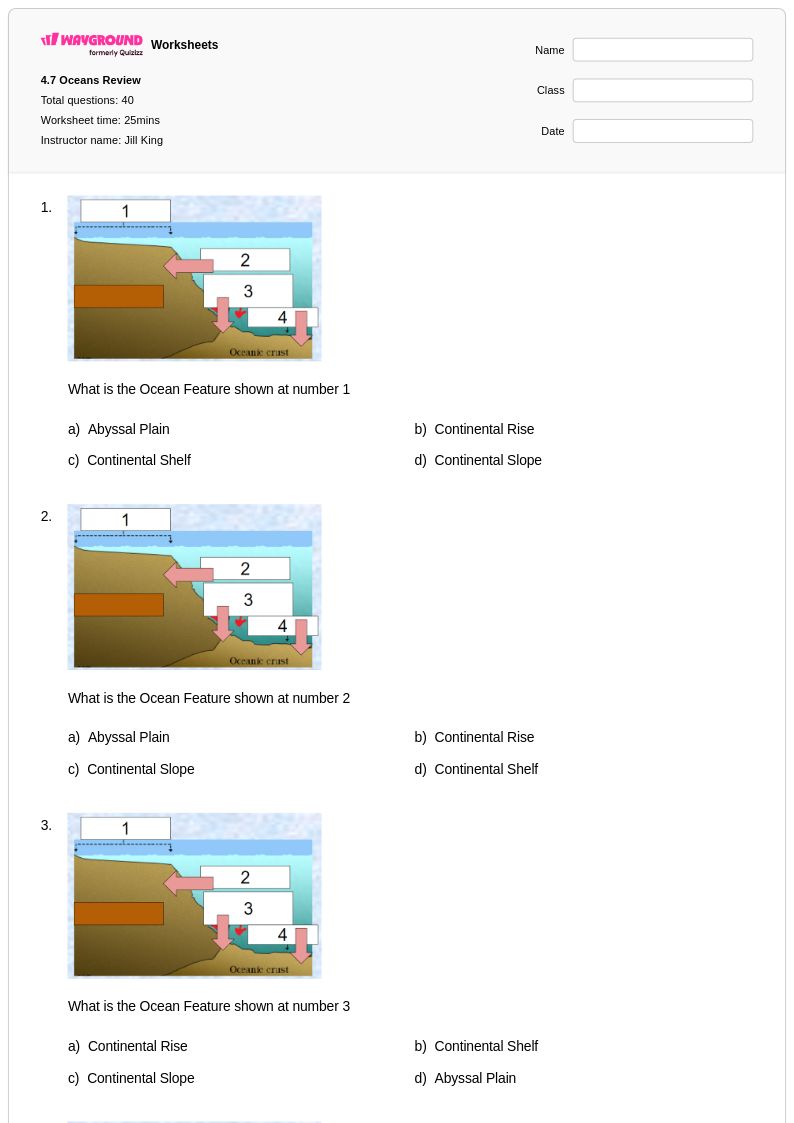
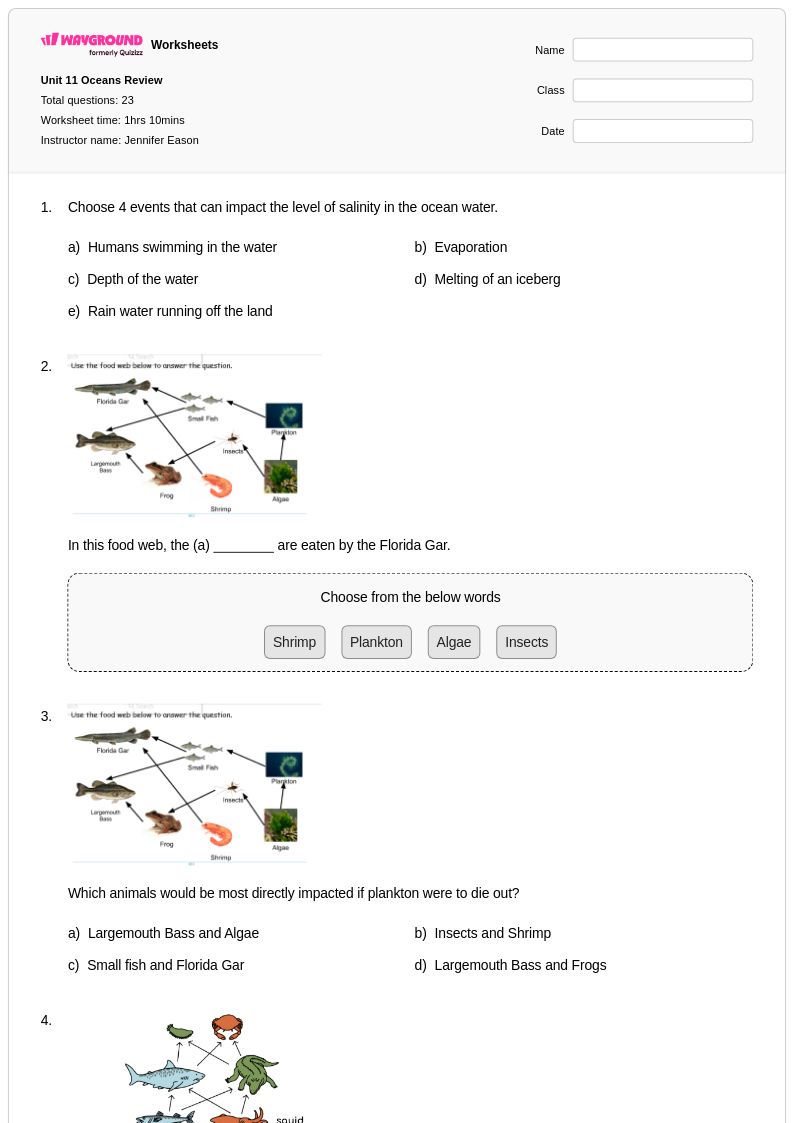
Worksheets that target specific oceanographic concepts, such as analyzing ocean current patterns, labeling ocean zones, interpreting salinity and temperature data, and mapping marine food webs, give students structured, focused practice. Activities that ask students to examine the relationship between oceans and climate systems are especially effective for building deeper analytical skills. A mix of diagram-based, data interpretation, and short-answer formats ensures comprehensive coverage across ocean science topics.
What misconceptions do students commonly have about oceans?
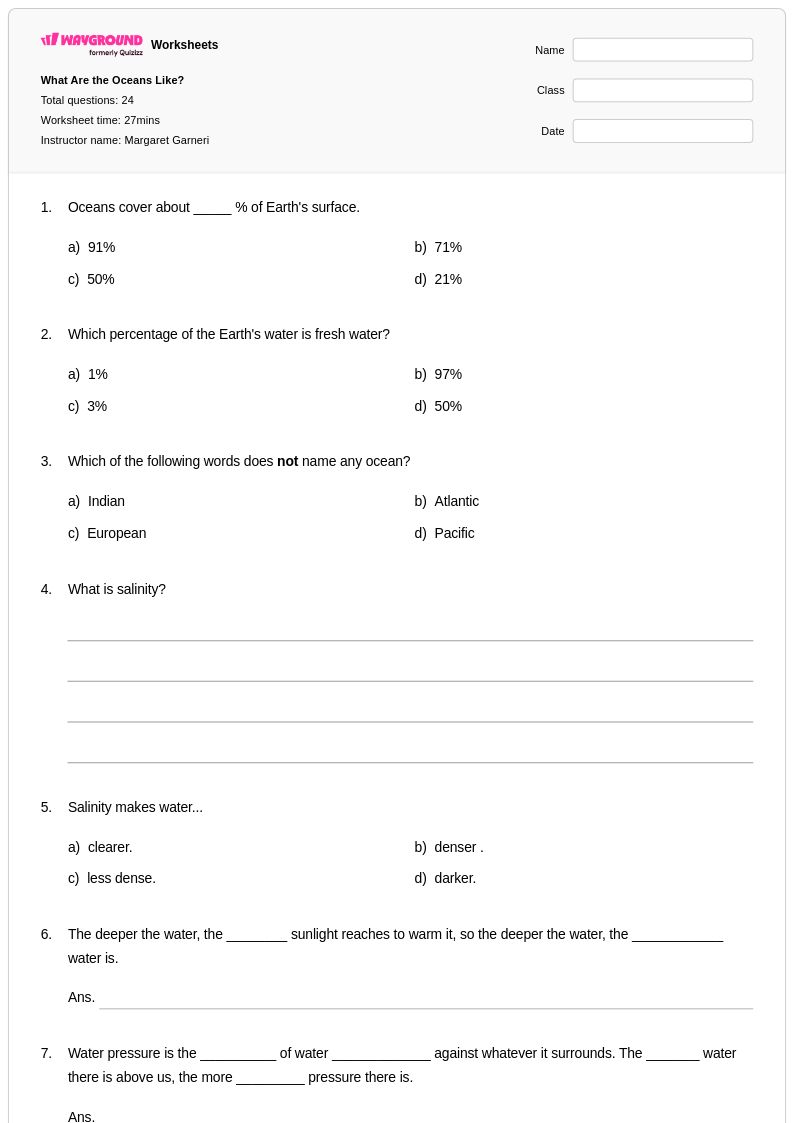
A frequent misconception is that ocean water is uniform in temperature and composition throughout, when in fact salinity, temperature, and pressure vary significantly with depth and location. Students also often confuse ocean currents with tides, conflating two distinct phenomena driven by different forces. Another common error is underestimating the ocean's role in regulating global climate, which can be addressed through direct instruction and data analysis activities focused on ocean-atmosphere interactions.
How can I use ocean worksheets to support students at different skill levels?
Ocean science worksheets can be differentiated by adjusting the complexity of tasks, such as offering labeled diagrams for foundational learners while requiring data interpretation or written analysis from advanced students. On Wayground, teachers can apply accommodations like reduced answer choices to lower cognitive load for struggling learners and use extended time settings for students who need it, all without disrupting the experience of other students in the class. This makes it practical to support remediation and enrichment within the same assignment.
How do I use Wayground's ocean worksheets in my classroom?
Wayground's ocean science worksheets are available as printable PDFs for traditional classroom use and in digital formats for technology-integrated learning environments, so they work whether you're teaching in person or remotely. Teachers can also host worksheets as a quiz directly on Wayground, enabling real-time student responses and instant answer-key grading. Each worksheet includes complete answer keys, reducing prep time and making it straightforward to use these resources for practice, review, or assessment.
How do oceans connect to other science topics I'm already teaching?
Oceans intersect with a wide range of Earth and life science topics, including the water cycle, plate tectonics (through seafloor spreading), weather and climate systems, and ecology through marine food webs. Teaching ocean science alongside these related concepts helps students see Earth's systems as interconnected rather than isolated. This cross-topic relevance makes ocean worksheets useful as reinforcement tools across different units throughout the school year.