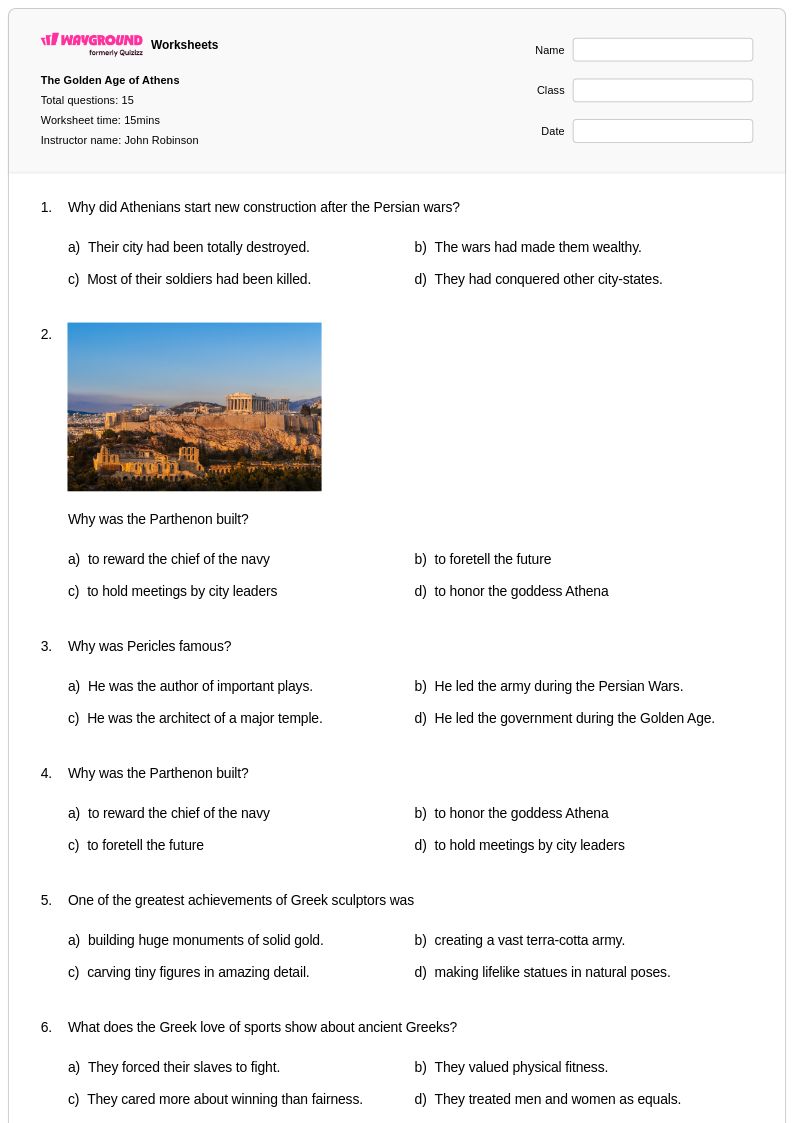
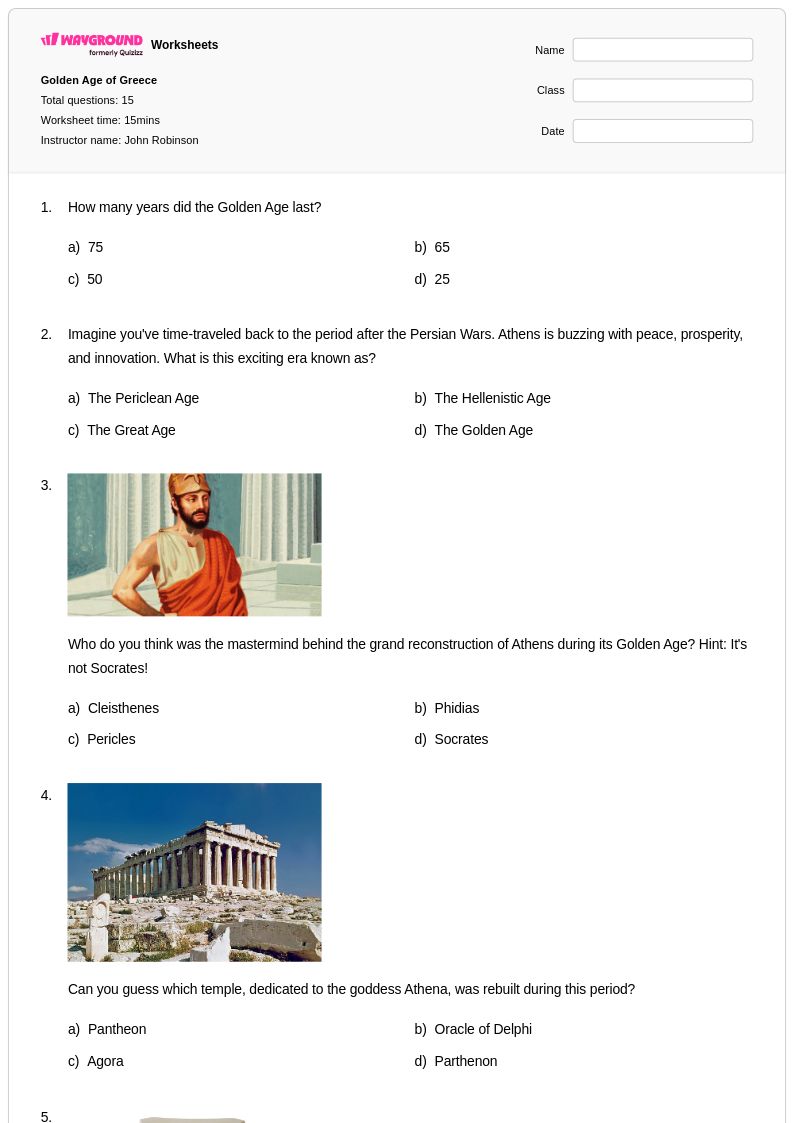
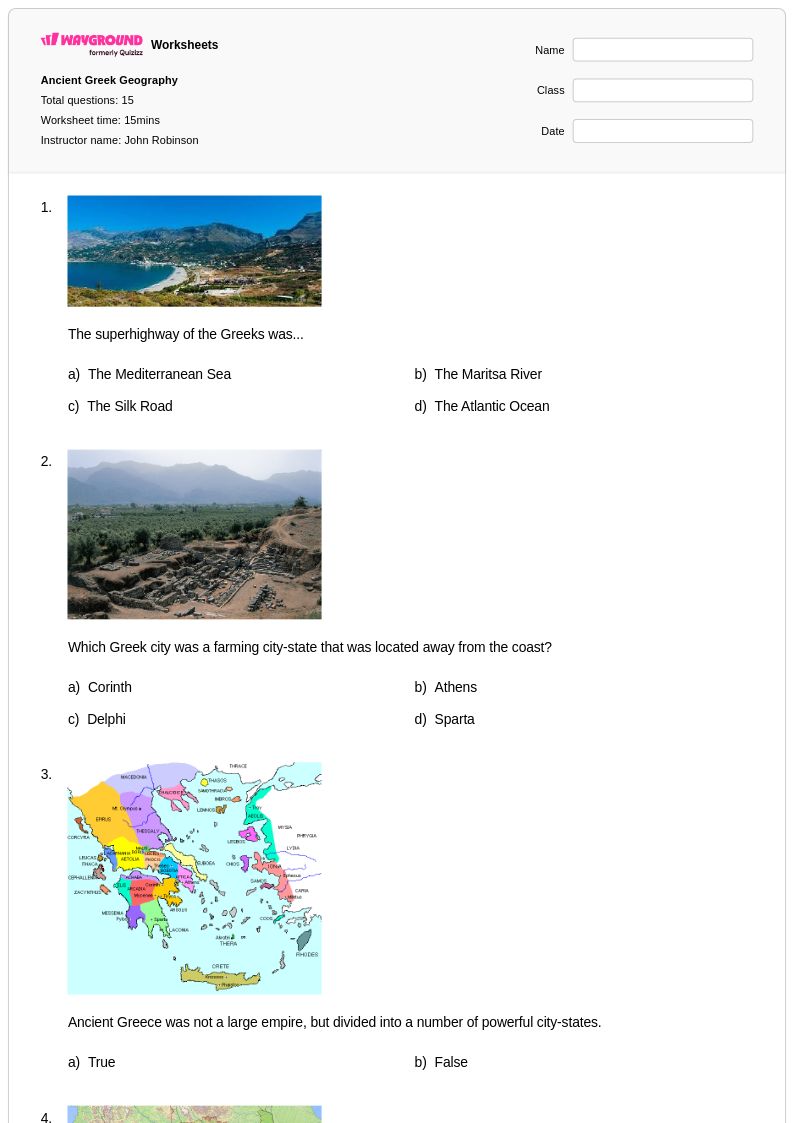
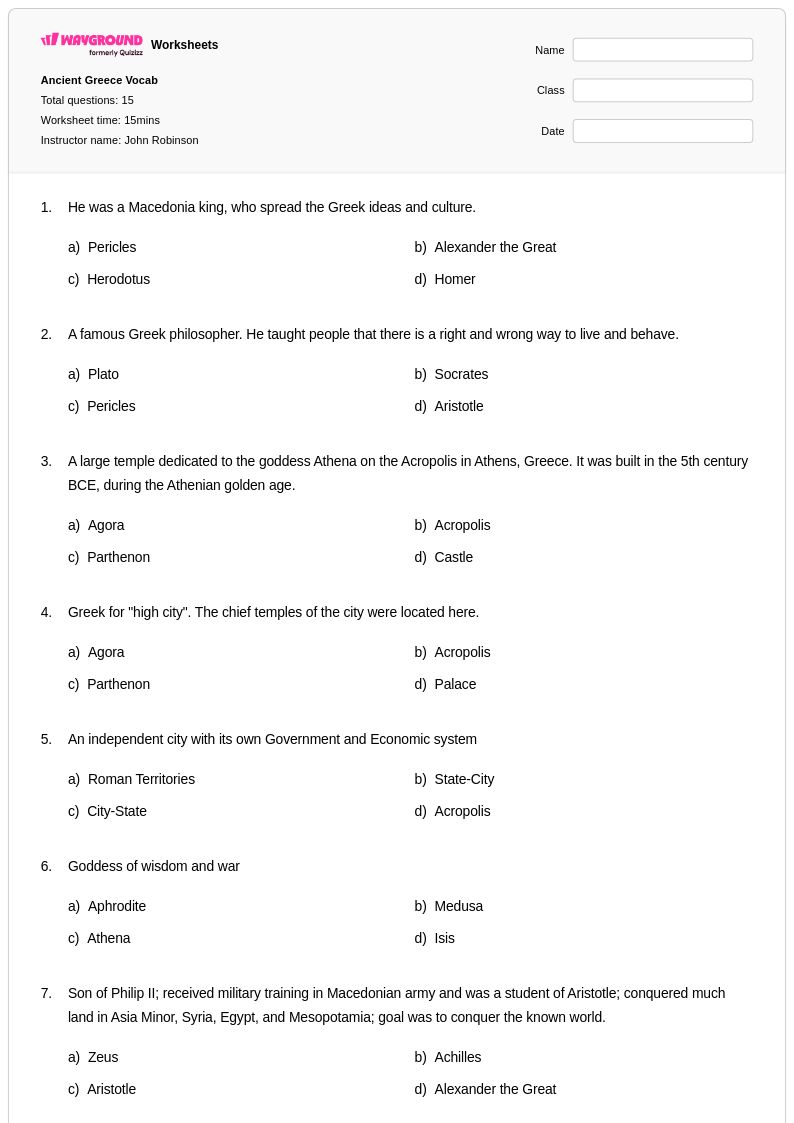
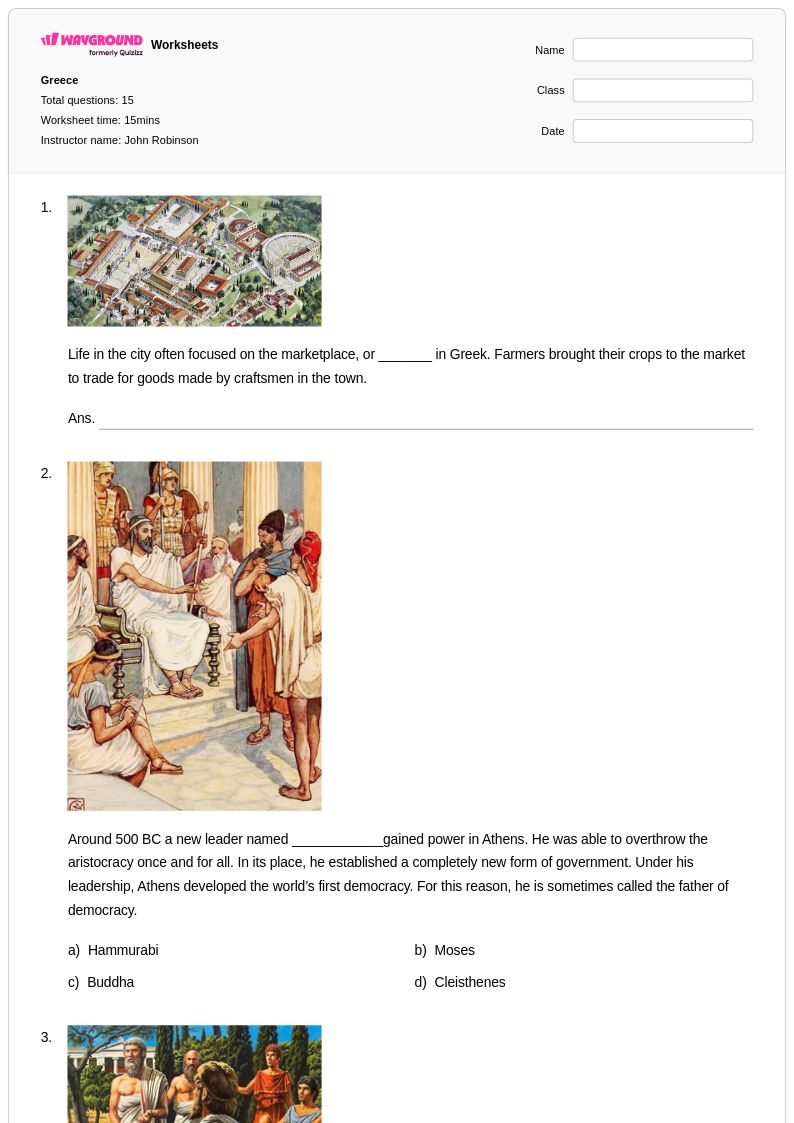
Explore Year 8 Social Studies worksheets focusing on the Parthenon through Wayground's free printables and practice problems that help students understand this iconic ancient Greek temple's architecture, history, and cultural significance with comprehensive answer keys.
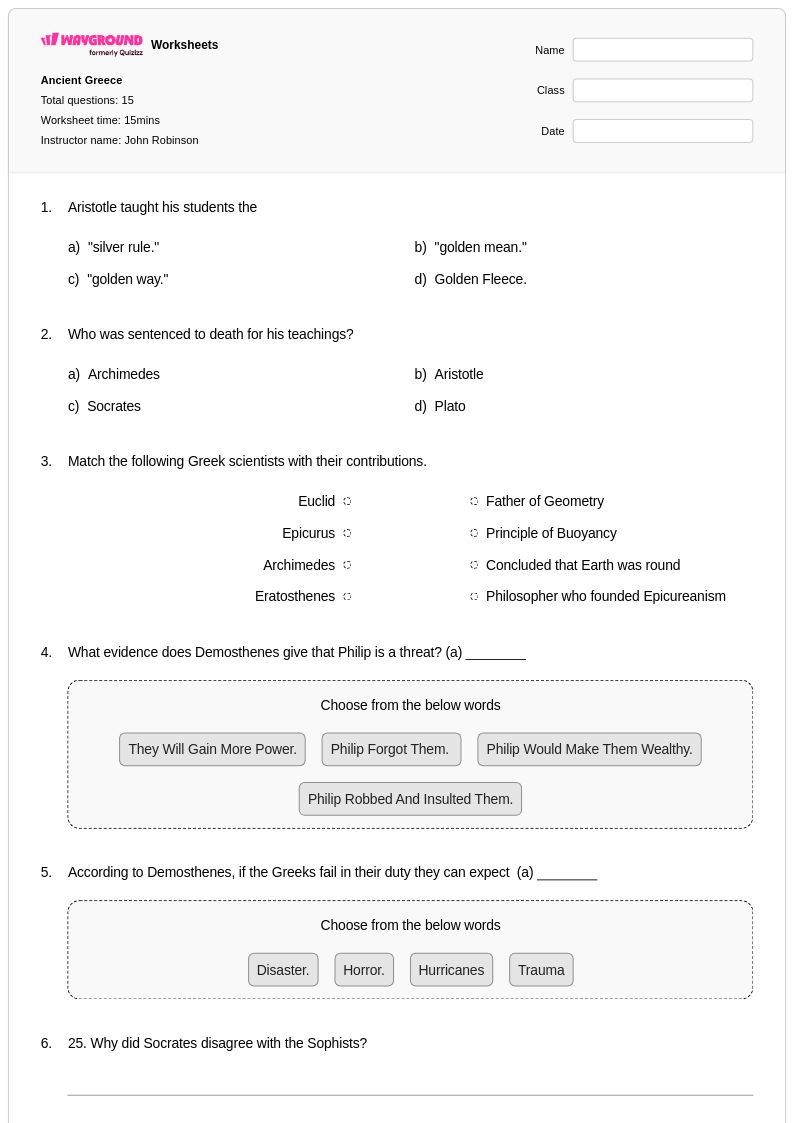
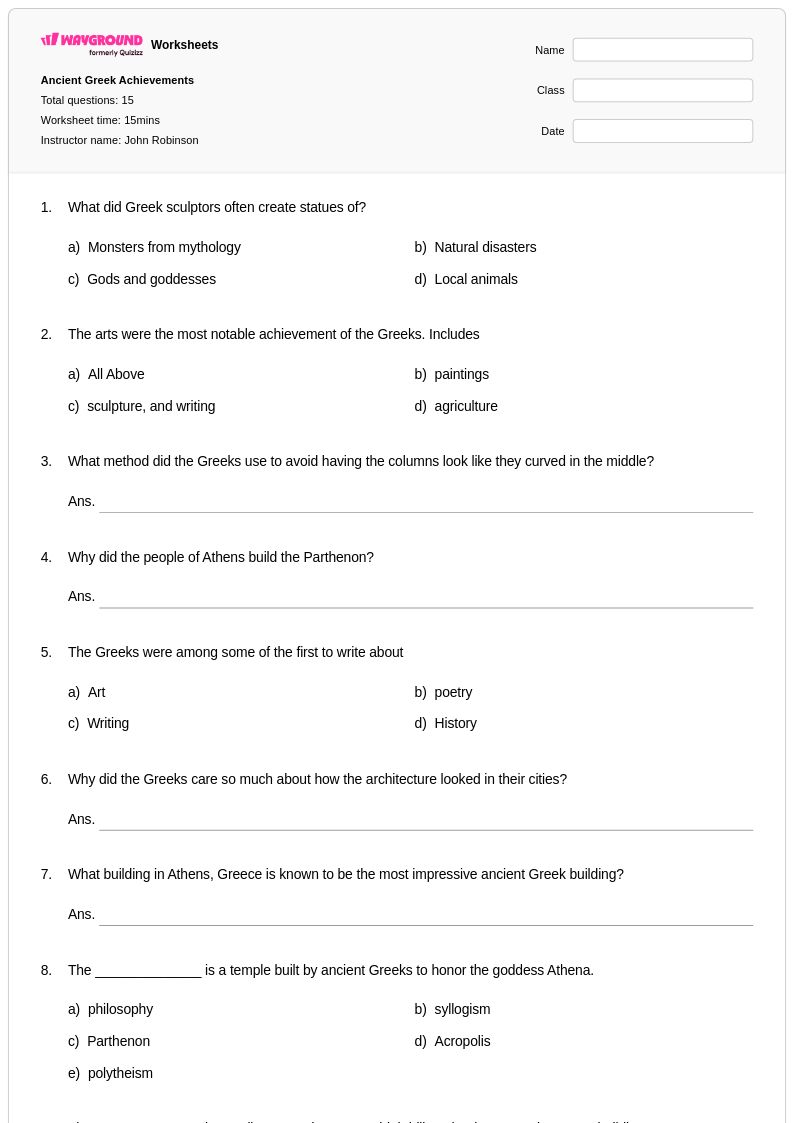
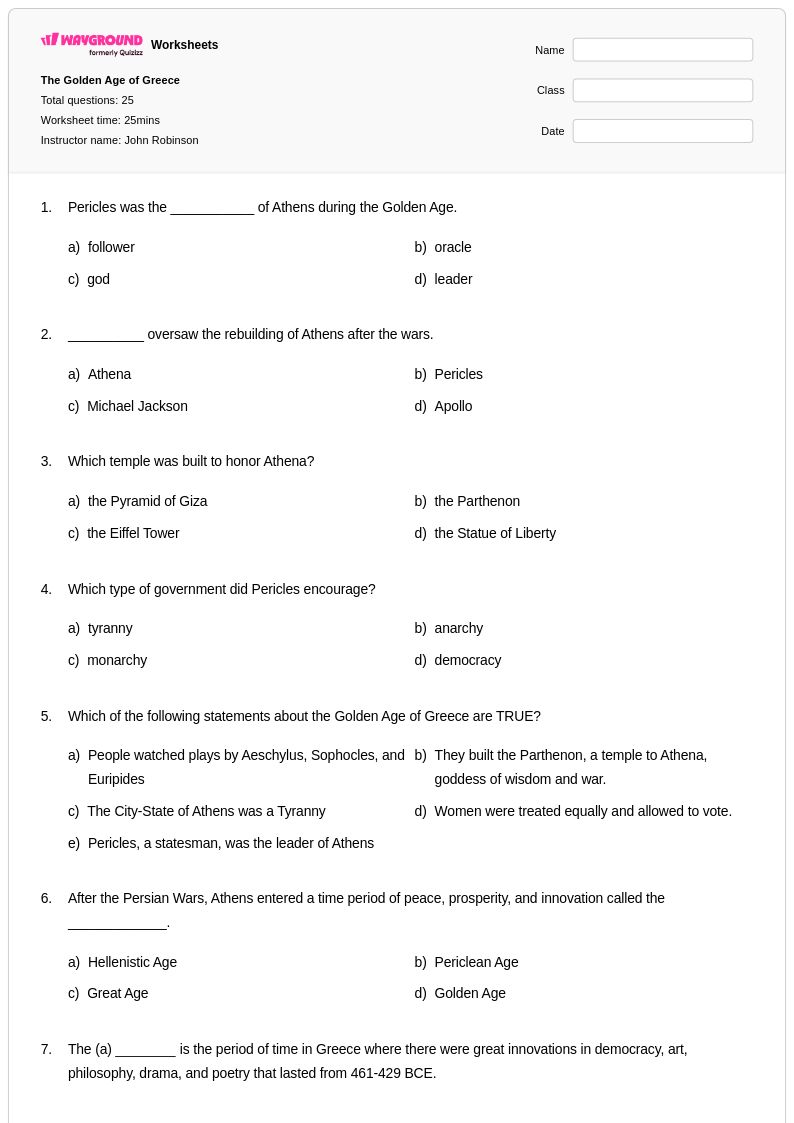
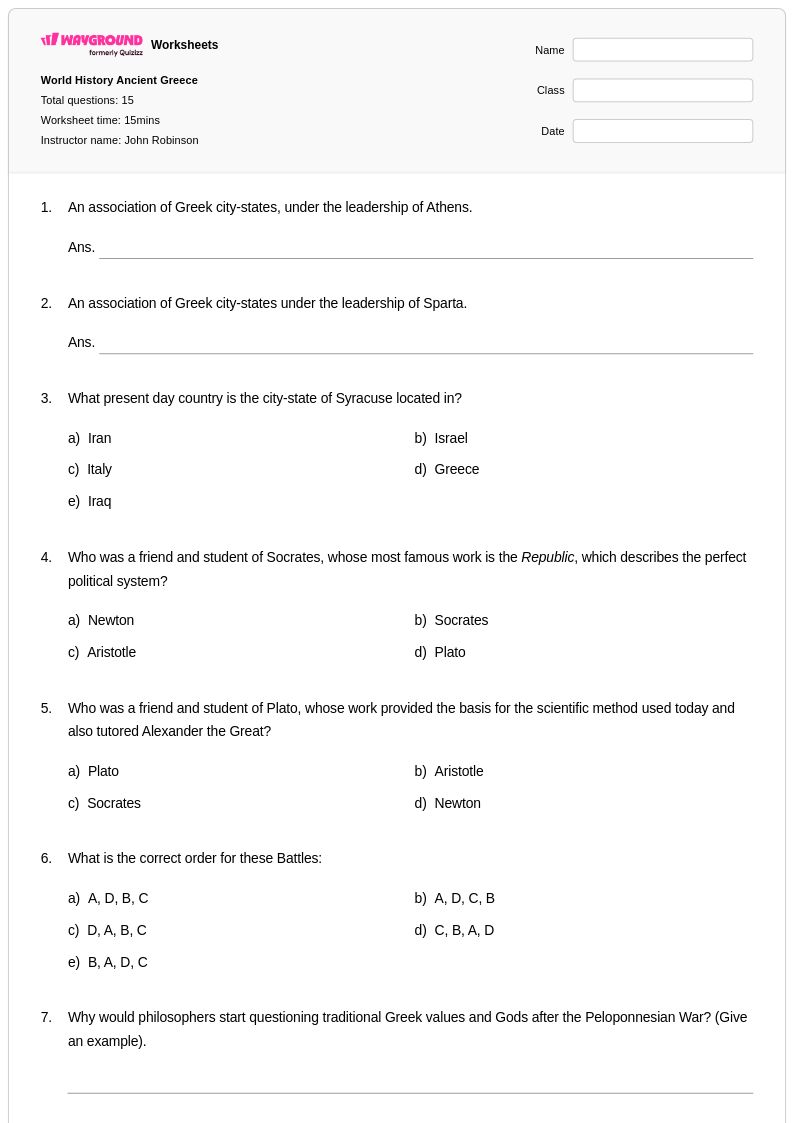
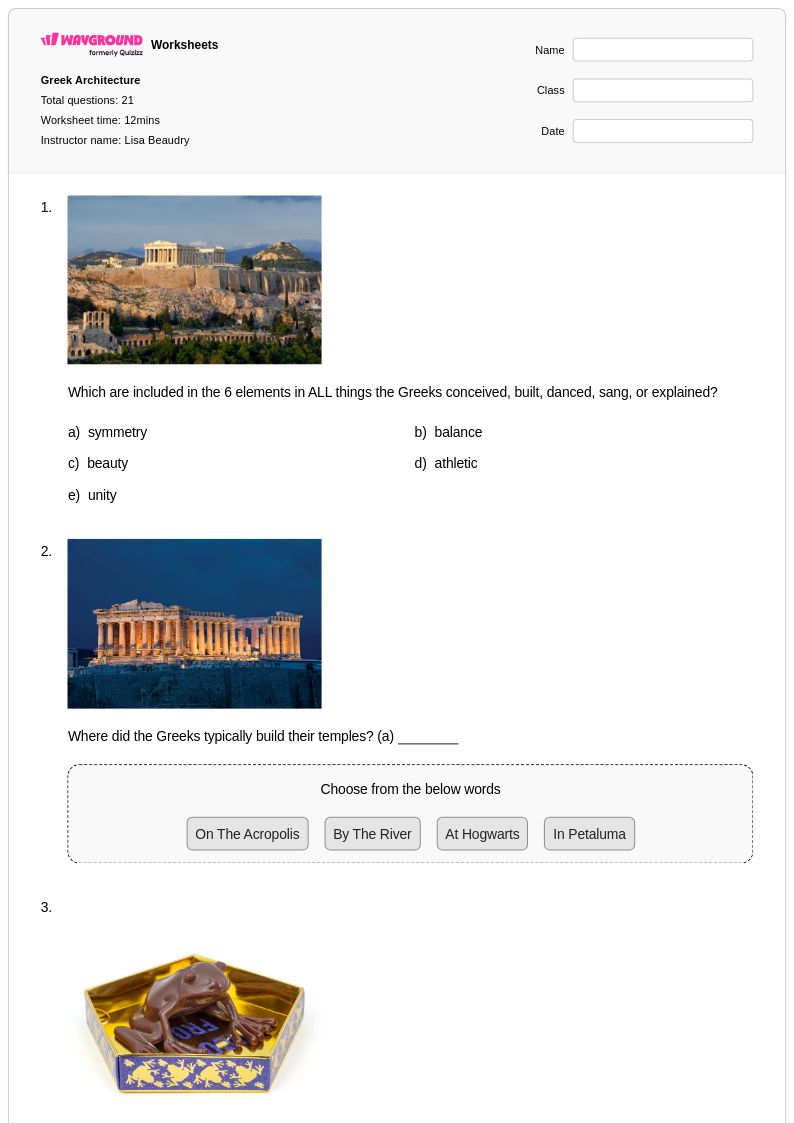
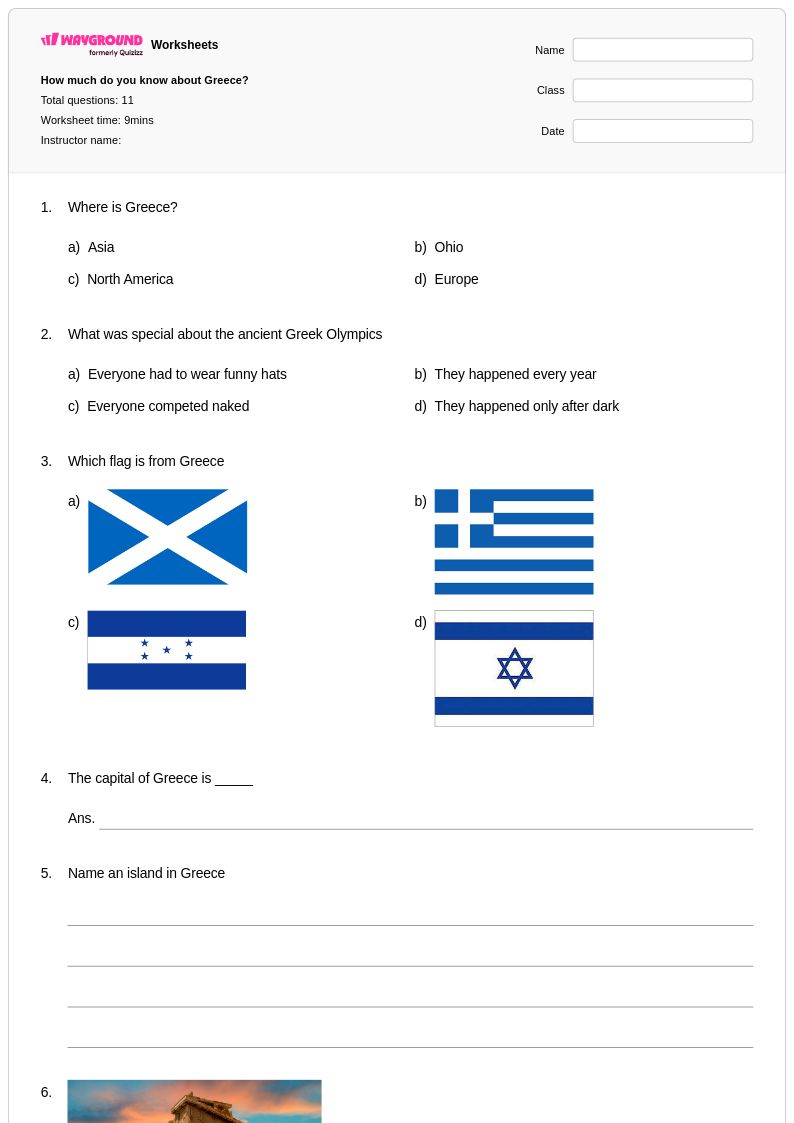
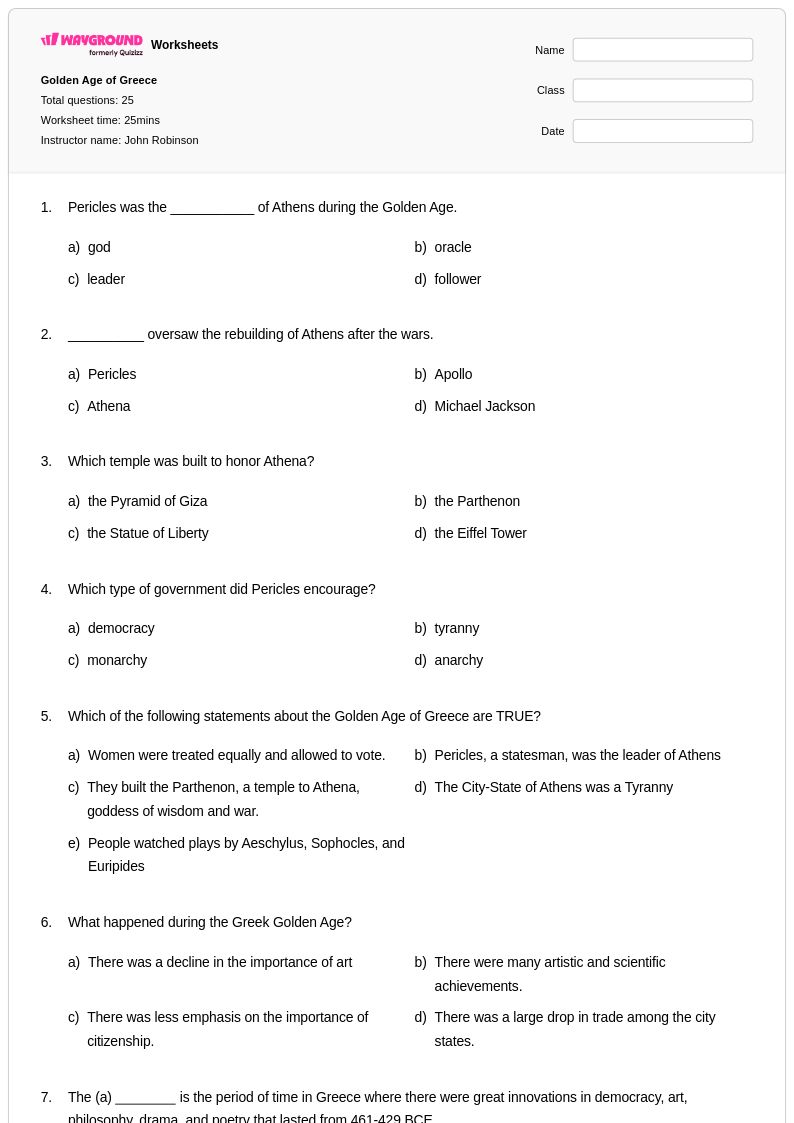
Parthenon worksheets designed for Year 8 students provide comprehensive exploration of this iconic symbol of ancient Greek civilization and democratic ideals. These educational resources guide students through detailed analysis of the Parthenon's architectural significance, historical context, and cultural impact on Western civilization, strengthening critical thinking skills essential for advanced social studies comprehension. Students engage with primary source materials, architectural diagrams, and historical timelines while developing skills in visual analysis, cause-and-effect reasoning, and historical interpretation. Each worksheet includes structured practice problems that challenge students to examine the Parthenon's role in Athenian society, its artistic innovations, and its enduring influence on modern government buildings, with comprehensive answer keys supporting both independent study and classroom instruction through accessible pdf formats and free printable materials.
Wayground, formerly Quizizz, empowers educators with an extensive collection of teacher-created Parthenon resources drawn from millions of professionally developed materials specifically aligned with Year 8 social studies standards. The platform's sophisticated search and filtering capabilities enable teachers to quickly locate worksheets that match their specific instructional needs, whether focusing on architectural analysis, historical context, or cultural significance of ancient Greek civilization. Advanced differentiation tools allow educators to customize content difficulty levels and modify assignments for diverse learning needs, while flexible formatting options provide seamless transitions between digital classroom integration and traditional printable pdf worksheets. These comprehensive resources support effective lesson planning by offering varied approaches to skill practice, targeted remediation for struggling learners, and enrichment opportunities for advanced students exploring the complexities of ancient civilizations and their lasting contributions to modern society.
FAQs
How do I teach the Parthenon to middle or high school students?
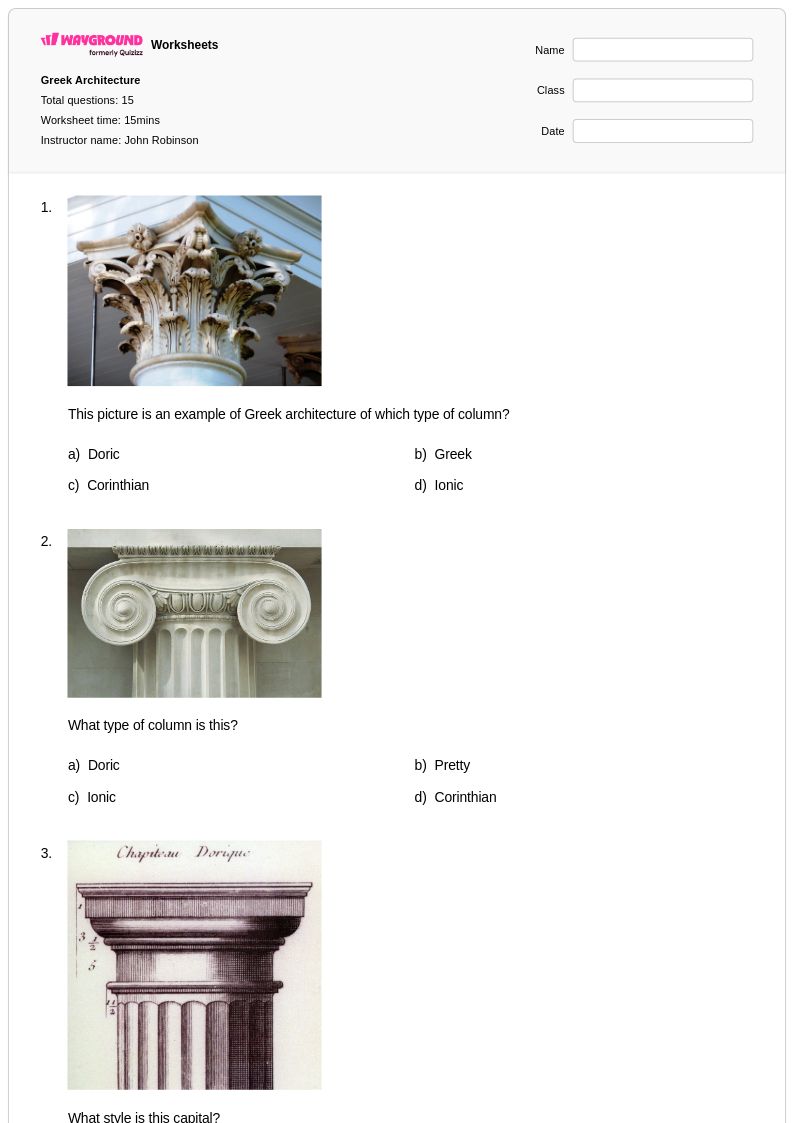
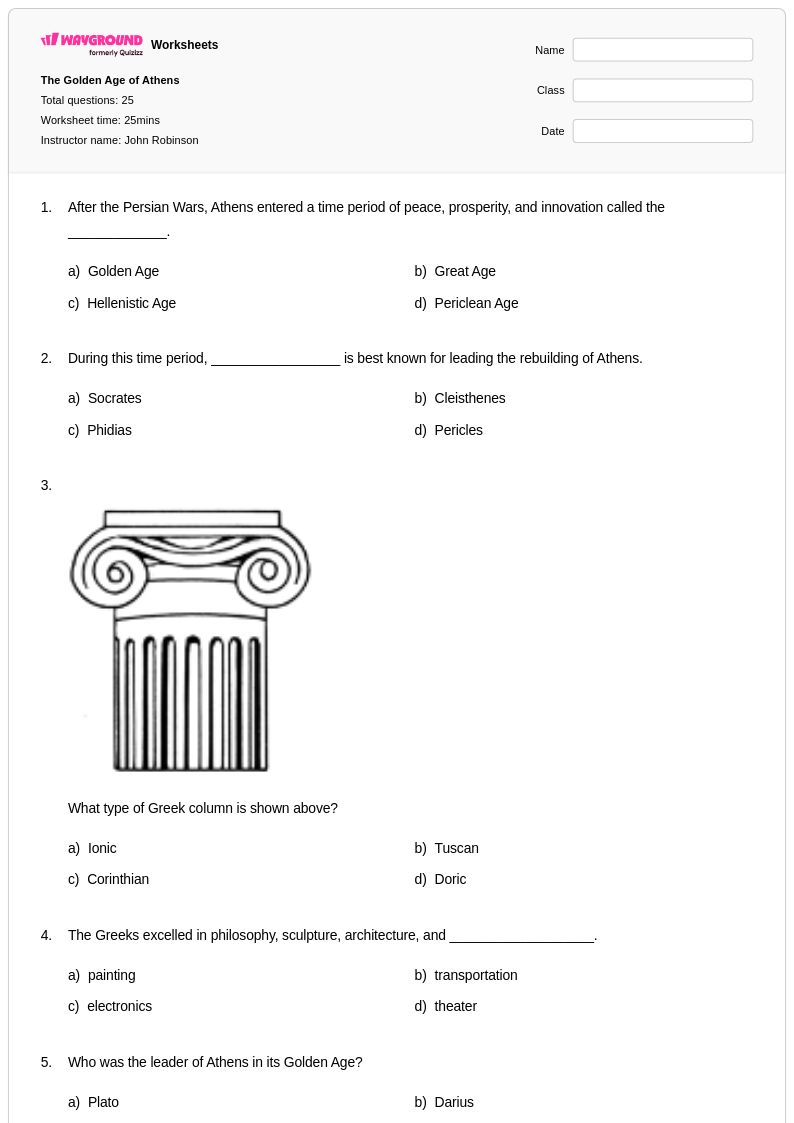
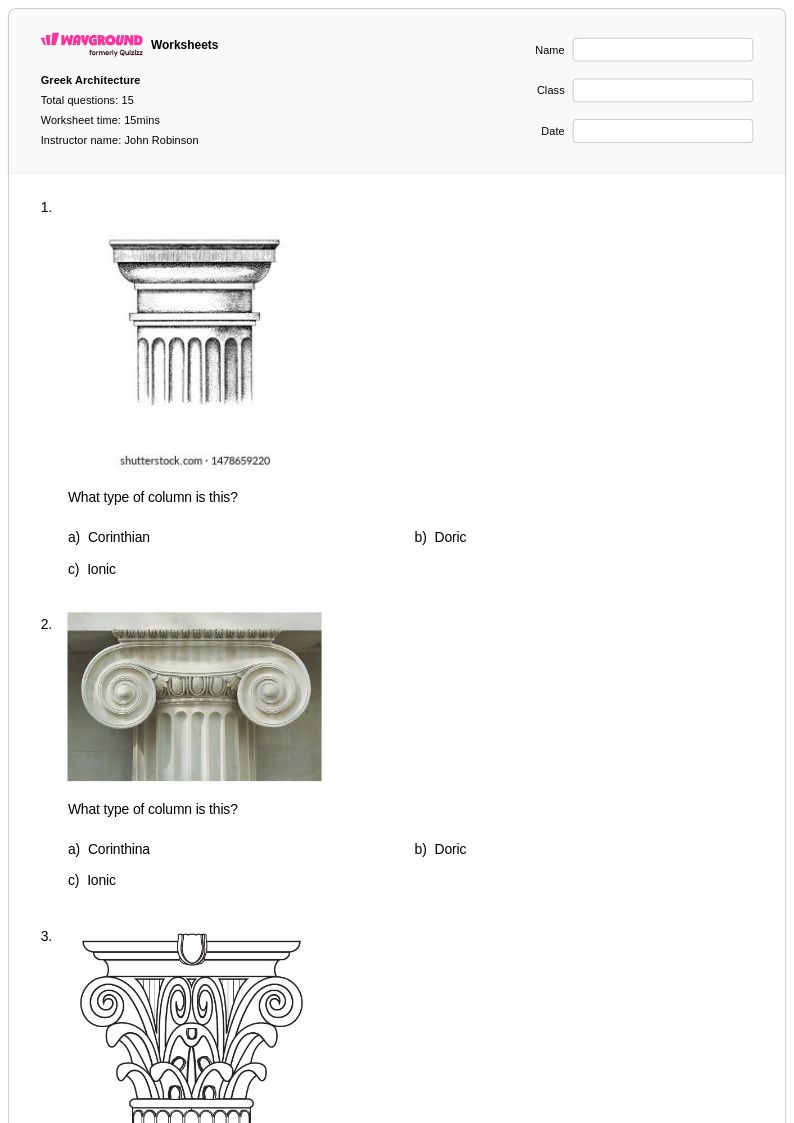
Teaching the Parthenon effectively means grounding students in its dual role as a religious temple dedicated to Athena and a civic monument representing Athenian power and democratic ideals. Start by introducing the Doric order and what distinguishes it from Ionic and Corinthian styles, then move into the sculptural program, including the frieze and pediment figures, to connect architecture with mythology and politics. Pairing visual analysis of the structure's mathematical proportions with primary source work on Pericles' building program helps students see the Parthenon as both an artistic and political statement.
What kinds of exercises help students practice analyzing ancient Greek architecture?
Effective practice exercises for ancient Greek architecture include labeling diagrams of the Doric column order, identifying architectural features such as the entablature, metopes, and stylobate, and comparing the Parthenon's proportions to other Greek temples. Short-answer and structured response questions that ask students to connect architectural choices to cultural values, such as why mathematical ratios were used, build analytical thinking. These types of tasks mirror the practice problems found in Parthenon worksheets designed for social studies and world history contexts.
What common misconceptions do students have about the Parthenon?
A frequent misconception is that the Parthenon was always white marble; in reality, it was originally painted in vivid colors, including red, blue, and gold. Students also commonly confuse the Parthenon with a general government building, when it functioned primarily as a temple housing a massive cult statue of Athena. Another error is treating it as fully intact, without understanding its destruction during the 1687 Venetian bombardment and the ongoing debate over the Elgin Marbles.
How do I connect the Parthenon to broader social studies standards?
The Parthenon connects directly to standards on ancient civilizations, democratic origins, and cultural diffusion. Teachers can use it as an anchor for units on Athenian democracy by examining how the building program under Pericles was funded and what it communicated about power and civic identity. Its influence on later neoclassical architecture, including buildings like the U.S. Supreme Court and Lincoln Memorial, also provides a strong cross-curricular link to American government and art history.
How can I use Parthenon worksheets in my classroom?
Parthenon worksheets on Wayground are available as printable PDFs for traditional classroom use and in digital formats for technology-integrated learning environments, including the option to host them as a quiz directly on Wayground. Printable versions work well for close-reading and annotation tasks, while digital formats allow for immediate feedback and self-paced review. Both formats include complete answer keys, making them practical for independent work, homework, or structured group discussion.
How can I differentiate Parthenon lessons for students at different skill levels?
For students who need additional support, simplifying vocabulary around architectural terminology and providing labeled visual references reduces barriers to entry. Advanced learners can be extended through research tasks that examine the Parthenon's role in modern national identity debates, including the question of whether its sculptures should be returned to Greece. On Wayground, teachers can apply accommodations such as read aloud, reduced answer choices, and extended time to individual students, ensuring all learners can access the same core material without singling anyone out.