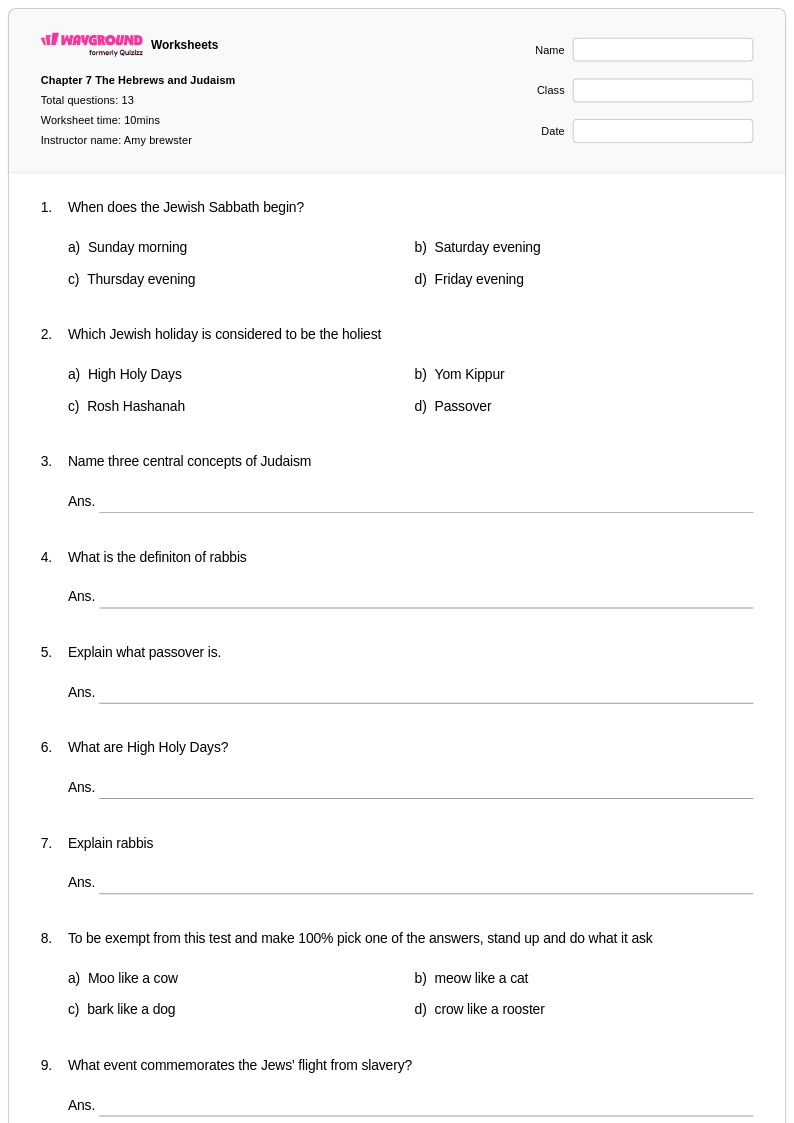
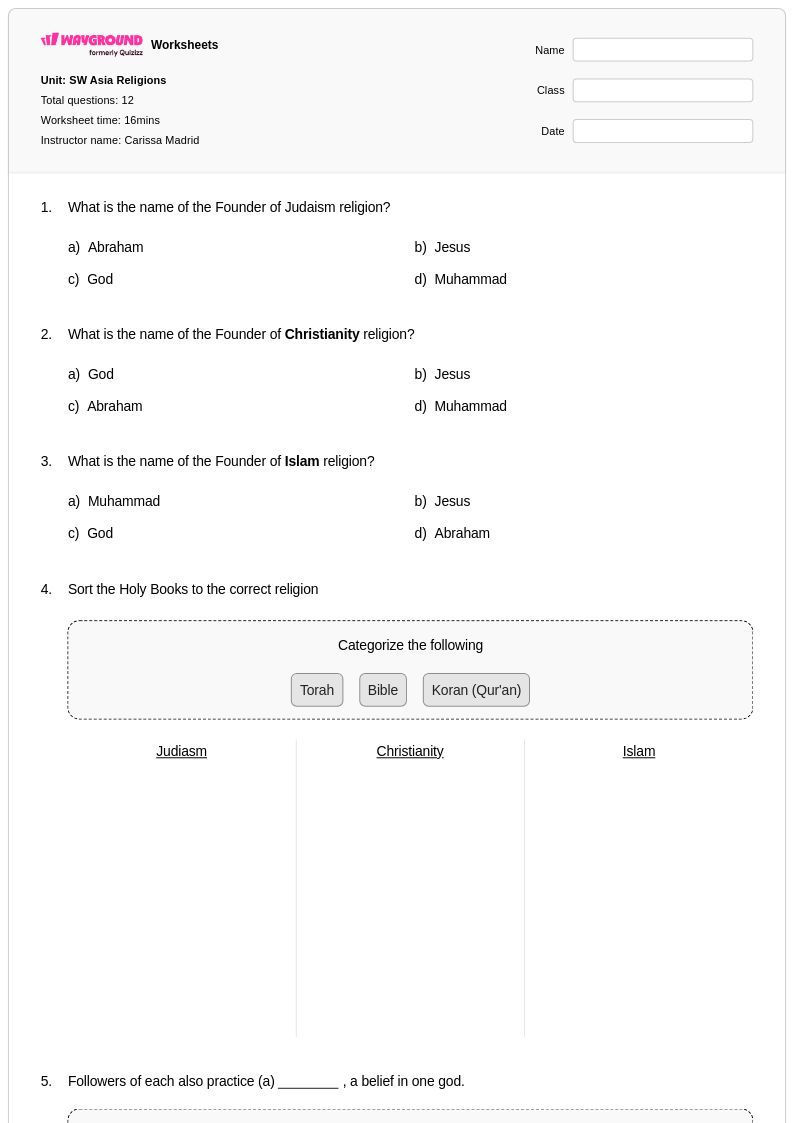
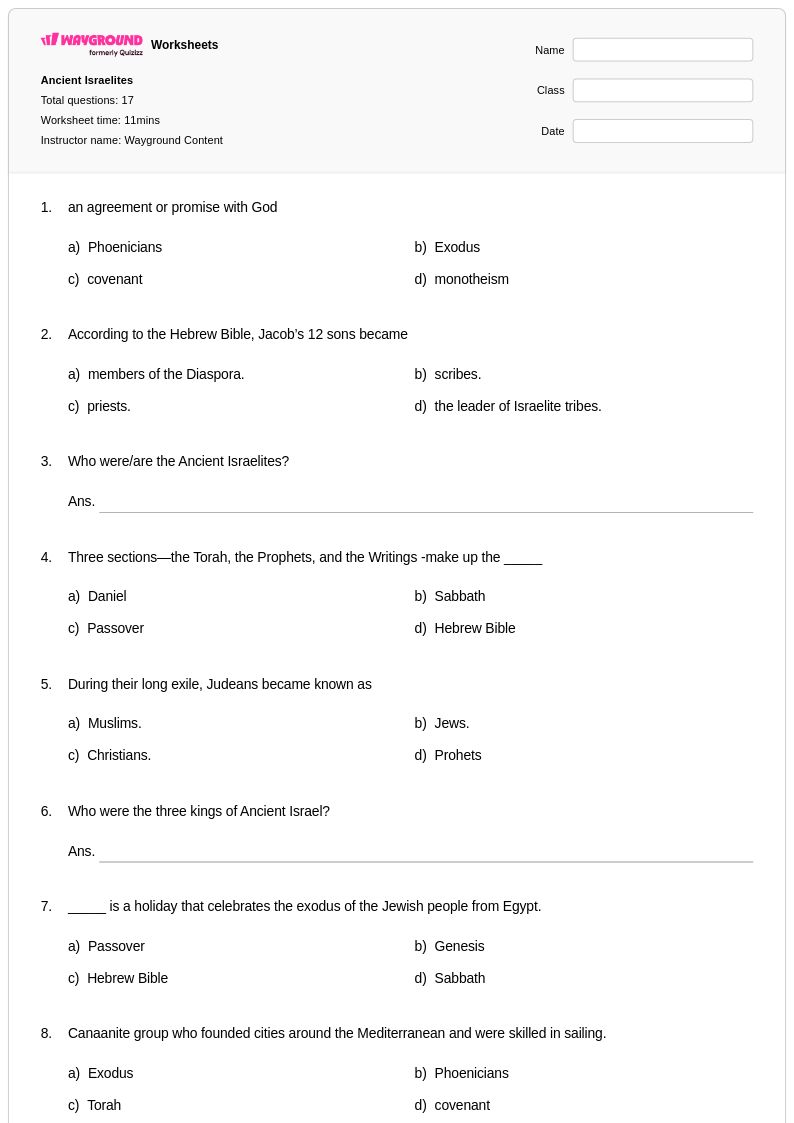
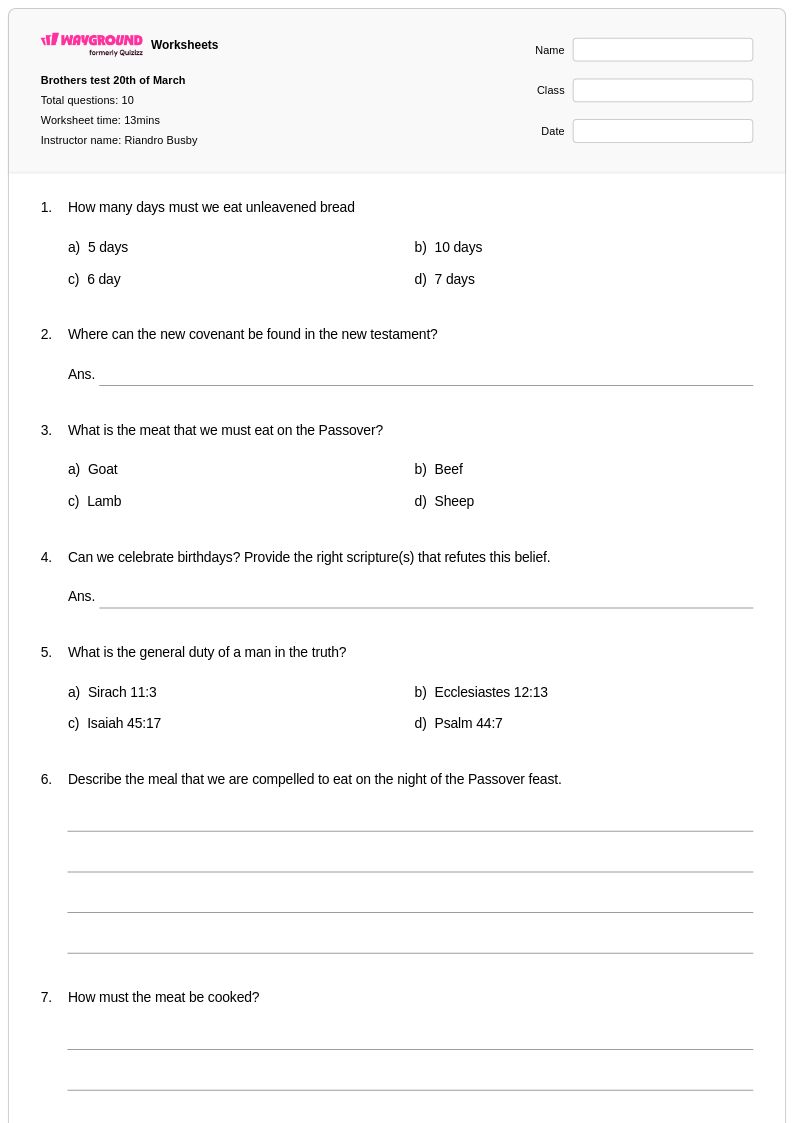
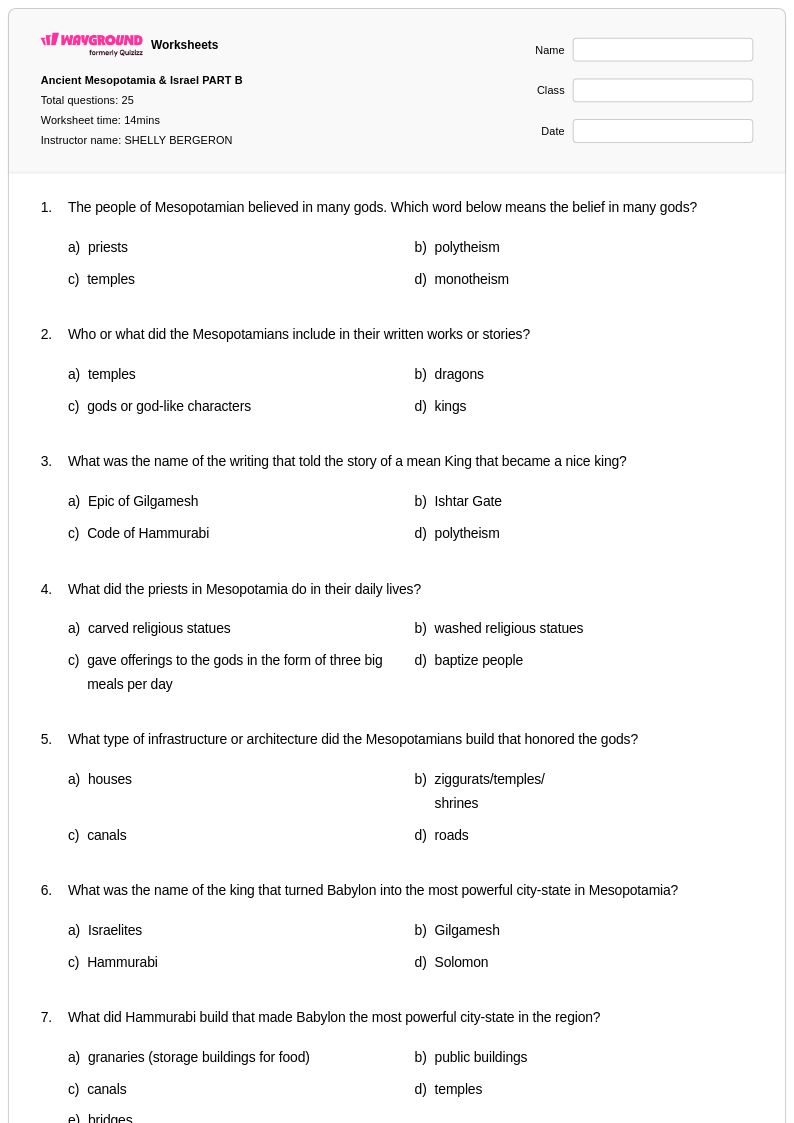
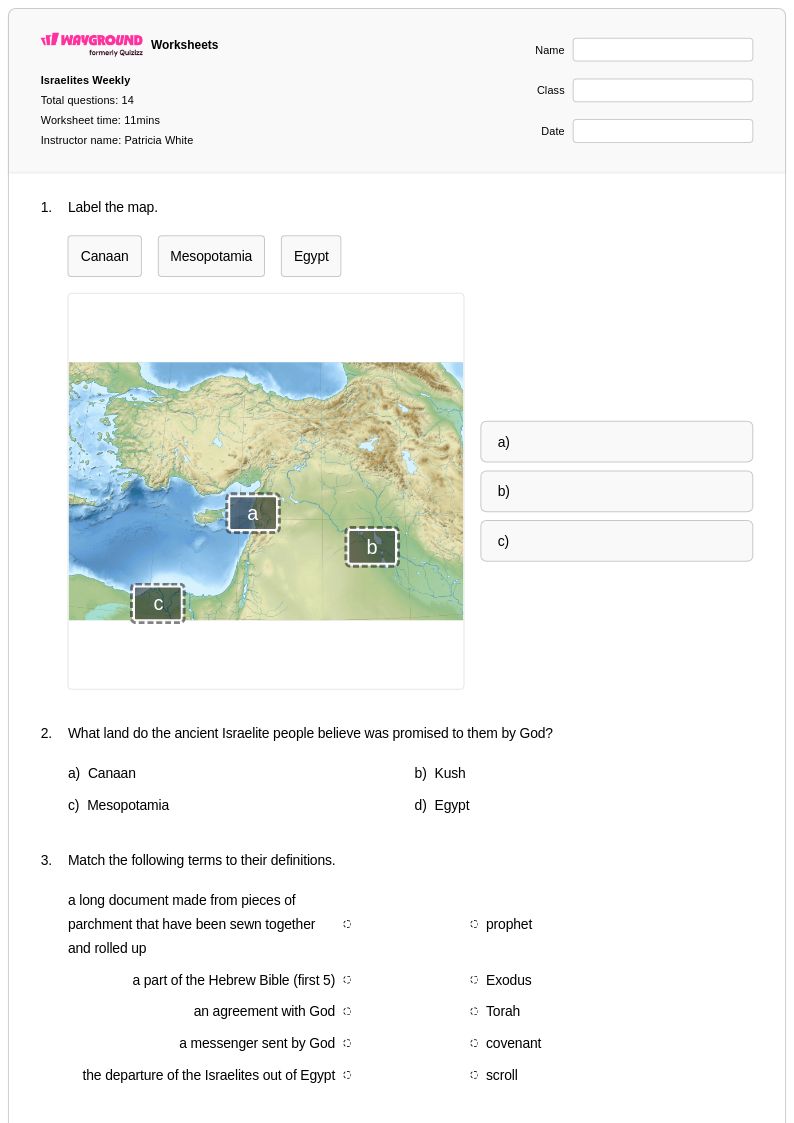
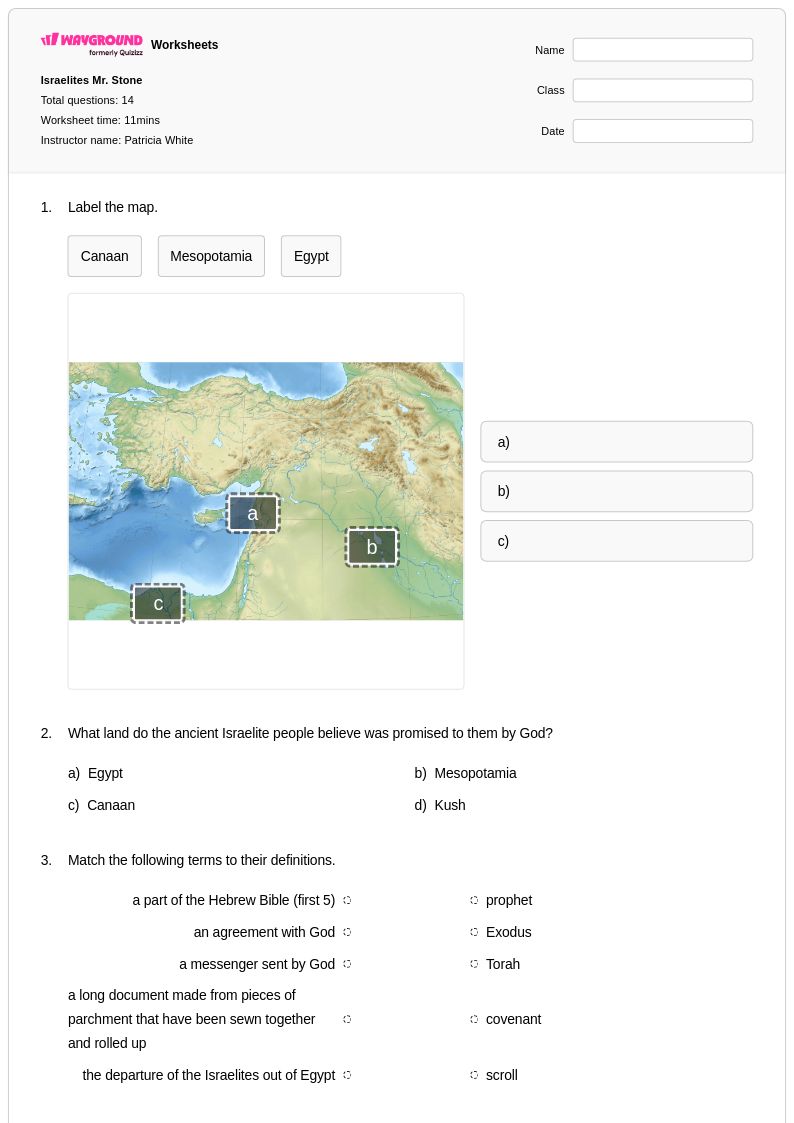
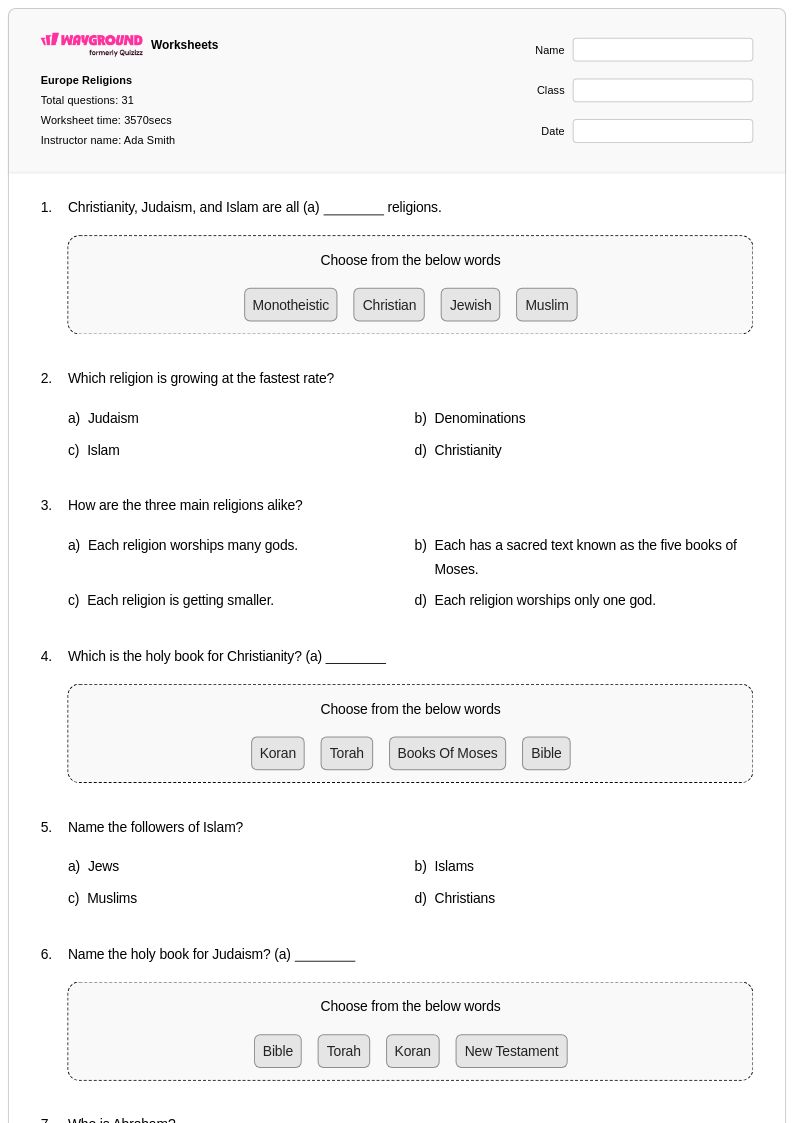
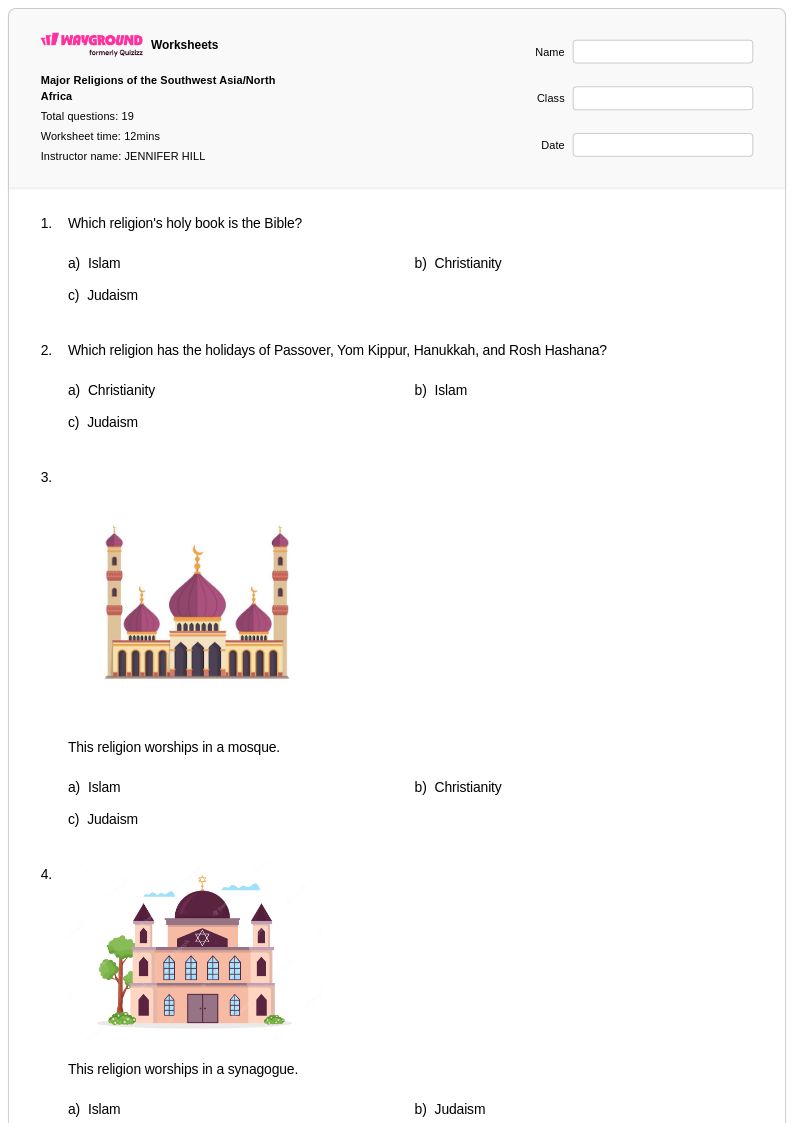
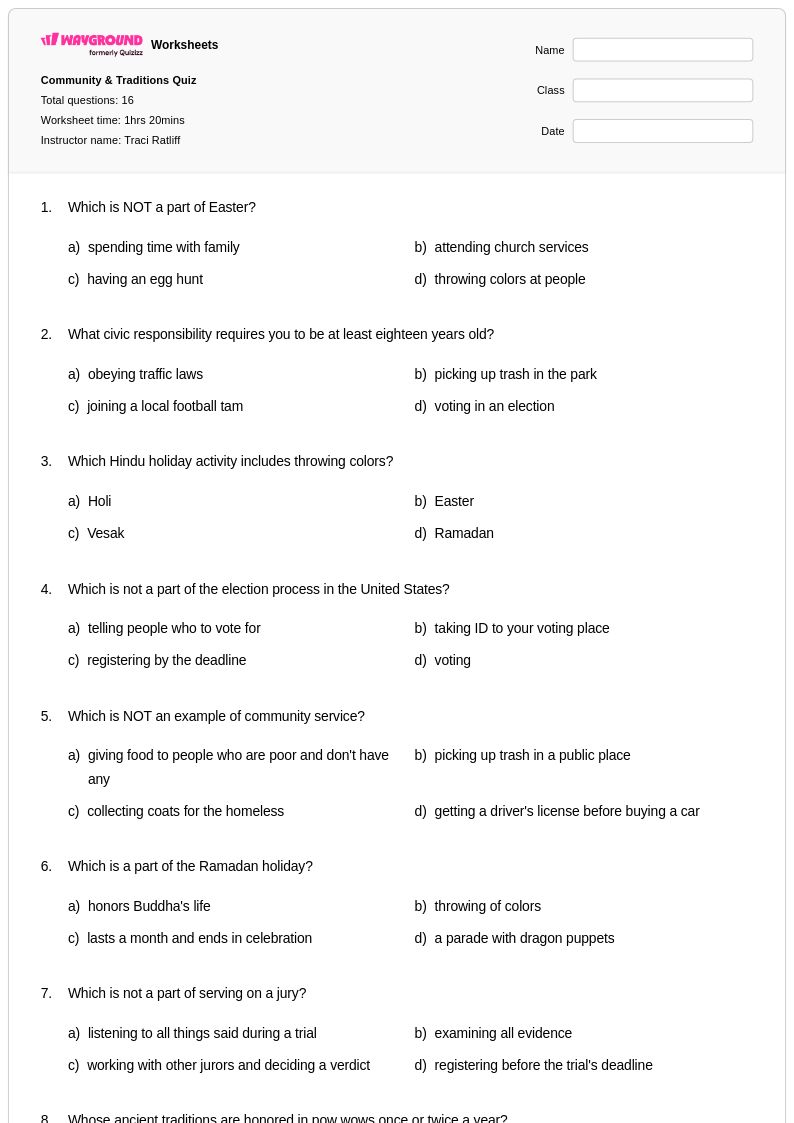
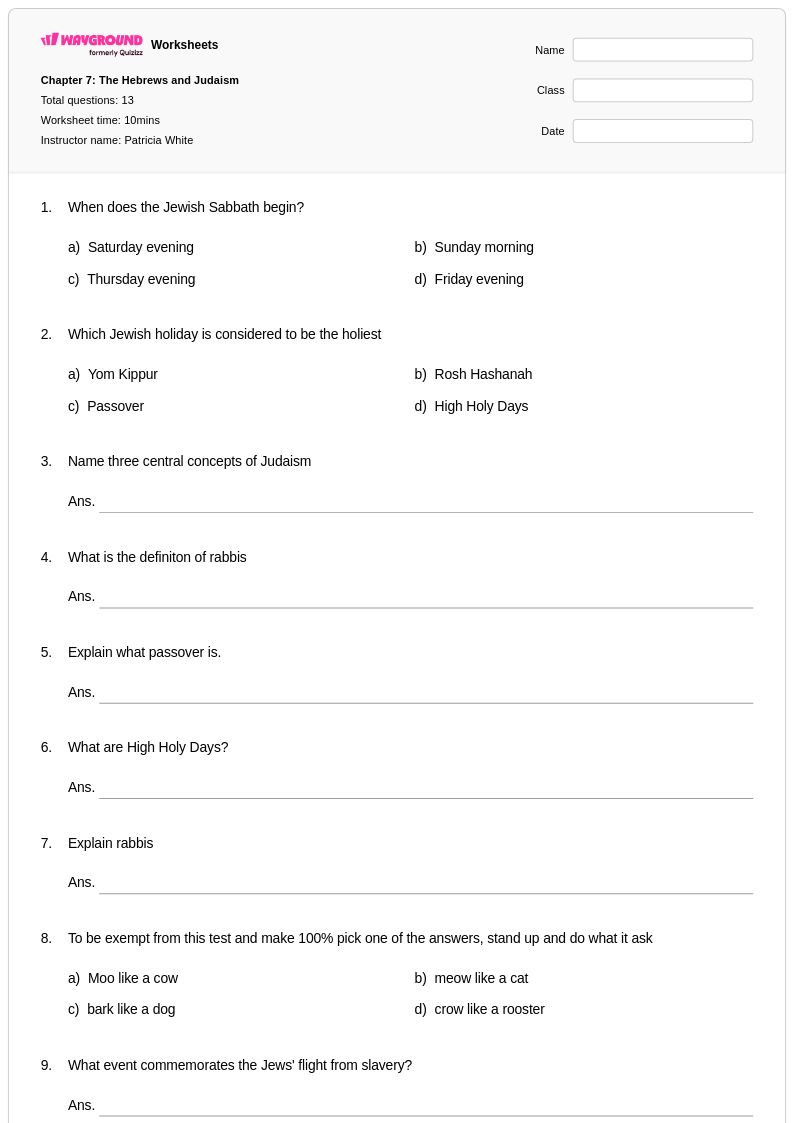
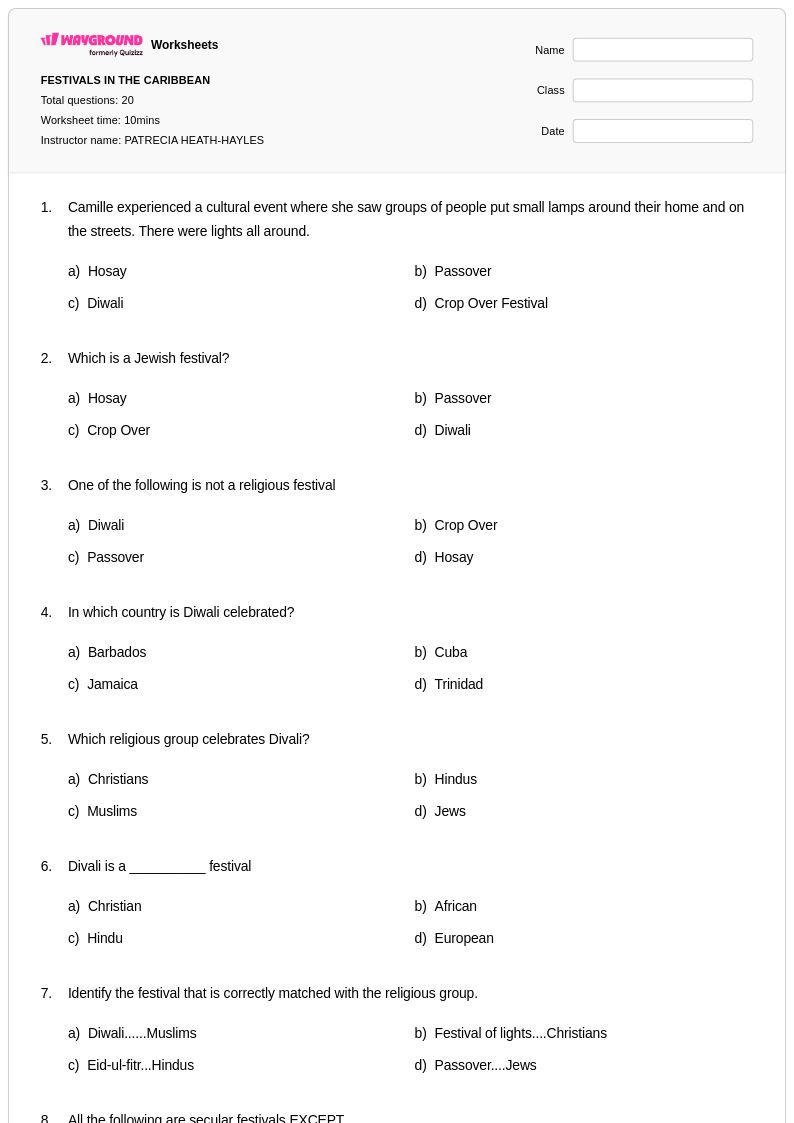
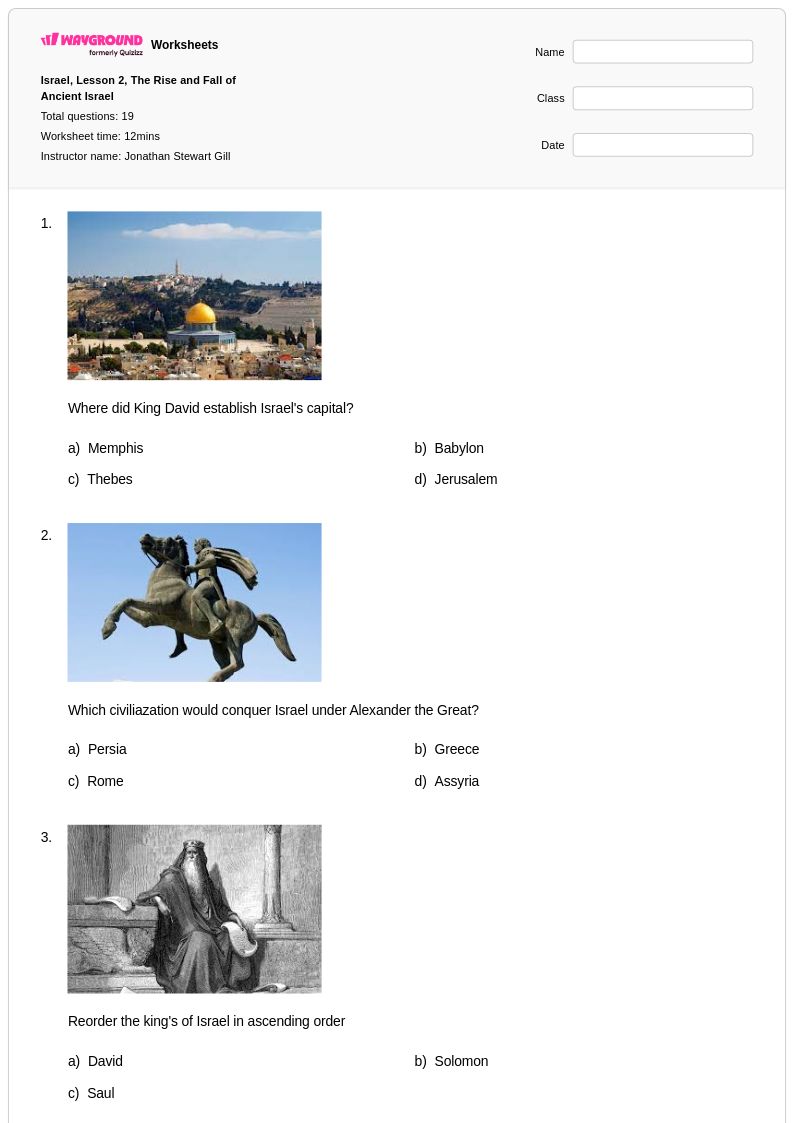
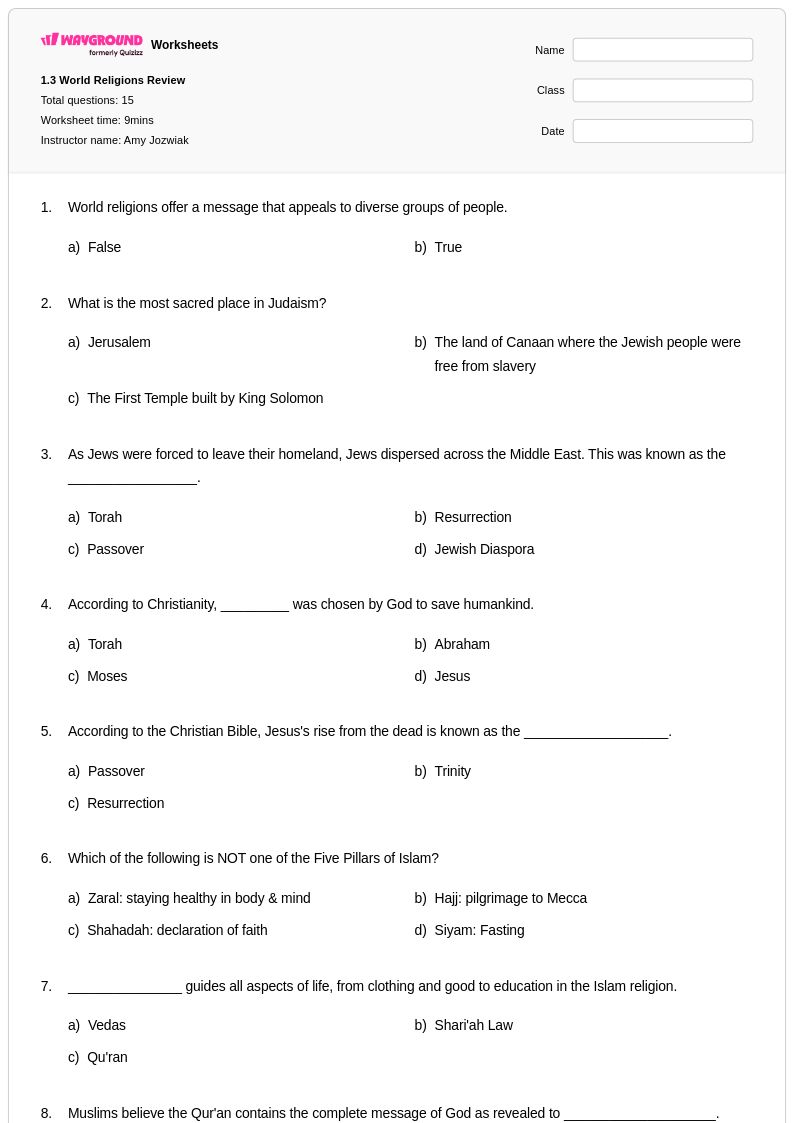
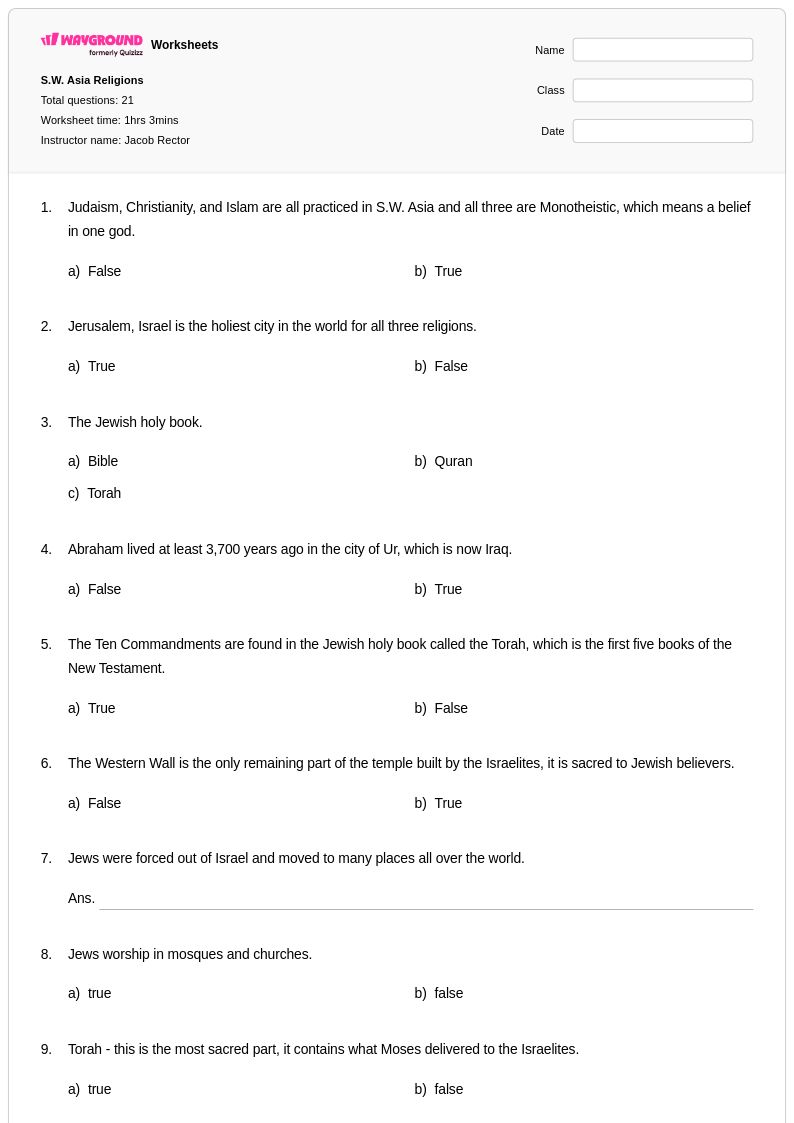
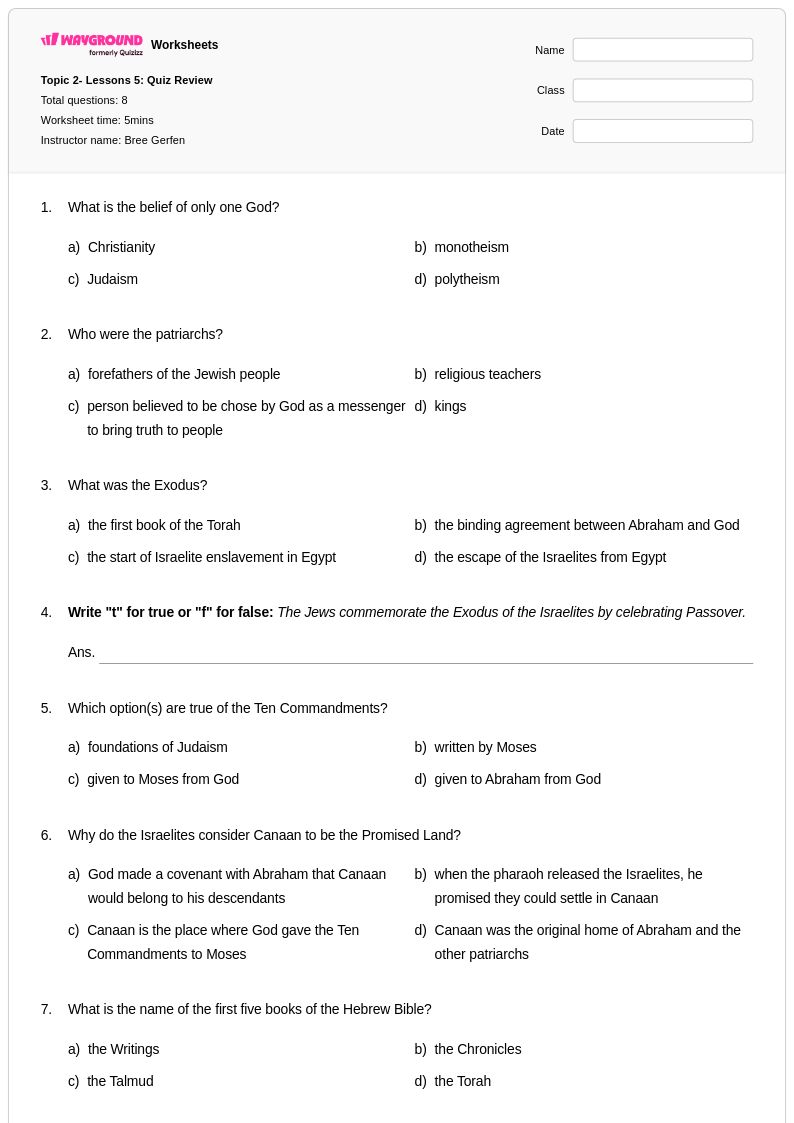
Explore Wayground's free Passover worksheets and printables that help students discover the traditions, history, and cultural significance of this important Jewish holiday through engaging practice problems and comprehensive answer keys.
Passover worksheets available through Wayground (formerly Quizizz) provide comprehensive educational resources that explore this significant Jewish holiday within the broader context of community and cultures in social studies curriculum. These expertly designed materials help students understand the historical origins, religious significance, and cultural traditions associated with Passover, including the story of the Exodus from Egypt, the symbolism of the Seder meal, and the holiday's enduring importance in Jewish communities worldwide. The worksheets strengthen critical thinking skills through practice problems that analyze primary source texts, compare cultural celebrations across different communities, and examine how religious traditions shape community identity. Each resource includes detailed answer keys and is available as free printables in convenient pdf format, making them accessible for classroom instruction, homework assignments, and independent study.
Wayground (formerly Quizizz) supports social studies teachers with millions of teacher-created resources specifically focused on cultural and religious studies, including extensive Passover-themed materials that align with national social studies standards for understanding diverse communities and traditions. The platform's robust search and filtering capabilities enable educators to quickly locate age-appropriate content that matches their specific instructional needs, while differentiation tools allow for seamless customization to accommodate varying student ability levels. These comprehensive worksheet collections are available in both printable and digital formats, including downloadable pdf versions, providing teachers with the flexibility to implement lessons across different learning environments. The platform's extensive resources support effective lesson planning, targeted skill remediation, and enrichment activities that deepen students' appreciation for cultural diversity and religious traditions within their broader study of community and cultures.
FAQs
How do I teach Passover to elementary or middle school students?
Teaching Passover effectively starts with grounding students in the Exodus narrative — the story of the Israelites' liberation from slavery in ancient Egypt — before connecting that history to living traditions like the Seder meal. Using primary source-style texts alongside visual organizers helps students distinguish between historical events and religious symbolism. Connecting Passover to broader social studies themes, such as how religious traditions shape community identity, gives students a meaningful framework for understanding the holiday beyond a single cultural group.
What are common misconceptions students have about Passover?
A frequent misconception is that Passover is purely a religious observance with no historical basis — students often struggle to understand that it commemorates a specific historical event, the Exodus from Egypt, that is central to Jewish identity. Another common error is conflating the Seder meal's symbolic foods with general Jewish dietary practices, rather than recognizing them as specific ritual objects tied to the Passover story. Students also sometimes assume Passover is observed identically across all Jewish communities, when in fact traditions vary significantly by family, denomination, and cultural background.
What exercises help students understand the cultural significance of Passover?
Effective practice includes analyzing the symbolism of Seder plate items — such as bitter herbs representing slavery and matzah representing the haste of the Exodus — which builds both comprehension and critical thinking. Comparison activities that ask students to examine how different Jewish communities around the world observe Passover reinforce the idea that religious traditions are both universal and locally shaped. Primary source analysis tasks, such as reading excerpts from the Haggadah, deepen students' understanding of how oral and written tradition preserve cultural memory across generations.
How does Passover fit into a social studies curriculum?
Passover aligns directly with social studies units on community and cultures, religious diversity, and world history. It provides a concrete case study for exploring how historical events — in this case, the Exodus narrative — become foundational to a community's identity, values, and annual rituals. Teachers can use Passover as an entry point for broader comparative discussions about how different cultures and religions mark historical memory through shared celebration and storytelling.
How can I use Passover worksheets in my classroom?
Passover worksheets on Wayground are available as printable PDFs for traditional classroom use and in digital formats for technology-integrated learning environments, including the option to host them as a quiz on Wayground. Printable versions work well for in-class instruction, homework packets, or independent study, while digital formats allow for real-time feedback and easy distribution in hybrid or remote settings. For students who need additional support, Wayground's accommodation tools — such as Read Aloud and reduced answer choices — can be applied individually so all learners can access the same content meaningfully.