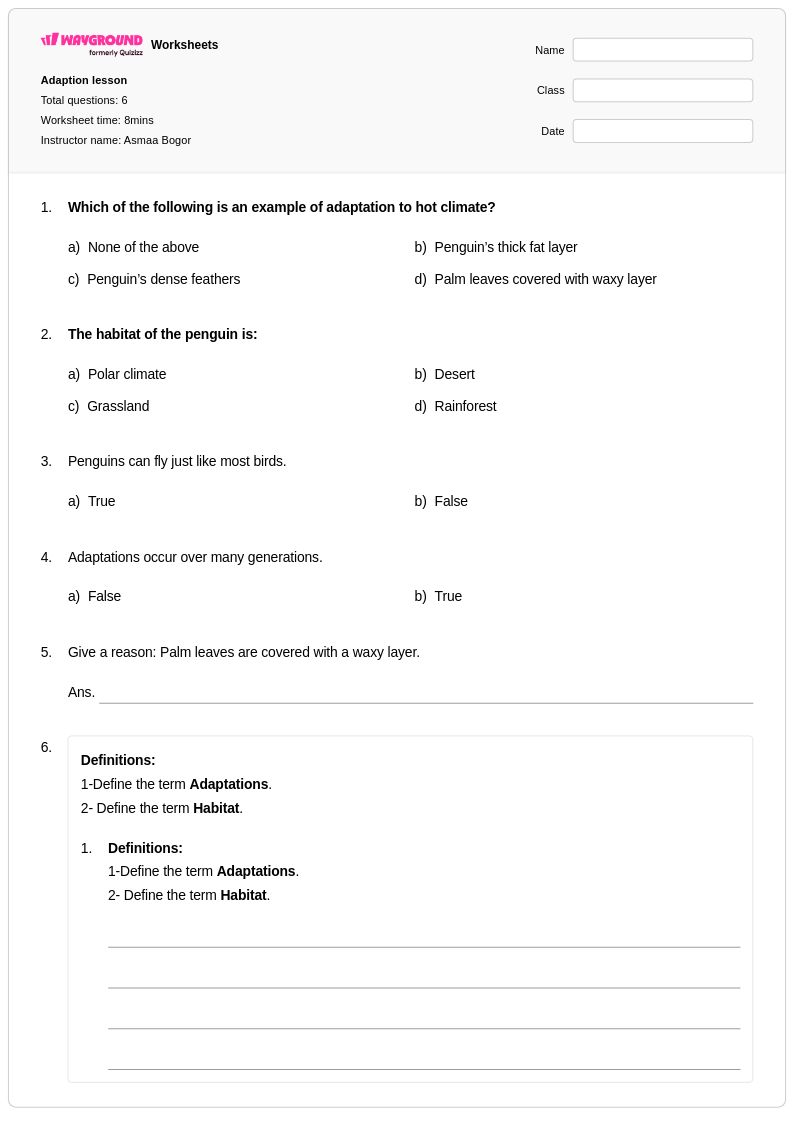
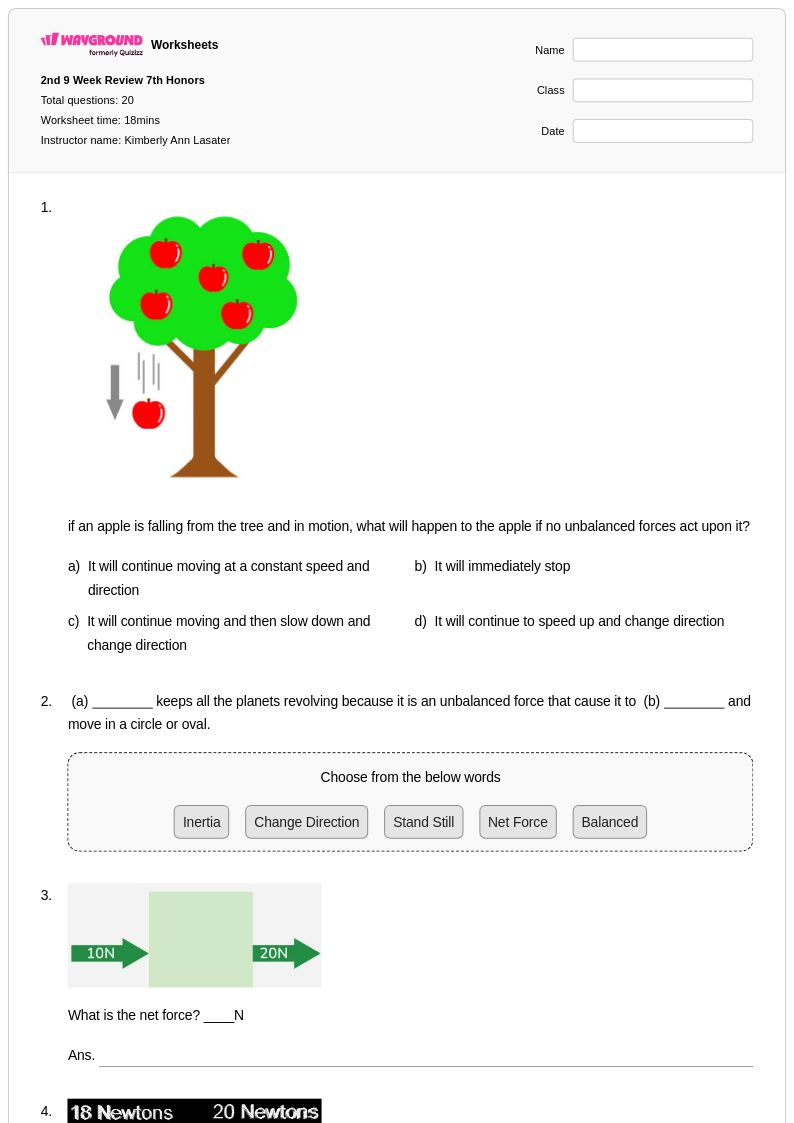
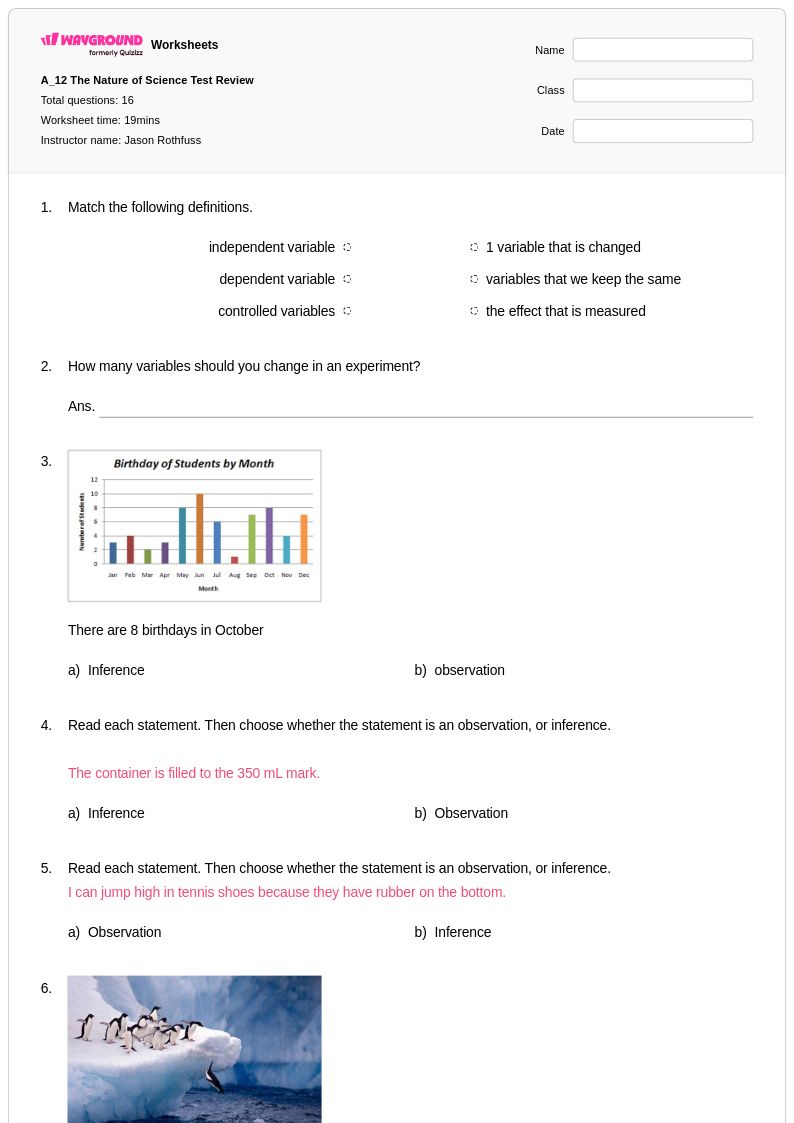
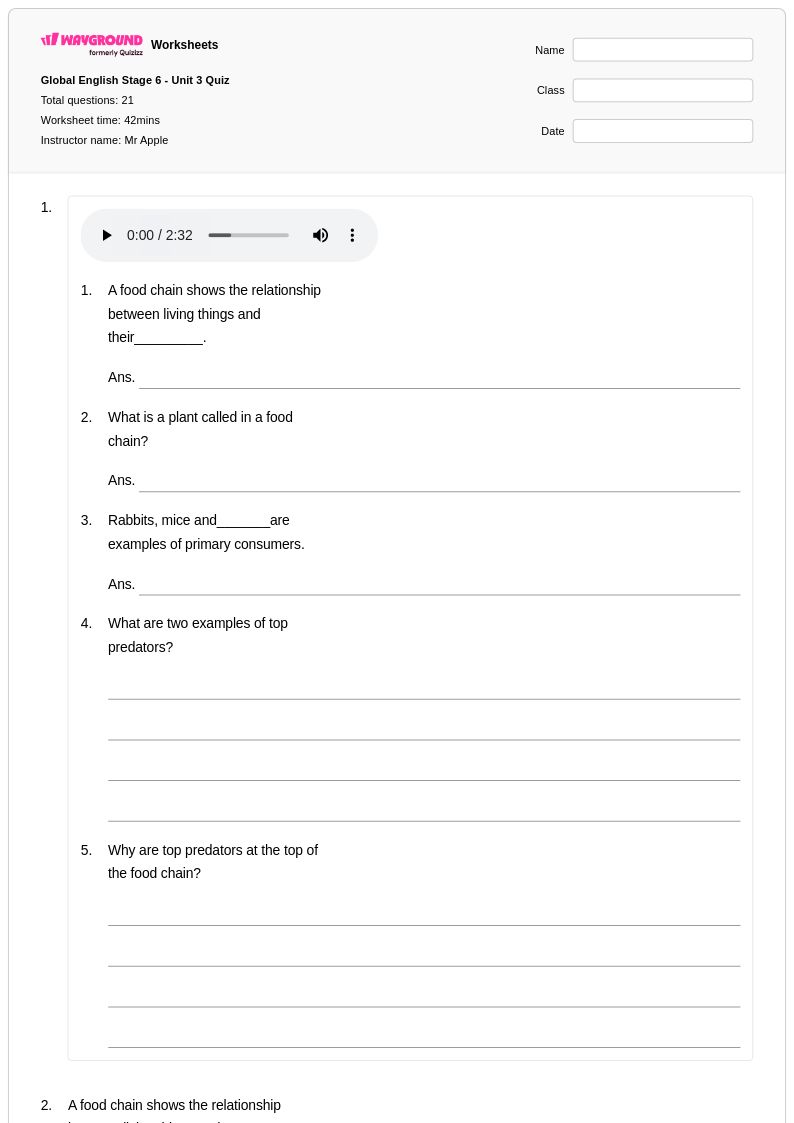
Discover free penguin worksheets and printables that help students explore these fascinating Antarctic birds through engaging practice problems, educational activities, and comprehensive answer keys for effective life science learning.
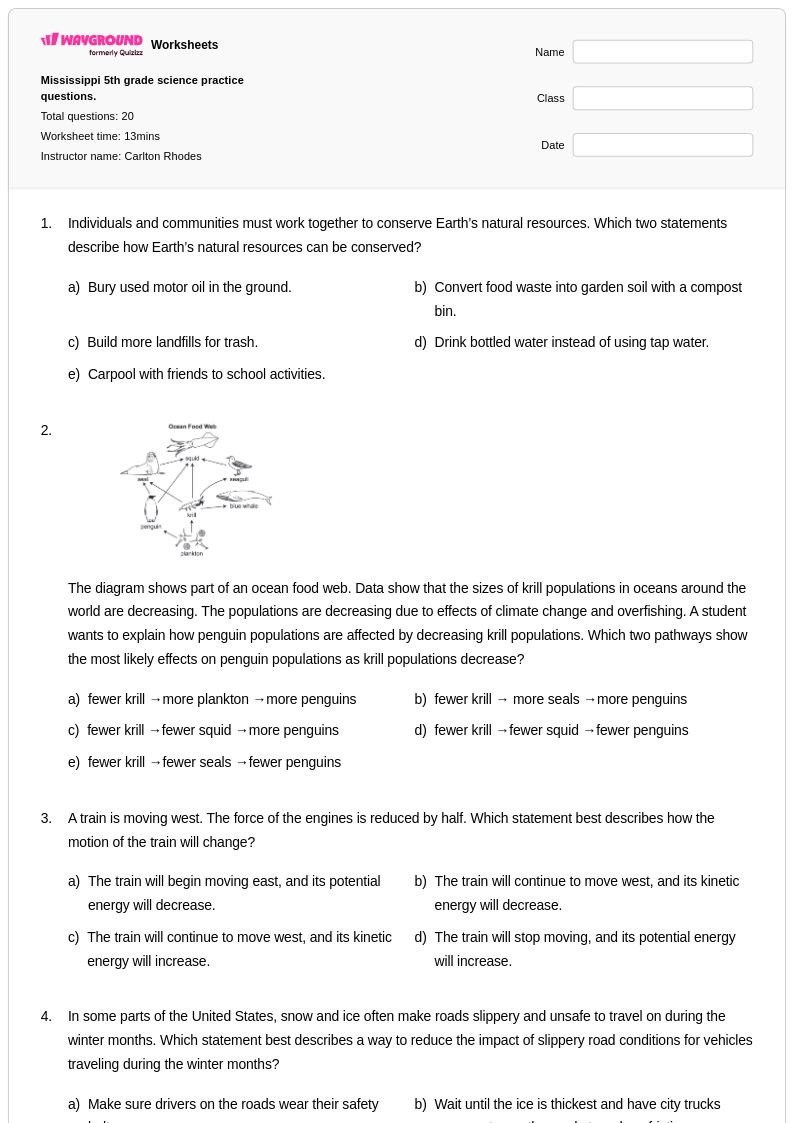
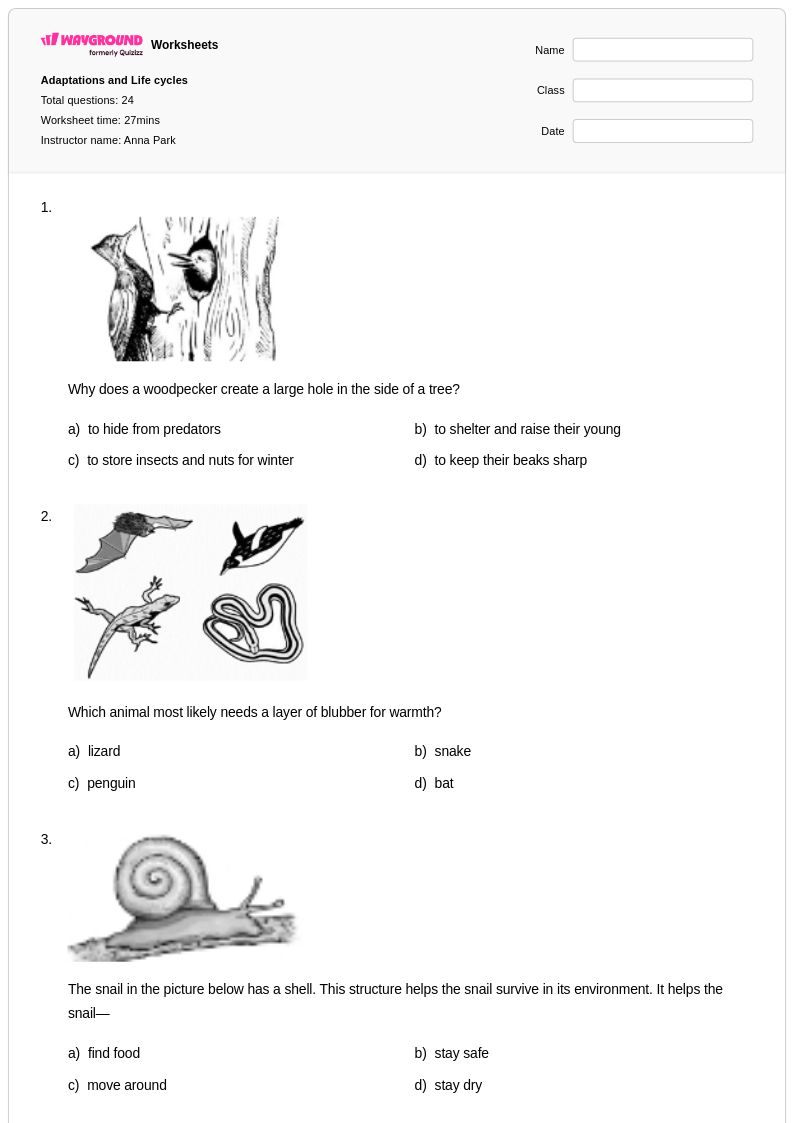
Penguin worksheets available through Wayground (formerly Quizizz) provide students with comprehensive learning materials that explore the fascinating world of these remarkable Antarctic and sub-Antarctic birds. These science worksheets cover essential concepts including penguin anatomy, habitat requirements, feeding behaviors, breeding cycles, and adaptations to extreme cold environments. Students develop critical thinking skills as they analyze how penguins have evolved unique characteristics such as waterproof feathers, streamlined bodies for efficient swimming, and specialized heat conservation mechanisms. The collection includes diverse practice problems that challenge learners to examine penguin species diversity, migration patterns, and the impact of climate change on penguin populations. Each worksheet comes with a detailed answer key to support independent learning and self-assessment, while the free printables in pdf format make these resources easily accessible for classroom use and home study.
Wayground (formerly Quizizz) empowers educators with an extensive collection of millions of teacher-created penguin worksheets that support diverse instructional needs across life science curricula. The platform's robust search and filtering capabilities allow teachers to quickly locate materials aligned with specific educational standards and learning objectives, while built-in differentiation tools enable customization for varied student ability levels. Teachers can easily modify existing worksheets or create entirely new materials using the flexible customization features, ensuring content perfectly matches their lesson plans and student requirements. Available in both printable and digital formats including downloadable pdf files, these penguin-focused resources facilitate seamless integration into lesson planning, targeted remediation for struggling learners, enrichment opportunities for advanced students, and systematic skill practice that reinforces key life science concepts about animal adaptations and ecosystem relationships.
FAQs
How do I teach students about penguin adaptations in a life science unit?
Start by anchoring instruction in the concept of structural and behavioral adaptations, then have students examine specific penguin traits such as waterproof feathers, counter-shaded coloring, and blubber layers as concrete examples. Connecting each adaptation to its survival function in cold, aquatic environments helps students understand the relationship between organism and habitat rather than memorizing isolated facts. Comparing penguins to other seabirds can also deepen understanding by highlighting what makes penguins uniquely suited to their niche.
What topics should a penguin worksheet cover for a life science class?
A well-designed penguin worksheet should address anatomy, habitat requirements, feeding behaviors, breeding cycles, and adaptations to extreme cold. Students benefit from exercises that require them to analyze how specific physical features such as streamlined bodies and waterproof feathers serve functional purposes, not just identify them by name. Including species diversity and the effects of climate change on penguin populations adds real-world relevance and critical thinking challenge.
What are common misconceptions students have about penguins?
A frequent misconception is that all penguins live in Antarctica — in reality, penguin species are found across the Southern Hemisphere, including temperate and even tropical climates like the Galápagos Islands. Students also often assume penguins are poor movers on land and overlook their exceptional swimming speed and agility underwater. Addressing these errors directly in worksheet activities builds more accurate mental models of penguin biology and habitat range.
How can I use penguin worksheets to differentiate instruction in my classroom?
Penguin worksheets can be differentiated by adjusting the complexity of questions, moving from basic identification of adaptations to higher-order analysis of ecological relationships and climate impact. On Wayground, teachers can apply individual accommodations such as read aloud support for struggling readers, reduced answer choices to lower cognitive load, and extended time settings, all configurable per student without disrupting the rest of the class. These settings are saved and reusable across future sessions, making differentiation manageable at scale.
How do I use Wayground's penguin worksheets in my classroom?
Wayground's penguin worksheets are available as printable PDFs for traditional classroom use and in digital formats for technology-integrated environments, giving teachers flexibility across in-person, hybrid, and remote settings. Teachers can also host the worksheets as a live or assigned quiz directly on Wayground, which allows for real-time tracking of student responses. Each worksheet includes a complete answer key, supporting both teacher-led review and student self-assessment.
How do penguins conserve heat, and how can I teach this concept effectively?
Penguins use several overlapping mechanisms to conserve heat, including dense, layered feathers that trap air, a thick layer of subcutaneous fat, and countercurrent heat exchange in their flippers and legs that prevents heat loss to cold water. Teaching this effectively means helping students see these as an integrated system rather than isolated traits. Worksheet activities that ask students to match each mechanism to its physiological function tend to produce stronger conceptual retention than simple labeling tasks.