Free Printable Physical and Chemical Properties and Changes Worksheets for Year 8
Explore Wayground's free Year 8 chemistry worksheets and printables covering physical and chemical properties and changes, complete with practice problems and answer keys to help students master identifying and distinguishing between different types of matter transformations.
Explore printable Physical and Chemical Properties and Changes worksheets for Year 8
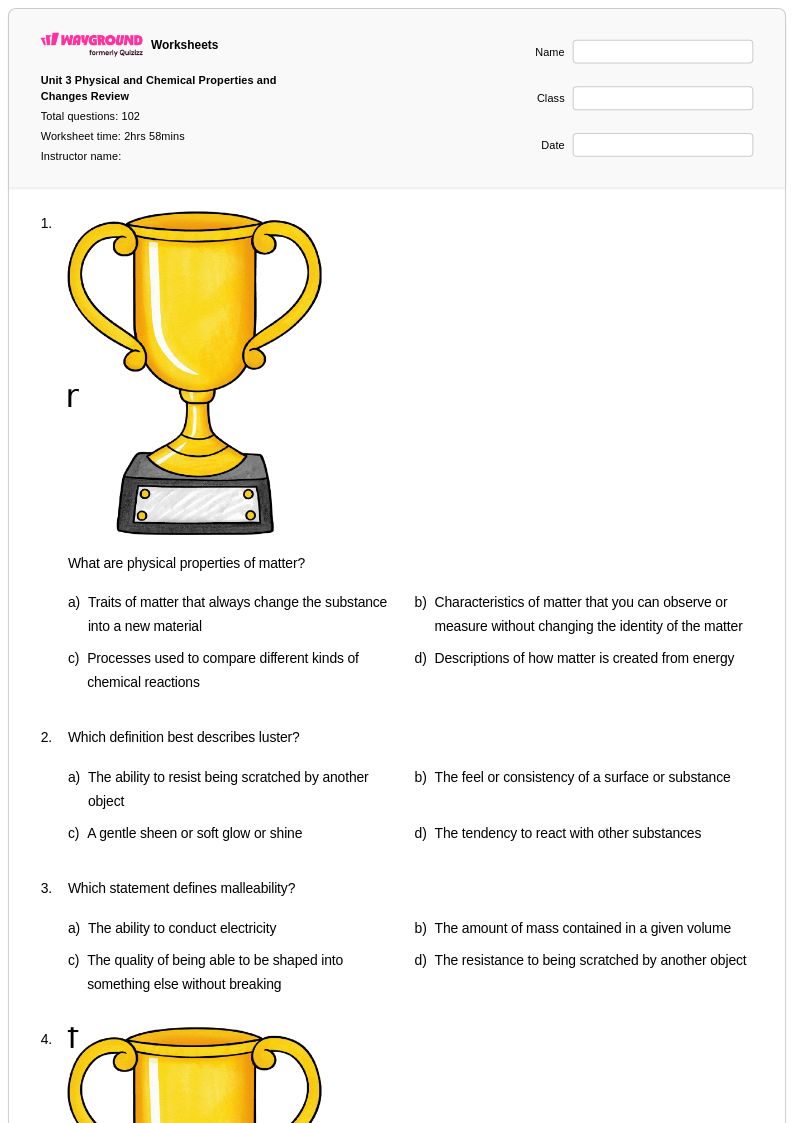
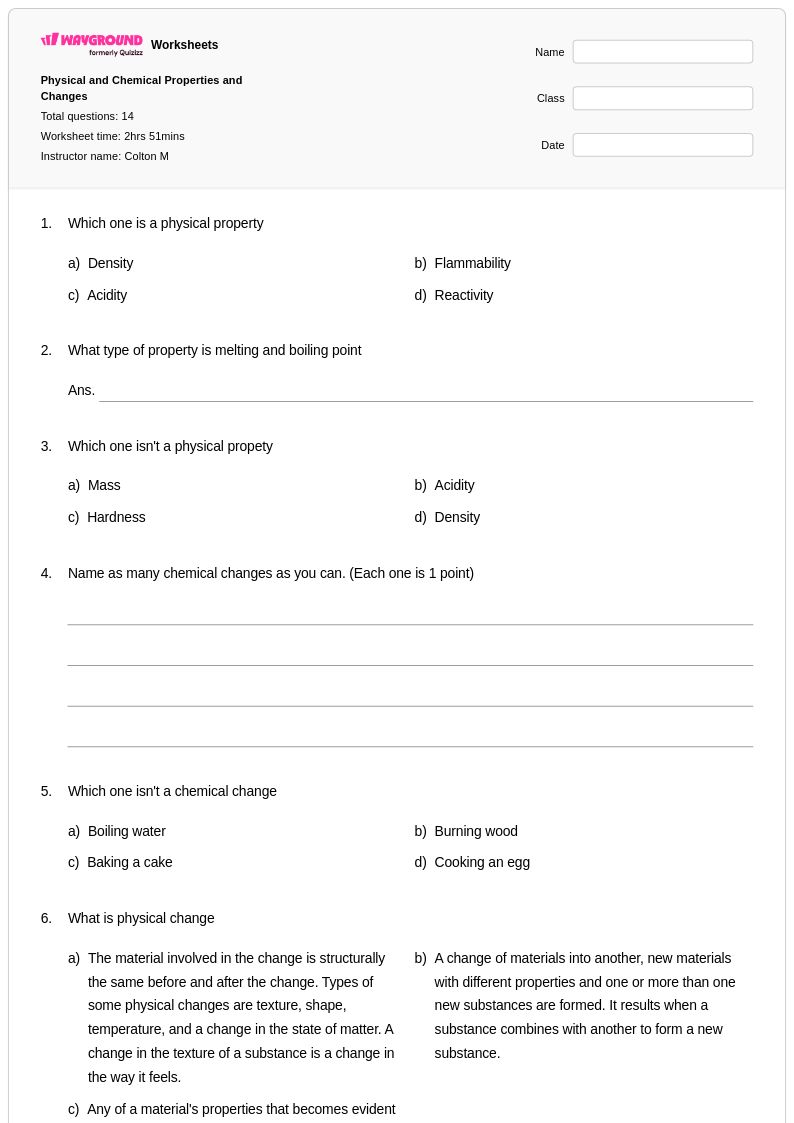
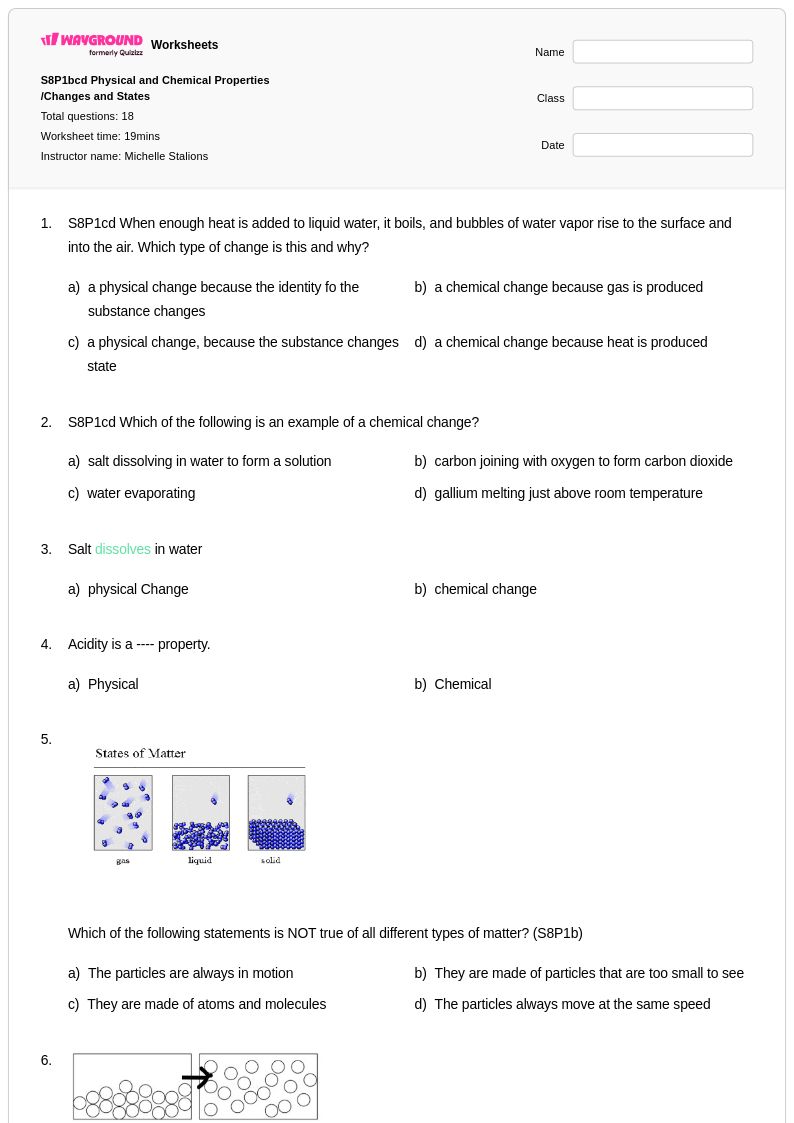
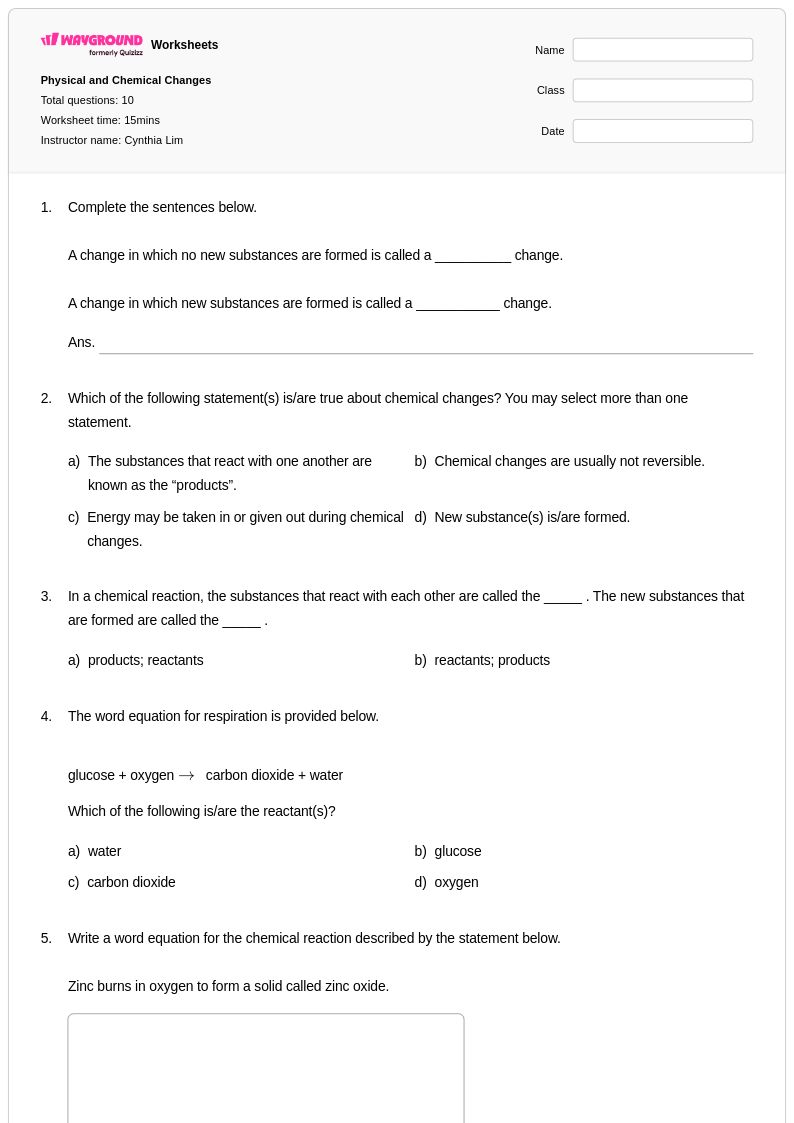
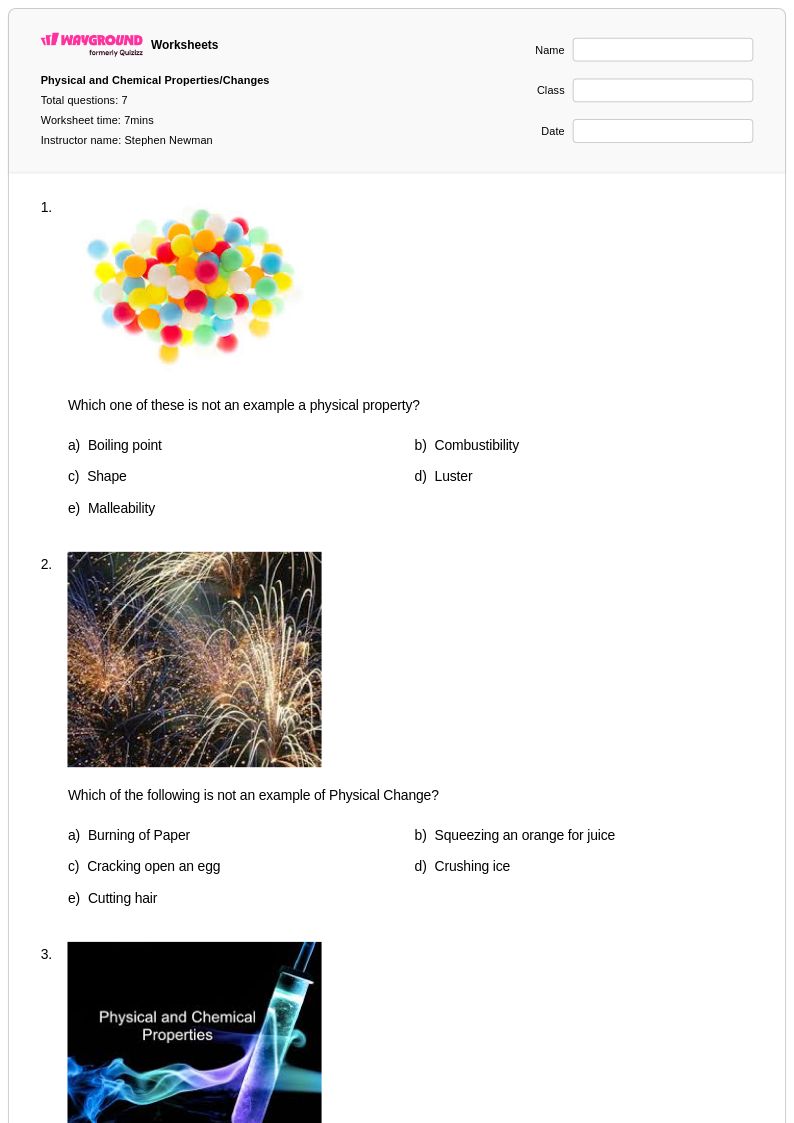
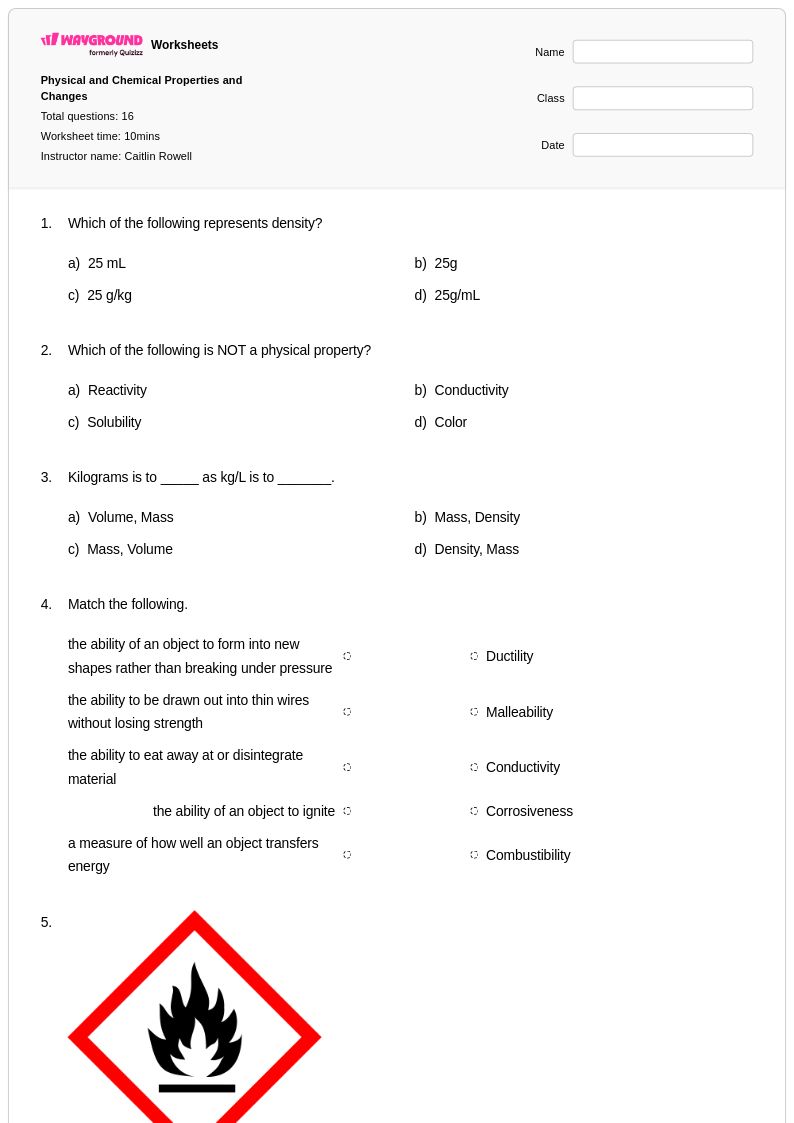
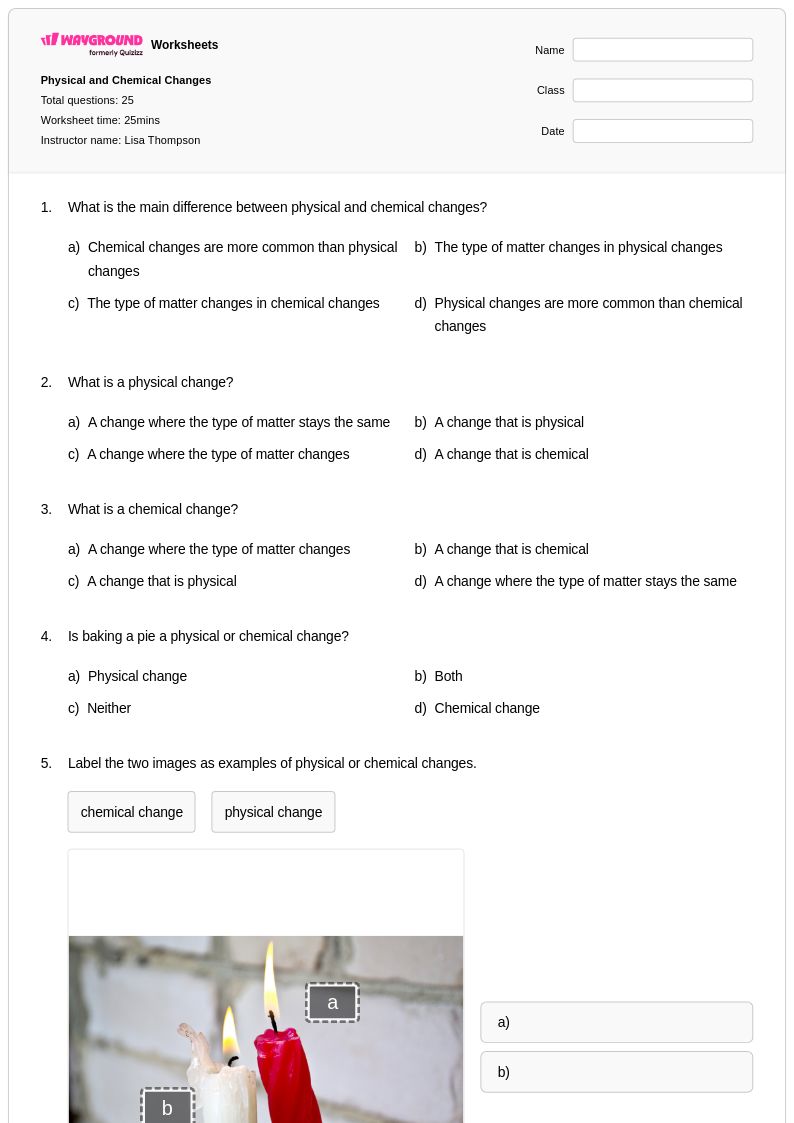
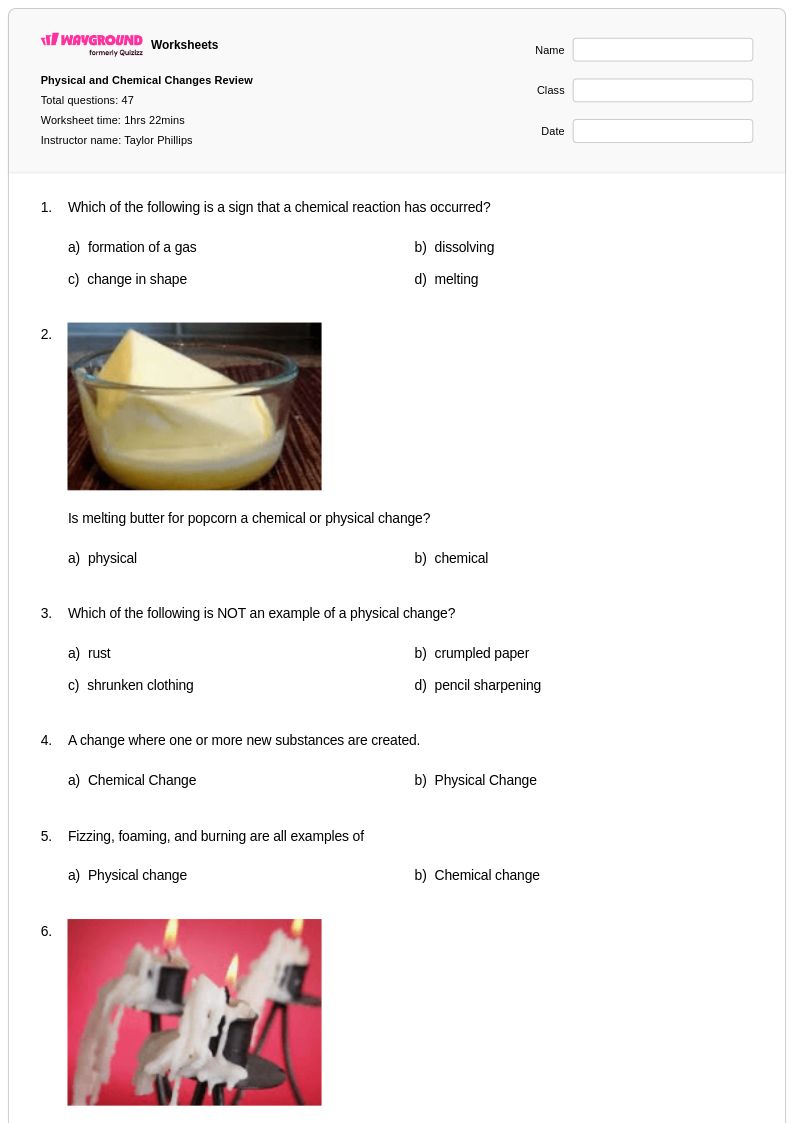
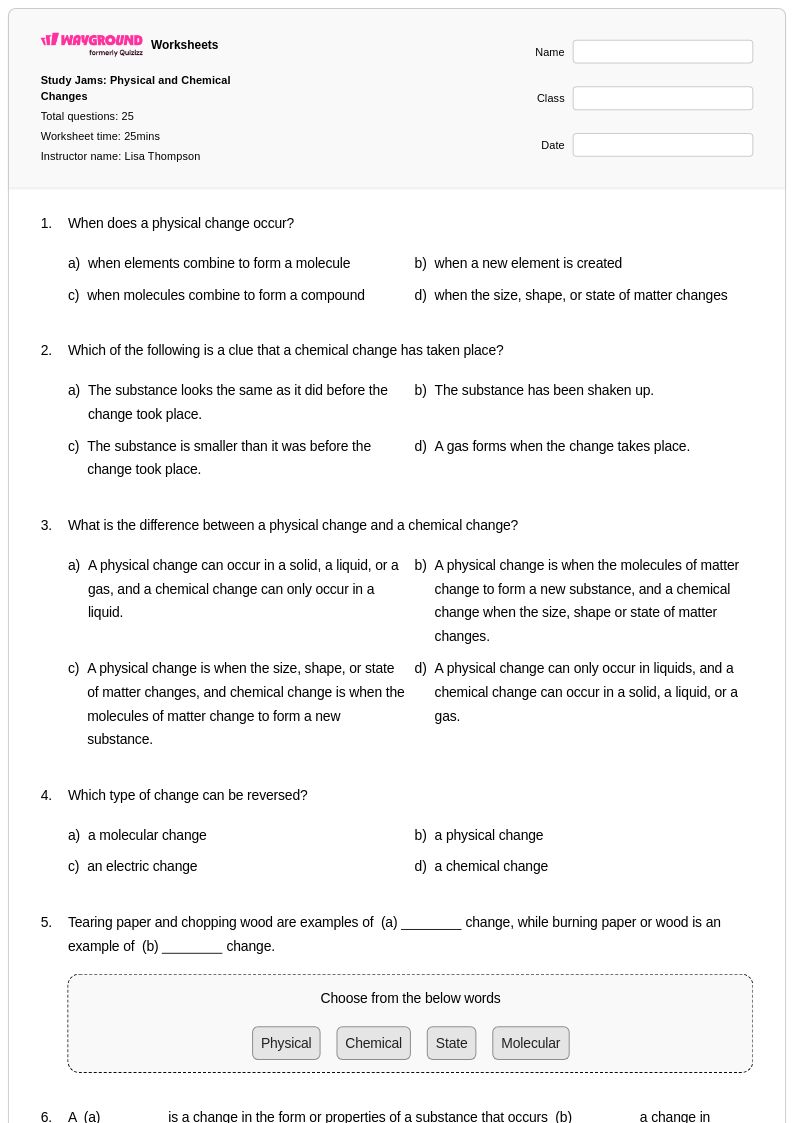
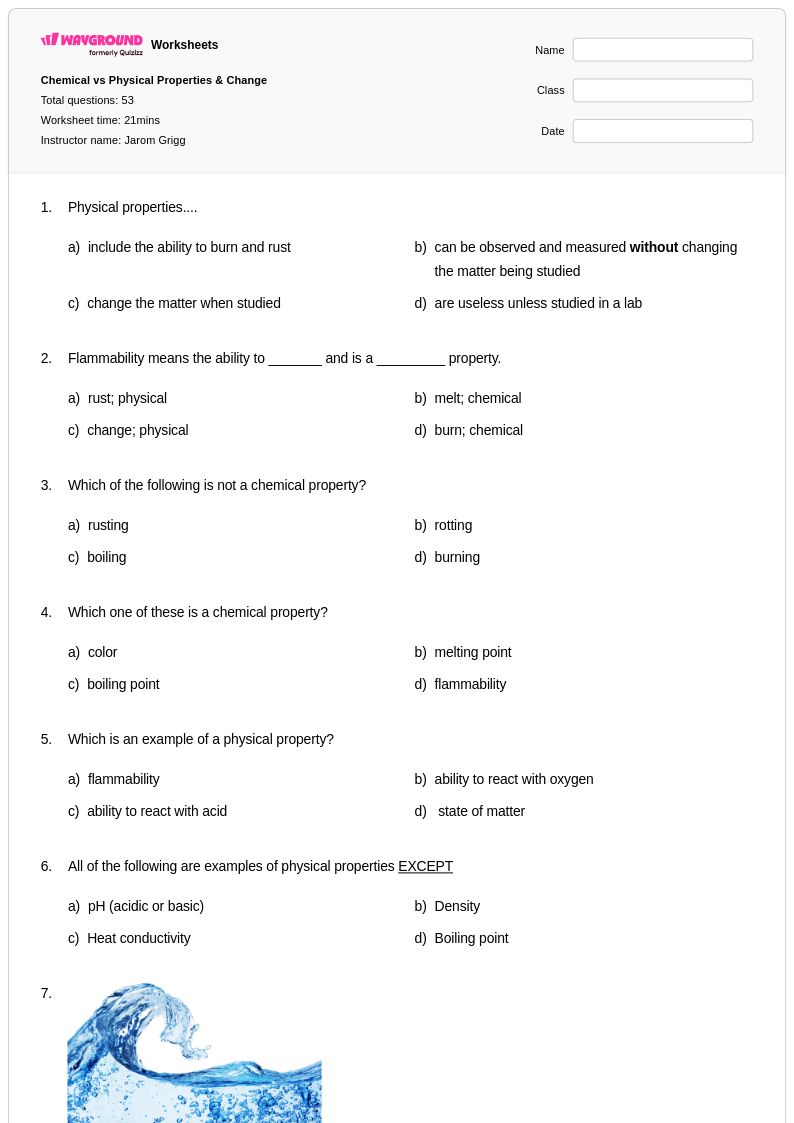
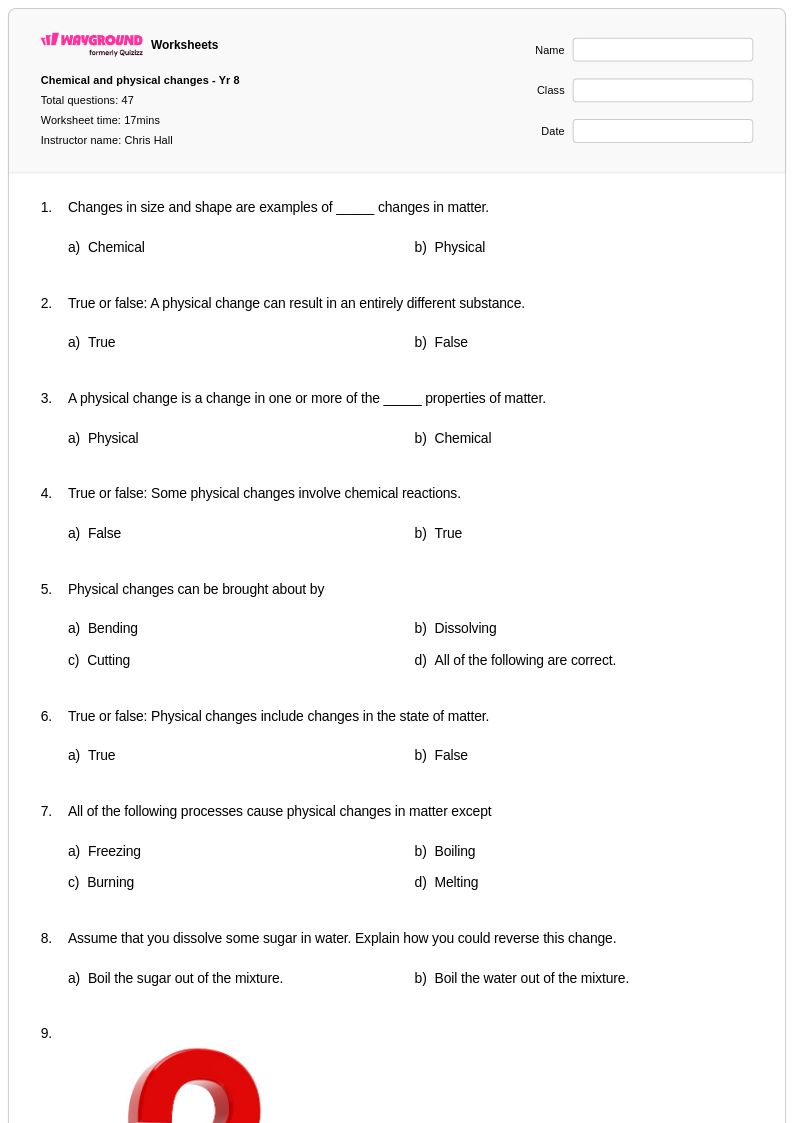
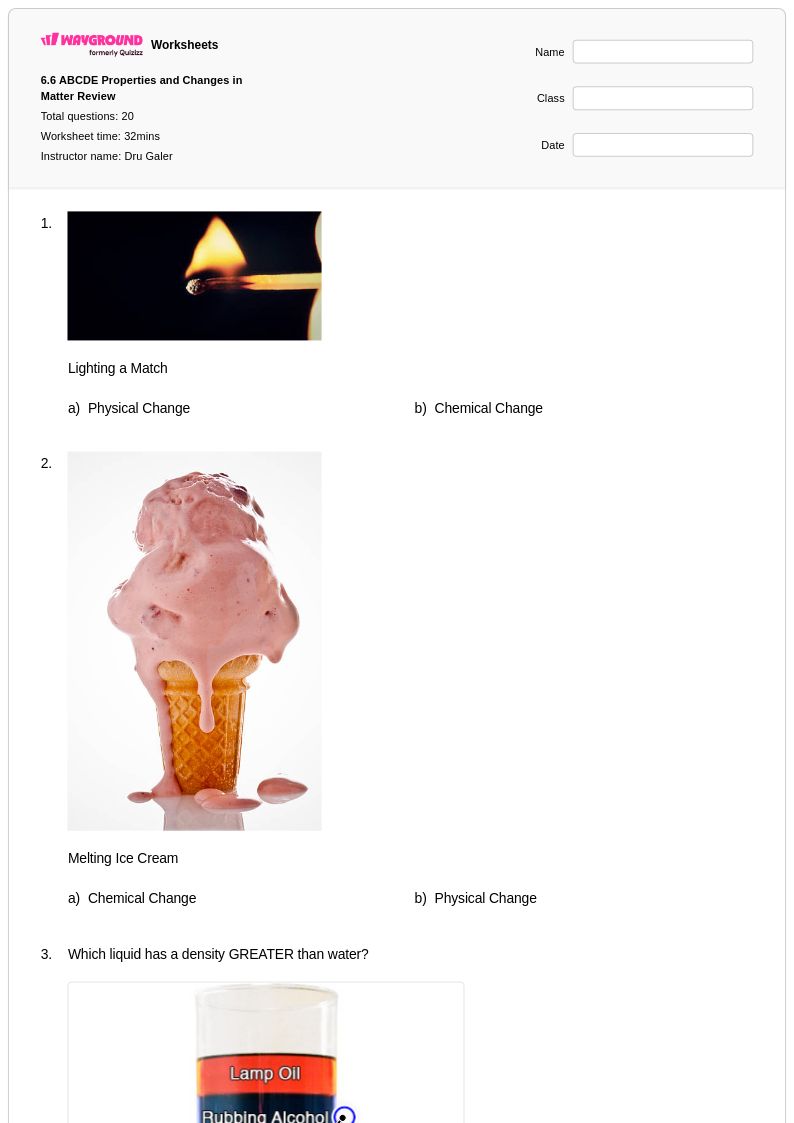
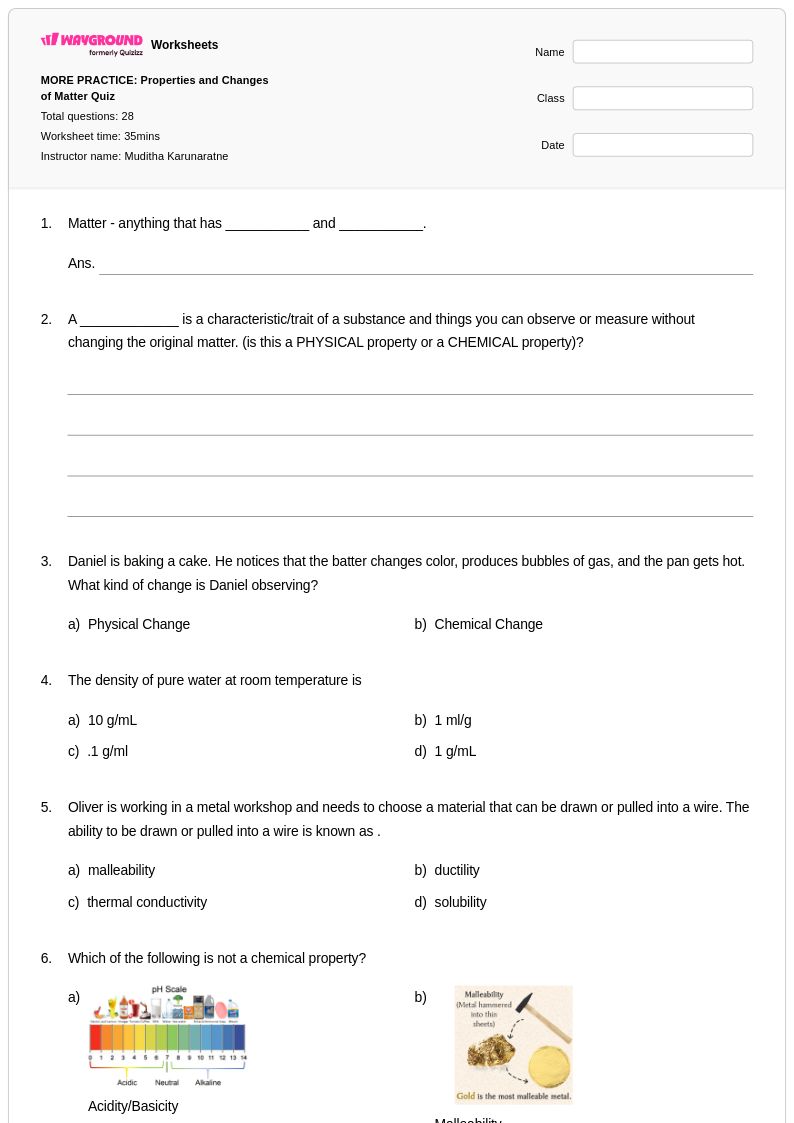
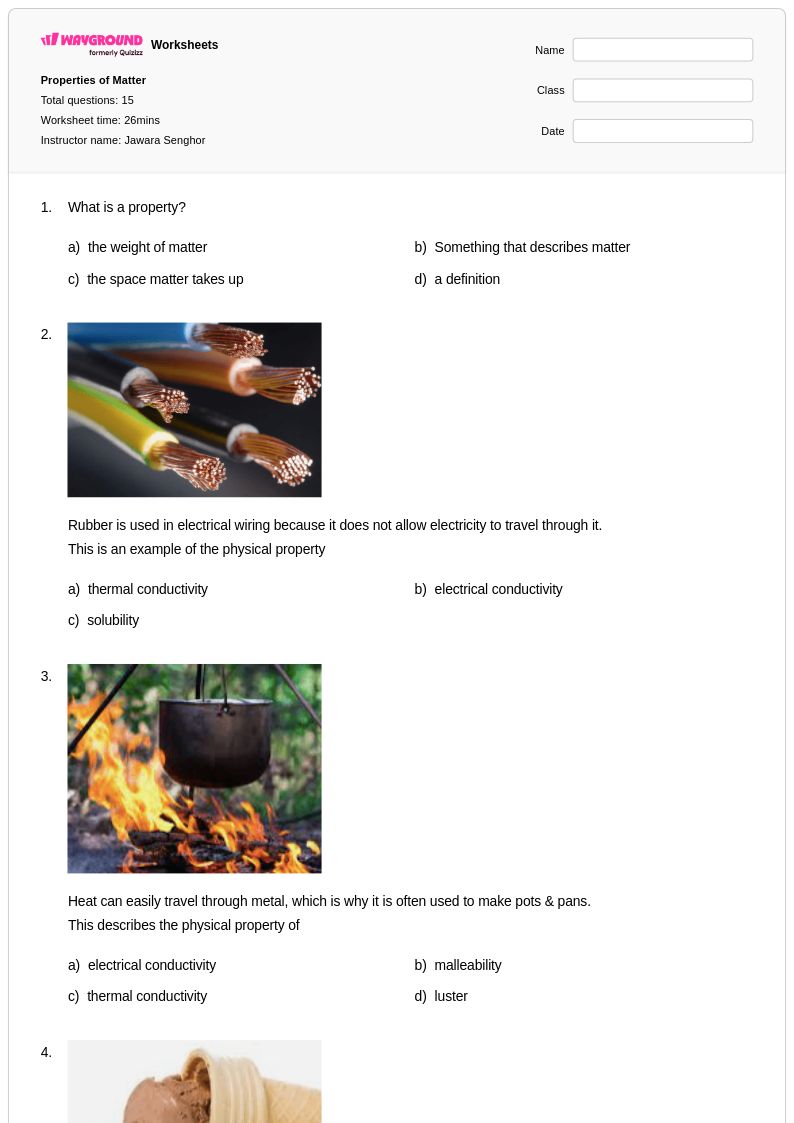
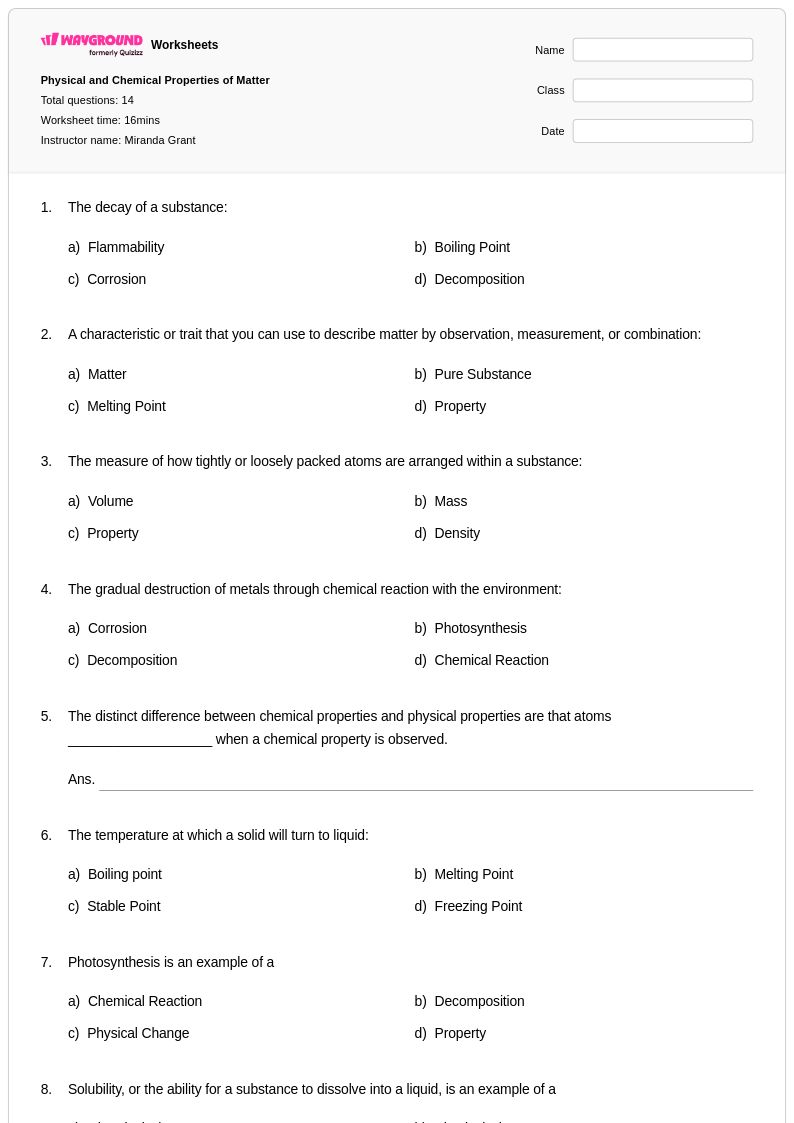
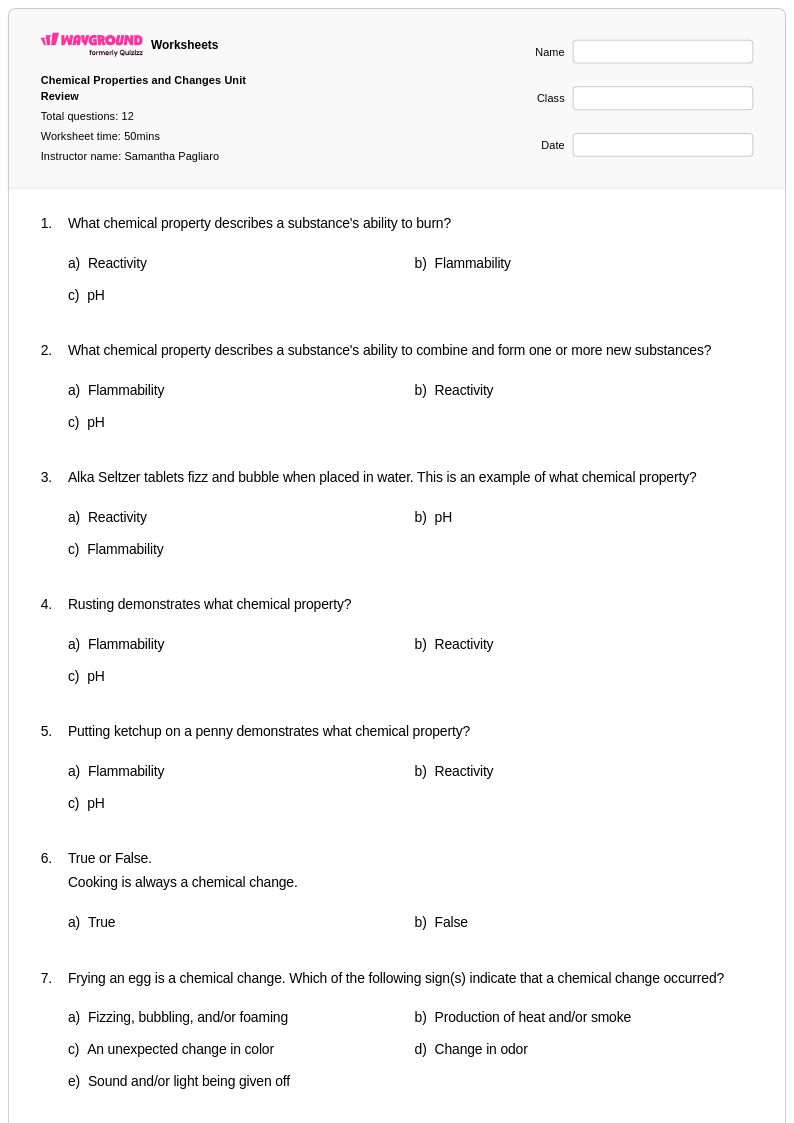
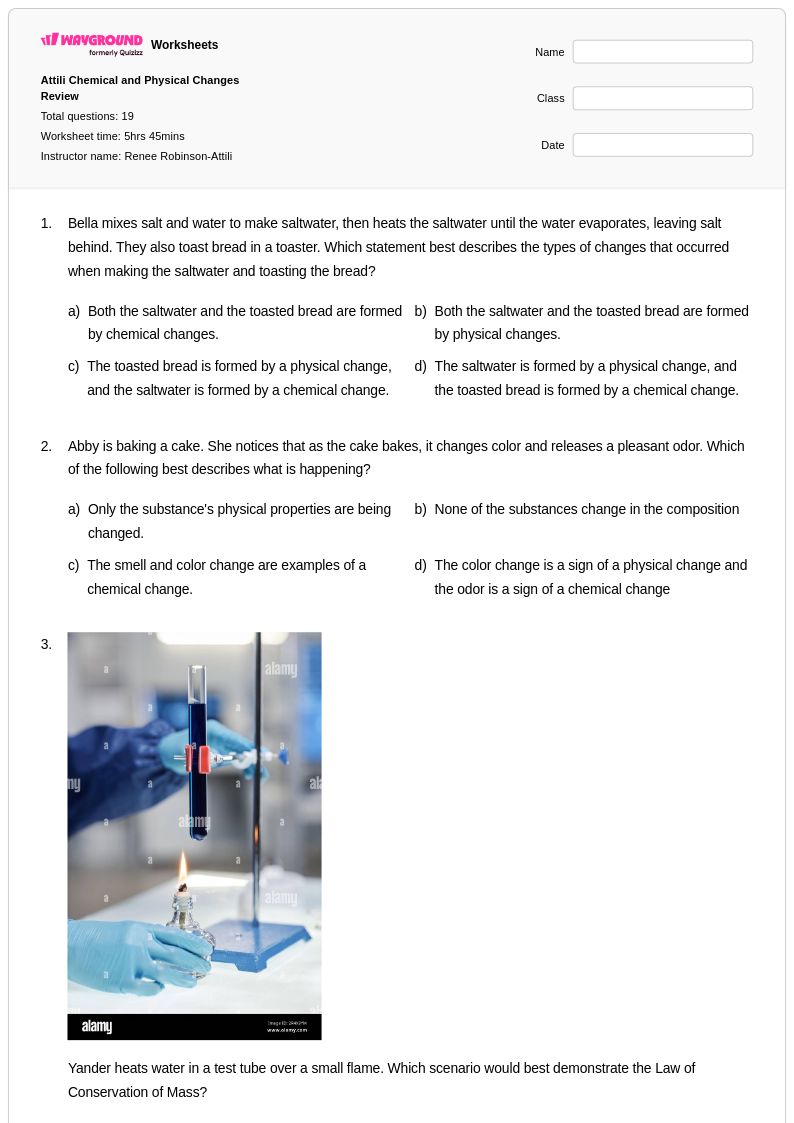
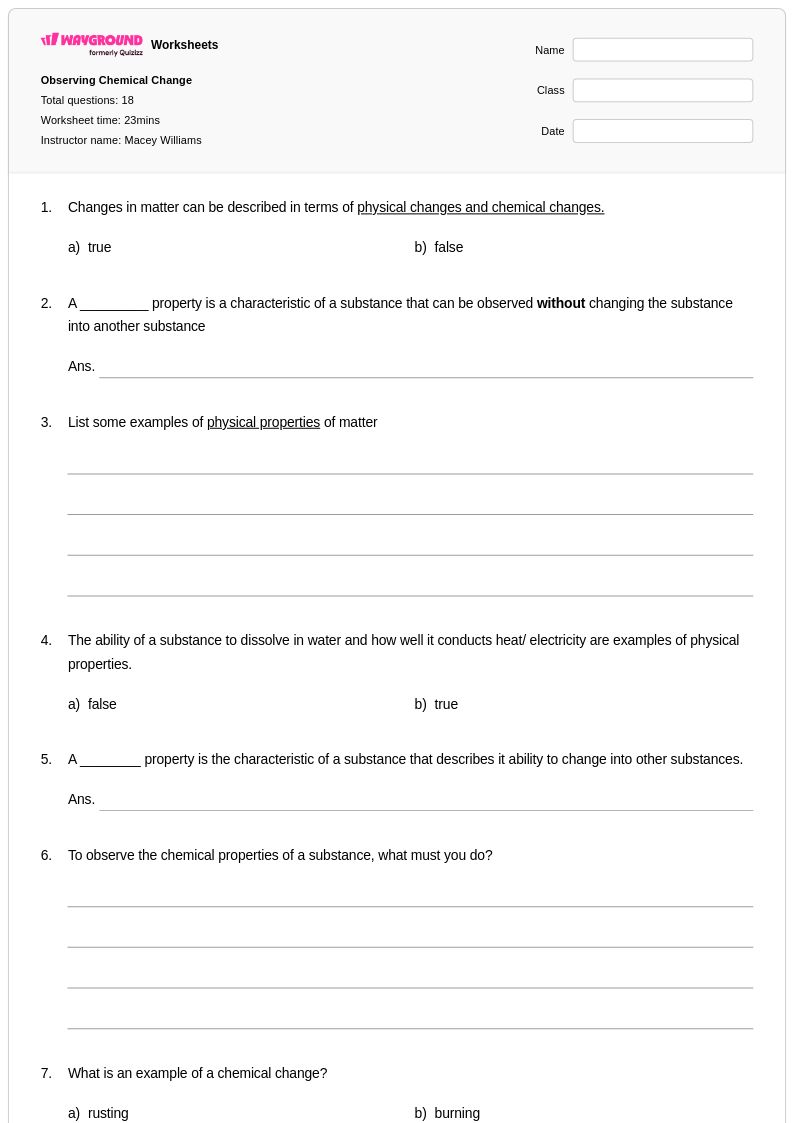
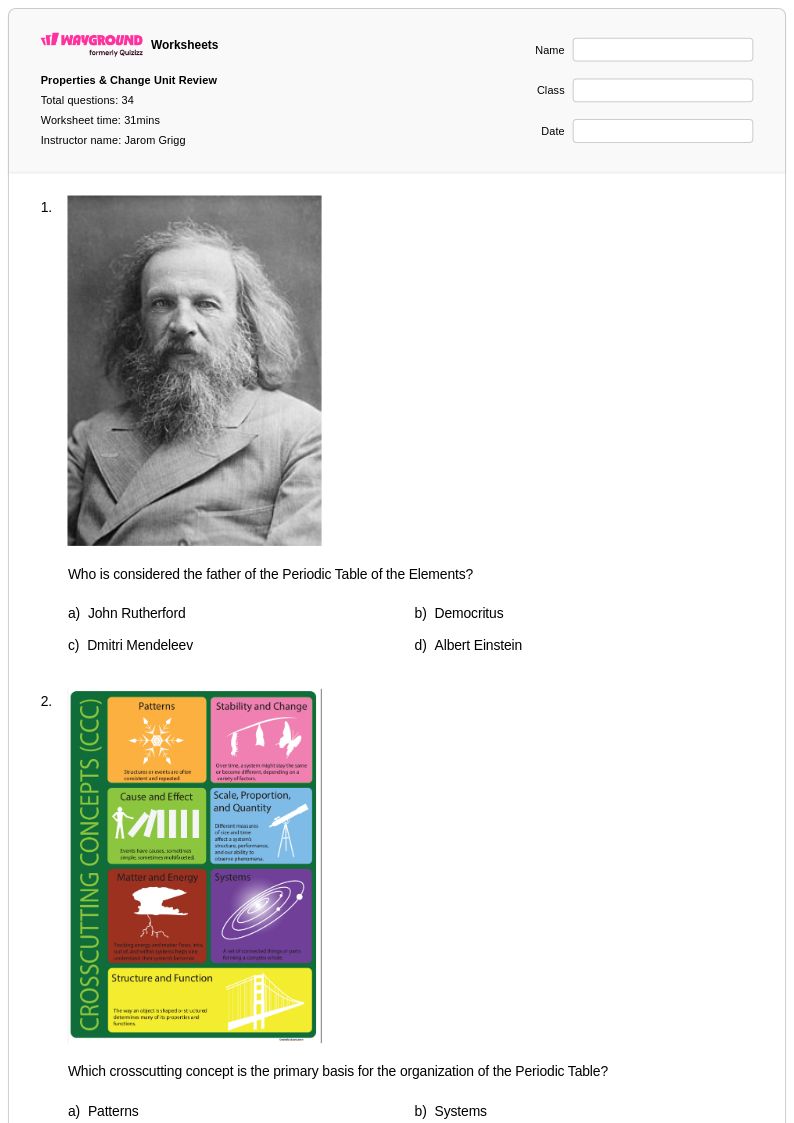
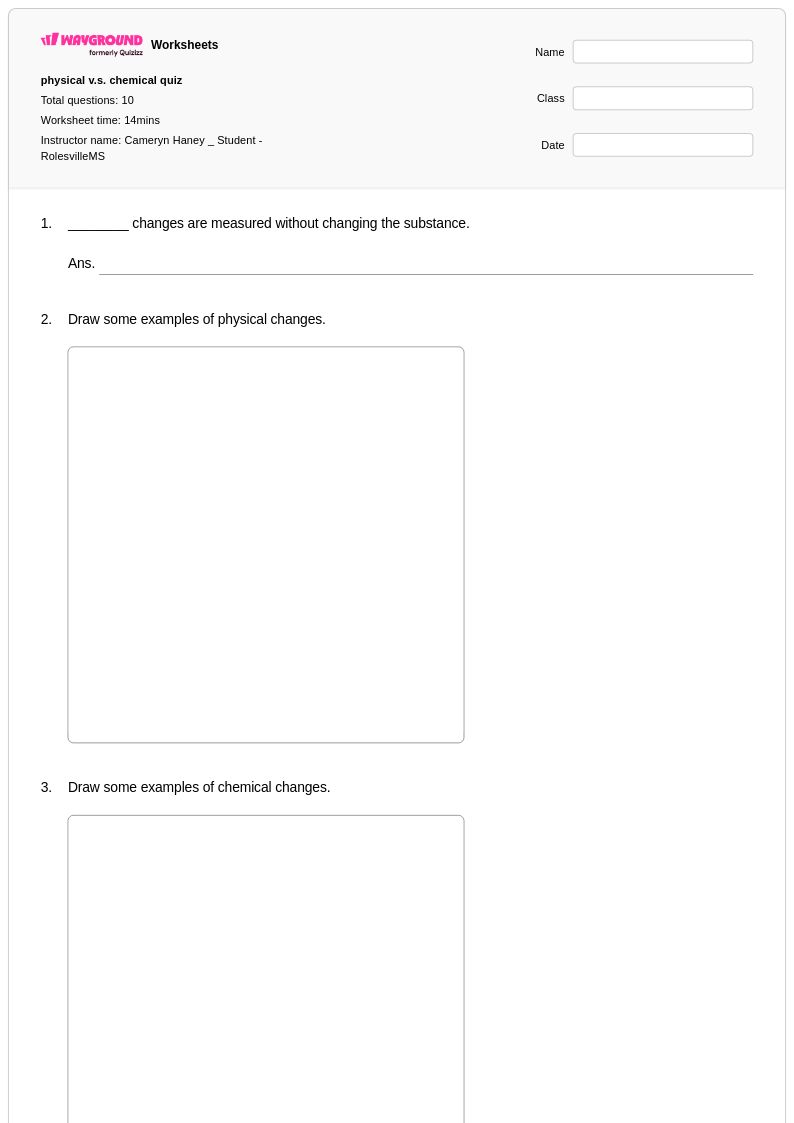
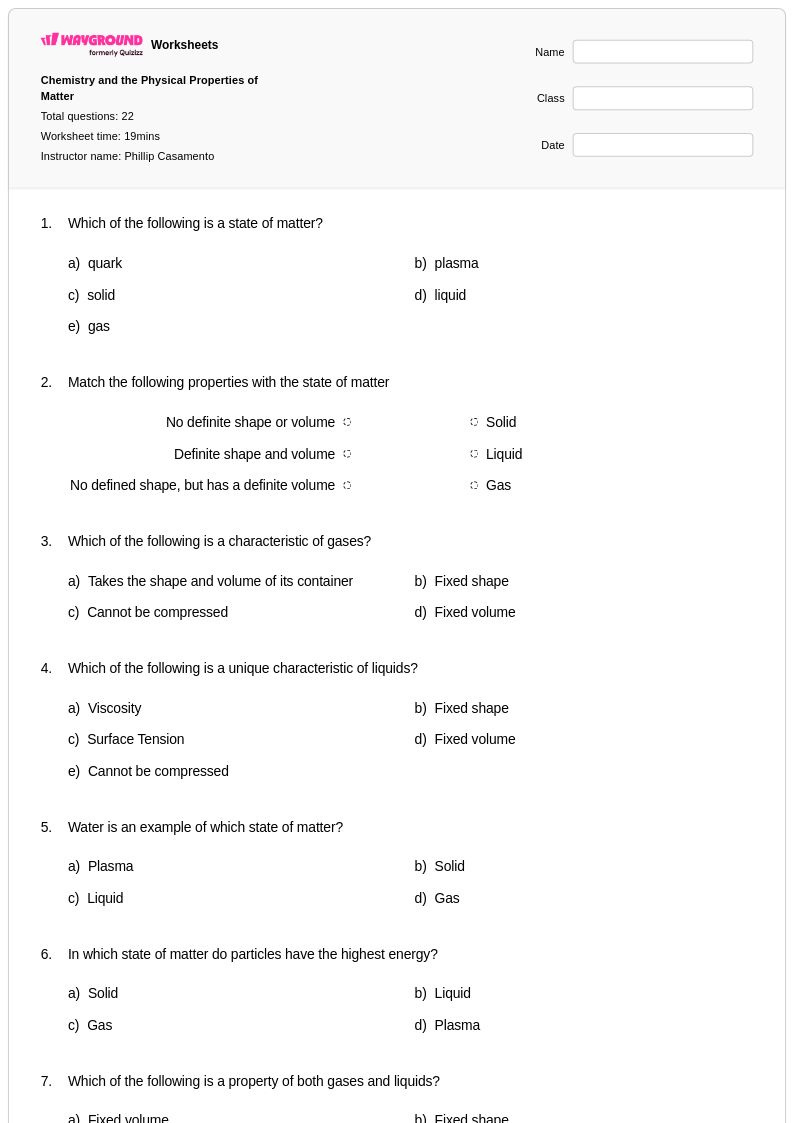
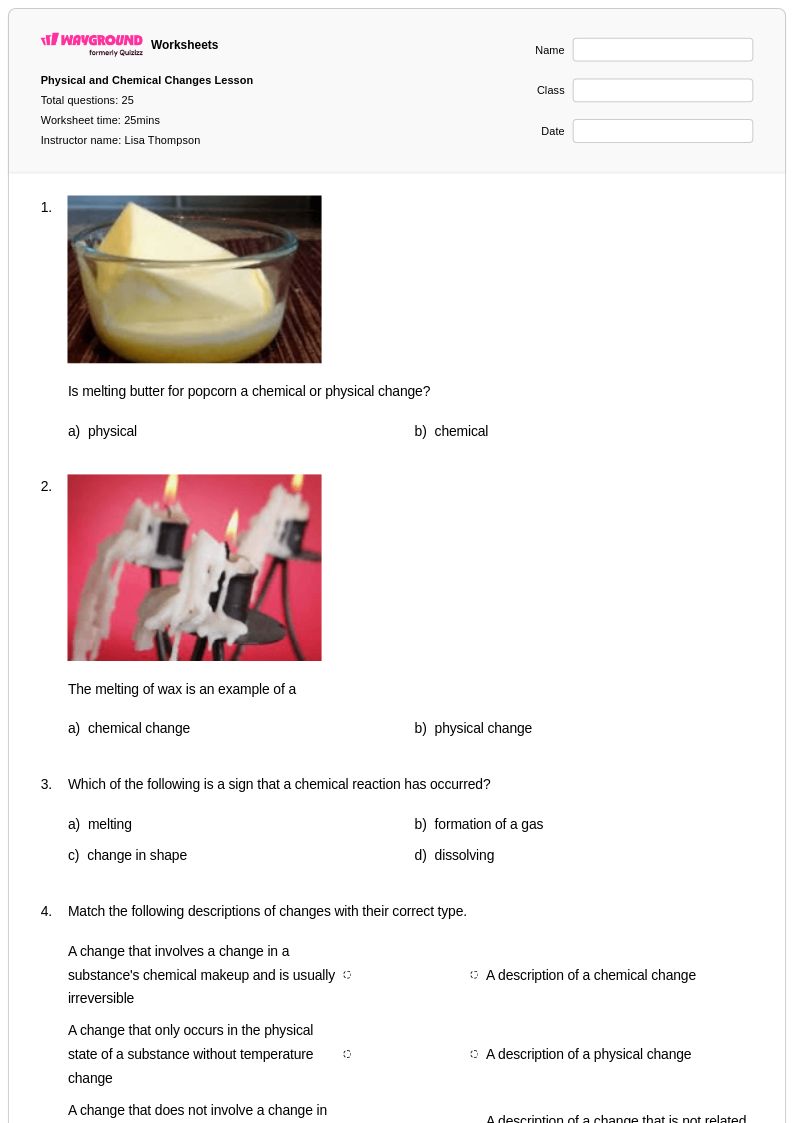
Physical and Chemical Properties and Changes worksheets for Year 8 students through Wayground (formerly Quizizz) provide comprehensive practice opportunities that strengthen fundamental chemistry concepts essential for middle school science mastery. These carefully designed printable resources guide students through identifying observable characteristics like color, density, melting point, and solubility while distinguishing these physical properties from chemical properties such as flammability and reactivity. Each worksheet collection includes detailed practice problems that challenge students to analyze real-world examples of physical changes like melting ice or dissolving salt, contrasted with chemical changes such as burning wood or rusting metal. The accompanying answer keys enable both independent study and guided instruction, while the free pdf format ensures accessibility for classroom use, homework assignments, and supplemental practice sessions.
Wayground (formerly Quizizz) empowers educators with millions of teacher-created worksheet resources specifically designed to support Year 8 chemistry instruction on physical and chemical properties and changes. The platform's robust search and filtering capabilities allow teachers to quickly locate materials aligned with state science standards, while differentiation tools enable customization based on individual student needs and learning objectives. These versatile worksheet collections are available in both printable and digital formats, including downloadable pdf versions that facilitate seamless integration into lesson planning, targeted remediation for struggling learners, and enrichment activities for advanced students. The flexible customization options support varied instructional approaches, whether teachers need formative assessment tools, structured skill practice, or comprehensive review materials that reinforce the critical thinking skills necessary for understanding how matter behaves and changes in different conditions.
FAQs
How do I teach students to distinguish between physical and chemical properties?
Start by grounding students in observable characteristics: physical properties like density, melting point, color, and solubility can be measured without changing the substance's identity, while chemical properties like flammability and reactivity describe how a substance behaves during a chemical transformation. Use concrete, familiar examples first — ice melting versus wood burning — before moving to more abstract or lab-based scenarios. Building a class reference chart that categorizes properties helps students internalize the distinction before applying it to new examples.
What are effective activities for helping students practice identifying physical and chemical changes?
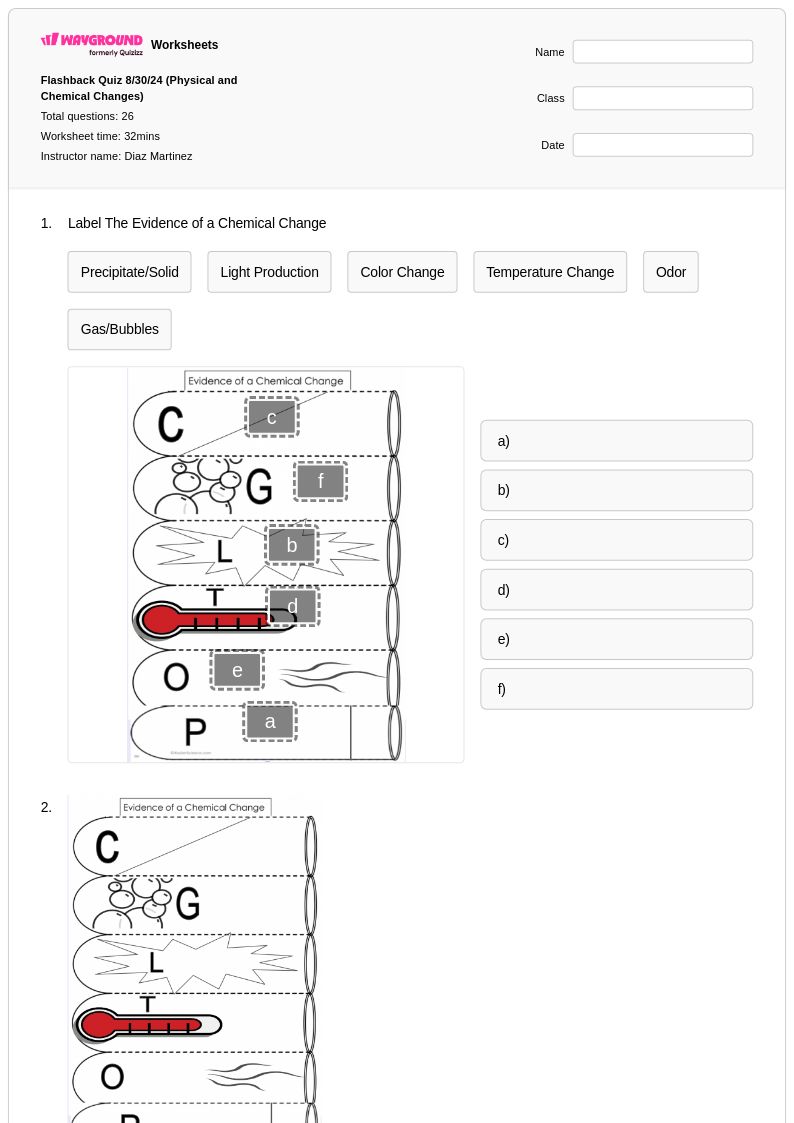
Worksheet exercises that ask students to classify a list of changes as physical or chemical — and justify their reasoning — are particularly effective because they force explicit application of the criteria rather than rote memorization. Practice problems that incorporate experimental data, such as observing color change, gas production, or temperature shifts, help students connect lab evidence to conceptual definitions. Mixing classification tasks with real-world scenarios, such as rusting iron or dissolving sugar, builds transferable understanding.
What mistakes do students commonly make when classifying physical and chemical changes?
The most common misconception is conflating visible change with chemical change — students often assume that because something looks different, a chemical change must have occurred. Melting, dissolving, and cutting are frequently misidentified as chemical changes because they alter appearance. Another persistent error is treating all exothermic or color-changing events as chemical changes without considering reversibility or whether a new substance was formed. Targeted practice problems that deliberately include these tricky cases help students confront and correct these errors.
How do I use these worksheets in my chemistry classroom?
Physical and chemical properties and changes worksheets on Wayground are available as printable PDFs for traditional classroom use and in digital formats for technology-integrated or remote learning environments, including the option to host them as a quiz directly on Wayground. Each worksheet includes a complete answer key, making them suitable for independent practice, homework, or formative assessment with minimal prep time. Teachers can select problems that target specific skills — such as data analysis or real-world application — to align with wherever students are in the unit.
How can I support students who are struggling with physical versus chemical properties?
For students who need additional support, focus remediation on a single distinguishing criterion at a time — for example, start with whether the identity of the substance changes — before introducing multiple indicators like energy release or gas production. On Wayground, teachers can apply accommodations such as Read Aloud, reduced answer choices, and extended time to individual students, reducing cognitive load while keeping the core content accessible. Revisiting foundational physical property vocabulary, such as density and solubility, before tackling changes can also close gaps that cause downstream confusion.
How do I differentiate physical and chemical properties and changes instruction for advanced learners?
Advanced students benefit from problems that move beyond simple classification into analysis — for example, interpreting experimental data to determine whether a change is physical or chemical based on multiple observed indicators, or evaluating edge cases where the answer is less obvious. Enrichment tasks might ask students to design a simple experiment that could distinguish a physical change from a chemical one, applying their understanding rather than just demonstrating it. Wayground's differentiation capabilities allow teachers to assign more challenging materials to advanced learners while other students work on foundational practice.