
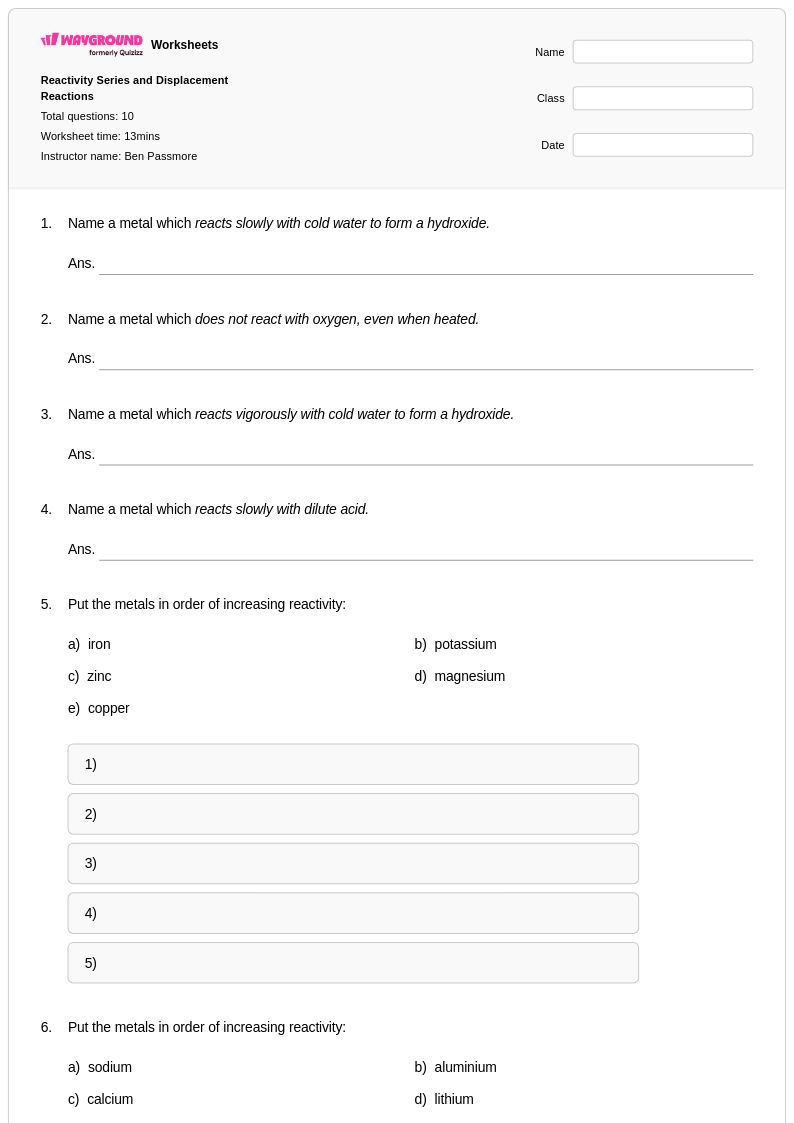
10 Q
8th
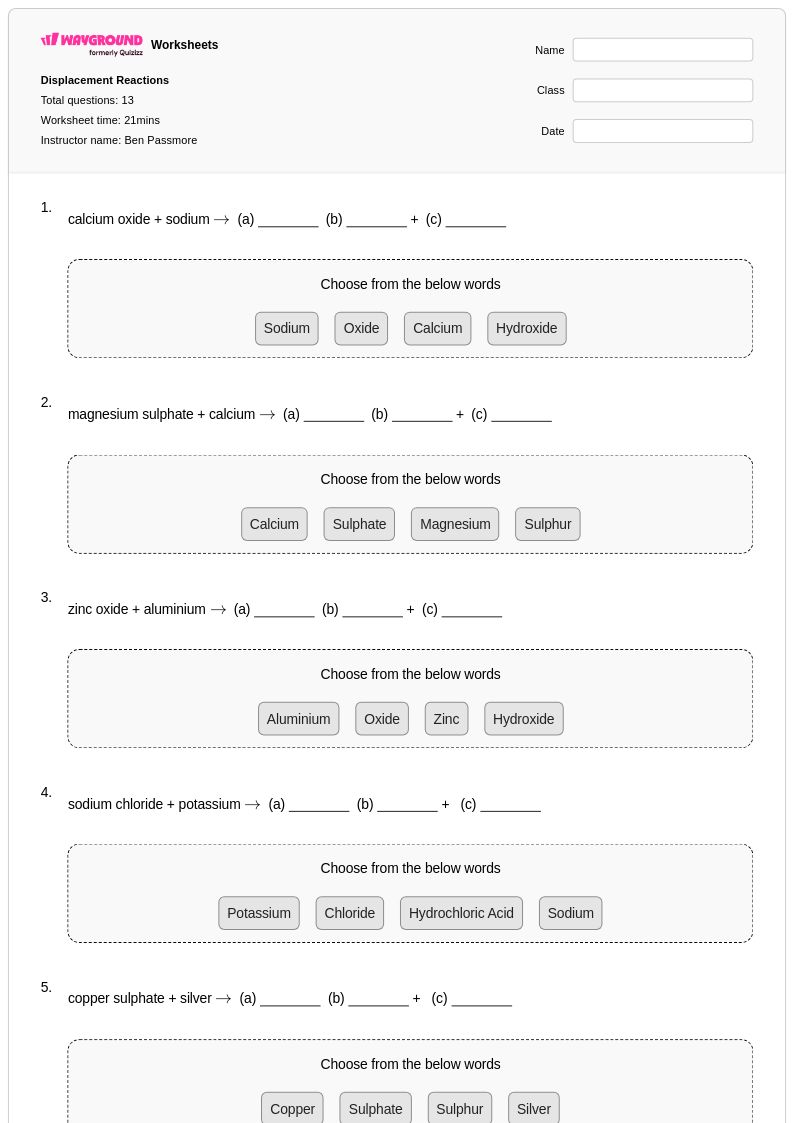
13 Q
8th
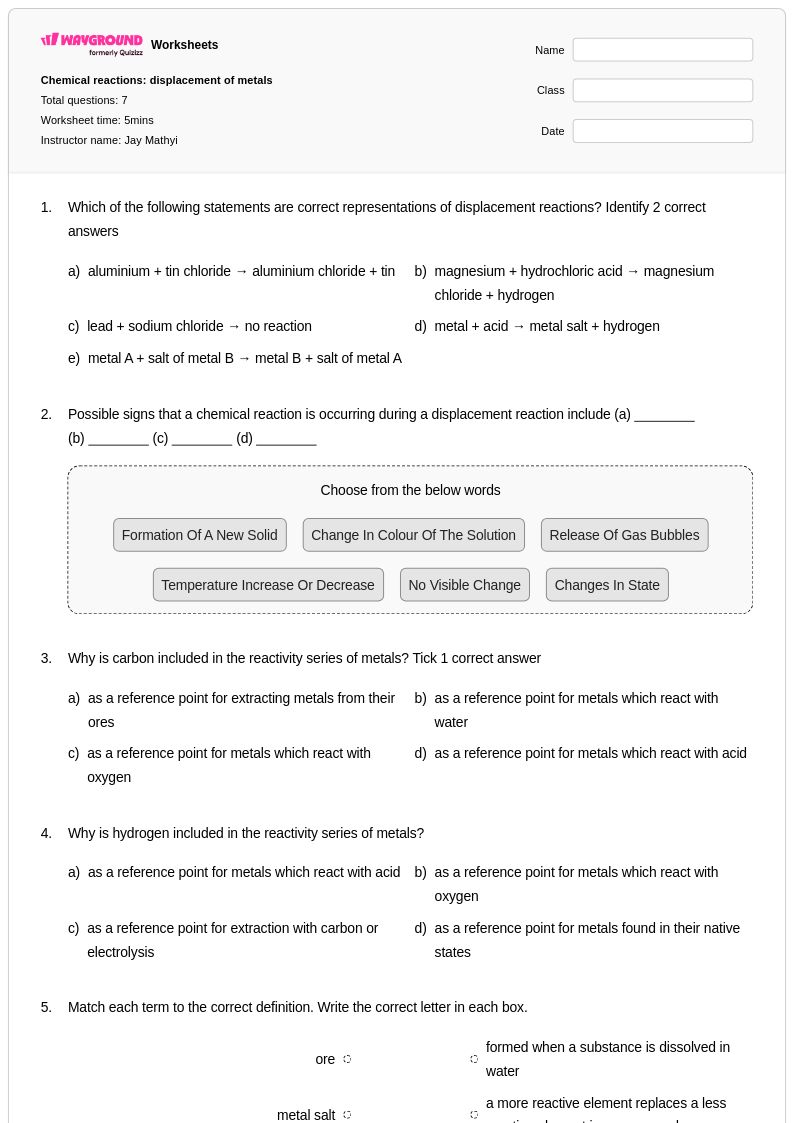
7 Q
8th
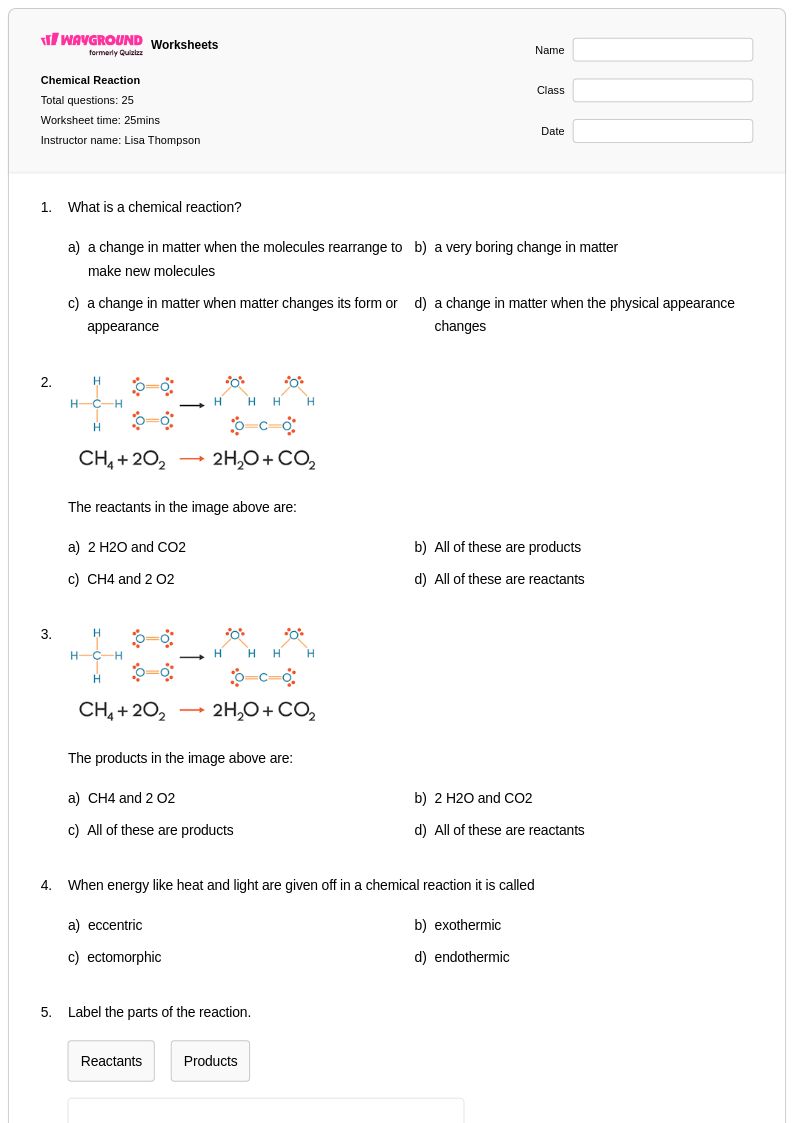
25 Q
8th - Uni
15 Q
8th - Uni
25 Q
8th
34 Q
8th
25 Q
8th - Uni
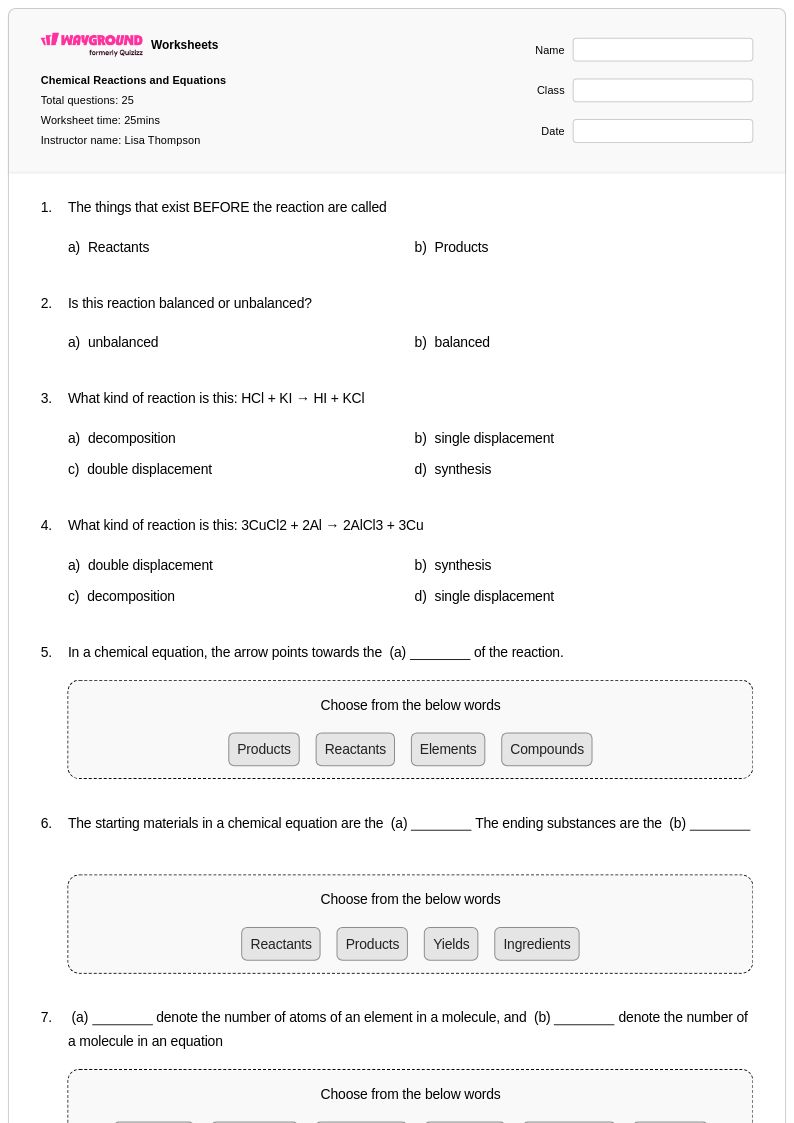
25 Q
8th - Uni
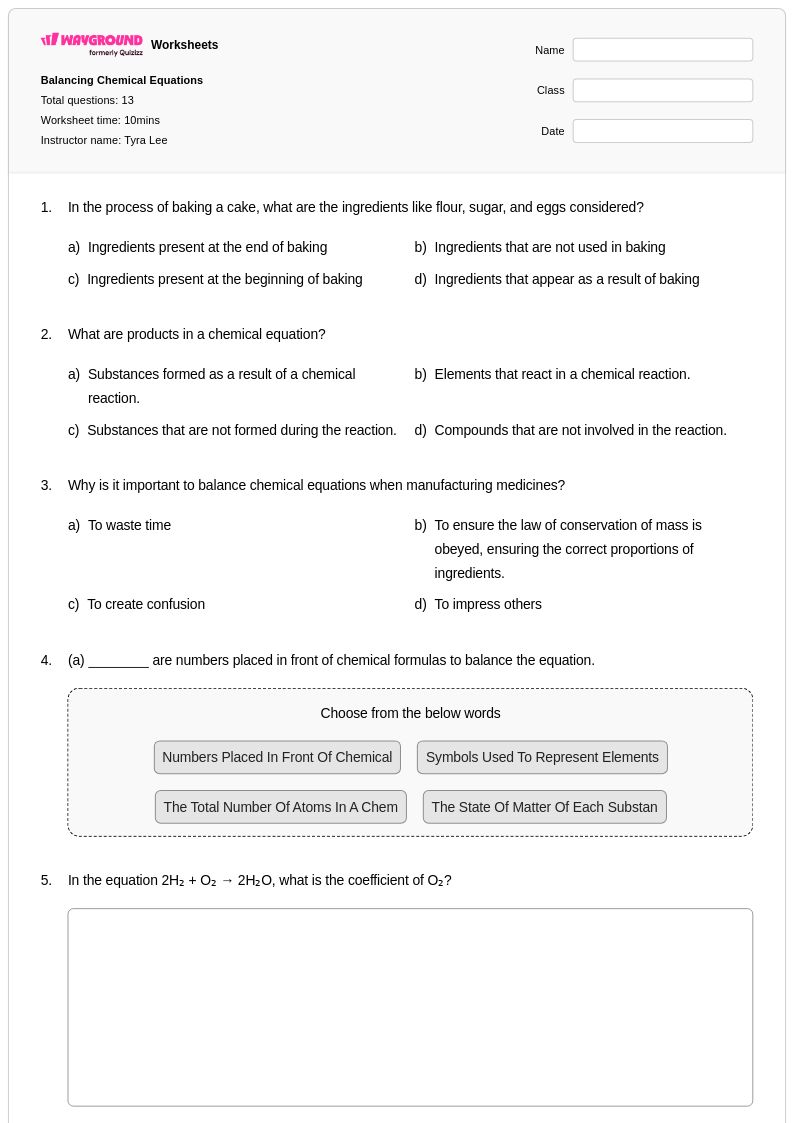
13 Q
8th
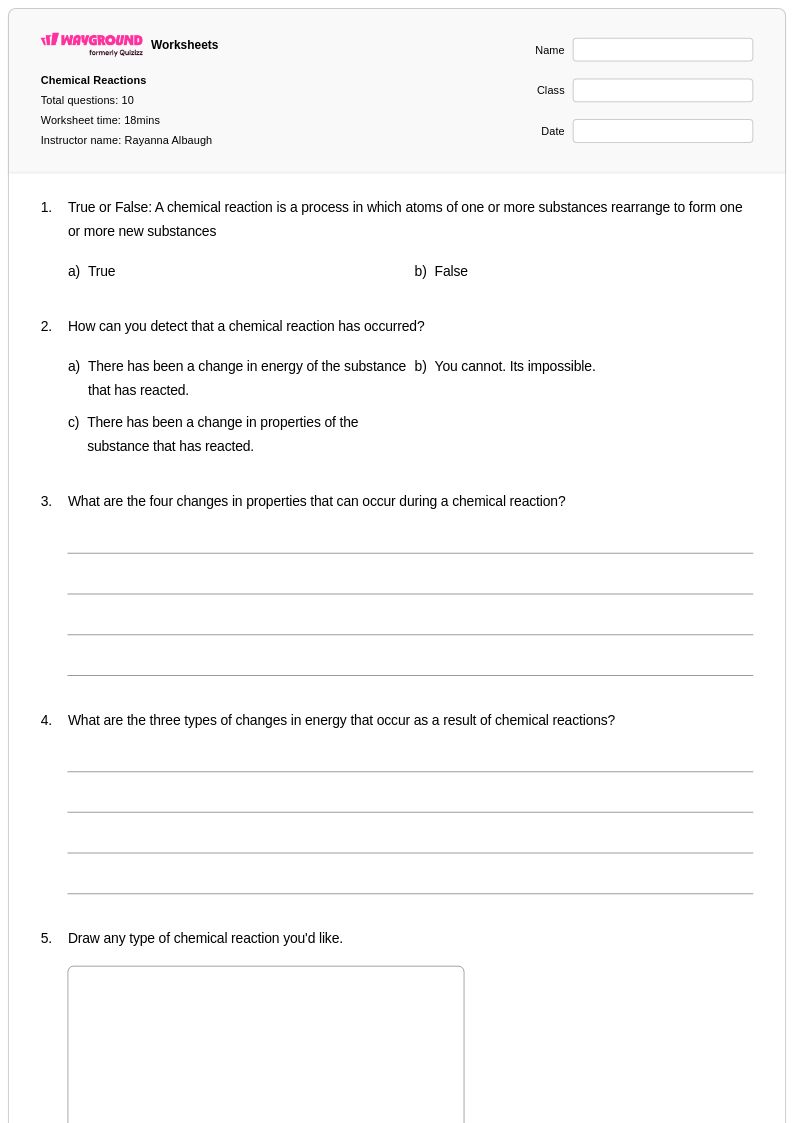
10 Q
8th
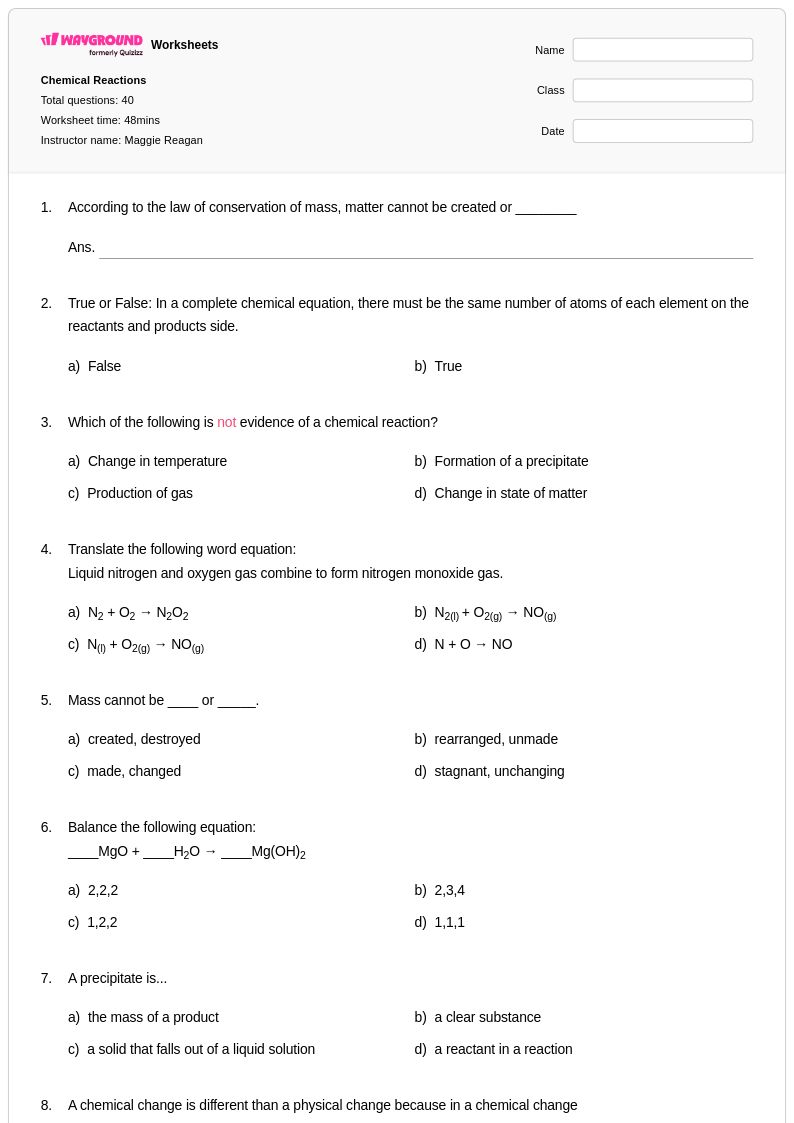
40 Q
8th
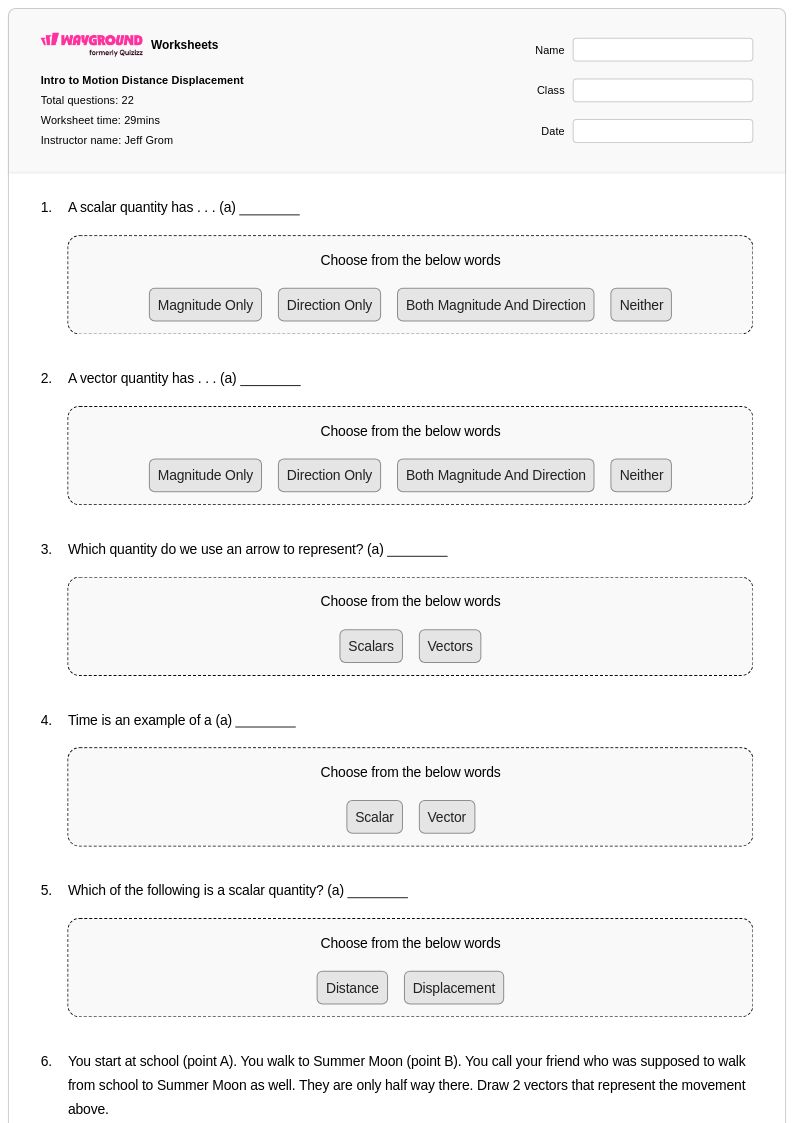
22 Q
8th
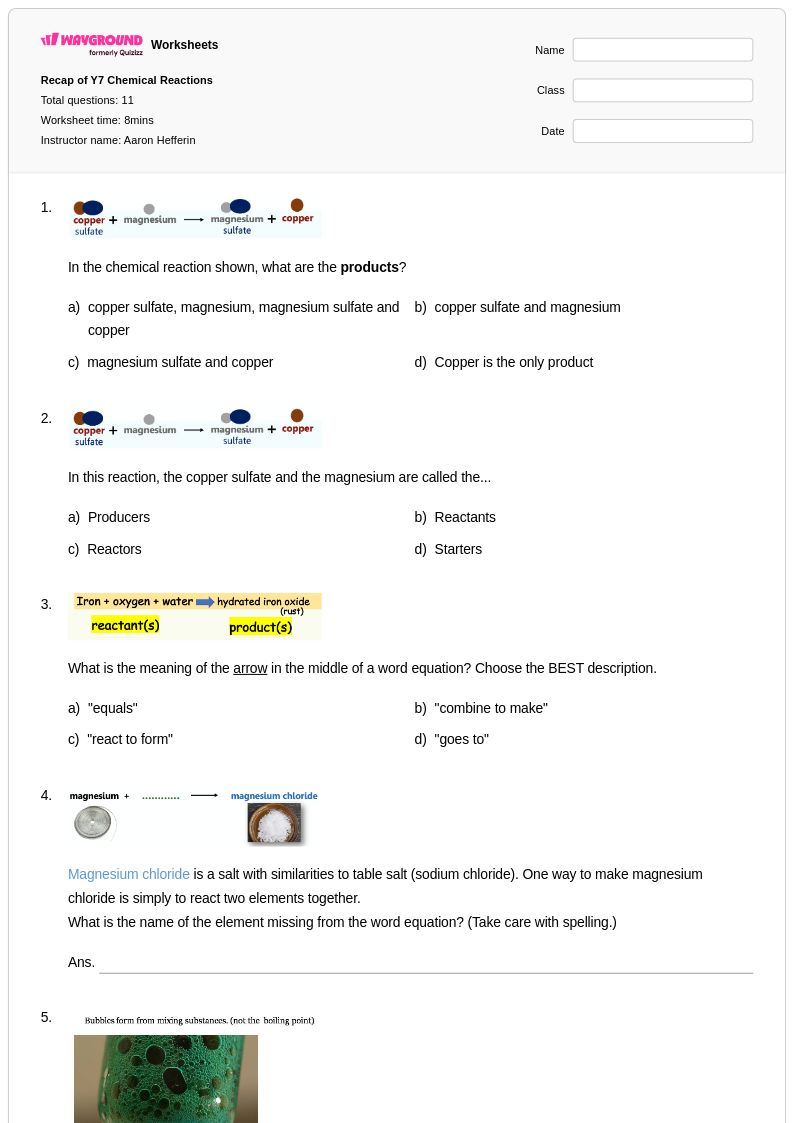
11 Q
8th
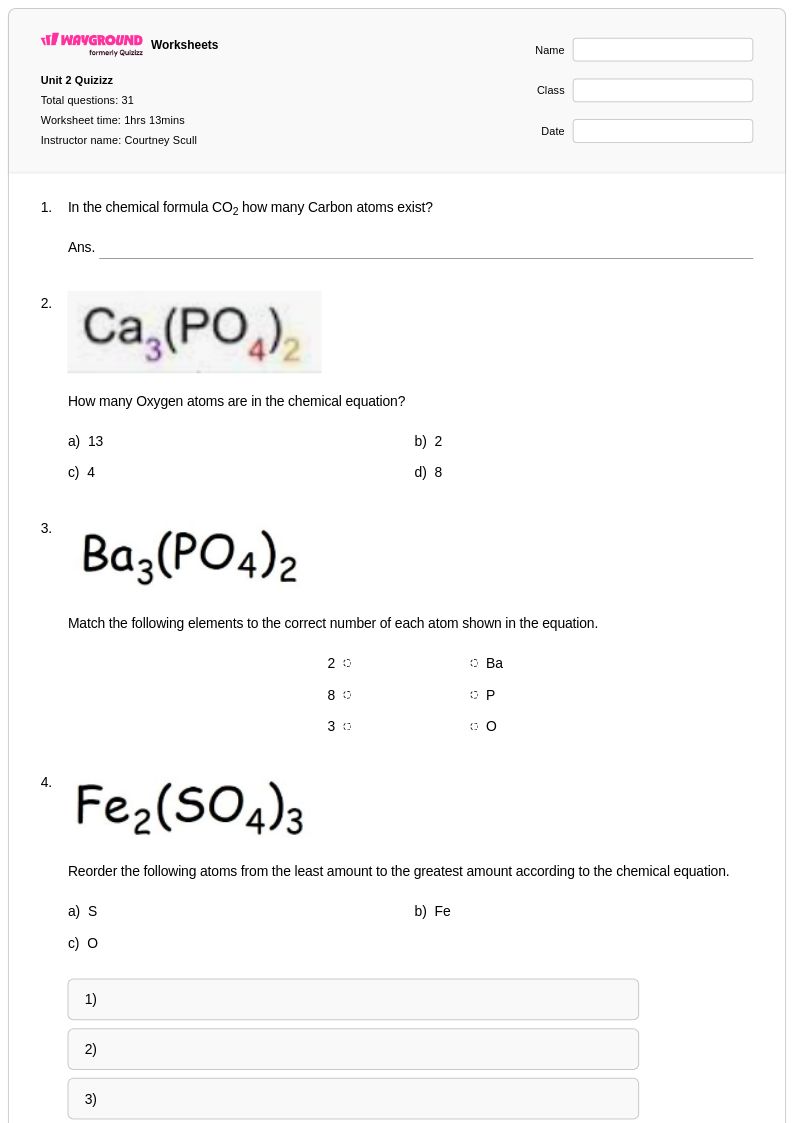
31 Q
8th
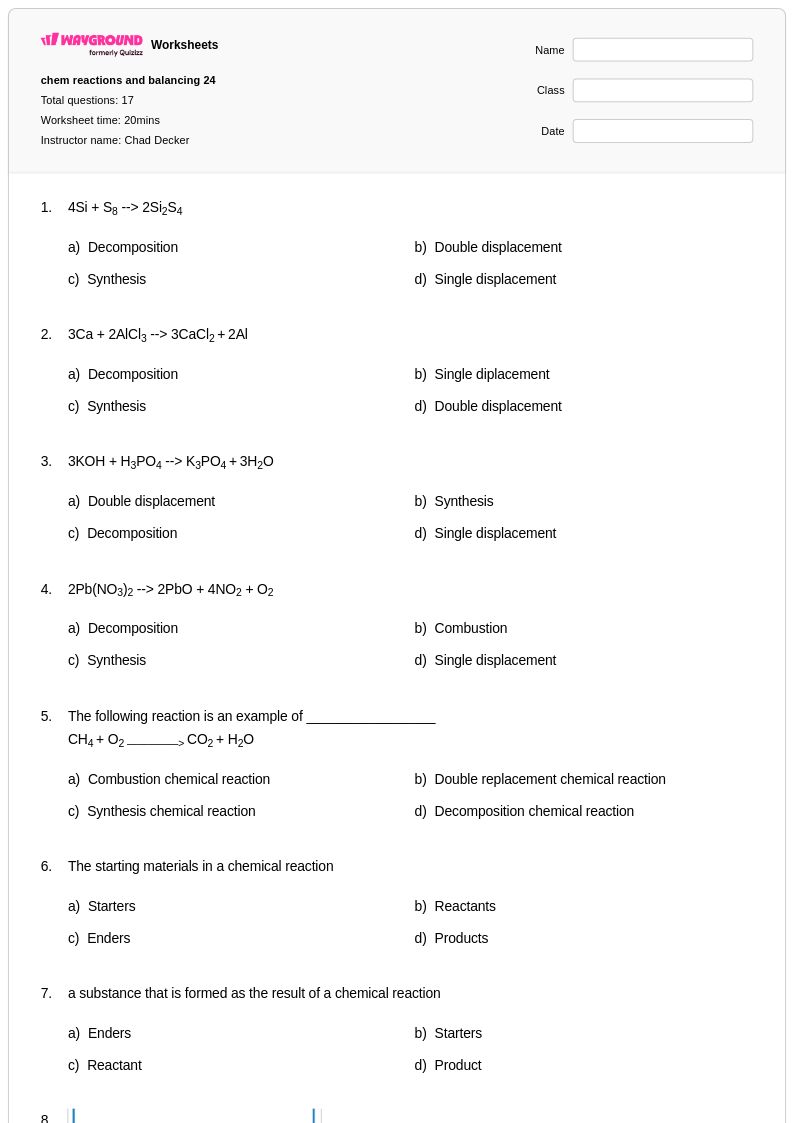
17 Q
8th - 12th
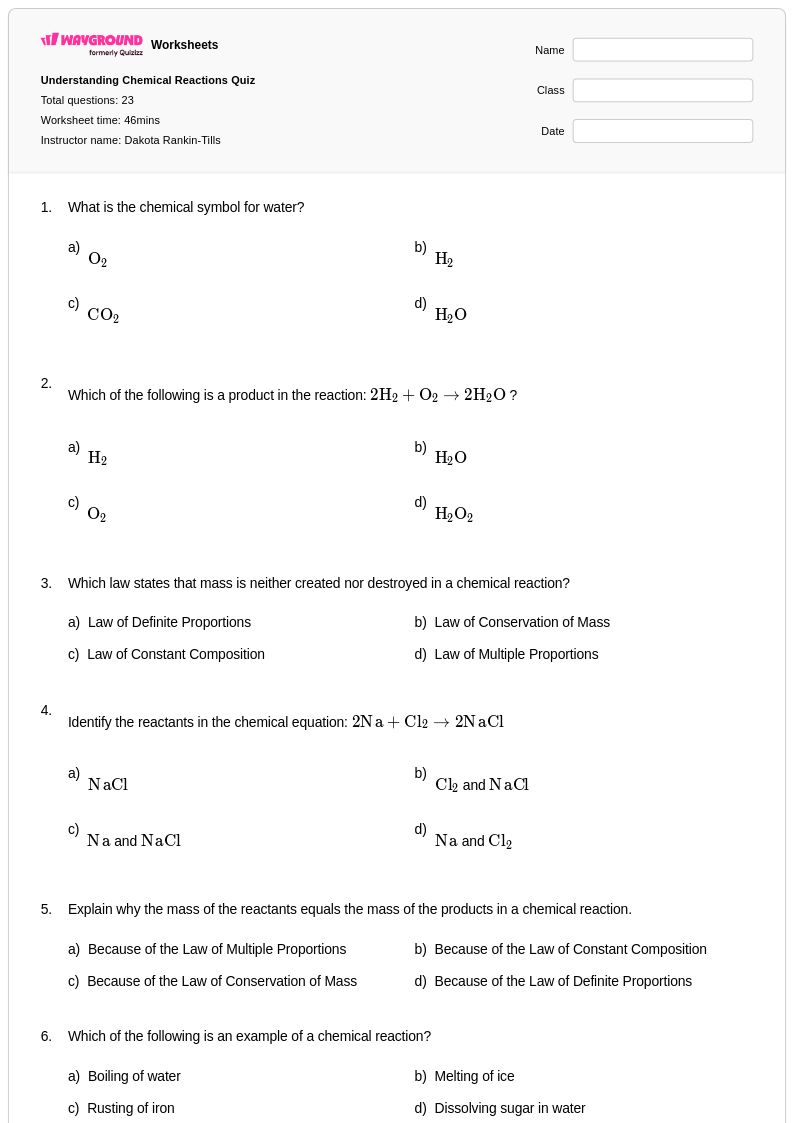
23 Q
8th
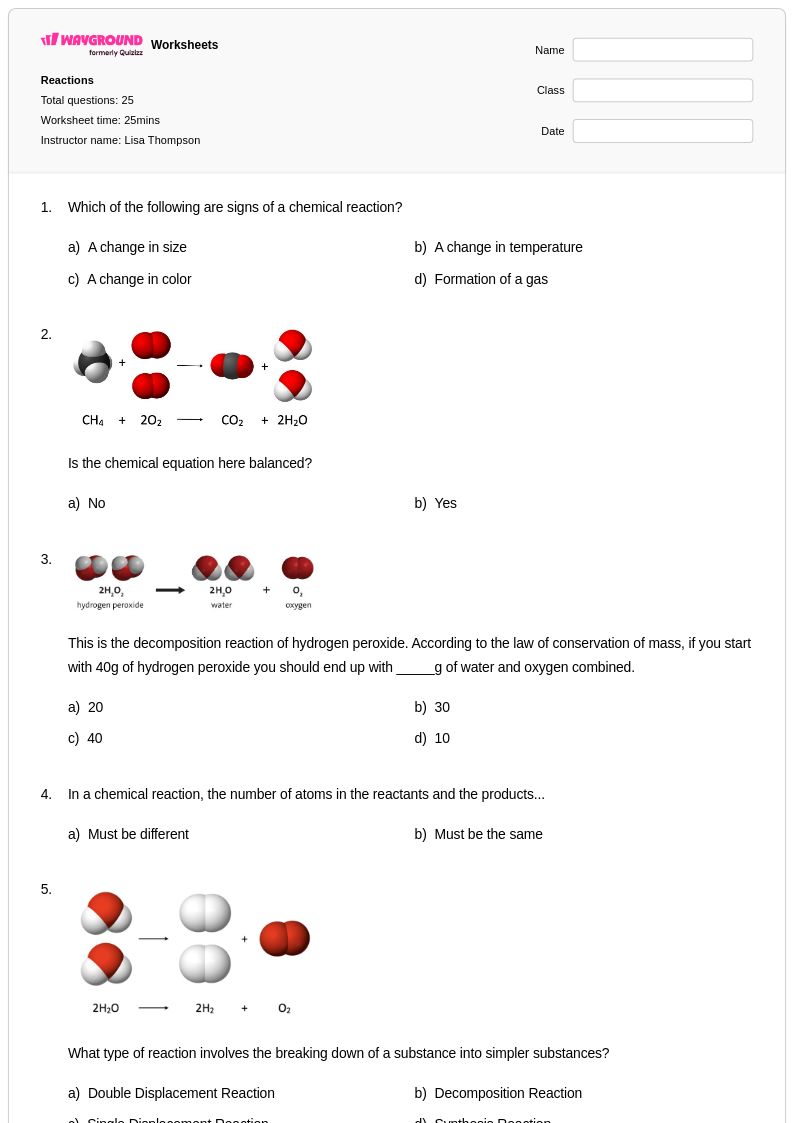
25 Q
7th - Uni
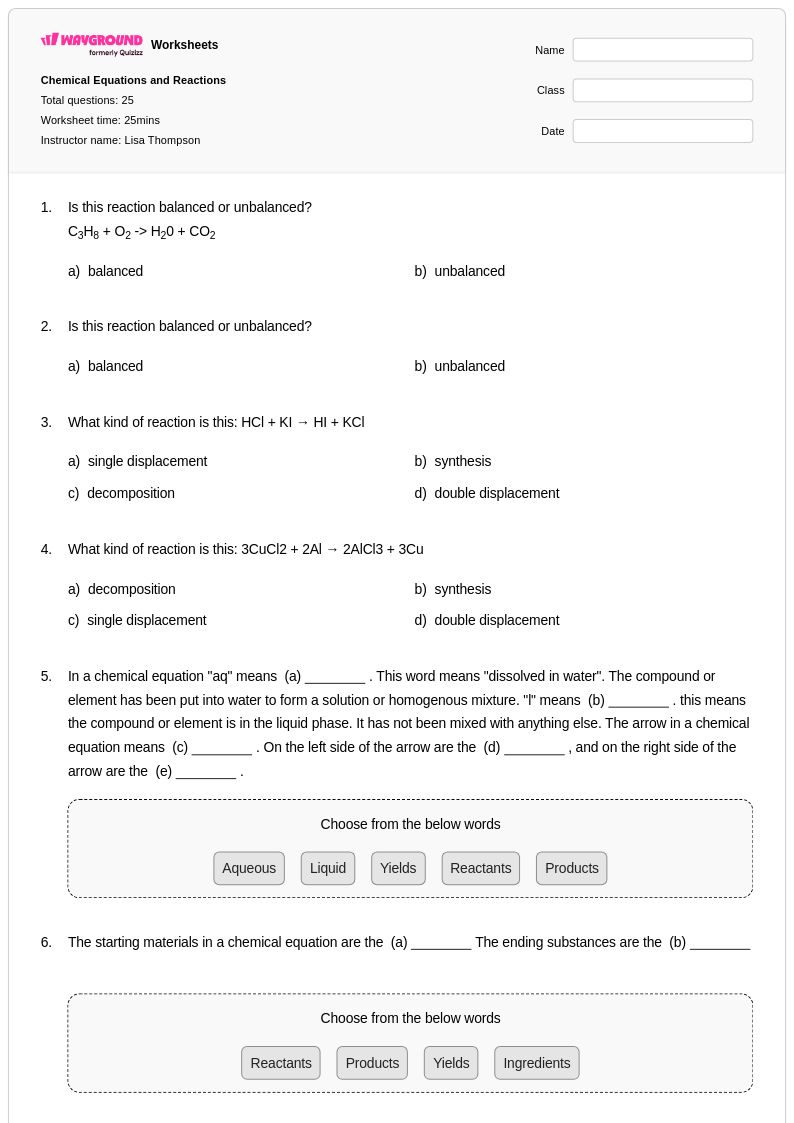
25 Q
8th - Uni
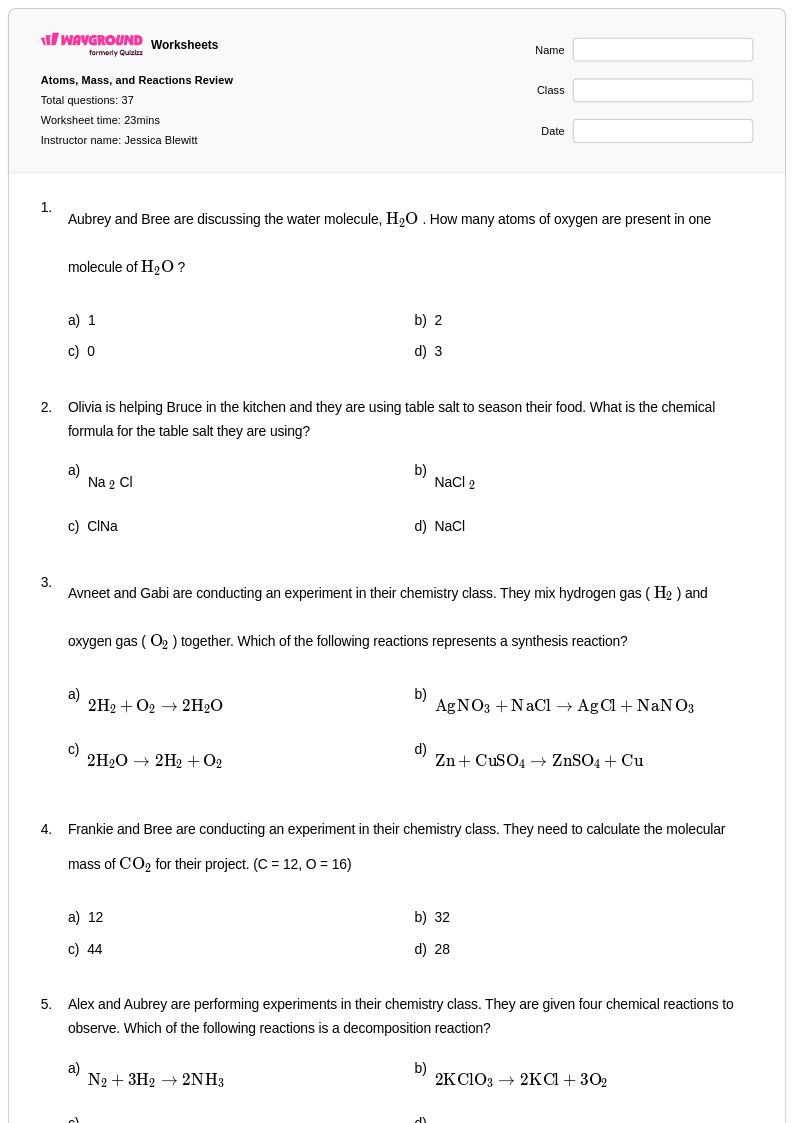
37 Q
8th
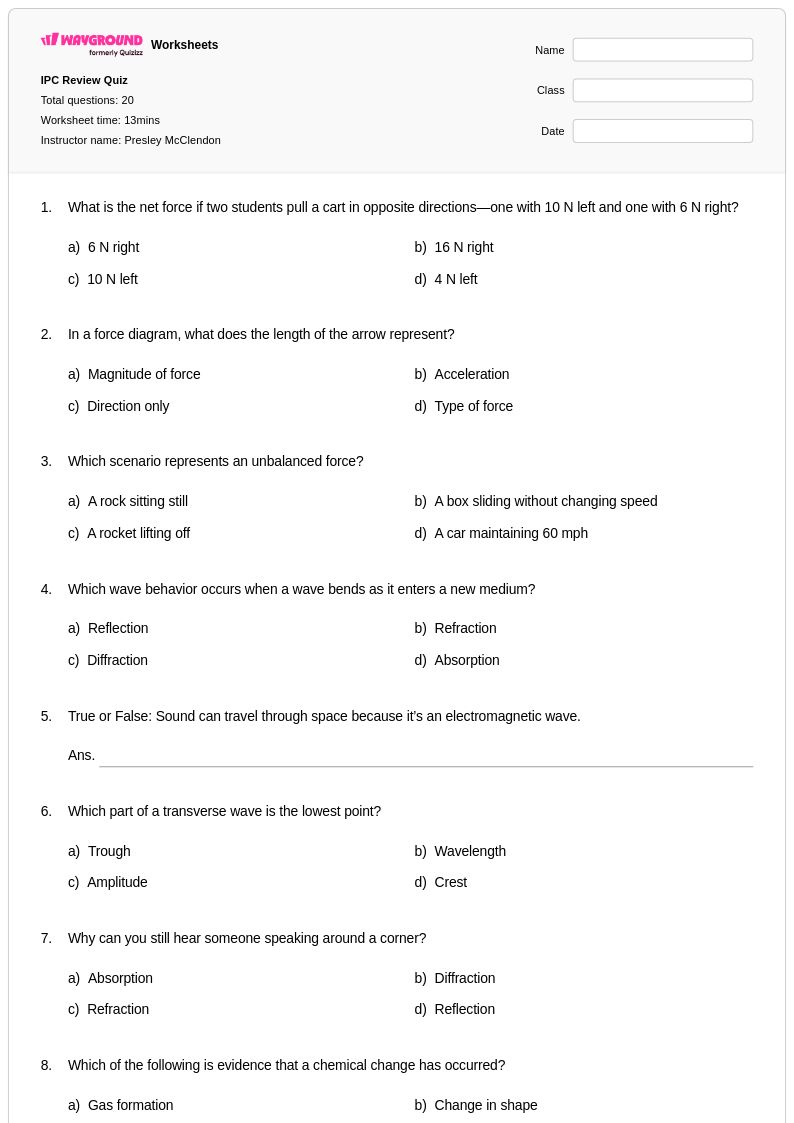
20 Q
6th - 8th
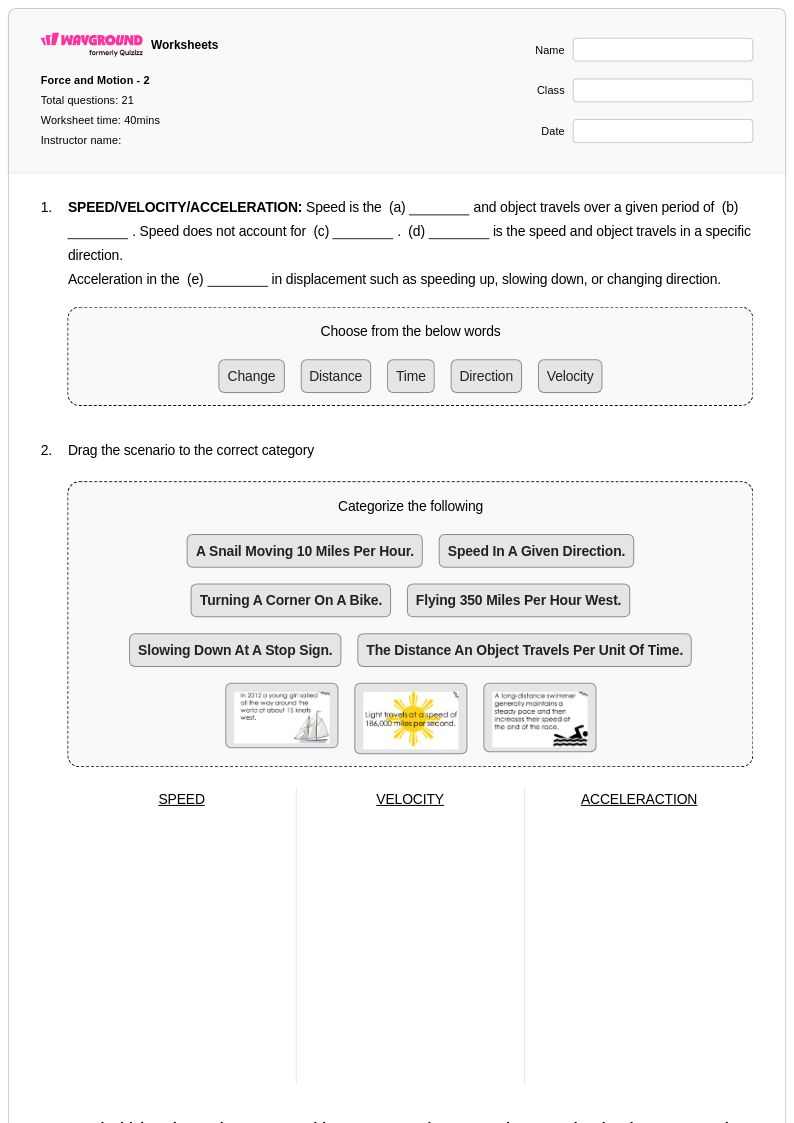
21 Q
8th
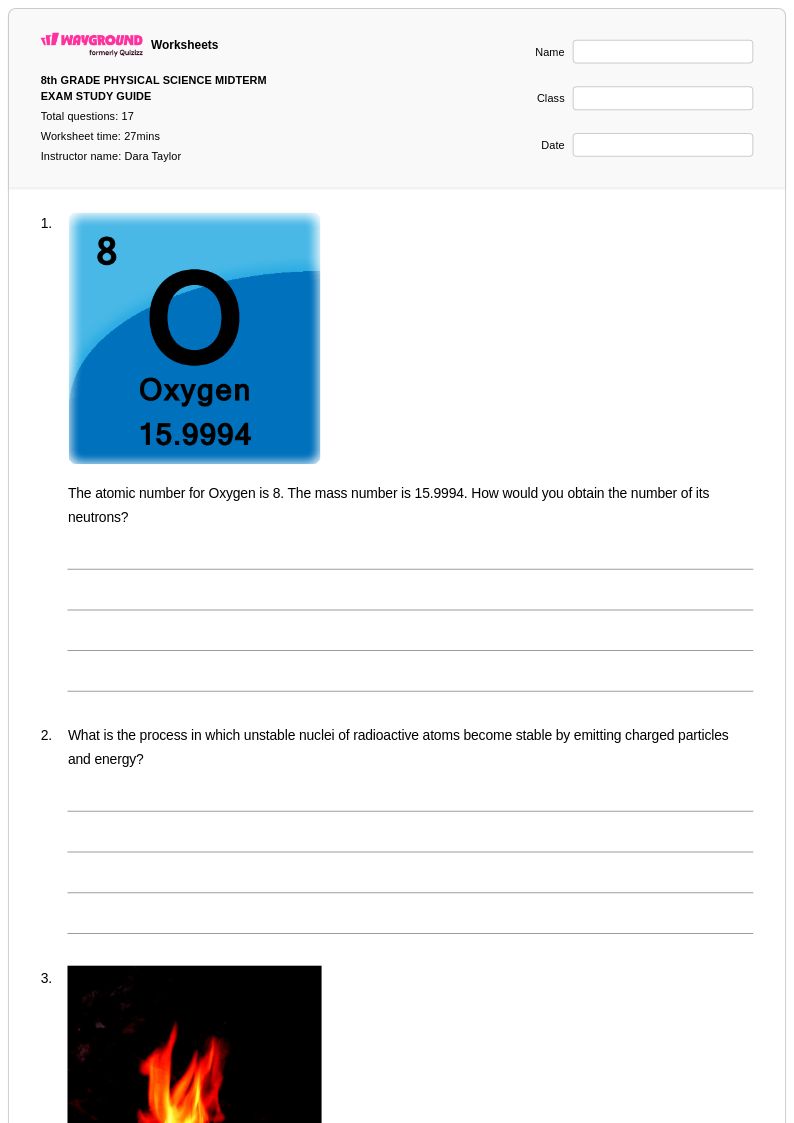
17 Q
8th - 9th
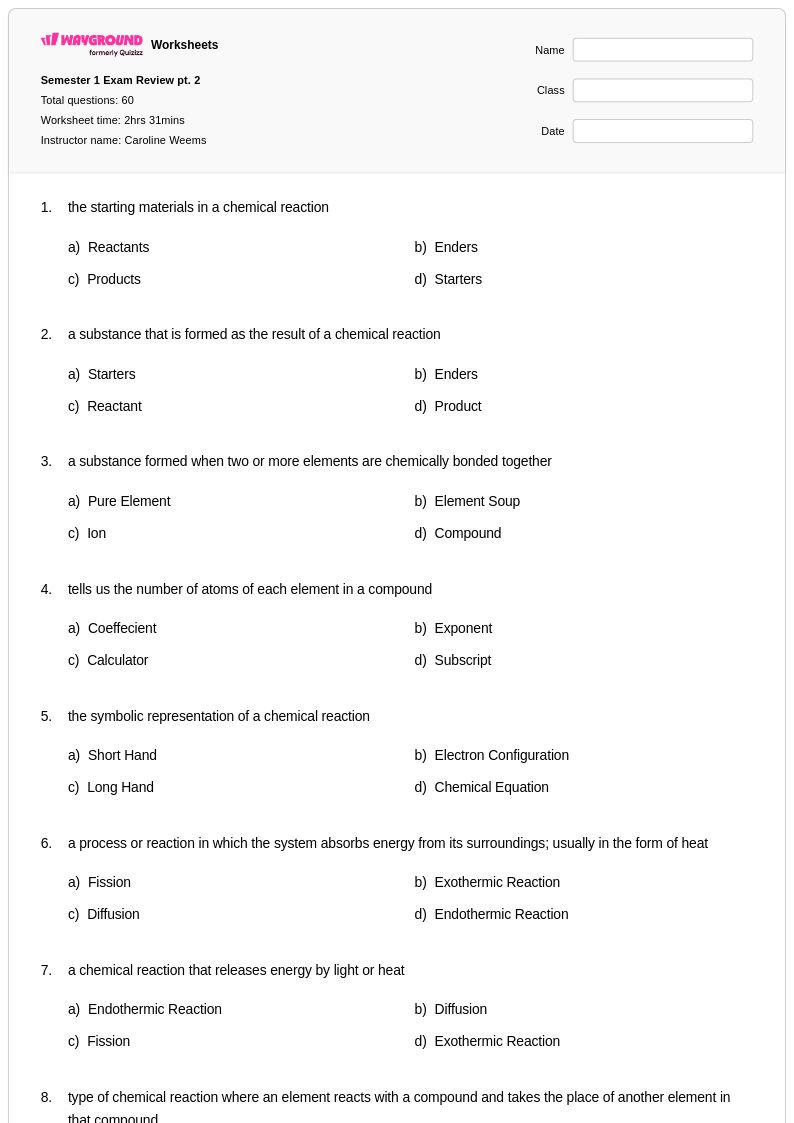
60 Q
8th
Explore Single Displacement Reaction Worksheets by Grades
Explore Other Subject Worksheets for year 8
Explore printable Single Displacement Reaction worksheets for Year 8
Single displacement reactions represent a fundamental concept in Year 8 chemistry, where students learn how one element replaces another in a compound to form new products. Wayground's comprehensive collection of single displacement reaction worksheets provides eighth-grade students with essential practice problems that strengthen their understanding of reactivity series, predicting reaction outcomes, and balancing chemical equations. These carefully designed resources help students master the identification of metals and nonmetals that can displace others based on their position in the activity series, while developing critical thinking skills through hands-on problem solving. The worksheets include detailed answer keys that support independent learning and self-assessment, with free printables available in convenient pdf format to accommodate various classroom and homework needs.
Wayground's extensive library features millions of teacher-created resources specifically designed to support chemistry instruction at the middle school level, with robust search and filtering capabilities that allow educators to quickly locate materials aligned with their curriculum standards. Teachers can easily differentiate instruction by selecting from worksheets that range from basic concept introduction to advanced application problems, ensuring that all students receive appropriate challenge levels for their learning needs. The platform's flexible customization tools enable educators to modify existing materials or combine multiple resources to create comprehensive lesson packages, while both printable and digital formats provide versatility for in-person and remote learning environments. These features streamline lesson planning while offering targeted resources for remediation, enrichment, and ongoing skill practice that help students build confidence in understanding chemical reactions and their real-world applications.