Explore free Year 4 pollinator worksheets and printables that help students discover how bees, butterflies, and other pollinators support plant reproduction through engaging practice problems and comprehensive answer keys.
Explore printable Pollinators worksheets for Year 4
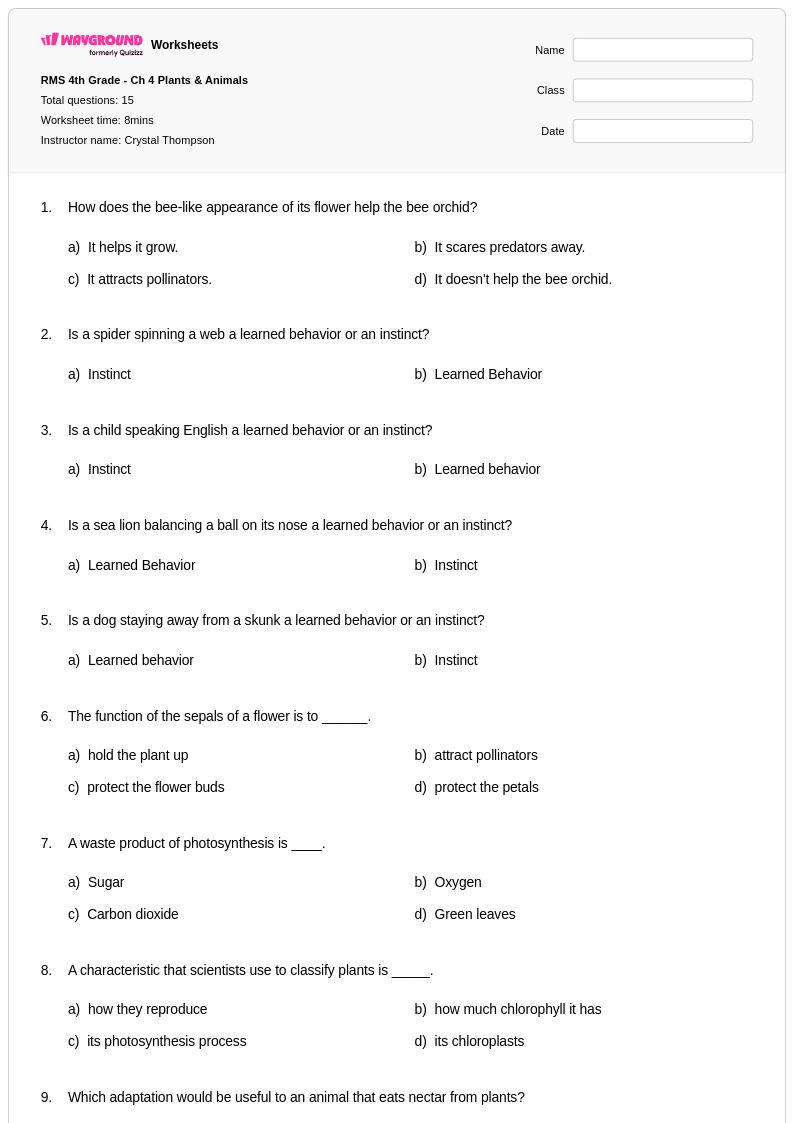
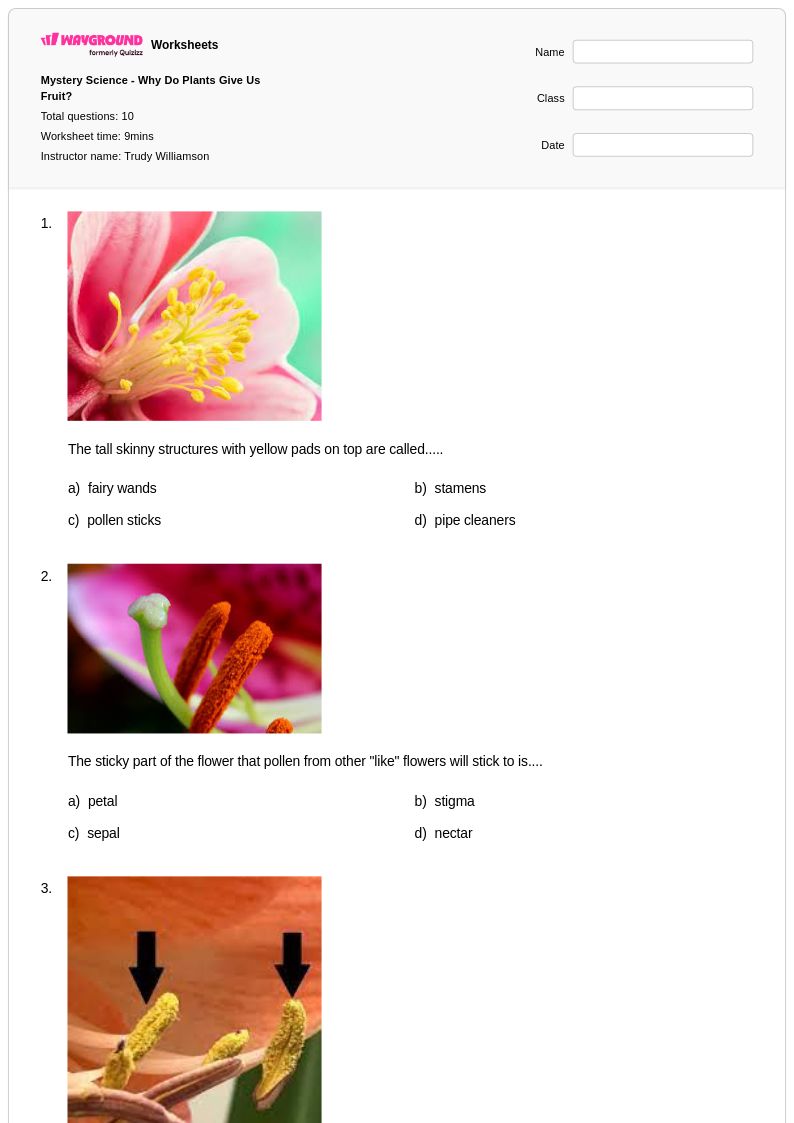
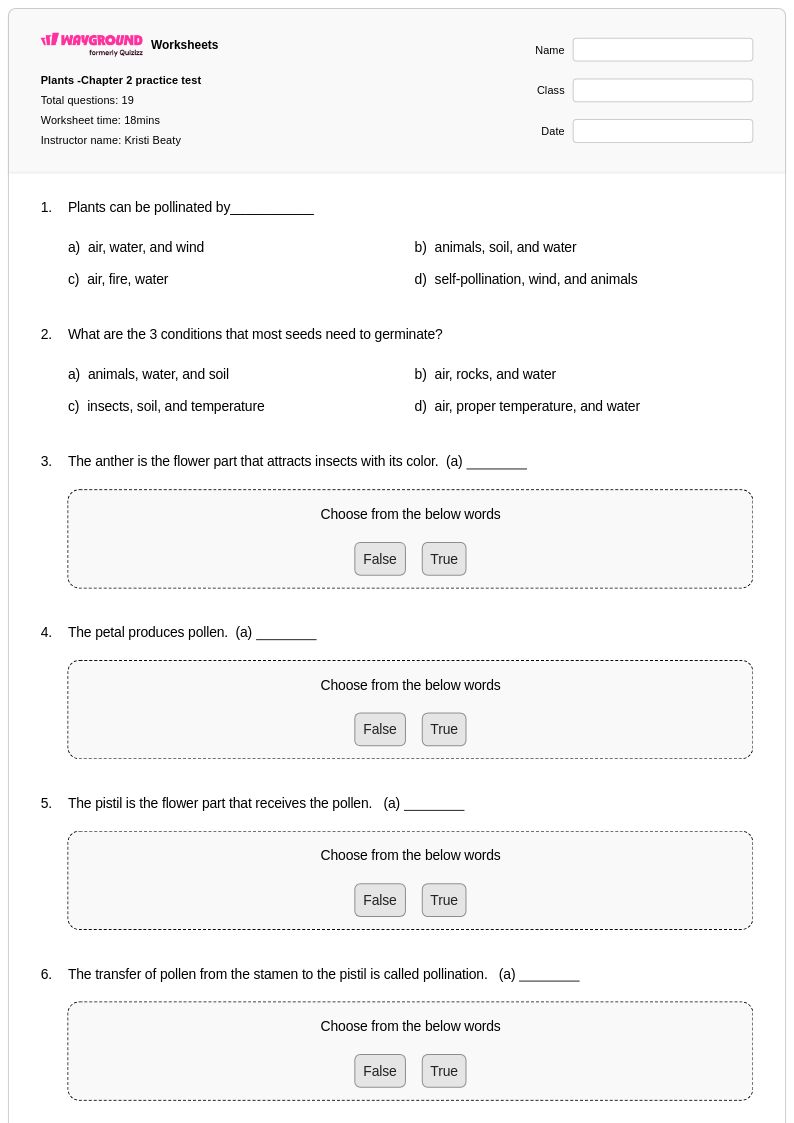
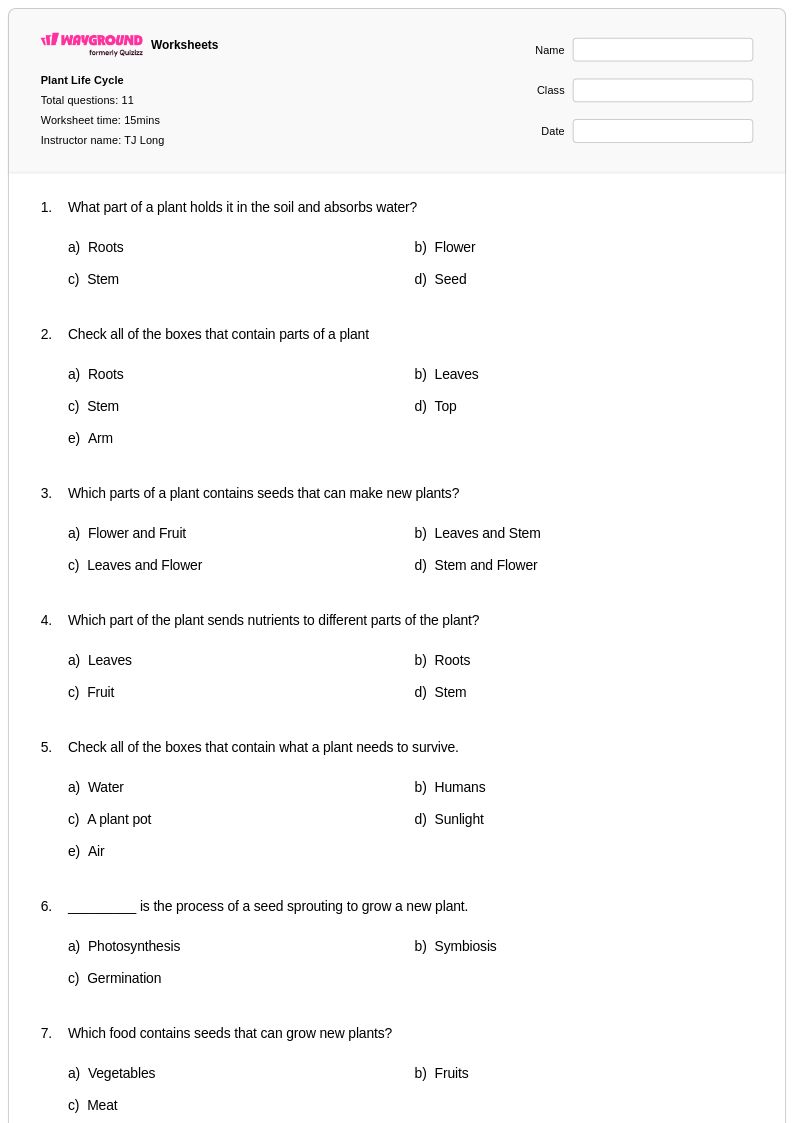
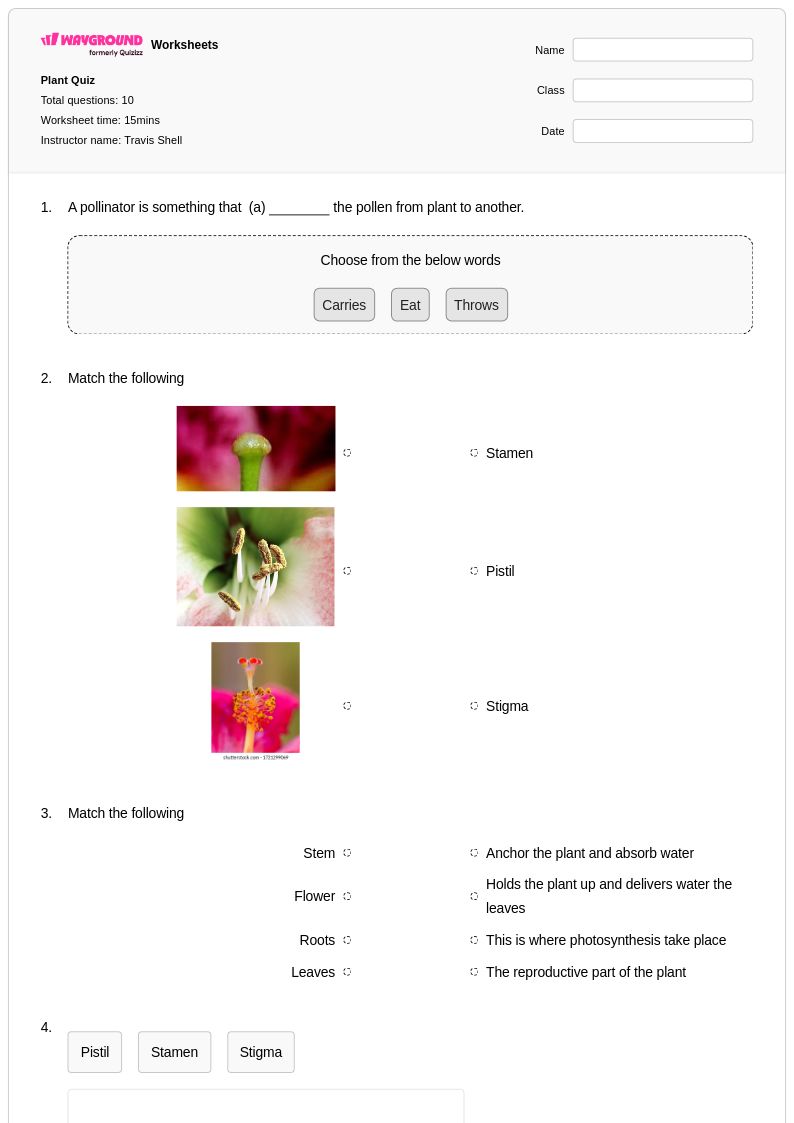
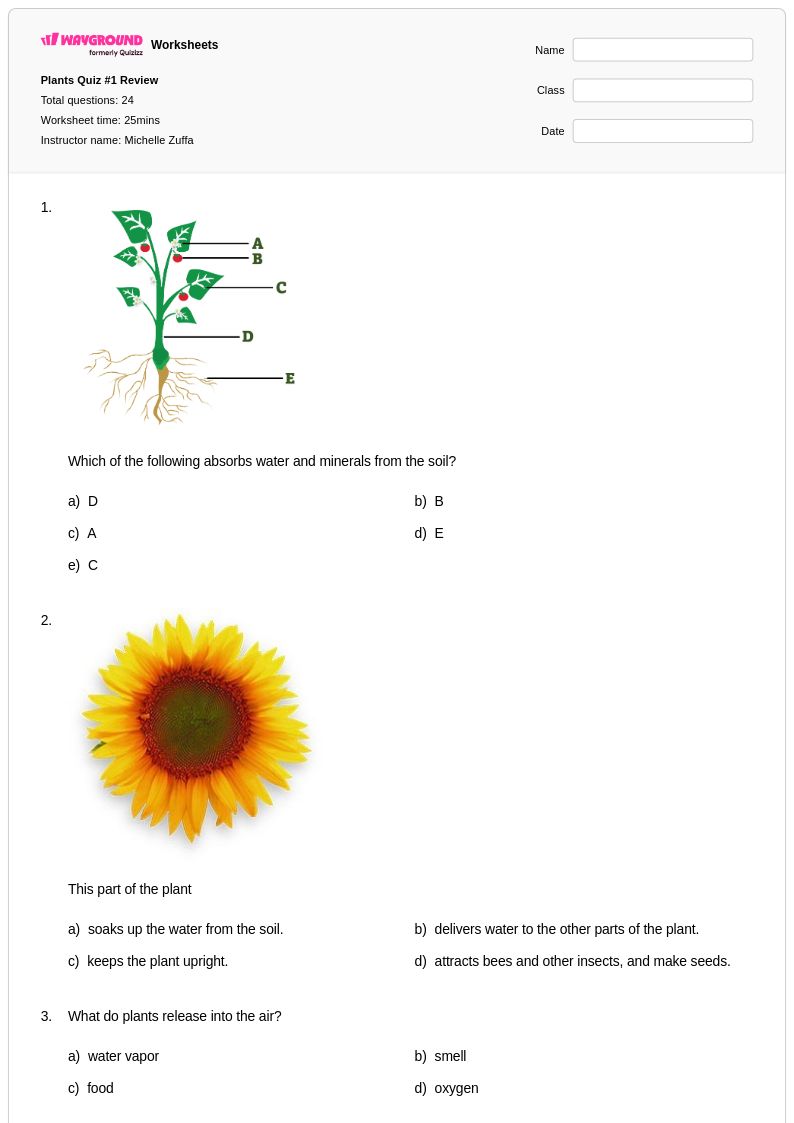
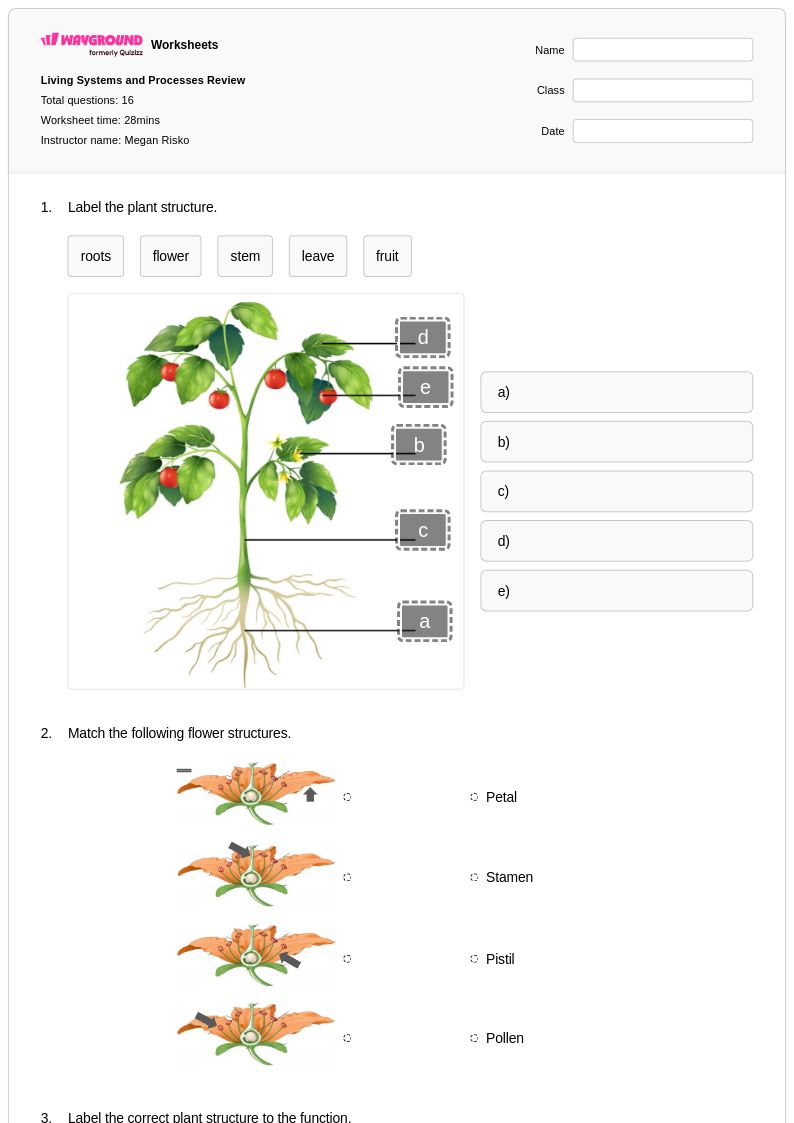
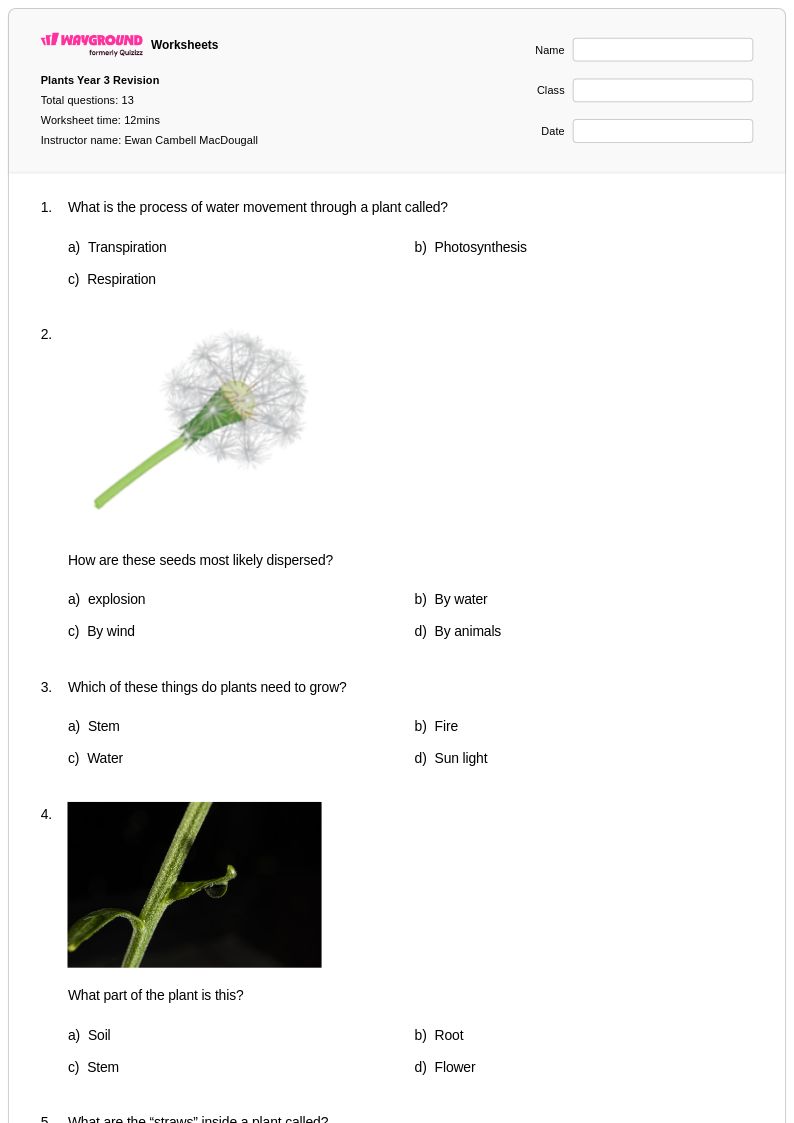
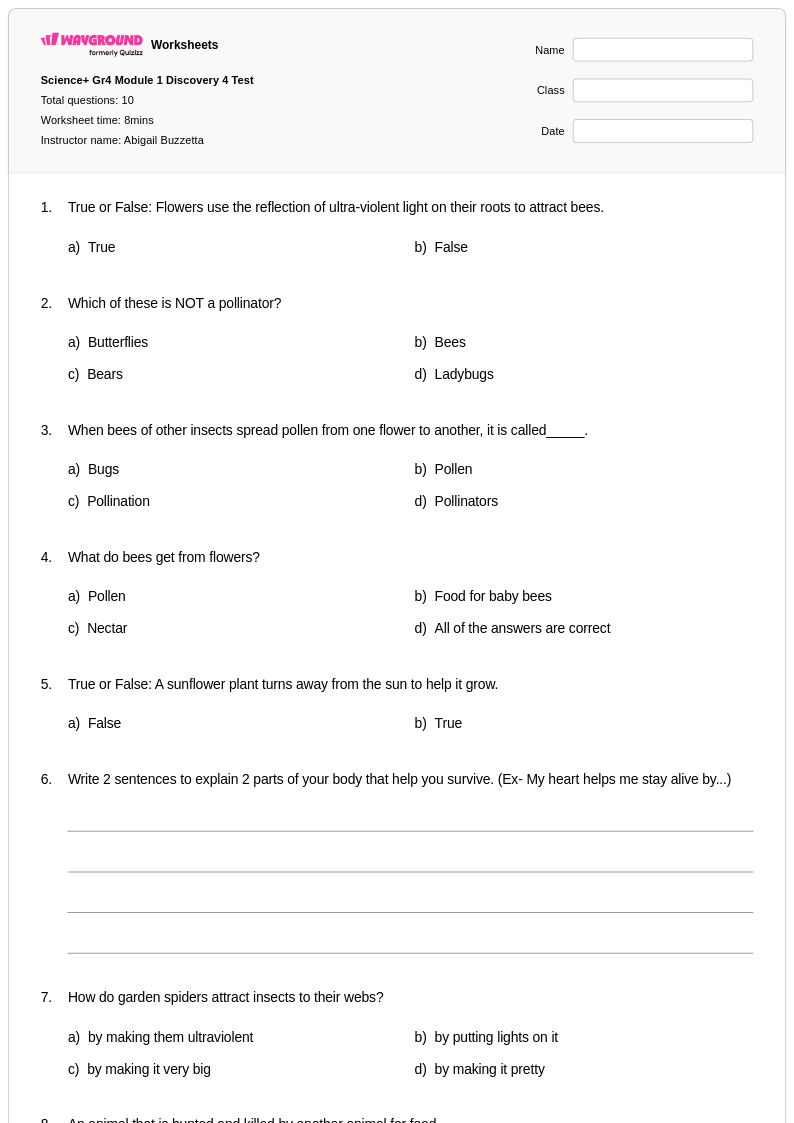
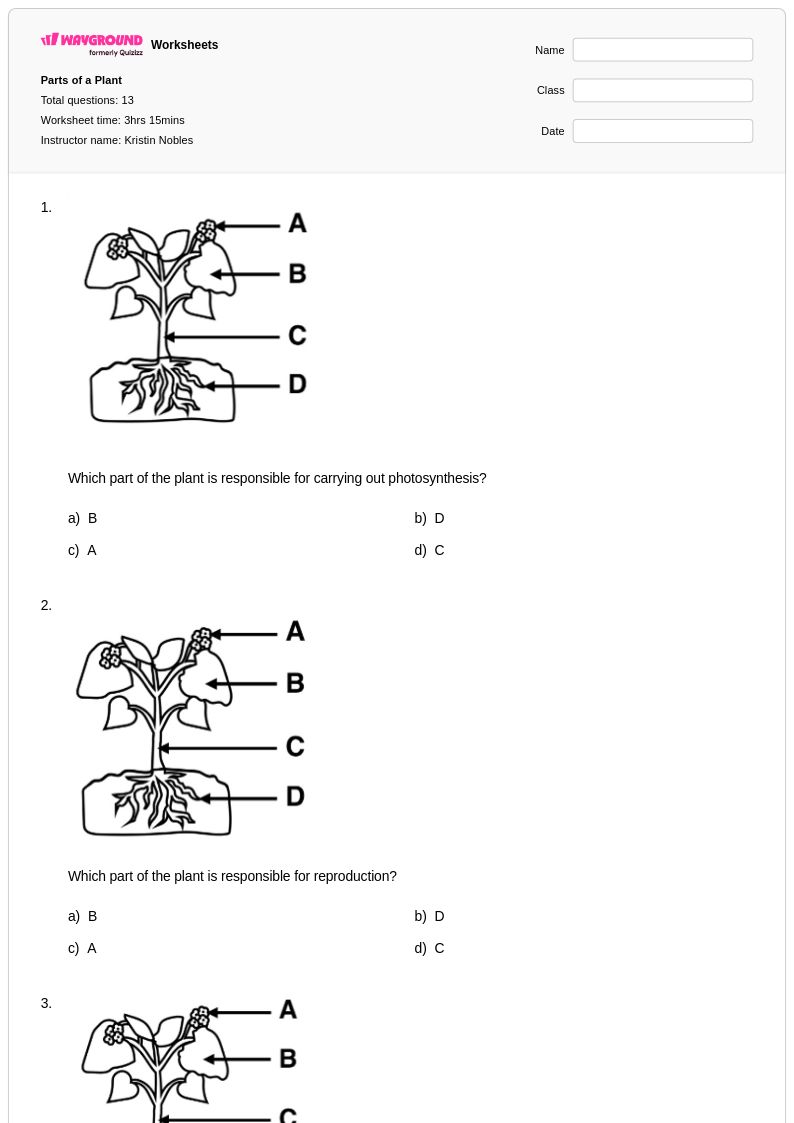
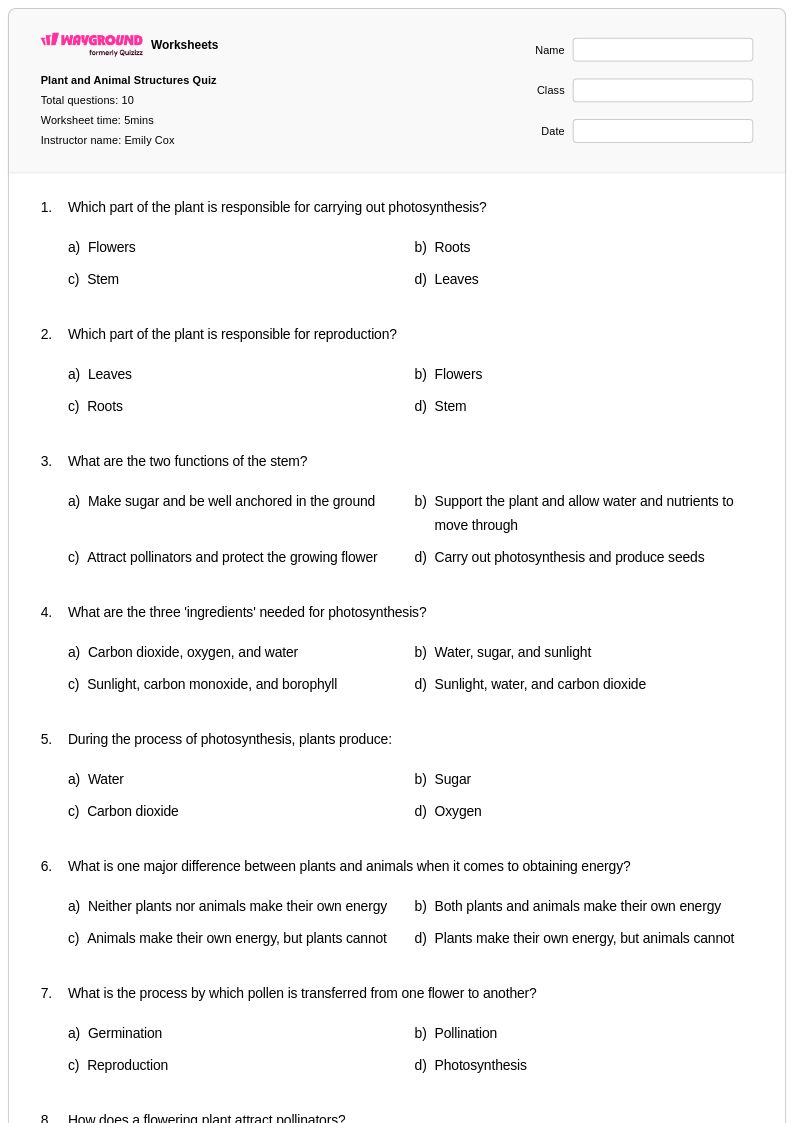
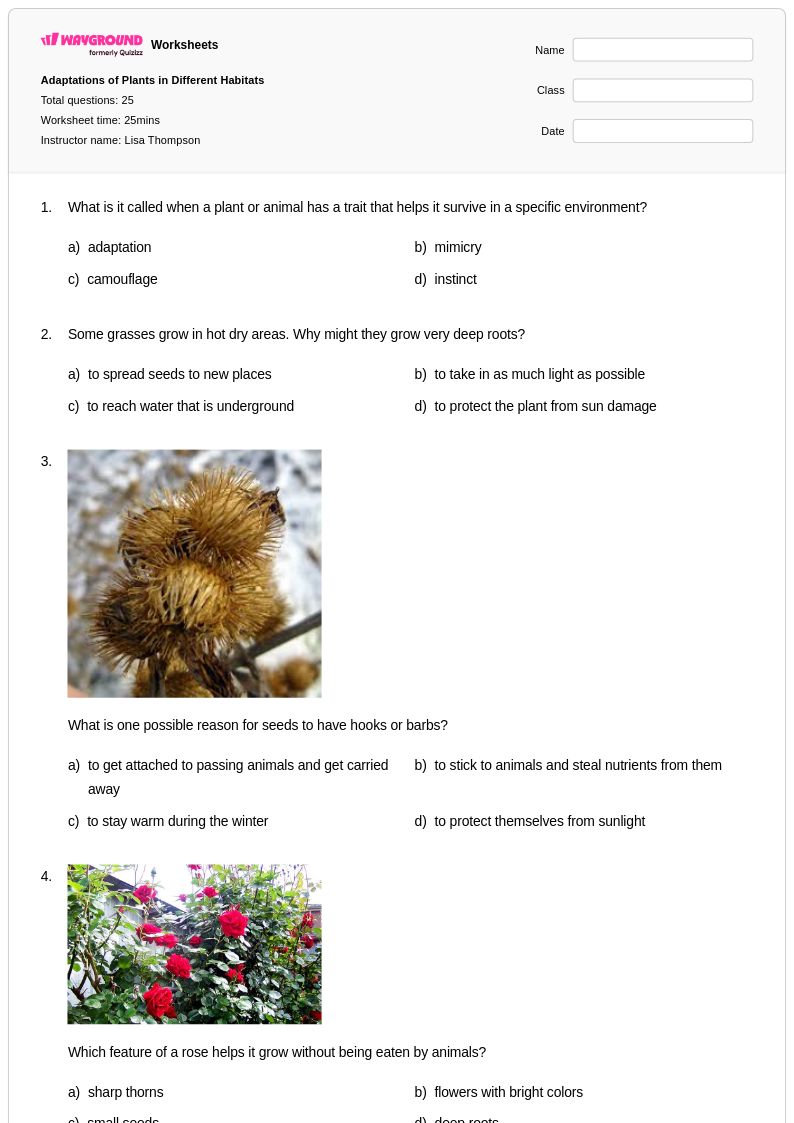
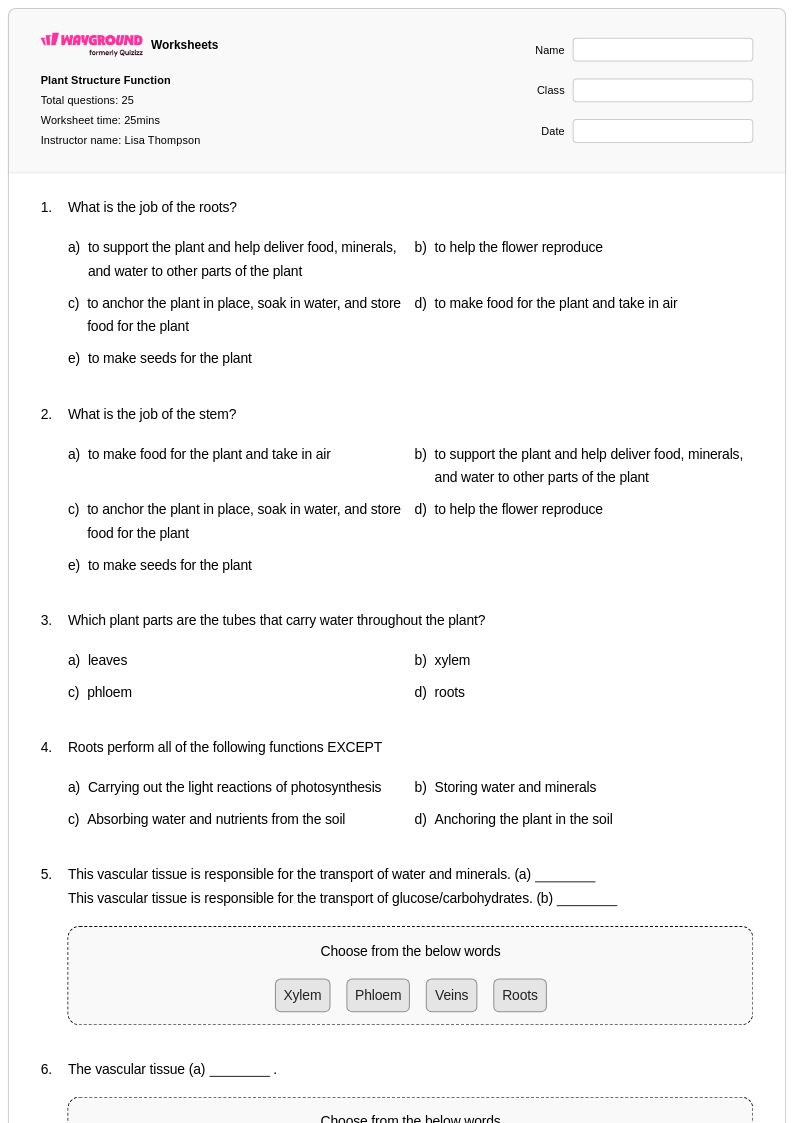
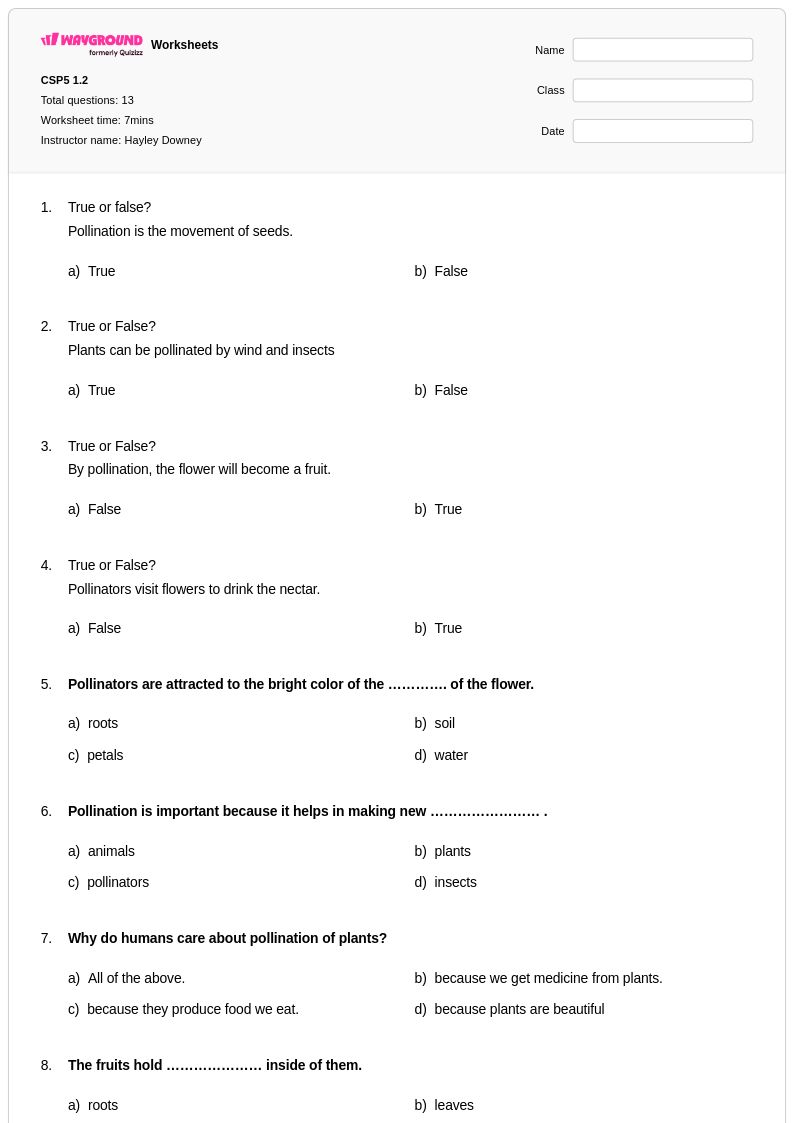
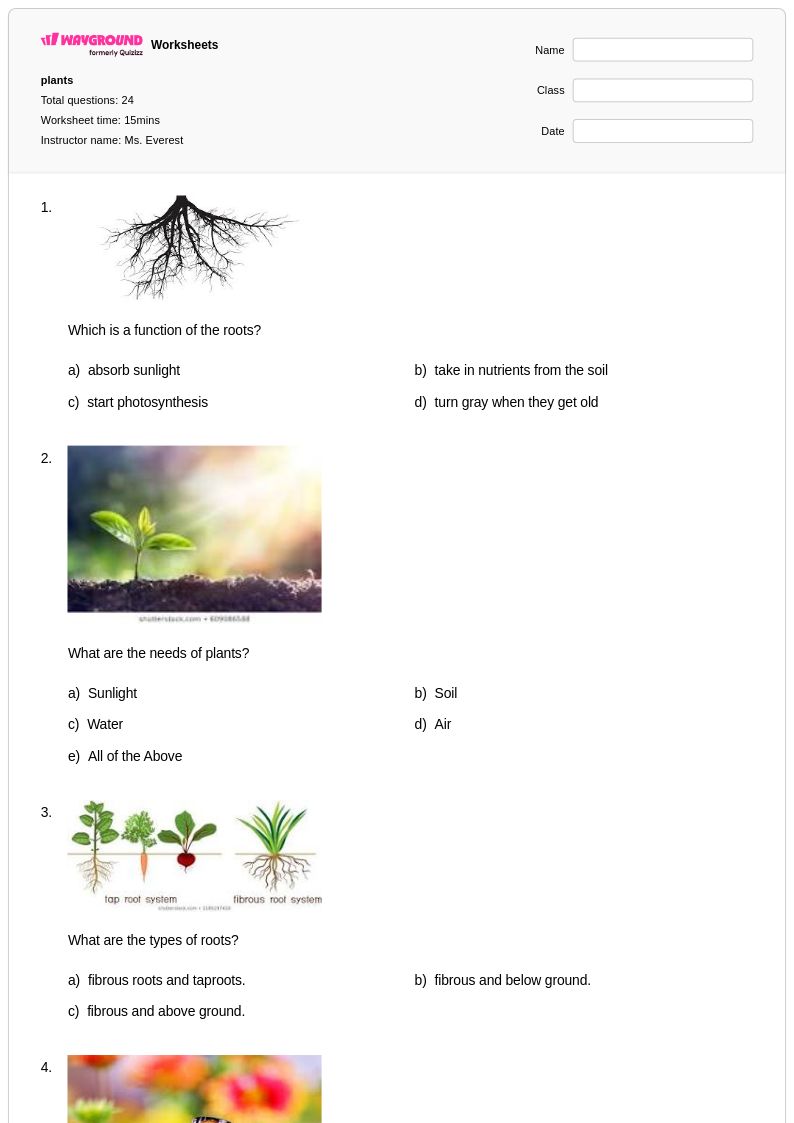
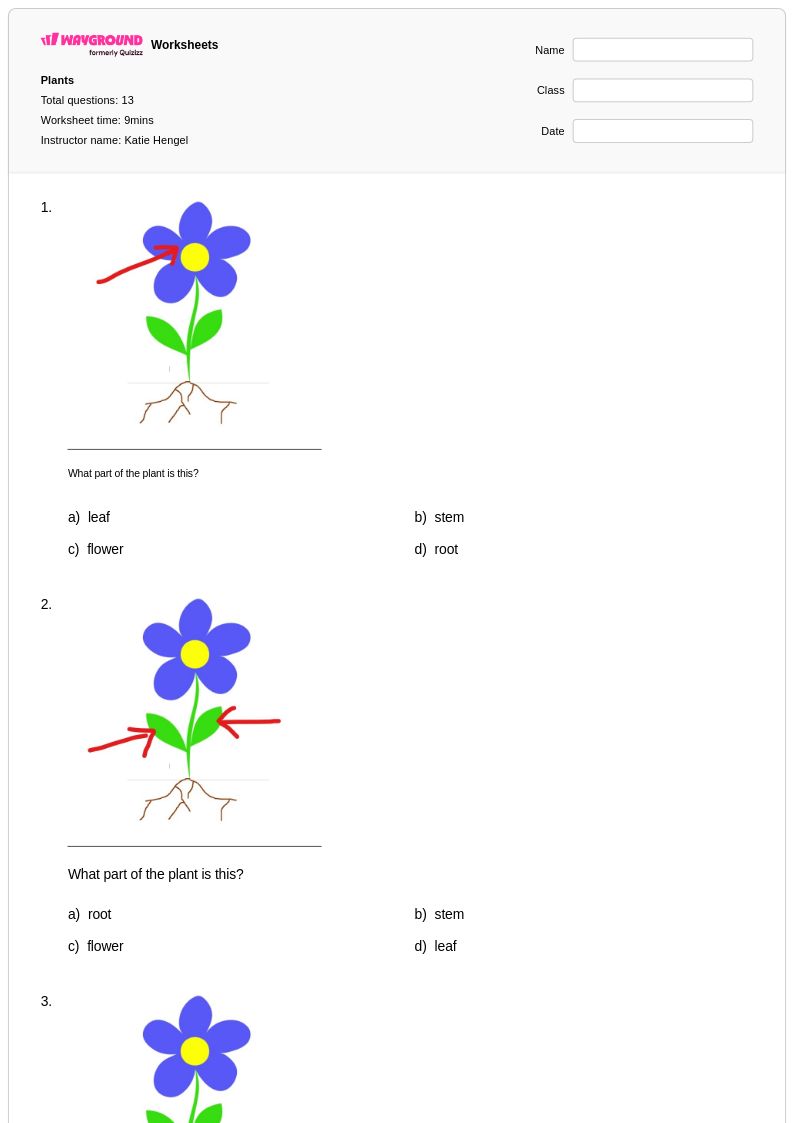
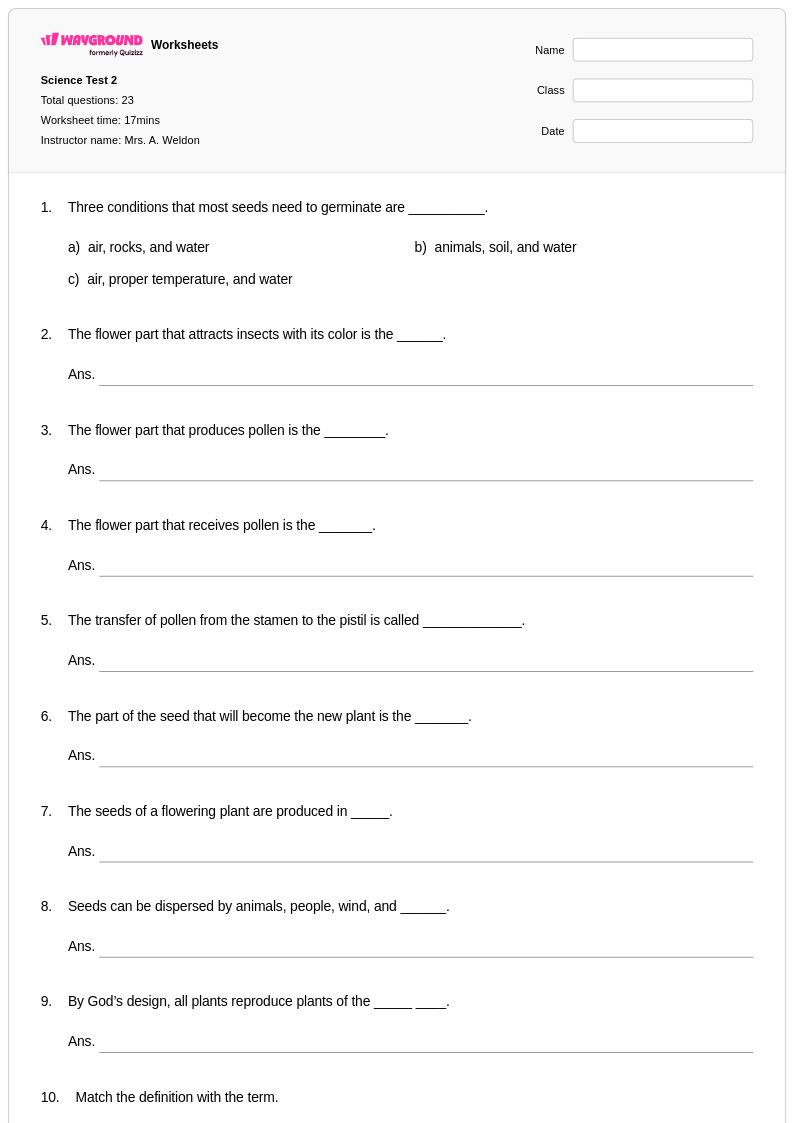
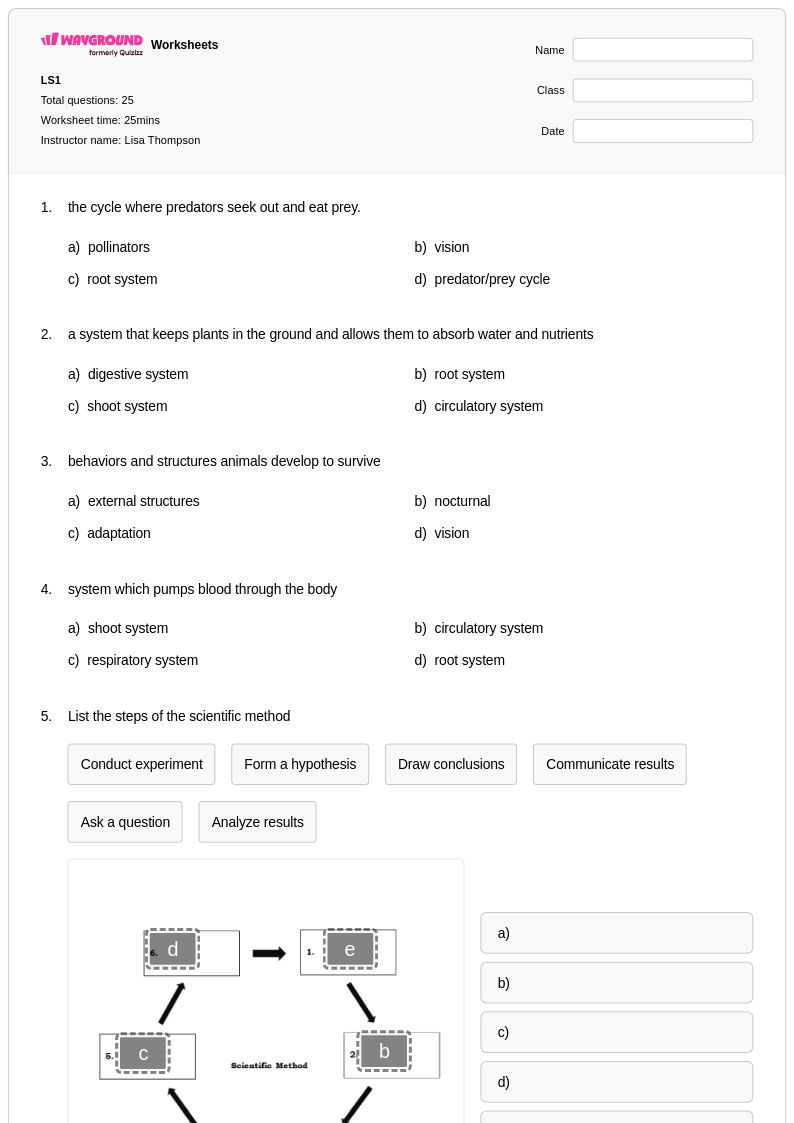
Pollinators worksheets for Year 4 students available through Wayground offer comprehensive educational resources that help young learners understand the vital role these creatures play in our ecosystems. These carefully crafted materials introduce students to various pollinating animals including bees, butterflies, hummingbirds, and bats, while exploring how they transfer pollen between flowers to enable plant reproduction. The worksheets strengthen critical thinking skills through engaging practice problems that challenge students to identify different types of pollinators, match animals to their preferred flowers, and analyze pollination processes. Each resource includes detailed answer keys and is available as free printables in convenient PDF format, making them accessible for both classroom instruction and independent study.
Wayground's extensive collection of pollinator-focused worksheets draws from millions of teacher-created resources, providing educators with robust search and filtering capabilities to locate materials perfectly suited to their Year 4 science curriculum needs. The platform's standards alignment ensures these resources meet educational requirements while offering powerful differentiation tools that allow teachers to customize content for students with varying ability levels. Whether delivered in printable PDF format for hands-on learning or used digitally for interactive engagement, these flexible materials support comprehensive lesson planning and provide targeted practice for skill development. Teachers can efficiently utilize these resources for remediation with struggling learners, enrichment activities for advanced students, or systematic skill practice that reinforces understanding of pollinator relationships and their importance to biodiversity and food production.
FAQs
How do I teach pollinators to students in a way that sticks?
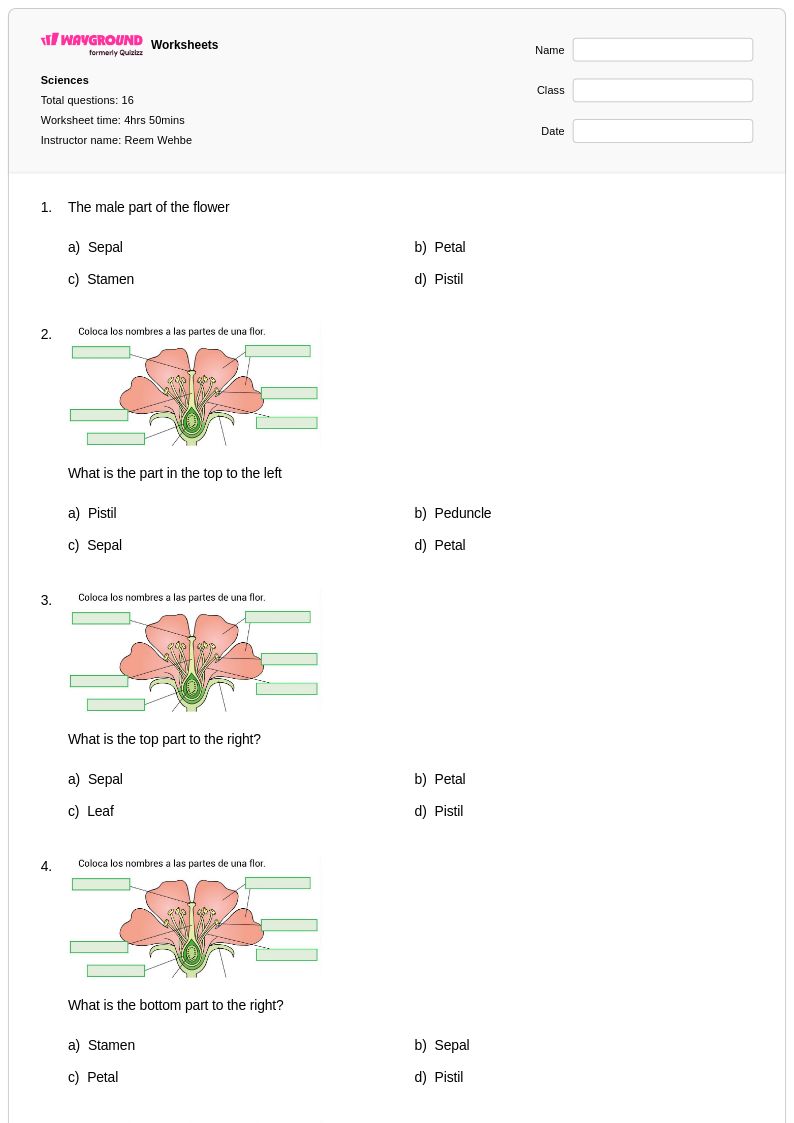
Start with the mutualistic relationship between flowering plants and their animal partners before zooming into specific species like bees, butterflies, and hummingbirds. Use real-world examples such as agricultural dependence on honeybees or the monarch butterfly migration to ground abstract ecological concepts in observable phenomena. Pairing anatomical diagrams of flower structures with behavioral profiles of their specific pollinators helps students see co-evolution as a tangible process rather than a textbook term.
What exercises help students practice understanding pollinator relationships and ecology?
Worksheets that ask students to match pollinator species to flower traits — such as color, scent, and shape — build analytical thinking about adaptation and species interdependence. Scenarios involving pollinator decline and its ripple effects on food systems are especially effective for practicing ecosystem analysis. Practice problems that incorporate real pollination data or conservation case studies push students to apply biology concepts to environmental science contexts.
What misconceptions do students commonly have about pollinators?
A frequent misconception is that bees are the only significant pollinators, which overlooks the critical roles of butterflies, moths, hummingbirds, bats, and even some flies and beetles. Students also often confuse pollination with seed dispersal, conflating two distinct ecological processes. Another common error is assuming pollination is a deliberate act by animals, when it is actually an incidental outcome of animals seeking food — a distinction important for understanding co-evolutionary relationships.
How do I address pollinator decline and conservation in my biology or environmental science class?
Frame pollinator decline as a systems problem: habitat loss, pesticide use, disease, and climate change each disrupt different parts of the pollinator lifecycle, and their combined effects are what drive population crashes. Students benefit from examining the agricultural consequences of pollinator loss first, as the economic and food security angle makes the stakes concrete before moving into conservation strategies. Activities that ask students to evaluate habitat restoration or reduced pesticide plans build both scientific reasoning and environmental literacy.
How do I use Wayground's pollinators worksheets in my classroom?
Wayground's pollinators worksheets are available as free printable PDFs for traditional classroom use and in digital formats for technology-integrated environments, so they fit easily into both paper-based and device-supported lessons. Teachers can also host them as interactive quizzes directly on the Wayground platform, which enables real-time feedback and session-level tracking. The resources span topics from basic flower anatomy to complex ecological network analysis, making them usable for initial instruction, targeted remediation, or enrichment depending on where students are in their learning.
How can I differentiate pollinator lessons for students at different skill levels?
For students who are earlier in their understanding, focus on the basic mechanics of pollination — what pollen is, how it transfers, and why plants need it — before introducing species-specific adaptations. More advanced students can engage with co-evolution, pollinator decline data, and conservation policy analysis. On Wayground, teachers can apply differentiation tools such as reduced answer choices or read-aloud settings to individual students, ensuring all learners can access pollinator content at an appropriate level of challenge without singling anyone out.