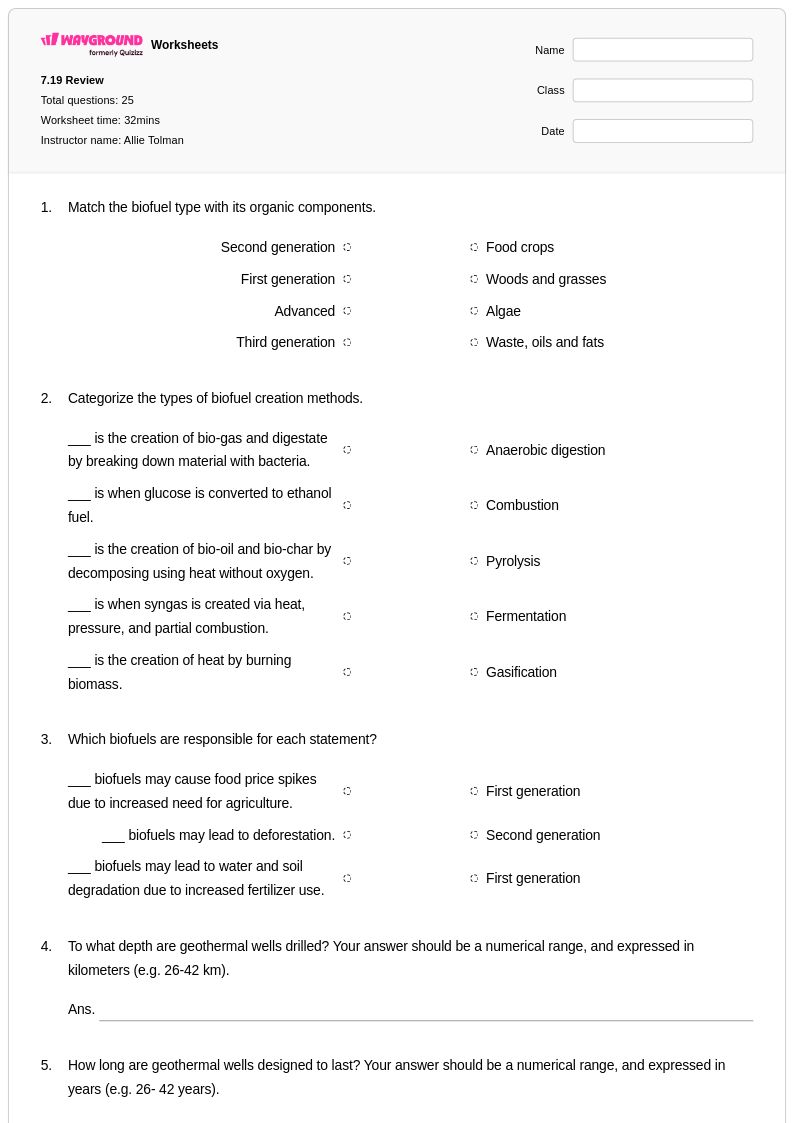
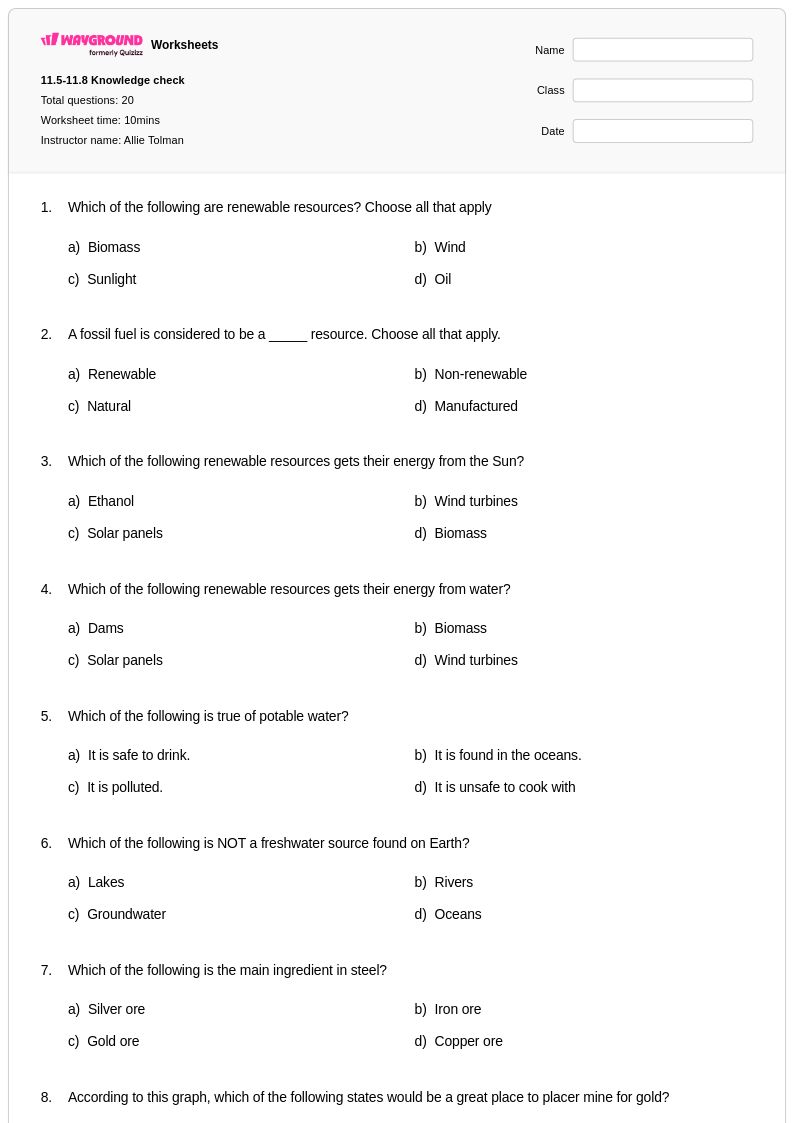
Master Year 12 physics power concepts with Wayground's comprehensive collection of free worksheets, printables, and practice problems featuring detailed answer keys to strengthen your understanding of work, energy, and power calculations.
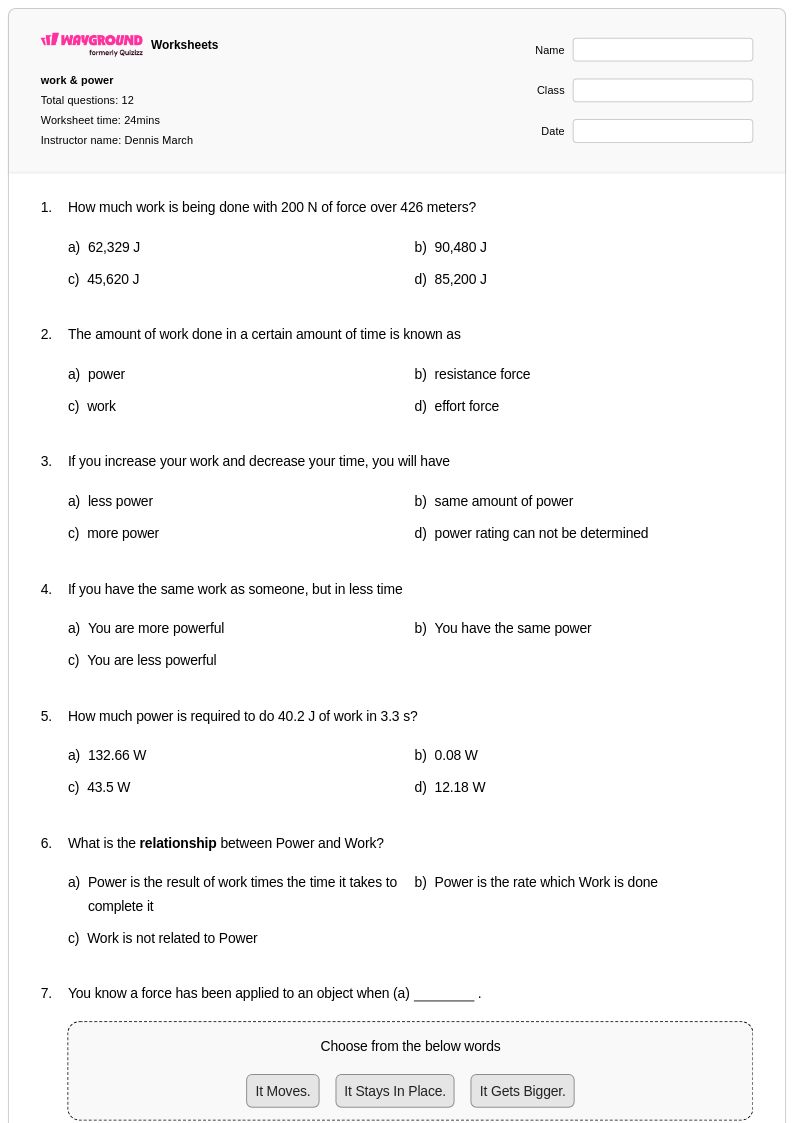
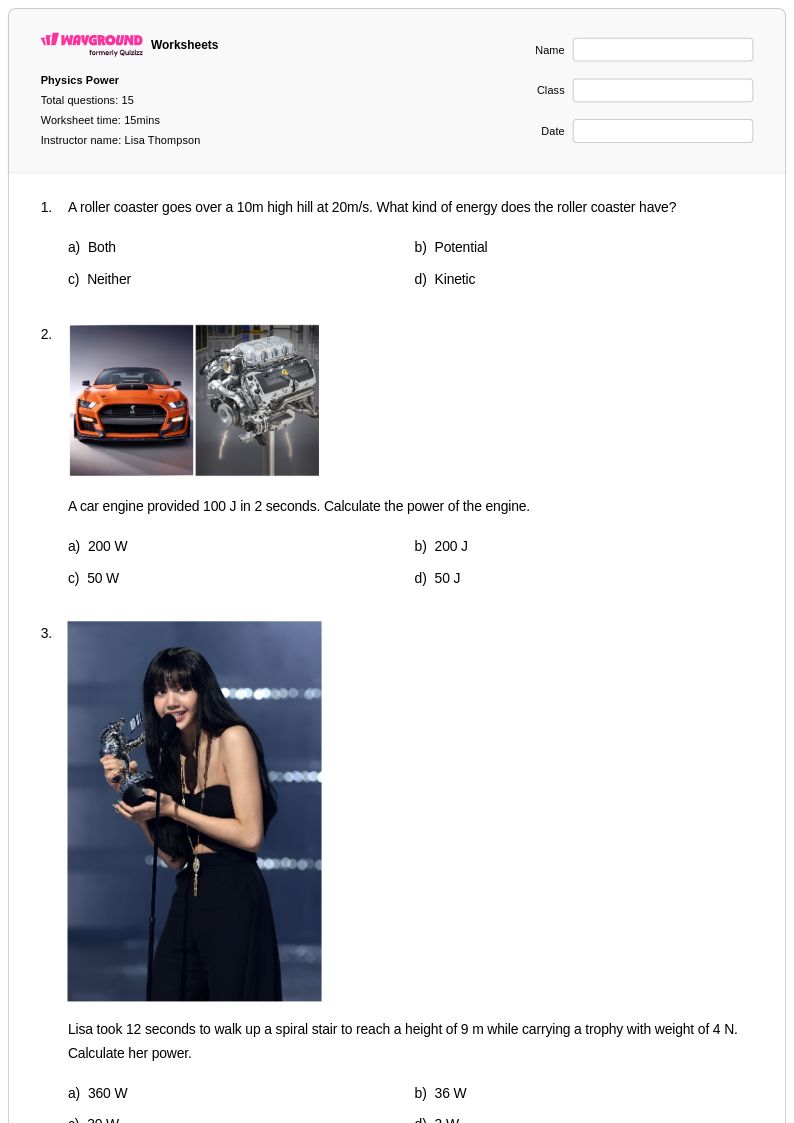
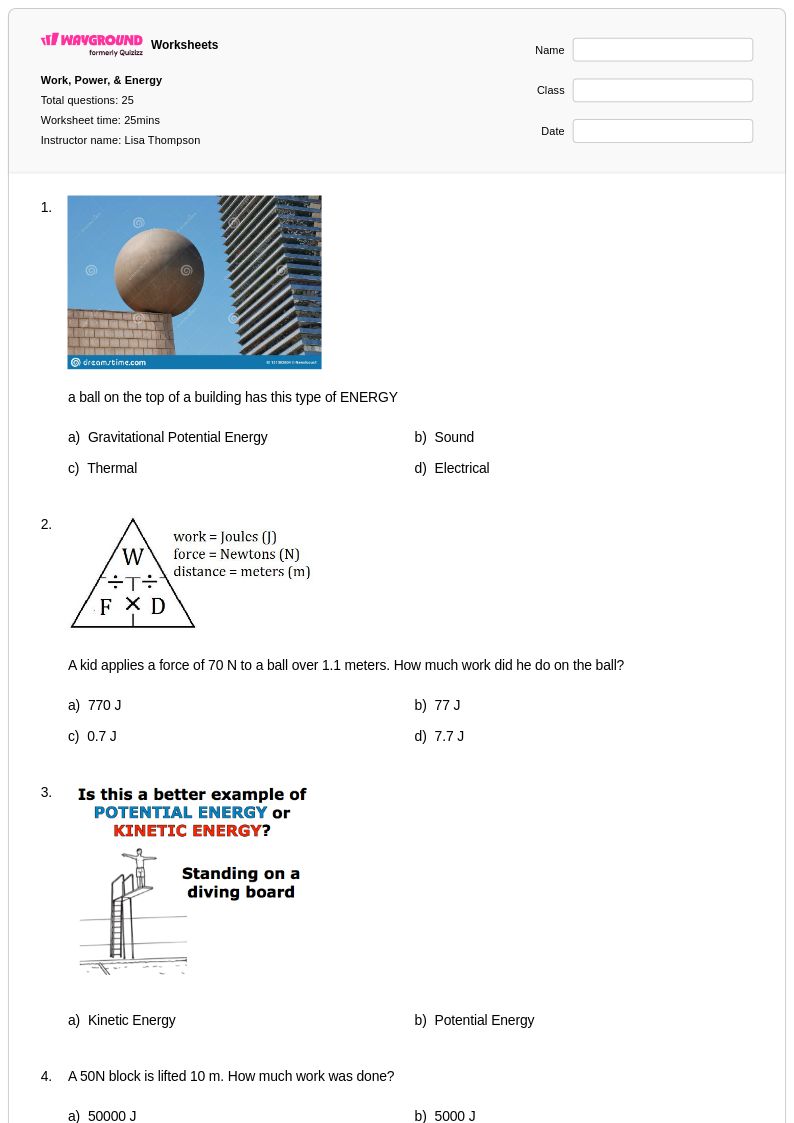
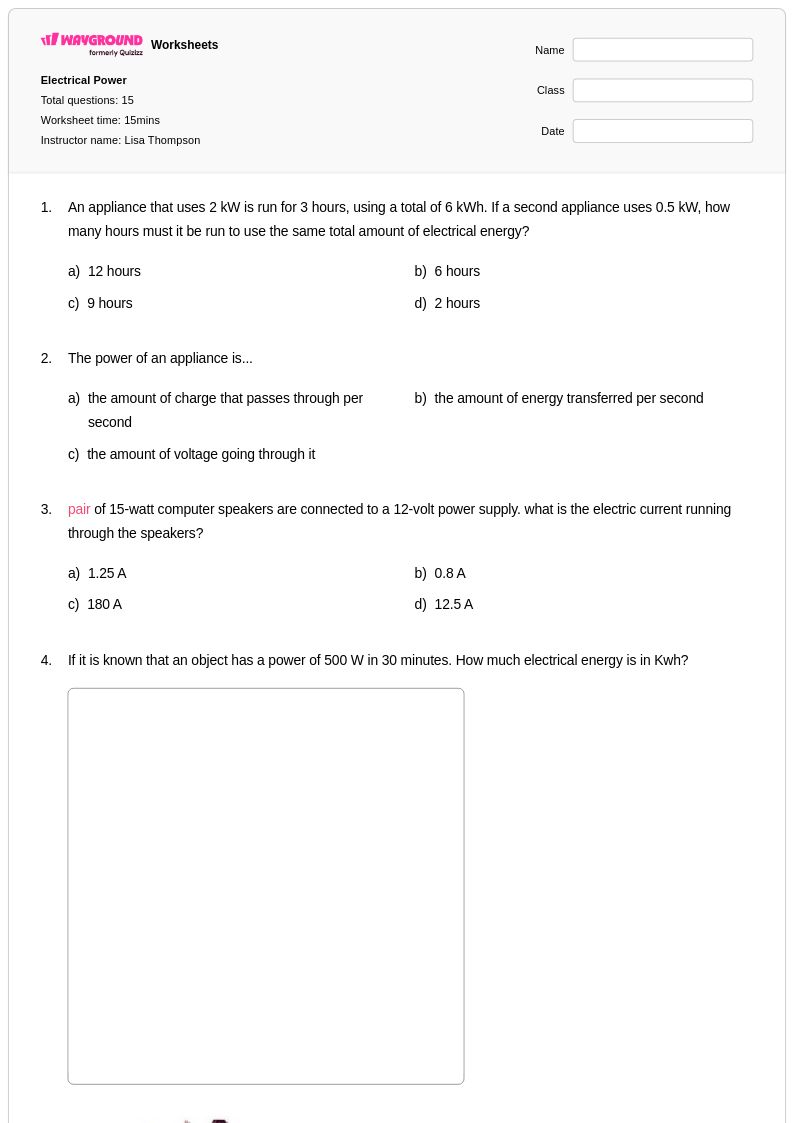
Power worksheets for Year 12 physics available through Wayground provide comprehensive practice problems that help students master this fundamental concept in mechanics and electricity. These carefully designed resources strengthen critical skills including calculating mechanical power using work and time relationships, analyzing electrical power in circuits through voltage and current measurements, and understanding power transfer efficiency in various physical systems. Students work through diverse problem sets that cover power equations, unit conversions between watts and horsepower, and real-world applications ranging from automotive engines to household appliances. Each worksheet collection includes detailed answer keys and step-by-step solutions, with free printable pdf formats that make these resources accessible for both classroom instruction and independent study sessions.
Wayground's extensive collection draws from millions of teacher-created resources, offering educators powerful search and filtering capabilities to locate Year 12 power worksheets that align with specific curriculum standards and learning objectives. Teachers can easily differentiate instruction by accessing worksheets at varying complexity levels, from introductory power calculations to advanced problems involving rotational power and three-phase electrical systems. The platform's flexible customization tools allow educators to modify existing worksheets or combine multiple resources to create targeted practice sets for remediation or enrichment purposes. Whether delivered in traditional printable formats or through digital pdf distribution, these power worksheets support comprehensive lesson planning while providing students with the repetitive practice necessary to build confidence in solving complex physics problems involving energy transfer rates and mechanical efficiency calculations.
FAQs
How do I teach power in physics to students who already understand work and energy?
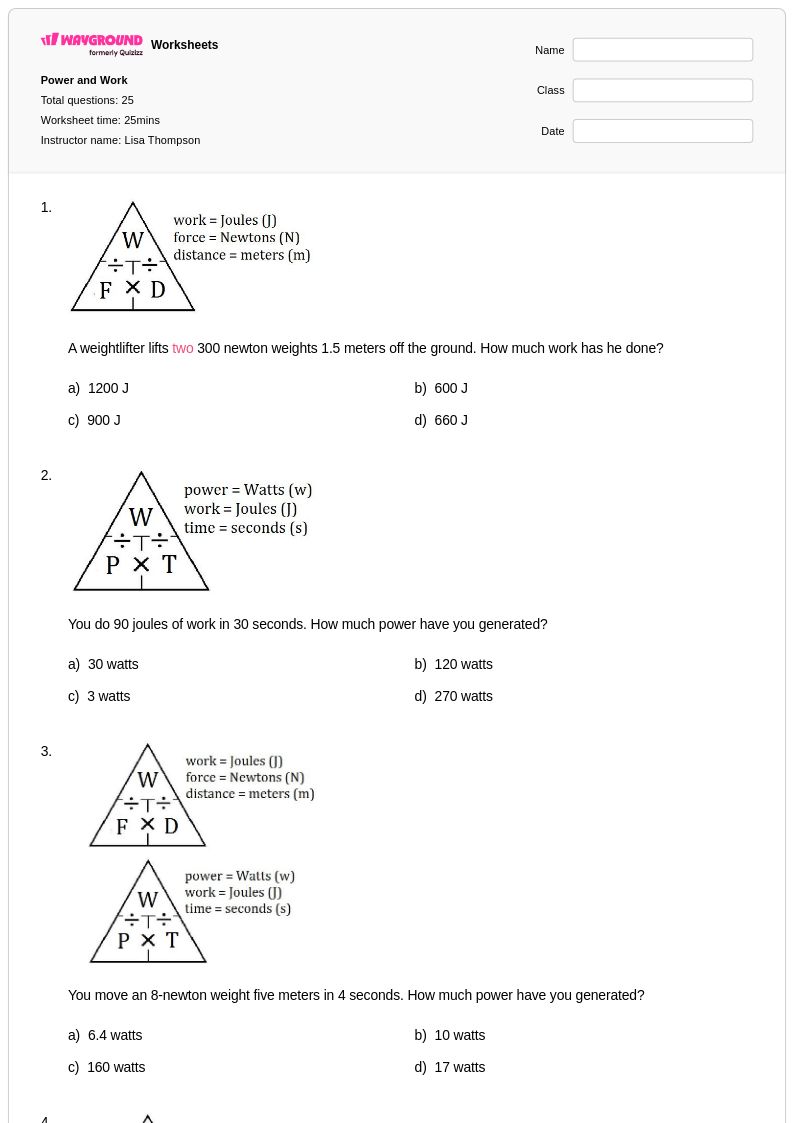
Power is best introduced as the rate at which work is done or energy is transferred, expressed as P = W/t or P = E/t. Once students are comfortable with work and energy calculations, connect those concepts directly to power by comparing scenarios where the same amount of work is done in different time frames. This helps students see that power is not about how much work is done, but how quickly it happens. Using real-world examples like motors, light bulbs, and athletes performing tasks reinforces this distinction effectively.
What exercises help students practice power calculations in physics?
Effective practice problems for power should span mechanical, electrical, and thermal contexts so students learn to apply the same core equations across different scenarios. Start with straightforward P = W/t problems, then progress to problems involving unit conversions, efficiency losses, and energy consumption over time. Problems that require students to solve for different variables — time, work, or power — build computational fluency and prevent over-reliance on formula memorization. Wayground's power worksheets include structured practice problems that progress from basic calculations to complex multi-step scenarios involving efficiency and energy transformations.
What are the most common mistakes students make when solving power problems?
The most frequent error is confusing power with energy or work — students often treat them as interchangeable without recognizing that power is a rate. Another common mistake is unit inconsistency, such as mixing joules with kilowatt-hours or seconds with hours without converting. Students also frequently struggle with efficiency problems, incorrectly applying 100% of input power as useful output. Addressing these misconceptions explicitly during instruction, and using varied problem types that force students to identify what is given and what is being asked, significantly reduces these errors.
How do I differentiate power worksheets for students at different skill levels?
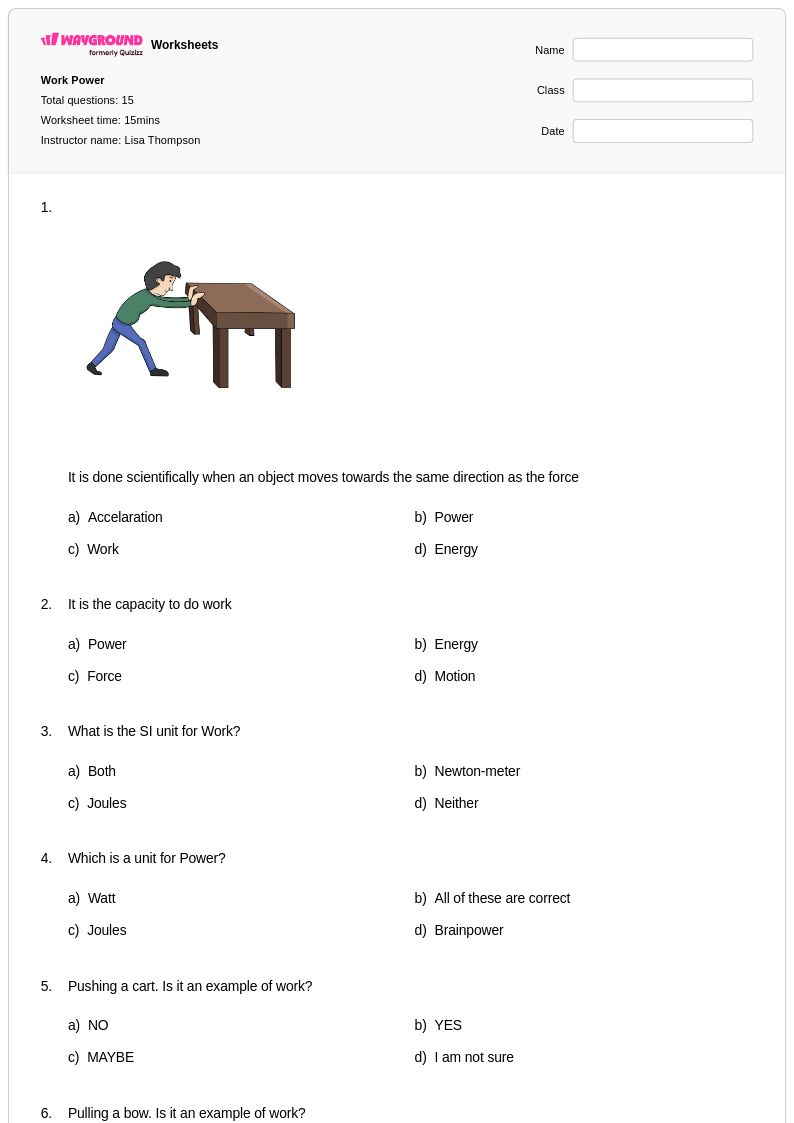
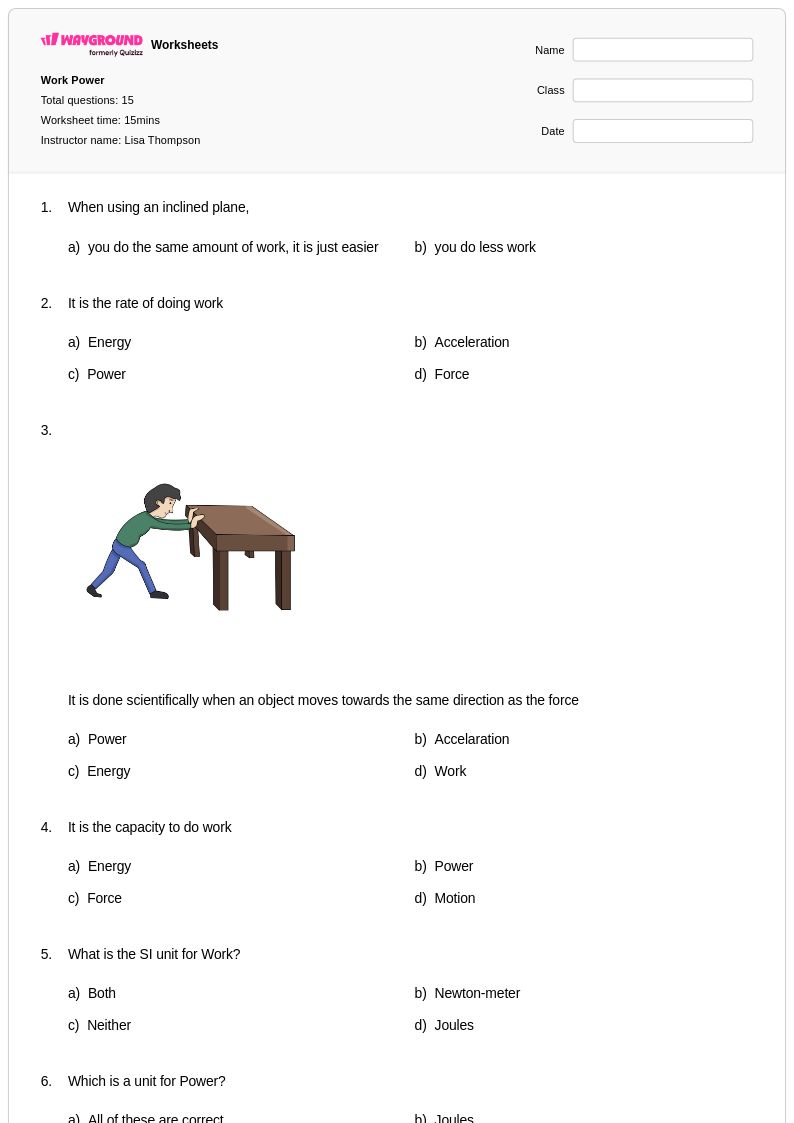
For struggling students, begin with single-step problems using familiar contexts like pushing an object or turning on a light bulb, and provide formula reference sheets. For on-level students, include multi-step problems that require unit conversion alongside the core calculation. Advanced students benefit from problems involving efficiency, power consumption over time, and real-world engineering contexts like comparing appliance energy costs. On Wayground, teachers can apply accommodations such as reduced answer choices or read-aloud support to individual students, allowing the same worksheet to serve a full range of learners simultaneously.
How do I use Wayground's power worksheets in my classroom?
Wayground's power worksheets are available as printable PDFs for traditional classroom use and in digital formats for technology-integrated learning environments, giving teachers flexibility in how they assign and deliver content. Teachers can also host worksheets as a live or assigned quiz directly on Wayground, making it easy to collect student responses and track performance. Each worksheet includes a complete answer key, supporting both teacher-led review and independent student self-assessment. The digital format is especially useful for remote or hybrid settings where students need accessible, structured physics practice.
How do electrical power calculations differ from mechanical power, and how should I teach both?
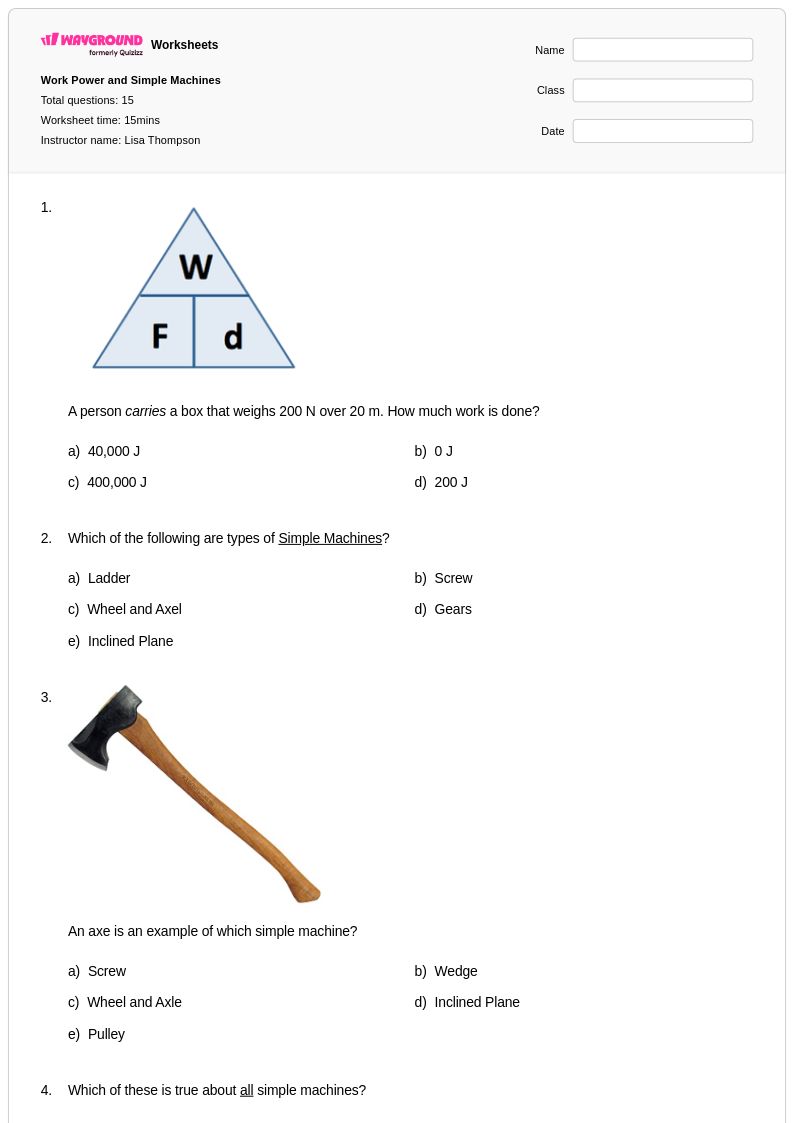
Mechanical power uses P = W/t, where work is a force applied over a distance, while electrical power uses P = IV (current multiplied by voltage) or equivalent forms like P = I²R. Both express the same underlying concept — rate of energy transfer — but draw on different variables and contexts. Teaching both in sequence, after establishing the core definition of power, helps students see the unifying principle rather than treating them as separate topics. Side-by-side problem sets that use both formulas in similar formats are particularly effective for reinforcing this connection.