Free Printable Precipitation Worksheets for Year 3
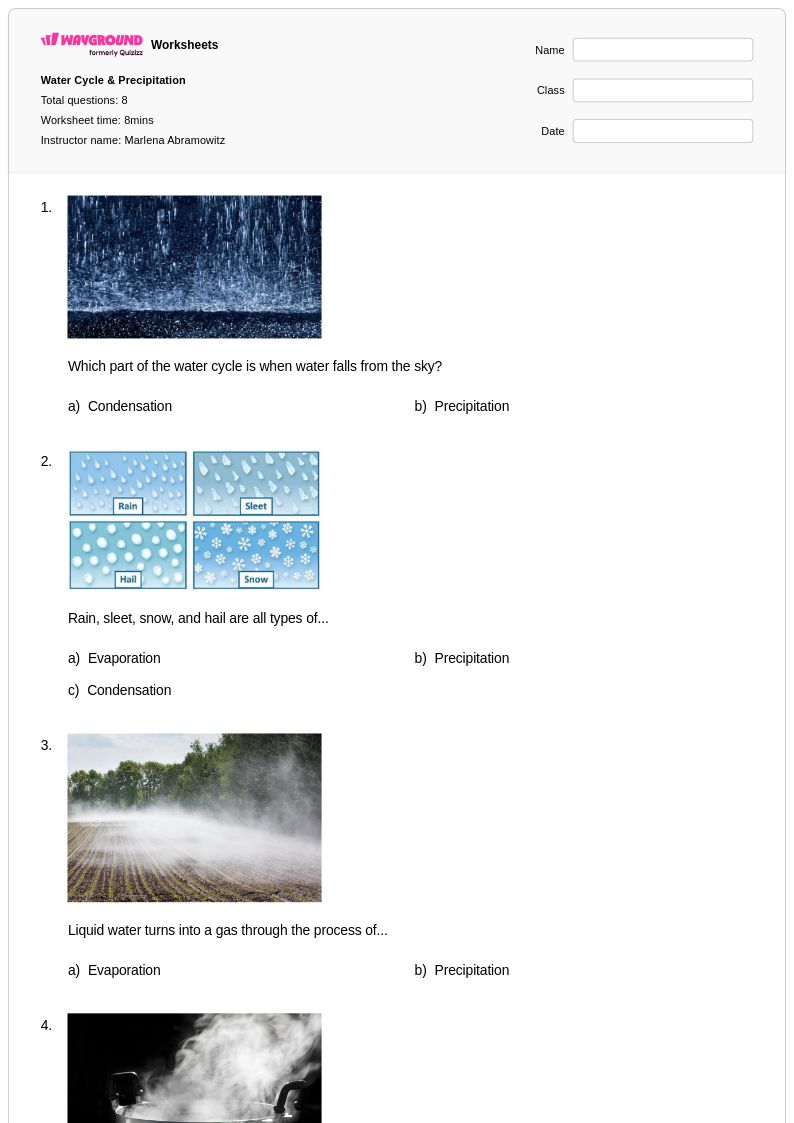
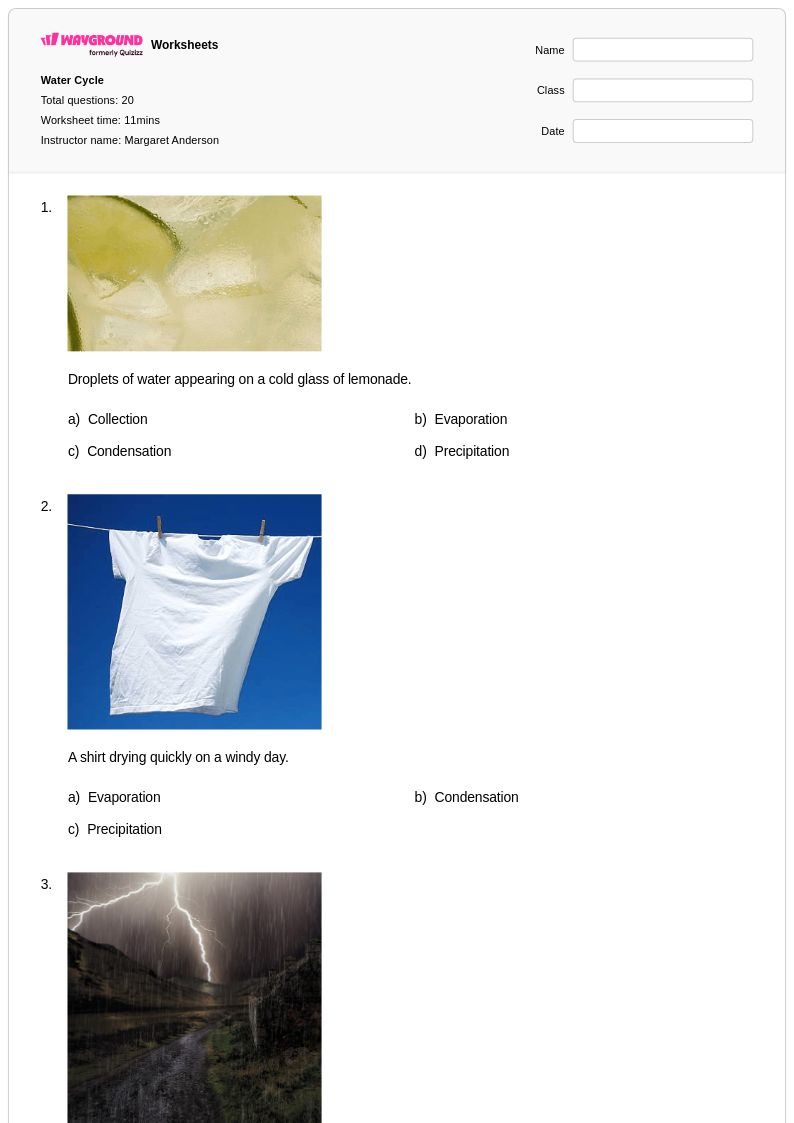
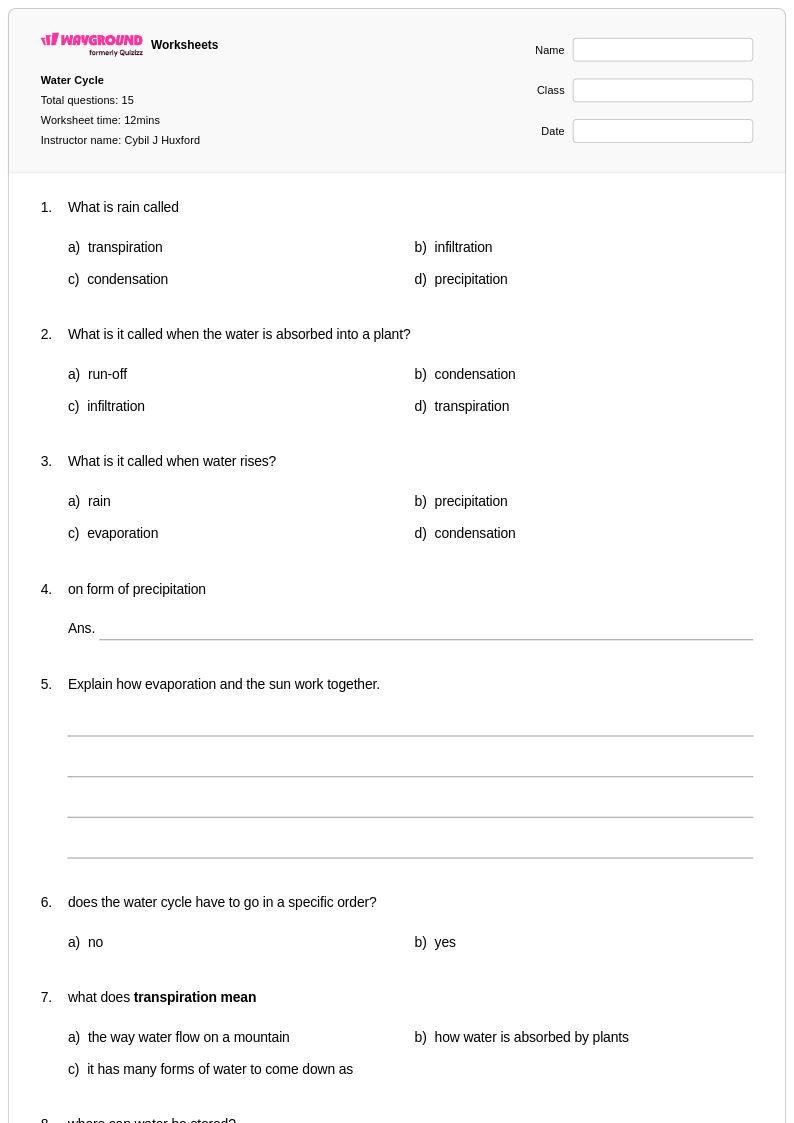
Explore Wayground's free Year 3 precipitation worksheets and printables that help students understand rain, snow, sleet, and hail through engaging practice problems, activities, and comprehensive answer keys in downloadable PDF format.
Explore printable Precipitation worksheets for Year 3
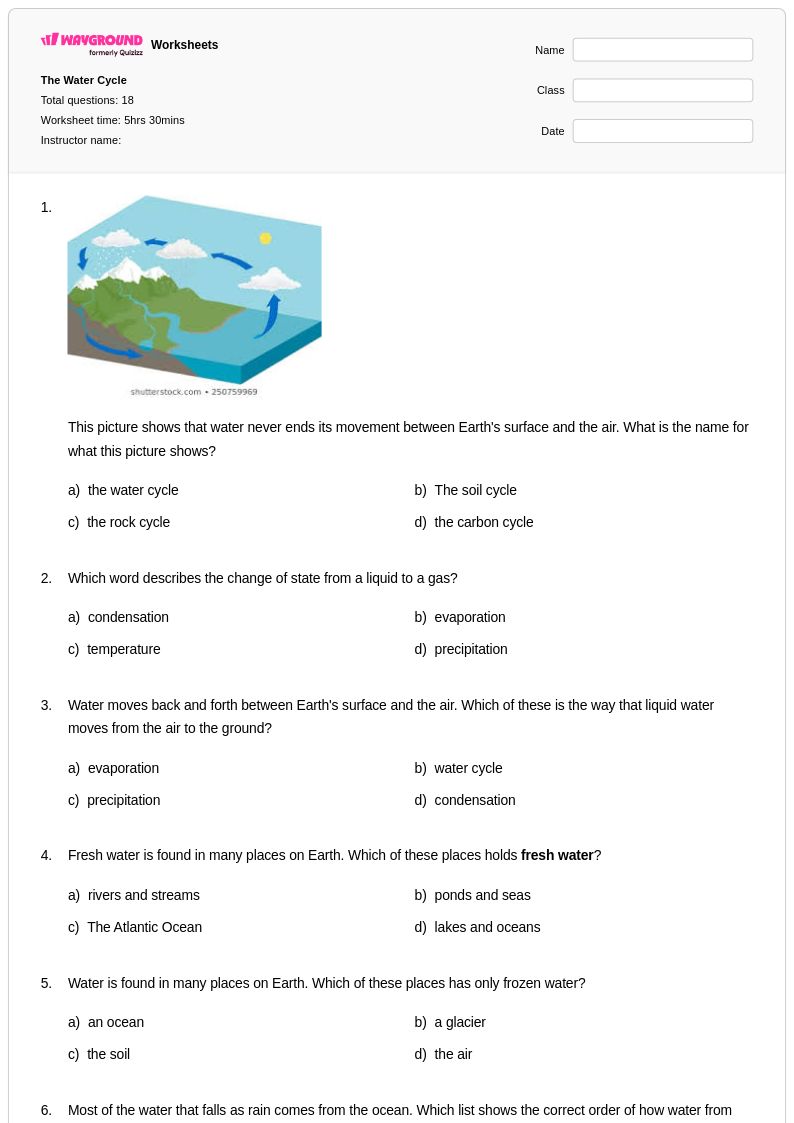
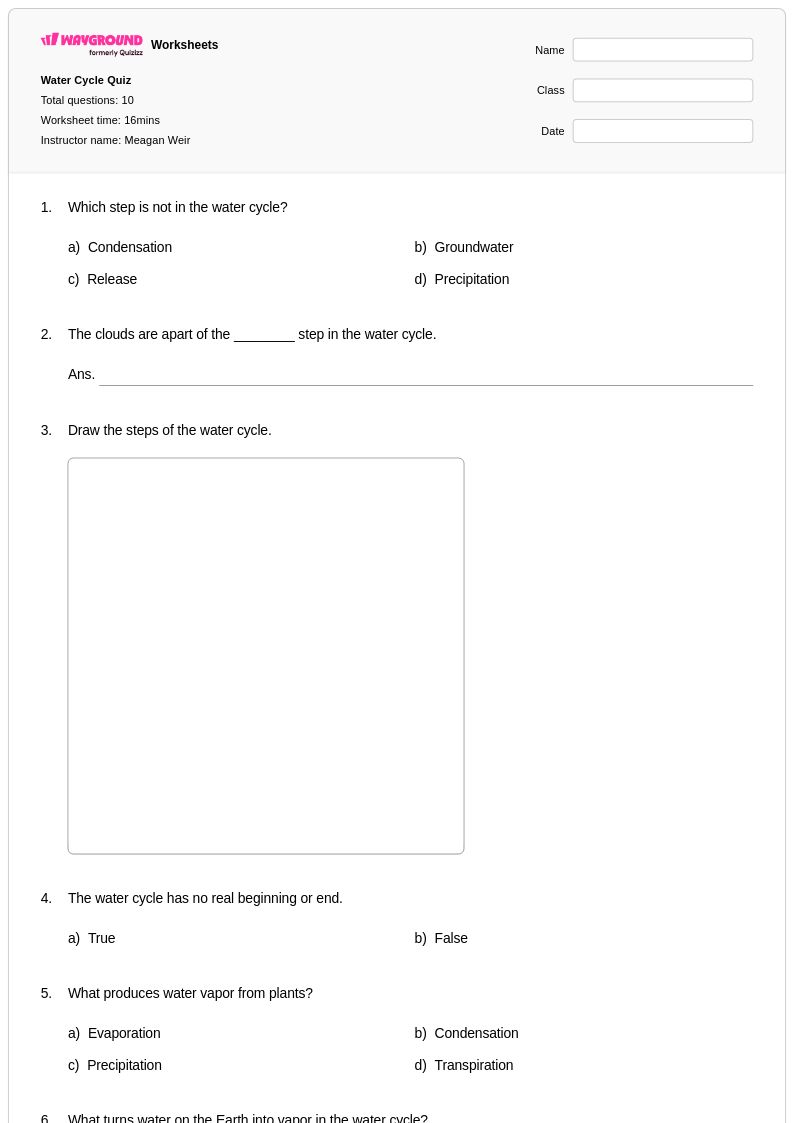
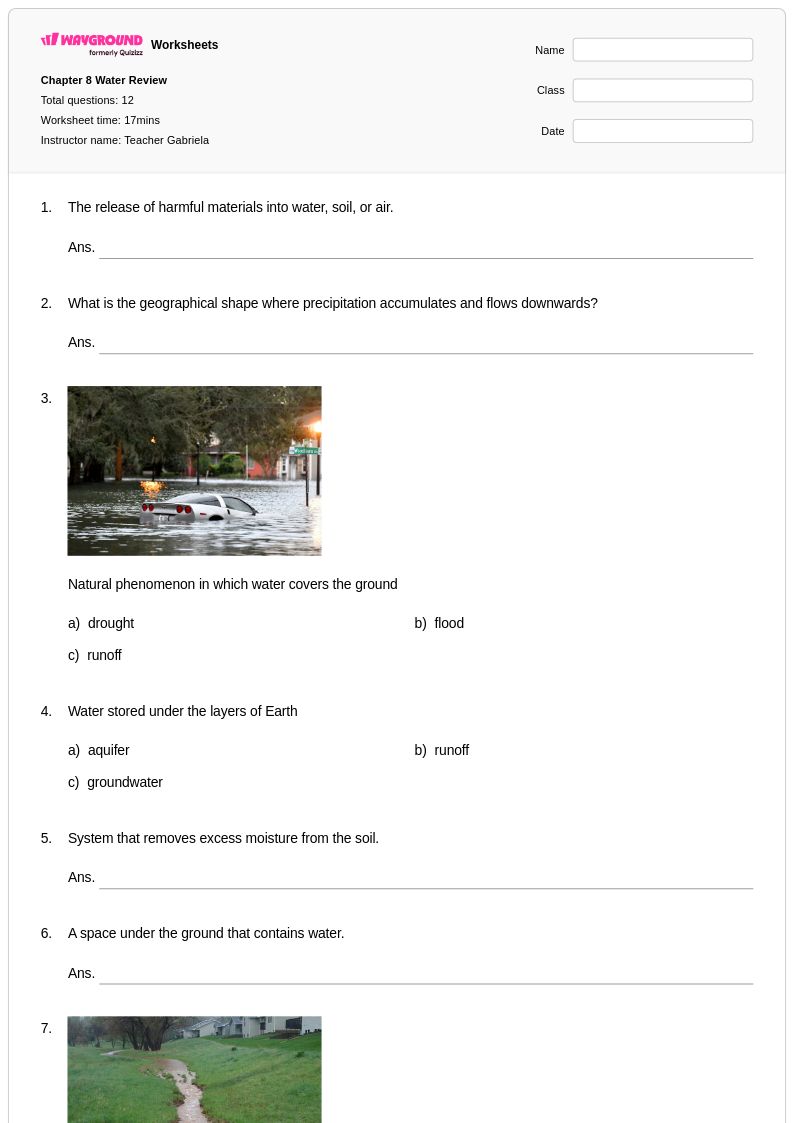
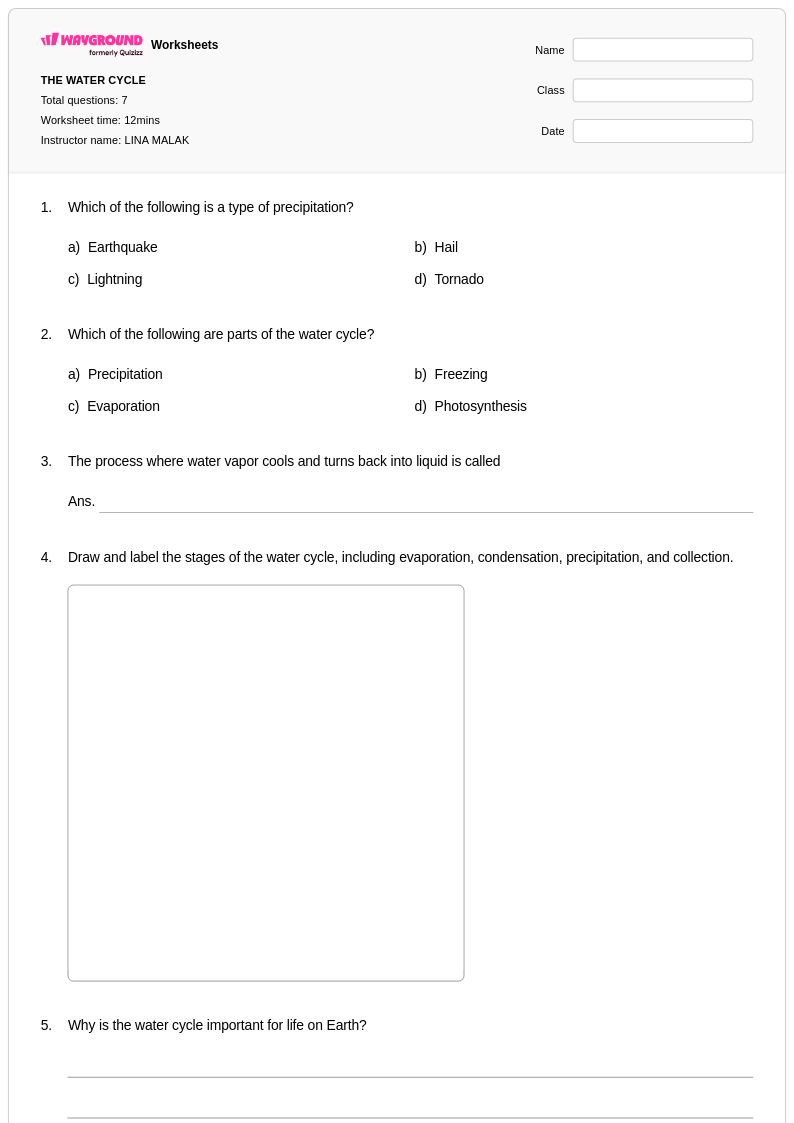
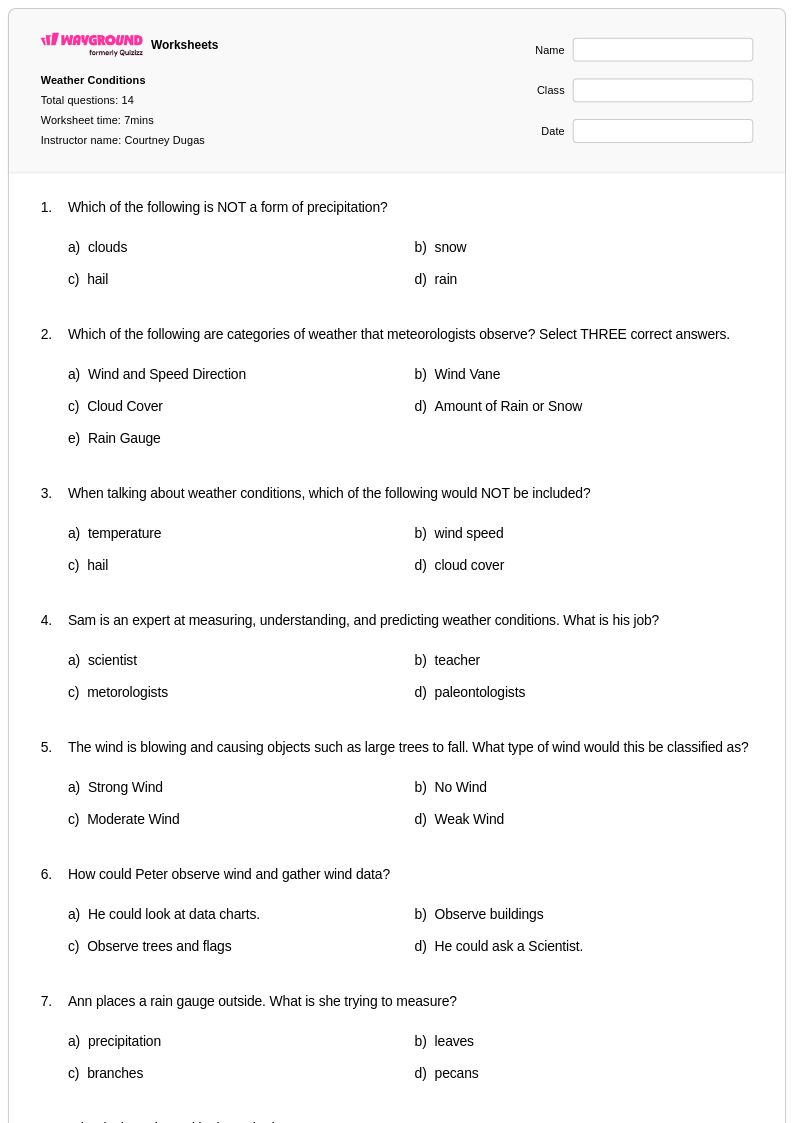
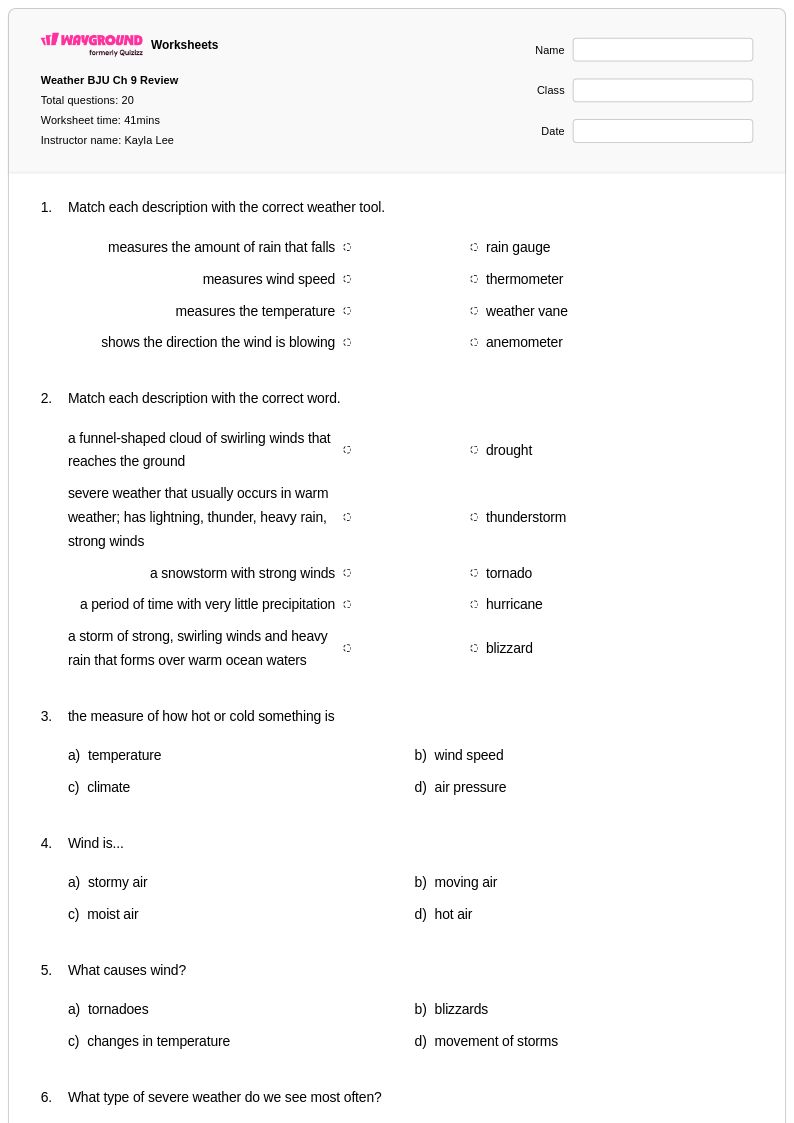
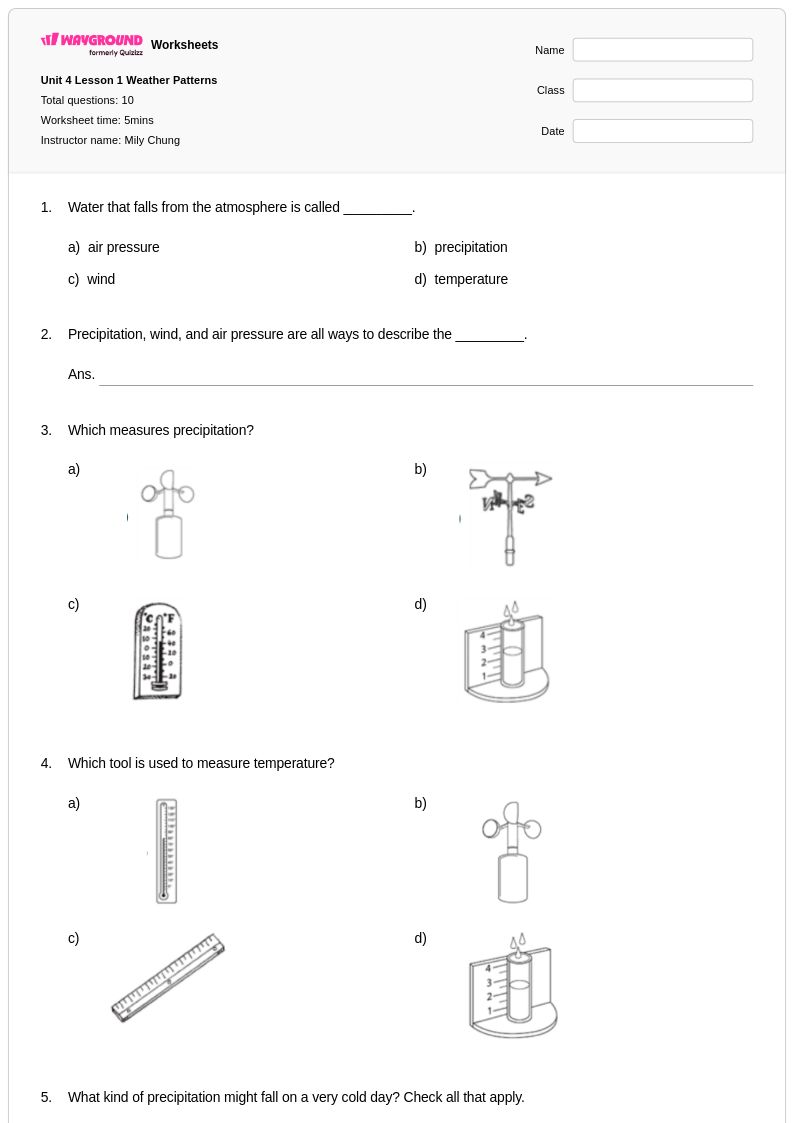
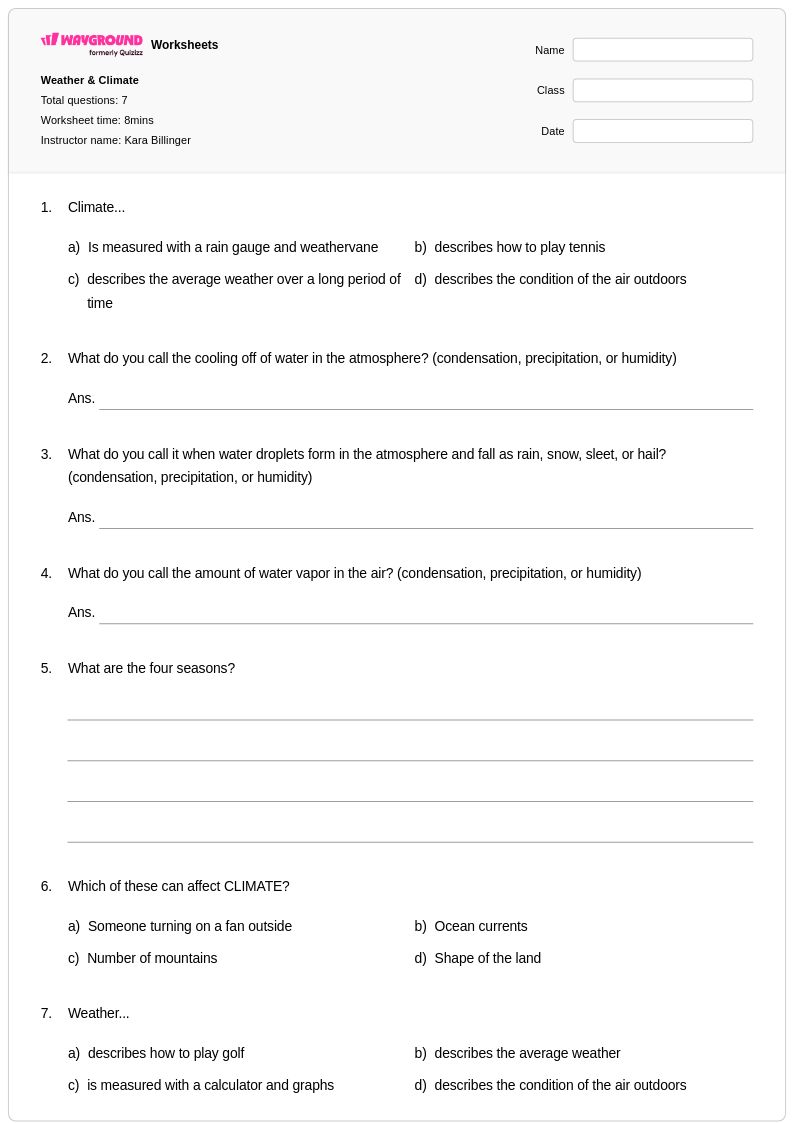
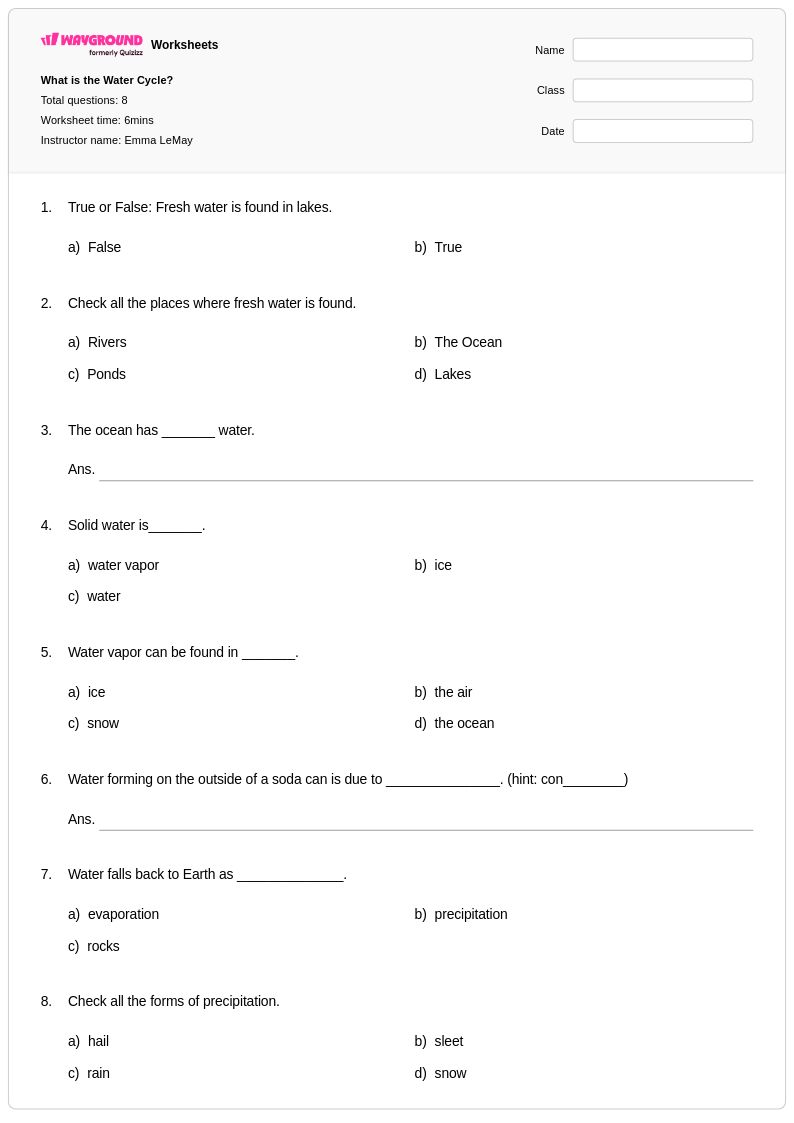
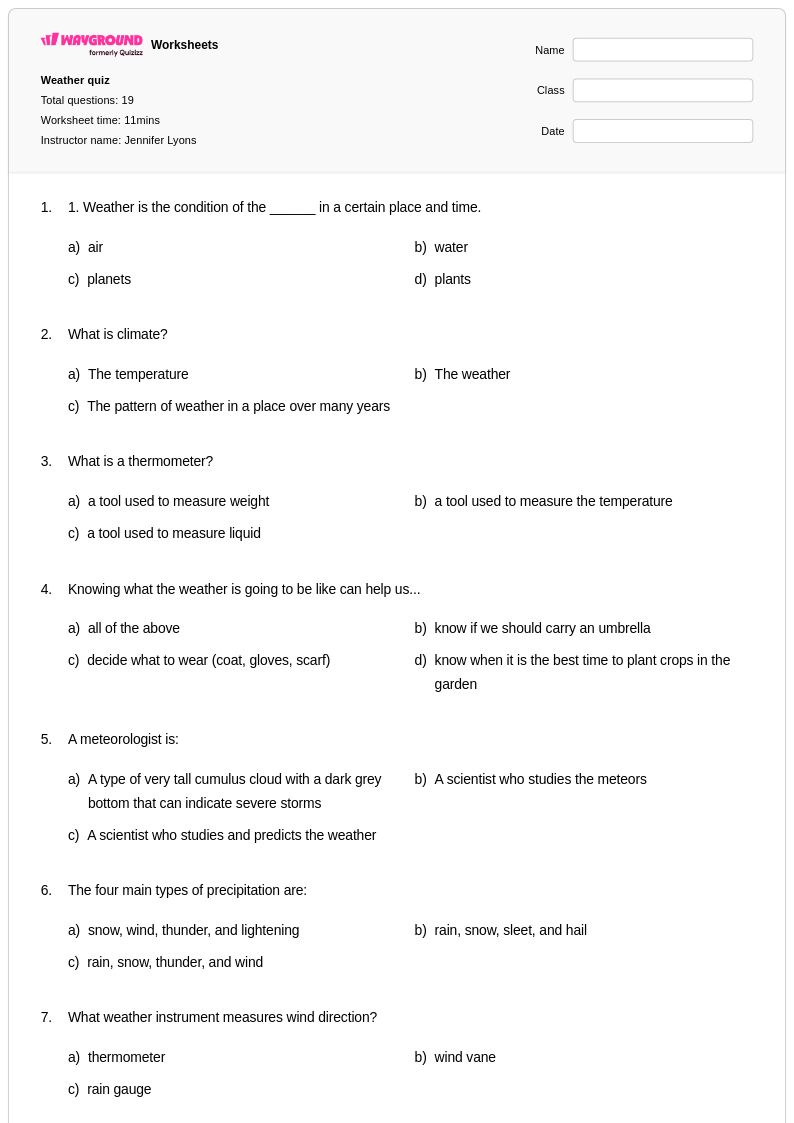
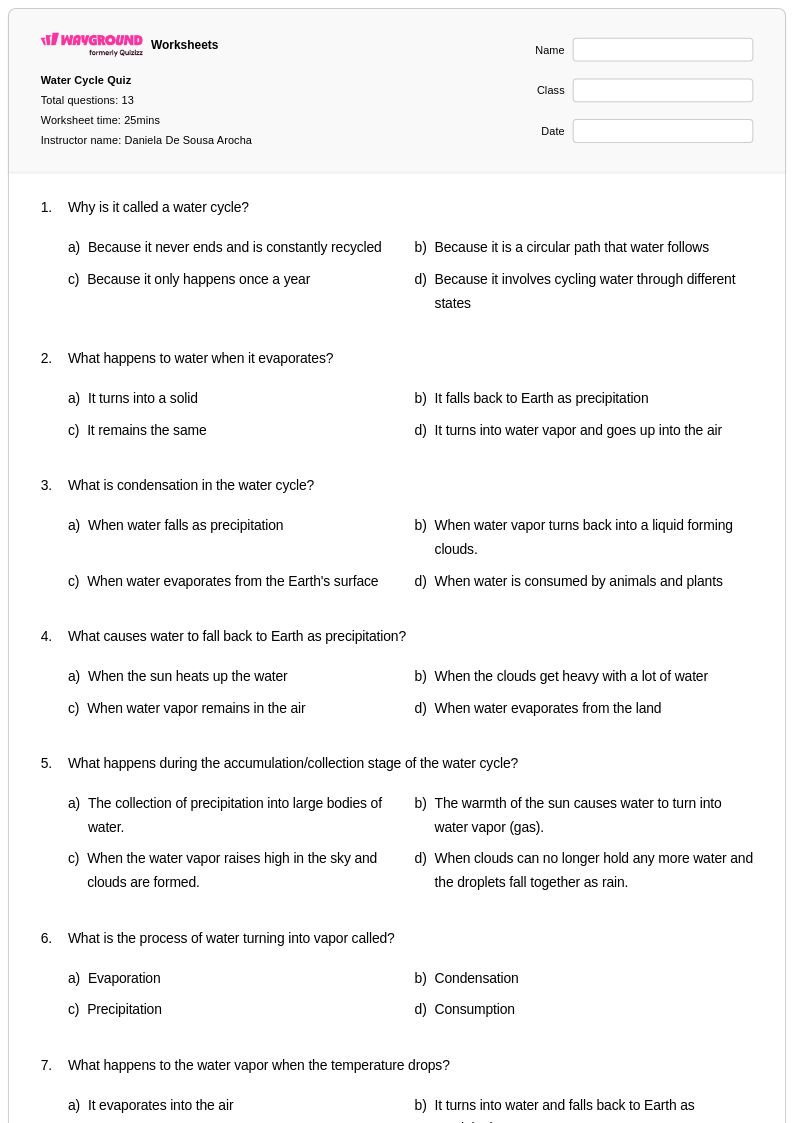
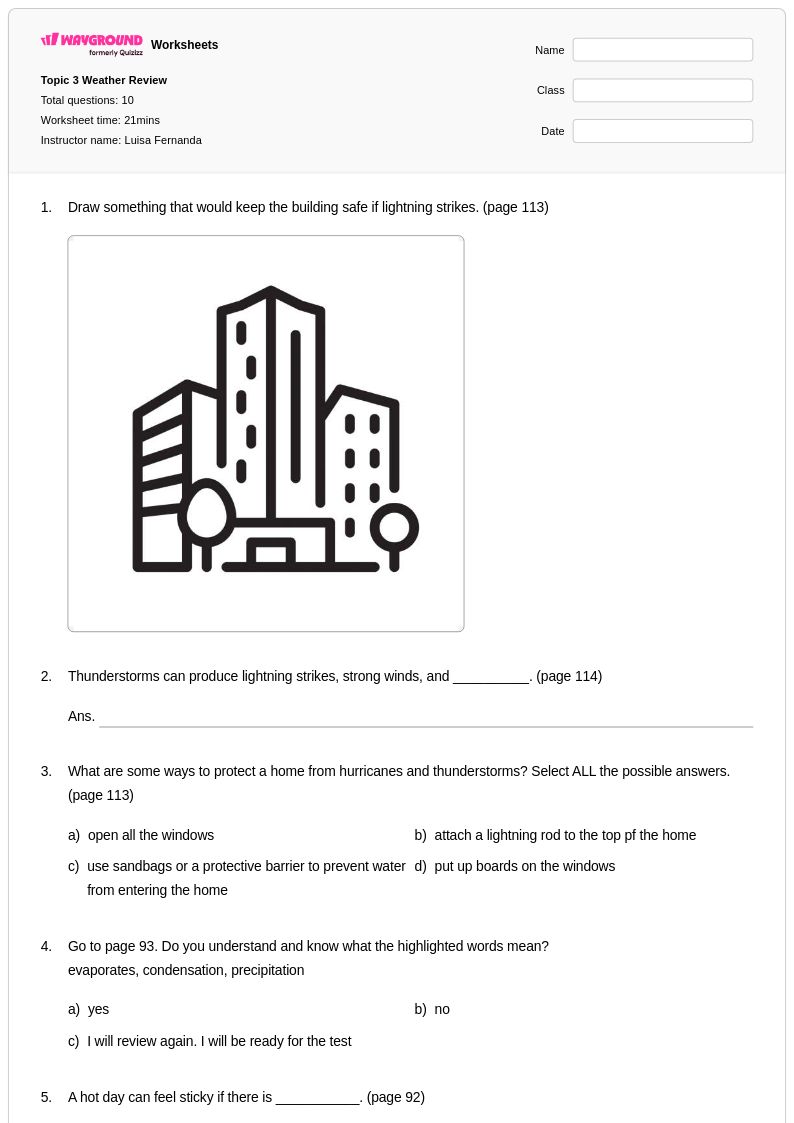
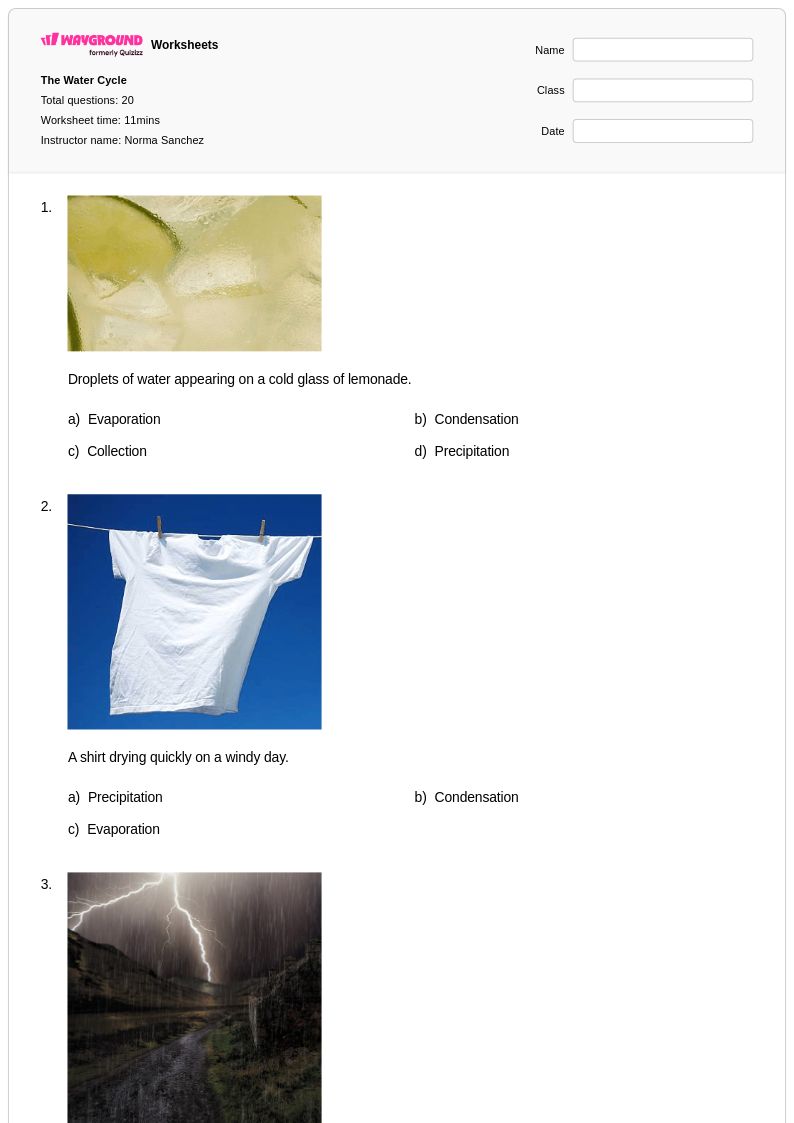
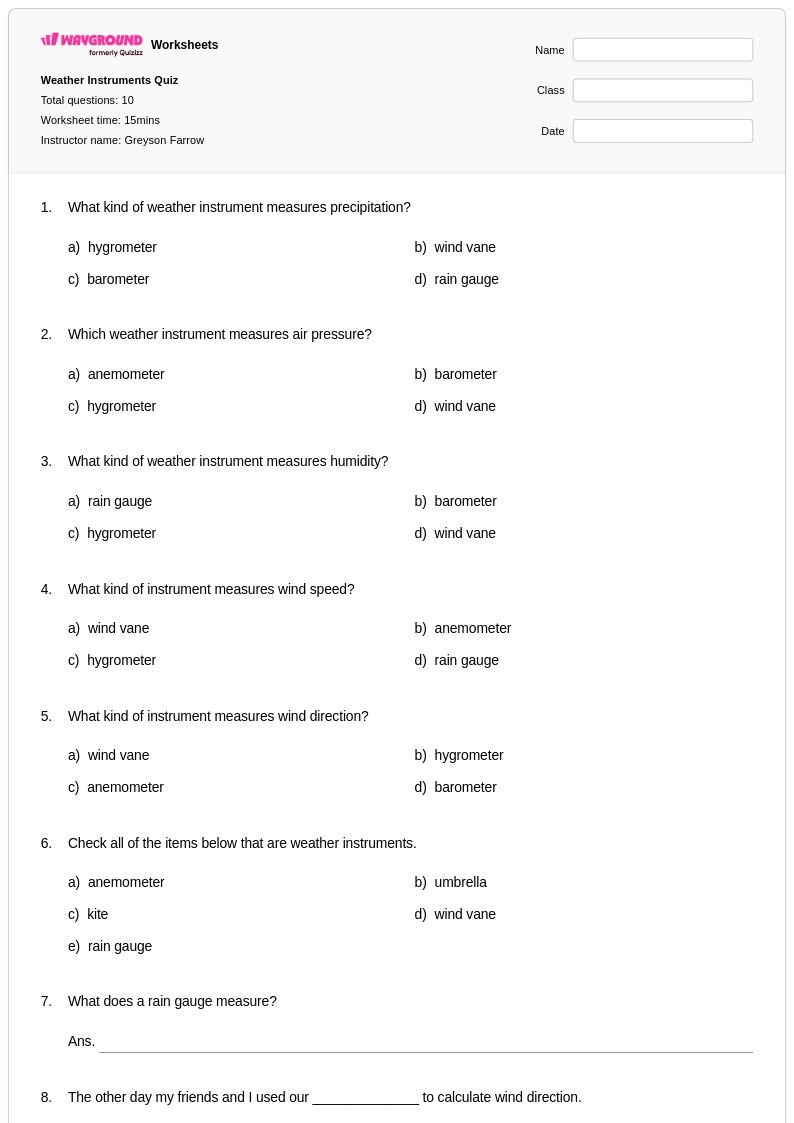
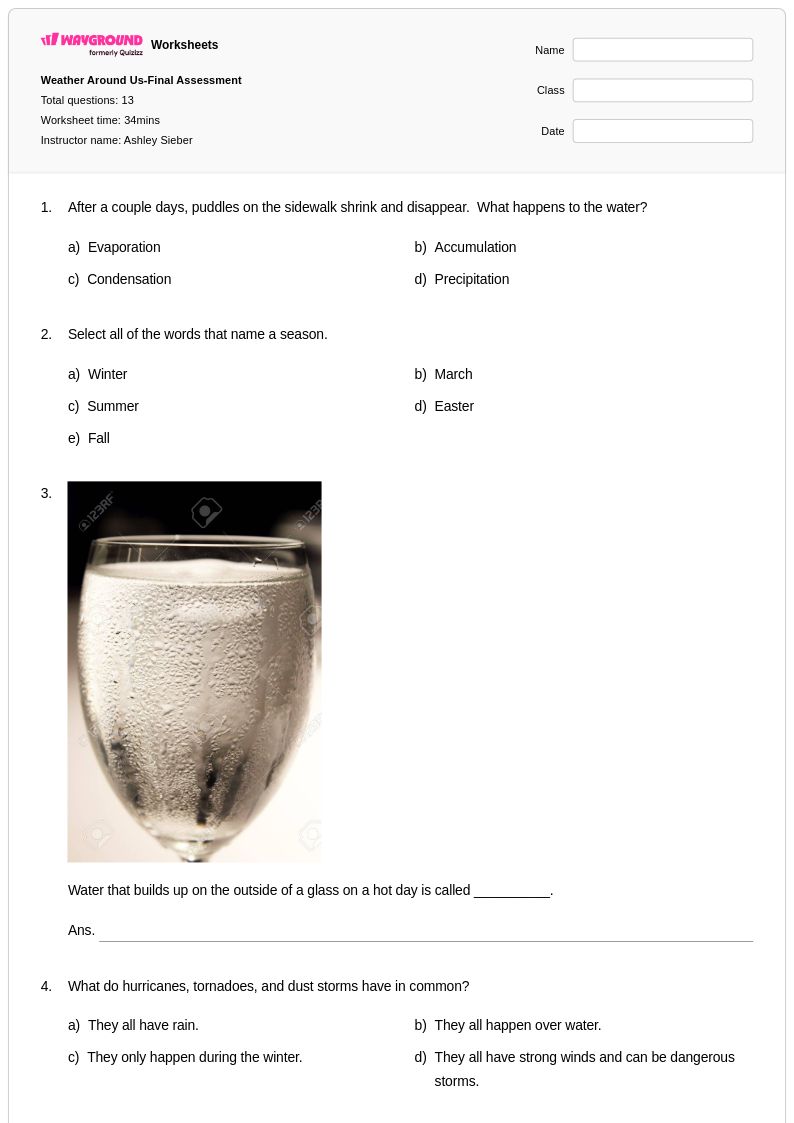
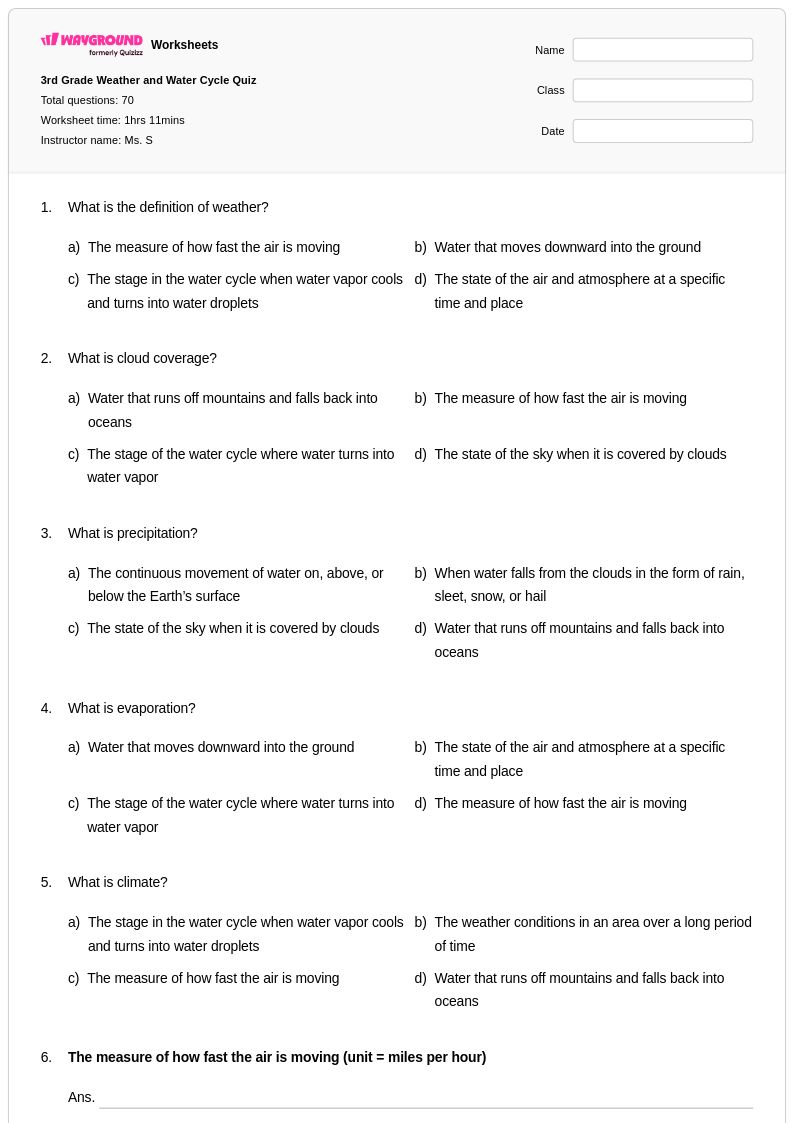
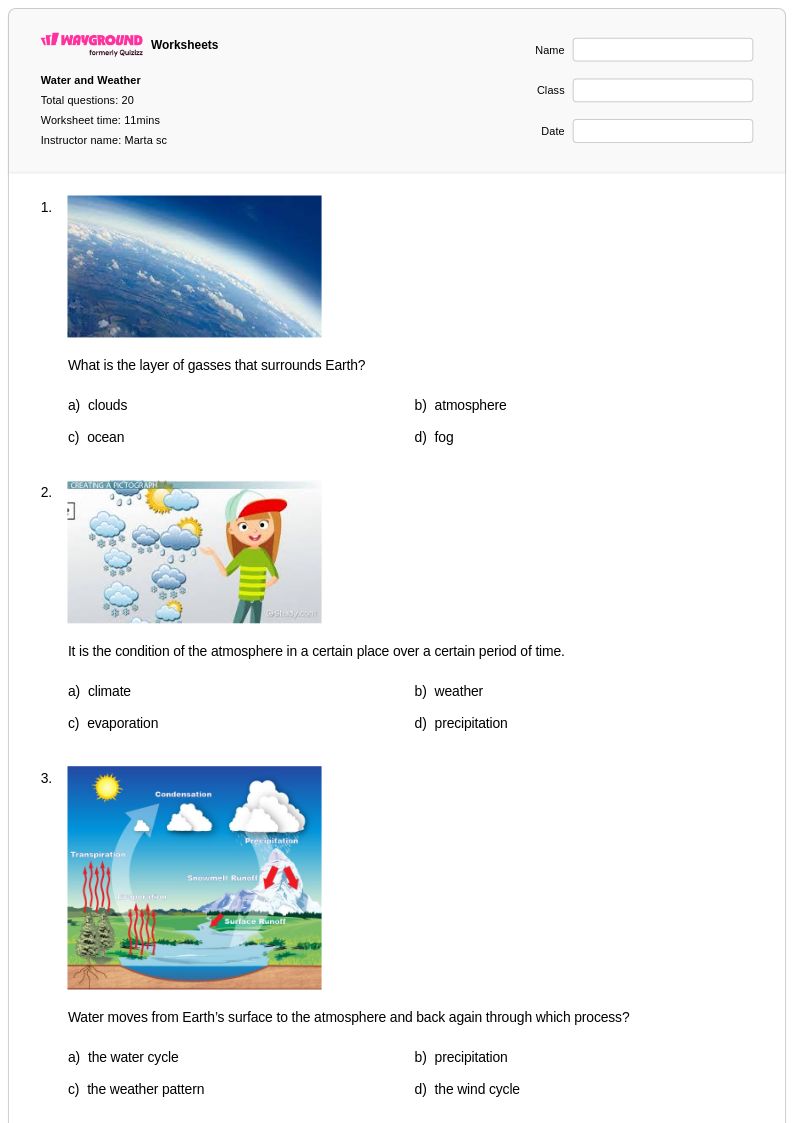
Precipitation worksheets for Year 3 students available through Wayground (formerly Quizizz) provide comprehensive practice opportunities for young learners to explore this fundamental Earth and Space Science concept. These carefully designed educational resources help third-grade students understand the water cycle process, identify different types of precipitation including rain, snow, sleet, and hail, and recognize how weather patterns affect their daily lives. The worksheets strengthen essential scientific observation skills, vocabulary development, and critical thinking abilities through engaging practice problems that encourage students to analyze weather data, predict precipitation patterns, and connect atmospheric conditions to the formation of various precipitation types. Teachers can access complete answer keys and free printable pdf formats that make classroom implementation seamless while supporting diverse learning needs.
Wayground (formerly Quizizz) empowers educators with millions of teacher-created precipitation resources that streamline lesson planning and enhance student engagement in Year 3 Earth and Space Science instruction. The platform's robust search and filtering capabilities allow teachers to quickly locate standards-aligned materials that match their specific curriculum requirements and student ability levels. Advanced differentiation tools enable customization of worksheet difficulty, ensuring both remediation support for struggling learners and enrichment opportunities for advanced students. These flexible resources are available in both printable and digital formats, including downloadable pdf versions, giving teachers the versatility to adapt instruction for in-person, remote, or hybrid learning environments while maintaining consistent skill practice and assessment opportunities that track student progress in understanding precipitation concepts.
FAQs
How do I teach precipitation to students?
Teaching precipitation effectively starts with grounding students in the water cycle before isolating precipitation as its most visible stage. Use real weather data and precipitation maps to show how atmospheric temperature and pressure determine whether water falls as rain, snow, sleet, or hail. Connecting classroom observations to local weather events helps students move from abstract concepts to concrete understanding. Vocabulary instruction around meteorological terms like condensation nuclei, dew point, and saturation should be embedded throughout, not treated as a separate activity.
What exercises help students practice identifying types of precipitation?
Effective practice exercises ask students to predict precipitation types based on given atmospheric conditions, such as surface temperature, air pressure, and humidity levels. Analyzing precipitation maps and interpreting weather data builds the cause-and-effect reasoning students need to connect meteorological variables to real outcomes. Worksheets that present scenario-based problems, where students must classify precipitation forms and explain the conditions that produce them, reinforce both vocabulary and conceptual understanding simultaneously.
What are common misconceptions students have about precipitation?
A frequent misconception is that precipitation type is determined solely by surface temperature, when in fact the temperature profile through the entire atmospheric column determines whether precipitation reaches the ground as rain, sleet, freezing rain, or snow. Students also commonly confuse sleet and freezing rain, not recognizing that the difference depends on where in the atmosphere refreezing occurs. Another common error is treating precipitation as the beginning of the water cycle rather than understanding it as one stage in a continuous process driven by evaporation and condensation.
How can I use precipitation worksheets to assess student understanding?
Precipitation worksheets work well as formative assessments when they require students to analyze weather maps or interpret data tables rather than simply recall definitions. Tasks that ask students to explain why a specific type of precipitation forms under given conditions reveal whether they understand the underlying science or are just memorizing vocabulary. Including open-response questions alongside multiple choice gives teachers a clearer picture of student reasoning, particularly around common misconceptions about temperature and atmospheric pressure relationships.
How do I use Wayground's precipitation worksheets in my classroom?
Wayground's precipitation worksheets are available as printable PDFs for traditional classroom use and in digital formats for technology-integrated learning environments, so they fit naturally into both paper-based and device-based instruction. Teachers can host worksheets as a quiz directly on Wayground, enabling real-time progress tracking and immediate feedback for students. The included answer keys make it straightforward to use these materials for independent practice, homework, or guided review without additional preparation time.
How can I differentiate precipitation worksheets for students with different learning needs?
On Wayground, teachers can apply individual student accommodations including extended time per question, read-aloud support for students who benefit from audio delivery of content, and reduced answer choices to lower cognitive load for students who need it. Font size and display themes can be adjusted through reading mode to improve accessibility. These settings are saved per student and reusable across future sessions, so differentiation does not require repeated setup each time a new worksheet is assigned.