Free Printable Types of Rocks Worksheets for Year 3
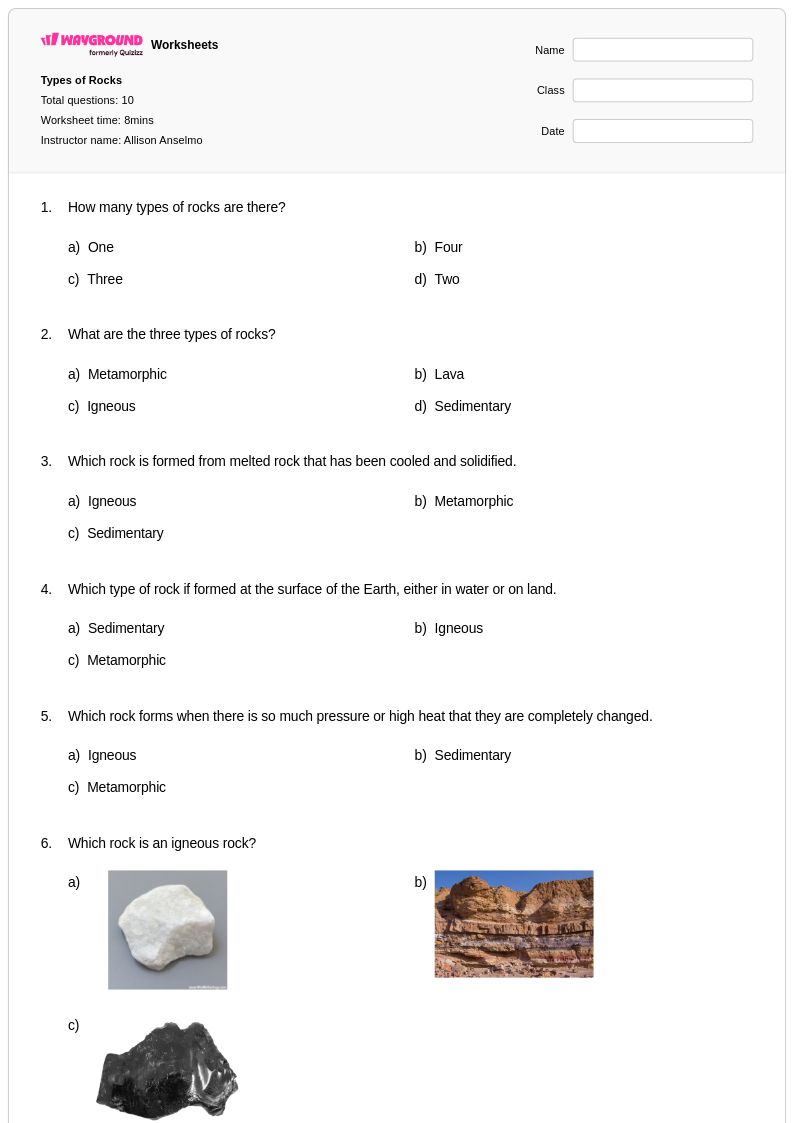
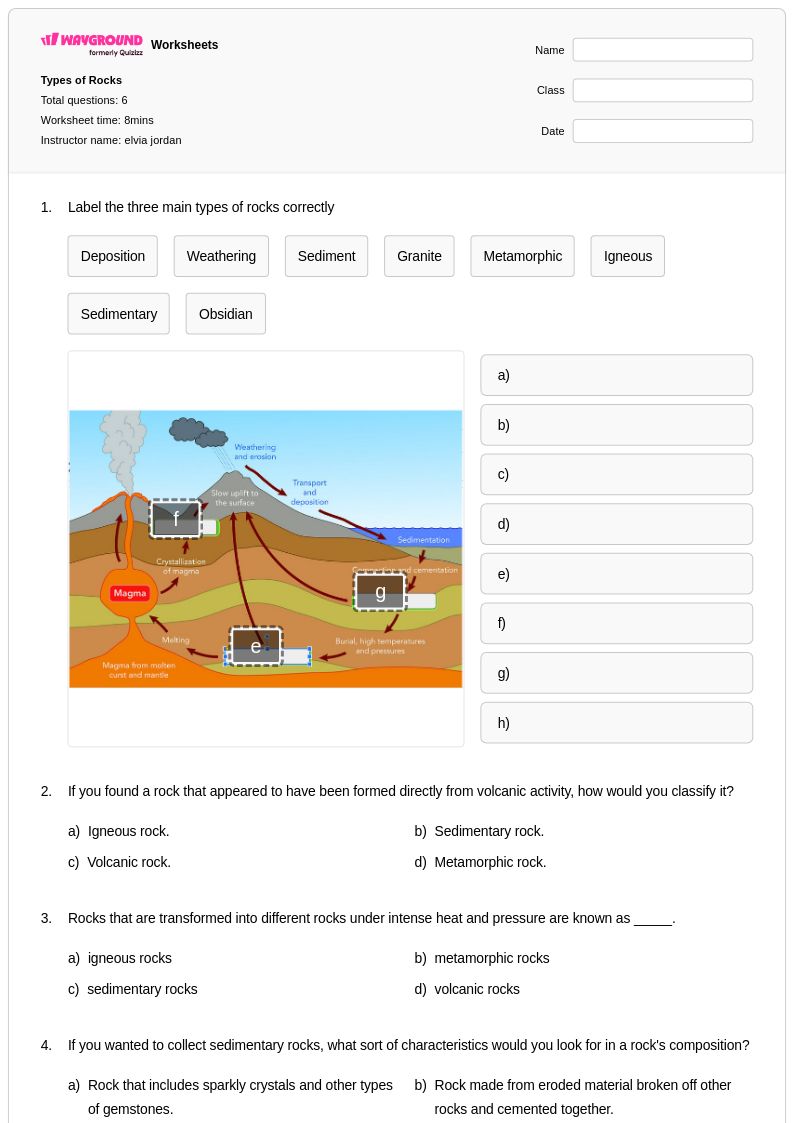
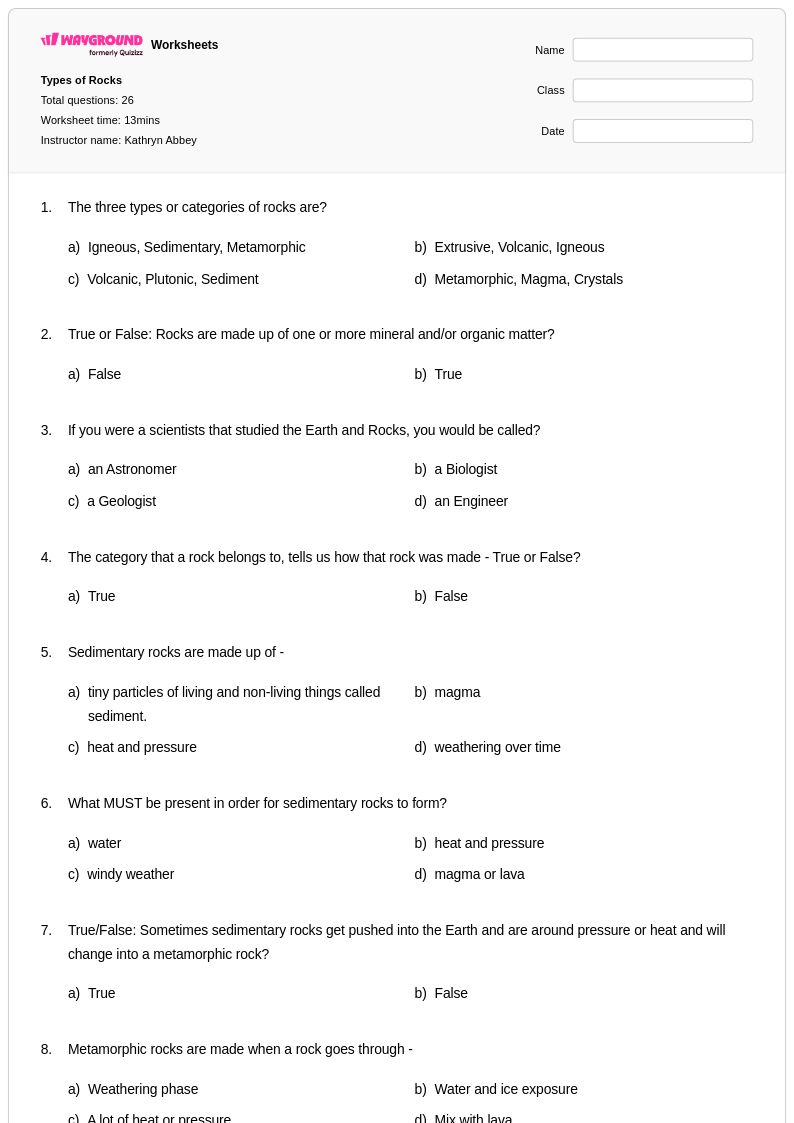
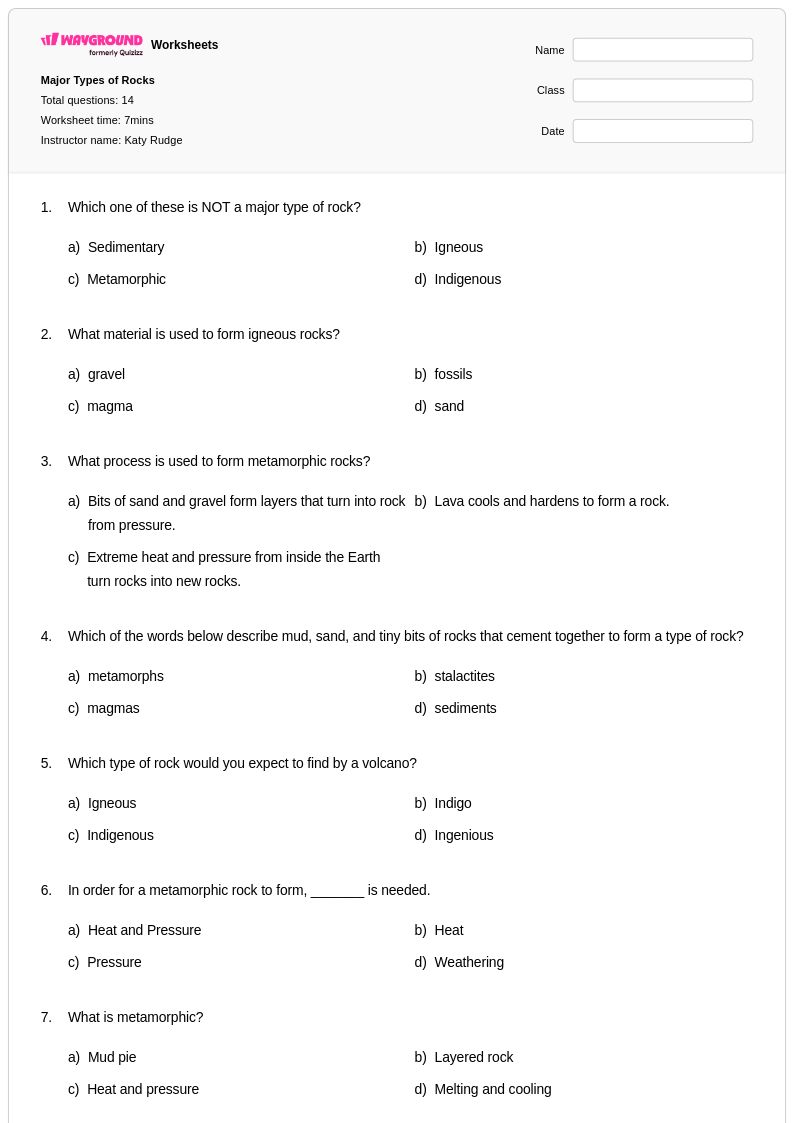
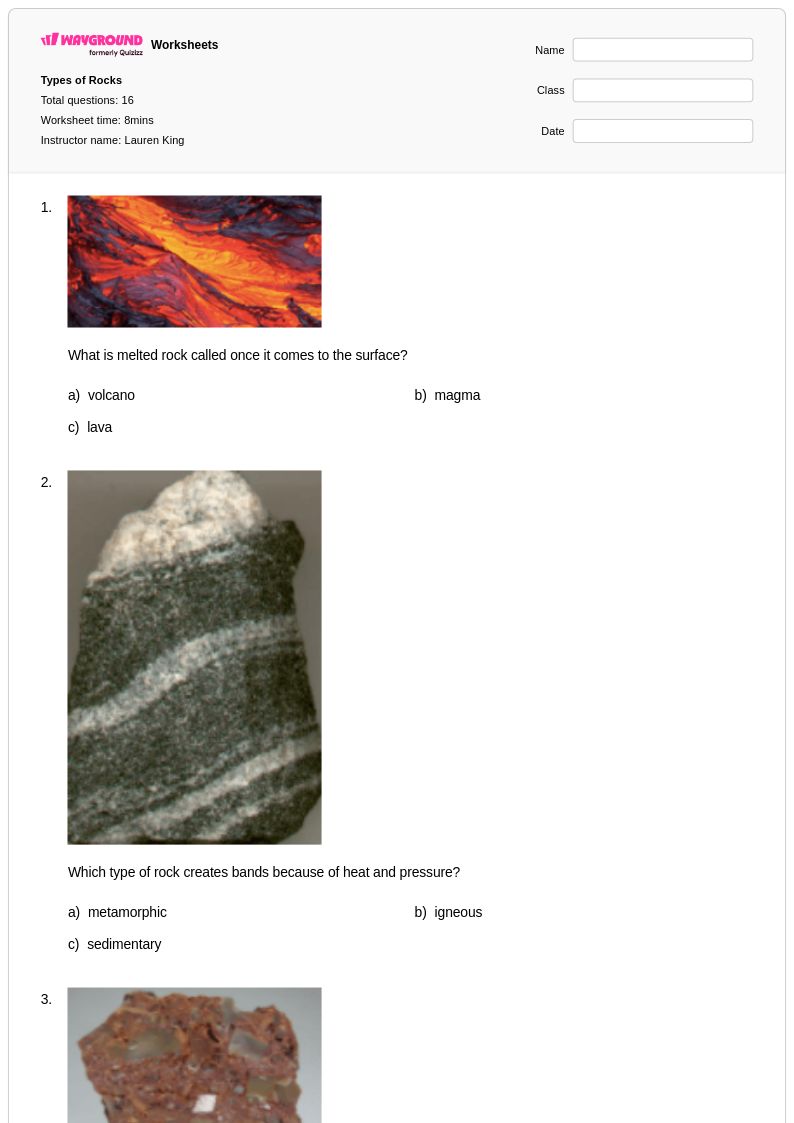
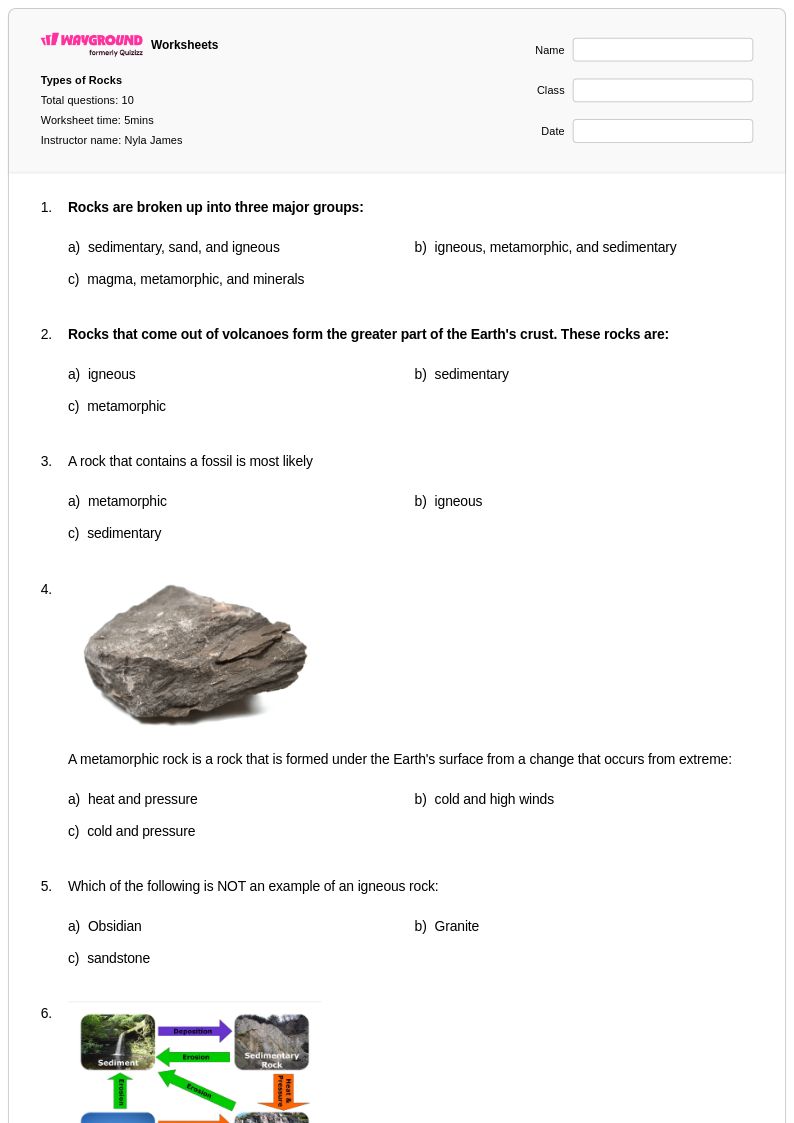
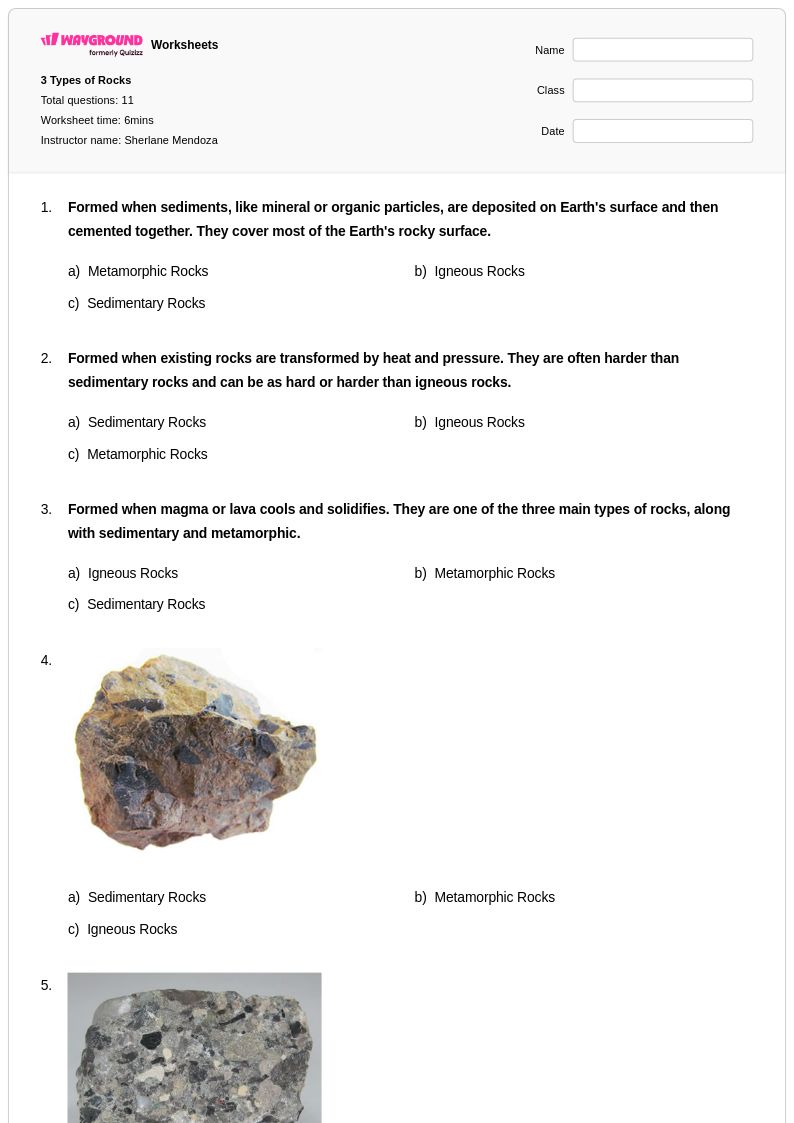
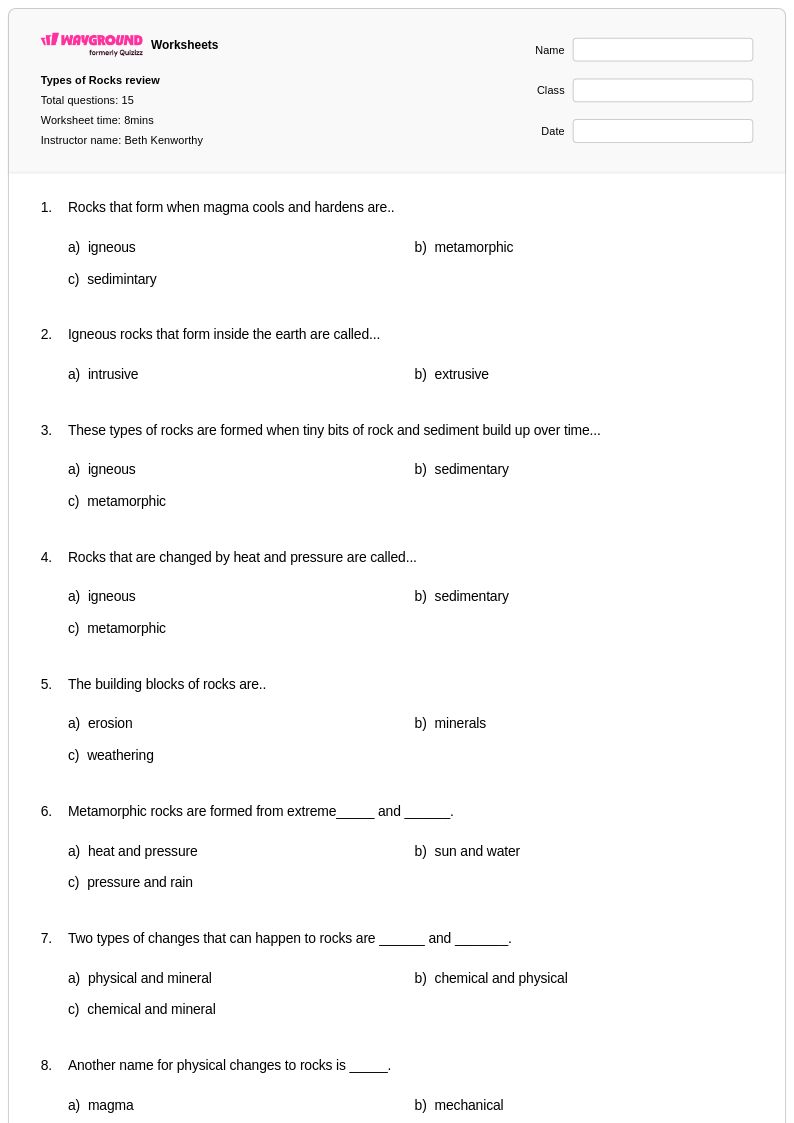
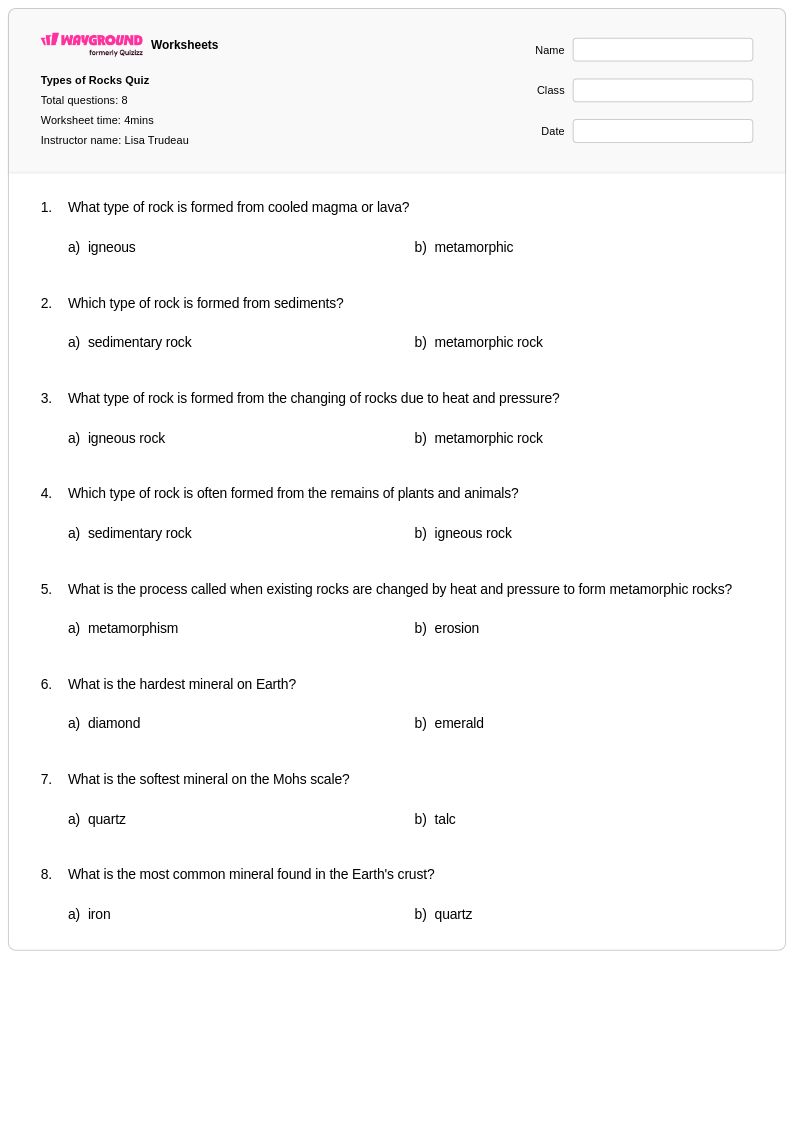
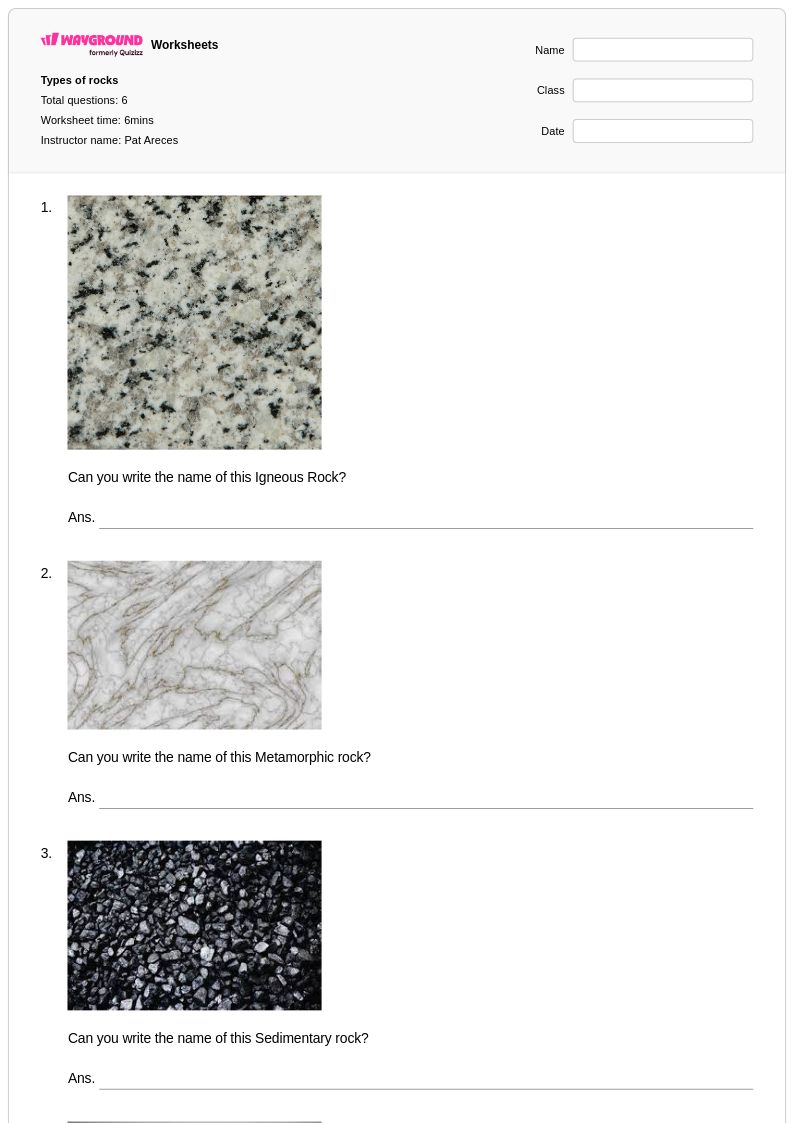
Explore Wayground's free Year 3 types of rocks worksheets and printables that help students identify igneous, sedimentary, and metamorphic rocks through engaging practice problems with complete answer keys.
Explore printable Types of Rocks worksheets for Year 3
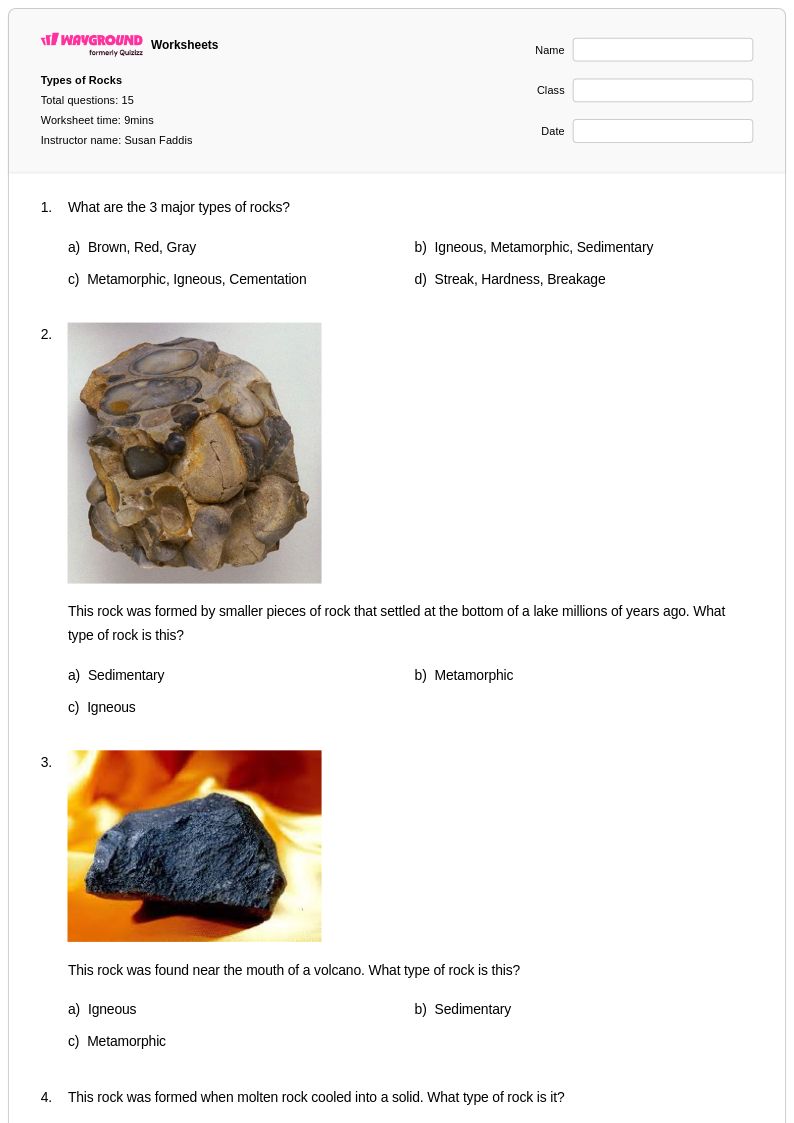
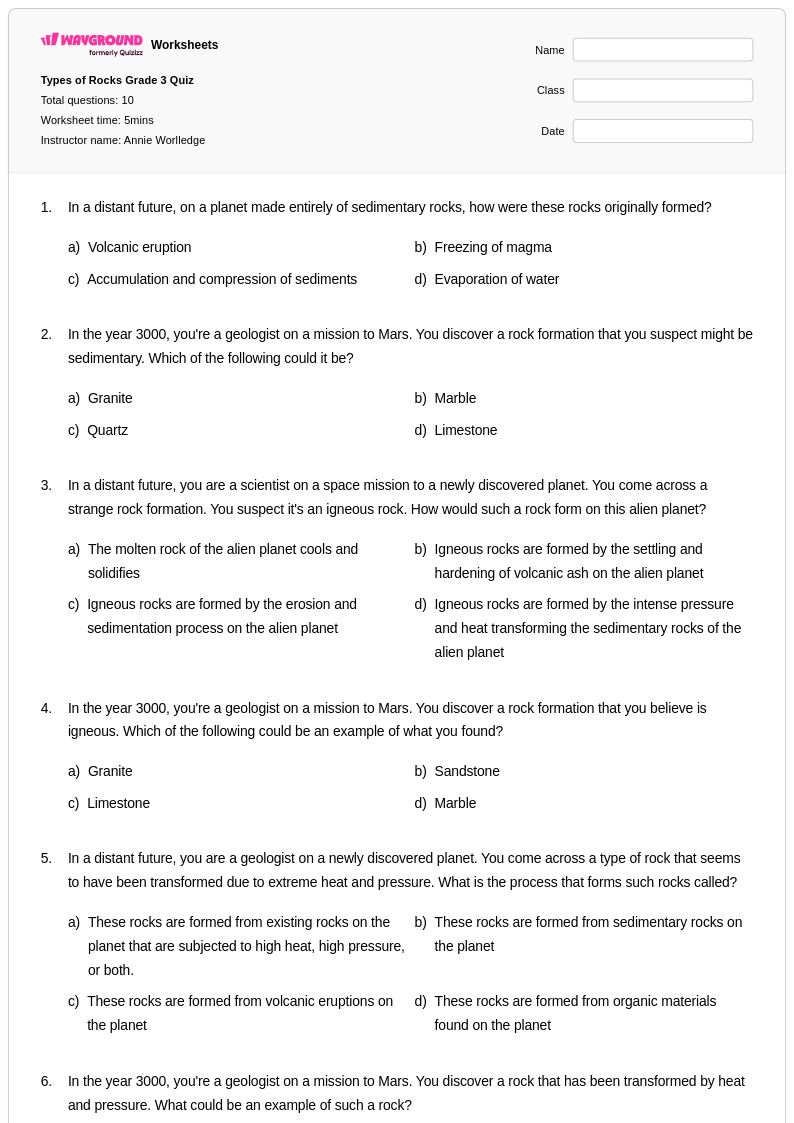
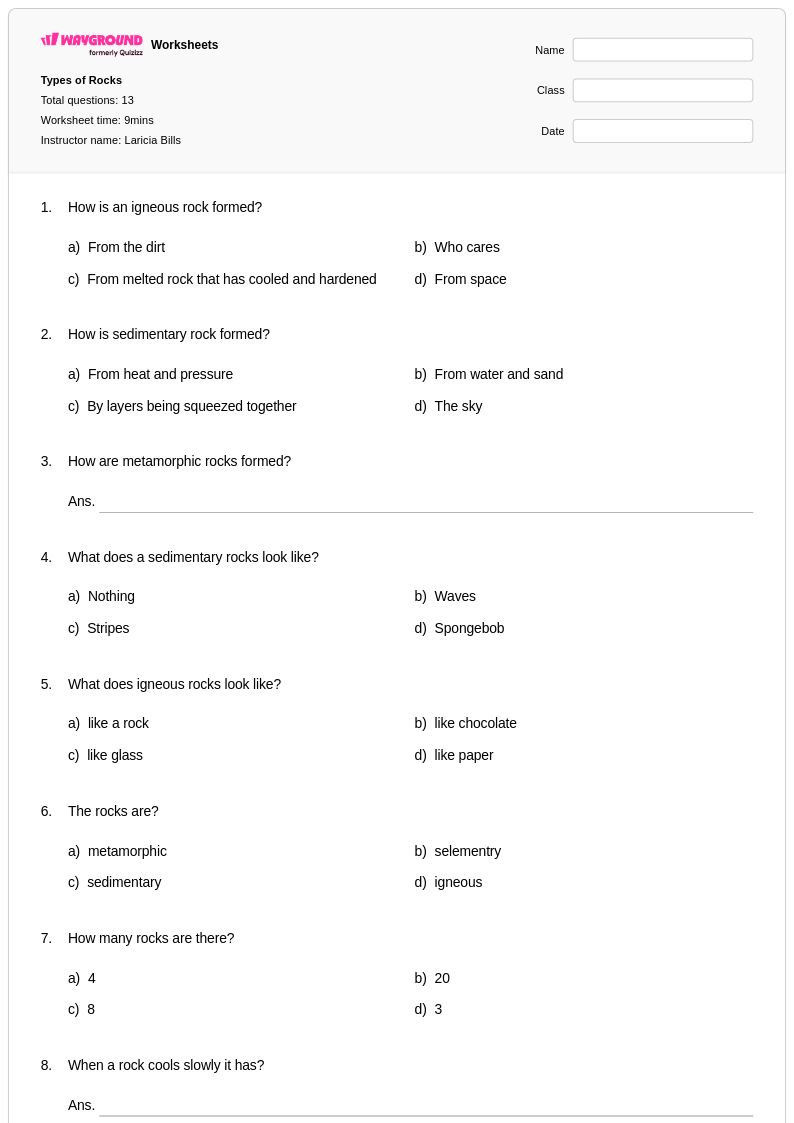
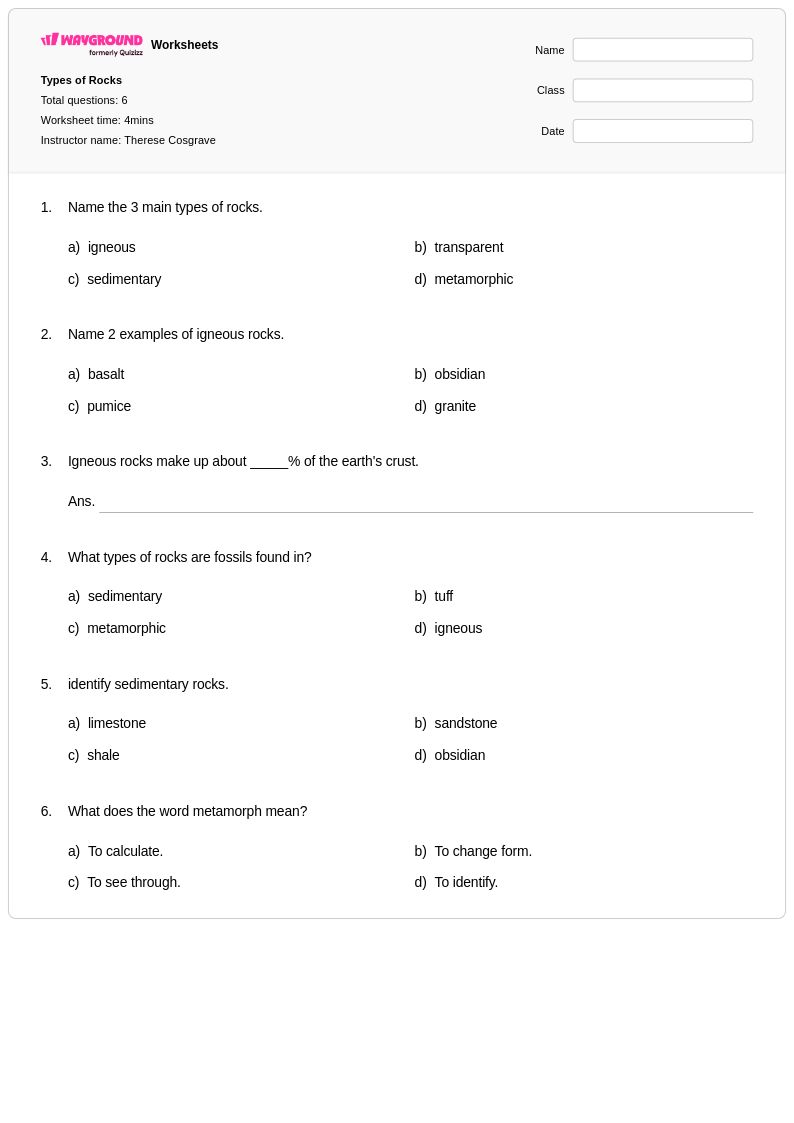
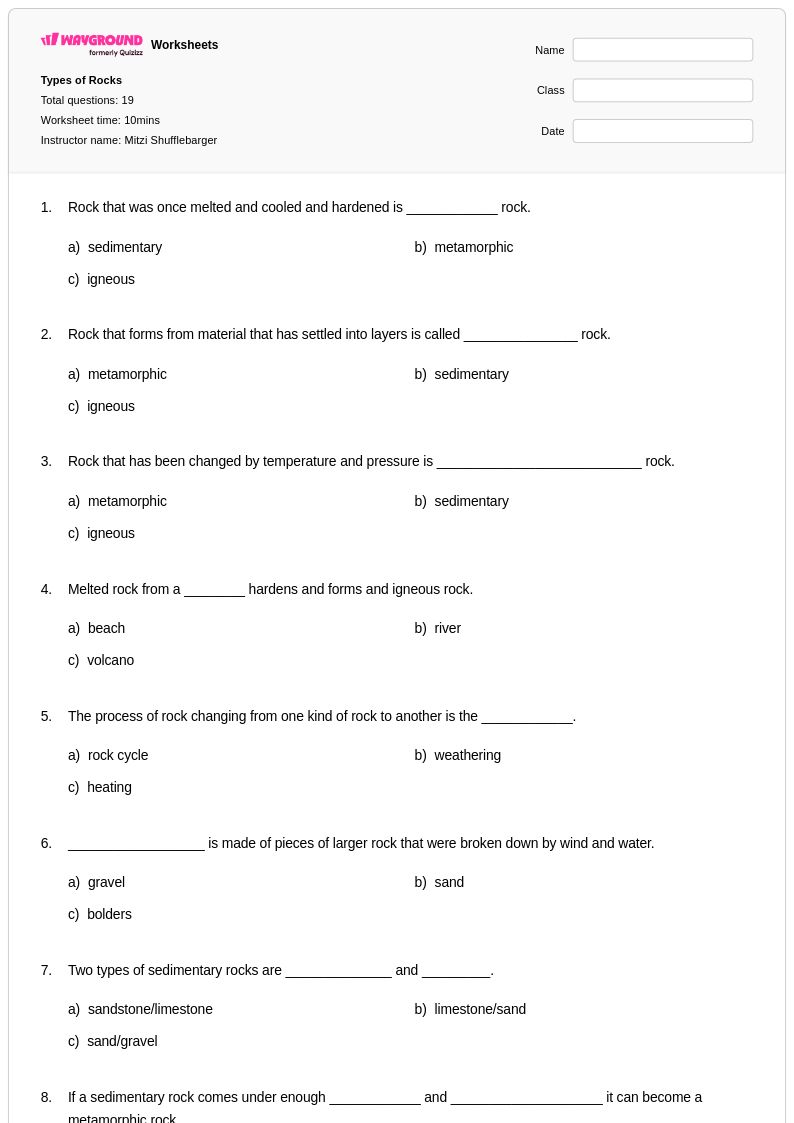
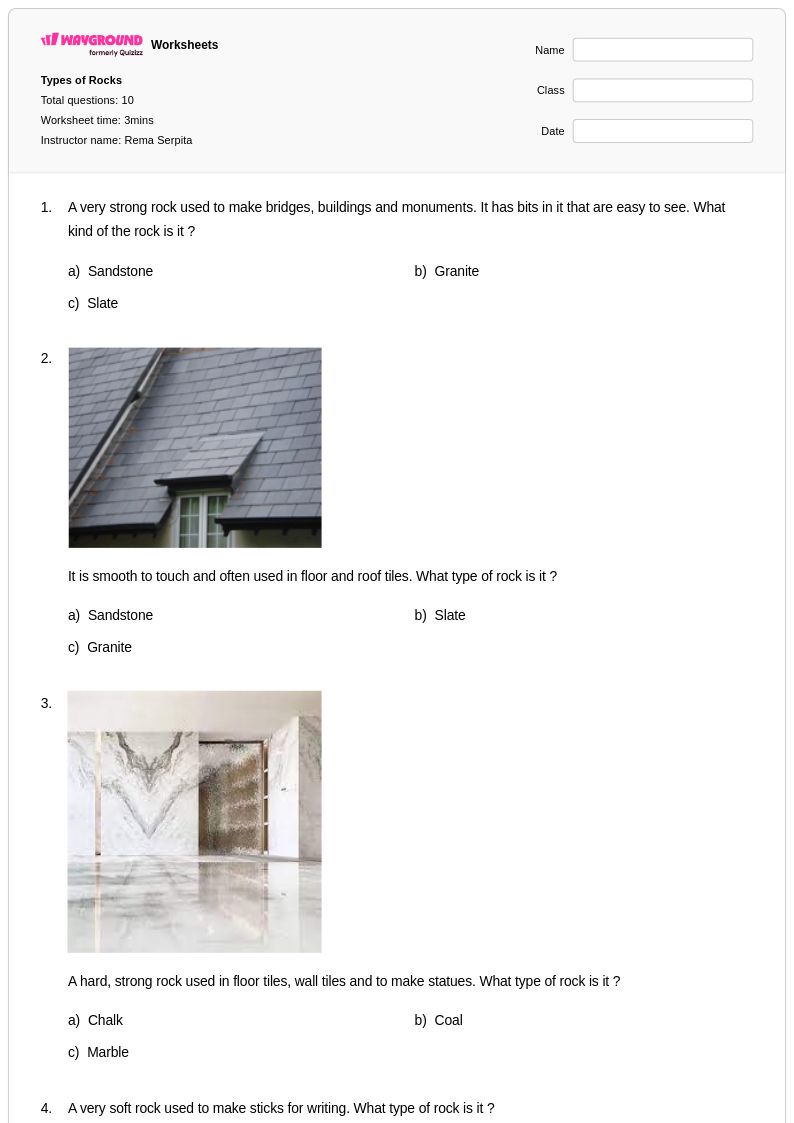
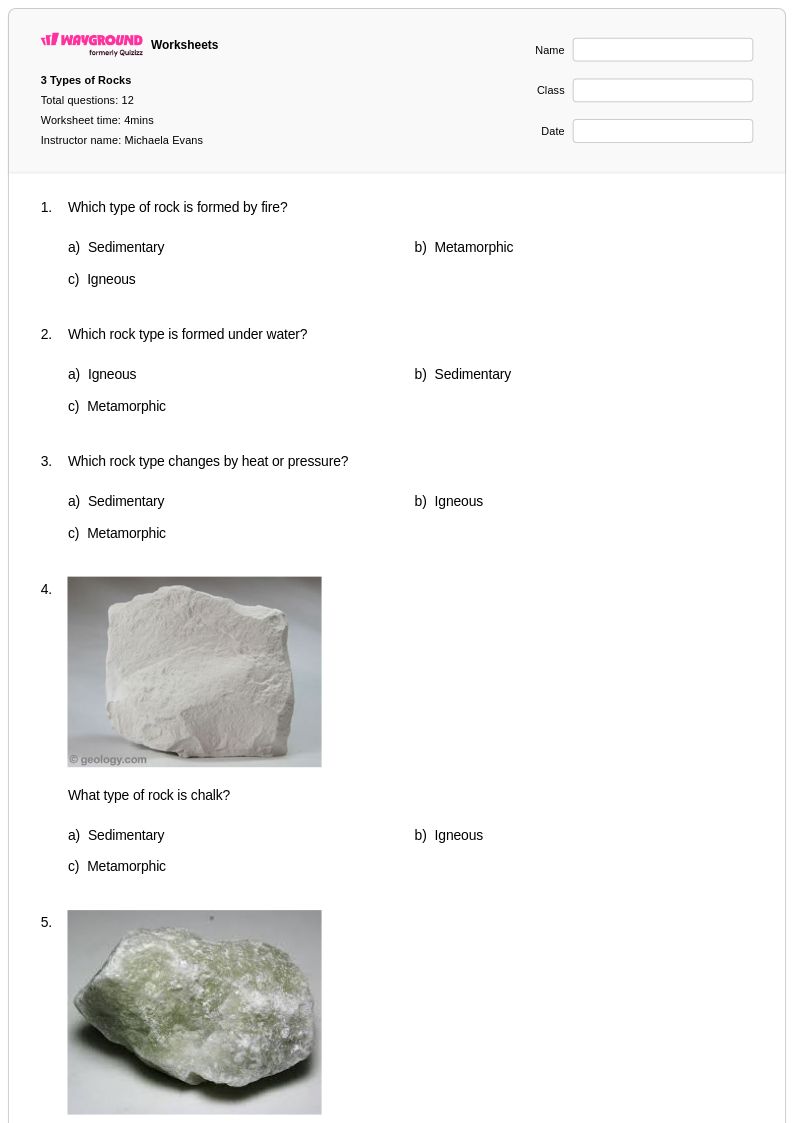
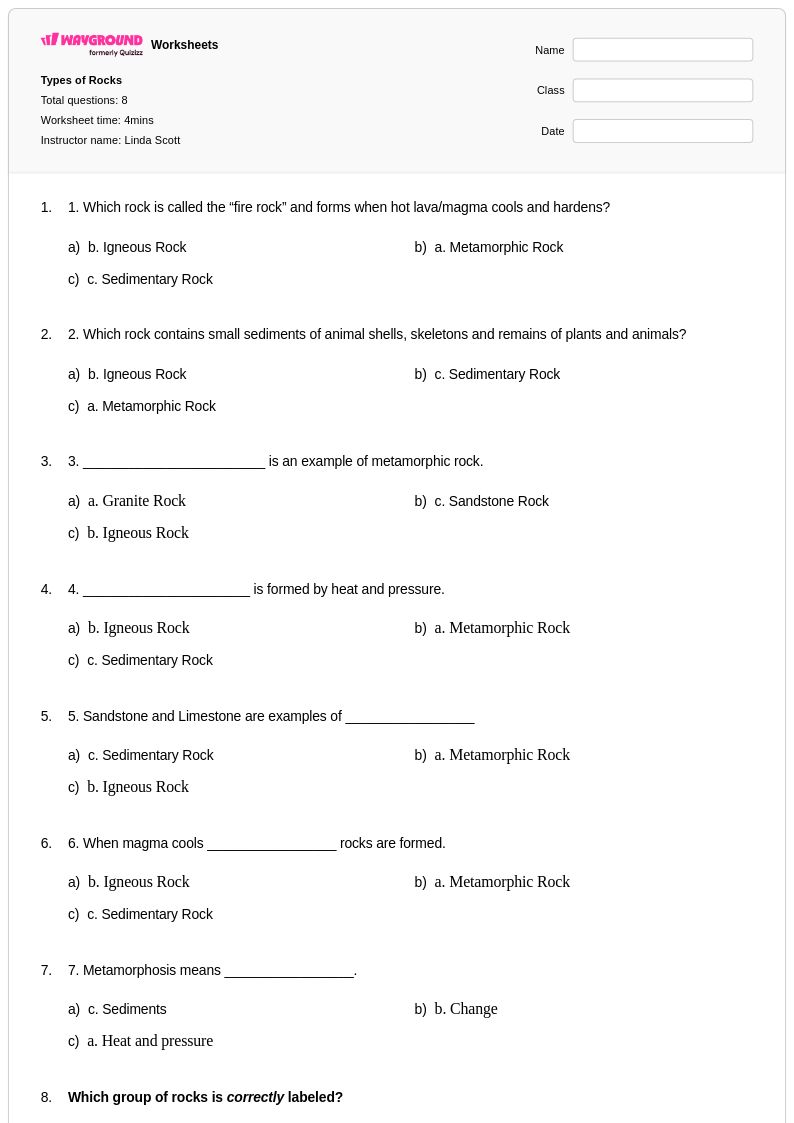
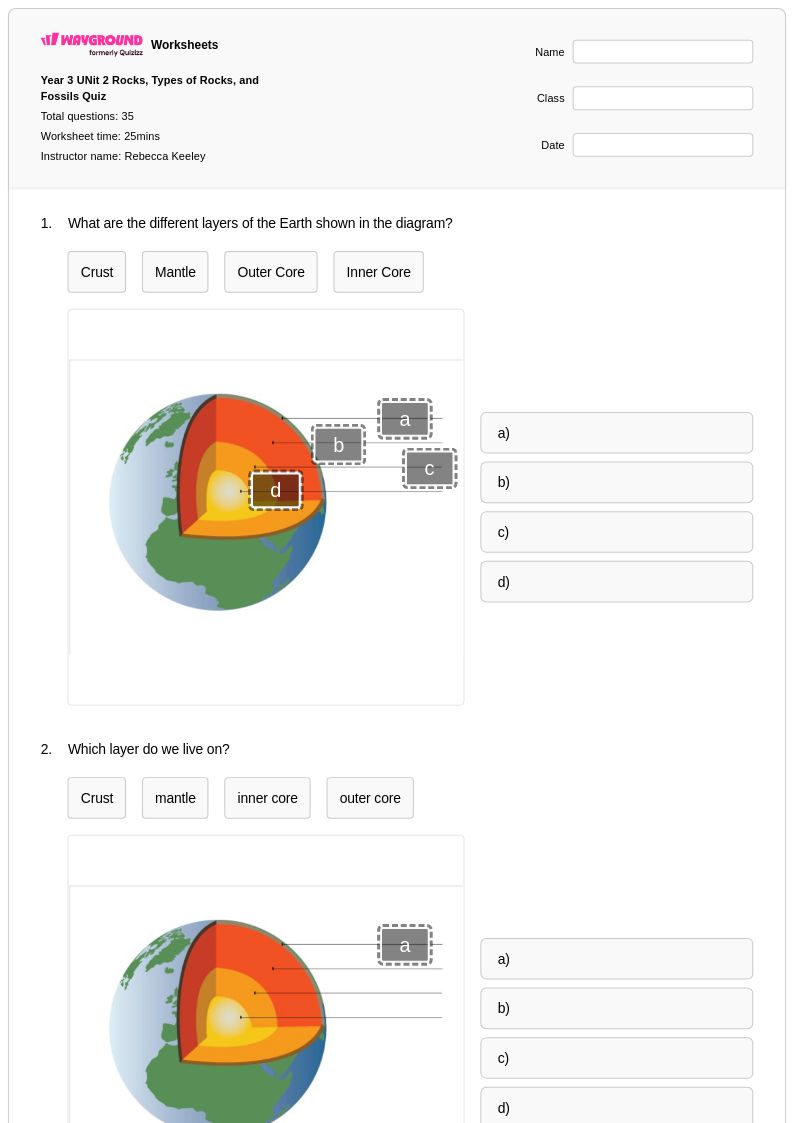
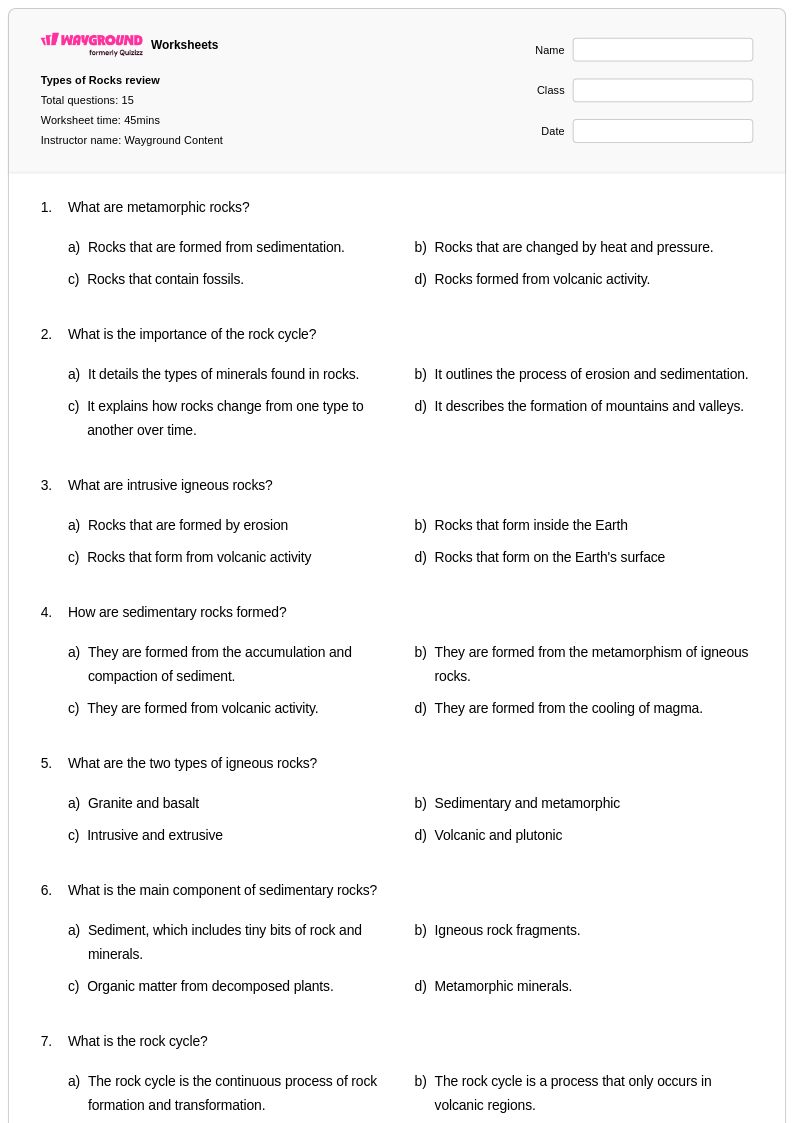
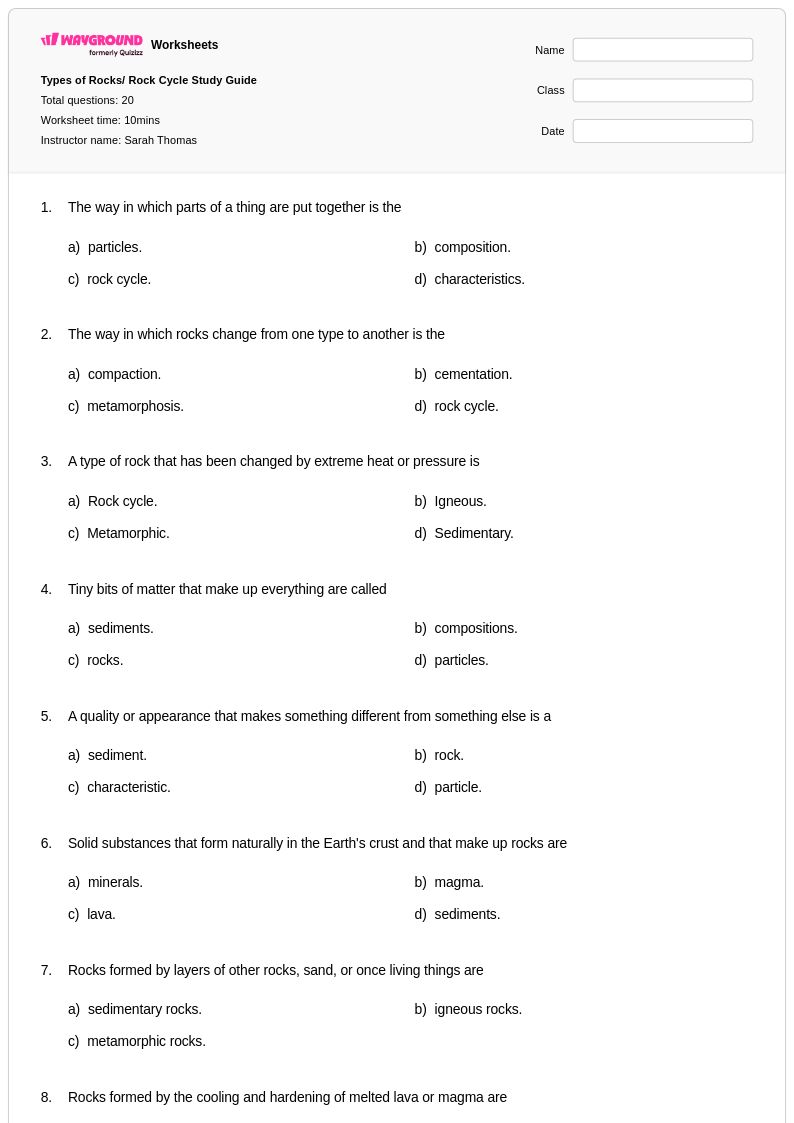
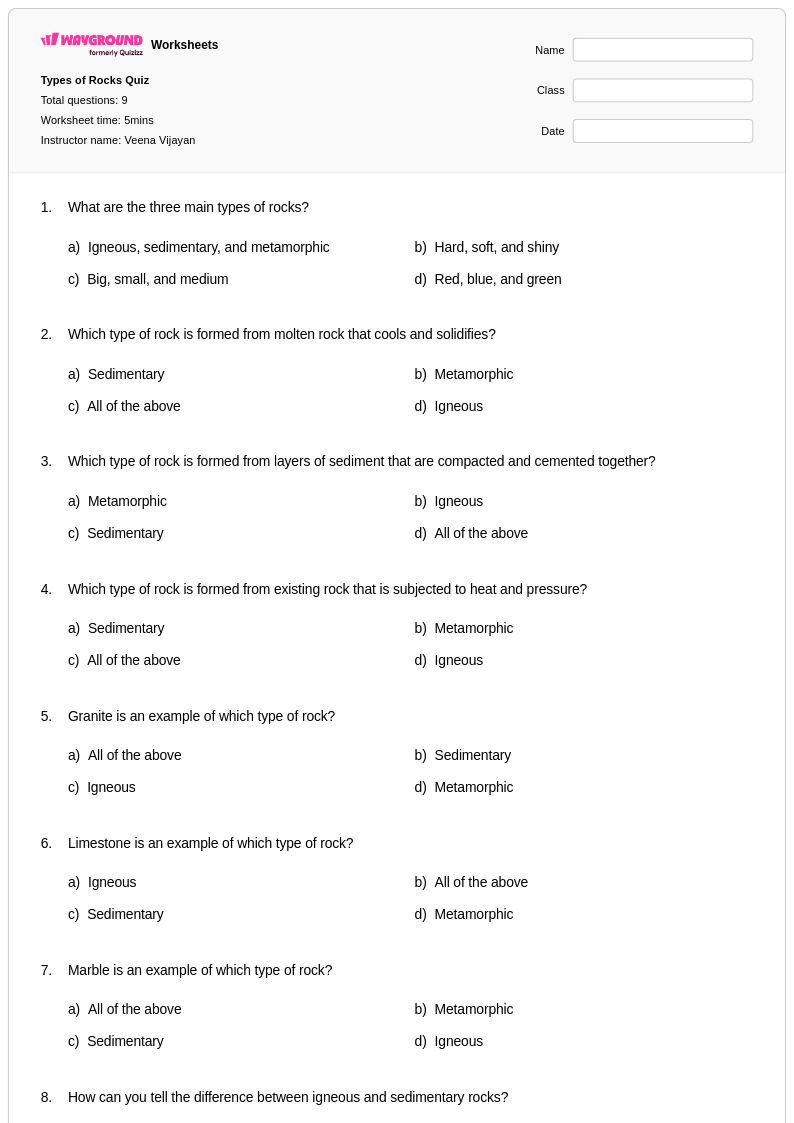
Types of rocks worksheets for Year 3 students available through Wayground (formerly Quizizz) provide essential hands-on learning experiences that help young scientists understand the three main rock categories: igneous, sedimentary, and metamorphic. These comprehensive printables guide students through identifying rock characteristics, understanding formation processes, and recognizing examples of each rock type in their everyday environment. The worksheets feature age-appropriate practice problems that strengthen observation skills, scientific vocabulary, and critical thinking abilities essential for earth science learning. Each resource includes detailed answer keys that support independent learning and self-assessment, while the free pdf format ensures easy access for both classroom instruction and home study.
Wayground (formerly Quizizz) empowers educators with an extensive collection of teacher-created rock science worksheets drawn from millions of educational resources specifically designed for elementary learners. The platform's robust search and filtering capabilities allow teachers to quickly locate materials aligned with state science standards and customize content to match diverse learning needs within their Year 3 classrooms. These differentiation tools enable educators to provide targeted remediation for struggling students while offering enrichment opportunities for advanced learners, all within the same rock types unit. The flexible digital and printable formats support various teaching approaches, from traditional paper-based activities to interactive digital assignments, making lesson planning more efficient and skill practice more engaging for young earth science explorers.
FAQs
How do I teach the three types of rocks to my students?
Teaching the three rock types works best when students can connect each type to a formation process: igneous rocks form from cooled magma or lava, sedimentary rocks form from compressed layers of sediment, and metamorphic rocks form when existing rocks are transformed by heat and pressure. Anchoring each type to a real-world example, such as granite for igneous, sandstone for sedimentary, and marble for metamorphic, helps students build durable mental models. Introducing the rock cycle as a unifying framework shows students how each type relates to the others, which deepens conceptual understanding rather than encouraging rote memorization.
What exercises help students practice identifying types of rocks?
Effective practice exercises ask students to classify rocks based on observable characteristics such as texture, grain size, layering, and crystal structure rather than simply recalling definitions. Comparison activities that place two or three rock samples side by side and require students to explain their differences are particularly valuable for building classification skills. Worksheets that incorporate the rock cycle alongside identification tasks reinforce why rocks have the features they do, connecting observation to formation process.
What mistakes do students commonly make when identifying rock types?
One of the most common errors is confusing metamorphic and igneous rocks, since both can have interlocking crystals and a hard, dense appearance. Students also frequently misclassify fine-grained igneous rocks like basalt as sedimentary because their smooth texture superficially resembles compacted sediment. Another persistent misconception is treating the rock cycle as a one-directional sequence rather than a dynamic, multi-pathway system, which causes students to believe rocks can only transform in a fixed order.
How can I use types of rocks worksheets to support students with different learning needs?
Types of rocks worksheets on Wayground can be hosted as digital quizzes, which allows teachers to apply individual accommodations such as read-aloud support for students who need questions read to them, extended time for students who process more slowly, and reduced answer choices to lower cognitive load for students who struggle with multiple-option tasks. These settings can be assigned to individual students while the rest of the class receives default settings, making differentiation seamless and unobtrusive. The same worksheets are also available as printable PDFs, so teachers can use the format that best fits each student's learning environment.
How do types of rocks worksheets fit into a broader earth science unit?
Types of rocks worksheets work most effectively when sequenced alongside instruction on the rock cycle, mineral identification, and plate tectonics, since rock formation is directly connected to geological processes driven by Earth's internal and surface dynamics. Teachers often use rock identification worksheets early in a unit to build observational vocabulary, then revisit them after introducing the rock cycle so students can explain formation rather than just classify. This sequencing supports both procedural skill and conceptual depth within an earth science curriculum.
How do I use types of rocks worksheets from Wayground in my classroom?
Types of rocks worksheets on Wayground are available as printable PDFs, making them easy to distribute during hands-on lab activities, field study preparation, or independent practice sessions. They can also be assigned in digital formats and hosted as interactive quizzes directly on the Wayground platform, which is useful for technology-integrated classrooms and remote learning. Each worksheet includes a detailed answer key, so teachers can use them for self-paced independent study as well as direct instruction and formative assessment.