Explore Wayground's free Year 3 rock layers worksheets and printables that help students understand Earth's geological history through engaging practice problems and comprehensive answer keys in convenient PDF format.
Explore printable Rock Layers worksheets for Year 3
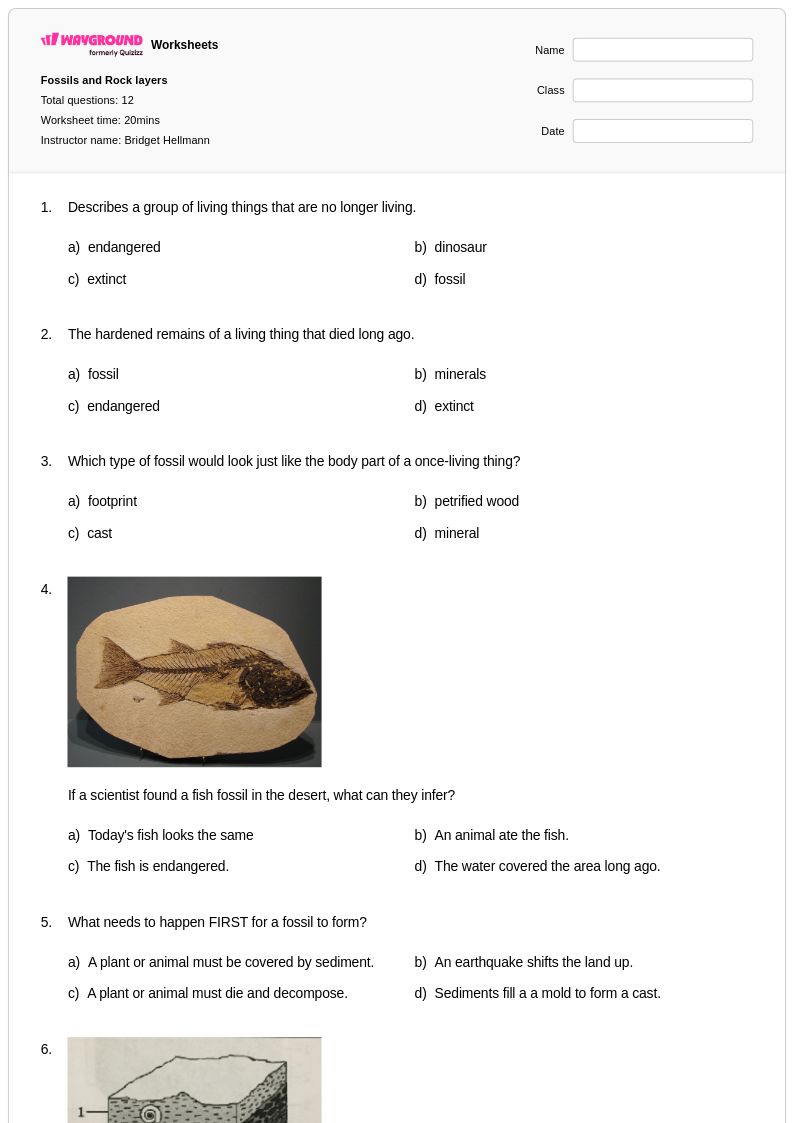
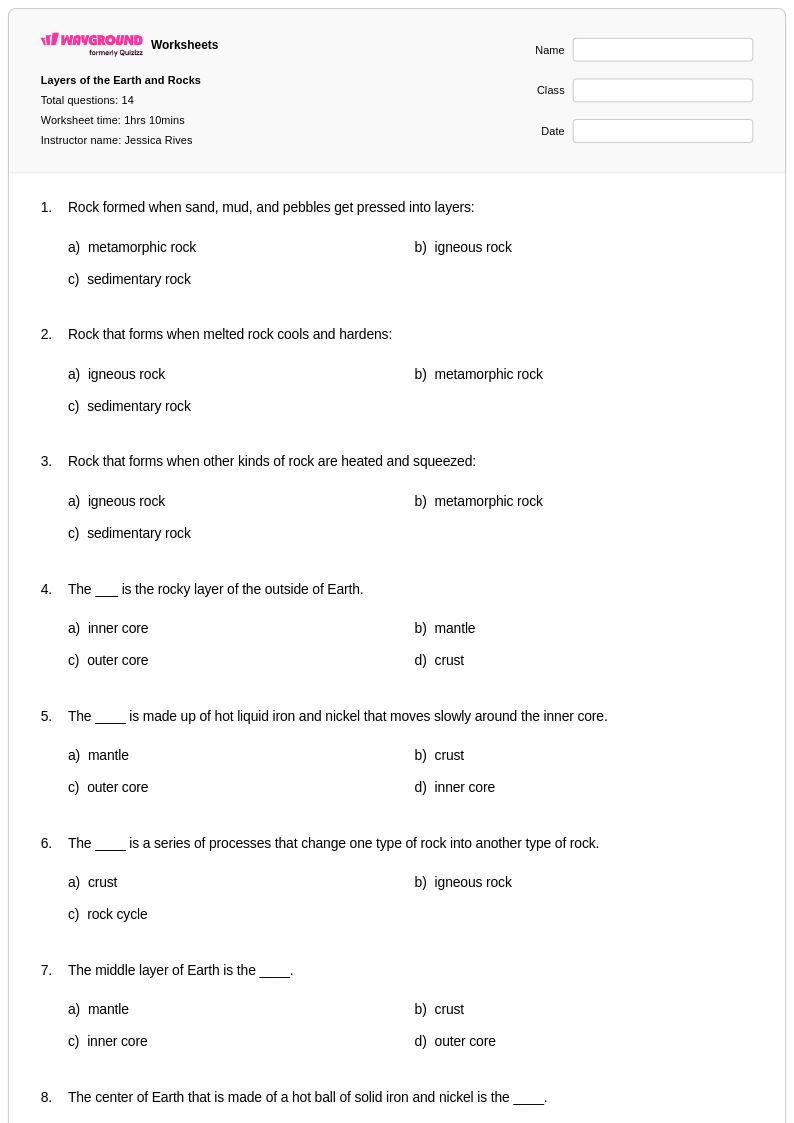
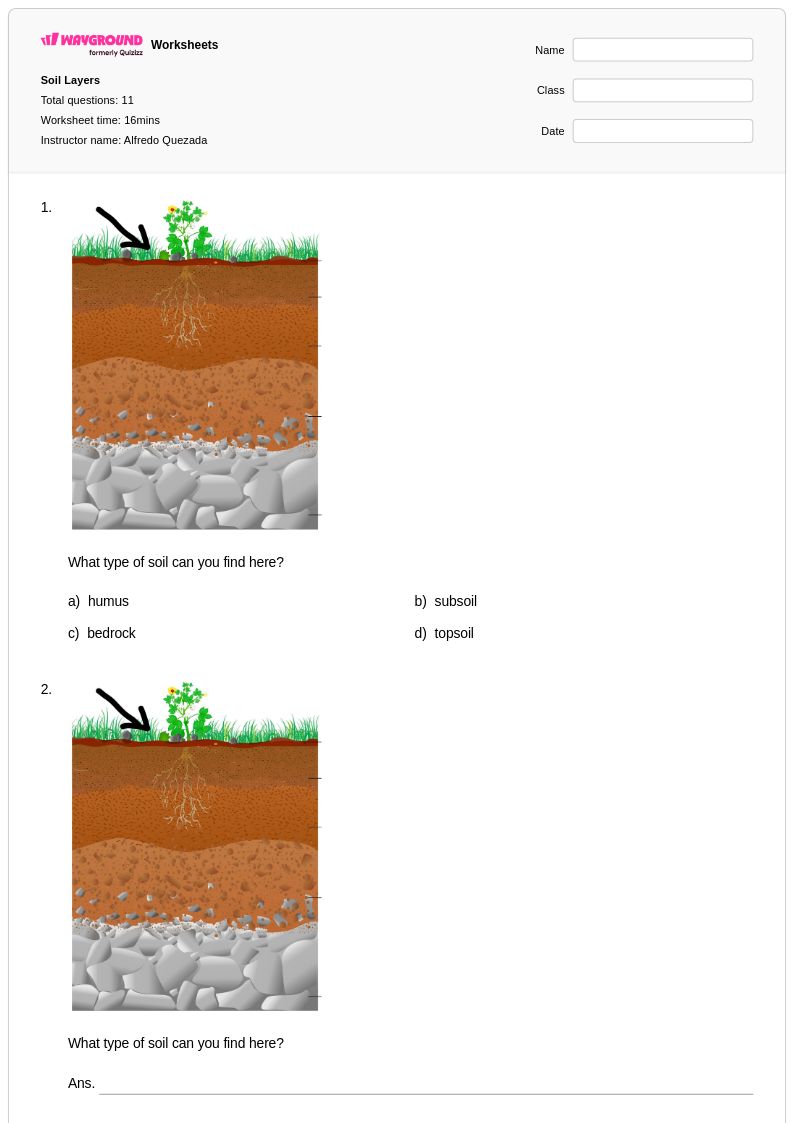
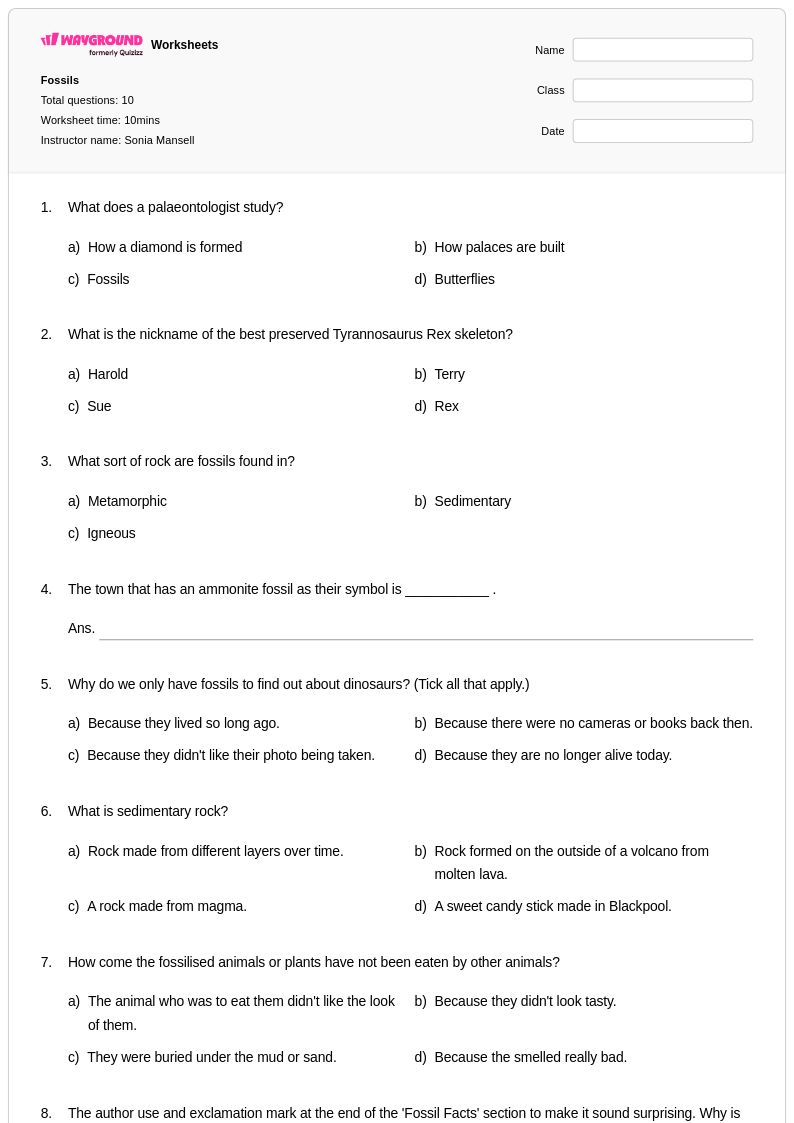
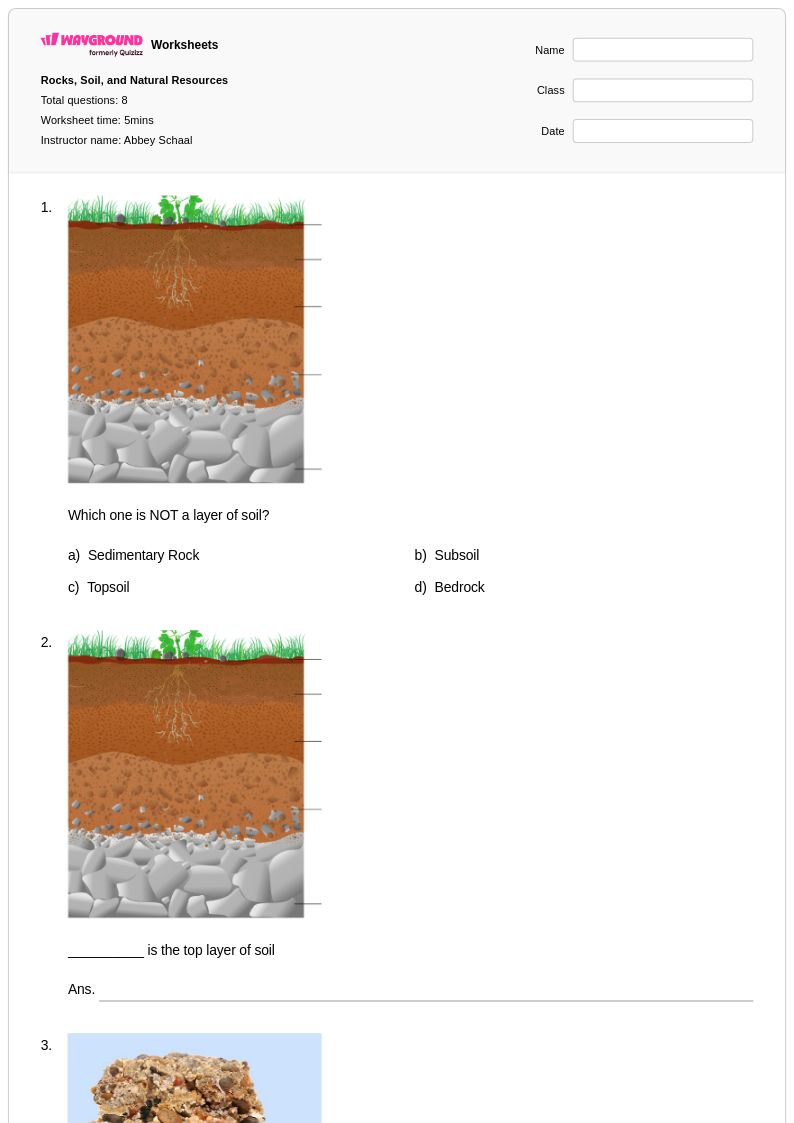
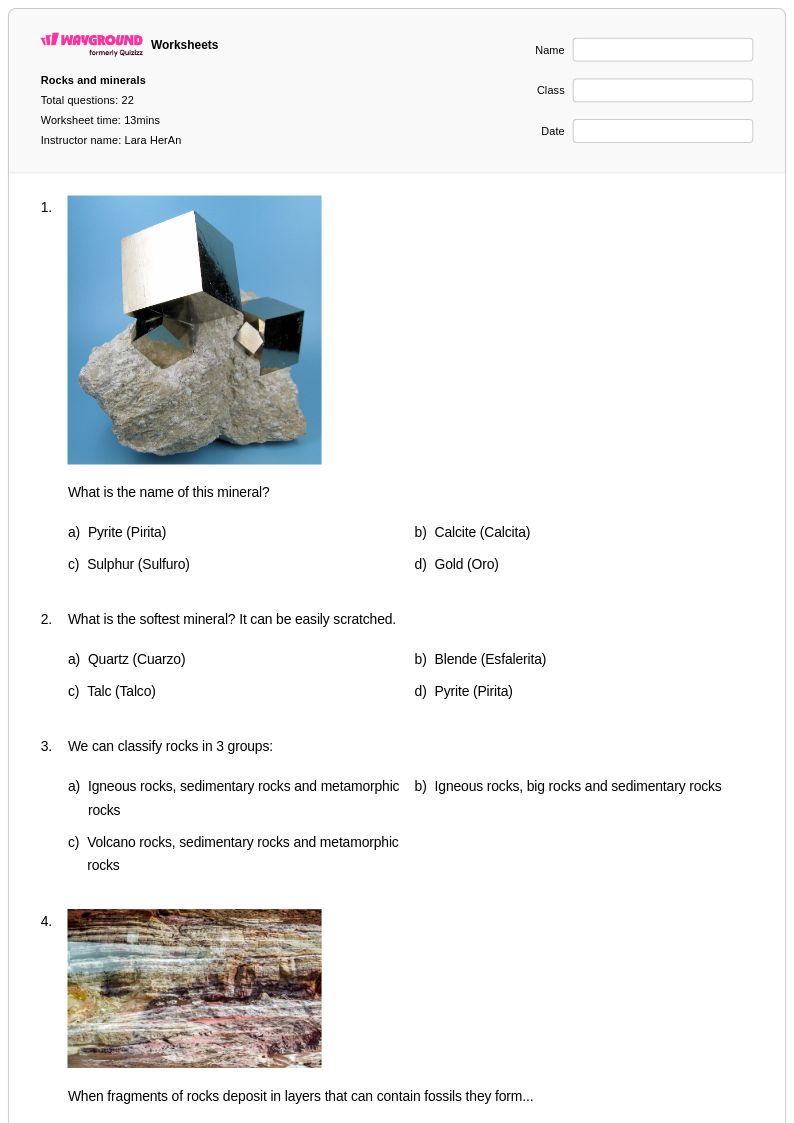
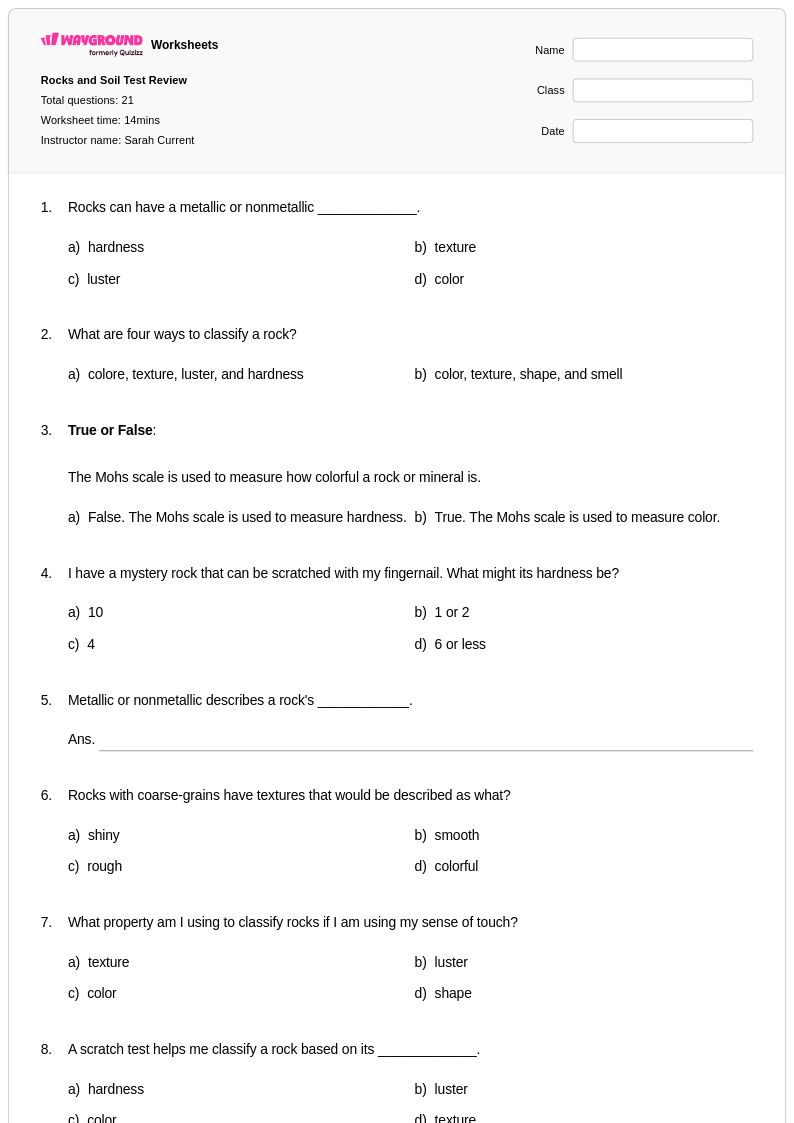
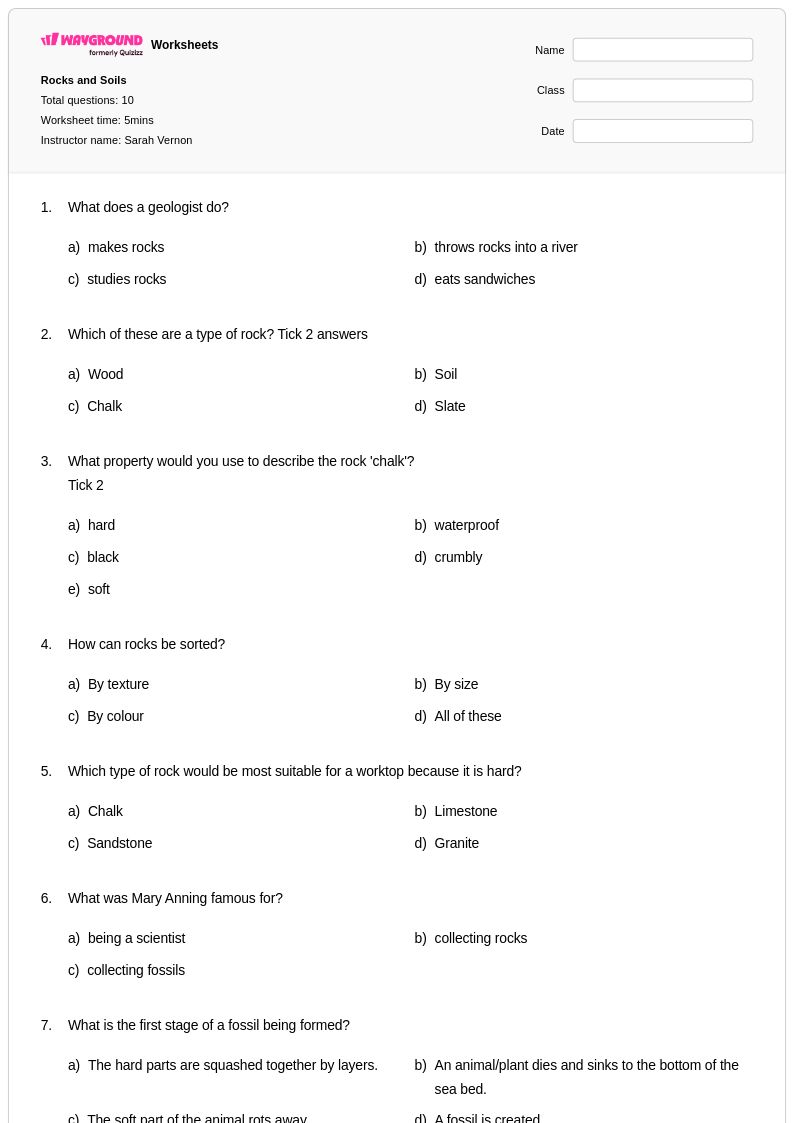
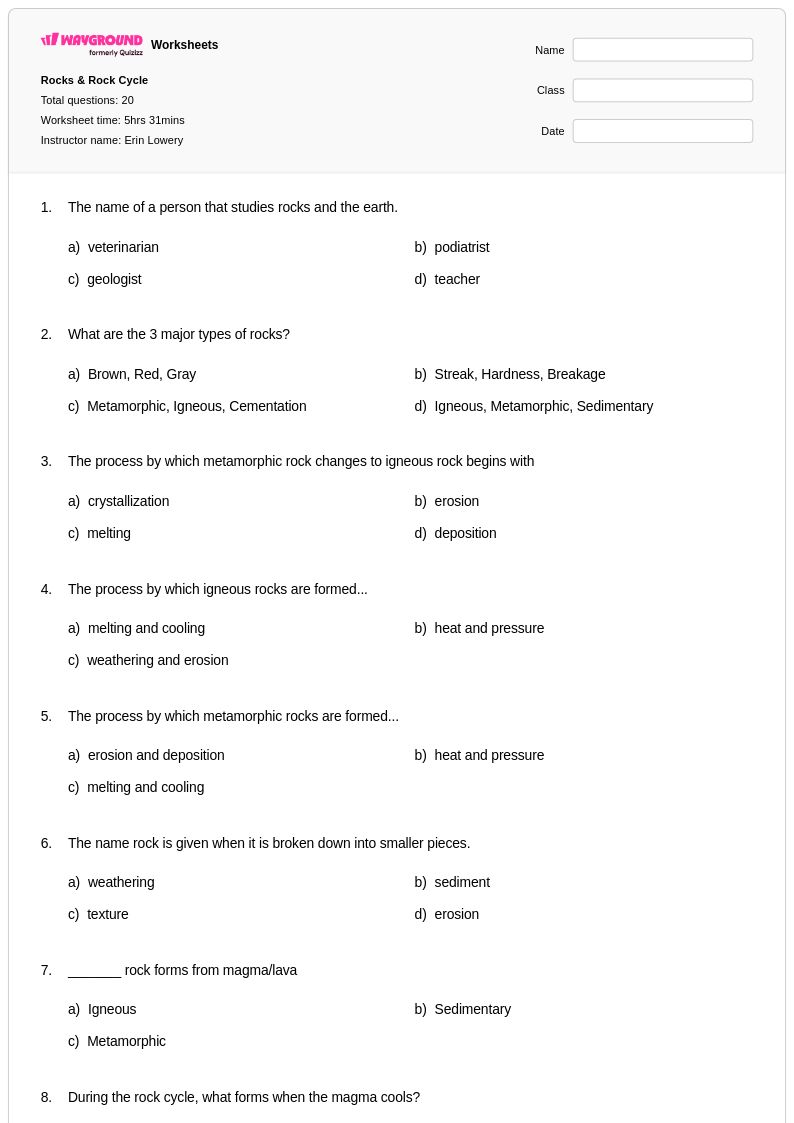
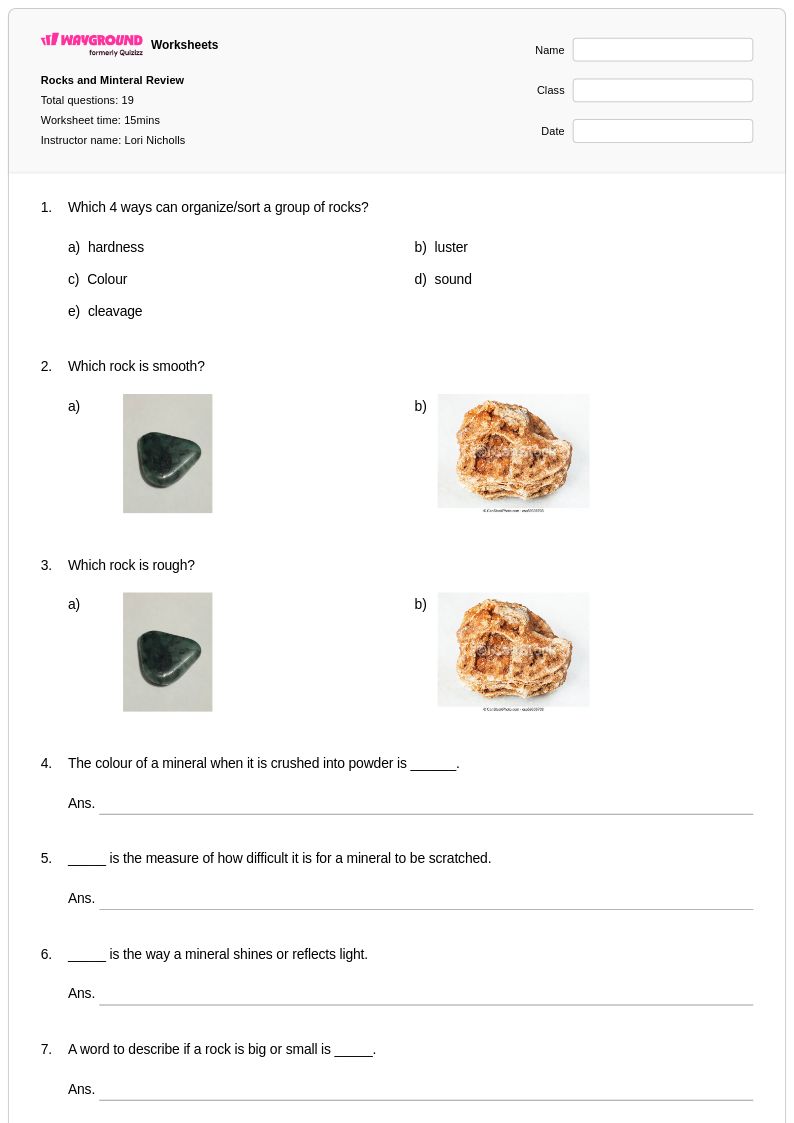
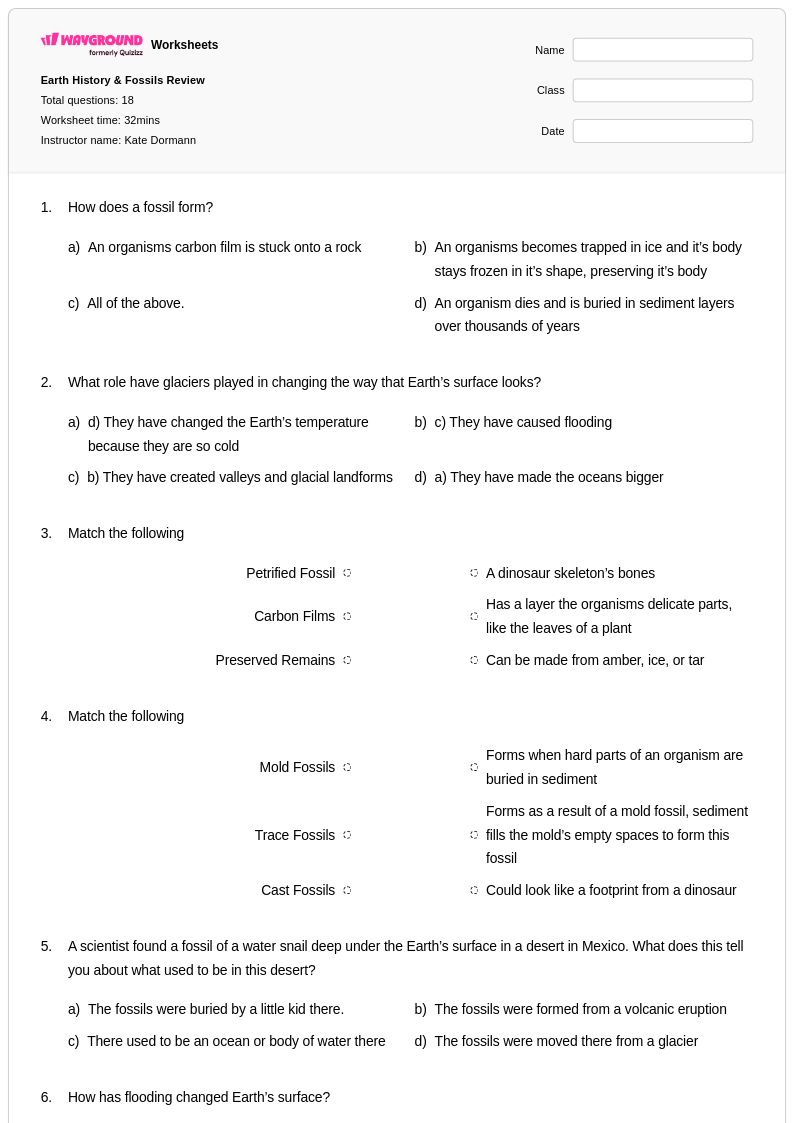
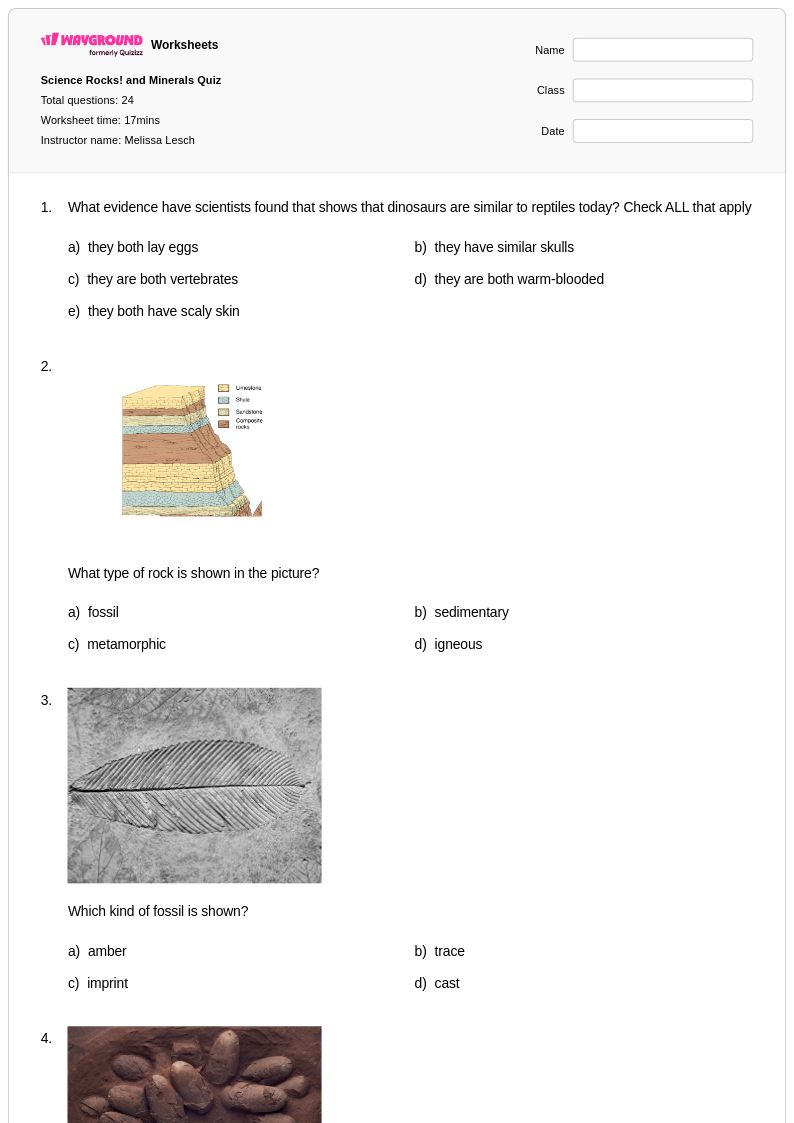
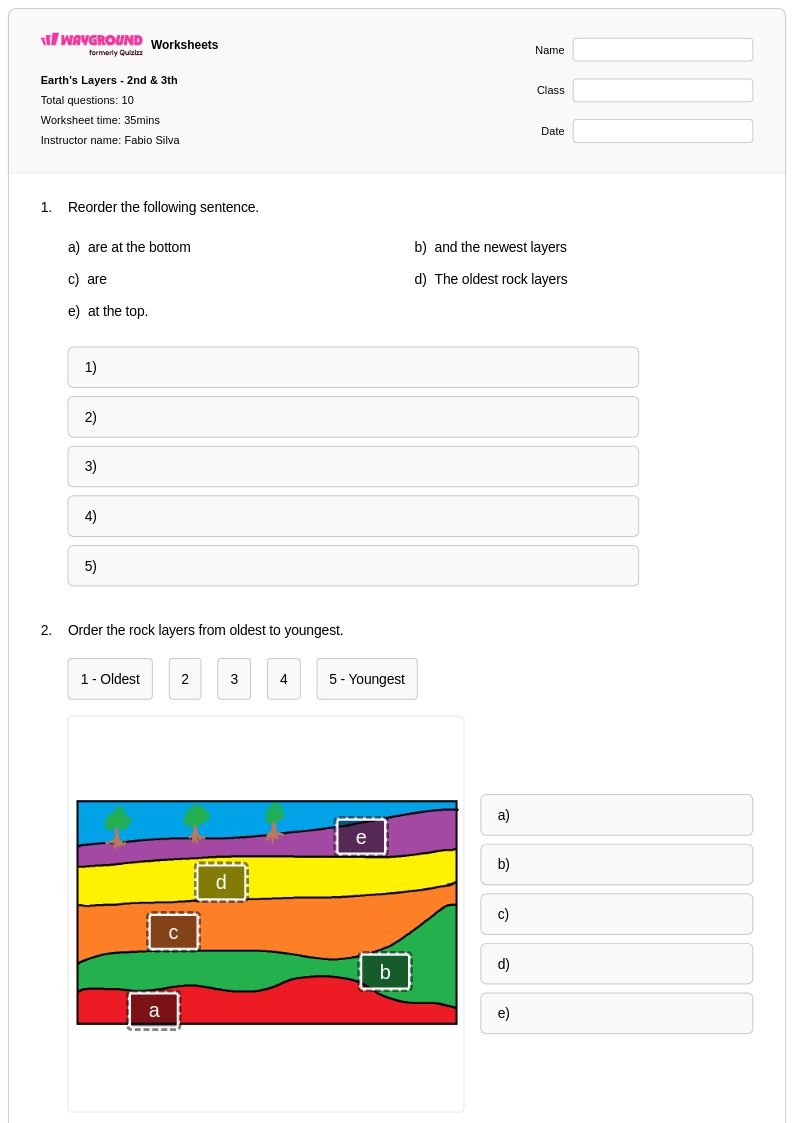
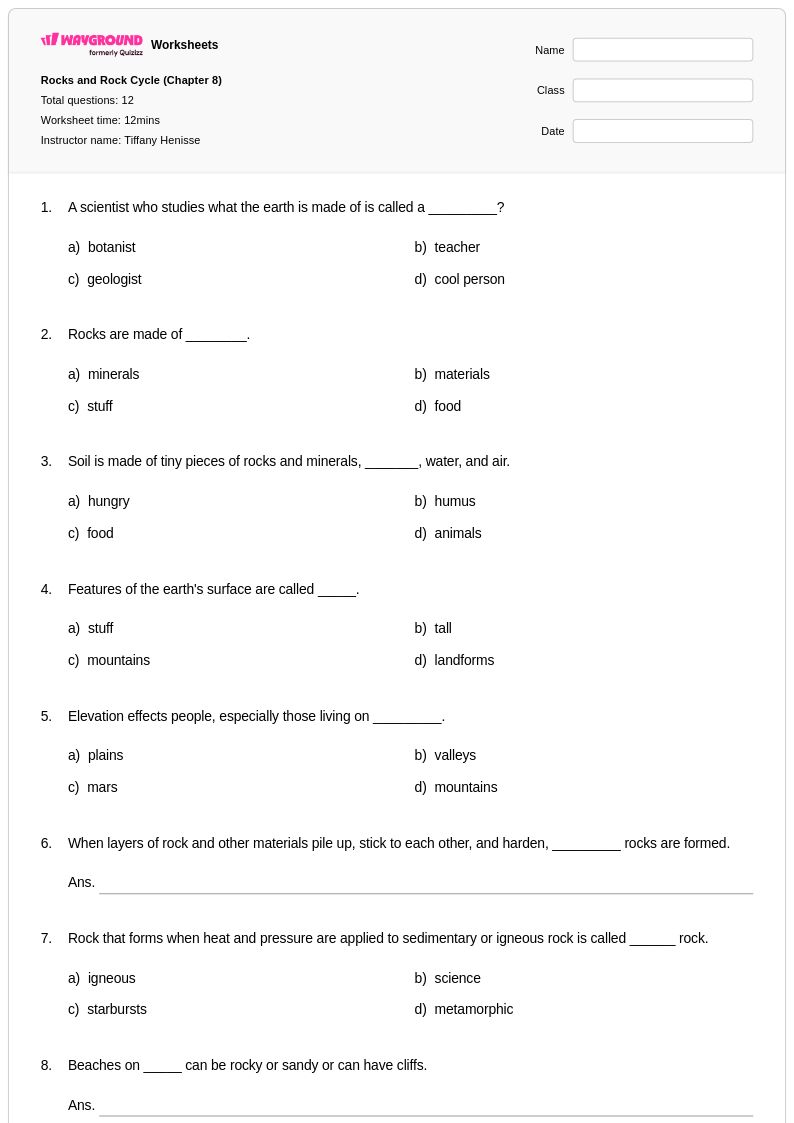
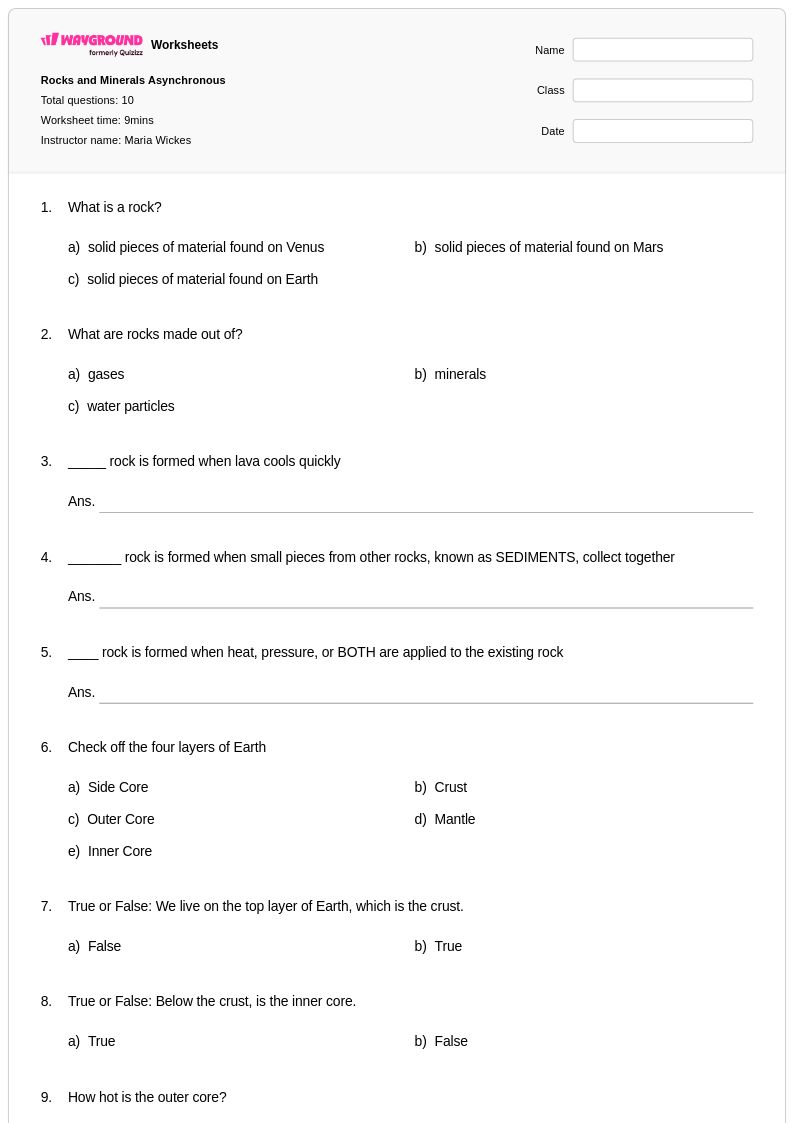
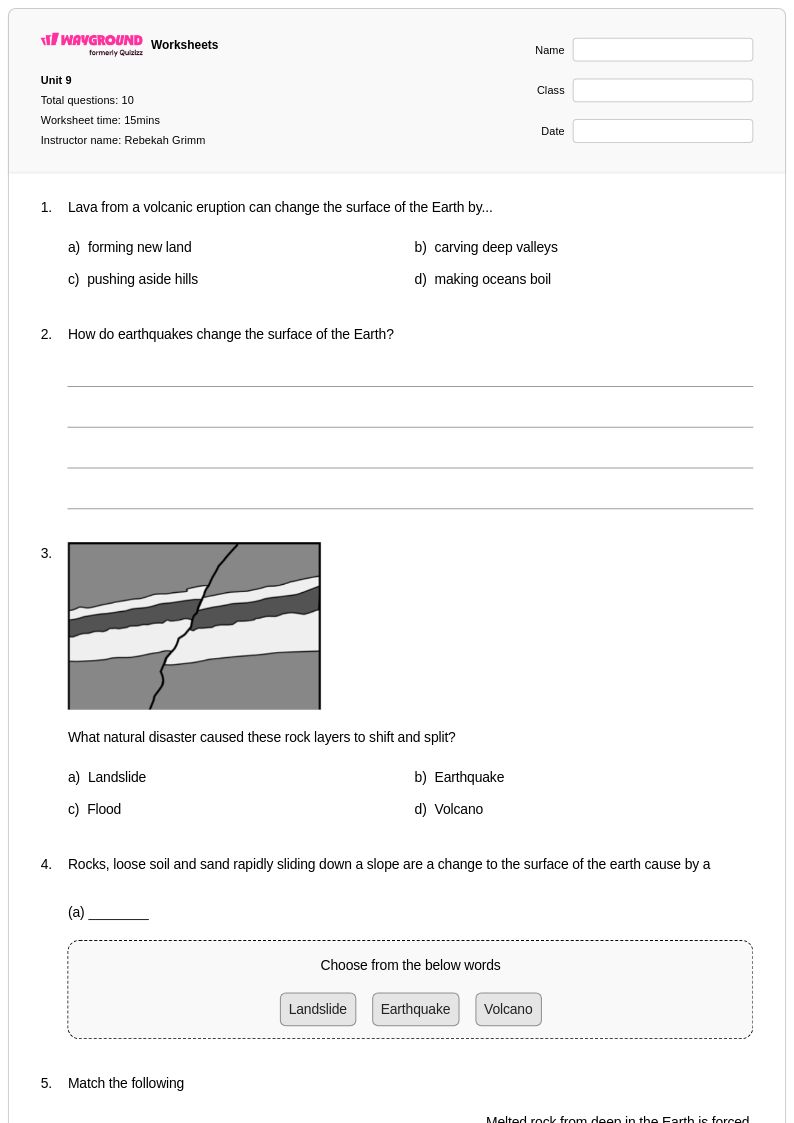
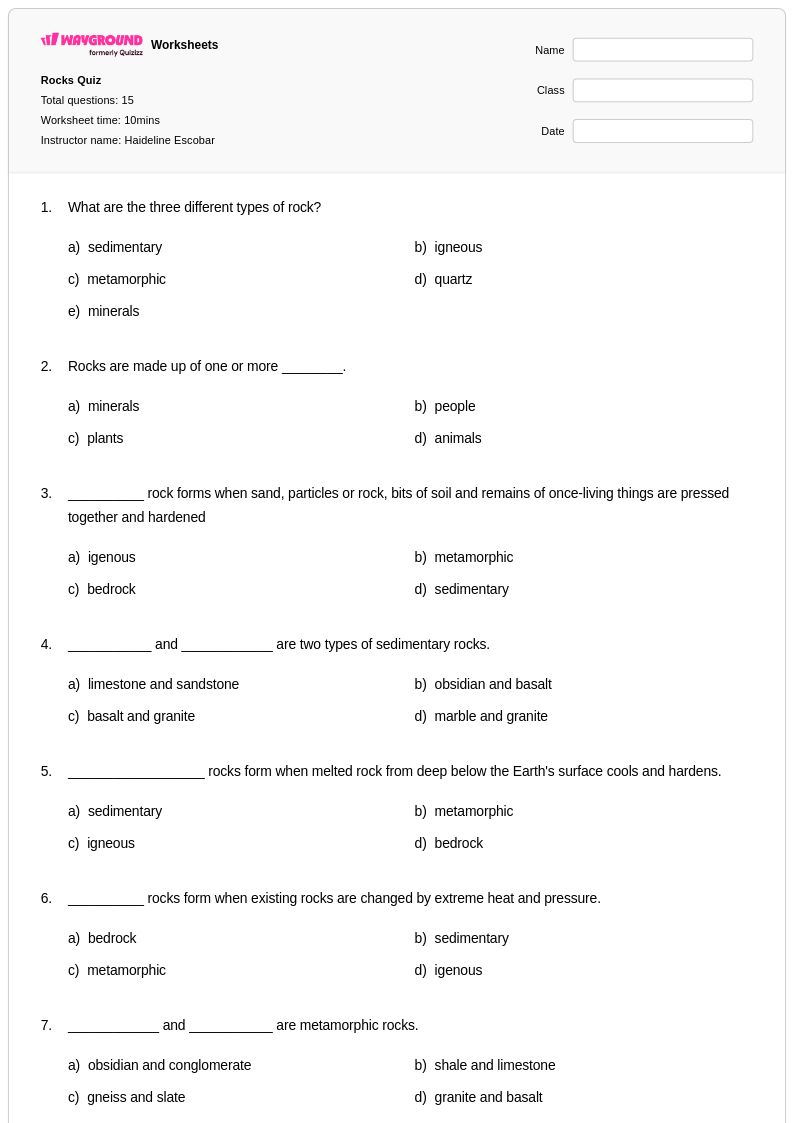
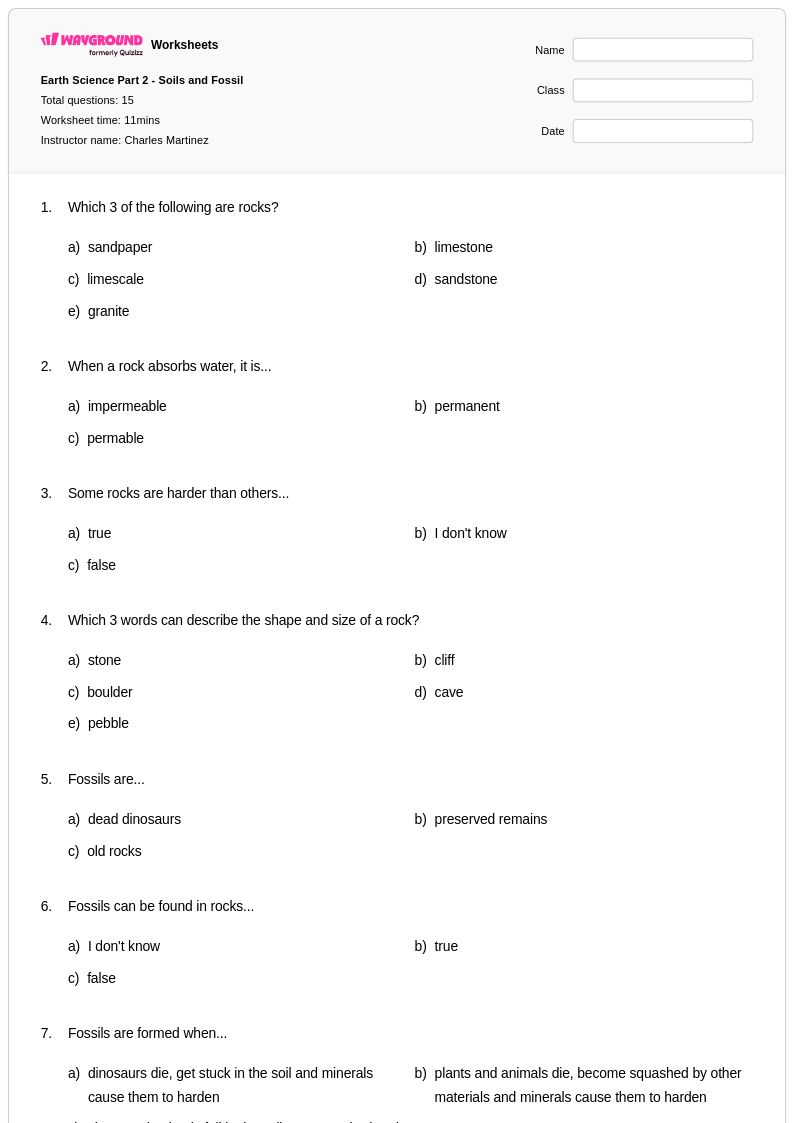
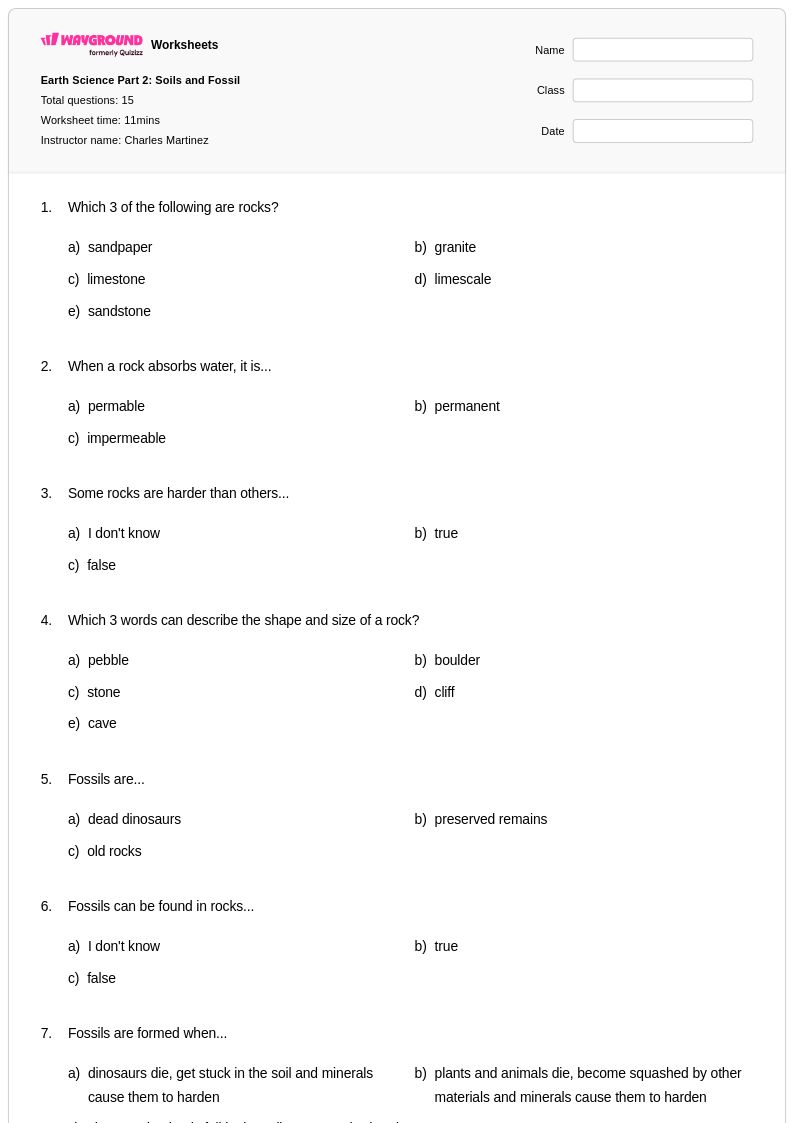
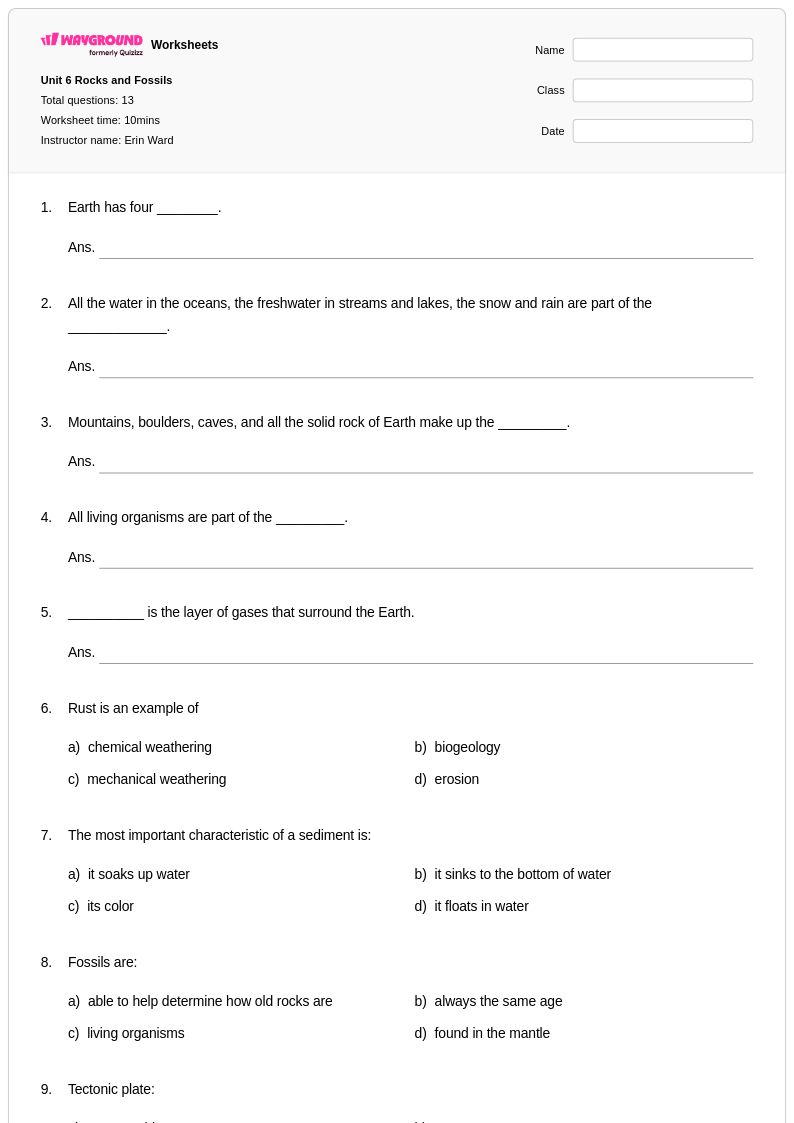
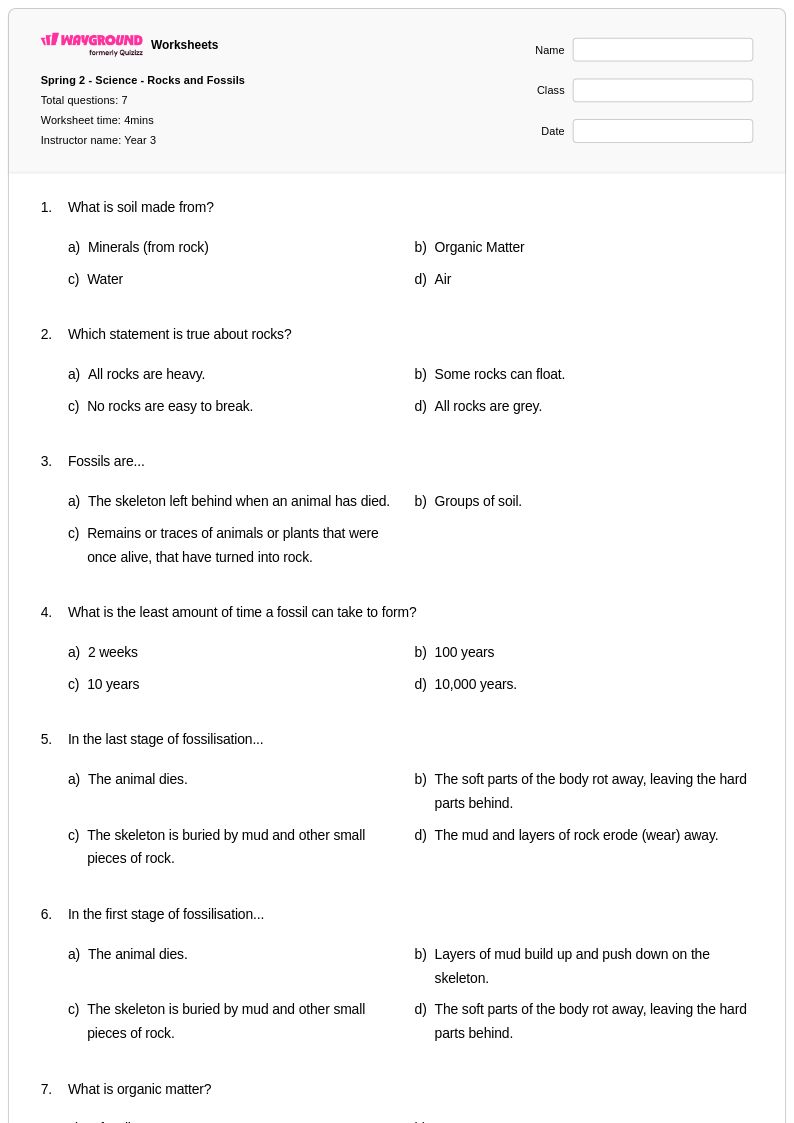
Rock layers worksheets for Year 3 students available through Wayground (formerly Quizizz) provide essential foundational learning experiences that introduce young learners to the fascinating world of geological stratification and Earth's history. These carefully designed printables help students develop critical observation skills as they examine how sedimentary layers form over time, identify different types of rocks and minerals within each stratum, and understand the concept of relative age determination through layer positioning. The comprehensive collection includes engaging practice problems that challenge students to sequence rock formations, analyze cross-sectional diagrams, and make connections between geological processes and the evidence preserved in Earth's crust. Each worksheet comes with a detailed answer key to support both independent learning and guided instruction, while the free pdf format ensures accessibility for diverse classroom environments and home study applications.
Wayground (formerly Quizizz) empowers educators with millions of teacher-created rock layers resources that streamline lesson planning and enhance Year 3 Earth and space science instruction through robust search and filtering capabilities that help locate age-appropriate geological content quickly and efficiently. The platform's standards alignment features ensure that worksheets support curriculum objectives while differentiation tools allow teachers to modify complexity levels for diverse learning needs, making geological concepts accessible to all students regardless of their current skill level. These flexible customization options, combined with both printable and digital formats including downloadable pdfs, enable seamless integration into various teaching environments and learning modalities. Teachers can effectively use these resources for skill practice sessions, targeted remediation of geological concepts, and enrichment activities that extend learning beyond basic rock identification to deeper understanding of Earth's dynamic processes and geological time scales.
FAQs
How do I teach rock layers and stratigraphy to students?
Teaching rock layers effectively starts with the three foundational principles: superposition (older layers are deeper), original horizontality (layers form flat), and cross-cutting relationships (features that cut across layers are younger than what they cut). Use geological cross-section diagrams to walk students through interpreting real or realistic formations before asking them to analyze independently. Connecting rock layer sequences to Earth's timeline helps students understand why stratigraphy matters beyond memorization.
What kinds of practice exercises help students understand rock layer diagrams?
The most effective practice exercises ask students to sequence rock layers from oldest to youngest using diagrams, identify intrusions or faults and determine their relative age, and interpret unconformities within a geological cross-section. Practice problems that require written justification force students to apply the principles of stratigraphy rather than guess visually. Repeated exposure to varied cross-section diagrams builds the pattern recognition students need to interpret geological formations confidently.
What mistakes do students commonly make when interpreting rock layers?
The most common misconception is that the top layer is always the youngest, which breaks down when students encounter tilted, folded, or overturned sequences. Students also frequently misapply the cross-cutting relationships principle, assuming that any intersecting feature must be older rather than younger than what it cuts. Another common error is confusing relative age with absolute age, leading students to think that naming a layer 'older' tells them how many years old it actually is.
How can I use rock layers worksheets to assess student understanding?
Rock layers worksheets work well as formative assessments when they require students to both label a diagram and explain their reasoning in writing, since correct labels with incorrect reasoning reveal partial understanding. Look for whether students can accurately apply all three principles of stratigraphy, not just superposition, which is the easiest to grasp. Worksheets that include unconformities or igneous intrusions are particularly useful for identifying which students have moved beyond surface-level understanding.
How do I use Wayground's rock layers worksheets in my classroom?
Wayground's rock layers worksheets are available as printable PDFs for traditional classroom use and in digital formats for technology-integrated environments, making them practical whether students are working at desks or on devices. You can also host them as a quiz directly on Wayground, which allows you to track student responses and review results in one place. Each worksheet includes a detailed answer key, so they work equally well for guided instruction, independent practice, or self-paced review.
How do I differentiate rock layers instruction for students at different levels?
For students who are still building foundational skills, simplify cross-section diagrams to include only horizontal, undisturbed layers and focus exclusively on the principle of superposition before introducing more complex features. Advanced learners can be challenged with diagrams that include faults, intrusions, and unconformities, requiring them to apply all three stratigraphic principles simultaneously. On Wayground, teachers can apply accommodations such as reduced answer choices or read-aloud features for individual students without disrupting the experience for the rest of the class.