Free Printable Production Possibilities Curve Worksheets for Year 12
Explore Wayground's comprehensive collection of Year 12 Production Possibilities Curve worksheets featuring free printables, practice problems, and answer keys to help students master economic efficiency, opportunity cost, and resource allocation concepts.
Explore printable Production Possibilities Curve worksheets for Year 12
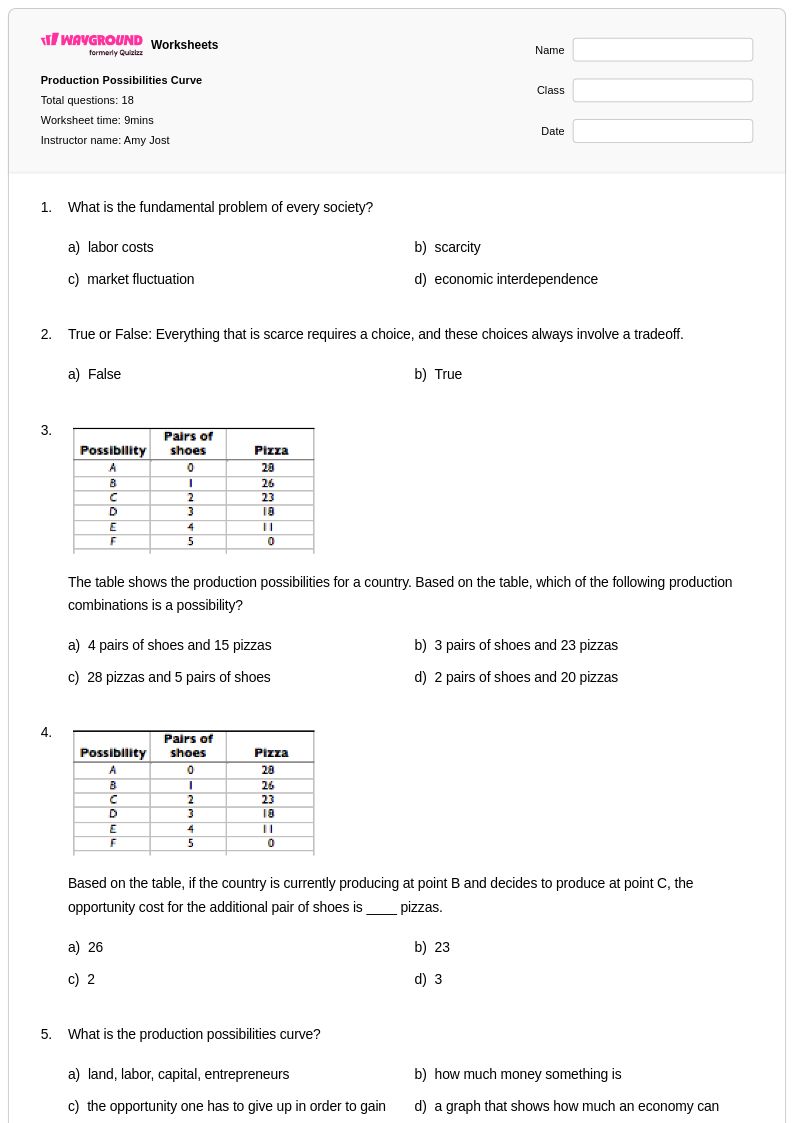
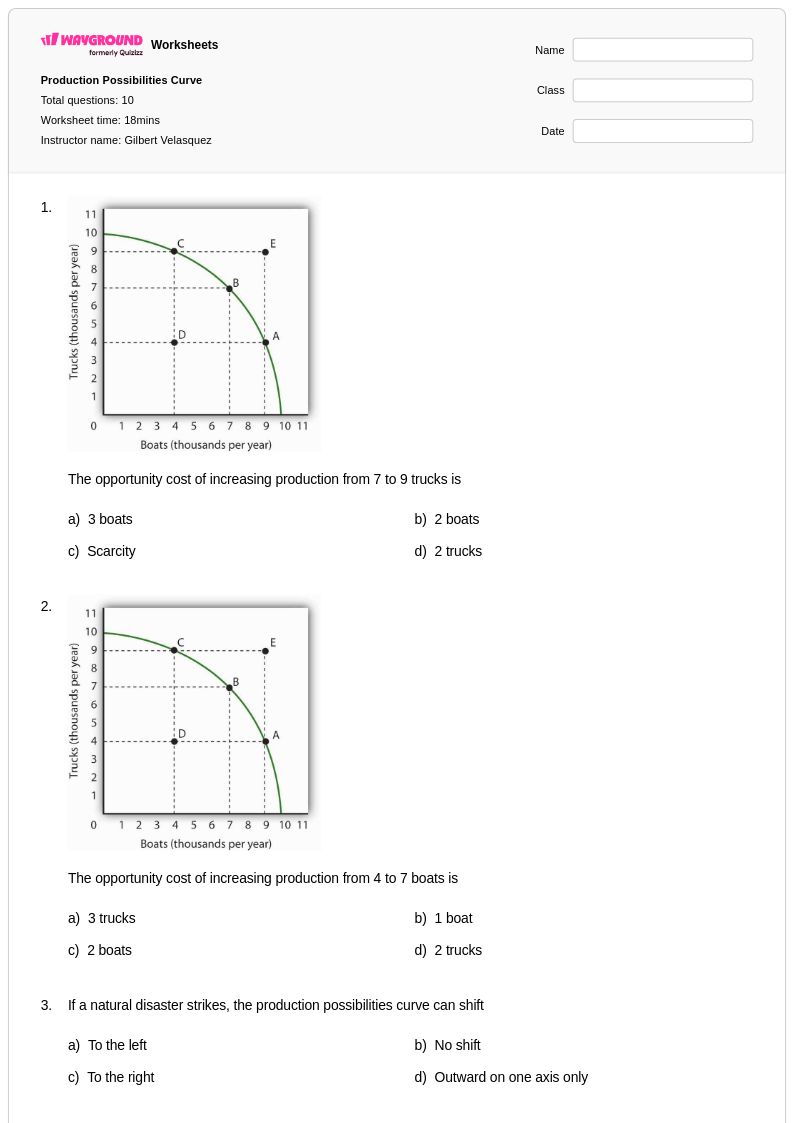
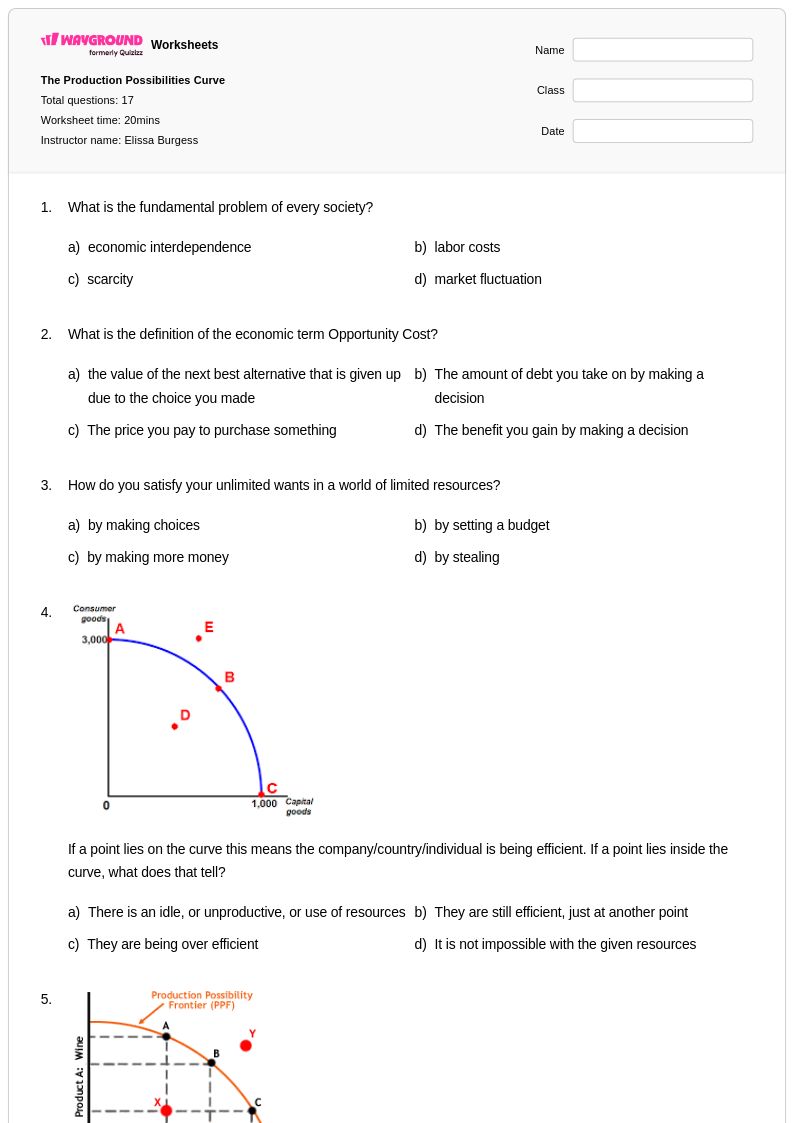
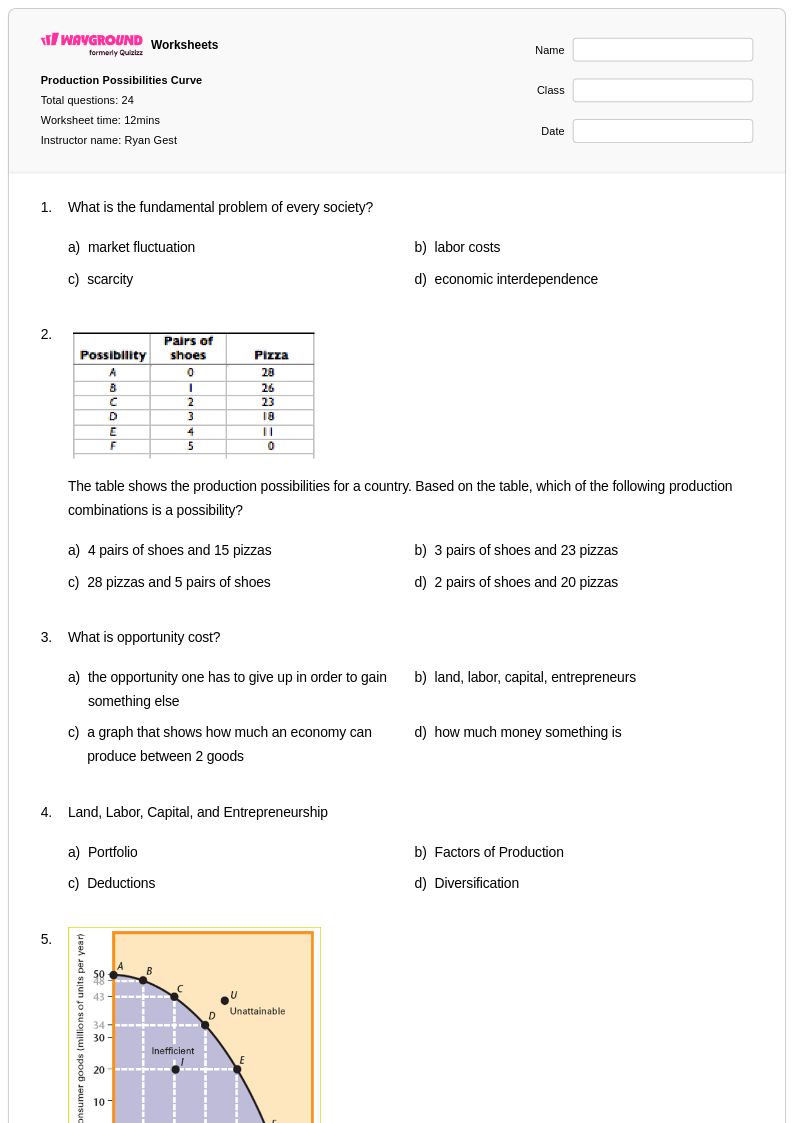
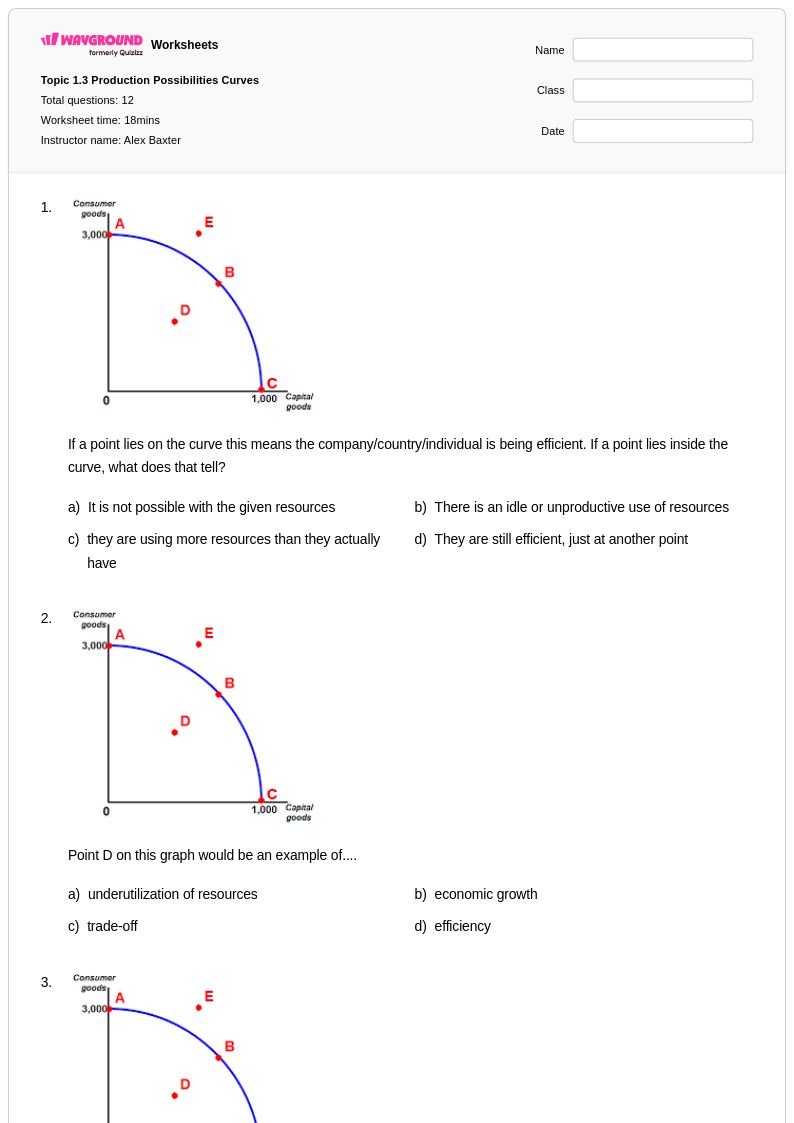
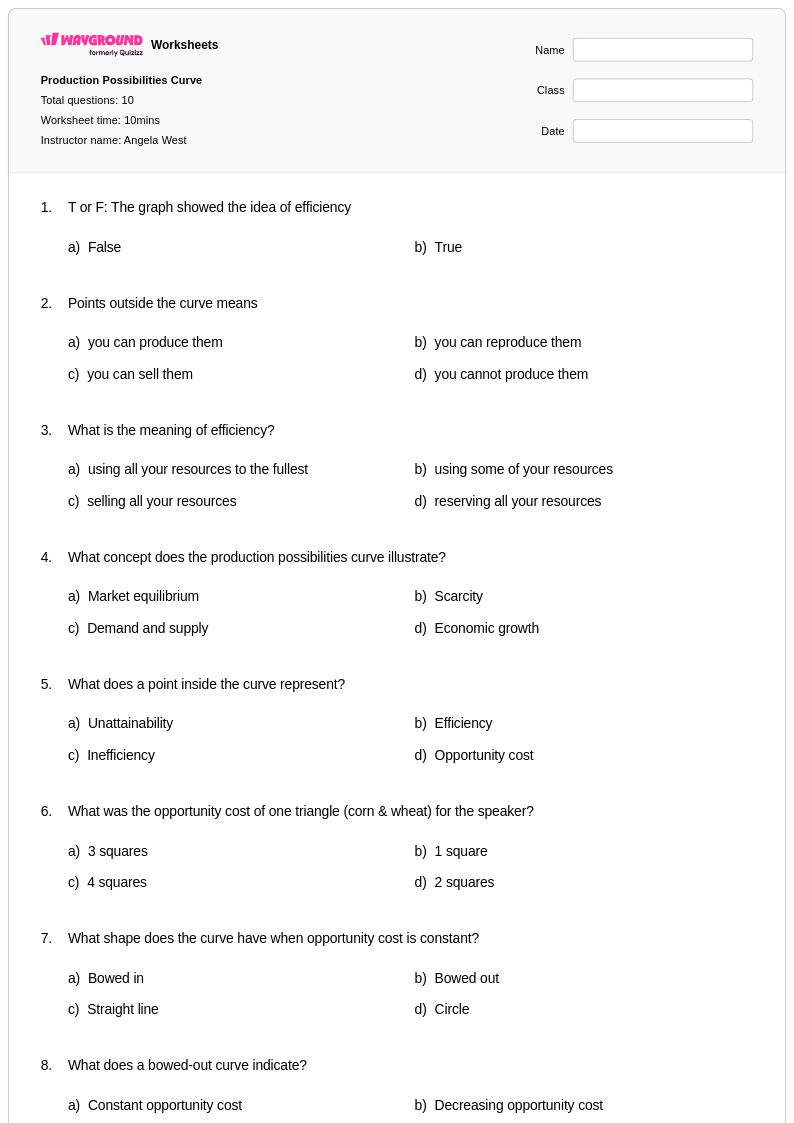
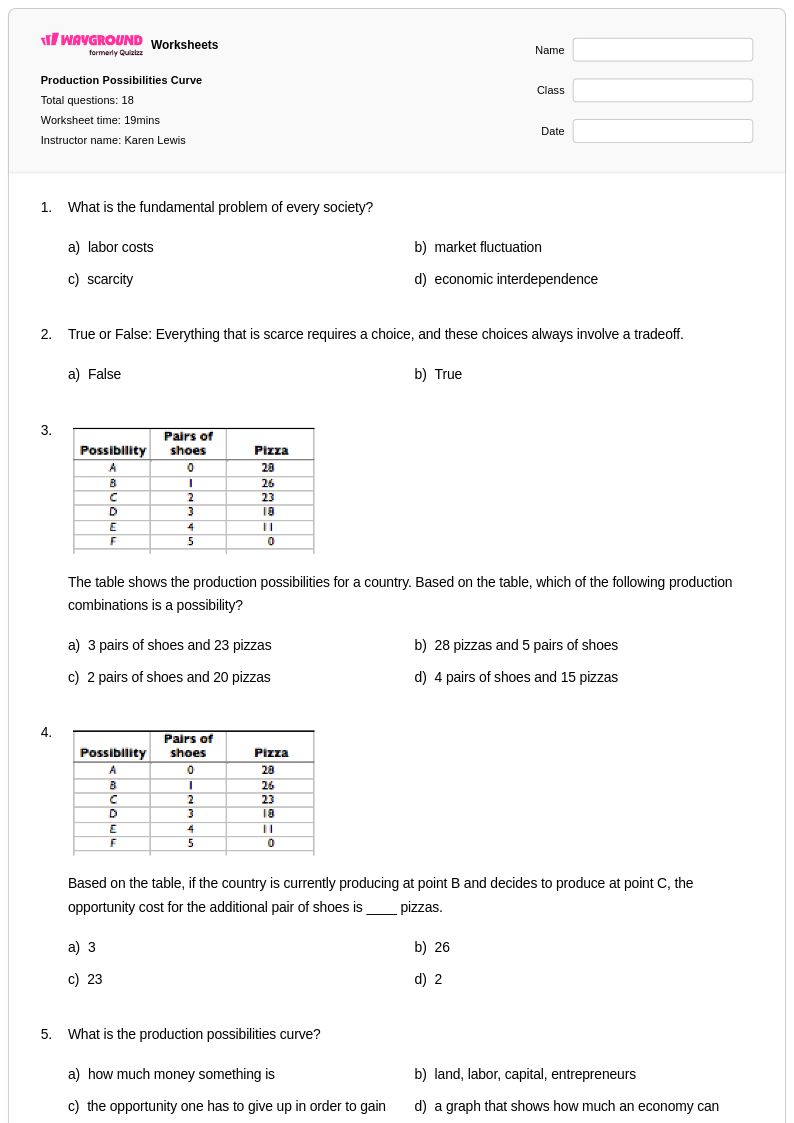
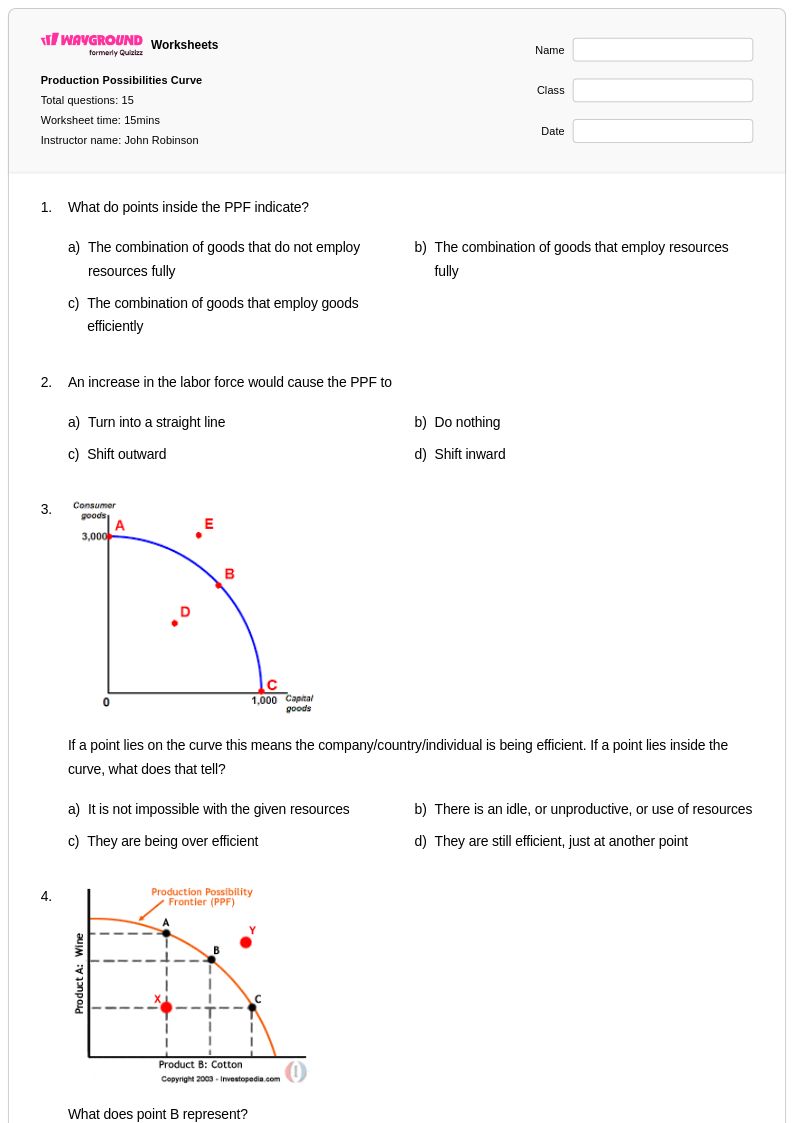
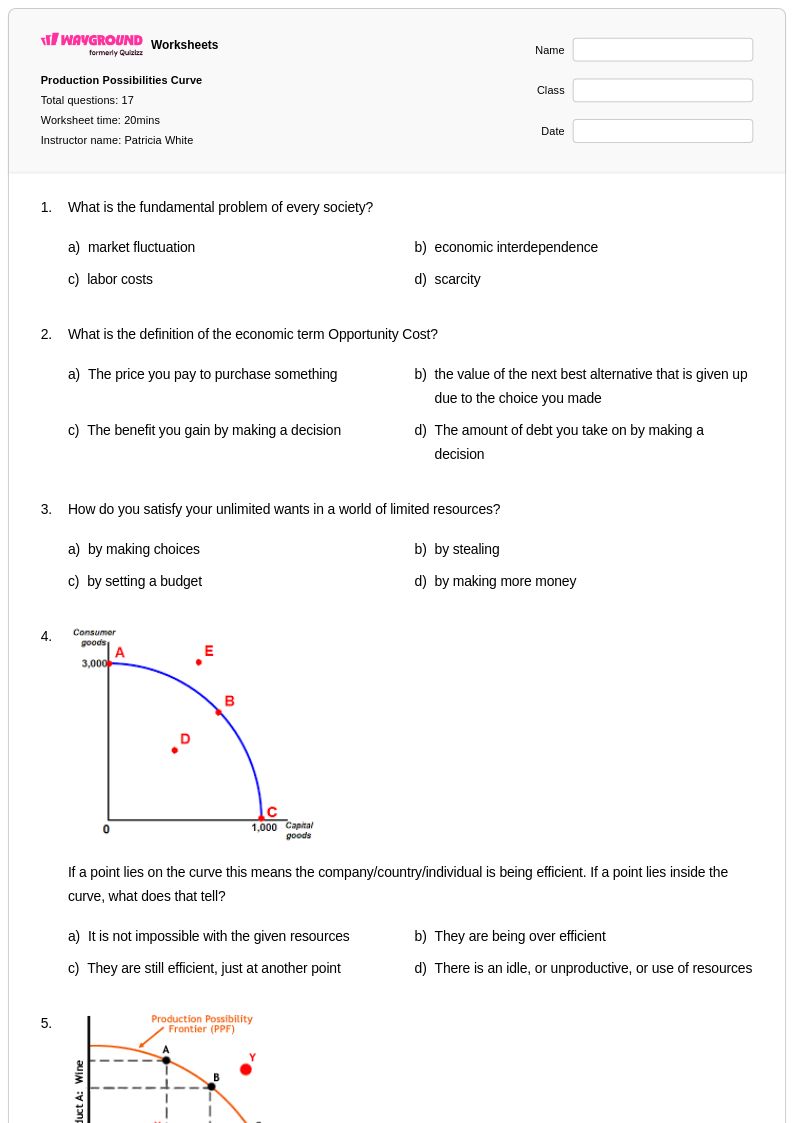
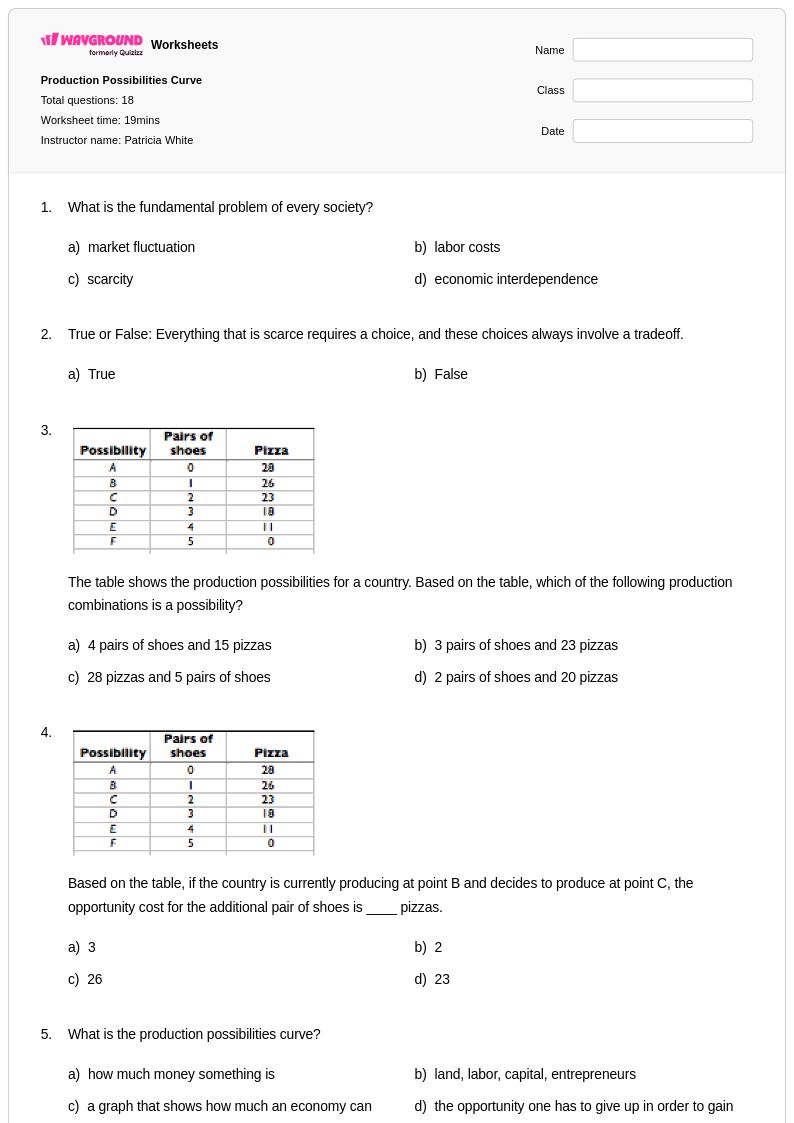
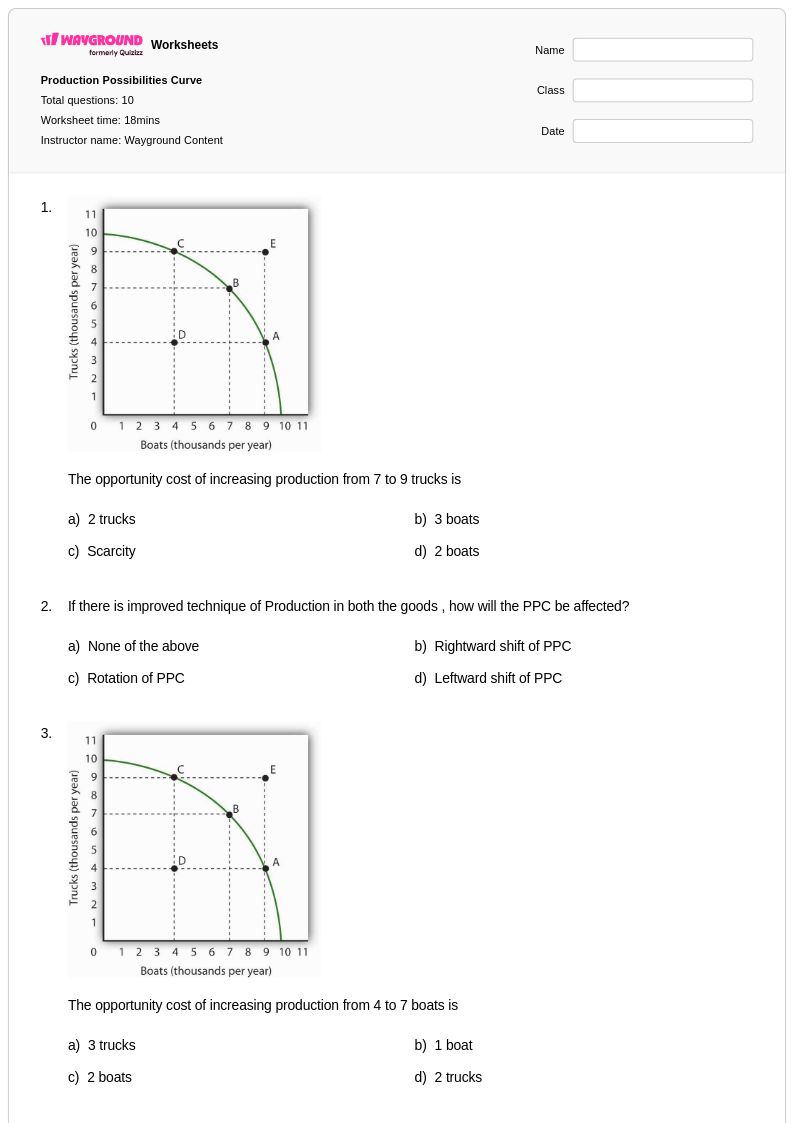
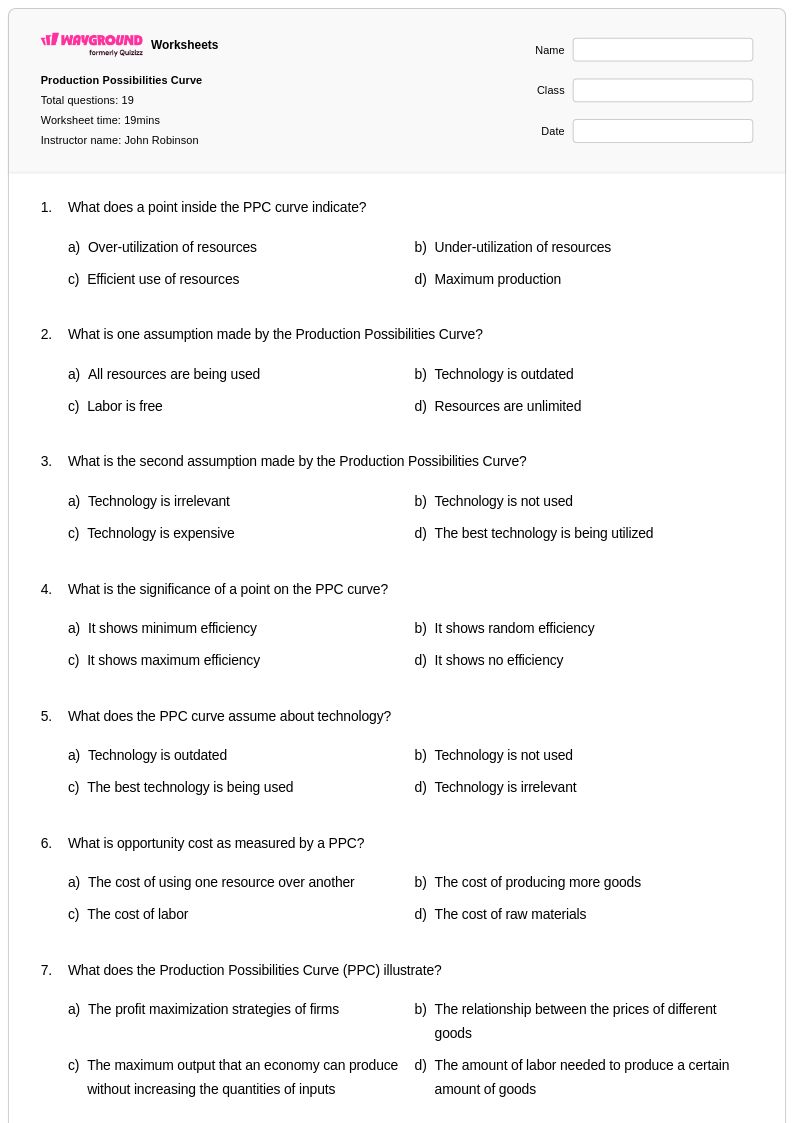
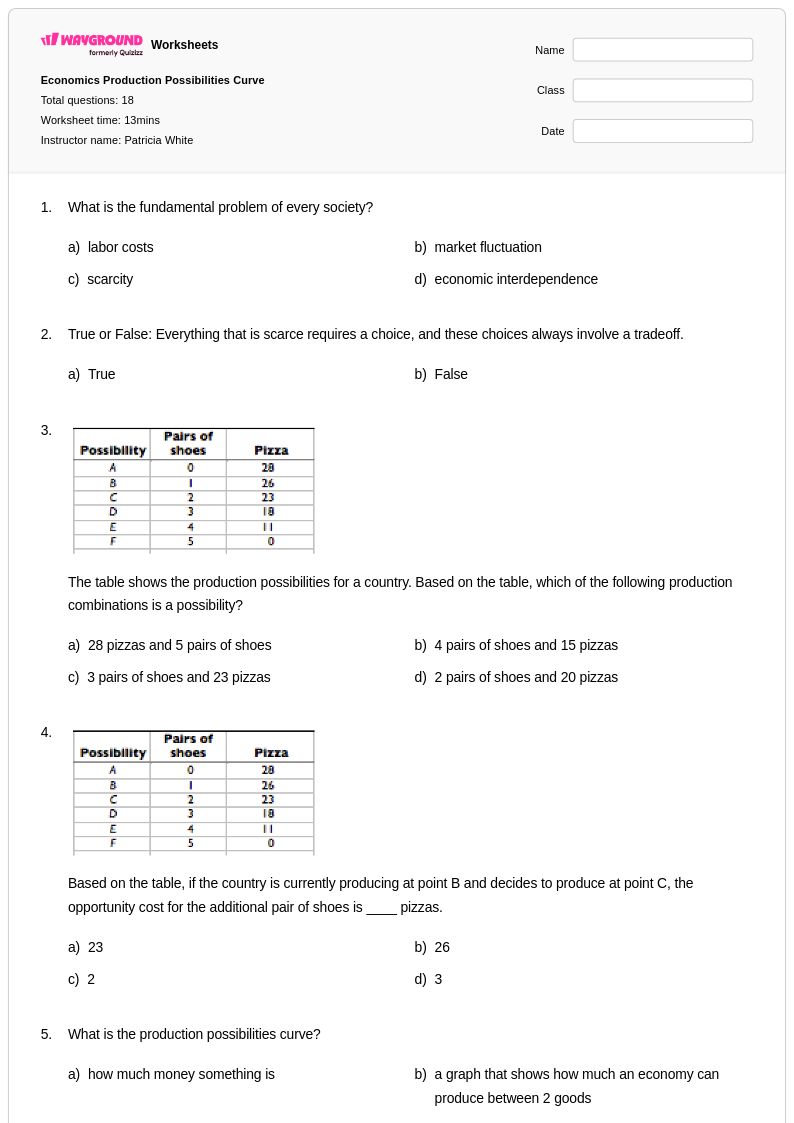
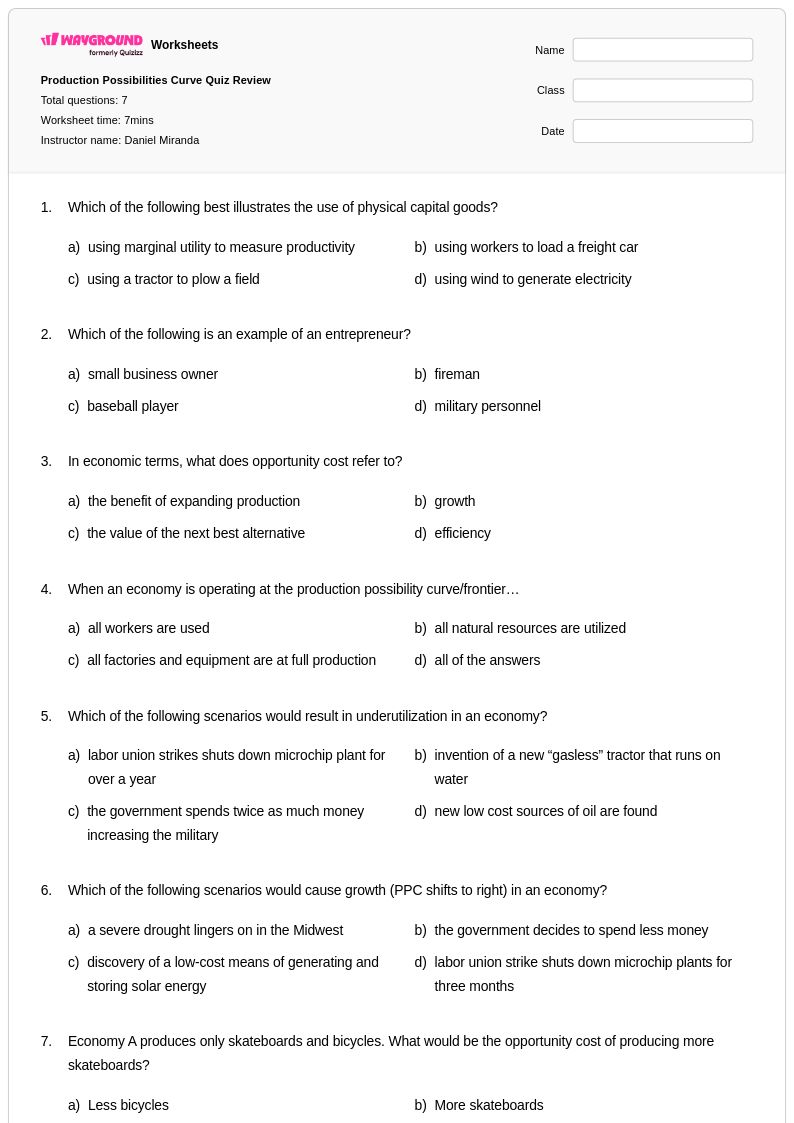
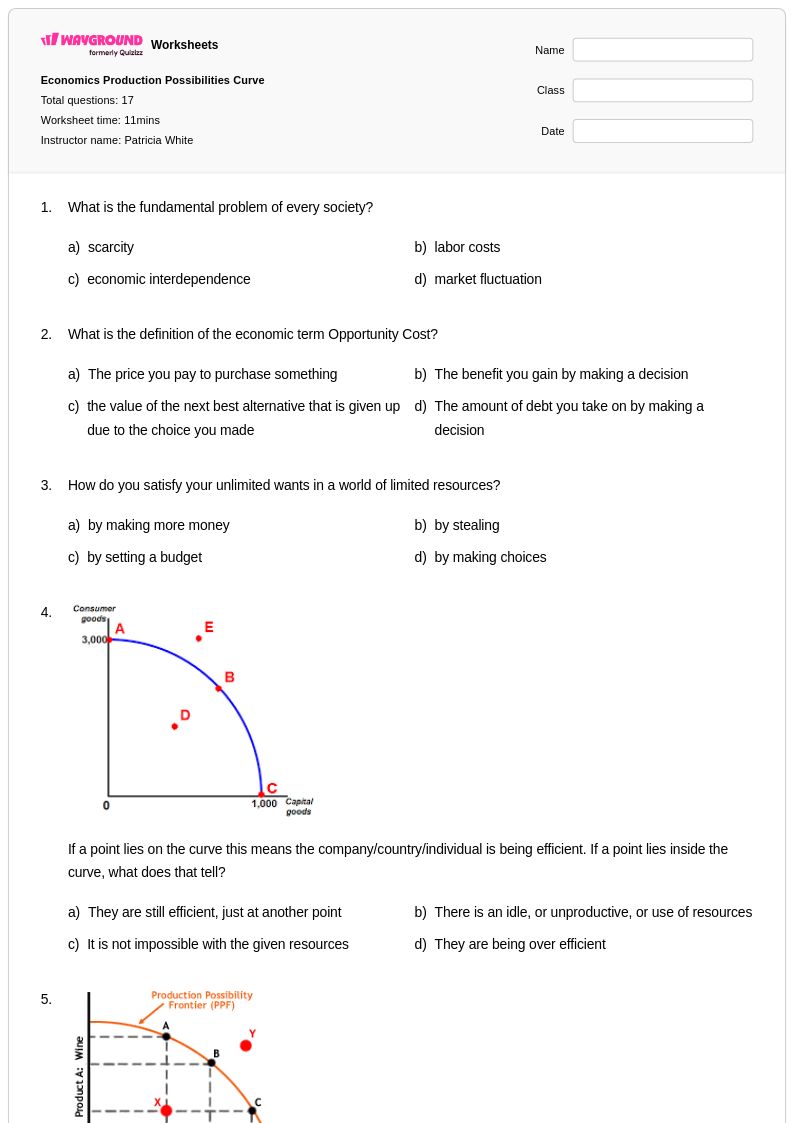
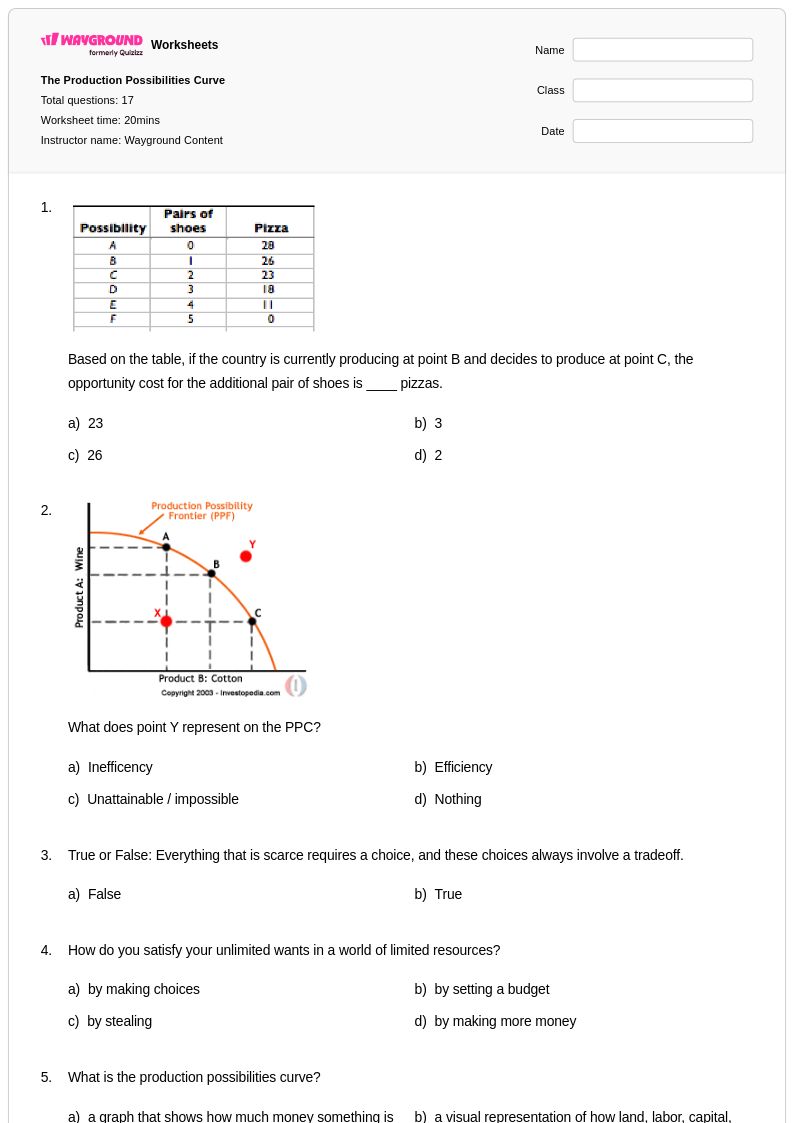
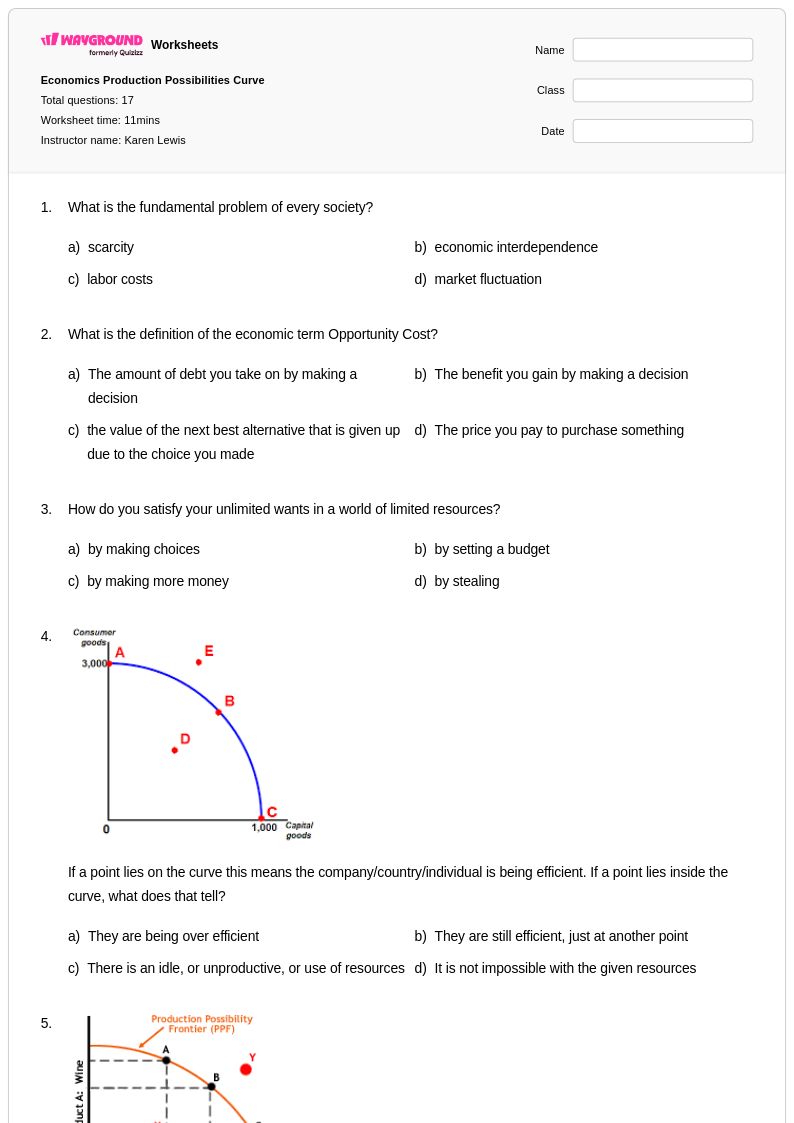
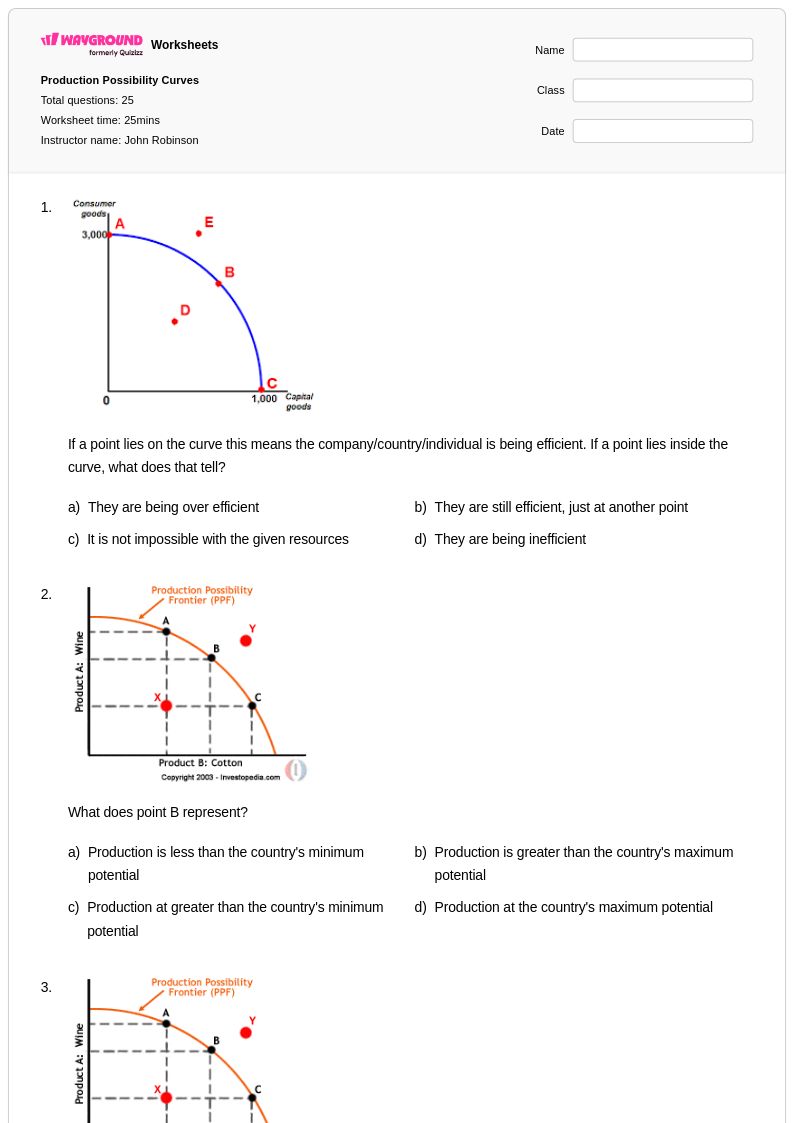
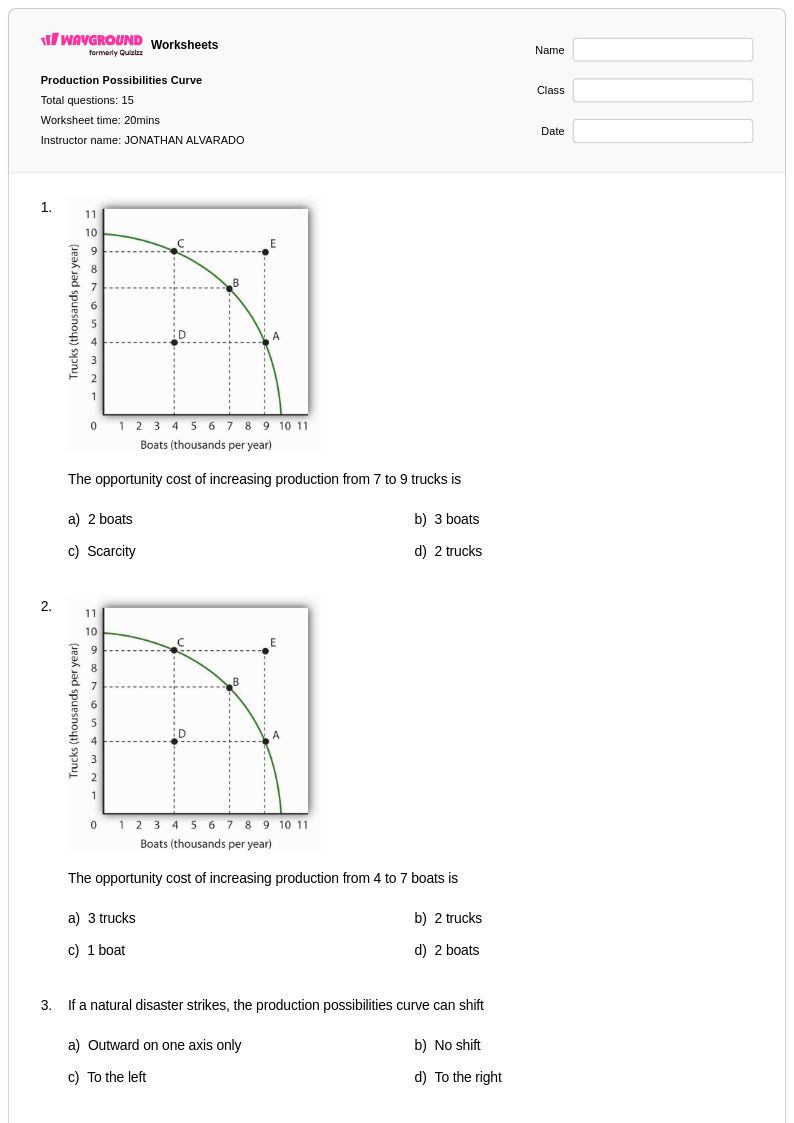
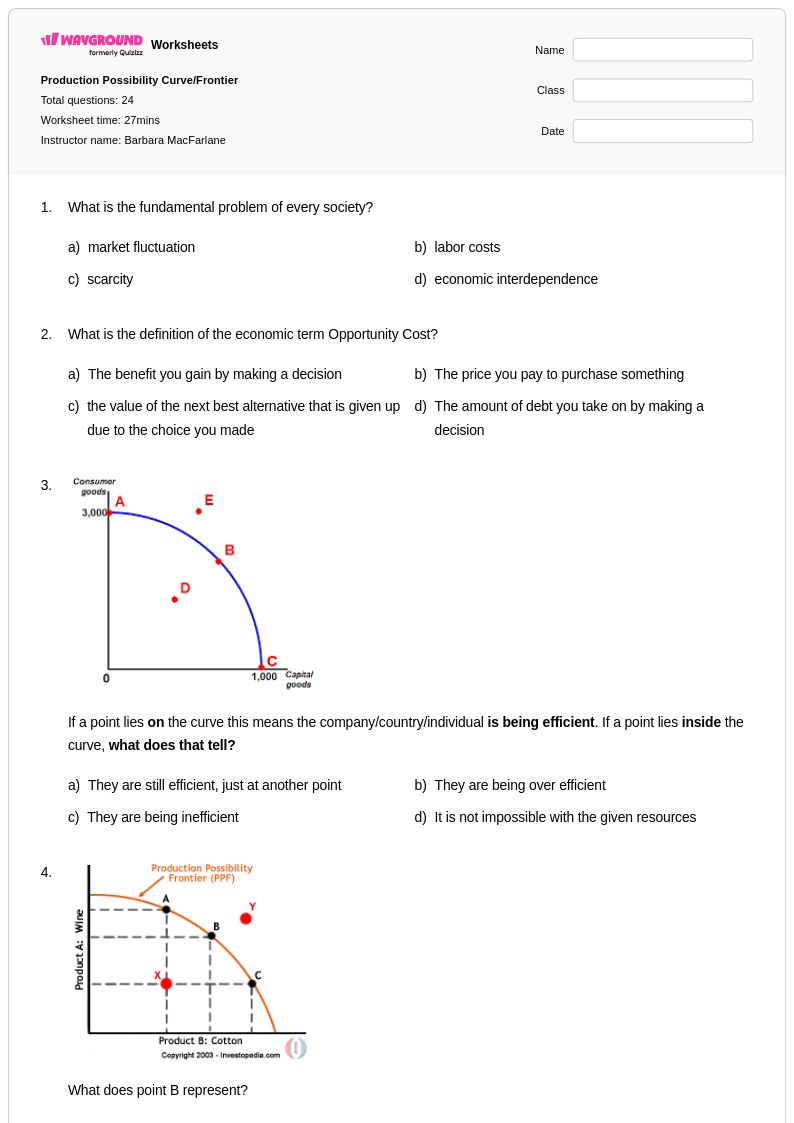
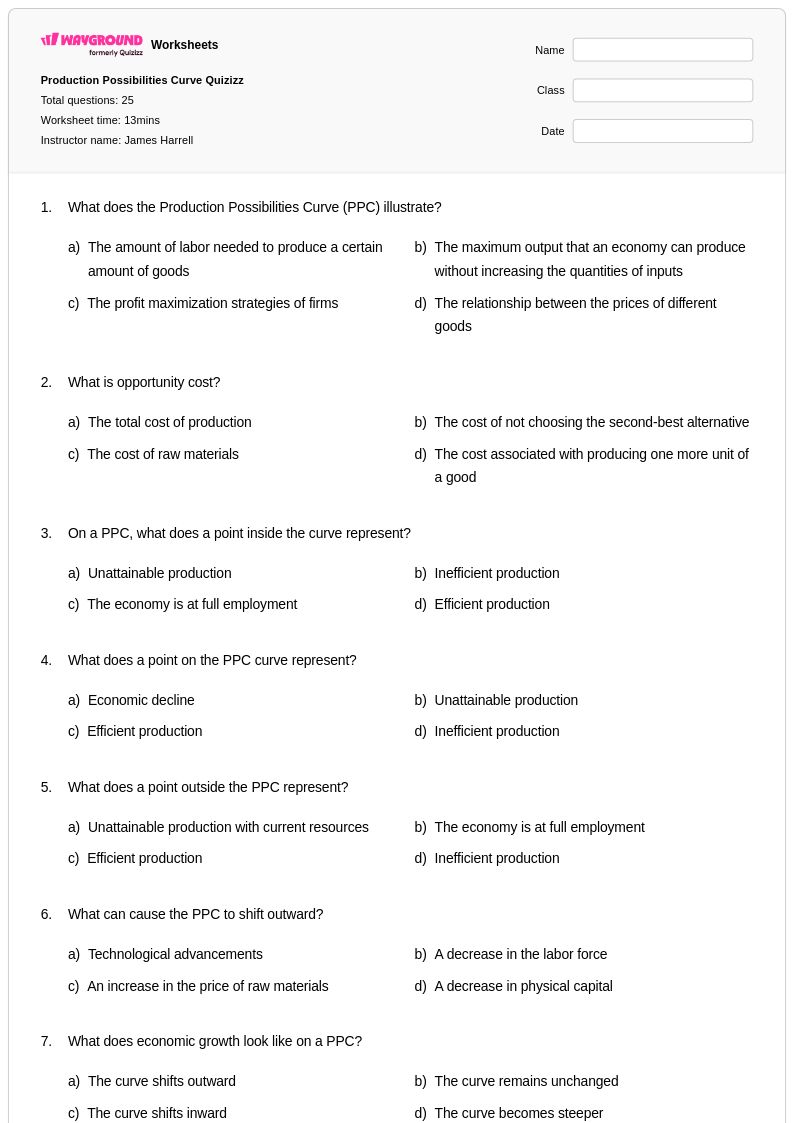
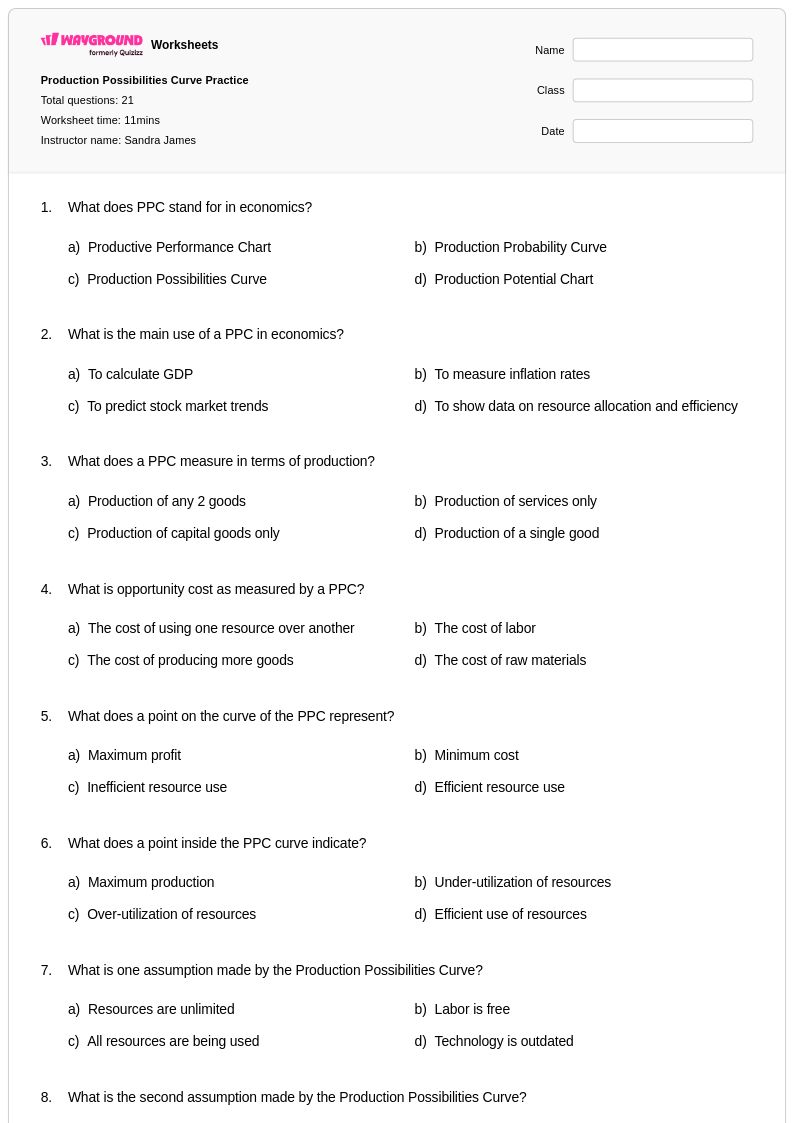
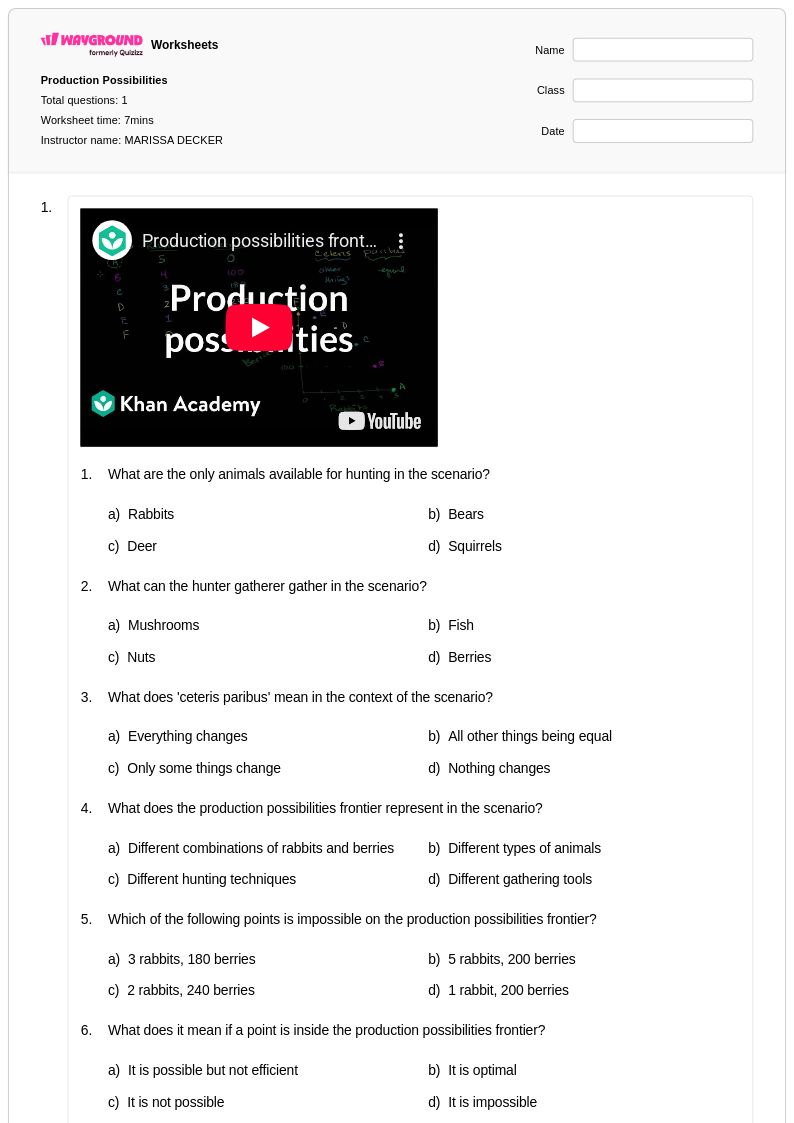
Production Possibilities Curve worksheets for Year 12 students available through Wayground (formerly Quizizz) provide comprehensive practice with this fundamental economic concept that illustrates scarcity, opportunity cost, and efficiency in resource allocation. These expertly designed worksheets strengthen students' analytical skills by challenging them to interpret graphs showing the maximum combination of goods an economy can produce, calculate opportunity costs between alternative production choices, and evaluate points representing efficient, inefficient, and unattainable production levels. Students work through practice problems that require them to shift curves based on changes in resources or technology, analyze trade-offs between consumer and capital goods, and apply real-world scenarios to theoretical models. Each worksheet includes a detailed answer key to support independent learning and self-assessment, with free printables available in pdf format for convenient classroom distribution and homework assignments.
Wayground (formerly Quizizz) empowers educators with millions of teacher-created resources specifically designed for Production Possibilities Curve instruction, featuring robust search and filtering capabilities that allow teachers to locate materials perfectly aligned with their curriculum standards and student needs. The platform's differentiation tools enable instructors to customize worksheets for varying skill levels within Year 12 classrooms, supporting both remediation for students struggling with graphical analysis and enrichment opportunities for advanced learners ready to explore complex economic modeling. Teachers can access these resources in both printable and digital formats, including downloadable pdf versions, making lesson planning efficient and flexible for diverse teaching environments. The extensive collection supports targeted skill practice in economic reasoning, mathematical application, and critical thinking, while the standards-aligned content ensures that instruction meets rigorous academic expectations for senior-level social studies coursework.
FAQs
How do I teach the Production Possibilities Curve to economics students?
Start by grounding students in the concepts of scarcity and opportunity cost before introducing the curve itself, since the PPC is a graphical representation of those underlying ideas. Use concrete examples — such as a country choosing between producing guns versus butter, or a student allocating time between studying and working — to make the trade-offs tangible. From there, students can move to interpreting shifts in the curve caused by technological advancement or changes in resource availability. Building from concept to graph to scenario analysis tends to produce stronger retention than starting with the graph alone.
What exercises help students practice reading and interpreting a Production Possibilities Curve?
Effective practice includes having students identify points on the curve as efficient, inefficient, or unattainable, and then explain what each position means in terms of resource use. Calculating opportunity costs between two points on the curve reinforces the quantitative side of the concept. Scenario-based problems — such as what happens to the curve when a new technology is introduced or when resources are destroyed — push students to apply their understanding rather than just recall definitions. Worksheets that progress from basic curve interpretation to multi-step scenarios are especially useful for building fluency.
What mistakes do students commonly make when working with the Production Possibilities Curve?
A frequent error is confusing points inside the curve (inefficient) with points outside it (unattainable) — students often mix up the economic meaning of each. Many students also struggle to calculate opportunity cost correctly, particularly when the curve is bowed outward rather than linear, because the trade-off ratio changes at different points along the curve. Another common misconception is assuming that a shift in the PPC always represents economic growth, without recognizing that a curve can shift inward due to resource depletion or disaster. Targeted practice problems that isolate each of these error types help students identify and correct their own misunderstandings.
How do I use Production Possibilities Curve worksheets effectively in my classroom?
These worksheets are available as printable PDFs for traditional classroom use and in digital formats for technology-integrated learning environments, and can also be hosted as a quiz on Wayground for interactive practice. In a print setting, they work well as guided practice during instruction or as independent review. In digital mode, teachers can assign them as homework, use them for formative assessment, or project them for whole-class discussion. Because the worksheets include answer keys, students can self-assess after completing problems, which supports independent review and targeted remediation.
How can I differentiate Production Possibilities Curve instruction for students at different ability levels?
For students who need additional support, reduce cognitive load by starting with linear PPCs before introducing bowed curves, and provide partially completed graphs for students to finish rather than drawing from scratch. On Wayground, teachers can apply accommodations such as reduced answer choices and read-aloud features to individual students without alerting the rest of the class, making differentiation seamless. For advanced students, extend practice with scenarios involving comparative advantage or multi-good economies that require deeper analytical reasoning.
How do I explain opportunity cost using the Production Possibilities Curve?
The PPC makes opportunity cost visible by showing exactly how much of one good must be sacrificed to produce more of another. When the curve is linear, the opportunity cost is constant at every point along it; when the curve is bowed outward, the opportunity cost increases as production shifts more heavily toward one good, reflecting the law of increasing opportunity cost. Teachers should prompt students to read specific coordinate pairs on the curve and calculate the trade-off explicitly, rather than describing it in abstract terms. This quantitative approach clarifies the concept more effectively than a definition alone.