Free Printable Shifts in Supply Worksheets for Year 12
Free printable Year 12 shifts in supply worksheets with answer keys help students master how market factors affect supply curves through engaging practice problems and comprehensive PDF resources.
Explore printable Shifts in Supply worksheets for Year 12
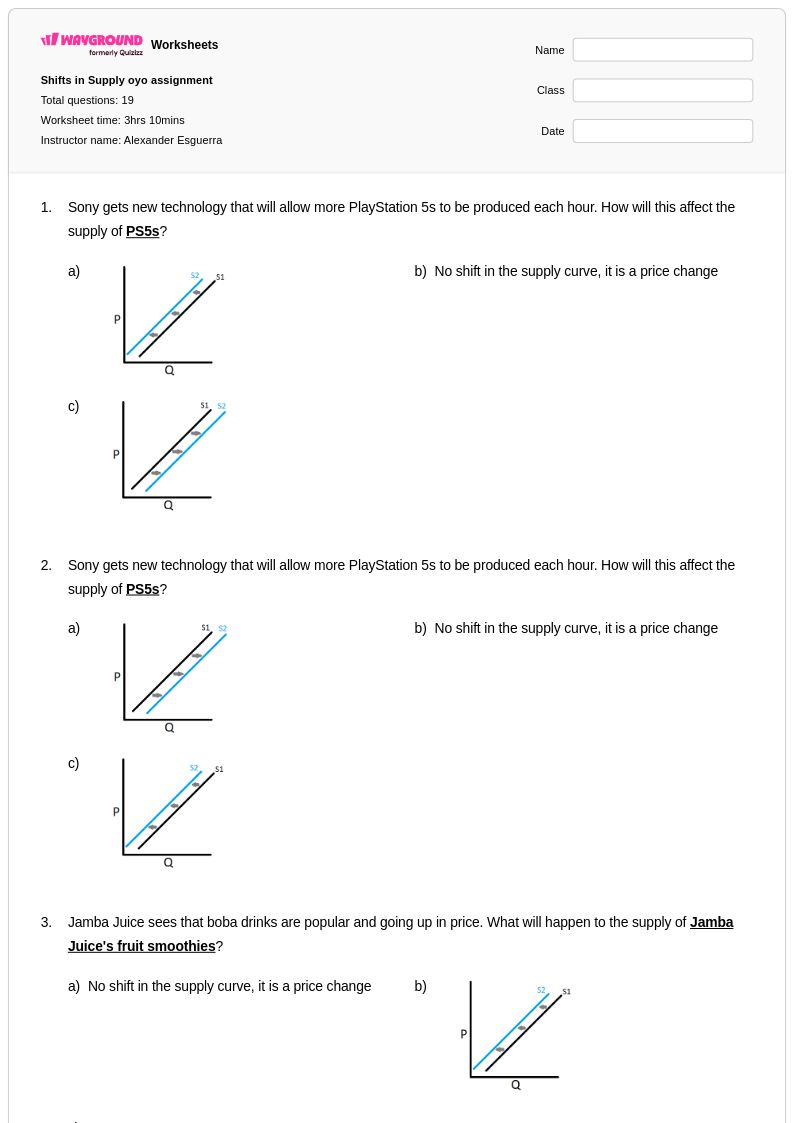
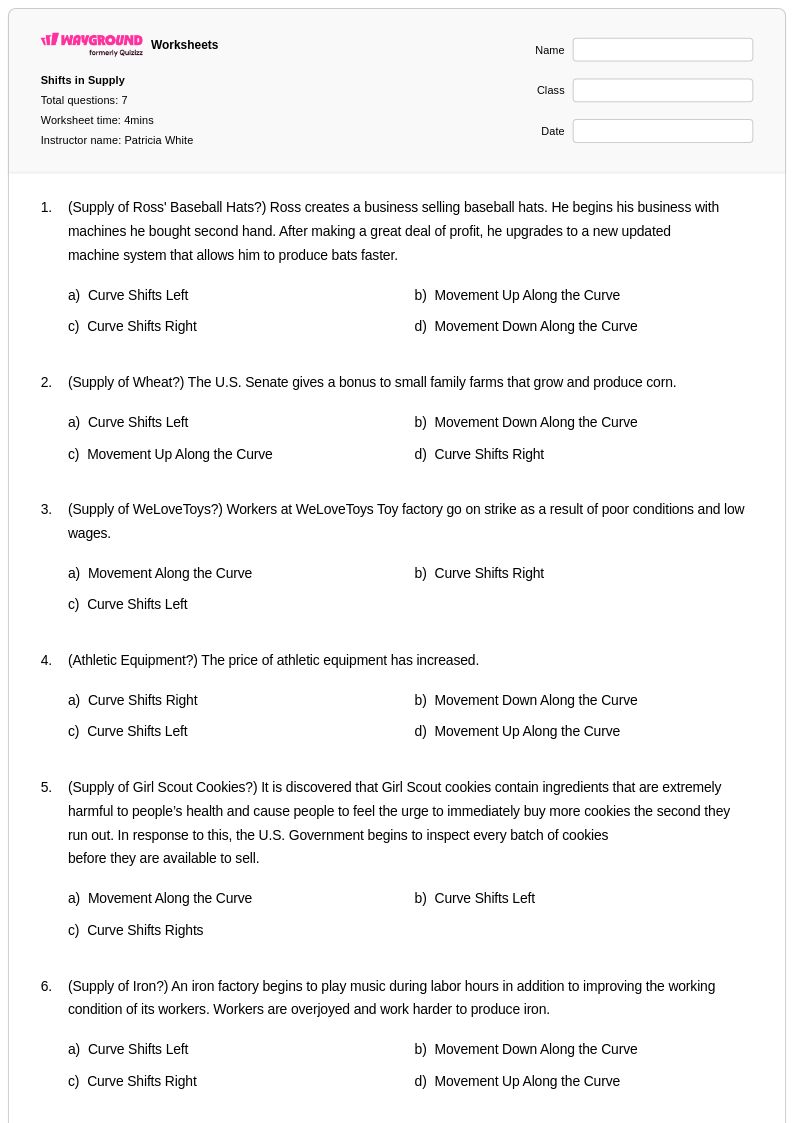
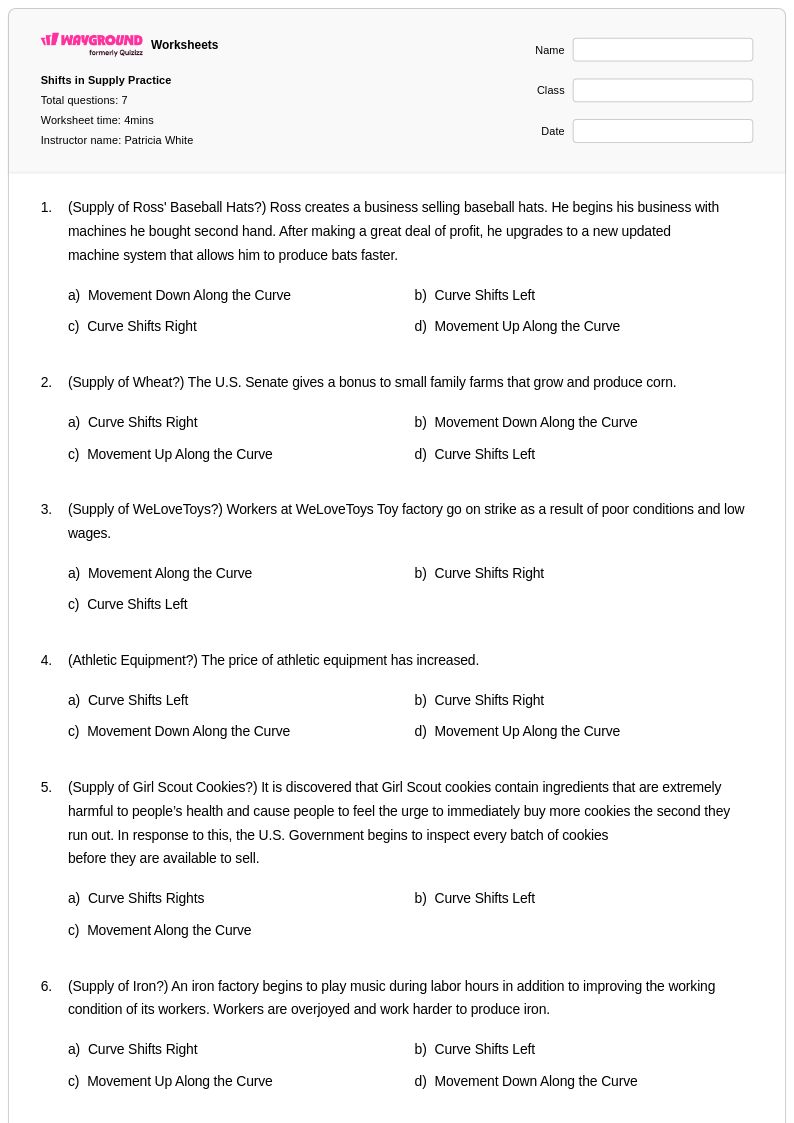
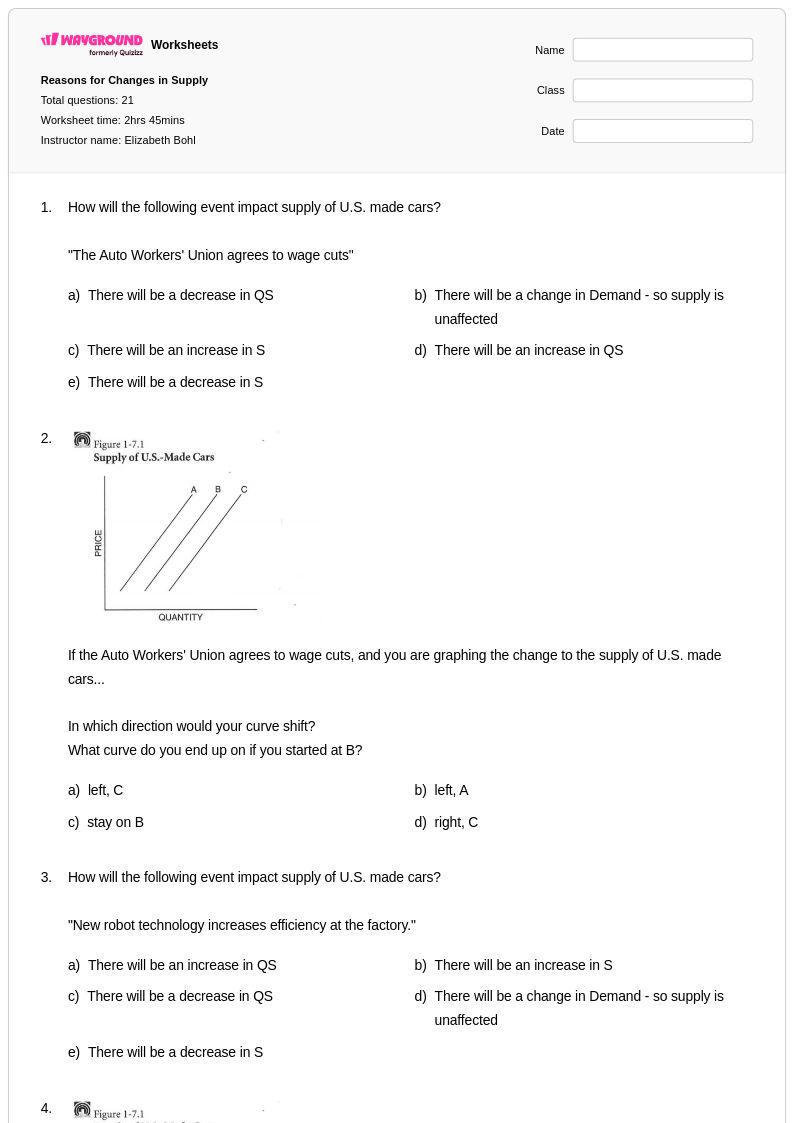
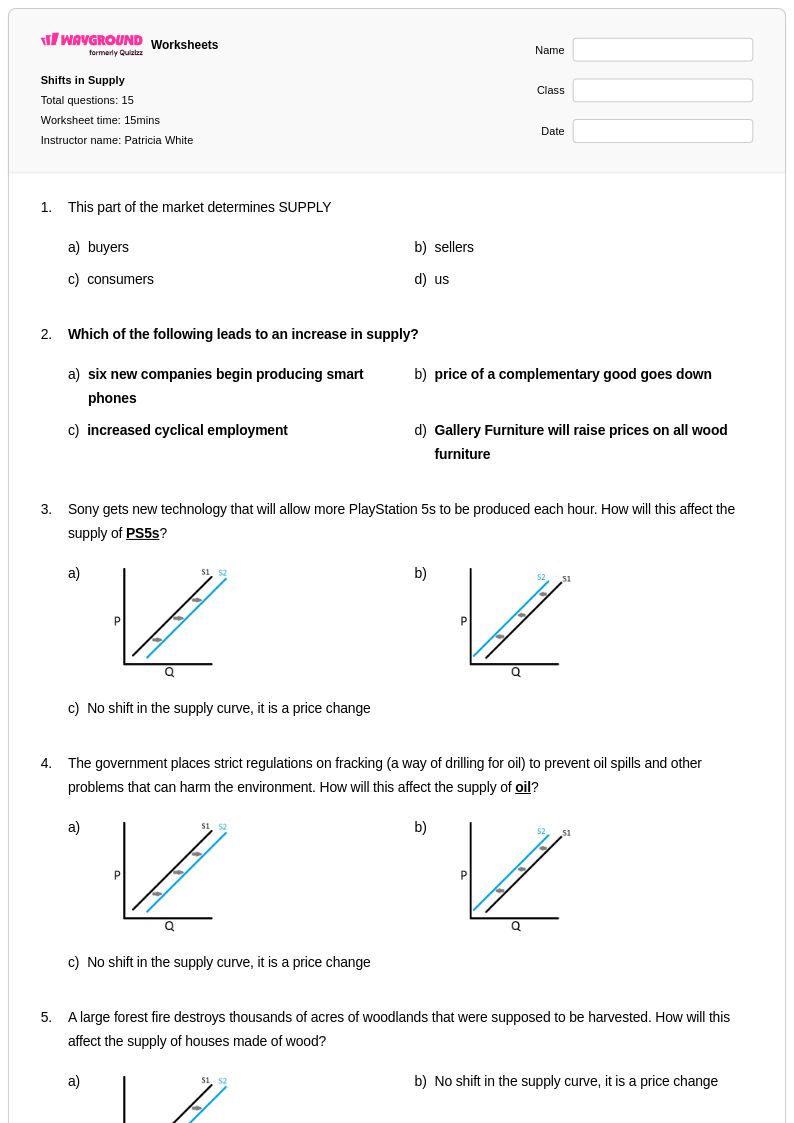
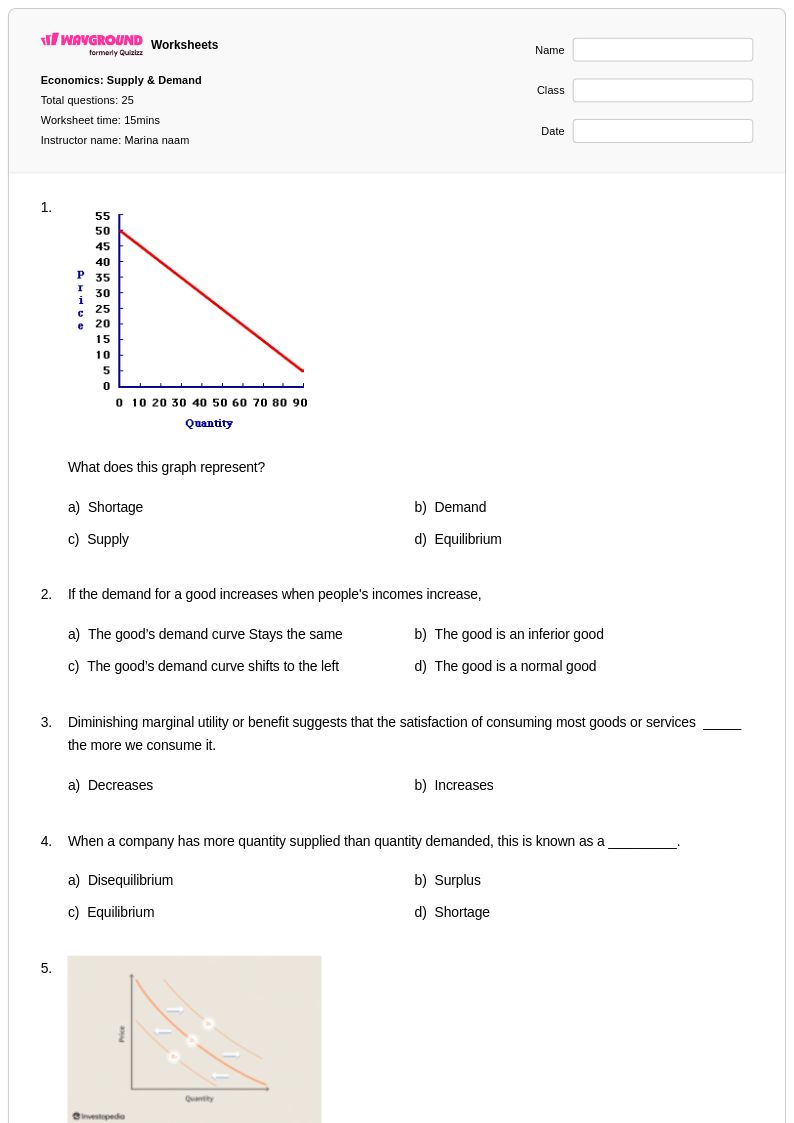
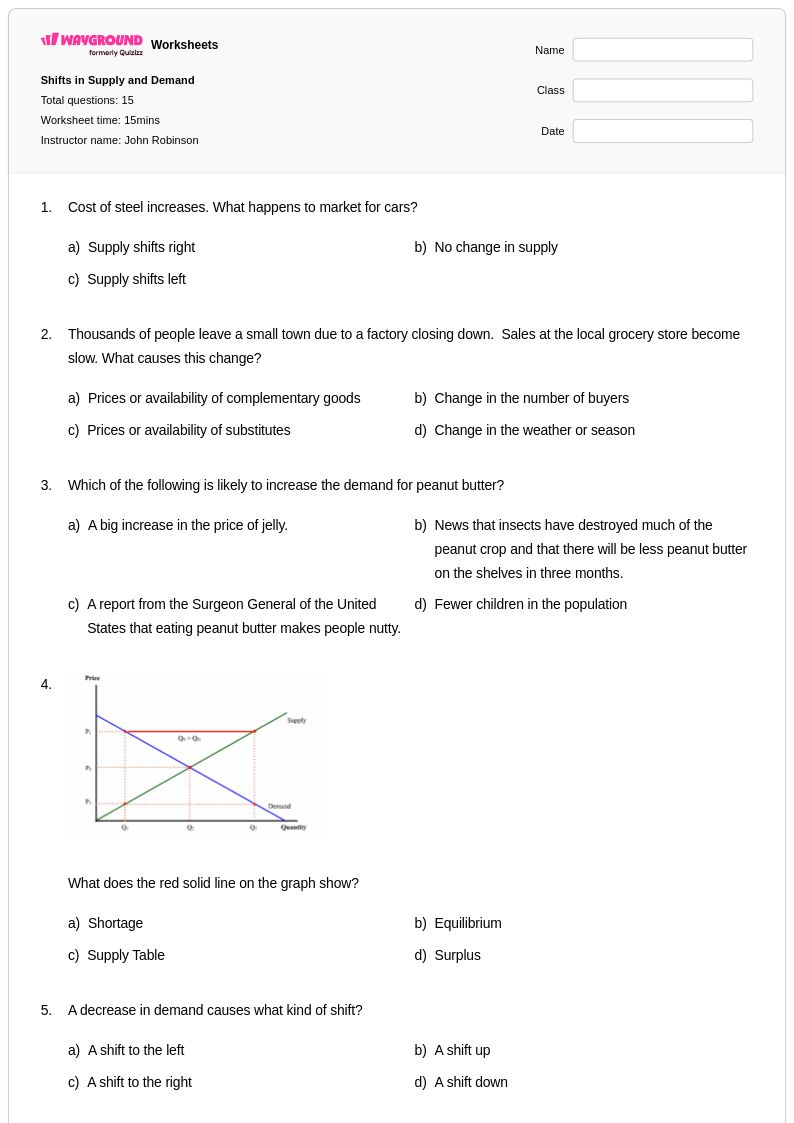
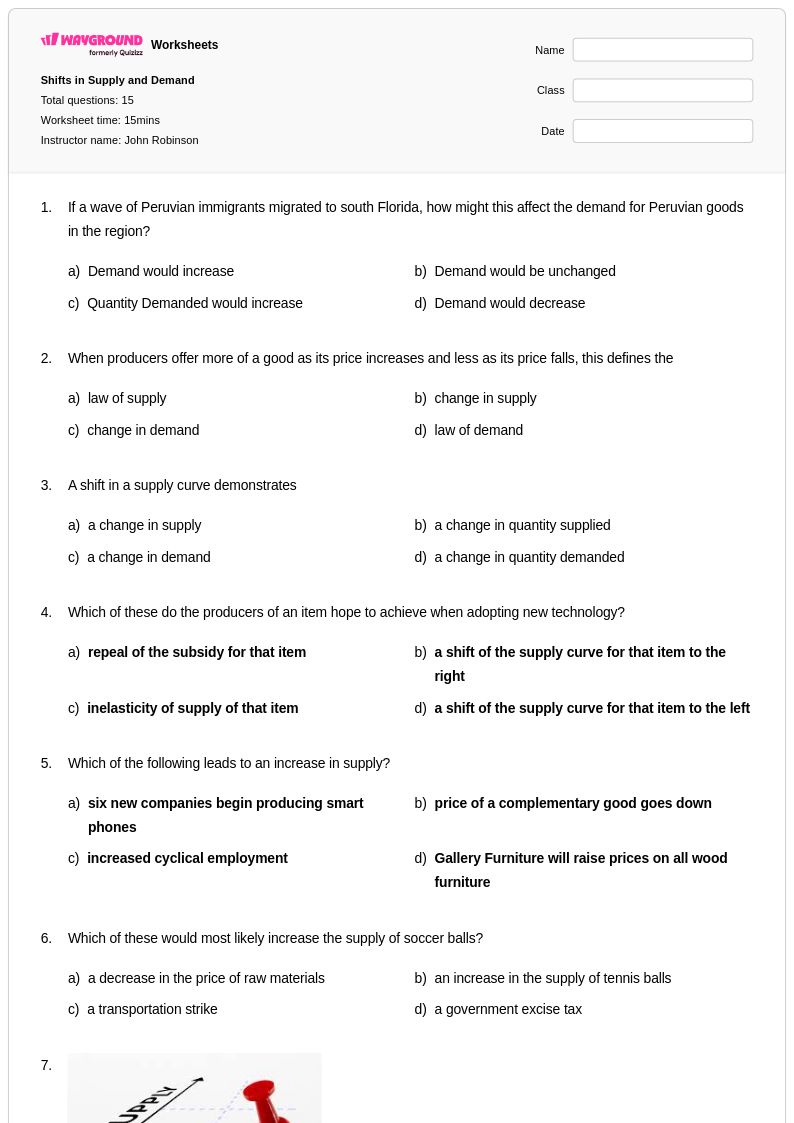
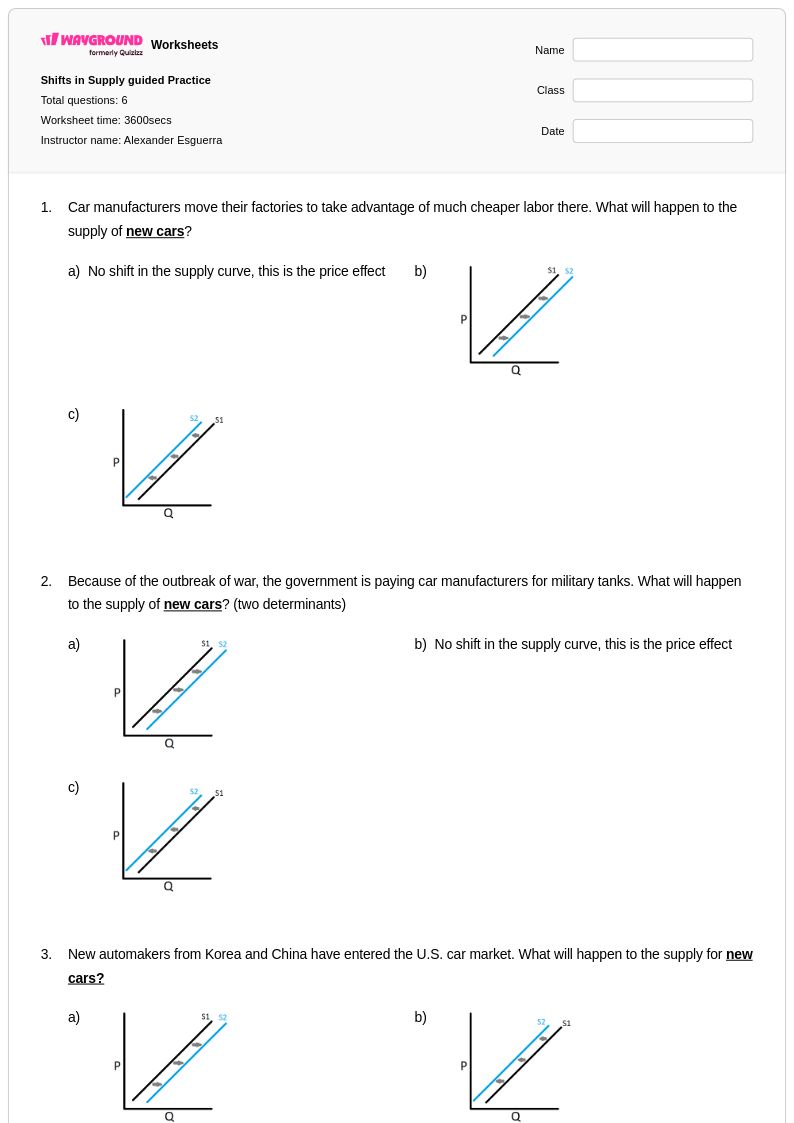
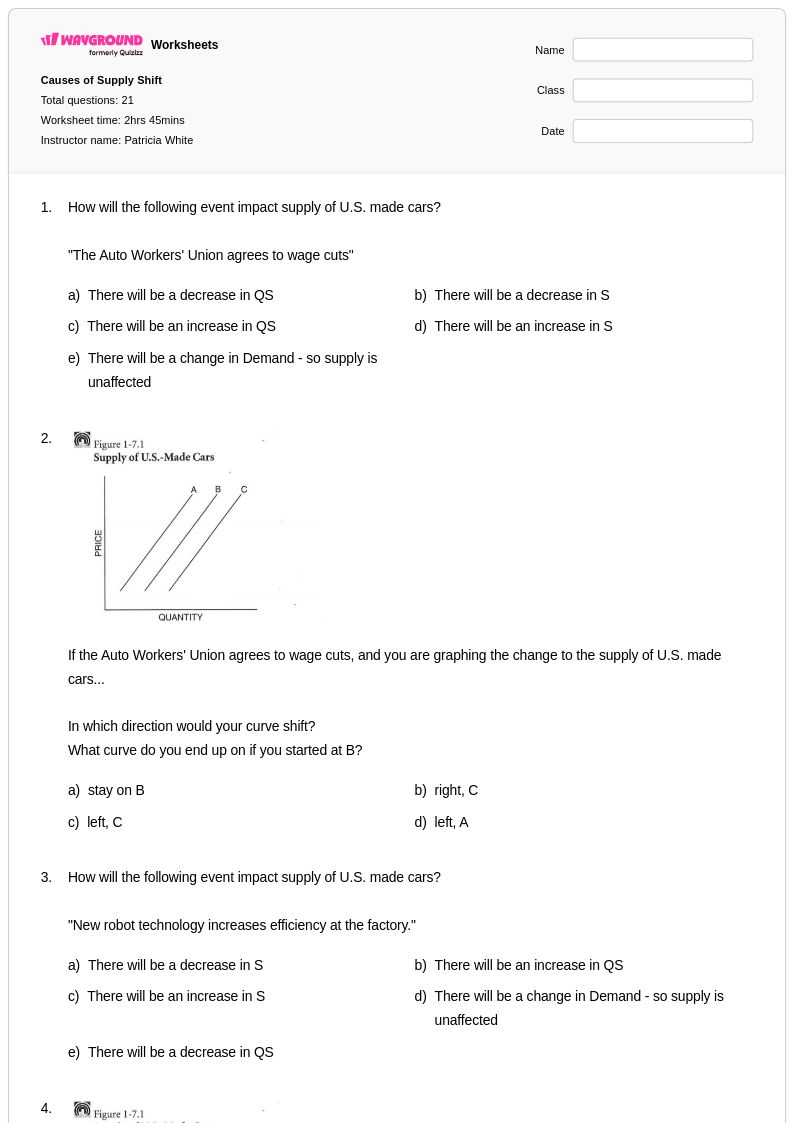
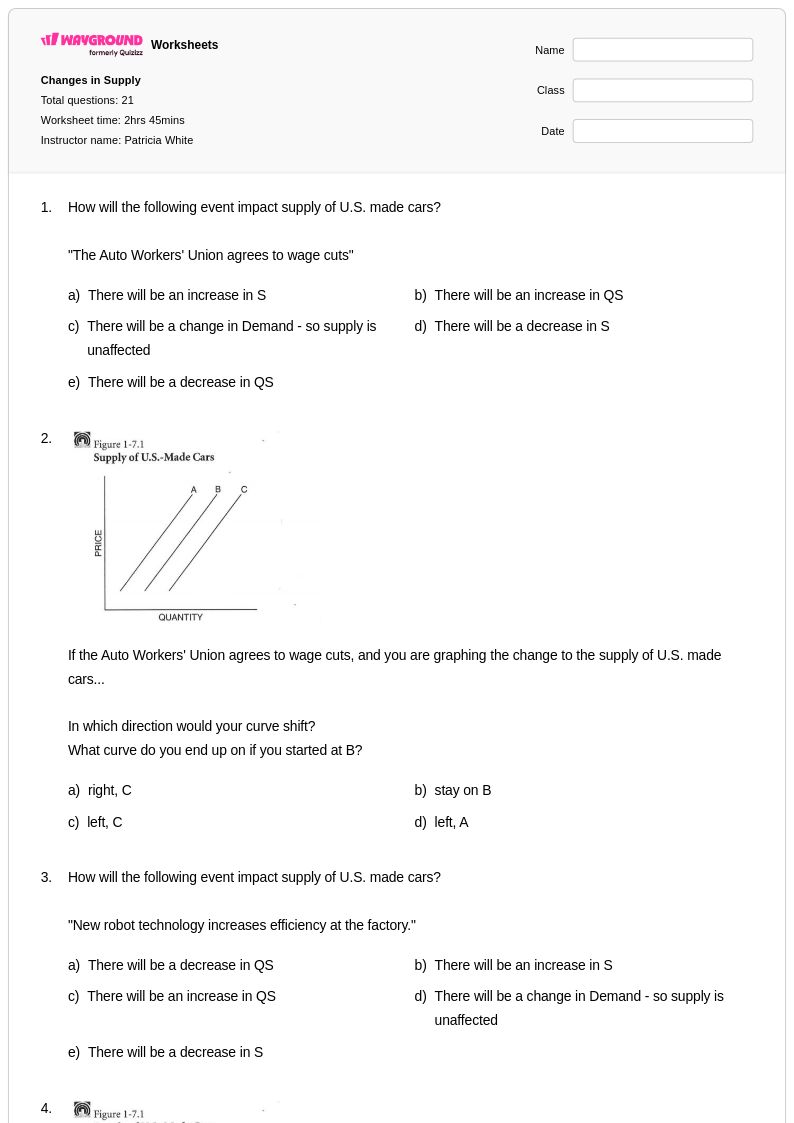
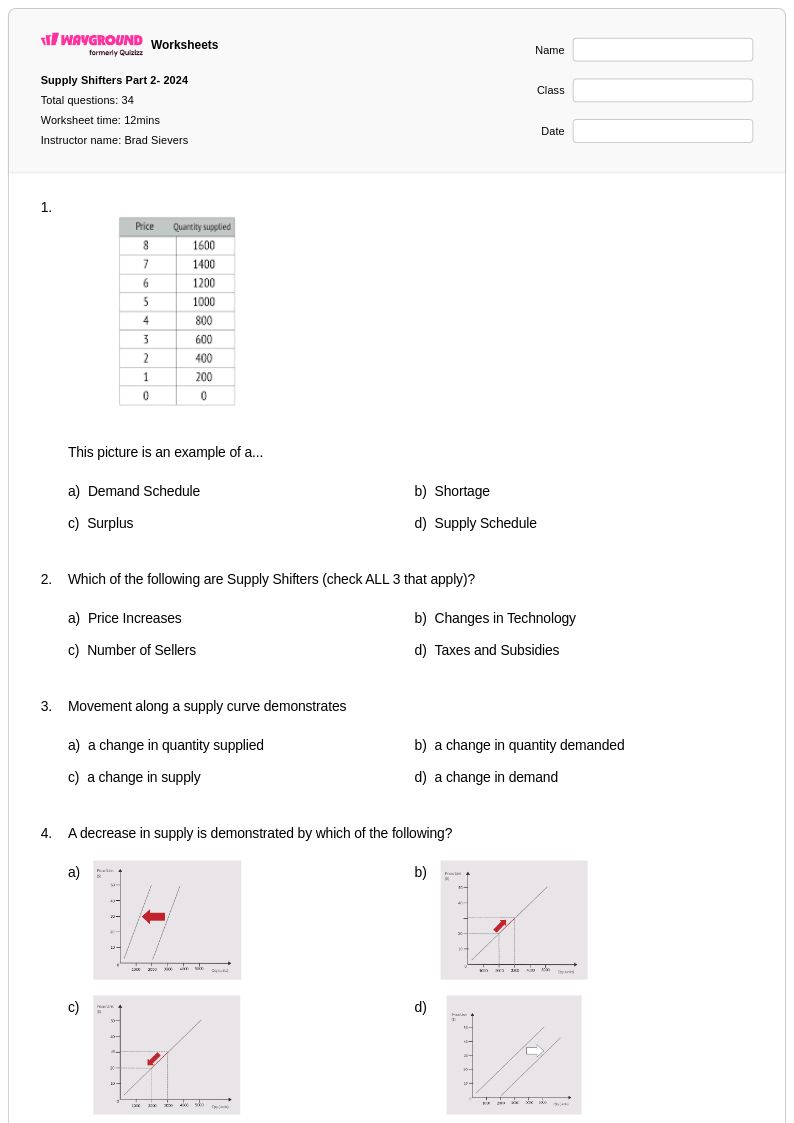
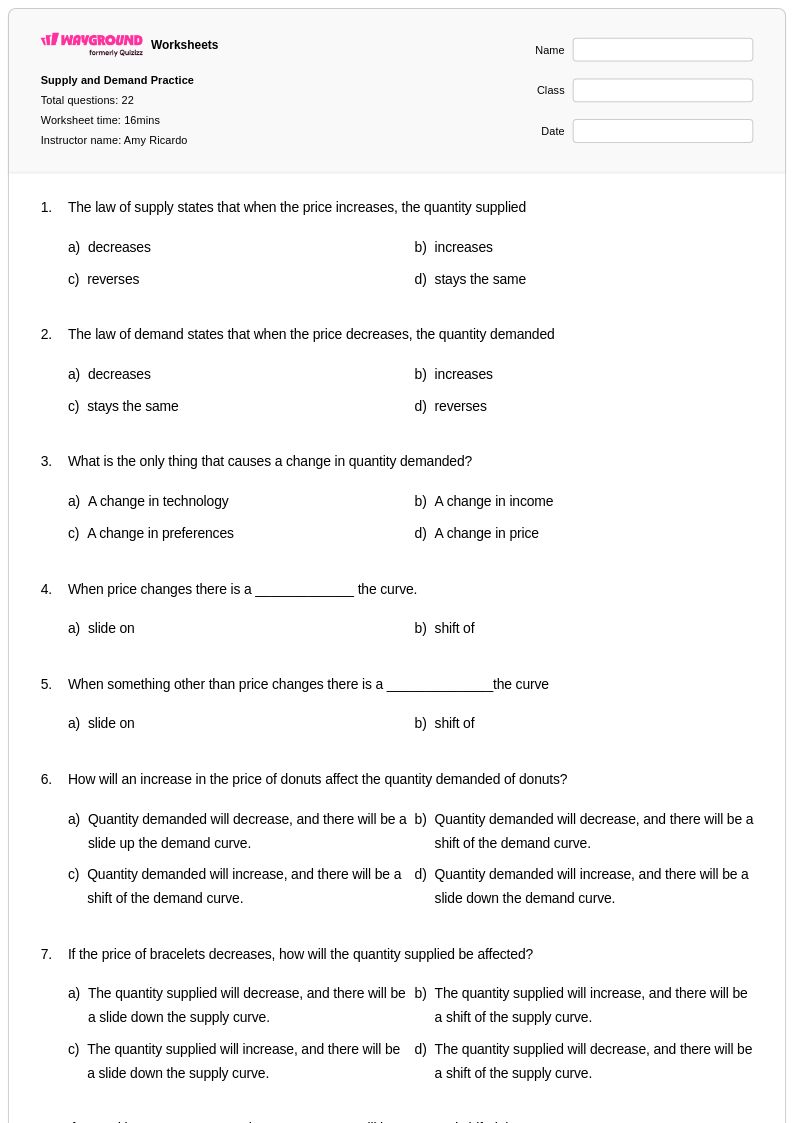
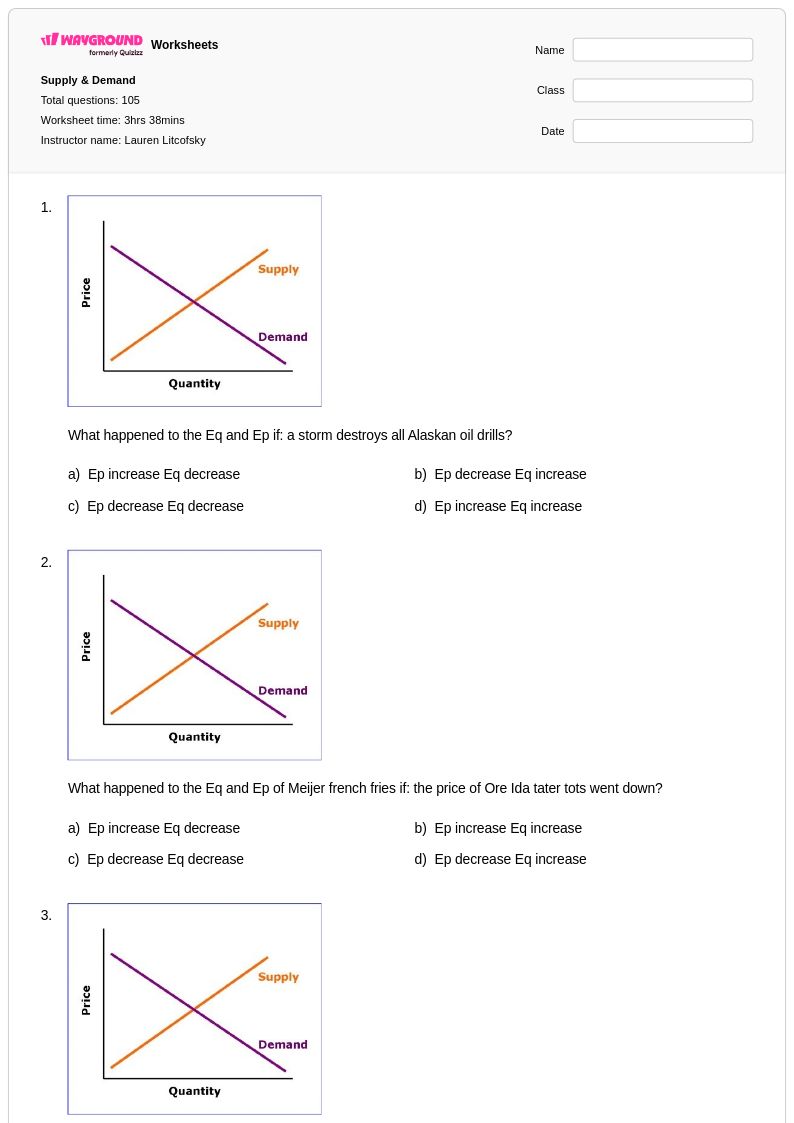
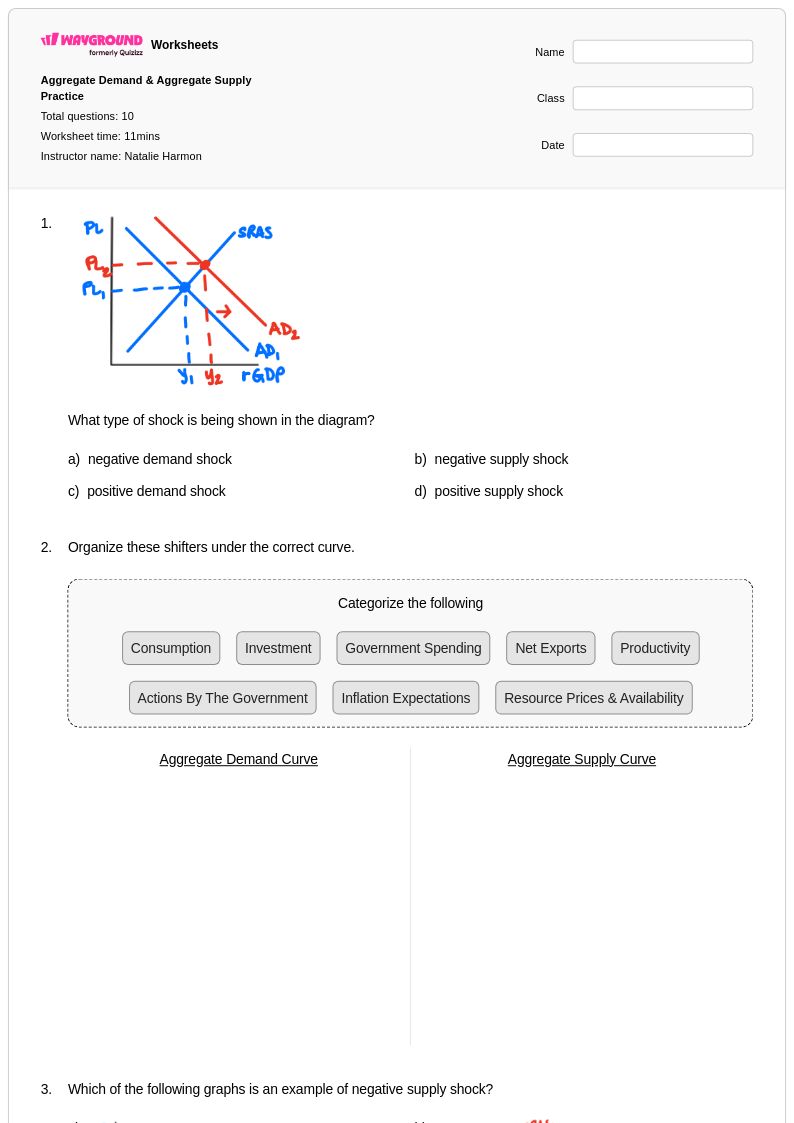
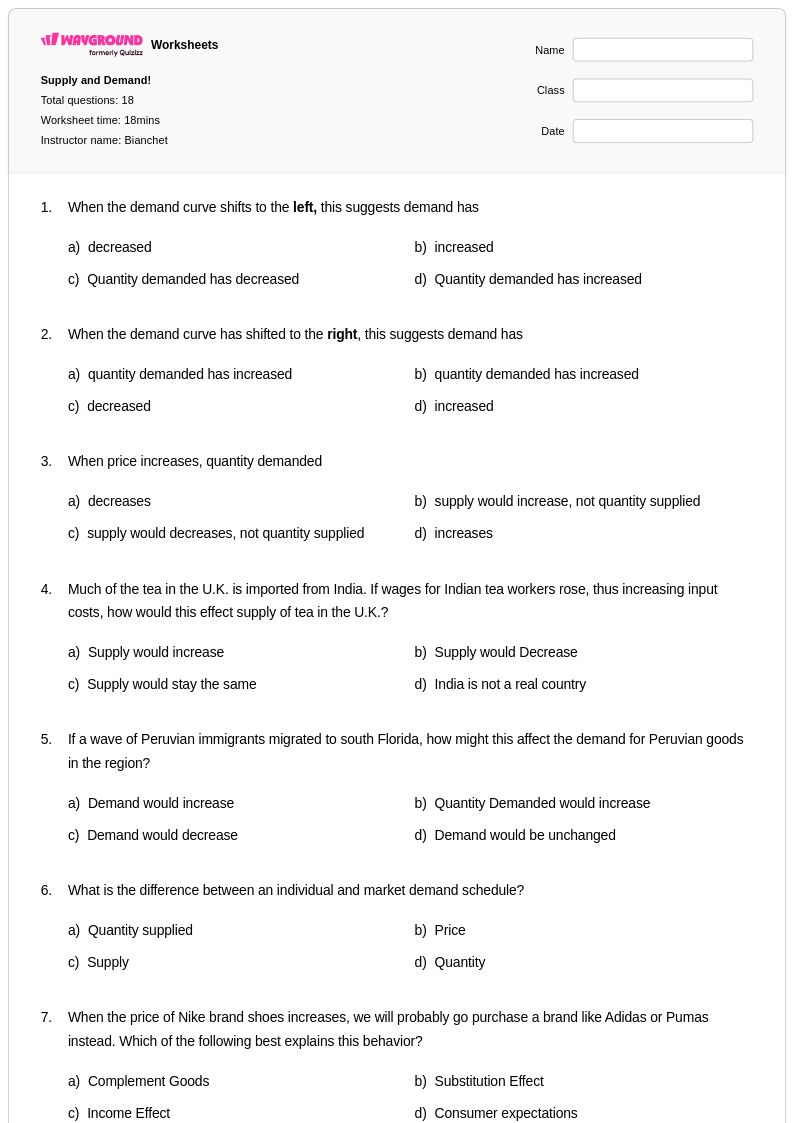
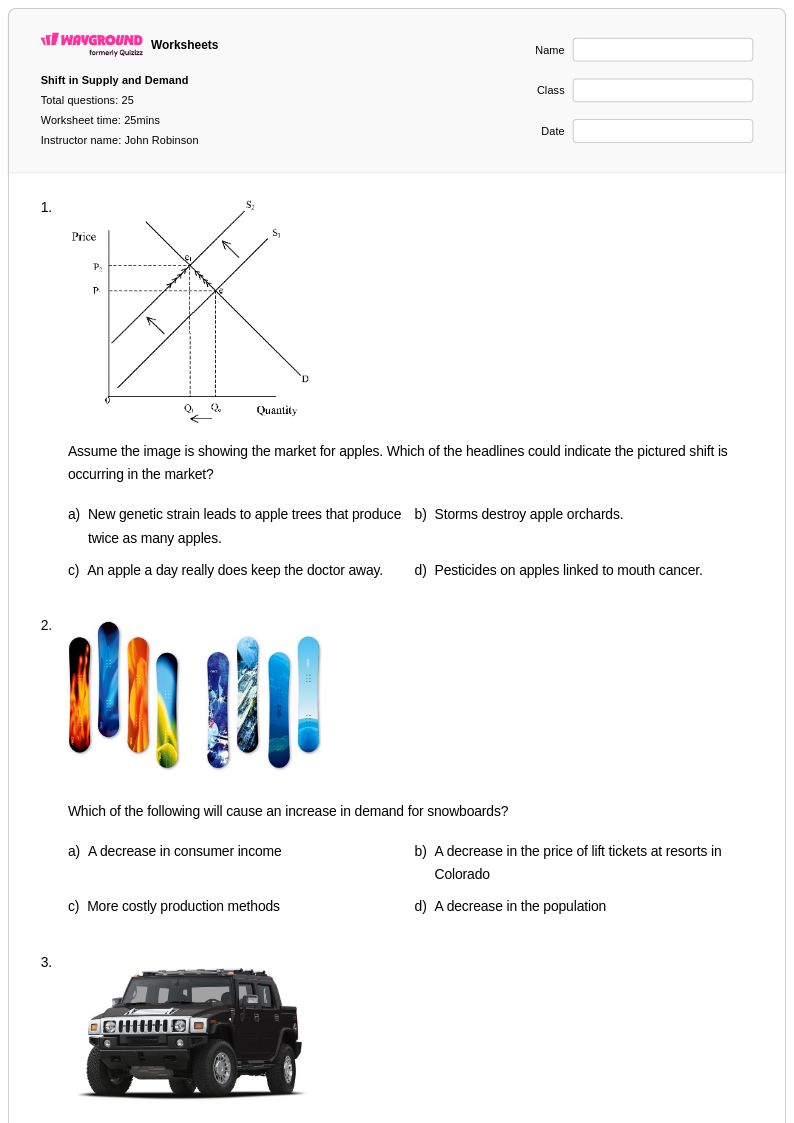
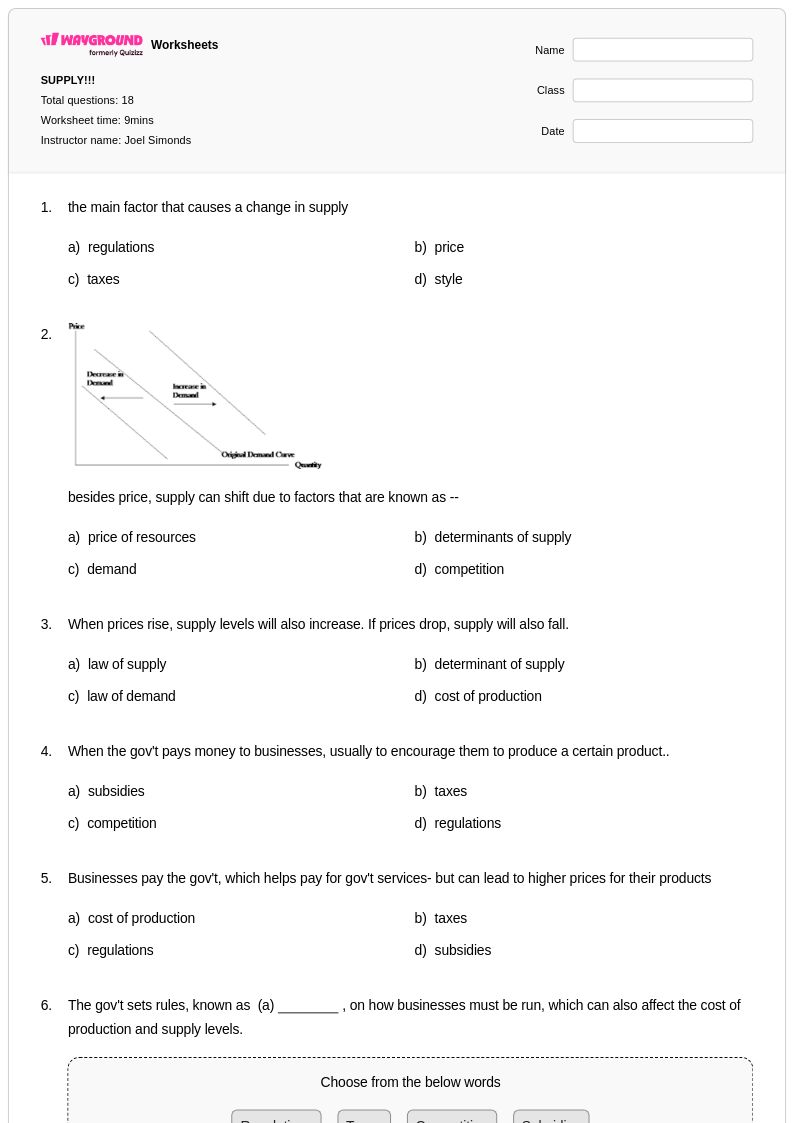
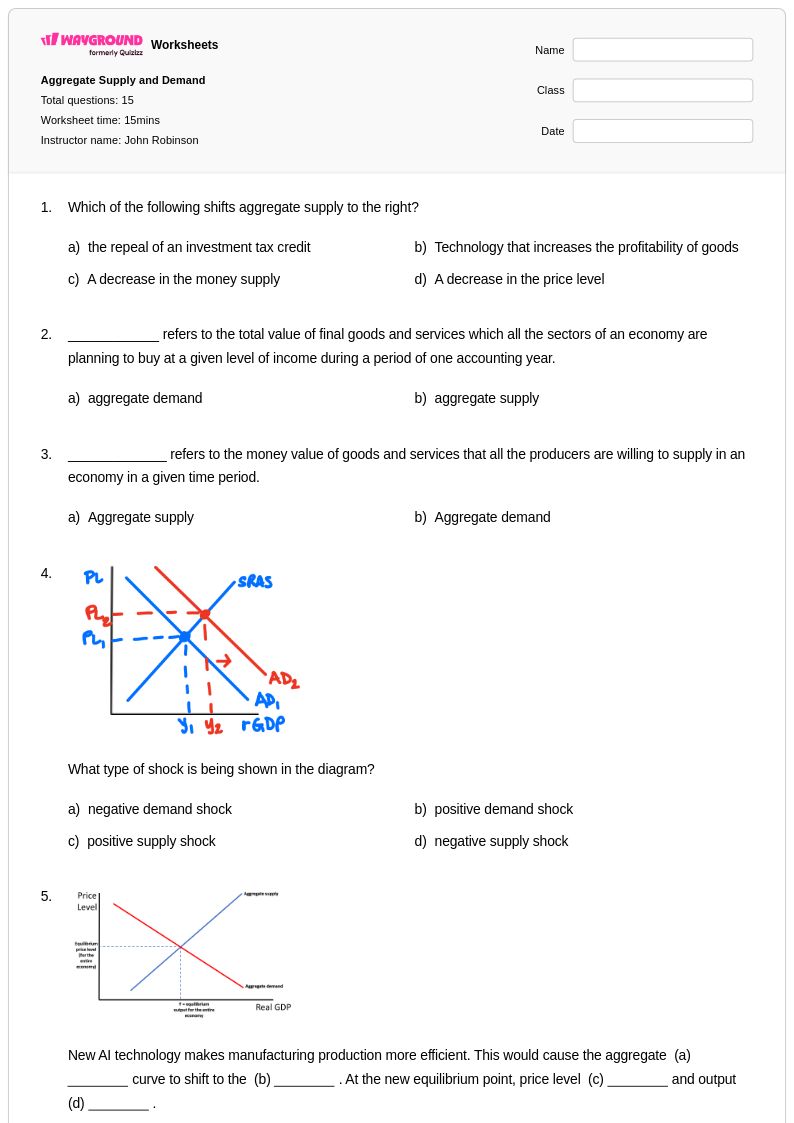
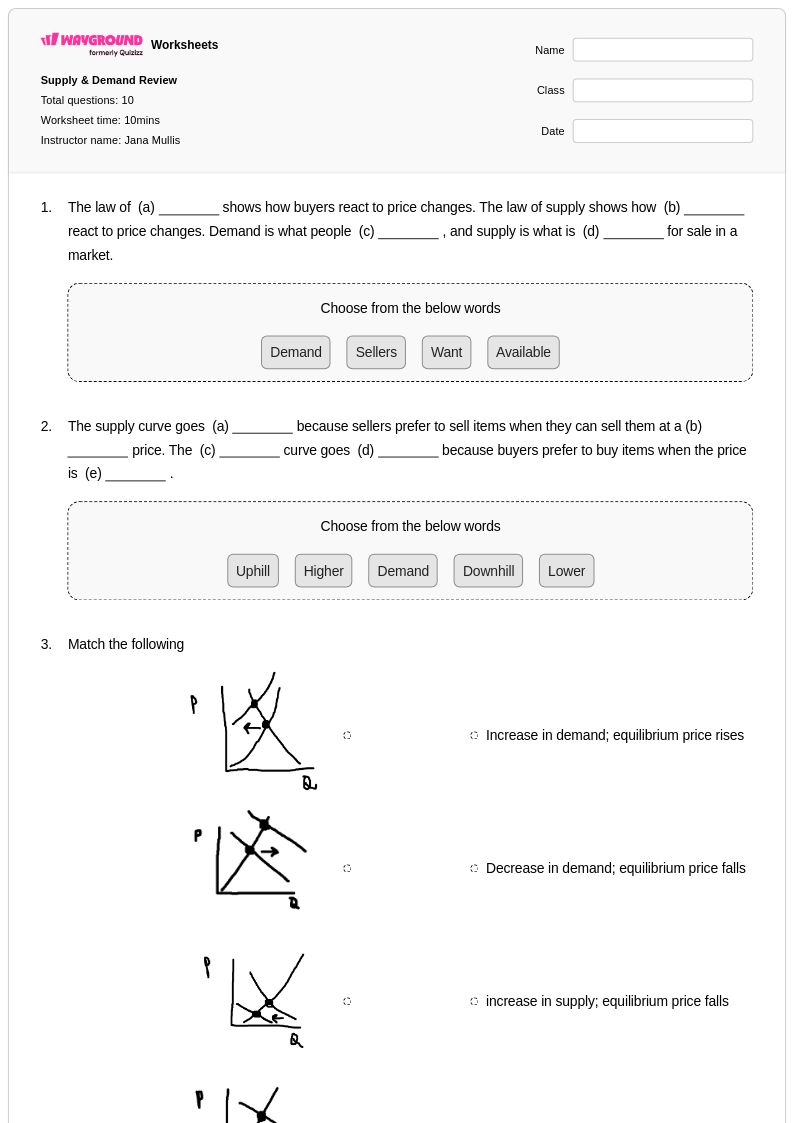
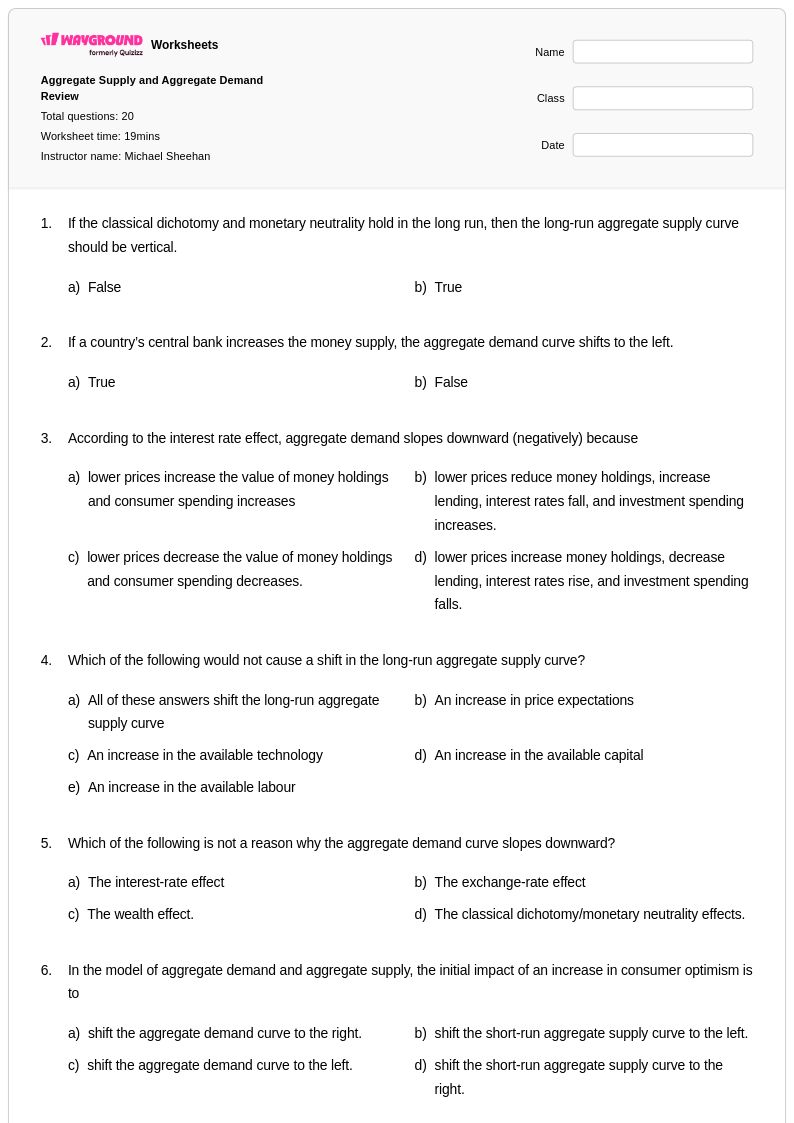
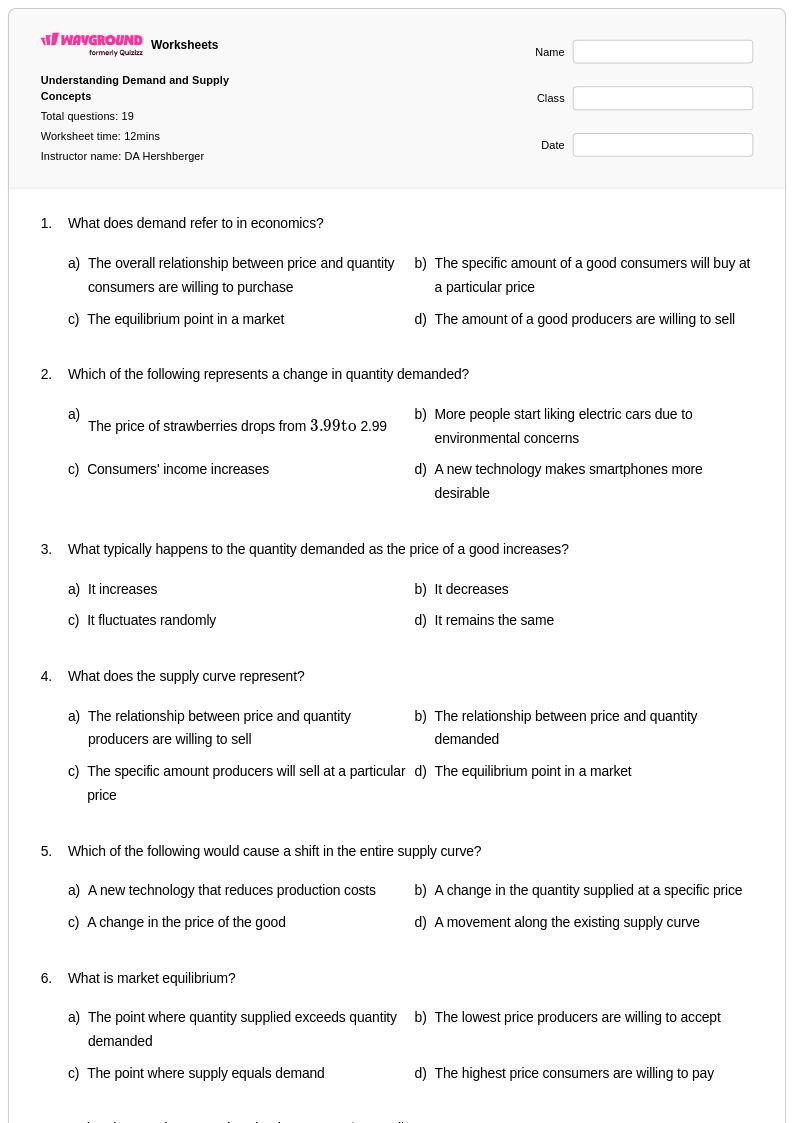
Shifts in supply worksheets available through Wayground (formerly Quizizz) provide Year 12 students with comprehensive practice in analyzing how various factors cause supply curves to move left or right in economic markets. These expertly designed resources strengthen critical thinking skills by challenging students to identify and evaluate supply determinants including production costs, technology changes, government regulations, number of sellers, and future price expectations. The worksheet collections feature detailed practice problems that require students to graph supply curve shifts, calculate equilibrium changes, and interpret real-world scenarios involving market dynamics. Each resource includes a comprehensive answer key and is available as free printable pdf materials, enabling students to master the complex relationships between supply factors and market outcomes essential for advanced economics coursework.
Wayground (formerly Quizizz) supports educators with an extensive library of millions of teacher-created resources specifically designed for shifts in supply instruction, featuring robust search and filtering capabilities that allow teachers to locate materials aligned with state economics standards and curriculum requirements. The platform's differentiation tools enable instructors to customize worksheets based on individual student needs, offering both remediation support for struggling learners and enrichment opportunities for advanced students ready to explore complex supply-side economic theories. Available in both printable and digital pdf formats, these flexible resources streamline lesson planning while providing targeted skill practice that helps students develop mastery of supply curve analysis, market equilibrium concepts, and economic reasoning abilities crucial for success in Year 12 economics and beyond.
FAQs
How do I teach shifts in supply to economics students?
Start by distinguishing between a movement along the supply curve (caused by price changes) and an actual shift of the curve (caused by non-price factors). Introduce the six main determinants of supply — input costs, technology, number of sellers, government policies, expectations, and prices of related goods — using real-world examples like a rise in steel prices reducing car supply. Once students can identify the determinant, have them practice predicting whether supply increases or decreases and sketch the resulting graph shift. Building from concept to graph to prediction reinforces all three skill layers simultaneously.
What are the most common mistakes students make when working with supply shifts?
The most frequent error is confusing a change in quantity supplied with a shift in supply — students often move along the existing curve when they should be drawing an entirely new one. A second common mistake is misidentifying the direction of the shift: for example, assuming a tax on producers increases supply when it actually decreases it by raising production costs. Students also struggle with technology improvements, sometimes predicting a supply decrease because they associate 'change' with disruption rather than efficiency gains. Targeting these three misconceptions directly in practice problems accelerates mastery.
What practice exercises help students understand factors that shift supply curves?
Scenario-based problems are the most effective format — give students a real-world event (e.g., a drought affecting wheat farmers, a new automation technology in manufacturing) and ask them to identify the determinant, state the direction of the shift, and draw the new curve. Graph interpretation exercises where students read a pre-drawn shift and work backward to identify a plausible cause also build strong analytical skills. Pairing these with short-answer justification prompts ensures students can articulate their reasoning, not just move a line on a graph.
How can I use shifts in supply worksheets to support students who are struggling?
For struggling students, start with structured worksheets that provide a reference list of supply determinants alongside each problem, so cognitive load is reduced while the reasoning process is still practiced. Focusing on one determinant category at a time — rather than mixed practice — helps students build confidence before encountering more complex multi-factor scenarios. On Wayground, teachers can enable reduced answer choices and read-aloud support for individual students, making digital versions of these worksheets more accessible without requiring separate materials for different learners.
How do I use Wayground's shifts in supply worksheets in my classroom?
Wayground's shifts in supply worksheets are available as printable PDFs, making them easy to distribute in a traditional classroom setting, and in digital formats suited for technology-integrated or hybrid learning environments. Teachers can also host worksheets as a live quiz on Wayground, allowing for real-time student responses and instant scoring. Answer keys are included with each worksheet, supporting both independent student review and efficient teacher grading.
How do I assess whether students truly understand supply curve shifts versus just memorizing rules?
True understanding shows up when students can apply shift logic to unfamiliar scenarios rather than pattern-matching to memorized examples. Use novel prompts — such as describing a new government subsidy in an industry students haven't studied — and require students to both identify the correct shift and explain the causal mechanism in writing. If a student can correctly draw the graph but cannot explain why supply increases or decreases, they are memorizing rather than understanding. Mixing graph-drawing tasks with written justification and short-answer analysis gives a more complete picture of student comprehension.