
10Q
10th - 11th
10Q
9th - 12th
11Q
9th - 12th
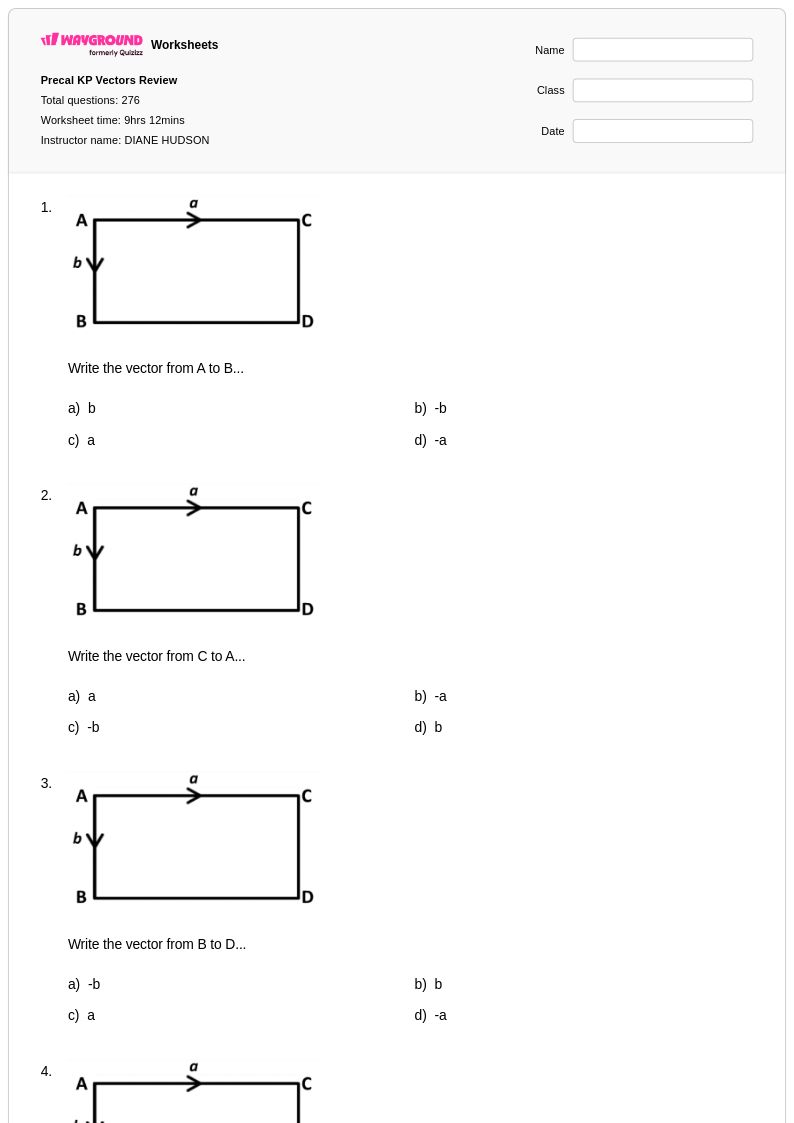
276Q
9th - 12th
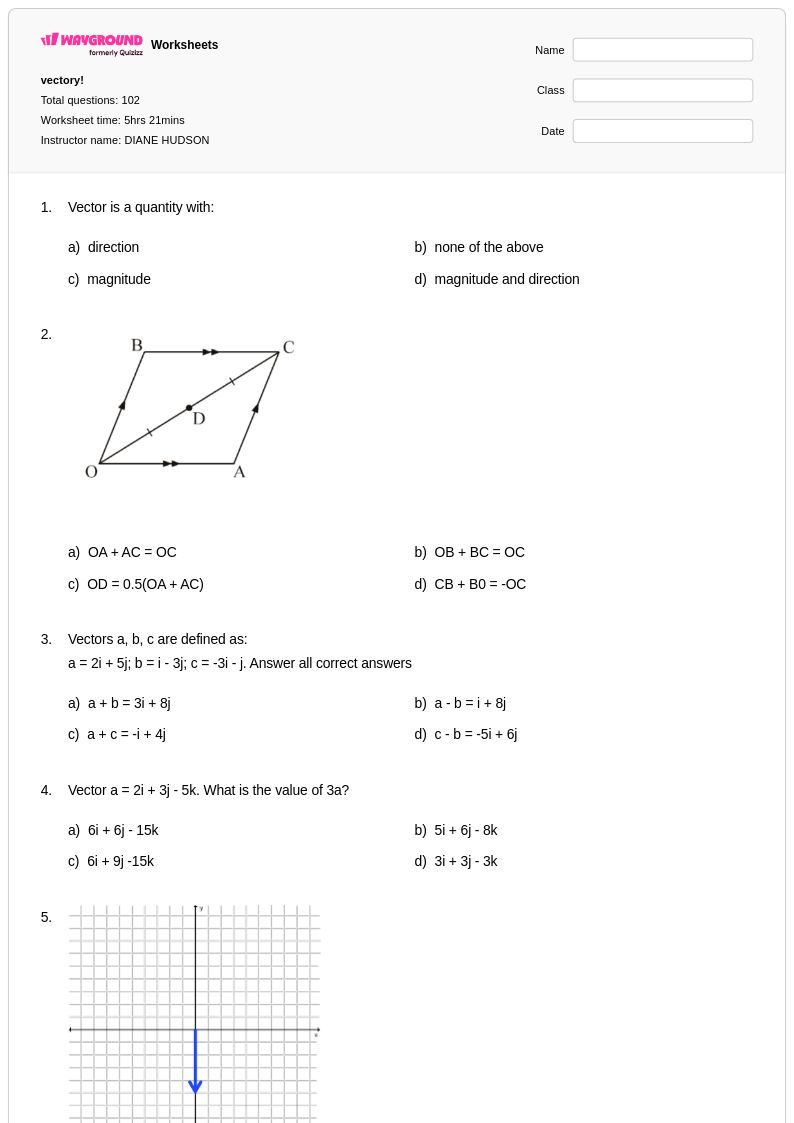
102Q
9th - 12th
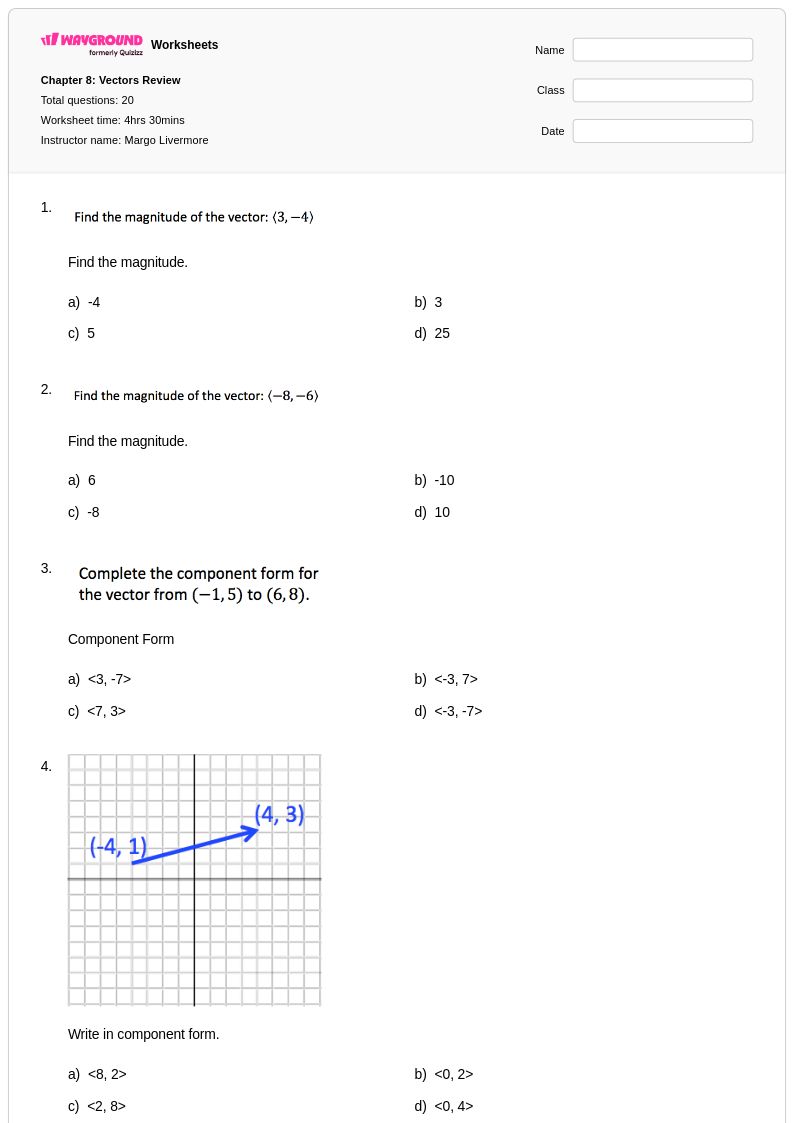
20Q
9th - 12th
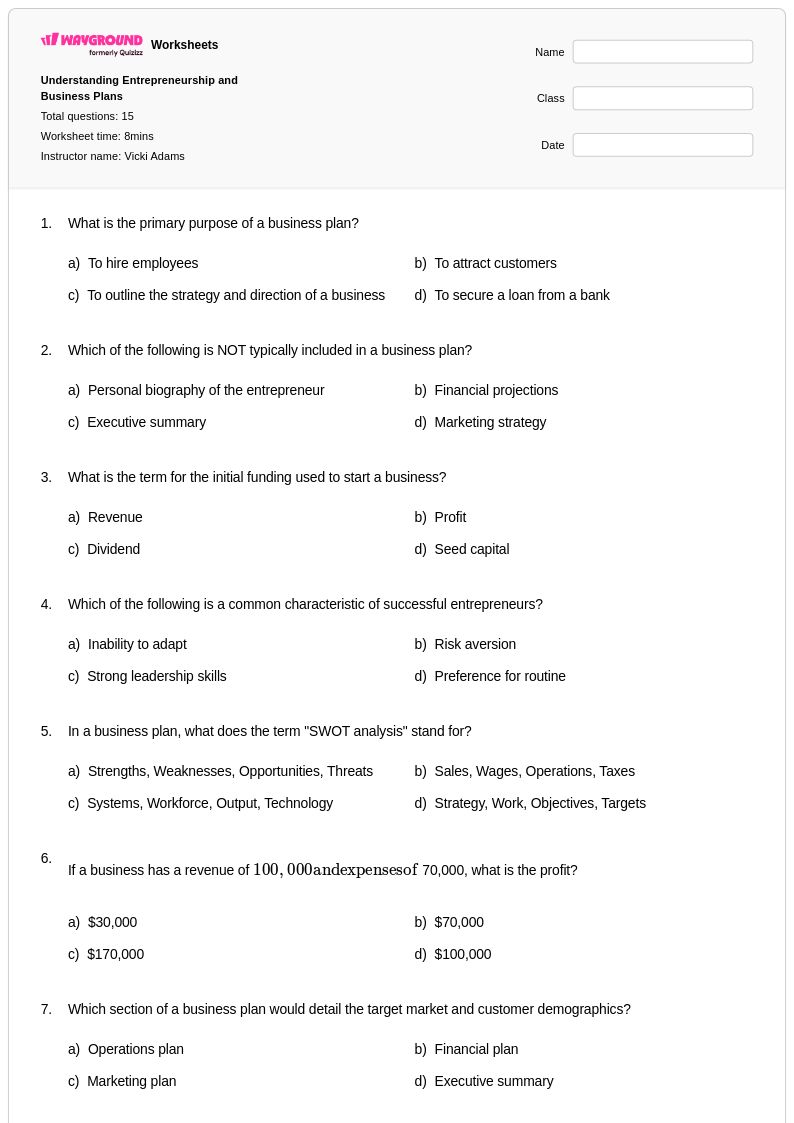
15Q
10th
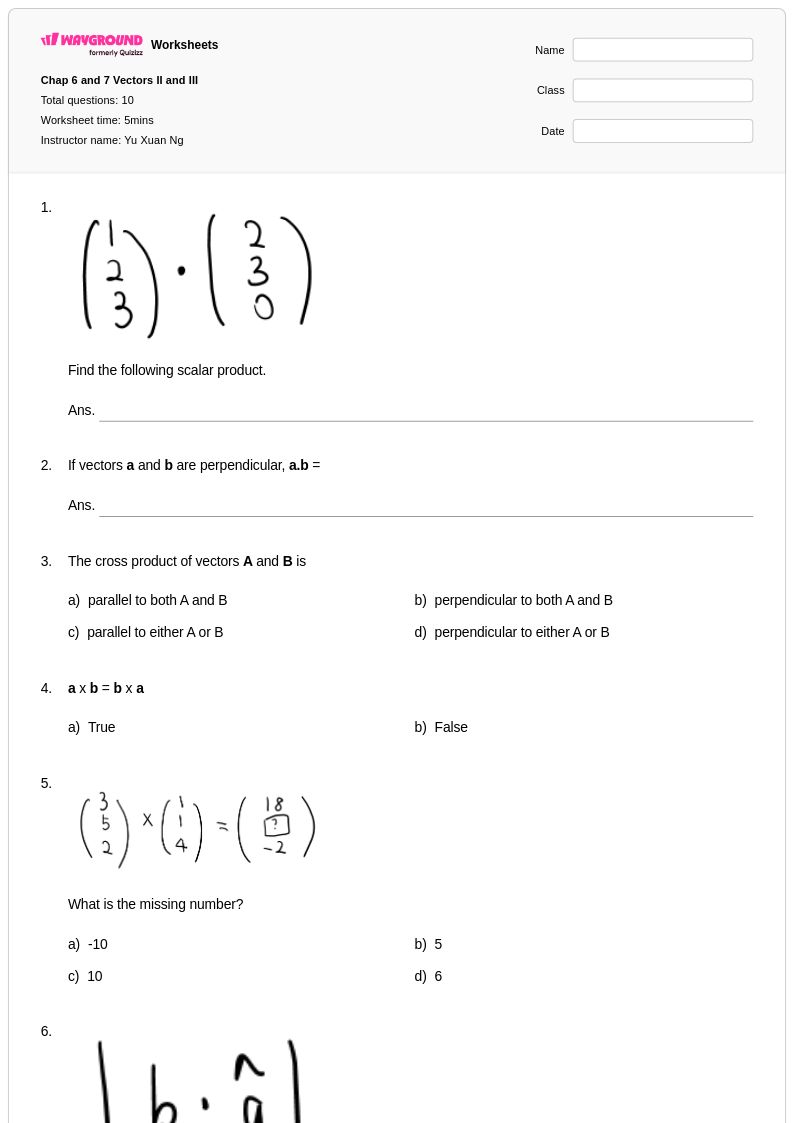
10Q
9th - 12th

33Q
9th - 12th
10Q
9th - 12th
18Q
10th
20Q
7th - Uni
15Q
10th
20Q
10th
20Q
8th - Uni
15Q
9th - 11th
8Q
10th
5Q
9th - 12th
20Q
1st - 12th
10Q
10th
8Q
10th - 12th
10Q
10th
8Q
9th - Uni
30Q
10th
Explore otras hojas de trabajo de materias para year 10
Explore printable Projections worksheets for Year 10
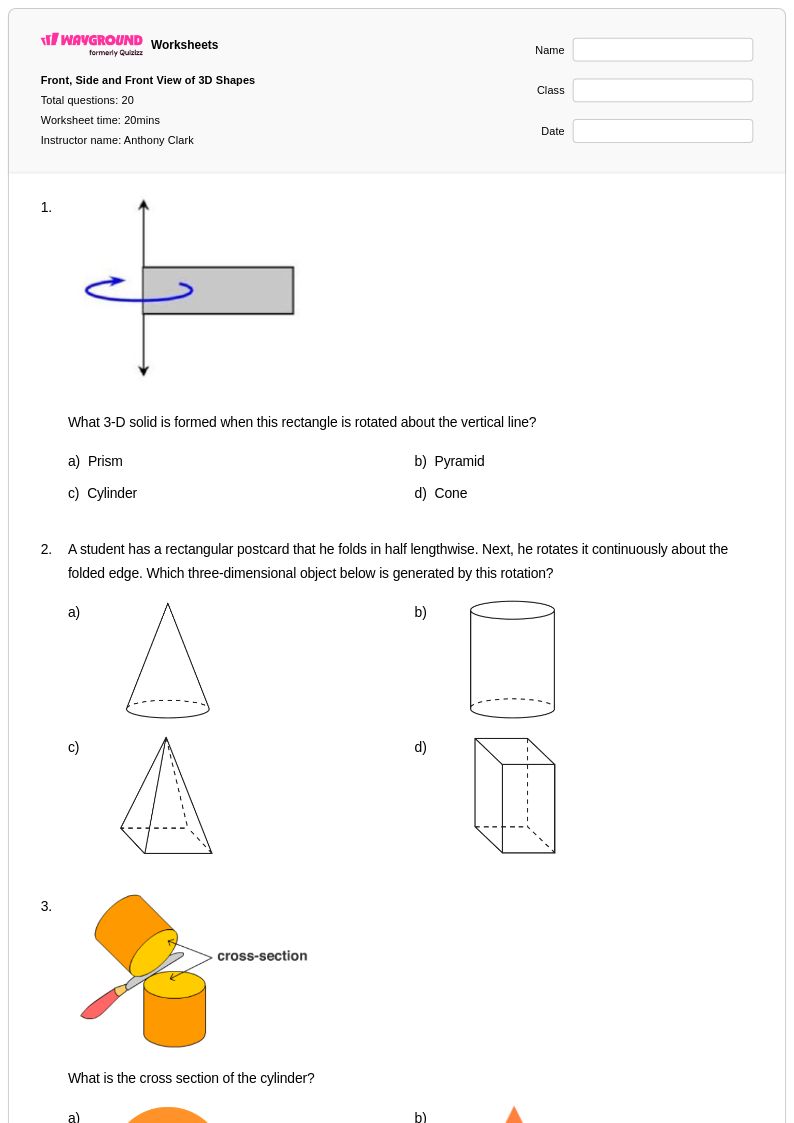
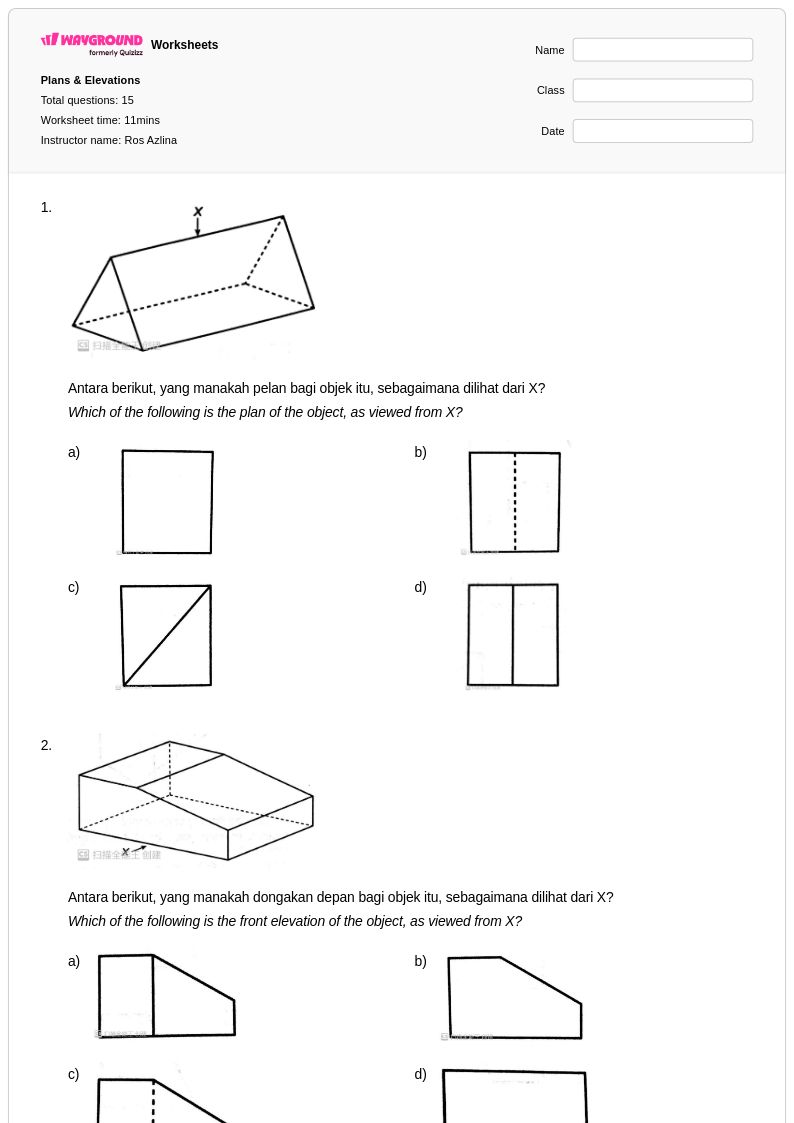
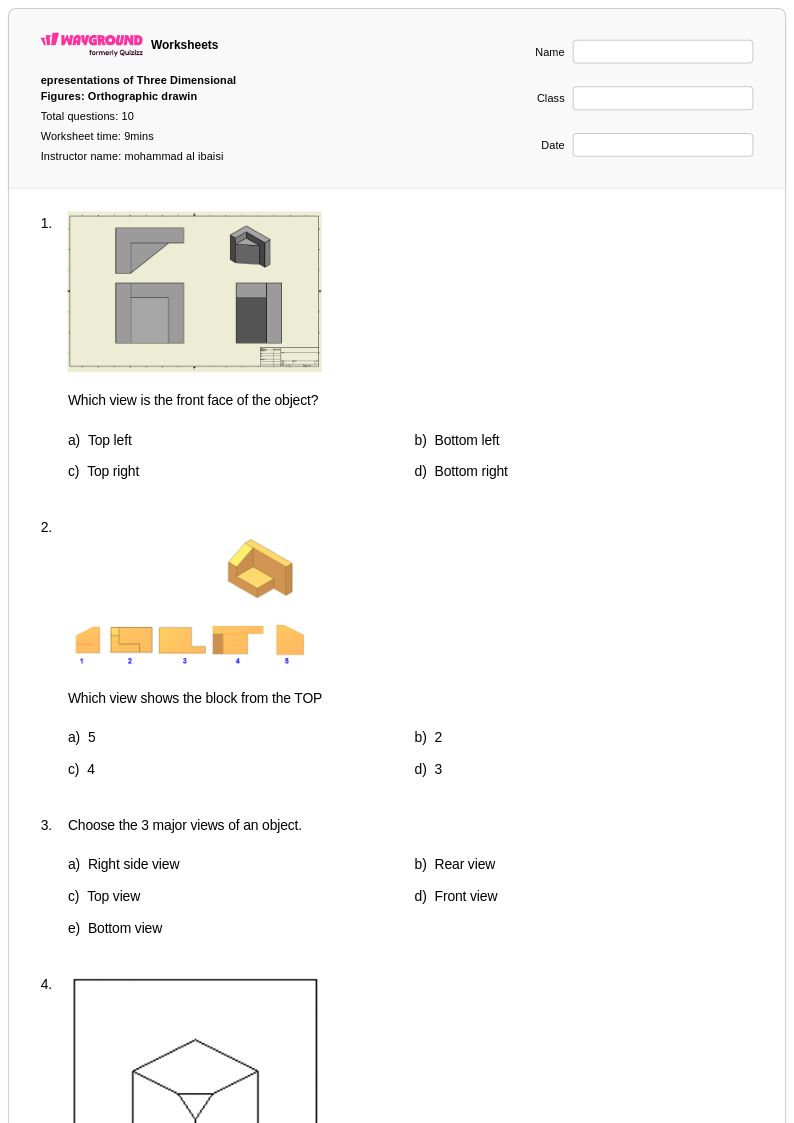
Year 10 projections worksheets available through Wayground (formerly Quizizz) provide comprehensive practice in understanding how three-dimensional objects appear when viewed from different angles and how they can be represented on two-dimensional surfaces. These expertly crafted worksheets strengthen students' spatial reasoning abilities by focusing on orthographic projections, including top, front, and side views of geometric solids, as well as isometric and oblique projection techniques. Students develop critical visualization skills through systematic practice problems that progress from basic rectangular prisms to complex composite shapes, with each worksheet including a detailed answer key to support independent learning. The free printable resources in PDF format cover essential projection concepts such as hidden line conventions, scale factors, and the relationship between three-dimensional objects and their two-dimensional representations.
Wayground (formerly Quizizz) supports mathematics teachers with an extensive collection of millions of teacher-created projection worksheets that can be easily searched and filtered by specific geometric concepts, difficulty levels, and curriculum standards alignment. The platform's robust differentiation tools enable educators to customize worksheets for diverse learning needs, whether providing remediation for students struggling with spatial concepts or offering enrichment activities for advanced learners ready to tackle architectural drawing principles. Teachers benefit from flexible formatting options that include both printable PDF versions for traditional classroom use and digital formats for interactive learning experiences, making lesson planning more efficient while ensuring students receive targeted skill practice in this challenging area of geometry. These comprehensive resources support systematic instruction in projection techniques while allowing teachers to adapt materials for individual student needs and various instructional contexts.
FAQs
What new projection concepts are introduced in Grade 10?
How do I teach hidden lines in orthographic projections?
What kind of practice is included in this Grade 10 worksheet?
What are common errors with Grade 10 projection problems?
How can I use and grade this projections worksheet?
How does this topic build on previous geometry knowledge?