
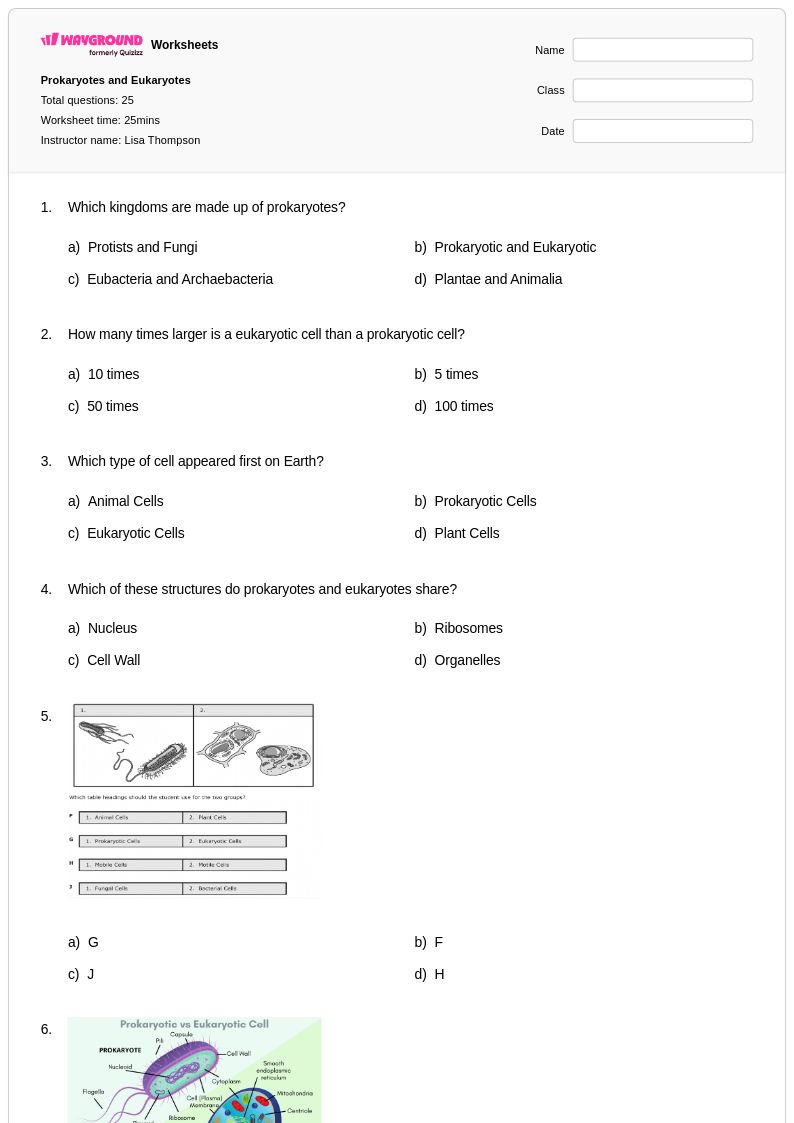
25 Q
7th - Uni
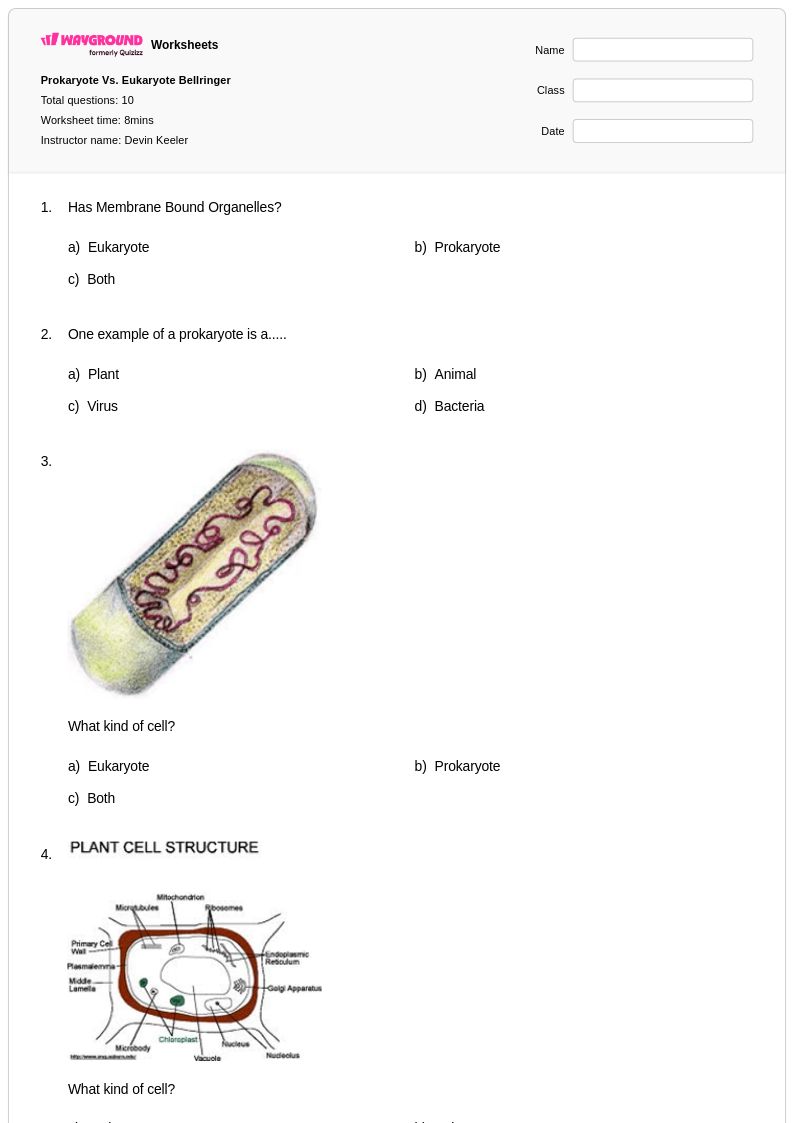
10 Q
8th
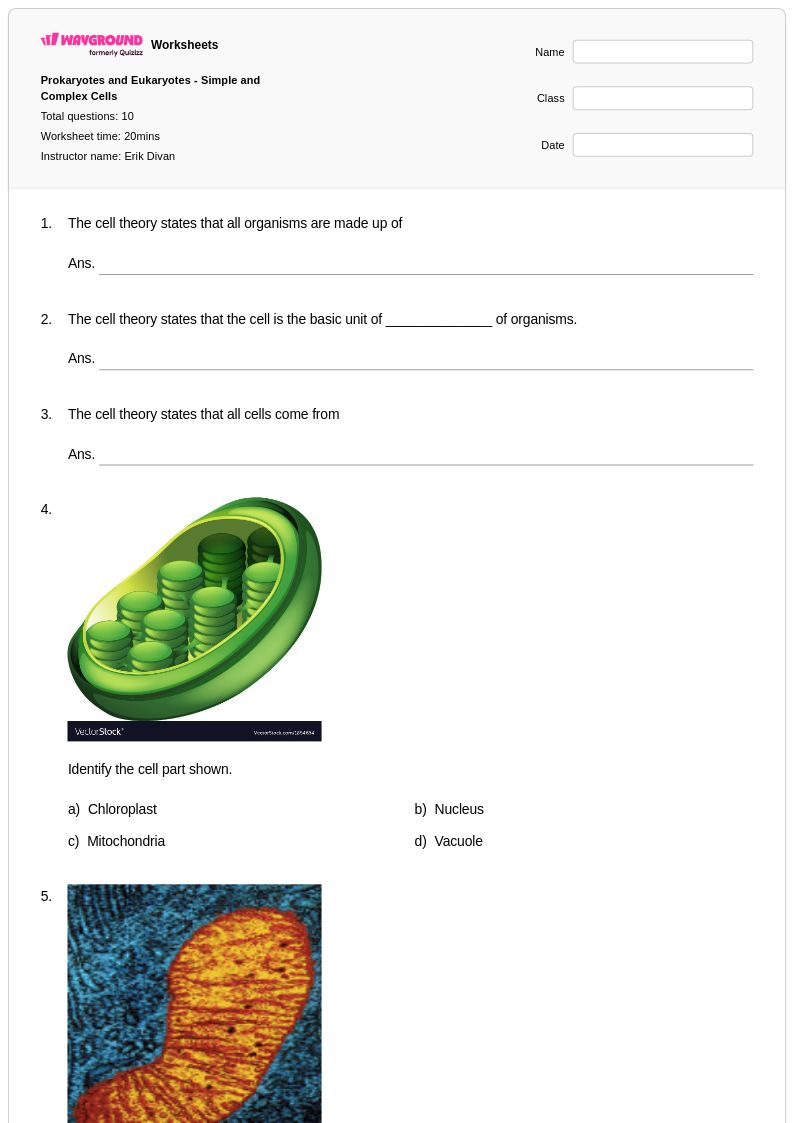
10 Q
6th - 8th
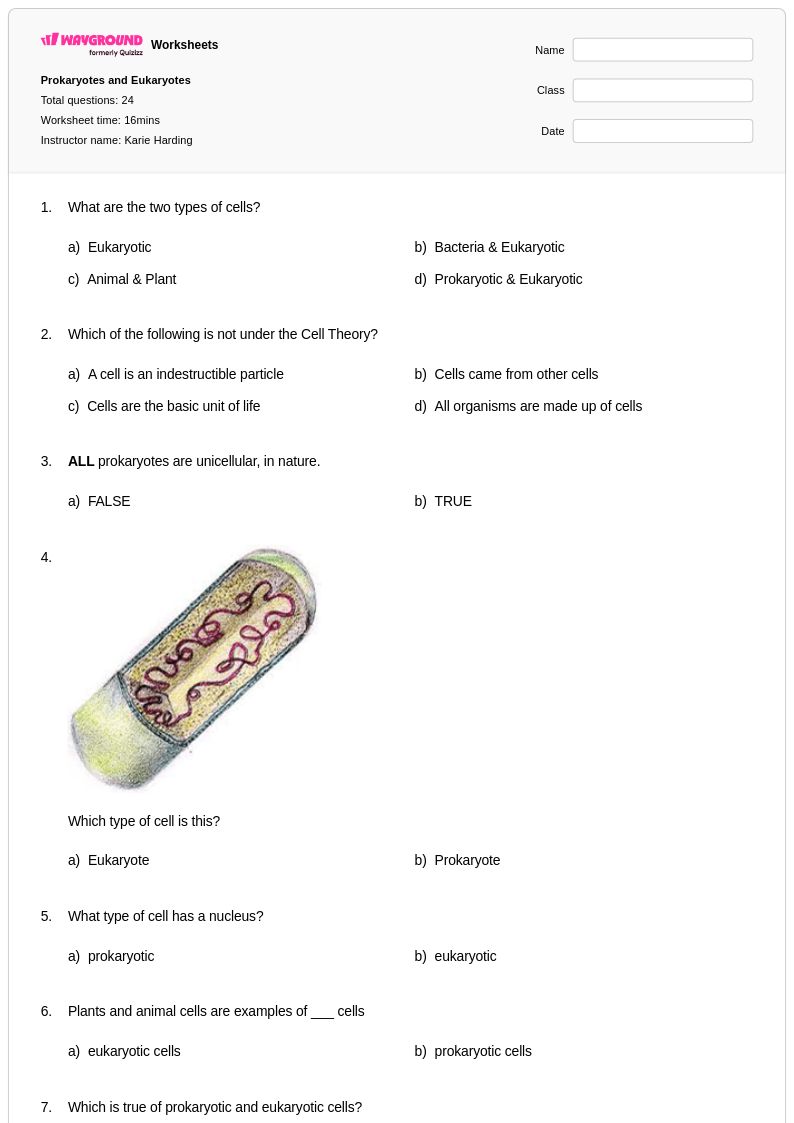
24 Q
7th - 8th
15 Q
7th - Uni
25 Q
6th - Uni
25 Q
6th - Uni
25 Q
6th - Uni
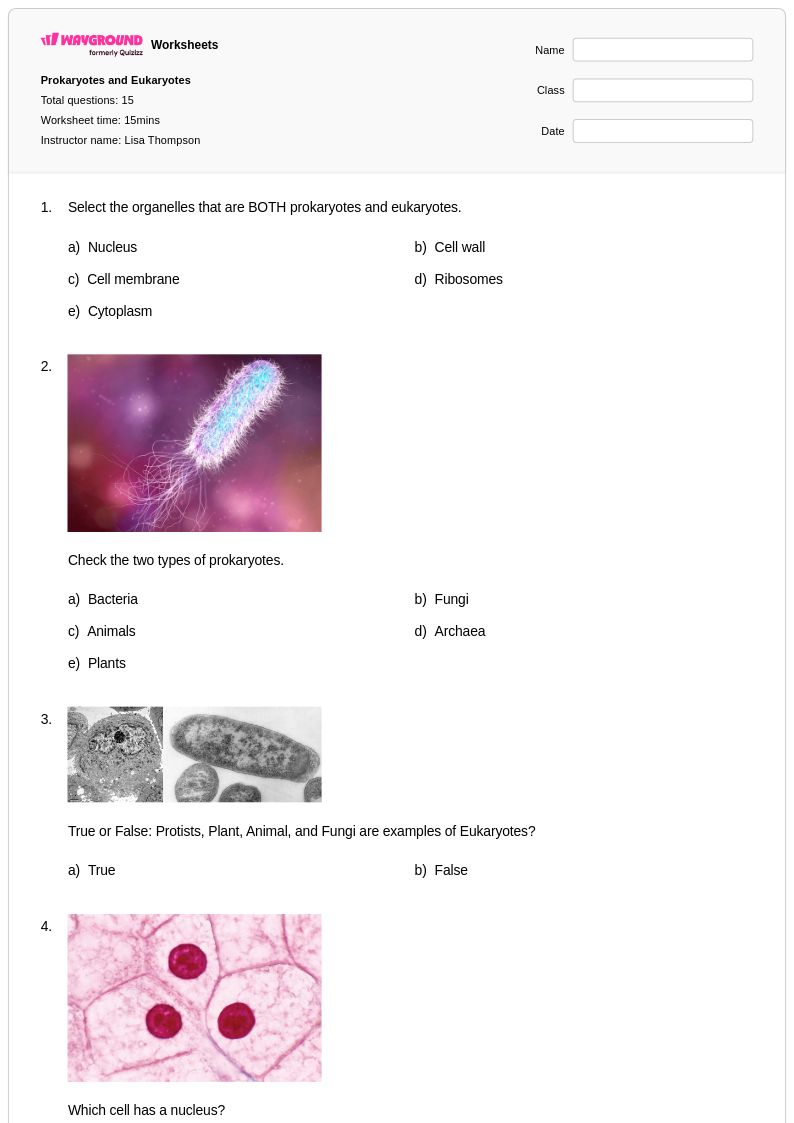
15 Q
7th - Uni
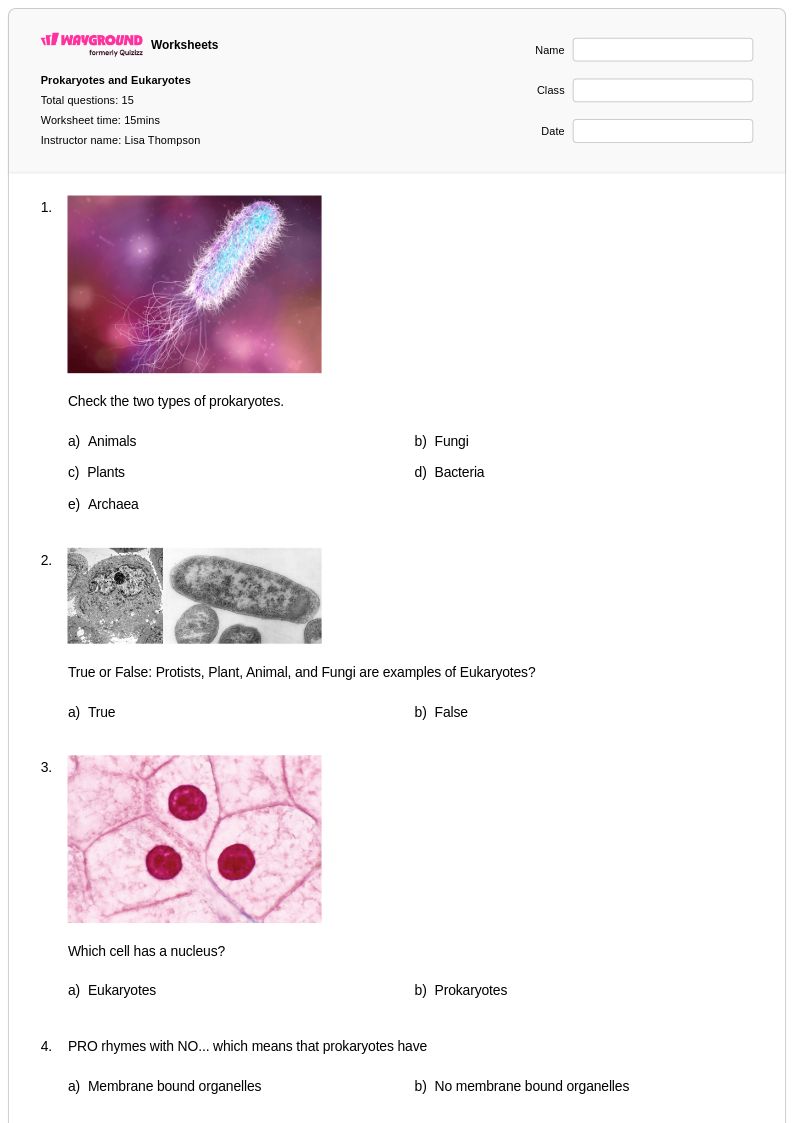
15 Q
7th - Uni
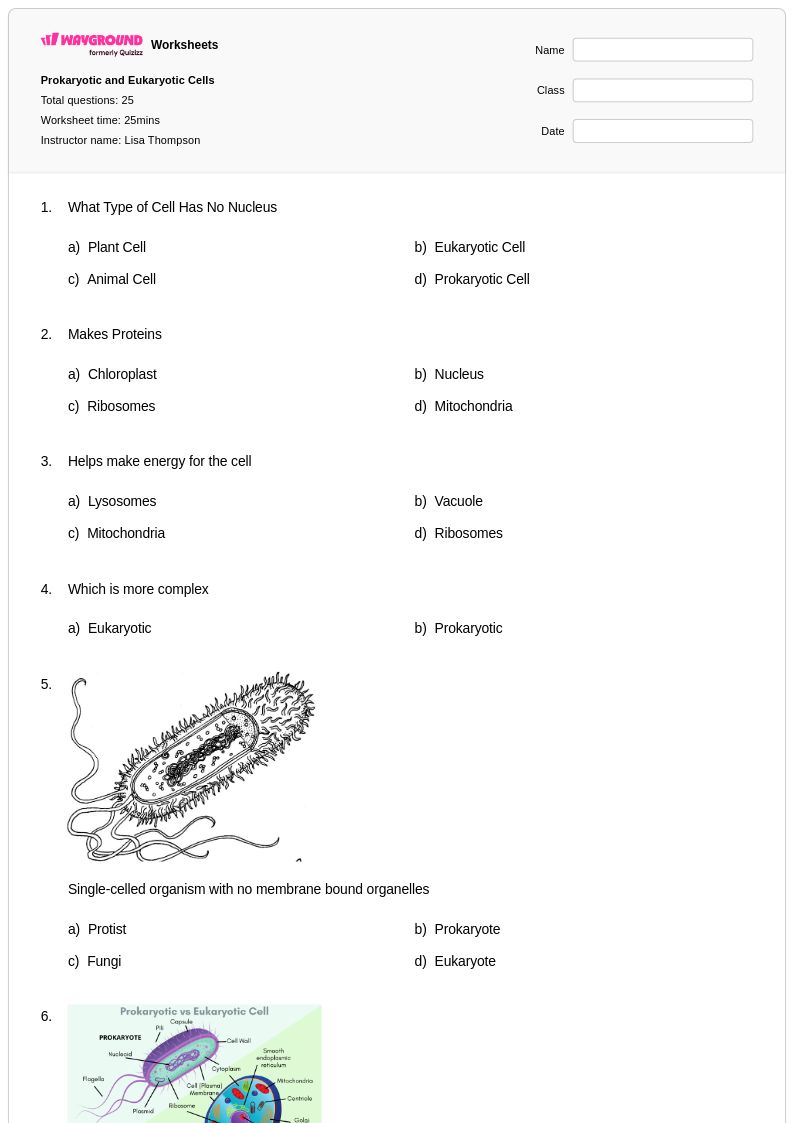
25 Q
6th - Uni

20 Q
7th
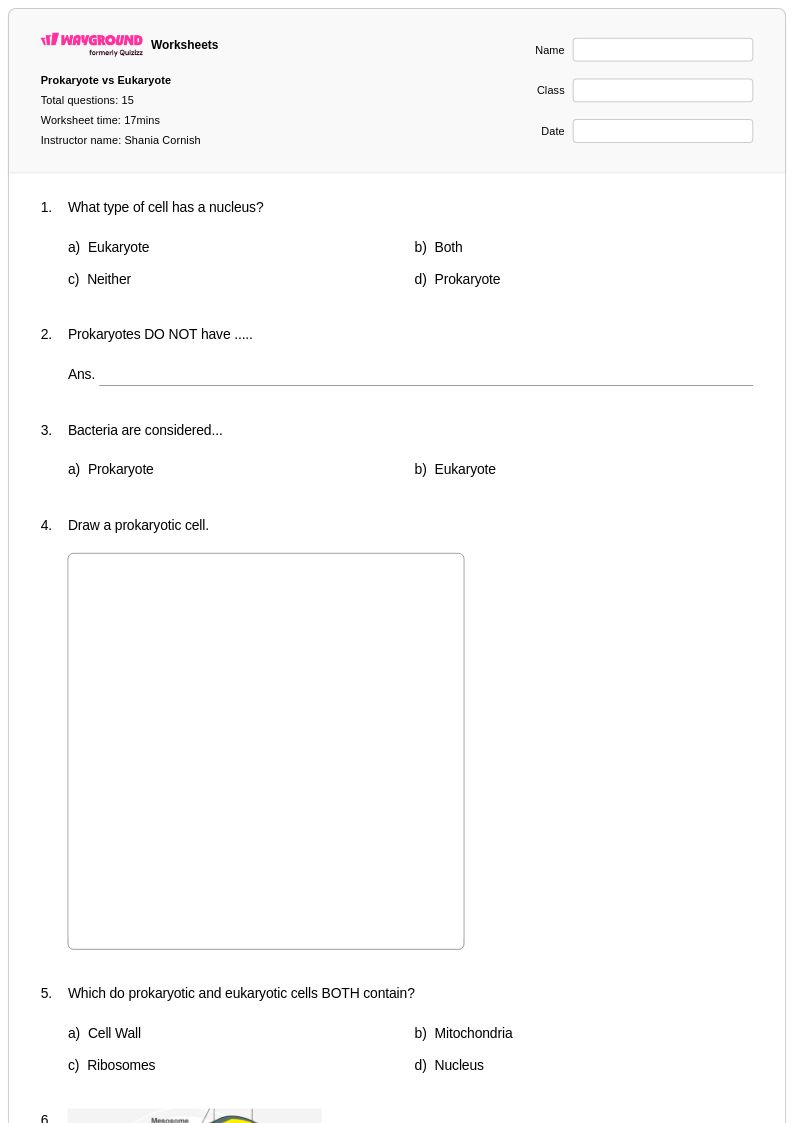
15 Q
8th
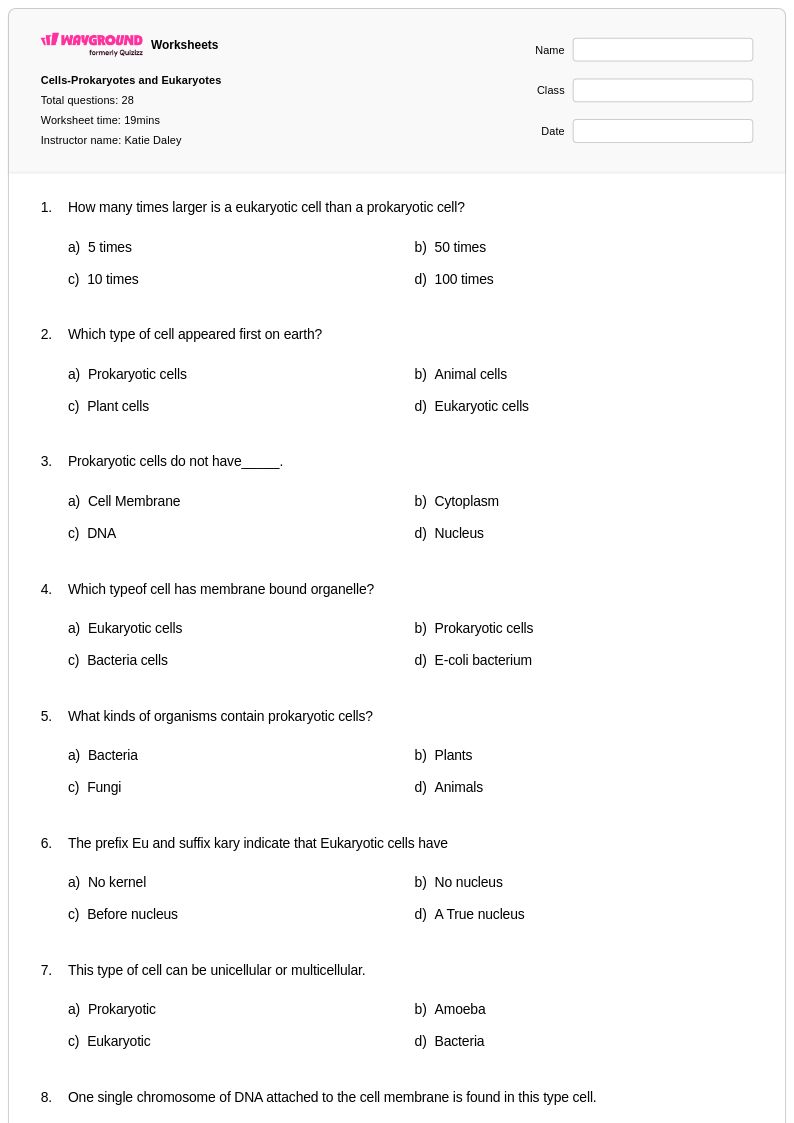
28 Q
6th - 8th
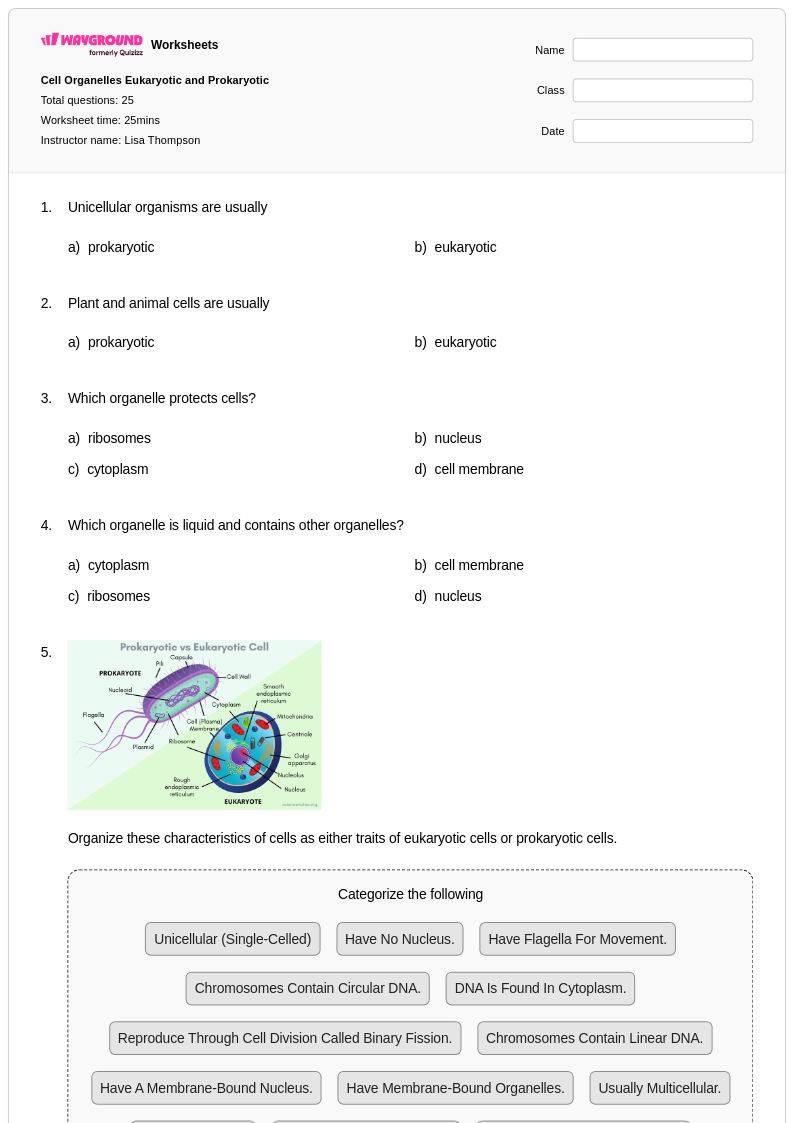
25 Q
7th - Uni
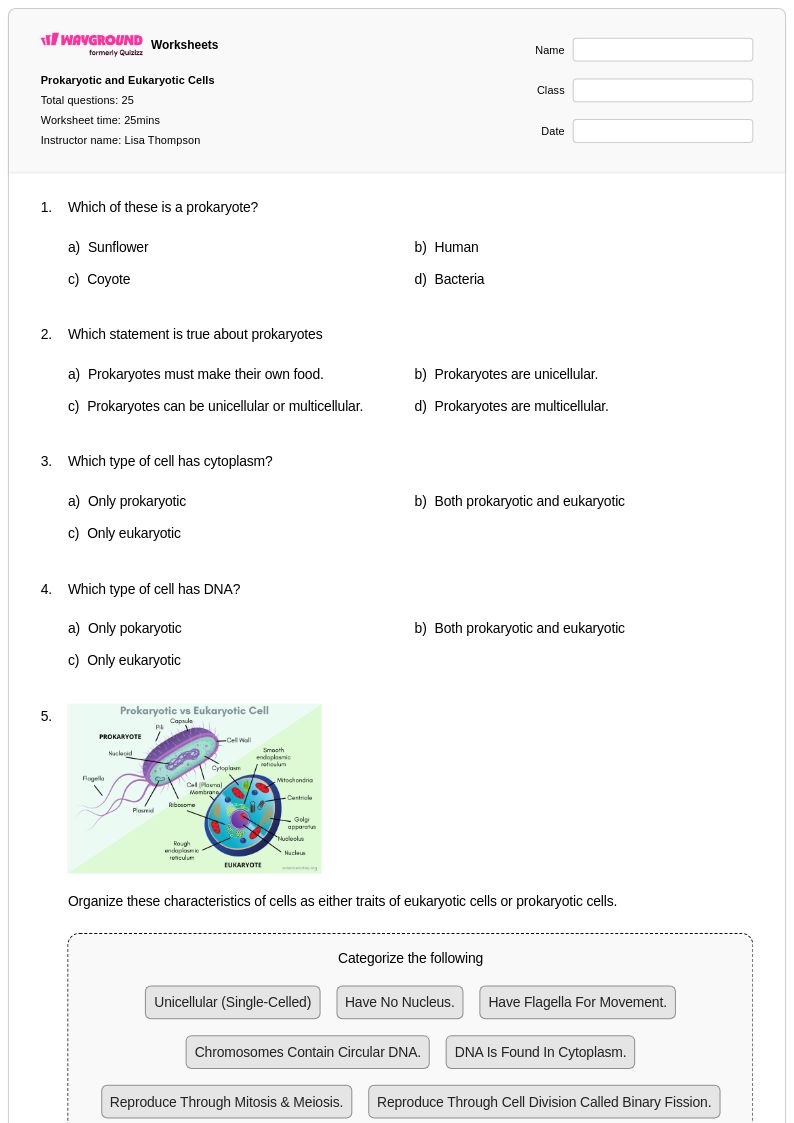
25 Q
6th - Uni
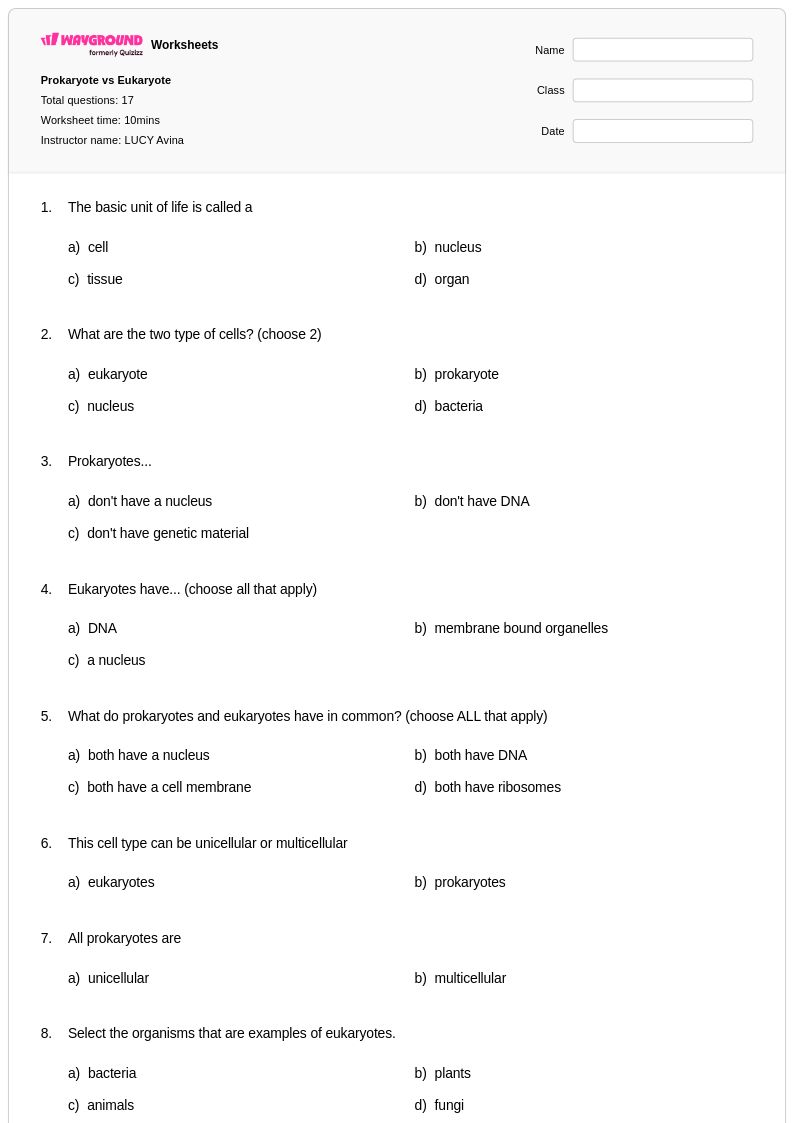
17 Q
6th - 8th
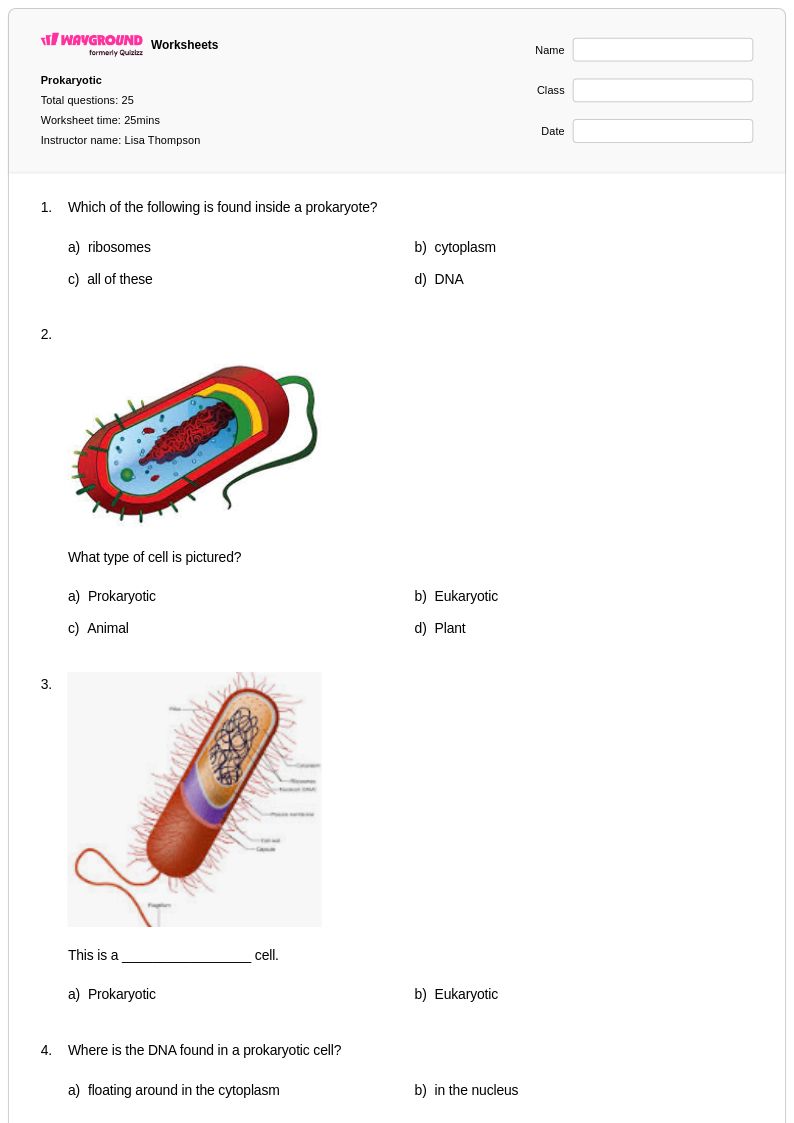
25 Q
6th - Uni
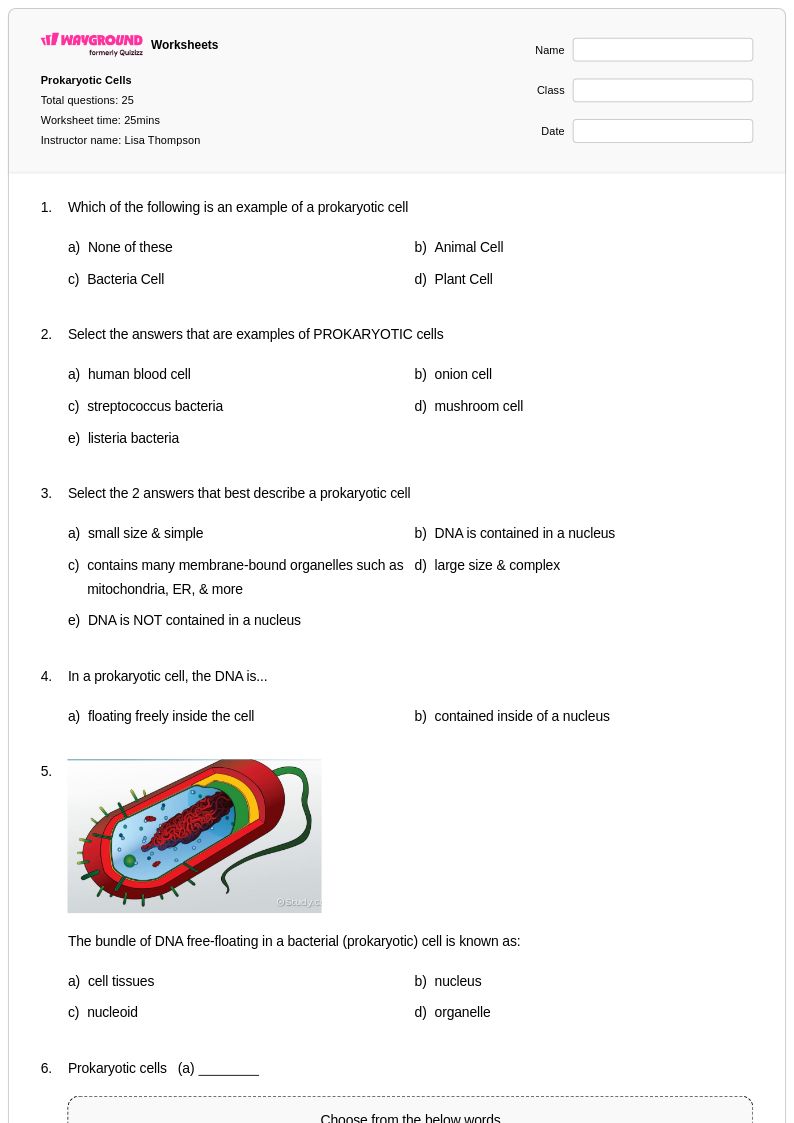
25 Q
6th - Uni
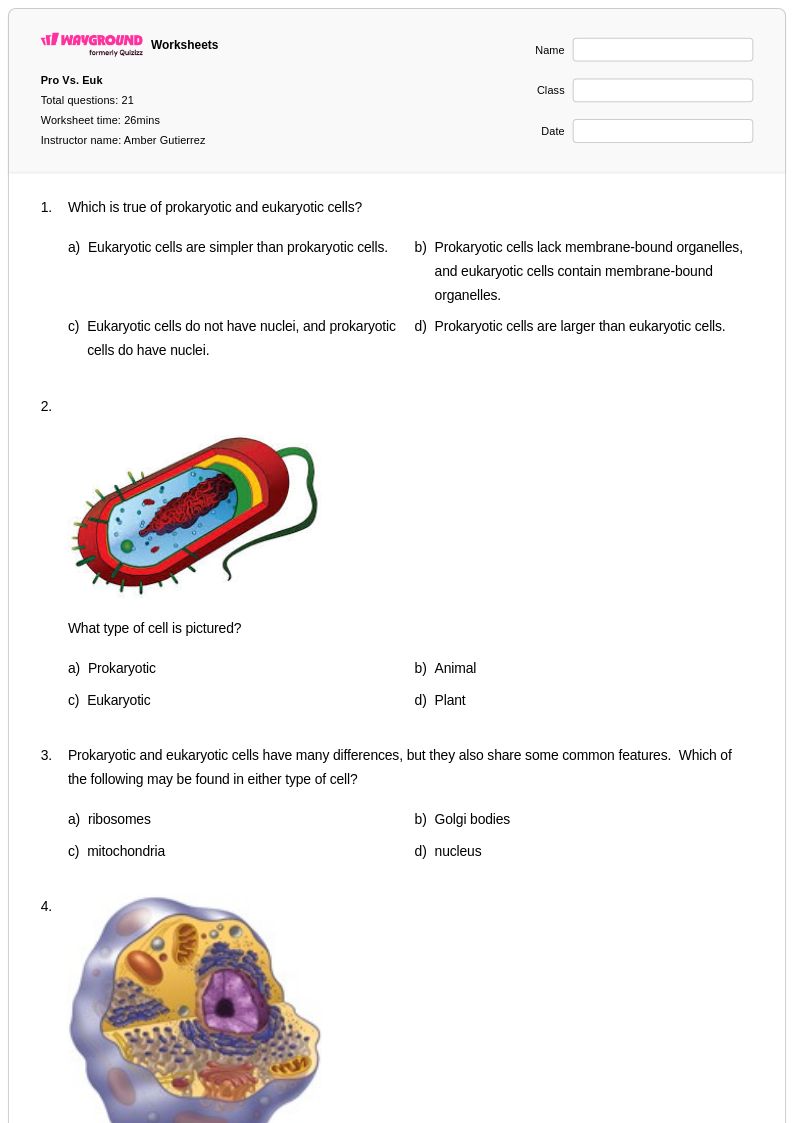
21 Q
8th
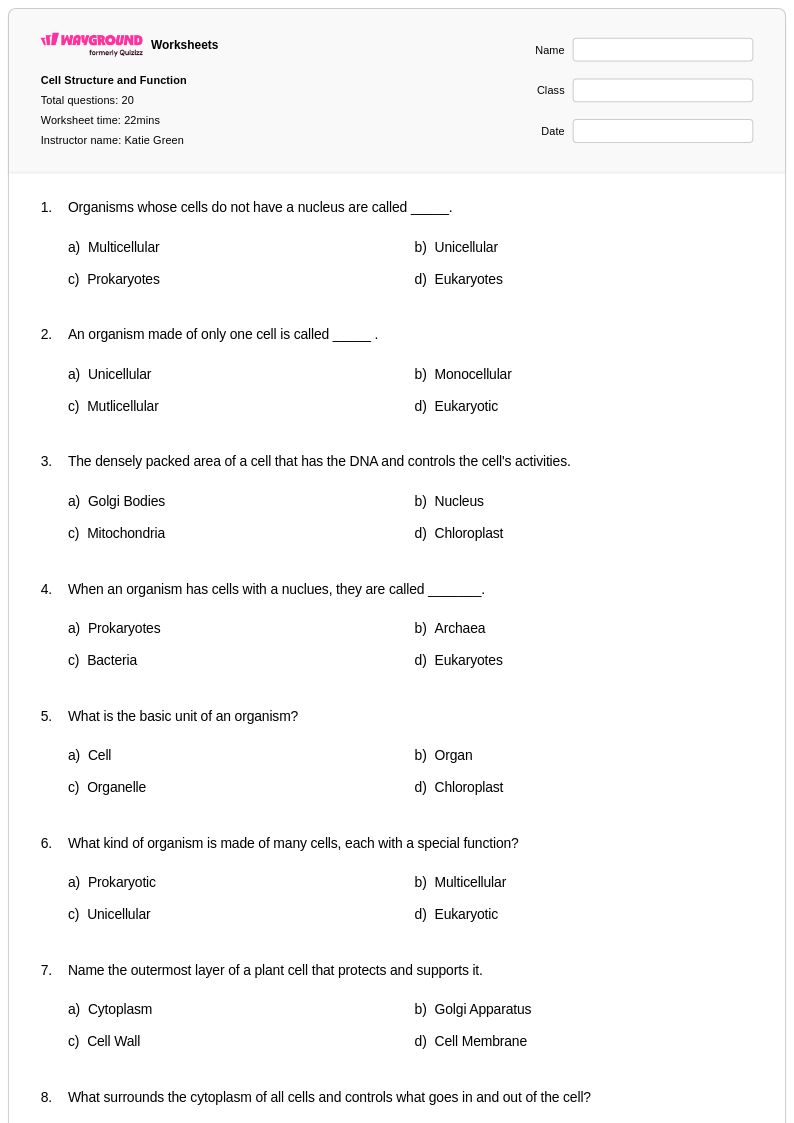
20 Q
7th - 8th
13 Q
6th - 8th
15 Q
8th
25 Q
7th - Uni
Explore Prokaryotes and Eukaryotes Worksheets by Grades
Explore Other Subject Worksheets for year 8
Explore printable Prokaryotes and Eukaryotes worksheets for Year 8
Prokaryotes and eukaryotes represent one of the most fundamental distinctions in biology, and Year 8 students can master this critical concept through comprehensive worksheets available on Wayground (formerly Quizizz). These educational resources focus on helping students understand the structural and functional differences between prokaryotic cells, such as bacteria and archaea, and eukaryotic cells found in plants, animals, fungi, and protists. The worksheets strengthen essential skills including cellular identification, comparative analysis of cell structures, and understanding of evolutionary relationships between different cell types. Students work through practice problems that challenge them to distinguish between cells with and without membrane-bound organelles, analyze microscopic images, and apply their knowledge to real-world examples. Each worksheet comes with a detailed answer key to support independent learning, and teachers can access these valuable resources as free printables in convenient pdf format.
Wayground (formerly Quizizz) empowers educators with an extensive collection of teacher-created resources specifically designed for prokaryotes and eukaryotes instruction at the Year 8 level. The platform's millions of educational materials include worksheets that align with state and national science standards, ensuring that content meets rigorous academic requirements for cellular biology education. Teachers benefit from robust search and filtering capabilities that allow them to locate materials perfectly suited to their students' needs, whether for initial concept introduction, skill reinforcement, or advanced enrichment activities. The platform's differentiation tools enable educators to customize worksheets for diverse learning levels within their classrooms, while the availability of both printable and digital formats, including downloadable pdfs, provides maximum flexibility for lesson planning. These features streamline the process of creating engaging remediation exercises, challenging enrichment opportunities, and targeted skill practice sessions that help students develop a deep understanding of cellular organization and the prokaryote-eukaryote distinction.
FAQs
How do I teach the difference between prokaryotes and eukaryotes?
What exercises help students practice comparing prokaryotic and eukaryotic cells?
What mistakes do students commonly make when learning about prokaryotes and eukaryotes?
How can I use prokaryotes and eukaryotes worksheets to assess student understanding?
How do I use Wayground's prokaryotes and eukaryotes worksheets in my classroom?
How do I differentiate prokaryotes and eukaryotes instruction for students at different levels?