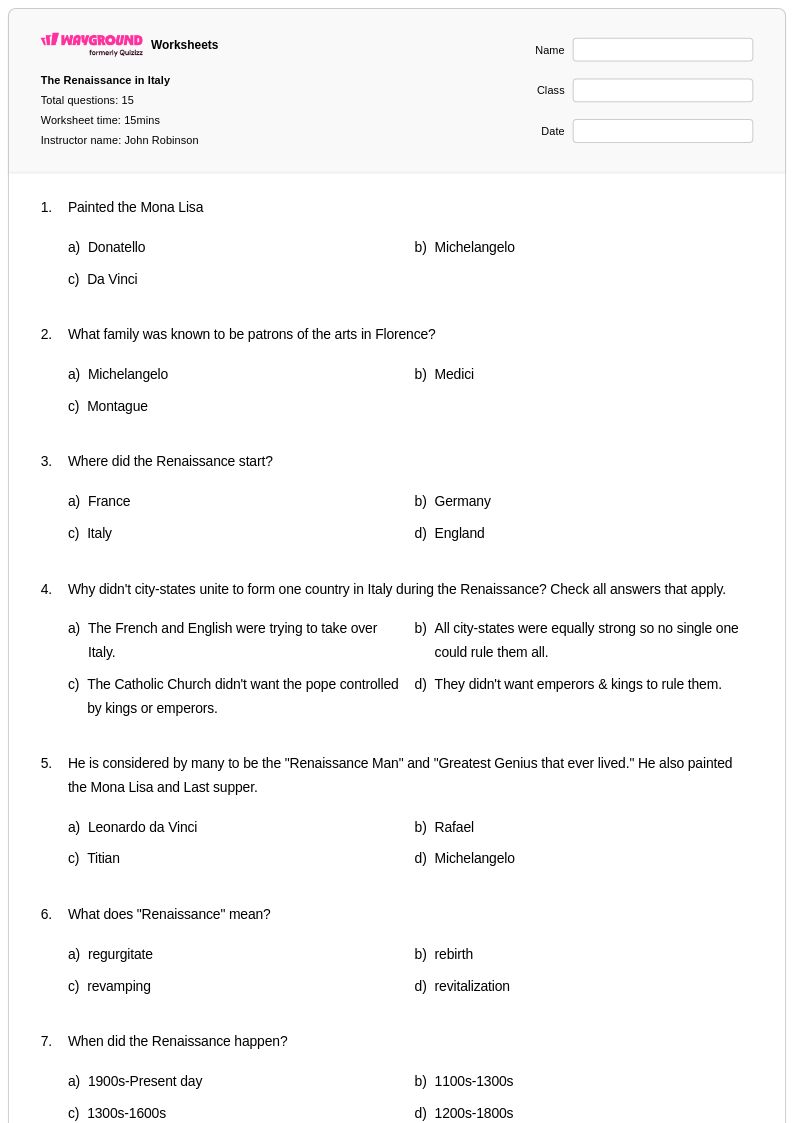
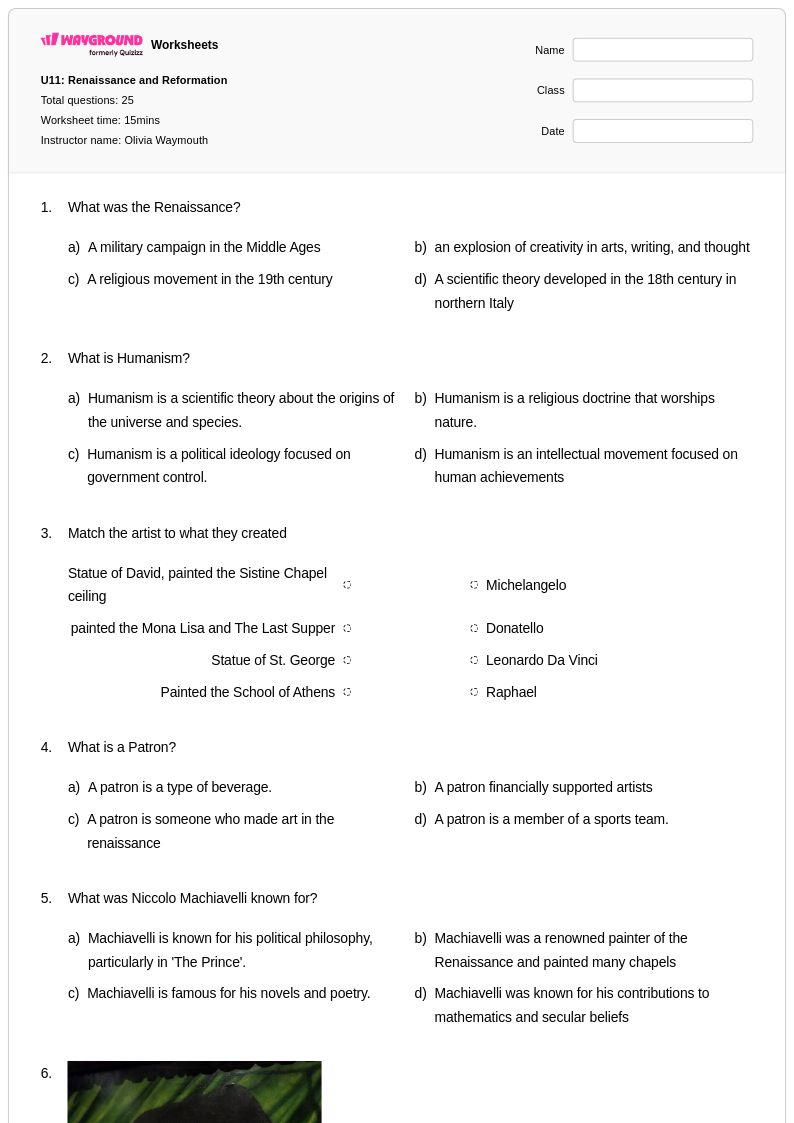
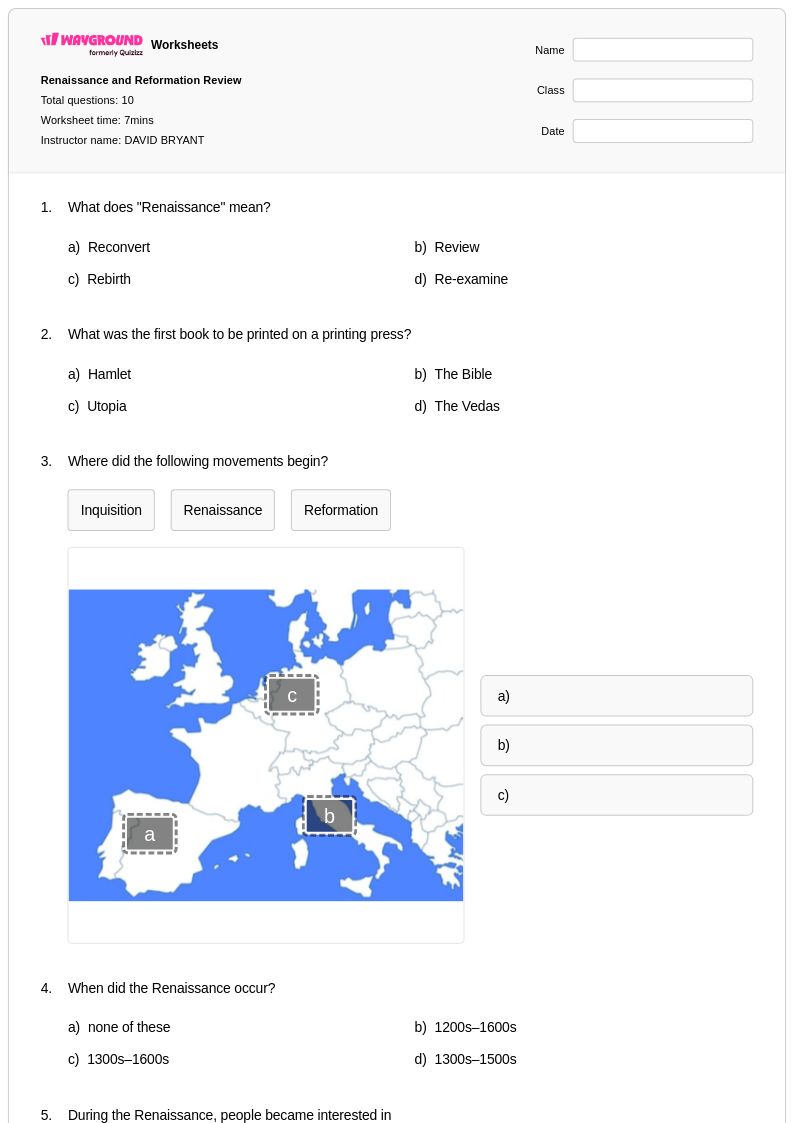
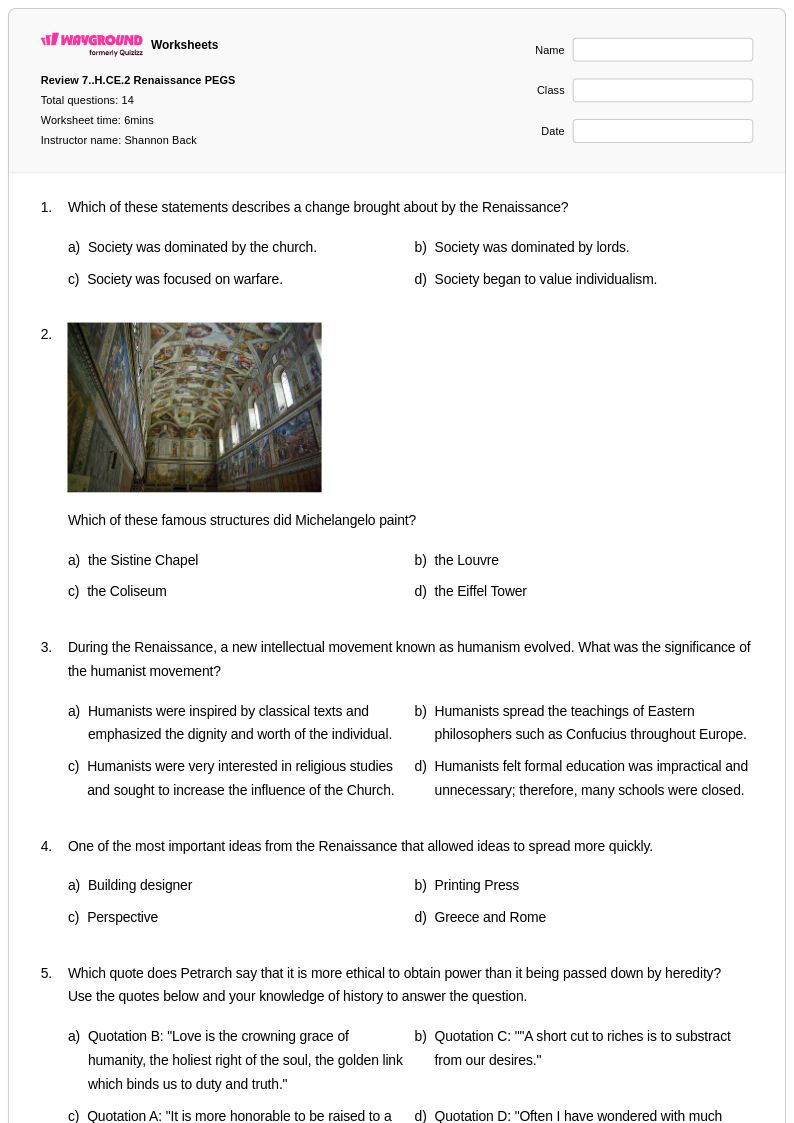
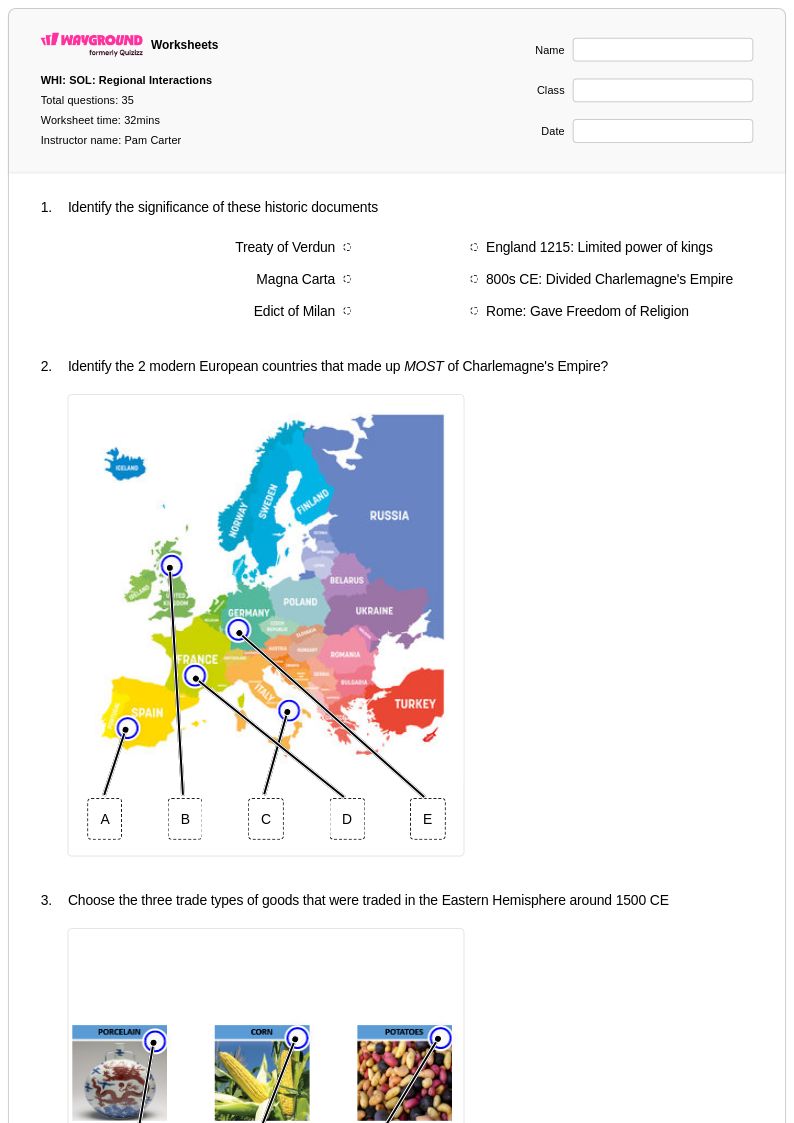
Explore Wayground's comprehensive Year 9 Renaissance worksheets and printables that help students master this pivotal historical period through engaging practice problems, free PDF resources, and detailed answer keys.
Explore printable Renaissance worksheets for Year 9
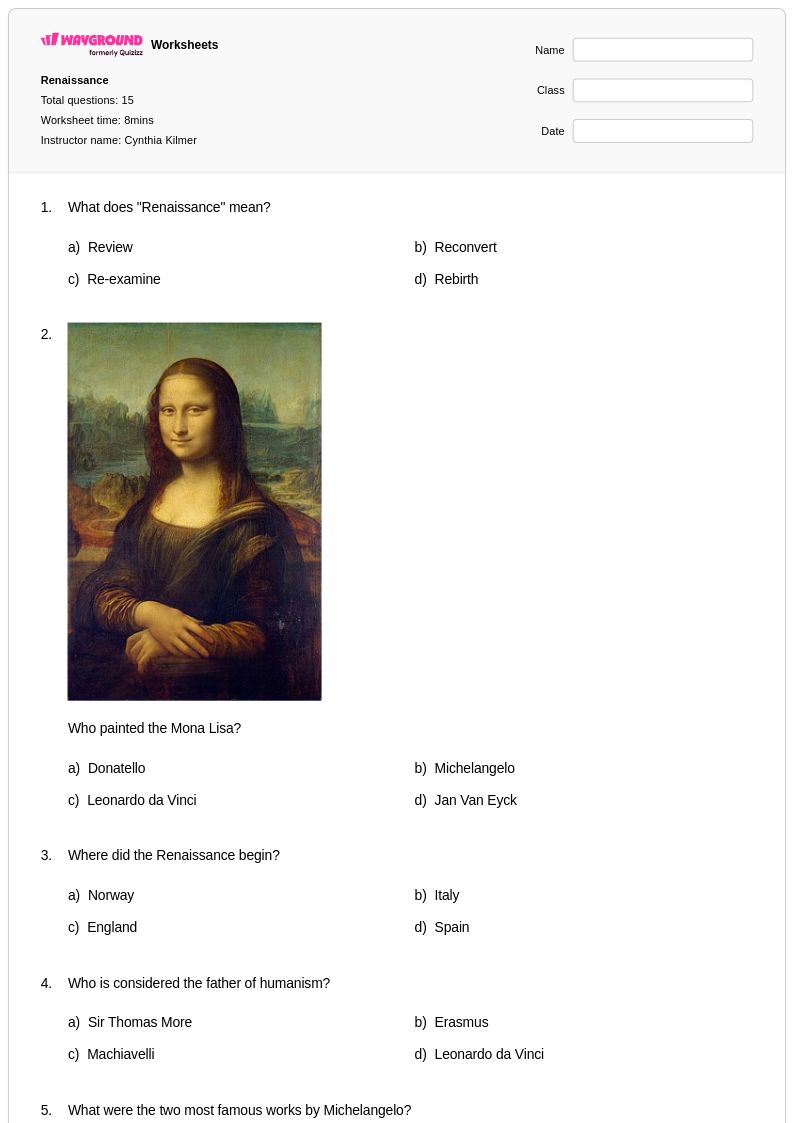
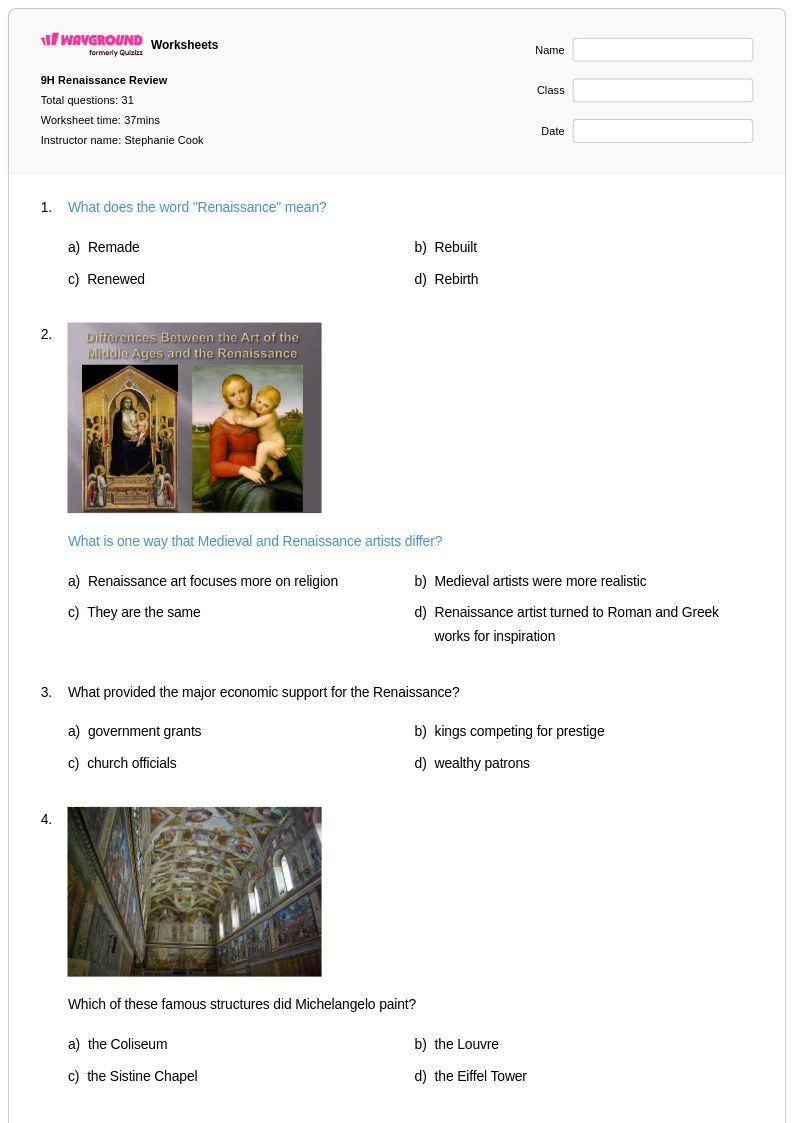
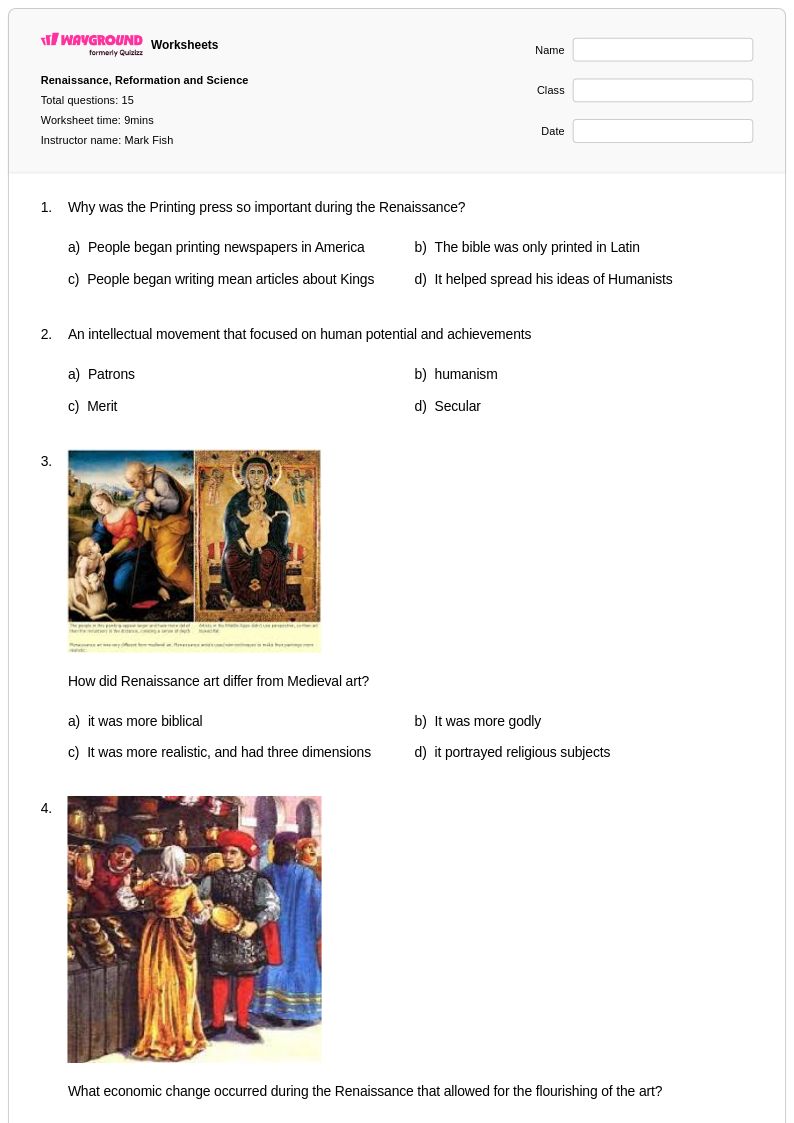
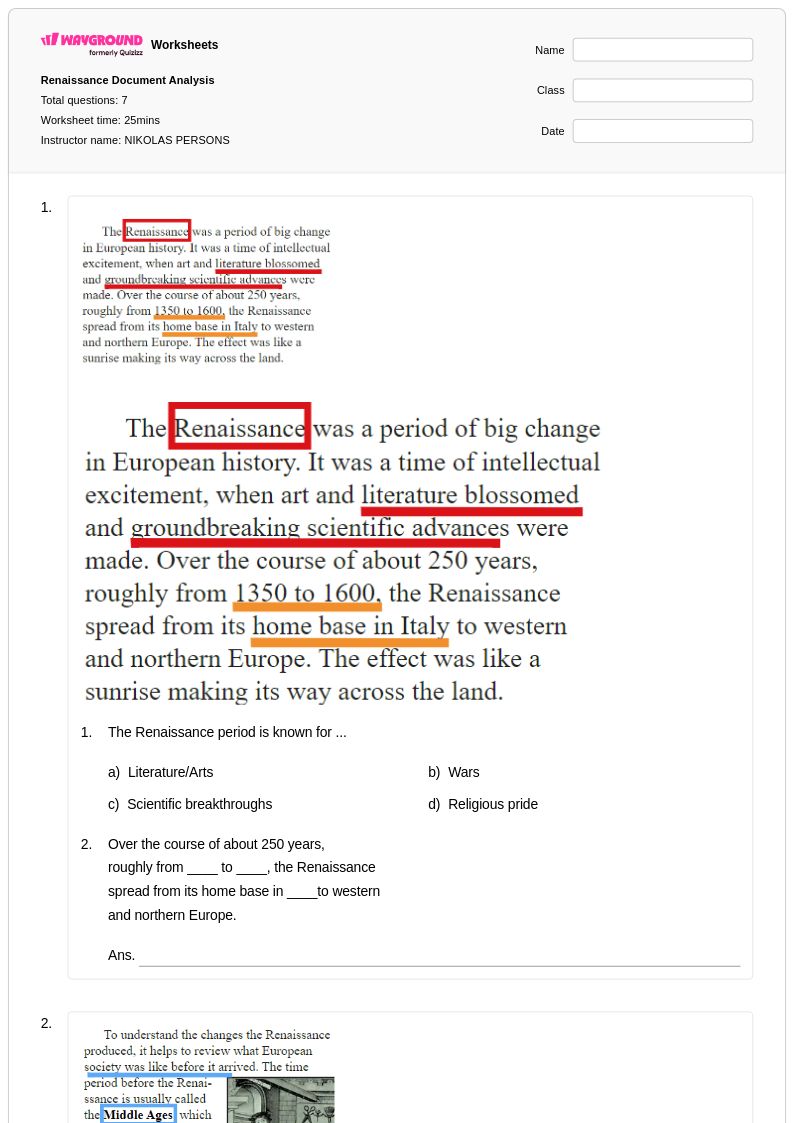
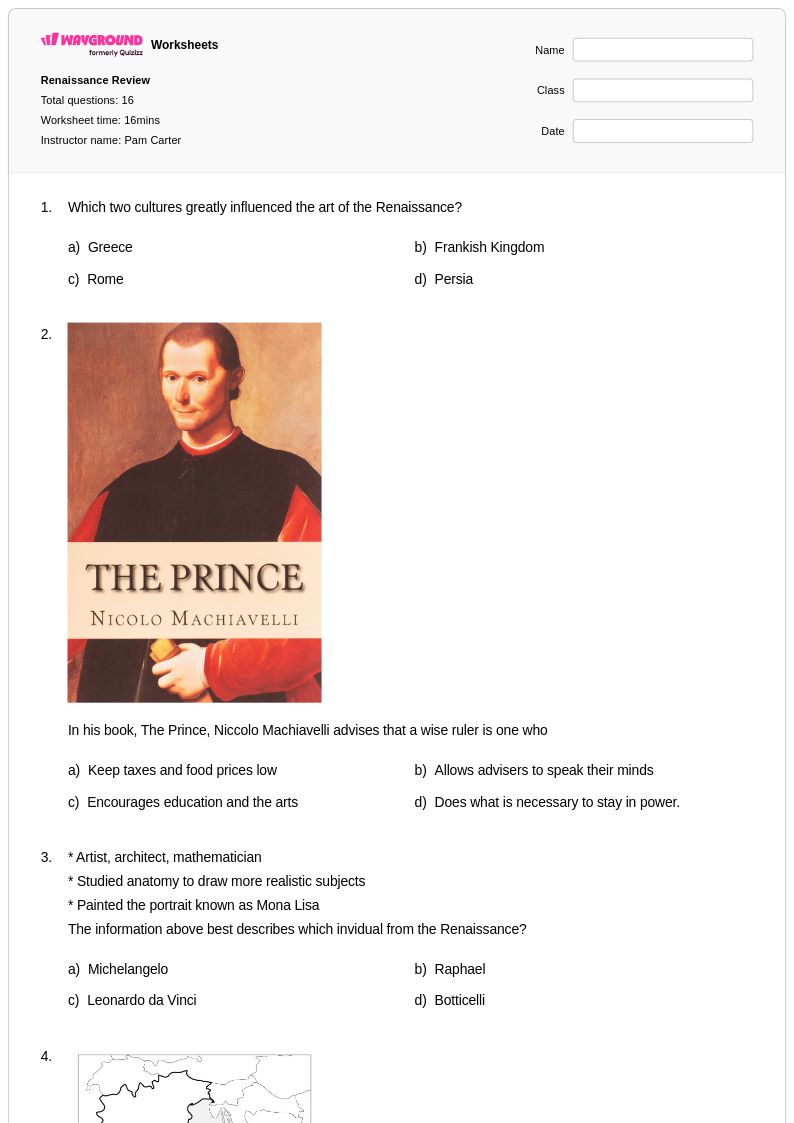
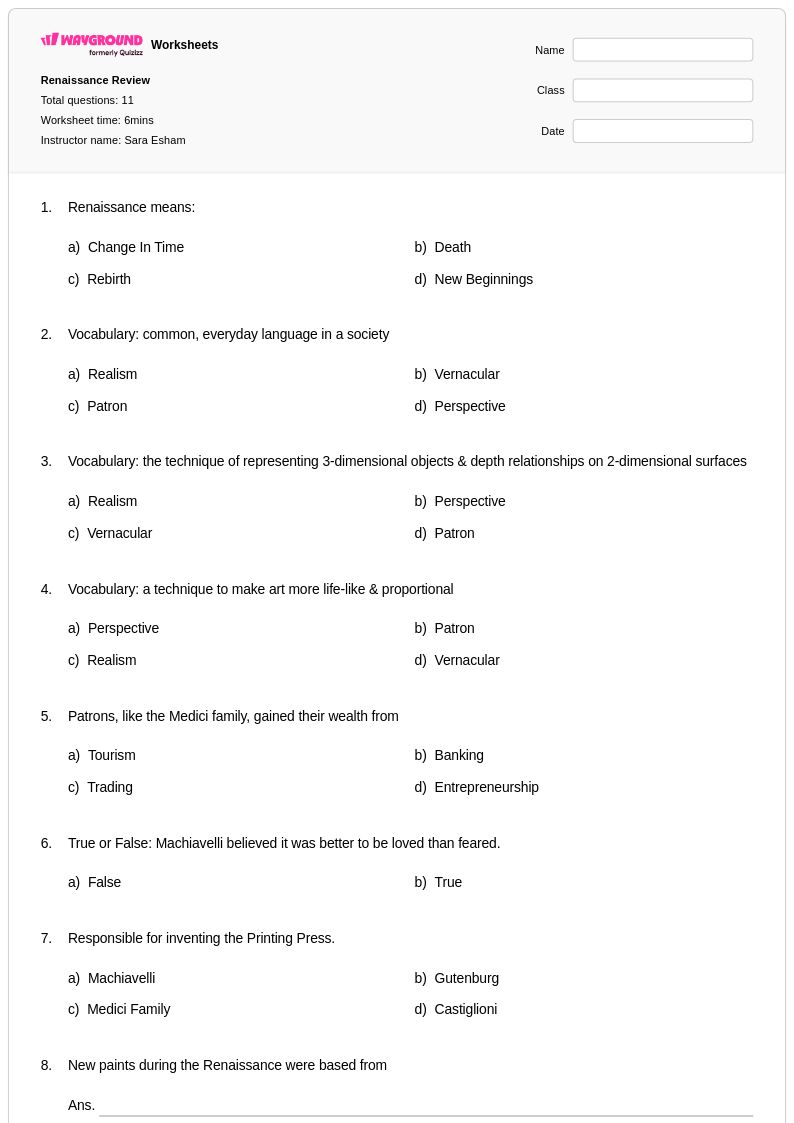
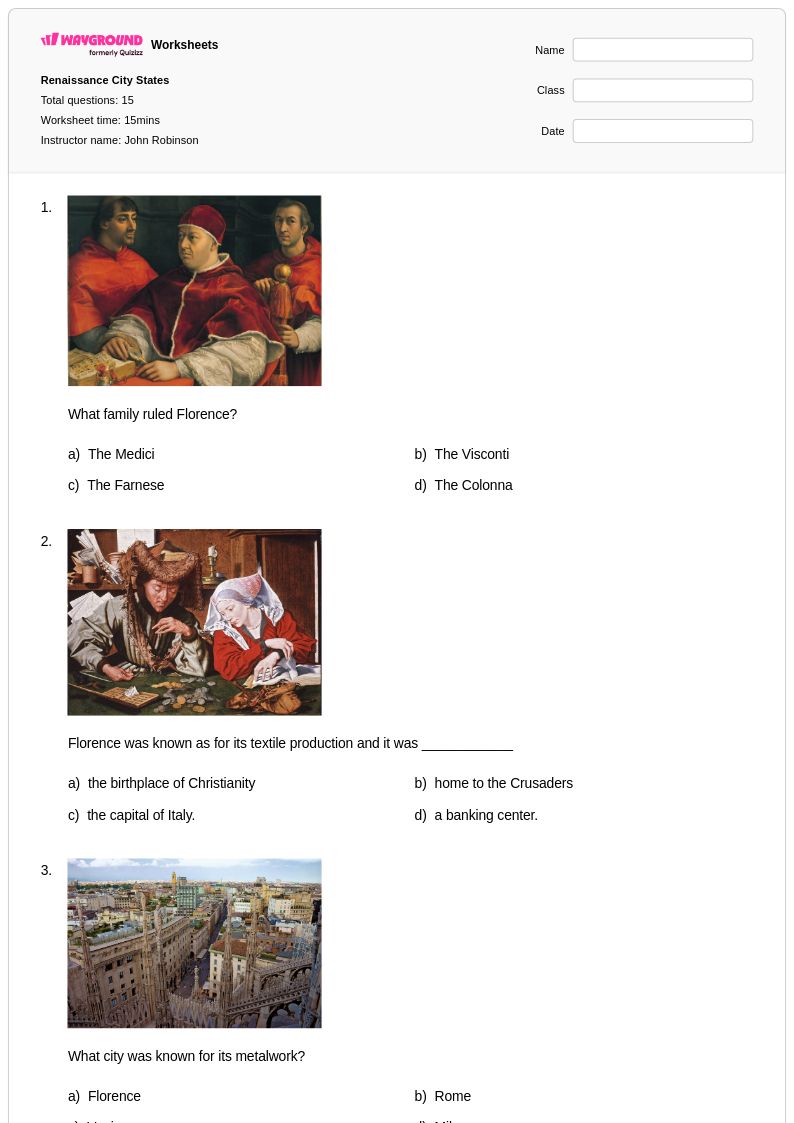
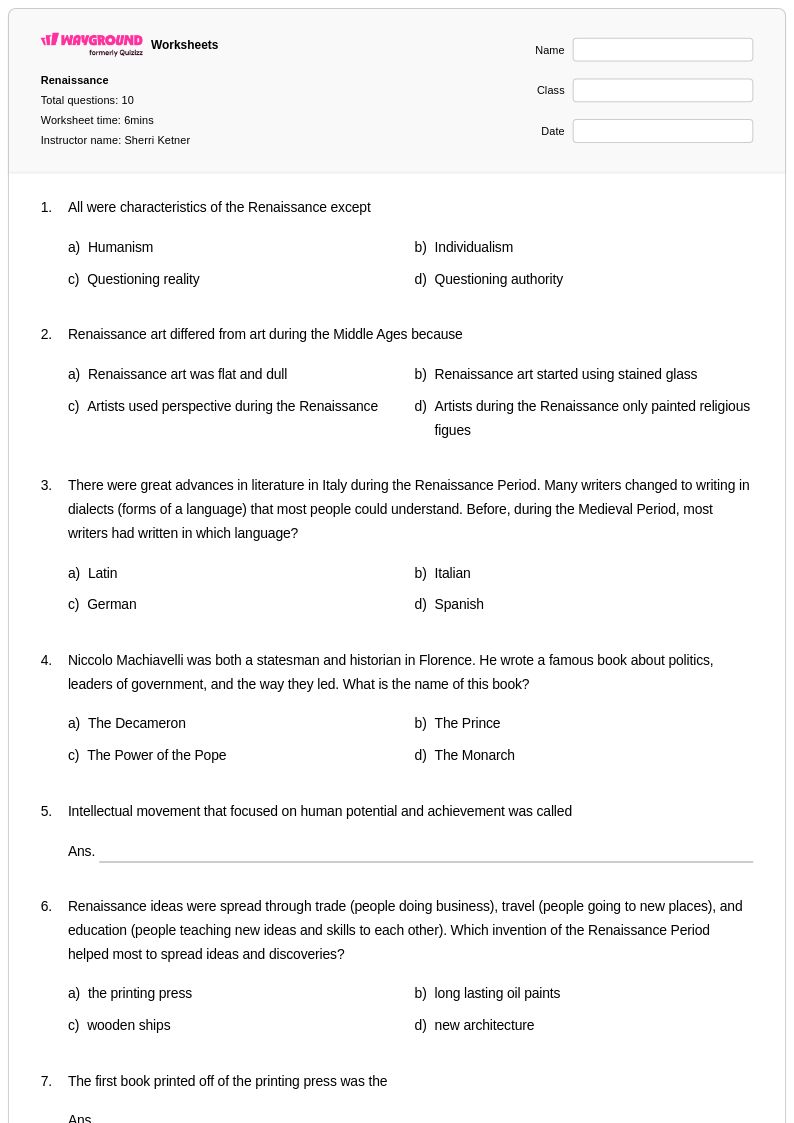
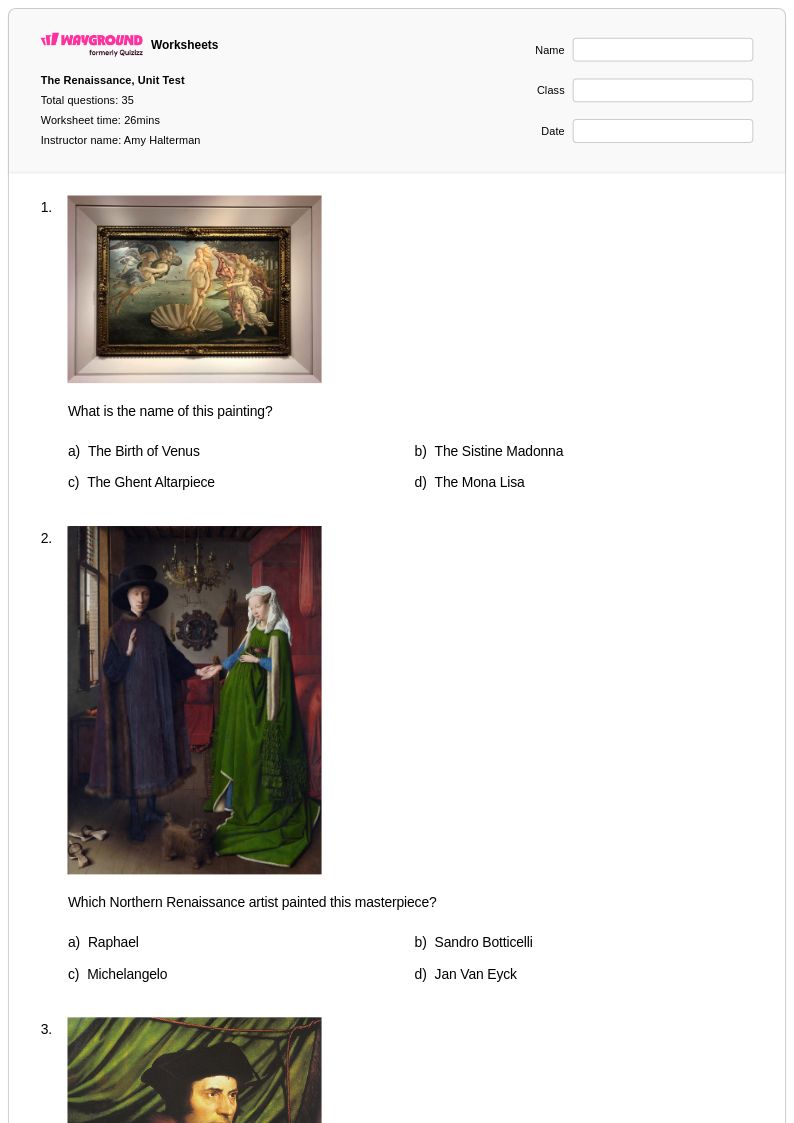
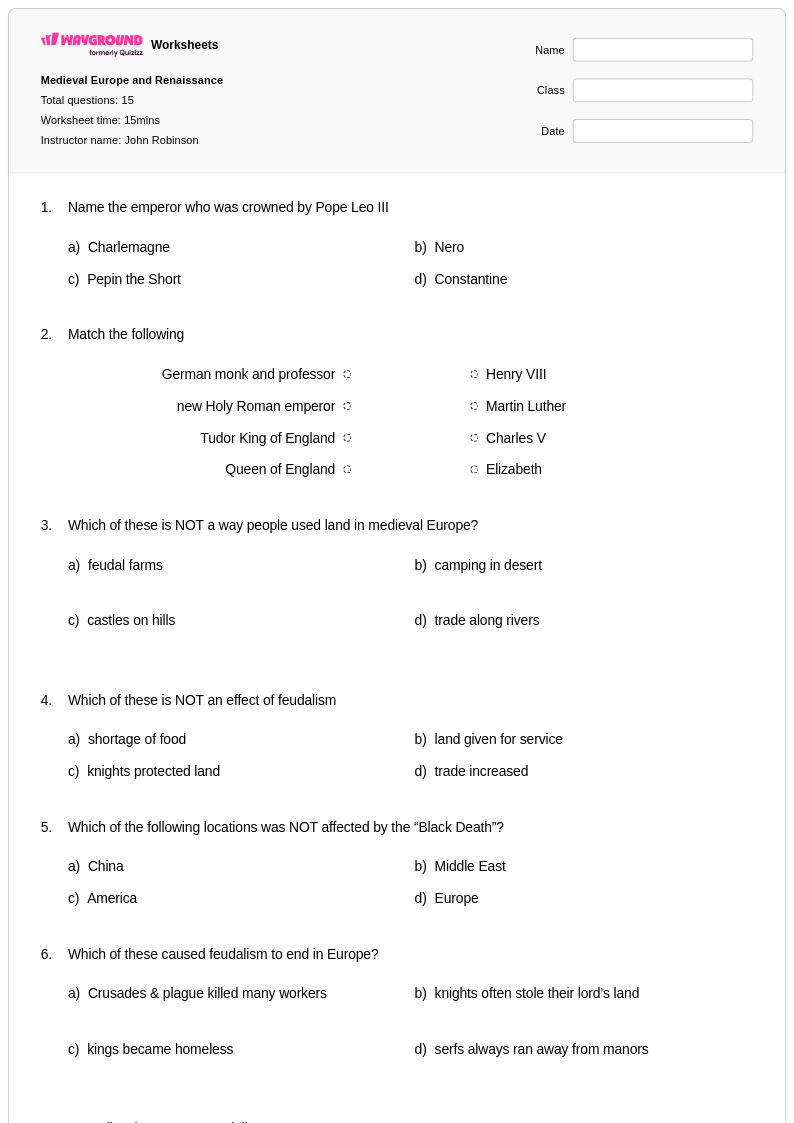
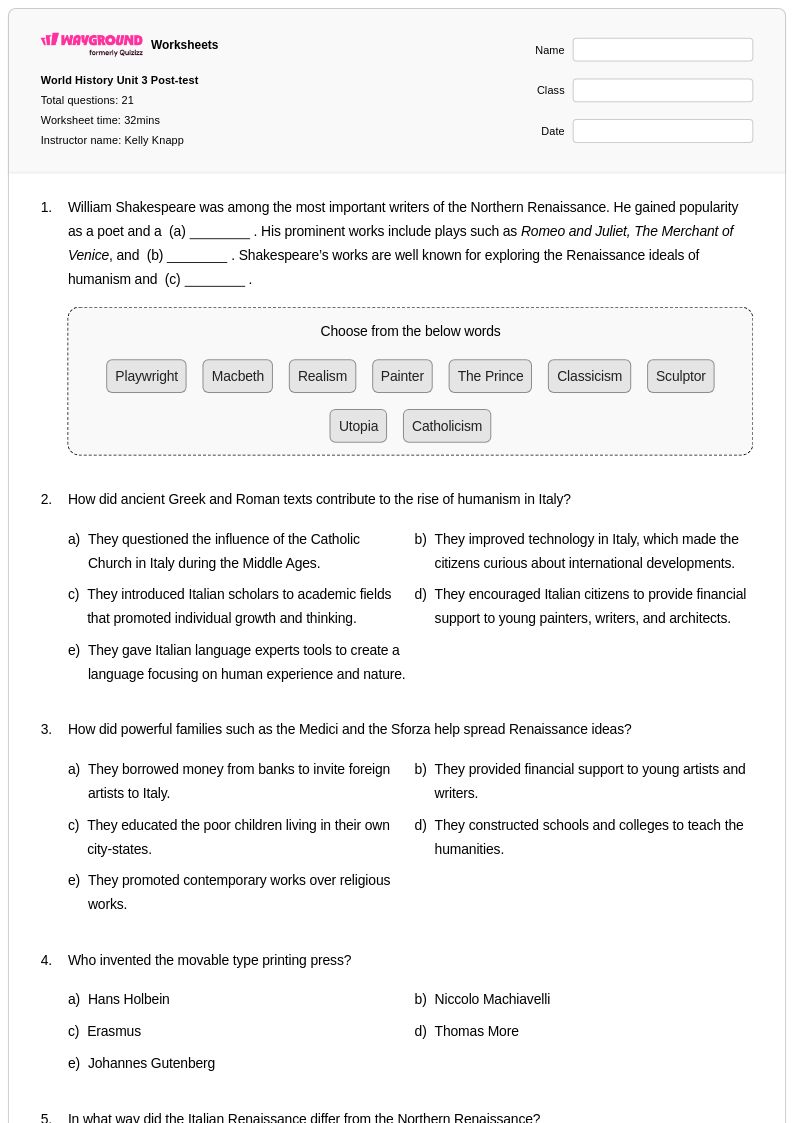
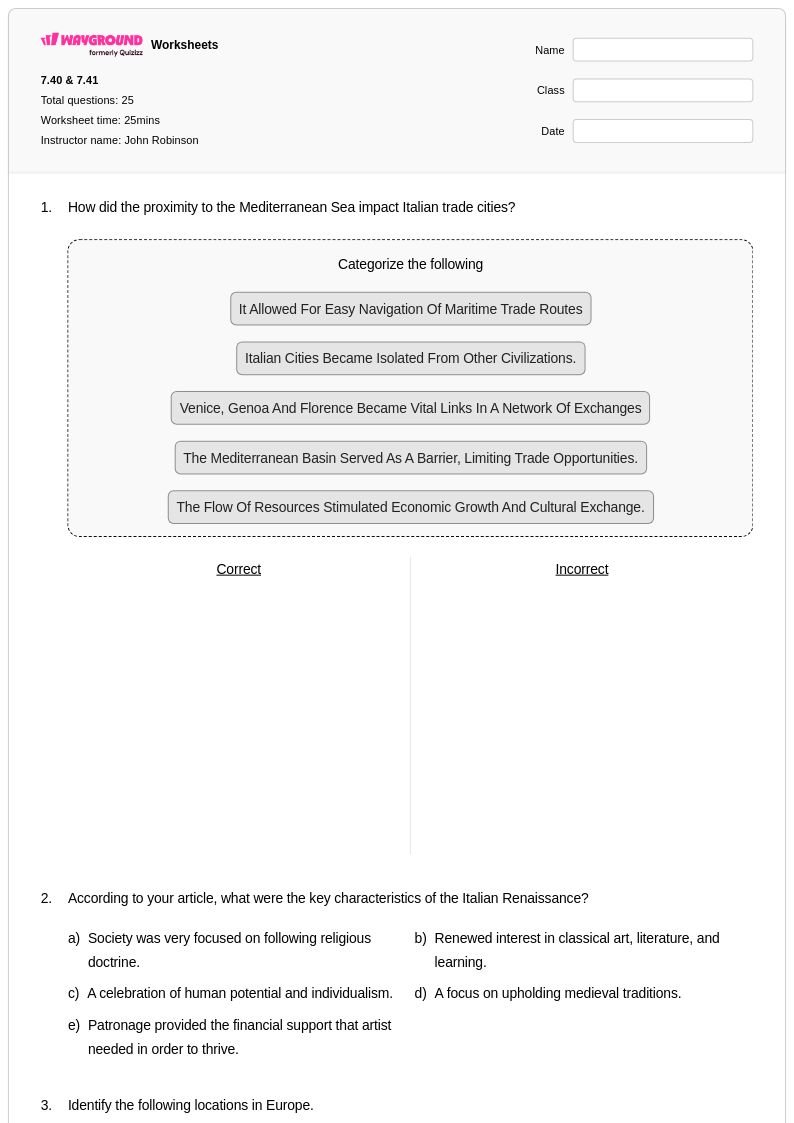
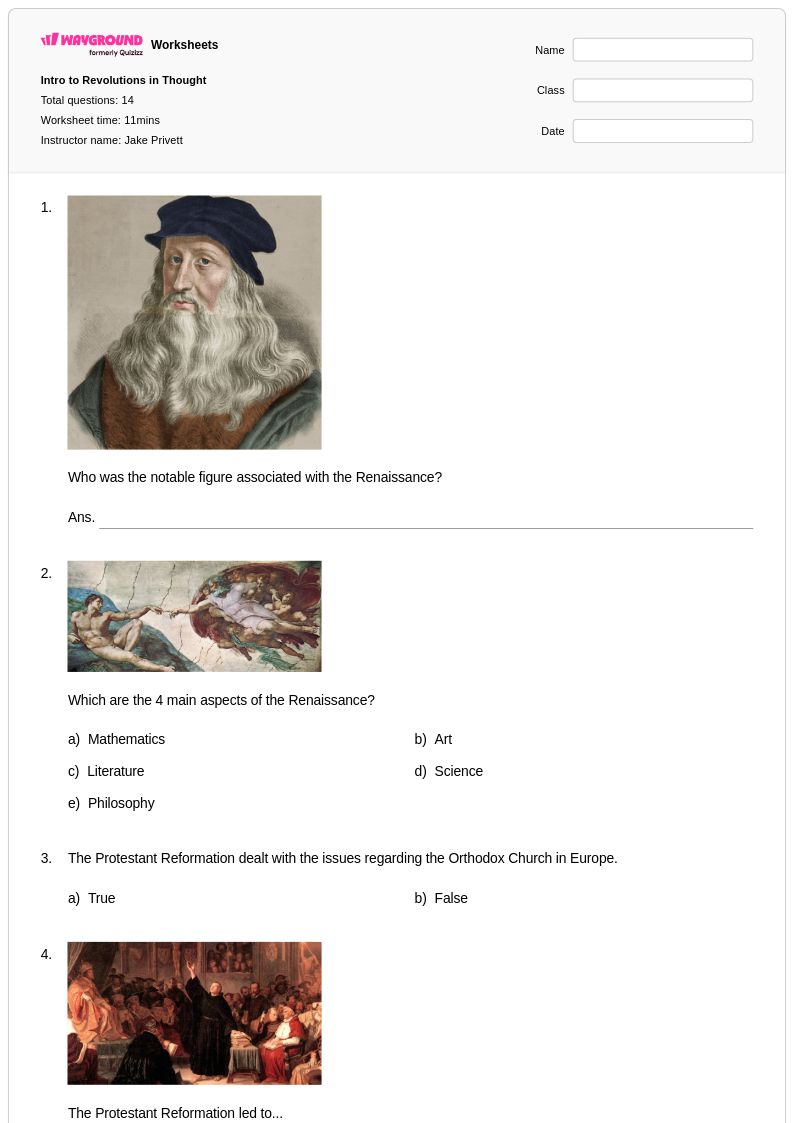
Renaissance worksheets for Year 9 students available through Wayground (formerly Quizizz) provide comprehensive coverage of this transformative period in European history, spanning approximately 1300 to 1600 CE. These educational resources strengthen critical thinking skills as students analyze primary source documents, examine artistic masterpieces, and evaluate the social, political, and economic changes that marked the transition from medieval to early modern Europe. The worksheet collections include practice problems that challenge students to connect Renaissance innovations in art, science, and literature to broader historical themes, while printable formats and accompanying answer keys enable teachers to seamlessly integrate these materials into classroom instruction. Students engage with free downloadable content that explores key figures like Leonardo da Vinci, Michelangelo, and Machiavelli, developing analytical skills essential for understanding how Renaissance humanism reshaped European intellectual traditions.
Wayground (formerly Quizizz) empowers educators with millions of teacher-created Renaissance worksheet resources that support diverse instructional needs across Year 9 social studies curricula. The platform's robust search and filtering capabilities allow teachers to quickly locate materials aligned with specific learning standards, whether focusing on Italian city-states, Northern European Renaissance developments, or the period's lasting impact on Western civilization. These digital and printable pdf resources include differentiation tools that accommodate varying student readiness levels, enabling teachers to provide targeted remediation for struggling learners while offering enrichment opportunities for advanced students. The flexible customization features allow educators to modify existing worksheets or create original assessments, supporting comprehensive lesson planning that addresses individual student needs while building essential historical analysis and critical thinking skills through structured skill practice.
FAQs
How do I teach the Renaissance to middle or high school students?
Teaching the Renaissance effectively means anchoring the period in its historical contrast with the Middle Ages before expanding outward. Start with the Italian city-states as the cradle of the movement, then trace how humanism, patronage, and the printing press carried Renaissance ideas across Europe. Using primary sources alongside visual analysis of Renaissance art helps students connect abstract ideas like individualism and secularism to concrete historical evidence.
What are the most important concepts students need to understand about the Renaissance?
Students should grasp four core pillars of the Renaissance: humanism as a philosophical shift toward human potential and classical learning, the explosion of artistic and scientific innovation, the role of patronage in funding cultural production, and the printing press as a catalyst for spreading new ideas. Understanding how these forces intersected is more valuable than memorizing individual facts or figures.
What exercises help students practice analyzing the Renaissance?
Effective practice exercises for the Renaissance include comparing medieval and Renaissance artworks to identify shifts in perspective, proportion, and subject matter; examining excerpts from Machiavelli or Pico della Mirandola to trace humanist ideas; and evaluating the contributions of figures like Leonardo da Vinci, Michelangelo, and Galileo across multiple disciplines. Activities that ask students to connect cause and effect, such as linking the printing press to the spread of Reformation ideas, build the kind of analytical thinking historians use.
What mistakes do students commonly make when studying the Renaissance?
The most common misconception is treating the Renaissance as a sudden break from the Middle Ages rather than a gradual shift with deep continuities. Students also frequently conflate the Italian Renaissance with the Northern Renaissance without recognizing the distinct cultural and religious contexts. Another common error is over-crediting individual geniuses like Leonardo da Vinci without acknowledging the broader social, economic, and institutional structures, particularly patronage networks, that made their work possible.
How can I use Renaissance worksheets to support primary source analysis in my classroom?
Renaissance worksheets that incorporate primary source excerpts, such as humanist writings, papal decrees, or scientific treatises, give students structured practice in sourcing, contextualizing, and corroborating historical documents. Pair these with guiding questions that push students to identify an author's purpose and intended audience, then connect the source to broader Renaissance themes. This approach aligns closely with document-based question formats used in AP and state history assessments.
How do I use Wayground's Renaissance worksheets in my classroom?
Wayground's Renaissance worksheets are available as printable PDFs for traditional classroom use and in digital formats for technology-integrated learning environments, making them flexible across in-person, hybrid, and remote settings. Teachers can also host worksheets directly as a quiz on Wayground, allowing for real-time student responses and streamlined grading. Each worksheet includes a complete answer key, so they work equally well for guided instruction, independent practice, or homework assignments.