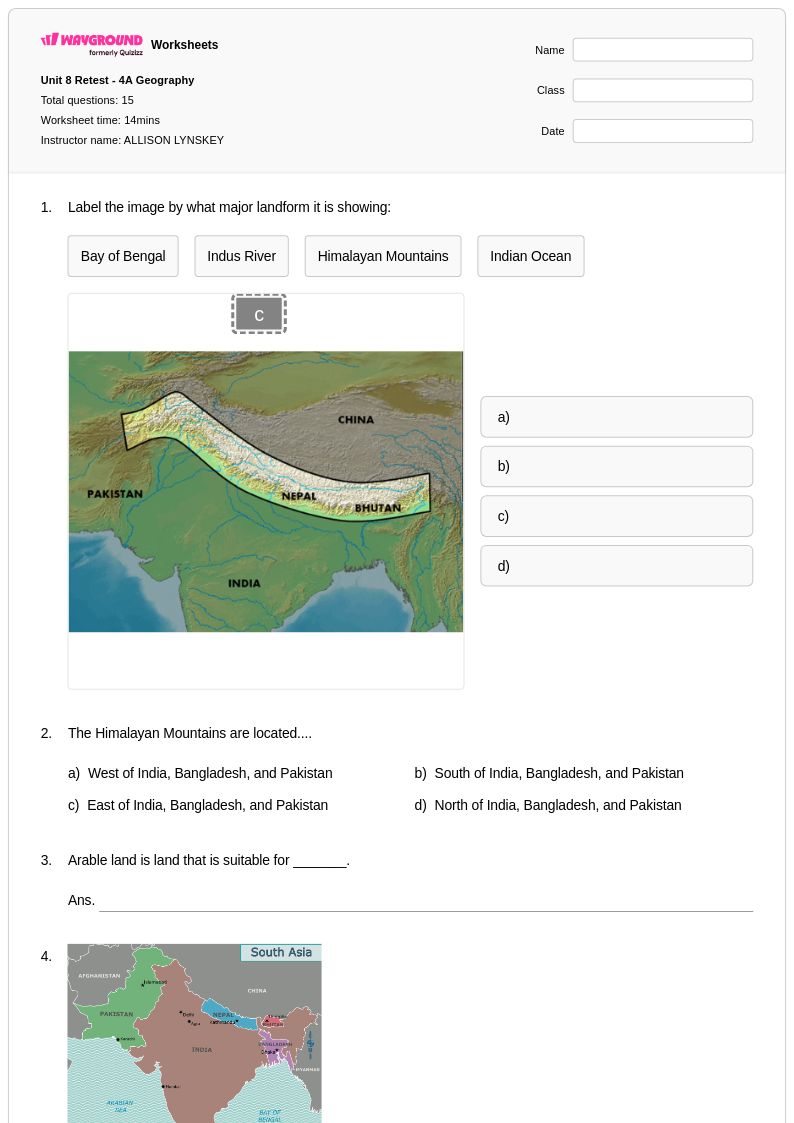
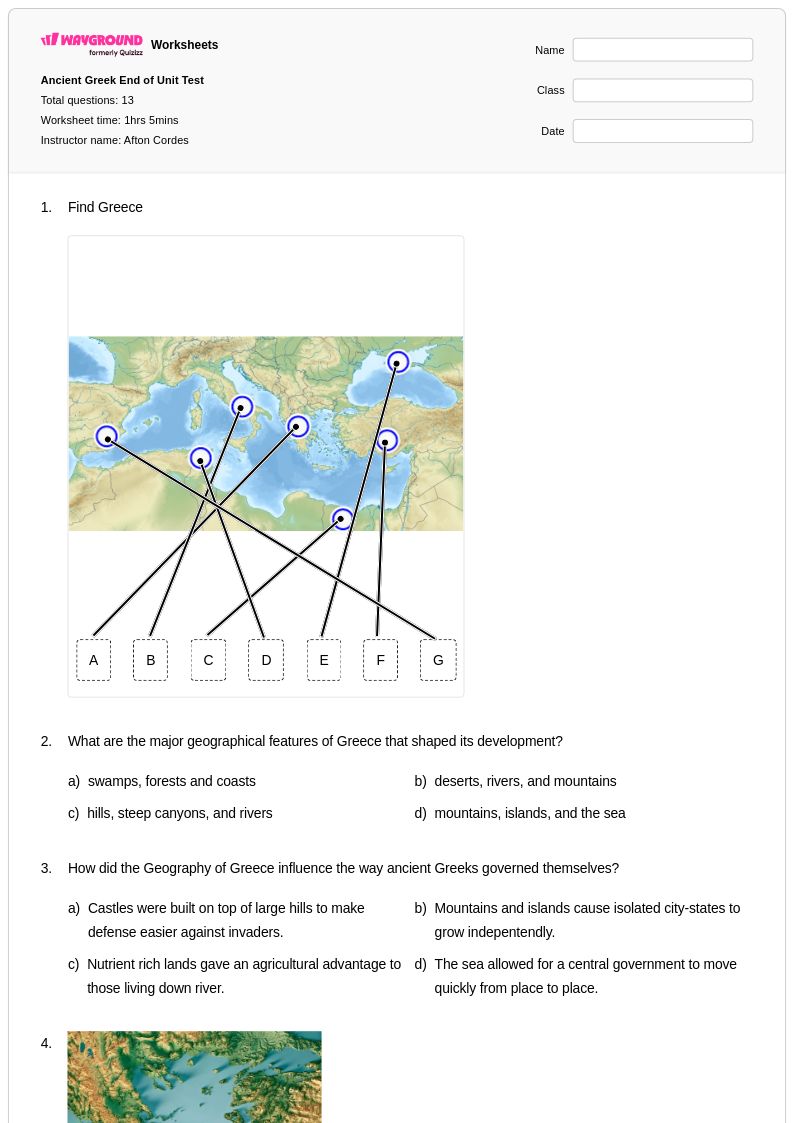
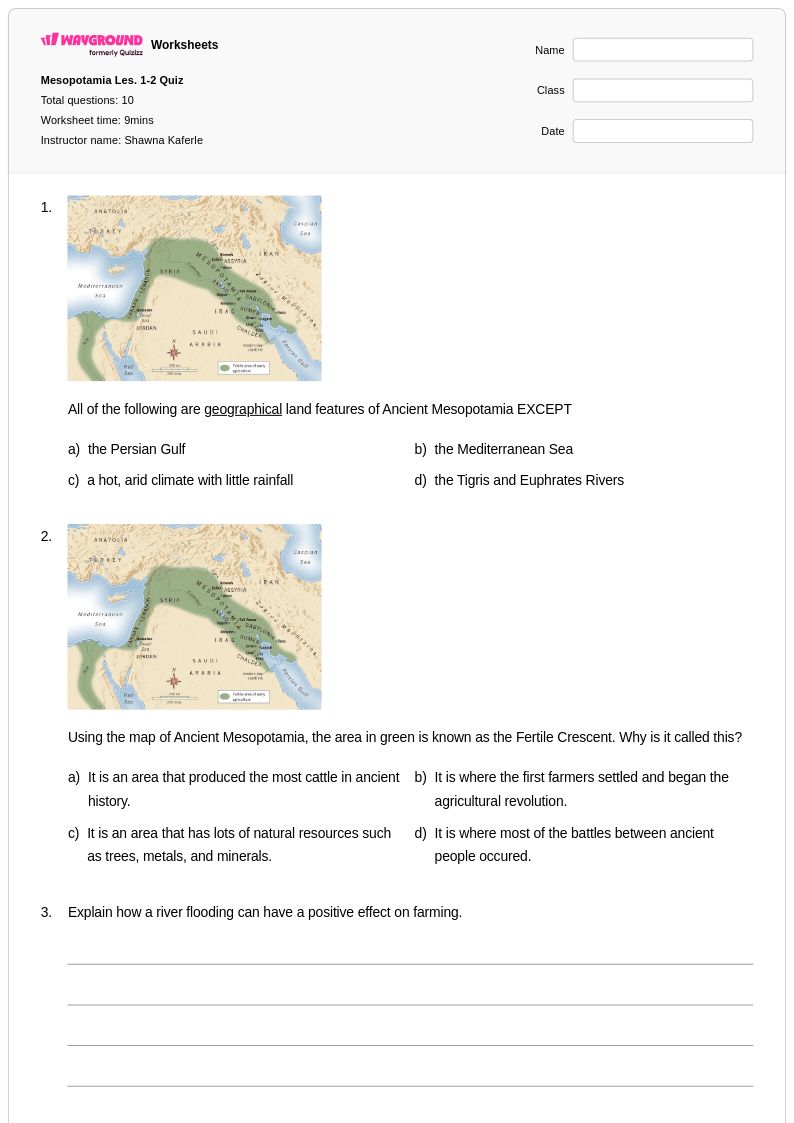
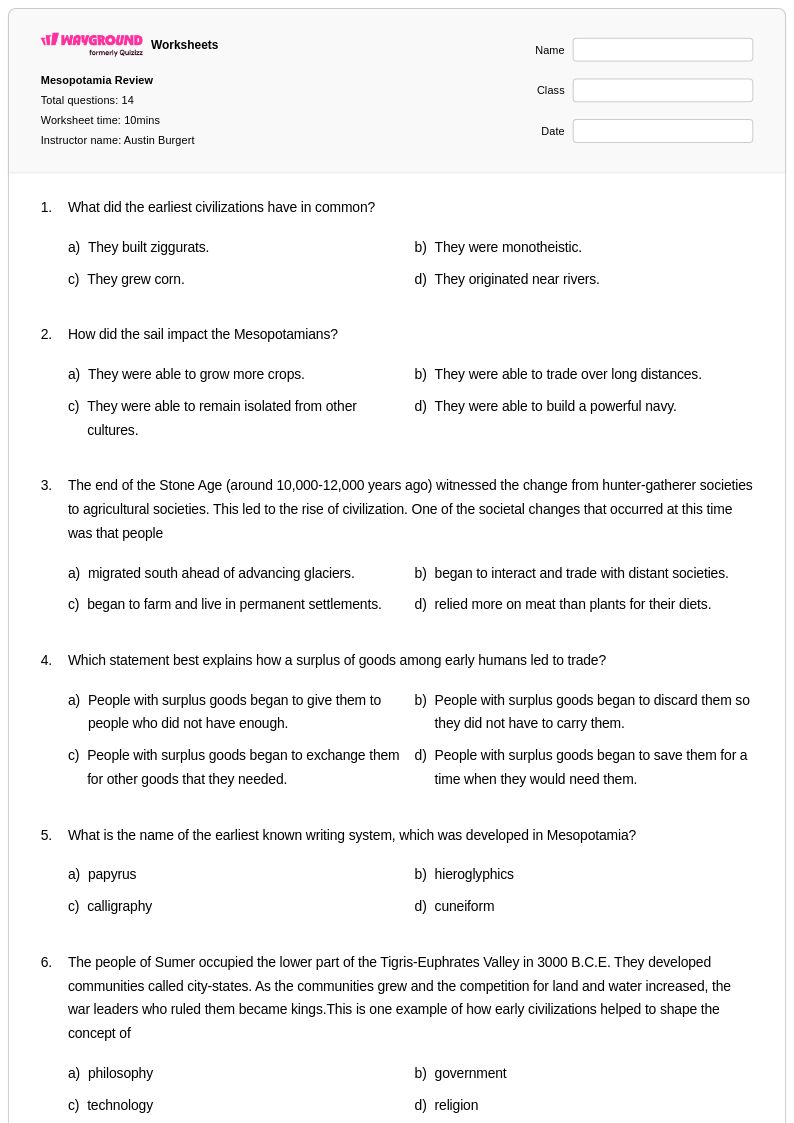
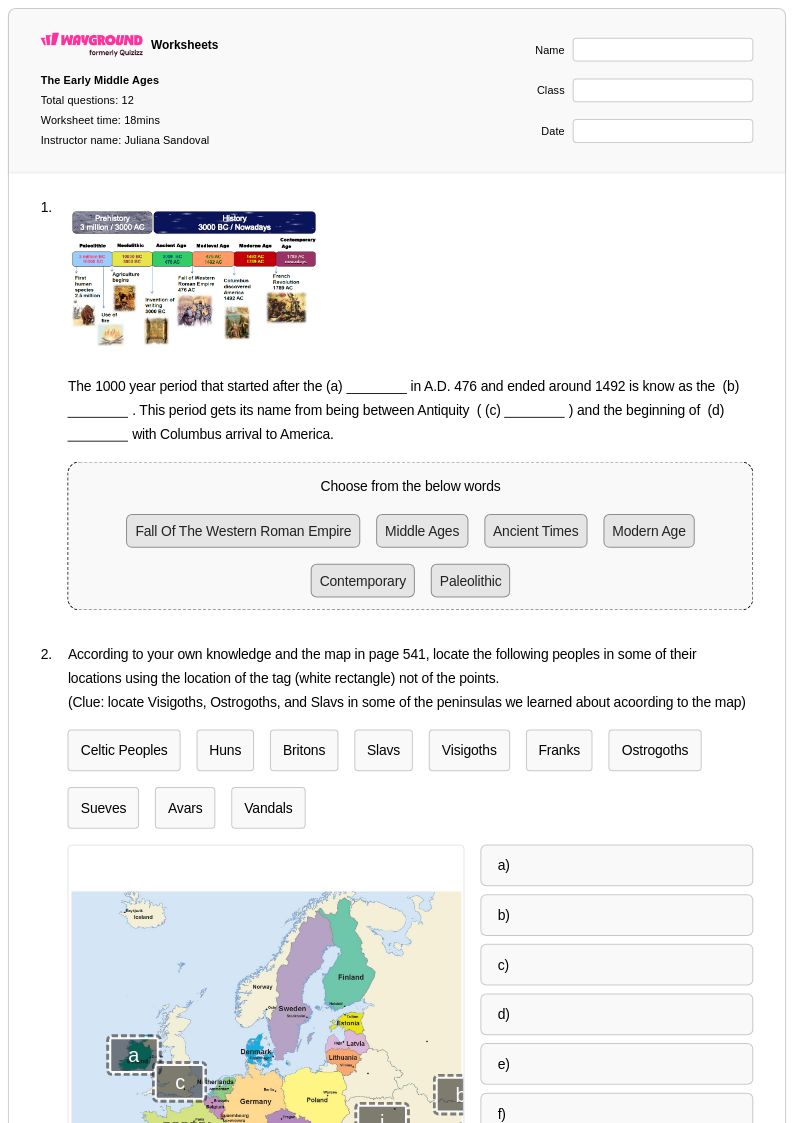
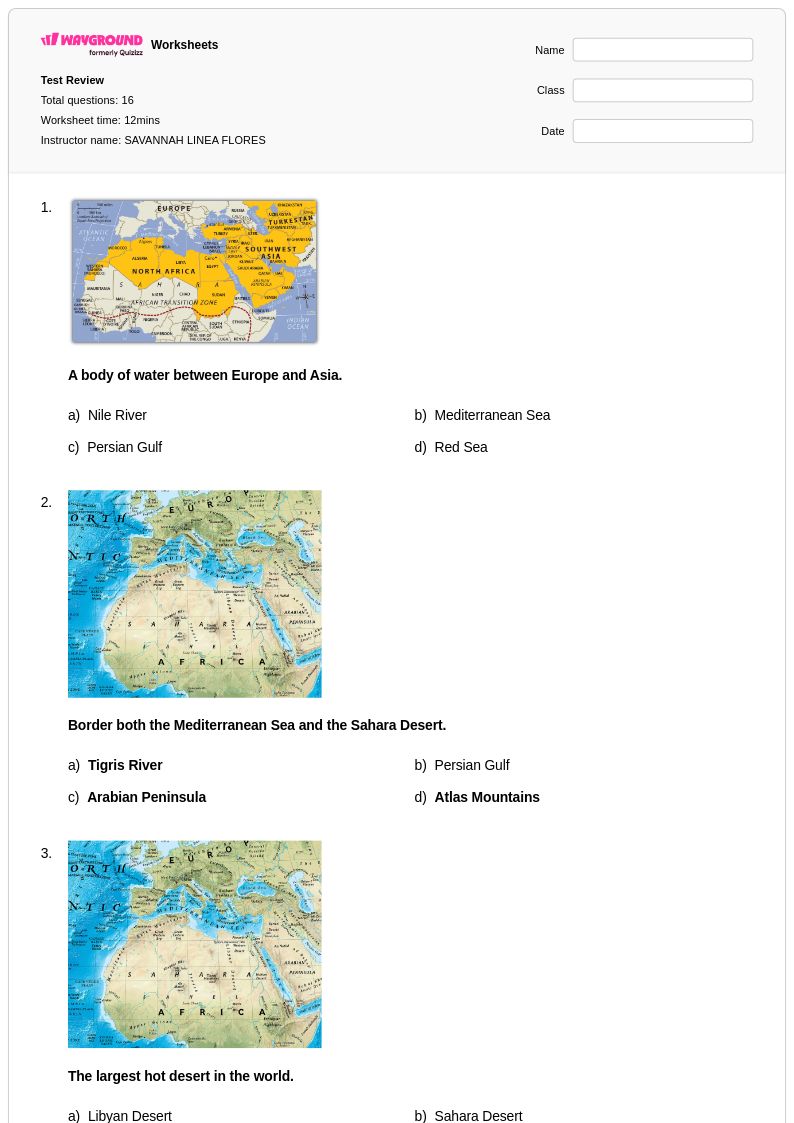
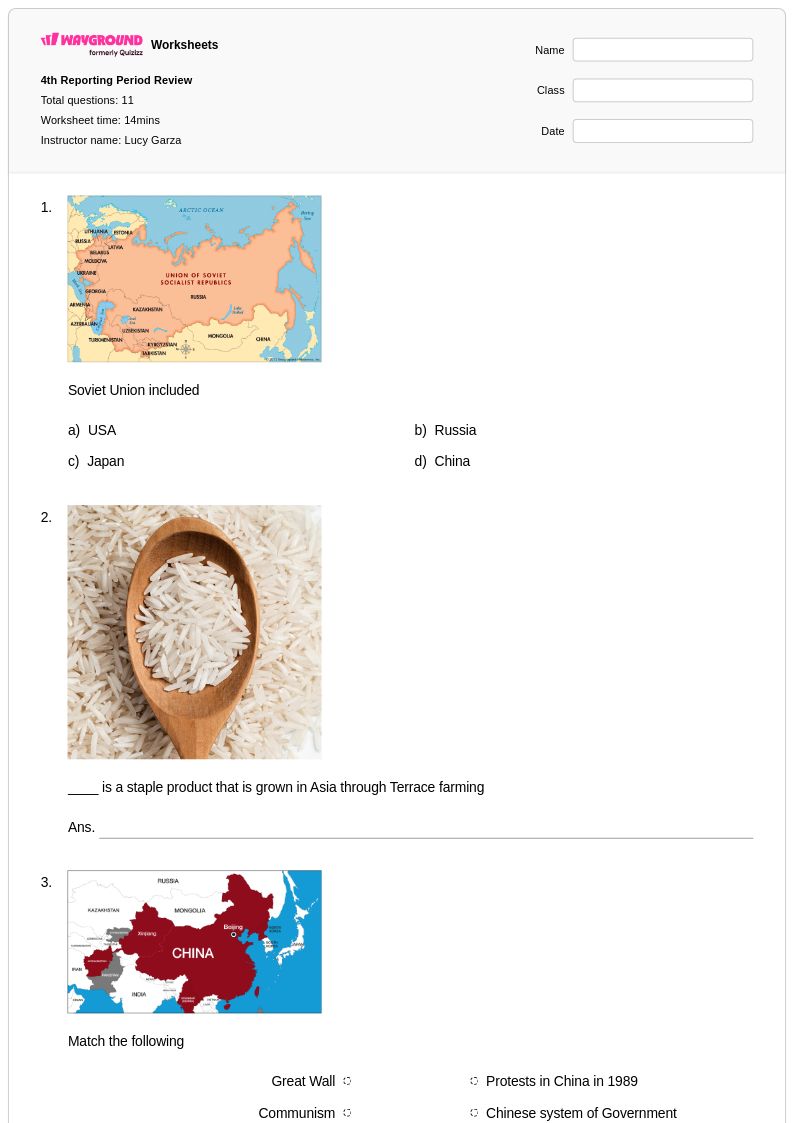
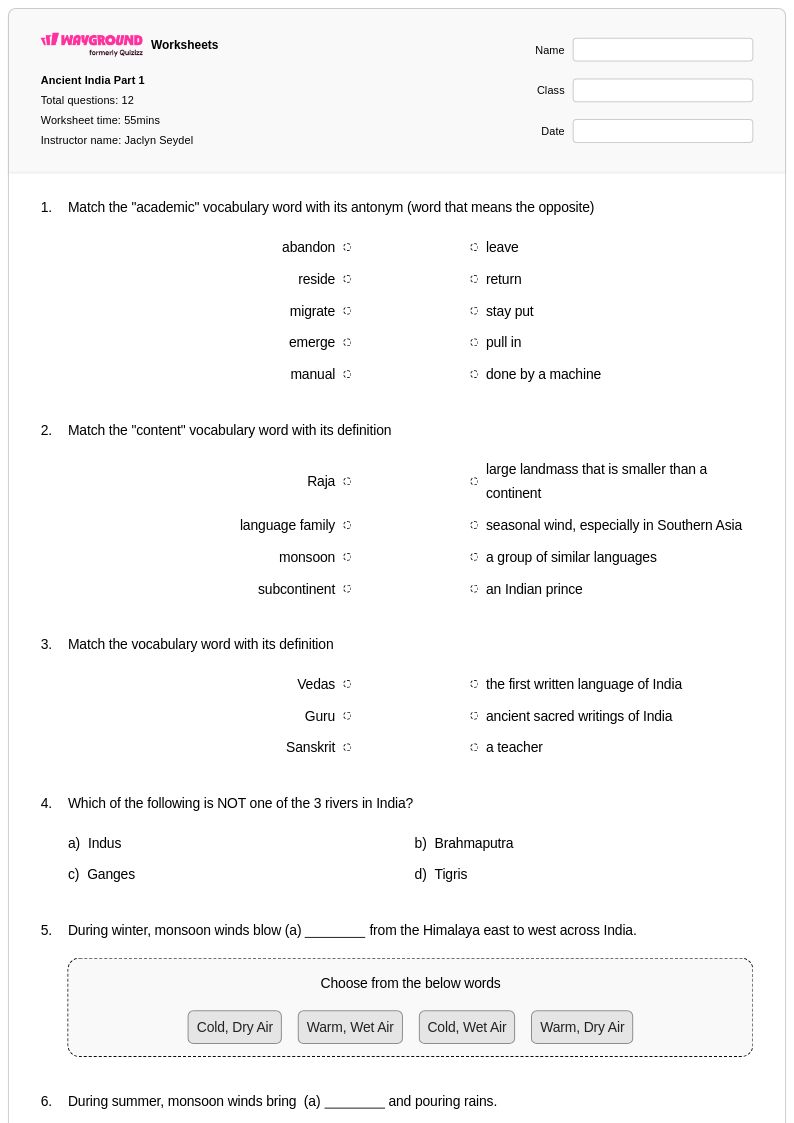
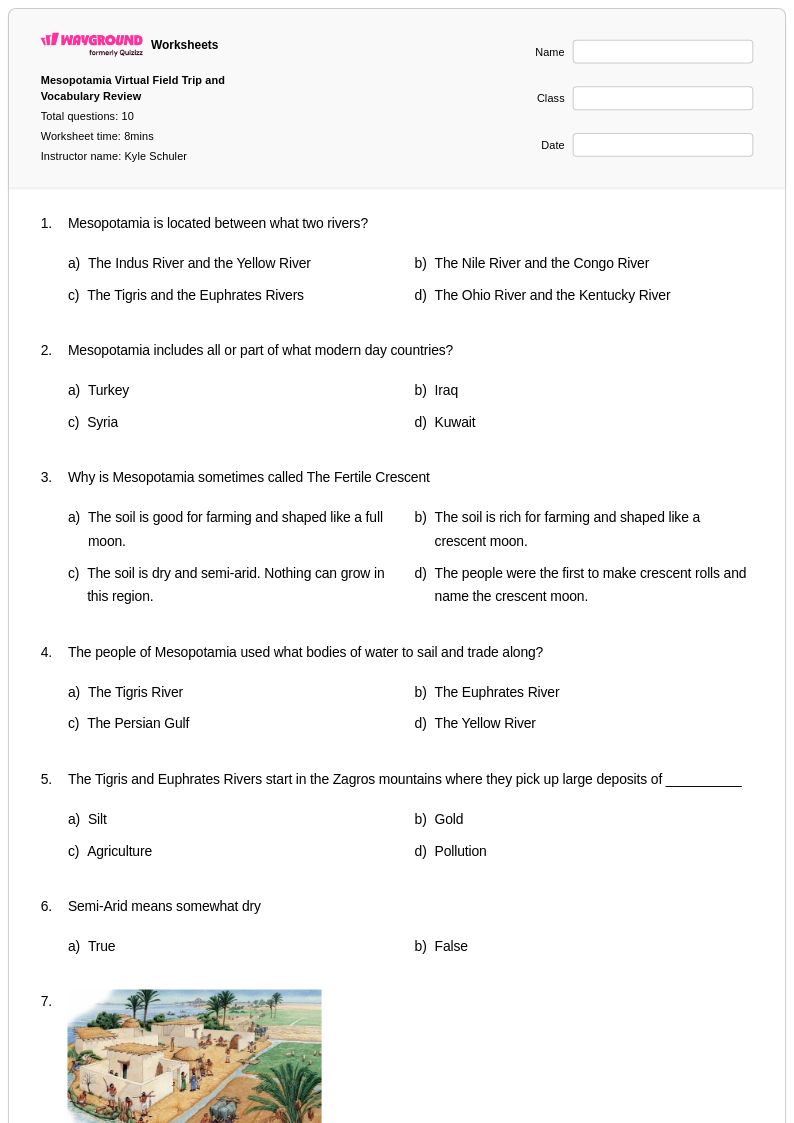
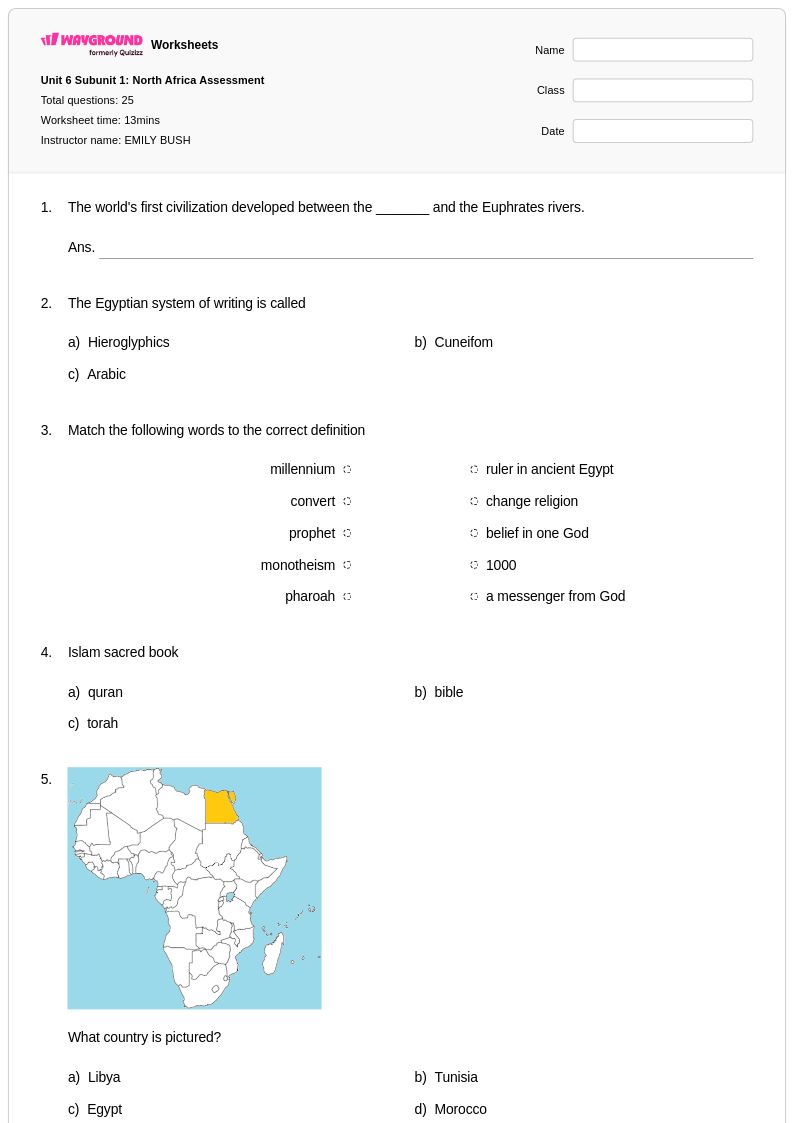
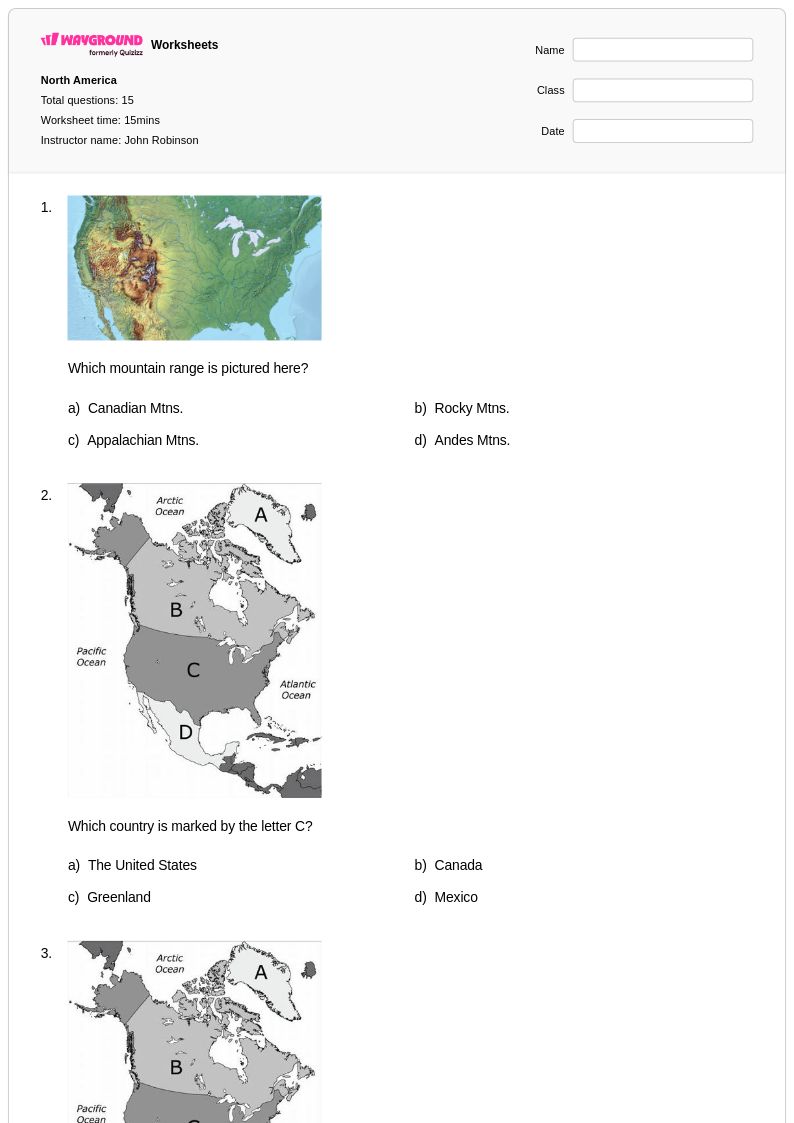
Explore Wayground's comprehensive collection of free Year 6 rivers worksheets and printables that help students master river systems, formations, and geography through engaging practice problems with detailed answer keys.
Rivers worksheets for Year 6 provide comprehensive coverage of one of geography's most essential topics, helping students develop critical understanding of these vital waterways and their impact on human civilization and natural ecosystems. These educational resources strengthen key geographic skills including map reading, watershed analysis, river system identification, and understanding the relationship between physical features and human settlement patterns. Students engage with practice problems that explore river formation processes, the water cycle's role in creating and sustaining rivers, major world rivers and their characteristics, and how rivers serve as boundaries, transportation routes, and sources of natural resources. The worksheets include detailed answer keys that support independent learning and provide teachers with reliable assessment tools, while pdf formats ensure easy distribution and consistent formatting across different devices and printing scenarios.
Wayground, formerly Quizizz, supports educators with an extensive collection of teacher-created rivers worksheets that leverage millions of high-quality resources developed by geography specialists and experienced classroom teachers. The platform's robust search and filtering capabilities allow teachers to quickly locate materials that align with specific curriculum standards and match their students' diverse learning needs, whether for introductory river concepts or more advanced topics like erosion patterns and floodplain development. Differentiation tools enable educators to customize content difficulty levels and modify worksheets to accommodate various learning styles and abilities, while the availability of both printable and digital formats, including downloadable pdf versions, provides maximum flexibility for lesson planning and delivery. These features streamline the process of creating targeted practice sessions, developing remediation materials for struggling students, designing enrichment activities for advanced learners, and building comprehensive skill practice sequences that reinforce essential geographic concepts about rivers and their role in shaping our world.
FAQs
How do I teach river systems and freshwater geography to students?
Teaching river systems effectively starts with building conceptual understanding of how rivers form through precipitation, runoff, and gravity before moving into watershed dynamics and erosion and deposition processes. Using topographic maps alongside direct instruction helps students connect physical geography concepts to real-world landscapes. Pairing map interpretation activities with lessons on how rivers have shaped human settlement patterns and economic development gives students a meaningful context for the physical processes they are learning.
What kinds of practice activities help students understand rivers in geography?
Effective practice for rivers geography includes analyzing river system diagrams, interpreting topographic maps to identify drainage basins and watershed boundaries, and examining case studies that connect river processes to human activity. Activities that ask students to trace the path of a river from source to mouth while identifying erosion and deposition zones reinforce the physical processes in a sequential, visual way. Practice problems that link river characteristics to settlement patterns or economic development also build the critical geographic literacy students need for assessments.
What mistakes do students commonly make when learning about rivers and watersheds?
A common misconception is that rivers always flow from north to south — students need explicit instruction that rivers flow downhill according to elevation, not compass direction. Students also frequently confuse erosion and deposition, struggling to identify which process is dominant at different points along a river's course, such as the upper course versus the floodplain. When working with watersheds, students often fail to recognize that all land within a drainage basin contributes runoff to the same river system, which requires careful map-reading practice to internalize.
How can I use rivers worksheets in both print and digital classroom settings?
Rivers worksheets on Wayground are available as printable PDFs, making them easy to distribute in traditional classroom settings, and in digital formats for technology-integrated environments. Teachers can also host them as a quiz directly on Wayground, which allows for streamlined digital assignment and immediate student response tracking. Each worksheet includes a complete answer key, supporting both self-paced independent study and teacher-led instruction regardless of the format used.
How do I differentiate rivers geography instruction for students with different learning needs?
For students who need additional support, reducing the complexity of map-reading tasks and providing labeled reference diagrams of river features can lower the cognitive barrier to entry. On Wayground, teachers can apply individual accommodations such as read-aloud support for students who struggle with text-heavy questions, extended time for students who need more processing time, and reduced answer choices to decrease cognitive load on selected assessments. These settings can be applied per student without affecting the experience of the rest of the class, making differentiation manageable within a single rivers unit.
How do I connect rivers geography to broader curriculum standards?
Rivers geography connects directly to physical geography and earth science standards covering erosion, landforms, and the water cycle, as well as human geography standards addressing settlement patterns, resource use, and economic development. When planning lessons, aligning river formation and watershed content to state or national geography standards ensures the material serves both conceptual learning goals and assessment preparation. Wayground's standards alignment features help teachers identify which worksheets match their specific curriculum requirements, reducing planning time.